NYUAD

A2S2

Applied Artificial Intelligence · Synthetic & Systems Biology
NYU Abu Dhabi

A2S2

Applied Artificial Intelligence · Synthetic & Systems Biology

Welcome to the A2S2 Group at NYU Abu Dhabi. We pioneer next-generation computational tools with advanced biological research.

Our tools: AlgaGPT & LA4SR (10,000x faster) | 4,200+ AF3 structures | 150 PGDBs | Published in Nature, Science, Cell

Research Focus

  • 🤖Bio-AI: AI Model Development & Deployment for Biological Systems
  • 🔬Systems Biology: Metabolic networks, wet-lab and AI-based interactomes
  • 🧬Algal Genomics: 229 genome projects (106 micro + 123 macro)
  • ⚗️Synthetic Biology: ORFeomes, AI-based protein design
  • 🤖Physical AI: A2S2 lab Operating System and automation
🎉

Latest Publications NEW

bioRxiv April 2026 NEW

NiTRO: Network-based Integrated Tool for Repurposing Optimization

Drug repurposing framework using flux balance analysis for COVID-19 therapeutic discovery.

#SystemsBiology #DrugRepurposing #COVID19

Dohai B, El Assal D, Jaiswal AK, Kang M, Twizere JC, Falter-Braun P, Salehi-Ashtiani K

bioRxiv Dec 2025 NEW

Earth-Observation and Environmental Vision Transformers Reveal Genome-Environment Associations in Macroalgae

Integrating 126 macroalgal genomes with Google Earth Engine and AlphaEarth Foundation models to identify genome-environment associations. 9 new Arabian Gulf species described.

#Macroalgae #GoogleEarthEngine #DeepLearning #ArabianGulf

Mystikou A, Nelson DR, El Assal DC, Jaiswal AK, Sultana M, Rad-Menendez C, et al.

🔬

A2S2 Discoveries NEW

Explore our AI-powered knowledge graph connecting 100+ research papers, topics, and scientific findings. Visualize relationships between genomics, AI, synthetic biology, and more.

📄

Discovery Papers

Browse 100+ papers with AI-generated summaries and topic connections.

Explore Papers →
🕸️

Discovery Connections

Interactive D3.js knowledge graph visualizing paper-topic relationships.

View Graph →
COMING SOON
🧠

AI Discovery Engine

Auto-extract knowledge graphs from new publications using Claude API.

Q2 2026
🔬 Explore All Discoveries →

Research Areas

AI, Genomics, Robotics & Systems Biology

All Research →
AI & MLGenomics

AI for Biology

Transformer models and generative AI for sequence analysis, proteome exploration. AlgaGPT for decontamination, LA4SR for dark proteome.

AlgaGPTLA4SRAlphaFold
GenomicsSynthetic Bio

Algal Genomics & Engineering

Large-scale genomic characterization through 229 genome projects (106 micro + 123 macro). Regulatory ORFeomes and synthetic chromosomes.

229 GenomesORFeomeNetworks
RoboticsAutomation

A2S2-OS (FrankenLab-CLAW-OS)

Our robotics lab operating system, unifying robotics, vision, and LLM-driven laboratory automation.

VisionLLMsRobotics
Database150+

🧬 AlgaeCODE PGDBs

150 Pathway/Genome Databases for comprehensive algal metabolic analysis using Pathway Tools & BioCyc framework.

Pathway ToolsBioCycMetabolic Maps

Lab Statistics

Our research output at a glance

12+
AI Models
4,200+
AF3 Structures
229
Genomes in NCBI
102
Publications
0
Visitors
229 Genomes Submitted to NCBI BioProject

Lab Timeline

Key milestones in our journey

2026 NEW
NiTRO: Drug Repurposing Framework (bioRxiv)
Network-based Integrated Tool for Repurposing Optimization. COVID-19 therapeutic discovery using flux balance analysis.
2025 NEW
Earth-Observation Genome-Environment (bioRxiv)
126 macroalgal genomes + Google Earth Engine + AlphaEarth. 9 new Arabian Gulf species.
2025
LA4SR & Dark Proteome (Patterns, Cell Press)
Pan-microalgal dark proteome mapping. AI tool featured in 20+ global media outlets.
2024
123 Macroalgal Genomes (Molecular Plant)
1,230% increase in global macroalgal genome availability.
2021
Viruses in Microalgal Evolution (Cell Host & Microbe)
Large-scale genome sequencing reveals viral driving forces.
2001-2006
Foundational Work (Nature, Science)
Hammerhead ribozyme origins & HDV-like sequences in human CPEB3.

Our Team

Scientists and engineers driving discovery

Full Team →
Director

Kourosh Salehi-Ashtiani, Ph.D.

Associate Professor of Biology, NYU Abu Dhabi. 20+ years in systems & synthetic biology.

Lab Manager

Ashish Kumar Jaiswal, M.S.

Research Associate & Bioinformatician. Bioinformatician +20 years | AlphaFold3 | AI/ML | AlgaGPT & LA4SR developer

Research

David Nelson, Ph.D.

Senior Research Scientist. AlgaGPT & LA4SR developer. Dark proteome expert.

Contact Us

Get in touch for collaborations

Full Contact →

📍 Address

NYU Abu Dhabi, Saadiyat Island
P.O. Box 129188, UAE

🔬 Research

Integrating computation, biology, and engineering

All Publications →
AI ModelGenomics

AI for Biology

Developing transformer models and generative AI for sequence analysis, proteome exploration, and biological discovery. Includes AlgaGPT for decontamination and LA4SR for dark proteome analysis.

AlgaGPTLA4SRAlphaFold
GenomicsSynthetic Bio

Algal Genomics & Engineering

Large-scale genomic characterization through the 229 algal genome projects (ALG-ALL-CODE), combined with synthetic biology approaches including regulatory ORFeomes and synthetic chromosomes.

229 GenomesORFeomeNetworks
RoboticsPlatform

A2S2-OS (FrankenCLAW Lab-OS)

Our robotics lab operating system, unifying robotics, vision, and LLM-driven laboratory automation.

VisionLLMsRobotics
See platform resources →

AI & Analysis Tools

Machine learning models and computational tools developed by the lab

AI ModelGenomics

AlgaGPT

Transformer-based model for decontaminating algal sequencing data. Enables cleaner genomic analysis by identifying and filtering contamination from environmental samples.

  • Sequence contamination detection
  • Multi-species deconvolution
  • Quality score assessment
Try on Hugging Face →
AI ModelProteomics

TI-free LA4SR

Generative AI for exploring dark proteomes, uncovering functional insights in previously uncharacterized protein regions through sequence analysis.

  • Dark proteome annotation
  • Functional prediction for unknown proteins
  • Structure-function relationship discovery
Try on Hugging Face →

🧬 ALG-ALL-CODE Genomes

World's largest algal genome collection — 229 draft genomes submitted to NCBI

View All Genomes in NCBI BioProject
106 MICROALGAE
34
Chlorophyta
28
Ochrophyta
11
Miozoa
10
Haptophyta
#SpeciesSizeAccessionDivisionEnv
1Alexandrium andersonii289MNMCA2222MiozoaSalt
2Alexandrium tamarense34MNMCA1771MiozoaSalt
3Amphidinium carterae848MNMCA1314MiozoaSalt
4Chlamydomonas reinhardtii120MCC-125ChlorophytaFresh
5Chlorella vulgaris55MUTEX2714ChlorophytaFresh
6Dunaliella sp. M294MNYUAD-M2ChlorophytaSalt
7Emiliania huxleyi168MCCMP1516HaptophytaSalt
8Nannochloropsis oceanica28MNMCA1779OchrophytaSalt
9Phaeodactylum tricornutum27MCCAP1055OchrophytaSalt
10Thalassiosira pseudonana768MNMCA1335OchrophytaSalt

🔬 AlphaFold3 Structures

4,200+ protein structure predictions for Prochlorococcus and cyanobacteria

4,200+
AF3 Structures
1,960+
PPI Predictions
2
GPU Systems
96
GB VRAM

Protein-Protein Interaction Analysis

StrongipTM: 0.810

CAE19413 Homodimer

Combined Score: 260.05 | pLDDT: 82.1
Interface Area: 10,189 Ų | 256 residues

Interface view showing hydrogen bonds (blue) and salt bridges (red)

ModerateipTM: 0.630

CAE19332 Homodimer

Combined Score: 243.77 | pLDDT: 68.3
Interface Area: 11,169 Ų | 253 residues

Surface view showing chain A (green) and chain B (blue)

Mutation Analysis Pipeline

WT Structure

Gene8282 Wild Type

Rainbow coloring (N→C terminus). Magenta ligand shows binding site location.

Overlay

WT vs Mutant Comparison

Orange (WT) vs Cyan (Mutant) overlay showing structural changes at mutation site.

Closeup

Active Site Detail

3.0Å distance measurement between key residues. Fe-S cluster (cyan spheres) coordination.

XGBoost Quality Prediction

Machine learning pipeline using XGBoost for interface quality assessment:

  • Combined scoring from ipTM, pLDDT, interface area
  • Automated categorization: Strong / Moderate / Weak
  • Integration with PyMOL for publication-quality figures
  • Batch processing of 1,960+ PPI predictions

⚡ Infrastructure

High-performance computing for AI and structural biology

🖥️

HP Z8 G5 Workstation

Dual GPU workstation for AlphaFold3

RTX A6000 × 248GB VRAM256GB RAM
🚀

NVIDIA DGX Spark (×8)

Inferencing and Robotics

Grace Blackwell128GB GPUNVLink
🤖

A2S2-OS Robotics

Lab automation with robotic arm

MoveItROS2CV
🧠

A2S2 FrankenCLAW Lab-OS

End-to-end Bio-AI Orchestration

PyTorchHuggingFaceXGBoost

🖥️ HPC Collaborations

NYUAD HPC
Current: Jubail
Previous: Dalma, BuTinah
NYU HPC
Current: Torch (11 PFLOPS)
Previous: Greene, Prince

🌐 Global Collaborators

🇧🇪 University of Liège

Prof. Jean-Claude Twizere — Networks & Applied AI

💻 GitHub →Visit ULiège →

🇨🇳 Zhejiang University

Prof. Weiqi Fu — Diatom Synthetic Biology

Visit ZJU →

🇩🇪 Institute of Network Biology

Prof. Pascal Falter-Braun — Network Biology

Visit INET →

🇦🇪 M42

Dr. Alexandra Mystikou — Commercial R&D

Visit M42 →

🇦🇪 University of Sharjah

Prof. Amr Amin — Drug discovery & Translational Research

Visit U.Sharjah →

🇺🇸 Bigelow Lab Maine

National Center for Marine Algae — 39 genomes

Visit Bigelow →

🇸🇦 KAUST

King Abdullah University — Red Sea algae

Visit KAUST →

🇦🇪 TII Abu Dhabi

Technology Innovation Institute — AI

Visit TII →

🇳🇿 Cawthron Institute

Dr. Maxence Plouviez — Research Scientist, Algal Biotechnology

Visit Cawthron →

🇬🇧 SAMS Scotland

Scottish Association for Marine Science — 73 macroalgal genomes

Visit SAMS →

📚 Publications

Research contributions from 2001 to present

📖 PubMed 🎓 Google Scholar

📊 Publication Timeline

01
06
08
09
10
11
12
13
14
15
16
17
18
19
20
21
22
23
24
25

80+ peer-reviewed publications • Published in Nature, Science, Cell, and more

⭐ Featured Publications

2026 • bioRxiv (Preprint) NEW
NiTRO: Network-based Integrated Tool for Repurposing Optimization
Drug repurposing framework using flux balance analysis for COVID-19 therapeutic discovery
Dohai B, El Assal D, Jaiswal AK, Kang M, Twizere JC, Falter-Braun P, Salehi-Ashtiani K
2025 • bioRxiv (Preprint) NEW
Earth-Observation and Environmental Vision Transformers Reveal Genome-Environment Associations in Macroalgae
126 macroalgal genomes integrated with Google Earth Engine and AlphaEarth for genome-environment associations
Mystikou A, Nelson DR, El Assal DC, Jaiswal AK, Sultana M, Rad-Menendez C, et al.
2025 • Patterns (Cell Press)
Pan-microalgal dark proteome mapping via interpretable deep learning and synthetic chimeras
Nelson DR, Jaiswal AK, Ismail NS, Mystikou A, Salehi-Ashtiani K
2024 • Molecular Plant
Macroalgal deep genomics illuminate multiple paths to aquatic, photosynthetic multicellularity
Nelson DR, Mystikou A, Jaiswal AK, et al.
2021 • Cell Host & Microbe
Large-scale genome sequencing reveals the driving forces of viruses in microalgal evolution
Nelson DR, Hazzouri KM, Lauersen KJ, et al.
2021 • Nature Chemical Biology
Hovlinc is a recently evolved class of ribozyme found in human lncRNA
Chen Y, Qi F, Gao F, et al.
2006 • Science
A Genome-wide search for ribozymes reveals an HDV-like sequence in the human CPEB3 gene
Salehi-Ashtiani K, Luptak A, Litovchick A, Szostak JW
2001 • Nature
In vitro evolution suggests multiple origins for the hammerhead ribozyme
Salehi-Ashtiani K, Szostak JW

📅 All Publications by Year

📅 2026 NEW
bioRxiv (Preprint)
NiTRO: Network-based Integrated Tool for Repurposing Optimization
Dohai B, El Assal D, Jaiswal AK, Kang M, et al.
20254 papers
  1. Mystikou A, Nelson DR, El Assal DC, Jaiswal AK, Sultana M, et al. Earth-Observation and Environmental Vision Transformers Reveal Genome-Environment Associations in Macroalgae. bioRxiv, 2025. NEW
  2. Nelson DR, Jaiswal AK, Ismail NS, Mystikou A, Salehi-Ashtiani K. Pan-microalgal dark proteome mapping via interpretable deep learning and synthetic chimeras. Patterns (Cell Press), 2025.
  3. Nelson DR, Chaiboonchoe A, Fu W, et al. Multi-omics decipher the molecular mechanisms driving high-lipid production in an artificially-evolved Chlamydomonas mutant. bioRxiv, 2025.
  4. Chen J, Qian C, Shu Y, Salehi-Ashtiani K, et al. Bioinspired cell silicification of the model diatom Phaeodactylum tricornutum. Sustainable Horizons, 2025.
20248 papers
  1. Nelson DR, Jaiswal AK, Ismail N, et al. LA4SR: illuminating the dark proteome with generative AI. arXiv preprint, 2024.
  2. Su Y, Hu J, Xia M, et al. An undiscovered circadian clock to regulate phytoplankton photosynthesis. PNAS Nexus, 2024.
  3. Daakour S, Nelson DR, Fu W, et al. Adaptive Evolution Signatures in Prochlorococcus: ORFeome Resources. Microorganisms, 2024.
  4. Nelson DR, Mystikou A, Jaiswal AK, et al. Macroalgal deep genomics illuminate multiple paths to aquatic, photosynthetic multicellularity. Molecular Plant, 2024.
  5. Alzahmi AS, Daakour S, Nelson D, et al. Enhancing algal production strategies: strain selection, AI-informed cultivation, and mutagenesis. Frontiers in Sustainable Food Systems, 2024.
  6. Salehi-Ashtiani K. AlgaGPT: A Transformer-Based Model for Efficient Decontamination of Algal Sequencing Data. PAG 31 Conference, 2024.
  7. Nelson DR, Muvunyi R, Hazzouri KM, et al. A near telomere-to-telomere phased reference assembly for the male mountain gorilla. bioRxiv, 2024.
  8. Daakour S, Nelson DR, Fu W, et al. Adaptive Evolution Signatures in Prochlorococcus. Preprints, 2024.
20234 papers
  1. Salehi-Ashtiani K. Large-Scale Sequencing and Analyses of Micro and Macroalgae Genomes. PAG Australia, 2023.
  2. Maseko SB, Brammerloo Y, Van Molle I, et al. Identification of small molecule antivirals against HTLV-1 by targeting the hDLG1-Tax-1 protein-protein interaction. Antiviral Research, 2023.
  3. Corominas R, Yang X, Lin GN, et al. Protein interaction network of alternatively spliced isoforms from brain links genetic risk factors for autism. Nature Communications, 2023.
20225 papers
  1. Nelson DR, Chaiboonchoe A, Hazzouri KM, et al. Tissue-Specific Transcriptomes Outline Halophyte Adaptive Strategies in the Gray Mangrove. Agronomy, 2022.
  2. Hazzouri KM, Sudalaimuthuasari N, Saeed EE, et al. Salt flat microbial diversity and dynamics across salinity gradient. Scientific Reports, 2022.
  3. Nelson DR, Al Hrout A, Alzahmi AS, et al. Molecular Mechanisms behind Safranal's Toxicity to HepG2 Cells from Dual Omics. Antioxidants, 2022.
  4. Olivet J, Maseko SB, Volkov AN, et al. A systematic approach to identify host targets and rapidly deliver broad-spectrum antivirals. Molecular Therapy, 2022.
  5. Maseko SB, Van Molle I, Blibek K, et al. Structural basis for targeting the human T-cell leukemia virus Tax oncoprotein. bioRxiv, 2022.
20218 papers
  1. Alzahmi A, Daakour S, El Assal DC, et al. High-Throughput Metabolic Profiling for Model Refinements of Microalgae. J. Vis. Exp., 2021.
  2. Al-Shehhi MR, Nelson D, Farzanah R, et al. Characterizing algal blooms in a shallow & a deep channel. Ocean and Coastal Management, 2021.
  3. Fu W, Dohai B, El Assal DC, et al. Protocol to generate and characterize biofouling transformants of a model marine diatom. STAR Protocols, 2021.
  4. Kerselidou D, Dohai BS, Nelson DR, et al. Alternative glycosylation controls endoplasmic reticulum dynamics. Science Advances, 2021.
  5. Chen Y, Qi F, Gao F, et al. Hovlinc is a recently evolved class of ribozyme found in human lncRNA. Nature Chemical Biology, 2021.
  6. Nelson DR, Hazzouri KM, Lauersen KJ, et al. Large-scale genome sequencing reveals the driving forces of viruses in microalgal evolution. Cell Host & Microbe, 2021.
  7. Koussa J, Vitrinel B, Whitney P, et al. Sex-specific glycosylation of secreted immunomodulatory proteins in Brugia malayi. bioRxiv, 2021.
  8. Friis G, Vizueta J, Smith EG, et al. A high-quality genome assembly and annotation of the gray mangrove, Avicennia marina. G3 Genes|Genomes|Genetics, 2021.
20204 papers
  1. Kerselidou D, Dohai BS, Nelson DR, et al. Exostosin-1 Glycosyltransferase Regulates Endoplasmic Reticulum Architecture. Cold Spring Harbor Laboratory, 2020.
  2. Fu W, Chaiboonchoe A, Dohai B, et al. GPCR Genes as Activators of Surface Colonization Pathways in a Model Marine Diatom. iScience, 2020.
  3. Wierbowski SD, Vo TV, Falter-Braun P, et al. A massively parallel barcoded sequencing pipeline enables generation of the first ORFeome and interactome map for rice. PNAS, 2020.
  4. Al Shehhi MR, Nelson D, Alkhori RR, et al. Characterizing Algal blooms in a shallow and a deep channel. arXiv preprint, 2020.
20194 papers
  1. Fu W, Nelson DR, Mystikou A, et al. Advances in microalgal research and engineering development. Curr. Opin. Biotechnol., 2019.
  2. Nelson DR, Chaiboonchoe A, Fu W, et al. Potential for Heightened Sulfur-Metabolic Capacity in Coastal Subtropical Microalgae. iScience/Cell, 2019.
  3. Fu W, Gudmundsson S, Wichuk K, et al. Dataset on economic analysis of mass production of algae. Data in Brief, 2019.
  4. Fu W, Gudmundsson S, Wichuk K, et al. Sugar-stimulated CO2 sequestration by the green microalga Chlorella vulgaris. Science of The Total Environment, 2019.
20184 papers
  1. Al-Hrout A, Chaiboonchoe A, Khraiwesh B, et al. Safranal induces DNA double-strand breakage and ER-stress-mediated cell death in hepatocellular carcinoma cells. Scientific Reports, 2018.
  2. Yi Z, Su Y, Bergmann A, et al. Chemical mutagenesis and fluorescence-based high-throughput screening for enhanced accumulation of carotenoids in a model marine diatom. Mar. Drugs, 2018.
  3. Hazzouri KM, Khraiwesh B, Amiri KMA, et al. Mapping of HKT1;5 gene in barley using GWAS approach. Frontiers in Plant Science, 2018.
20174 papers
  1. Fu W, Chaiboonchoe A, Khraiwesh B, et al. Intracellular spectral recompositioning of light enhances algal photosynthetic efficiency. Science Advances, 2017.
  2. Nelson DR, Khraiwesh B, Fu W, et al. The genome and phenome of the green alga Chloroidium sp. UTEX3007 reveal adaptive traits for desert acclimatization. eLife, 2017.
  3. Khraiwesh B, Salehi-Ashtiani K. Alternative Poly(A) Tails Meet miRNA Targeting in Caenorhabditis elegans. Genetics, 2017.
  4. Fu W, Nelson DR, Yi Z, et al. Bioactive compounds from microalgae: Current development and prospects. Studies in Natural Products Chemistry (Elsevier), 2017.
20168 papers
  1. Jijakli K, Khraiwesh B, Fu W, et al. The In Vitro Selection World. Methods, 2016.
  2. Chaiboonchoe A, Ghamsari L, Dohai B, et al. Systems level analyses of Chlamydomonas reinhardtii metabolic network. Mol. BioSyst., 2016.
  3. Fu W, Khraiwesh B, Liu H, et al. Advances in Biotechnology for Sustainable Development. BioMed Research International, 2016.
  4. Wiemann S, Pennacchio C, Hu Y, et al. The ORFeome Collaboration: A genome-scale human ORF-clone resource. Nature Methods, 2016.
  5. Chiu CN, Rihel J, Lee DA, et al. A Zebrafish Genetic Screen Identifies Neuromedin U as a Regulator of Sleep/Wake States. Neuron, 2016.
  6. Yang X, Coulombe-Huntington J, Kang S, et al. Widespread expansion of protein interaction capabilities by alternative splicing. Cell, 2016.
  7. Abdrabu R, Sharma SK, Khraiwesh B, et al. Single Cell Characterization of Microalgal Lipid Contents with Confocal Raman Microscopy. Springer, 2016.
  8. Fu W, Chaiboonchoe A, Khraiwesh B, et al. Algal Cell Factories: Approaches, Applications, and Potentials. Mar. Drugs, 2016.
20159 papers
  1. Khraiwesh B, Qudeimat E, Thimma M, et al. Genome-wide expression analysis offers new insights into the origin and evolution of Physcomitrella patens stress response. Scientific Reports, 2015.
  2. Amin A, Hamza AA, Daoud S, et al. Saffron-Based Crocin Prevents Early Lesions of Liver Cancer. Recent Pat Anticancer Drug Discovery, 2015.
  3. Flowers JM, Hazzouri KM, Pham GM, et al. Whole genome re-sequencing reveals extensive natural variation in the model green alga Chlamydomonas reinhardtii. Plant Cell, 2015.
  4. Sharma SK, Nelson DR, Abdrabu R, et al. An integrative Raman microscopy-based workflow for rapid in situ analysis of microalgal lipid bodies. Biotechnology for Biofuels, 2015.
  5. Sahni N, Yi S, Taipale M, et al. Widespread macromolecular interaction perturbations in human genetic disorders. Cell, 2015.
  6. Khraiwesh B, Jijakli K, Swift J, et al. Prospective Applications of Synthetic Biology for Algal Bioproduct Optimization. Springer International Publishing, 2015.
  7. Salehi-Ashtiani K, Koussa J, Dohai B, et al. Toward Applications of Genomics and Metabolic Modeling to Improve Algal Biomass Productivity. Springer International Publishing, 2015.
  8. Jijakli K, Abdrabu R, Khraiwesh B, et al. Molecular Genetic Techniques for Algal Bioengineering. Springer International Publishing, 2015.
  9. Fu W, Wichuk K, Brynjolfsson S. Developing diatoms for value-added products: challenges and opportunities. New Biotechnology, 2015.
2014 & Earlier20+ papers

2014: Chaiboonchoe A et al. Microalgal metabolic network model refinement (Frontiers); Koussa J et al. Computational Approaches for Microalgal Biofuel (BioMed Res Int); Corominas R et al. Autism-centered interactome network (Nature Communications)

2013: Khraiwesh B & Qudeimat E. Abiotic Stress‐Responsive Small RNA (Wiley); Xin X et al. SH3 interactome conserves general function (Mol Syst Biol)

2012: Djebali S et al. Evidence for transcript networks (PLoS One)

2011: Yang X et al. A public genome-scale lentiviral expression library (Nature Methods); Ghamsari L et al. Genome-wide functional annotation (BMC Genomics); Chang RL et al. Metabolic network reconstruction of Chlamydomonas (Molecular Systems Biology)

2010: Johannessen CM et al. COT drives resistance to RAF inhibition (Nature); Mangone M et al. The landscape of C. elegans 3'UTRs (Science)

2009: Manichaikul A et al. Metabolic network analysis integrated with transcript verification (Nature Methods)

2008: Salehi-Ashtiani K et al. Isoform discovery using targeted cloning (Nature Methods)

2006: Salehi-Ashtiani K et al. A Genome-wide search for ribozymes reveals an HDV-like sequence (Science)

2001: Salehi-Ashtiani K & Szostak JW. In vitro evolution suggests multiple origins for the hammerhead ribozyme (Nature)

🎤 Talks & Presentations

Click to view invited talks, keynotes, and conference presentations

2019:

  • Dr. Weiqi Fu - East Lake International Forum, Huazhong University, China: "Microalgae resourcization"
  • Prof. Kourosh Salehi-Ashtiani - National University of Singapore SynCTI: "Synthetic biology-enabled future in Asia"
  • Dr. David R. Nelson - Joint Genome Institute (DOE): "The algallCODE project"
  • Dr. David R. Nelson - 9th International Congress on Algal Biomass, Boulder, CO: "100+ genomes show virus influence"
  • Dr. Alexandra Mystikou - GP-write & Sc2.0 Meeting, New York: "CRISPR methodology for microalgal genomes"

2018:

  • Prof. Kourosh Salehi-Ashtiani - UAEU Khalifa Center: "Improvement of algal productivity"
  • Prof. Kourosh Salehi-Ashtiani - Institute for Network Biology, Helmholtz Zentrum Munich: "Algae Genomics"
  • Prof. Kourosh Salehi-Ashtiani - Northwestern University: "Algae Systems biology"
  • Prof. Kourosh Salehi-Ashtiani - 8th International Algal Conference, Seattle: "Genomes of subtropical microalgae"
  • Dr. Weiqi Fu - 8th International Algal Conference, Seattle: "Enhancement of algal biomass productivity"
  • Amphun Chaiboonchoe - Synthetic Biology SEED 2018: "Adaptive Lab Evolution generates fast-growing Chlamydomonas"

2017:

  • Prof. Kourosh Salehi-Ashtiani - SB7.0 Singapore: "ISR: Design-based approach to increase photosynthetic efficiency"
  • Prof. Kourosh Salehi-Ashtiani - NYU Biomedical Conference: "Intracellular spectral recompositioning"

2016:

  • Prof. Kourosh Salehi-Ashtiani - International Gas, Oil, Petroleum Engineering, Las Vegas: Session Chair
  • Prof. Kourosh Salehi-Ashtiani - 17th Chlamydomonas Conference, Kyoto: "Lipid accumulating mutant"
  • Dr. Weiqi Fu - European Networks Conference on Algal Photosynthesis, Malta

2015:

  • Prof. Kourosh Salehi-Ashtiani - BIT's 5th World Congress Marine Biotechnology, Qingdao: Keynote
  • Dr. Basel Khraiwesh - NYUAD Annual Research Conference: "Genome-wide abiotic stress analysis"
  • Ashish K Jaiswal - ISMB/ECCB 2015, Dublin
  • Dr. Weiqi Fu - SEED 2015, Boston: "Intracellular Spectral Recompositioning"

Media Coverage:

  • The Guardian (2017): Algae alternative to palm oil
  • The National (2017): Green algae found in UAE
  • Gulf News (2017): UAE green alga alternative to palm oil
  • Khaleej Times (2017): Local algae as palm oil alternative
  • Dubai Media TV Interview: Prof. Kourosh Salehi-Ashtiani
  • Science (2011): Algal biofuels research

👥 Our Team

Scientists and engineers advancing AI-driven biological discovery

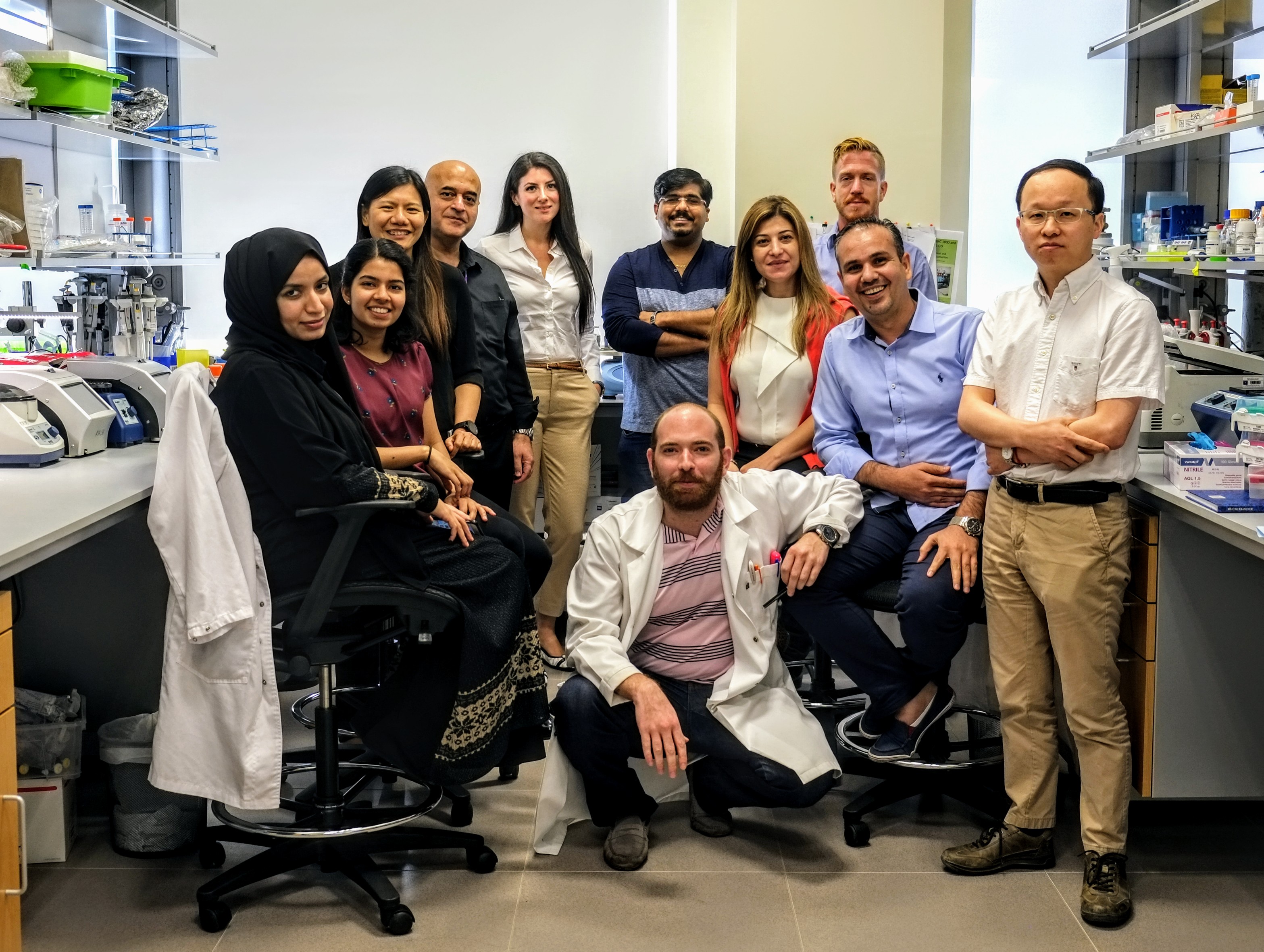
📸 A2S2 Lab Team

A2S2 Lab Team Group Photo

Present & Past Lab Members • NYU Abu Dhabi

Current Members

KS

Kourosh Salehi-Ashtiani, Ph.D.

Principal Investigator
AI | Experimental Biologist
Associate Professor of Biology, NYU Abu Dhabi
AJ

Ashish Kumar Jaiswal, M.Sc.

Research Associate & Lab Manager
Bioinformatician +20 years | AlphaFold3 | AI/ML | AlgaGPT & LA4SR developer | PGDB developer
DN

David Nelson, Ph.D.

Senior Research Scientist
AlgaGPT & LA4SR developer. Dark proteome expert.
SD

Sarah Daakour, Ph.D.

Post-Doctoral Associate
Prochlorococcus genomics, ORFeome resources.
AA

Amnah Salem Alzahmi, M.Sc.

RA | Ph.D. Candidate
Algal biotechnology. Featured on Fujairah Today TV.
💼 LinkedIn
DK

Dina Al Khairy, M.Sc.

Instructor | Ph.D. Candidate
Bioplastics
NS

Nuha Salem

NYU Ph.D. Candidate
E. coli Synthetic Biology
NI

Noha Ismail

NYU Ph.D. Candidate
AI Drug Discovery

Distinguished Alumni

Dr. Alexandra Mystikou

Head of R&D at M42

💼 LinkedIn

Dr. Diana El Assal

Ph.D., University of Luxembourg

Bushra Dohai, M.S.

Helmholtz Zentrum München

💼 LinkedIn

Dr. Weiqi Fu

Professor, Zhejiang University, China

💼 LinkedIn

Dr. Amphun Chaiboonchoe

CEO, BaanSuanSalah, Thailand

💼 LinkedIn

Dr. Basel Khraiwesh

Senior Research Scientist (In Memoriam)

Hong Cai, M.S.

Beijing Genomics Institute, China

💼 LinkedIn

Geetha Sankaranarayanan

Research Associate, CGSB

💼 LinkedIn

Dr. Balaji Santhanam

Bioinformatics Lead, St. Jude Children's

💼 LinkedIn

Dr. Joseph Koussa

Professor, Montgomery College

💼 LinkedIn

📧 Contact Us

Get in touch for collaborations and inquiries

📍 Address

NYU Abu Dhabi
Saadiyat Island Campus
P.O. Box 129188
Abu Dhabi, UAE

🔗 Links

NYUAD · HuggingFace · NCBI

💬 Send us a Message

📝 Fill out our contact form:

Open Contact Form ↗

Opens Google Forms in a new tab. Your message will be sent directly to us.

🚀 Join Our Team

Interested in AI, genomics, robotics, or synthetic biology?

📋 Current Openings

We currently do not have any open positions.

🎓 PhD Applicants: If you are interested in doing a Ph.D. at NYUAD, please visit this page for general information and this page for the application process.

Please check back for future opportunities in:

AI/ML Research Robotics & Automation Computational Biology Visiting Scholars

Please check back later for new opportunities, or submit your details below to be considered for future openings.

Why Join A2S2?

  • Work at the intersection of AI, genomics, and collaborative robotics
  • Access to cutting-edge infrastructure (NYUAD HPC, A2S2 Local AI workstations and servers)
  • Collaborate on 229 genomes and 4,200+ protein structures
  • Be part of a world-class research team at NYU Abu Dhabi

💡 Tip: Even without current openings, we review all submissions and may reach out when positions become available. Feel free to share your details!

📝 Express Your Interest

Submit your application through our secure form. We'll keep your details on file for future opportunities.

📋 Open Application Form ↗

Opens Google Forms in a new tab. Your information is securely stored and will be reviewed when positions become available.

📧 Or email your CV directly to:

Your information will be kept on file and reviewed when positions become available.
We appreciate your interest in the A2S2 Group!

📊 Analytics Dashboard

Real-time insights and visitor analytics

🔬 A2S2 Discoveries

Explore our research knowledge graph connecting 100+ papers, topics, and scientific findings across genomics, AI, synthetic biology, and more.

📄

Discovery Papers

Browse our comprehensive wiki of research papers with AI-generated summaries, key findings, and topic connections.

100+
Papers
70+
Topics
Explore Papers →
🕸️

Discovery Connections

Interactive D3.js knowledge graph visualizing relationships between papers, topics, and research themes.

D3.js
Powered
Connections
View Graph →
Coming Soon
🧠

AI Discovery Engine

Next-generation AI-powered tool to automatically extract knowledge graphs from new publications using Claude API.

Claude
Powered
Auto
Extract
Coming Q2 2026

🚀 What You Can Discover

🧬

Genomics Network

229 algal genomes with metabolic pathways and functional annotations.

🤖

AI & ML Research

AlgaGPT, LA4SR, protein structure prediction, and deep learning applications.

🔬

Synthetic Biology

ORFeomes, pathway engineering, metabolic modeling, and biotech applications.

💊

Drug Discovery

NiTRO framework, natural products, and therapeutic target identification.

🏠 Home
Papers
Topics

A2S2 Discovery Stream

A searchable knowledge base built from A2S2 lab publications.
Select a paper or topic from the sidebar, or browse below.

📄 Papers

🏷 Topics

3′ untranslated regions (3′UTRs) 3'-UTR function 3' UTR isoform switching 3D anatomical modeling 3D genome organization 3'UTR genomics 3'UTR landscape 454 pyrosequencing 454 sequencing 454 sequencing read alignment 5' RACE 6-phosphofructokinase regulation abiotic stress response abiotic stress response in plants abscisic acid (ABA) signaling acetyl-CoA carboxylase (ACCase) acquired and de novo drug resistance acute lymphoblastic leukemia (ALL) adaptive laboratory evolution admixture analysis agarose gel electrophoresis algal biodiversity algal bioengineering algal biofuel and biomass optimization algal biofuels algal biomass optimization algal biomass production algal biomass productivity algal bioprospecting algal biotechnology algal biotechnology and bioproducts algal bloom analysis algal bloom dynamics algal bloom frequency algal bloom monitoring algal blooms algal cell morphology algal genetic engineering algal genetic transformation algal genomics algal genomics and genome sequencing algal growth kinetics algal lipid biosynthesis algal lipid metabolism algal metabolism algal phylogenomics algal synthetic biology algal taxonomy and classification alignment-free sequence analysis alternative 3′UTR isoforms alternative polyadenylation (APA) alternative promoters and transcripts alternative splicing alternative splicing and isoform discovery alternative splicing and isoforms alternative transcription start sites amino acid attribution amino acid composition amphiphile self-assembly amphiphile transfer anti-biofouling strategies anti-biofouling target identification anti-biofouling targets anti-cancer activity antibody specificity controls antioxidant activity antioxidant, antimicrobial, antiviral, and anticancer screening assays antiviral drug treatment antiviral microRNA activity apoptosis apoptosis and caspase activation apoptosis and cell cycle regulation apoptosis in lymphoid cells apoptosis mechanisms apoptosis signaling pathways aptamer discovery Arabian Gulf extreme environments Arabian Gulf oceanography Arabian Gulf water quality Arabian Peninsula marine environments arousal circuit neuroscience astaxanthin bioavailability attribution analysis AU-rich elements (AREs) in 3'-UTR autism spectrum disorder genetics autophagy autoradiography AUUUA elements B-ALL and T-ALL subtype differentiation B-RAF inhibitor resistance B-RAF mutation B-RAF V600E B-RAF(V600E) melanoma B-RAF(V600E) mutation barley phenotyping barley salinity tolerance basal body arrangement basal body organization bathymetry behavioral genetics binary interaction assays bio-based polymers bioactive compound production biodegradable materials biodiesel quality biodiesel quality parameters biofilm formation biofilm formation and biofouling biofuel and biomass production biofuel feedstock biofuel feedstock analysis biofuel feedstock characterization biofuel feedstock organisms biofuel feedstock screening biofuel metabolic engineering biofuel optimization biofuel production biogeography bioinformatics assembly methods bioinformatics pathway analysis bioinformatics pipeline bioinformatics pipeline development bioinformatics sequence analysis pipeline bioinformatics software biological part registries biological pathway analysis biomass productivity biomass productivity optimization biomimetic silica encapsulation biomineralization biomolecular visualization bioplastic biodegradation bioplastic production bioplastics bioplastics history bioplastics production biopolymer commercialization bioproduct optimization bioprospecting for new algal species BODIPY fluorescence staining BODIPY lipid staining bone marrow cytology BRAF inhibitor resistance BRAF V600E melanoma brain-expressed transcripts brainstem arousal systems BUSCO completeness assessment C. elegans cell biology C. elegans gene regulation C. elegans gene structure C. elegans genetics C. elegans genomics C. elegans ORFeome C. elegans ORFeome annotation C. elegans transcriptomics C-RAF signaling Caenorhabditis elegans interactome Calcium ion regulation Calvin cycle cancer biology Cancer cell biology and synthetic lethality cancer cell morphology cancer genomics cancer synthetic lethality cancer targeted therapy carbon and nitrogen source utilization carbon fixation carbon flux manipulation carbon source utilization carotenoid accumulation carotenoid and fucoxanthin biosynthesis carotenoid and lipid biosynthesis carotenoid biosynthesis carotenoid biosynthesis and accumulation carotenoid biosynthesis and extraction carotenoid quantification carotenoids and chlorophylls caspase activation CD4/CD8 expression cDNA cloning and sequence analysis cDNA cloning and sequencing cDNA libraries cDNA library construction cDNA library normalization cDNA sequence analysis cDNA synthesis cell biology cell cycle arrest cell differentiation and trajectory analysis cell-free mRNA decay assays cell-free RNA decay cell line profiling cell morphology cell morphology and reproduction cell morphotype distribution cell organelle organization cell population analysis cell proliferation cell proliferation or signaling cell silicification cell size distribution cell size measurement cell viability cell wall silicification cell wall silicification and frustule biology cellular metabolism and metabolic flux cellular senescence cellular ultrastructure central carbon metabolism chaperone binding chaperone interactions chemical mutagenesis chemical mutagenesis in microalgae chemokine receptor signaling chemometric calibration childhood cancer childhood leukemia childhood leukemia gene network analysis chimeric RNA chimeric RNA transcripts chimeric RNAs Chlamydomonas reinhardtii Chlamydomonas reinhardtii biology Chlamydomonas reinhardtii genomics Chlamydomonas reinhardtii metabolic genes Chlamydomonas reinhardtii metabolism Chlamydomonas reinhardtii mutants Chlamydomonas reinhardtii natural variation Chlorella vulgaris biomass quality Chlorella vulgaris growth Chlorella vulgaris physiology chlorophyll-a concentration chlorophyll-a dynamics chlorophyll a fluorescence as proxy for carotenoids chlorophyll-a variability chloroplast and mitochondrial transformation chloroplast genome transformation chloroplast transformation chloroplast transgene expression chromatin condensation in spermatids chromatin conformation (5C) chromosome 22 genomics chromosome contiguity chromosome-level assembly chromosome-level assembly contiguity ciliate cortex ultrastructure ciliate cortical ultrastructure ciliate ultrastructure ciliated protozoa ultrastructure circular RNA cis-acting mRNA instability determinants clathrin-mediated endocytosis climate and habitat distribution clique enrichment co-evolution CO2 biofixation coastal ecology Arabian Gulf coastal oceanography coastal water quality COBRA toolbox colony formation assay combinatorial kinase inhibition comparative genomics comparative genomics across plant lineages comparative genomics in diatoms comparative genomics of 3'-UTR sequences comparative genomics of non-coding RNA comparative interactomics comparative lipidomics comparative metabolomics comparative primate genomics comparative transcriptomics comparative virology compartmentalized cellular metabolism compensatory mutagenesis computational biology computational metabolic modeling computational pipeline for ORF modeling computational simulation Computational tools for sequence analysis computational transcript assembly computational transcript modeling computer-aided design for synthetic biology confocal microscopy confocal Raman microscopy conservation genomics conserved metabolic vulnerabilities constraint-based metabolic modeling constraint-based modeling constraint-based modeling and flux balance analysis convergent molecular evolution copy number variants copy number variation copy number variations coronavirus host metabolism coronavirus host-pathogen interactions coronavirus host-virus interactions coronavirus infection coronavirus metabolic modeling coronavirus metabolism coronavirus transcriptomics cortical differentiation cortical microtubule organization corticotropin releasing hormone (CRH) signaling cost breakdown COT kinase COT/MAP3K8 amplification COT/MAP3K8 expression coupled reaction sets CPEB3 and episodic memory CPEB3 gene CpG methylation and transcriptional repression CRH neurons CRISPR knockout screen CRISPR/Cas9 CRISPR/Cas9 and Cpf1 technologies CRISPR/Cas9 systems crocin and saffron bioactivity crocin chemoprevention crocin hepatocellular carcinoma treatment crocin hepatoprotection crocin hepatoprotective effects crocin pharmacology crocin treatment cross-species conservation cross-species ortholog analysis culture medium effects cumulative distribution of RACEfrags cumulative frequency distribution cumulative genomic coverage cumulative transcript coverage cytoplasmic mRNA turnover cytotoxicity D-amino acid metabolism D-mannose inhibition dark proteome annotation dark proteome characterization de novo gene assembly de novo genome assembly de novo transcriptome assembly deep learning for genomics deep learning for proteomics deep learning model interpretability deep learning representations deep learning sequence classification deep learning tokenization denaturing PAGE desert extremophile biology desert microalgae adaptation desiccation tolerance developmental gene expression diatom biosilicification diatom biotechnology diatom cell biology diatom cell differentiation diatom cell metabolism diatom comparative genomics diatom light acclimation diatom metabolic engineering diatom morphology diatom morphology and biofilm formation diatom morphotype differentiation diatom morphotype switching diatom pigment metabolism diatom signaling pathways diatom-specific metabolites diatom surface colonization diatom surface colonization and biofouling diatom transformants diethylnitrosamine-induced hepatocarcinogenesis differential gene expression differential gene expression in ATL differentially expressed genes dimensionality reduction dimensionality reduction and embedding dipeptide and tripeptide nitrogen sources Directed molecular evolution disease biomarkers disease gene association disease interactome mapping disease missense mutations disease mutations disease variant classification divalent cation dependence divalent cation tolerance DMSP biosynthesis DNA damage DNA damage response DNA double-strand break repair DNA methylation DNA methylation and epigenetic regulation DNA methylation and gene regulation DNA repair mechanisms domain architecture evolution domain-domain interactions double gene deletion drought, cold, and salt stress responses drug repurposing drug sensitization dual omics integration dual omics pathway analysis Dunaliella salina biotechnology dynamic vs. static gene interactions E2/E3-RING complexes E2/E3-RING ubiquitin conjugating enzyme interactions E3-RING ligases edgetics edgotyping EGF receptor family EGF receptor family signaling EGF signaling family eGFP transformation in diatoms electron microscopy electron microscopy methods electroporation electrostatic potential emotional memory empirical orthogonal function analysis EMS and NTG mutagen comparison endangered species genomics endocommensal ciliate biology endocytosis endoplasmic reticulum architecture endoplasmic reticulum morphology endoplasmic reticulum morphology and dynamics endoplasmic reticulum stress endoplasmic reticulum structure endosome localization endosome trafficking ensheathing cells of olfactory nerve environmental adaptation environmental genomics environmental sample collection environmental stress resistance enzymatic activity enzymatic degradation of biopolymers enzyme-catalyzed polymerization enzyme commission annotation enzyme commission assignment enzyme function assignment enzyme structure Epigenetic regulation in somatic vs. germ cells epigenetics epigenomics epigenomics and DNA methylation episodic memory ER membrane composition ER membrane lipid composition ER membrane proteomics and lipidomics ER-mitochondria contact sites ER-mitochondria interactions ER-organelle contact sites ER-shaping proteins ER stress ER stress signaling ErbB/HER receptor family eukaryotic comparative genomics eukaryotic evolutionary genomics EV proteomics evolutionary co-conservation evolutionary conservation evolutionary loss of metabolic pathways evolutionary sequence conservation exon distribution exon-intron structure exon position distribution exon position optimization experimental reproducibility explainable AI / interpretable deep learning expressed retroposons expression vector construction EXT1 and Notch1 genetic interaction EXT1 function and regulation EXT1 glycosyltransferase EXT1 glycosyltransferase function EXT1 knockdown EXT1 localization extracellular vesicle proteomics extracellular vesicles extracellular vesicles (EVs) biogenesis and composition extraction methods for microalgal natural products FACS-based cell sorting FACS cell sorting false positive rate analysis fatty acid biosynthesis fatty acid characterization fatty acid composition fatty acid composition and unsaturation fatty acid membranes fatty acid metabolism fatty acid mixtures fatty acid profiling fatty acid unsaturation fatty acid unsaturation quantification fatty acid vesicle stability field sampling sites flow cytometry flow cytometry gating flow cytometry screening fluorescence-activated cell sorting (FACS) fluorescence-based cell sorting fluorescence-based ion sensing fluorescence-based screening fluorescence detection fluorescence microscopy flux balance analysis flux balance analysis (FBA) forward and reverse genetics in microalgae freshwater versus saltwater microalgae freshwater vs. marine adaptation freshwater vs. saltwater adaptation FST-based genome scans fucoxanthin accumulation fucoxanthin metabolism fucoxanthin production functional gene categories functional genomics functional genomics screening functional redundancy in ubiquitination Fusion protein tagging strategies Fv/Fm quantum yield G-protein-coupled receptor (GPCR) signaling gain-of-function genomic screens gain-of-function genomics gap filling algorithms Gateway cloning Gateway cloning technology Gateway recombinational cloning gel electrophoresis gene boundary definition gene co-expression gene database comparison gene editing gene expression gene expression and RT-PCR gene expression clustering gene expression coordination gene expression distribution gene expression during gametogenesis gene expression network analysis gene expression profiling gene expression regulation gene expression validation gene family evolution gene fusion transcripts gene-gene connections gene interaction networks gene isoform identification gene knockout optimization gene knockout strategies gene model validation gene network analysis gene networks gene ontology gene ontology and functional enrichment analysis gene ontology enrichment gene ontology enrichment analysis gene presence/absence variation gene regulation gene regulatory networks gene set enrichment analysis gene set enrichment analysis (GSEA) gene structure gene structure annotation genetic association study genetic circuit design genetic engineering genetic engineering of microalgae genetic overexpression screening genetic transformation genetic transformation of microalgae genome alignment genome alignment visualization genome annotation genome assembly genome assembly and scaffolding genome assembly metrics genome assembly quality assessment genome browser visualization genome coding potential genome composition genome editing genome editing in microalgae genome-environment associations genome quality assessment genome-scale expression library genome-scale metabolic modeling genome-scale metabolic models genome-scale metabolic network reconstruction genome-scale models genome-scale resources genome sequencing genome sequencing and CRISPR development genome sequencing sampling genome-wide association study (GWAS) genome-wide functional annotation genome-wide ribozyme discovery genome-wide transcript annotation genome–environment associations genomic annotation genomic browser visualization genomic co-localization genomic conservation across mammals genomic coverage genomic distribution genomic diversity Genomic imprinting of transgenes genomic library construction genomic structural variation genomic variation genotype-phenotype relationships geographic population structure geothermal CO2 bio-mitigation germ cell differentiation giant viruses globose basal cells glucocorticoid-regulated gene expression glucose-mannose interactions glutathione-S-transferase glycolysis and fatty acid synthesis glycosylation glycosylation and glycosyltransferases GO enrichment analysis GO term enrichment analysis Golgi apparatus morphology Golgi apparatus structure Gorilla beringei beringei GPCR signaling GPCR signaling and genetic engineering GPCR signaling and strain engineering GPCR signaling pathway GPCR signaling pathways GPU memory usage great ape genomics green algae evolution green algae genomics green algae isolation and sampling green algae phylogenomics green fluorescent protein (eGFP) engineering growth factor regulation of neuronal progenitors growth-lipid tradeoff in microalgae GST-p tumor biomarker GST pulldown assay habitat-driven genome divergence habitat-driven genome evolution halotolerance halotolerance and environmental adaptation halotolerance and salt stress halotolerance genomics hammerhead ribozyme haplotype phasing haplotype-resolved assembly harmful algal bloom toxins harmful algal blooms HDAC activity in cancer HDV-like ribozyme hematopathology heparan sulfate biosynthesis heparan sulfate proteoglycans hepatitis delta virus (HDV) hepatocarcinogenesis hepatocellular carcinoma hepatocellular carcinoma chemoprevention hepatocellular carcinoma transcriptomics hepatocellular carcinoma treatment HepG2 cell line studies heterotrophic carbon metabolism heterotrophic carbon source utilization heterotrophic growth hierarchical clustering high-throughput cDNA cloning high-throughput cloning high-throughput fluorescence screening high-throughput functional genomics high-throughput genomics High-throughput molecular biology high-throughput protein expression high-throughput screening high-throughput screening methods histone mRNA processing HKT transporter gene expression HKT1;5 gene mapping HKT1;5 sodium transporter homologous recombination homology modeling homology modeling and free energy calculation horizontal gene transfer host-directed antiviral therapeutics host-directed antiviral therapy host-directed therapeutics host metabolic reprogramming host metabolism host-pathogen interactions HPLC-MS metabolite profiling HTLV-1 Tax-1 interactome HTLV-1 viral protein expression HTLV-1 viral proteins HTLV-1 viral transmission hub genes in transcript networks human anatomy human chromosomes 21 and 22 human cognitive genetics human disease genes human genome human genome coverage Human genome functional annotation human genome transcriptomics human interactome human interactome mapping human interactome networks human open reading frames human ORF clone collection human ORFeome human ORFeome cloning human ORFeome collection human protein-coding genes hybrid living materials hypothalamic-pituitary-adrenal axis hypothalamus neuroanatomy immune cell characterization immunofluorescence imaging immunohistochemical protein localization immunohistochemistry immunomodulatory compounds from microalgae immunophenotyping in situ hybridization in vitro selection in vitro selection and evolution in vitro transcription in vitro transcription and translation In vitro transcription and translation (IVT) in vitro transcription assay in vitro transcription/translation in vivo selection inflammation and tumor microenvironment inflammatory markers iNOS expression inter-annual variability interaction profile dissimilarity interaction validation assays interactome mapping interactome network validation interactome networks internal ribosome entry sites interolog co-conservation intracellular light recompositioning intracellular membrane dynamics intracellular organization intracellular spectral recomposition intracellular spectral recompositioning intron removal ion homeostasis iron metabolism in microalgae isoform cloning isoform discovery isoform diversity isoform-specific interactions isotope tracing metabolomics iterative methodology iterative model refinement iterative modeling workflow k-mer analysis KEGG pathway analysis kinase ORF functional screen kinetid distribution kinetid morphology kinetid organization kinetid organization and distribution kinetid structure kinetid variability lactate dehydrogenase lactate dehydrogenase C (Ldhc) Lactate dehydrogenase C (LDHC) isozyme lactate dehydrogenase expression lactate dehydrogenase isozymes language model computational efficiency larval zebrafish locomotor behavior LC-MS metabolite profiling LDH-A gene expression Ldh-c gene expression Ldh-c mRNA detection Ldhc gene regulation LED illumination for algae LED illumination for algal cultivation LED light intensity effects LED light quality effects lentiviral expression library lentiviral expression vectors lentiviral vector arraying leukemia light distribution light-driven algal metabolism light-driven metabolism light-harvesting complex manipulation light-harvesting complexes light limitation light regime effects light source optimization light spectral modeling light stress response in microalgae linear motifs linkage disequilibrium lipid accumulation lipid accumulation and palmitic acid biosynthesis lipid accumulation in microalgae lipid and carotenoid biosynthesis lipid and hydrogen biosynthesis engineering lipid and steroid metabolism lipid biosynthesis lipid body characterization lipid body visualization lipid-carotenoid metabolic correlation lipid characterization workflow lipid composition lipid fatty acid profile lipid membrane dynamics lipid metabolism lipid metabolism in Chlamydomonas lipid peroxidation detoxification lipid profiling lipid unsaturation lipid unsaturation analysis lipid unsaturation markers lipid unsaturation quantification lipidomics lipophilic fluorophores and chemogenic approaches literature trends liver cancer liver cancer molecular targets liver cancer prevention liver histopathology liver inflammation lncRNA lncRNA evolution lncRNA functional characterization local adaptation locomotor cortex locomotor cortex morphology locomotor cortex of protozoa locomotor cortex organization locomotor cortex variability long noncoding RNA (lncRNA) loss-of-function mutations LUMIER assay lymphocyte phenotyping machine learning classification performance macroalgae biodiversity macroalgae biotechnology macroalgal genomics macroalgal phylogenomics macrophage markers magnesium-induced leakage male germ cell biology male reproductive biology malic enzyme mammalian gene collection manganese catalase structure mangrove biogeography mangrove genomics MAP kinase pathway MAP3K8 copy number MAP3K8 copy number variation MAP3K8/COT/Tpl2 kinase MAPK pathway MAPK pathway reactivation MAPK/ERK signaling pathway marine and freshwater habitats marine biofilm formation marine biofouling and anti-biofouling strategies Marine diatom surface colonization marine environmental adaptation marine macrophyte morphology marine microalgae biofilm formation marine water quality analysis mass spectrometry proteomics medicinal natural products from cyanobacteria and green algae MEK inhibition MEK inhibitor resistance melanoma cell line sensitivity melanoma cell proliferation melanoma drug sensitivity melanoma pharmacology membrane lipid remodeling membrane permeability membrane trafficking Mendelian disease mutations MEP/MVA isoprenoid pathways metabolic and genome engineering metabolic engineering metabolic engineering and synthetic biology metabolic engineering of microalgae metabolic flux analysis metabolic modeling metabolic network analysis metabolic network evolution metabolic network modeling metabolic network reconstruction metabolic network visualization metabolic ORFeome metabolic ORFeome annotation metabolic pathway dysregulation metabolic pathway engineering metabolic pathway enrichment metabolic pathways metabolic perturbations in viral infection metabolic phenotyping of microalgae metabolic profiling metabolomics metabolomics and lipid accumulation metabolomics and lipidomics metabolomics and phenomics metal ion catalysis metal ion cofactors metal ion dependence Metallothionein I promoter regulation metallothionein promoter methyltransferase diversity methyltransferase enzymes methyltransferase evolution methyltransferase protein evolution Mg2+-dependent RNA folding Mg2+ permeability microalgae microalgae and cyanobacteria as production platforms microalgae biochemistry microalgae biomass production microalgae bioprospecting microalgae biotechnology microalgae cultivation microalgae-derived bioactive compounds microalgae genetic engineering microalgae genetic transformation microalgae genomics microalgae lipid accumulation microalgae lipid production microalgae lipid screening microalgae metabolic engineering microalgae metabolic phenotyping microalgae metabolism microalgae metabolomics microalgae morphology microalgae mutant screening microalgae photobiology microalgae photosynthetic efficiency microalgae pigment composition microalgae pigment metabolism microalgae research microalgae strain selection microalgae transformation microalgal biodiversity microalgal biofuel production microalgal biogeography microalgal biotechnology microalgal cell biology microalgal CO2 sequestration microalgal comparative genomics microalgal cultivation microalgal evolution microalgal genomics microalgal genomics and transcriptomics microalgal lipid accumulation microalgal lipid analysis microalgal lipid bodies microalgal lipid characterization microalgal lipid content microalgal lipid engineering microalgal lipid metabolism microalgal lipid production microalgal lipids microalgal metabolic engineering microalgal metabolism microalgal mutant libraries microalgal proteome annotation microalgal proteome classification microalgal proteomics microalgal strain improvement microalgal vs bacterial proteome microalgal vs bacterial proteome distinction microarray data analysis microbial biotechnology microbial metabolic pathways microplastic pollution and environmental impact microRNA (miRNA) targeting microRNA packaging in EVs microRNA target sites microtubular ribbon morphology microtubular ribbon organization microtubule organization miRNA gene silencing missense mutations missense mutations in Mendelian disorders mitochondria-ER interactions mitochondrial carrier proteins mitochondrial electron transport chain mitochondrial metabolism mitochondrial transport mixotrophic algal cultivation mixotrophic algal growth mixotrophic cultivation mixotrophic growth mixotrophic metabolism mixotrophic vs photoautotrophic cultivation model interpretability model interpretability and explainability model validation molecular docking molecular evolution molecular modeling molecular structure molecular surface visualization morphotype switching in Phaeodactylum tricornutum mountain gorilla mountain gorilla biology mRNA 3' end formation mRNA display mRNA expression mRNA expression profiling mRNA polyadenylation regulation mRNA processing mRNA processing and nuclear stability mRNA quantification mRNA stability mRNA stability and posttranscriptional regulation mRNA structure mRNA structure and stability mRNA translation regulation multi-omics multi-omics integration multi-platform data integration multiple sequence alignment multiplexed genomic assays multivariate statistical analysis musculoskeletal system mutagenesis mutagenesis analysis mutagenesis in microalgae N-glycosylation N-glycosylation and OST complex Na+ exclusion mechanism Na+/K+ ratio natural anti-cancer compounds natural genetic variation natural product anticancer agents natural product pharmacology natural variation NDF/neuregulin expression near telomere-to-telomere sequencing network biology network evolution and rewiring network hubs network pharmacology network topology network topology and evolution network topology and modularity Neu differentiation factor (neuregulin) isoforms neu/ErbB2 expression in neural tissue neu/ErbB2 receptor expression neu/HER2 receptor expression neurodevelopmental disorders neuromedin U neuromedin U expression neuromedin U neuropeptide signaling neuromedin U signaling neuronal differentiation neuropeptide receptor pharmacology neutral lipid production next-generation sequencing next-generation sequencing assembly Next generation sequencing in selection experiments next-generation sequencing technologies NF-kB signaling NF-kB signaling in liver cancer NF-κB signaling pathway nitrogen source effects on algal growth NMR spectroscopy of protein-peptide interactions non-alcoholic fatty liver disease non-canonical RNA processing non-model microalgae biotechnology non-photochemical quenching (NPQ) nonphotochemical quenching (NPQ) Northern blot Northern blot analysis Northern blotting Notch1 signaling NR3C1 glucocorticoid receptor signaling nuclear RNA processing nuclear run-on assay nuclear run-on transcription nuclear run-on transcription assay Nuclear run-on transcription assays nucleotide biosynthesis nucleotide composition bias nucleotide diversity nutraceuticals from algae ocean circulation olfactory epithelium olfactory epithelium neurogenesis olfactory mucosa olfactory sensory neuron proliferation and differentiation omics data integration omics integration oncogene-driven drug resistance oncogene-driven proliferation open reading frame cloning open reading frame collections ORF annotation ORF cloning and verification ORF collection ORF expression validation ORF library construction ORF size distribution ORF verification ORFeome ORFeome and transcription factor cloning ORFeome annotation ORFeome characterization ORFeome cloning ORFeome cloning and human ORF collections ORFeome coverage ORFeome definition ORFeome libraries ORFeome library construction ORFeome resources and chemical DNA synthesis organelle interactions organelle organization origin of life osmotic and desiccation stress tolerance osmotic stress tolerance OST complex regulation Oxford Nanopore Technologies sequencing oxidative stress p53-mediated DNA damage response PacBio HiFi sequencing palmitic acid production paralog clustering PAT-Seq methodology pathway enrichment analysis pathway visualization pattern formation in protozoa PCR primer design PCR stitching PCR verification PDZ domain-containing proteins PDZ domain protein-protein interactions peptide phage display peptide recognition modules per-class precision and F1 metrics Pfam domain analysis PFAM domain copy number variation Pfam domain–environment correlations pH dependence pH-rate profiling PHA biosynthesis Phaeodactylum tricornutum Phaeodactylum tricornutum cell morphology Phaeodactylum tricornutum photobiology Phaeodactylum tricornutum strain improvement Phage display and ribosome display pharmaceutical applications of algal secondary metabolites phenotype microarray phenotype microarray technology phenotype microarrays phenotypic microarray phospholipase D domain architecture photobioreactor cultivation photobioreactor economics photobioreactor modeling photobioreactor scale-up photobioreactors photon flux effects photoprotective pigments and light stress photosynthesis photosynthesis and pigment metabolism photosynthesis and stress response photosynthesis engineering and optimization photosynthesis enhancement photosynthesis gene expression photosynthesis modeling photosynthesis regulation photosynthesis-related gene expression photosynthetic efficiency photosynthetic pigments photosynthetic quantum yield phylogenetic co-conservation phylogenetic conservation phylogenetic conservation of stress-regulated genes phylogenetics phylogeography Physcomitrella patens Physcomitrella patens biology Physcomitrella patens stress response phytoplankton identification phytoplankton pigments phytoplankton seasonal variability pigment analysis pigment analysis by LC-MS plant evolution and land colonization plant evolutionary genomics plant stress physiology plasmid cloning PLX4720 pharmacology PLX4720 resistance PLX4720 treatment polyacrylamide gel electrophoresis polyadenylation signals polycistronic gene expression polyhydroxyalkanoate (PHA) biosynthesis polyhydroxyalkanoates (PHA) polyhydroxyalkanoates (PHA/PHB) biosynthesis polylactic acid (PLA) production polyubiquitin chain specificity polyunsaturated fatty acids (PUFAs) from microalgae population genetics population genomics population structure population structure and genomics post-meiotic transcription post-transcriptional gene regulation post-transcriptional modification posttranscriptional regulation power law distribution prebiotic chemistry primate evolution and molecular evolution principal component analysis protamine 1 expression protamine 1 mRNA expression Protein and peptide in vitro selection protein arrays protein-chaperone interactions protein co-localization protein compartmentalization protein-DNA interactions protein domain abundance protein domain analysis protein domain evolution protein domain family distribution protein domain organization protein domain truncation protein expression protein expression systems protein family domain analysis protein family evolution protein family (Pfam) distribution protein folding and stability protein interaction motifs protein interaction networks protein interaction perturbations protein isoforms protein language models protein-ligand interaction protein microarray protein modeling protein-protein interaction protein-protein interaction conservation protein-protein interaction mapping protein-protein interaction network protein-protein interaction networks protein-protein interaction perturbations protein-protein interaction prediction Protein-protein interaction studies protein-protein interactions protein-protein interactome mapping protein sequence classification protein sequence tokenization protein stability protein structure protein ubiquitination proteome complexity proteome-scale functional studies Proteome-scale protein production proteome-scale resources proteomics protocell membrane permeability protocell vesicle encapsulation protocell vesicles protozoan locomotion protozoan locomotor cortex pseudotime trajectory analysis public interest trends in sustainable materials purine metabolism and hypoxanthine accumulation pyrene excimer fluorescence quantitative trait loci (QTL) mapping R5 peptide-catalyzed silicification RACE-array analysis RACE cloning RACE libraries RACE library normalization RACE mapping RACE methodology RACE primer design RACE (rapid amplification of cDNA ends) RACE-seq RACE sequencing RACE transcript discovery radar chart visualization RAF inhibition RAF inhibitor resistance Raman spectroscopy Raman spectroscopy calibration Rapid Amplification of cDNA Ends (RACE) ratiometric spectral analysis reactive oxygen species and oxidative stress read length distribution read length effects read length vs coverage tradeoff receptor tyrosine kinase localization reciprocal gene pairs recombinational cloning recombineering recombineering and homologous recombination RefSeq and Ensembl gene annotation remote sensing remote sensing and Earth observation remote sensing methodology remote sensing oceanography repeat element annotation repetitive elements reproductive biology restriction enzyme analysis restriction enzyme cloning ribozyme activity ribozyme catalysis Ribozyme discovery and evolution ribozyme origins ribozyme secondary structure ribozyme self-cleavage ribozyme self-cleavage activity ribozyme self-cleavage kinetics ribozymes RNA aptamer scaffolds RNA-binding proteins RNA biochemistry and cleavage mechanism RNA biology RNA catalysis RNA catalysis and biochemistry RNA circularization RNA cleavage RNA encapsulation in model protocells RNA interference and artificial microRNAs RNA interference (RNAi) in algae RNA isoform discovery RNA nanostructures and scaffolds RNA secondary structure RNA secondary structure and pseudoknots RNA self-cleavage RNA-seq and cDNA sequencing RNA-seq differential expression RNA-seq differential splicing RNA-seq gene expression RNA-seq transcriptomics RNA-seq vs qPCR comparison RNA sequence-function relationships RNA sequencing RNA splicing RNA validation RNA world RNA world hypothesis RNase protection assay RNAseq transcriptomics ROC curve analysis rodent germ cells RT-PCR RT-PCR and Gateway cloning RT-PCR and RACE RT-PCR cloning RT-PCR detection methods RT-PCR gene expression RT-PCR gene expression analysis RT-PCR gene expression detection RT-PCR normalization RT-PCR structural verification runtime benchmarking safranal and saffron natural products safranal anticancer activity safranal anticancer mechanism safranal cytotoxicity safranal hepatotoxicity safranal toxicity safranal treatment salinity adaptation salt stress response in barley salt stress tolerance salt tolerance sampling design sampling distribution scanning electron microscopy Sea of Oman oceanography sea surface temperature seasonal and interannual variability seasonal climatology seasonal variability selectable marker SELEX SELEX and aptamer development self-cleaving ribozymes self-cleaving RNA seminiferous tubule seminiferous tubule histology sequence alignment and secondary structure prediction sequence assembly algorithms sequence embedding visualization sequence homology analysis sequence logos sequence validation and quality control sequencing coverage sequencing read coverage sequencing read quality SH3 domain binding SH3 domain binding specificity SH3 domain interactions SH3 domain interactome shadow prices shallow versus deep coastal waters SHAP feature attribution signal transduction signal transduction pathways signaling pathway enrichment analysis signaling pathway reconstruction silicate concentration silicate concentration effects silicate nutrition in diatoms single-cell analysis single-cell RNA sequencing single-cell transcriptomics single nucleotide polymorphism single nucleotide polymorphisms size-exclusion chromatography sleep and wakefulness regulation sleep/wake regulation small molecule inhibitors of viral protein interactions SNP analysis SNP analysis and genomic variants SNP distribution SNP genotyping sodium and potassium ion homeostasis somatic ciliature variability somatic cortex organization Southern blot Southern blotting spatio-temporal variability species comparison species differences in gene regulation species isolation origins species-specific gene expression species-specific gene regulation spectral analysis spectral curve fitting spectral intensity ratios spermatogenesis spermatogenesis and germ cell biology splice junction analysis spliceform-specific interactions spliceosome biology spliceosome disruption state-space models (Mamba/S6) stoichiometric matrix strain improvement strain stability stress response stress response in green algae stress response proteins stress-responsive gene expression STRING database structural bioinformatics structural conservatism hypothesis structural variants structural variation structure-based homology modeling subcellular localization prediction subcellular organelle organization subtropical coastal ecology subtropical microalgae isolation subtropical vs temperate microalgae sugar carbon source utilization sugar carbon supplementation sugar metabolism in microalgae sulfur metabolism sulfur metabolism in microalgae super-resolution microscopy surface colonization surface colonization in diatoms surface marker expression sustainable materials development synaptic plasticity syntenin-1 structure and function synthetic biology synthetic biology for bio-based polymers synthetic chimeric sequences synthetic genetic interactions synthetic lethal interactions systems and synthetic biology systems biology systems biology in algae systems biology of algae systems biology of genetic disorders systems biology of microalgae T-cell acute lymphoblastic leukemia T-cell acute lymphoblastic leukemia (T-ALL) T-cell development T-cell function T cell subpopulations T cell subsets t-complex genomic organization TALEN genome editing TALENs targeted sequencing Tax-1 interactome TCA cycle metabolism techno-economic analysis techno-economic analysis of algal systems telomere-to-telomere sequencing temporal variability testicular cell fractionation testis-specific gene expression testis-specific gene regulation testis-specific transcription thigmotactic field morphology thigmotaxis and attachment thoracic anatomy thymocyte development thymocyte differentiation thymocyte subsets tiling array hybridization tiling arrays tiling microarray hybridization tiling microarrays time series analysis time-series transcriptomics timeline of scientific milestones tissue distribution of growth factor receptors tissue distribution of growth factors tissue diversity tissue identity maintenance tissue-specific epigenetics tissue-specific gene expression tissue-specific gene regulation tissue-specific transcription TNF-alpha inflammatory response topoisomerase inhibition trans-spliced leader sequences trans-splicing trans-splicing and splice leader sequences trans-splicing (SL1/SL2) transcript abundance transcript annotation transcript assembly transcript boundary annotation transcript boundary redefinition transcript confirmation transcript discovery transcript isoform discovery transcript mapping transcript networks transcript structure annotation transcript structure determination transcript verification transcription factor expression transcription factor motif enrichment transcription factor regulation transcriptional diversity transcriptional networks transcriptional regulation transcriptome analysis transcriptome analysis and gene set enrichment transcriptome and RNA-seq analysis transcriptome assembly transcriptome characterization transcriptome complexity transcriptome connectivity transcriptome coverage transcriptome diversity transcriptome mapping transcriptome profiling transcriptome validation transcriptomic stress response transcriptomics transcriptomics and differential gene expression transcriptomics and gene expression transcriptomics and metabolic integration transcriptomics and RNA-seq transcriptomics pathway analysis transcriptomics, proteomics, and metabolomics integration transcriptomics/differential gene expression transfer learning in biology transformer deep learning transformer language models transgene expression Transgene expression and position effects transgene insertion transgene overexpression transgenic plants for PHA production translational regulation transmission and scanning electron microscopy transmission electron microscopy transposable elements triacylglycerol accumulation triacylglycerol biosynthesis triacylglycerol quantification tumor biomarkers tumor progression UAE marine environment ubiquitin conjugating enzymes ubiquitin conjugating enzymes (E2) UMAP dimensionality reduction unfolded protein response unfolded protein response (UPR) untargeted metabolomics untranslated region characterization untranslated region definition untranslated region (UTR) definition UTR definition UTR length distribution UV-induced mutagenesis UV mutagenesis UV mutagenesis and directed evolution UV mutagenesis and FACS screening UV mutagenesis screening UV resistance in diatoms UV resistance in microalgae UV stress resistance value-added bioproduct production vector construction Venn diagram verbal memory recall very long intergenic noncoding RNAs (vlincRNAs) vesicle growth vesicle growth and division vibrational spectroscopy viral integration and endogenous viral elements vision transformer environmental embeddings water quality monitoring western blot protein expression wheat germ cell-free protein expression whole-genome resequencing wildlife conservation wildlife conservation genetics XRN-1 exonuclease-based screening xylem sodium transport yeast two-hybrid yeast two-hybrid interactome mapping yeast two-hybrid screening yeast two-hybrid validation zebrafish behavioral genetics zebrafish brain gene expression zebrafish development zebrafish larva zebrafish neuroscience

Large-scale genome sequencing reveals the driving forces of viruses in microalgal evolution

Authors: David R. Nelson, Khaled M. Hazzouri, Kyle J. Lauersen, Ashish Jaiswal, Amphun Chaiboonchoe, Alexandra Mystikou, Weiqi Fu, Sarah Daakour, Bushra Dohai, Amnah Alzahmi, David Nobles, Mark Hurd, Julie Sexton, Michael J. Preston, Joan Blanchette, Michael W. Lomas, Khaled M.A. Amiri, Kourosh Salehi-Ashtiani Source: Cell Host & Microbe (2021) DOI: 10.1016/j.chom.2020.12.005
Topics: microalgal genomics viral integration and endogenous viral elements comparative genomics halotolerance and environmental adaptation horizontal gene transfer protein family evolution freshwater versus saltwater microalgae algal phylogenomics giant viruses gene ontology enrichment


Abstract

Being integral primary producers in diverse ecosystems, microalgal genomes could be mined for ecological insights, but representative genome sequences are lacking for many phyla. We cultured and sequenced 107 microalgae species from 11 different phyla indigenous to varied geographies and climates. This collection was used to resolve genomic differences between saltwater and freshwater microalgae. Freshwater species showed domain-centric ontology enrichment for nuclear and nuclear membrane functions, while saltwater species were enriched in organellar and cellular membrane functions. Further, marine species contained significantly more viral families in their genomes (p = 8e–4). Sequences from Chlorovirus, Coccolithovirus, Pandoravirus, Marseillevirus, Tupanvirus, and other viruses were found integrated into the genomes of algal from marine environments. These viral-origin sequences were found to be expressed and code for a wide variety of functions. Together, this study comprehensively defines the expanse of protein-coding and viral elements in microalgal genomes and posits a unified adaptive strategy for algal halotolerance.


Summary

This study presents the sequencing and analysis of 107 new microalgal genomes spanning 11 phyla, sourced from culture collections (UTEX, NCMA) and a novel isolate collection from New York University Abu Dhabi. Combined with 67 previously available algal genomes, the resulting dataset of 174 assemblies was used to conduct large-scale comparative genomics across microalgae from diverse environments, including saltwater, freshwater, and euryhaline habitats. Protein family (PFAM) domain counts were analyzed using Pearson's correlation, hierarchical clustering, and dimensionality reduction methods, revealing that microalgae cluster by environmental habitat rather than strict phylogenetic affiliation, indicating convergent functional evolution across distantly related lineages.

A central finding of the study is the systematic identification of over 91,757 viral family domain-containing coding sequences (VFAM-CDSs) across the algal genome collection, representing endogenous viral-origin proteins (EVOPs) derived from Chlorovirus, Coccolithovirus, Pandoravirus, Marseillevirus, Tupanvirus, and other virus families. Marine microalgae harbored significantly more viral family domains than freshwater species (p = 8e–4). Transcriptomic data from the Marine Microbial Eukaryote Transcriptome Sequencing Project (MMETSP) confirmed that the majority of these VFAM-containing sequences are actively expressed. Saltwater-specific EVOPs were enriched for ion transporter and membrane-related functions, while freshwater EVOPs were more diverse and enriched for sugar and amino acid metabolism, consistent with relaxed selection in freshwater environments.

The study further demonstrates that each microalgal phylum carries a distinct repertoire of viral-origin sequences, and that species from shared ecological niches—such as open ocean picoeukaryotes or coral-associated dinoflagellates—cluster together based on their VFAM profiles irrespective of deep phylogenetic relationships. These patterns suggest that viral sequence acquisition has repeatedly shaped niche-specific biological processes in microalgae, including the reinforcement of cellular membranes in saltwater lineages. The data and assemblies are made publicly available, providing a resource for future ecological, evolutionary, and biotechnological research on microalgae.


Key Findings

  • 107 new microalgal genomes from 11 phyla were sequenced, substantially expanding the available genomic resources for microalgae.
  • Marine microalgae contained significantly more viral family (VFAM) domains in their genomes than freshwater species (p = 8e–4), with sequences from Chlorovirus, Coccolithovirus, Pandoravirus, Marseillevirus, and Tupanvirus identified in algal genomes.
  • Over 91,757 viral family domain-containing coding sequences (VFAM-CDSs) were identified across 184 algal genomes, and transcriptomic data confirmed that a majority of these are expressed under natural conditions.
  • Saltwater species showed convergent enrichment in membrane-related protein families and ion transporter functions, while freshwater species were enriched in nuclear and nuclear membrane-related protein families, suggesting environment-driven functional divergence.
  • Each microalgal phylum harbored a distinct collection of viral-origin sequences, and species sharing environmental niches clustered together by VFAM domain counts regardless of phylogenetic affiliation, indicating niche-driven viral sequence acquisition.

Methods

  • Whole-genome sequencing using short reads, long reads, and linked reads
  • De novo genome assembly (Platanus, ABySS)
  • BUSCO genome quality assessment
  • Hidden Markov Model (HMM)-based protein family (PFAM) and viral family (VFAM) annotation
  • Pearson's correlation and hierarchical bi-clustering of domain count arrays
  • t-distributed stochastic neighbor embedding (tSNE) and UMAP dimensionality reduction
  • Gene ontology (GO) enrichment analysis
  • BLASTP-based contamination screening
  • Transcriptomic validation using MMETSP data
  • Phylogenetic analysis of viral-origin genes

Organisms

Microalgae (diverse phyla), Chlorophyta, Ochrophyta, Rhodophyta, Haptophyta, Cercozoa, Dinophyta (Myzozoa), Euglenophyta, Heterokonta, Streptophyta, Chromerida, Cryptophyta, Pelagophyta, Emiliania huxleyi, Micromonas pusilla, Fragilariopsis cylindrus, Chlamydomonas, Chlorella autotrophica, Chlamydomonas nivalis, Porphyridium purpureum, Porphyra umbilicalis


Advances in microalgal research and engineering development

Authors: Weiqi Fu, David R Nelson, Alexandra Mystikou, Sarah Daakour, Kourosh Salehi-Ashtiani Source: Current Opinion in Biotechnology (2019) DOI: 10.1016/j.copbio.2019.05.013
Topics: microalgal genomics and transcriptomics genome editing in microalgae CRISPR/Cas9 and Cpf1 technologies photosynthesis engineering and optimization microalgal metabolic engineering value-added bioproduct production ORFeome resources and chemical DNA synthesis microalgal mutant libraries lipid and carotenoid biosynthesis non-model microalgae biotechnology


Abstract

Microalgae have been investigated for the photosynthetic production of natural products with industrial and biomedical applications. Their rapid growth offers an advantage over higher plants, while their complex metabolic capacities allow for the production of various molecules. Despite their potentials, molecular techniques are underdeveloped in microalgae compared to higher plants, fungi, and bacteria. However, recent advances in genome sequencing, strain development, and genome editing technologies, are providing thrust to enhance research on microalgal species that have branched out from several focal model organisms to encompass a great diversity of species. In this review, we highlight the recent, significant advances in microalgal research, with a focus on the development of new resources that can enhance work on model and non-model species.


Summary

This review surveys recent developments in microalgal research infrastructure, genome editing technologies, and bioengineering applications as of 2019. The authors outline three major genome sequencing initiatives that are substantially expanding the number of available microalgal genome sequences beyond the estimated 40-60 publicly available at the time of publication: the completed MMETSP transcriptome project covering over 140 marine species, the authors' own ALG-ALL-CODE project providing over 120 new genome assemblies, and the ongoing 10KP project targeting at least 3000 microalgal genomes. Complementing these genomic resources, the Chlamydomonas Library Project (CLiP) offers an insertional mutant collection enabling high-throughput reverse genetic studies, and advances in chemical DNA synthesis have enabled the near-complete ORFeome synthesis of Prochlorococcus marinus with a 99% success rate, outperforming conventional PCR-based cloning approaches.

Regarding genome editing, the review highlights that CRISPR-Cpf1 systems offer substantially improved editing efficiency in green microalgae such as C. reinhardtii compared to CRISPR-Cas9, achieving approximately 10% on-target homologous replacement versus 0.02% with Cas9-mediated non-homologous end-joining. In diatoms such as P. tricornutum, both TALE nucleases and CRISPR/Cas9 have been used to generate stable lipid-overproducing strains through targeted disruption of UDP-glucose pyrophosphorylase and other loci. The authors note that off-target effects and low efficiency remain challenges specific to green microalgae when using Cas9, whereas Cpf1 variants show more reliable performance in this group.

On the bioengineering side, the review describes approaches to improve photosynthetic efficiency and the production of value-added compounds. Truncated light-harvesting antennae achieved growth improvements of 30-44.5% in C. reinhardtii and Chlorella vulgaris, respectively, while intracellular spectral recompositioning in P. tricornutum yielded a 50% increase in photosynthetic efficiency by redirecting excess blue light to wavelengths captured by fucoxanthin. For value-added products, metabolic engineering efforts in diatoms and green algae have enhanced the production of omega-3 polyunsaturated fatty acids (DHA and EPA), carotenoids including fucoxanthin, and diterpenoids. The authors conclude that while carbon flux engineering into storage lipids and pigments has advanced considerably, improvements to fundamental photosynthetic efficiency remain comparatively underdeveloped, and that expanding genomic and genetic resources for non-model species will increasingly allow researchers to select production strains based on industrial suitability rather than experimental tractability.


Key Findings

  • The number of publicly available microalgal sequenced genomes has reached an estimated 40-60, with three major sequencing initiatives underway including the MMETSP transcriptome project, the ALG-ALL-CODE project covering over 120 genomes, and the 10KP project targeting at least 3000 microalgal genomes.
  • The CRISPR-Cpf1 system achieves approximately 10% on-target DNA replacement efficiency in Chlamydomonas reinhardtii, substantially higher than the 0.02% efficiency observed with CRISPR-Cas9 non-homologous end-joining in the same organism.
  • Intracellular spectral recompositioning of light (ISR) in engineered Phaeodactylum tricornutum, achieved by expressing GFP to convert excess blue light to green light, resulted in a 50% increase in photosynthetic efficiency and biomass productivity.
  • Chemical DNA synthesis of the nearly complete ORFeomes of Prochlorococcus marinus strains MED4 and NATL1A was completed with a 99% success rate, compared to approximately 70% success with conventional PCR-based ORFeome generation for Chlamydomonas.
  • The Chlamydomonas Library Project (CLiP) insertional mutant library has enabled high-throughput reverse genetic screens, including the discovery of novel genes involved in lipid biosynthetic pathways.

Methods

  • CRISPR/Cas9 genome editing
  • CRISPR-Cpf1 (Cas12a) genome editing
  • TALE nucleases and meganucleases
  • Whole-genome sequencing and transcriptome sequencing
  • Chemical DNA synthesis and ORFeome generation
  • Insertional mutagenesis and mutant library construction
  • RNAi-mediated gene knockdown
  • Ribonucleoprotein (RNP) complex delivery
  • Heterologous gene overexpression
  • Genome-scale metabolic modeling
  • Photobioreactor cultivation

Organisms

Chlamydomonas reinhardtii, Phaeodactylum tricornutum, Thalassiosira pseudonana, Nannochloropsis oceanica, Nannochloropsis gaditana, Ostreococcus tauri, Ostreococcus lucimarinus, Micromonas pusilla, Volvox carterii, Emiliania huxleyi, Chlorella vulgaris, Chlorella pyrenoidosa, Dunaliella bardawil, Prochlorococcus marinus, Tisochrysis lutea, Chromochloris zofingiensis, Nannochloris eukaryotum, Coccomyxa subellipsoidea, Trebouxia gelatinosa


DNA Methylation and Expression of the Genes Coding for Lactate Dehydrogenases A and C during Rodent Spermatogenesis

Authors: Acacia A. Alcivar, Jacquetta M. Trasler, Laura E. Hake, Kourosh Salehi-Ashtiani, Erwin Goldberg, Norman B. Hecht Source: Biology of Reproduction (1991) Topics: DNA methylation spermatogenesis lactate dehydrogenase isozymes gene expression regulation translational regulation testis-specific gene expression germ cell differentiation mRNA expression profiling epigenetics male reproductive biology


Abstract

The testis chromatin undergoes profound structural alterations and functional changes during spermatogenesis. Changes in DNA methylation have been correlated with gene expression in a number of systems, but the relationship between methylation and gene expression for testicular genes is unclear. To address this question, DNA methylation patterns and mRNA expression for a somatic form of lactate dehydrogenase (LDH), LDH-A, were compared with those of the testis-specific form, LDH-C, in preparations from testes of prepubertal and sexually mature mice, from isolated testicular cells, and from somatic tissues. At specific sites, LDH-A was less methylated in adult testis than in spleen DNA; the decreased methylation in the testicular DNA occurred as early as type A spermatogonia. In contrast, DNA methylation patterns for LDH-C did not differ between spleen and testis DNAs. In Northern blots, the levels of LDH-A transcripts were low in total testis RNA obtained from 6-12-day-old mice, and in type A and B spermatogonia from 8-day-old mice. LDH-A mRNA levels increased gradually in testes from 16-45-day-old mice. LDH-C transcripts were first detectable in the testes of 12-day-old mice and increased as spermatogenesis proceeded. Both LDH-A and LDH-C mRNA levels were low in preleptotene spermatocytes and leptotene/zygotene spermatocytes and increased substantially in pachytene spermatocytes and round spermatids. Reduced levels of LDH-A and LDH-C mRNAs were found in the residual bodies/cytoplasts fraction. Analysis of polysomal gradients from total testis indicated that although both LDH-A and LDH-C mRNAs are translationally regulated, a greater proportion of the LDH-C mRNA was present in polysomes. In summary, our results indicate that whereas DNA methylation of LDH-A and LDH-C at the 5'-CCGG-3' sites monitored here do not change markedly during testis development, both genes are temporally expressed.


Summary

This study investigated the relationship between DNA methylation and gene expression for two lactate dehydrogenase genes—the somatic LDH-A and the testis-specific LDH-C—during mouse spermatogenesis. Using Southern blot analysis with the methylation-sensitive restriction enzyme HpaII and its methylation-insensitive isoschizomer MspI, the authors examined methylation status at 5'-CCGG-3' sites in DNA isolated from prepubertal and adult testes, somatic tissues, and enriched populations of defined testicular cell types. For LDH-A, specific sites in the 5' and 3' flanking regions were found to be hypomethylated in testicular DNA relative to spleen DNA, and this difference was present as early as type A spermatogonia, indicating that the differential methylation is established prior to meiosis and is not a stage-specific event tied to transcriptional onset. For LDH-C, no differences in methylation were detected between any testicular cell type and somatic tissue across multiple enzyme combinations, demonstrating that this testis-specific gene is not regulated through differential methylation at the sites examined.

Northern blot analysis of RNA from staged prepubertal testes and isolated germ cell populations revealed that both LDH-A and LDH-C transcripts increase substantially during meiosis, with peak levels in pachytene spermatocytes and round spermatids and reduced levels in the residual bodies/cytoplasts fraction. LDH-A was detected at low levels in type A and B spermatogonia, whereas LDH-C transcripts were absent in spermatogonia and first detected at low levels around day 12 postnatally, coinciding with the appearance of primary spermatocytes. Two transcript size variants were observed for each gene, with differential abundance across cell types. In situ hybridization on adult testis sections confirmed the cell-type distribution of both mRNAs and showed that LDH-A expression is higher in primary spermatocytes than in spermatogonia or elongated spermatids.

Polysomal gradient fractionation from total testis extracts showed that both LDH-A and LDH-C mRNAs are subject to translational control, consistent with known post-meiotic translational regulation during spermatogenesis. A greater proportion of LDH-C mRNA was found in the polysomal fraction compared to LDH-A, suggesting gene-specific differences in translational efficiency. Taken together, these findings indicate that temporal regulation of LDH-A and LDH-C expression during spermatogenesis operates largely at transcriptional and translational levels, and that changes in DNA methylation at the 5'-CCGG-3' sites examined are not a primary mechanism driving the differential or developmental regulation of these two genes in the testis.


Key Findings

  • LDH-A gene shows reduced methylation at specific 5'-CCGG-3' sites in testicular DNA compared to spleen, with this hypomethylation detectable as early as type A spermatogonia and persisting throughout spermatogenesis, yet this differential methylation does not directly correlate with transcriptional activation.
  • LDH-C, the testis-specific lactate dehydrogenase gene, shows no detectable differences in DNA methylation patterns between testicular cell types and somatic tissue (spleen), indicating that hypomethylation is not a prerequisite for its tissue-specific expression.
  • Both LDH-A and LDH-C mRNA levels are low in spermatogonia and early spermatocytes and peak in pachytene spermatocytes and round spermatids, with levels declining in the residual bodies/cytoplasts fraction.
  • Polysomal gradient analysis demonstrates that both LDH-A and LDH-C mRNAs are subject to translational regulation, with a greater proportion of LDH-C mRNA associated with polysomes compared to LDH-A mRNA.
  • In situ hybridization confirmed cell-type-specific expression patterns, showing higher LDH-A mRNA in primary spermatocytes compared to spermatogonia and elongated spermatids, and similar cell-type enrichment for LDH-C.

Methods

  • Southern blot analysis
  • Restriction enzyme digestion with methylation-sensitive enzymes (HpaII and MspI)
  • Northern blot analysis
  • In situ hybridization
  • Unit gravity sedimentation for testicular cell isolation
  • Polysomal gradient fractionation
  • Random priming radiolabeled probe preparation
  • Agarose gel electrophoresis
  • Autoradiography
  • Videometric grain counting for quantification of in situ hybridization

Organisms

Mus musculus (mouse), Rattus norvegicus (rat, source of LDH-A cDNA probe)


Microalgal metabolic network model refinement through high-throughput functional metabolic profiling

Authors: Amphun Chaiboonchoe, Bushra Saeed Dohai, Hong Cai, David R. Nelson, Kenan Jijakli, Kourosh Salehi-Ashtiani Source: Frontiers in Bioengineering and Biotechnology (2014) DOI: 10.3389/fbioe.2014.00068
Topics: genome-scale metabolic modeling phenotype microarray technology Chlamydomonas reinhardtii metabolism flux balance analysis metabolic network reconstruction microalgae metabolic phenotyping D-amino acid metabolism dipeptide and tripeptide nitrogen sources COBRA toolbox systems biology of algae


Abstract

Metabolic modeling provides the means to define metabolic processes at a systems level; however, genome-scale metabolic models often remain incomplete in their description of metabolic networks and may include reactions that are experimentally unverified. This shortcoming is exacerbated in reconstructed models of newly isolated algal species, as there may be little to no biochemical evidence available for the metabolism of such isolates. The phenotype microarray (PM) technology (Biolog, Hayward, CA, USA) provides an efficient, high-throughput method to functionally define cellular metabolic activities in response to a large array of entry metabolites. The platform can experimentally verify many of the unverified reactions in a network model as well as identify missing or new reactions in the reconstructed metabolic model. The PM technology has been used for metabolic phenotyping of non-photosynthetic bacteria and fungi, but it has not been reported for the phenotyping of microalgae. Here, we introduce the use of PM assays in a systematic way to the study of microalgae, applying it specifically to the green microalgal model species Chlamydomonas reinhardtii. The results obtained in this study validate a number of existing annotated metabolic reactions and identify a number of novel and unexpected metabolites. The obtained information was used to expand and refine the existing COBRA-based C. reinhardtii metabolic network model iRC1080. Over 254 reactions were added to the network, and the effects of these additions on flux distribution within the network are described. The novel reactions include the support of metabolism by a number of D-amino acids, L-dipeptides, and L-tripeptides as nitrogen sources, as well as support of cellular respiration by cysteamine-S-phosphate as a phosphorus source. The protocol developed here can be used as a foundation to functionally profile other microalgae such as known microalgae mutants and novel isolates.


Summary

This study presents a methodology for using Biolog OmniLog phenotype microarray (PM) technology to characterize the metabolic capabilities of the green microalga Chlamydomonas reinhardtii and to refine its genome-scale metabolic network model. The PM platform, previously applied only to bacteria and fungi, was adapted for algal use by optimizing inoculum concentration, dye selection, and pre-inoculation conditions. C. reinhardtii strain CC-503 was assayed across seven PM plates testing carbon, nitrogen, phosphorus, sulfur, and peptide sources, with respiration detected via tetrazolium dye reduction. Results were analyzed using the OPM package in R, and reproducibility was confirmed through duplicate experiments.

From the PM data, 128 metabolites not present in the existing iRC1080 model were identified as utilizable by C. reinhardtii, including 8 D-amino acids, 108 L-dipeptides, 5 L-tripeptides, and novel phosphorus sources including cysteamine-S-phosphate. A bioinformatics pipeline was developed to associate positive PM results with enzymatic reactions via EC numbers from KEGG and MetaCyc, followed by genomic evidence recovery from Phytozome, JGI, AUGUSTUS, and KEGG annotations, supplemented by PSI-BLAST searches against C. reinhardtii protein sequences where direct annotation was absent. Metabolites lacking genomic support (e.g., tetrathionate, thiophosphate, ethylamine) were excluded from model addition.

The iRC1080 model was expanded into iBD1106 by incorporating 254 new reactions and associated transport reactions, along with 20 new genes. The updated model contains 2,445 reactions, 1,959 metabolites, and 1,106 genes. Flux balance analyses under light and dark conditions were used to evaluate the impact of these additions on network flux distribution via shadow price comparisons. The pipeline developed here provides a reproducible framework for functionally characterizing the metabolism of C. reinhardtii and other microalgae, and for using that data to systematically improve the accuracy and completeness of genome-scale metabolic models.


Key Findings

  • Phenotype microarray (PM) assays were successfully adapted for metabolic phenotyping of the green microalga Chlamydomonas reinhardtii, representing the first reported application of this technology to microalgae.
  • 128 new metabolites not present in the existing iRC1080 model were identified, including 8 D-amino acids, 108 dipeptides, 5 tripeptides, and several novel phosphorus and sulfur sources such as cysteamine-S-phosphate.
  • The existing C. reinhardtii genome-scale metabolic model iRC1080 was expanded into iBD1106 by adding 254 reactions (20 amino acid reactions, 108 dipeptide reactions, 5 tripeptide reactions, and 120 transport reactions), increasing the model to 2,445 reactions, 1,959 metabolites, and 1,106 genes.
  • Acetic acid was confirmed as the sole positive carbon source under the assay conditions, consistent with known C. reinhardtii heterotrophic metabolism, validating the specificity of the PM approach.
  • A bioinformatics pipeline integrating PM assay results with KEGG, MetaCyc, PSI-BLAST, and multiple genomic annotation databases was established to systematically link phenotypic observations to gene-reaction associations for model refinement.

Methods

  • Biolog OmniLog phenotype microarray (PM) assays
  • Flux balance analysis (FBA)
  • COBRA Toolbox for metabolic modeling
  • OmniLog Phenotype Microarray (OPM) R software package
  • PSI-BLAST homology searches
  • KEGG and MetaCyc database queries
  • Phytozome and JGI genomic annotation databases
  • EMBL-EBI Pfam and InterPro protein domain prediction
  • Gas chromatography time-of-flight (GC-TOF) metabolomics (for comparison)
  • Spline-based curve fitting for kinetic data analysis

Organisms

Chlamydomonas reinhardtii


Saffron-Based Crocin Prevents Early Lesions of Liver Cancer: In vivo, In vitro and Network Analyses

Authors: Amr Amin, Alaaeldin A. Hamza, Sayel Daoud, Kamal Khazanehdari, Ala'a Al Hrout, Badriya Baig, Amphun Chaiboonchoe, Thomas E. Adrian, Nazar Zaki, Kourosh Salehi-Ashtiani Source: Recent Patents on Anti-Cancer Drug Discovery (2016) Topics: hepatocellular carcinoma chemoprevention crocin and saffron bioactivity NF-kB signaling in liver cancer apoptosis and cell cycle regulation inflammation and tumor microenvironment diethylnitrosamine-induced hepatocarcinogenesis gene expression network analysis HDAC activity in cancer natural product anticancer agents HepG2 cell line studies


Abstract

Background: The angiogenesis inhibitor, sorafenib, remains the only available therapy of hepatocellular carcinoma (HCC). Only recently patents of VEGF receptors-3 inhibitors are developed. Thus, a novel approach against HCC is essential for a better therapeutic outcome. Objective: The aims of this study were to examine the chemopreventive action of saffron's main biomolecule, crocin, against chemically-induced liver cancer in rats, and to explore the mechanisms by which crocin employs its anti-tumor effects. Method: We investigated the anti-cancer effect of crocin on an experimental carcinogenesis model of liver cancer by studying the anti-oxidant, anti-inflammatory, anti-proliferation, pro-apoptotic activities of crocin in vivo. In addition, we provided a network analysis of differentially expressed genes in tissues of animals pre-treated with crocin in comparison to induced-HCC animals' tissues. To further support our results, in vitro analysis was carried out. We assessed the effects of crocin on HepG2 cells viability by treating them with various concentrations of crocin; in addition, effects of crocin on cell cycle distribution of HepG2 cells were investigated. Results: Findings reported herein demonstrated the anti-proliferative and pro-apoptotic properties of crocin when administrated in induced-HCC model. Crocin exhibited anti-inflammatory properties where NF-kB, among other inflammatory markers, was inhibited. In vitro analysis confirmed crocin's effect in HepG2 by arresting the cell cycle at S and G2/M phases, inducing apoptosis and down regulating inflammation. Network analysis identified NF-kB as a potential regulatory hub, and therefore, a candidate therapeutic drug target. Conclusion: Taken together, our findings introduce crocin as a candidate chemopreventive agent against HCC.


Summary

This study examined the chemopreventive potential of crocin, the primary bioactive carotenoid of saffron (Crocus sativus), against hepatocellular carcinoma (HCC) using a chemically induced rat model, HepG2 cell culture experiments, and gene expression network analysis. In vivo, hepatocarcinogenesis was initiated with diethylnitrosamine (DEN) and promoted with 2-acetylaminofluorene (2-AAF) in adult male Wistar rats. Animals pre-treated with low (100 mg/kg) or high (200 mg/kg) doses of crocin showed marked reductions in pre-neoplastic foci of altered hepatocytes, as evidenced by decreased GST-p positive foci and Ki-67 expression, along with increased M30 CytoDeath-positive apoptotic cells. Crocin also restored elevated HDAC activity to near-normal levels and suppressed inflammatory markers including TNF-α, COX-2, iNOS, NF-kB-p65 nuclear translocation, and macrophage/Kupffer cell activity markers.

In vitro experiments using HepG2 cells corroborated the in vivo findings. Crocin reduced cell viability in a dose-dependent manner, arrested the cell cycle at S and G2/M phases over 24–72 hours, decreased IL-8 secretion within 6 hours, and reduced TNFR1 protein levels by 48 hours. These results collectively indicate that crocin's anticancer effects involve modulation of both cell proliferation and inflammatory signaling pathways.

Network analysis of 29 differentially expressed genes, selected from a panel of 160 genes related to apoptosis and inflammation, identified NF-kB1 as a highly connected hub in the protein interaction network and CCL20 as the gene with the largest fold change in expression. Gene Ontology enrichment analysis revealed overrepresentation of immune response and stress response biological processes among the differentially expressed genes. These findings support a mechanistic role for NF-kB-mediated inflammatory signaling in the anticancer activity of crocin and suggest NF-kB as a candidate therapeutic target in HCC chemoprevention.


Key Findings

  • Crocin significantly reduced the number of GST-p positive foci and Ki-67-expressing hepatocytes in DEN/2-AAF-induced hepatocarcinogenesis in rats, indicating suppression of early pre-neoplastic lesions.
  • Crocin inhibited NF-kB translocation to the nucleus and reduced levels of inflammatory markers including TNF-α, COX-2, iNOS, and macrophage activity markers ED-1 and ED-2 in vivo.
  • In vitro treatment of HepG2 cells with crocin caused dose-dependent reduction in cell viability, arrested the cell cycle at S and G2/M phases, decreased IL-8 secretion, and reduced TNFR1 protein levels.
  • Crocin restored normal HDAC activity levels that had been elevated by chemical induction of hepatocarcinogenesis.
  • Network analysis of 29 differentially expressed genes identified NF-kB1 as a key hub and CCL20 as the gene with the highest observable fold change (-4.91), linking inflammatory and apoptotic pathways affected by crocin treatment.

Methods

  • DEN/2-AAF rat hepatocarcinogenesis model
  • Hematoxylin and eosin histopathological staining
  • Immunohistochemical staining (GST-p, Ki-67, M30 CytoDeath, NF-kB-p65, COX-2, iNOS, p-TNF-R1, ED-1, ED-2)
  • ELISA for TNF-α quantification
  • HDAC activity assay
  • CellTiter-Glo cell viability assay
  • Flow cytometry for cell cycle analysis
  • Real-time gene expression profiling
  • STRING database network and GO term enrichment analysis
  • One-way ANOVA with Dunnett's t test

Organisms

Rattus norvegicus (Wistar rat), Homo sapiens (HepG2 hepatoma cell line)


Protein interaction network of alternatively spliced isoforms from brain links genetic risk factors for autism

Authors: Roser Corominas, Xinping Yang, Guan Ning Lin, Shuli Kang, Yun Shen, Lila Ghamsari, Martin Broly, Maria Rodriguez, Stanley Tam, Shelly A. Trigg, Changyu Fan, Song Yi, Murat Tasan, Irma Lemmens, Xingyan Kuang, Nan Zhao, Dheeraj Malhotra, Jacob J. Michaelson, Vladimir Vacic, Michael A. Calderwood, Frederick P. Roth, Jan Tavernier, Steve Horvath, Kourosh Salehi-Ashtiani, Dmitry Korkin, Jonathan Sebat, David E. Hill, Tong Hao, Marc Vidal, Lilia M. Iakoucheva Source: Nature Communications (2014) DOI: 10.1038/ncomms4650
Topics: autism spectrum disorder genetics alternative splicing and isoforms protein-protein interaction networks copy number variations yeast two-hybrid screening brain-expressed transcripts disease interactome mapping spliceform-specific interactions neurodevelopmental disorders interactome network validation


Abstract

Increased risk for autism spectrum disorders (ASD) is attributed to hundreds of genetic loci. The convergence of ASD variants have been investigated using various approaches, including protein interactions extracted from the published literature. However, these datasets are frequently incomplete, carry biases and are limited to interactions of a single splicing isoform, which may not be expressed in the disease-relevant tissue. Here we introduce a new interactome mapping approach by experimentally identifying interactions between brain-expressed alternatively spliced variants of ASD risk factors. The Autism Spliceform Interaction Network reveals that almost half of the detected interactions and about 30% of the newly identified interacting partners represent contribution from splicing variants, emphasizing the importance of isoform networks. Isoform interactions greatly contribute to establishing direct physical connections between proteins from the de novo autism CNVs. Our findings demonstrate the critical role of spliceform networks for translating genetic knowledge into a better understanding of human diseases.


Summary

This study presents the Autism Spliceform Interaction Network (ASIN), a protein-protein interaction (PPI) network constructed by experimentally testing multiple brain-expressed alternatively spliced isoforms of 191 autism spectrum disorder (ASD) candidate genes. Using RNA from pooled fetal and adult human brain tissue, the authors cloned 422 splicing isoforms representing 168 genes, more than 60% of which were novel relative to existing sequence databases. These isoforms were screened by yeast two-hybrid assays against the human ORFeome (~15,000 ORFs) and against each other, producing 629 isoform-level interactions (506 gene-level PPIs), the vast majority of which were not previously reported in literature-curated interaction databases.

A key observation is that screening only canonical reference isoforms would have missed approximately 46% of isoform-level interactions, underscoring that isoform diversity substantially shapes the protein interaction landscape. For example, differential inclusion of specific exons in the A2BP1 gene directly correlated with distinct sets of interaction partners. The network was validated in a mammalian orthogonal assay (MAPPIT) at a precision of ~89%, and interacting pairs showed statistically significant enrichment for coexpression, shared transcription factor binding sites, shared Gene Ontology terms, and structural co-complex occurrence.

The authors further demonstrate that ASIN prey proteins are 1.5-fold enriched for genes located within de novo autism CNVs relative to a general human interactome, suggesting that proteins encoded at distinct CNV loci tend to physically interact with one another. This isoform-resolved interaction network provides a more detailed representation of the molecular connectivity among ASD risk factors than single-isoform or literature-derived networks, and illustrates how incorporating tissue-specific splice variants can reveal disease-relevant protein interactions that would otherwise remain undetected.


Key Findings

  • A total of 422 brain-expressed splicing isoforms from 168 autism candidate genes were cloned and screened via yeast two-hybrid assays, yielding 629 isoform-level protein-protein interactions (506 gene-level PPIs), of which 91.5% were novel relative to literature-curated interaction datasets.
  • Approximately 46% of isoform-level PPIs and 33% of gene-level PPIs would not have been detected had only the reference isoform of each gene been screened, demonstrating that non-reference isoforms substantially expand the interaction network.
  • Over 60% of the cloned brain-expressed isoforms were novel relative to six public sequence databases, with the majority generated through bounded or shuffled exon usage.
  • Proteins encoded by de novo autism copy number variation (CNV) loci were 1.5-fold enriched among ASIN interaction partners compared with a general human interactome dataset, indicating physical connectivity between distinct CNV risk loci.
  • ASIN interactions were validated at a rate comparable to a positive reference set in the orthogonal mammalian MAPPIT assay, and interacting pairs were significantly enriched for coexpression, coregulation, shared Gene Ontology annotations, and structural co-complex membership.

Methods

  • High-throughput splice isoform discovery and cloning from pooled fetal and adult human brain RNA
  • Deep-well next-generation sequencing for isoform identification
  • Yeast two-hybrid (Y2H) screening against human ORFeome 5.1 (~15,000 ORFs)
  • Sanger sequencing confirmation of Y2H hits
  • Pairwise Y2H retesting for interaction validation
  • Mammalian protein-protein interaction trap assay (MAPPIT) for orthogonal validation
  • Gene Ontology enrichment analysis
  • Structural co-complex analysis using experimentally solved and homology-modelled structures
  • Coexpression and coregulation analysis
  • Fisher's exact test and Wilcoxon rank sum tests for statistical comparisons

Organisms

Homo sapiens


Bioactive Compounds From Microalgae: Current Development and Prospects

Authors: W. Fu, D.R. Nelson, Z. Yi, M. Xu, B. Khraiwesh, K. Jijakli, A. Chaiboonchoe, A. Alzahmi, D. Al-Khairy, S. Brynjolfsson, K. Salehi-Ashtiani Source: Studies in Natural Products Chemistry, Vol. 54 (Elsevier) (2017) DOI: 10.1016/B978-0-444-63929-5.00006-1
Topics: microalgae-derived bioactive compounds carotenoid biosynthesis and extraction polyunsaturated fatty acids (PUFAs) from microalgae bioprospecting for new algal species antioxidant, antimicrobial, antiviral, and anticancer screening assays extraction methods for microalgal natural products medicinal natural products from cyanobacteria and green algae immunomodulatory compounds from microalgae metabolic phenotyping of microalgae pharmaceutical applications of algal secondary metabolites


Abstract

Microalgae have drawn great attention as a promising source for the sustainable production of various bioactive compounds, including fatty acids, phycobiliproteins, chlorophylls, carotenoids, and vitamins that can be widely used in pharmaceuticals, cosmetics, food additives and ingredients. The natural bioactive compounds from microalgae are attractive as research targets and may have great possibilities for commercialization due to their potential therapeutic activities, including antioxidant, antiviral, antibacterial, antifungal, anti-inflammatory, antitumor, and antimalarial effects. This chapter covers common pathways for biosynthesis of bioactive compounds such as carotenoids and their derivatives in representative species of green algae and diatoms, discusses biological activities with a focus on human nutrition and health, reviews structural properties and dose-activity relationships, and concludes that more efforts should be invested into algal research focused on developing bioactive compounds for human health.


Summary

This book chapter provides a structured review of bioactive compounds derived from microalgae, covering the principal taxonomic groups of interest, key compounds, extraction methodologies, and bioassay platforms used for primary screening. The authors discuss major genera including Haematococcus, Dunaliella, Chlorella, Chlamydomonas, and diatoms such as Phaeodactylum, cataloguing their capacity to produce commercially relevant compounds including carotenoids (astaxanthin, beta-carotene, fucoxanthin, lutein), polyunsaturated fatty acids (EPA and DHA), polysaccharides, and various secondary metabolites with demonstrated biological activities. A comparative table of production species and compound yields is provided, alongside discussion of biosynthetic pathways distinguishing primary from secondary carotenoids and contrasting pathways for astaxanthin synthesis across different algal genera.

The chapter addresses the full workflow from organism discovery to bioactive compound characterization. Bioprospecting approaches for identifying new strains are discussed, including the use of the Biolog Phenotype Microarray system for high-throughput metabolic phenotyping. Extraction method selection is treated in detail, with comparisons among supercritical fluid extraction, pressurized fluid extraction, microwave-assisted extraction, ultrasound-assisted extraction, and conventional solvent-based approaches. The authors emphasize that solvent and method selection must be optimized on a matrix- and compound-specific basis, with ethanol emerging as a particularly effective solvent for fucoxanthin across multiple extraction platforms. Screening assays for antioxidant, antimicrobial, antiviral, anticancer, and immunomodulatory activities are described with reference to their mechanistic bases and practical limitations.

The authors situate microalgae as an underutilized resource relative to terrestrial plants, noting that the estimated chemical diversity of algal secondary metabolites exceeds that of land plants by more than an order of magnitude, while only a small fraction of extant species have been cultured or chemically characterized. Specific compounds of pharmaceutical relevance are highlighted, including cyanovirin-N for anti-HIV activity, dolastatin 10 and its synthetic analog auristatin PE for anticancer applications, and sulfated polysaccharides with broad antiviral properties. The chapter concludes that continued investment in algal bioprospecting, metabolic modeling, extraction optimization, and bioassay development is needed to realize the potential of microalgae as sources of health-relevant natural products.


Key Findings

  • The diversity of bioactive compounds produced by algal species is estimated to exceed that of land plants by more than 10-fold, yet microalgae remain largely underexplored as a source of medicinally important natural products.
  • Key carotenoids including astaxanthin (from Haematococcus pluvialis, up to 8% dry weight), beta-carotene (from Dunaliella salina, up to 10% dry weight), and fucoxanthin (from Phaeodactylum tricornutum at 16.5 mg/g and Odontella aurita at 18.5 mg/g dry weight) represent commercially significant microalgal products with documented antioxidant, anti-inflammatory, antiobesity, antidiabetic, and antimalarial activities.
  • Polyunsaturated fatty acids EPA and DHA from diatoms can account for 0.7–6.1% and 17.5–30.2% of total fatty acids respectively, with total lipid content reaching up to 57.8% of dry cell weight, positioning microalgae as a sustainable alternative to fish oil-based PUFA production.
  • Advanced extraction techniques including supercritical fluid extraction, pressurized fluid extraction, ultrasound-assisted extraction, and microwave-assisted extraction offer improved selectivity, reduced solvent consumption, and higher efficiency compared to conventional methods, with ethanol consistently identified as an effective solvent for fucoxanthin recovery.
  • Multiple bioassay platforms—including antioxidant (FRAP, TEAC, AIOLA), antimicrobial (agar diffusion), antiviral (plaque formation), anticancer (MTT, sulforhodamine B), and immunomodulatory (macrophage/cytokine) assays—have been applied to characterize microalgal extracts, with compounds such as cyanovirin-N, calcium spirulan, dolastatin 10, and sulfated polysaccharides demonstrating notable bioactivity.

Methods

  • Supercritical fluid extraction (SFE) with SC-CO2
  • Pressurized fluid extraction (PFE)
  • Ultrasound-assisted extraction
  • Microwave-assisted extraction
  • Maceration-based solvent extraction
  • Soxhlet extraction
  • Gas chromatography–mass spectrometry (GC-MS)
  • High performance liquid chromatography with diode array detector (HPLC-DAD)
  • Liquid chromatography–mass spectrometry (LC-MS)
  • Nuclear magnetic resonance (NMR) spectroscopy
  • Biolog Phenotype Microarray (PM) for metabolic phenotyping
  • Agar diffusion antimicrobial assay
  • MTT and sulforhodamine B cytotoxicity assays
  • Lactate dehydrogenase enzymatic assay
  • Antioxidant assays (FRAP, TEAC, AIOLA)
  • Bioassay-guided fractionation

Organisms

Chlamydomonas reinhardtii, Haematococcus pluvialis, Dunaliella salina, Chlorella pyrenoidosa, Chlorella zofingiensis, Chlamydomonas nivalis, Phaeodactylum tricornutum, Arthrospira platensis (Spirulina), Nannochloropsis gaditana, Crypthecodinium cohnii, Odontella aurita, Cylindrotheca closterium, Skeletonema costatum, Pseudonitzschia sp., Nostoc ellipsosporum, Nostoc flagelliforme, Synechocystis sp., Synechococcus sp., Symploca sp., Isochrysis sp., Monodus subterraneus, Porphyridium cruentum, Rhizosolenia setigera, Thalassiosira stellaris, Chondria armata


Bioinspired cell silicification of the model diatom Phaeodactylum tricornutum and its effects on cell metabolism

Authors: Jiwei Chen, Cheng Qian, Yuexuan Shu, Kourosh Salehi-Ashtiani, Jin Shang, Hangjin Jiang, Weiqi Fu Source: Sustainable Horizons (2025) DOI: 10.1016/j.horiz.2024.100127
Topics: diatom biosilicification single-cell transcriptomics Phaeodactylum tricornutum cell morphology biomimetic silica encapsulation photosynthesis and pigment metabolism iron metabolism in microalgae environmental stress resistance cell differentiation and trajectory analysis hybrid living materials R5 peptide-catalyzed silicification


Abstract

Biosilicification enhances the mechanical strength and chemical stability of organisms. Diatoms are the natural model for studying cell silicification, with the model diatom Phaeodactylum tricornutum being known as the only species that could transition from slightly silicified cells to silicified cells under environmental stress. In this study, single-cell sequencing was employed to investigate the wild-type P. tricornutum strain (WT-Pt) without cell silicification and the engineered strain (SG-Pt) with silicified cells. Our results indicate that SG-Pt exhibits clearly cellular clustering and enhanced iron metabolic function compared to WT-Pt. We further utilize biomimetic techniques to explore the impact of artificial silicification on P. tricornutum. The silicified cells show enhanced resistance to freezing and UVC irradiation conditions. Transcriptomic analysis demonstrated the up-regulation of photosynthesis with pigment accumulation in silicified cells. This work reveals key characteristics of diatoms under artificial biosilicification and provides critical insights into cell metabolism for promoting the development of hybrid living materials, which aligns with the United Nations sustainable development goal (SDG) 12 (Responsible Consumption and Production) by promoting sustainable biomaterials, and SDG 13 (Climate Action) by enhancing carbon sequestration efforts.


Summary

This study investigates the transcriptomic and metabolic consequences of cell silicification in the marine diatom Phaeodactylum tricornutum using both a genetically engineered silicified strain (SG-Pt, overexpressing GPCR1A) and wild-type cells (WT-Pt) subjected to artificial biosilicification. Single-cell RNA sequencing of approximately 11,600 total cells revealed three distinct transcriptional clusters, with SG-Pt cells predominantly occupying a separate cluster characterized by downregulated photosynthesis, respiration, and protein synthesis, alongside elevated expression of iron starvation-inducible proteins—a finding not previously captured by bulk RNA-seq. Cellular trajectory analysis further reconstructed a differentiation continuum from WT-Pt toward SG-Pt, with LHCF15 (a light-harvesting complex gene) showing progressive downregulation, consistent with prior reports of chloroplast disintegration in oval-form P. tricornutum.

To examine the functional consequences of exogenous silicification, the authors coated WT-Pt cells with biosilica by adsorbing the silaffin-derived R5 peptide onto the negatively charged cell surface, followed by R5-catalyzed hydrolysis and polymerization of tetramethoxysilane (TMOS). SEM-EDS confirmed deposition of nanospherical silica aggregates, with silicon content reaching 4.43 ± 0.64% (w/w). These artificially silicified cells demonstrated significantly improved survival and quantum yield retention under freezing (−20°C) and UVC irradiation stress relative to uncoated controls. Notably, bulk transcriptomic analysis of artificially silicified cells revealed upregulation of photosynthesis genes and increased pigment accumulation, a response distinct from the photosynthetic downregulation seen in the genetically silicified SG-Pt strain, suggesting that acute exogenous silica coating and chronic genetic silicification elicit different cellular responses.

Collectively, this work demonstrates that the mode of silicification—genetic versus biomimetic—differentially affects diatom metabolism, with artificial silicification conferring stress protection while maintaining or enhancing photosynthetic capacity. The application of single-cell sequencing to microalgae enabled resolution of cell-type heterogeneity and rare cell populations not detectable by conventional bulk approaches. The findings have implications for the development of silica-based encapsulation strategies for microalgal biotechnology, including potential applications in sustainable biomaterial production and carbon sequestration.


Key Findings

  • Single-cell transcriptomic analysis revealed that the silicified SG-Pt strain clustered separately from the wild-type WT-Pt strain, with SG-Pt cells displaying a dormant-like metabolic state characterized by downregulated photosynthesis, cellular respiration, and protein synthesis, and elevated expression of iron starvation-inducible proteins (ISIP1).
  • Cellular trajectory analysis identified four distinct cell groups and reconstructed a differentiation path from WT-Pt cells toward SG-Pt cells, also uncovering intracellular differentiation within the WT-Pt population, with LHCF15 showing clear downregulation during this transition.
  • Artificial biosilicification of P. tricornutum cells using R5 peptide-catalyzed TMOS hydrolysis deposited nanospherical silica clusters on the cell surface (silicon content 4.43 ± 0.64% w/w), and these silica-coated cells exhibited significantly enhanced resistance to freezing at −20°C and UVC irradiation compared to uncoated controls.
  • Transcriptomic analysis of artificially silica-coated P. tricornutum cells showed upregulation of photosynthesis-related genes and increased pigment accumulation relative to uncoated cells, contrasting with the downregulation of photosynthesis observed in the genetically silicified SG-Pt strain.
  • High expression of iron starvation-inducible proteins in SG-Pt cells was detected by single-cell sequencing but had not been identified in prior bulk RNA-seq analyses, demonstrating the added resolution of single-cell approaches for characterizing heterogeneous microalgal populations.

Methods

  • Single-cell RNA sequencing (10x Genomics Chromium platform)
  • Seurat-based scRNA-seq data processing and UMAP dimensionality reduction
  • Cellular trajectory analysis using dyno package with Slingshot model
  • Gene set enrichment analysis (GSEA) and Gene Ontology (GO) term analysis
  • R5 peptide-catalyzed biosilicification using TMOS as silica precursor
  • Scanning electron microscopy with energy dispersive X-ray spectroscopy (SEM-EDS)
  • Zeta potential measurement
  • Bulk transcriptomic (RNA-seq) analysis
  • Photosynthetic quantum yield measurement
  • UV irradiation and freeze/drying stress assays
  • Pigment content quantification via spectrophotometry
  • Neutral red dye cell viability staining

Organisms

Phaeodactylum tricornutum


Closing the Gap between Bio-Based and Petroleum-Based Plastic through Bioengineering

Authors: Dina Al-Khairy, Weiqi Fu, Amnah Salem Alzahmi, Jean-Claude Twizere, Shady A. Amin, Kourosh Salehi-Ashtiani, Alexandra Mystikou Source: Microorganisms (2022) DOI: 10.3390/microorganisms10122320
Topics: bioplastics production polyhydroxyalkanoates (PHA/PHB) biosynthesis polylactic acid (PLA) production metabolic and genome engineering bioplastic biodegradation microalgae and cyanobacteria as production platforms transgenic plants for PHA production microplastic pollution and environmental impact synthetic biology for bio-based polymers enzymatic degradation of biopolymers


Abstract

Bioplastics, which are plastic materials produced from renewable bio-based feedstocks, have been investigated for their potential as an attractive alternative to petroleum-based plastics. Despite the harmful effects of plastic accumulation in the environment, bioplastic production is still underdeveloped. Recent advances in strain development, genome sequencing, and editing technologies have accelerated research efforts toward bioplastic production and helped to advance its goal of replacing conventional plastics. In this review, we highlight bioengineering approaches, new advancements, and related challenges in the bioproduction and biodegradation of plastics. We cover different types of polymers, including polylactic acid (PLA) and polyhydroxyalkanoates (PHAs and PHBs) produced by bacterial, microalgal, and plant species naturally as well as through genetic engineering. Moreover, we provide detailed information on pathways that produce PHAs and PHBs in bacteria. Lastly, we present the prospect of using large-scale genome engineering to enhance strains and develop microalgae as a sustainable production platform.


Summary

This review examines the current state of bioplastic production and biodegradation with a focus on polyhydroxyalkanoates (PHAs, PHB) and polylactic acid (PLA), surveying native biosynthetic capabilities across bacteria, plants, and microalgae, as well as engineering strategies to improve yields. The paper contextualizes the subject within the broader problem of plastic waste accumulation, noting that 390.7 million tons of plastic were produced globally in 2021 and that projections suggest approximately 12,000 million metric tons of plastic waste will accumulate in landfills and natural environments by 2050. The authors clarify a common public misconception by distinguishing bio-based origin from biodegradability, explaining that these properties are independent and governed by polymer chemistry and specific environmental conditions.

The review details the three-enzyme PHB biosynthesis pathway in Cupriavidus necator H16 and describes how this pathway has been introduced into heterologous hosts such as E. coli, diatoms, and green microalgae. It also covers efforts in transgenic plant systems, where PHB accumulation in chloroplasts has yielded levels up to 40% dry weight in Arabidopsis and up to 18.8% dry weight in tobacco. PLA production through microbial fermentation and one-step metabolic engineering in E. coli is discussed, including specific gene disruptions and overexpressions that direct carbon flux toward D-lactate and subsequent polymer synthesis. PHA synthase (PhaC) classification into four classes based on substrate specificity and chain-length preference is described, along with evidence from mutational studies that conserved residues are critical for enzyme activity.

The review also addresses the enzymatic and microbial mechanisms underlying bioplastic degradation, identifying specific organisms and enzymes responsible for breaking down PHA, PHB, PLA, PBS, PCL, and starch-based polymers. Four sequential stages of biodegradation—biodeterioration, biofragmentation, bioassimilation, and mineralization—are outlined, and the influence of abiotic environmental parameters on degradation rates is noted. The authors identify microalgae and cyanobacteria as promising future production platforms due to their phototropic growth, minimal nutrient requirements, and demonstrated capacity for PHB accumulation under nutrient-limiting conditions, and they advocate for large-scale genome engineering approaches to make bioplastic production economically competitive with petroleum-based alternatives.


Key Findings

  • The PHB biosynthesis pathway in Cupriavidus necator H16 proceeds through three enzymatic steps—condensation of two acetyl-CoA molecules by β-ketothiolase (PhaA), reduction by acetoacetyl-CoA reductase (PhaB), and polymerization by PHA synthase (PhaC)—and this pathway has been successfully transferred to heterologous hosts including E. coli and microalgae.
  • PHB production in transgenic plants has been achieved at levels up to 40% dry weight in Arabidopsis thaliana chloroplasts and up to 18.8% dry weight in tobacco leaves, demonstrating the feasibility of plant-based PHA production using existing agricultural infrastructure.
  • The diatom Phaeodactylum tricornutum has been engineered to produce PHB at levels up to 10.6% of dry algal weight by introducing the PHB biosynthetic pathway from Ralstonia eutropha under control of a nitrogen reductase inducible promoter.
  • Not all bioplastics are biodegradable; biodegradability depends on polymer chemistry rather than feedstock origin, and the ISO 14855:1999 standard requires at least 90% degradation within six months without toxic residues for a material to be classified as biodegradable.
  • Bioplastic degradation is mediated by diverse bacterial and fungal species producing specific depolymerases and other enzymes, with degradation rates influenced by abiotic factors including UV irradiation, temperature, pH, oxygen, salinity, and chemical environment.

Methods

  • Metabolic engineering and pathway engineering
  • Recombinant gene expression (e.g., phbCAB operon transfer)
  • Genome editing and transgenic plant/microbe construction
  • Inducible promoter systems for controlled transgene expression
  • Gas chromatography-mass spectrometry (GC-MS) for PHB detection
  • Transmission electron microscopy (TEM) for granule visualization
  • Literature review and bibliometric analysis (Google search trend data)
  • Enzyme characterization and mutational analysis of PHA synthases

Organisms

Cupriavidus necator H16 (formerly Ralstonia eutropha H16), Escherichia coli, Pseudomonas aeruginosa, Pseudomonas putida, Pseudomonas oleovorans, Bacillus subtilis, Aeromonas hydrophila, Alcaligenes latus, Streptomyces ascomycinicus, Amycolatopsis spp., Lactobacillus spp., Rhizopus arrhizus, Rhizopus oryzae, Clostridium propionicum, Synechocystis sp. CCALA192, Synechocystis sp. PCC6803, Phaeodactylum tricornutum, Cylindrotheca fusiformis, Chlamydomonas reinhardtii, Arabidopsis thaliana, Nicotiana tabacum (tobacco), Oryza sativa (rice), Camelina sativa, Panicum virgatum (switchgrass), Tritirachium album, Aspergillus spp., Leptothrix spp.


Algal Cell Factories: Approaches, Applications, and Potentials

Authors: Weiqi Fu, Amphun Chaiboonchoe, Basel Khraiwesh, David R. Nelson, Dina Al-Khairy, Alexandra Mystikou, Amnah Alzahmi, Kourosh Salehi-Ashtiani Source: Marine Drugs (2016) DOI: 10.3390/md14120225
Topics: microalgal strain improvement mutagenesis in microalgae adaptive laboratory evolution genetic engineering of microalgae genome-scale metabolic modeling systems biology in algae synthetic biology bioactive compound production carotenoid and lipid biosynthesis macroalgae biotechnology


Abstract

With the advent of modern biotechnology, microorganisms from diverse lineages have been used to produce bio-based feedstocks and bioactive compounds. Many of these compounds are currently commodities of interest, in a variety of markets and their utility warrants investigation into improving their production through strain development. In this review, we address the issue of strain improvement in a group of organisms with strong potential to be productive 'cell factories': the photosynthetic microalgae. Microalgae are a diverse group of phytoplankton, involving polyphyletic lineage such as green algae and diatoms that are commonly used in the industry. The photosynthetic microalgae have been under intense investigation recently for their ability to produce commercial compounds using only light, CO2, and basic nutrients. However, their strain improvement is still a relatively recent area of work that is under development. Importantly, it is only through appropriate engineering methods that we may see the full biotechnological potential of microalgae come to fruition. Thus, in this review, we address past and present endeavors towards the aim of creating productive algal cell factories and describe possible advantageous future directions for the field.


Summary

This review examines strategies for developing microalgae as cell factories for producing bioactive compounds, including fatty acids, carotenoids, vitamins, and other secondary metabolites. The authors organize the discussion around four principal approaches: mutagenesis (UV, gamma irradiation, and chemical agents), adaptive laboratory evolution, genetic engineering, and systems biology combined with in silico metabolic modeling. Each approach is surveyed with specific examples from the literature, including UV-induced improvements in lipid accumulation in Chlamydomonas and Chlorella, ALE-driven carotenoid enhancement in Dunaliella salina and Phaeodactylum tricornutum, and the application of CRISPR/Cas9 and TALE-based tools in C. reinhardtii and P. tricornutum respectively. The GRAS regulatory status of several microalgal species is noted as a practical advantage that reduces downstream processing requirements for certain products.

The review also covers genome-scale metabolic modeling efforts across green microalgae, diatoms, and cyanobacteria, cataloging reconstructed models for organisms including C. reinhardtii, Chlorella spp., P. tricornutum, and Synechocystis sp. PCC 6803. Computational tools such as COBRA-based flux balance analysis and strain optimization algorithms (OptORF, Optknock) are described as means to identify gene deletion or overexpression targets for improved product yields. The authors note that while these models exist, their application specifically to bioactive compound production in microalgae remains limited and represents an area for further development.

Beyond microalgae, the review briefly addresses macroalgae and the moss Physcomitrella patens as supplementary photosynthetic platforms, noting the diversity of bioactive compounds produced by brown and red macroalgae and the relative tractability of P. patens for genetic manipulation. The authors conclude that while each individual approach has demonstrated utility, the integration of mutagenesis, adaptive evolution, genetic engineering, and systems biology modeling into a unified strain development workflow presents the most direct path toward realizing the full productive potential of algal cell factories.


Key Findings

  • Mutagenesis approaches including UV irradiation, gamma ray irradiation, and chemical mutagens such as NTG and EMS have been successfully applied to improve lipid, carotenoid, and fatty acid accumulation in various microalgal species.
  • Adaptive laboratory evolution has been used to generate microalgal strains with improved biomass production and enhanced accumulation of compounds such as carotenoids and chlorophylls, though the underlying genetic mechanisms often remain uncharacterized.
  • Genetic engineering tools including microprojectile bombardment, electroporation, Agrobacterium-mediated transformation, and emerging genome editing technologies such as ZFN, TALEs, and CRISPR/Cas9 have been applied in microalgae, though efficiency and species coverage remain limited.
  • Genome-scale metabolic models have been reconstructed for several microalgal and cyanobacterial species, including Chlamydomonas reinhardtii, Phaeodactylum tricornutum, Chlorella spp., and Synechocystis sp., enabling computational prediction of metabolic engineering strategies.
  • Macroalgae and the moss Physcomitrella patens represent additional photosynthetic platforms for cell factory development, with stable and transient transformation systems established for several species.

Methods

  • UV mutagenesis
  • gamma ray irradiation
  • chemical mutagenesis (NTG, EMS)
  • fluorescence-activated cell sorting (FACS)
  • confocal Raman microscopy
  • adaptive laboratory evolution (ALE)
  • genome re-sequencing
  • microprojectile bombardment
  • electroporation
  • Agrobacterium-mediated transformation
  • zinc-finger nuclease (ZFN) editing
  • TALE-based genome editing
  • CRISPR/Cas9 genome editing
  • flux balance analysis (FBA)
  • genome-scale metabolic modeling (COBRA, Pathway Tools)
  • strain optimization tools (OptORF, EDGE, Optknock)
  • transcriptomics, proteomics, metabolomics

Organisms

Chlamydomonas reinhardtii, Dunaliella bardawil, Dunaliella salina, Phaeodactylum tricornutum, Pavlova lutheri, Chlorella spp., Chlorella protothecoides, Chlorella variabilis, Chlorella vulgaris, Haematococcus pluvialis, Scenedesmus dimorphus, Ostreococcus tauri, Ostreococcus lucimarinus, Emiliania huxleyi, Parachlorella kessleri, Schizochytrium limacinum, Arthrospira platensis (Spirulina), Synechococcus elongatus PCC7942, Synechocystis sp. PCC 6803, Chlorella zofingiensis, Physcomitrella patens, Laminaria saccharina, Agardhiella subulata


Systems level analysis of the Chlamydomonas reinhardtii metabolic network reveals variability in evolutionary co-conservation

Authors: Amphun Chaiboonchoe, Lila Ghamsari, Bushra Dohai, Patrick Ng, Basel Khraiwesh, Ashish Jaiswal, Kenan Jijakli, Joseph Koussa, David R. Nelson, Hong Cai, Xinping Yang, Roger L. Chang, Jason Papin, Haiyuan Yu, Santhanam Balaji, Kourosh Salehi-Ashtiani Source: Molecular BioSystems (2016) DOI: 10.1039/c6mb00237d
Topics: genome-scale metabolic network reconstruction phylogenetic co-conservation Chlamydomonas reinhardtii metabolism constraint-based modeling and flux balance analysis synthetic lethal interactions network topology and evolution transcriptomics and gene expression metabolic engineering and synthetic biology coupled reaction sets eukaryotic evolutionary genomics


Abstract

Metabolic networks, which are mathematical representations of organismal metabolism, are reconstructed to provide computational platforms to guide metabolic engineering experiments and explore fundamental questions on metabolism. Systems level analyses, such as interrogation of phylogenetic relationships within the network, can provide further guidance on the modification of metabolic circuitries. Chlamydomonas reinhardtii, a biofuel relevant green alga that has retained key genes with plant, animal, and protist affinities, serves as an ideal model organism to investigate the interplay between gene function and phylogenetic affinities at multiple organizational levels. Here, using detailed topological and functional analyses, coupled with transcriptomics studies on a metabolic network that we have reconstructed for C. reinhardtii, we show that network connectivity has a significant concordance with the co-conservation of genes; however, a distinction between topological and functional relationships is observable within the network. Dynamic and static modes of co-conservation were defined and observed in a subset of gene-pairs across the network topologically. In contrast, genes with predicted synthetic interactions, or genes involved in coupled reactions, show significant enrichment for both shorter and longer phylogenetic distances. Based on our results, we propose that the metabolic network of C. reinhardtii is assembled with an architecture to minimize phylogenetic profile distances topologically, while it includes an expansion of such distances for functionally interacting genes. This arrangement may increase the robustness of C. reinhardtii's network in dealing with varied environmental challenges that the species may face. The defined evolutionary constraints within the network, which identify important pairings of genes in metabolism, may offer guidance on synthetic biology approaches to optimize the production of desirable metabolites.


Summary

This study integrates topological, evolutionary, and transcriptomic analyses of the genome-scale metabolic network of Chlamydomonas reinhardtii (iRC1080), a green alga relevant to biofuel research. The authors transformed the existing metabolite-centric network into a gene-centric representation of 1086 nodes and 11,094 edges, then characterized evolutionary affinities of network genes against over 250 annotated genomes spanning 13 major eukaryotic lineages. Using mutual information and profile distance metrics validated against 1000 randomized networks, they defined two modes of gene co-conservation: dynamic co-conservation (gene pairs sharing similar but not universally distributed phylogenetic profiles) and static co-conservation (gene pairs conserved across nearly all lineages). Approximately 42% and 21% of network genes participate in dynamically and statically co-conserved pairs, respectively, demonstrating a significant association between network topology and evolutionary history.

To examine the relationship between functional interactions and evolutionary distance, the authors performed in silico double-gene deletion analysis across more than 500,000 gene pairs under two growth conditions (dark with acetate and autotrophic light) using flux balance analysis. Synthetically lethal and sick gene pairs, as well as genes involved in correlated reaction sets (co-sets), were found to be enriched for both unusually short and unusually long phylogenetic profile distances relative to random expectation. This contrasts with topologically adjacent gene pairs, which tend toward shorter phylogenetic distances. The authors also generated transcriptomic data via 454 sequencing under corresponding growth conditions to complement the computational findings.

The integrated results support a model in which the C. reinhardtii metabolic network is organized such that topologically neighboring genes are drawn from evolutionarily similar lineages, while functionally coupled genes span a broader range of phylogenetic distances. The authors interpret this architecture as potentially increasing network robustness to environmental variation. The identified evolutionary constraints on gene pairings may inform strategies for metabolic engineering and synthetic biology aimed at optimizing metabolite production in this organism.


Key Findings

  • Network connectivity in the C. reinhardtii metabolic network shows significant concordance with gene co-conservation, with approximately 42% of network genes (455 of 1081) participating in dynamically co-conserved pairs and 21% in statically co-conserved pairs.
  • A distinction between topological and functional evolutionary relationships exists: genes that are topologically adjacent in the network tend to minimize phylogenetic profile distances, whereas functionally interacting genes (those involved in synthetic interactions or coupled reactions) show enrichment for both shorter and longer phylogenetic distances.
  • Dynamic and static modes of co-conservation were defined and identified: dynamic co-conservation captures gene pairs sharing similar but not universally conserved profiles (detected via mutual information), while static co-conservation captures gene pairs conserved across most or all of the 13 queried eukaryotic lineages (detected via low evolutionary profile distances).
  • In silico double-gene deletion analysis across more than 500,000 pairs identified synthetic lethal and synthetic sick interactions whose associated gene pairs are enriched for atypically short and long phylogenetic distances compared to random expectation.
  • The architecture of the C. reinhardtii metabolic network appears organized to minimize phylogenetic distances among topologically neighboring genes while expanding such distances among functionally coupled genes, potentially conferring robustness to varied environmental challenges.

Methods

  • Genome-scale metabolic network reconstruction and analysis (iRC1080)
  • Protein-centric network transformation from metabolite-centric network
  • BLAST-based evolutionary affinity assignment across 13 eukaryotic lineages (>250 genomes)
  • Mutual information (MI) analysis for dynamic co-conservation detection
  • Euclidean and profile distance (PD) calculation for static co-conservation detection
  • Network randomization with 1000 random trials for statistical thresholding
  • Constraint-based modeling using COBRA Toolbox v.2 (flux balance analysis)
  • In silico double-gene deletion for synthetic interaction prediction (>500,000 pairs)
  • Kolmogorov-Smirnov and hypergeometric statistical tests
  • Coupled reaction set (co-set) identification
  • RNA isolation and 454 FLX transcriptome sequencing (Roche GS FLX Titanium)
  • RPKM-based gene expression quantification
  • Differential expression analysis using NOIseq
  • Gene Ontology enrichment analysis using BiNGO
  • Interolog analysis for metabolic network rewiring in yeast and Arabidopsis

Organisms

Chlamydomonas reinhardtii, Saccharomyces cerevisiae, Arabidopsis thaliana


Metabolic network reconstruction of Chlamydomonas offers insight into light-driven algal metabolism

Authors: Roger L Chang, Lila Ghamsari, Ani Manichaikul, Erik FY Hom, Santhanam Balaji, Weiqi Fu, Yun Shen, Tong Hao, Bernhard Ø Palsson, Kourosh Salehi-Ashtiani, Jason A Papin Source: Molecular Systems Biology (2011) DOI: 10.1038/msb.2011.52
Topics: genome-scale metabolic network reconstruction Chlamydomonas reinhardtii metabolism flux balance analysis photosynthesis modeling light spectral modeling lipid metabolism algal biofuels transcript verification metabolic engineering evolutionary loss of metabolic pathways


Abstract

Metabolic network reconstruction encompasses existing knowledge about an organism's metabolism and genome annotation, providing a platform for omics data analysis and phenotype prediction. The model alga Chlamydomonas reinhardtii is employed to study diverse biological processes from photosynthesis to phototaxis. Recent heightened interest in this species results from an international movement to develop algal biofuels. Integrating biological and optical data, we reconstructed a genome-scale metabolic network for this alga and devised a novel light-modeling approach that enables quantitative growth prediction for a given light source, resolving wavelength and photon flux. We experimentally verified transcripts accounted for in the network and physiologically validated model function through simulation and generation of new experimental growth data, providing high confidence in network contents and predictive applications. The network offers insight into algal metabolism and potential for genetic engineering and efficient light source design, a pioneering resource for studying light-driven metabolism and quantitative systems biology.


Summary

This study presents iRC1080, a genome-scale metabolic network reconstruction of the green alga Chlamydomonas reinhardtii, encompassing 1080 genes, 2190 reactions, 1068 metabolites, and 83 subsystems distributed across 10 compartments. The network was constructed by integrating genomic sequence data, published biochemical literature, and functional genome annotation, and represents a more comprehensive coverage of C. reinhardtii metabolic genes than previously available reconstructions. A distinctive feature of the network is the explicit treatment of photon absorption through a novel 'prism reaction' framework, which encodes the spectral composition of different light sources and distributes photon flux across wavelength-specific metabolic reactions, enabling quantitative prediction of growth under defined illumination conditions including sunlight, fluorescent bulbs, and LEDs.

The network places particular emphasis on lipid metabolism, providing full specification of acyl-chain length, double bond number, position, and stereoisomerism for fatty acyl, glycerolipid, glycerophospholipid, and sphingolipid metabolites—a level of chemical detail absent from prior reconstructions. Comparative analysis across multiple organisms' reconstructions confirmed that iRC1080 contains a substantially expanded lipid metabolic scope. Reconstruction also revealed putative evolutionary losses in C. reinhardtii, including the apparent absence of a functional VLCFA elongase and ceramide synthetase, supported by the absence of candidate genes in functional annotation, lack of detected lipid species in the literature, and incomplete transcript verification for sphingolipid pathway genes.

Model validation was performed through simulation of 30 environmental growth conditions and 14 published gene knockout phenotypes, with environmental simulations showing close agreement with experimental data, including accurate prediction of photosynthetic energy conversion efficiency. Experimental transcript verification using sequencing confirmed 92% of network transcripts to at least partial coverage and more than 75% to greater than 90% sequence coverage, providing substantial experimental support for network gene content. Discrepancies in gene knockout predictions were examined and attributed to possible errors in subcellular localization annotation, missing thermodynamic constraints, or gaps in regulatory constraint data, identifying areas for future experimental investigation.


Key Findings

  • A genome-scale metabolic network for Chlamydomonas reinhardtii, designated iRC1080, was reconstructed accounting for 1080 genes, 2190 reactions, 1068 unique metabolites, and 83 subsystems across 10 compartments, covering an estimated 43% or more of genes with metabolic functions.
  • A light-modeling approach using 'prism reactions' was developed to integrate spectral composition and photon flux from different light sources into the metabolic network, enabling quantitative growth prediction under specific lighting conditions including solar light, various bulbs, and LEDs.
  • Comprehensive lipid pathway reconstruction revealed that C. reinhardtii likely lacks very long-chain fatty acids, very long-chain polyunsaturated fatty acids, and ceramides, suggesting evolutionary loss of VLCFA elongase and ceramide synthetase activities.
  • Experimental transcript verification confirmed more than 75% of network-included transcripts at greater than 90% sequence coverage, with 92% of tested transcripts at least partially validated, representing a large-scale genome-level transcript validation effort.
  • Simulation of 30 environmental growth conditions yielded close agreement with experimental results, and the photosynthetic model accurately predicted O2-PAR energy conversion efficiency of approximately 2%, consistent with the experimentally observed range of 1.3–4.5%.

Methods

  • Genome-scale metabolic network reconstruction
  • Flux balance analysis (FBA)
  • Transcript sequencing and verification
  • Prism reaction formulation for light spectral modeling
  • Boolean regulatory constraint modeling
  • Gene knockout simulation
  • Functional genome annotation
  • Lipid pathway comparative analysis
  • Photobioreactor growth experiments

Organisms

Chlamydomonas reinhardtii


Characterizing algal blooms in a shallow & a deep channel

Authors: Maryam R. Al-Shehhi, David Nelson, Rashed Farzanah, Rashid Alshihi, Kourosh Salehi-Ashtiani Source: Ocean and Coastal Management (2021) DOI: 10.1016/j.ocecoaman.2021.105840
Topics: algal blooms harmful algal blooms chlorophyll-a dynamics sea surface temperature shallow versus deep coastal waters Arabian Gulf oceanography Sea of Oman oceanography water quality monitoring seasonal and interannual variability empirical orthogonal function analysis


Abstract

The outbreaks of algal blooms occur in both shallow and deep-water bodies with varied frequencies in different seasons. To investigate the occurrences of algal blooms in these two different water bodies, we consider the Arabian Gulf (shallow) and the Sea of Oman (deep) as examples for this study. In this work, we have used a recent unique and comprehensive in-situ dataset of the frequent algal blooms collected over the last decade in the Arabian Gulf and Oman Sea. This data includes algal blooms' frequencies as well as seawater properties including sea surface temperature (SST), Dissolved Oxygen (DO), salinity and pH. In addition, we have used satellite SST and chlorophyll-a (Chl-a) data, ocean reanalysis data of water currents and bathymetry data. These data have been analyzed through statistical methods including descriptive analysis, trend analysis, and empirical orthogonal function. The results obtained demonstrate a general decreasing trend of the algal bloom events from 2010 to 2018 in the shallow waters while in the deep waters the trend is increasing. We reveal a clear seasonality with the highest frequency and Chl-a concentration of algal blooms during winter and spring. The frequent occurrences of algal blooms during winter is due to favorable SST between 24°C and 32°C in shallow waters and up to 28°C in deep waters. Although salinity differs in the shallow waters (~39 psu) and deep waters (~37), but algal blooms are found to be tolerant to these different salinity ranges as well as at pH of 8 in both regions. Chl-a commonly exceeds 10 mg m−3 in the shallow waters (<100 m) and at water currents between 0.1 and 0.2 m/s. And it is less than 10 mg m−3 in deeper waters (>100 m) and at water currents exceeding 0.2 m/s. Even at optimum levels of SST and water depth algal blooms cannot occur if there is insufficient supply of nutrients.


Summary

This study characterizes algal bloom occurrences in the shallow Arabian Gulf and the deeper Sea of Oman using a decade-long (2008–2018) in situ dataset collected by UAE government environmental agencies (MOCCAE and EAD), supplemented by satellite remote sensing (VIIRS, MODIS Aqua) and ocean reanalysis data. The study employed descriptive statistics, linear trend analysis, moving average filtering, and empirical orthogonal function analysis to examine interannual, seasonal, and spatial variability of bloom frequency and chlorophyll-a concentrations across both regions. Toxicity characterization of selected bloom events used HPLC-MS, and morphological imaging was performed via light microscopy and scanning electron microscopy.

The results indicate divergent temporal trends between the two basins: algal bloom frequency declined in the shallow Arabian Gulf from 2010 to 2018, while it increased in the deeper Sea of Oman. Bloom occurrence was strongly seasonal, peaking in winter and spring (November–April), and was associated with sea surface temperatures of 24–32°C in shallow and up to 28°C in deep waters. Water depth and current speed were identified as key physical controls on bloom intensity: chlorophyll-a exceeded 10 mg m−3 in waters shallower than 100 m with moderate currents (0.1–0.2 m/s), while deeper, faster-flowing waters supported lower concentrations. Both regions sustained blooms across their respective salinity ranges (~37–39 psu) at pH 8.

The study also identified features of initial bloom timing, noting that first occurrences in shallow waters shifted from November to January after 2016, while deep-water blooms consistently initiated in December throughout the study period. The findings underscore that nutrient availability acts as a critical limiting factor even when physical conditions are otherwise conducive to bloom formation. Nutrient sources discussed include seafloor nutrients brought to the surface by upwelling, atmospheric dust deposition from Shamal wind events, and land-based inputs from coastal development and industrial activities. These results provide a systematic physical and biological characterization of bloom dynamics in two contrasting coastal environments of the Arabian Peninsula.


Key Findings

  • Algal bloom frequency showed a general decreasing trend in the shallow Arabian Gulf from 2010 to 2018, while an increasing trend was observed in the deeper waters of the Sea of Oman over the same period.
  • Algal blooms exhibited clear seasonality, with highest frequencies and Chl-a concentrations occurring during winter and spring months (November through April), driven by favorable sea surface temperatures of 24–32°C in shallow waters and up to 28°C in deep waters.
  • Chlorophyll-a concentrations commonly exceeded 10 mg m−3 in shallow waters (<100 m depth) with water currents of 0.1–0.2 m/s, whereas concentrations remained below 10 mg m−3 in deeper waters (>100 m) where currents exceeded 0.2 m/s.
  • Algal blooms were found to be tolerant of the differing salinity ranges between the two regions (~39 psu in shallow waters, ~37 psu in deep waters) and occurred at pH 8 in both regions.
  • Even under optimal temperature and depth conditions, algal blooms did not occur in the absence of sufficient nutrient supply, highlighting nutrients as a critical limiting factor in bloom development.

Methods

  • In situ water quality monitoring (SST, dissolved oxygen, salinity, pH)
  • High Performance Liquid Chromatography (HPLC) for toxicity and metabolite analysis
  • Light microscopy and scanning electron microscopy (SEM) for morphological analysis
  • VIIRS satellite chlorophyll-a and SST data (4-km resolution)
  • MODIS Aqua satellite chlorophyll-a and SST time series
  • Empirical orthogonal function (EOF) analysis
  • Temporal linear trend fitting and moving average filtering
  • CMEMS ocean reanalysis data for surface current velocity
  • ETOPO1 bathymetry data
  • QGIS geospatial mapping

Organisms

dinoflagellates, cyanobacteria, Microcystis, Gymnodinium, phytoplankton


RNA Catalysis in Model Protocell Vesicles

Authors: Irene A. Chen, Kourosh Salehi-Ashtiani, Jack W. Szostak Source: Journal of the American Chemical Society (2005) DOI: 10.1021/ja051784p
Topics: protocell vesicles RNA catalysis ribozymes fatty acid membranes origin of life vesicle growth and division membrane permeability divalent cation tolerance hammerhead ribozyme prebiotic chemistry


Abstract

We are engaged in a long-term effort to synthesize chemical systems capable of Darwinian evolution, based on the encapsulation of self-replicating nucleic acids in self-replicating membrane vesicles. Here, we address the issue of the compatibility of these two replicating systems. Fatty acids form vesicles that are able to grow and divide, but vesicles composed solely of fatty acids are incompatible with the folding and activity of most ribozymes, because low concentrations of divalent cations (e.g., Mg2+) cause fatty acids to precipitate. Furthermore, vesicles that grow and divide must be permeable to the cations and substrates required for internal metabolism. We used a mixture of myristoleic acid and its glycerol monoester to construct vesicles that were Mg2+-tolerant and found that Mg2+ cations can permeate the membrane and equilibrate within a few minutes. In vesicles encapsulating a hammerhead ribozyme, the addition of external Mg2+ led to the activation and self-cleavage of the ribozyme molecules. Vesicles composed of these amphiphiles grew spontaneously through osmotically driven competition between vesicles, and further modification of the membrane composition allowed growth following mixed micelle addition. Our results show that membranes made from simple amphiphiles can form vesicles that are stable enough to retain encapsulated RNAs in the presence of divalent cations, yet dynamic enough to grow spontaneously and allow the passage of Mg2+ and mononucleotides without specific macromolecular transporters. This combination of stability and dynamics is critical for building model protocells in the laboratory and may have been important for early cellular evolution.


Summary

This study investigates the compatibility of RNA catalysis with fatty acid-based protocell vesicles, addressing a fundamental challenge in assembling a minimal cell-like system capable of Darwinian evolution. Pure fatty acid vesicles are unstable in the presence of divalent cations such as Mg2+, which are required for ribozyme folding and catalytic activity. The authors demonstrate that mixed vesicles composed of myristoleic acid and glycerol monomyristoleate (MA:GMM, 2:1 molar ratio) tolerate up to 4 mM MgCl2, retain encapsulated RNA molecules under these conditions, and allow rapid passive diffusion of Mg2+ across the membrane with equilibration occurring within seconds. The enhanced permeability to Mg2+ and to mononucleotides, without corresponding leakage of larger RNA molecules, suggests that Mg2+ modulates small-scale membrane defects rather than causing large-scale structural disruption.

Functional RNA catalysis within these protocell models was demonstrated using an artificially evolved hammerhead ribozyme (N15min7) encapsulated in MA:GMM:dodecane vesicles. External addition of Mg2+ activated the encapsulated ribozyme, producing the expected self-cleavage products. Vesicle growth was maintained in this system through two mechanisms: intermembrane amphiphile transfer driven by osmotic gradients, which was largely unaffected by Mg2+ or GMM incorporation, and micelle addition, which required the inclusion of dodecane to destabilize the micellar phase sufficiently for productive incorporation into preformed vesicles.

Collectively, the results show that simple amphiphile membranes can simultaneously provide the stability needed to retain macromolecular cargo and the dynamic permeability needed to supply ionic cofactors and small-molecule substrates for internal biochemistry. This balance between retention and permeability, achieved without protein transporters, is relevant to models of early cellular evolution in which genetic and metabolic functions must be co-localized within a growing, dividing compartment.


Key Findings

  • Mixed vesicles composed of myristoleic acid and glycerol monomyristoleate (MA:GMM at 2:1 ratio) tolerated up to 4 mM MgCl2 without significant dye leakage, substantially improving on the tolerance of pure fatty acid vesicles.
  • Mg2+ ions rapidly permeated MA:GMM (2:1) vesicle membranes, equilibrating within seconds (permeability coefficient ~2×10⁻⁷ cm/s), whereas phospholipid (POPC) vesicles showed no detectable Mg2+ permeation over several hours.
  • Exposure to 4 mM Mg2+ increased the permeability of vesicle membranes to small negatively charged solutes such as UMP approximately 4-fold, but did not cause leakage of encapsulated RNA oligomers, indicating selective permeability.
  • A hammerhead ribozyme (N15min7) encapsulated in MA:GMM:dodecane vesicles was activated by external addition of Mg2+, demonstrating functional RNA catalysis within simple amphiphile vesicles.
  • Addition of dodecane (9 mol%) to MA:GMM membranes destabilized the micellar phase sufficiently to enable vesicle growth by micelle incorporation, with approximately 20-40% surface area increase depending on the amount of micelles added.

Methods

  • Vesicle preparation by freeze-thaw cycling and extrusion to 100 nm diameter
  • FRET-based vesicle growth assay using NBD-PE and Rh-DHPE dyes
  • Calcein dye leakage assay with size-exclusion chromatography
  • Radiolabeled 3H-UMP permeability assay
  • Mag-fura-2 fluorescent probe for intravesicular Mg2+ measurement
  • Stopped-flow mixing for Mg2+ permeability kinetics
  • Dynamic light scattering for vesicle and micelle size characterization
  • Pyrene excimer/monomer fluorescence assay for aggregate detection
  • Denaturing PAGE with phosphorimage analysis for ribozyme cleavage quantitation
  • T7 RNA polymerase transcription for ribozyme preparation
  • Confocal and epifluorescence microscopy

Organisms


Integrated Analysis of Gene Network in Childhood Leukemia from Microarray and Pathway Databases

Authors: Amphun Chaiboonchoe, Sandhya Samarasinghe, Don Kulasiri, Kourosh Salehi-Ashtiani Source: BioMed Research International (2014) DOI: 10.1155/2014/278748
Topics: acute lymphoblastic leukemia (ALL) glucocorticoid-regulated gene expression microarray data analysis gene set enrichment analysis (GSEA) protein-protein interaction networks B-ALL and T-ALL subtype differentiation bioinformatics pathway analysis apoptosis in lymphoid cells systems biology differential gene expression


Abstract

Glucocorticoids (GCs) have been used as therapeutic agents for children with acute lymphoblastic leukaemia (ALL) for over 50 years. However, much remains to be understood about the molecular mechanism of GCs actions in ALL subtypes. In this study, we delineate differential responses of ALL subtypes, B- and T-ALL, to GCs treatment at systems level by identifying the differences among biological processes, molecular pathways, and interaction networks that emerge from the action of GCs through the use of a selected number of available bioinformatics methods and tools. We provide biological insight into GC-regulated genes, their related functions, and their networks specific to the ALL subtypes. We show that differentially expressed GC-regulated genes participate in distinct underlying biological processes affected by GCs in B-ALL and T-ALL with little to no overlap. These findings provide the opportunity towards identifying new therapeutic targets.


Summary

This study applies a multi-level bioinformatics framework to characterize glucocorticoid (GC)-regulated gene expression in two subtypes of childhood acute lymphoblastic leukemia (ALL): B-ALL and T-ALL. Using publicly available microarray data from 13 patients (10 B-ALL, 3 T-ALL) with expression measurements at three time points (0, 6/8, and 24 hours post-treatment), the authors reanalyzed data from Schmidt et al. by separating the two subtypes rather than pooling them. Applying revised selection criteria (log2 ratio ±1 in at least 50% of patients per subtype), they identified subtype-specific differentially expressed gene sets, extending the analysis to include the 6–24 hour interval. Cell cycle genes were subsequently removed to focus on GC-specific apoptotic responses, yielding 304 unique GC-responsive genes across both subtypes with minimal overlap between them.

Functional characterization was performed at three levels: gene, gene set, and network/pathway. Gene Set Enrichment Analysis (GSEA) using KEGG and GO gene sets from MSigDB revealed that B-ALL is enriched in B-cell receptor signaling, asthma, and phosphorylation-related processes, while T-ALL is enriched in T-cell receptor signaling and primary immunodeficiency pathways. Ingenuity Pathway Analysis (IPA) further distinguished the subtypes by showing that T-ALL genes are predominantly associated with cell death functions and B-ALL genes with cell cycle functions, suggesting differential timing of GC-induced apoptosis between the two subtypes. Network-level analysis using GeneMANIA and STRING, centered on NR3C1 as a key regulatory gene, confirmed functional interactions and demonstrated partial overlap between the two tools, with GeneMANIA capturing a broader set of interactions.

The study demonstrates that combining B-ALL and T-ALL data in analysis obscures subtype-specific molecular responses to GC treatment. The comparison of identified gene sets with those from two prior studies revealed minimal overlap, underscoring the sensitivity of differential expression results to drug type, patient tissue source, and normalization approach. The integrated use of GSEA, IPA, GeneMANIA, and STRING provides a reproducible analytical workflow for dissecting subtype-specific pathway activity and gene network topology in ALL, with potential utility for identifying subtype-relevant therapeutic targets.


Key Findings

  • Separating B-ALL and T-ALL patient data rather than combining them revealed that only 8 of 22 originally reported differentially expressed genes were common to both subtypes, indicating subtype-specific gene expression responses to glucocorticoid treatment.
  • Differentially expressed GC-regulated genes in B-ALL and T-ALL participate in largely distinct biological processes, with B-ALL enriched in asthma, B-cell receptor signaling, and phosphorylation pathways, while T-ALL was enriched in T-cell receptor signaling, primary immunodeficiency, and leukocyte-related processes.
  • IPA network analysis showed that T-ALL molecular and cellular functions are more associated with cell death, while B-ALL functions are more associated with cell cycle progression, suggesting that apoptosis may occur earlier in T-ALL than B-ALL following glucocorticoid treatment.
  • Comparison of GC-regulated gene sets with two prior studies revealed minimal gene overlap, with BTG1 being the only gene common across T-ALL, Tissing et al., and Thompson and Johnson datasets, suggesting that drug type, tissue source, and normalization method substantially affect identified gene sets.
  • Network analysis using both GeneMANIA and STRING for T-ALL early response genes showed overlapping interactions centered on NR3C1, with STRING interactions being a subset of those found in GeneMANIA, validating the functional associations identified.

Methods

  • Robust Multiarray Average (RMA) normalization
  • Differential gene expression analysis
  • Gene Set Enrichment Analysis (GSEA)
  • Enrichment Map (Cytoscape plugin)
  • Ingenuity Pathway Analysis (IPA)
  • GeneMANIA network analysis
  • STRING protein interaction network analysis
  • DAVID gene annotation
  • R and BioConductor statistical computing
  • Jaccard coefficient similarity calculation

Organisms

Homo sapiens


The genome and phenome of the green alga Chloroidium sp. UTEX 3007 reveal adaptive traits for desert acclimatization

Authors: David R Nelson, Basel Khraiwesh, Weiqi Fu, Saleh Alseekh, Ashish Jaiswal, Amphun Chaiboonchoe, Khaled M Hazzouri, Matthew J O'Connor, Glenn L Butterfoss, Nizar Drou, Jillian D Rowe, Jamil Harb, Alisdair R Fernie, Kristin C Gunsalus, Kourosh Salehi-Ashtiani Source: eLife (2017) DOI: 10.7554/eLife.25783
Topics: green algae genomics desert extremophile biology lipid accumulation and palmitic acid biosynthesis osmotic and desiccation stress tolerance heterotrophic carbon source utilization metabolomics and phenomics genome-scale metabolic network reconstruction comparative genomics algal biotechnology and bioproducts triacylglycerol biosynthesis


Abstract

To investigate the phenomic and genomic traits that allow green algae to survive in deserts, we characterized a ubiquitous species, Chloroidium sp. UTEX 3007, which we isolated from multiple locations in the United Arab Emirates (UAE). Metabolomic analyses of Chloroidium sp. UTEX 3007 indicated that the alga accumulates a broad range of carbon sources, including several desiccation tolerance-promoting sugars and unusually large stores of palmitate. Growth assays revealed capacities to grow in salinities from zero to 60 g/L and to grow heterotrophically on >40 distinct carbon sources. Assembly and annotation of genomic reads yielded a 52.5 Mbp genome with 8153 functionally annotated genes. Comparison with other sequenced green algae revealed unique protein families involved in osmotic stress tolerance and saccharide metabolism that support phenomic studies. Our results reveal the robust and flexible biology utilized by a green alga to successfully inhabit a desert coastline.


Summary

This study presents an integrated genomic and phenomic characterization of Chloroidium sp. UTEX 3007, a green microalga isolated from multiple desert and coastal habitats across the United Arab Emirates. The authors combined whole-genome sequencing (yielding a 52.5 Mbp assembly with 8153 annotated genes), metabolomics (GC-FID, GC-MS, and UHPLC/Q-TOF-MS/MS), and high-throughput phenotype microarrays to define the molecular and physiological basis of the alga's adaptation to arid, variable-salinity environments. The species was found to grow across a broad salinity range (0–60 g/L NaCl) and to use more than 40 distinct carbon sources heterotrophically, including pentose sugars not previously reported for any green alga. Intracellular metabolite profiling revealed accumulation of desiccation tolerance-promoting sugars (arabitol, ribitol, trehalose) alongside unusually high levels of palmitic acid, comprising approximately 41.8% of total fatty acids and stored primarily as triacylglycerols.

Comparative genomic analysis against related green algae identified unique protein domain families in Chloroidium sp. UTEX 3007 associated with osmotic stress tolerance and saccharide metabolism, consistent with the observed phenotypes. Genome-scale metabolic network reconstruction suggested that TAG biosynthesis in this species may proceed through membrane lipid remodeling via phospholipase D and lecithin retinol acyltransferase activities, rather than the classical acyl-CoA-dependent route. The high palmitate content of the accumulated TAGs is proposed to confer thermostability to cellular lipid stores under the oxidative and thermal stresses characteristic of desert climates.

The authors discuss the potential biotechnological relevance of Chloroidium sp. UTEX 3007 as a candidate source of palm oil alternatives, given its palmitate-rich lipid profile and tolerance of challenging growth conditions. The study also highlights the ecological significance of characterizing extremophilic microalgae in underexplored desert environments, noting that the combination of broad carbon assimilation, euryhalinity, and stress-protective metabolite accumulation collectively accounts for the species' ubiquity across UAE habitats. The datasets generated, including the annotated genome and metabolome, are made publicly available to support further research.


Key Findings

  • Chloroidium sp. UTEX 3007 accumulates triacylglycerols composed predominantly of palmitic acid (~41.8% of total fatty acids), at levels roughly equivalent to those found in palm oil from Elaeis guineensis, suggesting potential as an alternative palm oil source.
  • The alga grows across a wide salinity range (0–60 g/L NaCl) and can grow heterotrophically on more than 40 distinct carbon sources, including pentose sugars not previously reported for green algae, as well as desiccation tolerance-promoting sugars such as trehalose, sorbitol, and raffinose.
  • Genome sequencing yielded a 52.5 Mbp assembly (N50 = 148 kbps) with 8153 functionally annotated genes containing 9455 distinct Pfam domains, and comparative genomics identified unique protein families related to osmotic stress tolerance and saccharide metabolism.
  • Metabolic reconstruction and lipid profiling revealed a TAG biosynthesis pathway likely operating via membrane lipid remodeling rather than the conventional acyl-CoA pool, involving phospholipase D and lecithin retinol acyltransferase domain-containing enzymes.
  • Intracellular metabolite profiling confirmed accumulation of desiccation-resistance-promoting sugars including arabitol, ribitol, and trehalose, which together with the lipid profile are consistent with osmotic stabilization and adaptation to desert conditions.

Methods

  • Whole-genome shotgun sequencing (PCR-free Illumina, ~200x depth)
  • Genome assembly and annotation using SNAP with Arabidopsis thaliana HMM
  • Pfam domain analysis (Pfam-A.hmm v31.0)
  • BLASTP/BLAST2GO comparative proteomics
  • Gas chromatography with flame-ionization detection (GC-FID) for fatty acid profiling
  • Gas chromatography-mass spectrometry (GC-MS) for polar primary metabolite profiling
  • Ultra-high performance liquid chromatography coupled to quadrupole time-of-flight MS (UHPLC/Q-TOF-MS/MS) for intact lipid profiling
  • Biolog phenotype microarrays (Omnilog system) for carbon, nitrogen, phosphorus, and sulfur source utilization
  • Flow cytometry (BD FACSAria III) for lipid quantification using BODIPY 505/515
  • Open pond simulator (OPS) bioreactor growth assays
  • Genome-scale metabolic network reconstruction using BioCyc database
  • Synteny analysis for chromosome number estimation

Organisms

Chloroidium sp. UTEX 3007, Chlamydomonas reinhardtii, Chlorella variabilis NC64A, Coccomyxa subellipsoidea C-169, Micromonas pusilla, Ostreococcus tauri, Elaeis guineensis, Arabidopsis thaliana


Detection of circular transcripts in C. elegans

Authors: Lila Ghamsari, Xinping Yang, Kourosh Salehi-Ashtiani Source: The Worm Breeder's Gazette (2009) Topics: circular RNA C. elegans transcriptomics non-canonical RNA processing RT-PCR detection methods RNA circularization alternative splicing internal ribosome entry sites post-transcriptional modification genome coding potential RNA biology


Abstract

Circular RNAs of protein coding genes have been observed occasionally. Biological properties of such transcripts have not been deeply explored, nor have their occurrence in C. elegans been described. As the functional properties of these transcripts can be effectively evaluated by future RNAi knockdown experiments in the worm, we investigated whether circularized RNAs are expressed. Our approach entails amplification of reverse transcribed RNA using primers in which the 'reverse' primer matches sequences upstream of the 'forward' primer on a transcript. We carried out RT-PCR on total RNA isolated from N2 worms targeting a set of 94 SL1 positive control transcripts. Most transcript models tested yielded a band in RT-PCR reaction without addition of RNA ligase, suggesting that circular RNA formation is common in vivo. Alignment of obtained sequences to the genome revealed circular junctions in 37 of 94 transcript models examined. These sequences were spliced, although no SL or poly(A) sequences were detected, suggesting that these transcripts had circularized before post-transcriptional processing, or had lost these modifications prior to circularization.


Summary

This study investigated the presence of circular RNAs in Caenorhabditis elegans using an RT-PCR strategy designed specifically to detect circularized transcripts. The approach employed divergently oriented primers—where the reverse primer anneals upstream of the forward primer relative to the linear transcript—such that only reverse transcripts derived from circular RNA templates can support amplification. This configuration excludes amplification from linear RNA templates and thus provides selective detection of circular forms. The authors applied this method to 94 SL1 trans-spliced transcripts previously characterized by RACE in N2 worms.

The results indicated that the majority of tested transcripts produced RT-PCR products in the absence of exogenous RNA ligase, suggesting that circular RNA formation is a relatively frequent event in C. elegans. Sequence analysis of cloned PCR products identified circular junctions in 37 of the 94 transcript models tested. Notably, the junction sequences displayed evidence of splicing but lacked both the spliced leader (SL) sequences and poly(A) tails typically associated with mature C. elegans mRNAs. RNA ligase controls, in which exogenous circularization was induced prior to reverse transcription, showed frequent occurrence of SL and poly(A) sequences at junctions, ruling out technical artifacts as an explanation for their absence in the experimental samples. This suggests either that circularization precedes addition of these modifications or that they are removed before or during circularization.

The authors propose that circular transcripts could have functional significance by enabling translation through internal ribosome entry sites, potentially generating protein products with novel exon combinations not achievable through conventional alternative splicing of linear transcripts, thereby expanding the coding capacity of the genome. The study provides an early systematic survey of circular RNA occurrence in C. elegans and outlines a framework for future functional investigation using RNAi-based approaches available in this model organism.


Key Findings

  • Circular RNA formation appears to be common in vivo in C. elegans, as most of the 94 SL1 positive control transcripts tested yielded RT-PCR bands without the addition of RNA ligase.
  • Circular junction sequences were identified in 37 of 94 transcript models examined, with all such sequences being spliced but lacking SL or poly(A) sequences.
  • The absence of SL and poly(A) sequences at circular junctions in the no-ligase experiments was not attributable to technical limitations, as RNA ligase controls frequently showed these modifications at junctions.
  • The data suggest that circularization may occur before post-transcriptional processing, or that SL and poly(A) modifications are lost prior to circularization.
  • Translation of circular transcripts through mechanisms such as internal ribosome entry sites could expand genome coding potential by juxtaposing exons in configurations not achievable through alternative splicing of linear transcripts.

Methods

  • RT-PCR with divergent primers (reverse primer upstream of forward primer)
  • RNA isolation from N2 C. elegans
  • RNA ligase 1 treatment as positive control for circularization
  • Cloning of PCR products as minipools
  • Sanger end-sequencing from both directions
  • Sequence alignment to the C. elegans genome
  • RACE (Rapid Amplification of cDNA Ends)

Organisms

Caenorhabditis elegans


COT drives resistance to RAF inhibition through MAP kinase pathway reactivation

Authors: Cory M. Johannessen, Jesse S. Boehm, So Young Kim, Sapana R. Thomas, Leslie Wardwell, Laura A. Johnson, Caroline M. Emery, Nicolas Stransky, Alexandria P. Cogdill, Jordi Barretina, Giordano Caponigro, Haley Hieronymus, Ryan R. Murray, Kourosh Salehi-Ashtiani, David E. Hill, Marc Vidal, Jean J. Zhao, Xiaoping Yang, Ozan Alkan, Sungjoon Kim, Jennifer L. Harris, Christopher J. Wilson, Vic E. Myer, Peter M. Finan, David E. Root, Thomas M. Roberts, Todd Golub, Keith T. Flaherty, Reinhard Dummer, Barbara L. Weber, William R. Sellers, Robert Schlegel, Jennifer A. Wargo, William C. Hahn, Levi A. Garraway Source: Nature (2010) DOI: 10.1038/nature09627
Topics: BRAF V600E melanoma RAF inhibitor resistance MAPK/ERK signaling pathway MAP3K8/COT/Tpl2 kinase kinase ORF functional screen MEK inhibitor resistance acquired and de novo drug resistance combinatorial kinase inhibition C-RAF signaling cancer targeted therapy


Abstract

Oncogenic mutations in the serine/threonine kinase B-RAF (also known as BRAF) are found in 50–70% of malignant melanomas. Pre-clinical studies have demonstrated that the B-RAF(V600E) mutation predicts a dependency on the mitogen-activated protein kinase (MAPK) signalling cascade in melanoma—an observation that has been validated by the success of RAF and MEK inhibitors in clinical trials. However, clinical responses to targeted anticancer therapeutics are frequently confounded by de novo or acquired resistance. Identification of resistance mechanisms in a manner that elucidates alternative 'druggable' targets may inform effective long-term treatment strategies. Here we expressed ~600 kinase and kinase-related open reading frames (ORFs) in parallel to interrogate resistance to a selective RAF kinase inhibitor. We identified MAP3K8 (the gene encoding COT/Tpl2) as a MAPK pathway agonist that drives resistance to RAF inhibition in B-RAF(V600E) cell lines. COT activates ERK primarily through MEK-dependent mechanisms that do not require RAF signalling. Moreover, COT expression is associated with de novo resistance in B-RAF(V600E) cultured cell lines and acquired resistance in melanoma cells and tissue obtained from relapsing patients following treatment with MEK or RAF inhibitors. We further identify combinatorial MAPK pathway inhibition or targeting of COT kinase activity as possible therapeutic strategies for reducing MAPK pathway activation in this setting. Together, these results provide new insights into resistance mechanisms involving the MAPK pathway and articulate an integrative approach through which high-throughput functional screens may inform the development of novel therapeutic strategies.


Summary

This study employed a systematic functional screen of approximately 600 kinase open reading frames (ORFs) to identify mechanisms of resistance to PLX4720, a selective RAF kinase inhibitor, in B-RAF(V600E) malignant melanoma cell lines. Nine ORFs conferred significant resistance, with MAP3K8 (encoding COT/Tpl2) and RAF1 (C-RAF) emerging as the top candidates across multiple B-RAF(V600E) cell lines. COT overexpression sustained MEK and ERK phosphorylation in the presence of RAF inhibition without requiring RAF signaling, indicating that COT can reactivate the MAPK pathway through a RAF-independent mechanism. Biochemical studies further showed that oncogenic B-RAF(V600E) suppresses COT protein stability, and that inhibition of B-RAF—pharmacologically or by shRNA—restores COT protein levels, providing a mechanistic basis for the selective outgrowth of COT-expressing cells during RAF inhibitor treatment.

COT-expressing B-RAF(V600E) cell lines with MAP3K8 copy number gains showed de novo resistance to PLX4720 (GI50 of 8–10 µM), and a short-term melanoma culture derived from a patient who relapsed after MEK inhibitor treatment also expressed COT and was refractory to RAF inhibition. Analysis of lesion-matched tumor biopsies from patients with metastatic B-RAF(V600E) melanoma receiving the clinical RAF inhibitor PLX4032 revealed increased MAP3K8 mRNA expression concurrent with treatment and further elevation at relapse, corroborating the experimental findings in a clinical setting. shRNA-mediated depletion of COT and treatment with a small molecule COT kinase inhibitor both reduced ERK and MEK phosphorylation in COT-amplified cell lines, demonstrating that COT kinase activity is required for MAPK pathway activation in this context.

The study also found that COT expression conferred cross-resistance to allosteric MEK inhibitors, consistent with evidence that COT can activate ERK through MEK-independent as well as MEK-dependent pathways. Importantly, combined RAF and MEK inhibition more effectively suppressed ERK activation and reduced viability in COT-expressing cells than either agent alone, supporting combinatorial MAPK pathway blockade as a strategy to address COT-driven resistance. These findings define MAP3K8/COT as a clinically relevant mediator of both de novo and acquired resistance to RAF inhibition and illustrate how large-scale functional kinase screens can be used to identify resistance mechanisms and inform rational combination therapy strategies.


Key Findings

  • A high-throughput screen of 597 kinase ORFs in B-RAF(V600E) melanoma cells identified MAP3K8 (COT/Tpl2) and C-RAF as top drivers of resistance to the RAF inhibitor PLX4720, shifting the GI50 by 10–600-fold.
  • COT activates ERK through predominantly MEK-dependent but RAF-independent mechanisms, and recombinant COT can also directly phosphorylate ERK1 in vitro, indicating capacity for MEK-independent ERK activation.
  • Oncogenic B-RAF(V600E) suppresses COT protein stability, and pharmacological or shRNA-mediated B-RAF inhibition increases COT protein levels, suggesting a mechanism by which RAF inhibition may select for COT-expressing cells.
  • MAP3K8 mRNA expression was elevated in lesion-matched tumor biopsies from patients with metastatic B-RAF(V600E) melanoma during and after PLX4032 treatment, providing clinical evidence for COT involvement in acquired resistance.
  • Combined RAF and MEK inhibition more effectively suppressed ERK phosphorylation and cell growth in COT-expressing cells than single-agent RAF inhibition, supporting dual MAPK pathway blockade as a strategy to overcome COT-mediated resistance.

Methods

  • Lentiviral kinase ORF library screen (CCSB/Broad Institute Kinase ORF Collection, 597 ORFs)
  • Cell viability assays (GI50 determination across multi-point drug concentration range)
  • Western blotting for phospho-ERK, phospho-MEK, phospho-C-RAF(S338)
  • shRNA-mediated gene knockdown (B-RAF, C-RAF, COT/MAP3K8, MEK1/2)
  • Quantitative real-time PCR with reverse transcription (qRT-PCR)
  • In vitro kinase assay with recombinant COT and ERK1
  • Copy number analysis and mutation profiling of cancer cell lines
  • Small molecule COT kinase inhibitor treatment
  • Patient biopsy analysis (lesion-matched pre-treatment, on-treatment, post-relapse samples)

Organisms

Homo sapiens


CPEB3 is associated with human episodic memory

Authors: Christian Vogler, Klara Spalek, Amanda Aerni, Philippe Demougin, Ariane Müller, Kim-Dung Huynh, Andreas Papassotiropoulos, Dominique J.-F. de Quervain Source: Frontiers in Behavioral Neuroscience (2009) DOI: 10.3389/neuro.08.004.2009
Topics: episodic memory CPEB3 gene single nucleotide polymorphism ribozyme self-cleavage synaptic plasticity behavioral genetics emotional memory mRNA translation regulation verbal memory recall human cognitive genetics


Abstract

Cytoplasmic polyadenylation element-binding (CPEB) proteins are crucial for synaptic plasticity and memory in model organisms. A highly conserved, mammalian-specific short intronic sequence within CPEB3 has been identified as a ribozyme with self-cleavage properties. In humans, the ribozyme sequence is polymorphic and harbors a single nucleotide polymorphism that influences cleavage activity of the ribozyme. Here we show that this variation is related to performance in an episodic memory task and that the effect of the variation depends on the emotional valence of the presented material. Our data suggest a role for human CPEB3 in human episodic memory.


Summary

This study investigated whether genetic variation in the CPEB3 gene is associated with episodic memory performance in humans. CPEB proteins regulate mRNA translation at synapses and have been linked to synaptic plasticity and memory in multiple model organisms. A previously identified mammalian-conserved intronic ribozyme within CPEB3 contains a single nucleotide polymorphism (SNP rs11186856, a U-to-C substitution) that increases self-cleavage activity more than twofold in the rare C allele, potentially reducing CPEB3 protein expression. The study used a behavioral genetics approach in 333 healthy young adults, correlating CPEB3 genotype with performance on a verbal delayed free-recall memory task.

Homozygous carriers of the rare C allele (CC genotype, n=49) recalled significantly fewer words than T allele carriers at both 5-minute and 24-hour delayed recall intervals, while immediate recall performance was equivalent across genotype groups. This pattern argues against confounds such as differences in attention or working memory and points specifically to memory consolidation or retrieval processes. No additive allele-dose effect was detected, as CT heterozygotes performed equivalently to TT homozygotes.

A notable feature of the findings is the modulation of the genotype effect by the emotional valence of the memorized words. The association with poorer recall was strongest and most consistent for positively valenced words, present but weaker for negatively valenced words, and absent for neutral words. This pattern suggests that CPEB3 may interact with neural circuits involved in emotional memory processing, such as the amygdala. The authors interpret the overall results as evidence that CPEB3-mediated regulation of mRNA translation contributes to human episodic memory, particularly for emotionally arousing material.


Key Findings

  • Homozygous carriers of the rare C allele of SNP rs11186856 in the CPEB3 ribozyme sequence showed significantly poorer delayed verbal memory recall at both 5 minutes and 24 hours after learning compared to T allele carriers.
  • The genotype effect on memory performance was not observed for immediate recall, indicating that the association is specific to delayed episodic memory consolidation rather than attention, motivation, or working memory.
  • The memory impairment associated with the CC genotype was most pronounced for words with positive emotional valence and weaker for negative valence words, with no significant association for neutral words.
  • No allele-dose effect was observed, as heterozygous CT carriers performed similarly to homozygous TT carriers, with the memory deficit restricted to CC homozygotes.
  • Adjacent SNPs within the same haplotype block were also significantly associated with memory performance, consistent with the haplotype structure of the CPEB3 genomic region, while significance dropped to chance levels outside the block.

Methods

  • Behavioral genetics association study
  • Verbal episodic memory task with immediate and delayed free recall
  • Pyrosequencing on PyroMark ID System for genotyping
  • Hardy-Weinberg equilibrium testing
  • ANCOVA controlling for gender and education (SPSS 11.0.4)
  • Haploview 4.0 for haplotype structure analysis
  • Genomic DNA extraction from venous blood (QIAamp DNA blood maxi kit)

Organisms

Homo sapiens, Aplysia, Drosophila melanogaster, Mus musculus


Evidence for Transcript Networks Composed of Chimeric RNAs in Human Cells

Authors: Sarah Djebali, Julien Lagarde, Philipp Kapranov, Vincent Lacroix, Christelle Borel, Jonathan M. Mudge, Cédric Howald, Sylvain Foissac, Catherine Ucla, Jacqueline Chrast, Paolo Ribeca, David Martin, Ryan R. Murray, Xinping Yang, Lila Ghamsari, Chenwei Lin, Ian Bell, Erica Dumais, Jorg Drenkow, Michael L. Tress, Josep Lluís Gelpí, Modesto Orozco, Alfonso Valencia, Nynke L. van Berkum, Bryan R. Lajoie, Marc Vidal, John Stamatoyannopoulos, Philippe Batut, Alex Dobin, Jennifer Harrow, Tim Hubbard, Job Dekker, Adam Frankish, Kourosh Salehi-Ashtiani, Alexandre Reymond, Stylianos E. Antonarakis, Roderic Guigó, Thomas R. Gingeras Source: PLoS ONE (2012) DOI: 10.1371/journal.pone.0028213
Topics: chimeric RNAs transcriptome complexity gene boundary definition RACE sequencing tiling arrays RNA sequencing transcript networks human chromosomes 21 and 22 gene expression coordination 3D genome organization


Abstract

The classic organization of a gene structure has followed the Jacob and Monod bacterial gene model proposed more than 50 years ago. Since then, empirical determinations of the complexity of the transcriptomes found in yeast to human has blurred the definition and physical boundaries of genes. Using multiple analysis approaches we have characterized individual gene boundaries mapping on human chromosomes 21 and 22. Analyses of the locations of the 5′ and 3′ transcriptional termini of 492 protein coding genes revealed that for 85% of these genes the boundaries extend beyond the current annotated termini, most often connecting with exons of transcripts from other well annotated genes. The biological and evolutionary importance of these chimeric transcripts is underscored by (1) the non-random interconnections of genes involved, (2) the greater phylogenetic depth of the genes involved in many chimeric interactions, (3) the coordination of the expression of connected genes and (4) the close in vivo and three dimensional proximity of the genomic regions being transcribed and contributing to parts of the chimeric RNAs. The non-random nature of the connection of the genes involved suggest that chimeric transcripts should not be studied in isolation, but together, as an RNA network.


Summary

This study systematically characterized the transcriptional boundaries of 492 protein-coding genes on human chromosomes 21 and 22 using a combination of RACE reactions, chromosome-tiling arrays, and deep RNA sequencing. A total of 26,688 RACE reactions were performed using RNA from 11 normal human tissues and five transformed cell lines, generating over 195,000 RACEfrags assigned to originating primers. The analysis revealed that for 85% of interrogated genes, transcriptional boundaries extend beyond currently annotated limits, frequently connecting with exons of other annotated genes and forming chimeric RNA molecules. The frequency distribution of distances between index genes and associated RACEfrags followed a power law, with connections spanning up to 34 Mb.

The study identified 2,324 reciprocal gene-to-gene connections—defined as cases where RACE primers in gene A detect signal in gene B and vice versa—representing 2- to 3-fold enrichment over chance expectation. Of 200 selected chimeric connections tested by RT-PCR and sequencing, 56% were confirmed, yielding 208 distinct transcript sequences. Shorter-range chimeric junctions predominantly exhibited canonical splicing signals, while longer-range connections more often showed non-canonical splice sites, with a subset displaying short genomic duplications at junction sites. Chimeric connections were also independently detected by paired-end RNAseq and PET ditag sequencing, supporting their authenticity and ruling out systematic reverse transcriptase template-switching artifacts as the sole explanation.

The biological relevance of the observed chimeric RNA networks is supported by several lines of evidence: the non-random gene connectivity patterns, the evolutionary conservation (greater phylogenetic depth) of genes participating in chimeric interactions, the coordinated expression of connected gene pairs, and the close three-dimensional spatial proximity of contributing genomic loci as measured by Hi-C. These findings suggest that chimeric transcripts arising from multiple genes constitute structured RNA networks rather than isolated transcriptional events, and that standard gene annotation models may underestimate the extent and functional significance of inter-genic transcriptional connectivity in human cells.


Key Findings

  • For 85% of 492 protein-coding genes on human chromosomes 21 and 22, transcriptional boundaries extend beyond current annotated termini, most often connecting with exons of other annotated genes to form chimeric RNAs.
  • 72% of RACEfrags mapping outside index genes map to exons of other genes, indicating a non-random pattern of chimeric connections rather than transcriptional noise.
  • A total of 2,324 reciprocal gene-to-gene connections were identified, representing approximately 2- to 3-fold more than expected by chance, with 37% being cell-type specific.
  • Chimeric transcripts detected by RACEarray were independently confirmed by RNAseq and RT-PCR with cloning and sequencing, with 56% of tested chimeric connections validated by sequencing.
  • The non-random gene interconnections, coordinated expression of connected genes, and close three-dimensional genomic proximity of contributing loci collectively support the biological relevance of chimeric RNA networks.

Methods

  • Rapid amplification of cDNA ends (RACE)
  • Chromosome 21 and 22 tiling arrays
  • Deep RNA sequencing (RNAseq)
  • RT-PCR, cloning and sequencing
  • HAVANA manual annotation pipeline
  • In silico RACEarray simulator
  • Paired-end tag (PET) ditag sequencing
  • Hi-C 3D genome proximity analysis
  • Power law distribution fitting
  • Circular genome visualization

Organisms

Homo sapiens


Widespread Macromolecular Interaction Perturbations in Human Genetic Disorders

Authors: Nidhi Sahni, Song Yi, Mikko Taipale, Juan I. Fuxman Bass, Jasmin Coulombe-Huntington, Fan Yang, Jian Peng, Jochen Weile, Georgios I. Karras, Yang Wang, István A. Kovács, Atanas Kamburov, Irina Krykbaeva, Mandy H. Lam, George Tucker, Vikram Khurana, Amitabh Sharma, Yang-Yu Liu, Nozomu Yachie, Quan Zhong, Yun Shen, Alexandre Palagi, Adriana San-Miguel, Changyu Fan, Dawit Balcha, Amelie Dricot, Daniel M. Jordan, Jennifer M. Walsh, Akash A. Shah, Xinping Yang, Ani K. Stoyanova, Alex Leighton, Michael A. Calderwood, Yves Jacob, Michael E. Cusick, Kourosh Salehi-Ashtiani, Luke J. Whitesell, Shamil Sunyaev, Bonnie Berger, Albert-László Barabási, Benoit Charloteaux, David E. Hill, Tong Hao, Frederick P. Roth, Yu Xia, Albertha J.M. Walhout, Susan Lindquist, Marc Vidal Source: Cell (2015) DOI: 10.1016/j.cell.2015.04.013
Topics: Mendelian disease mutations protein-protein interactions edgotyping protein folding and stability chaperone interactions protein-DNA interactions interactome networks genotype-phenotype relationships missense mutations network biology


Abstract

How disease-associated mutations impair protein activities in the context of biological networks remains mostly undetermined. Although a few renowned alleles are well characterized, functional information is missing for over 100,000 disease-associated variants. Here we functionally profile several thousand missense mutations across a spectrum of Mendelian disorders using various interaction assays. The majority of disease-associated alleles exhibit wild-type chaperone binding profiles, suggesting they preserve protein folding or stability. While common variants from healthy individuals rarely affect interactions, two-thirds of disease-associated alleles perturb protein-protein interactions, with half corresponding to 'edgetic' alleles affecting only a subset of interactions while leaving most other interactions unperturbed. With transcription factors, many alleles that leave protein-protein interactions intact affect DNA binding. Different mutations in the same gene leading to different interaction profiles often result in distinct disease phenotypes. Thus disease-associated alleles that perturb distinct protein activities rather than grossly affecting folding and stability are relatively widespread.


Summary

This study systematically characterizes the functional consequences of missense mutations associated with Mendelian disorders by profiling their effects on multiple classes of macromolecular interactions. The authors constructed a human mutation ORFeome (hmORFeome1.1) comprising 2,890 mutant open reading frames across 1,140 genes, representing a wide range of diseases including cancer susceptibility, cardiac, respiratory, and neurological disorders. Using a multi-assay pipeline encompassing protein-chaperone interaction (PCI) profiling via LUMIER, protein-protein interaction (PPI) profiling via yeast two-hybrid and orthogonal GPCA validation, and protein-DNA interaction (PDI) profiling for transcription factors, the authors assessed both folding integrity and interaction-level perturbations caused by disease mutations at scale.

The results indicate that roughly 72% of disease-associated missense alleles do not show enhanced binding to quality control chaperones such as HSP90, HSC70, or ER chaperones, suggesting that protein misfolding or gross instability is not the predominant mechanism underlying Mendelian disease mutations. Instead, two-thirds of tested disease alleles perturb protein-protein interactions, with approximately 31% classified as edgetic (selectively losing a subset of interactions) and 26% as quasi-null (losing all tested interactions). Quasi-null proteins are more frequently associated with increased chaperone binding and reduced steady-state expression, consistent with structural destabilization, while edgetic proteins largely maintain normal folding and expression profiles. Gain-of-interaction events were rare. Common variants from healthy individuals showed markedly lower rates of interaction perturbation (8%), supporting the utility of interaction profiling as a functional filter to distinguish pathogenic from benign variants.

The study further demonstrates that distinct mutations in the same gene can produce different interaction perturbation profiles, which often correspond to clinically distinguishable disease phenotypes—supporting the concept that allele-specific interaction networks underlie phenotypic specificity. For transcription factors, protein-DNA interaction profiling revealed that many disease alleles affecting DNA binding do not perturb protein-protein interactions, underscoring the necessity of multi-dimensional interaction profiling. Integration of PCI, PPI, and PDI data within network frameworks provides a more complete picture of how mutations translate to disease, and the resulting resources, including the hmORFeome1.1 and associated interaction datasets, offer a foundation for future genotype-to-phenotype analyses.


Key Findings

  • The majority (approximately 72%) of disease-associated missense alleles do not show increased chaperone binding, suggesting they do not grossly impair protein folding or stability.
  • Two-thirds of disease-associated alleles perturb protein-protein interactions, with approximately 31% classified as 'edgetic' (affecting only a subset of interactions) and 26% as quasi-null (losing all detectable interactions).
  • Non-disease common variants from healthy individuals rarely perturb protein-protein interactions (8%), representing a roughly 7-fold reduction compared to disease mutations (57%), indicating that interaction profiling can help distinguish disease-causing mutations from benign variants.
  • Different missense mutations in the same gene can produce distinct interaction perturbation profiles, which often correlate with distinct disease phenotypes, supporting interaction-level mechanisms as drivers of phenotypic diversity.
  • For transcription factors, many disease alleles that leave protein-protein interactions intact instead perturb protein-DNA interactions, highlighting the importance of profiling multiple interaction types to fully characterize mutational effects.

Methods

  • Yeast two-hybrid (Y2H) screening
  • LUMIER quantitative interaction assay
  • Gaussia princeps luciferase protein complementation assay (GPCA)
  • Cellular thermal shift assay (CeTSA)
  • Semi-quantitative ELISA for protein abundance
  • Co-immunoprecipitation followed by western blot
  • FoldX computational stability predictions
  • PolyPhen-2 deleteriousness predictions
  • Gateway cloning and ORF sequence verification
  • Human ORFeome v1.1 and HI-II-14 interactome map
  • Protein-DNA interaction (PDI) profiling with enhancer sequences

Organisms

Homo sapiens


Systems level analysis of the Chlamydomonas reinhardtii metabolic network reveals variability in evolutionary co-conservation

Authors: Amphun Chaiboonchoe, Lila Ghamsari, Bushra Dohai, Patrick Ng, Basel Khraiwesh, Ashish Jaiswal, Kenan Jijakli, Joseph Koussa, David R. Nelson, Hong Cai, Xinping Yang, Roger L. Chang, Jason Papin, Haiyuan Yu, Santhanam Balaji, Kourosh Salehi-Ashtiani Source: Molecular BioSystems (2016) DOI: 10.1039/c6mb00237d
Topics: genome-scale metabolic network reconstruction phylogenetic co-conservation Chlamydomonas reinhardtii metabolism network topology and evolution synthetic lethal interactions coupled reaction sets transcriptomics and gene expression constraint-based metabolic modeling eukaryotic comparative genomics metabolic engineering and synthetic biology


Abstract

Metabolic networks, which are mathematical representations of organismal metabolism, are reconstructed to provide computational platforms to guide metabolic engineering experiments and explore fundamental questions on metabolism. Systems level analyses, such as interrogation of phylogenetic relationships within the network, can provide further guidance on the modification of metabolic circuitries. Chlamydomonas reinhardtii, a biofuel relevant green alga that has retained key genes with plant, animal, and protist affinities, serves as an ideal model organism to investigate the interplay between gene function and phylogenetic affinities at multiple organizational levels. Here, using detailed topological and functional analyses, coupled with transcriptomics studies on a metabolic network that we have reconstructed for C. reinhardtii, we show that network connectivity has a significant concordance with the co-conservation of genes; however, a distinction between topological and functional relationships is observable within the network. Dynamic and static modes of co-conservation were defined and observed in a subset of gene-pairs across the network topologically. In contrast, genes with predicted synthetic interactions, or genes involved in coupled reactions, show significant enrichment for both shorter and longer phylogenetic distances. Based on our results, we propose that the metabolic network of C. reinhardtii is assembled with an architecture to minimize phylogenetic profile distances topologically, while it includes an expansion of such distances for functionally interacting genes. This arrangement may increase the robustness of C. reinhardtii's network in dealing with varied environmental challenges that the species may face. The defined evolutionary constraints within the network, which identify important pairings of genes in metabolism, may offer guidance on synthetic biology approaches to optimize the production of desirable metabolites.


Summary

This study presents a systems-level analysis of the Chlamydomonas reinhardtii metabolic network (iRC1080), integrating topological, evolutionary, functional, and transcriptomic information to characterize the co-conservation patterns of metabolic gene pairs. The authors transformed the metabolite-centric network into a gene-centric representation of 1086 nodes and 11,094 edges, then defined evolutionary affinity profiles for each gene by querying over 250 annotated genomes spanning 13 major eukaryotic lineages. Using mutual information and profile distance metrics, they identified two classes of co-conserved gene pairs: dynamically co-conserved pairs (455 genes, 908 pairs), which share similar but not universally conserved phylogenetic profiles, and statically co-conserved pairs (223 genes, 775 pairs), which are broadly conserved across most lineages and have low pairwise profile distances. Both classes occur significantly more frequently in the real network than in randomized controls.

The study further examined functional gene interactions through in silico double-gene deletion analysis, predicting synthetic lethal and synthetic sick gene pairs under dark-acetate and light-no-acetate growth conditions, and through coupled reaction set analysis. Contrary to the pattern observed for topologically neighboring genes, functionally interacting gene pairs showed statistically significant enrichment for both very short and very long phylogenetic profile distances. This indicates that functionally coupled metabolic genes are drawn from across a wide evolutionary spectrum, rather than being restricted to closely co-conserved partners.

The authors interpret these findings as evidence that C. reinhardtii's metabolic network topology is organized to minimize phylogenetic profile distances between neighboring genes, while functional interactions—particularly those underlying genetic buffering and reaction coupling—span a broader range of evolutionary affinities. This architectural feature may confer metabolic robustness by diversifying the evolutionary origins of functionally interdependent gene pairs. The defined co-conservation patterns and synthetic interaction predictions are proposed as a resource for guiding metabolic engineering and synthetic biology efforts aimed at optimizing metabolite production in this algal system.


Key Findings

  • Network connectivity in C. reinhardtii shows significant concordance with gene co-conservation, with approximately 42% of network genes (455 of 1081) participating in dynamically co-conserved pairs and 21% (223 genes) in statically co-conserved pairs.
  • A distinction exists between topological and functional evolutionary relationships: topologically neighboring genes tend to minimize phylogenetic profile distances, while functionally interacting genes (synthetic interactions and coupled reaction pairs) show enrichment for both shorter and longer phylogenetic distances.
  • Genes involved in predicted synthetic lethal or synthetic sick interactions, as well as genes in coupled reaction sets, are enriched for extreme phylogenetic profile distances, suggesting that functional gene interactions span a broader evolutionary range than topological proximity alone would predict.
  • The C. reinhardtii metabolic network architecture appears organized to maintain topological co-conservation while expanding phylogenetic diversity among functionally coupled genes, potentially contributing to network robustness under varied environmental conditions.
  • Approximately 200 genes in the network lacked affinity assignments to any of the 13 interrogated eukaryotic lineages, suggesting likely homology to cyanobacteria or other prokaryotes, or Chlamydomonas-specific origin.

Methods

  • Genome-scale metabolic network reconstruction (iRC1080)
  • Network transformation from metabolite-centric to gene-centric representation
  • BLAST-based evolutionary affinity assignment across 13 eukaryotic lineages
  • Mutual information (MI) analysis for dynamic co-conservation
  • Euclidean and profile distance (PD) analysis for static co-conservation
  • Network randomization with 1000 trials for statistical thresholding
  • Flux balance analysis (FBA) using COBRA Toolbox v.2
  • In silico double-gene deletion analysis for synthetic interaction prediction
  • Coupled reaction set (co-set) analysis
  • Kolmogorov-Smirnov and hypergeometric statistical tests
  • GO enrichment analysis using BiNGO
  • RNA isolation and 454 FLX transcriptome sequencing
  • RPKM-based gene expression quantification
  • Differential expression analysis using NOIseq
  • Interolog analysis for network rewiring in yeast and Arabidopsis

Organisms

Chlamydomonas reinhardtii, Saccharomyces cerevisiae, Arabidopsis thaliana


Exostosin-1 Glycosyltransferase Regulates Endoplasmic Reticulum Architecture and Dynamics

Authors: Despoina Kerselidou, Bushra Saeed Dohai, David R. Nelson, Sarah Daakour, Nicolas De Cock, Dae-Kyum Kim, Julien Olivet, Diana C. El Assal, Ashish Jaiswal, Deeya Saha, Charlotte Pain, Filip Matthijssens, Pierre Lemaitre, Michael Herfs, Julien Chapuis, Bart Ghesquiere, Didier Vertommen, Verena Kriechbaumer, Kèvin Knoops, Carmen Lopez-Iglesias, Marc van Zandvoort, Jean-Charles Lambert, Julien Hanson, Christophe Desmet, Marc Thiry, Kyle J. Lauersen, Marc Vidal, Pieter Van Vlierberghe, Franck Dequiedt, Kourosh Salehi-Ashtiani, Jean-Claude Twizere Source: bioRxiv (2020) DOI: 10.1101/2020.09.02.275925
Topics: Endoplasmic reticulum morphology and dynamics Glycosylation and glycosyltransferases Heparan sulfate biosynthesis ER membrane proteomics and lipidomics Thymocyte development Cancer cell biology and synthetic lethality Cellular metabolism and metabolic flux Organelle interactions N-glycosylation and OST complex ER-shaping proteins


Abstract

The endoplasmic reticulum (ER) is a central eukaryotic organelle with a tubular network made of hairpin proteins linked by hydrolysis of GTP nucleotides. Among post-translational modifications initiated at the ER level, glycosylation is the most common reaction. However, our understanding of the impact of glycosylation on ER structure remains unclear. Here, we show that Exostosin-1 (EXT1) glycosyltransferase, an enzyme involved in N-glycosylation, is a key regulator of ER morphology and dynamics. We have integrated multi-omics data and super-resolution imaging to characterize the broad effect of EXT1 inactivation, including ER shape-dynamics-function relationships in mammalian cells. We have observed that, inactivating EXT1 induces cell enlargement and enhances metabolic switches such as protein secretion. In particular, suppressing EXT1 in mouse thymocytes causes developmental dysfunctions associated to ER network extension. Our findings suggest that EXT1 drives glycosylation reactions involving ER structural proteins and high-energy nucleotide sugars, which might also apply to other organelles.


Summary

This study investigates the role of EXT1 (Exostosin-1), an ER-resident glycosyltransferase known for its involvement in heparan sulfate polymerization, in regulating ER morphology and cellular homeostasis. Using conditional knockout mouse models targeting thymocytes, the authors demonstrate that EXT1 inactivation impairs early T cell development by causing accumulation of immature double-negative thymocytes. Notably, simultaneous knockout of both EXT1 and Notch1 rescues this developmental defect, revealing a genetic suppression interaction between the two genes. In cancer cell models, EXT1 dosage was found to modulate the tumorigenicity of Jurkat T-ALL cells in vivo, consistent with a synthetic dosage lethal relationship with oncogenic Notch1 signaling.

In cellular studies across multiple human cell lines, EXT1 knockdown produced a striking elongation of ER tubules and approximately two-fold increase in cell area without affecting proliferation. Integrated multi-omics analyses of isolated ER microsomes revealed that EXT1 depletion alters the ER proteome, glycome, and lipidome. Specifically, reduced N-glycosylation was observed on the catalytic OST complex subunits STT3A and STT3B, accompanied by decreased abundance of the ER-shaping proteins RTN4 and ATL3, increased O-glycosylation, elevated cholesterol esters, and changes in phospholipid composition. These changes are consistent with increased membrane fluidity and altered ER structural integrity.

Metabolomic profiling with isotope tracing further showed that EXT1 knockdown reduces TCA cycle activity while increasing nucleotide synthesis through the pentose phosphate pathway, indicating a broad metabolic reprogramming. Flux balance analysis corroborated these findings, identifying unique metabolic reactions active under EXT1 depletion. Collectively, the data support a model in which EXT1-mediated glycosylation of ER structural proteins is required for normal ER architecture and dynamics, with downstream consequences for organelle interactions, cellular metabolism, and secretory capacity.


Key Findings

  • EXT1 knockdown causes dramatic elongation of ER tubules across multiple cell lines (average length increase from ~19 µm to ~110 µm in HeLa cells) and a ~2-fold increase in cell area, without significantly affecting cell proliferation.
  • EXT1 inactivation in mouse thymocytes leads to accumulation of immature double-negative CD4-/CD8- cells, and the developmental defect caused by Notch1 knockout is rescued by simultaneous EXT1 knockout, indicating a genetic suppression interaction between EXT1 and Notch1.
  • EXT1 depletion alters the molecular composition of ER membranes, including reduced abundance of ER-shaping proteins RTN4 and ATL3, decreased N-glycosylation of catalytic OST complex subunits STT3A and STT3B, and a ~9-fold increase in cholesterol esters.
  • Metabolomic and flux balance analyses reveal that EXT1 knockdown reduces TCA cycle activity and increases nucleotide synthesis via the pentose phosphate pathway, indicating a metabolic shift consistent with altered glycosylation substrate availability.
  • EXT1 dosage modulates tumorigenicity of Jurkat T-ALL cells in NOD/SCID mice, with knockdown reducing and overexpression increasing tumor burden, supporting a synthetic dosage lethal relationship with activated Notch1 signaling.

Methods

  • Conditional knockout mouse models (Cre-lox system)
  • Transmission electron microscopy (TEM)
  • Confocal microscopy and super-resolution imaging
  • siRNA-mediated gene knockdown
  • Transcriptomic analysis (RNA-seq)
  • Flux balance analysis (FBA) using COBRA and RECON2
  • High-throughput metabolomics with isotope tracing
  • MALDI-TOF-MS glycome analysis
  • Comparative mass spectrometry proteomics (MS/MS)
  • Lipidomics of ER microsomes
  • Immunohistochemistry
  • Flow cytometry
  • NOD/SCID mouse xenograft tumorigenicity assays
  • ER microsome isolation
  • Calcium flux assays

Organisms

Homo sapiens (HeLa, HEK293, Jurkat cell lines), Mus musculus (conditional EXT1 and Notch1 knockout mice)


Alternative glycosylation controls endoplasmic reticulum dynamics and tubular extension in mammalian cells

Authors: Despoina Kerselidou, Bushra Saeed Dohai, David R. Nelson, Sarah Daakour, Nicolas De Cock, Zahra Al Oula Hassoun, Dae-Kyum Kim, Julien Olivet, Diana C. El Assal, Ashish Jaiswal, Amnah Alzahmi, Deeya Saha, Charlotte Pain, Filip Matthijssens, Pierre Lemaitre, Michael Herfs, Julien Chapuis, Bart Ghesquiere, Didier Vertommen, Verena Kriechbaumer, Kèvin Knoops, Carmen Lopez-Iglesias, Marc van Zandvoort, Jean-Charles Lambert, Julien Hanson, Christophe Desmet, Marc Thiry, Kyle J. Lauersen, Marc Vidal, Pieter Van Vlierberghe, Franck Dequiedt, Kourosh Salehi-Ashtiani, Jean-Claude Twizere Source: Science Advances (2021) DOI: 10.1126/sciadv.abe8349
Topics: endoplasmic reticulum morphology and dynamics glycosylation and glycosyltransferases heparan sulfate biosynthesis EXT1 function and regulation thymocyte development ER-organelle contact sites cellular metabolism and metabolic flux cancer synthetic lethality ER membrane lipid composition Golgi apparatus structure


Abstract

The endoplasmic reticulum (ER) is a central eukaryotic organelle with a tubular network made of hairpin proteins linked by hydrolysis of guanosine triphosphate nucleotides. Among posttranslational modifications initiated at the ER level, glycosylation is the most common reaction. However, our understanding of the impact of glycosylation on the ER structure remains unclear. Here, we show that exostosin-1 (EXT1) glycosyltransferase, an enzyme involved in N-glycosylation, is a key regulator of ER morphology and dynamics. We have integrated multiomics and superresolution imaging to characterize the broad effect of EXT1 inactivation, including the ER shape-dynamics-function relationships in mammalian cells. We have observed that inactivating EXT1 induces cell enlargement and enhances metabolic switches such as protein secretion. In particular, suppressing EXT1 in mouse thymocytes causes developmental dysfunctions associated with the ER network extension. Last, our data illuminate the physical and functional aspects of the ER proteome-glycome-lipidome structure axis, with implications in biotechnology and medicine.


Summary

This study investigates the role of EXT1, an ER-resident glycosyltransferase responsible for heparan sulfate polymerization, in regulating ER morphology and cellular homeostasis in mammalian cells. Using conditional mouse knockout models, multiple human cell lines, and an integrated multiomics approach, the authors demonstrate that EXT1 inactivation or knockdown consistently produces dramatic elongation of ER tubules, a denser tubular network, and an approximately 2-fold increase in cell area without affecting cell proliferation. These structural changes are accompanied by alterations in ER contact sites with other organelles, specifically increased ER–nuclear envelope contacts and decreased ER–mitochondria contacts, the latter correlating with impaired calcium flux.

At the physiological level, conditional EXT1 knockout in mouse thymocytes disrupts early T cell development, causing accumulation of immature double-negative thymocytes and elongated ER morphology in peripheral T cells. Notably, simultaneous knockout of both EXT1 and Notch1 rescues the Notch1-deficient developmental phenotype, identifying EXT1 as a genetic suppressor of Notch1 in this context. In a cancer model, EXT1 dosage modulates the tumorigenicity of Jurkat T-ALL cells in xenograft assays, consistent with a synthetic dosage lethality relationship, and analysis of cancer genomics data further suggests EXT1 as a clinically relevant hub gene.

Metabolic analyses using 13C glucose tracing and flux balance analysis reveal that EXT1 knockdown reduces oxidative TCA cycle activity while increasing nucleotide pools and pentose phosphate pathway metabolites, indicating a metabolic shift toward biosynthetic precursor production. EXT1 reduction also alters Golgi morphology, with fewer and dilated cisternae, and modifies the molecular composition of ER membranes. Collectively, these findings establish EXT1-mediated glycosylation as a regulator of ER structure, organelle interactions, and cellular metabolism, with potential relevance to developmental biology, cancer biology, and biotechnological applications involving glycan engineering.


Key Findings

  • EXT1 knockdown or inactivation causes dramatic elongation of ER tubules across multiple mammalian cell lines, with average ER length increasing approximately 5.7-fold in HeLa cells, accompanied by a roughly 2-fold increase in cell area.
  • EXT1 acts as a genetic suppressor of Notch1 in thymocytes, as simultaneous knockout of both EXT1 and Notch1 rescues the developmental block seen with single Notch1 knockout, and conditional EXT1 inactivation in thymocytes causes accumulation of immature double-negative CD4−CD8− cells.
  • EXT1 knockdown induces global metabolic reprogramming, including reduced fractional contribution of glucose carbons to TCA cycle intermediates, increased nucleotide pools and energy charge, and structural changes in the Golgi apparatus characterized by fewer and dilated cisternae.
  • EXT1 dosage modulates tumorigenicity of Jurkat T-ALL cells in NOD/SCID mice, with EXT1 knockdown significantly reducing tumor burden and EXT1 overexpression increasing it, supporting a synthetic dosage lethality relationship.
  • EXT1 depletion alters ER contact sites with other organelles, increasing ER–nuclear envelope contacts while decreasing ER–mitochondria contacts, the latter correlating with impaired calcium flux, indicative of a broad metabolic switch.

Methods

  • Conditional knockout mouse models (Cre-lox system with lck-cre)
  • RNA interference (shRNA and siRNA knockdown)
  • Transmission electron microscopy (TEM)
  • Confocal fluorescence microscopy and superresolution imaging
  • Fluorescence-activated cell sorting (FACS)
  • Bioluminescence tumor xenograft assays in NOD/SCID mice
  • Transcriptomic analysis (RNA-seq)
  • Flux balance analysis (FBA) using COBRA and RECON2 metabolic model
  • 13C6-glucose isotope tracing metabolomics
  • ER microsome isolation
  • Immunohistochemistry
  • Skeletonization-based ER tubule network quantification algorithm
  • Calcium flux assays

Organisms

Homo sapiens (HeLa, HEK293, Jurkat cell lines), Mus musculus (conditional EXT1 and Notch1 knockout mice, NOD/SCID mice), Cercopithecus aethiops (Cos7 cells)


Mapping of HKT1;5 Gene in Barley Using GWAS Approach and Its Implication in Salt Tolerance Mechanism

Authors: Khaled M. Hazzouri, Basel Khraiwesh, Khaled M. A. Amiri, Duke Pauli, Tom Blake, Mohammad Shahid, Sangeeta K. Mullath, David Nelson, Alain L. Mansour, Kourosh Salehi-Ashtiani, Michael Purugganan, Khaled Masmoudi Source: Frontiers in Plant Science (2018) DOI: 10.3389/fpls.2018.00156
Topics: genome-wide association study (GWAS) barley salinity tolerance HKT1;5 sodium transporter sodium and potassium ion homeostasis quantitative trait loci (QTL) mapping population structure and genomics xylem sodium transport gene expression and RT-PCR plant stress physiology SNP genotyping


Abstract

Sodium (Na+) accumulation in the cytosol will result in ion homeostasis imbalance and toxicity of transpiring leaves. Studies of salinity tolerance in the diploid wheat ancestor Triticum monococcum showed that HKT1;5-like gene was a major gene in the QTL for salt tolerance, named Nax2. In the present study, we were interested in investigating the molecular mechanisms underpinning the role of the HKT1;5 gene in salt tolerance in barley (Hordeum vulgare). A USDA mini-core collection of 2,671 barley lines, part of a field trial was screened for salinity tolerance, and a Genome Wide Association Study (GWAS) was performed. Our results showed important SNPs that are correlated with salt tolerance that mapped to a region where HKT1;5 ion transporter located on chromosome four. Furthermore, sodium (Na+) and potassium (K+) content analysis revealed that tolerant lines accumulate more sodium in roots and leaf sheaths, than in the sensitive ones. In contrast, sodium concentration was reduced in leaf blades of the tolerant lines under salt stress. In the absence of NaCl, the concentration of Na+ and K+ were the same in the roots, leaf sheaths and leaf blades between the tolerant and the sensitive lines. In order to study the molecular mechanism behind that, alleles of the HKT1;5 gene from five tolerant and five sensitive barley lines were cloned and sequenced. Sequence analysis did not show the presence of any polymorphism that distinguishes between the tolerant and sensitive alleles. Our real-time RT-PCR experiments, showed that the expression of HKT1;5 gene in roots of the tolerant line was significantly induced after challenging the plants with salt stress. In contrast, in leaf sheaths the expression was decreased after salt treatment. In sensitive lines, there was no difference in the expression of HKT1;5 gene in leaf sheath under control and saline conditions, while a slight increase in the expression was observed in roots after salt treatment. These results provide stronger evidence that HKT1;5 gene in barley play a key role in withdrawing Na+ from the xylem and therefore reducing its transport to leaves. Given all that, these data support the hypothesis that HKT1;5 gene is responsible for Na+ unloading to the xylem and controlling its distribution in the shoots, which provide new insight into the understanding of this QTL for salinity tolerance in barley.


Summary

This study investigated the genetic and molecular basis of salinity tolerance in barley (Hordeum vulgare) using a genome-wide association study (GWAS) performed on a USDA mini-core collection of 2,671 accessions evaluated in a field trial at the International Center for Biosaline Agriculture in Dubai. Using 3,968 SNP markers from the Illumina 9K array and flag leaf Na+/K+ ratio as the primary phenotypic index, the GWAS identified significant SNPs on chromosome four mapping to the region containing the HKT1;5 gene, which encodes a Na+-selective transporter previously associated with the Nax2 QTL in wheat. Population structure was characterized using STRUCTURE software, identifying five subpopulations consistent with the known geographic diversity of the collection.

Following the GWAS, five tolerant and five sensitive lines were subjected to controlled hydroponic experiments at varying salinity levels. Ion content measurements by ICP-OES revealed that tolerant lines retained more Na+ in roots and leaf sheaths while maintaining lower Na+ concentrations in leaf blades under salt stress, with no significant differences observed under control conditions. Allele sequencing of HKT1;5 from both groups showed no coding sequence polymorphisms between tolerant and sensitive lines. However, real-time RT-PCR demonstrated differential expression patterns: in tolerant lines, HKT1;5 was strongly upregulated in roots and downregulated in leaf sheaths under salt stress, whereas sensitive lines showed minimal transcriptional response in these tissues.

Collectively, the results indicate that differential regulation of HKT1;5 expression, rather than coding sequence variation, underpins the observed differences in Na+ distribution between tolerant and sensitive barley genotypes. The data support a model in which HKT1;5 mediates Na+ retrieval from the xylem in roots and recirculation within leaf sheaths, thereby limiting Na+ delivery to photosynthetically active leaf blades. This study provides molecular evidence linking a GWAS signal in barley to the functional role of HKT1;5 in controlling shoot Na+ accumulation under saline conditions.


Key Findings

  • GWAS of 2,671 barley accessions identified SNPs significantly associated with flag leaf Na+/K+ ratio that map to a chromosomal region on chromosome four harboring the HKT1;5 ion transporter gene.
  • Salt-tolerant barley lines accumulate more Na+ in roots and leaf sheaths but maintain lower Na+ concentrations in leaf blades compared to sensitive lines under salt stress, consistent with enhanced Na+ sequestration before reaching the shoot.
  • Sequence analysis of HKT1;5 alleles from five tolerant and five sensitive lines revealed no coding sequence polymorphisms distinguishing tolerant from sensitive genotypes, suggesting regulatory rather than structural differences underlie tolerance.
  • Real-time RT-PCR showed that HKT1;5 expression was strongly induced in roots and reduced in leaf sheaths of tolerant lines under salt stress, whereas sensitive lines showed only a slight root induction and no change in leaf sheath expression.
  • These expression differences support the role of HKT1;5 in Na+ retrieval from the xylem sap, thereby limiting Na+ transport to leaf blades and contributing to salinity tolerance in barley.

Methods

  • Genome-wide association study (GWAS) using GAPIT mixed linear model
  • Illumina 9K SNP array genotyping
  • Population structure analysis using STRUCTURE software
  • Kinship matrix estimation using SPAGeDi
  • Principal component analysis
  • Neighboring joining tree construction
  • Linkage disequilibrium analysis using HAPLOVIEW v4.2
  • Field trial evaluation at ICBA, Dubai
  • Hydroponic plant growth experiments
  • ICP-OES for Na+ and K+ quantification
  • CTAB DNA extraction and PCR cloning of HKT1;5 alleles
  • Real-time RT-PCR for gene expression analysis
  • Barleymap genome annotation for candidate gene identification

Organisms

Hordeum vulgare (barley), Triticum monococcum (diploid wheat ancestor), Triticum aestivum (common wheat), Oryza sativa (rice)


A high-quality genome assembly and annotation of the gray mangrove, Avicennia marina

Authors: Guillermo Friis, Joel Vizueta, Edward G. Smith, David R. Nelson, Basel Khraiwesh, Enas Qudeimat, Kourosh Salehi-Ashtiani, Alejandra Ortega, Alyssa Marshell, Carlos M. Duarte, John A. Burt Source: G3: Genes, Genomes, Genetics (2020) DOI: 10.1093/g3journal/jkaa025
Topics: mangrove genomics genome assembly and scaffolding genome annotation local adaptation population genomics FST-based genome scans repetitive elements abiotic stress response chromosome-level assembly plant evolutionary genomics


Abstract

The gray mangrove [Avicennia marina (Forsk.) Vierh.] is the most widely distributed mangrove species, ranging throughout the Indo-West Pacific. It presents remarkable levels of geographic variation both in phenotypic traits and habitat, often occupying extreme environments at the edges of its distribution. However, subspecific evolutionary relationships and adaptive mechanisms remain understudied, especially across populations of the West Indian Ocean. High-quality genomic resources accounting for such variability are also sparse. Here we report the first chromosome-level assembly of the genome of A. marina. We used a previously release draft assembly and proximity ligation libraries Chicago and Dovetail HiC for scaffolding, producing a 456,526,188-bp long genome. The largest 32 scaffolds (22.4–10.5 Mb) accounted for 98% of the genome assembly, with the remaining 2% distributed among much shorter 3,759 scaffolds (62.4–1 kb). We annotated 45,032 protein-coding genes using tissue-specific RNA-seq data in combination with de novo gene prediction, from which 34,442 were associated to GO terms. Genome assembly and annotated set of genes yield a 96.7% and 95.1% completeness score, respectively, when compared with the eudicots BUSCO dataset. Furthermore, an FST survey based on resequencing data successfully identified a set of candidate genes potentially involved in local adaptation and revealed patterns of adaptive variability correlating with a temperature gradient in Arabian mangrove populations. Our A. marina genomic assembly provides a highly valuable resource for genome evolution analysis, as well as for identifying functional genes involved in adaptive processes and speciation.


Summary

This study reports a chromosome-level genome assembly and structural/functional annotation for the gray mangrove Avicennia marina, the most widely distributed mangrove species. Using a previously published draft genome as a starting point, the authors applied proximity ligation libraries (Chicago and Dovetail HiC) and the HiRise scaffolding pipeline to produce a 456.5 Mb assembly. The 32 largest scaffolds, ranging from 10.5 to 22.4 Mb, account for 98% of the assembled genome, a scaffold distribution consistent with a previously reported diploid chromosome number of 2N=64. BUSCO assessments against eukaryote and eudicot databases confirmed high assembly completeness at 98.8% and 96.7%, respectively. Repetitive elements comprise 40.2% of the assembly, with long terminal repeats and unclassified elements representing the largest fractions.

Genome annotation was conducted using RNA-seq data derived from five tissue types (root, stem, leaf, flower, and seed) combined with de novo gene prediction via BRAKER2. This yielded 45,032 protein-coding sequences, of which 35,604 showed homology to proteins in other species and 34,442 were assigned Gene Ontology terms. Average gene length was 3.15 kb with a mean of 5.2 exons per gene. Annotation completeness assessed via BUSCO reached 95.1% against the eudicots dataset, indicating broad representation of conserved plant genes.

To demonstrate the utility of the assembly for population genomic analyses, the authors resequenced 60 individuals from six A. marina populations along the Arabian Peninsula at approximately 85X coverage. After variant filtering, 538,185 SNPs across 56 individuals were used for FST-based genome scans. Highly differentiated loci were identified and overlapped with annotated genes involved in salinity stress, drought resistance, heat stress response, and osmotic regulation. A t-SNE analysis of SNPs from these loci revealed population clustering strongly correlated with sea surface temperature gradients, providing genomic evidence for environmentally driven divergence among Arabian mangrove populations. The genome assembly, annotation, and associated resequencing data are publicly deposited and provide a reference resource for studies of mangrove adaptation, speciation, and stress physiology.


Key Findings

  • The first chromosome-level genome assembly of Avicennia marina was produced using proximity ligation libraries (Chicago and Dovetail HiC), yielding a 456.5 Mb assembly with 32 major scaffolds accounting for 98% of the genome, consistent with a reported chromosome number of 2N=64.
  • Genome assembly and annotation achieved 96.7% and 95.1% BUSCO completeness scores against the eudicots database, respectively, indicating high assembly and annotation quality.
  • A total of 45,032 protein-coding sequences were annotated using tissue-specific RNA-seq data from five tissue types combined with de novo gene prediction, with 34,442 genes assigned GO terms.
  • An FST-based genome scan across six Arabian mangrove populations identified 200 highly divergent loci, 123 of which overlapped with annotated genes involved in salinity stress response, drought resistance, heat stress, UV-B sensitivity, and osmotic stress regulation.
  • t-SNE analysis based on 613 SNPs from functionally annotated divergent loci revealed population clustering patterns strongly correlated with sea surface temperature gradients, supporting environmentally driven differentiation among Arabian mangrove populations.

Methods

  • Proximity ligation library preparation (Chicago and Dovetail HiC)
  • HiRise scaffolding pipeline
  • RepeatModeler and RepeatMasker for repeat annotation
  • HISAT2 for RNA-seq read mapping
  • BRAKER2 for de novo gene prediction
  • BUSCO v4.0.5 for genome and annotation completeness assessment
  • InterProScan and BLAST for functional annotation
  • NOVOplasty for mitochondrial genome assembly
  • BWA mem for whole-genome resequencing alignment
  • GATK for variant calling
  • Weir and Cockerham FST calculations with vcftools using 20-kb sliding windows
  • t-SNE analysis for population structure visualization

Organisms

Avicennia marina, Arabidopsis thaliana


Intracellular spectral recompositioning of light enhances algal photosynthetic efficiency

Authors: Weiqi Fu, Amphun Chaiboonchoe, Basel Khraiwesh, Mehar Sultana, Ashish Jaiswal, Kenan Jijakli, David R. Nelson, Ala'a Al-Hrout, Badriya Baig, Amr Amin, Kourosh Salehi-Ashtiani Source: Science Advances (2017) DOI: 10.1126/sciadv.1603096
Topics: microalgae photosynthetic efficiency intracellular spectral recompositioning diatom biotechnology green fluorescent protein (eGFP) engineering nonphotochemical quenching (NPQ) light-harvesting complexes photobioreactor cultivation transcriptome and RNA-seq analysis biofuel and biomass production lipophilic fluorophores and chemogenic approaches


Abstract

Diatoms, considered as one of the most diverse and largest groups of algae, can provide the means to reach a sustainable production of petrochemical substitutes and bioactive compounds. However, a prerequisite to achieving this goal is to increase the solar-to-biomass conversion efficiency of photosynthesis, which generally remains less than 5% for most photosynthetic organisms. We have developed and implemented a rapid and effective approach, herein referred to as intracellular spectral recompositioning (ISR) of light, which, through absorption of excess blue light and its intracellular emission in the green spectral band, can improve light utilization. We demonstrate that ISR can be used chemogenically, by using lipophilic fluorophores, or biogenically, through the expression of an enhanced green fluorescent protein (eGFP) in the model diatom Phaeodactylum tricornutum. Engineered P. tricornutum cells expressing eGFP achieved 28% higher efficiency in photosynthesis than the parental strain, along with an increased effective quantum yield and reduced nonphotochemical quenching (NPQ) induction levels under high-light conditions. Further, pond simulator experiments demonstrated that eGFP transformants could outperform their wild-type parental strain by 50% in biomass production rate under simulated outdoor sunlight conditions. Transcriptome analysis identified up-regulation of major photosynthesis genes in the engineered strain in comparison with the wild type, along with down-regulation of NPQ genes involved in light stress response. Our findings provide a proof of concept for a strategy of developing more efficient photosynthetic cell factories to produce algae-based biofuels and bioactive products.


Summary

This study presents an approach termed intracellular spectral recompositioning (ISR), in which intracellular fluorescent components absorb excess blue light and re-emit it as green light, thereby improving light utilization by the photosynthetic apparatus of the diatom Phaeodactylum tricornutum. The rationale is based on the spectral properties of fucoxanthin, the primary accessory pigment in diatom light-harvesting complexes, which absorbs efficiently in the blue-green to yellow-green range. By converting otherwise wasted high-energy blue photons into green emission (~510 nm), ISR aims to reduce photoinhibition, decrease nonphotochemical quenching (NPQ), and improve the penetration and distribution of usable light within dense photobioreactor cultures. ISR was demonstrated both chemogenically, using the lipophilic fluorophore BODIPY 505/515, and biogenically, through stable nuclear transformation of P. tricornutum with a nitrate-inducible eGFP construct.

The biogenic ISR approach yielded nitrate-inducible eGFP transformants with up to 75-fold higher green fluorescence than wild-type cells. Under high-light conditions (200 µmol photons m⁻² s⁻¹) in flat-panel photobioreactors, these transformants exhibited approximately 28–30% higher photosynthetic energy conversion efficiency, more than 18% higher effective quantum yield of PSII, and an approximately 9% reduction in maximal NPQ compared to wild-type cells. In open pond simulator experiments mimicking subtropical outdoor sunlight with peak intensities of 2000 µmol photons m⁻² s⁻¹, eGFP transformants surpassed wild-type biomass production rates by more than 50%. Elemental analysis confirmed that the biomass productivity gains were attributable to enhanced carbon fixation rather than changes in cellular composition.

RNA sequencing comparing eGFP transformants and wild-type cells under identical high-light conditions identified 2080 up-regulated and 1906 down-regulated genes in the transformants. Gene ontology enrichment analysis showed that up-regulated genes were significantly associated with photosynthesis, chlorophyll metabolism, and photosystem I and II components, while genes involved in light stress responses, including multiple LHCR and LHCF family members and core PSII subunit genes suppressed by high light in the wild type, were partially or fully de-repressed in the transformants. These transcriptional data support the interpretation that ISR alleviates photo-oxidative stress at the molecular level, enabling sustained photosynthetic activity under conditions that would otherwise trigger protective but productivity-reducing responses such as NPQ.


Key Findings

  • Expression of eGFP in Phaeodactylum tricornutum via a nitrate-inducible promoter resulted in approximately 28% higher photosynthetic efficiency and more than 18% increased effective quantum yield of PSII compared to the wild type under high-light conditions (200 µmol photons m⁻² s⁻¹).
  • eGFP-expressing transformants outperformed wild-type cells by more than 50% in biomass production rate under simulated outdoor sunlight conditions (peak intensity of 2000 µmol photons m⁻² s⁻¹) in open pond simulators.
  • Chemogenic ISR using the lipophilic fluorophore BODIPY 505/515 increased biomass production and photosynthetic efficiency by approximately 50% in short-term cultivation, though dye instability over 24 hours limited its long-term utility.
  • Transcriptome analysis revealed that 55 photosynthesis-related genes were up-regulated in eGFP transformants compared to wild type, while light stress-induced suppression of LHC and core PSII genes observed in the wild type was partially or wholly mitigated in the engineered strain.
  • Reduced NPQ induction (approximately 9% decrease) in eGFP transformants under high-light conditions indicated that the intracellular spectral shift from blue to green light mitigated photoinhibition by improving light distribution within the culture.

Methods

  • Intracellular spectral recompositioning (ISR) strategy
  • Chemogenic ISR using lipophilic fluorophores (BODIPY 505/515, ATTO 465)
  • Nuclear transformation of P. tricornutum with nitrate-inducible eGFP construct
  • Chloroplast-localized eGFP expression
  • Flat-panel photobioreactor (PBR) cultivation
  • Open pond simulator (OPS) / environmental PBR (ePBR) cultivation
  • Pulse amplitude modulation (PAM) fluorometry for quantum yield and NPQ measurements
  • RNA sequencing (RNA-seq) and transcriptome analysis
  • Gene set enrichment analysis (GSEA) using BiNGO
  • Fluorescence microscopy
  • Absorption and emission spectroscopy
  • Elemental analysis of dry biomass
  • Western blotting

Organisms

Phaeodactylum tricornutum


Alternative Poly(A) Tails Meet miRNA Targeting in Caenorhabditis elegans

Authors: Basel Khraiwesh, Kourosh Salehi-Ashtiani Source: Genetics (2017) DOI: 10.1534/genetics.117.202101
Topics: alternative polyadenylation (APA) 3' UTR isoform switching microRNA (miRNA) targeting tissue-specific gene expression post-transcriptional gene regulation C. elegans transcriptomics PAT-Seq methodology mRNA 3' end formation tissue identity maintenance disease biomarkers


Abstract

In this commentary, Khraiwesh and Salehi-Ashtiani explore the findings of Blazie et al. (2017) published in this issue of GENETICS, on the interrogation of tissue-specific, alternative polyadenylation and miRNA targeting in Caenorhabditis elegans somatic tissues.


Summary

This commentary discusses the findings of Blazie et al. (2017), which applied the PAT-Seq method to systematically characterize tissue-specific alternative polyadenylation (APA) and its relationship to miRNA targeting across eight somatic tissues in Caenorhabditis elegans, including GABAergic and NMDA neurons, arcade and intestinal valve cells, seam cells, and hypodermal tissues. By integrating these datasets with previously profiled transcriptomes from intestine, pharynx, and body muscle, the study defined tissue-specific expression dynamics for approximately 60% of all annotated C. elegans protein-coding genes and identified 15,956 unique, high-quality tissue-specific poly(A) sites, demonstrating that 3' UTR isoform switching via APA is a widespread phenomenon in somatic tissues.

A central observation emerging from this work is that APA frequently results in the gain or loss of miRNA target sites in a tissue-specific manner, particularly in genes expressed in intestine or muscle tissues. The C. elegans orthologs of human disease-related genes rack-1 and tct-1 exemplify this regulatory pattern: both genes adopt shorter 3' UTR isoforms in body muscle tissue, thereby evading miRNA-mediated repression and achieving expression levels appropriate for muscle function. These findings indicate that APA serves as a post-transcriptional mechanism allowing genes to modulate repression by ubiquitously expressed miRNAs in a tissue-dependent context, potentially contributing to the establishment or maintenance of tissue identity.

The commentary also highlights the broader applicability of PAT-Seq beyond C. elegans, noting its potential use in transgenic animals, plants, eukaryotic microbes, and through an in vitro adaptation for non-model organisms. Future application of PAT-Seq across additional cell types, developmental stages, and other organisms is anticipated to clarify the dynamics of APA and its interactions with other cellular regulatory processes, including possible roles in human disease where APA patterns in biopsied tissues could serve as diagnostic or therapeutic biomarkers.


Key Findings

  • Blazie et al. (2017) mapped 15,956 unique, high-quality tissue-specific poly(A) sites across eight C. elegans somatic tissues, revealing pervasive tissue-specific 3' UTR isoform switching through alternative polyadenylation.
  • Nearly all ubiquitously transcribed genes examined displayed APA and harbored miRNA target sites in their 3' UTRs, which were frequently lost in a tissue-specific manner, suggesting APA as a mechanism to modulate miRNA-mediated repression.
  • The C. elegans orthologs of human disease-related genes rack-1 and tct-1 were found to switch to shorter 3' UTR isoforms via APA in body muscle tissue to evade miRNA regulation, enabling appropriate expression levels for muscle function.
  • Tissue-specific APA correlated with gain or loss of miRNA target elements, indicating that APA plays a role in tissue-specific post-transcriptional gene regulation and may contribute to the promotion or maintenance of tissue identity.
  • An additional hypothesis proposed links 3' end formation to mRNA splicing, suggesting that CDS isoforms generated through alternative splicing may also be expressed with specific 3' UTR isoforms due to coordinated APA.

Methods

  • PAT-Seq (poly(A) tag sequencing)
  • RNA sequencing (RNA-Seq)
  • 3' UTR mapping
  • poly(A) site identification
  • miRNA target prediction and experimental validation
  • tissue-specific transcriptome profiling
  • comparative transcriptome analysis

Organisms

Caenorhabditis elegans


Genome-wide functional annotation and structural verification of metabolic ORFeome of Chlamydomonas reinhardtii

Authors: Lila Ghamsari, Santhanam Balaji, Yun Shen, Xinping Yang, Dawit Balcha, Changyu Fan, Tong Hao, Haiyuan Yu, Jason A Papin, Kourosh Salehi-Ashtiani Source: BMC Genomics (2011) DOI: 10.1186/1471-2164-12-S1-S4
Topics: Chlamydomonas reinhardtii genomics metabolic ORFeome annotation enzyme function assignment subcellular localization prediction RT-PCR structural verification 454 sequencing genome-scale metabolic network reconstruction metabolic engineering ORF cloning and verification bioinformatics pipeline development


Abstract

Recent advances in the field of metabolic engineering have been expedited by the availability of genome sequences and metabolic modelling approaches. The complete sequencing of the C. reinhardtii genome has made this unicellular alga a good candidate for metabolic engineering studies; however, the annotation of the relevant genes has not been validated and the much-needed metabolic ORFeome is currently unavailable. We describe our efforts on the functional annotation of the ORF models released by the Joint Genome Institute (JGI), prediction of their subcellular localizations, and experimental verification of their structural annotation at the genome scale. We assigned enzymatic functions to the translated JGI ORF models of C. reinhardtii by reciprocal BLAST searches of the putative proteome against the UniProt and AraCyc enzyme databases. In total, we assigned 911 enzymatic functions, including 886 EC numbers, to 1,427 transcripts. We verified the structure of the metabolism-related ORF models by reverse transcription-PCR of the functionally annotated ORFs, followed by 454FLX and Sanger sequencing. In total, 1,087 ORF models were verified by 454 and Sanger sequencing methods. We obtained expression evidence for 98% of the metabolic ORFs in the algal cells grown under constant light in the presence of acetate.


Summary

This study describes a combined computational and experimental effort to functionally annotate and structurally verify the metabolic ORFeome of the green alga Chlamydomonas reinhardtii using the JGI v4.0 predicted gene models. Enzymatic functions were assigned to translated ORF models through reciprocal BLAST searches against the UniProt and AraCyc enzyme databases, resulting in the assignment of 886 EC numbers to 1,427 transcripts. Paralog groups were identified using BLASTCLUST to extend EC assignments beyond direct BLAST hits. Subcellular localization was predicted for all annotated enzymatic ORFs using WoLF PSORT, with predictions performed under both plant and animal assumptions to account for the phylogenetic position of C. reinhardtii; the majority of proteins were predicted to localize to the chloroplast or mitochondrion when treated as plant proteins.

Structural verification of the annotated ORFs was performed through targeted RT-PCR amplification of all 1,427 enzymatic ORFs from RNA isolated under permissive growth conditions (continuous light with acetate), followed by sequencing of the amplicons using the 454FLX platform before and after Gateway cloning. Alignment of 454 reads to JGI reference sequences showed that 78% of ORF models achieved 95–100% sequence coverage, with 73% verified at the 98–100% level. Sanger sequencing of cloned PCR products provided end-verification for additional ORFs, and full-length contigs were assembled for 242 ORFs. In total, 1,087 ORF models were considered verified and expression evidence was obtained for 98% of the targeted metabolic ORFs.

The resulting dataset and clone collection represent a resource for genome-scale metabolic network reconstruction and refinement in C. reinhardtii, an organism of interest for biofuel and biopharmaceutical applications. The study also identifies ORF models that may require re-annotation due to incomplete sequence coverage, and demonstrates that targeted transcriptome sequencing via RT-PCR and next-generation sequencing provides an effective approach for ORF verification that establishes cis-connectivity between transcript ends, an advantage over whole-transcriptome approaches. The authors note that this methodology is transferable to other organisms whose genome sequences are becoming available.


Key Findings

  • A total of 886 EC numbers were assigned to 1,427 JGI v4.0 predicted transcripts of C. reinhardtii using reciprocal BLAST searches against UniProt and AraCyc databases, providing approximately 445 additional EC annotations not present in KEGG.
  • Subcellular localization prediction using WoLF PSORT indicated that the majority of enzymatic ORFs are localized to the chloroplast and mitochondrion when C. reinhardtii is treated as a plant, consistent with the metabolic nature of the gene set.
  • Structural verification by RT-PCR followed by 454FLX sequencing showed that 78% of JGI v4.0 ORF reference sequences had 95–100% read coverage, with 73% verified at the 98–100% coverage level.
  • Expression evidence was obtained for 1,401 of 1,427 ORF models with assigned enzymatic functions, representing 98% of the metabolic ORFeome under the tested growth condition.
  • A total of 1,087 ORF models were verified by 454 and Sanger sequencing methods, and the resulting clones in Gateway-compatible vectors are available as reagents for downstream functional studies.

Methods

  • Reciprocal BLASTP against UniProt and AraCyc databases (e-value threshold 10-3)
  • BLASTCLUST for paralog clustering (35% sequence identity, 70% length cutoff)
  • WoLF PSORT subcellular localization prediction
  • RT-PCR with Gateway-tailed ORF-specific primers
  • 454FLX next-generation sequencing of amplicons
  • Gateway BP recombinational cloning into pDONR223
  • Sanger sequencing for ORF sequence tag (OST) generation
  • KOD hot start DNA polymerase amplification with betaine
  • TRIzol RNA isolation and Agilent Bioanalyzer RNA quality assessment
  • Superscript III reverse transcription

Organisms

Chlamydomonas reinhardtii


A near telomere-to-telomere phased reference assembly for the male mountain gorilla

Authors: David R. Nelson, Richard Muvunyi, Khaled M. Hazzouri, Jean-Claude Tumushime, Gaspard Nzayisenga, Nziza Julius, Wim Meert, Latifa Karim, Wouter Coppieters, Katherine M. Munson, DongAhn Yoo, Evan E. Eichler, Kourosh Salehi-Ashtiani, Jean-Claude Twizere Source: Scientific Data (2025) DOI: 10.1038/s41597-025-05114-5
Topics: de novo genome assembly telomere-to-telomere sequencing haplotype phasing conservation genomics great ape genomics PacBio HiFi sequencing Oxford Nanopore Technologies sequencing comparative primate genomics repeat element annotation genome quality assessment


Abstract

The endangered mountain gorilla, Gorilla beringei beringei, faces numerous threats to its survival, highlighting the urgent need for genomic resources to aid conservation efforts. Here, we present a near telomere-to-telomere (T2T), haplotype-phased reference genome assembly for a male mountain gorilla generated using PacBio HiFi (26.77× ave. coverage) and Oxford Nanopore Technologies (52.87× ave. coverage) data. The resulting non-scaffolded assembly exhibits exceptional contiguity, with contig N50 of ~95 Mbp for the combined pseudohaplotype (3,540,458,497 bp), 56.5 Mbp (3.1 Gbp) and 51.0 Mbp (3.2 Gbp) for each haplotype, an average QV of 65.15 (error rate = 3.1 × 10⁻⁷), and a BUSCO score of 98.4%. These represent substantial improvements over most other available primate genomes. This first high-quality reference genome of the mountain gorilla provides an invaluable resource for future studies on gorilla evolution, adaptation, and conservation, ultimately contributing to the long-term survival of this iconic species.


Summary

This study presents a haplotype-phased, near telomere-to-telomere reference genome assembly for the male mountain gorilla (Gorilla beringei beringei), a subspecies for which no high-quality reference genome previously existed. Blood was collected opportunistically during a veterinary intervention on a two-year-old male individual, and high molecular weight DNA was used to generate PacBio HiFi reads (average 26.77× coverage) and Oxford Nanopore Technologies ultra-long reads (average 52.87× coverage). Assembly was performed with hifiasm v0.19.8, which integrates both data types in a graph-based framework to produce haplotype-resolved outputs without requiring Hi-C or parental data. The resulting pseudohaplotype assembly spans approximately 3.5 Gbp with a contig N50 of ~95 Mbp, while the two individual haplotype assemblies have N50 values of 56.5 Mbp and 51.0 Mbp respectively. Assembly quality was assessed as a mean QV of 65.15 (error rate ~3.1 × 10⁻⁷) by Merqury k-mer analysis, and BUSCO analysis identified 98.4% of conserved primate orthologs as complete.

Comparison with the recently published T2T western lowland gorilla (Gorilla gorilla) assembly revealed that approximately 90% of each chromosome is covered by an average of only two contigs in the pseudohaplotype assembly, indicating high contiguity across both autosomes and sex chromosomes. The assembly captures complex genomic regions including centromeres and telomeres, as evidenced by high read coverage and reduced gene and repeat content at these loci in the genome map. This substantially exceeds the quality of the only prior G. beringei genome assembly, which was generated from Illumina short reads and had a contig N50 of 55 kbp and BUSCO completeness of 68.9%.

The genome assembly, along with associated sequencing data and annotation tracks, is publicly deposited and represents a reference resource for future population genomics, comparative evolutionary studies, and conservation-oriented genetic analyses of mountain gorillas. The study also demonstrates a reproducible framework for generating high-quality genome assemblies from limited biological samples of endangered species, relying on opportunistic veterinary sampling under established wildlife conservation protocols.


Key Findings

  • A near telomere-to-telomere, haplotype-phased reference genome assembly was generated for a male mountain gorilla (Gorilla beringei beringei) using combined PacBio HiFi and ONT long-read sequencing, achieving a contig N50 of approximately 95 Mbp for the pseudohaplotype assembly and an average quality value (QV) of 65.15 (error rate = 3.1 × 10⁻⁷).
  • The pseudohaplotype assembly achieved a BUSCO completeness score of 98.4% using the primates_odb10 lineage dataset, indicating that the vast majority of expected conserved primate orthologs are present in the assembly.
  • Approximately 90% of each chromosome aligned to the reference T2T Gorilla gorilla assembly with an average of only two non-scaffolded contigs per chromosome, demonstrating high assembly contiguity across autosomes and sex chromosomes.
  • The assembly surpasses the previously available G. beringei Illumina-based assembly (contig N50 of 0.055 Mbp, BUSCO 68.9%) and is comparable in quality to the T2T western lowland gorilla assembly, establishing it as the highest-quality genomic resource for this subspecies.
  • High molecular weight DNA was successfully extracted from a blood sample opportunistically collected during a veterinary intervention on a two-year-old male mountain gorilla, demonstrating a feasible workflow for obtaining genomic material from endangered wildlife under strict conservation regulations.

Methods

  • PacBio HiFi sequencing (Sequel IIe, SMRTbell prep kit 3.0, 4 SMRT Cells 8M)
  • Oxford Nanopore Technologies sequencing (PromethION HD, Ligation Sequencing Kit V14, 4 flow cells)
  • High molecular weight DNA extraction (NucleoBond HMW and Monarch HMW kits)
  • Genome assembly with hifiasm v0.19.8 (hybrid HiFi + ultra-long ONT)
  • Assembly quality assessment with QUAST, Merqury, NanoPlot, and SAMtools
  • Gene completeness assessment with BUSCO v5.7.0 (primates_odb10, miniprot)
  • Whole-genome alignment to T2T G. gorilla assembly using minimap2 v2.26
  • Repeat element annotation and circos-based genome visualization
  • K-mer database generation with Meryl for reference-free quality evaluation

Organisms

Gorilla beringei beringei (mountain gorilla), Gorilla gorilla (western lowland gorilla), Gorilla beringei graueri (eastern lowland gorilla)


A near telomere-to-telomere phased reference assembly for the male mountain gorilla

Authors: David R. Nelson, Richard Muvunyi, Khaled M. Hazzouri, Jean-Claude Tumushime, Gaspard Nzayisenga, Nziza Julius, Wim Meert, Latifa Karim, Wouter Coppieters, Katherine M. Munson, DongAhn Yoo, Evan E. Eichler, Kourosh Salehi-Ashtiani, Jean-Claude Twizere Source: Scientific Data (2025) DOI: 10.1038/s41597-025-05114-5
Topics: genome assembly telomere-to-telomere sequencing haplotype phasing conservation genomics great ape genomics PacBio HiFi sequencing Oxford Nanopore Technologies sequencing comparative primate genomics repeat element annotation BUSCO completeness assessment


Abstract

The endangered mountain gorilla, Gorilla beringei beringei, faces numerous threats to its survival, highlighting the urgent need for genomic resources to aid conservation efforts. Here, we present a near telomere-to-telomere (T2T), haplotype-phased reference genome assembly for a male mountain gorilla generated using PacBio HiFi (26.77× ave. coverage) and Oxford Nanopore Technologies (52.87× ave. coverage) data. The resulting non-scaffolded assembly exhibits exceptional contiguity, with contig N50 of ~95 Mbp for the combined pseudohaplotype (3,540,458,497 bp), 56.5 Mbp (3.1 Gbp) and 51.0 Mbp (3.2 Gbp) for each haplotype, an average QV of 65.15 (error rate = 3.1 × 10⁻⁷), and a BUSCO score of 98.4%. These represent substantial improvements over most other available primate genomes. This first high-quality reference genome of the mountain gorilla provides an invaluable resource for future studies on gorilla evolution, adaptation, and conservation, ultimately contributing to the long-term survival of this iconic species.


Summary

This paper describes the construction of the first reference genome assembly for the mountain gorilla (Gorilla beringei beringei), an endangered subspecies with approximately 1,063 individuals remaining in the wild. Genomic DNA was obtained from blood collected during a veterinary intervention on a two-year-old male gorilla in Rwanda, and sequenced using PacBio HiFi (26.77× average coverage) and Oxford Nanopore Technologies ultra-long reads (52.87× average coverage). The genome was assembled using hifiasm, which integrates both data types in a graph-based framework to produce haplotype-resolved and pseudohaplotype assemblies without requiring Hi-C or parental sequencing data. The resulting pseudohaplotype assembly spans 3.5 Gbp with a contig N50 of approximately 95 Mbp, while the two haplotype assemblies have N50 values of 56.5 Mbp (Hap1, 3.1 Gbp) and 51.0 Mbp (Hap2, 3.2 Gbp).

Assembly quality was evaluated using multiple approaches. Merqury k-mer analysis yielded an average QV of 65.15 (error rate = 3.1 × 10⁻⁷) across both haplotypes, and BUSCO analysis with the primates_odb10 dataset identified 98.4% complete conserved orthologs in the merged assembly. Alignment of the assembled contigs to a published T2T Gorilla gorilla genome showed that approximately 90% of each autosome is covered by an average of two contigs in the pseudohaplotype, with coverage of complex satellite regions such as centromeres and acrocentric p-arms remaining partially incomplete. The assembly includes all autosomes and sex chromosomes, with the Y chromosome presenting the greatest gap in coverage at 53.9% of the reference.

The assembly provides a species-specific genomic reference for G. beringei beringei, addressing the previous limitation of relying on distantly related gorilla subspecies genomes for read mapping. The resource is intended to support population genomic analyses, studies of high-altitude adaptation, disease susceptibility research, and the development of conservation strategies. The data and assembly are publicly available, along with supplementary quality metrics, annotation tracks, and analysis dependencies, to facilitate use by the broader research community.


Key Findings

  • A near telomere-to-telomere, haplotype-phased reference genome assembly for a male mountain gorilla (Gorilla beringei beringei) was generated using combined PacBio HiFi and ONT long-read sequencing, yielding a pseudohaplotype contig N50 of approximately 95 Mbp and a total assembly size of 3.5 Gbp.
  • The assembly achieved an average quality value (QV) of 65.15 (error rate = 3.1 × 10⁻⁷) and a BUSCO completeness score of 98.4% using the primates_odb10 lineage dataset, indicating high base-level accuracy and gene-space completeness.
  • Alignment of the assembly to a published T2T Gorilla gorilla genome showed that approximately 90% of each chromosome is covered by an average of only two contigs in the pseudohaplotype assembly, demonstrating high contiguity across autosomes and sex chromosomes.
  • Blood samples were obtained opportunistically from a two-year-old male gorilla (Igicumbi) during a veterinary intervention, and high molecular weight DNA was successfully extracted for long-read library preparation despite sample collection constraints inherent to working with an endangered wild species.
  • The assembly was generated using hifiasm with a hybrid HiFi and ultra-long ONT approach without Hi-C data, producing haplotype-resolved assemblies (Hap1 QV = 65.10, Hap2 QV = 65.20) that capture complex genomic regions including centromeres and telomeres.

Methods

  • PacBio HiFi sequencing (Sequel IIe, 4 SMRT Cells 8M)
  • Oxford Nanopore Technologies sequencing (PromethION HD, 4 flow cells)
  • High molecular weight DNA extraction (NucleoBond HMW DNA and Monarch HMW DNA kits)
  • hifiasm v0.19.8 de novo genome assembly with HiFi and ultra-long ONT reads
  • Merqury k-mer-based quality assessment
  • BUSCO v5.7.0 with primates_odb10 lineage dataset
  • QUAST assembly contiguity evaluation
  • NanoPlot sequencing and assembly metrics
  • minimap2 whole-genome alignment to T2T G. gorilla reference
  • SAMtools alignment statistics
  • Meryl k-mer database generation from Illumina reads
  • Repeat element annotation (LTR/ERV, SINE, Harbinger, TcMar, Helitron)
  • Ab initio gene prediction

Organisms

Gorilla beringei beringei (mountain gorilla), Gorilla gorilla (western lowland gorilla), Gorilla beringei graueri (eastern lowland gorilla)


Multi-omics dissect the molecular mechanisms driving high-lipid production in a laboratory-evolved Chlamydomonas mutant

Authors: David R. Nelson, Amphun Chaiboonchoe, Weiqi Fu, Basel Khraiwesh, Bushra Dohai, Ashish Jaiswal, Dina Al-Khairy, Alexandra Mystikou, Latifa Al Nahyan, Amnah Salem Alzahmi, Layanne Nayfeh, Sarah Daakour, Matthew J. O'Connor, Mehar Sultana, Khaled M. Hazzouri, Jean-Claude Twizere, Kourosh Salehi-Ashtiani Source: Algal Research (2025) DOI: 10.1016/j.algal.2025.104479
Topics: microalgal lipid metabolism adaptive laboratory evolution multi-omics integration glycolysis and fatty acid synthesis 6-phosphofructokinase regulation epigenomics and DNA methylation transcriptomics and gene expression metabolomics and lipidomics growth-lipid tradeoff in microalgae Chlamydomonas reinhardtii biology


Abstract

Enhancing lipid accumulation in microalgae is critical for commercial viability but often compromises growth. We previously generated through UV mutagenesis and iterative selection a Chlamydomonas reinhardtii mutant (H5) that retains parental growth while producing 3.2-fold more lipids (Sharma et al., 2015; Abdrabu et al., n.d.). Here, we present multi-omic analyses elucidating the molecular basis of this phenotype. Whole-genome sequencing revealed over 3000 mutations including a frameshift in the regulatory domain of 6-phosphofructokinase (PFK1). Six independent CLiP mutants in affected genes also showed elevated lipids, including a PFK1 mutant, validating functional relevance. Transcriptomics revealed upregulation of glycolytic genes and nutrient acquisition pathways under nutrient-replete conditions. Metabolomics identified an 8.31-fold malonate increase (p = 8.5 × 10⁻⁴), linking glycolysis to lipid synthesis. Lipidomics showed increased TAG diversity and lack of betaine lipids. Epigenomics revealed genome-wide hypermethylation, potentially stabilizing the phenotype. Together, these data suggest PFK1 deregulation drives metabolic reprogramming enabling lipid accumulation without growth penalty, demonstrating how evolutionary selection generates sophisticated metabolic solutions for engineering industrial microalgal strains.


Summary

This study presents an integrative multi-omics characterization of a Chlamydomonas reinhardtii mutant (H5) generated through UV mutagenesis and iterative fluorescence-activated cell sorting that accumulates 3.2-fold more neutral lipids than its parental strain CC-503 during exponential growth without exhibiting a growth penalty. Whole-genome sequencing identified over 3000 mutations in H5, with particular attention to a frameshift mutation in the regulatory domain of 6-phosphofructokinase (PFK1), a key enzyme controlling glycolytic flux. Functional relevance of mutations in PFK1 and other affected genes was independently confirmed through screening of CLiP insertional mutant lines, six of which displayed elevated lipid accumulation. Transcriptomic analysis under nutrient-replete and nitrogen-deprived conditions revealed constitutive upregulation of glycolytic and nutrient acquisition genes in H5, resembling a stress-like metabolic state even in the absence of nutrient limitation. Metabolomic profiling identified an 8.31-fold elevation in malonate, a precursor linked to fatty acid biosynthesis, providing a biochemical connection between enhanced glycolysis and lipid production. LC-MS/QToF lipidomics further characterized H5's lipidome, revealing increased triacylglycerol species diversity and a notable absence of betaine lipids relative to CC-503.

Epigenomic analysis via whole-genome bisulfite sequencing demonstrated broad hypermethylation across the H5 genome compared to CC-503, which the authors propose may contribute to the phenotypic stability of the multi-mutation background by maintaining the reprogrammed metabolic state. The authors frame the metabolic phenotype of H5 using the concept of 'cancer-like' metabolic reprogramming, drawing parallels to features such as the Warburg effect, enhanced anabolic metabolism, and constitutive growth signaling, while clarifying that this terminology is used in the metabolic engineering context rather than as a literal biological comparison.

Collectively, the study provides a mechanistic framework in which deregulation of PFK1 is proposed to initiate a cascade of transcriptional, metabolic, and epigenetic changes that collectively enable stable high-lipid production without compromising growth. The H5 strain has been deposited in the Chlamydomonas Resource Center, and the molecular targets identified—particularly PFK1 and associated pathway components—are presented as candidates for rational strain engineering efforts aimed at improving the commercial viability of microalgal lipid production.


Key Findings

  • Whole-genome sequencing of the H5 mutant identified over 3000 UV-induced mutations, including a frameshift in the regulatory domain of 6-phosphofructokinase (PFK1), which is proposed to drive constitutive deregulation of glycolytic flux toward lipid biosynthesis.
  • Six independent CLiP insertion mutants in genes affected in H5, including a PFK1 mutant, displayed elevated lipid accumulation, providing functional validation that mutations in these genes contribute to the high-lipid phenotype.
  • Metabolomic profiling revealed an 8.31-fold increase in malonate in H5 relative to the parental CC-503 strain, mechanistically linking enhanced glycolytic activity to increased fatty acid synthesis.
  • Lipidomics demonstrated increased triacylglycerol (TAG) diversity and an absence of betaine lipids in H5, indicating a remodeled lipidome consistent with redirection of carbon flux toward neutral lipid storage.
  • Whole-genome bisulfite sequencing revealed genome-wide hypermethylation in H5, suggesting that epigenetic modifications may contribute to the stability of the reprogrammed metabolic phenotype across cell generations.

Methods

  • UV mutagenesis and iterative FACS-based selection
  • Whole-genome resequencing (HiSeq2500)
  • SNP calling with Bowtie2, SAMtools, and SnpEff
  • CLiP mutant library screening
  • BODIPY 505/515 staining and flow cytometry
  • RNA-seq transcriptomics using Tuxedo suite (Bowtie2, TopHat, Cufflinks, Cuffdiff)
  • Gene ontology and pathway enrichment analysis (BiNGO, AFAT)
  • Whole-genome bisulfite sequencing
  • HPLC-MS/QToF metabolomics and lipidomics
  • XCMS and Mummichog metabolic pathway analysis
  • Confocal fluorescence microscopy

Organisms

Chlamydomonas reinhardtii


Proteome expression moves in vitro: resources and tools for harnessing the human proteome

Authors: James L Hartley, Kourosh Salehi-Ashtiani, David E Hill Source: Nature Methods (2008) DOI: 10.1038/nmeth1208-1001
Topics: human ORFeome cloning Gateway cloning technology in vitro transcription and translation wheat germ cell-free protein expression protein arrays proteome-scale functional studies open reading frame collections protein-protein interactions high-throughput protein expression cDNA libraries


Abstract

Comprehensive sets of clones and improved high-throughput methods for production of functional proteins now allow proteome-scale in vitro experiments on nearly 15,000 human genes.


Summary

This News and Views article comments on work by Goshima et al. (2008) describing a high-throughput, entirely in vitro approach to producing functional human proteins at proteome scale. The approach combines large Gateway-compatible ORF collections covering roughly 70% of human genes with an improved wheat germ coupled transcription-translation system. Two complementary ORF libraries were constructed—one retaining native stop codons and one lacking them to permit C-terminal tagging—and 35 new expression vectors were developed to broaden compatibility. Template DNAs were generated by PCR directly from Gateway LR recombination reactions, circumventing bacterial propagation and plasmid purification steps and thereby increasing throughput.

The system demonstrated broad utility across protein classes. Roughly two-thirds of a randomly sampled set of 96 ORFs, all encoding proteins over 50 kilodaltons, produced more than 10 micrograms of soluble protein per milliliter of IVT reaction, comparing favorably with bacterial expression systems. Functional proteins recovered included active cytokines, phosphatases, autophosphorylating tyrosine kinases, and soluble forms of integral membrane proteins. Additionally, raw IVT reactions were spotted onto glass slides to generate protein arrays of over 13,000 human proteins, with dual fluorescence channels enabling simultaneous quantification of arrayed material and protein yield.

The authors of this commentary contextualize these developments within the broader challenge of characterizing the human proteome, noting that while genome sequencing costs continue to decline, comprehensive biochemical characterization of encoded proteins remains far more resource-intensive. They emphasize that the availability of multiple ORFeome collections—including those from ongoing international initiatives—combined with these in vitro expression tools, provides researchers with accessible resources for studying protein-protein interactions, protein localization, and biochemical function at genome-wide scale.


Key Findings

  • Goshima et al. constructed two complementary human ORF libraries covering approximately 70% of the ~22,000 predicted human genes, one with intrinsic stop codons and one without, enabling both native C-terminus and C-terminal fusion protein expression.
  • A coupled wheat germ in vitro transcription and translation (IVT) system was used to produce soluble proteins at proteome scale, with approximately two-thirds of 96 randomly tested ORFs yielding more than 10 micrograms of soluble protein per milliliter of IVT reaction.
  • Template DNAs for IVT reactions were generated directly by PCR from Gateway subcloning reactions, bypassing the need for E. coli propagation and plasmid purification and enabling multiple rounds of protein production from a single template.
  • IVT reactions were used to print protein arrays containing over 13,000 human proteins, with simultaneous assessment of reaction volume and protein yield via green and red fluorescence, respectively.
  • A diverse range of functional proteins were produced in vitro, including active cytokines, active phosphatases, tyrosine kinases competent for autophosphorylation, and soluble integral membrane proteins with good yields.

Methods

  • Gateway recombinational cloning
  • Wheat germ in vitro transcription and translation (IVT)
  • PCR amplification of expression cassettes
  • Protein microarray printing
  • SDS-PAGE and Coomassie staining
  • Fluorescence-based protein detection
  • SP6 RNA polymerase transcription
  • High-throughput subcloning into expression vectors

Organisms

Homo sapiens, Saccharomyces cerevisiae, Caenorhabditis elegans, Triticum aestivum (wheat germ, as expression system), Escherichia coli


Hovlinc is a recently evolved class of ribozyme found in human lncRNA

Authors: Yue Chen, Fei Qi, Fan Gao, Huifen Cao, Dongyang Xu, Kourosh Salehi-Ashtiani, Philipp Kapranov Source: Nature Chemical Biology (2021) DOI: 10.1038/s41589-021-00763-0
Topics: self-cleaving ribozymes long noncoding RNA (lncRNA) genome-wide ribozyme discovery RNA secondary structure and pseudoknots RNA catalysis and biochemistry primate evolution and molecular evolution very long intergenic noncoding RNAs (vlincRNAs) RNA world hypothesis compensatory mutagenesis XRN-1 exonuclease-based screening


Abstract

Although naturally occurring catalytic RNA molecules—ribozymes—have attracted a great deal of research interest, very few have been identified in humans. Here, we developed a genome-wide approach to discovering self-cleaving ribozymes and identified a naturally occurring ribozyme in humans. The secondary structure and biochemical properties of this ribozyme indicate that it belongs to an unidentified class of small, self-cleaving ribozymes. The sequence of the ribozyme exhibits a clear evolutionary path, from its appearance between ~130 and ~65 million years ago (Ma), to acquiring self-cleavage activity very recently, ~13–10 Ma, in the common ancestors of humans, chimpanzees and gorillas. The ribozyme appears to be functional in vivo and is embedded within a long noncoding RNA belonging to a class of very long intergenic noncoding RNAs. The presence of a catalytic RNA enzyme in lncRNA creates the possibility that these transcripts could function by carrying catalytic RNA domains.


Summary

This study reports the identification of a naturally occurring small self-cleaving ribozyme in the human genome, discovered through a genome-wide biochemical screen. The screen exploited the characteristic 2′-3′-cyclic phosphate and 5′-OH termini generated by self-cleavage reactions: human genomic DNA fragments were transcribed in vitro, treated with RppH to convert 5′-triphosphate ends to monophosphates, and then subjected to XRN-1 exonuclease, which selectively degrades RNAs with 5′-monophosphate termini, thereby enriching genuine self-cleavage products. Next-generation sequencing of three treated versus six control libraries identified a top-ranked candidate at chr15:35,035,931, subsequently mapped to a 168-nucleotide ribozyme embedded within the vlincRNA ID210 on chromosome 15. The ribozyme, named hovlinc (hominin vlincRNA-located), was validated by independent cleavage assays and cleavage-site mapping via RtcB ligation sequencing.

Biochemical characterization demonstrated that hovlinc is catalytically active with a first-order rate constant (kobs) of 0.0219 ± 0.0057 min−1 at pH 8.0 and 6 mM MgCl2, comparable to other known small ribozymes such as CPEB3 at near-physiological pH. Its pH-activity profile, with a pKa of 8.84 and a plateau above pH 9, superficially resembles hammerhead and pistol ribozymes; however, hovlinc is completely inactive in Co2+ and cobalt hexammine—conditions under which those classes remain highly active—establishing it as biochemically distinct from all 11 recognized classes. Sequence-structure analysis using RNAMotif confirmed no match to known ribozyme structural motifs. Compensatory mutagenesis validated two pseudoknots (pk_1 involving the cleavage site and pk_2) and two helices (S1 and S4) as essential structural elements, while helices S2 and S3 were dispensable. A minimal functional 83-nucleotide core was defined, retaining approximately 10% of the full-length cleavage activity.

Evolutionary analysis across 75 placental mammalian species revealed that the hovlinc sequence originated at least ~65 Ma in the common ancestor of Xenarthra and Boreoeutheria, but self-cleavage activity was acquired much later, approximately ~13–10 Ma, in the ancestor of humans, chimpanzees, and gorillas. A single G79A substitution unique to gorillas abolishes activity, confining catalytic function to hominins. The ribozyme appears active in vivo based on cell line expression data and in vivo reporter experiments. Its location within a vlincRNA—a class of >50 kb nuclear nonpolyadenylated transcripts—raises the possibility that lncRNAs may exert functions through embedded catalytic RNA domains, adding a dimension to the functional repertoire of noncoding RNAs.


Key Findings

  • A genome-wide biochemical screen using RppH and XRN-1 treatment to enrich self-cleavage products identified a novel self-cleaving ribozyme, named hovlinc, located at genomic coordinates chr15:35,035,881–35,036,048 in the human genome within a vlincRNA.
  • The hovlinc ribozyme displays biochemical properties distinct from all 11 known classes of small self-cleaving ribozymes, including complete inactivity in Co2+ and cobalt hexammine while retaining activity in Ca2+, Mg2+, and Mn2+, establishing it as a member of a previously unidentified ribozyme class.
  • The secondary structure of hovlinc includes two pseudoknots (pk_1 and pk_2), one of which involves the cleavage site, and two functionally essential helices (S1 and S4), as confirmed by compensatory mutagenesis; a minimal functional 83-nucleotide version was defined.
  • Phylogenetic analysis revealed that the hovlinc sequence emerged at least ~65 Ma in placental mammals, but self-cleavage activity was acquired much more recently, approximately ~13–10 Ma, in the common ancestor of humans, chimpanzees, and gorillas, with a single G79A substitution in gorillas abolishing activity.
  • Evidence from cell line RNA-sequencing data and in vivo reporter assays indicates that the hovlinc ribozyme is active in living cells, suggesting that vlincRNAs may carry functional catalytic RNA domains.

Methods

  • Genome-wide ribozyme discovery screen using in vitro transcription (IVT) of fragmented human genomic DNA
  • RppH 5′ pyrophosphohydrolase treatment to convert 5′-triphosphate to 5′-monophosphate
  • XRN-1 exonuclease treatment to degrade uncleaved RNAs and enrich self-cleavage products
  • Next-generation sequencing (NGS) of enriched cleavage products
  • RtcB RNA ligase-based mapping of cleavage site 5′-OH termini
  • Denaturing polyacrylamide gel electrophoresis (PAGE) for ribozyme activity assays
  • Compensatory mutagenesis to validate predicted secondary structural elements
  • ProbKnot algorithm for RNA secondary structure prediction including pseudoknots
  • RNAfold Webserver (Vienna RNA Websuite) for structure prediction under experimental constraints
  • RNAMotif program for sequence-structure pattern matching against known ribozyme classes
  • Deletion analysis to define minimal active ribozyme sequence
  • Phylogenetic sequence analysis across 75 placental mammalian species
  • Kinetic analysis of self-cleavage reaction rates (kobs) under varying pH, metal ion, and ionic conditions

Organisms

Homo sapiens, Pan troglodytes (chimpanzee), Pan paniscus (bonobo), Gorilla gorilla (gorilla), Various Xenarthra and Boreoeutheria placental mammals (75 species total)


An integrative Raman microscopy-based workflow for rapid in situ analysis of microalgal lipid bodies

Authors: Sudhir Kumar Sharma, David R. Nelson, Rasha Abdrabu, Basel Khraiwesh, Kenan Jijakli, Marc Arnoux, Matthew J. O'Connor, Tayebeh Bahmani, Hong Cai, Sachin Khapli, Ramesh Jagannathan, Kourosh Salehi-Ashtiani Source: Biotechnology for Biofuels (2015) DOI: 10.1186/s13068-015-0349-1
Topics: confocal Raman microscopy microalgal lipid analysis biofuel feedstock characterization ratiometric spectral analysis UV mutagenesis and FACS screening algal bioprospecting fatty acid composition and unsaturation single-cell analysis lipidomics triacylglycerol quantification


Abstract

Oils and bioproducts extracted from cultivated algae can be used as sustainable feedstock for fuels, nutritional supplements, and other bio-based products. Discovery and isolation of new algal species and their subsequent optimization are needed to achieve economical feasibility for industrial applications. Here we describe and validate a workflow for in situ analysis of algal lipids through confocal Raman microscopy. We demonstrate its effectiveness to characterize lipid content of algal strains isolated from the environment as well as algal cells screened for increased lipid accumulation through UV mutagenesis combined with Fluorescence Activated Cell Sorting (FACS). To establish and validate our workflow, we refined an existing Raman platform to obtain better discrimination in chain length and saturation of lipids through ratiometric analyses of mixed fatty acid lipid standards. Raman experiments were performed using two different excitation lasers (λ = 532 and 785 nm), with close agreement observed between values obtained using each laser. Liquid chromatography coupled with mass spectrometry (LC–MS) experiments validated the obtained Raman spectroscopic results. To demonstrate the utility and effectiveness of the improved Raman platform, we carried out bioprospecting for algal species from soil and marine environments in both temperate and subtropical geographies to obtain algal isolates from varied environments. Further, we carried out two rounds of mutagenesis screens on the green algal model species, Chlamydomonas reinhardtii, to obtain cells with increased lipid content. Analyses on both environmental isolates and screened cells were conducted which determined their respective lipids. Different saturation states among the isolates as well as the screened C. reinhardtii strains were observed. The latter indicated the presence of cell-to-cell variations among cells grown under identical condition. In contrast, non-mutagenized C. reinhardtii cells showed no significant heterogeneity in lipid content. We demonstrate the utility of confocal Raman microscopy for lipid analysis on novel aquatic and soil microalgal isolates and for characterization of lipid-expressing cells obtained in a mutagenesis screen. Raman microscopy enables quantitative determination of the unsaturation level and chain lengths of microalgal lipids, which are key parameters in selection and engineering of microalgae for optimal production of biofuels.


Summary

This study describes and validates an integrated analytical workflow combining confocal Raman microscopy, UV mutagenesis, and fluorescence-activated cell sorting (FACS) for the rapid in situ characterization of lipid bodies in microalgae. The Raman platform was refined by optimizing photobleaching protocols to suppress autofluorescence, developing ratiometric calibration curves from eleven pure and mixed fatty acid standards using both 532 nm and 785 nm excitation lasers, and employing hyperspectral imaging to localize lipid-rich regions within single cells. The ratiometric approach quantifies the degree of fatty acid unsaturation (number of C=C bonds) and hydrocarbon chain length through the intensity ratio I1650/I1440, with results from both lasers showing close agreement and independent validation by LC-MS confirming oleic acid as the predominant lipid in the reference strain C. reinhardtii CC-503.

The workflow was applied to two distinct biological contexts: environmental bioprospecting and directed mutagenesis screening. Novel microalgal strains were isolated from soil and coastal aquatic environments across temperate and subtropical geographies, and their phylogenetic relationships were established via RbcL sequence alignment. Raman analysis revealed distinct lipid saturation profiles among these isolates. In parallel, two rounds of UV mutagenesis followed by FACS sorting were applied to C. reinhardtii CC-503 to enrich for cells with elevated lipid accumulation. Single-cell Raman analysis of the sorted mutants revealed substantial cell-to-cell variation in lipid saturation, in contrast to the uniformity observed in non-mutagenized cells, indicating that mutagenesis introduced phenotypic heterogeneity in lipid composition.

The described workflow enables characterization of approximately 10 cells per hour without requiring lipid extraction, offering a practical approach for screening large numbers of algal isolates or mutant populations. The ability to quantitatively assess both the unsaturation state and chain length of accumulated lipids in situ provides information relevant to the suitability of algal strains for biofuel applications, where fatty acid properties influence fuel quality parameters. The combined use of FACS for phenotypic pre-selection and Raman microscopy for detailed lipid characterization represents a practical pipeline for algal strain discovery and improvement programs.


Key Findings

  • A confocal Raman microscopy workflow was established and validated for in situ, label-free quantification of lipid unsaturation level and fatty acid chain length in microalgal cells at single-cell resolution, processing approximately 10 cells per hour.
  • Ratiometric analysis of Raman spectra using two excitation lasers (532 nm and 785 nm) yielded consistent quantitative estimates of the number of C=C bonds and NC=C/NCH2 ratios, with results validated independently by LC-MS, which confirmed oleic acid as the major lipid component in Chlamydomonas reinhardtii CC-503.
  • UV-mutagenized and FACS-sorted C. reinhardtii cells showed significant cell-to-cell heterogeneity in lipid content and saturation state, whereas non-mutagenized cells grown under identical conditions showed no significant heterogeneity.
  • Novel microalgal strains isolated through bioprospecting from temperate and subtropical soil and aquatic environments displayed diverse lipid saturation profiles, demonstrating the workflow's applicability to environmental isolates.
  • Inclusion of mixed fatty acid standards in calibration plots improved the accuracy of ratiometric analysis by enabling interpolation of non-integer unsaturation values observed in complex algal lipid mixtures.

Methods

  • Confocal Raman microscopy
  • Ratiometric Raman spectral analysis
  • 532 nm and 785 nm laser excitation
  • Raman hyperspectral imaging
  • Photobleaching for autofluorescence reduction
  • Lorentzian peak curve fitting
  • Liquid chromatography–mass spectrometry (LC-MS)
  • Fluorescence Activated Cell Sorting (FACS)
  • UV mutagenesis
  • Fatty acid standard calibration
  • Genomic DNA extraction and sequencing
  • Phylogenetic analysis via RbcL sequence alignment
  • De novo genome assembly

Organisms

Chlamydomonas reinhardtii, Chlamydomonas sp. KSA1, Chlamydomonas sp. HC1, Heterococcus sp. DN1, Scenedesmus sp. strain R-16, Chlorella sorokiniana, Scenedesmus obliquus, Chlamydomonas orbicularis, Chlamydomonas globosa


GPCR Genes as Activators of Surface Colonization Pathways in a Model Marine Diatom

Authors: Weiqi Fu, Amphun Chaiboonchoe, Bushra Dohai, Mehar Sultana, Kristos Baffour, Amnah Alzahmi, James Weston, Dina Al Khairy, Sarah Daakour, Ashish Jaiswal, David R. Nelson, Alexandra Mystikou, Sigurdur Brynjolfsson, Kourosh Salehi-Ashtiani Source: iScience (2020) DOI: 10.1016/j.isci.2020.101424
Topics: diatom surface colonization and biofouling G-protein-coupled receptor (GPCR) signaling morphotype switching in Phaeodactylum tricornutum marine microalgae biofilm formation transcriptomics and differential gene expression cell wall silicification and frustule biology UV resistance in diatoms signaling pathway reconstruction genetic transformation of microalgae anti-biofouling target identification


Abstract

Surface colonization allows diatoms, a dominant group of phytoplankton in oceans, to adapt to harsh marine environments while mediating biofoulings to human-made underwater facilities. The regulatory pathways underlying diatom surface colonization, which involves morphotype switching in some species, remain mostly unknown. Here, we describe the identification of 61 signaling genes, including G-protein-coupled receptors (GPCRs) and protein kinases, which are differentially regulated during surface colonization in the model diatom species, Phaeodactylum tricornutum. We show that the transformation of P. tricornutum with constructs expressing individual GPCR genes induces cells to adopt the surface colonization morphology. P. tricornutum cells transformed to express GPCR1A display 30% more resistance to UV light exposure than their non-biofouling wild-type counterparts, consistent with increased silicification of cell walls associated with the oval biofouling morphotype. Our results provide a mechanistic definition of morphological shifts during surface colonization and identify candidate target proteins for the screening of eco-friendly, anti-biofouling molecules.


Summary

This study investigates the molecular mechanisms underlying morphotype switching and surface colonization in the marine diatom Phaeodactylum tricornutum, using the reference strain Pt1 8.6F. Genome-wide RNA-seq was performed on cells grown in liquid culture (predominantly fusiform morphotype) versus solid agar media (predominantly oval morphotype), identifying 2,468 up-regulated and 1,878 down-regulated genes. Among these, 61 were annotated as signaling genes involved in 44 putative pathways, with gene set enrichment analysis highlighting significant enrichment of GPCR signaling. Eight GPCR-encoding genes, five annotated and three predicted, were up-regulated in surface-colonizing cells, pointing to GPCR-mediated pathways as regulators of the fusiform-to-oval morphotype transition associated with biofilm formation.

To functionally validate these candidates, 14 signaling genes were synthesized and individually expressed in P. tricornutum under a controllable nitrate reductase promoter. Overexpression of GPCR1A or GPCR4 was sufficient to shift the cell population to oval-dominant morphology under non-stress liquid culture conditions, and both transformants displayed enhanced adhesion and surface colonization on glass slides. Further characterization of GPCR1A transformants showed that photosynthetic quantum yield was maintained at wild-type levels, while UV-C resistance was increased by approximately 30%, consistent with the greater silicification of oval cell walls. Comparative transcriptomics between GPCR1A transformants and wild-type liquid cultures identified 685 shared up-regulated genes with the solid wild-type condition, and downstream effectors including a GTPase-binding protein and protein kinase C gene were also up-regulated, supporting a coherent signaling cascade initiated by GPCR1A.

A putative signaling network was reconstructed integrating AMPK, cAMP, FOXO, MAPK, and mTOR pathways, along with the polyamine pathway implicated in silica deposition during frustule formation. The transcription factor PHF5-like protein was found up-regulated in both the solid wild-type and GPCR1A transformants, suggesting a conserved regulatory node. The study provides a functional and transcriptional framework for understanding diatom surface colonization and proposes GPCR1A and related pathway components as candidate molecular targets for the development of eco-friendly anti-biofouling strategies.


Key Findings

  • RNA-seq analysis of P. tricornutum grown in liquid versus solid media identified 61 differentially regulated signaling genes, including five annotated GPCR genes (GPCR1A, GPCR1B, GPCR2, GPCR3, GPCR4) and three predicted GPCR genes that were up-regulated during surface colonization.
  • Overexpression of GPCR1A or GPCR4 in P. tricornutum was sufficient to shift the dominant cell morphotype from fusiform to oval under non-stress liquid culture conditions, and both transformants showed enhanced surface attachment on glass slides.
  • GPCR1A transformants with greater than 75% oval cells exhibited approximately 30% greater resistance to UV-C irradiation compared to wild-type cultures dominated by fusiform cells, consistent with increased silicification in the oval morphotype.
  • Comparative transcriptomics of GPCR1A transformants revealed 685 up-regulated genes shared with those up-regulated in solid-culture wild-type cells, with four GPCR genes (GPCR1A, GPCR1B, GPCR3, GPCR4) showing similar expression patterns in both conditions.
  • A putative GPCR-mediated signaling network was reconstructed involving AMPK, cAMP, FOXO, MAPK, and mTOR pathways, with downstream effectors including a GTPase-binding protein and protein kinase C gene identified as up-regulated upon GPCR1A overexpression.

Methods

  • RNA sequencing (RNA-seq)
  • differential gene expression analysis with FDR threshold
  • gene set enrichment analysis (GSEA)
  • KEGG Orthology annotation via KAAS
  • Gene Ontology (GO) analysis
  • STRING protein-protein interaction network prediction
  • genetic transformation of P. tricornutum with nitrate reductase promoter-driven constructs
  • light microscopy and scanning electron microscopy
  • photosystem II quantum yield measurement (Fv/Fm)
  • UV-C survival assays
  • surface colonization assays on glass slides

Organisms

Phaeodactylum tricornutum, Saccharomyces cerevisiae, Pseudo-nitzschia multistriata


Isoform discovery by targeted cloning, 'deep-well' pooling and parallel sequencing

Authors: Kourosh Salehi-Ashtiani, Xinping Yang, Adnan Derti, Weidong Tian, Tong Hao, Chenwei Lin, Kathryn Makowski, Lei Shen, Ryan R Murray, David Szeto, Nadeem Tusneem, Douglas R Smith, Michael E Cusick, David E Hill, Frederick P Roth, Marc Vidal Source: Nature Methods (2008) DOI: 10.1038/NMETH.1224
Topics: alternative splicing and isoform discovery ORFeome characterization next-generation sequencing RT-PCR and Gateway cloning 454 pyrosequencing sequence assembly algorithms cDNA library normalization human disease genes bioinformatics assembly methods transcriptome diversity


Abstract

Describing the 'ORFeome' of an organism, including all major isoforms, is essential for a system-level understanding of any species; however, conventional cloning and sequencing approaches are prohibitively costly and labor-intensive. We describe a potentially genome-wide methodology for efficiently capturing new coding isoforms using reverse transcriptase (RT)-PCR recombinational cloning, 'deep-well' pooling and a next-generation sequencing platform. This ORFeome discovery pipeline will be applicable to any eukaryotic species with a sequenced genome.


Summary

This paper describes a three-component pipeline for large-scale discovery and cloning of human coding isoforms: (1) RT-PCR-based capture and Gateway recombinational cloning of ORFs from multiple tissue RNA sources, (2) 'deep-well' pooling of single-colony isolates to create normalized, isoform-segregated libraries, and (3) parallel sequencing using the Roche 454 FLX platform followed by algorithmic assembly into full-length ORFs. The approach was validated on approximately 820 disease-associated human ORFs drawn from the OMIM database, with RT-PCR success rates ranging from 34% to 78% depending on tissue type. Novel splice variants with canonical or near-canonical splice signals were identified in 19 of 44 genes examined across three experimental sets derived from brain, testis, heart, liver, and placenta tissues.

A key computational contribution is the smart bridging assembly (SBA) algorithm, which improves on conventional assembly by bridging adjacent contigs whose inner termini correspond to predicted exon ends and by filling small genomic gaps with known reference sequence. At the full experimental coverage of approximately 25-fold, SBA achieved higher rates of correct full-length ORF assembly than conventional methods, with the performance advantage being most pronounced at lower coverage levels. In silico simulations further characterized the tradeoffs between read length and sequencing depth, showing that reads of 40–50 bp require 50-fold coverage to approach the assembly sensitivity achievable with 454 FLX reads at 15-fold coverage.

The authors propose that genome-scale implementation of this pipeline for humans would require organizing the estimated 20,500–34,000 targeted genes into deep-well pools of approximately 4,000 genes each, with each pool containing roughly 4 Mb of unique sequence amenable to 10-fold coverage per 454 FLX run. The normalization inherent to deep-well pooling, combined with the segregation of isoforms into individual wells, addresses the assembly ambiguities that arise in non-normalized cDNA libraries and in approaches that sequence complex mixtures of splice variants simultaneously. The methodology is described as transferable to any eukaryotic organism with a sequenced reference genome.


Key Findings

  • The deep-well pooling strategy successfully enabled RT-PCR cloning and parallel sequencing of approximately 820 human ORFs, with novel coding isoforms identified in nearly half (19 out of 44) of the genes examined across tissue types.
  • A custom 'smart bridging assembly' (SBA) algorithm outperformed conventional assembly methods, particularly at low sequence coverage, correctly assembling 70% of ORFs at fivefold coverage compared to 52% with the conventional method.
  • In silico simulations demonstrated that read lengths of at least 40–50 bp with sufficient coverage depth (up to 50-fold) are required for accurate full-length ORF assembly, while reads shorter than 25 bp achieved only 34% per-gene sensitivity even at 50-fold coverage.
  • Deep-well pooling creates a perfectly normalized library across genes, ensuring that each pool contains only one coding variant per gene locus, which is critical for unambiguous contig assembly from complex mixtures.
  • Projection of the method to genome scale suggests that approximately 342,000 sequencing reactions could yield novel isoforms for roughly half of all RefSeq genes relative to existing GenBank and EST databases.

Methods

  • RT-PCR with gene-specific primer pairs
  • Gateway recombinational cloning
  • Deep-well pooling and library normalization
  • Roche 454 FLX pyrosequencing
  • Smart bridging assembly (SBA) algorithm
  • BLAT genomic alignment
  • In silico read length and coverage simulations
  • Minipool arraying in 96- and 384-well plates
  • Sanger sequencing (for validation comparisons)

Organisms

Homo sapiens, Caenorhabditis elegans


Inhibitors of Tax1-PDZ Interactions Block HTLV-1 Viral Transmission by Changing EV Composition

Authors: Jedidja Puttemans, Yasmine Brammerloo, Karim Blibek, Jeremy Blavier, Thandokuhle Ntombela, Inge Van Molle, Julie Joseph, Julien Olivet, Deeya Saha, Manon Degey, Malik Hamaidia, Pooja Jain, Piel Geraldine, Pascale Zimmermann, Dae-Kyum Kim, Dominique Baiwir, Makon-Sébastien Njock, Franck Dequiedt, Kourosh Salehi-Ashtiani, Steven Ballet, Alexander N. Volkov, Jean-Claude Twizere, Sibusiso B. Maseko Source: Journal of Extracellular Vesicles (2025) DOI: 10.1002/jev2.70137
Topics: HTLV-1 viral transmission extracellular vesicles (EVs) biogenesis and composition PDZ domain protein-protein interactions Tax-1 interactome syntenin-1 structure and function NMR spectroscopy of protein-peptide interactions small molecule inhibitors of viral protein interactions microRNA packaging in EVs antiviral microRNA activity EV proteomics


Abstract

Extracellular vesicles (EVs) are known to facilitate infection by enveloped RNA viruses including the Human T-cell leukemia virus type-1 (HTLV-1). HTLV-1-encoded proteins, like the transactivator and oncoprotein Tax-1, are loaded into EVs but their precise impact on EV cargos is not yet known. Here, we report a comprehensive interaction map between Tax-1 and the human PDZ (PSD95/DLG/ZO-1) proteins that regulate EVs formation and composition. We show that Tax-1 interacts with more than one-third of hPDZome components, including proteins involved in cell cycle, cell–cell junctions, cytoskeleton organization and membrane complex assembly. We extensively characterized Tax-1 interaction with syntenin-1, an evolutionary conserved PDZ hub that controls EV biogenesis. Using nuclear magnetic resonance (NMR) spectroscopy, we have determined the structural basis of the interaction between the C-terminal PDZ binding motif of Tax-1, and two PDZ domains of syntenin-1. Importantly, we show that a small molecule able to inhibit HTLV-1 cell-to-cell transmission breaks the Tax-1/syntenin-1 interaction, impacts the levels of syntenin-1 and viral proteins in EVs, and shifts the EV composition toward cellular antiviral proteins and microRNAs, including the miR-320 family. Consequently, we demonstrate that mimics of miR-320c, encapsulated into EVs, have antiviral activities with a potential to be used against HTLV-1 induced diseases.


Summary

This study systematically maps the interactions between the HTLV-1 oncoprotein Tax-1 and the full complement of human PDZ domain-containing proteins (hPDZome), finding that Tax-1 engages more than one-third of the ~149 human PDZ proteins via its C-terminal PDZ binding motif. Using yeast two-hybrid screening, luciferase complementation assays, GST pulldowns, and NMR spectroscopy, the authors comprehensively characterize these interactions and focus on the Tax-1/syntenin-1 axis. NMR titration experiments with isotopically labeled PDZ1 and PDZ2 domains of syntenin-1 and synthetic Tax-1 peptides define the structural determinants of binding at atomic resolution, establishing the molecular basis for this interaction in the context of EV biogenesis.

The study then investigates whether pharmacological disruption of Tax-1/PDZ interactions can modulate EV composition and HTLV-1 transmission. Treatment of HTLV-1-producing cells with the small molecule iTax/PDZ-01 disrupts the Tax-1/syntenin-1 interaction as confirmed by fluorescence polarization assays, reduces the loading of syntenin-1 and viral proteins into EVs, and remodels EV cargo toward cellular antiviral proteins and specific microRNAs, most notably members of the miR-320 family. Proteomic analysis by LC-MS/MS confirmed these compositional shifts. EVs derived from inhibitor-treated cells reduced HTLV-1 cell-to-cell transmission in a luciferase reporter co-culture assay, functionally linking PDZ interaction inhibition to impaired viral spread.

The antiviral potential of miR-320c was further validated by demonstrating that EV-encapsulated miR-320c mimics inhibit HTLV-1 transmission, while miR-320c inhibitors attenuate this effect. Together, these results establish that Tax-1 interactions with PDZ proteins, particularly syntenin-1, influence the composition of EVs in ways that facilitate HTLV-1 dissemination, and that small molecule disruption of this interface represents a viable strategy to redirect EV cargo toward antiviral functions. The work also identifies miR-320c-loaded EVs as a candidate antiviral tool for HTLV-1-associated diseases.


Key Findings

  • Tax-1 interacts with more than one-third of the human PDZome, including proteins involved in cell cycle regulation, cell-cell junctions, cytoskeleton organization, and membrane complex assembly.
  • NMR spectroscopy revealed the structural basis of the Tax-1 PDZ binding motif interaction with both PDZ1 and PDZ2 domains of syntenin-1, a key regulator of EV biogenesis.
  • The small molecule inhibitor iTax/PDZ-01 disrupts the Tax-1/syntenin-1 interaction, reduces viral protein and syntenin-1 levels in EVs, and shifts EV cargo composition toward antiviral proteins and microRNAs including the miR-320 family.
  • EVs produced from cells treated with iTax/PDZ-01 inhibit HTLV-1 cell-to-cell transmission, demonstrating a functional link between PDZ interaction inhibition and viral spread.
  • miR-320c mimics encapsulated in EVs exhibit antiviral activity against HTLV-1, suggesting a potential therapeutic avenue for HTLV-1-associated diseases.

Methods

  • Yeast two-hybrid (Y2H) interactome mapping
  • Gaussia Princeps luciferase complementation assay (GPCA)
  • GST pulldown assays
  • Nuclear magnetic resonance (NMR) spectroscopy (2D HSQC, 3D BEST HNCACB, HNCO, and related experiments)
  • Fluorescence polarization (FP) competition assays
  • EV isolation using differential centrifugation and size exclusion chromatography (IZON qEV)
  • Nanoparticle tracking analysis (NTA)
  • Dynamic light scattering (DLS)
  • Transmission electron microscopy (TEM)
  • LC-MS/MS proteomics with MaxQuant analysis
  • Cell-to-cell HTLV-1 transmission luciferase reporter assay
  • microRNA mimic and inhibitor transfection experiments
  • In silico motif-domain and domain-domain interaction prediction

Organisms

Homo sapiens, Human T-cell leukemia virus type-1 (HTLV-1), Escherichia coli, Saccharomyces cerevisiae


Molecular Genetic Techniques for Algal Bioengineering

Authors: Kenan Jijakli, Rasha Abdrabu, Basel Khraiwesh, David R. Nelson, Joseph Koussa, Kourosh Salehi-Ashtiani Source: Biomass and Biofuels from Microalgae, Biofuel and Biorefinery Technologies 2 (Springer) (2015) DOI: 10.1007/978-3-319-16640-7_9
Topics: algal genetic transformation forward and reverse genetics in microalgae recombineering and homologous recombination ORFeome and transcription factor cloning microalgal biofuel production RNA interference (RNAi) in algae chloroplast and mitochondrial transformation light-harvesting complex manipulation lipid and hydrogen biosynthesis engineering computer-aided design for synthetic biology


Abstract

The uniquely diverse metabolism of algae can make this group of organisms a prime target for biotechnological purposes and applications. To fully reap their biotechnological potential, molecular genetic techniques for manipulating algae must gain track and become more reliable. To this end, this chapter describes the currently available molecular genetic techniques and resources, as well as a number of relevant computational tools that can facilitate genetic manipulation of algae. Genetic transformation is perhaps the most elemental of such techniques and has become a well-established approach in algal-based genetic experiments. The utility of genetic transformations and other molecular genetic techniques is guided by phenotypic insights resulting from forward and reverse genetic analysis. As such, genetic transformations can form the building blocks for more complex genic manipulations. Herein, we describe currently available engineered homologous recombination or recombineering approaches, which allow for substitutions, insertions, and deletions of larger DNA segments, as well as manipulation of endogenous DNA. In addition, as reagent resources in the form of cloned open reading frames (ORFs) of transcription factors (TFs) and metabolic enzymes become more readily available, algal genetic manipulations can greatly increase the range of obtainable phenotypes for biotechnological applications. Such resources and a few case studies are highlighted in the context of candidate genes for algal bioengineering. On a final note, tools for computer-aided design (CAD) to prototype molecular genetic techniques and protocols are described. Such tools could greatly increase the reliability and efficiency of genetic molecular techniques for algal bioengineering.


Summary

This book chapter provides a structured overview of the molecular genetic tools available for engineering microalgae, with particular emphasis on Chlamydomonas reinhardtii as the primary model organism. The authors describe the mechanistic basis and practical trade-offs of five major transformation methods—electroporation, glass bead agitation, silicon carbide whiskers, Agrobacterium-mediated transfer, and particle bombardment—across nuclear, chloroplast, and mitochondrial compartments. The chapter also covers forward and reverse genetic strategies, including insertional mutagenesis, chemical mutagenesis, and RNAi-mediated gene silencing, situating each within the broader context of phenotype discovery and functional gene characterization.

A substantial portion of the chapter addresses recombineering, explaining how bacteriophage-derived homologous recombination proteins (e.g., the lambda Red Exo, Beta, and Gam system) enable sequence-specific insertions, deletions, and substitutions independent of restriction enzymes. The authors survey existing demonstrations of homologous recombination in algae, noting that while endogenous recombination machinery has been exploited in Nannochloropsis sp. and other species, efficiency in algae generally lags behind that in bacteria. Complementing these editing approaches, the chapter highlights efforts to clone the metabolic ORFeome and transcription factor complement of C. reinhardtii into Gateway-compatible entry vectors, creating reagent libraries that can accelerate systematic perturbation of metabolic networks.

The chapter concludes with case studies linking specific genetic targets to biotechnological outcomes, including manipulation of light-harvesting antenna complexes to improve photosynthetic quantum yield, carbon concentration mechanism genes to enhance CO2 assimilation, and starch biosynthesis mutants to redirect carbon flux toward lipid accumulation. Brief mention is made of computer-aided design tools intended to streamline experimental planning and increase protocol reproducibility. Collectively, the chapter synthesizes the current state of algal molecular genetics and identifies technical bottlenecks—particularly low homologous recombination efficiency and the complexity of large algal genomes—that constrain more precise metabolic engineering efforts.


Key Findings

  • Multiple transformation methods—including electroporation, glass bead agitation, particle bombardment, silicon carbide whiskers, and Agrobacterium-mediated transfer—have been successfully applied to various microalgal species, with Chlamydomonas reinhardtii achieving the highest transformation rates.
  • Homologous recombination-based recombineering has been demonstrated in several algal species including Nannochloropsis sp., Volvox carteri, and Cyanidioschyzon merolae, though efficiency remains lower than in bacterial systems and varies considerably across species.
  • Cloning of the metabolic ORFeome and transcription factor repertoire of C. reinhardtii into Gateway-compatible vectors provides a foundational resource for systematic functional genomic studies and targeted metabolic engineering.
  • Genetic manipulation of light-harvesting antenna complexes (e.g., TLA1 insertional mutants and RNAi-based LHC knockdown strains) can improve photosynthetic efficiency and increase biomass or hydrogen production under high-light conditions.
  • Nitrogen deprivation combined with starch-biosynthesis mutants lacking ADP-glucose pyrophosphorylase small subunit results in substantially elevated lipid accumulation in Chlamydomonas, illustrating how pathway redirection can enhance target metabolite yields.

Methods

  • Electroporation
  • Glass bead agitation transformation
  • Particle bombardment
  • Silicon carbide whisker-mediated transformation
  • Agrobacterium-mediated transformation
  • Chloroplast and mitochondrial transformation
  • Insertional mutagenesis
  • UV and chemical mutagenesis
  • RNA interference (RNAi)
  • Homologous recombination / recombineering (lambda Red system)
  • Gateway recombinational cloning
  • cDNA library construction and ORFeome cloning
  • Computer-aided design (CAD) for molecular protocols

Organisms

Chlamydomonas reinhardtii, Dunaliella salina, Chlorella vulgaris, Nannochloropsis sp., Volvox carteri, Cyanidioschyzon merolae, Porphyridium sp., Euglena gracilis, Ostreococcus tauri, Emiliania huxleyi, Karenia brevis, Cyclotella sp., Haematococcus pluvialis, Dunaliella bardawil, Solanum lycopersicum


Prospective Applications of Synthetic Biology for Algal Bioproduct Optimization

Authors: Basel Khraiwesh, Kenan Jijakli, Joseph Swift, Amphun Chaiboonchoe, Rasha Abdrabu, Pei-Wen Chao, Laising Yen, Kourosh Salehi-Ashtiani Source: Biomass and Biofuels from Microalgae, Biofuel and Biorefinery Technologies 2 (Springer) (2015) DOI: 10.1007/978-3-319-16640-7_8
Topics: synthetic biology algal biotechnology genome editing RNA interference and artificial microRNAs CRISPR/Cas9 systems TALENs metabolic pathway engineering biological part registries computational metabolic modeling RNA nanostructures and scaffolds


Abstract

Synthetic Biology is an interdisciplinary approach combining biotechnology, evolutionary biology, molecular biology, systems biology and biophysics. While the exact definition of Synthetic Biology might still be debatable, its focus on design and construction of biological devices that perform useful functions is clear and of great utility to engineering algae. This relies on the re-engineering of biological circuits and optimization of certain metabolic pathways to reprogram algae and introduce new functions in them via the use of genetic modules. Genetic editing tools are primary enabling techniques in Synthetic Biology and this chapter discusses common techniques that show promise for algal gene editing. The genetic editing tools discussed in this chapter include RNA interference (RNAi) and artificial microRNAs, RNA scaffolds, transcription activator-like effector nucleases (TALENs), RNA guided Cas9 endonucleases (CRISPR), and multiplex automated genome engineering (MAGE). DNA and whole genome synthesis is another enabling technology in Synthetic Biology and might present an alternative approach to drastically and readily modify algae. Clear and powerful examples of the potential of whole genome synthesis for algal engineering are presented. Also, the development of relevant computational tools, and genetic part registries has stimulated further advancements in the field and their utility in algal research and engineering is described.


Summary

This book chapter reviews the application of synthetic biology tools and frameworks to the engineering of microalgae for improved bioproduct and biofuel output. The authors survey a range of genetic editing technologies—including RNAi, artificial microRNAs, TALENs, and CRISPR/Cas9—describing their mechanisms, current states of development, and specific examples of use or prospective use in algal species, particularly Chlamydomonas reinhardtii. The chapter also addresses the role of standardized biological part registries, noting that while general registries such as the BioBricks-based Registry for Standard Biological Parts are well established, comparable algae-specific resources remain limited, with existing repositories providing strains and plasmids rather than fully characterized synthetic parts.

The chapter emphasizes the importance of computational tools in guiding synthetic biology experiments for algae. Methods such as flux balance analysis and software platforms including OptKnock and Pathway Tools are discussed as means to predict metabolic flux distributions, simulate gene knockouts, and identify engineering targets for increased production of desired metabolites. Algal pathway genome databases (PGDBs) available within the BioCyc collection are highlighted as resources supporting these analyses for several algal species.

Additional topics include designer RNA nanostructures and pathway scaffolds, which leverage Watson-Crick base pairing to self-assemble intracellular structures capable of co-localizing enzymes and organizing metabolic reactions with greater spatial control. The authors frame these various approaches collectively as building blocks toward making algal biotechnology economically competitive, while also acknowledging persistent challenges such as the context-dependent behavior of biological parts, reproducibility across organisms, and the complexity introduced when scaling synthetic biology principles from simple microbes to algae.


Key Findings

  • Multiple genome editing tools including RNAi, artificial microRNAs, TALENs, and CRISPR/Cas9 show applicability to algal gene editing and strain engineering for bioproduct optimization.
  • Standardized biological part registries, exemplified by the Registry for Standard Biological Parts (BioBricks), provide a modular framework for constructing complex biological devices, though algae-specific registries remain underdeveloped.
  • Computational tools such as flux balance analysis (FBA), OptKnock, and Pathway Tools enable genome-scale metabolic network reconstruction and identification of gene knockout targets to improve algal biofuel yields.
  • RNA scaffolds can serve as spatially organized platforms to co-localize enzymes in metabolic pathways, potentially reducing intermediate substrate diffusion and improving pathway efficiency in algal cells.
  • CRISPR/Cas9 technology, which reduces the required components to Cas9 and a single guide RNA, has demonstrated high-efficiency targeted mutagenesis in plants and holds strong potential for application in algal systems.

Methods

  • RNA interference (RNAi)
  • Artificial microRNA (amiRNA) expression
  • Transcription activator-like effector nucleases (TALENs)
  • CRISPR/Cas9 genome editing
  • Multiplex automated genome engineering (MAGE)
  • Flux balance analysis (FBA)
  • Genome-scale metabolic network reconstruction
  • Pathway Tools and OptKnock computational analysis
  • RNA nanostructure and scaffold design
  • BioBricks standardized biological part assembly

Organisms

Chlamydomonas reinhardtii, Euglena gracilis, Porphyra yezoensis, Phaeodactylum tricornutum, Ectocarpus siliculosus, Thalassiosira pseudonana, Nannochloropsis gaditana, Acaryochloris marina, Anabaena cylindrica, Anabaena variabilis, Synechococcus elongatus, Arabidopsis thaliana, Streptococcus pyogenes


Computational Approaches for Microalgal Biofuel Optimization: A Review

Authors: Joseph Koussa, Amphun Chaiboonchoe, Kourosh Salehi-Ashtiani Source: BioMed Research International (2014) DOI: 10.1155/2014/649453
Topics: microalgal biofuel production metabolic network reconstruction flux balance analysis constraint-based modeling omics data integration genome-scale metabolic models pathway visualization metabolic engineering gap filling algorithms systems and synthetic biology


Abstract

The increased demand and consumption of fossil fuels have raised interest in finding renewable energy sources throughout the globe. Much focus has been placed on optimizing microorganisms and primarily microalgae, to efficiently produce compounds that can substitute for fossil fuels. However, the path to achieving economic feasibility is likely to require strain optimization through using available tools and technologies in the fields of systems and synthetic biology. Such approaches invoke a deep understanding of the metabolic networks of the organisms and their genomic and proteomic profiles. The advent of next generation sequencing and other high throughput methods has led to a major increase in availability of biological data. Integration of such disparate data can help define the emergent metabolic system properties, which is of crucial importance in addressing biofuel production optimization. Herein, we review major computational tools and approaches developed and used in order to potentially identify target genes, pathways, and reactions of particular interest to biofuel production in algae. As the use of these tools and approaches has not been fully implemented in algal biofuel research, the aim of this review is to highlight the potential utility of these resources toward their future implementation in algal research.


Summary

This review article surveys computational tools and methodologies applicable to the optimization of microalgal strains for biofuel production. The authors cover the full workflow from genome-scale metabolic network reconstruction—using databases such as KEGG, BioCyc, MetaCyc, and tools like Model SEED, RAVEN, and Pathway Tools—through pathway visualization and model refinement, to constraint-based analyses employing flux balance analysis. A central observation is that while hundreds to thousands of metabolic models and PGDBs exist for non-algal organisms, only seven algal PGDBs are currently available, most of which lack thorough curation, representing a substantive bottleneck for algal bioengineering research.

The review systematically compares gap-filling approaches (Gapfind/Gapfill, GrowMatch, MEP, BNICE, Pathway Tools hole filler), distinguishing those that identify missing reactions from those that identify missing genes, and noting their differing data requirements. It also contrasts constraint-based modeling and expression-data integration tools including GIMME, iMAT, MADE, E-Flux, MTA, TIGER, and SIMUP, summarizing their respective advantages and limitations with respect to threshold requirements, input data types, and scope of application. The practical utility of these tools for identifying gene knockout or overexpression strategies relevant to lipid overproduction in algae is highlighted throughout.

The authors frame the underutilization of these computational resources in the algal research community as an opportunity, noting that strategies successfully applied to organisms such as E. coli and human cell lines could be translated to algal systems. The review is intended to serve as a reference for researchers seeking to apply systems and synthetic biology approaches to improve the economic viability of algal biofuel production, and it contextualizes each tool category within the broader pipeline from raw genomic data to experimentally testable metabolic engineering predictions.


Key Findings

  • Only 7 algal-specific Pathway/Genome Databases (PGDBs) are available in Pathway Tools compared to approximately 3,500 for non-algal species, indicating a significant gap in algal metabolic model availability.
  • Multiple constraint-based modeling tools including GIMME, iMAT, MADE, E-Flux, Optknock, Optstrain, and SIMUP offer distinct strategies for integrating expression data and identifying metabolic engineering targets, with tool selection dependent on data availability rather than ultimate objective.
  • Gap-filling tools such as Gapfind/Gapfill, GrowMatch, MEP, BNICE, and Pathway Tools hole filler each address model reconstruction incompleteness through different strategies, ranging from identifying missing reactions to identifying missing genes.
  • Automated metabolic reconstruction tools including Model SEED, RAVEN, and SuBliMinal Toolbox can accelerate draft model generation, but intensive manual curation remains necessary to resolve errors and inconsistencies.
  • Pathway visualization tools such as MetDraw, Paint4net, Cytoscape plug-ins, and VANTED plug-ins enable overlay of flux distributions, gene expression, and metabolomics data onto reconstructed network maps, facilitating interpretation of FBA results.

Methods

  • Metabolic network reconstruction
  • Flux balance analysis (FBA)
  • Constraint-based modeling
  • Gene knockout simulation
  • Pathway visualization
  • Omics data integration
  • Gap finding and gap filling algorithms
  • Genome-scale modeling
  • Transcriptome integration
  • Stoichiometric analysis

Organisms

Chlamydomonas reinhardtii, Thalassiosira pseudonana, Nannochloropsis gaditana, Acaryochloris marina, Anabaena cylindrica, Anabaena variabilis, Synechococcus elongatus, Homo sapiens, Escherichia coli, Arabidopsis thaliana


Earth-Observation and Environmental Vision Transformers Reveal Genome–Environment Associations in Macroalgae

Authors: Alexandra Mystikou, David R. Nelson, Diana C. El Assal, Ashish K. Jaiswal, Mehar Sultana, Cecilia Rad-Menendez, Noura Al-Mansoori, Sewar T. Elias, Ma-sum Abdul-Hamid, Layanne Nayfeh, Nizar Drou, John A. Burt, David H. Green, Kourosh Salehi-Ashtiani Source: bioRxiv (2025) DOI: 10.64898/2025.12.30.696986
Topics: macroalgal genomics genome–environment associations remote sensing and Earth observation vision transformer environmental embeddings protein domain evolution marine environmental adaptation Arabian Gulf extreme environments Pfam domain–environment correlations comparative genomics biogeography


Abstract

Macroalgae thrive in extreme environments, yet the genomic basis of their tolerance remains poorly resolved. We describe nine Arabian Gulf macroalgae and integrate them with 117 published genomes (126 total; 70 Rhodophyta, 43 Ochrophyta, 13 Chlorophyta) to test genome–environment associations. Google Earth Engine (GEE) for broad-scale oceanography and 10-meter resolution AlphaEarth Foundations (AEF) embeddings for fine-scale habitat heterogeneity. We identified 157 significant (FDR q < 0.05) correlations with global GEE variables—including a strong negative temperature association with DUF3570—while AEF embeddings uncovered over 1,000 lineage-specific signals within Rhodophyta and identified climate-driven Pfam modules. The von Willebrand factor type-A domain emerged as uniquely robust across all frameworks and enriched in Arabian Gulf species. In the Arabian Gulf, enrichment of this domain is consistent with selection for adhesion mechanisms capable of withstanding chronic hydrodynamic stress compounded by high temperature and salinity. These results demonstrate that converging remote sensing with deep learning identifies conserved and lineage-specific genomic signatures of ecological differentiation across diverse macroalgal lineages.


Summary

This study examines genome–environment associations in macroalgae by integrating nine newly sequenced Arabian Gulf species with 117 publicly available genomes, forming a 126-genome dataset spanning three phyla (Rhodophyta, Ochrophyta, Chlorophyta), five climate zones, and a broad range of salinity and depth conditions. Environmental characterization was performed at two scales: broad-scale oceanographic variables extracted via Google Earth Engine (GEE) at 4 km resolution, and fine-scale learned environmental embeddings generated by the AlphaEarth Foundations (AEF) vision transformer model at 10m resolution. Pfam protein domain abundances were correlated with these environmental descriptors using Spearman rank correlations, meta-analyses stratified by phylum, and multiple testing corrections to identify robust genome–environment associations.

The analyses identified sea surface temperature as the dominant axis of Pfam domain variation, with 157 FDR-significant associations in the cross-phylum GEE meta-analysis, the strongest being a negative correlation between DUF3570 (PF12094) and temperature indicating enrichment in cold-water lineages. AEF embeddings recovered environmental axes—including seasonal thermal amplitude, coastal proximity, and ocean productivity—that were not captured by simple collection metadata, and uncovered more than 1,000 additional Pfam–environment associations within Rhodophyta. Rhodophyta exhibited the highest proportion of environmentally responsive domains (36%), while Chlorophyta showed the fewest (12%), partly reflecting sample size differences. The von Willebrand factor type-A domain (PF00092), which mediates metal-ion-dependent adhesion via conserved MIDAS motifs, was consistently enriched in Arabian Gulf species across analytical frameworks, with within-phylum comparisons suggesting this enrichment reflects environmental rather than phylogenetic drivers.

The Arabian Gulf macroalgae—collected from sites experiencing summer temperatures above 35°C and salinities exceeding 44 PSU—showed approximately 2.15-fold higher vWF-A copy numbers than the global dataset, a pattern consistent with selection for reinforced substrate adhesion under combined hydrodynamic, thermal, and osmotic stress. Within Ochrophyta, coordinated enrichment of NAD kinase and the Drought-induced 19 protein in a specific AEF dimension points to a linked genomic response involving NADPH-dependent redox buffering and osmotic stress regulation. Together, these results illustrate how combining satellite-derived oceanographic data with deep learning environmental representations can detect both conserved cross-lineage and phylum-specific genomic signals associated with ecological differentiation in marine macroalgae.


Key Findings

  • A dataset of 126 macroalgal genomes spanning three phyla (Rhodophyta, Ochrophyta, Chlorophyta) and global environmental gradients yielded 157 statistically significant Pfam domain–environment associations after FDR correction using GEE-derived oceanographic variables, with sea surface temperature as the dominant environmental axis.
  • The DUF3570 domain (PF12094) showed the strongest genome-wide significant negative correlation with temperature (Spearman r = −0.541, p = 6.1×10⁻¹¹), indicating enrichment in cold-water macroalgal lineages across all phyla.
  • AlphaEarth Foundations vision transformer embeddings at 10m resolution captured environmental axes not represented in simple collection metadata—including seasonal thermal amplitude, coastal proximity, and ocean productivity—and uncovered over 1,000 lineage-specific Pfam–environment associations in Rhodophyta alone.
  • The von Willebrand factor type-A domain (PF00092) was enriched approximately 2.15-fold in Arabian Gulf macroalgae relative to global genomes, with within-phylum comparisons suggesting environmental rather than purely phylogenetic drivers, consistent with selection for enhanced substrate adhesion under combined hydrodynamic, thermal, and osmotic stress.
  • Within Ochrophyta, NAD kinase (PF01513) and Drought-induced 19 protein (PF05605) co-clustered and showed strong negative correlations with AEF dimension A56, suggesting coordinated genomic responses linking NADPH production and osmotic stress regulation to specific environmental gradients.

Methods

  • Whole-genome sequencing and assembly of nine Arabian Gulf macroalgal species
  • Pfam domain annotation and abundance quantification
  • Spearman rank correlation analysis
  • Benjamini-Hochberg false discovery rate correction
  • Bonferroni correction for genome-wide significance
  • Google Earth Engine (GEE) extraction of 13 satellite-derived oceanographic variables at 4 km resolution
  • AlphaEarth Foundations (AEF) vision transformer embeddings at 10m resolution
  • Stouffer's meta-analysis across phyla
  • Mann-Whitney U tests and permutation testing
  • Moran's I spatial autocorrelation analysis
  • Bootstrap confidence interval estimation
  • Bi-cluster module analysis

Organisms

Padina boergesenii, Polycladia myrica, Sargassum latifolium, Sargassum angustifolium, Canistrocarpus cervicornis, Chondria dasyphylla, Avrainvillea amadelpha, Rhodophyta (red algae, 70 genomes), Ochrophyta (brown algae, 43 genomes), Chlorophyta (green algae, 13 genomes)


Metabolic network analysis integrated with transcript verification for sequenced genomes

Authors: Ani Manichaikul, Lila Ghamsari, Erik F Y Hom, Chenwei Lin, Ryan R Murray, Roger L Chang, S Balaji, Tong Hao, Yun Shen, Arvind K Chavali, Ines Thiele, Xinping Yang, Changyu Fan, Elizabeth Mello, David E Hill, Marc Vidal, Kourosh Salehi-Ashtiani, Jason A Papin Source: Nature Methods (2009) DOI: 10.1038/NMETH.1348
Topics: metabolic network reconstruction genome annotation transcript verification flux balance analysis Chlamydomonas reinhardtii metabolism enzyme commission annotation RT-PCR and RACE constraint-based modeling biofuel metabolic engineering open reading frame cloning


Abstract

With sequencing of thousands of organisms completed or in progress, there is a growing need to integrate gene prediction with metabolic network analysis. Using Chlamydomonas reinhardtii as a model, we describe a systems-level methodology bridging metabolic network reconstruction with experimental verification of enzyme encoding open reading frames. Our quantitative and predictive metabolic model and its associated cloned open reading frames provide useful resources for metabolic engineering.


Summary

This study presents an iterative, systems-level methodology that integrates genome-scale metabolic network reconstruction with experimental verification of transcript and open reading frame (ORF) models, applied to the green alga Chlamydomonas reinhardtii. The approach begins with functional annotation of genome transcripts via BLAST-based assignment of Enzyme Commission (EC) numbers against UniProt-SwissProt and the Arabidopsis thaliana proteome, followed by construction of an initial central metabolic network. Candidate transcripts encoding metabolic enzymes are then subjected to RT-PCR and RACE to confirm transcript existence and refine structural annotations, with results feeding back into successive rounds of network refinement. This cycle continues until the network and its associated genes are fully developed and validated.

Applying this pipeline to C. reinhardtii, the authors generated a new EC annotation of the JGI v3.1 genome that identified functional differences relative to existing annotations, including EC terms involved in triacylglycerol biosynthesis relevant to biofuel applications. Of 174 ORFs encoding central metabolic enzymes tested experimentally, 90% were fully verified, 5% had structural annotations refined, and only 1% remained unverified. The final metabolic network reconstruction, iAM303, encompasses 259 reactions across multiple subcellular compartments—cytosol, mitochondria, chloroplast, glyoxysome, and flagellum—and was validated by comparing flux balance analysis predictions to published physiological measurements and known mutant phenotypes under diverse environmental conditions.

The study demonstrates that targeted manual curation combined with experimental transcript verification can substantially improve the quality of both structural and functional genome annotations for metabolic genes. The methodology is applicable beyond C. reinhardtii to other sequenced genomes, particularly those lacking closely related well-annotated reference species, where PSI-BLAST and hidden Markov model-based tools can substitute for comparative annotation. The cloned ORF collection and validated metabolic model generated by this work serve as practical resources for downstream metabolic engineering efforts, including in silico identification of gene deletion strategies for improved hydrogen production.


Key Findings

  • An iterative methodology integrating experimental transcript verification with genome-scale computational modeling was developed and demonstrated using Chlamydomonas reinhardtii as a model organism.
  • Using RT-PCR and RACE, 90% of 174 tested open reading frames encoding central metabolic enzymes were verified, 5% had their structural annotations refined, and experimental evidence was provided for 99% overall.
  • A new EC annotation of the JGI v3.1 C. reinhardtii transcripts identified functional differences compared to existing annotations, including six EC terms relevant to triacylglycerol production absent from prior annotations.
  • The resulting metabolic network reconstruction, named iAM303, accounts for 259 reactions corresponding to 106 distinct EC terms, and in silico predictions were validated against quantitative physiological parameters and known mutant phenotypes.
  • Unverifield transcripts for phosphofructokinase and the Rieske iron-sulfur protein of ubiquinol-cytochrome c oxidoreductase complex suggest light/dark-regulated expression, demonstrating the approach's ability to detect differentially regulated transcript variants.

Methods

  • Reverse transcription PCR (RT-PCR)
  • Rapid amplification of cDNA ends (RACE)
  • Flux balance analysis (FBA)
  • Flux variability analysis
  • Extreme pathway analysis
  • BLAST-based EC annotation
  • PSI-BLAST
  • HMMER hidden Markov model-based domain annotation
  • PASUB subcellular localization prediction
  • COBRA toolbox
  • TRIzol RNA isolation
  • Superscript III reverse transcriptase

Organisms

Chlamydomonas reinhardtii, Arabidopsis thaliana, Synechocystis sp.


Manipulation of carbon flux into fatty acid biosynthesis pathway in Dunaliella salina using AccD and ME genes to enhance lipid content and to improve produced biodiesel quality

Authors: Ahmad Farhad Talebi, Masoud Tohidfar, Abdolreza Bagheri, Stephen R. Lyon, Kourosh Salehi-Ashtiani, Meisam Tabatabaei Source: Biofuel Research Journal (2014) Topics: microalgal lipid engineering fatty acid biosynthesis chloroplast transformation carbon flux manipulation biodiesel quality acetyl-CoA carboxylase (ACCase) malic enzyme polycistronic gene expression Dunaliella salina biotechnology biofuel production


Abstract

Advanced generations of biofuels basically revolve around non-agricultural energy crops. Among those, microalgae owing to its unique characteristics i.e. natural tolerance to waste and saline water, sustainable biomass production and high lipid content (LC), is regarded by many as the ultimate choice for the production of various biofuels such as biodiesel. In the present study, manipulation of carbon flux into fatty acid biosynthesis pathway in Dunaliella salina was achieved using pGH plasmid harboring AccD and ME genes to enhance lipid content and to improve produced biodiesel quality. The stability of transformation was confirmed by PCR after several passages. Southern hybridization of AccD probe with genomic DNA revealed stable integration of the cassette in the specific positions in the chloroplast genome with no read through transcription by endogenous promoters. Comparison of the LC and fatty acid profile of the transformed algal cell line and the control revealed the over-expression of the ME/AccD genes in the transformants leading to 12% increase in total LC and significant improvements in biodiesel properties especially by increasing algal oil oxidation stability.


Summary

This study describes the genetic engineering of the green microalga Dunaliella salina to enhance lipid biosynthesis by manipulating carbon flux through simultaneous overexpression of two genes: AccD (the beta-carboxyl transferase subunit of plastidic acetyl-CoA carboxylase) and ME (malic enzyme). A polycistronic expression cassette was constructed in the pGH vector, incorporating both constitutive (16S rRNA) and inducible (NIT1 nitrate reductase) promoters, rbcL-derived UTRs, and a chloramphenicol acetyltransferase (CAT) selectable marker. The cassette was flanked by sequences homologous to a transcriptionally silent intergenic region (rrnS-chlB) of the D. salina chloroplast genome to direct site-specific integration via homologous recombination. Transformation was achieved by microparticle bombardment, and transgenic lines were selected on chloramphenicol-containing media.

Integration of the gene cassette was confirmed by PCR and Southern blot analysis, with the latter demonstrating stable insertion at the targeted chloroplast locus with no evidence of read-through transcription from endogenous promoters. Lipid content in 35-day-old transformed cultures reached 25% dry weight, representing a 12% increase over the untransformed control (22% dry weight). Nile Red fluorescence quantification corroborated these results, showing a 23% increase in neutral lipid accumulation. The authors attribute the increased lipid production to the combined effect of AccD overexpression boosting ACCase activity and thus malonyl-CoA formation, and ME providing additional NADPH and carbon skeletons for fatty acid synthesis. Transformed cells lost antibiotic resistance after approximately 100 days, suggesting instability of the selectable marker over extended subculturing.

Biodiesel quality parameters were predicted from fatty acid profiles using empirical equations implemented in the BiodieselAnalyser software. The transgenic lines showed improvements in oxidation stability relative to the control, attributed to shifts in fatty acid composition resulting from transgene activity. This work demonstrates that co-expression of AccD and ME in the chloroplast of D. salina via particle bombardment can modestly but measurably increase lipid accumulation and alter fatty acid profiles in a manner beneficial for biodiesel properties, contributing to the broader effort of optimizing microalgae as a feedstock for biofuel production.


Key Findings

  • Stable integration of the pGH-ME-AccD gene cassette into a transcriptionally silent intergenic region (rrnS-chlB) of the D. salina chloroplast genome was confirmed by PCR and Southern blot analysis.
  • Simultaneous overexpression of AccD and ME genes resulted in a 12% increase in total lipid content in transformed D. salina cells, reaching 25% dry weight compared to 22% in the control.
  • Fluorescence-based quantification using Nile Red staining showed a 23% increase in neutral lipid accumulation in transformed cell lines relative to controls.
  • Overexpression of both AccD and ME genes improved predicted biodiesel quality parameters, particularly oxidation stability of the algal oil.
  • Transformed cells lost chloramphenicol resistance after the 5th subculture (approximately day 100), indicating limited long-term maintenance of the selectable marker.

Methods

  • Particle bombardment (Bio-Rad PDS-1000/He biolistic system)
  • Plasmid construction with polycistronic expression cassette (pGH-ME-AccD)
  • PCR verification of transgene integration
  • Southern blot hybridization with DIG-labeled AccD probe
  • Bligh and Dyer method for total lipid content determination
  • Gas chromatography (GC) for fatty acid profiling
  • Nile Red fluorescence staining for neutral lipid quantification
  • Chloramphenicol inhibition test and Probit value method for LC50 determination
  • BiodieselAnalyser ver. 1.1 software for biodiesel quality parameter prediction
  • Codon optimization for chloroplast expression

Organisms

Dunaliella salina, Chlamydomonas reinhardtii, Brassica napus, Escherichia coli DH5α, Mucor circinelloides


Chemical Mutagenesis and Fluorescence-Based High-Throughput Screening for Enhanced Accumulation of Carotenoids in a Model Marine Diatom Phaeodactylum tricornutum

Authors: Zhiqian Yi, Yixi Su, Maonian Xu, Andreas Bergmann, Saevar Ingthorsson, Ottar Rolfsson, Kourosh Salehi-Ashtiani, Sigurdur Brynjolfsson, Weiqi Fu Source: Marine Drugs (2018) DOI: 10.3390/md16080272
Topics: chemical mutagenesis in microalgae carotenoid and fucoxanthin biosynthesis high-throughput fluorescence screening Phaeodactylum tricornutum strain improvement genome-scale metabolic modeling lipid-carotenoid metabolic correlation diatom biotechnology chlorophyll a fluorescence as proxy for carotenoids EMS and NTG mutagen comparison LC-MS metabolite profiling


Abstract

Diatoms are a major group of unicellular algae that are rich in lipids and carotenoids. However, sustained research efforts are needed to improve the strain performance for high product yields towards commercialization. In this study, we generated a number of mutants of the model diatom Phaeodactylum tricornutum, a cosmopolitan species that has also been found in Nordic region, using the chemical mutagens ethyl methanesulfonate (EMS) and N-methyl-N′-nitro-N-nitrosoguanidine (NTG). We found that both chlorophyll a and neutral lipids had a significant correlation with carotenoid content and these correlations were better during exponential growth than in the stationary growth phase. Then, we studied P. tricornutum common metabolic pathways and analyzed correlated enzymatic reactions between fucoxanthin synthesis and pigmentation or lipid metabolism through a genome-scale metabolic model. The integration of the computational results with liquid chromatography-mass spectrometry data revealed key compounds underlying the correlative metabolic pathways. Approximately 1000 strains were screened using fluorescence-based high-throughput method and five mutants selected had 33% or higher total carotenoids than the wild type, in which four strains remained stable in the long term and the top mutant exhibited an increase of 69.3% in fucoxanthin content compared to the wild type. The platform described in this study may be applied to the screening of other high performing diatom strains for industrial applications.


Summary

This study developed and validated a fluorescence-based high-throughput screening workflow for identifying carotenoid-overproducing mutants of the marine diatom Phaeodactylum tricornutum. Two chemical mutagens, EMS and NTG, were applied at multiple concentrations to generate random genomic mutations, and a carotenogenic pathway inhibitor (DPA) was used to impose selective pressure. Comparative analysis of 50 initial mutants per treatment showed that EMS was more effective than NTG in producing mutants with elevated carotenoid content at equivalent lethality rates, leading to the adoption of EMS for the main mutagenesis procedure. The screening workflow exploited the observed linear correlations between chlorophyll a fluorescence (R² = 0.8687) and Nile red fluorescence (R² = 0.6356) with total carotenoid content during exponential growth, enabling rapid microplate-based pre-selection before more resource-intensive pigment extraction and quantification.

From approximately 1000 screened strains, five mutants were selected that exceeded wild-type total carotenoid content by at least 33%. UPLC-MS analysis confirmed that four of these mutants (EMS7, EMS13, EMS30, and EMS67) had significantly higher fucoxanthin content than wild type, with increases ranging from 53.2% to 69.3%. All five mutants also showed elevated neutral lipid content. PCA and OPLS-DA of metabolite profiles confirmed phenotypic differentiation between mutants and wild type, with fatty acids identified as major contributing markers. Stability testing over two months of repeated batch cultivation demonstrated that four of the five mutants maintained their elevated carotenoid phenotype, while one (EMS3) reverted toward wild-type levels, suggesting instability possibly attributable to the diploid nature of P. tricornutum.

To provide a mechanistic framework for the observed correlations between chlorophyll a, neutral lipids, and carotenoids, the published genome-scale metabolic model iLB1025 was used to simulate metabolic flux distributions. This analysis identified 13 reactions in the chlorophyll a biosynthetic pathway and 12 fatty acid elongation reactions as linearly correlated with fucoxanthin production flux, consistent with shared biosynthetic precursors such as glyceraldehyde 3-phosphate, pyruvate, and geranylgeranyl pyrophosphate. The combination of chemical mutagenesis, fluorescence-based prescreening, and metabolic modeling constitutes a practical and non-GMO-regulated approach for improving carotenoid yields in P. tricornutum, with potential applicability to other commercially relevant microalgal species.


Key Findings

  • EMS mutagenesis produced a higher frequency of carotenoid-hyperproducing mutants than NTG at comparable cell lethality rates, making it the preferred mutagen for this application.
  • Chlorophyll a fluorescence intensity showed a strong linear correlation with total carotenoid content (R² = 0.8687) during exponential growth, enabling its use as a rapid proxy for fucoxanthin content in high-throughput screening.
  • A three-step fluorescence-based screening process applied to approximately 1000 mutant strains identified five candidates with at least 33% higher total carotenoids than wild type, of which four remained stable after two months of repeated batch cultivation.
  • The top mutant, EMS67, accumulated 69.3% more fucoxanthin and 101.5% more beta-carotene than the wild type, and also exhibited higher neutral lipid content.
  • Genome-scale metabolic modeling of P. tricornutum identified 13 reactions in chlorophyll a biosynthesis and 12 reactions in fatty acid elongation that were linearly correlated with fucoxanthin production flux, providing a mechanistic basis for the observed phenotypic correlations.

Methods

  • Chemical mutagenesis with ethyl methanesulfonate (EMS) and N-methyl-N′-nitro-N-nitrosoguanidine (NTG)
  • Diphenylamine (DPA) inhibitor-based selective pressure
  • Fluorescence spectrophotometry in 96-well plates for chlorophyll a and Nile red signals
  • Nile red staining for neutral lipid quantification
  • Confocal microscopy
  • Ultra-high performance liquid chromatography-mass spectrometry (UPLC-MS) for pigment and lipid profiling
  • Principal component analysis (PCA)
  • Orthogonal partial least squares discriminant analysis (OPLS-DA)
  • Genome-scale metabolic modeling using the iLB1025 model of P. tricornutum
  • Randomized flux distribution simulation
  • One-way ANOVA for statistical comparison

Organisms

Phaeodactylum tricornutum, Dunaliella salina, Haematococcus sp.


Analysis of the human E2 ubiquitin conjugating enzyme protein interaction network

Authors: Gabriel Markson, Christina Kiel, Russell Hyde, Stephanie Brown, Panagoula Charalabous, Anja Bremm, Jennifer Semple, Jonathan Woodsmith, Simon Duley, Kourosh Salehi-Ashtiani, Marc Vidal, David Komander, Luis Serrano, Paul Lehner, Christopher M. Sanderson Source: Genome Research (2009) DOI: 10.1101/gr.093963.109
Topics: ubiquitin conjugating enzymes (E2) E3-RING ligases protein ubiquitination protein-protein interaction networks yeast two-hybrid screening structure-based homology modeling network topology and modularity functional redundancy in ubiquitination polyubiquitin chain specificity human interactome mapping


Abstract

In eukaryotic cells the stability and function of many proteins are regulated by the addition of ubiquitin or ubiquitin-like peptides. This process is dependent upon the sequential action of an E1-activating enzyme, an E2-conjugating enzyme, and an E3 ligase. Different combinations of these proteins confer substrate specificity and the form of protein modification. However, combinatorial preferences within ubiquitination networks remain unclear. In this study, yeast two-hybrid (Y2H) screens were combined with true homology modeling methods to generate a high-density map of human E2/E3-RING interactions. These data include 535 experimentally defined novel E2/E3-RING interactions and >1300 E2/E3-RING pairs with more favorable predicted free-energy values than the canonical UBE2L3-CBL complex. The significance of Y2H predictions was assessed by both mutagenesis and functional assays. Significantly, 74/80 (>92%) of Y2H predicted complexes were disrupted by point mutations that inhibit verified E2/E3-RING interactions, and a ~93% correlation was observed between Y2H data and the functional activity of E2/E3-RING complexes in vitro. Analysis of the high-density human E2/E3-RING network reveals complex combinatorial interactions and a strong potential for functional redundancy, especially within E2 families that have undergone evolutionary expansion. Finally, a one-step extended human E2/E3-RING network, containing 2644 proteins and 5087 edges, was assembled to provide a resource for future functional investigations.


Summary

This study reports the construction of a high-density binary protein interaction map for the human E2 ubiquitin conjugating enzyme family and their E3-RING ligase partners. Using two complementary approaches—systematic yeast two-hybrid (Y2H) screening of approximately 5700 E2/E3-RING combinations alongside true homology modeling of over 3000 pairs—the authors identified 568 experimentally defined E2/E3-RING interactions, more than 94% of which were not previously reported in public interaction databases. The Y2H data were validated through two orthogonal strategies: structure-based mutagenesis of conserved E2-binding residues in E3-RING proteins, which disrupted greater than 92% of predicted complexes, and in vitro ubiquitination assays, which showed a 93% concordance with Y2H interaction profiles across 51 tested combinations.

Network analysis of the resulting high-density interaction map revealed that E2 proteins of the UBE2D and UBE2E families are disproportionately highly connected, suggesting they may bear a substantial share of ubiquitination activity in human cells or function as priming factors for more specialized modifications. Phylogenetic expansion within these two subfamilies is accompanied by a high degree of shared E3-RING partner profiles among family members, consistent with functional redundancy that may buffer ubiquitination networks against genetic perturbation. True homology modeling further supported these trends, with more favorable predicted free-energy values correlating with higher rates of Y2H detection.

To place E2 and E3-RING proteins in a broader cellular context, a one-step extended network was assembled incorporating 2644 proteins and 5087 interactions, encompassing known and Interolog-predicted partners of all core network components. Analysis of this extended network identified recurrent topological modules, including heterotypic E3-RING bridges, RING-junction nodes, and shared peripheral substrates of multiple E3-RING proteins. These structural features are consistent with models in which different E2/E3-RING combinations mediate distinct modification events on common substrates, and where competitive exclusion or regulated expression patterns may impose temporal or conditional specificity on ubiquitination outcomes. The interaction data have been deposited in the IMEx Consortium via IntAct and are provided as Cytoscape-compatible files for community use.


Key Findings

  • Targeted yeast two-hybrid screens identified 568 experimentally defined human E2/E3-RING interactions, of which greater than 94% were novel relative to public databases at the time of the study.
  • Structure-based mutagenesis of conserved E2-binding residues in 12 highly connected E3-RING proteins disrupted greater than 92% of Y2H-predicted E2/E3-RING complexes, confirming that the detected interactions conform to known structural requirements for E2/E3-RING complex formation.
  • A 93% correlation was observed between Y2H-detected interactions and functional ubiquitination activity in vitro across 51 systematically tested E2/E3-RING combinations, including both strong and weak Y2H interactions.
  • True homology modeling of over 3000 E2/E3-RING pairs revealed that more favorable predicted free-energy values correlate with a higher probability of detecting interactions in Y2H assays, and that UBE2D and UBE2E family members are disproportionately highly connected within the network.
  • A one-step extended network comprising 2644 proteins and 5087 interactions was assembled, revealing recurrent network modules including heterotypic E3-RING bridges, RING-junction modules, and multiple E3-RING proteins sharing common peripheral substrates, indicative of combinatorial and potentially redundant ubiquitination mechanisms.

Methods

  • Yeast two-hybrid (Y2H) library screens
  • Targeted Y2H matrix screens (~5700 E2/E3-RING combinations)
  • Structure-based true homology modeling
  • Predicted free-energy calculation using protein design algorithms
  • Site-directed mutagenesis of conserved E2-binding residues in E3-RING proteins
  • In vitro ubiquitination assays
  • GO term enrichment analysis
  • Network topology analysis using Cytoscape
  • Interolog interaction prediction
  • Logistic regression modeling of free-energy versus Y2H binary interaction data

Organisms

Homo sapiens, Saccharomyces cerevisiae


The genome and phenome of the green alga Chloroidium sp. UTEX 3007 reveal adaptive traits for desert acclimatization

Authors: David R Nelson, Basel Khraiwesh, Weiqi Fu, Saleh Alseekh, Ashish Jaiswal, Amphun Chaiboonchoe, Khaled M Hazzouri, Matthew J O'Connor, Glenn L Butterfoss, Nizar Drou, Jillian D Rowe, Jamil Harb, Alisdair R Fernie, Kristin C Gunsalus, Kourosh Salehi-Ashtiani Source: eLife (2017) DOI: 10.7554/eLife.25783
Topics: green algae genomics desert extremophile biology metabolomics and lipid accumulation osmotic stress tolerance heterotrophic carbon metabolism desiccation tolerance triacylglycerol biosynthesis palmitic acid production phenotype microarrays genome-scale metabolic network reconstruction


Abstract

To investigate the phenomic and genomic traits that allow green algae to survive in deserts, we characterized a ubiquitous species, Chloroidium sp. UTEX 3007, which we isolated from multiple locations in the United Arab Emirates (UAE). Metabolomic analyses of Chloroidium sp. UTEX 3007 indicated that the alga accumulates a broad range of carbon sources, including several desiccation tolerance-promoting sugars and unusually large stores of palmitate. Growth assays revealed capacities to grow in salinities from zero to 60 g/L and to grow heterotrophically on >40 distinct carbon sources. Assembly and annotation of genomic reads yielded a 52.5 Mbp genome with 8153 functionally annotated genes. Comparison with other sequenced green algae revealed unique protein families involved in osmotic stress tolerance and saccharide metabolism that support phenomic studies. Our results reveal the robust and flexible biology utilized by a green alga to successfully inhabit a desert coastline.


Summary

This study presents a combined genomic and phenomic characterization of Chloroidium sp. UTEX 3007, a green microalga isolated from multiple desert and coastal habitats across the United Arab Emirates. The organism was selected for detailed study based on its ubiquitous occurrence across diverse UAE environments and its previously noted lipid-accumulating properties. Phenotypic analyses using phenotype microarrays, GC-FID, GC-MS, and UHPLC/Q-TOF-MS/MS revealed that the alga accumulates large quantities of palmitic acid-rich triacylglycerols at levels comparable to palm oil, grows heterotrophically on over 40 carbon sources including desiccation-promoting sugars, and tolerates salinities from 0 to 60 g/L NaCl. Intracellular metabolite profiling further showed accumulation of osmolytes and desiccation-resistance compounds such as arabitol, ribitol, and trehalose, consistent with adaptation to desert conditions.

Genome sequencing produced a 52.5 Mbp assembly with an N50 of 148 kbps and 8153 functionally annotated genes distributed across an estimated 16 nuclear chromosomes. Comparative analysis with the genomes of other green algae (Chlorella variabilis, Coccomyxa subellipsoidea, Micromonas pusilla, Ostreococcus tauri, and Chlamydomonas reinhardtii) identified protein families unique to Chloroidium sp. UTEX 3007 that are associated with osmotic stress tolerance and saccharide metabolism. Genome-scale metabolic network reconstruction highlighted candidate pathways for TAG biosynthesis from membrane phospholipids, mediated by enzymes including phospholipase D and lecithin retinol acyltransferase domain-containing proteins, which may contribute to both lipid accumulation and osmotic stress responses.

Taken together, the data indicate that Chloroidium sp. UTEX 3007 employs a combination of broad metabolic flexibility, osmolyte accumulation, and stable lipid storage to thrive in arid and euryhaline environments. The high palmitic acid content of its lipid stores positions the species as a candidate for biotechnological production of a palm oil substitute, potentially reducing reliance on terrestrial palm cultivation. The study also provides a genomic and metabolic reference for understanding how microalgae colonize and persist in desert ecosystems.


Key Findings

  • Chloroidium sp. UTEX 3007 accumulates triacylglycerols composed predominantly of palmitic acid (~41.8% of total fatty acids), at levels comparable to palm oil from Elaeis guineensis, suggesting its potential as an alternative source of palmitic acid.
  • The alga is capable of heterotrophic growth on more than 40 distinct carbon sources, including desiccation-promoting sugars such as trehalose, sorbitol, raffinose, and palatinose, as well as pentose sugars not previously reported for green algae.
  • Whole-genome sequencing yielded a 52.5 Mbp genome (N50 = 148 kbps) with 8153 functionally annotated genes, and comparative genomics identified unique protein families related to osmotic stress tolerance and saccharide metabolism relative to other green algae.
  • The species grows across a wide salinity range (0–60 g/L NaCl) and was re-isolated from diverse UAE habitats including coastal beaches, mangroves, and inland desert oases, indicating broad environmental tolerance.
  • Intracellular metabolite profiling revealed accumulation of desiccation-resistance-promoting compounds including arabitol, ribitol, and trehalose, and the genome encodes phospholipase D and lecithin retinol acyltransferase domain-containing enzymes potentially involved in lipid remodeling and osmotic stress response.

Methods

  • Whole-genome sequencing (PCR-free Illumina, ~200x depth)
  • Genome assembly and annotation (Pfam-A, SNAP with Arabidopsis thaliana HMM)
  • Gas chromatography with flame-ionization detection (GC-FID) for fatty acid profiling
  • Gas chromatography-mass spectrometry (GC-MS) for polar primary metabolite profiling
  • Ultra-high performance liquid chromatography/quadrupole time-of-flight mass spectrometry (UHPLC/Q-TOF-MS/MS) for intact lipid species identification
  • Biolog phenotype microarrays (Omnilog system) for carbon, nitrogen, phosphorus, and sulfur source utilization
  • Flow cytometry with BODIPY 505/515 staining for lipid quantification
  • Open pond simulator (OPS) bioreactor growth assays
  • Genome-scale metabolic network reconstruction using BioCyc database
  • BLASTP/BLAST2GO comparative proteomics

Organisms

Chloroidium sp. UTEX 3007, Chlamydomonas reinhardtii, Chlorella variabilis NC64A, Coccomyxa subellipsoidea C-169, Micromonas pusilla, Ostreococcus tauri, Elaeis guineensis


Potential for Heightened Sulfur-Metabolic Capacity in Coastal Subtropical Microalgae

Authors: David R. Nelson, Amphun Chaiboonchoe, Weiqi Fu, Khaled M. Hazzouri, Ziyuan Huang, Ashish Jaiswal, Sarah Daakour, Alexandra Mystikou, Marc Arnoux, Mehar Sultana, Kourosh Salehi-Ashtiani Source: iScience (2019) DOI: 10.1016/j.isci.2018.12.035
Topics: microalgal genomics sulfur metabolism halotolerance and salt stress subtropical coastal ecology comparative genomics protein family domain analysis DMSP biosynthesis metabolomics glutathione S-transferase methyltransferase evolution


Abstract

The activities of microalgae support nutrient cycling that helps to sustain aquatic and terrestrial ecosystems. Most microalgal species, especially those from the subtropics, are genomically uncharacterized. Here we report the isolation and genomic characterization of 22 microalgal species from subtropical coastal regions belonging to multiple clades and three from temperate areas. Halotolerant strains including Halamphora, Dunaliella, Nannochloris, and Chloroidium comprised the majority of these isolates. The subtropical-based microalgae contained arrays of methyltransferase, pyridine nucleotide-disulfide oxidoreductase, abhydrolase, cystathionine synthase, and small-molecule transporter domains present at high relative abundance. We found that genes for sulfate transport, sulfotransferase, and glutathione S-transferase activities were especially abundant in subtropical, coastal microalgal species and halophytic species in general. Our metabolomics analyses indicate lineage- and habitat-specific sets of biomolecules implicated in niche-specific biological processes. This work effectively expands the collection of available microalgal genomes by 50%, and the generated resources provide perspectives for studying halophyte adaptive traits.


Summary

This study reports the isolation, whole-genome sequencing, and comparative genomic analysis of 22 microalgal species collected from subtropical coastal environments in the United Arab Emirates, along with three temperate reference species. The isolates span multiple algal clades including chlorophytes (Volvocales, Trebouxiophyceae) and diatoms (Bacillariophyceae), with halotolerant genera such as Dunaliella, Nannochloris, Halamphora, and Chloroidium comprising the majority. Genome sizes ranged from approximately 13 Mbp in picoeukaryotes to over 140 Mbp in Volvocales, with compact genomes characteristic of marine picoeukaryotes and larger, intron-rich genomes in green algae. This dataset increases the number of publicly available microalgal genomes by roughly 50%.

Comparative protein family (Pfam) domain analysis using hidden Markov models revealed that microalgal species cluster primarily by habitat (marine/saltwater vs. freshwater) rather than by phylogenetic clade alone. Subtropical and marine species showed statistically significant over-representation of domains involved in sulfur metabolism, including sulfate transporters, glutathione S-transferases (GST), methyltransferases (particularly the SAM-dependent Methyltransf_11 domain), pyridine nucleotide-disulfide oxidoreductases, abhydrolases, and cystathionine synthases. These expansions are interpreted in the context of the greater availability of inorganic sulfate in marine environments and the requirement to manage oxidative and salt stress, with GST activity proposed to play a role in detoxifying lipid peroxidation products generated under high-salinity conditions.

The study also investigated the genetic basis for DMSP biosynthesis, identifying homologs of methylthiohydroxybutyrate methyltransferase (MTHB-MT) across newly sequenced and publicly available diatom genomes, while no DMSP-lyase homologs were detected at the applied confidence threshold. Metabolomics data further supported lineage- and habitat-specific biochemical profiles among the isolates. Together, the genomic and metabolomic resources generated here provide a foundation for investigating adaptive traits in halophytic microalgae and their roles in marine sulfur cycling and biogeochemistry.


Key Findings

  • Twenty-two new microalgal species from subtropical coastal regions of the UAE were isolated, sequenced, and genomically characterized, expanding the available microalgal genome collection by approximately 50%.
  • Genes for sulfate transport, sulfotransferase, and glutathione S-transferase activities were significantly over-represented in subtropical and marine coastal microalgal species compared with freshwater species, suggesting heightened sulfur-metabolic capacity linked to marine sulfur availability and salt stress.
  • Biclustering of protein family (Pfam) domains revealed that microalgal species cluster primarily according to habitat (saltwater vs. freshwater) rather than strictly by phylogenetic affiliation, with UAE-based strains sharing functional domain profiles with marine and salt-tolerant species.
  • Homologs of methylthiohydroxybutyrate methyltransferase (MTHB-MT), an enzyme essential for DMSP biosynthesis, were identified across diatom genomes including newly sequenced UAE isolates, but no DMSP-lyase homologs were detected.
  • Metabolomics analyses indicated lineage- and habitat-specific sets of biomolecules, supporting niche-specific biological adaptations among the isolated microalgal species.

Methods

  • Environmental isolation and culture of microalgae
  • Whole-genome sequencing and de novo assembly
  • RbcL-based phylogenetic tree reconstruction
  • Hidden Markov model (HMM)-based protein family domain annotation (Pfam)
  • Biclustering and hierarchical clustering of Pfam domains
  • KEGG pathway and Enzyme Commission (EC) number assignment
  • BLASTn and BLASTp sequence similarity searches
  • MUSCLE multiple sequence alignment
  • InterPro database searches
  • Metabolomics analysis
  • Fluorescence and bright-field microscopy
  • QUAST genome assembly quality assessment

Organisms

Halamphora sp., Dunaliella sp., Nannochloris sp., Chloroidium sp., Chlamydomonas sp., Navicula sp., Phaeodactylum tricornutum, Chlamydomonas reinhardtii, Fragilariopsis cylindrus, Thalassiosira pseudonana, Ostreococcus sp., Micromonas sp., Picochlorum sp., Chlorella variabilis, Coccomyxa subellipsoidea, Physcomitrella patens, Saccharina japonica, Cladosiphon okamuranus, Ectocarpus siliculosus


A Zebrafish Genetic Screen Identifies Neuromedin U as a Regulator of Sleep/Wake States

Authors: Cindy N. Chiu, Jason Rihel, Daniel A. Lee, Chanpreet Singh, Eric A. Mosser, Shijia Chen, Viveca Sapin, Uyen Pham, Jae Engle, Brett J. Niles, Christin J. Montz, Sridhara Chakravarthy, Steven Zimmerman, Kourosh Salehi-Ashtiani, Marc Vidal, Alexander F. Schier, David A. Prober Source: Neuron (2016) DOI: 10.1016/j.neuron.2016.01.007
Topics: sleep and wakefulness regulation neuromedin U neuropeptide signaling zebrafish behavioral genetics genetic overexpression screening corticotropin releasing hormone (CRH) signaling arousal circuit neuroscience hypothalamic-pituitary-adrenal axis neuropeptide receptor pharmacology brainstem arousal systems larval zebrafish locomotor behavior


Abstract

Neuromodulation of arousal states ensures that an animal appropriately responds to its environment and engages in behaviors necessary for survival. However, the molecular and circuit properties underlying neuromodulation of arousal states such as sleep and wakefulness remain unclear. To tackle this challenge in a systematic and unbiased manner, we performed a genetic overexpression screen to identify genes that affect larval zebrafish arousal. We found that the neuropeptide neuromedin U (Nmu) promotes hyperactivity and inhibits sleep in zebrafish larvae, whereas nmu mutant animals are hypoactive. We show that Nmu-induced arousal requires Nmu receptor 2 and signaling via corticotropin releasing hormone (Crh) receptor 1. In contrast to previously proposed models, we find that Nmu does not promote arousal via the hypothalamic-pituitary-adrenal axis, but rather probably acts via brainstem crh-expressing neurons. These results reveal an unexpected functional and anatomical interface between the Nmu system and brainstem arousal systems that represents a novel wake-promoting pathway.


Summary

This study describes an injection-based, inducible genetic overexpression screen conducted in larval zebrafish to identify secreted neuropeptides that regulate sleep and wakefulness. The screen tested 1,286 human secretome open reading frames drawn from the hORFeome 3.1 collection, using a heat-shock-inducible expression system to transiently overexpress candidate genes in 5-day-old larvae. Behavioral readouts included locomotor activity, total sleep time, sleep bout number and length, sleep latency, and responses to acute light stimuli. From this screen, neuromedin U (Nmu) emerged as a strong activator of arousal: overexpression of either human or zebrafish Nmu induced hyperactivity, suppressed sleep across day and night periods, and disrupted sleep initiation and maintenance. Conversely, nmu loss-of-function mutants exhibited reduced daytime locomotor activity in both larvae and adults, indicating that endogenous Nmu contributes to baseline arousal levels.

Mechanistic follow-up experiments using receptor mutants and pharmacological tools dissected the signaling pathway downstream of Nmu. The arousal-promoting effects of Nmu overexpression required Nmu receptor 2 (Nmur2), which is broadly expressed in zebrafish brain regions including hypothalamus, forebrain, and brainstem, but did not require Nmur1a. Additionally, Nmu-induced hyperactivity was abolished by blockade of corticotropin releasing hormone (Crh) receptor 1, and Nmu overexpression was found to activate brainstem crh-expressing neurons. These findings argue against the previously proposed model in which Nmu promotes locomotor activity through the hypothalamic-pituitary-adrenal axis, and instead implicate a circuit involving brainstem Crh neurons.

The work establishes a functional link between the Nmu neuropeptide system and brainstem arousal circuitry in a vertebrate model, and demonstrates that the zebrafish Nmu system shares key molecular features with its mammalian counterpart, including conservation of the C-terminal bioactive heptapeptide and receptor expression patterns. The screen methodology—combining an inducible transgene injection approach with high-throughput behavioral quantification—provides a scalable framework for identifying additional secreted regulators of vertebrate sleep and arousal.


Key Findings

  • A large-scale inducible genetic overexpression screen of 1,286 human secretome ORFs in larval zebrafish identified neuromedin U (Nmu) as a promoter of hyperactivity and inhibitor of sleep.
  • Nmu overexpression induced a severe insomnia-like phenotype characterized by increased sleep latency, reduced sleep bout frequency and duration, and increased wake bout length, while nmu loss-of-function mutants were hypoactive.
  • Nmu-induced arousal requires Nmu receptor 2 (Nmur2) but not Nmur1a, and is dependent on corticotropin releasing hormone (Crh) receptor 1 signaling.
  • Contrary to a previously proposed model, Nmu-induced arousal does not operate through the hypothalamic-pituitary-adrenal axis, but instead acts via brainstem crh-expressing neurons.
  • Nmu overexpression differentially modulated two distinct phases of stimulus-evoked arousal, suppressing the acute stimulus-on response while amplifying the prolonged post-stimulus response.

Methods

  • Inducible heat-shock promoter-driven transgene overexpression (hs:Sec system)
  • Tol2 transposase-mediated transgenesis
  • High-throughput larval zebrafish locomotor activity assay
  • In situ hybridization (ISH)
  • Zinc finger nuclease and TAL effector nuclease-mediated mutagenesis
  • Stable transgenic line generation and characterization
  • Stimulus-evoked arousal behavioral paradigm with exponential decay fitting
  • Pharmacological receptor antagonism
  • Constant light and constant dark circadian entrainment experiments
  • Human hORFeome 3.1 and LOCATE secretome database cross-referencing

Organisms

Danio rerio (zebrafish), Homo sapiens (human, as source of ORF library)


Conserved metabolic vulnerabilities across pathogenic coronaviruses nominate host-directed therapeutic targets

Authors: Bushra Dohai, Diana C. El Assal, Mina Kang, Ashish K. Jaiswal, Christophe Poulet, Sarah Daakour, David R. Nelson, Pascal Falter-Braun, Jean-Claude Twizere, Kourosh Salehi-Ashtiani Source: bioRxiv (2026) DOI: 10.64898/2026.04.17.716662
Topics: coronavirus host metabolism genome-scale metabolic modeling flux balance analysis host-directed antiviral therapy drug repurposing mitochondrial transport transcriptomics and metabolic integration nucleotide biosynthesis fatty acid metabolism systems biology


Abstract

Pathogenic coronaviruses profoundly rewire host cell metabolism to support viral replication, yet whether these metabolic alterations expose shared and actionable vulnerabilities remains unclear. By integrating transcriptomic profiles from cells infected with SARS-CoV, SARS-CoV-2, and MERS-CoV with genome-scale metabolic models, we identify conserved and virus-specific metabolic perturbations affecting mitochondrial transport, nucleotide biosynthesis, fatty acid metabolism, and redox balance. Despite distinct transcriptional responses, all three viruses converge on a limited set of metabolic reactions whose flux ranges deviate strongly from healthy states. Using a network-based predictive framework, we systematically identify gene-pair perturbations that restore perturbed reaction fluxes toward non-infected metabolic states. Predicted rescue mechanisms reveal shared metabolic dependencies across coronaviruses, as well as time-dependent virus-specific vulnerabilities, and nominate druggable host targets. Notably, several top predictions align with independent experimental and clinical evidence, including metabolic interventions shown to reduce viral replication or disease severity in COVID-19 patients. Together, our results define conserved metabolic rescue pathways in coronavirus infection and provide a general strategy for identifying host-directed therapeutic opportunities from transcriptomic data.


Summary

This study investigates how infection by three highly pathogenic betacoronaviruses—SARS-CoV, SARS-CoV-2, and MERS-CoV—alters host cell metabolism, with the goal of identifying conserved and druggable metabolic vulnerabilities. The authors generated RNA-seq data from HEK293-ACE2 cells infected with each virus at 24 and 48 hours post-infection, then integrated these transcriptomic profiles with the human genome-scale metabolic model Recon3D using the GIMME algorithm to produce context-specific metabolic flux models. Flux balance analysis revealed that all three infections broadly increased metabolic throughput and perturbed hundreds of reactions, with commonly affected pathways including mitochondrial and peroxisomal transport, fatty acid synthesis and oxidation, glycolysis, nucleotide metabolism, and branched-chain amino acid metabolism. Virus-specific perturbations were also identified, such as selective alterations in oxidative phosphorylation for SARS-CoV and vitamin D metabolism for SARS-CoV-2.

To systematically identify intervention strategies, the authors developed NiTRO, an algorithm that extends prior metabolic transformation frameworks to evaluate combinatorial double-gene perturbations. NiTRO defines "sick reactions" as those whose flux ranges in infected models overlap less than 50% with control model ranges, then screens all possible gene-pair deletions to identify "rescuer knockouts" that restore perturbed flux profiles toward healthy states using partial least squares-based selection. This approach identified both pan-coronavirus gene-pair targets and time-dependent, virus-specific vulnerabilities. Mitochondrial carrier proteins of the SLC25 family, particularly the carnitine-acylcarnitine carrier and the aspartate-glutamate carrier SLC25A13, emerged as consistently perturbed across all three viruses and were nominated as priority therapeutic targets.

Several of NiTRO's top-ranked predictions were supported by existing clinical trial outcomes and in vitro antiviral studies, lending external validity to the computational framework. The results suggest that host metabolic reprogramming during coronavirus infection follows partially conserved patterns that could be targeted therapeutically, and that the NiTRO framework provides a general, data-driven methodology for identifying host-directed therapeutic candidates from transcriptomic data across diverse viral pathogens.


Key Findings

  • All three pathogenic coronaviruses (SARS-CoV, SARS-CoV-2, MERS-CoV) converge on a conserved set of host metabolic perturbations involving mitochondrial transport, nucleotide biosynthesis, fatty acid metabolism, and redox balance, despite exhibiting distinct transcriptional responses.
  • Infected cell models showed globally increased metabolic flux relative to non-infected controls, with hundreds of reactions perturbed at both 24 and 48 hours post-infection, indicating broad enhancement of metabolic throughput to support viral replication.
  • The NiTRO algorithm, which evaluates combinatorial double-gene perturbations in genome-scale metabolic models, successfully identified gene-pair knockouts capable of partially restoring perturbed reaction fluxes toward healthy control states.
  • Mitochondrial carrier proteins, particularly members of the SLC25 family including the carnitine-acylcarnitine carrier and SLC25A13, emerged as pan-coronavirus therapeutic targets based on consistent perturbation across all three viruses.
  • Several NiTRO-predicted metabolic rescue targets were corroborated by independent clinical trial data and in vitro experimental evidence related to COVID-19 treatment.

Methods

  • RNA sequencing (RNA-seq)
  • Genome-scale metabolic modeling (Recon3D)
  • GIMME algorithm for context-specific model generation
  • Flux balance analysis (FBA)
  • Flux variability analysis (FVA)
  • Gene set enrichment analysis (GSEA)
  • Jaccard similarity index for reaction comparison
  • Partial least squares dimensional reduction
  • NiTRO (Network-based integrated Tool for Repurposing Optimization)
  • In silico double-gene deletion screening
  • Random sampling with 10,000 iterations for statistical validation

Organisms

Homo sapiens, SARS-CoV, SARS-CoV-2, MERS-CoV


Metabolic network analysis integrated with transcript verification for sequenced genomes

Authors: Ani Manichaikul, Lila Ghamsari, Erik F Y Hom, Chenwei Lin, Ryan R Murray, Roger L Chang, S Balaji, Tong Hao, Yun Shen, Arvind K Chavali, Ines Thiele, Xinping Yang, Elizabeth Mello, David E Hill, Marc Vidal, Kourosh Salehi-Ashtiani, Jason A Papin Source: Nature Methods (2009) DOI: 10.1038/nmeth.1348
Topics: metabolic network reconstruction genome annotation transcript verification flux balance analysis Chlamydomonas reinhardtii enzyme commission annotation RT-PCR and RACE constraint-based modeling biofuel metabolic engineering systems biology


Abstract

With sequencing of thousands of organisms completed or in progress, there is a growing need to integrate gene prediction with metabolic network analysis. Using Chlamydomonas reinhardtii as a model, we describe a systems-level methodology bridging metabolic network reconstruction with experimental verification of enzyme encoding open reading frames. Our quantitative and predictive metabolic model and its associated open reading frames provide useful resources for metabolic engineering.


Summary

This paper presents an iterative, systems-level methodology for improving genome annotation of metabolic enzymes by integrating computational metabolic network reconstruction with experimental transcript verification, demonstrated using the green alga Chlamydomonas reinhardtii. The authors first generated a new EC number annotation for JGI v3.1 C. reinhardtii transcripts by BLAST comparison against UniProt-SwissProt and the A. thaliana proteome, identifying functional annotation differences relative to existing resources. This annotation informed construction of an initial central metabolic network reconstruction, which in turn guided targeted RT-PCR and RACE experiments on 174 candidate open reading frames encoding metabolic enzymes. Results from these experiments were fed back to refine both structural gene annotations and the network model in successive cycles.

The final metabolic network reconstruction, designated iAM303, comprises 259 reactions across 106 EC terms, with reactions compartmentalized to the cytosol, mitochondria, chloroplast (including the photosynthetic lumen), glyoxysome, and flagellum. Validation against published physiological data and known mutant phenotypes supported the model's predictive capacity. Of the 174 experimentally tested ORFs, 90% were directly verified, 5% had their structural annotations refined, and 99% had experimental evidence obtained. The two unverified transcripts—one phosphofructokinase isoform and one subunit of ubiquinol-cytochrome c oxidoreductase—were hypothesized to represent light/dark-regulated forms based on contextual evidence.

The study demonstrates that targeted manual curation combining network-guided gene selection, experimental transcript verification, and iterative model refinement can produce high-quality structural and functional annotations for a defined set of metabolic genes. The authors note that while throughput is lower than fully automated approaches, annotation quality is higher, and the pipeline is broadly applicable to other organisms. The resulting ORF clones and validated metabolic model are presented as resources for downstream metabolic engineering applications, including in silico analysis of hydrogen production strategies.


Key Findings

  • An iterative methodology integrating experimental transcript verification (RT-PCR and RACE) with genome-scale metabolic network reconstruction successfully verified 90%, refined structural annotation of 5%, and provided experimental evidence for 99% of 174 examined open reading frames encoding central metabolic enzymes in Chlamydomonas reinhardtii.
  • A new EC number annotation of JGI v3.1 C. reinhardtii transcripts, generated by BLAST comparison against UniProt-SwissProt and the Arabidopsis thaliana proteome, yielded functional differences in metabolic pathways compared to existing annotations, including six EC terms relevant to triacylglycerol production absent from prior annotation.
  • The resulting metabolic network reconstruction, iAM303, accounts for 259 reactions corresponding to 106 distinct EC terms, with reactions localized to the cytosol, mitochondria, chloroplast, glyoxysome, and flagellum, and was validated against quantitative physiological parameters and known mutant phenotypes.
  • Two enzymes—phosphofructokinase and the Rieske iron-sulfur protein of ubiquinol-cytochrome c oxidoreductase—could not be verified by RT-PCR or RACE under constant light conditions, suggesting the existence of light/dark-regulated transcript forms.
  • PSI-BLAST searches identified candidate transcript models for eight EC terms absent from or unverified in the v3.1 annotation, providing targets for subsequent rounds of experimental verification.

Methods

  • RT-PCR
  • Rapid amplification of cDNA ends (RACE)
  • BLAST-based EC number annotation
  • HMMER hidden Markov model domain assignment
  • PSI-BLAST
  • Flux balance analysis (FBA)
  • Extreme pathway analysis
  • Flux variability analysis
  • COBRA toolbox
  • Subcellular localization prediction (PASUB)
  • Gateway recombinational cloning
  • TRIzol RNA isolation
  • Constraint-based metabolic modeling

Organisms

Chlamydomonas reinhardtii, Arabidopsis thaliana, Synechocystis sp.


Protein expression heads in vitro: resources and tools for harnessing the proteome

Authors: James L Hartley, Kourosh Salehi-Ashtiani, David E Hill Source: Nature Methods (2008) Topics: ORFeome cloning and human ORF collections Gateway cloning technology In vitro transcription and translation (IVT) Wheat germ cell-free protein expression Proteome-scale protein production Protein arrays Fusion protein tagging strategies Protein-protein interaction studies Human genome functional annotation High-throughput molecular biology


Abstract

Comprehensive sets of clones and improved high-throughput methods for production of functional proteins now allow proteome-scale in vitro experiments on nearly 15,000 human genes. This News and Views article summarizes the work of Goshima et al. (Nomura and colleagues), who describe an entirely in vitro, high-throughput approach to expressing proteins that can be used in a wide spectrum of functional studies.


Summary

This News and Views article discusses a study by Goshima et al. (Nomura and colleagues) published in the same issue of Nature Methods, describing a large-scale in vitro platform for human protein production. The authors constructed two complementary ORF libraries covering approximately 70% of predicted human genes using Gateway cloning: one library preserving authentic stop codons and one lacking stop codons to enable C-terminal fusions. They also developed 35 new expression vectors compatible with Gateway technology and coupled these resources with wheat germ in vitro transcription and translation (IVT) to produce proteins without the need for in vivo expression or purification. Two key workflow improvements were introduced: PCR amplification of expression cassettes directly from Gateway LR reactions to bypass E. coli propagation, and use of raw IVT reactions for printing protein arrays encompassing over 13,000 human proteins.

The approach yielded functional proteins across a broad range of protein classes. Among 96 randomly selected ORFs, nearly two-thirds produced more than 10 micrograms of soluble protein per milliliter of IVT reaction. Active forms of cytokines, phosphatases, and tyrosine kinases were obtained, as were soluble forms of integral membrane proteins. Expressing proteins with tags at both N- and C-termini was shown to increase the proportion of ORFs for which functional protein could be obtained. These results compare favorably with yields reported from E. coli-based expression of human proteins, particularly for large proteins exceeding 50 kilodaltons.

The commentary contextualizes this work within broader efforts to functionally annotate human and model organism proteomes, noting that progress in protein function has lagged behind genome sequencing due to the biochemical complexity and variability of proteins compared to DNA. The authors highlight that the availability of these ORF resources through initiatives such as the ORFeome Collaboration, combined with the described in vitro expression tools, makes genome-wide proteomics studies more practically accessible. Applications include pairwise protein interaction assays, structural studies, and protein localization experiments, all executable from a common set of clonal ORF resources.


Key Findings

  • Goshima et al. constructed two complementary human ORF libraries covering approximately 70% of the ~22,000 predicted human genes using Gateway cloning technology, one with stop codons for authentic C-termini and one without for C-terminal fusion proteins.
  • Thirty-five new Gateway-compatible expression vectors were created, and expressing proteins tagged at different termini substantially increased the proportion of clones yielding functional protein.
  • PCR amplification directly from Gateway subcloning reactions was used to generate IVT templates, bypassing the need for plasmid propagation in E. coli and reducing costs and time.
  • Of 96 randomly chosen ORFs expressed in vitro and assessed by Coomassie-stained denaturing electrophoresis, almost two-thirds yielded more than 10 micrograms of soluble protein per milliliter of IVT reaction, including integral membrane proteins, active cytokines, active phosphatases, and tyrosine kinases competent for autophosphorylation.
  • IVT reactions were used to print a protein array of over 13,000 human proteins, with intrinsic green fluorescence of IVT reactions enabling quantification of applied material and red fluorescence from an antibody-based tag enabling quantification of expressed protein.

Methods

  • Gateway recombinational cloning
  • Wheat germ in vitro transcription and translation (IVT)
  • PCR amplification of expression cassettes from LR reaction products
  • Protein microarray printing from IVT reactions
  • Coomassie-stained denaturing polyacrylamide gel electrophoresis (SDS-PAGE)
  • Fluorescence scanning of protein arrays
  • C-terminal and N-terminal fusion protein tagging
  • SP6 RNA polymerase-based transcription

Organisms

Homo sapiens, Caenorhabditis elegans, Saccharomyces cerevisiae, Escherichia coli


A public genome-scale lentiviral expression library of human ORFs

Authors: Xiaoping Yang, Jesse S Boehm, Xinping Yang, Kourosh Salehi-Ashtiani, Tong Hao, Yun Shen, Rakela Lubonja, Sapana R Thomas, Ozan Alkan, Tashfeen Bhimdi, Thomas M Green, Cory M Johannessen, Serena Silver, Cindy Nguyen, Ryan R Murray, Haley Hieronymus, Dawit Balcha, Changyu Fan, Chenwei Lin, Lila Ghamsari, Marc Vidal, William C Hahn, David E Hill, David E Root Source: Nature Methods (2011) Topics: human ORFeome collection lentiviral expression library Gateway cloning gain-of-function genomics functional genomics screening next-generation sequencing open reading frame cloning Mammalian Gene Collection genome-scale resources cancer biology


Abstract

Functional characterization of the human genome requires tools for systematically modulating gene expression in both loss- and gain-of-function experiments. We describe the production of a sequence-confirmed, clonal collection of over 16,100 human open-reading frames (ORFs) encoded in a versatile Gateway vector system. Utilizing this ORFeome resource, we created a genome-scale expression collection in a lentiviral vector, thereby enabling both targeted experiments and high-throughput screens in diverse cell types.


Summary

This paper describes the construction and characterization of two complementary genome-scale human ORF resources: hORFeome V8.1, a clonal Gateway entry clone collection, and the CCSB-Broad Lentiviral Expression Library, derived from it. Starting from 19,281 polyclonal ORF stocks generated by PCR-based transfer of Mammalian Gene Collection cDNAs into the pDONR223 Gateway entry vector, the authors developed a workflow to isolate single bacterial colonies, sequence clonal isolates using multiplexed Illumina and 454 next-generation sequencing, and select the highest-quality clone per ORF. The final hORFeome V8.1 collection comprises 16,172 clonal ORFs representing 13,833 human genes, of which 14,524 ORFs (90%) are fully sequenced; 82% of these match the MGC reference sequence exactly or contain only a single synonymous substitution. Sequence accuracy of the automated pipeline was validated by Sanger resequencing, yielding a confirmation rate exceeding 99.99% at the nucleotide level.

To enable gain-of-function screens in mammalian cells, the authors transferred the entire hORFeome V8.1 collection into a custom lentiviral expression vector, pLX304-Blast-V5, which encodes blasticidin resistance and a C-terminal V5 epitope tag. High-throughput viral production in 96-well format yielded consistent titers (mean 2.1 x 10^6 IU/ml) across the range of ORF sizes represented, and approximately 90% of constructs produced detectable V5-tagged protein expression in A549 lung cancer cells. End-read sequencing of 325 colonies confirmed 98.2% accurate LR recombination transfers into the lentiviral vector. A pilot functional screen using a 597-gene kinase subcollection demonstrated the utility of the resource by identifying novel mediators of RAF inhibitor resistance in melanoma cells.

The collections address a recognized gap between genome-wide association studies that identify disease-associated loci and the functional tools needed to characterize those genes at scale. By combining clonality, full sequencing, Gateway versatility, and lentiviral delivery capability, the resource provides a complement to existing RNAi-based loss-of-function libraries. All entry clones and lentiviral expression clones are publicly available through the ORFeome Collaboration, with the intended application of systematic gain-of-function studies across diverse cell types and experimental contexts.


Key Findings

  • A clonal, sequence-confirmed collection of 16,172 human ORFs mapping to 13,833 genes (hORFeome V8.1) was constructed using Gateway recombinational cloning from Mammalian Gene Collection cDNA templates.
  • Of 14,524 fully sequenced ORF clones, 82% were either sequence-identical to the MGC reference or contained only one synonymous error, demonstrating high fidelity of the cloning and sequencing pipeline.
  • The CCSB-Broad Lentiviral Expression Library was created by transferring hORFeome V8.1 into the pLX304-Blast-V5 lentiviral vector, achieving consistent viral titers averaging 2.1 x 10^6 infectious units/ml and detectable V5-tagged ORF expression in approximately 90% of tested constructs.
  • A multiplexed Illumina-based sequencing approach was developed and validated against Sanger sequencing, achieving greater than 99.99% nucleotide confirmation accuracy across more than 121,000 nucleotides from 287 ORFs.
  • The entire collection, including both entry clones and lentiviral expression clones, is publicly available through the ORFeome Collaboration, and a pilot screen of 597 genes identified novel mediators of resistance to RAF inhibition in melanoma.

Methods

  • Gateway recombinational cloning (BP and LR reactions)
  • PCR-based ORF amplification from MGC cDNA templates
  • Illumina Genome Analyzer II next-generation sequencing
  • 454 FLX Titanium sequencing
  • Sanger sequencing
  • BWA-based sequence alignment using Picard toolkit
  • Automated mutation detection and error-code annotation
  • Lentiviral vector production and packaging in 96-well format
  • V5 epitope tag immunofluorescence expression assay
  • megaBLAST alignment to NCBI RefSeq transcripts
  • Robotic colony picking and bacterial plating
  • Hoechst dye-based DNA quantification and normalization

Organisms

Homo sapiens, Escherichia coli


The ORFeome Collaboration: A genome-scale human ORF-clone resource

Authors: Stefan Wiemann, Christa Pennacchio, Yanhui Hu, Preston Hunter, Matthias Harbers, Alexandra Amiet, Graeme Bethel, Melanie Busse, Piero Carninci, Mark Diekhans, Ian Dunham, Tong Hao, J. Wade Harper, Yoshihide Hayashizaki, Oliver Heil, Steffen Hennig, Agnes Hotz-Wagenblatt, Wonhee Jang, Anika Jöcker, Jun Kawai, Christoph Koenig, Bernhard Korn, Cristen Lambert, Anita LeBeau, Sun Lu, Johannes Maurer, Troy Moore, Osamu Ohara, Jin Park, Andreas Rolfs, Kourosh Salehi-Ashtiani, Catherine Seiler, Blake Simmons, Anja van Brabant Smith, Jason Steel, Lukas Wagner, Tom Weaver, Ruth Wellenreuther, Shuwei Yang, Marc Vidal, Daniela S. Gerhard, Joshua LaBaer, Gary Temple, David E. Hill Source: Nature Methods (2016) Topics: human ORF clone collection proteome-scale resources Gateway cloning technology protein expression systems protein-protein interaction mapping cDNA cloning and sequencing RefSeq and Ensembl gene annotation functional genomics open reading frame cloning human genome coverage


Abstract

Although only ~1% of the human genome is protein-coding, proteins are nonetheless the predominant functional modules determining the fate of cells, tissues and organisms. An encyclopedic understanding of cellular physiology thus requires protein expression for protein-protein interaction screening, cellular functional screening, validation of knockout-knockdown phenotypes, and numerous other approaches. Such studies on individual protein or at proteome-scale require a comprehensive collection of human protein expression clones. Here we describe the ORFeome Collaboration (OC) open reading frame (ORF) clone collection, created by the OC, an international collaboration of academic and commercial groups committed to providing genome-scale clone resources for human genes, via worldwide commercial and academic clone distributors. The collection comprises ORF clones contributed by individual OC members and covers 17,154 RefSeq and Ensembl genes, nearly 73% of human RefSeq genes, and 79% of the highly curated Consensus Coding DNA Sequence Project (CCDS) human genes. The collection includes clones of transcript variants for 6,304 (37%) of those genes. All major functional categories of human genes are substantially represented.


Summary

The ORFeome Collaboration (OC) describes a large-scale, international effort to create and distribute a comprehensive collection of human open reading frame (ORF) clones for use in proteome-scale functional studies. The collection encompasses 17,154 genes derived from RefSeq and Ensembl annotations, representing approximately 73% of human RefSeq genes and 79% of CCDS-annotated genes. Transcript variant clones are included for 37% of represented genes, and all clones are formatted in the Gateway recombinational cloning system, which allows directional, high-throughput transfer of ORFs into a wide range of destination expression vectors compatible with bacterial, yeast, mammalian, and cell-free systems.

Clone generation relied primarily on PCR amplification from sequence-verified full-length cDNA sources, including the Mammalian Gene Collection and the German cDNA Consortium, supplemented by directed RT-PCR cloning and DNA synthesis. Each clone was isolated from a single bacterial colony, fully Sanger-sequenced, and deposited in international nucleotide sequence databases. The OC website provides a searchable annotation database with confidence scores based on CCDS and RefSeq alignments, and links to genome browsers for visualization of gene structures and transcripts. Clones are distributed under a Good Faith Agreement that allows unrestricted access for researchers globally.

The OC collection has been used in a range of applications including large-scale binary protein-protein interaction mapping, recombinant human protein production, fluorescent-protein tagging for subcellular localization studies, disease-specific protein interaction network construction, and functional rescue of RNAi- or CRISPR-Cas9-induced gene knockdowns. The authors note that the resource will continue to be expanded to increase gene coverage and extend to additional species, positioning it as a broadly accessible tool for systematic functional characterization of human proteins.


Key Findings

  • The ORFeome Collaboration assembled a collection of 17,154 human ORF clones covering nearly 73% of human RefSeq genes and 79% of CCDS human genes.
  • The collection includes transcript variant clones for 6,304 genes (37% of represented genes), with 64% of clones lacking stop codons, 5% containing stop codons, and 31% available in both versions.
  • All clones are provided in the Gateway vector format, enabling high-throughput directional transfer of ORFs to expression vectors for use in E. coli, yeast, mammalian systems, and cell-free expression.
  • All OC clones are fully sequenced from single colonies, deposited in GenBank-EMBL-DDBJ databases, and are accessible to researchers worldwide under a Good Faith Agreement through a searchable online database.
  • The OC resource has been applied across diverse research areas including large-scale binary protein-protein interaction mapping, recombinant protein production, protein localization studies, and functional screening to complement RNAi- and CRISPR-Cas9-based experiments.

Methods

  • PCR amplification of ORFs from full-length sequence-verified human cDNA clones
  • Gateway recombinational cloning
  • directed RT-PCR cloning
  • DNA synthesis
  • Sanger sequencing of individual clones
  • bioinformatics annotation and CCDS/RefSeq-based clone confidence scoring
  • single-colony isolation
  • GenBank-EMBL-DDBJ sequence deposition
  • UCSC Genome Browser and RIKEN FANTOM ZENBU integration

Organisms

Homo sapiens, Escherichia coli, Saccharomyces cerevisiae


A public genome-scale lentiviral expression library of human ORFs

Authors: Xiaoping Yang, Jesse S Boehm, Xinping Yang, Kourosh Salehi-Ashtiani, Tong Hao, Yun Shen, Rakela Lubonja, Sapana R Thomas, Ozan Alkan, Tashfeen Bhimdi, Thomas M Green, Cory M Johannessen, Serena J Silver, Cindy Nguyen, Ryan R Murray, Haley Hieronymus, Dawit Balcha, Changyu Fan, Chenwei Lin, Lila Ghamsari, Marc Vidal, William C Hahn, David E Hill, David E Root Source: Nature Methods (2011) DOI: 10.1038/nmeth.1638
Topics: ORFeome library construction lentiviral expression vectors Gateway recombinational cloning next-generation sequencing gain-of-function genomic screens human open reading frames functional genomics sequence validation and quality control mammalian gene collection cancer biology


Abstract

Functional characterization of the human genome requires tools for systematically modulating gene expression in both loss-of-function and gain-of-function experiments. We describe the production of a sequence-confirmed, clonal collection of over 16,100 human open-reading frames (ORFs) encoded in a versatile Gateway vector system. Using this ORFeome resource, we created a genome-scale expression collection in a lentiviral vector, thereby enabling both targeted experiments and high-throughput screens in diverse cell types.


Summary

This paper describes the construction and characterization of two publicly available genome-scale human ORF collections: the human ORFeome version 8.1 Entry clone collection (hORFeome V8.1) and the CCSB-Broad lentiviral expression library. The hORFeome V8.1 collection comprises 16,172 clonal ORFs mapping to 13,833 human genes, assembled through a four-phase pipeline: expansion of prior ORF collections using Mammalian Gene Collection cDNAs and Gateway cloning, isolation of single-colony clonal plasmids, next-generation sequencing-based quality assessment, and transfer into a lentiviral expression vector. Sequencing was performed predominantly using Illumina technology (84% of clones), with the remainder sequenced by 454 technology or Sanger methods, and sequence accuracy was confirmed at greater than 99.99% by orthogonal Sanger resequencing of over 121,000 nucleotides.

Of the 14,524 fully sequenced ORFs, 82% matched MGC reference sequences exactly or contained only a single synonymous substitution. Mapping to NCBI RefSeq transcripts revealed that 10,216 ORFs represented full-length coding sequences with greater than 99% homology. The complete hORFeome V8.1 entry clone collection was transferred into the pLX304-Blast-V5 lentiviral vector, with successful single-colony isolation from 98.5% of transfer reactions and 98.2% transfer accuracy confirmed by end-read sequencing. Lentiviral production in 96-well format yielded consistent titers and expression across ORFs of varying sizes, with approximately 90% of constructs producing detectable V5 tag expression in A549 lung cancer cells.

The collections are available without restriction through the ORFeome Collaboration and are compatible with any Gateway-compatible expression system, providing flexibility for diverse downstream applications. The utility of the resource for functional screening was illustrated by a pilot screen of 597 kinase ORFs identifying mediators of RAF inhibitor resistance in melanoma. These collections address a recognized gap between genome-scale loss-of-function resources, such as RNA interference libraries, and comparable gain-of-function tools, and provide a resource for systematic investigation of human gene function in cell-based assays.


Key Findings

  • A clonal, sequence-confirmed collection of 16,172 human ORFs mapping to 13,833 genes (hORFeome V8.1) was assembled using Gateway recombinational cloning and next-generation sequencing.
  • Of 14,524 fully sequenced ORF clones, 82% (12,736) had sequence identical to the MGC reference or contained only one synonymous error, with sequence accuracy confirmed at >99.99% by Sanger resequencing.
  • The entire hORFeome V8.1 collection was successfully transferred into a lentiviral expression vector (pLX304-Blast-V5), yielding consistent viral titers averaging 2.1 × 10^6 infectious units/ml across all ORF sizes.
  • Approximately 90% of ORF lentiviruses induced V5 epitope tag expression greater than 2 standard deviations above the control mean in A549 cells, demonstrating robust and consistent gene expression.
  • The collection enabled functional genomic screening, as demonstrated by a pilot screen of 597 kinase ORFs that identified new mediators of resistance to RAF inhibition in melanoma.

Methods

  • Gateway BP recombinational cloning
  • PCR-based ORF amplification from MGC cDNA templates
  • Illumina Genome Analyzer II sequencing
  • 454 FLX Titanium sequencing
  • Sanger sequencing for validation
  • Burrows-Wheeler aligner sequence alignment
  • Automated mutation detection scripting
  • Lentiviral packaging in 96-well format
  • V5 epitope tag immunofluorescence
  • Robotic colony picking and DNA normalization

Organisms

Homo sapiens, Escherichia coli


Pan-microalgal dark proteome mapping via interpretable deep learning and synthetic chimeras

Authors: David R. Nelson, Ashish Kumar Jaiswal, Noha Samir Ismail, Alexandra Mystikou, Kourosh Salehi-Ashtiani Source: Patterns (2025) DOI: 10.1016/j.patter.2025.101373
Topics: microalgal proteome annotation protein sequence classification transformer language models state-space models (Mamba/S6) dark proteome characterization synthetic chimeric sequences transfer learning in biology model interpretability and explainability alignment-free sequence analysis environmental genomics


Abstract

Microalgal genomes contain a vast 'dark proteome'—sequences lacking detectable homology that evade conventional classification tools. We developed LA4SR (language modeling with AI for algal amino acid sequence representation), a framework using transformer- and state-space models to classify translated ORFeomes across ten algal phyla. Training on approximately 77 million sequences, LA4SR achieves near-complete recall, accelerates classification by approximately 10,701× relative to BLASTP+, and generalizes robustly to unseen sequences using less than 2% of available data. Models trained on synthetic, chimeric (terminal information [TI]-free) sequences maintained high accuracy, demonstrating that internal sequence features alone can drive robust classification. Inference speed and scalability were further enhanced under TI-free settings, supporting rapid annotation of large proteomic datasets. Custom explainability tools revealed interpretable amino acid patterns linked to evolutionary and biophysical features. Designed for accessibility across disciplines, LA4SR integrates biological context and computational innovation in parallel, enabling both biologists and data scientists to interrogate the microbial dark proteome.


Summary

This paper presents LA4SR, a deep learning framework for classifying microalgal protein sequences at scale. The system was trained on approximately 77 million amino acid sequences derived from 166 microalgal genomes spanning ten phyla, combined with bacterial, archaeal, fungal, and viral contaminant sequences. LA4SR employs both transformer-based architectures (GPT-NeoX, Mistral, Pythia) and state-space models (Mamba S6), and was evaluated through systematic benchmarking against Diamond BLASTP and NCBI BLASTP+. The framework addresses a well-documented limitation of homology-based approaches: approximately 65% of microalgal translated open reading frames lack detectable database matches, constituting the so-called dark proteome. LA4SR classified over 99% of input sequences across all tested genomes, including previously uncharacterized sequences, while running approximately 10,701 times faster than NCBI BLASTP+ on equivalent hardware.

A central methodological contribution is the use of synthetic chimeric sequences during training, generated by scrambling terminal regions and gene boundaries to remove terminal information (TI). Models trained in this TI-free mode relied exclusively on internal sequence features for classification and performed comparably to models trained on full-length sequences, while also achieving an additional order-of-magnitude increase in token generation speed. This approach demonstrated that taxonomic signatures are distributed throughout protein sequences rather than being concentrated at termini, and that the framework can handle fragmented or incompletely annotated gene models. The 370-million-parameter Mamba model was identified as providing the optimal balance between classification accuracy and computational efficiency, while models above 300 million parameters consistently exceeded F1 scores of 0.88 after training on less than 2% of available data.

The authors also developed a suite of interpretability tools integrating Tuned Lens, Captum, DeepLift, and SHAP to examine the amino acid patterns driving model decisions. These analyses revealed biologically meaningful associations between model attributions and evolutionary or biophysical features of microalgal proteins. An additional observation was the rapid emergence of biologically relevant classification behavior after as few as 50 fine-tuning steps, attributed to latent biological knowledge encoded during pre-training on general-purpose text corpora such as The Pile, which includes scientific literature. The complete software suite, trained models, and datasets are provided as open-source resources to support broader adoption in microalgal genomics, environmental sequencing, and contamination screening workflows.


Key Findings

  • LA4SR classified greater than 99% of microalgal tORFs across all tested genomes, including approximately 65% that were previously uncharacterized by homology-based methods such as Diamond BLASTP and NCBI BLASTP+.
  • LA4SR achieved an average 10,701-fold speedup over NCBI BLASTP+ and an 82.9-fold speedup over Diamond, with inference times largely invariant to sequence length.
  • Models trained on synthetic chimeric sequences with scrambled terminal regions (TI-free) maintained classification accuracy comparable to full-length models, demonstrating that internal sequence features are sufficient for robust taxonomic classification.
  • Models exceeding 300 million parameters achieved F1 scores above 0.88 after training on less than 2% of the available dataset, and the 370-million-parameter Mamba model provided the best balance of accuracy and inference speed.
  • Multi-faceted interpretability analyses using Tuned Lens, Captum, DeepLift, and SHAP revealed biologically meaningful amino acid patterns linked to evolutionary affiliations and biophysical properties of microalgal proteins.

Methods

  • Transformer-based language models (GPT-NeoX, Mistral, Pythia)
  • State-space models (Mamba S6 architecture)
  • Pre-training and fine-tuning (post-training) of large language models
  • Synthetic chimeric sequence generation (TI-free training)
  • Diamond BLASTP and NCBI BLASTP+ benchmarking
  • Translated ORFeome (tORFeome) construction from 166 microalgal genomes
  • Model interpretability tools: Tuned Lens, Captum, DeepLift, SHAP
  • Zero-shot and few-shot transfer learning evaluation
  • Holdout testing and sensitivity analysis across genera and phyla
  • GPU-accelerated inference (NVIDIA A100)

Organisms

Microalgae (pan-microalgal, 166 genomes across 10 phyla), Chlorophyta, Rhodophyta, Haptophyta, Cercozoa, Ochrophyta, Myzozoa, Euglenophyta, Streptophyta, Chromerida, Bacteria (contaminant sequences), Archaea (contaminant sequences), Fungi (contaminant sequences), Viruses (contaminant sequences)


Genome-wide expression analysis offers new insights into the origin and evolution of Physcomitrella patens stress response

Authors: Basel Khraiwesh, Enas Qudeimat, Manjula Thimma, Amphun Chaiboonchoe, Kenan Jijakli, Amnah Alzahmi, Marc Arnoux, Kourosh Salehi-Ashtiani Source: Scientific Reports (2015) DOI: 10.1038/srep17434
Topics: abiotic stress response in plants transcriptomics and RNA-seq Physcomitrella patens biology plant evolution and land colonization abscisic acid (ABA) signaling gene ontology and functional enrichment analysis comparative genomics across plant lineages drought, cold, and salt stress responses differentially expressed genes phylogenetic conservation of stress-regulated genes


Abstract

Changes in the environment, such as those caused by climate change, can exert stress on plant growth, diversity and ultimately global food security. Thus, focused efforts to fully understand plant response to stress are urgently needed in order to develop strategies to cope with the effects of climate change. Because Physcomitrella patens holds a key evolutionary position bridging the gap between green algae and higher plants, and because it exhibits a well-developed stress tolerance, it is an excellent model for such exploration. Here, we have used Physcomitrella patens to study genome-wide responses to abiotic stress through transcriptomic analysis by a high-throughput sequencing platform. We report a comprehensive analysis of transcriptome dynamics, defining profiles of elicited gene regulation responses to abiotic stress-associated hormone Abscisic Acid (ABA), cold, drought, and salt treatments. We identified more than 20,000 genes expressed under each aforementioned stress treatments, of which 9,668 display differential expression in response to stress. The comparison of Physcomitrella patens stress regulated genes with unicellular algae, vascular and flowering plants revealed genomic delineation concomitant with the evolutionary movement to land, including a general gene family complexity and loss of genes associated with different functional groups.


Summary

This study presents a genome-wide transcriptomic analysis of Physcomitrella patens, a bryophyte that occupies an intermediate evolutionary position between green algae and vascular plants, under four abiotic stress conditions: abscisic acid (ABA), cold, drought, and salt. Using Illumina HiSeq sequencing, the authors generated over 220 million quality-trimmed reads, approximately 89.79% of which mapped to the annotated P. patens reference genome (V1.6). From 23,971 detected genes, 9,668 were identified as differentially expressed (RPKM ≥ 10) across stress treatments and two time points (0.5 h and 4.0 h), with the number of differentially expressed genes being generally higher at 4.0 h than at 0.5 h. Gene ontology analysis categorized these genes into functional groups including metabolic processes, binding, cellular processes, and catalytic activity, with notable stress-specific patterns in gene set enrichment analyses.

The authors identified a set of seven early-response genes showing ≥ 50-fold upregulation across all stress conditions at 0.5 h, including LEA-3 proteins and AP2/EREBP transcription factors, as well as four genes downregulated ≥ 10-fold, including expansins. Expression patterns derived from RNA-seq were validated by qPCR for ten differentially expressed genes plus two constitutively expressed reference genes, demonstrating high concordance between the two methods. Clustering and PCA analyses revealed that ABA 4.0 h treatment profiles resembled unstressed control conditions, while cold stress profiles at both time points grouped together, and salt and drought 4.0 h profiles were closely associated.

A comparative genomic analysis was conducted by performing BLAST-P searches of the 9,668 P. patens stressed-DEGs against the proteomes of Chlamydomonas reinhardtii (unicellular alga), Selaginella moellendorffii (lycophyte), and Arabidopsis thaliana (angiosperm). The results showed 106, 3,708, and 512 shared genes with these organisms, respectively, with 565 P. patens-specific orphan genes. Functional enrichment analysis of ortholog sets revealed that GMP biosynthetic and metabolic processes were shared between P. patens and C. reinhardtii but not with the land plant lineages, and orphan genes lacked any shared GO enrichment terms with conserved gene sets. These findings delineate the evolutionary remodeling of stress response gene repertoires associated with the aquatic-to-terrestrial transition in plants.


Key Findings

  • A total of 23,971 genes were detected across abiotic stress treatments (ABA, cold, drought, salt) in P. patens, of which 9,668 were differentially expressed relative to control conditions with RPKM ≥ 10.
  • Differential gene expression was time-dependent, with more genes up- or down-regulated at 4.0 hours compared to 0.5 hours of stress exposure, and early stress response genes included LEA proteins and AP2/EREBP transcription factors showing ≥ 50-fold induction across all stress conditions.
  • Hierarchical clustering and PCA revealed that ABA 4.0 h expression profiles clustered with the control, while cold treatment was distinct in having 0.5 h and 4.0 h time points cluster together, and salt and drought 4.0 h profiles were similar to each other.
  • Comparative BLAST-P analysis of P. patens stressed-DEGs against Chlamydomonas reinhardtii, Selaginella moellendorffii, and Arabidopsis thaliana revealed 106, 3,708, and 512 shared genes respectively, with 565 orphan genes, indicating lineage-specific gene repertoires concomitant with the evolutionary transition to land.
  • Gene set enrichment analysis showed that GMP biosynthetic and metabolic process genes conserved between P. patens and C. reinhardtii were not shared with S. moellendorffii or A. thaliana orthologs, and orphan genes shared no GO enriched terms with any of the conserved gene sets.

Methods

  • Illumina HiSeq high-throughput RNA sequencing (RNA-seq)
  • RPKM normalization for gene expression quantification
  • Hierarchical clustering with Pearson's correlation coefficient
  • Principal Component Analysis (PCA)
  • Blast2GO for GO annotation
  • g:Profiler for gene set enrichment analysis (GSEA)
  • BLAST-P for comparative ortholog analysis
  • Quantitative real-time PCR (qPCR) for expression validation
  • Venn diagram analysis of expressed and differentially expressed gene overlaps
  • Log2 ratio calculation for differential expression

Organisms

Physcomitrella patens, Chlamydomonas reinhardtii, Selaginella moellendorffii, Arabidopsis thaliana


GPCR Genes as Activators of Surface Colonization Pathways in a Model Marine Diatom

Authors: Weiqi Fu, Amphun Chaiboonchoe, Bushra Dohai, Mehar Sultana, Kristos Baffour, Amnah Alzahmi, James Weston, Dina Al Khairy, Sarah Daakour, Ashish Jaiswal, David R. Nelson, Alexandra Mystikou, Sigurdur Brynjolfsson, Kourosh Salehi-Ashtiani Source: iScience (2020) DOI: 10.1016/j.isci.2020.101424
Topics: diatom surface colonization and biofouling G-protein-coupled receptor (GPCR) signaling morphotype switching in Phaeodactylum tricornutum marine biofilm formation transcriptomics and differential gene expression cell wall silicification UV resistance in microalgae anti-biofouling targets signal transduction pathways microalgae genetic engineering


Abstract

Surface colonization allows diatoms, a dominant group of phytoplankton in oceans, to adapt to harsh marine environments while mediating biofoulings to human-made underwater facilities. The regulatory pathways underlying diatom surface colonization, which involves morphotype switching in some species, remain mostly unknown. Here, we describe the identification of 61 signaling genes, including G-protein-coupled receptors (GPCRs) and protein kinases, which are differentially regulated during surface colonization in the model diatom species, Phaeodactylum tricornutum. We show that the transformation of P. tricornutum with constructs expressing individual GPCR genes induces cells to adopt the surface colonization morphology. P. tricornutum cells transformed to express GPCR1A display 30% more resistance to UV light exposure than their non-biofouling wild-type counterparts, consistent with increased silicification of cell walls associated with the oval biofouling morphotype. Our results provide a mechanistic definition of morphological shifts during surface colonization and identify candidate target proteins for the screening of eco-friendly, anti-biofouling molecules.


Summary

This study investigates the molecular mechanisms underlying morphotype switching and surface colonization in the marine diatom Phaeodactylum tricornutum, which exists in multiple cell forms including fusiform (dominant in liquid culture) and oval (dominant during biofilm formation on solid surfaces). Using whole-transcriptome RNA-seq comparisons between liquid-grown fusiform-dominated cultures and solid-grown oval-dominated cultures, the authors identified 61 differentially up-regulated signaling genes, among which eight GPCR-encoding genes were highlighted by gene set enrichment analysis as associated with the GPCR signaling pathway. These findings provided a set of candidate regulators for the morphological transition associated with biofouling.

To experimentally validate the functional role of the identified GPCRs, 14 candidate signaling genes including multiple GPCR genes were individually expressed in P. tricornutum under a controllable nitrate reductase promoter. Overexpression of GPCR1A or GPCR4 was sufficient to shift the population to oval-cell dominance under standard liquid culture conditions. GPCR1A transformants colonized glass surfaces more effectively than wild-type cells and displayed approximately 30% greater survival following UV-C exposure, a result attributed to increased silicification of the oval cell wall (frustule). Photosynthetic efficiency was not significantly impaired in the transformants relative to wild-type fusiform cells.

Comparative transcriptomics between GPCR1A transformants and wild-type liquid cultures identified 1,568 up-regulated genes, 685 of which overlapped with those up-regulated in solid wild-type cultures during natural surface colonization. Downstream effectors including a GTPase-binding protein and protein kinase C were up-regulated in transformants, and a reconstructed signaling network implicated AMPK, cAMP, FOXO, MAPK, and mTOR pathways in the colonization process. The polyamine pathway was also highlighted as potentially relevant to frustule silicification. Collectively, the results provide a mechanistic framework for diatom morphotype switching and identify GPCR1A and related signaling components as candidate molecular targets for the development of anti-biofouling compounds.


Key Findings

  • RNA-seq analysis identified 61 signaling genes differentially regulated during surface colonization in P. tricornutum, including five annotated GPCR genes (GPCR1A, GPCR1B, GPCR2, GPCR3, GPCR4) and three predicted GPCR genes that were up-regulated in solid culture compared with liquid culture.
  • Overexpression of GPCR1A or GPCR4 individually in P. tricornutum was sufficient to shift the dominant cell morphotype from fusiform to oval under non-stress liquid growth conditions, and these transformants showed stronger surface attachment on glass slides.
  • GPCR1A transformants with greater than 75% oval cells exhibited approximately 30% greater resistance to UV-C radiation compared with wild-type cultures dominated by fusiform cells, consistent with increased silicification of cell walls in the oval morphotype.
  • Comparative transcriptomics of GPCR1A transformants and solid wild-type cultures revealed 685 shared up-regulated genes, with downstream GPCR effectors including a GTPase-binding protein gene and a protein kinase C gene also up-regulated in transformants.
  • A reconstructed signaling network identified key pathways involved in surface colonization, including AMPK, cAMP, FOXO, MAPK, and mTOR pathways, with the polyamine pathway highlighted as relevant to silica precipitation and frustule formation during oval cell development.

Methods

  • RNA sequencing (RNA-seq)
  • Differential gene expression analysis with FDR < 0.05 and >2-fold change threshold
  • Gene Set Enrichment Analysis (GSEA)
  • KEGG Orthology annotation via KEGG Automatic Annotation Server (KAAS)
  • Gene Ontology (GO) analysis
  • STRING database protein-protein interaction network prediction
  • Genetic transformation of P. tricornutum with nitrate reductase promoter-driven constructs
  • Light microscopy and scanning electron microscopy
  • Photosystem II quantum yield measurement (Fv/Fm)
  • UV-C irradiation survival assay
  • Surface colonization assay on glass slides

Organisms

Phaeodactylum tricornutum, Saccharomyces cerevisiae, Pseudo-nitzschia multistriata


Whole-Genome Resequencing Reveals Extensive Natural Variation in the Model Green Alga Chlamydomonas reinhardtii

Authors: Jonathan M. Flowers, Khaled M. Hazzouri, Gina M. Pham, Ulises Rosas, Tayebeh Bahmani, Basel Khraiwesh, David R. Nelson, Kenan Jijakli, Rasha Abdrabu, Elizabeth H. Harris, Paul A. Lefebvre, Erik F.Y. Hom, Kourosh Salehi-Ashtiani, Michael D. Purugganan Source: The Plant Cell (2015) DOI: 10.1105/tpc.15.00492
Topics: population genomics nucleotide diversity natural variation green algae genomics loss-of-function mutations geographic population structure structural variation copy number variants transposable elements gene presence/absence variation


Abstract

We performed whole-genome resequencing of 12 field isolates and eight commonly studied laboratory strains of the model organism Chlamydomonas reinhardtii to characterize genomic diversity and provide a resource for studies of natural variation. Our data support previous observations that Chlamydomonas is among the most diverse eukaryotic species. Nucleotide diversity is ~3% and is geographically structured in North America with some evidence of admixture among sampling locales. Examination of predicted loss-of-function mutations in field isolates indicates conservation of genes associated with core cellular functions, while genes in large gene families and poorly characterized genes show a greater incidence of major effect mutations. De novo assembly of unmapped reads recovered genes in the field isolates that are absent from the CC-503 assembly. The laboratory reference strains show a genomic pattern of polymorphism consistent with their origin as the recombinant progeny of a diploid zygospore. Large duplications or amplifications are a prominent feature of laboratory strains and appear to have originated under laboratory culture. Extensive natural variation offers a new source of genetic diversity for studies of Chlamydomonas, including naturally occurring alleles that may prove useful in studies of gene function and the dissection of quantitative genetic traits.


Summary

This study reports whole-genome resequencing at 50–90× depth for 12 field isolates and eight laboratory reference strains of the model green alga Chlamydomonas reinhardtii, generating a comprehensive catalog of genomic variation including over 6.4 million biallelic SNPs, insertion/deletion variants, transposable element insertion polymorphisms, copy number variants, and gene presence/absence variants. Mean nucleotide diversity among field isolates is approximately 3% per site, corroborating earlier estimates placing Chlamydomonas among the most genetically diverse eukaryotes. Population structure analyses indicate that North American strains are organized into approximately three geographically structured populations, with evidence of historical admixture at some sampling localities such as Quebec.

Analysis of predicted loss-of-function (LOF) variants—including premature stop codons, splice-site mutations, and gene deletions—across the 17,535 annotated protein-coding genes revealed that genes conserved between Chlamydomonas and Arabidopsis are significantly depleted for such mutations, consistent with purifying selection maintaining essential gene functions in this haploid organism. Single-copy conserved genes were less likely to harbor deletion or damaging nonsense polymorphisms than genes belonging to multigene families, suggesting that functional redundancy within gene families partially buffers the fitness consequences of null alleles. Conversely, genes lacking homologs in land plants or other green algae showed an excess of candidate LOF variants, indicating lower selective constraint on lineage-specific genes.

The laboratory reference strains, derived from a single diploid zygospore isolated in 1945, display a genomic polymorphism pattern distinct from field isolates, with large gene duplications and amplifications that appear to have arisen under laboratory culture. De novo assembly of unmapped reads identified genes present in field isolates but absent from the CC-503 reference assembly, extending the known gene content of the species. Together, the data provide a publicly available genomic resource for studies of natural variation, quantitative trait mapping, and functional genetics in Chlamydomonas.


Key Findings

  • Nucleotide diversity in Chlamydomonas reinhardtii field isolates is approximately 3% per site (mean π = 0.0283), with over 6.4 million biallelic SNPs identified across ~112 Mb of genome sequence, confirming this species as among the most genetically diverse eukaryotes.
  • Genetic variation in North American Chlamydomonas populations is geographically structured into approximately three clusters, with evidence of admixture among some sampling locations, as revealed by PCA, neighbor-joining, and STRUCTURE analyses.
  • Candidate loss-of-function mutations (premature stop codons, gene deletions, partial deletions) are significantly depleted in phylogenetically conserved genes shared with Arabidopsis, while being overrepresented in genes without land plant homologs and in members of large multigene families, consistent with purifying selection and functional redundancy buffering null alleles.
  • Laboratory reference strains exhibit a distinct genomic pattern of polymorphism consistent with derivation from a single diploid zygospore, and large-scale gene duplications and amplifications observed in laboratory strains appear to have arisen under laboratory culture conditions.
  • De novo assembly of reads that did not map to the reference genome recovered genes present in field isolates but absent from the CC-503 reference assembly, highlighting gene presence/absence variation as a component of intraspecific diversity.

Methods

  • Whole-genome resequencing (Illumina paired-end 2×51 bp)
  • SNP calling and filtering
  • Principal component analysis (PCA)
  • Neighbor-joining phylogenetic analysis with Jukes-Cantor correction
  • STRUCTURE admixture analysis
  • Nucleotide diversity estimation (π) in 5-kb sliding windows
  • Linkage disequilibrium estimation (Kelly's ZnS)
  • Prediction of loss-of-function mutations (nonsense, splice-site, deletion)
  • De novo assembly of unmapped reads
  • Copy number variant and structural variant detection
  • Transposable element insertion polymorphism analysis
  • pN/pS ratio estimation using evolutionary pathways approach (Nei-Gojobori)

Organisms

Chlamydomonas reinhardtii, Arabidopsis thaliana


Efficient targeted transcript discovery via array-based normalization of RACE libraries

Authors: Sarah Djebali, Philipp Kapranov, Sylvain Foissac, Julien Lagarde, Alexandre Reymond, Catherine Ucla, Carine Wyss, Jorg Drenkow, Erica Dumais, Ryan R Murray, Chenwei Lin, David Szeto, France Denoeud, Miquel Calvo, Adam Frankish, Jennifer Harrow, Periklis Makrythanasis, Marc Vidal, Kourosh Salehi-Ashtiani, Stylianos E Antonarakis, Thomas R Gingeras, Roderic Guigo Source: Nature Methods (2008) DOI: 10.1038/NMETH.1216
Topics: transcript discovery RACE (rapid amplification of cDNA ends) tiling microarrays transcriptome characterization alternative splicing cDNA library normalization RT-PCR gene isoform identification human genome transcriptomics multiplexed genomic assays


Abstract

Rapid amplification of cDNA ends (RACE) is a widely used approach for transcript identification. Random clone selection from the RACE mixture, however, is an ineffective sampling strategy if the dynamic range of transcript abundances is large. To improve sampling efficiency of human transcripts, we hybridized the products of the RACE reaction onto tiling arrays and used the detected exons to delineate a series of reverse-transcriptase (RT)-PCRs, through which the original RACE transcript population was segregated into simpler transcript populations. We independently cloned the products and sequenced randomly selected clones. This approach, RACEarray, is superior to direct cloning and sequencing of RACE products because it specifically targets new transcripts and often results in overall normalization of transcript abundance. We show theoretically and experimentally that this strategy leads indeed to efficient sampling of new transcripts, and we investigated multiplexing the strategy by pooling RACE reactions from multiple interrogated loci before hybridization.


Summary

This paper describes RACEarray, a method that combines rapid amplification of cDNA ends (RACE) with hybridization of RACE products onto high-density genome tiling arrays to improve the efficiency of targeted transcript discovery. The core problem addressed is that the wide dynamic range of transcript abundances in biological samples causes direct random clone sequencing of RACE products to predominantly yield already-known, high-copy-number transcript variants. By first hybridizing RACE products to tiling arrays, the method identifies sites of transcription corresponding to previously undetected exons (RACEfrags), which are then used to design targeted RT-PCR reactions. Each RT-PCR reaction connects an annotated index exon to a newly identified RACEfrag, and the resulting mini-pools are cloned independently before random clone selection. This segregation of the original RACE population into simpler subpopulations—each enriched for novel transcript sequences—substantially increases the probability that randomly sequenced clones represent new isoforms. The approach is supported by theoretical modeling of multinomial clone selection and by simulation studies demonstrating improved sampling efficiency when transcript abundances within subpopulations are more homogeneous.

The method was validated in several experimental settings. Applied to the MECP2 locus across 16 tissues, RACEarray identified 15 new isoforms including 14 new exons. Interrogation of 9 additional protein-coding loci yielded 34 new transcript variants, with the majority displaying canonical splice sites. The authors also characterized parameters relevant to large-scale implementation: analysis of 48 cell types showed that approximately 16 tissues suffice to capture around 90% of detected transcribed nucleotides, and exons at the 5' and 3' extremities of genes were found to be more productive RACE primers than internal exons. Multiplexing by pooling RACE reactions from multiple loci before array hybridization was shown to be feasible, though complicated by the observation that RACEfrags frequently map several megabases from their index primers, limiting how densely loci can be pooled without ambiguous assignment.

The RACEarray approach addresses limitations of existing transcript discovery methods, including the bias of unnormalized cDNA libraries toward abundant transcripts and the tendency of hybridization-based normalization to co-deplete rare alternative isoforms that share sequence with abundant variants. The authors estimate the cost of interrogating a single locus at under $1,000 and discuss how integration with next-generation sequencing platforms could substantially reduce costs and enable genome-scale application. Approximately 17% of RACEfrags detected across all experiments were not identified by complementary technologies such as CAGE, GIS-PET, or EST sequencing, indicating that the method captures transcriptional activity not fully represented by other approaches.


Key Findings

  • Hybridizing RACE products onto genome tiling arrays to identify RACEfrags (RACE-positive fragments) enables targeted RT-PCR design that preferentially amplifies previously undetected transcript isoforms, yielding approximately one new transcript variant per 10 clones sequenced.
  • The RACEarray strategy applied to MECP2 identified 15 new isoforms including 14 new exons, and interrogation of 9 additional genes uncovered 34 new variants compared with 59 previously known variants.
  • A combination of approximately 16 cell types captures about 90% of all detected transcribed nucleotides, providing guidance for optimal tissue sampling strategies.
  • RACE reactions primed from the 5' and 3'-most exons of a gene yield more new RACEfrags than those from internal exons, suggesting an optimal exon interrogation strategy.
  • Approximately 50% of RACEfrags mapped more than 3 Mb from the index gene, indicating that transcripts may span unexpectedly large genomic distances and complicating pooling strategies for multiplexed experiments.

Methods

  • Rapid amplification of cDNA ends (5' and 3' RACE)
  • Affymetrix genome tiling arrays (ENCODE arrays, chromosome 21/22 arrays)
  • RT-PCR
  • cDNA cloning and random clone sequencing
  • RACEfrag detection and filtering
  • Multinomial modeling of random clone selection
  • Monte Carlo simulations of transcript sampling efficiency
  • Poly(A)+ RNA extraction from multiple human tissues and cell lines
  • Multiplexed pooling of RACE reactions

Organisms

Homo sapiens


Combined artificial high-silicate medium and LED illumination promote carotenoid accumulation in the marine diatom Phaeodactylum tricornutum

Authors: Zhiqian Yi, Yixi Su, Paulina Cherek, David R. Nelson, Jianping Lin, Ottar Rolfsson, Hua Wu, Kourosh Salehi-Ashtiani, Sigurdur Brynjolfsson, Weiqi Fu Source: Microbial Cell Factories (2019) DOI: 10.1186/s12934-019-1263-1
Topics: microalgal biotechnology carotenoid biosynthesis and accumulation fucoxanthin production LED illumination for algal cultivation silicate nutrition in diatoms Phaeodactylum tricornutum cell morphology photobioreactor cultivation pigment analysis by LC-MS biomass productivity optimization photoprotective pigments and light stress


Abstract

Diatoms, which can accumulate large amounts of carotenoids, are a major group of microalgae and the dominant primary producer in marine environments. Phaeodactylum tricornutum, a model diatom species, acquires little silicon for its growth although silicon is known to contribute to gene regulation and play an important role in diatom intracellular metabolism. In this study, we explored the effects of artificial high-silicate medium (i.e. 3.0 mM sodium metasilicate) and LED illumination conditions on the growth rate and pigment accumulation in P. tricornutum, which is the only known species so far that can grow without silicate. It's well known that light-emitting diodes (LEDs) as novel illuminants are emerging to be superior monochromatic light sources for algal cultivation with defined and efficient red and blue lights. Firstly, we cultivated P. tricornutum in a synthetic medium supplemented with either 0.3 mM or 3.0 mM silicate. The morphology and size of diatom cells were examined: the proportion of the oval and triradiate cells decreased while the fusiform cells increased with more silicate addition in high-silicate medium; the average length of fusiform cells also slightly changed from 14.33 µm in 0.3 mM silicate medium to 12.20 µm in 3.0 mM silicate medium. Then we cultivated P. tricornutum under various intensities of red light in combination with the two different levels of silicate in the medium. Higher biomass productivity also achieved in 3.0 mM silicate medium than in 0.3 mM silicate medium under red LED light irradiation at 128 μmol/m2/s or higher light intensity. Increasing silicate reversed the down-regulation of fucoxanthin and chlorophyll a under high red-light illumination (i.e. 255 μmol/m2/s). When doubling the light intensity, fucoxanthin content decreased under red light but increased under combined red and blue (50:50) lights while chlorophyll a content reduced under both conditions. Fucoxanthin accumulation and biomass productivity increased with enhanced red and blue (50:50) lights. High-silicate medium and blue light increased biomass and fucoxanthin production in P. tricornutum under high light conditions and this strategy may be beneficial for large-scale production of fucoxanthin in diatoms.


Summary

This study investigated how elevated silicate concentrations in growth medium and different LED light qualities affect cell morphology, biomass productivity, and carotenoid accumulation in the marine diatom Phaeodactylum tricornutum. Two synthetic media containing 0.3 mM (PT-7) and 3.0 mM (PT-8) sodium metasilicate were used in combination with red LED light at varying intensities, as well as combined red and blue (50:50) LED light. Morphological analysis revealed that higher silicate concentrations shifted the cell population toward a greater proportion of fusiform cells and reduced average fusiform cell length, consistent with observations in other diatom species under varying silicate conditions. At red light intensities at or above 128 μmol/m2/s, biomass productivity was consistently higher in PT-8 medium, and high silicate counteracted the reduction in fucoxanthin and chlorophyll a that occurred under high red-light stress (255 μmol/m2/s).

The study also compared the effects of red-only versus combined red-and-blue (50:50) light on pigment profiles. Doubling red light intensity decreased fucoxanthin content by approximately 27.5%, while doubling combined red-blue light intensity increased fucoxanthin content by approximately 53.8%. Other carotenoids responded differentially: beta-carotene, diadinoxanthin, and violaxanthin increased under intensified red light, whereas under intensified combined light, violaxanthin and diadinoxanthin also increased substantially. These differential responses are consistent with the role of blue light in stimulating photoprotective pigment synthesis via non-photochemical quenching pathways. Biomass productivity and fucoxanthin content both increased positively with combined red-blue light intensity up to 204 μmol/m2/s, achieving 0.63 gDCW/L/day and 12.2 mg/gDCW, respectively.

Overall, the results demonstrate that combining high-silicate medium with mixed-wavelength LED illumination is an effective strategy for simultaneously enhancing biomass production and fucoxanthin yield in P. tricornutum. The mitigation of high-light photodamage by both silicate supplementation and blue light addition provides a practical basis for optimizing cultivation conditions in controlled photobioreactor systems aimed at commercial fucoxanthin production from diatoms.


Key Findings

  • Cultivation in high-silicate medium (3.0 mM) increased the proportion of fusiform cells and reduced average fusiform cell length from 14.33 µm to 12.20 µm compared to low-silicate medium (0.3 mM).
  • Biomass productivity was higher in 3.0 mM silicate medium than in 0.3 mM silicate medium when red LED photon flux exceeded 128 μmol/m2/s, and high silicate reversed the down-regulation of fucoxanthin and chlorophyll a observed under high red-light illumination (255 μmol/m2/s).
  • Doubling red light intensity from 128 to 255 μmol/m2/s reduced fucoxanthin content by 27.5%, whereas doubling combined red and blue (50:50) light intensity from 102 to 204 μmol/m2/s increased fucoxanthin content by 53.8%.
  • Biomass productivity and fucoxanthin content showed positive correlations with increasing combined red and blue (50:50) LED light intensity, reaching 0.63 gDCW/L/day and 12.2 mg/gDCW at 204 μmol/m2/s.
  • High-silicate medium promoted greater beta-carotene accumulation under high light, with cells accumulating approximately 3.8 times more beta-carotene at 255 μmol/m2/s compared to 128 μmol/m2/s in PT-8 medium.

Methods

  • Batch photobioreactor cultivation of Phaeodactylum tricornutum
  • LED illumination with red (660 nm) and blue (470 nm) light sources at controlled intensities
  • Synthetic media preparation with defined silicate concentrations (PT-7: 0.3 mM, PT-8: 3.0 mM sodium metasilicate)
  • Biomass dry cell weight (DCW) measurement
  • Optical density measurement at 625 nm
  • Cell counting by hemacytometer and light microscopy
  • Transmission electron microscopy (TEM) for cell morphology analysis
  • Ultra-high performance liquid chromatography coupled with UV and mass spectrometry (UPLC-UV-MS) for pigment identification and quantification
  • Genome-scale metabolic modeling using iLB1025 model
  • KEGG pathway analysis for carotenoid and chlorophyll biosynthesis

Organisms

Phaeodactylum tricornutum (CCAP 1055/1)


Molecular Mechanisms behind Safranal's Toxicity to HepG2 Cells from Dual Omics

Authors: David Roy Nelson, Ala'a Al Hrout, Amnah Salem Alzahmi, Amphun Chaiboonchoe, Amr Amin, Kourosh Salehi-Ashtiani Source: Antioxidants (2022) DOI: 10.3390/antiox11061125
Topics: hepatocellular carcinoma safranal and saffron natural products untargeted metabolomics transcriptomics and RNA-seq reactive oxygen species and oxidative stress mitochondrial electron transport chain purine metabolism and hypoxanthine accumulation unfolded protein response apoptosis mechanisms dual omics pathway analysis


Abstract

The spice saffron (Crocus sativus) has anticancer activity in several human tissues, but the molecular mechanisms underlying its potential therapeutic effects are poorly understood. We investigated the impact of safranal, a small molecule secondary metabolite from saffron, on the HCC cell line HepG2 using untargeted metabolomics (HPLC–MS) and transcriptomics (RNAseq). Increases in glutathione disulfide and other biomarkers for oxidative damage contrasted with lower levels of the antioxidants biliverdin IX (139-fold decrease, p = 5.3 × 10⁻⁵), the ubiquinol precursor 3-4-dihydroxy-5-all-trans-decaprenylbenzoate (3-fold decrease, p = 1.9 × 10⁻⁵), and resolvin E1 (−3282-fold decrease, p = 45), which indicates sensitization to reactive oxygen species. We observed a significant increase in intracellular hypoxanthine (538-fold increase, p = 7.7 × 10⁻⁶) that may be primarily responsible for oxidative damage in HCC after safranal treatment. The accumulation of free fatty acids and other biomarkers, such as S-methyl-5′-thioadenosine, are consistent with safranal-induced mitochondrial de-uncoupling and explains the sharp increase in hypoxanthine we observed. Overall, the dual omics datasets describe routes to widespread protein destabilization and DNA damage from safranal-induced oxidative stress in HCC cells.


Summary

This study examined the molecular mechanisms by which safranal, the predominant volatile compound in saffron (Crocus sativus), exerts cytotoxic effects on HepG2 hepatocellular carcinoma (HCC) cells. The authors employed a dual omics strategy combining untargeted HPLC–MS metabolomics and RNAseq transcriptomics on safranal-treated and control HCC cells, integrating the two datasets through enzyme commission number overlap analysis and pathway visualization tools. This approach identified 23 enzymatic reactions with concordant evidence from both omics platforms, spanning purine degradation, fatty acid elongation, urea cycle components, and arachidonic acid metabolism.

A central finding was the dramatic accumulation of hypoxanthine (up to 583-fold increase) in safranal-treated cells, accompanied by downregulation of xanthine dehydrogenase at the transcript level. The authors propose that impaired mitochondrial uncoupling—supported by accumulation of ATP precursors, S-methyl-5′-thioadenosine, and free fatty acids, as well as published evidence of safranal inhibiting ATP synthase—drives this hypoxanthine buildup. Hypoxanthine is a known free radical generator, and its accumulation likely contributes substantially to the observed oxidative stress phenotype, which was further characterized by elevated glutathione disulfide and decreased antioxidants including biliverdin IX and resolvin E1. KEAP1 upregulation in transcriptomic data confirmed activation of NRF2-mediated antioxidant responses.

The transcriptomic data also revealed coordinated upregulation of unfolded protein response components (DNAJ1, AHSA1, and PSMC2), consistent with widespread protein destabilization previously attributed to safranal. Downregulation of NOS2 and ARG2 suggested reduced nitric oxide and arginine biosynthesis. Collectively, the data support a mechanism in which safranal disrupts mitochondrial energy metabolism, leading to hypoxanthine-driven ROS accumulation, antioxidant depletion, proteotoxic stress, and ultimately apoptosis in HCC cells.


Key Findings

  • Safranal treatment of HepG2 HCC cells caused a 538-fold increase in intracellular hypoxanthine (p = 7.7 × 10⁻⁶), which is proposed as a primary driver of oxidative damage and apoptosis through free radical generation.
  • Markers of oxidative stress were elevated after safranal treatment, including a 236.6-fold increase in glutathione disulfide, alongside decreases in antioxidants biliverdin IX and resolvin E1, indicating a pro-oxidant intracellular environment.
  • Upregulation of unfolded protein response genes DNAJ1, AHSA1, and the proteasome component PSMC2 indicates widespread protein destabilization in safranal-treated HCC cells.
  • Accumulation of S-methyl-5′-thioadenosine and ATP precursors, combined with downregulation of xanthine dehydrogenase (XDH), is consistent with safranal-induced disruption of mitochondrial uncoupling and blockage of ATP synthase.
  • Dual omics integration identified 23 overlapping enzyme commission numbers between transcriptomic and metabolomic datasets, implicating dysregulation of the urea cycle, fatty acid elongation, arachidonic acid metabolism, and pyrimidine metabolism.

Methods

  • HPLC–MS untargeted metabolomics with Agilent LC-MS QToF 6538
  • RNA sequencing (RNAseq) with DESeq2 differential expression analysis
  • XCMS software suite for metabolite feature extraction and pathway analysis
  • Ingenuity Pathway Analysis (IPA) for transcriptomic pathway analysis
  • Interactive Pathways Explorer v3 (iPATH3) for dual omics visualization
  • Mummichog for metabolic pathway prediction
  • ECdomainMiner and HMMsearch for EC number extraction from PFAMs
  • METLIN database for metabolite identification and CAS number retrieval
  • Caspase-Glo 3/7 assay for apoptosis verification
  • Reverse-phase C18 HPLC column with isopropanol gradient

Organisms

Homo sapiens (HepG2 hepatocellular carcinoma cell line), Crocus sativus (saffron, source of safranal)


Safranal induces DNA double-strand breakage and ER-stress-mediated cell death in hepatocellular carcinoma cells

Authors: Ala'a Al-Hrout, Amphun Chaiboonchoe, Basel Khraiwesh, Chandraprabha Murali, Badriya Baig, Raafat El-Awady, Hamadeh Tarazi, Amnah Alzahmi, David R. Nelson, Yaser E. Greish, Wafaa Ramadan, Kourosh Salehi-Ashtiani, Amr Amin Source: Scientific Reports (2018) DOI: 10.1038/s41598-018-34855-0
Topics: hepatocellular carcinoma safranal anticancer activity DNA double-strand break repair cell cycle arrest apoptosis and caspase activation endoplasmic reticulum stress unfolded protein response transcriptome analysis and gene set enrichment molecular docking natural product pharmacology


Abstract

Poor prognoses remain the most challenging aspect of hepatocellular carcinoma (HCC) therapy. Consequently, alternative therapeutics are essential to control HCC. This study investigated the anticancer effects of safranal against HCC using in vitro, in silico, and network analyses. Cell cycle and immunoblot analyses of key regulators of cell cycle, DNA damage repair and apoptosis demonstrated unique safranal-mediated cell cycle arrest at G2/M phase at 6 and 12 h, and at S-phase at 24 h, and a pronounced effect on DNA damage machinery. Safranal also showed pro-apoptotic effect through activation of both intrinsic and extrinsic initiator caspases; indicating ER stress-mediated apoptosis. Gene set enrichment analysis provided consistent findings where UPR is among the top terms of up-regulated genes in response to safranal treatment. Thus, proteins involved in ER stress were regulated through safranal treatment to induce UPR in HepG2 cells.


Summary

This study examined the anticancer mechanisms of safranal, a bioactive component derived from saffron (Crocus sativus), in the HepG2 hepatocellular carcinoma cell line using a combination of in vitro experimentation, molecular docking, and transcriptomic analyses. Safranal treatment inhibited cell proliferation with an IC50 of 500 µM and reduced colony formation in a dose-dependent manner. Flow cytometry revealed a temporal pattern of cell cycle arrest, first at G2/M at 6 and 12 hours, then at S-phase at 24 hours. Western blot analysis demonstrated corresponding decreases in Cyclin B1, Cdc2, and CDC25B protein levels, along with suppression of phosphorylated histone H3, indicating impaired G2/M transition. Molecular docking simulations suggested that safranal may interact directly with the catalytic Arg-482 residue of CDC25B, potentially disrupting the CDC25B–Cdc2/Cyclin B1 signaling axis.

Safranal was shown to induce DNA double-strand breaks, evidenced by elevated phospho-H2AX expression starting at 6 hours. The study also identified alterations in DNA repair machinery, including increased TOP1 and decreased TDP1 levels, with docking analyses supporting a direct safranal–TDP1 interaction. Pre-treatment of cells with safranal sensitized them to the topoisomerase I inhibitor topotecan by a factor of 73, reducing the topotecan IC50 from 0.118 µM to 0.0016 µM. Apoptosis was confirmed through annexin V staining, increased Bax/Bcl-2 ratio, sequential cleavage of caspase-9 (at 12 hours) and caspase-8 (at 24 hours), and elevated caspase-3/7 activity.

Transcriptomic profiling of safranal-treated HepG2 cells at multiple time points identified thousands of differentially expressed genes, with enrichment in gene ontology terms related to DNA damage response, proteasome-mediated protein degradation, and unfolded protein response (UPR). Western blot analysis corroborated these findings by showing upregulation of the major UPR sensors PERK, IRE1, and ATF6, as well as downstream effectors GRP78, CHOP/DDIT3, and phosphorylated eIF2α, collectively indicating that safranal activates endoplasmic reticulum stress as part of its pro-apoptotic mechanism in HCC cells. These results characterize safranal as a multi-target agent capable of disrupting cell cycle progression, impairing DNA repair, and inducing ER stress-mediated apoptosis in hepatocellular carcinoma.


Key Findings

  • Safranal inhibited HepG2 cell viability in a dose- and time-dependent manner with an IC50 of 500 µM, and reduced colony formation in a dose-dependent manner.
  • Safranal induced cell cycle arrest at G2/M phase at 6 and 12 hours, and at S-phase at 24 hours, accompanied by inhibition of Cyclin B1, Cdc2, and CDC25B expression, with molecular docking indicating direct interaction between safranal and the catalytic Arg-482 residue of CDC25B.
  • Safranal promoted DNA double-strand breaks, as evidenced by increased phospho-H2AX levels, elevated TOP1 expression, and decreased TDP1 levels, and sensitized HepG2 cells to topotecan by a factor of 73.
  • Safranal activated both intrinsic (caspase-9) and extrinsic (caspase-8) apoptotic pathways, increased the Bax/Bcl-2 ratio, and elevated executioner caspase-3/7 activity, with annexin V staining confirming increased apoptosis reaching 31% dead cells after 48 hours.
  • Transcriptomic analysis and western blotting demonstrated that safranal induces endoplasmic reticulum stress via upregulation of UPR sensors PERK, IRE1, and ATF6, as well as downstream effectors GRP78, CHOP/DDIT3, and phosphorylated eIF2α.

Methods

  • Cell viability assay (dose- and time-dependent, 24–72 h)
  • Colony formation assay
  • Flow cytometry (cell cycle analysis, annexin V apoptosis assay)
  • Western blot / immunoblot analysis
  • Molecular docking (in silico)
  • RNA sequencing (transcriptome analysis)
  • Short time-series expression miner (STEM) clustering
  • Gene ontology (GO) enrichment analysis (XGR, BiNGO)
  • Ingenuity Pathway Analysis (IPA)
  • Real-time PCR (qPCR) validation
  • Sulforhodamine B (SRB) cytotoxicity assay
  • Caspase-3/7 activity assay
  • Crystal violet staining for morphology

Organisms

Homo sapiens (HepG2 hepatocellular carcinoma cell line), Crocus sativus (source of safranal)


Differences in Regulation of Testis Specific Lactate Dehydrogenase in Rat and Mouse Occur at Multiple Levels

Authors: Kourosh Salehi-Ashtiani, Erwin Goldberg Source: Molecular Reproduction and Development (1993) Topics: testis-specific gene expression lactate dehydrogenase isozymes spermatogenesis posttranscriptional regulation nuclear RNA processing mRNA stability species differences in gene regulation nuclear run-on transcription assay male germ cell biology tissue-specific gene regulation


Abstract

The testis specific form of lactate dehydrogenase (LDH-C4) is encoded by a single locus, Ldh-c, and is tightly regulated in a tissue specific manner. Here we show differences in expression of Ldh-c between rat and mouse, and describe the levels at which regulation of this gene differs in the two species. Our results demonstrate that the Ldh-c message level is nearly nine fold greater in mouse testis and remains high post-meiotically. In contrast, rat Ldh-c mRNA is highest in primary spermatocytes and reduced in spermatids. The results of nuclear run-on assays indicate that the transcription rate of Ldh-c is only moderately higher in mouse than rat, and cannot account for a significant portion of the observed differences. Similar decay rates for both rat and mouse Ldh-c mRNA in actinomycin-D clearance assays indicate comparable cytoplasmic stabilities for the two messages. From these results we infer that nuclear posttranscriptional events contribute to the differences in Ldh-c message levels.


Summary

This study examines interspecies differences in the regulation of Ldh-c, the gene encoding the testis-specific lactate dehydrogenase isozyme LDH-C4, by comparing its expression in rat and mouse testis across multiple regulatory levels. Using Northern blot analysis with homologous species-specific cDNA probes generated by RT-PCR, the authors quantified a roughly 9-fold higher steady-state Ldh-c mRNA level in mouse testis relative to rat, accompanied by a corresponding approximately 6-fold difference in enzymatic activity. Analysis of mRNA distribution across spermatogenic cell fractions obtained by unit gravity sedimentation revealed that while both species show high Ldh-c mRNA in pachytene primary spermatocytes, the message level declines in rat round spermatids but is maintained or slightly elevated in mouse round spermatids, indicating a divergence in post-meiotic regulation.

To dissect the mechanistic basis of the mRNA abundance difference, the authors measured transcription rates via nuclear run-on assays and cytoplasmic mRNA stability via actinomycin-D chase experiments. Transcription of Ldh-c was only 2.5-fold higher in mouse nuclei, insufficient to account for the full 9-fold mRNA difference. Cytoplasmic stability was found to be equivalent in both species, with no detectable Ldh-c mRNA decay over 20 hours in either rat or mouse dissociated testicular cells, while control transcripts (c-fos and beta-tubulin) decayed at expected rates, confirming actinomycin-D efficacy. These results collectively point to nuclear posttranscriptional regulation as a major contributor to the interspecies difference.

Supporting this conclusion, Northern analysis of nuclear RNA preparations revealed substantially less processed Ldh-c mRNA in rat testis nuclei compared to mouse, while protamine 1 mRNA was present in both species, confirming RNA integrity and equivalent loading. The authors propose that differential efficiency of pre-mRNA processing or nuclear mRNA stability, rather than transcription rate or cytoplasmic turnover, accounts for the reduced Ldh-c steady-state levels in rat. This work places Ldh-c regulation among a broader set of testis-expressed genes exhibiting interspecies regulatory divergence and provides a framework for investigating the cis- and trans-acting factors that govern nuclear posttranscriptional control in male germ cells.


Key Findings

  • Ldh-c mRNA levels are approximately 8.8-fold higher in mouse testis compared to rat testis, correlating with a 6.4-fold higher LDH-C4 enzymatic activity in mouse.
  • The pattern of Ldh-c expression during spermatogenesis differs between species: mRNA levels remain high or increase slightly in mouse round spermatids but decrease by more than 40% in rat round spermatids relative to primary spermatocytes.
  • Nuclear run-on assays revealed only a 2.5-fold higher transcription rate for Ldh-c in mouse versus rat testis, which is insufficient to account for the nearly 9-fold difference in steady-state mRNA levels.
  • Actinomycin-D clearance assays demonstrated comparable cytoplasmic mRNA stability for both rat and mouse Ldh-c, ruling out differential cytoplasmic degradation as the primary mechanism underlying the abundance difference.
  • Nuclear RNA analysis showed markedly lower levels of processed Ldh-c mRNA in rat testis nuclei compared to mouse, implicating nuclear posttranscriptional mechanisms such as differential RNA processing efficiency or nuclear mRNA stability as contributors to the interspecies difference.

Methods

  • Northern blot analysis
  • Unit gravity sedimentation (STA-PUT) for spermatogenic cell separation
  • Reverse transcriptase-PCR (RT-PCR) for rat Ldh-c cDNA synthesis
  • Nuclear run-on transcription assay
  • Actinomycin-D mRNA stability assay
  • Non-denaturing polyacrylamide gel electrophoresis for LDH isozyme activity
  • Nitro blue tetrazolium (NBT) activity staining with alpha-hydroxyvalerate substrate
  • Guanidinium thiocyanate-acidic phenol RNA isolation
  • Scanning laser densitometry
  • Nuclear RNA isolation and Northern blot analysis

Organisms

Mus musculus (mouse, ND-4 strain), Rattus norvegicus (rat, Sprague-Dawley strain)


Expression of neu and Neu Differentiation Factor in the Olfactory Mucosa of Rat

Authors: Kourosh Salehi-Ashtiani, Albert I. Farbman Source: International Journal of Developmental Neuroscience (1996) DOI: 10.1016/S0736-5748(96)00039-1
Topics: olfactory epithelium neurogenesis EGF receptor family signaling neu/ErbB2 expression in neural tissue Neu differentiation factor (neuregulin) isoforms olfactory sensory neuron proliferation and differentiation globose basal cells RT-PCR gene expression detection immunohistochemical protein localization ensheathing cells of olfactory nerve growth factor regulation of neuronal progenitors


Abstract

The growth and differentiation of olfactory sensory neurons are regulated tightly. We had shown previously, by immunohistochemistry, that transforming growth factor-α (TGF-α) and epidermal growth factor (EGF) receptor are present in the olfactory epithelium of untreated adult rats and that TGF-α is a potent mitogen of olfactory epithelium in vitro. Expression of EGF receptor and TGF-α was detected primarily in horizontal basal cells and supporting cells but rarely in globose basal cells, which suggested that EGF receptor is not a likely candidate for the mitotic regulator of sensory neurons. In order to expand the search for candidate regulators, we have now examined other members of the EGF family of receptors and ligands. By utilizing reverse transcriptase-polymerase chain reaction (RT-PCR) methodology, we have detected the messenger RNA encoding the protein of the neu gene (p185neu) and Neu differentiation factor (NDF) isoforms in the olfactory mucosa. Immunohistochemical localization of p185neu and NDF indicates expression of these proteins in the olfactory epithelium of adult rats in regions where globose basal cells and immature sensory neurons are found, as well as in the ensheathing cells of the olfactory nerve. The presence of neu and NDF transcripts in the olfactory tissue and the localization of their encoded polypeptides to proliferative regions of the epithelium suggest involvement of these gene products in the regulated proliferation/differentiation of the sensory neurons.


Summary

This study investigated the expression of EGF receptor family members and their ligands in the rat olfactory mucosa to identify candidate molecular regulators of olfactory sensory neuron proliferation and differentiation. Using RT-PCR, the authors detected transcripts for EGFR, EGF, TGF-α, neu (encoding p185neu), and multiple NDF (neuregulin) isoforms in olfactory mucosa and bulb, with characteristically different tissue distribution patterns among these genes. Notably, NDF displayed three transcript variants in olfactory mucosa, including a larger ~160 bp product corresponding to the neural-specific β isoform. Complementary immunohistochemistry revealed that p185neu and NDF proteins are concentrated in the basal region of the olfactory epithelium where globose basal cells and immature sensory neurons reside, and in the ensheathing cells surrounding olfactory nerve bundles in the lamina propria.

The spatial localization of p185neu and NDF contrasts with that of EGFR, which is found mainly in horizontal basal cells rather than in the neuronal progenitor compartment. This difference in localization led the authors to propose that the neu/NDF signaling axis, rather than the EGFR pathway, is more likely to participate in regulating the proliferation of globose basal cells and the differentiation of immature olfactory neurons. The presence of NDF in olfactory nerve bundles also raises the possibility of a paracrine or autocrine role in coordinating ensheathing cell proliferation and axonal growth, consistent with NDF's known mitogenic activity in Schwann cells.

The authors discuss these findings in the context of olfactory epithelium homeostasis, where a continuous cycle of sensory neuron death and replacement from progenitor cells is tightly regulated. They note that the distinction between proliferative and differentiative signaling downstream of these receptors may depend on the duration and subcellular localization of ERK activation. While the study establishes expression and localization of neu and NDF in relevant epithelial compartments, the authors acknowledge that direct functional experiments are needed to define the specific contributions of this signaling pathway to olfactory neurogenesis.


Key Findings

  • RT-PCR detected mRNA transcripts for neu (p185neu) and multiple NDF isoforms, including the neural-specific β subtype, in the olfactory mucosa and olfactory bulb of adult rats.
  • Immunohistochemical staining showed that p185neu protein is localized predominantly in the basal third of the olfactory epithelium, corresponding to the region containing globose basal cells and immature sensory neurons, as well as in olfactory nerve bundle ensheathing cells.
  • NDF (α isoform) immunoreactivity was most intense in the olfactory nerve bundles and in the basal region of the epithelium near the basal lamina, with minor staining in Bowman's gland acinar cells.
  • EGF receptor was confirmed to be expressed mainly in horizontal basal cells rather than globose basal cells, suggesting it is not a primary regulator of sensory neuron progenitor proliferation, whereas neu and NDF localization patterns implicate them in this process.
  • TGF-α showed relatively high expression in both olfactory mucosa and olfactory bulb compared to other growth factors examined, raising the possibility that it serves as a trophic factor supplied from the bulb to sensory neurons.

Methods

  • Reverse transcriptase-polymerase chain reaction (RT-PCR)
  • Total cellular RNA isolation by guanidinium thiocyanate-acidic phenol method
  • Oligonucleotide primer design with GenBank FASTA sequence verification
  • Agarose gel electrophoresis with ethidium bromide staining
  • Immunohistochemistry with affinity-purified polyclonal antibodies
  • Immunoperoxidase staining using ABC kit
  • Peptide competition controls for antibody specificity
  • Paraformaldehyde perfusion fixation and paraffin tissue sectioning
  • EDTA decalcification of nasal capsule specimens

Organisms

Rattus norvegicus (Sprague-Dawley rat)


Testis-Specific Gene Transcription

Authors: Kourosh Salehi-Ashtiani, Erwin Goldberg Source: Cellular and Molecular Regulation of Testicular Cells (Springer-Verlag) (1996) Topics: testis-specific gene expression spermatogenesis translational regulation expressed retroposons mRNA structure and stability t-complex genomic organization post-meiotic transcription alternative promoters and transcripts chromatin condensation in spermatids DNA methylation and epigenetic regulation


Abstract

This chapter reviews the patterns of RNA synthesis and gene expression during spermatogenesis, with particular focus on testis-specific gene transcription. It covers the genomic organization of testis-specific genes, the occurrence of expressed retroposons, translational regulation of testis-specific transcripts, and the broader regulatory mechanisms governing tissue-specific gene expression in the testis.


Summary

This book chapter provides a comprehensive review of testis-specific gene transcription and its regulation during spermatogenesis. Drawing on the foundational observations of Monesi regarding the cyclical nature of RNA synthesis during meiosis and spermiogenesis, the authors catalog a range of testis-specific genes and describe two principal temporal expression patterns: those initiated before the first meiotic prophase and those active only post-meiotically. In addition to purely testis-specific genes, a number of somatic genes produce alternative transcripts in the testis via alternative promoters or altered mRNA structures, with potential functional consequences for mRNA stability and translational efficiency.

The chapter highlights the genomic organization of testis-specific genes, noting that several are clustered within the murine t-complex region of chromosome 17, a haplotype associated with altered transmission ratios and male sterility when homozygous. A recurring structural feature among several testis-specific genes—including Pgk-2, Zfa, and Pdha-2—is their identity as expressed retroposons: intronless genes derived from reverse transcription of mRNA, often flanked by inverted repeats. These retroposons consistently display more tissue-restricted expression than their ancestral counterparts, suggesting a broader pattern whereby retroposition may generate genes with specialized expression.

Translational regulation is identified as a central mechanism in spermatogenic gene control, particularly for transcripts that must be stored during chromatin condensation in late spermiogenesis. Specific cis-acting elements in the 3' UTRs of transcripts such as protamine 1 and 2 interact with trans-acting binding proteins, including a phosphoprotein whose repressive activity is regulated by its phosphorylation state. Collectively, the chapter presents testis-specific gene expression as governed by a convergence of transcriptional, post-transcriptional, translational, and epigenetic mechanisms, and frames spermatogenesis as a useful model system for studying tissue-specific gene regulation more broadly.


Key Findings

  • Testis-specific gene expression during spermatogenesis falls into two broad categories: genes whose mRNA expression begins prior to the first meiotic prophase (e.g., Ldhc, PGK-2, cytochrome Ct) and genes transcribed post-meiotically (e.g., transition proteins, protamines).
  • Several testis-specific genes, including Pgk-2, Zfa, and Pdha-2, are characterized as expressed retroposons that lack introns, in contrast to their somatic counterparts, suggesting that retroposition has contributed to the generation of testis-specific gene copies with more restricted expression patterns.
  • A number of testis-specific genes are clustered in the t-complex region of mouse chromosome 17, raising the possibility that chromosomal clustering reflects an evolutionary strategy for coordinating tissue-specific gene expression.
  • Translational regulation is a prominent mechanism controlling testis-specific gene expression, with transcripts such as those for transition protein 1, protamine 1, and PGK-2 being stored in translationally inactive form; specific cis-acting elements in 3' UTRs and trans-acting binding proteins mediate this regulation.
  • Several somatic genes, including cytochrome c, GATA-1, POMC, and proto-oncogenes, produce alternative transcripts in the testis through alternative promoters or altered mRNA structures, which may affect mRNA stability or translational efficiency.

Methods

  • Review of published RNA synthesis and incorporation studies
  • Analysis of gene expression patterns from published spermatogenic cell studies
  • Comparative genomic analysis of retroposon-derived genes
  • Review of transgenic mouse experiments
  • Review of in vitro translation assays (reticulocyte lysate)
  • Review of immunohistochemical and cytochemical localization studies

Organisms

Mus musculus (mouse), Homo sapiens (human), Rattus norvegicus (rat), Drosophila melanogaster, Xenopus laevis, Marmota monax (woodchuck)


Large-scale RACE approach for proactive experimental definition of C. elegans ORFeome

Authors: Kourosh Salehi-Ashtiani, Chenwei Lin, Tong Hao, Yun Shen, David Szeto, Xinping Yang, Lila Ghamsari, HanJoo Lee, Changyu Fan, Ryan R Murray, Stuart Milstein, Nenad Svrzikapa, Michael E Cusick, Frederick P Roth, David E Hill, Marc Vidal Source: Unknown (preprint or manuscript form; affiliated with Dana-Farber Cancer Institute / Harvard Medical School) (2009) Topics: C. elegans ORFeome annotation Rapid Amplification of cDNA Ends (RACE) transcript structure determination gene model validation trans-spliced leader sequences alternative splicing genome annotation high-throughput cloning untranslated region (UTR) definition computational transcript modeling


Abstract

Although a highly accurate sequence of the C. elegans genome has been available for ten years, the exact transcript structures of many of its protein coding genes remain unsettled. Approximately two-thirds of the ORFeome has been verified reactively by amplifying and cloning computationally predicted transcript models; still a full third of the ORFeome remains experimentally unverified. To fully identify the protein coding potential of the worm genome including transcripts that may not satisfy existing heuristics for gene prediction, we developed a computational and experimental platform adapting Rapid Amplification of cDNA Ends (RACE) for large-scale structural transcript annotation. We interrogated two thousand unverified protein coding genes using this platform. We obtained RACE data for approximately two-thirds of the examined transcripts and reconstructed ORF and transcript models for close to one thousand of these. We defined untranslated regions, identified new exons, and redefined previously annotated exons. Our results show that as much as 20% of the C. elegans genome may be incorrectly annotated. Many annotation errors could be corrected proactively with our large-scale RACE platform.


Summary

This paper describes the development and application of a large-scale RACE (Rapid Amplification of cDNA Ends) platform designed to experimentally define transcript and ORF structures for previously unverified protein-coding genes in Caenorhabditis elegans. Unlike prior ORFeome cloning efforts that relied on PCR amplification of computationally predicted models (a reactive approach), the RACE-based strategy described here works proactively by anchoring 5' end capture to endogenous trans-spliced leader sequences (SL1 and SL2), which are present on approximately 85% of C. elegans mRNAs, and using nested PCR combined with Gateway cloning and minipool sequencing to improve throughput, sensitivity, and specificity. The platform was benchmarked on sets of well-annotated and experimentally unverified transcripts before being scaled to interrogate 2,039 unverified ORF models.

From the large-scale application, 1,090 RACE-defined transcripts were reconstructed, of which 973 contained recognizable full-length ORFs with start and stop codons. Of these, 346 (36%) represented novel models not present in WormBase WS150, with the majority differing at their 5' or 3' boundaries; 90 entirely new exons were identified across 72 genes, and 328 previously annotated exons were found to require modification. The authors estimate that over 20% of the C. elegans ORFeome may be incorrectly annotated based on their results, particularly for untouched genes where over 73% of generated models differed from existing annotations. RT-PCR followed by cloning and sequencing confirmed approximately 94% of tested models, supporting the reliability of the RACE-derived annotations.

Additionally, the study identified cases of alternative trans-spliced leader usage, where SL1 and SL2 were preferentially associated with distinct transcript isoforms at the 5' end, providing evidence for a mechanistic link between trans-splicing and alternative transcript structure. The authors also defined untranslated regions (UTRs) at scale, finding that 43% of generated ORF models lacked prior 5' UTR information in WormBase, and that 90% of definable 3' UTRs were either new or revised relative to existing annotations. The computational and experimental pipeline described is presented as applicable to other organisms' ORFeomes, offering a systematic route to improving genome annotation beyond what computational gene prediction alone can achieve.


Key Findings

  • A large-scale RACE platform was developed and applied to approximately 2,039 previously unverified C. elegans ORF models, generating 1,090 RACE-defined transcripts, of which 973 contained full-length ORFs.
  • Approximately 36% of the 973 generated ORF models were novel relative to WormBase release WS150, with 73% of untouched gene models differing from existing annotations, suggesting widespread inaccuracy in computational gene predictions.
  • Ninety new exons were identified in 72 ORFs, and 328 exons in 288 ORFs were found to modify previously annotated exon boundaries, with over 94% of newly identified exons conforming to canonical GT/AG or GC/AG splice signals.
  • Alternative trans-spliced leader (SL1 vs. SL2) usage was confirmed in approximately 6% of tested transcript models, with alternative trans-spliced leaders in some cases preferentially associated with distinct transcript isoforms differing at the 5' end.
  • RT-PCR validation confirmed approximately 94% (134/143) of tested RACE-derived ORF models, and no statistically significant difference in confirmation rate was observed between touched and untouched models once RACE-defined.

Methods

  • Rapid Amplification of cDNA Ends (RACE)
  • nested PCR
  • Gateway recombinational cloning
  • minipool sequencing
  • single colony sequencing
  • PHRED quality scoring
  • BLAT genomic alignment
  • bl2seq sequence alignment
  • Acembly/AceDB transcript modeling
  • RT-PCR validation
  • trans-spliced leader (SL1/SL2) priming

Organisms

Caenorhabditis elegans


Large-scale RACE approach for proactive experimental definition of C. elegans ORFeome

Authors: Kourosh Salehi-Ashtiani, Chenwei Lin, Tong Hao, Yun Shen, David Szeto, Xinping Yang, Lila Ghamsari, HanJoo Lee, Changyu Fan, Ryan R Murray, Stuart Milstein, Nenad Svrzikapa, Michael E Cusick, Frederick P Roth, David E Hill, Marc Vidal Source: Unknown (preprint or manuscript; affiliated with Dana-Farber Cancer Institute / Harvard Medical School) (2009) Topics: C. elegans ORFeome annotation Rapid Amplification of cDNA Ends (RACE) transcript structure determination gene model validation trans-splicing and splice leader sequences alternative splicing genome-wide transcript annotation computational pipeline for ORF modeling untranslated region (UTR) definition high-throughput cDNA cloning


Abstract

Although a highly accurate sequence of the C. elegans genome has been available for ten years, the exact transcript structures of many of its protein coding genes remain unsettled. Approximately two-thirds of the ORFeome has been verified reactively by amplifying and cloning computationally predicted transcript models; still a full third of the ORFeome remains experimentally unverified. To fully identify the protein coding potential of the worm genome including transcripts that may not satisfy existing heuristics for gene prediction, we developed a computational and experimental platform adapting Rapid Amplification of cDNA Ends (RACE) for large-scale structural transcript annotation. We interrogated two thousand unverified protein coding genes using this platform. We obtained RACE data for approximately two-thirds of the examined transcripts and reconstructed ORF and transcript models for close to one thousand of these. We defined untranslated regions, identified new exons, and redefined previously annotated exons. Our results show that as much as 20% of the C. elegans genome may be incorrectly annotated. Many annotation errors could be corrected proactively with our large-scale RACE platform.


Summary

This paper describes the development and application of a large-scale RACE (Rapid Amplification of cDNA Ends) platform designed to experimentally define transcript and open reading frame (ORF) structures for unverified protein-coding genes in Caenorhabditis elegans. Prior ORFeome cloning efforts had left approximately one-third of predicted ORFs without experimental verification, largely because reactive PCR-based strategies depend on the accuracy of computational gene models. The authors addressed this limitation by adapting RACE for high-throughput use through nested PCR, Gateway cloning, and minipool sequencing, and by exploiting C. elegans-specific trans-spliced leader sequences (SL1 and SL2) to ensure capture of authentic 5' transcript ends without additional RNA manipulation.

Applying this platform to 2,039 previously unverified ORF models, the authors obtained usable RACE sequence data for the majority of examined genes and constructed 1,090 RACE-derived transcript models, of which 973 contained recognizable start and stop codons. Among these, 346 (36%) represented ORF structures not present in the WormBase WS150 release, including models with redefined 5' or 3' boundaries, 90 entirely new exons across 72 genes, and 328 modified exons across 288 genes. For untouched genes lacking any prior experimental support, over 73% of generated models differed from existing annotations. RT-PCR sequencing confirmed approximately 94% of tested RACE-derived models, and the confirmation rate was statistically similar between touched and untouched gene classes once RACE data guided primer design.

The study also characterized untranslated regions and alternative trans-splicing at scale. Ninety percent of defined 3' UTRs were novel relative to WormBase annotations, and alternative use of SL1 versus SL2 trans-spliced leaders was identified in approximately 6% of examined transcripts, with leader identity sometimes correlated with distinct downstream isoforms. Collectively, the results indicate that upward of 20% of C. elegans ORFeome annotations in WS150 may be inaccurate, and that proactive RACE-based strategies can systematically correct annotation errors that model-dependent approaches cannot resolve. The authors propose that this platform is extendable to genome-wide annotation efforts in C. elegans and other organisms.


Key Findings

  • A large-scale RACE platform was developed and applied to approximately 2,000 unverified C. elegans ORF models, yielding RACE sequence tags for roughly two-thirds of examined transcripts and full ORF models for 973 of these.
  • Approximately 36% of newly generated ORF models (346 out of 973) were novel relative to WormBase release WS150, with the majority showing redefined 5' or 3' ends, and 90 entirely new exons identified in 72 ORFs.
  • Over 73% of ORF models generated for previously untouched (experimentally unsupported) genes differed from existing WormBase models, and novel ORF structures were found for approximately 13% of well-annotated positive control genes, suggesting that over 20% of C. elegans ORFeome annotations may be incorrect.
  • The use of trans-spliced leader sequences (SL1 and SL2) in 5' RACE ensured capture of intact transcript 5' ends for approximately 85% of C. elegans mRNAs, and alternative trans-spliced leader usage was identified in approximately 6% of tested transcript models, with SL1 and SL2 sometimes preferentially associated with distinct transcript isoforms.
  • RT-PCR validation of RACE-derived ORF models achieved a confirmation rate of approximately 94% (134/143 tested), with no statistically significant difference in confirmation rate between touched and untouched gene models once RACE-defined models were available.

Methods

  • Rapid Amplification of cDNA Ends (RACE)
  • nested PCR
  • Gateway recombinational cloning
  • minipool sequencing
  • individual colony sequencing
  • PHRED quality score filtering
  • bl2seq sequence alignment
  • BLAT genome alignment
  • Acembly/AceDB transcript modeling
  • RT-PCR validation
  • trans-spliced leader (SL1/SL2) priming
  • computational ORF model reconstruction pipeline

Organisms

Caenorhabditis elegans


Ultrastructural Variability in the Locomotor Cortex of the Ciliated Protozoa, Mytilophilus pacificae

Authors: Kourosh Salehi-Ashtiani, Gregory A. Antipa Source: Journal of Eukaryotic Microbiology (1997) Topics: ciliate cortical ultrastructure kinetid organization and distribution pattern formation in protozoa structural conservatism hypothesis thigmotaxis and attachment somatic ciliature variability transmission and scanning electron microscopy endocommensal ciliate biology basal body organization microtubular ribbon morphology


Abstract

Mytilophilus pacificae is an endocommensal ciliate found in the mantle cavity of the Pacific Coast mussel Mytilus californianus. In this paper we report our findings on pellicular organization of this species. Transmission and scanning electron microscope examination of the somatic cortex revealed that a number of different types of kinetids, i.e. monokinetids, dikinetids, and polykinetids are found in the locomotor cortex. The type and distribution of the kinetids are described. Surprisingly, the locomotor region was found to be highly variable among individuals with respect to its kinetid distribution; each cell appears to have its own characteristic kinetid pattern. Some cells have mostly monokinetids and dikinetids in their locomotor cortex, while others may have dikinetids and polykinetids but very few monokinetids. In contrast to the locomotor region, the thigmotactic field (a region specialized for attachment) is exclusively composed of dikinetids and shows no heterogeneity. The finding of ultrastructural variability in the locomotor cortex was unexpected since, in the view of the structural conservatism hypothesis, the somatic cortex is seen as a 'stable' element. These observations raise new questions with regard to cortical pattern formation in this organism.


Summary

This study examines the pellicular ultrastructure of Mytilophilus pacificae, an endocommensal ciliate inhabiting the mantle cavity of the Pacific Coast mussel Mytilus californianus, using transmission and scanning electron microscopy. The somatic cortex was found to contain two functionally distinct regions: a thigmotactic field on the anterior left side, composed exclusively and consistently of closely spaced dikinetids arranged in a characteristic tilted zigzag pattern, and a locomotor cortex containing a heterogeneous mixture of monokinetids, dikinetids, and polykinetids. Detailed morphological descriptions are provided for each kinetid type, including associated fibrous and microtubular organelles. A previously undescribed structure, the preciliary fiber, was identified in association with the posterior basal body of kinetids in both cortical regions.

A central observation of this work is the pronounced inter-individual variability in kinetid composition within the locomotor cortex. Quantitative mapping of six individuals revealed that each cell possesses a distinct distribution of kinetid types across dorsal, ventral, anterior, middle, and posterior regions, with some specimens dominated by monokinetids and others by dikinetids or trikinetids. Statistical analyses further demonstrated that the number of microtubules in postciliary ribbons is relatively uniform within a single cell regardless of kinetid type or location, but differs significantly between individuals. In contrast, the thigmotactic field showed no comparable heterogeneity either within or between individuals.

These findings are notable in the context of the structural conservatism hypothesis, which holds that somatic cortex organization is a stable and conserved characteristic within ciliate species. The observed inter-individual variability in M. pacificae's locomotor cortex suggests that cortical pattern formation in this organism is more flexible than previously assumed, raising questions about the developmental and regulatory mechanisms governing kinetid type determination and distribution in ciliates.


Key Findings

  • The locomotor cortex of Mytilophilus pacificae contains multiple kinetid types—monokinetids, dikinetids, and polykinetids—whose distribution varies significantly among individual cells, with each cell exhibiting its own characteristic kinetid pattern.
  • The thigmotactic field, in contrast to the locomotor cortex, is exclusively composed of dikinetids arranged in a characteristic zigzag pattern and shows no inter-individual ultrastructural heterogeneity.
  • The number of microtubules comprising postciliary ribbons in locomotor kinetids is consistent within a given individual but differs significantly between individuals, indicating cell-specific but kinetid-type-independent regulation.
  • A previously unreported organelle, termed the preciliary fiber, was identified anterior to the posterior basal body of kinetids in both the thigmotactic and locomotor cortex regions.
  • The observed inter-individual variability in locomotor cortex kinetid composition challenges the structural conservatism hypothesis, which posits that somatic cortex organization is a stable, conserved feature.

Methods

  • Transmission electron microscopy (TEM)
  • Scanning electron microscopy (SEM)
  • Osmium tetroxide vapor prefixation
  • Glutaraldehyde primary fixation
  • Calcium shock deciliation
  • Sonication-based cilia shearing
  • Freeze-drying and sputter coating for SEM
  • Epon 812 embedding and ultramicrotomy
  • Uranyl acetate and lead citrate staining
  • Quantitative kinetid mapping and counting from micrographs

Organisms

Mytilophilus pacificae, Mytilus californianus


Toward Applications of Genomics and Metabolic Modeling to Improve Algal Biomass Productivity

Authors: Kourosh Salehi-Ashtiani, Joseph Koussa, Bushra Saeed Dohai, Amphun Chaiboonchoe, Hong Cai, Kelly A.D. Dougherty, David R. Nelson, Kenan Jijakli, Basel Khraiwesh Source: Biomass and Biofuels from Microalgae, Biofuel and Biorefinery Technologies 2 (Springer) (2015) DOI: 10.1007/978-3-319-16640-7_10
Topics: algal genomics and genome sequencing genome-scale metabolic network reconstruction flux balance analysis (FBA) constraint-based metabolic modeling systems biology of microalgae algal biofuel and biomass optimization metabolic engineering of microalgae next-generation sequencing technologies gene knockout strategies transcriptomics, proteomics, and metabolomics integration


Abstract

Genomic sequencing is the first step in a systems level study of an algal species, and sequencing studies have grown steadily in recent years. Completed sequences can be tied to algal phenotypes at a systems level through constructing genome-scale metabolic network models. Those models allow the prediction of algal phenotypes and genetic or metabolic modifications, and are constructed by tying the genes to reactions using enzyme databases, then representing those reactions in a concise mathematical form by means of stoichiometric matrices. This is followed by experimental validation using gene deletion or proteomics and metabolomics studies that may result in adding reactions to the model and filling phenotypic gaps. In this chapter, we offer a summary of completed and ongoing algal genomic projects before proceeding to holistically describing the process of constructing genome-scale metabolic models. Relevant examples of algal metabolic models are presented and discussed. The analysis of an alga's emergent properties from metabolic models is also demonstrated using flux balance analysis (FBA) and related constraint-based approaches to optimize a given metabolic phenotype, or sets of phenotypes such as algal biomass. We also summarize readily available optimization tools rooted in constraint-based modeling that allow for optimizing bioproduction and algal strains.


Summary

This book chapter provides a structured overview of how genomic sequencing and genome-scale metabolic modeling can be applied to understand and optimize algal metabolism, with a focus on microalgae relevant to biofuel and biomass production. The authors describe the progression from genome sequencing efforts—covering species such as Chlamydomonas reinhardtii, Thalassiosira pseudonana, and Nannochloropsis gaditana—to the reconstruction of genome-scale metabolic network models. The reconstruction process is outlined as a four-stage workflow: compilation of reactions from curated databases and genomic annotations, mathematical representation via stoichiometric matrices, experimental validation through growth phenotyping and gene deletion studies, and iterative refinement through gap filling informed by genomic and biochemical evidence.

The chapter discusses two genome-scale models of C. reinhardtii, iRC1080 and AlgaGEM, both of which encompass thousands of reactions and metabolites and are capable of predicting metabolic flux distributions under different growth conditions using flux balance analysis. The iRC1080 model is highlighted for its explicit treatment of light as a metabolite with defined wavelength specificities and absorption coefficients, enabling quantitative growth predictions under varying photon fluxes that were validated against photobioreactor experiments. Flux variability analysis is also described as a method for characterizing the range of feasible flux states consistent with optimal growth, including prediction of by-product secretion rates.

The chapter further surveys computational tools available for constraint-based modeling, including the COBRA Toolbox, Pathway Tools, and optimization algorithms such as OptKnock and OptStrain. These tools facilitate the design of gene knockout strategies and identification of optimal production strains for metabolites of industrial interest. The authors contextualize these approaches within a broader systems biology framework, emphasizing that integration of transcriptomic, proteomic, and metabolomic data with metabolic models is necessary for accurate phenotypic prediction and rational strain engineering in algae.


Key Findings

  • Genome-scale metabolic models such as iRC1080 and AlgaGEM for Chlamydomonas reinhardtii enable quantitative prediction of growth phenotypes, including biomass and oxygen yields under varying light conditions, with general agreement between model predictions and experimental measurements.
  • The process of metabolic network reconstruction involves four steps: draft reconstruction from knowledgebases, mathematical representation via stoichiometric matrices, experimental validation, and iterative network refinement including gap filling using genomic and biochemical data.
  • Flux balance analysis and flux variability analysis can be applied to predict flux distributions under different growth conditions, revealing major redistribution of metabolic fluxes when Chlamydomonas is shifted between phototrophic and heterotrophic growth.
  • Computational optimization tools such as OptKnock and OptStrain enable the identification of gene knockout strategies that increase yields of desired bioproducts, as demonstrated for amino acid and organic acid production in bacterial model systems.
  • Integration of omics data types—including transcriptomics, metabolomics, and proteomics—with constraint-based models improves the predictive accuracy of metabolic phenotypes and facilitates the design of metabolic engineering strategies in algae.

Methods

  • Flux balance analysis (FBA)
  • Flux variability analysis (FVA)
  • Genome-scale metabolic network reconstruction
  • Stoichiometric matrix formulation
  • Next-generation sequencing (NGS)
  • Single molecule real-time (SMRT) sequencing
  • PSI-BLAST sequence homology search
  • Gene-protein-reaction (GPR) association mapping
  • OptKnock computational strain optimization
  • OptStrain computational strain optimization
  • COBRA Toolbox for constraint-based analysis
  • Pathway Tools software
  • Paint4Net network visualization
  • Biolog phenotypic profiling

Organisms

Chlamydomonas reinhardtii, Thalassiosira pseudonana, Nannochloropsis gaditana, Haemophilus influenzae, Escherichia coli, Saccharomyces cerevisiae


Large-scale RACE approach for proactive experimental definition of C. elegans ORFeome

Authors: Kourosh Salehi-Ashtiani, Chenwei Lin, Tong Hao, Yun Shen, David Szeto, Xinping Yang, Lila Ghamsari, HanJoo Lee, Changyu Fan, Ryan R. Murray, Stuart Milstein, Nenad Svrzikapa, Michael E. Cusick, Frederick P. Roth, David E. Hill, Marc Vidal Source: Genome Research (2009) DOI: 10.1101/gr.098640.109
Topics: transcript annotation ORFeome definition RACE (rapid amplification of cDNA ends) C. elegans genomics gene model validation alternative splicing untranslated region characterization trans-splicing computational transcript assembly high-throughput cloning


Abstract

Although a highly accurate sequence of the Caenorhabditis elegans genome has been available for 10 years, the exact transcript structures of many of its protein-coding genes remain unsettled. Approximately two-thirds of the ORFeome has been verified reactively by amplifying and cloning computationally predicted transcript models; still a full third of the ORFeome remains experimentally unverified. To fully identify the protein-coding potential of the worm genome including transcripts that may not satisfy existing heuristics for gene prediction, we developed a computational and experimental platform adapting rapid amplification of cDNA ends (RACE) for large-scale structural transcript annotation. We interrogated 2000 unverified protein-coding genes using this platform. We obtained RACE data for approximately two-thirds of the examined transcripts and reconstructed ORF and transcript models for close to 1000 of these. We defined untranslated regions, identified new exons, and redefined previously annotated exons. Our results show that as much as 20% of the C. elegans genome may be incorrectly annotated. Many annotation errors could be corrected proactively with our large-scale RACE platform.


Summary

This study describes a large-scale experimental platform for defining transcript and open reading frame (ORF) structures in Caenorhabditis elegans, addressing the persistent gap between genome sequence availability and accurate gene annotation. Despite having a high-quality genome sequence for over a decade, approximately one-third of the predicted C. elegans ORFeome lacked experimental verification. The authors adapted rapid amplification of cDNA ends (RACE) for high-throughput use by combining nested PCR, Gateway cloning, minipool sequencing, and exploitation of C. elegans trans-spliced leader sequences (SL1/SL2) to ensure capture of true 5' transcript ends. A computational pipeline was developed to process RACE sequence tags (RSTs), align them to the genome via BLAT, and assemble transcript and ORF models.

The platform was first benchmarked on a positive control set of 94 well-annotated transcripts and an experimental reference set of 94 previously unverified transcripts, achieving 96-100% success rates in ORF amplification after RACE-guided primer design. It was then applied to 2039 unverified ORF models, yielding RACE-defined transcripts for 1090 genes and full-length ORF models for 973. Of these, 346 (36%) were new models not found in WormBase WS150, with the majority differing at the 5' end. Eighty-four entirely novel exons were identified, and 313 previously annotated exons were extended or truncated. RT-PCR validation confirmed approximately 94% of tested models.

The study demonstrates that a substantial fraction of existing C. elegans gene annotations contain inaccuracies, with up to 20% of the genome potentially mis-annotated. The approach is distinguished from prior reactive cloning strategies by its ability to proactively define transcript boundaries without full reliance on computational gene models, enabling correction of mispredicted start and stop codons and exon structures. The authors propose that this platform is transferable to other organisms and represents a practical strategy for improving ORFeome completeness and accuracy.


Key Findings

  • A large-scale RACE platform was developed and applied to approximately 2039 unverified C. elegans ORF models, generating full-length ORF models for 973 of these, of which 36% (346 models) were novel and not present in WormBase release WS150.
  • Approximately 36% of new ORF models had redefined 5'-ends, 15% had redefined 3'-ends, and 15% had both ends redefined, with 84 entirely novel exons identified across 69 ORFs.
  • RT-PCR validation confirmed approximately 94% (134/143) of tested RACE-derived ORF models, with no statistically significant difference in confirmation rates between EST-supported ('touched') and unsupported ('untouched') models once RACE-confirmed.
  • Analysis of 5' UTRs revealed that 9% of RACE-defined ORFs lacked an associated 5' UTR, consistent with trans-splicing placing the splice leader near the ORF start, and 90% of definable 3' UTRs were newly identified or redefined relative to existing WormBase annotations.
  • The results indicate that as much as 20% of the C. elegans genome annotation may be incorrect, demonstrating the utility of proactive experimental transcript definition over purely computational prediction.

Methods

  • Rapid amplification of cDNA ends (RACE)
  • Nested PCR
  • Gateway recombinational cloning
  • Minipool sequencing
  • BLAT genome alignment
  • RT-PCR validation
  • Trans-spliced leader (SL1/SL2) exploitation for 5'-RACE
  • Automated computational pipeline for transcript and ORF model construction
  • AceDB/Acembly sequence alignment
  • Phred quality scoring

Organisms

Caenorhabditis elegans


Large-scale RACE approach for proactive experimental definition of C. elegans ORFeome

Authors: Kourosh Salehi-Ashtiani, Chenwei Lin, Tong Hao, Yun Shen, David Szeto, Xinping Yang, Lila Ghamsari, Han Joo Lee, Changyu Fan, Ryan R. Murray, Stuart Milstein, Nenad Svrzikapa, Michael E. Cusick, Frederick P. Roth, David E. Hill, Marc Vidal Source: Genome Research (2009) Topics: C. elegans ORFeome annotation Rapid Amplification of cDNA Ends (RACE) transcript structure determination gene model validation trans-spliced leader sequences alternative splicing genome annotation high-throughput cDNA cloning untranslated region definition computational transcript assembly


Abstract

Although a highly accurate sequence of the C. elegans genome has been available for ten years, the exact transcript structures of many of its protein coding genes remain unsettled. Approximately two-thirds of the ORFeome has been verified reactively by amplifying and cloning computationally predicted transcript models; still a full third of the ORFeome remains experimentally unverified. To fully identify the protein coding potential of the worm genome, including transcripts that may not satisfy existing heuristics for gene prediction, we developed a computational and experimental platform adapting Rapid Amplification of cDNA Ends (RACE) for large-scale structural transcript annotation. We interrogated two thousand unverified protein coding genes using this platform. We obtained RACE data for approximately two-thirds of the examined transcripts and reconstructed ORF and transcript models for close to one thousand of these. We defined untranslated regions, identified new exons, and redefined previously annotated exons. Our results show that as much as 20% of the C. elegans genome may be incorrectly annotated. Many annotation errors could be corrected proactively with our large-scale RACE platform.


Summary

This paper describes the development and application of a large-scale RACE (Rapid Amplification of cDNA Ends) platform designed to experimentally define transcript and ORF structures for previously unverified protein-coding genes in C. elegans. Prior ORFeome cloning efforts had verified approximately two-thirds of predicted worm ORFs by reactive PCR amplification of computational models, but roughly one-third remained experimentally uncharacterized, in part because mispredicted gene boundaries prevented successful amplification. The authors addressed this limitation by adapting RACE for genome-wide use, incorporating nested PCR for improved sensitivity and specificity, Gateway cloning for throughput, minipool sequencing for efficiency, and the exploitation of C. elegans trans-spliced leader sequences (SL1 and SL2) to ensure capture of authentic 5' transcript ends without additional RNA manipulation.

Applying this platform to 2,039 unverified ORF models, the authors obtained usable RACE sequence tags for approximately two-thirds of targets and constructed 1,090 RACE-defined transcripts, of which 973 contained complete ORFs with recognizable start and stop codons. Among these, 36% represented new models absent from WormBase WS150, with the majority differing at their 5' or 3' boundaries. The analysis identified 84 entirely novel exons and 313 modified exons, and revealed that approximately 20% of existing C. elegans gene annotations may contain errors. RT-PCR validation of 143 selected models confirmed approximately 94% of them, including 92% of models that were entirely new, demonstrating high reliability of the RACE-derived annotations.

The study also investigated alternative trans-spliced leader usage, confirming that SL1 and SL2 are sometimes preferentially associated with distinct transcript isoforms of the same gene. The computational pipeline developed alongside the experimental platform provides an automated means of assembling RACE sequence tags into transcript and ORF models with multiple quality control filters. Together, the experimental and computational components constitute a proactive annotation strategy that does not rely solely on prior computational gene predictions, and the authors indicate the approach is applicable to other organisms with or without trans-spliced leaders.


Key Findings

  • A large-scale RACE platform interrogating 2,039 unverified C. elegans ORF models yielded RACE sequence tags for approximately two-thirds of the targets and reconstructed full-length ORF models for 973 transcripts.
  • Of the 973 generated ORF models, 36% (346) were new models not present in WormBase WS150, with the majority exhibiting redefined 5' or 3' ends, and 84 entirely novel exons were identified across 69 ORFs.
  • Approximately 20% of C. elegans genome annotations may be incorrect, as evidenced by the high proportion of ORF models that differed from existing computational predictions.
  • Alternative trans-spliced leader usage (SL1 vs. SL2) was confirmed in approximately 6% of tested transcript models, and in some cases alternative trans-spliced leaders were preferentially associated with distinct transcript variants.
  • RACE-derived ORF models guided RT-PCR verification with a ~94% success rate (134/143 tested models confirmed), demonstrating that RACE-defined boundaries substantially improve cloning efficiency compared to purely computational predictions.

Methods

  • Rapid Amplification of cDNA Ends (RACE)
  • nested PCR
  • Gateway recombinational cloning
  • minipool sequencing
  • Sanger sequencing
  • BLAT genome alignment
  • bl2seq sequence alignment
  • AceDB/Acembly transcript assembly
  • RT-PCR
  • trans-spliced leader (SL1/SL2) priming
  • automated computational annotation pipeline
  • PHRED quality scoring

Organisms

Caenorhabditis elegans


Large-scale RACE approach for proactive experimental definition of C. elegans ORFeome

Authors: Kourosh Salehi-Ashtiani, Chenwei Lin, Tong Hao, Yun Shen, David Szeto, Xinping Yang, Lila Ghamsari, Han Joo Lee, Changyu Fan, Ryan R. Murray, Stuart Milstein, Nenad Svrzikapa, Michael E. Cusick, Frederick P. Roth, David E. Hill, Marc Vidal Source: Genome Research (2009) Topics: C. elegans ORFeome annotation Rapid Amplification of cDNA Ends (RACE) transcript structure determination gene model validation trans-spliced leader sequences alternative splicing genome annotation untranslated region definition high-throughput cDNA cloning computational transcript modeling


Abstract

Although a highly accurate sequence of the C. elegans genome has been available for ten years, the exact transcript structures of many of its protein coding genes remain unsettled. Approximately two-thirds of the ORFeome has been verified reactively by amplifying and cloning computationally predicted transcript models; still a full third of the ORFeome remains experimentally unverified. To fully identify the protein coding potential of the worm genome, including transcripts that may not satisfy existing heuristics for gene prediction, we developed a computational and experimental platform adapting Rapid Amplification of cDNA Ends (RACE) for large-scale structural transcript annotation. We interrogated two thousand unverified protein coding genes using this platform. We obtained RACE data for approximately two-thirds of the examined transcripts and reconstructed ORF and transcript models for close to one thousand of these. We defined untranslated regions, identified new exons, and redefined previously annotated exons. Our results show that as much as 20% of the C. elegans genome may be incorrectly annotated. Many annotation errors could be corrected proactively with our large-scale RACE platform.


Summary

This paper describes the development and application of a large-scale RACE (Rapid Amplification of cDNA Ends) platform for proactive experimental annotation of the C. elegans ORFeome. Prior reactive approaches—based on PCR amplification of computationally predicted ORF models—had left approximately one-third of predicted worm protein-coding genes experimentally unverified, largely due to mispredicted transcript boundaries. The authors adapted RACE for high-throughput use by combining nested PCR, Gateway cloning, minipool sequencing, and exploitation of C. elegans trans-spliced leader sequences (SL1 and SL2) to ensure capture of authentic 5' transcript ends. The platform was benchmarked on positive control and experimental reference sets before being scaled to 2,039 unverified ORF models.

Applying the pipeline to the large-scale set, the authors obtained usable RACE sequence tags for the majority of targeted transcripts and reconstructed 1,090 RACE-defined transcript models, of which 973 contained complete ORFs with identifiable start and stop codons. Of these, 346 (36%) represented new ORF models not present in WormBase WS150, with most differing from existing annotations at the 5' end. The analysis identified 84 entirely novel exons and 313 modified exons, and demonstrated that current annotations may be incorrect for as much as 20% of C. elegans protein-coding genes. RT-PCR validation confirmed approximately 94% of tested models, including a high rate of confirmation for both EST-supported and computationally predicted genes once models were RACE-defined.

The study also examined alternative trans-splicing, confirming that approximately 6% of tested transcripts utilize both SL1 and SL2 leaders, with some leader variants preferentially associated with distinct downstream isoforms. The authors conclude that their proactive RACE strategy can substantially improve genome annotation by defining transcript structures independently of computational predictions, and propose that the approach is scalable to other organisms. The data were deposited in WormBase and a dedicated database, providing a resource for further functional and systems biology studies.


Key Findings

  • A large-scale RACE platform was developed and applied to 2,039 unverified C. elegans ORF models, yielding RACE sequence tags for approximately two-thirds of examined transcripts and full ORF models for 973 of these.
  • Approximately 36% (346 out of 973) of newly generated ORF models were not present in WormBase release WS150, with the majority representing transcripts with redefined 5' or 3' ends, and 84 entirely novel exons identified across 69 ORFs.
  • As much as 20% of C. elegans gene annotations may be incorrect, as evidenced by the large proportion of transcripts requiring redefined exon boundaries, start/stop codons, or UTR structures.
  • Alternative trans-splicing involving SL1 and SL2 leader sequences was confirmed in approximately 6% of tested transcript models, and in some cases alternative trans-spliced leaders were preferentially associated with distinct transcript isoforms.
  • Validation by RT-PCR and sequencing confirmed approximately 94% (134/143) of tested RACE-derived ORF models, with no statistically significant difference in confirmation rates between EST-supported and computationally predicted gene models once an ORF model was defined by RACE.

Methods

  • Rapid Amplification of cDNA Ends (RACE)
  • nested PCR
  • Gateway recombinational cloning
  • minipool sequencing
  • Sanger sequencing
  • BLAT genome alignment
  • bl2seq sequence alignment
  • AceDB/Acembly transcript modeling
  • RT-PCR validation
  • trans-spliced leader (SL1/SL2) primer-based 5' RACE
  • automated computational annotation pipeline

Organisms

Caenorhabditis elegans


Isoform discovery by targeted cloning, 'deep-well' pooling and parallel sequencing

Authors: Kourosh Salehi-Ashtiani, Xinping Yang, Adnan Derti, Weidong Tian, Tong Hao, Chenwei Lin, Kathryn Makowski, Lei Shen, Ryan R Murray, David Szeto, Nadeem Tusneem, Douglas R Smith, Michael E Cusick, David E Hill, Frederick P Roth, Marc Vidal Source: Nature Methods (2008) DOI: 10.1038/NMETH.1224
Topics: alternative splicing and isoform discovery ORFeome characterization next-generation sequencing RT-PCR and Gateway cloning 454 pyrosequencing sequence assembly algorithms cDNA library normalization human disease genes transcriptome analysis bioinformatics pipeline development


Abstract

Describing the 'ORFeome' of an organism, including all major isoforms, is essential for a system-level understanding of any species; however, conventional cloning and sequencing approaches are prohibitively costly and labor-intensive. We describe a potentially genome-wide methodology for efficiently capturing new coding isoforms using reverse transcriptase (RT)-PCR recombinational cloning, 'deep-well' pooling and a next-generation sequencing platform. This ORFeome discovery pipeline will be applicable to any eukaryotic species with a sequenced genome.


Summary

This paper presents a methodology called the 'deep-well' isoform discovery pipeline, designed to capture and characterize coding transcript isoforms at large scale. The approach integrates RT-PCR amplification of targeted open reading frames (ORFs) from multiple tissue RNA sources, Gateway recombinational cloning, and a normalization step termed 'deep-well' pooling, in which one colony per gene locus is combined into a pool containing hundreds to thousands of distinct gene targets. This pooling strategy ensures equimolar representation across genes and restricts each assembled contig to sequence arising from a single transcript variant per gene. The pooled ORF libraries are then sequenced using the Roche 454 FLX platform and assembled using a custom smart bridging assembly (SBA) algorithm that accounts for short reads spanning exon-intron junctions.

The pipeline was validated using sets of human ORFs, including approximately 820 disease-associated genes from the OMIM database. Novel splice variants with canonical GY-AG splice signals were identified in nearly half of the 44 genes examined across three cloning sets derived from pooled tissues, brain, and testis RNA. The SBA algorithm demonstrated improved assembly accuracy relative to conventional methods, particularly at lower sequencing depths. Simulation analyses further characterized the relationship between read length and coverage depth required for accurate full-length ORF assembly, showing that read lengths below 40 bp resulted in substantially reduced per-gene assembly sensitivity even at high coverage.

The study demonstrates the feasibility of large-scale parallel isoform discovery using normalized pooling combined with next-generation sequencing, without requiring prior knowledge of isoform structure beyond primer placement at annotated coding regions. The authors outline a path toward genome-scale implementation, estimating that approximately 342,000 sequencing reactions organized into deep-well pools of approximately 4,000 genes each could yield novel isoforms for roughly half of human RefSeq genes. The methodology is described as applicable to any eukaryotic organism with a sequenced genome, and the clones produced are immediately compatible with downstream protein expression applications.


Key Findings

  • The 'deep-well' pooling strategy successfully normalized ORF representation across genes, enabling parallel sequencing and assembly of approximately 820 ORFs using the 454 FLX platform with approximately 25-fold average base coverage.
  • Novel coding isoforms with canonical or typical alternative splice signals were discovered in approximately half (19 out of 44) of the human genes examined across multiple tissue RNA sources.
  • A smart bridging assembly (SBA) algorithm outperformed conventional assembly methods, correctly assembling 70% of ORFs at fivefold coverage compared with 52% for the conventional approach.
  • In silico simulations indicated that read lengths of at least 40-50 base pairs with sufficient coverage (approximately 50-fold) are needed to achieve near-90% per-gene assembly sensitivity, while reads shorter than 40 bp yielded substantially reduced performance.
  • For HSD3B7, one novel GY-AG splice variant was consistently detected across all three cloning sets (pooled tissue, brain, and testis), demonstrating reproducibility of the pipeline.

Methods

  • RT-PCR with gene-specific primer pairs
  • Gateway recombinational cloning
  • Deep-well pooling of single-colony isolates
  • 454 FLX pyrosequencing
  • BLAT-based genomic alignment
  • Smart bridging assembly (SBA) algorithm
  • In silico read length and coverage simulation
  • Comparison against MGC, RefSeq, GenBank, and dbEST databases
  • Minipool arraying in 96- and 384-well plates

Organisms

Homo sapiens, Caenorhabditis elegans


A Genomewide Search for Ribozymes Reveals an HDV-Like Sequence in the Human CPEB3 Gene

Authors: Kourosh Salehi-Ashtiani, Andrej Lupták, Alexander Litovchick, Jack W. Szostak Source: Science (2006) Topics: ribozymes in vitro selection human genome hepatitis delta virus (HDV) CPEB3 gene RNA self-cleavage RNA secondary structure RNA world hypothesis mRNA polyadenylation regulation molecular evolution


Abstract

Ribozymes are thought to have played a pivotal role in the early evolution of life, but relatively few have been identified in modern organisms. We performed an in vitro selection aimed at isolating self-cleaving RNAs from the human genome. The selection yielded several ribozymes, one of which is a conserved mammalian sequence that resides in an intron of the CPEB3 gene, which belongs to a family of genes regulating messenger RNA polyadenylation. The CPEB3 ribozyme is structurally and biochemically related to the human hepatitis delta virus (HDV) ribozymes. The occurrence of this ribozyme exclusively in mammals suggests that it may have evolved as recently as 200 million years ago. We postulate that HDV arose from the human transcriptome.


Summary

This study describes a genome-wide in vitro selection strategy to identify self-cleaving ribozymes encoded in the human genome. A genomic library of approximately 150-nucleotide fragments was converted into circular templates for rolling-circle transcription, producing concatemeric RNAs in which self-cleaving sequences would generate unit-length products detectable by gel electrophoresis. After 12 rounds of selection under near-physiological conditions, four ribozymes were identified, associated with the genes OR4K15, IGF1R, a LINE 1 retroposon, and CPEB3. The CPEB3 ribozyme, located in a large intron of a gene encoding a cytoplasmic polyadenylation element-binding protein, was characterized in detail because it is a single-copy, highly conserved sequence present in all examined mammals but absent from non-mammalian vertebrates.

Structural and biochemical analyses demonstrated that the CPEB3 ribozyme adopts a secondary structure analogous to the nested double pseudoknot of the hepatitis delta virus (HDV) ribozymes, despite low primary sequence similarity. Mutational and covariation analyses confirmed the functional importance of individual base pairs within the P1, P3, and P1.1 helices, and a conserved cytidine (C57) corresponding to the catalytic C75 of the HDV genomic ribozyme was shown to be essential for activity. The ribozyme requires hydrated divalent metal ions, does not cleave in high monovalent salt, and displays a flat pH-rate profile between pH 5.5 and 8.5, properties consistent with a proton-shuttling catalytic mechanism similar to HDV. In vivo expression and self-cleavage were supported by EST data and 5' RACE mapping in human and murine tissues.

The conservation of a weak P1.1 stem across all mammalian CPEB3 ribozymes results in a cleavage rate considerably slower than that of HDV ribozymes, which the authors propose may allow normal pre-mRNA splicing to proceed under basal conditions while permitting potential upregulation by trans-acting factors. The absence of HDV isolates from non-human animals, combined with the mammalian restriction of the HDV-like fold, led the authors to propose that HDV originated from the human transcriptome, with both the ribozyme and the delta antigen protein being acquired from the host. This work also suggests that structurally complex ribozymes can emerge in modern, protein-dominated cellular environments, and that intron sequences may provide a substrate for the evolution of novel regulatory RNAs.


Key Findings

  • An in vitro selection scheme applied to a human genomic library identified four self-cleaving ribozymes associated with the genes OR4K15, IGF1R, a LINE 1 retroposon, and CPEB3.
  • The CPEB3 ribozyme is a conserved mammalian sequence residing in a large intron of the CPEB3 gene and folds into an HDV-like nested double pseudoknot secondary structure, with a catalytically critical cytidine (C57) analogous to C75 of the HDV genomic ribozyme.
  • Biochemical characterization showed that the CPEB3 ribozyme requires hydrated divalent metal ions for catalysis, exhibits a relatively flat pH-rate profile between pH 5.5 and 8.5, and does not cleave in high concentrations of monovalent ions, properties consistent with the HDV ribozyme mechanism.
  • The CPEB3 ribozyme is present in all examined mammals including opossum but absent in non-mammalian vertebrates, indicating it arose between approximately 130 and 200 million years ago, and EST and 5' RACE data provide evidence for in vivo expression and self-cleavage.
  • Based on structural and evolutionary evidence, the authors hypothesize that HDV arose from the human transcriptome by acquiring both the delta antigen and the self-cleaving ribozyme from the host, rather than the CPEB3 ribozyme being derived from HDV.

Methods

  • In vitro selection from a human genomic library
  • Rolling-circle transcription
  • Polyacrylamide gel electrophoresis (PAGE)
  • Reverse transcription and PCR amplification
  • Cloning and sequencing
  • Polynucleotide kinase (PNK) assays
  • T4 RNA ligase assays
  • BLAST and BLAT sequence analyses
  • Covariation and mutational analyses
  • Phosphorothioate interference mapping
  • RT-PCR and 5' RACE
  • pH-rate profiling
  • Solvent kinetic isotope effect measurement
  • Hill analysis of metal ion dependence

Organisms

Homo sapiens, Mus musculus, Rattus norvegicus, Oryctolagus cuniculus, Canis lupus familiaris, Loxodonta africana, Bos taurus, Monodelphis domestica, Hepatitis delta virus (HDV)


Posttranscriptional Regulation of Primate Ldhc mRNA by Its AUUUA-Like Elements

Authors: Kourosh Salehi-Ashtiani, Erwin Goldberg Source: Molecular Endocrinology (1995) Topics: mRNA stability and posttranscriptional regulation AU-rich elements (AREs) in 3'-UTR testis-specific gene expression lactate dehydrogenase C (Ldhc) spermatogenesis and germ cell biology species-specific gene regulation cell-free mRNA decay assays comparative genomics of 3'-UTR sequences cis-acting mRNA instability determinants cytoplasmic mRNA turnover


Abstract

The Ldhc locus encodes the testis-specific isozyme of lactate dehydrogenase in mammals. In our efforts to understand the regulatory mechanisms involved in expression of Ldhc, we recognized the possibility that this gene could be posttranscriptionally regulated in certain species as the 3'-untranslated region (3'-UTR) of Ldhc in primates, but not rodents, contains a number of AU-rich motifs and is conserved. To determine whether the primate Ldhc mRNA is posttranscriptionally regulated, comparison of baboon and mouse Ldhc mRNA stability was made in a cell-free system. The results indicated that the baboon mRNA is labile, while that of mouse, which does not contain the AU-rich motifs, is highly stable. Consistent with these results, the steady state level of primate Ldhc was found to be 8 to 12 fold lower than that of the mouse. We show that in a transformed murine germ cell line, the human Ldhc mRNA is moderately unstable, and removal of its 3'-UTR leads to stabilization of the mRNA. Mutations disrupting the AU-rich motifs of human Ldhc result in stabilization of the mRNA in vitro. On the basis of these observations, we conclude that stability of the primate Ldhc transcript is regulated by dispersed AU-rich elements found in its 3'-UTR. Because AU-rich motifs similar to these are found in many mRNAs, these findings may have broad implications.


Summary

This study investigates the posttranscriptional regulation of Ldhc, the gene encoding the testis-specific lactate dehydrogenase isozyme, with a focus on species-specific differences between primates and rodents. Sequence analysis of the Ldhc 3'-UTR across multiple species revealed that the primate (human, baboon, macaque) and fox sequences are highly conserved and contain clusters of AUUUA-like AU-rich elements, while the mouse and rat 3'-UTRs share no significant identity with primates and lack these motifs. These observations suggested that primate Ldhc mRNA might be subject to AU-rich element-mediated mRNA destabilization, a mechanism well-characterized in cytokine and proto-oncogene transcripts.

To test this hypothesis, the authors employed both cell-free and cell-based mRNA decay systems. In rabbit reticulocyte lysate, baboon Ldhc mRNA decayed with a half-life of approximately 44.7 minutes, whereas mouse Ldhc remained stable throughout the assay. Correspondingly, steady-state Ldhc mRNA levels were 8- to 12-fold higher in mouse testis than in primate testis. In the murine spermatogonial cell line GC1spg stably transfected with human Ldhc constructs, the full-length transcript (including the 3'-UTR) had a half-life of 4.8 hours, compared with 11.0 hours for a construct lacking the 3'-UTR, confirming that this region mediates instability in a cellular context. In a polysome-based in vitro decay system, U-to-G substitutions within the AUUUA-like motifs of the human Ldhc 3'-UTR completely abolished transcript instability, providing direct evidence that these dispersed AU-rich elements are the functional determinants of mRNA destabilization.

The findings establish that primate Ldhc mRNA is moderately unstable due to dispersed AUUUA-like elements in its conserved 3'-UTR, distinguishing it from the highly stable rodent counterpart and contributing to the lower steady-state accumulation of Ldhc transcript in primate testis. The authors note that this moderate instability (half-life ~4.8 h) differs from the rapid decay seen for canonical ARE-containing transcripts such as c-fos or GM-CSF, raising questions about whether distinct trans-acting factors or interaction modes mediate degradation at different classes of AU-rich sequences. The work provides a model system for studying moderately unstable mRNAs and highlights that dispersed, non-canonical AU-rich elements in 3'-UTRs can function as instability determinants with potentially broad relevance across the transcriptome.


Key Findings

  • The 3'-UTR of primate Ldhc mRNA contains conserved AU-rich (AUUUA-like) elements absent in rodent Ldhc, and baboon Ldhc mRNA decays significantly faster than mouse Ldhc in a rabbit reticulocyte lysate cell-free system, with a relative half-life of approximately 44.7 minutes versus stable mouse mRNA.
  • Steady-state levels of Ldhc mRNA are approximately 8- to 12-fold higher in mouse testis compared with human and baboon testis, consistent with the greater cytoplasmic stability of the rodent transcript.
  • In the murine germ cell line GC1spg, the full-length human Ldhc mRNA has a relative half-life of approximately 4.8 hours, whereas a truncated form lacking the 3'-UTR has a half-life of approximately 11.0 hours, demonstrating that the 3'-UTR confers moderate instability.
  • U-to-G substitutions in the AUUUA-like elements of the human Ldhc 3'-UTR fully stabilize the transcript in a polysome-based in vitro decay system, directly implicating these motifs as functional instability determinants.
  • The moderate instability of primate Ldhc mRNA is independent of ongoing protein synthesis, as cycloheximide treatment does not stabilize the baboon transcript in vitro.

Methods

  • Northern blot analysis
  • Rabbit reticulocyte lysate mRNA decay assay
  • Polysome-based cell-free mRNA decay assay
  • Stable transfection of GC1spg murine germ cell line
  • Actinomycin D transcriptional chase assay
  • Site-directed mutagenesis of AUUUA-like elements
  • In vitro transcription of capped mRNA
  • Reverse transcriptase-PCR (RT-PCR)
  • Sequence alignment and comparative analysis of 3'-UTRs
  • MMTV-LTR-driven expression constructs

Organisms

Homo sapiens (human), Papio sp. (baboon), Macaca sp. (macaque), Vulpes sp. (fox), Mus musculus (mouse), Rattus norvegicus (rat), Oryctolagus cuniculus (rabbit, reticulocyte lysate source)


In vitro evolution suggests multiple origins for the hammerhead ribozyme

Authors: Kourosh Salehi-Ashtiani, Jack W. Szostak Source: Nature (2001) DOI: 10.1038/35102081
Topics: hammerhead ribozyme in vitro selection and evolution self-cleaving RNA ribozyme catalysis RNA secondary structure convergent molecular evolution RNA world SELEX ribozyme origins RNA sequence-function relationships


Abstract

The hammerhead ribozyme was originally discovered in a group of RNAs associated with plant viruses, and has subsequently been identified in the genome of the newt (Notophthalamus viridescens), in schistosomes and in cave crickets (Dolichopoda species). The sporadic occurrence of this self-cleaving RNA motif in highly divergent organisms could be a consequence of the very early evolution of the hammerhead ribozyme, with all extant examples being descended from a single ancestral progenitor. Alternatively, the hammerhead ribozyme may have evolved independently many times. To better understand the observed distribution of hammerhead ribozymes, we used in vitro selection to search an unbiased sample of random sequences for comparably active self-cleaving motifs. Here we show that, under near-physiological conditions, the hammerhead ribozyme motif is the most common (and thus the simplest) RNA structure capable of self-cleavage at biologically observed rates. Our results suggest that the evolutionary process may have been channelled, in nature as in the laboratory, towards repeated selection of the simplest solution to a biochemical problem.


Summary

Salehi-Ashtiani and Szostak conducted an in vitro selection experiment starting from large pools of random RNA sequences (~128 nucleotides of random sequence) to identify self-cleaving RNA motifs active under near-physiological conditions (pH 7.2-7.8, 0.5-5 mM MgCl2). A key methodological innovation was the use of a blocking oligonucleotide complementary to the designed cleavage site during transcription, which suppressed premature self-cleavage and allowed efficient purification of full-length transcripts prior to the selection step. Over 16 rounds of selection with progressively shorter reaction times, pool self-cleavage activity increased from approximately 0.003 min-1 to approximately 0.8 min-1, and clones bearing the conserved hammerhead ribozyme consensus sequence (5'-CTGANGA...GAAA-3') rose from 2% frequency in round 5 to near-complete dominance by rounds 11-12.

Sequence and structural analysis of selected clones confirmed canonical hammerhead architecture, including base pairing of flanking sequences with the cleavage region and formation of stem-loop II, though considerable variation was observed in normally conserved elements. Individual clone activities ranged from 0.083 to 0.89 min-1, comparable to natural hammerhead ribozymes. A single highly active non-hammerhead clone (0.74 min-1) was also identified, bearing no resemblance to any known natural self-cleaving RNA, suggesting that alternative active ribozyme structures exist but are considerably rarer in sequence space.

The authors interpret these results as evidence that the hammerhead ribozyme represents the simplest RNA structure capable of self-cleavage at biologically relevant rates, and that other known self-cleaving ribozymes (hairpin, hepatitis delta virus, Neurospora VS) are structurally more complex and correspondingly less frequent in random sequence pools. This provides a chemical explanation for the sporadic but phylogenetically widespread occurrence of the hammerhead motif: rather than descending from a single ancestral molecule, the hammerhead ribozyme likely arose independently multiple times through convergent evolution driven by the constraints of RNA sequence space and catalytic requirements.


Key Findings

  • Under near-physiological conditions (pH 7.2-7.8, 0.5-5 mM MgCl2), the hammerhead ribozyme motif emerged as the dominant self-cleaving RNA structure from pools of random sequences, consistently dominating the selected population once self-cleavage rates of 0.1-1.0 min-1 were achieved.
  • The frequency of hammerhead-containing clones increased from 2% in round 5 to nearly 100% in rounds 11 and 12, with pool self-cleavage activity increasing approximately 100-fold between rounds 5 and 12, reaching rates comparable to natural hammerhead ribozymes.
  • One non-hammerhead clone with a self-cleavage rate of 0.74 min-1 was identified, showing no similarity to known natural self-cleaving RNAs, indicating that other active ribozyme structures exist but are far less common in random sequence space.
  • The results support the hypothesis that the hammerhead ribozyme has evolved independently multiple times in nature, driven by chemical constraints that favor the simplest effective solution rather than by common ancestry.
  • Use of an inhibitory blocking oligonucleotide during transcription effectively suppressed premature self-cleavage (reducing it from 90% to undetectable levels), enabling selection of highly active ribozymes under near-physiological conditions.

Methods

  • In vitro selection (SELEX) from random RNA sequence pools
  • Denaturing polyacrylamide gel electrophoresis
  • Reverse transcription (RT)
  • Polymerase chain reaction (PCR)
  • T7 RNA polymerase transcription
  • Blocking oligonucleotide inhibition of premature self-cleavage
  • Cleavage site mapping by primer extension/reverse transcription
  • Cloning and sequencing of selected RNA molecules
  • Pool mutagenesis between selection rounds
  • Self-cleavage rate assays with radiolabeled RNA

Organisms

Notophthalamus viridescens (newt), Schistosoma species, Dolichopoda species (cave cricket), plant viruses (general)


Testis-specific expression of a metallothionein I-driven transgene correlates with undermethylation of the locus in testicular DNA

Authors: Kourosh Salehi-Ashtiani, Robert J. Widrow, Clement L. Markert, Erwin Goldberg Source: Proceedings of the National Academy of Sciences USA (1993) Topics: DNA methylation and gene regulation Transgene expression and position effects Testis-specific gene expression Spermatogenesis and germ cell biology Metallothionein I promoter regulation Lactate dehydrogenase C (LDHC) isozyme CpG methylation and transcriptional repression Genomic imprinting of transgenes Epigenetic regulation in somatic vs. germ cells Nuclear run-on transcription assays


Abstract

Mice carrying a chimeric transgene of the human testis-specific lactate dehydrogenase cDNA driven by mouse metallothionein I promoter have been reported to express the transgene in a testis-specific manner in six founder lines. To study the mechanism by which this testis-specific expression is mediated, we have examined genomic placement, expression pattern, and methylation status of the transgene. Our results indicate that transgene expression is repressed in all somatic tissues examined even when heavy metals are administered. Nuclear run-on assays indicate that failure of expression in the liver (in which the metallothionein I promoter is highly active) occurs at the transcriptional level. In contrast, the transgene mRNA is transcribed in male germ cells and is developmentally regulated during spermatogenesis. Examination of the transgene methylation status reveals that expression is inversely correlated with hypermethylation of the locus; all CpG dinucleotides examined in the promoter region were found to be fully methylated in kidney and liver but were undermethylated in testis. Since methylation of the murine metallothionein I promoter is sufficient to inhibit its activity, it is likely that suppression of the transgene in somatic tissues is mediated by methylation.


Summary

This study investigates the mechanism underlying the unexpected testis-specific expression of a chimeric transgene in which the human LDHC (testis-specific lactate dehydrogenase C) cDNA is placed under control of the mouse metallothionein I (MT-I) promoter. Despite the MT-I promoter being broadly active in somatic tissues and inducible by heavy metals, transgene mRNA was detectable only in testis across six independent founder lines. The authors used two founder lines (L24 and L68) to demonstrate through nuclear run-on assays that somatic repression occurs at the transcriptional level, and that neither dietary ZnSO4 nor subcutaneous CdSO4 injection restored expression in liver, kidney, brain, heart, or spleen, even though the endogenous MT-I gene remained metal-responsive in these tissues.

Analysis of spermatogenic cell fractions showed that the transgene is expressed in pachytene primary spermatocytes and round spermatids, with declining levels in elongated spermatids, closely paralleling the developmental profile of the endogenous MT-I transcript. Methylation-sensitive restriction enzyme digestion (Hpa II, Hha I, Aci I) of genomic DNA from testis, kidney, and liver revealed that CpG dinucleotides within the MT-I promoter region of the transgene are fully methylated in kidney and liver but undermethylated in testis, directly correlating with the pattern of transcriptional repression. The endogenous MT-I locus, by contrast, remained hypomethylated in liver, confirming that the differential methylation is specific to the transgene rather than a general feature of the genomic region.

The authors discuss several possible explanations for the observed methylation pattern, including parallels with genomic imprinting of transgenes, insertional effects that may disrupt normal chromatin modification, and a potential host defense mechanism targeting foreign DNA for methylation in somatic but not male germ cells. Because both transgenic lines show the same methylation pattern despite independent integration sites, a simple position effect is considered unlikely. The results suggest that CpG methylation of the MT-I promoter is the primary mechanism suppressing somatic transgene expression, and that male germ cells either lack or actively counteract this methylation machinery, offering a tractable model system for studying epigenetic regulation of gene expression in germ versus somatic cell lineages.


Key Findings

  • A chimeric transgene consisting of human LDHC cDNA driven by the mouse metallothionein I (MT-I) promoter is expressed exclusively in testis and is transcriptionally repressed in all somatic tissues examined, even following heavy metal (CdSO4) administration.
  • Nuclear run-on assays confirmed that repression of the transgene in liver occurs at the transcriptional level, while the endogenous MT-I gene remains inducible in the same tissue.
  • The transgene is expressed in primary spermatocytes and round spermatids but declines in elongated spermatids, mirroring the developmental expression pattern of the endogenous metallothionein I gene in male germ cells.
  • Methylation-sensitive restriction endonuclease analysis (Hpa II, Hha I, Aci I) demonstrated that all examined CpG sites in the MT-I promoter region are fully methylated in kidney and liver but undermethylated in testis, inversely correlating with expression.
  • The tissue-specific methylation pattern of the transgene resembles that of genomically imprinted transgenes, suggesting a possible host defense mechanism that methylates foreign DNA in somatic cells but not in male germ cells.

Methods

  • Northern blot analysis
  • Nuclear run-on transcription assay
  • Southern blot analysis
  • Methylation-sensitive restriction endonuclease digestion (Hpa II, Msp I, Hha I, Aci I)
  • PCR analysis of transgene configuration
  • Spermatogenic cell separation by unit gravity sedimentation (Sta-Put apparatus)
  • Subcutaneous CdSO4 injection for heavy metal induction
  • RNA isolation by guanidinium thiocyanate/acidic phenol method
  • Genomic DNA isolation by proteinase K digestion

Organisms

Mus musculus (mouse), Homo sapiens (human, source of LDHC cDNA)


Metabolic systems analysis to advance algal biotechnology

Authors: Brian J. Schmidt, Xiefan Lin-Schmidt, Austin Chamberlin, Kourosh Salehi-Ashtiani, Jason A. Papin Source: Biotechnology Journal (2010) DOI: 10.1002/biot.201000129
Topics: algal biofuels metabolic network reconstruction flux balance analysis genome-scale metabolic modeling microalgae biotechnology metabolic engineering constraint-based modeling nutraceuticals from algae systems biology Chlamydomonas reinhardtii metabolism


Abstract

Algal fuel sources promise unsurpassed yields in a carbon neutral manner that minimizes resource competition between agriculture and fuel crops. Many challenges must be addressed before algal biofuels can be accepted as a component of the fossil fuel replacement strategy. One significant challenge is that the cost of algal fuel production must become competitive with existing fuel alternatives. Algal biofuel production presents the opportunity to fine-tune microbial metabolic machinery for an optimal blend of biomass constituents and desired fuel molecules. Genome-scale model-driven algal metabolic design promises to facilitate both goals by directing the utilization of metabolites in the complex, interconnected metabolic networks to optimize production of the compounds of interest. Network analysis can direct microbial development efforts towards successful strategies and enable quantitative fine-tuning of the network for optimal product yields while maintaining the robustness of the production microbe. Metabolic modeling yields insights into microbial function, guides experiments by generating testable hypotheses, and enables the refinement of knowledge on the specific organism. While the application of such analytical approaches to algal systems is limited to date, metabolic network analysis can improve understanding of algal metabolic systems and play an important role in expediting the adoption of new biofuel technologies.


Summary

This review article examines the application of genome-scale metabolic modeling and systems biology approaches to advance the development of microalgae as platforms for biofuel and nutraceutical production. The authors describe the commercial potential of microalgae, noting their high oil yields relative to crop-based biofuels, compatibility with non-freshwater cultivation, and capacity for carbon dioxide fixation, while acknowledging that production costs remain a barrier to commercial viability. The review situates metabolic network modeling as a practical tool for overcoming these economic challenges by enabling rational design of microbial metabolism rather than relying on iterative experimental strain improvement.


Key Findings

  • Microalgal biodiesel yields on an area basis substantially exceed those of current crop-based biofuels, though production costs remain uncompetitive with fossil fuels and corn ethanol as of 2009-2010 estimates.
  • Genome-scale metabolic network reconstruction and flux balance analysis provide a systematic framework for identifying engineering targets and optimizing microbial production of desired metabolites such as triacylglycerols and ethanol.
  • Iterative metabolic network reconstruction applied to Chlamydomonas reinhardtii, including transcript verification via RT-PCR and RACE, improved genome annotation and identified new enzymatic reactions relevant to triacylglycerol production.
  • Mutant phenotypes in metabolically engineered strains may be more accurately modeled using Minimization of Metabolic Adjustment (MOMA) rather than biomass optimization, as knockout networks behave suboptimally relative to wild-type objectives.
  • The application of genome-scale metabolic models to organisms such as Clostridium thermocellum demonstrated the ability to identify knowledge gaps in genome annotation, including missing genes for key central metabolic enzymes such as pyruvate kinase.

Methods

  • Flux balance analysis (FBA)
  • Genome-scale metabolic network reconstruction
  • Constraint-based modeling
  • Stoichiometric matrix formulation
  • Linear programming optimization
  • Minimization of Metabolic Adjustment (MOMA)
  • RT-PCR transcript verification
  • Rapid amplification of cDNA ends (RACE)
  • KEGG database annotation
  • BLASTP sequence homology analysis
  • COBRA toolbox
  • SBML model exchange format

Organisms

Chlamydomonas reinhardtii, Clostridium thermocellum, Saccharomyces cerevisiae, Escherichia coli, Schizochytrium sp., Botryococcus braunii, Haematococcus pluvialis, Dunaliella salina, Crypthecodinium cohnii, Acaryochloris marina, Anabaena sp., Cyanidioschyzon merolae, Ostreococcus tauri, Synechococcus sp., Clostridium acetobutylicum, Mycoplasma


SH3 interactome conserves general function over specific form

Authors: Xiaofeng Xin, David Gfeller, Jackie Cheng, Raffi Tonikian, Lin Sun, Ailan Guo, Lianet Lopez, Alevtina Pavlenco, Adenrele Akintobi, Yingnan Zhang, Jean-François Rual, Bridget Currell, Somasekar Seshagiri, Tong Hao, Xinping Yang, Yun A Shen, Kourosh Salehi-Ashtiani, Jingjing Li, Aaron T Cheng, Dryden Bouamalay, Adrien Lugari, David E Hill, Mark L Grimes, David G Drubin, Barth D Grant, Marc Vidal, Charles Boone, Sachdev S Sidhu, Gary D Bader Source: Molecular Systems Biology (2013) DOI: 10.1038/msb.2013.9
Topics: SH3 domain binding specificity protein-protein interaction networks network evolution and rewiring peptide phage display yeast two-hybrid screening endocytosis Caenorhabditis elegans interactome comparative interactomics peptide recognition modules domain architecture evolution


Abstract

Src homology 3 (SH3) domains bind peptides to mediate protein–protein interactions that assemble and regulate dynamic biological processes. We surveyed the repertoire of SH3 binding specificity using peptide phage display in a metazoan, the worm Caenorhabditis elegans, and discovered that it structurally mirrors that of the budding yeast Saccharomyces cerevisiae. We then mapped the worm SH3 interactome using stringent yeast two-hybrid and compared it with the equivalent map for yeast. We found that the worm SH3 interactome resembles the analogous yeast network because it is significantly enriched for proteins with roles in endocytosis. Nevertheless, orthologous SH3 domain-mediated interactions are highly rewired. Our results suggest a model of network evolution where general function of the SH3 domain network is conserved over its specific form.


Summary

This study systematically characterized the SH3 domain interactome of Caenorhabditis elegans by combining peptide phage display, which determines domain binding specificity, with large-scale stringent yeast two-hybrid screening to map physical protein-protein interactions. Phage display was performed on 60 of 84 predicted worm SH3 domains, yielding specificity profiles for 36, which were then compared with previously published data for 24 yeast SH3 domains. Hierarchical clustering of the combined specificity data showed that worm and yeast domains are intermingled across Class I, Class II, and atypical binding classes, indicating that the overall repertoire of SH3 binding specificities is broadly conserved across these two distantly related eukaryotes, even though individual orthologous domain pairs often differ in specificity. The Y2H screens produced a worm SH3 interactome of 1070 interactions between 79 SH3 domains and 475 proteins, with significant agreement with existing interaction data, interologs, and functional annotations.

Comparison of the worm and yeast SH3 interactomes revealed that both are significantly enriched for proteins involved in endocytosis, cytoskeletal organization, and small GTPase signaling. This functional conservation is accompanied by species-specific enrichments: sporulation in yeast and phagocytosis and multicellular development in worm. Despite this shared functional context, the specific protein-protein interactions underlying endocytic function are largely non-overlapping. Of 37 worm SH3-mediated interactions between proteins with yeast orthologs, only 2 were found to be conserved in yeast, a level indistinguishable from chance. In contrast, worm-to-human interaction conservation was statistically significant, consistent with the closer evolutionary relationship between these two metazoans.

The authors attribute the extensive yeast-to-worm interaction rewiring to multiple evolutionary mechanisms: divergence in SH3 domain binding specificity, loss or gain of peptide binding motifs in ligand proteins, or a combination of both. Additionally, worm SH3-containing proteins are more numerous and carry more complex domain architectures than their yeast counterparts, suggesting that domain duplication and shuffling have generated new proteins with novel interaction profiles that connect conserved endocytic machinery to organism-specific processes such as phagocytosis. The network data also enabled prediction and experimental validation of new endocytosis proteins in worm and human, including a novel interaction between AMPH-1 and TBC-2 relevant to endosomal membrane recruitment. Collectively, the results support a model in which the functional role of SH3 domain networks is conserved at the level of biological process, while the specific molecular interactions implementing that function are substantially reorganized during evolution.


Key Findings

  • The SH3 domain binding specificity repertoire is structurally conserved between S. cerevisiae and C. elegans, with worm and yeast domains intermingled across binding specificity classes when hierarchically clustered.
  • A worm SH3 interactome of 1070 protein-protein interactions involving 79 SH3 domains and 475 proteins was mapped using stringent yeast two-hybrid screens, with significant overlap with known interactions, interologs, and functional interactions.
  • Both the yeast and worm SH3 interactomes are significantly enriched for proteins involved in endocytosis, indicating that the general functional role of SH3 domains in vesicle-mediated endocytosis is conserved over approximately 1.5 billion years of evolution.
  • Despite functional conservation, orthologous SH3-mediated protein-protein interactions are extensively rewired between yeast and worm, with only 2 of 37 testable worm interactions conserved in yeast orthologs, a level no better than chance.
  • Rewiring occurs through multiple mechanisms including changes in SH3 domain specificity, loss of peptide binding motifs in orthologous ligands, or both, and is associated with the expansion and shuffling of SH3 domain-containing proteins in the worm lineage.

Methods

  • Peptide phage display
  • Position weight matrix (PWM) modeling of binding specificity
  • Hierarchical clustering of binding specificity profiles
  • Large-scale stringent yeast two-hybrid (Y2H) screening
  • AD-ORFeome and AD-cDNA library screening
  • PWM-based proteome scanning for binding motif prediction
  • Gene Ontology (GO) enrichment analysis
  • Enrichment map visualization
  • Fisher's exact test for interaction conservation statistics
  • BLAST-based ortholog identification

Organisms

Caenorhabditis elegans, Saccharomyces cerevisiae, Homo sapiens


Single-Cell Characterization of Microalgal Lipid Contents with Confocal Raman Microscopy

Authors: Rasha Abdrabu, Sudhir Kumar Sharma, Basel Khraiwesh, Kenan Jijakli, David R. Nelson, Amnah Alzahmi, Joseph Koussa, Mehar Sultana, Sachin Khapli, Ramesh Jagannathan, Kourosh Salehi-Ashtiani Source: Essentials of Single-Cell Analysis, Series in BioEngineering (Springer-Verlag Berlin Heidelberg) (2016) DOI: 10.1007/978-3-662-49118-8_14
Topics: confocal Raman microscopy single-cell analysis microalgal lipid characterization biofuel production UV mutagenesis screening fluorescence activated cell sorting (FACS) Chlamydomonas reinhardtii ratiometric spectral analysis fatty acid composition lipidomics


Abstract

The environmental impacts from consumption of fossil fuels have raised interest in finding renewable energy resources throughout the globe. Much focus has been placed on optimizing microalgae to efficiently produce compounds that can substitute for fossil fuels. However, the path to achieving economical feasibility of this substitution is likely to require strain optimization through mutagenesis screens as well as other available approaches and tools. Rapid characterization of the type of fatty acid expressed at a single-cell level can help identify screened cells with the desired lipid characteristics such as chain length and saturation status. Confocal Raman microscopy is a powerful tool for physicochemical characterization of biological samples. It enables single-cell, in vivo monitoring of various cellular components in a rapid, quantitative, label-free, and nondestructive manner. In this chapter, we describe recent advances in this method, which have resulted in remarkable enhancements in the sensitivity, specificity, and spatiotemporal resolution of the technique. We utilize this technique for analyzing lipid content of algal isolates obtained through a mutagenesis screen of the green alga, Chlamydomonas reinhardtii, for increased lipid production at the single-cell level. Our results demonstrate cell-to-cell variation in structural features of expressed lipids among the screened C. reinhardtii mutants, while clonal isolates show little to no variability in expressed lipids. The lack of stochasticity in expression of lipids in clonal populations of C. reinhardtii is a desired feature when accompanied by expression of fatty acids suitable for use as biofuel feedstock.


Summary

This book chapter describes a combined approach of UV mutagenesis, fluorescence-based cell sorting, and confocal Raman microscopy (CRM) for characterizing lipid content in individual cells of the green microalga Chlamydomonas reinhardtii. The parental strain CC-503 was subjected to iterative rounds of UV-induced mutagenesis followed by FACS sorting using the lipophilic dye BODIPY 505/515, yielding four mutant lines (M1–M4) with elevated lipid accumulation relative to the wild type. These mutants were subsequently analyzed by CRM to assess fatty acid structural properties at the single-cell level without the use of labels or destructive sample preparation.

The CRM methodology relies on ratiometric analysis of Raman spectral peaks: the ratio of integrated intensities at 1650 cm−1 (C=C stretch) and 1440 cm−1 (–CH2 bending) serves as a quantitative indicator of fatty acid unsaturation and chain length. To overcome the inherently weak Raman signal and the fluorescence background from algal pigments, the authors employed a protocol involving controlled photobleaching and stepwise hyperspectral imaging to locate lipid-rich regions within cells prior to high-resolution spectral acquisition. Nine pure fatty acid standards were used to calibrate the ratiometric measurements.

The study found that individual cells from the mutagenized populations exhibited cell-to-cell variability in lipid structural features, while cells derived from single clonal colonies showed low intra-population variability. This consistency within clonal populations is considered a desirable characteristic for biofuel applications, as it suggests stable and reproducible lipid phenotypes. The work illustrates how CRM can complement FACS-based screening to provide molecularly detailed, single-cell phenotypic information relevant to microalgal strain selection for biofuel feedstock development.


Key Findings

  • UV-mutagenized C. reinhardtii mutants (M1–M4) showed higher lipid accumulation than the parental CC-503 strain as measured by BODIPY 505/515 fluorescence and FACS, with M1 and M3 exhibiting the greatest increase.
  • Confocal Raman microscopy using ratiometric analysis of peak intensity ratios at 1650 cm−1 (C=C stretch) and 1440 cm−1 (–CH2 bending) enabled quantitative assessment of fatty acid chain length and degree of unsaturation at the single-cell level.
  • Cell-to-cell variation in the structural features of expressed lipids was observed among UV-mutagenized C. reinhardtii mutants, whereas clonal isolates derived from single colonies displayed little to no variability in lipid composition.
  • A controlled photobleaching and hyperspectral imaging protocol was developed to locate lipid-rich regions within algal cells, improving signal quality and enabling precise quantitative characterization of lipids.
  • Nine even-numbered fatty acid standards commonly found in microalgal extracts were used as calibration references, demonstrating that ratiometric Raman analysis can distinguish lipids by aliphatic chain length and number of C=C double bonds.

Methods

  • UV mutagenesis (253.7 nm irradiation)
  • Fluorescence activated cell sorting (FACS) with BODIPY 505/515 staining
  • Confocal laser scanning microscopy (Olympus Fluoview 1000)
  • Confocal Raman microscopy (WiTec alpha 300 RA, 532 nm laser)
  • Raman hyperspectral imaging
  • Ratiometric Raman spectral analysis (I1650/I1440)
  • Lorentz curve fitting for peak intensity calculation
  • Controlled photobleaching
  • Automated cell counting (Cellometer Auto M10)
  • Single-colony isolation and clonal expansion

Organisms

Chlamydomonas reinhardtii


Next-generation sequencing to generate interactome datasets

Authors: Haiyuan Yu, Leah Tardivo, Stanley Tam, Evan Weiner, Fana Gebreab, Changyu Fan, Nenad Svrzikapa, Tomoko Hirozane-Kishikawa, Edward Rietman, Xinping Yang, Julie Sahalie, Kourosh Salehi-Ashtiani, Tong Hao, Michael E Cusick, David E Hill, Frederick P Roth, Pascal Braun, Marc Vidal Source: Nature Methods (2011) DOI: 10.1038/nmeth.1597
Topics: protein-protein interactions interactome mapping yeast two-hybrid screening next-generation sequencing PCR stitching human interactome high-throughput genomics binary interaction assays network biology ORFeome


Abstract

Next-generation sequencing has not been applied to protein-protein interactome network mapping so far because the association between the members of each interacting pair would not be maintained in en masse sequencing. We describe a massively parallel interactome-mapping pipeline, Stitch-seq, that combines PCR stitching with next-generation sequencing and used it to generate a new human interactome dataset. Stitch-seq is applicable to various interaction assays and should help expand interactome network mapping.


Summary

This paper presents Stitch-seq, a method that adapts next-generation sequencing for high-throughput protein-protein interactome mapping by solving the core technical problem that pooled sequencing destroys pairwise associations between interacting molecules. The approach uses two rounds of PCR to covalently link the open reading frames of each interacting protein pair via an 82-bp linker sequence onto a single amplicon, called a stitched interacting sequence tag (sIST). These concatenated amplicons can then be pooled and sequenced en masse, with pairwise identity recovered from reads spanning the linker and flanking ORF-specific sequences. The method was validated and implemented within a high-throughput yeast two-hybrid system using human ORFeome v3.1 as the search space.

The method was applied to approximately 5,200 interaction-positive yeast two-hybrid colonies from a 6,000 by 6,000 ORF search space. Sequencing on the 454 FLX platform generated approximately 400,000 reads with an average length of 207 bases, sufficient to span the linker and identify flanking ORF sequences. This yielded 2,089 unique sISTs, of which 1,318 pairs were confirmed by pairwise retesting, corresponding to 979 interactions among 997 gene-encoded proteins. Orthogonal validation using a protein complementation assay and a cell-free protein array method demonstrated that interactions identified uniquely by 454 sequencing were of equivalent quality to those identified by Sanger sequencing, with confirmation rates statistically comparable to a curated positive reference set and significantly above random.

Combining 454 FLX and Sanger sequencing results produced the HI-NGS dataset of 1,166 human protein-protein interactions, expanding the prior HI1 dataset by 42%. The Stitch-seq strategy reduces interactome mapping costs by at least 40% relative to Sanger-based approaches, scales with improvements in sequencing throughput, and is generalizable to other pairwise interaction assays such as yeast one-hybrid screens and protein complementation assays. A limitation is that the 82-bp linker requires average read lengths exceeding 100 bp, which at the time of publication restricted compatible platforms to 454 sequencing, though the authors note that paired-end sequencing could extend compatibility to short-read platforms.


Key Findings

  • The Stitch-seq method, which links pairs of interacting protein-coding sequences on a single PCR amplicon via an 82-bp linker, enables massively parallel identification of protein-protein interactions using next-generation sequencing.
  • Application of Stitch-seq to a 6,000 by 6,000 ORF yeast two-hybrid screen of human ORFeome 3.1 identified 979 verified interactions among proteins encoded by 997 genes, representing 19% more interactions than identified by parallel Sanger sequencing of the same colonies.
  • The quality of interactions identified by 454 FLX sequencing alone was statistically indistinguishable from those identified by Sanger sequencing, as validated by two orthogonal assays (protein complementation assay and wNAPPA), with interaction confirmation rates significantly above random reference set levels.
  • Combining 454 FLX and Sanger sequencing results produced the Human Interactome produced with Next-Generation Sequencing (HI-NGS) dataset containing 1,166 interactions among proteins encoded by 1,147 human genes, a 42% increase over the previous HI1 dataset.
  • The Stitch-seq strategy reduces overall interactome mapping cost by at least 40% compared to traditional Sanger sequencing approaches, and is applicable to other binary interaction assays including yeast one-hybrid and genetic screens.

Methods

  • Yeast two-hybrid (Y2H) screening
  • PCR stitching (two-round PCR concatenation)
  • 454 FLX next-generation sequencing
  • Sanger DNA sequencing
  • Gateway LR recombination cloning
  • Protein complementation assay (PCA)
  • Nucleic acid programmable protein array in wells (wNAPPA)
  • BLASTN sequence alignment
  • cross_match sequence analysis
  • Positive and random reference set benchmarking

Organisms

Homo sapiens, Saccharomyces cerevisiae, Escherichia coli


Sugar-stimulated CO2 sequestration by the green microalga Chlorella vulgaris

Authors: Weiqi Fu, Steinn Gudmundsson, Kristine Wichuk, Sirus Palsson, Bernhard O. Palsson, Kourosh Salehi-Ashtiani, Sigurður Brynjólfsson Source: Science of the Total Environment (2019) DOI: 10.1016/j.scitotenv.2018.11.120
Topics: microalgal CO2 sequestration mixotrophic cultivation photobioreactor scale-up LED illumination for algae biomass productivity optimization neutral lipid production nitrogen source effects on algal growth geothermal CO2 bio-mitigation sugar carbon supplementation techno-economic analysis of algal systems


Abstract

To convert waste CO2 from flue gases of power plants into value-added products, bio-mitigation technologies show promise. In this study, we cultivated a fast-growing species of green microalgae, Chlorella vulgaris, in different sizes of photobioreactors (PBRs) and developed a strategy using small doses of sugars for enhancing CO2 sequestration under light-emitting diode illumination. Glucose supplementation at low levels resulted in an increase of photoautotrophic growth-driven biomass generation as well as CO2 capture by 10% and its enhancement corresponded to an increase of supplied photon flux. The utilization of urea instead of nitrate as the sole nitrogen source increased photoautotrophic growth by 14%, but change of nitrogen source didn't compromise glucose-induced enhancement of photoautotrophic growth. The optimized biomass productivity achieved was 30.4% higher than the initial productivity of purely photoautotrophic culture. The major pigments in the obtained algal biomass were found comparable to its photoautotrophic counterpart and a high neutral lipids productivity of 516.6 mg/(L·day) was achieved after optimization. A techno-economic model was also developed, indicating that LED-based PBRs represent a feasible strategy for converting CO2 into value-added algal biomass.


Summary

This study investigated the use of low-dose sugar supplementation to enhance CO2 sequestration and biomass productivity in the green microalga Chlorella vulgaris cultivated in LED-illuminated photobioreactors (PBRs). The work was motivated by the need to reduce CO2 emissions from geothermal power plants, which can release large quantities of non-condensable gases composed primarily of CO2. Using bubble column PBRs of varying diameters (4.0–10.0 cm), the authors first established that biomass yield on light energy remained relatively stable (~0.60 gDCW/E) during scale-up, while volumetric biomass productivity declined as vessel diameter increased, confirming light limitation as the dominant constraint. To address this limitation, the authors developed a fine-tuned mixotrophic strategy in which small quantities of glucose and other monosaccharides were added to stimulate photoautotrophic growth rather than serve as a primary carbon source.

Glucose added at low levels (averaging 1.0–2.8 mmol/(L·day)) increased photoautotrophically derived biomass production and CO2 fixation by approximately 10%, an effect that scaled with photon flux supply. Substituting urea for nitrate as the nitrogen source provided an additional 14% increase in photoautotrophic growth without diminishing the glucose stimulation effect. The combined optimizations yielded a total biomass productivity 30.4% above the baseline photoautotrophic condition and a neutral lipid productivity of 516.6 mg/(L·day), while pigment composition remained similar to photoautotrophic cultures. The authors hypothesize that the observed stimulation involves activation of glycolytic and oxidative pentose phosphate pathways and may be linked to ATP availability from light-dependent photosynthetic reactions driving glucose transport and phosphorylation.

A techno-economic analysis based on Icelandic energy and labor costs was performed to assess the commercial viability of the proposed system. The model indicated that LED-based PBRs powered by geothermal electricity and supplied with waste CO2 can be economically feasible for producing value-added algal biomass. The study provides a practical framework for improving the efficiency of microalgal CO2 bio-mitigation systems through controlled mixotrophic cultivation, with implications for geothermal and other industrial CO2 emission reduction strategies.


Key Findings

  • Low-level glucose supplementation (1.0–2.8 mmol/(L·day)) enhanced photoautotrophic biomass production and CO2 capture by approximately 10% compared to purely photoautotrophic culture, with the enhancement correlating positively with increased photon flux.
  • Replacing nitrate with urea as the sole nitrogen source increased photoautotrophic growth by 14%, and this improvement was compatible with glucose-induced enhancement of mixotrophic growth.
  • Overall biomass productivity under optimized mixotrophic conditions was 30.4% higher than under initial photoautotrophic conditions, while major pigment profiles remained comparable to the photoautotrophic counterpart.
  • A neutral lipid productivity of 516.6 mg/(L·day) was achieved under optimized conditions, and biomass yield on light energy remained approximately constant (~0.60 gDCW/E) during PBR scale-up, confirming light supply as the primary limiting factor.
  • A techno-economic model indicated that LED-based PBR systems using geothermal electricity and waste CO2 represent a financially feasible approach for algal biomass production and carbon capture.

Methods

  • Bubble column LED-based photobioreactors (500 mL to 3600 mL working volumes)
  • Semi-continuous and batch culture cultivation
  • Blue (470 nm) and red (660 nm) LED illumination with pulse-width modulation
  • Optical density measurement (OD600/OD660) for biomass determination
  • Bligh and Dyer lipid extraction for neutral lipid quantification
  • UPLC-UV-MS for carotenoid and chlorophyll analysis
  • Tollens' reagent and glucose assay kit for sugar detection
  • Student's t-test for statistical analysis
  • Techno-economic modeling
  • Biomass yield on light energy (quantum yield) calculations

Organisms

Chlorella vulgaris (UTEX 26), Saccharomyces cerevisiae (referenced for comparison), Escherichia coli (referenced for comparison), Synechocystis sp. PCC 6803 (referenced for comparison)


The in vitro selection world

Authors: Kenan Jijakli, Basel Khraiwesh, Weiqi Fu, Liming Luo, Amnah Alzahmi, Joseph Koussa, Amphun Chaiboonchoe, Serdal Kirmizialtin, Laising Yen, Kourosh Salehi-Ashtiani Source: Methods (2016) DOI: 10.1016/j.ymeth.2016.06.003
Topics: In vitro selection SELEX and aptamer development Protein and peptide in vitro selection Next generation sequencing in selection experiments Computational tools for sequence analysis Ribozyme discovery and evolution Phage display and ribosome display mRNA display In vivo selection Directed molecular evolution


Abstract

Through iterative cycles of selection, amplification, and mutagenesis, in vitro selection provides the ability to isolate molecules of desired properties and function from large pools (libraries) of random molecules with as many as 10^16 distinct species. This review, in recognition of a quarter of century of scientific discoveries made through in vitro selection, starts with a brief overview of the method and its history. It further covers recent developments in in vitro selection with a focus on tools that enhance the capabilities of in vitro selection and its expansion from being purely a nucleic acids selection to that of polypeptides and proteins. In addition, we cover how next generation sequencing and modern biological computational tools are being used to complement in vitro selection experiments. On the very least, sequencing and computational tools can translate the large volume of information associated with in vitro selection experiments to manageable, analyzable, and exploitable information. Finally, in vivo selection is briefly compared and contrasted to in vitro selection to highlight the unique capabilities of each method.


Summary

This review provides a comprehensive overview of in vitro selection methodology on the occasion of approximately 25 years since its development. The authors describe the fundamental process of in vitro selection—constructing large random oligonucleotide libraries of up to 10^16 molecules, applying iterative rounds of functional screening and amplification, and progressively enriching for molecules with desired binding or catalytic properties. The review traces the historical development of the field from early RNA selection experiments in the 1990s through key milestones including the coinage of 'aptamer' and 'SELEX,' the discovery of catalytic DNA, and the first genome-wide application of in vitro selection to identify an HDV-like ribozyme in the human CPEB3 gene. Chemical variants of nucleic acids such as xeno nucleic acids (XNAs) and threose nucleic acids (TNAs) are also noted as extensions of the approach.

The review gives substantial attention to in vitro selection of proteins and peptides, comparing three major strategies: ribosome display, mRNA display, and SNAP display. Each approach addresses the fundamental challenge of maintaining genotype-phenotype linkage after translation. Ribosome display and mRNA display achieve library sizes exceeding 10^12–10^13 molecules and have been used to identify protein binders with nanomolar affinities, whereas SNAP display operates with smaller libraries but tolerates harsher selection conditions. The authors also describe how next generation sequencing has shifted from post-experiment analysis to round-by-round monitoring of selection pools, enabling detailed characterization of sequence evolution, motif identification, and empirical fitness landscape construction.

The review further addresses the role of computational tools—including sequence clustering algorithms, RNA secondary structure prediction, and molecular dynamics simulations—in interpreting the large datasets generated by NGS-coupled selection experiments. A comparison of in vitro and in vivo selection methods highlights that while in vitro approaches offer greater library diversity and experimental control, they may not fully replicate intracellular conditions, and in vivo methods provide physiological relevance at the cost of library size. The authors conclude by noting emerging applications of selection principles beyond biological molecules, indicating continued broadening of the conceptual framework underlying in vitro selection.


Key Findings

  • In vitro selection enables isolation of functional nucleic acid and protein molecules from pools of up to 10^16 random sequences through iterative cycles of selection, amplification, and mutagenesis.
  • Protein in vitro selection approaches—including phage display, ribosome display, mRNA display, and SNAP display—differ substantially in library size, selection efficiency, and stability requirements, with mRNA display achieving libraries of ~10^13 molecules and binding constants as low as 5 nM.
  • Next generation sequencing integrated into SELEX workflows allows round-by-round tracking of sequence populations, identification of rare functional motifs, and construction of empirical fitness landscapes for catalytic RNAs.
  • Computational tools including sequence clustering, secondary structure prediction, and molecular dynamics simulations complement experimental selection by processing large sequence datasets and predicting functional aptamer candidates.
  • In vivo selection methods offer the advantage of physiologically relevant conditions but are constrained by lower library diversity compared to in vitro approaches, highlighting complementary rather than redundant roles for the two strategies.

Methods

  • SELEX (Systematic Evolution of Ligands by Exponential Enrichment)
  • Phage display
  • Yeast surface display
  • Ribosome display
  • mRNA display
  • SNAP display
  • Next generation sequencing (NGS / Illumina / 454 pyrosequencing)
  • Capillary electrophoresis-SELEX
  • Genomic SELEX
  • Transcriptomic SELEX
  • SELEX-seq
  • IVV-HiTSeq
  • PCR amplification and reverse transcription
  • Molecular dynamics simulation
  • RNA secondary structure prediction

Organisms

Homo sapiens (HeLa cells), Drosophila melanogaster, Escherichia coli, Tetrahymena, Bacteriophage (phage display systems), Saccharomyces cerevisiae (yeast display)


Time-Resolved Transcriptomics Reveal Spliceosomal Disruption and Senescence Pathways in Crocin-Treated Hepatocellular Carcinoma Cells

Authors: David Roy Nelson, Amphun Chaiboonchoe, Weiqi Fu, Amnah Salem Alzahmi, Ala'a Al-Hrout, Amr Amin, Kourosh Salehi-Ashtiani Source: bioRxiv (2026) DOI: 10.1101/2025.08.05.668798
Topics: hepatocellular carcinoma crocin pharmacology time-series transcriptomics spliceosome biology alternative splicing cellular senescence autophagy non-alcoholic fatty liver disease transcription factor motif enrichment natural anti-cancer compounds


Abstract

Saffron-derived crocin exhibits anti-cancer properties, but the pathways underlying its effects remain incompletely characterized. Here, we utilized a high-dose perturbation strategy (1–2 mM crocin) to probe maximal pathway engagement in HepG2 hepatocellular carcinoma cells via time-series transcriptomics. We treated cells for 2, 6, 12, and 24 h and analyzed transcriptomic and splicing profiles at each timepoint. We identified 7400–12,100 differentially expressed genes (DEGs) per condition, with the higher dose (CR2) producing more total DEGs but the lower dose (CR1) demonstrating differential pathway prioritization. The spliceosome pathway ranked first among downregulated pathways for CR1 across multiple timepoints (false discovery rate, FDR p = 10−21 to 10−36) but only fourth for CR2, suggesting dose-dependent differences in pathway prioritization. Differential splicing analysis revealed functional spliceosome disruption, with 2000–2600 significant exon skipping events per condition and aberrant splicing of spliceosome components including HNRNPH1 (change in percent spliced in, dPSI = −0.78 to −0.89). Additionally, 66 genes implicated in non-alcoholic fatty liver disease were downregulated at 24 h (FDR p = 8×10⁻⁸). Crocin exposure consistently downregulated spliceosomal machinery genes while upregulating senescence and autophagy pathways. These findings identify spliceosome components and RNA processing machinery as crocin-sensitive pathways.


Summary

This study characterizes the transcriptional response of HepG2 hepatocellular carcinoma cells to the saffron-derived compound crocin using time-series RNA sequencing at four timepoints (2, 6, 12, and 24 hours) and two doses (1 mM, CR1; 2 mM, CR2). Differential expression analysis identified 7,400–12,100 DEGs per condition, with CR2 producing a greater total number of DEGs but exhibiting a strong downregulation bias and more uniform transcriptional response across timepoints. Despite fewer total DEGs, CR1 showed more specific enrichment for spliceosome pathway downregulation, ranking first among downregulated pathways at three of four timepoints with FDR values as low as 10−36. Differential splicing analysis using SUPPA2 across 43,038 skipping exon events corroborated spliceosome disruption at the functional level, identifying thousands of significant exon skipping events with a strong directional bias toward decreased exon inclusion. The spliceosome component HNRNPH1 displayed near-complete skipping of an internal 179-bp coding exon (dPSI = −0.78 to −0.89), a frameshift-inducing event predicted to trigger nonsense-mediated decay, suggesting crocin may induce functional knockdown of this splicing regulator through aberrant splicing rather than transcriptional repression alone.

Beyond spliceosomal effects, crocin induced coordinated activation of cellular senescence and autophagy transcriptional programs. Key tumor suppressors CDKN2A and CDKN1A were upregulated alongside DNA damage response genes and SASP components, while cell cycle genes including cyclins, CDKs, and E2F factors were concurrently suppressed. The mitophagy pathway and p53 signaling were also significantly enriched among upregulated genes, consistent with a transition toward growth arrest. The temporal parallel between spliceosome disruption and senescence activation is consistent with existing evidence that splicing factor perturbation can promote premature senescence via R-loop accumulation and ATR-mediated DNA damage signaling, though the causal relationship in this context remains to be established. At 24 hours, 66 NAFLD-associated genes, including numerous mitochondrial respiratory chain subunits, were significantly downregulated, suggesting effects on metabolic pathways relevant to HCC development.

Transcription factor motif enrichment analysis identified C2H2 zinc finger factors (SP1, SP2, EGR1, PLAG1) and Ets family members as prominent regulators of the crocin-induced transcriptional response, with dose-specific differences in ELF1 enrichment pointing to mechanistically distinct regulatory programs at the two concentrations. The authors note that the 1–2 mM concentrations used represent a perturbation biology strategy intended to maximize pathway signal for mechanistic discovery, and that the identified pathways—particularly spliceosomal machinery and RNA processing factors—warrant further investigation at physiologically relevant concentrations. Overall, the study provides a systematic, time-resolved characterization of crocin's transcriptional effects in HCC cells, identifying spliceosome disruption, senescence induction, and metabolic gene suppression as consistent features of its cellular response.


Key Findings

  • Crocin treatment of HepG2 cells at 1 mM (CR1) produced stronger and more consistent enrichment for spliceosome pathway downregulation than 2 mM (CR2) across multiple timepoints, with the spliceosome ranking first among downregulated pathways for CR1 (FDR = 10−21 to 10−36) but only fourth for CR2, demonstrating dose-dependent differences in pathway prioritization.
  • Differential splicing analysis identified 2000–2620 significant exon skipping events per condition, with 72–88% showing decreased exon inclusion, and the spliceosome component HNRNPH1 exhibited near-complete skipping of a constitutively included exon (dPSI = −0.78 to −0.89) predicted to trigger nonsense-mediated decay.
  • Crocin induced a biphasic transcriptional senescence program, with upregulation of CDKN2A, CDKN1A, GADD45A/B, and SASP components alongside concurrent downregulation of cyclins (CCND1, CCNE1, CCNB1/B2), CDKs, and E2F transcription factors, consistent with growth arrest without classical apoptosis.
  • At 24 hours post-treatment, 66 NAFLD-associated genes were significantly downregulated (FDR = 8×10⁻⁸), including 28 mitochondrial complex I subunits and cytochrome c oxidase subunits, suggesting suppression of metabolic pathways linked to HCC progression.
  • Transcription factor motif enrichment analysis revealed consistent upregulation of SP1/SP2, EGR1, and PLAG1 target genes, while ELK1 target genes were preferentially downregulated at early timepoints, implicating disruption of redox homeostasis and oncogenic signaling networks.

Methods

  • RNA-seq (time-series transcriptomics)
  • Differential gene expression analysis (|log2FC| ≥1, FDR < 0.05)
  • KEGG and Gene Ontology pathway enrichment analysis (hypergeometric test, Benjamini-Hochberg FDR correction)
  • Differential splicing analysis using SUPPA2 (empirical method, 1000 bootstrap iterations)
  • Skipping exon (SE) event analysis (|dPSI| ≥0.1, p < 0.05)
  • Transcription factor motif enrichment analysis
  • Jaccard similarity index for DEG set comparisons
  • Hierarchical clustering of enriched pathways

Organisms

Homo sapiens (HepG2 hepatocellular carcinoma cell line), Crocus sativus (source of crocin)


The Landscape of C. elegans 3′UTRs

Authors: Marco Mangone, Arun Prasad Manoharan, Danielle Thierry-Mieg, Jean Thierry-Mieg, Ting Han, Sebastian D. Mackowiak, Emily Mis, Charles Zegar, Michelle R. Gutwein, Vishal Khivansara, Oliver Attie, Kevin Chen, Kourosh Salehi-Ashtiani, Marc Vidal, Timothy T. Harkins, Pascal Bouffard, Yutaka Suzuki, Sumio Sugano, Yuji Kohara, Nikolaus Rajewsky, Fabio Piano, Kristin C. Gunsalus, John K. Kim Source: Science (2010) DOI: 10.1126/science.1191244
Topics: 3′ untranslated regions (3′UTRs) polyadenylation signals alternative 3′UTR isoforms C. elegans gene regulation trans-splicing microRNA target sites developmental gene expression histone mRNA processing RNA-seq and cDNA sequencing genome annotation


Abstract

Three-prime untranslated regions (3′UTRs) of metazoan messenger RNAs (mRNAs) contain numerous regulatory elements, yet remain largely uncharacterized. Using polyA capture, 3′ rapid amplification of complementary DNA (cDNA) ends, full-length cDNAs, and RNA-seq, we defined ~26,000 distinct 3′UTRs in Caenorhabditis elegans for ~85% of the 18,328 experimentally supported protein-coding genes and revised ~40% of gene models. Alternative 3′UTR isoforms are frequent, often differentially expressed during development. Average 3′UTR length decreases with animal age. Surprisingly, no polyadenylation signal (PAS) was detected for 13% of polyadenylation sites, predominantly among shorter alternative isoforms. Trans-spliced (versus non–trans-spliced) mRNAs possess longer 3′UTRs and frequently contain no PAS or variant PAS. We identified conserved 3′UTR motifs, isoform-specific predicted microRNA target sites, and polyadenylation of most histone genes. Our data reveal a rich complexity of 3′UTRs, both genome-wide and throughout development.


Summary

This study presents a comprehensive, genome-wide characterization of 3′ untranslated regions (3′UTRs) in Caenorhabditis elegans, termed the 3′UTRome. Using four complementary experimental approaches—polyA capture sequencing, 3′ RACE, full-length cDNA sequencing, and RNA-seq—the authors identified approximately 26,000 distinct 3′UTRs covering ~85% of experimentally supported protein-coding genes, while also revising approximately 40% of existing gene models. The integrated dataset, supported by over 3 million independent polyA tags, provides single-nucleotide resolution of polyadenylation sites and documents alternative 3′UTR isoforms for 43% of genes in the collection.

Several notable regulatory features were characterized. Contrary to expectations, 13% of polyadenylation sites lacked any detectable PAS motif, with this proportion enriched among shorter alternative isoforms, suggesting that physical constraints such as transcription complex queuing may contribute to upstream polyadenylation independent of sequence-specific signals. Trans-spliced mRNAs were found to have longer 3′UTRs and lower canonical PAS usage compared to non-trans-spliced mRNAs, pointing to a functional coordination between 5′ and 3′ mRNA processing. Additionally, polyadenylated transcripts were detected for nearly all histone genes, including replication-dependent histones, which are generally processed via a stem-loop mechanism in other metazoans, raising the possibility that polyadenylation may precede further processing in C. elegans.

Developmental analysis of the 3′UTRome revealed a progressive decrease in average 3′UTR length from embryo to adult, with embryos displaying the highest proportion of stage-specific and longer isoforms. The authors also identified thousands of conserved sequence blocks within 3′UTRs, updated predicted miRNA target sites using multispecies alignments, and noted that conserved alternative polyadenylation sites may serve functional roles in specific developmental contexts. The resulting dataset and cloned 3′UTR collection provide a resource for downstream functional studies of post-transcriptional gene regulation in C. elegans.


Key Findings

  • Approximately 26,000 distinct 3′UTRs were defined for ~85% of the 18,328 experimentally supported protein-coding genes in C. elegans, revising ~40% of existing gene models.
  • 13% of polyadenylation sites lack any detectable polyadenylation signal (PAS) motif, indicating that a canonical PAS is dispensable for 3′-end formation in C. elegans, particularly among shorter alternative isoforms.
  • Trans-spliced mRNAs possess longer 3′UTRs and more frequently lack canonical or variant PAS compared to non-trans-spliced mRNAs, suggesting a functional link between 5′ trans-splicing and 3′-end processing.
  • Average 3′UTR length decreases progressively from embryonic to adult developmental stages, and alternative 3′UTR isoforms are differentially expressed across development, with embryos showing the highest proportion of longer stage-specific isoforms.
  • Polyadenylated transcripts were detected for nearly all C. elegans histone genes, including replication-dependent histones not typically thought to be polyadenylated in metazoans, suggesting an alternative route for histone mRNA 3′-end processing in this organism.

Methods

  • PolyA capture sequencing
  • 3′ rapid amplification of cDNA ends (3′ RACE)
  • Full-length cDNA library construction and Sanger sequencing
  • RNA-seq (Roche/454 deep sequencing)
  • Manual curation in NCBI AceView
  • PicTar algorithm for miRNA target prediction
  • k-mer enrichment analysis for PAS motif identification
  • Multispecies sequence alignment for conserved element identification

Organisms

Caenorhabditis elegans, Caenorhabditis remanei, Caenorhabditis briggsae


Widespread Macromolecular Interaction Perturbations in Human Genetic Disorders

Authors: Nidhi Sahni, Song Yi, Mikko Taipale, Juan I. Fuxman Bass, Jasmin Coulombe-Huntington, Fan Yang, Jian Peng, Jochen Weile, Georgios I. Karras, Yang Wang, István A. Kovács, Atanas Kamburov, Irina Krykbaeva, Mandy H. Lam, George Tucker, Vikram Khurana, Amitabh Sharma, Yang-Yu Liu, Nozomu Yachie, Quan Zhong, Yun Shen, Alexandre Palagi, Adriana San-Miguel, Changyu Fan, Dawit Balcha, Amelie Dricot, Daniel M. Jordan, Jennifer M. Walsh, Akash A. Shah, Xinping Yang, Ani K. Stoyanova, Alex Leighton, Michael A. Calderwood, Yves Jacob, Michael E. Cusick, Kourosh Salehi-Ashtiani, Luke J. Whitesell, Shamil Sunyaev, Bonnie Berger, Albert-László Barabási, Benoit Charloteaux, David E. Hill, Tong Hao, Frederick P. Roth, Yu Xia, Albertha J.M. Walhout, Susan Lindquist, Marc Vidal Source: Cell (2015) DOI: 10.1016/j.cell.2015.04.013
Topics: missense mutations in Mendelian disorders protein-protein interaction perturbations edgotyping protein folding and stability protein-chaperone interactions protein-DNA interactions genotype-phenotype relationships human interactome networks disease variant classification systems biology of genetic disorders


Abstract

How disease-associated mutations impair protein activities in the context of biological networks remains mostly undetermined. Although a few renowned alleles are well characterized, functional information is missing for over 100,000 disease-associated variants. Here we functionally profile several thousand missense mutations across a spectrum of Mendelian disorders using various interaction assays. The majority of disease-associated alleles exhibit wild-type chaperone binding profiles, suggesting they preserve protein folding or stability. While common variants from healthy individuals rarely affect interactions, two-thirds of disease-associated alleles perturb protein-protein interactions, with half corresponding to 'edgetic' alleles affecting only a subset of interactions while leaving most other interactions unperturbed. With transcription factors, many alleles that leave protein-protein interactions intact affect DNA binding. Different mutations in the same gene leading to different interaction profiles often result in distinct disease phenotypes. Thus disease-associated alleles that perturb distinct protein activities rather than grossly affecting folding and stability are relatively widespread.


Summary

This study presents a large-scale systematic characterization of how missense mutations associated with Mendelian disorders affect macromolecular interactions. The authors constructed a human mutation ORFeome (hmORFeome1.1) comprising 2,890 mutant open reading frames across 1,140 genes, representing the most extensive such collection at the time. Using a multi-pronged experimental pipeline encompassing protein-chaperone interaction (PCI), protein-protein interaction (PPI), and protein-DNA interaction (PDI) assays, the study tested thousands of disease-associated alleles alongside corresponding wild-type sequences and common non-disease variants to classify mutations according to their molecular interaction perturbation profiles.

The results show that approximately 72% of disease missense mutations do not exhibit increased chaperone binding, indicating that most such mutations do not grossly destabilize protein structure. Instead, two-thirds of disease alleles were found to perturb PPIs, with mutations categorized as quasi-null (complete loss of interactions, ~26%), edgetic (selective loss of a subset of interactions, ~31%), or quasi-WT (~43%). Quasi-null proteins exhibited increased chaperone binding and reduced steady-state protein levels consistent with instability, while edgetic proteins maintained normal folding and expression, suggesting they cause disease through specific disruption of particular molecular interactions rather than general protein dysfunction. Non-disease common variants, by contrast, showed interaction perturbation rates approximately 7-fold lower than disease mutations, demonstrating that interaction profiling has utility in distinguishing pathogenic from benign variants.

The study further demonstrates that different mutations within the same gene can produce distinct interaction perturbation profiles corresponding to clinically distinct disease phenotypes, supporting the concept of edgotype-to-phenotype relationships. Integration of PPI and PDI data—particularly for transcription factors where many PPI-intact alleles nonetheless disrupted DNA binding—expanded the explanatory power of the framework. The interactome network analysis revealed that genes carrying edgetic mutations tend to occupy more central network positions. Collectively, the data establish that selective interaction perturbation, rather than wholesale loss of protein function, is a common molecular mechanism underlying Mendelian disease mutations.


Key Findings

  • The majority (approximately 72%) of missense disease mutations do not significantly impair protein folding or stability as assessed by chaperone binding profiles, suggesting they act through other mechanisms.
  • Two-thirds of disease-associated alleles perturb protein-protein interactions, with approximately 31% classified as 'edgetic' (affecting only a subset of interactions) and 26% as 'quasi-null' (losing all detectable interactions), compared to only 8% of non-disease common variants losing interactions.
  • Different mutations in the same gene can produce distinct interaction perturbation profiles, which often correspond to clinically distinct disease phenotypes, supporting an edgotype-to-phenotype model.
  • Quasi-null proteins show significantly increased chaperone binding and reduced steady-state expression levels, whereas edgetic and quasi-WT proteins maintain normal folding and expression, indicating that edgetic mutations cause disease through selective interaction disruption rather than global loss of protein function.
  • Interaction profiling discriminates disease-causing mutations from common non-pathogenic variants with high precision, as 96% of alleles found to perturb interactions were annotated as disease-causing.

Methods

  • LUMIER (luminescence-based mammalian interactome) assay for protein-chaperone interactions
  • Yeast two-hybrid (Y2H) screening against human ORFeome v1.1
  • Gaussia princeps luciferase protein complementation assay (GPCA) in human 293T cells
  • Semi-quantitative ELISA for protein abundance measurement
  • Cellular thermal shift assay (CeTSA) for protein stability
  • Co-immunoprecipitation followed by western blot
  • FoldX computational protein stability predictions
  • PolyPhen-2 deleteriousness predictions
  • Gateway cloning for mutant ORF generation
  • Construction of human mutation ORFeome version 1.1 (hmORFeome1.1) with 2,890 mutant ORFs

Organisms

Homo sapiens, Saccharomyces cerevisiae


Widespread Expansion of Protein Interaction Capabilities by Alternative Splicing

Authors: Xinping Yang, Jasmin Coulombe-Huntington, Shuli Kang, Gloria M. Sheynkman, Tong Hao, Aaron Richardson, Song Sun, Fan Yang, Yun A. Shen, Ryan R. Murray, Kerstin Spirohn, Bridget E. Begg, Miquel Duran-Frigola, Andrew MacWilliams, Samuel J. Pevzner, Quan Zhong, Shelly A. Trigg, Stanley Tam, Lila Ghamsari, Nidhi Sahni, Song Yi, Maria D. Rodriguez, Dawit Balcha, Guihong Tan, Michael Costanzo, Brenda Andrews, Charles Boone, Xianghong J. Zhou, Kourosh Salehi-Ashtiani, Benoit Charloteaux, Alyce A. Chen, Michael A. Calderwood, Patrick Aloy, Frederick P. Roth, David E. Hill, Lilia M. Iakoucheva, Yu Xia, Marc Vidal Source: Cell (2016) DOI: 10.1016/j.cell.2016.01.029
Topics: alternative splicing protein-protein interactions interactome networks protein isoforms proteome complexity yeast two-hybrid screening linear motifs domain-domain interactions tissue-specific gene expression human ORFeome


Abstract

While alternative splicing is known to diversify the functional characteristics of some genes, the extent to which protein isoforms globally contribute to functional complexity on a proteomic scale remains unknown. To address this systematically, we cloned full-length open reading frames of alternatively spliced transcripts for a large number of human genes and used protein-protein interaction profiling to functionally compare hundreds of protein isoform pairs. The majority of isoform pairs share less than 50% of their interactions. In the global context of interactome network maps, alternative isoforms tend to behave like distinct proteins rather than minor variants of each other. Interaction partners specific to alternative isoforms tend to be expressed in a highly tissue-specific manner and belong to distinct functional modules. Our strategy, applicable to other functional characteristics, reveals a widespread expansion of protein interaction capabilities through alternative splicing and suggests that many alternative 'isoforms' are functionally divergent (i.e., 'functional alloforms').


Summary

This study systematically investigated the extent to which alternatively spliced protein isoforms contribute to functional diversity across the human proteome. The authors developed an 'ORF-seq' pipeline to clone full-length open reading frames of alternatively spliced transcripts from 1,492 human genes, generating a collection of 917 alternatively spliced ORFs (altORFs) alongside 506 reference ORFs across 506 genes. These isoforms were then subjected to large-scale binary protein-protein interaction (PPI) profiling using yeast two-hybrid screening against approximately 15,000 proteins, followed by orthogonal validation in human cells via protein complementation assays. In total, high-quality PPI profiles were obtained for 366 protein isoforms from 161 genes, yielding 1,043 binary interactions.

The central finding is that most pairs of alternatively spliced isoforms share fewer than 50% of their interaction partners, and that including all isoforms in interactome maps increased the number of detected interactions 3.2-fold relative to single-isoform-per-gene networks. Mechanistic analyses revealed that isoform-specific interactions are associated with the differential inclusion or exclusion of isoform-specific regions (ISRs) containing linear motifs or globular interaction domains. Interaction-promoting ISRs showed higher linear motif density than inhibiting ISRs, and partners associated with promoting regions were more likely to contain linear motif binding domains. In 87% of cases involving domain deletions of 50 or more amino acids, the loss was associated with loss of the corresponding interaction.

The authors also found that isoform-specific interaction partners tend to be expressed in a tissue-specific manner and belong to functionally distinct modules, suggesting that alternative splicing enables context-dependent rewiring of protein interaction networks across tissues. These results support a model in which many alternative isoforms function as 'functional alloforms'—proteins that are functionally divergent despite being encoded by the same gene—rather than as minor variants of a single reference protein. The study provides a framework for systematically characterizing the functional consequences of alternative splicing at the proteome scale.


Key Findings

  • The majority of alternatively spliced isoform pairs share less than 50% of their protein-protein interactions, indicating that alternative splicing produces functionally distinct proteins rather than minor variants.
  • In global interactome network maps, alternative isoforms behave more like products of distinct genes than like variants of the same gene, supporting a 'functional alloforms' model.
  • Including PPIs detected by all isoforms led to a 3.2-fold increase in the number of interactions compared to a network mapped with a single reference isoform per gene.
  • Isoform-specific interaction partners tend to be expressed in a highly tissue-specific manner and belong to distinct functional modules, suggesting that alternative splicing contributes to tissue-specific protein interaction rewiring.
  • Isoform-specific interactions are mechanistically explained in part by the differential inclusion of linear motifs and globular interaction domains, with 87% of cases involving domain deletion or truncation associated with loss of interaction.

Methods

  • ORF-seq (targeted full-length ORF cloning combined with next-generation sequencing)
  • RT-PCR with gene-specific primers
  • Gateway cloning
  • Yeast two-hybrid (Y2H) screening
  • Protein complementation assay (PCA) in HEK293T cells
  • RNA-seq expectation maximization (RSEM) for transcript abundance estimation
  • Western blot analysis
  • Eukaryotic Linear Motif (ELM) database scanning
  • Domain-domain interaction prediction
  • 3D structural analysis of protein complexes

Organisms

Homo sapiens, Saccharomyces cerevisiae


Next-generation sequencing to generate interactome datasets

Authors: Haiyuan Yu, Leah Tardivo, Stanley Tam, Evan Weiner, Fana Gebreab, Changyu Fan, Nenad Svrzikapa, Tomoko Hirozane-Kishikawa, Edward Rietman, Xinping Yang, Julie Sahalie, Kourosh Salehi-Ashtiani, Tong Hao, Michael E Cusick, David E Hill, Frederick P Roth, Pascal Braun, Marc Vidal Source: Nature Methods (2011) DOI: 10.1038/nmeth.1597
Topics: protein-protein interactions interactome mapping yeast two-hybrid screening next-generation sequencing PCR stitching human interactome high-throughput genomics network biology ORFeome libraries interaction validation assays


Abstract

Next-generation sequencing has not been applied to protein-protein interactome network mapping so far because the association between the members of each interacting pair would not be maintained in en masse sequencing. We describe a massively parallel interactome-mapping pipeline, Stitch-seq, that combines PCR stitching with next-generation sequencing and used it to generate a new human interactome dataset. Stitch-seq is applicable to various interaction assays and should help expand interactome network mapping.


Summary

This paper describes Stitch-seq, a method that integrates PCR stitching with next-generation sequencing to enable massively parallel identification of interacting protein pairs in interactome-mapping experiments. The core challenge addressed is that conventional next-generation sequencing involves pooling of DNA fragments, which destroys the physical association between the two sequences encoding an interacting protein pair. Stitch-seq resolves this by using two rounds of PCR to concatenate the open reading frames of each interacting pair via an 82-bp linker sequence onto a single amplicon, which can then be sequenced and computationally parsed to recover both identities simultaneously. The method was implemented within a high-throughput yeast two-hybrid framework using the human ORFeome v3.1 library and 454 FLX sequencing.

Applied to a 6,000 × 6,000 ORF search space, Stitch-seq processed approximately 5,000 interaction-positive colonies and produced ~400,000 reads, of which ~10% contained the diagnostic linker sequence and sufficient flanking ORF-specific sequence for identification. This yielded 2,089 unique stitched interacting sequence tags (sISTs), of which 979 unique gene-level interactions were confirmed by pairwise retesting. A parallel Sanger sequencing effort on the same colonies identified 820 interactions, with the two approaches sharing 633 interactions. The confirmation rate and quality metrics of interactions identified by 454 FLX sequencing alone were statistically equivalent to those identified by Sanger sequencing, as assessed by two orthogonal assays (protein complementation assay and wNAPPA), and both were significantly higher than random reference set pairs.

Combining results from both sequencing strategies produced HI-NGS, a human binary protein interaction dataset containing 1,166 interactions among 1,147 genes, extending the prior human interactome dataset (HI1) by 42%. The size distribution of identified ORFs was comparable between sequencing approaches and to HI1, indicating no substantial amplification bias against longer sequences. The authors estimate that Stitch-seq reduces overall mapping costs by at least 40% relative to Sanger-based protocols, and they note that the approach is extendable to other next-generation sequencing platforms through paired-end sequencing strategies, as well as to other interaction assay formats including yeast one-hybrid and genetic screens.


Key Findings

  • PCR stitching successfully places pairs of interacting protein-encoding sequences onto a single PCR amplicon, enabling their co-identification by next-generation sequencing without loss of pairing information.
  • Applying Stitch-seq to a 6,000 × 6,000 human ORF yeast two-hybrid screen yielded 979 verified interactions among proteins encoded by 997 genes, representing a 19% increase in detected interactions compared to parallel Sanger sequencing of the same colonies.
  • The quality of interactions identified by 454 FLX sequencing alone, Sanger sequencing alone, or both methods combined was statistically indistinguishable, as validated by two orthogonal assays (protein complementation assay and wNAPPA).
  • Combining 454 FLX and Sanger sequencing results produced the Human Interactome produced with Next-Generation Sequencing (HI-NGS) dataset containing 1,166 interactions among proteins encoded by 1,147 human genes, a 42% increase over the previous human interactome version HI1.
  • The Stitch-seq strategy reduces overall interactome-mapping cost by at least 40% compared to traditional Sanger-based approaches and is generalizable to other binary interaction assays, yeast one-hybrid, and genetic screens.

Methods

  • Yeast two-hybrid (Y2H) screening
  • PCR stitching (two-round PCR concatenation)
  • 454 FLX next-generation sequencing
  • Sanger sequencing
  • Gateway LR recombination cloning
  • Protein complementation assay (PCA)
  • Nucleic acid programmable protein array in wells (wNAPPA)
  • BLASTN sequence alignment
  • cross_match linker identification
  • Pairwise Y2H retesting for interaction validation

Organisms

Homo sapiens, Saccharomyces cerevisiae, Escherichia coli


3′ untranslated regions (3′UTRs)

The 3′ untranslated region (3′UTR) is the segment of an mRNA located downstream of the protein-coding sequence, extending to the site where the transcript is cleaved and a poly(A) tail is added. Although 3′UTRs are not translated into protein, they play important roles in regulating mRNA stability, localization, and translation efficiency, largely through interactions with RNA-binding proteins and small regulatory RNAs such as microRNAs. The boundaries and sequences of 3′UTRs therefore have direct consequences for how genes are expressed across tissues and developmental stages.

A systematic characterization of 3′UTRs in the nematode Caenorhabditis elegans identified approximately 26,000 distinct 3′UTR sequences covering roughly 85% of the organism's experimentally supported protein-coding genes, in the process revising about 40% of previously annotated gene models. One notable finding was that 13% of polyadenylation sites lacked any detectable polyadenylation signal (PAS) motif, the short sequence element conventionally thought to be required for directing cleavage and polyadenylation of pre-mRNA. This was especially common among shorter alternative isoforms, indicating that canonical PAS sequences are not strictly necessary for 3′-end formation in this organism. The study also found that mRNAs receiving a trans-spliced leader sequence at their 5′ end tended to have longer 3′UTRs and were more likely to lack a conventional PAS, pointing to a functional relationship between these two distinct RNA processing events.

The data also revealed that 3′UTR length is not static across development. Average 3′UTR length decreases progressively from embryonic to adult stages, with embryos showing the highest proportion of longer, stage-specific isoforms. This pattern is consistent with the idea that longer 3′UTRs, which can harbor more regulatory elements, are particularly important during early development when post-transcriptional gene regulation is especially active. Additionally, polyadenylated transcripts were detected for nearly all C. elegans histone genes, including replication-dependent histones. In most animals, this class of histone mRNAs undergoes a distinct form of 3′-end processing that does not produce a poly(A) tail, making the C. elegans findings an example of organism-specific variation in a fundamental RNA processing pathway.


— no figures tagged for this topic yet —

3'-UTR function

No text or attachments come through on my end — only your instructions arrived, without any research papers or their contents included in your message.

Could you paste the relevant text, abstracts, or findings from the research papers directly into your message? Once you share that material, I can write the requested paragraphs about 3'-UTR function based on those specific sources.


— none yet —


3' UTR isoform switching

Alternative polyadenylation (APA) is a widespread mechanism by which a single gene can produce multiple messenger RNA isoforms that differ in the length and sequence of their 3' untranslated regions (3' UTRs). Because 3' UTRs serve as binding platforms for microRNAs (miRNAs) and RNA-binding proteins that regulate mRNA stability and translation, changes in 3' UTR length through APA can directly alter how a gene is regulated after transcription. When a shorter 3' UTR isoform is produced, regulatory elements present in the distal portion of the full-length 3' UTR — including miRNA target sites — are lost, effectively decoupling that transcript from certain post-transcriptional control mechanisms. This process, known as 3' UTR isoform switching, has emerged as a biologically meaningful layer of gene expression regulation that operates in a tissue- and context-dependent manner.

Work in Caenorhabditis elegans has provided detailed evidence for how this switching occurs across different somatic tissues. Blazie et al. (2017) identified 15,956 unique, high-quality poly(A) sites distributed across eight somatic tissues, finding that nearly all ubiquitously transcribed genes showed evidence of APA and carried miRNA target sites in their 3' UTRs that were gained or lost in a tissue-specific pattern. The C. elegans orthologs of two human disease-related genes, rack-1 and tct-1, were found to switch to shorter 3' UTR isoforms specifically in body muscle tissue, which removed miRNA target sites and allowed those transcripts to escape miRNA-mediated repression. This tissue-specific evasion of regulatory control appears to enable expression levels appropriate for muscle function, suggesting that 3' UTR isoform switching is not random but is tied to the functional requirements of particular cell types.

These findings point to APA as a mechanism that contributes to tissue identity by reshaping the post-transcriptional regulatory landscape of individual cell types. Rather than altering coding sequences, 3' UTR isoform switching modifies the regulatory context in which a protein-coding message operates, allowing the same gene to be differentially controlled across tissues without changes to the protein itself. The study also raised the possibility that APA is coordinated with alternative splicing, such that specific coding sequence isoforms may be preferentially expressed alongside specific 3' UTR isoforms. Understanding the scope and logic of 3' UTR isoform switching has implications for interpreting how gene expression is fine-tuned during development and how disruptions to this process might contribute to disease.


— no figures tagged for this topic yet —

3D anatomical modeling

No research papers or attachments appear to have come through with your message — only the text of your request was received. Could you paste the relevant paper titles, abstracts, or excerpts directly into your message? Once you share that content, I can write the requested paragraphs about 3D anatomical modeling based on those specific findings.


— none yet —


3D genome organization

The three-dimensional organization of the human genome within the nucleus plays a functional role in how genes are expressed and how their transcripts are processed. Rather than being randomly arranged, genomic loci are spatially clustered in ways that can bring together sequences from different chromosomal regions. This physical proximity has implications for transcription, as genes that are close to one another in three-dimensional space may be co-regulated or may contribute to shared RNA products, even if they appear distant from one another along the linear sequence of a chromosome.

Research examining transcriptional activity across human chromosomes 21 and 22 has provided evidence that this spatial organization influences RNA production in concrete ways. In a study of 492 protein-coding genes, transcriptional activity was found to extend beyond the annotated boundaries of individual genes in approximately 85% of cases, frequently connecting with exons from other annotated genes to form chimeric RNAs. These connections were not random: roughly 72% of transcript fragments mapping outside a given index gene landed on exons of other genes, and the total number of gene-to-gene connections identified — 2,324 reciprocal connections — was approximately two to three times greater than would be expected by chance. Around 37% of these connections were specific to particular cell types, suggesting a regulated rather than incidental process.

The biological relevance of these chimeric networks is supported by several converging lines of evidence. Genes linked through chimeric transcripts tend to show coordinated expression patterns, and their contributing loci are physically proximate in three-dimensional genomic space. The chimeric connections identified through RACEarray technology were independently confirmed through RNA sequencing and RT-PCR with cloning and sequencing, with 56% of tested connections validated at the sequence level. Together, these findings suggest that 3D genome organization is not merely a structural feature but actively shapes the transcriptional landscape, enabling the formation of gene networks whose connectivity reflects spatial relationships within the nucleus.


— no figures tagged for this topic yet —

3'UTR genomics

I notice that no research papers were actually included in your message — the list appears to be empty. Could you share the specific papers you'd like me to draw from? Once you provide them (titles, abstracts, DOIs, or full text), I can write accurate, well-grounded paragraphs about 3'UTR genomics based on their actual findings.


— none yet —


3'UTR landscape

No content was provided from the research papers — it looks like the paper findings or excerpts may not have come through with your message. Could you paste the relevant text, abstracts, or key findings from the papers you'd like me to draw on? Once you share that material, I'll write the 2–3 paragraphs on the 3'UTR landscape for a public-facing scientific audience.


— none yet —


454 pyrosequencing

454 pyrosequencing is a massively parallel DNA sequencing technology that generates relatively long reads compared to earlier high-throughput methods, making it well suited for assembling contiguous sequences from complex mixtures of nucleic acids. The platform works by detecting the release of pyrophosphate as nucleotides are incorporated during DNA synthesis, producing light signals that are recorded and translated into sequence data. These properties — read length, throughput, and parallel processing — have made 454 sequencing a practical tool for applications such as transcriptome characterization, where distinguishing between closely related sequence variants requires sufficient read length and depth of coverage.

One application of 454 sequencing involves the discovery of alternative mRNA isoforms from targeted gene sets. In one approach, RT-PCR products spanning open reading frames (ORFs) from approximately 820 human genes were pooled using a "deep-well" strategy designed to normalize representation across genes, then sequenced using the 454 FLX platform at approximately 25-fold average base coverage. This normalization ensured that each pool contained only one coding variant per gene locus, which is important for unambiguous sequence assembly from mixed samples. Using this pipeline, novel coding isoforms with canonical alternative splice signals were identified in 19 out of 44 genes examined across multiple tissue RNA sources. For one gene, HSD3B7, a novel GY-AG splice variant was consistently detected across three independent cloning sets, indicating that the method produces reproducible results.

The performance of 454 sequencing in this context depends substantially on both read length and sequencing depth. In silico simulations showed that reads of at least 40–50 base pairs, combined with coverage up to approximately 50-fold, are needed to achieve close to 90% per-gene assembly sensitivity. Reads shorter than 25–40 base pairs yielded substantially reduced performance, with sensitivity dropping to around 34% at 50-fold coverage for reads below 25 bp. A custom assembly algorithm called smart bridging assembly (SBA) outperformed conventional assembly methods, correctly assembling 70% of ORFs at fivefold coverage compared to 52% with the conventional approach, suggesting that algorithm choice meaningfully affects outcomes when coverage is limited. Projections from this work indicate that scaling the approach to the full human genome could yield novel isoforms for roughly half of all RefSeq genes using approximately 342,000 sequencing reactions.


— no figures tagged for this topic yet —

454 sequencing

454 sequencing is a high-throughput DNA sequencing technology that operates through a process called pyrosequencing, in which light is emitted as individual nucleotides are incorporated during DNA synthesis. The method works by fragmenting DNA into single strands, attaching them to small beads, and amplifying each fragment through emulsion PCR before sequencing occurs in parallel across hundreds of thousands of wells simultaneously. This approach allows for the rapid generation of large volumes of sequence data, making it particularly useful for tasks such as transcriptome analysis, genome assembly, and structural verification of predicted gene models.

One practical application of 454 sequencing is in confirming whether computationally predicted gene sequences accurately reflect actual expressed transcripts. In a study focused on the metabolic gene set of the green alga Chlamydomonas reinhardtii, researchers used RT-PCR followed by 454FLX sequencing to verify the structural accuracy of over a thousand open reading frame models predicted by the Joint Genome Institute. The results showed that 78% of the predicted reference sequences achieved 95–100% read coverage when compared against the sequencing data, with 73% verified at the 98–100% coverage level. Expression evidence was obtained for 1,401 of the 1,427 ORF models with assigned enzymatic functions, representing 98% of the metabolic ORFeome under the tested growth conditions. Altogether, 1,087 ORF models were verified through a combination of 454 and Sanger sequencing methods.

These findings illustrate how 454 sequencing can be used not merely to generate raw sequence data but to provide empirical support for gene annotations derived from computational predictions. By confirming the structural integrity of predicted transcripts at a large scale, the technology contributes to ensuring that annotated gene models reflect biologically real sequences rather than artifacts of the prediction process. In the context of functional genomics, this kind of structural verification is an important step before cloned sequences are used in downstream experimental applications.


454 sequencing read alignment

454 sequencing, developed by 454 Life Sciences, is a pyrosequencing-based next-generation sequencing technology that generates relatively long reads compared to other high-throughput platforms. In the context of read alignment, sequences produced by this method are mapped back to reference gene models or genomic sequences to assess coverage and accuracy. Coverage metrics—such as the proportion of a reference sequence covered by aligned reads at various identity thresholds—serve as a practical measure of structural verification, indicating whether experimentally derived sequences match computationally predicted gene models. This approach is particularly useful for confirming the boundaries and internal structure of open reading frames (ORFs) predicted from genome annotation pipelines.

One application of 454 sequencing read alignment for structural verification is illustrated in a study of the metabolic ORFeome of the green alga Chlamydomonas reinhardtii. In that work, RT-PCR products from 1,427 enzymatically annotated transcripts were sequenced using the 454 FLX platform, and the resulting reads were aligned to Joint Genome Institute (JGI) v4.0 predicted ORF reference sequences. Alignment coverage analysis showed that 78% of the reference ORF sequences achieved 95–100% read coverage, with 73% reaching the 98–100% coverage threshold. These figures indicate a high degree of concordance between the experimentally obtained sequences and the computationally predicted gene models for the majority of the metabolic gene set examined.

The alignment results also provided expression evidence for 1,401 of the 1,427 ORF models with assigned enzymatic functions, representing 98% of the metabolic ORFeome under the specific growth conditions tested. Combined with Sanger sequencing data, a total of 1,087 ORF models were verified through this dual sequencing approach. This combination of sequencing technologies and read alignment analysis demonstrates how 454 sequencing can be integrated with reference genome annotations to assess the structural accuracy of predicted transcripts at a genome-wide scale, providing a basis for prioritizing gene models for downstream functional characterization.


5' RACE

No research papers were provided in your message, so there is no source material to draw findings from. If you'd like me to write about 5' RACE (Rapid Amplification of cDNA Ends) for a public-facing scientific audience, please paste the relevant paper text, abstracts, or key findings into your message, and I will incorporate them accurately into the paragraphs.


— none yet —


6-phosphofructokinase regulation

6-phosphofructokinase (PFK1) is a key regulatory enzyme in glycolysis, catalyzing the conversion of fructose-6-phosphate to fructose-1,6-bisphosphate and functioning as a major control point for carbon flux through the pathway. The enzyme's activity is typically governed by allosteric mechanisms mediated through its regulatory domain, which allows cells to adjust glycolytic rates in response to energy status and metabolic signals. When this regulatory domain is disrupted, the enzyme can become constitutively active, bypassing normal feedback controls and driving sustained increases in glycolytic throughput.

Research in the green alga Chlamydomonas reinhardtii has provided functional evidence for how PFK1 dysregulation can redirect carbon flow toward lipid biosynthesis. Whole-genome sequencing of a laboratory-evolved high-lipid mutant (H5) identified a frameshift mutation in the regulatory domain of PFK1, among more than 3,000 UV-induced mutations across the genome. Importantly, an independent CLiP insertion mutant targeting PFK1 also displayed elevated lipid accumulation, supporting a direct functional connection between loss of PFK1 regulation and increased neutral lipid storage. Metabolomic profiling of H5 further revealed an 8.31-fold increase in malonate relative to the parental strain, a finding consistent with enhanced glycolytic activity feeding into fatty acid synthesis pathways.

The downstream consequences of altered PFK1 regulation in this system extended to broad remodeling of the lipidome. Lipidomic analysis showed increased triacylglycerol diversity and a complete absence of betaine lipids in H5, indicating that carbon flux was substantially redirected toward neutral lipid storage rather than membrane lipid maintenance. These findings illustrate how a single mutation in PFK1's regulatory domain, by removing allosteric control over a central glycolytic step, can propagate metabolic changes across multiple lipid classes. Additionally, genome-wide hypermethylation detected in H5 raises the possibility that epigenetic modifications contribute to maintaining this reprogrammed metabolic state across cell generations, though the precise relationship between DNA methylation and PFK1-driven flux changes remains to be established.


— no figures tagged for this topic yet —

abiotic stress response

Abiotic stress response refers to the molecular and physiological mechanisms by which plants detect and adapt to non-living environmental challenges such as salinity, drought, extreme temperatures, and osmotic pressure. These responses involve complex networks of gene expression changes, signaling pathways, and metabolic adjustments that vary across plant lineages and environmental contexts. Understanding how different plant species regulate these responses has broad implications for evolutionary biology and for developing crops better suited to challenging environmental conditions.

Research on the moss Physcomitrella patens offers insight into how abiotic stress responses are organized at the genome level and how they may have evolved during the transition of plants from aquatic to terrestrial environments. Across four stress treatments—abscisic acid (ABA), cold, drought, and salt—nearly 9,700 genes were differentially expressed out of roughly 24,000 detected, with the extent of differential expression increasing over time from 30 minutes to 4 hours of stress exposure. Early-response genes included LEA proteins and AP2/EREBP transcription factors, both of which showed strong induction across all stress conditions. Comparative analysis with algal and vascular plant genomes revealed that a substantial portion of stress-responsive genes in P. patens are lineage-specific, with 565 orphan genes sharing no functional annotations with conserved gene sets, suggesting that land plant stress adaptation involved both the retention of ancestral mechanisms and the emergence of novel gene functions.

In longer-lived woody plants adapted to persistently harsh environments, genomic approaches can reveal how stress response genes contribute to population-level differentiation. A chromosome-level genome assembly of the gray mangrove, Avicennia marina, produced a 456.5 megabase assembly with high completeness scores and annotation of over 45,000 protein-coding genes. A genome scan across six Arabian mangrove populations identified 200 highly divergent loci, 123 of which mapped to genes associated with salinity tolerance, drought resistance, heat stress, UV-B sensitivity, and osmotic regulation. Population clustering based on these functionally annotated loci corresponded with sea surface temperature gradients, indicating that variation in stress response genes is associated with environmental differentiation across populations. Together, these studies illustrate that abiotic stress response operates through both conserved and lineage-specific genetic mechanisms, and that stress-related genes can serve as targets of selection across diverse plant groups.


abiotic stress response in plants

Plants face a wide range of abiotic stresses — including salinity, drought, extreme temperatures, and osmotic imbalance — and have evolved complex molecular mechanisms to detect and respond to these challenges. Research into the genetic basis of these responses has expanded considerably with advances in genome sequencing and transcriptomic profiling, allowing scientists to identify specific genes, regulatory networks, and evolutionary patterns associated with stress tolerance across diverse plant lineages.

A chromosome-level genome assembly of the gray mangrove, Avicennia marina, produced a 456.5 Mb assembly spanning 32 major scaffolds and annotating 45,032 protein-coding genes using tissue-specific RNA-seq data from five tissue types. A genome scan comparing six Arabian mangrove populations identified 200 highly divergent loci, 123 of which overlapped with genes involved in salinity stress response, drought resistance, heat stress, UV-B sensitivity, and osmotic stress regulation. Population clustering based on these functionally annotated loci correlated with sea surface temperature gradients, suggesting that environmental conditions have driven genetic differentiation among populations in ways that are detectable at stress-response loci. This provides a concrete example of how abiotic pressures may shape genomic variation within a species naturally adapted to harsh coastal environments.

Complementary insights into the evolutionary history of plant stress responses come from transcriptomic work in the moss Physcomitrella patens, where 9,668 genes were found to be differentially expressed under abiotic stress treatments including ABA, cold, drought, and salt. Early response genes — including LEA proteins and AP2/EREBP transcription factors — showed more than 50-fold induction across all stress conditions as early as 30 minutes after treatment, while broader transcriptional changes accumulated by four hours. Comparative analysis against algal and vascular plant genomes revealed that P. patens shares stress-response genes with Arabidopsis thaliana and Selaginella moellendorffii, but also possesses 565 orphan genes with no identified orthologs in the compared species, pointing to lineage-specific adaptations that likely accompanied the evolutionary transition to terrestrial life. Together, these studies illustrate how abiotic stress response mechanisms are both conserved across plant evolution and shaped by the specific environmental pressures each lineage has encountered.


abscisic acid (ABA) signaling

Abscisic acid (ABA) is a plant hormone that plays a central role in coordinating responses to environmental stresses such as drought, salinity, and cold. When plants perceive these stressors, ABA signaling pathways are activated, triggering cascades of gene expression changes that help the plant manage water loss, protect cellular components, and adjust metabolism. Research in the moss Physcomitrella patens has provided useful comparative context for understanding how ABA signaling and broader stress response networks have been organized across plant evolutionary history. In a genome-wide expression study examining ABA, cold, drought, and salt treatments in P. patens, researchers detected activity across 23,971 genes, of which 9,668 were differentially expressed relative to control conditions. Among the early response genes — those showing strong induction within 0.5 hours of stress exposure — were LEA (Late Embryogenesis Abundant) proteins and AP2/EREBP transcription factors, both well-established components of ABA-associated stress signaling, with some showing 50-fold or greater induction across multiple stress conditions.

The temporal dynamics of ABA signaling in P. patens showed a notable pattern: after four hours of ABA treatment, the transcriptional profile clustered closely with that of unstressed control plants, suggesting that the ABA-driven transcriptional response in this species is relatively transient compared to responses induced by cold, salt, or drought. Cold treatment, by contrast, maintained a distinct and consistent expression profile across both early and later time points, while salt and drought treatments produced similar transcriptional landscapes at the four-hour mark. These distinctions point to stress-specific regulatory logic even within a single organism, and highlight that ABA signaling does not uniformly sustain prolonged transcriptional reprogramming in all plant lineages.

Comparative analysis of the stress-responsive genes identified in P. patens against those in the green alga Chlamydomonas reinhardtii, the lycophyte Selaginella moellendorffii, and the flowering plant Arabidopsis thaliana revealed varying degrees of conservation. The greatest overlap was found with Selaginella, while comparatively few genes were shared with Chlamydomonas, and 565 genes were identified as orphans with no clear orthologs in any of the comparison species. Genes conserved between P. patens and Chlamydomonas were enriched for GMP biosynthetic and metabolic processes, a functional category not shared with Selaginella or Arabidopsis orthologs, suggesting that some aspects of the stress-related gene repertoire reflect lineage-specific adaptations that emerged or were lost during the evolutionary transition to land. These findings indicate that while core components of ABA and stress signaling are broadly conserved, the full gene networks underlying stress responses have been substantially remodeled across plant evolution.


— no figures tagged for this topic yet —

acetyl-CoA carboxylase (ACCase)

Acetyl-CoA carboxylase (ACCase) is an enzyme that catalyzes the first committed step in fatty acid biosynthesis, converting acetyl-CoA to malonyl-CoA. This reaction is rate-limiting in the fatty acid synthesis pathway, meaning that the overall flux of carbon into lipid production is substantially controlled by ACCase activity. Because of this regulatory role, ACCase has become a target of interest in efforts to increase lipid yields in photosynthetic microorganisms, particularly microalgae being evaluated as potential sources of biodiesel feedstocks.

One study examined the effects of manipulating carbon flux into fatty acid biosynthesis in the green microalga Dunaliella salina by simultaneously overexpressing the AccD subunit of ACCase along with malic enzyme (ME), which supplies NADPH and pyruvate to support fatty acid synthesis. The AccD and ME gene cassette was stably integrated into an intergenic region of the chloroplast genome, confirmed through PCR and Southern blot analysis. Transformed cells showed a 12% increase in total lipid content, reaching approximately 25% of dry weight compared to 22% in control cells. Neutral lipid accumulation, measured using Nile Red fluorescence staining, increased by 23% in transformed lines relative to controls. The study also reported improvements in predicted biodiesel quality parameters, particularly oxidation stability of the extracted algal oil. One notable observation was that transformed cells lost their selectable marker, chloramphenicol resistance, after approximately the fifth subculture around day 100, raising questions about the long-term stability of the genetic modifications under standard culture conditions.

These findings illustrate that modulating ACCase activity, in combination with upstream metabolic support, can meaningfully alter lipid composition and accumulation in microalgae. However, the observed instability of the selectable marker over successive generations points to practical challenges in maintaining transgenic traits across extended cultivation periods, which is a relevant consideration for any applied use of such engineered strains.


— no figures tagged for this topic yet —

acquired and de novo drug resistance

Acquired drug resistance is a major challenge in cancer treatment, particularly in tumors driven by specific oncogenic mutations that are initially susceptible to targeted therapies. In B-RAF(V600E) melanoma, inhibitors such as PLX4720 and its clinical analog PLX4032 can suppress tumor growth by blocking the activity of the mutant B-RAF kinase, but resistance commonly develops over time. To identify potential drivers of this resistance, researchers conducted a high-throughput screen of 597 kinase open reading frames in B-RAF(V600E) melanoma cells and found that MAP3K8, also known as COT or Tpl2, and C-RAF were among the top candidates capable of shifting the growth inhibitory concentration of PLX4720 by 10- to 600-fold. These findings point to reactivation of the MAP kinase signaling pathway as a central mechanism through which tumor cells can escape RAF inhibition.

Further investigation revealed that COT activates ERK signaling through mechanisms that are largely MEK-dependent but RAF-independent, effectively bypassing the drug target. In vitro experiments also demonstrated that recombinant COT can directly phosphorylate ERK1, indicating an additional capacity for MEK-independent ERK activation. Notably, oncogenic B-RAF(V600E) normally suppresses COT protein stability, and inhibiting B-RAF pharmacologically or via shRNA leads to increased COT protein levels. This relationship suggests that RAF inhibition itself may create selective pressure favoring cells that express higher levels of COT, providing a mechanistic basis for the emergence of resistance during treatment.

Clinical evidence supporting COT's role in acquired resistance was observed in lesion-matched tumor biopsies from patients with metastatic B-RAF(V600E) melanoma, where MAP3K8 mRNA expression was elevated in samples collected during and after PLX4032 treatment compared to pre-treatment. These findings connect the experimental observations to patient biology. Researchers also found that combining RAF and MEK inhibitors more effectively suppressed ERK phosphorylation and cell growth in COT-expressing cells than RAF inhibition alone, suggesting that dual blockade of the MAP kinase pathway may help overcome this form of resistance. Taken together, these results illustrate how both de novo resistance mechanisms, such as pre-existing COT expression in subpopulations of cells, and acquired resistance, shaped by the selective effects of treatment itself, can converge on a common pathway to limit the durability of targeted therapy.


— no figures tagged for this topic yet —

acute lymphoblastic leukemia (ALL)

Acute lymphoblastic leukemia (ALL) is a cancer of the blood and bone marrow that arises from the abnormal proliferation of immature lymphocytes, and it is the most common childhood malignancy. ALL is broadly divided into subtypes based on the cell lineage affected, most notably B-cell ALL (B-ALL) and T-cell ALL (T-ALL). These subtypes differ not only in their clinical behavior but also in how they respond to treatment at the molecular level. Glucocorticoids (GCs) are a cornerstone of ALL therapy, and understanding how B-ALL and T-ALL cells respond differently to these drugs at the gene expression level is an active area of research.

A study using integrated microarray and pathway database analysis examined GC-regulated gene expression in childhood ALL by analyzing B-ALL and T-ALL patient data separately, rather than combining them. This approach revealed that only 8 of 22 originally reported differentially expressed genes were shared between the two subtypes, indicating that much of the gene expression response to glucocorticoid treatment is subtype-specific. Pathway enrichment analysis showed that GC-regulated genes in B-ALL were associated with processes such as B-cell receptor signaling, asthma-related pathways, and phosphorylation, while T-ALL genes were more involved in T-cell receptor signaling, primary immunodeficiency, and leukocyte-related processes. Network analysis further suggested that molecular functions in T-ALL are more closely associated with cell death, whereas B-ALL functions lean more toward cell cycle progression, implying that apoptosis may be initiated earlier in T-ALL following glucocorticoid treatment.

The study also compared its GC-regulated gene sets with those from two prior published datasets and found minimal overlap across all three, with BTG1 being the only gene consistently identified across T-ALL, the Tissing et al. dataset, and the Thompson and Johnson dataset. This limited concordance suggests that factors such as drug type, tissue source, and data normalization methods substantially influence which genes are identified as differentially expressed. Network reconstruction using both GeneMANIA and STRING tools for T-ALL early response genes identified overlapping interactions centered on the glucocorticoid receptor gene NR3C1, with STRING interactions appearing as a subset of those found by GeneMANIA, providing cross-platform validation of the functional associations detected. Together, these findings underscore the importance of analyzing ALL subtypes independently and highlight the challenges of comparing gene expression results across different experimental contexts.


adaptive laboratory evolution

Adaptive laboratory evolution (ALE) is a technique in which microbial or algal cultures are subjected to selective pressures over many generations, allowing spontaneous mutations to accumulate and be selected for traits of interest. In the context of microalgae research, ALE has been applied to generate strains with improved biomass production and enhanced accumulation of valuable compounds such as carotenoids and chlorophylls. While these evolved strains can display substantially altered phenotypes compared to their parental lines, the genetic and molecular mechanisms underlying the observed improvements have frequently remained uncharacterized, limiting the ability to rationally transfer beneficial traits to other organisms or contexts.

Recent multi-omics work on a laboratory-evolved Chlamydomonas reinhardtii mutant, designated H5, has begun to address this mechanistic gap. Whole-genome sequencing of H5 identified more than 3,000 UV-induced mutations, among which a frameshift in the regulatory domain of the glycolytic enzyme 6-phosphofructokinase (PFK1) was identified as a likely driver of increased lipid accumulation. This mutation is proposed to cause constitutive deregulation of glycolytic flux, directing carbon toward fatty acid and lipid biosynthesis. Supporting this interpretation, metabolomic profiling found an 8.31-fold increase in malonate in H5 relative to the parental strain, a finding consistent with elevated glycolytic activity feeding into fatty acid synthesis. Lipidomic analysis further revealed increased triacylglycerol diversity and the absence of betaine lipids in H5, indicating broad remodeling of the lipid composition rather than simple quantitative increases in a single lipid class.

The H5 study also highlighted the role of epigenetic changes in stabilizing evolved phenotypes. Whole-genome bisulfite sequencing revealed genome-wide hypermethylation in H5, suggesting that DNA methylation patterns may help maintain the reprogrammed metabolic state across cell generations. Functional validation using independent insertion mutants from the Chlamydomonas Library Project confirmed that mutations in PFK1 and several other genes identified in H5 individually contribute to elevated lipid accumulation. Taken together, these findings illustrate how ALE, particularly when combined with mutagenesis approaches such as UV irradiation, can produce strains with commercially relevant traits, and that systematic multi-omics analysis can retrospectively decode the molecular basis of those traits, providing targets for more directed genetic engineering efforts.


— no figures tagged for this topic yet —

admixture analysis

It looks like the research papers didn't come through with your message — only the prompt text arrived. Could you please paste the text, titles, abstracts, or key findings from the papers you'd like me to draw on? Once you share that content, I'll write the paragraphs on admixture analysis for you.


— none yet —


agarose gel electrophoresis

It looks like the research papers didn't come through with your message — only the instructions were included. Could you paste the text, titles, abstracts, or key findings from the papers you'd like me to draw on? Once you share that content, I'll write the paragraphs for you.


— none yet —


algal biodiversity

No research papers appear to have been included in your message. Could you please share the research papers or their key findings that you'd like me to draw on? Once you provide that information, I'll be happy to write the paragraphs on algal biodiversity for you.


— none yet —


algal bioengineering

It looks like the research papers didn't come through with your message. Could you please share the papers or their key findings? You can paste in abstracts, titles, author names, or any relevant excerpts, and I'll write the paragraphs based on that information.


— none yet —


algal biofuel and biomass optimization

Algal biofuel research has increasingly turned to genome-scale metabolic modeling as a framework for understanding and improving biomass productivity. Models such as iRC1080 and AlgaGEM, developed for the model green alga Chlamydomonas reinhardtii, represent the organism's metabolic network as a stoichiometric matrix and allow researchers to simulate growth phenotypes computationally. These models can predict biomass yields and oxygen production under varying light conditions, with predictions showing general agreement with experimental measurements. Building such models follows a structured process: a draft reconstruction is first assembled from existing biochemical knowledgebases, then translated into mathematical form, validated against experimental data, and iteratively refined through gap-filling using genomic and biochemical information.

Analytical techniques such as flux balance analysis and flux variability analysis extend the utility of these models by predicting how metabolic fluxes are distributed across the network under different growth conditions. When Chlamydomonas is shifted between phototrophic and heterotrophic growth, these methods reveal substantial redistribution of fluxes throughout central metabolism, providing a quantitative picture of how the organism reallocates resources in response to changes in carbon and light availability. This kind of analysis helps identify which metabolic pathways are active or constrained under specific conditions, informing decisions about cultivation strategies intended to increase biomass or lipid accumulation.

Computational optimization tools add another layer of utility by identifying genetic intervention strategies that could improve yields of target bioproducts. Methods such as OptKnock and OptStrain systematically evaluate gene knockout combinations to find configurations that redirect metabolic flux toward desired outputs, with demonstrations in bacterial systems for amino acid and organic acid production offering a template applicable to algal systems. Integrating multiple omics data types—including transcriptomics, proteomics, and metabolomics—with these constraint-based models further improves their predictive accuracy and helps researchers design more precise metabolic engineering strategies for algae. Together, these computational approaches provide a structured basis for identifying tractable targets to improve algal biomass and biofuel production.


— no figures tagged for this topic yet —

algal biofuels

Algal biofuels have attracted scientific interest as a potential alternative to crop-based liquid fuels, partly because microalgal biodiesel yields on an area basis substantially exceed those of conventional agricultural sources such as corn. However, as of 2009–2010 estimates, production costs remained uncompetitive with both fossil fuels and corn ethanol, indicating that significant technical and economic challenges persist before large-scale deployment becomes feasible. One organism receiving considerable research attention is the green alga Chlamydomonas reinhardtii, which is tractable for genetic manipulation and has been studied extensively as a model for photosynthetic metabolism and lipid production.

To better understand and engineer algal metabolism, researchers have developed genome-scale metabolic network models for C. reinhardtii. One such reconstruction, designated iRC1080, accounts for 1080 genes, 2190 reactions, 1068 unique metabolites, and 83 subsystems distributed across 10 cellular compartments, covering an estimated 43% or more of genes with metabolic functions. The model incorporated a light-modeling approach using what the authors termed "prism reactions," which integrate spectral composition and photon flux from different light sources, enabling quantitative growth predictions under solar light, standard bulbs, and LEDs. Simulations across 30 environmental growth conditions showed close agreement with experimental results, and the photosynthetic component accurately predicted an oxygen-to-photosynthetically active radiation energy conversion efficiency of approximately 2%, consistent with experimentally observed values of 1.3–4.5%. Comprehensive lipid pathway reconstruction within this model also revealed that C. reinhardtii likely lacks very long-chain fatty acids and ceramides, suggesting the evolutionary loss of specific biosynthetic enzymes.

These metabolic models serve as practical tools for identifying engineering targets aimed at increasing production of compounds relevant to biofuels, such as triacylglycerols and ethanol. Flux balance analysis provides a computational framework for systematically evaluating how genetic modifications might redirect metabolic flux toward desired products. Researchers have noted that predicting the behavior of knockout strains may require approaches such as Minimization of Metabolic Adjustment, since engineered strains tend to operate suboptimally relative to wild-type growth objectives rather than immediately re-optimizing biomass production. Iterative refinement of these reconstructions, including transcript verification through techniques such as RT-PCR, has also helped improve genome annotations and identify previously uncharacterized enzymatic reactions, illustrating that metabolic modeling and experimental validation reinforce one another in advancing the understanding of algal biology relevant to fuel production.


— no figures tagged for this topic yet —

algal biomass optimization

I notice you mentioned "these research papers" but no actual papers or citations were included in your message. Could you please share the research papers you'd like me to draw from? You can paste in:

  • Titles and authors
  • Abstracts or key findings
  • Full text excerpts
  • DOIs or citation details

Once you provide the source material, I'll write the 2–3 paragraphs on algal biomass optimization accurately reflecting those specific findings, in the style you've described.


— none yet —


algal biomass production

It looks like the research papers didn't come through with your message — no files or text from them were attached or included. Could you paste the relevant paper titles, abstracts, or key findings directly into the chat? Once you share that content, I'll be happy to write the paragraphs for you.


— none yet —


algal biomass productivity

It looks like the research papers didn't come through with your message — only the prompt text arrived, without any attached documents, links, or paper content.

Could you paste the relevant text, abstracts, or key findings from the papers you'd like me to draw on? Once you share that material, I'll be happy to write the paragraphs about algal biomass productivity for you.


— none yet —


algal bioprospecting

Algal bioprospecting involves the systematic search for microalgal strains from natural environments that possess desirable biochemical traits, such as high lipid content or specific fatty acid compositions useful for biofuel production, nutraceuticals, or other industrial applications. Microalgae are chemically diverse, and strains isolated from different habitats can vary considerably in their lipid profiles, making environmental sampling a productive strategy for identifying candidates with commercially relevant properties. Temperate soils, subtropical waters, and other ecologically distinct environments each harbor distinct algal communities, and this diversity translates into a wide range of cellular biochemistries that may not be represented among well-characterized laboratory strains.

A practical challenge in bioprospecting is that characterizing the lipid composition of newly isolated strains has historically required bulk extraction methods that destroy cells and demand relatively large quantities of biomass. Recent work has addressed this limitation by developing analytical workflows that can assess lipid properties at the single-cell level without the need for labels or destructive processing. One such approach, based on confocal Raman microscopy, was used to quantify lipid unsaturation levels and fatty acid chain length directly within intact microalgal cells, processing around ten cells per hour. When applied to novel strains isolated through bioprospecting from temperate and subtropical soil and aquatic environments, the method revealed diverse lipid saturation profiles across isolates, demonstrating that environmental strains differ meaningfully in their fatty acid chemistry and that these differences can be detected rapidly and non-destructively.

The same workflow was validated using the model green alga Chlamydomonas reinhardtii, where Raman spectral data agreed with liquid chromatography–mass spectrometry results confirming oleic acid as the predominant lipid component. Ratiometric analysis using two excitation wavelengths, 532 nm and 785 nm, provided quantitative estimates of carbon-carbon double bond content and related structural ratios, with accuracy improved by including mixed fatty acid standards in calibration plots to account for non-integer unsaturation values found in complex algal lipid mixtures. The approach also revealed cell-to-cell variability in lipid content and saturation state among UV-mutagenized and fluorescence-sorted cells, a level of resolution that bulk methods cannot provide. Together, these findings indicate that single-cell Raman analysis can meaningfully support bioprospecting efforts by enabling rapid lipid characterization of newly isolated environmental strains without requiring large biomass quantities or extensive sample preparation.


— no figures tagged for this topic yet —

algal biotechnology

Algal biotechnology encompasses the study and application of microalgae and related photosynthetic microorganisms for the production of valuable compounds, including lipids, pigments, and specialty metabolites. Research into desert-adapted green algae has revealed that Chloroidium sp. UTEX 3007 accumulates triacylglycerols in which palmitic acid constitutes approximately 41.8% of total fatty acids, a proportion comparable to that found in palm oil derived from Elaeis guineensis. This characteristic, combined with the alga's capacity to grow across a salinity range of 0–60 g/L NaCl and to metabolize more than 40 distinct carbon sources—including pentose sugars not previously reported for green algae—positions it as a candidate for lipid-based bioproduction. Genome sequencing produced a 52.5 Mbp assembly with 8,153 functionally annotated genes, and metabolic reconstruction indicated that triacylglycerol biosynthesis likely proceeds through membrane lipid remodeling involving phospholipase D and lecithin retinol acyltransferase domain-containing enzymes, rather than through the conventional acyl-CoA pool. Intracellular profiling further confirmed accumulation of osmotic stress-associated sugars such as trehalose, arabitol, and ribitol, consistent with physiological adaptation to desiccating desert environments.

Optimization of algal cultivation conditions has also been shown to influence the yield of high-value pigments such as fucoxanthin and beta-carotene in the marine diatom Phaeodactylum tricornutum. Experiments combining artificial high-silicate medium with LED illumination demonstrated that a 50:50 red-to-blue light ratio at 204 μmol/m²/s produced a biomass productivity of 0.63 gDCW/L/day and a fucoxanthin content of 12.2 mg/gDCW. By contrast, increasing red-only light intensity from 128 to 255 μmol/m²/s reduced fucoxanthin content by 27.5%, while doubling the combined red-blue intensity increased it by 53.8%. High-silicate medium at 3.0 mM also reversed the down-regulation of fucoxanthin and chlorophyll a that was otherwise observed under high red-light conditions, and promoted approximately 3.8-fold greater beta-carotene accumulation at 255 μmol/m²/s relative to lower light intensities. These findings indicate that coordinated manipulation of silicate availability and light spectrum can be used to direct carotenoid biosynthesis in diatom cultivation systems.

At the genetic and metabolic engineering level, multiple tools have been assessed for their applicability to strain improvement in algal systems. RNAi, artificial microRNAs, TALENs, and CRISPR/Cas9 have all demonstrated utility for algal gene editing, with CRISPR/Cas9 offering a reduced-component approach requiring only the Cas9 protein and a single guide RNA. Computational methods including flux balance analysis, OptKnock, and Pathway Tools enable genome-scale metabolic network reconstruction and systematic identification of gene knockout targets aimed at improving biofuel yields. RNA scaffolds have been proposed as spatially organized platforms to co-localize enzymes within metabolic pathways, with the potential to reduce intermediate substrate diffusion and improve overall pathway efficiency. Standardized part registries such as BioBricks offer a modular framework for constructing biological devices, though algae-specific registries remain underdeveloped relative to those available for more commonly engineered organisms. Together, these genetic and computational approaches provide a technical basis for the rational design of algal strains with improved bioproduct profiles.


algal biotechnology and bioproducts

Algae represent a diverse group of photosynthetic organisms with considerable potential as sources of valuable bioproducts, including lipids, sugars, and other metabolites. Research on Chloroidium sp. UTEX 3007, a green alga isolated from desert environments, has characterized the organism's capacity to accumulate triacylglycerols (TAGs) in which palmitic acid constitutes approximately 41.8% of total fatty acids—a proportion comparable to that found in palm oil derived from Elaeis guineensis. Genome sequencing of this alga produced a 52.5 megabase pair assembly encoding 8,153 functionally annotated genes, and comparative genomic analysis identified protein families associated with osmotic stress tolerance and saccharide metabolism. Metabolic reconstruction suggests that TAG biosynthesis in this organism proceeds through membrane lipid remodeling, involving phospholipase D and lecithin retinol acyltransferase domain-containing enzymes, rather than through the conventional acyl-CoA pool pathway. These findings indicate that desert-adapted algae may serve as alternative sources of palm oil-like lipids, potentially reducing dependence on land-intensive oil palm cultivation.

Beyond lipid production, Chloroidium sp. UTEX 3007 displays notable metabolic flexibility, growing heterotrophically on more than 40 distinct carbon sources, including pentose sugars not previously reported for green algae. Intracellular metabolite profiling confirmed the accumulation of desiccation-resistance-promoting compounds including arabitol, ribitol, and trehalose, which are consistent with osmotic stabilization mechanisms enabling survival under the water-limited and high-salinity conditions characteristic of desert habitats. The alga tolerates a salinity range of 0–60 g/L NaCl, further illustrating its physiological breadth. This combination of stress tolerance and diverse substrate utilization is relevant to industrial cultivation scenarios where nutrient streams may be variable or non-standard.

Efforts to optimize algal bioproduct yields increasingly draw on tools from synthetic biology and metabolic engineering. Several genome editing approaches—including RNAi, artificial microRNAs, TALENs, and CRISPR/Cas9—have been demonstrated to function in algal systems, enabling targeted modifications to metabolic pathways. Computational frameworks such as flux balance analysis, OptKnock, and Pathway Tools allow researchers to reconstruct genome-scale metabolic networks and identify specific gene knockout targets that may improve yields of biofuels or other products. Additional strategies under investigation include the use of RNA scaffolds to co-localize enzymes within a metabolic pathway, which may reduce the diffusion of intermediate substrates and improve overall pathway efficiency. Standardized biological part registries offer a modular approach to assembling genetic devices, though registries specific to algal systems remain less developed compared to those available for other model organisms.


algal bloom analysis

No research papers were provided in your message, so I'm unable to draw on specific findings to write about algal bloom analysis. If you'd like me to write about this topic, please paste the relevant paper text, abstracts, or citations directly into your message, and I'll compose the paragraphs based on those sources.


— none yet —


algal bloom dynamics

No research papers were provided in your message, so I'm unable to draw on specific findings to write about algal bloom dynamics. If you'd like me to write about this topic, please paste the relevant paper titles, abstracts, or excerpts into your message and I'll incorporate their findings accurately.


— none yet —


algal bloom frequency

No research papers or attachments appear to have come through with your message — only the text itself was received. Could you paste the text of the research findings or key excerpts directly into the chat? Once you share that content, I'll be happy to write the paragraphs for you.


— none yet —


algal bloom monitoring

No research papers were provided with your message, so there is no source material to draw upon for this summary. If you'd like me to write about algal bloom monitoring, please paste the text, abstracts, or key findings from the relevant research papers directly into your message, and I'll compose the requested paragraphs based on that content.


— none yet —


algal blooms

Algal blooms are episodes of rapid phytoplankton proliferation in aquatic environments, often associated with elevated nutrient concentrations and specific physical conditions. Research examining bloom dynamics across both shallow and deep water channels in the Arabian Gulf and Sea of Oman found contrasting long-term trends between the two environments. From 2010 to 2018, bloom frequency generally declined in the shallow Arabian Gulf while increasing in the deeper waters of the Sea of Oman, suggesting that regional oceanographic differences play a meaningful role in shaping bloom trajectories over time. Both regions displayed clear seasonality, with bloom frequency and chlorophyll-a concentrations peaking during winter and spring months, roughly November through April, corresponding to sea surface temperatures of 24–32°C in shallow waters and up to 28°C in deeper waters.

Physical water column characteristics were also associated with differences in bloom intensity. In shallow waters at depths below 100 meters with relatively slow currents of 0.1–0.2 m/s, chlorophyll-a concentrations frequently exceeded 10 mg m−3. In contrast, deeper waters with currents surpassing 0.2 m/s showed concentrations remaining below this threshold, pointing to the influence of water movement and depth on bloom development and persistence. Notably, blooms occurred at a pH of approximately 8 across both regions and tolerated the differing salinity conditions present in each environment, roughly 39 practical salinity units in shallow waters and 37 in deeper waters, indicating a degree of physiological flexibility in bloom-forming algae with respect to these parameters.

Despite the presence of otherwise favorable temperature and depth conditions, blooms were not observed in the absence of adequate nutrient supply, identifying nutrients as a critical limiting factor in bloom formation. This finding reinforces the broader scientific understanding that physical conditions alone are insufficient to trigger blooms, and that nutrient availability acts as a determining threshold. Together, these results highlight the complex interplay of temperature, depth, current velocity, and nutrient dynamics in controlling where and when algal blooms develop across oceanographically distinct environments.


algal cell morphology

It looks like the research papers didn't come through with your message — only the prompt text arrived. Could you please paste the text of the research papers, or share the key findings you'd like me to draw on? Once you provide that content, I'll be happy to write the paragraphs on algal cell morphology for you.


— none yet —


algal genetic engineering

It looks like the research papers didn't come through with your message — no files or text from papers appear to have been attached or included. Could you paste the relevant text, abstracts, or key findings from the papers you'd like me to draw on? Once you share that content, I'll be happy to write the paragraphs on algal genetic engineering for you.


— none yet —


algal genetic transformation

Algal genetic transformation refers to the introduction of foreign or modified DNA into algal cells to study gene function or alter metabolic pathways. Researchers have applied a range of physical and biological delivery methods to achieve this, including electroporation, glass bead agitation, particle bombardment, silicon carbide whiskers, and Agrobacterium-mediated transfer. These approaches have been tested across multiple microalgal species, with Chlamydomonas reinhardtii consistently yielding the highest transformation rates, making it the most widely used model organism in this area. To support systematic functional studies, the metabolic open reading frame collection and transcription factor repertoire of C. reinhardtii have been cloned into Gateway-compatible vectors, providing a structured resource for investigating gene function and engineering specific metabolic outputs.

Beyond delivery methods, researchers have explored homologous recombination-based recombineering as a means of making precise, targeted edits to algal genomes. This approach has been demonstrated in Nannochloropsis sp., Volvox carteri, and Cyanidioschyzon merolae, though the efficiency of recombination remains lower than in bacterial systems and varies considerably depending on the species. This variability presents a practical challenge for researchers aiming to apply consistent editing strategies across different algal lineages, and improving recombination efficiency remains an active area of investigation.

Genetic manipulation has also been directed at improving photosynthetic performance and redirecting carbon flux toward commercially relevant metabolites. Modifications to light-harvesting antenna complexes, including insertional mutants in TLA1 and strains with RNA interference-based knockdown of light-harvesting complex genes, have been shown to improve photosynthetic efficiency and increase biomass or hydrogen production under high-light conditions. Separately, combining nitrogen deprivation with mutation of the gene encoding the small subunit of ADP-glucose pyrophosphorylase, which disrupts starch biosynthesis, results in substantially elevated lipid accumulation in Chlamydomonas. This finding illustrates how combining environmental conditions with targeted pathway disruption can redirect carbon toward desired products.


algal genomics

Algal genomics has expanded considerably in recent years, with large-scale sequencing efforts producing substantial new resources for studying microalgae and macroalgae across diverse environments. Sequencing initiatives such as the Marine Microbial Eukaryote Transcriptome Sequencing Project (MMETSP), the ALG-ALL-CODE project targeting over 120 genomes, and the 10KP project aiming for at least 3,000 microalgal genomes have brought the number of publicly available algal genome sequences from a few dozen toward a much larger collection. Individual studies have added meaningfully to this total: one effort sequenced 107 new microalgal genomes spanning 11 phyla, while another characterized 22 new species from subtropical coastal regions of the United Arab Emirates, expanding the available microalgal genome collection by approximately 50%. A separate study assembled 126 macroalgal genomes across three phyla — Rhodophyta, Ochrophyta, and Chlorophyta — and linked genomic features to global oceanographic variables. Together, these efforts have made it possible to ask comparative questions about how algal genomes differ across environments, phylogenetic groups, and ecological niches at a scale that was not previously feasible.

A consistent finding across multiple studies is that habitat — particularly the distinction between marine and freshwater environments — shapes algal genome content in ways that often cut across phylogenetic boundaries. Analysis of over 184 algal genomes found that microalgal species clustered by the number of viral-origin sequences they carried according to their environmental niche rather than their evolutionary relationships, with marine species harboring significantly more viral family domain sequences than freshwater relatives. Separately, biclustering of protein family domains in newly sequenced subtropical microalgae showed that species grouped primarily by habitat, with saltwater species enriched in membrane-related and ion transporter functions while freshwater species were enriched in nuclear and nuclear membrane-related protein families. Genes involved in sulfur metabolism — including sulfate transport, sulfotransferase, and glutathione S-transferase activities — were significantly over-represented in marine and coastal microalgal species compared to freshwater ones, consistent with differences in environmental sulfur availability and osmotic stress. In macroalgae, sea surface temperature emerged as the dominant axis linking genomic content to environment: the DUF3570 domain showed a strong negative correlation with temperature (Spearman r = −0.541), indicating its enrichment in cold-water lineages across all three phyla examined, while the von Willebrand factor type-A domain was enriched approximately 2.15-fold in Arabian Gulf macroalgae relative to global genomes, with within-phylum comparisons pointing to environmental rather than purely phylogenetic drivers.

Beyond comparative genomics, researchers have begun applying algal genome data to metabolic modeling and genetic engineering. Genome-scale metabolic models such as iRC1080 and AlgaGEM for the model green alga Chlamydomonas reinhardtii enable quantitative prediction of growth phenotypes under varying light conditions, and flux balance analysis has been used to characterize how metabolic fluxes redistribute when Chlamydomonas shifts between phototrophic and heterotrophic growth. Computational tools such as OptKnock can identify gene knockout strategies predicted to increase yields of desired products, and integration of transcriptomic, metabolomic, and proteomic data with these constraint-based models improves their predictive accuracy. On the genetic engineering side, the CRISPR-Cpf1 system achieves approximately 10% on-target DNA replacement efficiency in Chlamydomonas, substantially higher than the roughly 0.02% efficiency seen with CRISPR-Cas9 non-homologous end joining in the same organism. Separately, engineering Phaeodactylum tricornutum to express green fluorescent protein, converting excess blue light to green light within the cell, produced a 50% increase in photosynthetic efficiency and biomass productivity. These results illustrate how genomic resources, when combined


algal genomics and genome sequencing

Algal genomics has advanced substantially with the sequencing and annotation of algal genomes, enabling researchers to construct detailed maps of metabolic capabilities in photosynthetic microorganisms. One of the most studied model organisms in this field is Chlamydomonas reinhardtii, for which genome-scale metabolic models such as iRC1080 and AlgaGEM have been developed. These models use stoichiometric matrices to represent the full network of biochemical reactions encoded in the genome, allowing researchers to make quantitative predictions about growth phenotypes, including biomass production and oxygen yields under varying light conditions. Comparisons between model predictions and experimental measurements have shown general agreement, supporting the utility of these frameworks for studying algal physiology. The process of building such models follows a structured workflow: a draft reconstruction is first generated from existing knowledgebases, then converted into a mathematical format, validated experimentally, and iteratively refined through gap-filling using genomic and biochemical data.

With these genome-informed models in place, researchers can apply analytical methods such as flux balance analysis and flux variability analysis to estimate how metabolic resources are distributed across the network under different growth conditions. Studies on Chlamydomonas have shown, for example, that major redistributions of metabolic fluxes occur when cells are shifted between phototrophic and heterotrophic growth modes, reflecting the organism's capacity to reorganize its metabolism in response to available energy sources. Computational tools such as OptKnock and OptStrain extend this framework by identifying specific gene knockout strategies predicted to increase yields of target compounds, an approach demonstrated for amino acid and organic acid production in bacterial systems and applicable in principle to algae.

A further development in this area involves integrating multiple types of omics data—including transcriptomics, proteomics, and metabolomics—with constraint-based metabolic models. This integration improves the accuracy with which models predict metabolic phenotypes, since gene expression and protein abundance data can be used to constrain which reactions are active under specific conditions. Together, genome sequencing and metabolic modeling provide a connected set of tools for characterizing algal metabolism at a systems level, with potential applications in designing strains with improved biomass productivity or enhanced production of specific metabolites.


algal growth kinetics

It looks like the research papers didn't come through with your message — only the instructions were included. Could you please share the research papers or their key findings (abstracts, excerpts, or summaries) that you'd like me to draw on? Once you provide those, I'll write the paragraphs on algal growth kinetics for you.


— none yet —


algal lipid biosynthesis

It looks like the research papers didn't come through with your message — only the topic and instructions were included. Could you paste the text, abstracts, or key findings from the papers you'd like me to draw on? Once you share that content, I'll write the paragraphs for you.


— none yet —


algal lipid metabolism

Algal lipid metabolism has become an area of considerable scientific interest, particularly in the green alga Chlamydomonas reinhardtii, which serves as a model organism for studying how photosynthetic microorganisms synthesize and store lipids. A genome-scale metabolic network reconstruction of C. reinhardtii, designated iRC1080, catalogued 1080 genes, 2190 reactions, and 1068 unique metabolites distributed across 10 cellular compartments, covering an estimated 43% or more of genes with known metabolic functions. This comprehensive reconstruction provided detailed insight into the organism's lipid biosynthetic pathways, revealing that C. reinhardtii likely lacks the enzymatic machinery to produce very long-chain fatty acids, very long-chain polyunsaturated fatty acids, and ceramides, suggesting the evolutionary loss of specific elongase and ceramide synthetase activities. The network model also incorporated a light-modeling framework to quantitatively predict growth under different light sources, reflecting the close coupling between photosynthetic activity and lipid metabolism in this organism.

Complementing this systems-level approach, multi-omics analyses of a laboratory-evolved high-lipid C. reinhardtii mutant, designated H5, have shed light on specific molecular mechanisms that redirect carbon flux toward lipid accumulation. Whole-genome sequencing identified a frameshift mutation in the regulatory domain of 6-phosphofructokinase (PFK1), a key glycolytic enzyme, which is proposed to constitutively deregulate glycolytic flux and channel carbon toward fatty acid biosynthesis. Supporting this interpretation, metabolomic profiling detected an 8.31-fold increase in malonate in H5 relative to the parental strain, a finding consistent with elevated fatty acid synthetic activity, since malonyl-CoA derived from malonate serves as the primary carbon donor for fatty acid chain elongation. Lipidomic analysis further showed increased triacylglycerol diversity alongside a complete absence of betaine lipids in H5, indicating a broadly remodeled lipidome rather than a simple quantitative increase in neutral lipid storage.

Functional validation experiments strengthened the connection between specific gene mutations and the high-lipid phenotype observed in H5. Six independent insertion mutants from the C. reinhardtii insertion library, including a PFK1 mutant, each showed elevated lipid accumulation, confirming that disruption of these genes is sufficient to increase lipid production. Notably, whole-genome bisulfite sequencing revealed genome-wide hypermethylation in H5, raising the possibility that epigenetic changes contribute to the long-term stability of its reprogrammed metabolic state across cell generations. Together, these findings illustrate how glycolytic regulation, central carbon metabolism, and epigenetic factors interact to shape lipid biosynthesis in C. reinhardtii, providing a more detailed mechanistic picture of how carbon is partitioned between growth and lipid storage in photosynthetic algae.


algal metabolism

It looks like the research papers didn't come through with your message — no files or text from them appear to have been attached or included. Could you paste the relevant text, abstracts, or key findings from the papers you'd like me to draw on? Once you share that content, I'll write the paragraphs about algal metabolism for you.


— none yet —


algal phylogenomics

Algal phylogenomics is the study of evolutionary relationships among algae using whole-genome data, offering a more comprehensive view of algal diversity and history than traditional single-gene approaches. A recent large-scale sequencing effort added 107 new microalgal genomes spanning 11 phyla, substantially broadening the genomic resources available for this field. Analysis of these genomes, alongside previously available data, revealed that viral sequences are a widespread and functionally active component of microalgal genomes. Across 184 algal genomes examined, researchers identified over 91,757 coding sequences containing viral family (VFAM) domains, and transcriptomic data confirmed that the majority of these sequences are expressed under natural conditions, suggesting they play ongoing roles in algal biology rather than representing purely dormant or vestigial material.

One of the more striking patterns to emerge from this work concerns the relationship between habitat and viral sequence content. Marine microalgae harbored significantly more VFAM domains in their genomes than freshwater species, with viral sequences tracing to groups such as Chlorovirus, Coccolithovirus, Pandoravirus, Marseillevirus, and Tupanvirus. Notably, species from similar environments tended to cluster together based on VFAM domain counts regardless of their phylogenetic relationships, pointing to niche-driven acquisition of viral sequences rather than inheritance from a common ancestor. This pattern indicates that ecological pressures, particularly the viral communities present in a given aquatic environment, have shaped algal genome content in ways that cut across traditional taxonomic boundaries.

These findings have implications for how algal evolution is interpreted at the genomic level. The functional consequences of viral sequence acquisition also appear to differ between environments: marine species showed convergent enrichment in membrane-related proteins and ion transporter functions, while freshwater species were enriched in nuclear and nuclear membrane-related protein families. This environment-linked functional divergence suggests that horizontally acquired viral sequences may have contributed to adaptations specific to each habitat. Together, these results position virus-host interactions as a significant, if historically underappreciated, force in shaping the genomes and evolutionary trajectories of microalgae across diverse aquatic ecosystems.


algal synthetic biology

Algal synthetic biology encompasses efforts to engineer microalgae, cyanobacteria, and macroalgae as biological platforms for producing valuable compounds including lipids, carotenoids, fatty acids, and biofuels. Classical strain improvement approaches such as UV irradiation, gamma ray irradiation, and chemical mutagens like NTG and EMS have been applied to enhance accumulation of these target compounds in various microalgal species. Adaptive laboratory evolution has similarly been used to generate strains with improved biomass production and elevated carotenoid and chlorophyll content, though the genetic changes responsible for these improvements frequently remain uncharacterized. These mutagenesis-based methods complement more precise molecular tools, including microprojectile bombardment, electroporation, and Agrobacterium-mediated transformation, which have been established across a range of algal species, albeit with variable efficiency and limited taxonomic coverage.

More recent efforts in algal synthetic biology have focused on applying genome editing technologies to achieve targeted modifications. Tools including RNA interference, artificial microRNAs, TALENs, and CRISPR/Cas9 have demonstrated applicability for algal gene editing and strain engineering. CRISPR/Cas9 is of particular interest because it reduces the required molecular components to a Cas9 protein and a single guide RNA, and has shown high-efficiency targeted mutagenesis in plant systems, suggesting potential utility in algae. Beyond individual gene edits, researchers have explored the use of RNA scaffolds as spatially organized platforms to co-localize enzymes within metabolic pathways, with the aim of reducing intermediate substrate diffusion and improving overall pathway efficiency within algal cells.

Computational approaches have become an integral part of algal synthetic biology by enabling systematic identification of metabolic engineering targets. Genome-scale metabolic models have been reconstructed for several species including Chlamydomonas reinhardtii, Phaeodactylum tricornutum, Chlorella spp., and Synechocystis sp., and tools such as flux balance analysis, OptKnock, and Pathway Tools allow researchers to simulate metabolic networks and predict gene knockout strategies for improving biofuel or bioproduct yields. The modular design principles underlying synthetic biology more broadly, exemplified by standardized part registries such as the Registry for Standard Biological Parts, have begun to be considered for algal systems, though algae-specific registries remain underdeveloped. Collectively, these genetic, computational, and design-based approaches reflect the range of methods currently being explored to expand the utility of algae as production organisms.


algal taxonomy and classification

No research papers or attachments appear to have come through with your message — only the prompt text itself was received. Could you paste the text of the research papers, or share the key findings you'd like me to draw on? Once you provide that content, I'll be happy to write the paragraphs for you.


— none yet —


alignment-free sequence analysis

Alignment-free sequence analysis refers to computational methods that classify or compare biological sequences without relying on direct positional matching between a query and reference sequences. Traditional approaches like BLAST depend on identifying regions of local or global similarity between sequences, which can be computationally expensive and ineffective when sequences have diverged substantially from known references. Alignment-free methods instead extract statistical or learned representations of sequences—such as k-mer frequencies, compositional features, or patterns captured by neural networks—to make inferences about function, taxonomy, or evolutionary origin. These approaches are particularly valuable when working with large, diverse datasets where many sequences lack characterized homologs.

Recent work on microalgal proteomes illustrates how deep learning can serve as an alignment-free framework for taxonomic classification at scale. A model called LA4SR was applied to translated open reading frames from microalgal genomes and classified more than 99% of sequences across all tested organisms, including roughly 65% that could not be assigned by homology-based tools such as Diamond BLASTP or NCBI BLASTP+. The speed advantage was substantial: LA4SR achieved an average 10,701-fold speedup over NCBI BLASTP+ and an 82.9-fold speedup over Diamond, with inference times that remained largely stable regardless of sequence length. Models with more than 300 million parameters reached F1 scores above 0.88 after training on less than 2% of the available data, and a 370-million-parameter Mamba architecture offered the best trade-off between accuracy and speed.

A notable finding concerns which parts of a sequence carry the most classification-relevant information. When models were trained on synthetic chimeric sequences in which terminal regions were scrambled, classification accuracy remained comparable to models trained on intact sequences. This suggests that internal sequence features alone are sufficient for robust taxonomic assignment, which has practical implications for analyzing fragmented or incomplete sequences common in environmental and metagenomic datasets. Interpretability analyses using methods including Tuned Lens, Captum, DeepLift, and SHAP identified specific amino acid patterns that the models associated with evolutionary affiliations and biophysical properties, providing a degree of biological transparency to what would otherwise be opaque classification decisions.


— no figures tagged for this topic yet —

alternative 3′UTR isoforms

Alternative 3′UTR isoforms arise when a single gene produces multiple messenger RNA transcripts that differ in the length or sequence of their 3′ untranslated regions, typically as a result of alternative polyadenylation at distinct sites along the pre-mRNA. These isoforms are important because the 3′UTR contains regulatory elements that influence mRNA stability, localization, and translation efficiency, meaning that different isoforms of the same protein-coding sequence can be regulated in distinct ways. Work in the nematode Caenorhabditis elegans has helped clarify the scope and organization of this layer of gene regulation. A systematic analysis of polyadenylated transcripts in this organism defined approximately 26,000 distinct 3′UTRs covering roughly 85% of experimentally supported protein-coding genes, revising about 40% of existing gene models in the process. This analysis revealed that alternative 3′UTR isoforms are differentially expressed across developmental stages, with embryos showing the highest proportion of longer stage-specific isoforms and average 3′UTR length decreasing progressively from embryonic to adult stages.

The same work also identified features of 3′-end formation that deviate from what is typically observed in other animals. Approximately 13% of polyadenylation sites in C. elegans lack any detectable polyadenylation signal (PAS) motif, indicating that a canonical PAS sequence is not strictly required for 3′-end processing, particularly among shorter alternative isoforms. This suggests that additional or alternative mechanisms contribute to defining polyadenylation sites in this organism. Additionally, trans-spliced mRNAs — a class of transcripts in which a short leader sequence is added to the 5′ end post-transcriptionally — were found to possess longer 3′UTRs and to more frequently lack canonical or variant PAS motifs compared to non-trans-spliced mRNAs, pointing to a functional relationship between 5′ and 3′ transcript processing. Polyadenylated transcripts were also detected for nearly all C. elegans histone genes, including replication-dependent histones that in most other animals produce non-polyadenylated transcripts with a specialized stem-loop structure at their 3′ end, suggesting that this organism uses an alternative pathway for histone mRNA 3′-end formation.

Taken together, these findings illustrate that alternative 3′UTR isoforms are a widespread feature of gene expression in C. elegans, with distinct isoform profiles associated with different developmental contexts. The extent to which 3′UTR diversity is regulated across development implies that alternative polyadenylation is not a stochastic process but rather a controlled mechanism for modulating gene expression. The observation that canonical polyadenylation signals are dispensable in a substantial fraction of cases broadens the mechanistic picture of how 3′-end processing is specified, and the connection between trans-splicing and 3′UTR length adds further complexity to how transcript architecture is coordinated at both ends of the mRNA.


— no figures tagged for this topic yet —

alternative polyadenylation (APA)

Alternative polyadenylation (APA) is a widespread post-transcriptional regulatory mechanism by which a single gene can produce multiple mRNA isoforms that differ in the length of their 3' untranslated regions (3' UTRs). This occurs when the molecular machinery responsible for cleaving and adding a poly(A) tail to a newly transcribed mRNA selects from several possible cleavage sites along the transcript. The choice of polyadenylation site determines where the 3' UTR ends, which in turn affects what regulatory sequences are included in the final mRNA. Because 3' UTRs contain binding sites for microRNAs (miRNAs) and RNA-binding proteins that influence mRNA stability and translation, APA can substantially alter how a gene's expression is regulated without changing the protein-coding sequence itself.

Research in the nematode Caenorhabditis elegans has helped clarify how APA operates across different cell types within an organism. Blazie et al. (2017) identified nearly 16,000 distinct poly(A) sites across eight somatic tissues, finding that the large majority of broadly expressed genes showed tissue-specific switching between longer and shorter 3' UTR isoforms. These isoform differences frequently corresponded to the gain or loss of miRNA target sites, suggesting that APA is used selectively across tissues to tune the degree to which miRNAs suppress gene expression. For example, the C. elegans orthologs of human disease-associated genes rack-1 and tct-1 were found to use shorter 3' UTR isoforms specifically in body muscle tissue, effectively removing miRNA binding sites and allowing higher protein expression levels appropriate for muscle function. This pattern implies that APA is not simply a byproduct of imprecise RNA processing, but rather a regulated process tied to tissue identity.

These findings point to APA as a layer of gene regulation that operates in coordination with other post-transcriptional mechanisms. By controlling which regulatory elements are present in a mature mRNA, cells can achieve tissue-specific expression patterns from a common genomic sequence. The work also raises the possibility that APA is coordinated with alternative splicing, such that particular protein-coding isoforms may be preferentially paired with specific 3' UTR lengths, adding further complexity to the relationship between pre-mRNA processing events. Understanding the full scope of APA across tissues and developmental stages remains an active area of research, with implications for how gene expression is regulated in both normal physiology and disease.


— no figures tagged for this topic yet —

alternative promoters and transcripts

The testis represents a distinctive environment for gene expression, where a subset of genes produce alternative transcripts through mechanisms such as alternative promoter usage or altered mRNA structures. Several somatic genes, including cytochrome c, GATA-1, POMC, and various proto-oncogenes, generate testis-specific transcript variants that differ from their counterparts in other tissues. These structural differences in mRNA are thought to influence properties such as stability and translational efficiency, allowing the testis to fine-tune the output of genes that are also active elsewhere in the body. The existence of these alternative transcripts suggests that regulatory regions capable of driving tissue-specific transcription can be acquired or activated independently of the gene's primary promoter, producing functionally distinct RNA populations within a single cell type.

Beyond alternative transcription, some testis-specific genes appear to have originated through retroposition, a process by which a processed mRNA is reverse-transcribed and reinserted into the genome. Genes such as Pgk-2, Zfa, and Pdha-2 are expressed retroposons that lack the introns present in their somatic counterparts. Because retroposed copies integrate at new genomic locations, they may come under the influence of different regulatory elements, which could account for their more restricted, testis-specific expression patterns. This mechanism provides one route by which duplicated gene copies can acquire new expression profiles without inheriting the full regulatory architecture of the original locus.

Timing and translational control add further layers of complexity to testis-specific gene expression. Some genes, including Ldhc, Pgk-2, and cytochrome Ct, begin transcription before the first meiotic prophase, while others such as the transition proteins and protamines are transcribed post-meiotically. In a number of cases, the resulting transcripts are not immediately translated but are instead stored in a translationally inactive state. Specific sequence elements within the 3' untranslated regions of these mRNAs, along with trans-acting RNA-binding proteins, mediate this delay between transcription and translation. This temporal uncoupling is particularly relevant in post-meiotic cells, where transcription eventually ceases and the cell must rely on stored transcripts to direct the later stages of sperm differentiation.


— no figures tagged for this topic yet —

alternative splicing

Alternative splicing is a process by which a single gene can produce multiple distinct messenger RNA transcripts, and ultimately multiple distinct proteins, through different combinations of exon inclusion and exclusion during RNA processing. Because most human genes undergo some form of alternative splicing, the number of functionally distinct proteins in a cell can far exceed the number of protein-coding genes in the genome. Research examining protein-protein interactions across alternatively spliced isoforms has found that the majority of isoform pairs share fewer than 50% of their interaction partners, meaning that different versions of the same protein tend to engage distinct sets of molecular partners rather than behaving as minor variants of one another. When all isoforms of each gene are included in interaction mapping, the total number of detectable protein-protein interactions increases by approximately 3.2-fold compared to networks built using only a single reference isoform per gene. Studies focused on autism candidate genes provide a concrete illustration of this principle: screening 422 brain-expressed isoforms from 168 genes yielded 629 isoform-level protein-protein interactions, of which approximately 46% would have gone undetected had only the reference isoform of each gene been tested. These isoform-specific interactions are partly explained by the differential inclusion or exclusion of structural domains and short linear motifs, with 87% of cases involving domain deletion or truncation associated with loss of a given interaction.

Beyond the expansion of interaction networks, alternative splicing also contributes to tissue-specific differences in cellular behavior. Isoform-specific interaction partners tend to be expressed in a highly tissue-restricted manner and cluster within distinct functional modules, suggesting that regulated changes in splicing can rewire protein interaction networks in a context-dependent way. Efforts to comprehensively catalog transcript isoforms have underscored how much diversity remains undocumented. A targeted cloning and sequencing approach applied to approximately 820 human open reading frames found novel coding isoforms in nearly half of the genes examined across multiple tissue types, and projection of the method to the full genome suggested that novel isoforms could be discovered for roughly half of all annotated genes relative to existing databases. Similarly, array-guided RACE strategies applied to genes such as MECP2 identified 15 new isoforms including 14 previously unknown exons, while broader application across nine additional genes uncovered 34 new transcript variants. Experimental work in the nematode Caenorhabditis elegans reinforces how substantially real transcript diversity can diverge from computational predictions, with roughly 20% of existing gene annotations estimated to be incorrect based on large-scale experimental transcript definition. The same organism has also provided evidence for circular RNA formation, in which exons are joined in configurations not achievable through conventional linear splicing, potentially expanding coding potential through mechanisms such as internal ribosome entry.

The functional consequences of alternative splicing extend into disease-relevant contexts. In hepatocellular carcinoma cells treated with the compound crocin, differential splicing analysis identified between 2,000 and 2,620 significant exon skipping events per experimental condition, with 72 to 88% of these events showing decreased exon inclusion. Among the affected genes was HNRNPH1, which encodes a core splicing regulatory protein and exhibited near-complete skipping of a normally constitutive exon, a change predicted to trigger nonsense-mediated decay and thereby reduce the abundance of functional splicing factor. This illustrates a regulatory feedback mechanism in which disruption of the splicing machinery itself is encoded at the level of splicing. Taken together, findings across these studies indicate that alternative splicing is a pervasive and functionally consequential layer of gene regulation, one that shapes protein interaction networks, contributes to tissue specialization, and participates in cellular responses to stress and disease, while remaining incompletely characterized even in well-studied genomes.


alternative splicing and isoform discovery

Alternative splicing is a fundamental mechanism by which a single gene can give rise to multiple distinct RNA and protein products through differential inclusion or exclusion of exons during pre-mRNA processing. Research into the scope and functional consequences of this process has revealed that isoform diversity is far greater than previously appreciated and carries substantial biological significance. A study examining protein-protein interactions (PPIs) across alternatively spliced isoforms found that the majority of isoform pairs share fewer than 50% of their interactions, and that including PPIs detected across all isoforms of a gene increased the total number of interactions in an interactome network by 3.2-fold compared to networks built from a single reference isoform per gene. Mechanistically, 87% of cases involving loss of interaction were associated with domain deletion or truncation, and isoform-specific interaction partners tended to be expressed in a tissue-specific manner and to belong to distinct functional modules. These findings support a model in which alternative splicing actively rewires protein interaction networks in a tissue-dependent fashion, rather than producing minor structural variants of the same functional protein.

Experimental methods for discovering and validating transcript isoforms have advanced considerably, moving from purely computational prediction toward targeted, high-throughput approaches that directly interrogate transcript structure. One strategy combined rapid amplification of cDNA ends (RACE) with genome tiling arrays to identify previously undetected transcript variants. Applied to MECP2, this RACEarray approach identified 15 new isoforms including 14 new exons, and across 9 additional genes uncovered 34 new variants relative to 59 previously known ones. Notably, approximately 50% of detected RACE fragments mapped more than 3 megabases from the index gene, indicating that some transcripts span unexpectedly large genomic distances. A separate large-scale RACE study applied to approximately 2,039 unverified C. elegans open reading frame (ORF) models generated full-length ORF models for 973 transcripts, of which 36% were absent from existing annotations, with 84 entirely novel exons identified across 69 ORFs. Over 73% of ORF models for previously experimentally unsupported genes differed from existing database entries, and the authors estimated that as much as 20% of C. elegans genome annotations may be incorrect. A complementary approach using deep-well pooling with parallel sequencing successfully processed approximately 820 human ORFs, identifying novel coding isoforms in 19 of 44 examined genes. A custom assembly algorithm in that study correctly assembled 70% of ORFs at fivefold sequence coverage compared to 52% with conventional methods, and simulations indicated that read lengths of at least 40–50 base pairs with approximately 50-fold coverage were needed for near-complete per-gene assembly sensitivity.

Beyond canonical linear splicing, additional layers of transcript complexity have been identified that further expand the coding and regulatory potential of genomes. Circular RNAs, which are covalently closed RNA molecules lacking free 5' or 3' ends, have been detected in C. elegans at notable frequency. In one study, circular junction sequences were found in 37 of 94 transcript models examined, with all such sequences being spliced but lacking splice leader or poly(A) sequences, suggesting that circularization may occur before or independently of conventional post-transcriptional processing. The potential for circular transcripts to be translated through internal ribosome entry sites could allow exon combinations not achievable through standard alternative splicing of linear transcripts, thereby expanding the repertoire of protein products from a given locus. Further complexity arises from spliceosomal regulation itself: in a study of crocin-treated hepatocellular carcinoma cells, differential splicing analysis identified thousands of exon skipping events per condition, with 72–88% showing decreased exon inclusion, and the spliceosome component HNRNPH1 exhibited near-complete skipping of a constitutively included exon predicted to trigger nonsense-mediated decay. Taken together, these studies illustrate that i


alternative splicing and isoforms

Alternative splicing is a process by which a single gene can produce multiple distinct RNA transcripts—and therefore multiple distinct proteins, known as isoforms—by including or excluding different segments of the pre-messenger RNA during processing. This mechanism substantially expands the protein diversity encoded by a genome without requiring additional genes. Research examining protein-protein interactions across alternatively spliced isoforms has shown that the majority of isoform pairs share fewer than 50% of their interaction partners, meaning that different isoforms of the same gene tend to behave more like products of entirely separate genes than like minor variants of one another. When all isoforms of each gene are included in interaction mapping, the number of detectable protein-protein interactions increases by approximately 3.2-fold compared to mapping only a single reference isoform per gene, with isoform-specific interaction partners tending to be expressed in a tissue-specific manner and belonging to distinct functional modules. Much of this interaction specificity is mechanistically explained by the differential inclusion or exclusion of protein domains and short linear motifs, with 87% of cases involving loss of interaction being associated with domain deletion or truncation. A study focused specifically on autism candidate genes cloned 422 brain-expressed isoforms from 168 genes and identified 629 isoform-level protein-protein interactions, of which approximately 46% would not have been detected had only the reference isoform of each gene been used—underscoring that non-reference isoforms make a substantial contribution to the interaction landscape. Over 60% of these brain-expressed isoforms were themselves novel relative to existing sequence databases, with most arising through bounded or shuffled exon usage.

Beyond conventional linear splicing, transcripts can also form circular RNA molecules through back-splicing, where a downstream splice donor joins to an upstream splice acceptor. Work in the nematode Caenorhabditis elegans found that circular RNA formation appears to be widespread in vivo, with circular junction sequences identified in 37 of 94 examined transcript models. These circular transcripts lacked the splice leader sequences and poly-A tails characteristic of standard processed mRNAs, and the possibility that they could be translated via internal ribosome entry sites means they could expand coding potential by placing exons in configurations not achievable through conventional alternative splicing of linear transcripts. Characterizing the full complement of transcript isoforms—including those arising from alternative splicing—has itself proven technically challenging, with computational gene annotations frequently requiring revision when experimental approaches are applied. Large-scale rapid amplification of cDNA ends (RACE) applied to roughly 2,039 unverified C. elegans gene models produced full-length ORF models for 973 transcripts, of which 36% were entirely absent from existing databases. Over 73% of models for genes lacking prior experimental support differed from computational predictions, and the analysis suggested that as much as 20% of C. elegans genome annotations may be incorrect. Similar targeted RACE strategies applied to human genes, including MECP2, identified 15 new isoforms containing 14 previously unknown exons, reinforcing that the isoform diversity of individual genes remains incompletely catalogued even in well-studied organisms.

The functional consequences of alternative splicing extend into disease-relevant contexts. In the study of autism spectrum disorder, proteins encoded by de novo copy number variation loci were enriched 1.5-fold among interaction partners within the autism-associated splicing isoform network compared to a general human interactome, suggesting that distinct genetic risk loci are physically connected through shared interaction partners. In cancer biology, analysis of crocin-treated hepatocellular carcinoma cells found that spliceosome pathway genes were among the most significantly downregulated sets following treatment, with 2,000 to 2,620 significant exon skipping events identified per condition and 72–88% of these showing decreased exon inclusion. One spliceosome component, HNRNPH1, exhibited near-complete skipping of a normally constitutively included exon, a change predicted to trigger nonsense-mediated decay of its transcript. Taken together, these


alternative transcription start sites

It looks like the research papers didn't come through with your message — only the prompt text arrived. Could you please paste the text, abstracts, or key findings from the papers you'd like me to draw on? Once you share that content, I'll be happy to write the paragraphs for you.


— none yet —


amino acid attribution

No research papers or attachments appear to have come through with your message — only the prompt text itself was received. Could you please paste the text of the research papers (or at least their key findings, abstracts, or citations) directly into your message? Once you share that content, I'll be happy to write the requested paragraphs about amino acid attribution for a public-facing scientific audience.


— none yet —


amino acid composition

No research papers were provided in your message — it appears the list or attachments did not come through. Could you please share the research papers or paste the relevant text, abstracts, or citations you'd like me to draw from? Once you provide that material, I'll be happy to write the paragraphs on amino acid composition for a public-facing scientific audience.


— none yet —


amphiphile self-assembly

It looks like the research papers didn't come through with your message — no files or text from them appear to have been attached or included. Could you paste the relevant text, abstracts, or key findings from the papers you'd like me to draw on? Once you share that content, I'll be happy to write the paragraphs on amphiphile self-assembly for you.


— none yet —


amphiphile transfer

It looks like the research papers didn't come through with your message. Could you please share the papers or their relevant details — such as titles, authors, abstracts, or key findings — so I can draw on them accurately in the writing? I want to make sure the content is grounded in the specific studies you have in mind.


— none yet —


anti-biofouling strategies

It looks like the research papers didn't come through with your message — only the topic was included. Could you paste the text, abstracts, or key findings from the papers you'd like me to draw on? Once you share those, I'll write the paragraphs for you.


— none yet —


anti-biofouling target identification

Biofouling — the accumulation of microorganisms, algae, and other biological material on submerged surfaces — presents persistent challenges for marine industries, from shipping to aquaculture. Identifying the molecular targets that drive surface colonization in fouling organisms is a central goal of anti-biofouling research. Diatoms, a group of photosynthetic microalgae, are among the earliest colonizers of submerged surfaces and contribute significantly to marine biofilm formation. Understanding how diatoms sense and respond to surfaces at the molecular level could reveal specific biological pathways amenable to targeted disruption.

Recent work using the model marine diatom Phaeodactylum tricornutum has shed light on the signaling mechanisms underlying surface colonization. RNA sequencing comparing cells grown in liquid versus solid media identified 61 differentially regulated signaling genes, including five annotated G protein-coupled receptor (GPCR) genes that were up-regulated during surface colonization. When two of these receptors, GPCR1A and GPCR4, were individually overexpressed in P. tricornutum, the dominant cell form shifted from the free-swimming fusiform morphotype to the oval morphotype, which is more commonly associated with surface attachment. Cells carrying the GPCR1A overexpression construct also showed enhanced attachment to glass surfaces and increased resistance to UV-C irradiation, consistent with greater silicification characteristic of the oval form. Comparative transcriptomics further revealed that GPCR1A overexpression activated 685 genes also up-regulated during natural surface colonization, pointing to these receptors as upstream regulators of a broader colonization program.

These findings identify specific GPCRs in P. tricornutum as candidate anti-biofouling targets, given their roles in initiating the molecular cascade that promotes surface attachment. The reconstructed signaling network downstream of GPCR1A involves pathways including AMPK, cAMP, FOXO, MAPK, and mTOR, with effectors such as a GTPase-binding protein and protein kinase C gene also implicated. This level of pathway detail provides a foundation for evaluating whether inhibiting specific receptors or downstream signaling nodes could reduce diatom surface colonization without broadly toxic effects, an important consideration for developing environmentally selective anti-fouling strategies.


— no figures tagged for this topic yet —

anti-biofouling targets

Biofouling — the accumulation of microorganisms, algae, and other marine organisms on submerged surfaces — poses persistent problems for shipping, aquaculture infrastructure, and marine equipment. Identifying the molecular mechanisms that drive surface colonization in early-colonizing microorganisms, such as diatoms, is one strategy for uncovering potential targets that could be disrupted to reduce fouling. Diatoms are among the first organisms to establish biofilms on submerged surfaces, and understanding how they sense and respond to surfaces at the molecular level may reveal specific proteins or signaling pathways that could be targeted to interfere with this process.

Research using the model marine diatom Phaeodactylum tricornutum has identified G protein-coupled receptors (GPCRs) as candidate molecular targets involved in surface colonization. RNA sequencing comparing cells grown on solid versus liquid media identified 61 differentially regulated signaling genes, among them five annotated GPCR genes, three of which were up-regulated under surface-associated conditions. Overexpression of two of these receptors, GPCR1A and GPCR4, was sufficient to shift the predominant cell shape from a motile fusiform form to an oval form associated with surface attachment, even under standard liquid growth conditions. Cells in the oval morphotype also showed stronger adhesion to glass surfaces, suggesting these receptors play a functional role in promoting colonization behavior.

Downstream analysis of GPCR1A-overexpressing cells identified 685 genes shared with surface-grown wild-type cultures, pointing to several signaling pathways — including AMPK, cAMP, MAPK, and mTOR — as components of the broader surface colonization network. The polyamine pathway was also flagged as relevant to silica deposition and cell wall development in oval cells, a process tied to the structural changes that accompany surface attachment. These findings suggest that specific GPCRs and their downstream effectors in diatoms represent discrete molecular targets that could, in principle, be disrupted to reduce early-stage biofilm formation. Developing compounds that interfere with these receptors or their signaling cascades may offer a more targeted approach to anti-biofouling strategies compared with broad-spectrum biocidal treatments.


— no figures tagged for this topic yet —

anti-cancer activity

No research papers or attachments appear to have come through with your message — only the prompt text was received. Could you please paste the relevant research paper excerpts, abstracts, or findings directly into your message? Once you share that content, I'll be happy to write the 2–3 paragraphs on anti-cancer activity for a public-facing scientific audience.


— none yet —


antibody specificity controls

No research papers were included in your message, so I'm unable to draw on specific findings to write about antibody specificity controls. If you'd like me to write about this topic, please paste the relevant paper text, abstracts, or citations directly into your message and I'll incorporate their findings into the paragraphs.


— none yet —


antioxidant activity

No research papers were provided in your message, so there is no source material available to draw findings from. To write accurately about antioxidant activity based on specific studies, please paste the relevant paper titles, abstracts, or excerpts directly into your message.

If you would like, I can write general paragraphs about antioxidant activity based on established scientific knowledge, clearly noting that the content is not sourced from specific provided papers. Just let me know how you would like to proceed.


— none yet —


antioxidant, antimicrobial, antiviral, and anticancer screening assays

Screening microalgal extracts and their isolated compounds for biological activity relies on a suite of established assay platforms that measure distinct mechanisms of action. Antioxidant capacity is commonly evaluated using methods such as the Ferric Reducing Antioxidant Power (FRAP) assay, Trolox Equivalent Antioxidant Capacity (TEAC), and the AIOLA platform, each of which quantifies the ability of a compound to neutralize reactive species through different chemical pathways. Antimicrobial activity is frequently assessed through agar diffusion assays, which measure zones of inhibition against bacterial or fungal test strains, while antiviral potential is evaluated through plaque formation assays that track the ability of compounds to suppress viral replication in cell culture systems. Anticancer screening relies heavily on cell viability assays such as the MTT assay and sulforhodamine B assay, both of which quantify reductions in tumor cell proliferation or survival following compound exposure. Together, these platforms provide a multi-dimensional profile of biological activity across different disease-relevant mechanisms.

Applied to microalgal compounds, these assay systems have produced a range of documented findings. Carotenoids such as astaxanthin, derived from Haematococcus pluvialis at concentrations up to 8% of dry weight, and beta-carotene from Dunaliella salina at up to 10% of dry weight, have demonstrated antioxidant activity alongside anti-inflammatory, antiobesity, antidiabetic, and antimalarial effects in experimental settings. Fucoxanthin, obtained from diatoms including Phaeodactylum tricornutum and Odontella aurita at yields of 16.5 and 18.5 mg/g dry weight respectively, has similarly been characterized through these platforms. Beyond carotenoids, compounds including cyanovirin-N, calcium spirulan, dolastatin 10, and various sulfated polysaccharides have shown notable results across antiviral and anticancer assays, reflecting the chemical diversity available within microalgal species.

The breadth of bioactive compound classes identified through these screening approaches underscores the value of applying multiple assay formats in parallel when characterizing microalgal extracts. The diversity of bioactive compounds estimated to be produced by algal species is thought to exceed that of land plants by more than tenfold, yet systematic biological screening of microalgae remains limited relative to their potential. The choice of extraction method influences what compounds are recovered for testing, with techniques such as supercritical fluid extraction, ultrasound-assisted extraction, and microwave-assisted extraction offering improved efficiency and selectivity compared to conventional solvent-based methods, with ethanol identified as a consistently effective solvent for fucoxanthin recovery. Standardizing and expanding the application of these bioassay platforms to a wider range of microalgal species and extraction conditions may yield more complete data on the biological activity profiles of compounds that remain incompletely characterized.


— no figures tagged for this topic yet —

antiviral drug treatment

No research papers were provided in your message, so I'm unable to draw on specific findings to write about antiviral drug treatment. It's possible the papers were intended to be attached or pasted as text but did not come through.

If you share the relevant research papers or their key findings directly in your message, I would be happy to write the requested paragraphs about antiviral drug treatment based on that content. You can paste the abstracts, excerpts, or full text of the papers, and I will work from those sources accurately and in the style you described.


— none yet —


antiviral microRNA activity

Small RNA molecules known as microRNAs (miRNAs) have emerged as important regulators of viral infection, capable of suppressing viral replication and spread when packaged into extracellular vesicles (EVs) and delivered between cells. Recent research into Human T-cell Leukemia Virus type 1 (HTLV-1) has provided concrete evidence of this antiviral function, demonstrating that the composition of EVs—small membrane-bound particles that cells release to communicate with one another—can be experimentally shifted to favor antiviral cargo, including specific miRNA families. In this work, researchers focused on Tax-1, a viral protein produced by HTLV-1 that interacts with a broad network of human PDZ domain-containing proteins involved in cell junction integrity, cytoskeleton organization, and membrane assembly. Using NMR spectroscopy, they characterized how the Tax-1 PDZ binding motif physically interacts with two domains of syntenin-1, a protein that plays a central role in directing what gets loaded into EVs during their formation.

Using a small molecule inhibitor called iTax/PDZ-01 designed to disrupt the Tax-1 and syntenin-1 interaction, the researchers found that blocking this specific protein-protein contact altered the molecular contents of EVs released by infected cells. Treated cells produced EVs with reduced levels of viral proteins and syntenin-1 itself, while simultaneously showing enrichment of antiviral proteins and microRNAs, particularly members of the miR-320 family. EVs collected from inhibitor-treated cells were then shown to suppress HTLV-1 transmission from cell to cell, establishing a direct functional connection between interfering with viral PDZ interactions and reducing viral spread. Separately, the researchers demonstrated that synthetic miR-320c molecules packaged into EVs retain antiviral activity against HTLV-1, indicating that the miRNA content of these vesicles is biologically active and sufficient to inhibit infection.

These findings clarify a mechanism by which antiviral microRNA activity can be harnessed through manipulation of EV cargo loading pathways. Rather than acting as passive bystanders, EV-associated miRNAs such as those in the miR-320 family appear to play an active role in limiting viral transmission when present at sufficient levels. The research also illustrates how a virus like HTLV-1 may exploit host PDZ domain interactions to shift EV composition in ways that favor its own spread, and that pharmacological disruption of those interactions can reverse this effect. Collectively, these results support the idea that engineering or pharmacologically redirecting the microRNA content of extracellular vesicles represents a plausible strategy for controlling infection with viruses that exploit cell-to-cell transmission routes.


— no figures tagged for this topic yet —

apoptosis

Apoptosis is a form of programmed cell death in which cells undergo a coordinated series of molecular events leading to their self-destruction and clearance, playing a critical role in development, tissue homeostasis, and the suppression of cancer. Two primary signaling routes govern this process: the intrinsic pathway, initiated within the cell through mitochondrial signals, and the extrinsic pathway, triggered by external ligands binding to death receptors on the cell surface. Both pathways converge on the activation of caspases, a family of proteases that execute the dismantling of the cell. Research on hepatocellular carcinoma (HCC) cells has provided detailed mechanistic evidence of how both pathways can be engaged simultaneously by specific compounds. Safranal, a volatile constituent of saffron, was shown to activate caspase-9 and caspase-8, representing intrinsic and extrinsic pathway engagement respectively, while also increasing the ratio of the pro-apoptotic protein Bax to the anti-apoptotic protein Bcl-2 and elevating caspase-3/7 executioner activity in HepG2 cells. Annexin V staining confirmed that approximately 31% of treated cells were dead after 48 hours of exposure, illustrating the measurable scale of apoptotic induction under experimental conditions.

Apoptosis is closely regulated by upstream stress responses within the cell, and disruption of normal protein folding or metabolic homeostasis can serve as a trigger. Safranal treatment of HepG2 cells activated the unfolded protein response (UPR), a signaling network originating in the endoplasmic reticulum (ER) that monitors protein quality and, when stress is unresolvable, directs the cell toward apoptosis. Transcriptomic and protein-level analyses confirmed upregulation of UPR sensors PERK, IRE1, and ATF6, as well as the downstream effectors GRP78 and CHOP/DDIT3, the latter being a transcription factor known to promote apoptotic gene expression under sustained ER stress. Complementing this, metabolomic analysis revealed a 538-fold increase in intracellular hypoxanthine following safranal treatment, proposed as a driver of oxidative damage through free radical generation, alongside a 236.6-fold increase in glutathione disulfide, indicating a strongly pro-oxidant intracellular environment. These upstream stressors, including DNA double-strand breaks evidenced by elevated phospho-H2AX levels, are consistent with the activation of apoptotic pathways observed in the same cell model, illustrating how multiple converging insults can collectively push a cancer cell past the threshold for survival.

Apoptotic sensitivity also varies across cancer contexts and can be influenced by inflammatory signaling and gene expression patterns specific to cell type or disease subtype. In glucocorticoid-treated childhood leukemia, network analysis indicated that T-cell acute lymphoblastic leukemia (T-ALL) molecular functions are more associated with cell death, while B-ALL functions are more associated with cell cycle progression, suggesting that apoptosis may be triggered earlier in T-ALL than in B-ALL following treatment. This distinction underscores the importance of analyzing disease subtypes separately rather than in aggregate, as combining them can obscure biologically meaningful differences in how apoptotic programs are engaged. In liver cancer models, the compound crocin modulated pathways that intersect inflammation and apoptosis: it reduced NF-kB nuclear translocation and lowered levels of TNF-α, while network analysis identified NF-kB1 as a key hub among differentially expressed genes, connecting inflammatory signaling to apoptotic regulation. Together, these findings reflect the broader principle that apoptosis does not operate in isolation but is embedded within, and regulated by, wider cellular networks involving immunity, metabolism, and stress response.


apoptosis and caspase activation

Apoptosis is a form of programmed cell death that cells undergo in response to various stress signals, and it proceeds through two main routes: the intrinsic pathway, which originates from within the cell and involves mitochondria, and the extrinsic pathway, which is triggered by external death signals received at the cell surface. Both pathways converge on the activation of caspases, a family of proteases that execute the cellular dismantling process. Initiator caspases, such as caspase-8 (extrinsic) and caspase-9 (intrinsic), are activated first and subsequently cleave and activate executioner caspases, particularly caspase-3 and caspase-7, which carry out the biochemical and structural changes characteristic of apoptotic cell death. A key regulatory checkpoint in the intrinsic pathway involves the balance between pro-apoptotic proteins like Bax and anti-apoptotic proteins like Bcl-2; when the ratio of Bax to Bcl-2 increases, cells become more committed to undergoing apoptosis.

Research into the natural compound safranal, a constituent of saffron, has provided an illustrative example of how small molecules can engage both apoptotic pathways simultaneously in hepatocellular carcinoma cells. In studies using HepG2 cells, safranal was found to activate both caspase-9 and caspase-8, indicating concurrent engagement of the intrinsic and extrinsic pathways. This was accompanied by an elevated Bax/Bcl-2 ratio and increased activity of executioner caspases-3 and 7. Annexin V staining, a method used to detect early markers of apoptosis on the cell surface, confirmed that approximately 31% of cells had undergone cell death after 48 hours of exposure. These findings illustrate how convergent caspase activation from multiple upstream signals can produce a robust apoptotic response in cancer cells.

The activation of caspases in this context did not occur in isolation but was connected to broader cellular stress responses, notably endoplasmic reticulum (ER) stress. The endoplasmic reticulum is responsible for protein folding and quality control, and when this process is disrupted, cells initiate the unfolded protein response (UPR) through sensors including PERK, IRE1, and ATF6. Transcriptomic analysis and western blotting of safranal-treated HepG2 cells showed upregulation of all three UPR sensors, along with downstream effectors such as GRP78, CHOP/DDIT3, and phosphorylated eIF2α. Sustained or unresolved ER stress can itself trigger apoptosis, and CHOP in particular is recognized as a transcription factor that links ER stress to cell death pathways. This connection between ER stress signaling and caspase activation demonstrates that apoptosis in stressed cells often reflects the integration of multiple converging signals rather than a single linear pathway.


apoptosis and cell cycle regulation

Apoptosis and cell cycle regulation are central mechanisms by which cells maintain tissue homeostasis and prevent the uncontrolled proliferation characteristic of cancer. When these processes are disrupted, pre-neoplastic lesions can develop, eventually giving rise to malignant tumors. Research into compounds that modulate these pathways has provided insight into how early-stage cancerous changes might be interrupted before they progress to full malignancy.

A study examining the compound crocin, derived from saffron, investigated its effects on early liver cancer development using both animal models and cell culture systems. In rats exposed to the carcinogens DEN and 2-AAF, crocin treatment reduced the number of GST-p positive foci, which are markers of pre-neoplastic liver lesions, and decreased the proportion of hepatocytes expressing Ki-67, a protein associated with active cell proliferation. These findings suggest that crocin interferes with the early stages of hepatocarcinogenesis by suppressing cellular proliferation. In HepG2 liver cancer cells studied in vitro, crocin produced a dose-dependent reduction in cell viability and arrested the cell cycle at the S and G2/M phases, which are stages associated with DNA replication and preparation for cell division. Arresting cells at these checkpoints can prevent damaged or dysregulated cells from completing division, a process that intersects with apoptotic signaling when cellular damage is irreparable.

The study also identified molecular mechanisms underlying these effects through network analysis of differentially expressed genes. NF-κB1 emerged as a key regulatory hub, connecting inflammatory and apoptotic pathways, while CCL20 showed the largest observed fold change in expression. In the animal model, crocin inhibited the translocation of NF-κB into the nucleus and reduced levels of inflammatory mediators including TNF-α, COX-2, and iNOS. Additionally, crocin normalized elevated HDAC activity that had been induced by chemical carcinogen exposure, suggesting an effect on epigenetic regulation of gene expression. Collectively, these findings illustrate how inflammatory signaling, epigenetic modification, and cell cycle control are interconnected in the context of early liver cancer development, and how each may represent a point of intervention in the progression toward malignancy.


apoptosis in lymphoid cells

Apoptosis, or programmed cell death, plays a central role in how lymphoid cells respond to glucocorticoid (GC) treatment, and its timing and mechanisms appear to differ meaningfully between subtypes of acute lymphoblastic leukemia (ALL). Research examining gene expression in childhood leukemia has shown that B-cell ALL (B-ALL) and T-cell ALL (T-ALL) exhibit largely distinct molecular responses to glucocorticoids. When patient data from these two subtypes were analyzed separately rather than combined, only 8 of 22 originally reported differentially expressed genes were shared between them, highlighting that pooling subtypes can obscure biologically important differences. The genes regulated by glucocorticoids in each subtype were found to participate in different biological processes: B-ALL-associated genes were enriched in pathways related to B-cell receptor signaling and cell cycle regulation, while T-ALL-associated genes were enriched in T-cell receptor signaling and leukocyte-related processes, including those connected to primary immunodeficiency.

Network analysis using the Ingenuity Pathway Analysis (IPA) tool further clarified how apoptosis fits into these subtype-specific responses. Molecular and cellular functions in T-ALL were more strongly associated with cell death pathways, while those in B-ALL were more associated with cell cycle progression. This pattern suggests that apoptosis may be initiated earlier in T-ALL than in B-ALL following glucocorticoid treatment, which could have implications for understanding why the two subtypes respond differently to therapy. Complementary network analyses using GeneMANIA and STRING tools identified overlapping gene interactions centered on NR3C1, the glucocorticoid receptor, in T-ALL early response genes, with STRING interactions representing a subset of those found through GeneMANIA, lending additional confidence to the functional associations identified.

These findings underscore the importance of treating B-ALL and T-ALL as molecularly distinct diseases when studying apoptotic responses in lymphoid cells. The limited overlap in GC-regulated gene sets across independent studies—with BTG1 being the only gene common across multiple datasets—also points to how factors such as drug type, tissue source, and data normalization methods can substantially influence which genes are identified. Taken together, these results suggest that the apoptotic machinery engaged in lymphoid cells during glucocorticoid treatment is highly context-dependent, shaped by both the lineage of the cell and the specific conditions of the experimental or clinical setting.


apoptosis mechanisms

Apoptosis, or programmed cell death, can be triggered through multiple converging molecular pathways, including oxidative stress, mitochondrial dysfunction, and disruption of protein homeostasis. Research examining the effects of safranal, a natural compound derived from saffron, on HepG2 hepatocellular carcinoma (HCC) cells has helped illustrate how these mechanisms can operate in concert. In that study, safranal treatment produced a 538-fold increase in intracellular hypoxanthine, a purine metabolite proposed to drive apoptosis through the generation of free radicals and subsequent oxidative damage to cellular components. Consistent with a pro-oxidant intracellular environment, treated cells also showed a 236.6-fold increase in glutathione disulfide, a marker of oxidative stress, alongside reductions in the antioxidants biliverdin IX and resolvin E1. Together, these metabolic shifts suggest that oxidative imbalance is a central feature of the apoptotic process induced in this context.

Mitochondrial dysfunction and disrupted energy metabolism represent additional contributors to apoptosis. In the same HepG2 model, accumulation of S-methyl-5′-thioadenosine and ATP precursors, combined with downregulation of xanthine dehydrogenase, pointed to interference with mitochondrial uncoupling and blockage of ATP synthase activity. Impaired ATP production is closely linked to apoptotic signaling, as mitochondrial stress can promote the release of pro-apoptotic factors and compromise cell survival. Separately, upregulation of unfolded protein response genes including DNAJ1 and AHSA1, along with the proteasome component PSMC2, indicated widespread protein destabilization in treated cells. Activation of the unfolded protein response is a recognized pathway through which cells experiencing excessive proteotoxic stress can be directed toward apoptosis when damage exceeds the capacity for repair.

Integrating data across multiple biological levels provides a more complete picture of the molecular events underlying apoptosis. Using a dual omics approach combining transcriptomic and metabolomic data, researchers identified 23 overlapping enzyme commission numbers between the two datasets, highlighting coordinated dysregulation across several metabolic pathways, including the urea cycle, fatty acid elongation, arachidonic acid metabolism, and pyrimidine metabolism. This breadth of metabolic disruption reflects the systemic nature of apoptotic processes, where cell death is rarely the product of a single molecular event but rather the outcome of interconnected failures across energy production, redox balance, and protein quality control. Such multi-pathway analyses offer greater resolution into how apoptosis proceeds at the biochemical level and may inform strategies for selectively targeting these mechanisms in diseased cells.


apoptosis signaling pathways

No research papers were provided in your message — it appears the list or attachments did not come through. Could you paste the text, titles, abstracts, or key findings from the papers you'd like me to draw on? Once you share that material, I'll write the paragraphs on apoptosis signaling pathways based on those specific sources.


— none yet —


aptamer discovery

No research papers or attachments appear to have come through with your message — only the text itself was received. Could you please paste the text of the research papers (or the key excerpts you'd like me to draw from) directly into the chat? Once you share that content, I'll write the requested paragraphs on aptamer discovery based on those specific findings.


— none yet —


Arabian Gulf extreme environments

The Arabian Gulf represents one of the most physiologically demanding marine environments on Earth, characterized by extreme thermal fluctuations, high salinity, intense solar radiation, and strong hydrodynamic forces. These conditions place substantial selective pressure on resident organisms, including macroalgae, which must maintain structural integrity and cellular function across environmental extremes that would be lethal to many temperate species. Understanding how these stressors shape the genomic composition of marine organisms offers a window into the mechanisms of environmental adaptation at a molecular level.

Recent research examining 126 macroalgal genomes across three major phyla found that Arabian Gulf macroalgae show an approximately 2.15-fold enrichment of the von Willebrand factor type-A domain (PF00092) relative to global genome averages. This domain is associated with substrate adhesion and cell attachment functions, and within-phylum comparisons suggested that this enrichment reflects environmental selection rather than being explained by phylogenetic relationships alone. The authors interpreted this pattern as consistent with selection for stronger adhesion capacity under the combined hydrodynamic, thermal, and osmotic stresses characteristic of the Arabian Gulf. This finding was made possible in part through the use of satellite-derived oceanographic variables, which allowed researchers to associate genomic features with fine-grained environmental measurements rather than coarse geographic categories.

More broadly, the study identified sea surface temperature as the dominant environmental axis structuring genome–protein domain associations across the dataset, with 157 statistically significant associations detected after correction for multiple testing. The Arabian Gulf results sit within this larger framework of thermally driven genomic differentiation, where macroalgae in warmer, more osmotically variable waters appear to carry functional genomic signatures distinct from their cold-water counterparts. These findings suggest that the extreme conditions of the Arabian Gulf have left detectable imprints on the protein domain composition of resident macroalgal lineages, consistent with ongoing environmental filtering of genomic variation.


— no figures tagged for this topic yet —

Arabian Gulf oceanography

The Arabian Gulf and adjacent Sea of Oman display distinct oceanographic conditions that shape the dynamics of algal bloom formation across both regions. Research examining bloom patterns from 2010 to 2018 found contrasting long-term trends between the two areas: bloom frequency declined over time in the shallow Arabian Gulf while increasing in the deeper waters of the Sea of Oman. Both regions showed clear seasonal patterns, with blooms occurring most frequently between November and April. During these winter and spring months, sea surface temperatures ranging from 24 to 32°C in shallow waters and up to 28°C in deeper waters appear to create conditions favorable for bloom development.

Water depth and current speed play a meaningful role in governing bloom intensity. In shallow areas where depths remain below 100 meters and currents measure between 0.1 and 0.2 meters per second, chlorophyll-a concentrations frequently exceeded 10 mg m⁻³. By contrast, in deeper waters exceeding 100 meters, where currents surpass 0.2 meters per second, chlorophyll-a concentrations remained below that threshold. Both shallow and deep regions maintained a pH of approximately 8 during bloom events, and blooms were found to persist across the salinity difference between the two settings, with shallow waters averaging around 39 practical salinity units compared to roughly 37 in deeper waters. These findings suggest that algal communities in the region tolerate a moderate range of chemical conditions.

Despite the influence of temperature, depth, and physical circulation on bloom occurrence, nutrient availability emerged as a critical limiting factor. Even when temperature and depth conditions were otherwise suitable, blooms did not develop in the absence of adequate nutrient supply. This points to nutrient dynamics as a key control on bloom formation in the region, with implications for understanding how changes in nutrient loading from natural or human-related sources might influence future bloom patterns across the Arabian Gulf and Sea of Oman.


Arabian Gulf water quality

I notice that you've asked me to draw on findings from specific research papers, but no research papers or references were actually included in your message. I want to be transparent about this rather than fabricate or invent citations and findings, which would be misleading and potentially harmful for a scientific audience.

Could you please share the research papers or their key findings that you'd like me to reference? You can provide them as:

  • Full citations (author, year, title, journal)
  • Abstracts or excerpts from the papers
  • A list of key findings you want incorporated
  • DOI links or URLs if available

Once you provide the source material, I can write accurate, well-grounded paragraphs about Arabian Gulf water quality that faithfully represent the research without misrepresentation or fabrication.


— none yet —


Arabian Peninsula marine environments

No research papers or attachments appear to have come through with your message — only the prompt text itself was received.

Could you paste the text of the research papers, or share the key findings you'd like me to draw on? Once you provide that material, I'll be happy to write the paragraphs for you.


— none yet —


arousal circuit neuroscience

The neuroscience of arousal circuits concerns how the brain regulates transitions between sleep and waking states, integrating signals from multiple neurochemical systems to modulate behavioral activity levels. Identifying the molecular players in these circuits has long relied on targeted studies of known sleep-wake regulators, but broader screening approaches have begun to reveal previously uncharacterized contributors. One such approach, applied in larval zebrafish, used inducible genetic overexpression of 1,286 human secretome open reading frames to systematically survey which signaling proteins influence sleep and wake behavior. This screen identified neuromedin U (Nmu), a neuropeptide, as a potent promoter of wakefulness and suppressor of sleep. Zebrafish overexpressing Nmu displayed a phenotype resembling insomnia, with longer delays before sleep onset, shorter and less frequent sleep bouts, and extended periods of wakefulness, while animals lacking functional nmu were hypoactive, suggesting the peptide plays a bidirectional role in setting arousal tone.

Further investigation into the circuit mechanisms underlying Nmu's effects clarified both the receptor and downstream signaling pathways involved. Nmu-driven arousal was found to require Nmu receptor 2 (Nmur2) rather than Nmur1a, pointing to receptor-specific roles within the broader Nmu signaling system. Critically, the arousal effects depended on corticotropin releasing hormone (Crh) receptor 1 signaling, but not through the hypothalamic-pituitary-adrenal axis as had previously been proposed. Instead, Nmu appears to act via crh-expressing neurons located in the brainstem, repositioning the relevant circuit nodes away from classical neuroendocrine stress pathways and toward brainstem arousal circuitry. This distinction has implications for understanding how neuropeptide signals are routed through different anatomical systems to produce behavioral outcomes.

The study also examined how Nmu overexpression affected responses to external stimuli, revealing that the peptide's influence on arousal is not uniform. Nmu suppressed the immediate behavioral response to a stimulus while amplifying the prolonged arousal state that followed it, suggesting that the peptide differentially modulates distinct temporal phases of stimulus-evoked wakefulness. This dissociation indicates that arousal is not a single, monolithic state but can be decomposed into components that are independently regulated at the circuit level. The findings add Nmu and its downstream brainstem Crh circuitry to the growing map of neurochemical systems that govern sleep-wake transitions, and they illustrate the utility of large-scale functional screens for uncovering regulators that targeted hypothesis-driven approaches might not have prioritized.


— no figures tagged for this topic yet —

astaxanthin bioavailability

No research papers or attachments appear to have come through with your message — only the text itself was received. Could you paste the relevant excerpts, abstracts, or key findings from the research papers directly into your message? Once you provide that content, I can write the requested paragraphs about astaxanthin bioavailability accurately and without fabricating citations or findings.


— none yet —


attribution analysis

No research papers were provided with your message — it appears the list was left blank or didn't come through. Could you paste the text, titles, abstracts, or key findings from the papers you'd like me to draw on? Once you share those, I'll write the requested paragraphs on attribution analysis based on their content.


— none yet —


AU-rich elements (AREs) in 3'-UTR

AU-rich elements (AREs) are short sequence motifs found in the 3' untranslated regions (3'-UTRs) of many messenger RNAs, where they play an important role in regulating transcript stability and, consequently, gene expression levels. The canonical ARE core sequence is AUUUA, and these pentamers often appear in clusters within the 3'-UTR. By recruiting RNA-binding proteins and components of the mRNA decay machinery, AREs can accelerate the degradation of transcripts that contain them, providing cells with a mechanism to rapidly adjust protein output in response to physiological demands.

Research on the lactate dehydrogenase C (Ldhc) gene, which is expressed specifically in the testis and is important for sperm energy metabolism, has provided a clear example of how AREs can drive species-specific differences in mRNA stability. The 3'-UTR of primate Ldhc mRNA contains conserved AUUUA-like elements that are absent from the rodent version of the transcript, and this structural difference corresponds to measurable differences in mRNA behavior. Baboon Ldhc mRNA was found to decay considerably faster than mouse Ldhc mRNA in a cell-free rabbit reticulocyte lysate system, with a relative half-life of approximately 44.7 minutes compared to a stable mouse transcript. Consistent with this, steady-state levels of Ldhc mRNA were found to be approximately 8- to 12-fold higher in mouse testis than in human or baboon testis, reflecting the greater cytoplasmic stability of the rodent transcript in the absence of these destabilizing elements.

Functional experiments have further confirmed that the AUUUA-like elements in the primate Ldhc 3'-UTR act as direct instability determinants. In murine germ cells, full-length human Ldhc mRNA had a relative half-life of approximately 4.8 hours, while a truncated version lacking the 3'-UTR was considerably more stable at approximately 11.0 hours, demonstrating that the 3'-UTR itself confers instability. More directly, introducing U-to-G substitutions into the AUUUA-like elements fully stabilized the human transcript in a polysome-based in vitro decay system, pointing to these specific sequence motifs as the functional drivers of degradation. Notably, the instability of primate Ldhc mRNA was not dependent on active protein synthesis, as treatment with cycloheximide did not stabilize the baboon transcript in vitro, suggesting that the decay process is driven by constitutively active RNA-binding or decay factors rather than by ribosome-associated mechanisms.


— no figures tagged for this topic yet —

autism spectrum disorder genetics

Autism spectrum disorder (ASD) has a strong genetic basis, with hundreds of candidate genes implicated through studies of rare mutations, copy number variations (CNVs), and common genetic variants. One challenge in understanding how these genes contribute to ASD is that the human brain expresses many alternatively spliced versions of proteins, meaning a single gene can produce multiple distinct protein isoforms with potentially different interaction partners and functions. Mapping these isoform-level differences is important because standard approaches that examine only a single reference protein per gene may miss a substantial portion of the relevant biological network.

To address this, researchers cloned 422 brain-expressed splicing isoforms from 168 ASD candidate genes and systematically tested their protein-protein interactions using yeast two-hybrid assays, generating what they termed the Autism Spectrum Isoform Network (ASIN). This approach yielded 629 isoform-level interactions, of which approximately 46% would not have been detected if only the canonical reference isoform of each gene had been used. The majority of the cloned isoforms were themselves novel relative to existing public sequence databases, with most arising from alternative exon usage in the brain. Interactions identified through this approach were validated using an independent mammalian assay and were significantly enriched for biological relevance markers, including co-expression across tissues, shared gene regulation, and co-membership in protein complexes.

A notable finding from this network analysis was that proteins encoded by genes within de novo ASD-associated CNV regions were enriched among the interaction partners identified in ASIN, appearing at roughly 1.5 times the rate seen in a general human interactome dataset. This suggests that proteins from distinct, seemingly unrelated CNV loci are physically connected through shared interaction partners, providing a potential molecular explanation for how different genetic risk factors might converge on common biological pathways. Taken together, these findings indicate that accounting for alternative splicing is necessary for a more complete picture of the protein interaction landscape underlying ASD genetic risk.


autophagy

Autophagy is a cellular degradation process by which cells break down and recycle their own components, including damaged organelles, misfolded proteins, and other intracellular debris. This process plays a central role in maintaining cellular homeostasis and is tightly regulated by nutrient availability, metabolic stress, and signaling pathways that monitor cell health. In cancer biology, autophagy occupies a complex position: it can suppress tumor initiation by clearing damaged cellular material, but it can also support tumor survival under conditions of metabolic stress or therapeutic pressure. Understanding how autophagy intersects with other cellular programs, such as senescence and metabolic reprogramming, remains an active area of investigation in cancer research.

Recent transcriptomic work on the effects of crocin, a carotenoid compound, in hepatocellular carcinoma (HCC) cells provides context relevant to autophagy-adjacent pathways. In HepG2 cells treated with crocin, researchers observed significant downregulation of mitochondrial complex I subunits and cytochrome c oxidase subunits at 24 hours, alongside suppression of genes associated with nonalcoholic fatty liver disease, a condition linked to HCC progression. Mitochondrial dysfunction is a well-established trigger for autophagy, as cells selectively degrade impaired mitochondria through a specialized form of the process called mitophagy. The transcriptional suppression of mitochondrial respiratory chain components observed in this study suggests metabolic remodeling that could intersect with autophagic regulation, though the study did not directly measure autophagic flux.

The same study also documented a senescence-like transcriptional program in crocin-treated cells, characterized by upregulation of CDKN2A, CDKN1A, and GADD45A/B, alongside downregulation of cyclins and CDKs, without evidence of classical apoptosis. Cellular senescence and autophagy are known to interact: autophagy can both promote and inhibit senescence depending on cellular context, and senescent cells often display altered autophagic activity. The concurrent disruption of spliceosomal components, including near-complete exon skipping in HNRNPH1, adds a further layer of complexity, as RNA splicing regulation affects the expression of multiple autophagy-related genes. Taken together, these findings illustrate how compounds affecting cancer cell viability can engage overlapping programs involving metabolic, splicing, and cell cycle machinery that collectively modulate the cellular environment in which autophagy operates.


— no figures tagged for this topic yet —

autoradiography

It looks like the research papers didn't come through with your message — only the instructions were included. Could you paste the text, abstracts, citations, or key findings from the papers you'd like me to draw on? Once you share those, I'll write the paragraphs on autoradiography for you.


— none yet —


AUUUA elements

It looks like the research papers didn't come through with your message. Could you please share the paper titles, abstracts, or key findings you'd like me to draw from? Once you provide those sources, I'll be happy to write the paragraphs about AUUUA elements for you.


— none yet —


B-ALL and T-ALL subtype differentiation

Acute lymphoblastic leukemia (ALL) is not a single uniform disease but rather a collection of molecularly distinct subtypes, most notably B-cell ALL (B-ALL) and T-cell ALL (T-ALL). Research analyzing gene expression in childhood leukemia has demonstrated that these two subtypes respond to glucocorticoid (GC) treatment through largely separate sets of genes and biological pathways. When patient data from B-ALL and T-ALL were analyzed separately rather than pooled together, only 8 of 22 originally reported differentially expressed genes were found to be shared between both subtypes, indicating that combining the groups obscures important subtype-specific differences in how leukemia cells respond to treatment.

The biological processes associated with GC-regulated genes differ substantially between the two subtypes. In B-ALL, differentially expressed genes were enriched in pathways related to asthma, B-cell receptor signaling, and phosphorylation, while T-ALL showed enrichment in T-cell receptor signaling, primary immunodeficiency, and leukocyte-related processes. These distinctions reflect the separate developmental origins and functional programs of B and T lymphocytes, and they suggest that the two leukemia subtypes engage distinct cellular machinery when responding to glucocorticoid exposure. Network analysis using Ingenuity Pathway Analysis further indicated that T-ALL molecular functions are more associated with cell death, whereas B-ALL functions are more associated with cell cycle progression, raising the possibility that apoptosis may be initiated earlier in T-ALL than in B-ALL following glucocorticoid treatment.

Cross-study comparisons of GC-regulated gene sets highlighted considerable variability in identified genes across different experimental conditions. Minimal overlap was found between gene sets from different studies, with BTG1 being the only gene common across T-ALL data and two prior published datasets. This limited concordance suggests that factors such as drug type, tissue source, and data normalization methods meaningfully influence which genes are identified as differentially expressed. Protein interaction network analyses using GeneMANIA and STRING for T-ALL early response genes both centered on NR3C1, the glucocorticoid receptor, with STRING interactions forming a subset of those identified by GeneMANIA, providing some validation of the functional relationships detected while also illustrating that different analytical tools can yield complementary but not identical results.


— no figures tagged for this topic yet —

B-RAF inhibitor resistance

B-RAF inhibitors such as PLX4720 and PLX4032 have shown clinical activity in melanomas harboring the B-RAF(V600E) mutation, but resistance to these agents remains a significant challenge. To identify kinases capable of driving resistance, researchers conducted a high-throughput screen of 597 kinase open reading frames in B-RAF(V600E) melanoma cells treated with the RAF inhibitor PLX4720. Among the top hits were MAP3K8, also known as COT or Tpl2, and C-RAF, both of which shifted the growth inhibitory concentration (GI50) by 10- to 600-fold, indicating a substantial reduction in drug sensitivity when these kinases were overexpressed.

Mechanistic investigation revealed that COT activates ERK signaling through predominantly MEK-dependent but RAF-independent pathways, effectively bypassing the target of RAF inhibition. Additionally, recombinant COT protein was shown to directly phosphorylate ERK1 in vitro, suggesting the kinase also retains some capacity for MEK-independent ERK activation. Of particular interest was the observation that oncogenic B-RAF(V600E) normally suppresses COT protein stability, and that pharmacological or shRNA-mediated inhibition of B-RAF leads to increased COT protein levels. This creates a potential feedback mechanism by which RAF inhibitor treatment itself may select for or amplify COT expression in tumor cells.

Clinical relevance for this resistance mechanism was supported by analysis of lesion-matched tumor biopsies from patients with metastatic B-RAF(V600E) melanoma, in which MAP3K8 mRNA expression was found to be elevated in samples collected during and after PLX4032 treatment compared to pre-treatment samples. These findings suggested that COT upregulation occurs in the context of acquired resistance in human tumors, not only in experimental models. Consistent with this, combined RAF and MEK inhibition more effectively suppressed ERK phosphorylation and cell growth in COT-expressing cells than RAF inhibition alone, pointing to dual MAPK pathway blockade as a potential strategy to address COT-mediated resistance.


B-RAF mutation

It looks like the research papers didn't come through with your message — only the prompt text arrived, without any attached files, links, or citation content.

Could you paste the text, abstracts, or key findings from the research papers you'd like me to draw on? Once you share that material, I'll write the paragraphs about B-RAF mutation based on those specific sources.


— none yet —


B-RAF V600E

No research papers were provided in your message — it appears the list or attachments did not come through. Could you please share the research papers or their key findings that you'd like me to draw on? You can paste abstracts, excerpts, or summaries of the relevant studies, and I'll write the paragraphs based on that content.


— none yet —


B-RAF(V600E) melanoma

No research papers or attachments appear to have come through with your message — only the text itself was received. Could you please paste the relevant research findings, abstracts, or excerpts directly into your message as text? Once you share that content, I can write the requested paragraphs about B-RAF(V600E) melanoma based on those specific sources.


— none yet —


B-RAF(V600E) mutation

No research papers or attachments appear to have come through with your message — only the text of your instructions was received. Could you please paste the relevant research paper findings, excerpts, or citations directly into your message as text? Once you share that content, I can write the requested paragraphs about the B-RAF(V600E) mutation drawing on those specific sources.


— none yet —


barley phenotyping

It looks like the research papers didn't come through with your message — only the topic was included. Could you please share the papers (or paste their titles, abstracts, or key findings) so I can draw on them accurately? I want to make sure the writing reflects the actual content of those studies rather than general knowledge about barley phenotyping.


— none yet —


barley salinity tolerance

Soil salinity poses a significant challenge to barley cultivation, as excess sodium ions can disrupt plant physiology and reduce yields. A genome-wide association study (GWAS) conducted across 2,671 barley accessions identified single nucleotide polymorphisms (SNPs) significantly associated with the ratio of sodium to potassium ions in flag leaves. These SNPs mapped to a region on chromosome four containing the gene HKT1;5, which encodes a high-affinity potassium transporter known to play a role in regulating ion movement within the plant. The association between this genomic region and leaf ion composition pointed to HKT1;5 as a candidate gene influencing how barley manages sodium under saline conditions.

Physiological measurements helped clarify what salt-tolerant barley lines do differently from sensitive ones. Under salt stress, tolerant lines accumulated more sodium in roots and leaf sheaths while maintaining lower sodium concentrations in leaf blades, suggesting that these plants are more effective at intercepting sodium before it reaches photosynthetically active tissue. Sequence analysis of HKT1;5 from five tolerant and five sensitive lines found no differences in the protein-coding regions, indicating that variation in tolerance is unlikely to stem from differences in protein structure. Instead, real-time RT-PCR revealed that HKT1;5 expression was strongly induced in roots and reduced in leaf sheaths of tolerant lines under salt stress, whereas sensitive lines showed only a modest root induction and no change in leaf sheath expression.

These expression patterns are consistent with the established function of HKT1;5 in retrieving sodium from the xylem sap, which is the vascular fluid that transports water and solutes from roots toward leaves. By increasing sodium retrieval in roots and adjusting transporter activity in leaf sheaths, tolerant barley lines appear to limit the amount of sodium ultimately delivered to leaf blades. The findings suggest that regulatory differences controlling where and how strongly HKT1;5 is expressed, rather than changes to the transporter protein itself, underlie the contrast in salinity tolerance observed between barley genotypes.


— no figures tagged for this topic yet —

basal body arrangement

I notice that you mentioned "these research papers" but no actual papers or references were included in your message. Could you please share the research papers or their key findings that you'd like me to draw from? You can paste abstracts, excerpts, citations, or summaries of the relevant studies, and I'll write the paragraphs on basal body arrangement based on that content.


— none yet —


basal body organization

Basal bodies are the cylindrical microtubule-based structures that anchor cilia to the cell surface and serve as the organizing centers for ciliary growth and function. In ciliated protozoa, basal bodies are typically embedded within a structured cortical region and occur in characteristic groupings—monokinetids (single basal bodies), dikinetids (paired basal bodies), and polykinetids (multiple basal bodies)—each associated with distinct accessory fiber systems including postciliary ribbons, transverse microtubules, and kinetodesmal fibers. The precise geometry and composition of these assemblies are thought to be tightly regulated, as they coordinate the spatial organization of cilia across the cell surface and underpin motility and sensory functions.

Recent ultrastructural examination of the ciliated protozoan Mytilophilus pacificae has added detail to the understanding of how basal body organization can vary across cells of the same species. Observations of the locomotor cortex revealed that individual cells differ in their proportions of monokinetids, dikinetids, and polykinetids, with each cell displaying its own characteristic kinetid composition. Notably, the number of microtubules forming postciliary ribbons was consistent within a given individual but differed between individuals, suggesting that this parameter is regulated at the level of the cell rather than determined by kinetid type alone. In contrast, the thigmotactic field—a cortical region associated with attachment behavior—showed no such inter-individual variation, being uniformly composed of dikinetids arranged in a consistent zigzag configuration across all cells examined.

The same study also identified a previously undescribed structure, termed the preciliary fiber, located anterior to the posterior basal body in kinetids of both the locomotor and thigmotactic cortex. The function of this organelle has not yet been determined, but its consistent presence across cortical regions suggests it may represent a conserved component of kinetid architecture. Taken together, these findings indicate that basal body organization at the cellular level is more variable than previously recognized, at least in the locomotor cortex, and that different cortical regions within a single organism can operate under distinct organizational constraints. This challenges the long-standing assumption that somatic cortex kinetid composition is a stable, species-level character.


— no figures tagged for this topic yet —

bathymetry

It looks like the research papers didn't come through with your message. Could you please share the research papers or their key findings that you'd like me to draw on? You can paste abstracts, excerpts, or summaries of the relevant studies, and I'll write the paragraphs on bathymetry based on that material.


— none yet —


behavioral genetics

Behavioral genetics examines how genetic variation influences behavior, cognition, and psychological traits by identifying specific genes and variants associated with measurable outcomes. One area of active investigation concerns the genetic basis of human memory. Research on the CPEB3 gene, which encodes a ribozyme involved in synaptic protein synthesis, has identified a single nucleotide polymorphism (SNP rs11186856) in which individuals carrying two copies of the rare C allele show significantly worse delayed verbal memory recall compared to carriers of the T allele. This effect was observed at both 5-minute and 24-hour recall intervals but was absent during immediate recall, suggesting the variant specifically affects memory consolidation rather than attention or working memory. Notably, the memory deficit was most pronounced for words with positive emotional valence, with weaker effects for negative valence words and no significant effect for neutral words. The pattern followed a recessive rather than additive model, as heterozygous carriers performed similarly to homozygous T allele carriers, with impairment confined to CC homozygotes.

Sleep behavior represents another domain in which genetic and molecular mechanisms are being mapped with increasing precision. A large-scale genetic screen conducted in larval zebrafish tested overexpression of 1,286 human secretome genes and identified neuromedin U (Nmu) as a potent regulator of sleep and wakefulness. Overexpression of Nmu produced a pronounced insomnia-like state, increasing the time it took animals to fall asleep, reducing sleep bout frequency and duration, and lengthening wake periods, while loss-of-function mutants showed the opposite pattern of reduced activity. The arousal-promoting effects required signaling through Nmu receptor 2 and corticotropin releasing hormone receptor 1, and were traced to brainstem neurons expressing corticotropin releasing hormone rather than to the hypothalamic-pituitary-adrenal axis as previously proposed. Additionally, Nmu overexpression produced opposing effects on two distinct phases of stimulus-evoked arousal, suppressing the immediate response to a stimulus while amplifying the prolonged response that followed.

Together, these studies illustrate the range of methods and model systems used in behavioral genetics research. Human population genetics studies, such as those examining CPEB3 variants, allow researchers to connect naturally occurring genetic differences to cognitive traits in individuals going about their daily lives, while forward genetic screens in animal models like zebrafish enable systematic identification of genes that regulate behavior across large numbers of candidates. Both approaches generate specific, testable hypotheses about the molecular pathways connecting genetic variation to behavioral outcomes, and findings from each can inform and constrain interpretations from the other.


— no figures tagged for this topic yet —

binary interaction assays

Binary interaction assays are experimental methods used to systematically detect whether pairs of proteins physically interact with one another inside cells. One widely used platform is the yeast two-hybrid system, in which two candidate proteins are each fused to complementary portions of a transcriptional activator; when the proteins bind each other, gene expression is triggered, providing a readable signal. Scaling these assays to cover thousands of protein pairs simultaneously has historically been constrained by the cost and throughput of Sanger sequencing, which was needed to identify which protein pairs produced a positive signal. To address this bottleneck, a method called Stitch-seq was developed to link pairs of interacting protein-coding sequences onto a single PCR amplicon using an 82-base-pair linker, allowing next-generation sequencing platforms to read both interacting partners in one pass.

When Stitch-seq was applied to a yeast two-hybrid screen testing approximately 6,000 by 6,000 open reading frame combinations from the human ORFeome 3.1 library, 454 FLX sequencing alone identified 979 verified interactions among proteins encoded by 997 genes, representing 19% more interactions than parallel Sanger sequencing of the same colonies detected. The quality of interactions identified by 454 FLX sequencing was statistically indistinguishable from those found by Sanger sequencing, as confirmed using two independent orthogonal assays: a protein complementation assay and a cell-free expression method called wNAPPA. Combining results from both sequencing approaches produced a dataset called HI-NGS, containing 1,166 interactions among proteins encoded by 1,147 human genes, a 42% increase over a previously published human interactome dataset.

Beyond improving throughput, the Stitch-seq strategy reduces the overall cost of interactome mapping by at least 40% compared to traditional Sanger sequencing approaches. The method is also applicable to other binary interaction assays beyond yeast two-hybrid, including yeast one-hybrid screens and genetic interaction screens, suggesting broader utility for large-scale mapping of molecular relationships within cells. These developments reflect an ongoing effort to make systematic protein interaction mapping more accessible and comprehensive by integrating next-generation sequencing technologies into established assay frameworks.


— no figures tagged for this topic yet —

bio-based polymers

Bio-based polymers are materials derived from biological sources rather than petroleum feedstocks, and they represent an active area of research aimed at reducing dependence on fossil fuel-derived plastics. One class of particular interest is polyhydroxyalkanoates (PHAs), a family of naturally occurring polyesters synthesized by certain bacteria as intracellular carbon and energy storage compounds. In the bacterium Cupriavidus necator H16, the biosynthesis of polyhydroxybutyrate (PHB), a common PHA, proceeds through three enzymatic steps: two acetyl-CoA molecules are condensed by β-ketothiolase (PhaA), the resulting acetoacetyl-CoA is reduced by acetoacetyl-CoA reductase (PhaB), and the product is then polymerized by PHA synthase (PhaC). This pathway has been transferred into heterologous hosts, including E. coli and microalgae. The diatom Phaeodactylum tricornutum, for instance, has been engineered to produce PHB at levels reaching 10.6% of dry algal weight by introducing the biosynthetic pathway from Ralstonia eutropha under the control of a nitrogen reductase inducible promoter. PHB production has also been demonstrated in transgenic plants, with levels reaching up to 40% dry weight in Arabidopsis thaliana chloroplasts and up to 18.8% dry weight in tobacco leaves, suggesting that existing agricultural infrastructure could potentially support plant-based PHA production.

A common assumption about bio-based polymers is that they are inherently biodegradable, but this is not accurate. Biodegradability is determined by polymer chemistry rather than by the origin of the feedstock, meaning that a bio-based plastic is not necessarily biodegradable, and a petroleum-derived plastic could, in principle, meet biodegradability standards. Under the ISO 14855:1999 standard, a material must achieve at least 90% degradation within six months without leaving toxic residues to be classified as biodegradable. When biodegradation does occur, it is carried out by diverse communities of bacteria and fungi that produce specific depolymerase enzymes and other degradative proteins. The rate at which this process proceeds is influenced by a range of abiotic factors, including UV irradiation, temperature, pH, oxygen availability, salinity, and the surrounding chemical environment. Understanding these distinctions is important for accurately evaluating the environmental profile of any given polymer, whether bio-based or otherwise.


bioactive compound production

Microalgae have emerged as productive biological platforms for generating bioactive compounds, including lipids, carotenoids, and fatty acids, through a range of strain improvement strategies. Mutagenesis approaches such as UV irradiation, gamma ray irradiation, and chemical mutagens including N-methyl-N'-nitro-N-nitrosoguanidine (NTG) and ethyl methanesulfonate (EMS) have been applied across multiple microalgal species to increase the accumulation of these target compounds. Adaptive laboratory evolution has similarly been used to develop strains with improved biomass production and elevated levels of carotenoids and chlorophylls, though the genetic changes responsible for these improvements are often not fully characterized. Together, these non-recombinant methods provide accessible routes to enhanced compound yields without requiring detailed mechanistic understanding of the underlying metabolic pathways.

More precise control over bioactive compound production has been pursued through genetic engineering, with tools such as microprojectile bombardment, electroporation, Agrobacterium-mediated transformation, and genome editing technologies including zinc finger nucleases (ZFNs), transcription activator-like effector nucleases (TALENs), and CRISPR/Cas9 applied in microalgal systems. However, the efficiency of these methods and the range of species they can be used in remain limited, which constrains their broader application. To support rational metabolic engineering, genome-scale metabolic models have been reconstructed for several microalgal and cyanobacterial species, including Chlamydomonas reinhardtii, Phaeodactylum tricornutum, Chlorella species, and Synechocystis sp., allowing researchers to computationally predict modifications that could redirect metabolic flux toward desired compounds.

Beyond microalgae, other photosynthetic organisms are also being developed as production platforms for bioactive compounds. Macroalgae and the moss Physcomitrella patens have both stable and transient transformation systems established, expanding the range of organisms available for cell factory development. Each platform carries distinct advantages and limitations in terms of cultivation requirements, metabolic capacity, and genetic tractability, and ongoing work aims to improve the tools and methods available across these systems.


— no figures tagged for this topic yet —

biodegradable materials

No research papers were provided in your message — it appears the list or attachments were not included. Could you please share the research papers, excerpts, or key findings you'd like me to draw from? Once you provide that material, I can write the requested paragraphs on biodegradable materials accurately and appropriately for a public-facing scientific audience.


— none yet —


biodiesel quality

Biodiesel quality is determined by a range of physicochemical properties, including oxidation stability, cetane number, cold flow characteristics, and fatty acid composition. Oxidation stability is a particularly important parameter, as it reflects how resistant a fuel is to degradation during storage and use. Fuels derived from feedstocks with high proportions of unsaturated fatty acids tend to have lower oxidation stability, which can limit their practical utility. Improving biodiesel quality therefore often involves modifying the lipid profile of the source organism to favor fatty acid compositions that yield more stable fuel products.

Research using the microalga Dunaliella salina has examined how genetic modification of the fatty acid biosynthesis pathway affects both lipid yield and predicted biodiesel quality. In one study, the genes AccD and ME were simultaneously overexpressed by stable integration of a gene cassette into an intergenic region of the chloroplast genome, confirmed through PCR and Southern blot analysis. Transformed cells showed a 12% increase in total lipid content, reaching approximately 25% of dry weight compared to 22% in control cells. Neutral lipid accumulation, assessed using Nile Red fluorescence staining, increased by 23% in transformed lines relative to controls. Importantly, the altered lipid profiles in these transformed cells were associated with improved predicted biodiesel quality parameters, with oxidation stability showing particular improvement.

These findings illustrate the connection between fatty acid biosynthesis regulation and downstream fuel quality in microalgal systems. By redirecting carbon flux through targeted gene overexpression, it is possible to influence not only the quantity of lipids produced but also their chemical composition in ways relevant to fuel performance. One practical limitation noted in this work was that transformed cells lost the selectable marker after approximately the fifth subculture, around day 100, raising questions about the long-term genetic stability of such modifications and their implications for sustained production systems.


biodiesel quality parameters

Biodiesel quality is determined by a set of physicochemical parameters that govern how well a fuel performs in combustion engines and how stable it remains during storage. Among the most important of these parameters are oxidation stability, iodine value, cetane number, cold filter plugging point, and the degree of unsaturation in the fatty acid profile. Oxidation stability is of particular concern because highly unsaturated fatty acids, while beneficial for fluidity, are prone to oxidative degradation, which can lead to the formation of gums, sediments, and corrosive compounds that damage engine components. These parameters are heavily influenced by the composition of the feedstock oil, meaning that the source organism and its lipid biosynthesis pathways play a direct role in determining the suitability of the resulting fuel.

Microalgae have attracted considerable research attention as biodiesel feedstocks due to their capacity to accumulate substantial quantities of lipids, including neutral lipids such as triacylglycerols, which are the primary raw material for transesterification into biodiesel. The fatty acid composition of microalgal oils can vary significantly depending on species, growth conditions, and genetic background, making it possible in principle to tailor lipid profiles toward profiles more favorable for fuel quality. Research involving the green alga Dunaliella salina has explored this possibility through chloroplast genetic engineering. Stable integration of a gene cassette containing the AccD and ME genes into an intergenic region of the D. salina chloroplast genome was confirmed by PCR and Southern blot analysis, and simultaneous overexpression of these genes resulted in a 12% increase in total lipid content, reaching approximately 25% of dry weight compared to 22% in control cells. Fluorescence-based quantification using Nile Red staining further showed a 23% increase in neutral lipid accumulation in the transformed lines.

Beyond lipid yield, the study found that overexpression of AccD and ME genes improved predicted biodiesel quality parameters in the transformed D. salina, with oxidation stability of the algal oil showing notable improvement. This outcome is directly connected to shifts in the fatty acid composition resulting from altered carbon flux through the biosynthesis pathway, as changes in the ratio of saturated to unsaturated fatty acids affect susceptibility to oxidation. These findings illustrate the relationship between upstream metabolic engineering and downstream fuel quality metrics, reinforcing that biodiesel quality assessment must be considered alongside yield when evaluating the practical utility of a given feedstock or engineering strategy.


biofilm formation

Biofilms are structured communities of microorganisms that attach to surfaces and are found across marine, freshwater, and terrestrial environments. In marine systems, microscopic algae called diatoms are frequent and ecologically significant contributors to biofilm formation, colonizing surfaces through mechanisms that involve coordinated shifts in cell behavior, morphology, and gene expression. Understanding how diatoms sense and respond to surfaces at the molecular level has been a focus of recent research, particularly in the model diatom Phaeodactylum tricornutum.

Research on P. tricornutum has identified a set of G protein-coupled receptor (GPCR) genes as regulators of surface colonization behavior. RNA-seq analysis comparing cells grown in liquid versus solid media revealed 61 differentially regulated signaling genes, among them five annotated GPCR genes and three predicted GPCR genes that were more highly expressed under surface-associated growth conditions. When individual GPCR genes—specifically GPCR1A and GPCR4—were overexpressed in liquid culture, cells shifted from the elongated fusiform morphotype that dominates liquid growth toward the oval morphotype more commonly associated with surface attachment. These overexpressing cells also showed enhanced adhesion to glass surfaces, suggesting that GPCR signaling is sufficient to initiate aspects of the surface colonization program even in the absence of a physical surface.

Transcriptomic comparisons between GPCR1A-overexpressing cells and wild-type cells grown on solid media identified 685 genes that were up-regulated in both conditions, pointing to a shared molecular pathway underlying surface-associated growth. Downstream effectors of GPCR signaling identified in this analysis included a GTPase-binding protein gene and a protein kinase C gene, with broader pathway reconstruction implicating AMPK, cAMP, FOXO, MAPK, and mTOR signaling. The oval morphotype associated with surface colonization also displayed approximately 30% greater resistance to UV-C radiation compared to fusiform-dominated cultures, consistent with increased silicification of cell walls in that morphotype. The polyamine pathway was additionally highlighted as relevant to silica deposition during oval cell development, connecting cell signaling to the structural changes that accompany biofilm formation in diatoms.


biofilm formation and biofouling

I notice that you mentioned research papers but didn't actually include any in your message. No papers, citations, abstracts, or other source material came through with your request.

Could you please share the research papers or their key findings that you'd like me to draw from? You could paste in abstracts, excerpts, or summaries of the relevant studies, and I'll be happy to write the paragraphs on biofilm formation and biofouling based on that material.


— none yet —


biofuel and biomass production

Microalgae have attracted considerable interest as a feedstock for biofuel and biomass production due to their rapid growth rates and capacity to accumulate lipids and other high-energy compounds. However, one persistent limitation in large-scale algal cultivation is photoinhibition, a process by which excess light energy damages the photosynthetic machinery and reduces overall productivity. A recent study examined whether shifting the spectral composition of light within algal cells could alleviate this problem in the diatom Phaeodactylum tricornutum. Researchers engineered strains to express enhanced green fluorescent protein (eGFP) under the control of a nitrate-inducible promoter, enabling the cells to convert blue wavelengths into green light intracellularly. Under high-light conditions of 200 µmol photons m⁻² s⁻¹, eGFP-expressing cells showed approximately 28% higher photosynthetic efficiency and more than 18% greater effective quantum yield of photosystem II compared to wild-type cells. The engineered strains also exhibited roughly 9% lower non-photochemical quenching, suggesting that the intracellular spectral shift helped distribute light more evenly and reduced the suppression of light-harvesting and core photosystem II genes that was otherwise observed under high-light stress.

The productivity gains were also evident under conditions designed to simulate outdoor cultivation. In open pond simulators exposed to peak intensities of 2000 µmol photons m⁻² s⁻¹, eGFP-expressing transformants produced biomass at a rate more than 50% higher than wild-type cells. Transcriptome analysis supported these physiological observations, identifying 55 photosynthesis-related genes that were up-regulated in the engineered strains, while the light stress-induced suppression of light-harvesting complex and core photosystem II genes seen in wild-type cells was substantially reduced. The researchers also tested a chemical approach to the same principle, applying the lipophilic fluorophore BODIPY 505/515 to wild-type cultures. This treatment increased both biomass production and photosynthetic efficiency by approximately 50% over short cultivation periods, though the dye degraded within 24 hours, limiting its practicality for sustained production systems.

Together, these findings indicate that manipulating the intracellular spectral environment is a viable strategy for improving algal biomass yields, with direct implications for biofuel feedstock production. The genetic approach using eGFP demonstrated more durable benefits than the chemical fluorophore method, pointing toward stable transgenic strategies as a more scalable route for outdoor cultivation systems such as open ponds. Given that photoinhibition under intense sunlight is a major bottleneck in commercial algal cultivation, the ability to partially mitigate this effect through spectral recompositioning without external modifications to the growth infrastructure could offer a practical means of improving the overall economics of algae-based biofuel production.


— no figures tagged for this topic yet —

biofuel feedstock

Microalgae have attracted considerable interest as a potential feedstock for biofuel production, largely because certain species accumulate substantial quantities of lipids that can be converted into biodiesel and related fuels. The composition of these lipids — particularly the length of fatty acid chains and the degree of unsaturation, meaning the number of carbon-carbon double bonds — directly influences fuel quality and combustion properties. Characterizing these traits at the cellular level has historically required labor-intensive extraction and analysis steps that obscure the natural variation present within a population of cells.

Recent work has demonstrated a confocal Raman microscopy workflow capable of quantifying lipid unsaturation levels and fatty acid chain lengths directly within living microalgal cells, without the need for chemical labels or cell disruption. By illuminating individual cells with two excitation lasers at 532 nm and 785 nm and analyzing the resulting spectral ratios, researchers were able to estimate the number of carbon-carbon double bonds and the ratio of unsaturated to saturated carbon bonds in single cells, processing roughly ten cells per hour. These measurements were independently validated using liquid chromatography-mass spectrometry, which identified oleic acid as the predominant lipid in the model alga Chlamydomonas reinhardtii. Incorporating mixed fatty acid standards into calibration plots further improved measurement accuracy by accounting for non-integer unsaturation values that arise in complex lipid mixtures.

Applying this workflow to UV-mutagenized and fluorescence-sorted C. reinhardtii cells revealed considerable cell-to-cell variation in both lipid content and saturation state, whereas unmutagenized cells grown under the same conditions showed no comparable heterogeneity. The method was also applied to novel microalgal strains collected through bioprospecting across temperate and subtropical soil and aquatic environments, revealing diverse lipid saturation profiles across these environmental isolates. This capacity to assess lipid traits in wild and engineered strains at single-cell resolution provides a practical means of screening candidate organisms for biofuel feedstock development, enabling researchers to identify strains whose lipid profiles are most suitable for downstream fuel applications.


biofuel feedstock analysis

It looks like the research papers didn't come through with your message. Could you please share the papers or their key findings? You can paste in abstracts, excerpts, citations, or a summary of the results, and I'll write the paragraphs based on that content.


— none yet —


biofuel feedstock characterization

Biofuel feedstock characterization involves the detailed analysis of biological materials to assess their suitability and quality for fuel production. In the case of microalgae, a promising feedstock due to their capacity to accumulate large quantities of lipids, a critical aspect of characterization is understanding the composition of those lipids at the molecular level. Fatty acid chain length and the degree of unsaturation—that is, the number of carbon-carbon double bonds (C=C) present—directly influence the combustion properties, oxidative stability, and cold-flow behavior of algae-derived biofuels. Developing methods that can measure these properties accurately and efficiently, particularly at the scale of individual cells, supports the identification and selection of high-performing algal strains.

One approach to this characterization uses confocal Raman microscopy, a technique that analyzes the vibrational properties of molecules using scattered laser light without requiring chemical labels or destructive sample preparation. A workflow based on this technique was established and validated for in situ quantification of lipid unsaturation levels and fatty acid chain lengths in microalgal cells, processing approximately ten cells per hour at single-cell resolution. Using two excitation lasers at 532 nm and 785 nm, ratiometric analysis of the resulting spectra yielded consistent quantitative estimates of C=C bond numbers and the ratio of unsaturated to methylene groups. These measurements were independently confirmed by liquid chromatography–mass spectrometry, which identified oleic acid as the dominant lipid component in the model alga Chlamydomonas reinhardtii CC-503. Calibration accuracy was improved by incorporating mixed fatty acid standards, which allowed interpolation of the non-integer unsaturation values characteristic of complex algal lipid mixtures.

This single-cell approach also revealed meaningful biological variation relevant to feedstock evaluation. UV-mutagenized and fluorescence-activated cell-sorted C. reinhardtii cells exhibited significant cell-to-cell heterogeneity in both lipid content and saturation state, whereas non-mutagenized cells grown under identical conditions showed no such variation, indicating that mutagenesis introduced detectable phenotypic diversity. Additionally, novel microalgal strains isolated through bioprospecting from temperate and subtropical soil and aquatic environments displayed diverse lipid saturation profiles when analyzed with this workflow, demonstrating its applicability beyond laboratory model strains. Together, these findings illustrate how detailed lipid characterization at the single-cell level can support strain selection and screening efforts in algal biofuel research.


biofuel feedstock organisms

It looks like the research papers you intended to share didn't come through with your message. Could you please paste the text, abstracts, or key findings from the papers you'd like me to draw on? Once you share that content, I'll be happy to write the paragraphs for you.


— none yet —


biofuel feedstock screening

It looks like the research papers didn't come through with your message. Could you please share the papers or their key findings? You can paste abstracts, excerpts, or summaries of the studies you'd like me to draw from, and I'll write the paragraphs on biofuel feedstock screening based on that content.


— none yet —


biofuel metabolic engineering

Biofuel metabolic engineering in microalgae relies on detailed knowledge of how these organisms process carbon, fix light energy, and synthesize lipids. Chlamydomonas reinhardtii has emerged as a well-studied model system for this work, in part because researchers have constructed genome-scale metabolic network models that map the full scope of its biochemical reactions. One such reconstruction, designated iRC1080, accounts for 1,080 genes, 2,190 reactions, 1,068 unique metabolites, and 83 subsystems distributed across 10 cellular compartments, covering an estimated 43% or more of genes with known metabolic functions. An earlier reconstruction, iAM303, focused on central metabolism and was built using an iterative approach that combined computational modeling with experimental transcript verification via RT-PCR and RACE, confirming 90% of 174 tested open reading frames and refining structural annotations for an additional 5%. That process also identified six enzyme commission terms relevant to triacylglycerol production that had been absent from prior genome annotations, directly informing which biosynthetic pathways are available for engineering lipid accumulation. Genome-wide functional annotation efforts further assigned 886 EC numbers to 1,427 predicted transcripts and obtained expression evidence for 98% of the metabolic gene set, providing a detailed parts list for downstream engineering work.

These metabolic reconstructions are most useful when paired with computational methods that can predict how genetic changes will alter the flow of carbon and energy through the cell. Flux balance analysis, in which mathematical constraints are applied to a network to simulate steady-state metabolite fluxes, allows researchers to identify which gene deletions or additions are likely to increase production of target compounds such as triacylglycerols or ethanol. For strains in which genes have been knocked out, the Minimization of Metabolic Adjustment method has been suggested as a more accurate modeling approach than standard biomass optimization, since knockout networks tend to behave suboptimally relative to wild-type objectives. Tools such as Optknock and Optstrain can systematically search for engineering targets, while gap-filling algorithms including GrowMatch and Gapfind/Gapfill address incomplete areas of network reconstructions by identifying reactions or genes that may be missing from current annotations. The iRC1080 model also incorporated a light-modeling framework using what the authors termed prism reactions, which translate spectral composition and photon flux from specific light sources into the metabolic network, enabling growth predictions under conditions such as solar illumination or specific LED spectra, with simulated photosynthetic oxygen evolution efficiency of approximately 2% agreeing with the experimentally observed range of 1.3–4.5%.

Despite this progress, significant gaps remain in the computational infrastructure available for algal systems. As of the time of the relevant review, only seven algal-specific pathway and genome databases existed in the Pathway Tools software environment, compared to approximately 3,500 for non-algal species, reflecting how relatively sparse algal metabolic resources are compared to those for bacteria and plants. Automated reconstruction tools such as Model SEED and RAVEN can generate draft models more rapidly, but extensive manual curation remains necessary to resolve errors. Comprehensive lipid pathway analysis within the iRC1080 reconstruction suggested that C. reinhardtii likely lacks very long-chain fatty acids and ceramides due to apparent evolutionary loss of the relevant biosynthetic enzymes, a finding with direct implications for which lipid products this alga can realistically be engineered to produce. While microalgal biodiesel yields on an area basis substantially exceed those of crop-based biofuels, production costs as of the period covered by these studies remained uncompetitive with fossil fuels, underscoring that advances in metabolic engineering need to be accompanied by improvements in cultivation and processing economics before algal biofuels can reach commercial viability.


biofuel optimization

No research papers were provided in your message, so there is no source material to draw from. If you'd like me to write about biofuel optimization for a public-facing scientific audience, please paste the relevant research papers, abstracts, or excerpts into your message and I'll be happy to synthesize the findings into the requested format.


— none yet —


biofuel production

Microalgae have attracted considerable scientific attention as a potential source of lipids for biofuel production, partly because their oil content and composition can be altered through both genetic and environmental interventions. Researchers working with Chlamydomonas reinhardtii have demonstrated that combining nitrogen deprivation with mutations in starch biosynthesis—specifically, eliminating the ADP-glucose pyrophosphorylase small subunit—substantially increases lipid accumulation by redirecting carbon flux away from carbohydrate storage. In the marine alga Dunaliella salina, stable chloroplast integration of two genes, AccD and ME, which encode acetyl-CoA carboxylase D subunit and malic enzyme respectively, raised total lipid content from roughly 22% to 25% of dry weight and increased neutral lipid accumulation by 23% as measured by Nile Red fluorescence staining. The same transgenic lines also showed improved predicted oxidation stability of the resulting algal oil, a relevant quality parameter for biodiesel applications. These findings illustrate that redirecting carbon flux through fatty acid biosynthesis pathways, whether by blocking competing routes or by overexpressing rate-limiting enzymatic steps, can meaningfully shift the lipid profiles of microalgal cells.

Genetic engineering of microalgae depends on reliable transformation and screening methods, and several approaches have been applied across different species. Electroporation, particle bombardment, glass bead agitation, silicon carbide whiskers, and Agrobacterium-mediated transfer have all been used successfully, with C. reinhardtii achieving the highest transformation rates among the species tested. Homologous recombination-based recombineering has been demonstrated in Nannochloropsis sp., Volvox carteri, and Cyanidioschyzon merolae, though efficiency remains lower than in bacterial systems and varies across species. Manipulation of light-harvesting antenna complexes through insertional mutagenesis of the TLA1 locus or RNAi-based knockdown of light-harvesting complex genes has been shown to improve photosynthetic efficiency and increase biomass or hydrogen output under high-light conditions. To support more systematic metabolic engineering efforts, the coding sequences and transcription factor repertoire of C. reinhardtii have been cloned into Gateway-compatible vectors, providing a functional genomic resource for targeted pathway studies.

Characterizing lipid content and composition at the cellular level is an important part of evaluating engineered or mutagenized algal strains. UV-mutagenized C. reinhardtii lines showed higher lipid accumulation than the parental strain as measured by BODIPY fluorescence and fluorescence-activated cell sorting, though variation in lipid structural features was observed between individual cells across mutant populations. Confocal Raman microscopy has been applied to address this variability, using ratiometric analysis of spectral peaks at 1650 cm⁻¹ and 1440 cm⁻¹ to assess fatty acid chain length and degree of unsaturation at the single-cell level with no chemical extraction required. Computational tools add another layer of analytical capacity: constraint-based metabolic modeling approaches such as OptKnock and E-Flux can identify genetic targets for improving biofuel-relevant metabolite yields, while automated reconstruction tools including Model SEED and RAVEN can generate draft metabolic models, though extensive manual curation remains necessary. Notably, only seven algal-specific pathway and genome databases are currently available in Pathway Tools, compared to approximately 3,500 for non-algal species, reflecting a persistent gap in the metabolic modeling resources available for microalgae.


biogeography

Biogeography is the study of how living organisms are distributed across Earth's surface and the environmental, historical, and ecological processes that shape those distributions. Traditionally applied to visible traits like body size or morphology, biogeographic thinking increasingly extends to the molecular level, asking how genomic variation maps onto geographic and environmental gradients. Macroalgae — the seaweeds encompassing red, brown, and green algae — offer a useful system for this kind of analysis, given their broad global distributions across highly variable marine environments. A recent study assembled genomic data from 126 macroalgal species spanning three major phyla (Rhodophyta, Ochrophyta, and Chlorophyta) and examined how the abundance of specific protein domains encoded in those genomes correlates with oceanographic conditions at collection sites. Using sea surface temperature and other variables derived from satellite earth-observation data, the researchers identified 157 statistically significant associations between protein domain families and environmental gradients. Sea surface temperature emerged as the dominant axis of variation, consistent with its well-established role as a primary driver of marine species distributions worldwide.

Among the specific findings, a domain of unknown function (DUF3570) showed a strong negative correlation with temperature, meaning it was consistently more abundant in the genomes of cold-water macroalgae across all three phyla examined. This kind of cross-lineage pattern suggests that selection pressure from thermal environment, rather than shared ancestry alone, may be driving the genomic signature. In a regionally specific result, macroalgae collected from the Arabian Gulf showed an approximately 2.15-fold enrichment of the von Willebrand factor type-A domain relative to global genomes. This domain is associated with cell adhesion, and the authors suggest its enrichment may reflect selection for stronger substrate attachment under the combined physical stresses characteristic of that region — elevated temperatures, high salinity, and strong hydrodynamic forces. Within brown algae specifically, two domains linked to NADPH production and osmotic stress tolerance were found to co-vary along a shared environmental gradient, pointing to coordinated genomic responses to particular combinations of environmental conditions.

The study also incorporated vision transformer models trained on high-resolution satellite imagery to characterize collection-site environments at 10-meter spatial resolution, capturing environmental features — such as seasonal thermal fluctuation, coastal proximity, and ocean productivity — that simple location metadata would miss. This approach expanded the number of detectable genome-environment associations substantially, uncovering over 1,000 lineage-specific associations in red algae alone. These results illustrate how genomic biogeography, when combined with detailed environmental characterization, can reveal the molecular dimensions of how organisms are sorted across geographic space. Rather than simply documenting where species occur, this kind of analysis begins to explain which functional biological capacities are favored in which environments, linking the geographic patterns that biogeography describes to the selective mechanisms that ecology and evolutionary biology seek to explain.


bioinformatics assembly methods

Bioinformatics assembly methods are computational approaches used to reconstruct complete gene sequences or open reading frames (ORFs) from shorter sequencing reads. A central challenge in this process is accurately piecing together full-length sequences when read lengths are short or sequence coverage is low. Research into targeted isoform discovery has directly tested the limits of these assembly approaches, finding that read lengths of at least 40–50 base pairs are necessary for accurate full-length ORF assembly, and that even at 50-fold coverage, reads shorter than 25 bp achieved only 34% per-gene sensitivity. This quantifies a practical lower boundary for sequencing parameters when assembly accuracy is a priority.

To address the shortcomings of conventional assembly under low-coverage conditions, a custom algorithm called 'smart bridging assembly' (SBA) was developed and benchmarked against standard methods. At fivefold sequence coverage, SBA correctly assembled 70% of ORFs, compared to 52% using conventional approaches. This difference is practically significant when sequencing resources are limited or when the target sequences are of low abundance. The performance advantage of SBA stems from its ability to handle ambiguous overlaps more effectively, making it better suited to the kinds of complex mixtures that arise in targeted cloning experiments.

The context in which assembly algorithms operate also affects their performance. Deep-well pooling, a library preparation strategy that produces a normalized collection of sequences with one coding variant per gene locus per pool, was shown to simplify the assembly problem by reducing sequence ambiguity. When applied across approximately 820 human ORFs, this strategy allowed the identification of novel coding isoforms in 19 out of 44 genes examined. Scaling projections suggest that around 342,000 sequencing reactions could yield novel isoforms for roughly half of all RefSeq genes, indicating that assembly method choice and library design together have measurable consequences for the scope and accuracy of large-scale isoform discovery efforts.


— no figures tagged for this topic yet —

bioinformatics pathway analysis

Bioinformatics pathway analysis is a computational approach used to interpret large-scale gene expression data by mapping differentially expressed genes onto known biological pathways and interaction networks. Rather than examining individual genes in isolation, pathway analysis situates gene activity within broader functional contexts, such as immune signaling cascades, cell cycle regulation, or apoptotic processes. This allows researchers to identify coordinated biological responses and generate hypotheses about the mechanisms underlying disease states or treatment responses. Tools such as Ingenuity Pathway Analysis (IPA), GeneMANIA, and STRING are commonly used in this work, each drawing on curated databases of molecular interactions to construct and visualize gene networks.

A study examining glucocorticoid (GC) treatment responses in childhood leukemia illustrates both the utility and the interpretive sensitivity of pathway analysis. When patient data from B-cell acute lymphoblastic leukemia (B-ALL) and T-cell acute lymphoblastic leukemia (T-ALL) were analyzed separately rather than combined, only 8 of 22 originally reported differentially expressed genes were shared between the two subtypes, indicating that pooling heterogeneous patient groups can obscure biologically meaningful distinctions. Pathway enrichment analysis further revealed that GC-regulated genes in B-ALL were associated with processes such as B-cell receptor signaling and phosphorylation pathways, while T-ALL genes were enriched in T-cell receptor signaling and primary immunodeficiency pathways. IPA network analysis extended these findings by suggesting that T-ALL molecular functions are more associated with cell death, whereas B-ALL functions relate more closely to cell cycle progression, implying that apoptosis may be initiated earlier in T-ALL following glucocorticoid treatment.

The study also highlights a recurring challenge in bioinformatics pathway analysis: results are sensitive to methodological choices including drug type, tissue source, and data normalization strategy. When the GC-regulated gene sets identified in this work were compared against two prior studies, gene overlap was minimal, with BTG1 being the only gene common across all three datasets. This finding underscores that pathway analysis outputs are not fully transferable across experimental contexts without careful consideration of upstream analytical decisions. Complementary network tools can, however, offer corroborating evidence; in this study, both GeneMANIA and STRING identified overlapping interaction networks centered on NR3C1 for T-ALL early response genes, with STRING interactions forming a subset of those found in GeneMANIA, lending confidence to the core functional associations identified.


— no figures tagged for this topic yet —

bioinformatics pipeline

Bioinformatics pipelines are structured computational workflows used to process, analyze, and interpret large-scale biological datasets, particularly those generated by high-throughput sequencing technologies. These pipelines typically integrate multiple tools and databases to move from raw sequence data toward functional or structural conclusions about genes and proteins. In one application of such a pipeline, researchers assigned enzyme commission (EC) numbers to 1,427 predicted transcripts from the green alga Chlamydomonas reinhardtii by conducting reciprocal BLAST searches against the UniProt and AraCyc databases. This approach yielded 886 EC number assignments and provided approximately 445 additional annotations beyond what was available in the KEGG database. Subcellular localization was predicted using WoLF PSORT, which indicated that most enzymatic open reading frames (ORFs) localize to the chloroplast or mitochondrion when the organism is treated as a plant, a result consistent with the metabolic focus of the gene set.

Structural verification is a critical step in validating computationally predicted gene models, and sequencing-based methods have been used to assess the accuracy of ORF reference sequences at scale. In the C. reinhardtii study, RT-PCR followed by 454FLX sequencing showed that 78% of predicted ORF sequences had 95–100% read coverage, with 73% meeting a stricter 98–100% coverage threshold. Expression evidence was obtained for 1,401 of the 1,427 ORF models with assigned enzymatic functions, representing 98% of the metabolic ORFeome under the tested growth conditions. Taken together, 1,087 ORF models were verified through 454 and Sanger sequencing, and the resulting clones were made available in Gateway-compatible vectors for use in downstream functional studies.

Bioinformatics pipelines have also been developed to address the challenge of isoform discovery, where alternative splicing produces multiple transcript variants from a single gene. One such pipeline employed a targeted cloning and pooling strategy in which approximately 820 ORFs were sequenced in parallel using the 454 FLX platform, achieving an average base coverage of approximately 25-fold. Novel coding isoforms with canonical or typical alternative splice signals were identified in 19 of 44 human genes examined across multiple tissue RNA sources. To improve sequence assembly from pooled samples, researchers developed a smart bridging assembly (SBA) algorithm, which correctly assembled 70% of ORFs at fivefold coverage compared with 52% for conventional assembly methods. In silico simulations further indicated that read lengths of at least 40–50 base pairs and approximately 50-fold coverage are needed to approach 90% per-gene assembly sensitivity, with shorter reads producing substantially reduced performance. Reproducibility of the pipeline was demonstrated for one gene, HSD3B7, where a novel splice variant was consistently detected across three independent cloning sets.


bioinformatics pipeline development

Bioinformatics pipeline development involves the integration of computational and experimental methods to systematically annotate, verify, and analyze genomic data at scale. One illustrative example comes from work on the green alga Chlamydomonas reinhardtii, where researchers constructed a pipeline to functionally annotate the organism's metabolic gene set. Using reciprocal BLAST searches against the UniProt and AraCyc databases, the pipeline assigned 886 Enzyme Commission (EC) numbers to 1,427 predicted transcripts, yielding approximately 445 additional EC annotations beyond what was available through KEGG alone. Subcellular localization was predicted using WoLF PSORT, which indicated that most enzymatic open reading frames (ORFs) localize to the chloroplast or mitochondrion when the organism is treated as a plant — a result consistent with the metabolic character of the gene set. Structural verification through RT-PCR and 454FLX sequencing confirmed that 78% of reference ORF sequences achieved 95–100% read coverage, and expression evidence was obtained for 98% of the annotated metabolic ORFeome under the tested growth conditions. Over 1,000 verified ORF clones were made available in Gateway-compatible vectors for use in downstream functional studies, illustrating how pipelines can be designed to produce reusable biological reagents alongside computational outputs.

A related area of pipeline development focuses on isoform discovery, where the challenge lies in efficiently sequencing and correctly assembling large numbers of ORFs from complex transcript populations. Researchers addressing this problem developed a 'deep-well' pooling strategy that normalized ORF representation across genes prior to parallel sequencing on the 454 FLX platform, enabling the processing of approximately 820 ORFs with an average base coverage of roughly 25-fold. To handle the assembly of pooled sequencing data, a smart bridging assembly (SBA) algorithm was developed and benchmarked against conventional assembly approaches. At fivefold coverage, SBA correctly assembled 70% of ORFs compared to 52% for the conventional method, demonstrating a measurable improvement in assembly accuracy under lower-coverage conditions. In silico simulations further specified the sequencing parameters needed for reliable performance, finding that read lengths of at least 40–50 base pairs and coverage of approximately 50-fold were required to approach 90% per-gene assembly sensitivity, with shorter reads producing substantially reduced results.

Taken together, these examples reflect a broader pattern in bioinformatics pipeline development: the need to coordinate database querying, sequence assembly algorithms, experimental validation, and parameter optimization into coherent, reproducible workflows. The isoform discovery pipeline identified novel coding isoforms in roughly half of the 44 human genes examined across multiple tissue sources, with one splice variant in HSD3B7 detected consistently across all three cloning sets, supporting the reproducibility of the approach. Similarly, the C. reinhardtii metabolic annotation pipeline demonstrated that combining multiple databases and sequencing technologies can substantially expand functional coverage beyond what any single resource provides. Both cases highlight how design choices — such as pooling strategy, assembly algorithm selection, database sourcing, and read length thresholds — have direct, quantifiable consequences for the completeness and accuracy of biological data produced by a pipeline.


bioinformatics sequence analysis pipeline

No research papers were provided in your message, so there is no source material from which to draw findings. If you'd like me to write about bioinformatics sequence analysis pipelines, please paste the relevant paper text, abstracts, or citations into your message and I'll be happy to write accurate, sourced paragraphs based on that content.


— none yet —


bioinformatics software

No research papers or attachments were included with your message, so there is no source material available to draw from. Could you please paste the text, abstracts, or key findings from the research papers you'd like me to use? Once you share that content, I'll be happy to write the paragraphs about bioinformatics software based on those specific sources.


— none yet —


biological part registries

Biological part registries are organized databases of standardized genetic components—such as promoters, coding sequences, and terminators—that researchers can assemble in modular combinations to construct functional biological systems. The Registry of Standard Biological Parts, commonly associated with the BioBricks framework, is one of the most established examples of this approach. By defining common interfaces and assembly rules for genetic parts, such registries allow researchers to mix and match components across different projects and organisms without redesigning each element from scratch. This modularity is particularly relevant in synthetic biology, where constructing complex, multi-gene pathways requires reliable and well-characterized parts that behave predictably in a given cellular context.

In the context of algal biotechnology, standardized part registries hold practical value for engineering strains optimized for bioproduct synthesis, including biofuels and high-value metabolites. However, as noted in research on synthetic biology applications for algal systems, algae-specific registries remain underdeveloped relative to those available for more commonly used model organisms such as yeast or Escherichia coli. Many genetic parts catalogued in existing registries have been characterized primarily in bacterial or mammalian systems, and their functional behavior can differ substantially when transferred to algal hosts, which vary widely in their genomic organization, codon usage, and regulatory mechanisms. This gap limits the direct transferability of parts and slows the pace at which researchers can reliably engineer algal strains.

Expanding algae-specific part registries would complement the broader toolkit of algal genome engineering, which currently includes methods such as RNAi, TALENs, and CRISPR/Cas9, as well as computational approaches like flux balance analysis for identifying metabolic engineering targets. Having a curated collection of parts characterized specifically in algal systems would allow these editing tools to be deployed more efficiently, as researchers could select promoters, regulatory sequences, and other components with confidence in their performance. Progress in this area would likely involve systematic characterization efforts across multiple algal species, with data deposited in shared, openly accessible repositories to benefit the broader research community.


— no figures tagged for this topic yet —

biological pathway analysis

I notice that no research papers were actually included in your message — the list appears to be empty. I'm unable to write accurately sourced paragraphs about biological pathway analysis without the specific papers you'd like me to draw from, as doing so would risk fabricating citations or misattributing findings, which would undermine the accuracy and integrity of the content.

Could you please share the research papers you'd like me to reference? You can paste titles, abstracts, DOIs, or key findings, and I'll use those to write the requested paragraphs accurately and in the style you've described.


— none yet —


biomass productivity

Microalgae offer a versatile platform for producing biomass alongside valuable compounds such as pigments and lipids, and recent research has examined how cultivation conditions can be tuned to improve productivity. In studies with the green microalga Chlorella vulgaris, supplementing photoautotrophic cultures with low concentrations of glucose (1.0–2.8 mmol per liter per day) increased both biomass production and CO₂ capture by approximately 10% relative to purely photoautotrophic conditions, with the effect becoming more pronounced at higher photon flux. Substituting urea for nitrate as the sole nitrogen source provided an additional 14% increase in photoautotrophic growth, and this benefit was compatible with glucose supplementation under mixotrophic conditions. Together, these adjustments raised overall biomass productivity by 30.4% compared to the baseline photoautotrophic culture, while neutral lipid productivity reached 516.6 mg per liter per day. Importantly, biomass yield on light energy remained approximately constant at around 0.60 g dry cell weight per einstein during photobioreactor scale-up, indicating that light supply was the primary factor governing productivity rather than reactor volume.

Parallel work with the marine diatom Phaeodactylum tricornutum demonstrated that both silicate concentration and light spectrum interact to shape biomass productivity and pigment accumulation. When silicate concentration in the growth medium was raised from 0.3 mM to 3.0 mM, biomass productivity increased under red LED illumination exceeding 128 µmol per square meter per second, and high silicate also counteracted the reduction in fucoxanthin and chlorophyll a that otherwise occurred under intense red light alone. Light spectrum proved particularly consequential for pigment yields: doubling red-only light intensity from 128 to 255 µmol per square meter per second reduced fucoxanthin content by 27.5%, whereas doubling combined red and blue light intensity (at a 50:50 ratio) from 102 to 204 µmol per square meter per second increased fucoxanthin content by 53.8%. Under those combined-light conditions, biomass productivity reached 0.63 g dry cell weight per liter per day alongside a fucoxanthin content of 12.2 mg per gram dry cell weight. High-silicate medium also promoted beta-carotene accumulation, with cells accumulating roughly 3.8 times more beta-carotene at 255 µmol per square meter per second compared to 128 µmol per square meter per second.

Taken together, these findings illustrate that microalgal biomass productivity is sensitive to multiple interacting variables—carbon and nitrogen source, light intensity, light spectrum, and mineral composition of the medium—and that modest modifications to any of these parameters can produce measurable differences in yield and product composition. The C. vulgaris research further extended its analysis to economic feasibility, finding that LED-based photobioreactor systems powered by geothermal electricity and supplied with waste CO₂ represent a financially viable approach for combined biomass production and carbon capture. These results suggest that systematic optimization of cultivation parameters, tailored to the physiology of specific algal species, is a practical strategy for improving both the quantity and quality of microalgal biomass output.


biomass productivity optimization

Optimizing biomass productivity in microalgae requires careful manipulation of nutrient inputs, light conditions, and cultivation strategies. Research on the green microalga Chlorella vulgaris demonstrated that supplementing photoautotrophic cultures with low-level glucose (1.0–2.8 mmol/(L·day)) increased biomass production and CO2 capture by approximately 10%, with the effect becoming more pronounced at higher photon flux. Substituting urea for nitrate as the sole nitrogen source further increased photoautotrophic growth by 14%, and this benefit was compatible with glucose-induced gains under mixotrophic conditions. Together, these modifications raised overall biomass productivity by 30.4% relative to the baseline photoautotrophic culture, while major pigment profiles remained comparable between conditions. Notably, biomass yield on light energy remained approximately constant at 0.60 gDCW/E during photobioreactor scale-up, suggesting that light supply is the primary limiting factor regardless of culture volume. A techno-economic analysis accompanying this work indicated that LED-based photobioreactor systems powered by geothermal electricity and supplied with waste CO2 represent a financially feasible configuration for combined biomass production and carbon capture.

Light quality and nutrient composition also interact in complex ways to influence productivity in marine microalgae. Studies on the diatom Phaeodactylum tricornutum found that biomass productivity and the valuable pigment fucoxanthin responded differently to red-only versus combined red and blue LED illumination. Increasing red light intensity alone from 128 to 255 μmol/m²/s reduced fucoxanthin content by 27.5%, whereas doubling the intensity of a balanced red and blue (50:50) light spectrum from 102 to 204 μmol/m²/s increased fucoxanthin content by 53.8%. At the higher combined light intensity, biomass productivity reached 0.63 gDCW/L/day alongside a fucoxanthin content of 12.2 mg/gDCW, indicating that spectral composition matters as much as total photon flux when optimizing for both growth and pigment yield.

Silicate availability adds a further layer of control in diatom cultivation. Culturing P. tricornutum in high-silicate medium (3.0 mM compared to 0.3 mM) increased the proportion of fusiform cells, reduced average cell length from 14.33 to 12.20 µm, and supported higher biomass productivity when red light intensity exceeded 128 μmol/m²/s. High silicate also counteracted the reduction in fucoxanthin and chlorophyll a content typically observed under high red-light illumination, preserving pigment levels that would otherwise decline. Additionally, cells grown in high-silicate medium accumulated approximately 3.8 times more beta-carotene at 255 μmol/m²/s compared to lower light intensities, pointing to a synergistic relationship between silicate supply and light stress in driving carotenoid accumulation. Taken together, these findings across both species illustrate that biomass productivity optimization is a multifactorial challenge requiring coordinated adjustment of carbon and nitrogen sources, light spectrum and intensity, and mineral nutrition.


biomimetic silica encapsulation

Biomimetic silica encapsulation involves coating living cells with a layer of silica — the same mineral that forms the intricate glass-like shells of diatoms — using chemistry inspired by how these microorganisms naturally build their cell walls. In one approach studied using the model diatom Phaeodactylum tricornutum, researchers used a silica-precipitating peptide called R5 to catalyze the hydrolysis of a silicon precursor molecule, depositing nanospherical silica clusters onto the surface of algal cells. The resulting coatings, which accounted for roughly 4.4% of cell mass by weight, conferred measurable protective benefits: silica-coated cells showed significantly greater survival after freezing at −20°C and after exposure to UVC radiation compared to uncoated controls. Notably, rather than suppressing cellular activity, this artificial silicification was associated with upregulation of photosynthesis-related genes and increased pigment accumulation, suggesting the cells remained metabolically active and potentially responded to the encapsulation process as a mild stress.

These findings contrast with what was observed in a genetically silicified strain of P. tricornutum, designated SG-Pt, in which silicification was induced through genetic modification rather than external peptide-mediated chemistry. Single-cell transcriptomic analysis showed that SG-Pt cells clustered separately from wild-type cells and displayed a profile consistent with a dormant-like metabolic state, including downregulated photosynthesis, reduced cellular respiration, and lower protein synthesis activity. Cellular trajectory analysis further reconstructed a differentiation path leading from wild-type cells toward the SG-Pt phenotype, and identified a gene called LHCF15 — involved in light harvesting — as progressively downregulated along this path. The single-cell approach also detected high expression of iron starvation-inducible proteins in SG-Pt cells, a feature that had not been captured in earlier bulk RNA sequencing analyses of the same strain, illustrating how population-level averaging can obscure biologically meaningful variation within microalgal cultures.

Together, these results indicate that the method by which silica encapsulation is achieved — whether through external biomimetic chemistry or internal genetic programming — has substantially different consequences for cell physiology. Artificially silicified cells retain and even enhance certain metabolic functions while gaining physical protection, whereas genetically driven silicification appears to push cells toward a quieter, stress-associated state. This distinction has practical implications for applications where silica-encapsulated microalgae might be used, for example in preservation, biosensing, or the delivery of photosynthetically active biological material, since maintaining cell viability and function alongside structural protection is a key design consideration.


— no figures tagged for this topic yet —

biomineralization

It looks like the research papers didn't come through with your message — no files or text from them appear to have been attached. Could you paste the relevant paper titles, abstracts, or key findings directly into the chat? Once you share that content, I'll be happy to write the paragraphs on biomineralization for you.


— none yet —


biomolecular visualization

It looks like the research papers didn't come through with your message — only the prompt text arrived, without any attached documents, links, or paper content. Could you paste the relevant text, abstracts, or findings from the papers you'd like me to draw on? Once you share those, I'll be happy to write the paragraphs on biomolecular visualization for you.


— none yet —


bioplastic biodegradation

Bioplastic biodegradation is governed by the chemical structure of the polymer itself rather than the origin of its source materials. A material derived from biological feedstocks is not automatically biodegradable, and conversely, some petroleum-derived plastics can degrade under certain conditions. To be formally classified as biodegradable under the ISO 14855:1999 standard, a material must achieve at least 90% degradation within six months and must not leave behind toxic residues. This distinction is relevant for polymers such as polyhydroxybutyrate (PHB), a naturally occurring polyester produced by certain bacteria, which does meet biodegradability criteria, whereas bio-based versions of conventional plastics like bio-PET do not.

The biological degradation of PHB and related polyhydroxyalkanoates (PHAs) is carried out by a range of bacterial and fungal species that secrete specific depolymerase enzymes capable of breaking down the polymer chains. These microorganisms act on the material externally, cleaving ester bonds and processing the resulting monomers through standard metabolic pathways. Degradation rates, however, are not determined solely by microbial activity. Abiotic environmental conditions—including UV irradiation, temperature, pH, oxygen availability, salinity, and the surrounding chemical environment—significantly influence how quickly and completely a bioplastic breaks down. This means that a material certified as biodegradable under controlled laboratory conditions may degrade at a very different rate in a marine environment, a landfill, or agricultural soil.

Understanding the interaction between polymer chemistry, microbial communities, and environmental conditions is therefore central to predicting real-world biodegradation outcomes. As PHB and other PHAs are increasingly produced through engineered biological systems—including recombinant bacteria, transgenic plants, and microalgae—the quantities entering waste streams are likely to grow. Accurately characterizing degradation behavior across diverse environmental contexts will be necessary for assessing the actual end-of-life impact of these materials and for setting appropriate standards governing their use and disposal.


— no figures tagged for this topic yet —

bioplastic production

No research papers or attachments appear to have come through with your message — only the prompt text was received. Could you please paste the text of the research papers (or key excerpts) directly into the chat? Once you share that content, I can write the requested paragraphs about bioplastic production based on the actual findings.


— none yet —


bioplastics

Bioplastics are materials derived from biological feedstocks rather than petroleum, though the term encompasses a wide range of polymers with varying properties and applications. One of the most studied bioplastic types is polyhydroxybutyrate (PHB), a naturally occurring polymer produced by certain bacteria through a three-step biosynthetic pathway. In the bacterium Cupriavidus necator H16, the enzyme β-ketothiolase (PhaA) first condenses two acetyl-CoA molecules, acetoacetyl-CoA reductase (PhaB) then reduces the product, and PHA synthase (PhaC) finally polymerizes it into PHB. Researchers have successfully transferred this pathway to alternative production hosts, including E. coli, microalgae, and plants. PHB production has been achieved in transgenic Arabidopsis thaliana chloroplasts at levels up to 40% of dry weight and in tobacco leaves at up to 18.8% of dry weight, indicating that existing agricultural infrastructure could potentially support plant-based polymer production. The diatom Phaeodactylum tricornutum has also been engineered to produce PHB at up to 10.6% of dry algal weight by introducing the relevant biosynthetic genes under the control of a nitrogen reductase inducible promoter.

A common misconception about bioplastics is that they are inherently biodegradable. In practice, biodegradability is determined by a material's chemical structure, not by whether it was derived from a biological or petroleum-based feedstock. Under the ISO 14855:1999 standard, a material must undergo at least 90% degradation within six months without leaving toxic residues in order to be classified as biodegradable, and many bioplastics do not meet this threshold under typical environmental conditions. When biodegradation does occur, it is carried out by diverse communities of bacteria and fungi that produce specific depolymerase enzymes capable of breaking down the polymer chains. The rate and extent of this degradation are also shaped by a range of abiotic factors, including temperature, pH, UV irradiation, oxygen availability, salinity, and the broader chemical environment. Understanding both the biological and environmental conditions that govern degradation is therefore important for accurately characterizing how a given bioplastic will behave once it enters the environment.


bioplastics history

No research papers or sources were included with your message, so there is no content available to draw upon for this response. To write accurately about the history of bioplastics based on specific research findings, the relevant papers or their key details would need to be provided.

If you share the papers, abstracts, or excerpts you would like referenced, a 2–3 paragraph summary written for a public-facing scientific audience can be produced from that material.


— none yet —


bioplastics production

Bioplastics are polymers derived from biological feedstocks, and one of the most studied classes is polyhydroxyalkanoates (PHAs), including polyhydroxybutyrate (PHB). In the bacterium Cupriavidus necator H16, PHB is synthesized through a three-step enzymatic pathway: β-ketothiolase (PhaA) condenses two acetyl-CoA molecules, acetoacetyl-CoA reductase (PhaB) reduces the product, and PHA synthase (PhaC) polymerizes the resulting monomer into PHB. Researchers have transferred this pathway into heterologous organisms including Escherichia coli, microalgae, and plants. In the diatom Phaeodactylum tricornutum, introduction of the PHB biosynthetic genes from Ralstonia eutropha under the control of a nitrogen reductase inducible promoter yielded PHB at up to 10.6% of dry algal weight. In plant systems, PHB accumulation has reached up to 40% of dry weight in Arabidopsis thaliana chloroplasts and 18.8% of dry weight in tobacco leaves, suggesting that existing agricultural infrastructure could potentially support PHA production at scale.

A common misconception about bioplastics is that biological origin guarantees biodegradability. In practice, biodegradability is determined by a material's chemical structure rather than the source of its feedstock. Under the ISO 14855:1999 standard, a material must undergo at least 90% degradation within six months without leaving toxic residues to be formally classified as biodegradable. This means that some bio-derived plastics are not biodegradable, while some petroleum-derived polymers may be. When bioplastics do degrade, the process is carried out by diverse bacterial and fungal species that produce specific depolymerases and other enzymes capable of breaking down the polymer chains. Degradation rates are also influenced by a range of abiotic conditions, including UV irradiation, temperature, pH, oxygen availability, salinity, and the surrounding chemical environment, all of which affect how quickly and completely a material breaks down in a given setting.


biopolymer commercialization

It looks like the research papers didn't come through with your message — only the prompt text was shared, with no attached documents, links, or paper content visible.

Could you paste the relevant text, abstracts, or key findings from the papers you'd like me to draw on? Once you share that material, I'll be happy to write the paragraphs on biopolymer commercialization for you.


— none yet —


bioproduct optimization

I notice that no research papers were actually included in your message — the list appears to be empty. I'd be happy to write 2–3 paragraphs about bioproduct optimization for a public-facing scientific audience using the findings you provide, but I'll need you to share the actual papers or their key findings, abstracts, or citations first.

Could you paste the relevant paper details, abstracts, or findings you'd like me to draw from? Once you share those, I'll produce accurate, factual prose grounded in the specific research.


— none yet —


bioprospecting for new algal species

Bioprospecting for new algal species has gained increasing attention as researchers seek to expand the range of medicinally and nutritionally relevant natural products available from biological sources. Microalgae in particular represent a chemically diverse group of organisms whose estimated variety of bioactive compounds exceeds that of land plants by more than tenfold, yet systematic exploration of this diversity remains limited. This gap between potential and current knowledge provides the motivation for ongoing screening efforts aimed at identifying algal strains capable of producing compounds with pharmaceutical, nutraceutical, or industrial relevance.

Among the most well-characterized microalgal products are carotenoids and polyunsaturated fatty acids, both of which illustrate the productive outcomes that bioprospecting efforts can yield. Species such as Haematococcus pluvialis produce astaxanthin at concentrations reaching up to 8% of dry cell weight, while Dunaliella salina accumulates beta-carotene at up to 10% dry weight. Diatoms including Phaeodactylum tricornutum and Odontella aurita produce the carotenoid fucoxanthin at 16.5 and 18.5 mg/g dry weight respectively, and have documented antioxidant, anti-inflammatory, antiobesity, antidiabetic, and antimalarial activities. Diatoms also accumulate the omega-3 fatty acids EPA and DHA, with total lipid content in some strains reaching up to 57.8% of dry cell weight, positioning microalgae as a potential sustainable alternative to fish-derived lipid sources.

Effective bioprospecting depends not only on identifying productive species but also on the methods used to extract and evaluate compounds from candidate organisms. Advanced extraction approaches including supercritical fluid extraction, ultrasound-assisted extraction, and microwave-assisted extraction offer improved efficiency and reduced solvent use compared to conventional techniques, with ethanol identified as a consistently effective solvent for recovering fucoxanthin specifically. Bioactivity screening platforms applied to microalgal extracts span a broad range of assay types, including antioxidant, antimicrobial, antiviral, anticancer, and immunomodulatory assays. Specific compounds identified through such work include cyanovirin-N, calcium spirulan, dolastatin 10, and various sulfated polysaccharides, each demonstrating measurable biological activity in standardized assay systems.


— no figures tagged for this topic yet —

BODIPY fluorescence staining

No research papers or attachments appear to have come through with your message — only the text itself was received.

Could you please paste the relevant text, excerpts, or citations from the research papers directly into your message? Once you share that content, I can write the 2–3 paragraphs about BODIPY fluorescence staining for a public-facing scientific audience.


— none yet —


BODIPY lipid staining

It looks like the research papers you intended to share didn't come through with your message. Could you please paste the text, abstracts, or key findings from the papers you'd like me to draw on? Once you share that content, I'll be happy to write the paragraphs about BODIPY lipid staining for you.


— none yet —


bone marrow cytology

It looks like the research papers you intended to share didn't come through with your message. Could you please paste the text, abstracts, or key findings from the papers you'd like me to draw on? Once you share those, I'll be happy to write the paragraphs on bone marrow cytology for you.


— none yet —


BRAF inhibitor resistance

BRAF inhibitors such as PLX4032 (vemurafenib) have shown clinical benefit in melanomas harboring the BRAF(V600E) mutation, but resistance to these therapies develops frequently and limits their long-term effectiveness. To identify kinases capable of driving such resistance, researchers conducted a high-throughput screen of 597 kinase open reading frames in BRAF(V600E) melanoma cells treated with the RAF inhibitor PLX4720. The screen identified MAP3K8, also known as COT or Tpl2, and C-RAF as the strongest drivers of resistance, with COT expression shifting the drug concentration required to inhibit cell growth by 10- to 600-fold. This finding pointed to COT as a biologically relevant mechanism through which tumor cells can escape RAF inhibition.

Mechanistically, COT was found to reactivate ERK signaling through routes that bypass inhibited BRAF. Its primary mode of action involves MEK-dependent but RAF-independent ERK activation, meaning that COT can sustain downstream signaling even when BRAF is pharmacologically blocked. Additionally, recombinant COT protein was shown to directly phosphorylate ERK1 in vitro, indicating that under some conditions COT may activate ERK independently of MEK as well. Notably, BRAF(V600E) itself appears to suppress COT protein stability under baseline conditions, and inhibiting BRAF — either pharmacologically or through gene silencing — increased COT protein levels. This suggests that RAF inhibition may inadvertently relieve a suppressive constraint on COT, creating conditions that favor the outgrowth of COT-expressing cells.

Clinical evidence supported the relevance of these laboratory findings. Analysis of matched tumor biopsies from patients with metastatic BRAF(V600E) melanoma showed elevated MAP3K8 mRNA expression in samples collected during and after PLX4032 treatment compared to pre-treatment lesions, consistent with COT contributing to acquired resistance in human tumors. In cell-based experiments, combining RAF and MEK inhibition more effectively suppressed ERK phosphorylation and reduced cell growth in COT-expressing cells than RAF inhibition alone. This suggests that dual blockade of the MAPK pathway may be a practical strategy to counteract COT-mediated resistance, an approach that aligns with the broader clinical move toward combination MAPK pathway therapies in BRAF-mutant cancers.


BRAF V600E melanoma

BRAF V600E melanoma is defined by a specific point mutation in the BRAF gene, in which valine at position 600 is replaced by glutamic acid. This mutation constitutively activates the BRAF kinase, driving uncontrolled cell proliferation through the MAP kinase signaling pathway. Drugs such as PLX4720 and its clinical equivalent PLX4032 (vemurafenib) were developed to inhibit this mutant BRAF protein, and while they initially produce meaningful tumor regression in many patients, acquired resistance frequently limits their long-term effectiveness. Understanding the molecular mechanisms behind this resistance has become a central focus of research in the field.

One study examining resistance to RAF inhibition used a high-throughput screen of 597 kinase-encoding genes in BRAF V600E melanoma cells, identifying MAP3K8, also known as COT or Tpl2, and C-RAF as the top drivers of resistance to PLX4720, with GI50 values shifting by 10- to 600-fold in their presence. COT was shown to activate ERK signaling primarily through MEK-dependent but RAF-independent mechanisms, effectively bypassing the drug target and sustaining downstream signaling even when BRAF is inhibited. Notably, recombinant COT protein was also able to directly phosphorylate ERK1 in laboratory conditions, indicating the potential for MEK-independent ERK activation as well. These findings suggest that COT can reactivate the MAP kinase pathway through multiple routes, making it a particularly flexible mediator of resistance.

The same research also revealed that oncogenic BRAF V600E normally suppresses COT protein stability, meaning that when BRAF is pharmacologically inhibited or reduced through gene silencing, COT protein levels rise. This creates a feedback dynamic in which the treatment itself may promote conditions favorable to COT-expressing resistant cells. Supporting clinical relevance, MAP3K8 mRNA levels were found to be elevated in tumor biopsies taken from patients with metastatic BRAF V600E melanoma during and after PLX4032 treatment, compared to pre-treatment samples. When RAF and MEK inhibitors were used together in COT-expressing cells, ERK phosphorylation and cell growth were suppressed more effectively than with RAF inhibition alone, suggesting that combined blockade of the MAP kinase pathway may be a more durable therapeutic strategy for this subset of resistant tumors.


— no figures tagged for this topic yet —

brain-expressed transcripts

The human brain expresses a diverse repertoire of RNA transcripts, many of which are generated through alternative splicing — a process by which different combinations of exons are joined together to produce distinct protein-coding sequences from a single gene. A study focused on autism candidate genes demonstrated the extent of this diversity by cloning 422 brain-expressed splicing isoforms from 168 such genes. More than 60% of these isoforms were novel relative to entries in six public sequence databases, with the majority arising through bounded or shuffled exon usage rather than simple exon skipping. This finding indicates that existing databases substantially underrepresent the true complexity of brain-expressed transcripts, and that the proteins ultimately produced in neural tissue may differ considerably from those predicted by reference genome annotations alone.

The functional consequences of this transcript diversity extend into the realm of protein-protein interactions. When the 422 isoforms were screened using yeast two-hybrid assays, researchers identified 629 isoform-level protein-protein interactions, of which 91.5% were not present in literature-curated interaction datasets. Critically, approximately 46% of these isoform-level interactions would have gone undetected had only the canonical reference isoform of each gene been examined. This demonstrates that non-reference brain-expressed isoforms make a substantial and previously underappreciated contribution to the protein interaction landscape, and that interaction studies relying solely on reference sequences are likely to miss a significant portion of biologically relevant connectivity.

Beyond cataloguing interactions, the study also examined whether the resulting interaction network — termed the autism splice isoform network, or ASIN — bore any relationship to known genetic risk factors for autism. Proteins encoded by genomic loci affected by de novo copy number variations associated with autism were found to be enriched 1.5-fold among ASIN interaction partners compared with a general human interactome dataset. This suggests that proteins disrupted by distinct autism-associated copy number variants are physically connected through shared interaction partners, providing a potential molecular framework for understanding how genetically heterogeneous risk factors might converge on common biological pathways in the brain.


— no figures tagged for this topic yet —

brainstem arousal systems

The brainstem contains clusters of neurons that regulate transitions between sleep and wake states, and identifying the molecular signals that act on these circuits is an active area of research. A zebrafish genetic screen offers one approach to discovering such signals at scale. By inducing overexpression of 1,286 human secretome open reading frames in larval zebrafish and monitoring behavioral responses, researchers identified neuromedin U (Nmu) as a peptide that strongly promotes wakefulness and suppresses sleep. Fish overexpressing Nmu showed an insomnia-like phenotype, including longer delays before falling asleep, shorter and less frequent sleep bouts, and extended periods of wakefulness. Conversely, zebrafish with loss-of-function mutations in the nmu gene were hypoactive, suggesting that endogenous Nmu signaling contributes to baseline arousal levels.

Further experiments addressed which receptors and downstream pathways mediate these effects. Nmu-induced arousal required Nmu receptor 2 (Nmur2) but not Nmur1a, indicating receptor-specific action. The arousal effect also depended on corticotropin releasing hormone (Crh) receptor 1 signaling, but the pathway involved was not the hypothalamic-pituitary-adrenal axis, as had previously been proposed. Instead, the findings pointed to brainstem neurons that express crh as the relevant cellular intermediaries. This places Nmu signaling within a brainstem arousal circuit rather than a classical endocrine stress pathway, refining the mechanistic picture of how this peptide influences sleep-wake behavior.

The study also examined how Nmu overexpression affected responses to external stimuli. Rather than uniformly increasing arousal, Nmu had opposing effects depending on the phase of the response: it suppressed the immediate behavioral reaction occurring during a stimulus while amplifying the prolonged period of heightened activity that followed. This dissociation suggests that brainstem arousal circuits do not function as a single uniform system, but instead regulate distinct temporal components of arousal separately. Understanding how peptide signals like Nmu interact with specific brainstem populations may help clarify the neural architecture underlying sleep and wakefulness more broadly.


— no figures tagged for this topic yet —

BUSCO completeness assessment

BUSCO (Benchmarking Universal Single-Copy Orthologs) completeness assessment is a widely used method for evaluating the quality of genome assemblies by measuring how completely a given assembly captures a set of genes expected to be present in nearly all members of a particular lineage. The approach works by searching an assembly against a curated database of conserved single-copy orthologous genes specific to a taxonomic group, then reporting what proportion of those genes are found complete, duplicated, fragmented, or missing. A high BUSCO completeness score indicates that the gene-space of the assembly is largely intact, which is an important quality indicator particularly when the assembly will be used for downstream analyses such as gene annotation, comparative genomics, or population-level studies.

In the assembly of a male mountain gorilla (Gorilla beringei beringei) genome, BUSCO completeness assessment was applied using the primates_odb10 lineage dataset, which contains orthologs conserved across primates. The resulting assembly achieved a BUSCO completeness score of 98.4%, reflecting that the vast majority of expected primate single-copy orthologs were found intact within the assembly. This score was accompanied by an average quality value of 65.15, corresponding to an error rate of approximately 3.1 × 10⁻⁷, together suggesting that the assembly is both highly accurate at the base level and comprehensive in its representation of coding regions. The assembly was produced using a combination of PacBio HiFi and Oxford Nanopore Technologies long-read sequencing data, processed through the hifiasm assembler, which yielded haplotype-resolved assemblies with a pseudohaplotype contig N50 of approximately 95 megabase pairs.

These results illustrate how BUSCO scores function as one component within a broader suite of assembly quality metrics rather than as a standalone measure. While a 98.4% completeness score provides confidence that gene-space is well represented, other metrics such as contig N50, quality value, and alignment coverage against reference genomes offer complementary information about structural contiguity and sequence accuracy. In this case, the combination of metrics collectively indicated that the gorilla assembly captured not only genic regions but also difficult genomic features including centromeres and telomeres, regions that are often incomplete or absent in assemblies built from shorter sequencing reads. This kind of multi-metric evaluation is increasingly standard practice when assessing the utility of a genome assembly for scientific research.


— no figures tagged for this topic yet —

C. elegans cell biology

No research papers were provided in your message, so I'm unable to draw on specific findings as requested. If you paste the abstracts, titles, or key findings from the papers you'd like me to reference, I'd be happy to write the paragraphs for you.

That said, if it's helpful, I can write a general 2–3 paragraph overview of C. elegans cell biology for a public-facing scientific audience using well-established knowledge in the field. Just let me know how you'd like to proceed.


— none yet —


C. elegans gene regulation

Gene expression in the nematode Caenorhabditis elegans is shaped in part by sequences at the 3′ end of messenger RNAs, known as 3′ untranslated regions (3′UTRs). A large-scale analysis of the C. elegans transcriptome catalogued approximately 26,000 distinct 3′UTRs covering around 85% of the 18,328 experimentally supported protein-coding genes in the organism, in the process revising roughly 40% of existing gene models. This resource clarified the boundaries of gene structures across the genome and provided a more accurate picture of where transcripts end and how they are processed. Among the patterns observed, 3′UTR length was found to vary systematically across development: average 3′UTR length decreases progressively from embryonic to adult stages, and longer isoforms are disproportionately represented in embryos. This developmental regulation of 3′UTR isoforms suggests that the extent of the untranslated region—which can harbor binding sites for regulatory proteins and small RNAs—is itself subject to temporal control during the organism's life cycle.

The study also revealed features of 3′-end processing that differ from canonical mechanisms described in other animals. In most metazoans, polyadenylation—the addition of a poly(A) tail that stabilizes mRNA and marks the transcript's 3′ end—depends on a specific sequence motif called the polyadenylation signal (PAS). In C. elegans, however, 13% of polyadenylation sites lack any detectable PAS motif, indicating that this canonical signal is not strictly required for 3′-end formation, particularly among shorter alternative isoforms. Additionally, mRNAs that undergo trans-splicing at their 5′ ends—a common feature of C. elegans gene expression in which a short leader sequence is added to the transcript—tend to have longer 3′UTRs and more frequently lack conventional PAS sequences compared to non-trans-spliced mRNAs. This association points to a functional relationship between the two ends of the transcript, suggesting that 5′ and 3′ processing may be coordinated in ways not yet fully understood.

A further finding concerned histone genes, which encode proteins that package DNA into chromatin. In most animals, mRNAs from replication-dependent histone genes are not polyadenylated; instead, their 3′ ends are formed through a distinct, specialized mechanism. The C. elegans analysis detected polyadenylated transcripts from nearly all histone genes, including those in the replication-dependent class, suggesting that this organism uses an alternative pathway for histone mRNA 3′-end processing. Taken together, these findings illustrate that C. elegans, while a widely used model for studying eukaryotic gene regulation, employs aspects of mRNA processing that diverge from patterns seen in other well-studied metazoans, and that post-transcriptional regulation through 3′UTR diversity plays an active role in shaping gene expression across development.


C. elegans gene structure

It looks like no research papers were actually included in your message. Could you please share the papers (or their abstracts, titles, and key findings) that you'd like me to draw on? Once you provide those, I'll write the 2–3 paragraphs about C. elegans gene structure for a public-facing scientific audience.


— none yet —


C. elegans genetics

It looks like no research papers were actually included in your message. Could you please share the papers (or their titles, abstracts, or key findings) that you'd like me to draw from? Once you provide those, I'll be happy to write the paragraphs on C. elegans genetics for you.


— none yet —


C. elegans genomics

Caenorhabditis elegans, a small nematode worm, has long served as a model organism for biological research, and accurately characterizing its complete set of protein-coding genes remains an ongoing area of investigation. Despite extensive computational predictions, many gene models in the C. elegans genome database WormBase contain errors or gaps in their annotated boundaries. To address this, researchers developed a large-scale rapid amplification of cDNA ends (RACE) approach and applied it to approximately 2,039 unverified open reading frame (ORF) models. The effort produced full-length ORF models for 973 of these genes, with 36% of the resulting models representing new annotations not found in WormBase release WS150. The study also identified 84 entirely novel exons distributed across 69 ORFs, highlighting the degree to which computational gene prediction alone can miss structural features of transcripts.

The RACE-derived models revealed systematic inaccuracies in existing gene boundary annotations. Approximately 36% of the new models had redefined 5' ends, 15% had redefined 3' ends, and 15% required corrections at both ends. Notably, 9% of the RACE-defined ORFs lacked a detectable 5' untranslated region, a pattern consistent with trans-splicing, a process in C. elegans whereby a short splice leader sequence is added near the start of a transcript. Additionally, 90% of the definable 3' untranslated regions were either newly identified or substantially different from existing WormBase entries. To validate the RACE-derived models, RT-PCR testing confirmed approximately 94% of a tested subset, with no meaningful difference in confirmation rates between models that had prior expressed sequence tag support and those that did not.

These findings carry broader implications for understanding the accuracy of genome annotation in C. elegans. The authors estimated that as much as 20% of the genome's gene annotation may contain errors, underscoring the limitations of relying solely on computational prediction methods. The study demonstrates that experimental transcript definition, even applied proactively to genes lacking prior expression evidence, can substantially improve the reliability of genomic resources. Accurate ORF models are essential for downstream functional studies, proteomics, and systems-level analyses, making experimental verification efforts a meaningful complement to computational approaches in genome annotation.


C. elegans ORFeome

The C. elegans ORFeome refers to the complete set of protein-coding open reading frames (ORFs) in the nematode Caenorhabditis elegans, a widely used model organism in biological research. To improve the accuracy of gene annotations in this organism, researchers developed a large-scale rapid amplification of cDNA ends (RACE) platform and applied it to approximately 2,039 previously unverified ORF models. This approach generated RACE sequence tags for roughly two-thirds of the examined transcripts and produced full-length ORF models for 973 of these. Approximately 36% of the resulting models were not present in the WormBase genome database at release WS150, with most representing transcripts with redefined 5' or 3' ends. Additionally, between 84 and 90 entirely novel exons were identified across dozens of ORFs, and hundreds of previously annotated exon boundaries required modification. Over 94% of newly identified exon boundaries conformed to canonical GT/AG or GC/AG splice signals, consistent with established splicing rules.

The findings revealed substantial inaccuracy in existing computational gene predictions for C. elegans. More than 73% of ORF models generated for genes that previously lacked any experimental support differed from existing WormBase annotations, and novel ORF structures were identified even among well-annotated positive control genes. Taken together, the data suggest that as many as 20% of C. elegans gene annotations in the database may be incorrect. The RACE platform also relied on trans-spliced leader sequences, specifically SL1 and SL2, which are added to the 5' ends of most C. elegans mRNAs, to ensure capture of intact transcript 5' ends. Alternative usage of these trans-spliced leaders was confirmed in approximately 6% of tested transcript models, and in some cases SL1 and SL2 were preferentially associated with distinct transcript isoforms, pointing to a layer of gene regulation at the level of transcript processing.

To validate the RACE-derived ORF models, researchers conducted RT-PCR followed by sequencing, confirming approximately 94% of tested models (134 out of 143). Importantly, no statistically significant difference in confirmation rate was observed between models derived from genes with prior experimental support and those that had been purely computationally predicted, once a RACE-defined model was available. This indicates that RACE-defined boundaries substantially improve the reliability of subsequent cloning efforts regardless of a gene's prior annotation status. Collectively, these results underscore the value of large-scale experimental transcript verification for refining ORFeome resources and correcting errors that accumulate in genome databases when annotations rely heavily on computational prediction alone.


C. elegans ORFeome annotation

Accurate annotation of the C. elegans ORFeome—the complete set of protein-coding sequences in the nematode genome—relies on experimental verification of computationally predicted gene models. To address the large fraction of unverified predictions, researchers developed a large-scale Rapid Amplification of cDNA Ends (RACE) platform and applied it to approximately 2,039 C. elegans open reading frame (ORF) models that lacked experimental support. The approach exploited the near-universal trans-splicing of C. elegans mRNAs to spliced leader sequences (SL1 and SL2) at their 5' ends, which allowed capture of intact transcript termini for roughly 85% of the transcriptome. From this effort, RACE sequence tags were obtained for approximately two-thirds of the targeted transcripts, and full-length ORF models were reconstructed for 973 of these. Among the resulting models, 36% (346 out of 973) were entirely absent from the WormBase WS150 reference database at the time, with most representing transcripts whose 5' or 3' ends required redefinition. Across the dataset, 84–90 wholly novel exons were identified in 69–72 ORFs, and hundreds of additional ORFs required modification of previously annotated exon boundaries.

The extent of discrepancy between RACE-defined and computationally predicted gene structures indicated that a substantial portion of existing annotations were inaccurate. More than 73% of ORF models generated for genes that had received no prior experimental support differed from their existing WormBase entries, and approximately 13% of well-annotated positive control genes also required structural revision. Taken together, these findings suggested that as many as 20% of C. elegans gene annotations in the database may contain errors in exon boundaries, start or stop codon positions, or untranslated region structures. Alternative trans-spliced leader usage was observed in approximately 6% of tested transcript models, and in some instances SL1 and SL2 leaders were preferentially associated with distinct transcript isoforms that differed at their 5' ends, pointing to a regulatory dimension of trans-splicing that purely computational approaches would not capture.

The practical utility of RACE-defined ORF models was assessed through RT-PCR validation, in which approximately 94% of tested models (134 out of 143) were confirmed by amplification and sequencing. Notably, no statistically significant difference in confirmation rate was found between models derived from previously EST-supported genes and those from computationally predicted, experimentally untouched genes, once a RACE-defined model was in hand. This result demonstrated that experimental definition of transcript boundaries—rather than reliance on computational prediction alone—substantially improves the efficiency of subsequent cloning and functional characterization efforts. The work underscores the value of systematic, transcript-level experimental verification as a complement to genome-scale computational annotation in building a reliable and complete catalog of protein-coding sequences in C. elegans.


C. elegans transcriptomics

Research into the transcriptome of the roundworm Caenorhabditis elegans has revealed considerable complexity in how genetic information is processed and expressed. One area of active investigation concerns circular RNAs, a class of transcripts that lack the free ends characteristic of conventional linear messenger RNAs. A study examining circular transcript formation in C. elegans tested 94 transcript models and identified circular junction sequences in 37 of them. Notably, these junctions were spliced but lacked the spliced leader (SL) sequences and poly(A) tails that normally mark the ends of mature linear transcripts. The absence of these modifications was not a technical artifact, as control experiments using RNA ligase regularly detected them at junctions when expected. This pattern raises the possibility that circularization may occur before post-transcriptional processing is complete, or that these modifications are removed prior to circularization. Because circular transcripts can juxtapose exons in configurations not achievable through standard alternative splicing, their potential translation via mechanisms such as internal ribosome entry sites could meaningfully expand the coding capacity of the genome.

Separate research has examined how C. elegans regulates gene expression at the other end of the transcript, focusing on alternative polyadenylation (APA) and its interaction with microRNA (miRNA) targeting. By mapping poly(A) sites across eight somatic tissues, researchers identified 15,956 unique, high-quality tissue-specific poly(A) sites, demonstrating that 3' UTR isoform switching through APA is pervasive across the organism. Nearly all ubiquitously transcribed genes examined displayed APA and contained miRNA target sites in their 3' UTRs, which were frequently lost in a tissue-specific manner. This suggests that APA functions as a mechanism to modulate miRNA-mediated repression depending on cellular context. Specific examples include the C. elegans orthologs of the human disease-related genes rack-1 and tct-1, which switch to shorter 3' UTR isoforms in body muscle tissue, thereby evading miRNA regulation and enabling expression levels appropriate for muscle function.

Taken together, these findings illustrate that C. elegans gene expression is shaped by multiple layers of post-transcriptional regulation operating at both ends of RNA transcripts. Circular RNA formation adds a dimension of transcript diversity that sits largely outside the framework of conventional mRNA processing, while tissue-specific APA demonstrates that the 3' ends of transcripts are actively remodeled to meet the regulatory demands of individual tissues. The correlation between APA and gain or loss of miRNA target elements further suggests that 3' end formation contributes to the establishment or maintenance of tissue identity. An additional proposed connection between 3' end formation and alternative splicing implies that CDS isoforms may be coordinately expressed with specific 3' UTR isoforms, pointing to an integrated regulatory logic that continues to be characterized in this widely used model organism.


C-RAF signaling

C-RAF signaling plays an important role in the resistance mechanisms that tumor cells develop in response to targeted RAF inhibitor therapies. Research into B-RAF(V600E)-driven melanoma has shown that C-RAF is one of the top kinase drivers of resistance to the RAF inhibitor PLX4720, identified through a high-throughput screen of 597 kinase open reading frames. This finding places C-RAF alongside MAP3K8 (also known as COT or Tpl2) as a central mediator of escape from RAF-targeted treatment, with resistance-conferring kinases shifting the drug concentration required to inhibit cell growth by 10- to 600-fold.

The signaling dynamics between B-RAF, C-RAF, and downstream pathway components help explain how resistance emerges. Under normal conditions in B-RAF(V600E) cells, oncogenic B-RAF suppresses COT protein stability, effectively keeping an alternative ERK-activating pathway in check. When RAF inhibitors are applied—either pharmacologically or through shRNA-mediated knockdown—this suppression is relieved, allowing COT protein levels to rise. COT can then activate ERK through predominantly MEK-dependent but RAF-independent mechanisms, effectively bypassing the therapeutic block imposed by RAF inhibition. This creates a scenario in which inhibiting B-RAF inadvertently opens a route for ERK reactivation that does not depend on C-RAF or B-RAF activity.

These findings have direct clinical relevance, as elevated MAP3K8 mRNA expression was observed in matched tumor biopsies from patients with metastatic B-RAF(V600E) melanoma during and after treatment with the RAF inhibitor PLX4032. The data suggest that RAF inhibition may actively select for tumor cell populations that rely on COT-mediated, RAF-independent ERK signaling. Consistent with this, combined RAF and MEK inhibition more effectively suppressed ERK phosphorylation and cell growth in COT-expressing cells than RAF inhibition alone, indicating that dual blockade of the MAPK pathway represents a more complete strategy for addressing resistance driven by alternative ERK activation routes.


— no figures tagged for this topic yet —

Caenorhabditis elegans interactome

Caenorhabditis elegans, a small nematode worm, has long served as a model organism for studying protein-protein interaction networks, or interactomes. One area of active investigation involves SH3 domains, which are small protein modules that mediate interactions by binding to specific short peptide sequences in partner proteins. Using stringent yeast two-hybrid screens, researchers mapped a worm SH3 interactome comprising 1,070 protein-protein interactions involving 79 SH3 domains and 475 proteins. This network showed meaningful overlap with previously known interactions, predicted interactions based on orthology (interologs), and functionally validated interactions, lending confidence to its overall accuracy and biological relevance.

Comparing the C. elegans SH3 interactome to its counterpart in the budding yeast Saccharomyces cerevisiae revealed a complex picture of evolutionary conservation and divergence. At the level of binding specificity, worm and yeast SH3 domains are structurally intermingled when grouped by their binding preferences, indicating that the repertoire of specificity classes is broadly shared across roughly 1.5 billion years of evolution. Both interactomes are also significantly enriched for proteins involved in endocytosis, suggesting that the general role of SH3 domains in vesicle-mediated membrane trafficking has been maintained across these deeply divergent lineages.

Despite these functional similarities, the specific protein-protein interactions mediated by SH3 domains have been extensively rewired between yeast and worm. Of 37 testable C. elegans interactions examined for conservation in yeast orthologs, only 2 were found to be preserved, a proportion no better than chance. This rewiring occurs through several mechanisms, including changes in the binding specificity of individual SH3 domains, loss of the relevant binding motifs in orthologous ligand proteins, or a combination of both. The expansion and reshuffling of SH3 domain-containing proteins within the worm lineage appears to have contributed to this divergence, illustrating how interaction networks can maintain broad functional roles while substantially reorganizing their molecular-level wiring over evolutionary time.


— no figures tagged for this topic yet —

Calcium ion regulation

No research papers were provided in your message, so I'm unable to draw on specific findings to write about calcium ion regulation. If you'd like me to write about this topic, please paste the text, abstracts, or key findings from the research papers you want me to reference, and I'll incorporate them accurately into the paragraphs.


— none yet —


Calvin cycle

No research papers or attachments were included in your message — it looks like only the instructions and the topic came through. Could you paste the text of the research papers (or the key findings you'd like me to draw from) directly into the chat? Once you share that content, I'll write the paragraphs on the Calvin cycle using those sources.


— none yet —


cancer biology

Cancer biology has increasingly relied on large-scale functional genomic tools to identify the molecular drivers of tumor growth, drug resistance, and disease progression. One such resource, the human ORFeome version 8.1 (hORFeome V8.1), comprises 16,172 sequence-confirmed open reading frames mapping to 13,833 human genes, assembled using Gateway recombinational cloning from Mammalian Gene Collection cDNA templates. Of the 14,524 fully sequenced clones, 82% were either identical to the reference sequence or contained only a single synonymous error, with overall nucleotide accuracy confirmed at greater than 99.99% through a multiplexed Illumina-based sequencing approach validated against Sanger sequencing. This level of sequence fidelity is important in cancer research contexts, where even subtle coding errors could confound functional interpretations of gene activity.

To make these ORFs experimentally accessible in mammalian cancer cell systems, the collection was transferred into the lentiviral expression vector pLX304-Blast-V5, producing the CCSB-Broad Lentiviral Expression Library. Viral titers averaged 2.1 × 10^6 infectious units per milliliter across all ORF sizes, and approximately 90% of tested constructs produced detectable V5-tagged protein expression more than two standard deviations above the control mean in A549 cells. This consistent expression performance across a genome-scale collection enables systematic overexpression screens, a methodology particularly useful for mapping gain-of-function relationships relevant to cancer phenotypes.

The practical utility of this resource for cancer biology was demonstrated through a pilot screen of 597 kinase-encoding ORFs, which identified previously uncharacterized mediators of resistance to RAF inhibition in melanoma. RAF inhibitors are used clinically to treat BRAF-mutant melanomas, but resistance frequently develops, limiting their long-term effectiveness. Functional screening approaches using collections of this kind offer a systematic means of uncovering which genes, when overexpressed, can confer resistance, pointing toward potential combination therapeutic targets. The full collection, including both entry and lentiviral expression clones, has been made publicly available through the ORFeome Collaboration, allowing broader use across cancer research communities.


— no figures tagged for this topic yet —

Cancer cell biology and synthetic lethality

Cancer cells frequently exploit cellular machinery in ways that create specific vulnerabilities not present in normal tissue, and understanding these dependencies at the molecular level can point toward therapeutic strategies. One area of active investigation involves the concept of synthetic lethality, in which two genetic alterations that are individually tolerable become lethal in combination, as well as the related concept of synthetic dosage lethality, in which altered expression of one gene becomes detrimental specifically in the context of another genetic change. Recent work on Exostosin-1 (EXT1), a glycosyltransferase enzyme involved in heparan sulfate biosynthesis, has revealed that this protein plays a broader role in cell biology than previously appreciated, with implications for how certain cancer cells maintain their growth and survival programs.

Studies examining EXT1 function found that reducing its expression caused striking changes in the architecture of the endoplasmic reticulum, with ER tubules elongating dramatically—from an average of roughly 19 micrometers to approximately 110 micrometers in HeLa cells—and an approximately two-fold increase in overall cell area, without meaningfully affecting cell proliferation. These structural changes were accompanied by shifts in ER membrane composition, including reduced levels of ER-shaping proteins RTN4 and ATL3, decreased N-glycosylation of oligosaccharyltransferase complex subunits STT3A and STT3B, and a roughly nine-fold increase in cholesterol esters. Metabolic analyses further showed that EXT1 knockdown reduced tricarboxylic acid cycle activity while increasing nucleotide synthesis through the pentose phosphate pathway, suggesting that disrupting glycosylation substrate availability has downstream consequences for central metabolic pathways.

In the context of cancer, these findings carry particular relevance for T-cell acute lymphoblastic leukemia driven by activated Notch1 signaling. When EXT1 expression was reduced in Jurkat T-ALL cells, tumor burden decreased in mouse models, whereas overexpression increased it, consistent with a synthetic dosage lethal relationship between EXT1 levels and oncogenic Notch1 activity. Supporting a genetic interaction between these two genes, experiments in mouse thymocytes showed that the developmental block caused by Notch1 knockout could be rescued by simultaneously knocking out EXT1, indicating that EXT1 and Notch1 functionally suppress one another in a normal developmental context. Together, these findings suggest that EXT1 activity is selectively important for the growth of Notch1-driven cancer cells, raising the possibility that targeting EXT1 or the pathways it regulates could be explored as a strategy in cancers where Notch1 is aberrantly activated.


cancer cell morphology

No research papers or attachments have come through with your message — only the text itself. Could you paste the relevant text, excerpts, or findings from the research papers directly into your message? Once you share that content, I'll be happy to write the paragraphs on cancer cell morphology for you.


— none yet —


cancer genomics

No research papers appear to have come through with your message — only the prompt text was received. Could you paste the abstracts, titles, or key findings from the papers you'd like me to draw on? Once you share that material, I'll write the paragraphs on cancer genomics for you.


— none yet —


cancer synthetic lethality

Cancer synthetic lethality refers to a genetic phenomenon in which the simultaneous loss or inactivation of two genes causes cell death, whereas loss of either gene alone is tolerated. This concept has practical relevance in oncology because tumors frequently harbor specific genetic alterations, and identifying a second gene whose loss is lethal only in that altered background creates an opportunity for targeted therapy. The goal is to exploit a tumor's existing vulnerabilities without causing equivalent harm to normal cells, which typically retain functional copies of both genes. Much of the research in this area has focused on identifying gene pairs whose combined disruption selectively kills cancer cells, and extending this logic to gene dosage relationships—sometimes called synthetic dosage lethality—has broadened the scope of potential therapeutic targets.

Recent work examining the gene EXT1, which encodes an enzyme involved in heparan sulfate biosynthesis, has provided evidence relevant to synthetic lethality in the context of T-cell acute lymphoblastic leukemia (T-ALL). In experiments using Jurkat T-ALL cells transplanted into NOD/SCID mice, researchers found that modulating EXT1 levels meaningfully altered tumor burden: reducing EXT1 expression decreased tumor growth, while increasing EXT1 expression enhanced it. This dosage-sensitive effect on tumorigenicity points to a synthetic dosage lethality relationship, where the cancer cells' dependence on a particular level of EXT1 activity creates a vulnerability that non-malignant cells may not share. The finding situates EXT1 within a broader network of cancer-relevant biology, particularly given that Notch1—a gene frequently mutated in T-ALL—acts in a genetically suppressive relationship with EXT1 in thymocyte development.

Supporting this picture, EXT1 depletion was also found to induce substantial metabolic reprogramming, including reduced glucose carbon contribution to TCA cycle intermediates, increased nucleotide pools, and altered organelle contacts that affect calcium flux between the endoplasmic reticulum and mitochondria. These changes suggest that EXT1 influences multiple intersecting cellular processes simultaneously, which is consistent with the kinds of metabolic dependencies that synthetic lethality approaches aim to target. When a cancer cell is already operating under stress imposed by an oncogenic mutation, additional perturbation of metabolic or organellar homeostasis through a second genetic vulnerability can push the cell past a viability threshold. The EXT1 findings illustrate how a gene not traditionally considered a canonical cancer target can participate in dosage-sensitive relationships with oncogenes, offering a framework for identifying similar interactions in other tumor types.


— no figures tagged for this topic yet —

cancer targeted therapy

Cancer targeted therapy involves designing treatments that interfere with specific molecular drivers of tumor growth, rather than broadly attacking dividing cells as conventional chemotherapy does. One major example is the use of RAF inhibitors in melanoma, where approximately half of all cases carry a mutation in the gene B-RAF, specifically the V600E substitution, which causes constitutive activation of the MAP kinase signaling pathway and drives uncontrolled cell proliferation. Drugs such as PLX4032 and its analog PLX4720 were developed to block this mutant protein, and while they initially suppress tumor growth in many patients, resistance frequently emerges and limits their long-term effectiveness.

Research into the mechanisms underlying this resistance has identified the kinase MAP3K8, also known as COT or Tpl2, as a significant contributor. In a screen of 597 kinase-encoding genes introduced into B-RAF(V600E) melanoma cells, MAP3K8 and C-RAF emerged as the strongest drivers of resistance to PLX4720, shifting the concentration required to inhibit cell growth by 10- to 600-fold. Mechanistically, COT was found to reactivate the ERK signaling pathway through mechanisms that are largely MEK-dependent but do not require RAF, effectively bypassing the drug's target. COT can also directly phosphorylate ERK1 in laboratory conditions, indicating an additional route of pathway reactivation. Notably, the B-RAF(V600E) protein normally suppresses COT stability, and inhibiting B-RAF pharmacologically or genetically increases COT protein levels, suggesting that treatment itself may create selective pressure favoring cells with elevated COT activity. Supporting clinical relevance, MAP3K8 mRNA levels were found to be elevated in tumor biopsies taken from patients with metastatic B-RAF(V600E) melanoma during and after PLX4032 treatment.

These findings carry practical implications for how RAF inhibitor resistance might be addressed in the clinic. Because COT reactivates ERK through RAF-independent mechanisms, simply increasing RAF inhibitor dosage would not be expected to overcome this resistance. However, combining RAF inhibition with MEK inhibition more effectively suppressed ERK phosphorylation and cell growth in COT-expressing cells than either approach alone. This points toward dual blockade of the MAP kinase pathway as a potential strategy for patients whose tumors develop COT-mediated resistance, and it illustrates a broader principle in targeted therapy: that inhibiting a single node in a signaling network may relieve feedback controls or select for alternative pathway activators, making combination approaches an important area of continued investigation.


— no figures tagged for this topic yet —

carbon and nitrogen source utilization

It looks like the research papers didn't come through with your message — only the topic was included. Could you paste the text, abstracts, or key findings from the papers you'd like me to draw on? Once you share those, I'll write the paragraphs for you.


— none yet —


carbon fixation

No research papers were provided in your message — it appears the list of sources may not have come through. Could you paste the titles, abstracts, or key findings from the papers you'd like me to draw on? Once you share those, I'll write the paragraphs on carbon fixation based on that specific content.


— none yet —


carbon flux manipulation

Carbon flux manipulation refers to the deliberate redirection of metabolic intermediates within an organism toward specific biosynthetic pathways of interest. In photosynthetic microorganisms such as microalgae, carbon fixed during photosynthesis can be channeled through various competing pathways, and researchers have investigated whether overexpressing key enzymatic steps can shift this flow toward lipid production. One approach involves targeting the fatty acid biosynthesis pathway, which requires both a reliable carbon donor substrate and committed enzymatic machinery to elongate and modify fatty acid chains.

A study using the green microalga Dunaliella salina examined the effect of simultaneously overexpressing two genes, AccD and ME, which encode a subunit of acetyl-CoA carboxylase and malic enzyme, respectively. The rationale was that malic enzyme generates NADPH and pyruvate, supporting acetyl-CoA production, while AccD catalyzes the carboxylation of acetyl-CoA to malonyl-CoA, a rate-limiting step in fatty acid synthesis. The gene cassette was stably integrated into an intergenic region of the chloroplast genome, confirmed through PCR and Southern blot analysis. Transformed cells showed a 12% increase in total lipid content, reaching approximately 25% of dry weight compared to 22% in control cells, and neutral lipid accumulation as measured by Nile Red fluorescence increased by 23%.

Beyond lipid quantity, the study assessed predicted biodiesel quality parameters derived from the transformed algal oil, finding improvements in oxidation stability relative to controls. This suggests that carbon flux manipulation can influence not only the amount of lipid produced but also its compositional characteristics relevant to fuel applications. One practical limitation noted was that transformed cells lost their selectable marker, chloramphenicol resistance, after approximately the fifth subculture, or around 100 days, indicating that long-term genetic stability of the introduced construct requires further investigation before such strategies can be considered for sustained production systems.


carbon source utilization

Carbon source utilization refers to the range of organic compounds that an organism can metabolize to support growth and energy production. The breadth of this capacity varies considerably across microbial and algal species and reflects both evolutionary history and environmental adaptation. In the case of the desert green alga Chloroidium sp. UTEX 3007, researchers found that the organism can grow heterotrophically on more than 40 distinct carbon sources, a notably wide metabolic range. Among these are pentose sugars not previously reported as growth substrates for green algae, expanding the known biochemical repertoire of this group. The alga can also utilize sugars such as trehalose, sorbitol, and raffinose, which are associated with desiccation tolerance, suggesting that carbon metabolism in this organism is closely tied to its physiological strategies for surviving harsh, dry conditions.

Genome sequencing and metabolic reconstruction provided mechanistic context for this versatility. The 52.5 megabase-pair genome encodes 8,153 functionally annotated genes spanning 9,455 distinct protein domain families, and comparative genomic analysis identified protein families specifically associated with saccharide metabolism and osmotic stress tolerance. These genomic features are consistent with the organism's capacity to process a chemically diverse set of carbon substrates. Intracellular metabolite profiling further confirmed the accumulation of sugar alcohols including arabitol and ribitol, alongside trehalose, pointing to active pathways for metabolizing and storing carbohydrate-derived compounds in forms that also contribute to cellular stabilization under osmotic stress.

The intersection of broad carbon source utilization and lipid metabolism is also evident in this organism. Lipid profiling showed that Chloroidium sp. UTEX 3007 accumulates triacylglycerols in which palmitic acid constitutes approximately 41.8% of total fatty acids, at levels comparable to those found in palm oil from Elaeis guineensis. The biosynthetic pathway for these storage lipids appears to operate through membrane lipid remodeling rather than through the conventional acyl-CoA pool, involving enzymes such as phospholipase D and lecithin retinol acyltransferase domain-containing proteins. This suggests that carbon assimilated from diverse external sources is channeled not only into osmotic stress metabolites but also into lipid storage via a biochemically distinct route, reflecting an integrated metabolic response to the nutrient and water availability constraints characteristic of desert environments.


carotenoid accumulation

It looks like the research papers didn't come through with your message — only the topic was included. Could you paste the text, abstracts, or key findings from the papers you'd like me to draw on? Once you share those, I'll write the paragraphs for you.


— none yet —


carotenoid and fucoxanthin biosynthesis

Carotenoids are a class of pigments produced by photosynthetic organisms, including microalgae, where they serve roles in light harvesting and photoprotection. In diatoms such as Phaeodactylum tricornutum, fucoxanthin is the predominant carotenoid and is of interest for its potential applications in nutrition and medicine. Fucoxanthin biosynthesis in diatoms branches from the general carotenoid pathway and involves a series of enzymatic steps that are closely tied to chloroplast function and photosynthetic activity. Genome-scale metabolic modeling of P. tricornutum has identified specific reactions in chlorophyll a biosynthesis and fatty acid elongation that are linearly correlated with fucoxanthin production flux, suggesting that fucoxanthin accumulation is mechanistically linked to broader photosynthetic and lipid metabolic networks rather than being regulated in isolation.

Efforts to increase carotenoid yields in P. tricornutum have employed chemical mutagenesis as a strain improvement strategy. Ethyl methanesulfonate (EMS) and N-methyl-N'-nitro-N-nitrosoguanidine (NTG) were both evaluated, and EMS produced a higher frequency of carotenoid-hyperproducing mutants at comparable cell lethality rates, making it the more efficient mutagen for this application. To screen large numbers of mutant strains efficiently, researchers leveraged the observation that chlorophyll a fluorescence intensity correlates strongly with total carotenoid content during exponential growth (R² = 0.8687), allowing fluorescence measurements to serve as a rapid proxy for fucoxanthin content without requiring detailed chemical analysis of each strain. A three-step fluorescence-based screening process applied to approximately 1,000 mutant strains identified five candidate strains with at least 33% higher total carotenoids than the wild type.

Of the five candidates identified, four maintained elevated carotenoid levels after two months of repeated batch cultivation, indicating phenotypic stability. The highest-performing mutant, designated EMS67, accumulated 69.3% more fucoxanthin and 101.5% more beta-carotene than the wild type. This strain also exhibited higher neutral lipid content, consistent with the metabolic modeling findings connecting fatty acid metabolism to carotenoid biosynthesis. These results demonstrate that random mutagenesis combined with fluorescence-based high-throughput screening can be an effective approach for selecting strains with stably enhanced carotenoid profiles, and that the metabolic connections between pigment biosynthesis and lipid metabolism in diatoms may offer additional targets for strain optimization.


— no figures tagged for this topic yet —

carotenoid and lipid biosynthesis

Carotenoids and lipids are high-value compounds produced naturally by microalgae, and researchers have explored multiple strategies to increase their accumulation in these organisms. Mutagenesis approaches, including UV irradiation, gamma ray irradiation, and chemical mutagens such as nitrosoguanidine (NTG) and ethyl methanesulfonate (EMS), have been applied across various microalgal species and shown success in improving lipid, carotenoid, and fatty acid yields. Adaptive laboratory evolution has also been used to generate strains with enhanced carotenoid and chlorophyll accumulation alongside improved biomass production, though the specific genetic changes responsible for these phenotypic improvements are often not fully characterized.

Genetic engineering offers more targeted routes to modifying carotenoid and lipid biosynthesis pathways. Tools such as microprojectile bombardment, electroporation, and Agrobacterium-mediated transformation have been applied in microalgae, as have newer genome editing technologies including zinc finger nucleases (ZFN), transcription activator-like effector nucleases (TALEs), and CRISPR/Cas9. However, the efficiency of these methods and the range of species in which they can be reliably used remain limited, which constrains their broader application for metabolic engineering of biosynthetic pathways.

Computational approaches have added another layer to efforts aimed at understanding and redirecting carotenoid and lipid metabolism. Genome-scale metabolic models have been reconstructed for several microalgal and cyanobacterial species, including Chlamydomonas reinhardtii, Phaeodactylum tricornutum, Chlorella spp., and Synechocystis sp., allowing researchers to use modeling to predict which genetic or metabolic interventions might increase the flux toward target compounds. Beyond microalgae, macroalgae and the moss Physcomitrella patens have also been investigated as photosynthetic production platforms, with both stable and transient transformation systems established in several species, broadening the set of organisms available for studying and engineering these biosynthetic processes.


carotenoid biosynthesis

Carotenoids are a class of pigment molecules produced by microalgae that serve both structural roles in photosynthesis and commercial value as antioxidants, colorants, and nutraceuticals. Among the most studied are astaxanthin, beta-carotene, and fucoxanthin. Haematococcus pluvialis can accumulate astaxanthin at up to 8% of dry weight, Dunaliella salina produces beta-carotene at up to 10% of dry weight, and the diatoms Phaeodactylum tricornutum and Odontella aurita yield fucoxanthin at 16.5 mg/g and 18.5 mg/g dry weight, respectively. These compounds have documented antioxidant, anti-inflammatory, antiobesity, antidiabetic, and antimalarial activities, and despite the chemical diversity of microalgal metabolites being estimated to exceed that of land plants by more than tenfold, this group of organisms remains comparatively underexplored as a source of bioactive natural products.

The biosynthesis of carotenoids in microalgae is sensitive to both nutrient availability and light conditions, and recent cultivation studies have clarified how these factors can be manipulated to increase carotenoid yields. In Phaeodactylum tricornutum, the composition and intensity of light have distinct effects on different carotenoids. Doubling red light intensity from 128 to 255 μmol/m²/s reduced fucoxanthin content by 27.5%, whereas doubling combined red and blue light intensity from 102 to 204 μmol/m²/s increased fucoxanthin content by 53.8%, with biomass productivity reaching 0.63 g dry cell weight per liter per day under these conditions. Silicate concentration also plays a role: high-silicate medium at 3.0 mM reversed the fucoxanthin and chlorophyll a reductions observed under high red-light illumination, and cells cultivated under high silicate accumulated approximately 3.8 times more beta-carotene at 255 μmol/m²/s compared to 128 μmol/m²/s. These findings indicate that carotenoid biosynthetic pathways in diatoms respond differently depending on which specific pigment is considered, and that nutrient and light conditions interact rather than act independently.

Efforts to understand and engineer carotenoid biosynthesis at the molecular level are supported by expanding genomic and genetic tools. The number of publicly available microalgal sequenced genomes has reached an estimated 40 to 60, with large-scale initiatives underway including one targeting over 120 genomes and another aiming for at least 3,000 microalgal genomes. Gene editing approaches are also improving in precision: the CRISPR-Cpf1 system achieves approximately 10% on-target DNA replacement efficiency in Chlamydomonas reinhardtii, substantially higher than the 0.02% efficiency observed with CRISPR-Cas9 non-homologous end-joining in the same organism. The Chlamydomonas insertional mutant library has additionally enabled high-throughput reverse genetic screens that have identified novel genes in lipid biosynthetic pathways, an approach that could similarly be applied to dissect carotenoid biosynthetic genes. Together, these tools provide a basis for more targeted investigation of the regulatory and enzymatic steps underlying carotenoid accumulation in microalgae.


carotenoid biosynthesis and accumulation

Carotenoids are photosynthetic pigments produced by microalgae that serve both as light-harvesting compounds and as protective agents against excess light energy. In the marine diatom Phaeodactylum tricornutum, carotenoid biosynthesis and accumulation are sensitive to a range of cultivation conditions, including the spectral composition and intensity of light as well as the availability of silicate in the growth medium. Research examining the combined effects of these factors has shown that the ratio of red to blue light plays a particularly important role in determining fucoxanthin content, a commercially relevant carotenoid characteristic of diatoms. Doubling red light intensity alone from 128 to 255 μmol/m²/s reduced fucoxanthin content by 27.5%, whereas doubling a combined red and blue light source (at a 50:50 ratio) from 102 to 204 μmol/m²/s increased fucoxanthin content by 53.8%, suggesting that blue light is a key driver of fucoxanthin accumulation and that the two wavelengths interact in ways that cannot be predicted from red light responses alone.

Silicate availability in the growth medium also influences carotenoid accumulation, partly through its effects on cell morphology and physiology. Cultivation in high-silicate medium (3.0 mM) increased the proportion of fusiform cells and reduced average fusiform cell length compared to low-silicate conditions (0.3 mM), indicating that silicate shapes the physical state of the culture. Under high red-light illumination at 255 μmol/m²/s, low silicate concentrations led to down-regulation of both fucoxanthin and chlorophyll a, while high silicate reversed this effect, maintaining higher pigment levels. Additionally, high-silicate medium promoted substantially greater beta-carotene accumulation under elevated light, with cells accumulating approximately 3.8 times more beta-carotene at 255 μmol/m²/s compared to 128 μmol/m²/s, pointing to a role for silicate in supporting photoprotective carotenoid responses.

When combined red and blue LED illumination was applied at increasing intensities, both biomass productivity and fucoxanthin content responded positively, reaching 0.63 g dry cell weight per liter per day and 12.2 mg per gram dry cell weight at 204 μmol/m²/s. This positive co-response is notable because high light conditions do not universally favor pigment accumulation—the outcome depends strongly on light spectral composition and medium chemistry. These findings illustrate that carotenoid biosynthesis in P. tricornutum is governed by the interplay of multiple environmental inputs, and that manipulating silicate concentration alongside light quality and intensity can be used to steer pigment production toward specific carotenoid profiles.


carotenoid biosynthesis and extraction

Carotenoids are a class of pigmented compounds synthesized by microalgae as part of their photosynthetic and photoprotective machinery. Among the most studied examples are astaxanthin, beta-carotene, and fucoxanthin, each produced by distinct microalgal species under specific cultivation conditions. Haematococcus pluvialis accumulates astaxanthin at concentrations reaching up to 8% of dry cell weight, while Dunaliella salina produces beta-carotene at levels up to 10% of dry weight. Fucoxanthin, a xanthophyll carotenoid found predominantly in diatoms, has been measured at 16.5 mg/g dry weight in Phaeodactylum tricornutum and 18.5 mg/g dry weight in Odontella aurita. These compounds have been associated with a range of biological activities, including antioxidant, anti-inflammatory, antiobesity, antidiabetic, and antimalarial properties, as characterized through standardized bioassay platforms such as FRAP, TEAC, and MTT assays.

The extraction of carotenoids from microalgal biomass presents both technical and practical challenges, as these compounds are often sequestered within cell structures that require disruption prior to recovery. Conventional solvent-based extraction methods have largely been supplemented or replaced by more targeted approaches. Supercritical fluid extraction, pressurized fluid extraction, ultrasound-assisted extraction, and microwave-assisted extraction each offer advantages in terms of selectivity, reduced solvent consumption, and overall efficiency relative to traditional techniques. Ethanol has been consistently identified as an effective solvent for fucoxanthin recovery across multiple extraction protocols. The choice of method can significantly influence both yield and the chemical integrity of the recovered compounds, making extraction optimization an important consideration in scaling microalgal carotenoid production.

The broader context for this research is the comparative richness of microalgal biochemistry relative to terrestrial plant sources. The diversity of bioactive compounds produced by algal species is estimated to exceed that of land plants by more than tenfold, yet systematic investigation of microalgae as sources of biologically active natural products remains limited. Carotenoids represent one of the more thoroughly characterized compound classes within this space, and their documented accumulation at commercially relevant concentrations in cultivable species positions them as a practical focus for continued study. Understanding the biosynthetic conditions that promote carotenoid accumulation, alongside efficient extraction strategies, is central to making these compounds accessible for broader research and applied use.


carotenoid quantification

It looks like the research papers didn't come through with your message — only the instructions were included. Could you paste the text, titles, abstracts, or key findings from the papers you'd like me to draw on? Once you share that content, I'll be happy to write the paragraphs on carotenoid quantification for you.


— none yet —


carotenoids and chlorophylls

I notice that no research papers were actually included in your message — it looks like the list may not have come through. Could you paste the titles, abstracts, or key findings from the papers you'd like me to draw on? Once you share those, I'll write the paragraphs for you.


— none yet —


caspase activation

Caspase activation is a central mechanism in programmed cell death, or apoptosis, and can be triggered through two primary routes: the intrinsic pathway, initiated from within the cell in response to stress signals, and the extrinsic pathway, activated by external death signals received at the cell surface. Both pathways converge on the activation of executioner caspases, particularly caspase-3 and caspase-7, which carry out the molecular disassembly of the cell. Understanding how specific compounds engage these pathways in cancer cells has been an active area of research, particularly in the context of identifying agents that can selectively induce apoptosis in tumor cells.

Research on safranal, a compound derived from saffron, provides a concrete example of dual-pathway caspase activation in hepatocellular carcinoma cells. In studies using the HepG2 cell line, safranal was found to activate both caspase-9, which is associated with the intrinsic pathway, and caspase-8, which is associated with the extrinsic pathway. This dual activation was accompanied by an increased ratio of the pro-apoptotic protein Bax relative to the anti-apoptotic protein Bcl-2, a shift that favors mitochondrial membrane permeabilization and downstream caspase engagement. Elevated caspase-3 and caspase-7 activity was also measured, and annexin V staining confirmed that approximately 31% of cells were dead after 48 hours of treatment. These findings indicate that safranal engages the full apoptotic cascade rather than a single upstream initiation point.

The caspase activation observed in these experiments did not occur in isolation but was accompanied by broader cellular stress responses, including DNA double-strand breaks and endoplasmic reticulum stress. The upregulation of unfolded protein response sensors such as PERK, IRE1, and ATF6, along with downstream effectors including GRP78 and CHOP, suggests that ER stress contributed to the apoptotic signaling that ultimately led to caspase engagement. This intersection of multiple stress pathways converging on caspase activation reflects the complexity of apoptotic regulation in cancer cells, where damage signals from different cellular compartments can cooperate to push cells past the threshold for programmed death.


CD4/CD8 expression

It looks like the research papers didn't come through with your message — only the instructions were included. Could you please paste the text, abstracts, or key findings from the research papers you'd like me to draw on? Once you share that content, I'll be happy to write the paragraphs about CD4/CD8 expression for a public-facing scientific audience.


— none yet —


cDNA cloning and sequence analysis

It looks like the research papers you intended to share didn't come through with your message. Could you please paste the text, abstracts, or key findings from the research papers you'd like me to draw on? Once you share that information, I'll be happy to write the paragraphs on cDNA cloning and sequence analysis for you.


— none yet —


cDNA cloning and sequencing

cDNA cloning involves the synthesis of DNA from messenger RNA templates, producing copies that represent the protein-coding sequences expressed in a given cell or tissue. When these sequences correspond to open reading frames (ORFs), the defined regions of a gene that encode a functional protein, they can be cloned into standardized vectors and sequenced to create reference resources for studying gene function at scale. The ORFeome Collaboration (OC) applied this approach systematically across the human genome, assembling a collection of 17,154 human ORF clones that cover approximately 73% of human RefSeq genes and 79% of CCDS human genes. Each clone was sequenced from a single colony and deposited in the GenBank-EMBL-DDBJ international sequence databases, ensuring that the underlying sequence data is verifiable and publicly accessible. The collection also captures transcript variant clones for 6,304 genes, reflecting the fact that many human genes produce multiple distinct protein isoforms through alternative splicing.

A notable feature of the OC collection is its use of the Gateway vector system, a cloning format that allows ORF inserts to be directionally transferred into a wide range of destination vectors without repeated re-cloning. This compatibility facilitates expression of the encoded proteins in diverse biological systems, including Escherichia coli, yeast, mammalian cell lines, and cell-free expression platforms. Within the collection, 64% of clones lack stop codons, enabling the addition of affinity or fluorescent tags to the C-terminus of expressed proteins, while 5% retain stop codons, and 31% are available in both configurations. Researchers can search and request clones through an online database under a Good Faith Agreement, making the resource broadly accessible to the scientific community.

The sequenced ORF clone collection has supported research across several areas of cell and molecular biology. Applications include large-scale binary protein-protein interaction mapping, recombinant protein production, and subcellular protein localization studies. The clones have also been used in functional screening experiments designed to complement loss-of-function approaches such as those based on RNA interference or CRISPR-Cas9 editing, where introducing defined ORFs allows researchers to assess the effects of specific gene products directly. Together, the processes of cDNA cloning and systematic sequencing that underpin resources like the OC collection provide a practical means of connecting genomic sequence information to experimentally tractable protein-coding units.


— no figures tagged for this topic yet —

cDNA libraries

cDNA libraries are collections of complementary DNA sequences derived from the messenger RNA (mRNA) transcripts expressed in a particular cell or tissue, representing the protein-coding portions of an organism's genome. Unlike genomic DNA libraries, which contain both coding and non-coding sequences, cDNA libraries capture only the expressed genes at a given moment, making them particularly useful for studying gene expression and for producing functional proteins. Open reading frame (ORF) libraries are a closely related resource, consisting of the specific protein-coding sequences from cDNA, and are widely used in proteomics research to systematically produce and study proteins at scale.

One example of how ORF libraries have been applied at the proteome level comes from work by Goshima and colleagues, who constructed two complementary human ORF libraries covering approximately 70% of the roughly 22,000 predicted human genes. One library retained intrinsic stop codons to allow native C-terminus expression, while the other lacked stop codons to permit the addition of C-terminal fusion tags. These libraries were used in conjunction with a wheat germ-based in vitro transcription and translation (IVT) system, in which template DNAs were generated directly by PCR from Gateway subcloning reactions, bypassing the need for bacterial propagation and plasmid purification. This approach allowed multiple rounds of protein production from a single template, with approximately two-thirds of 96 randomly tested ORFs yielding more than 10 micrograms of soluble protein per milliliter of IVT reaction.

The proteins produced through this system demonstrated a range of functional properties, including cytokine activity, phosphatase activity, tyrosine kinase autophosphorylation, and solubility among integral membrane proteins. The IVT reactions were also used to print protein arrays containing over 13,000 human proteins, with reaction volume and protein yield monitored simultaneously through green and red fluorescence signals, respectively. These results illustrate how cDNA and ORF libraries, when combined with cell-free expression systems, can serve as practical tools for producing and characterizing large numbers of human proteins outside of living cells.


— no figures tagged for this topic yet —

cDNA library construction

It looks like the research papers you intended to share didn't come through with your message. Could you please paste the text, abstracts, or key findings from the papers you'd like me to draw on? Once you provide that content, I'll be happy to write the paragraphs about cDNA library construction based on those specific sources.


— none yet —


cDNA library normalization

cDNA library normalization is a technique used to equalize the representation of transcripts in a sequencing library, ensuring that abundant transcripts do not dominate sequencing reads at the expense of rare ones. This is particularly important when studying complex mixtures of RNA isoforms, where some variants may be expressed at very low levels across tissues. One approach to normalization involves physically pooling cloned open reading frames (ORFs) into defined groups — a strategy referred to as "deep-well" pooling — which ensures that each pool contains only one coding variant per gene locus. This structural constraint simplifies the computational problem of assembling sequences from mixed inputs, as it removes ambiguity that would otherwise arise when reads from multiple isoforms of the same gene overlap. Using this approach alongside the 454 FLX sequencing platform, researchers were able to sequence and assemble approximately 820 human ORFs at roughly 25-fold average base coverage, identifying novel coding isoforms in 19 out of 44 genes examined across multiple tissue RNA sources.

A complementary normalization strategy applies hybridization-based methods to RACE (rapid amplification of cDNA ends) libraries. In this approach, RACE products are hybridized onto genome tiling arrays to identify regions of transcriptional activity not captured by existing annotations. These regions, termed RACEfrags, are then used to guide targeted RT-PCR toward previously undetected transcript variants. Applied to the gene MECP2, this method identified 15 new isoforms including 14 previously unannotated exons, while interrogation of 9 additional genes revealed 34 new transcript variants compared to 59 previously documented ones — roughly one new variant identified per 10 clones sequenced. The approach also provided practical guidance on tissue sampling, finding that approximately 16 cell types are sufficient to capture around 90% of all detected transcribed nucleotides.

The effectiveness of both normalization strategies depends substantially on downstream sequencing and assembly parameters. Computational simulations conducted alongside the deep-well pooling work indicated that read lengths of at least 40–50 base pairs, combined with coverage depths approaching 50-fold, are necessary to achieve close to 90% per-gene assembly sensitivity. Reads shorter than 25 base pairs achieved only 34% sensitivity even at 50-fold coverage, underscoring that read length is a meaningful constraint independent of sequencing depth. A custom assembly algorithm called smart bridging assembly (SBA) was developed to address the particular challenges of low-coverage data, correctly assembling 70% of ORFs at fivefold coverage compared to 52% using conventional methods. Together, these findings illustrate that normalization strategies — whether physical pooling or hybridization-based selection — are most effective when paired with appropriate sequencing depth, sufficient read length, and assembly methods designed for the specific structure of the normalized library.


— no figures tagged for this topic yet —

cDNA sequence analysis

It looks like the research papers you intended to share didn't come through with your message. Could you please paste the text, abstracts, or key findings from the papers you'd like me to draw on? Once you share that information, I'll be happy to write the paragraphs on cDNA sequence analysis for you.


— none yet —


cDNA synthesis

It looks like the research papers didn't come through with your message. Could you please share the papers or their key findings that you'd like me to draw from? You can paste abstracts, summaries, or any relevant excerpts, and I'll write the paragraphs on cDNA synthesis based on that material.


— none yet —


cell biology

Cell biology encompasses the study of how cells are structured, how they regulate gene expression, and how molecular components interact to carry out specialized functions. Recent research has examined how a glycosyltransferase enzyme called EXT1 shapes the architecture of the endoplasmic reticulum (ER), a network of membranes responsible for protein processing and lipid metabolism. When EXT1 was depleted in HeLa cells, ER tubules elongated dramatically, increasing in average length from roughly 19 micrometers to approximately 110 micrometers, and overall cell area roughly doubled. EXT1 loss also reduced the abundance of ER-shaping proteins RTN4 and ATL3, decreased glycosylation of key protein-processing enzymes, and produced a nearly ninefold increase in cholesterol esters, indicating that a single enzyme can substantially remodel the composition and physical organization of the ER. Metabolic analyses further showed that EXT1 depletion shifts cellular metabolism away from the TCA cycle and toward nucleotide synthesis via the pentose phosphate pathway, reflecting a broad reorganization of cellular resources. In immune cell contexts, EXT1 loss altered T cell development in mice and modified the tumor-forming capacity of leukemia cells in a manner that depended on Notch1 signaling activity, illustrating that ER organization connects to developmental and oncogenic processes.

Gene expression in specialized cell types is regulated not only at the level of transcription but also through mechanisms that control RNA stability and processing. Studies of lactate dehydrogenase C (LDH-C), an enzyme expressed specifically in testis and required for sperm function, reveal how multiple regulatory layers can operate simultaneously. Steady-state levels of Ldhc mRNA are roughly 8.8-fold higher in mouse testis than in rat testis, yet nuclear run-on assays measuring active transcription showed only a 2.5-fold difference in transcription rate between the two species, and cytoplasmic mRNA stability was comparable. Nuclear RNA analysis pointed instead to differences in RNA processing efficiency or nuclear mRNA stability as the primary contributor to the abundance gap, demonstrating that post-transcriptional regulation within the nucleus can substantially influence final mRNA output. The timing of Ldhc expression during spermatogenesis also differs between species: levels remain high or increase slightly in mouse round spermatids but fall by more than 40% in rat round spermatids relative to primary spermatocytes, indicating that species-specific regulatory programs operate at distinct stages of germ cell development.

Comparisons between rodent and primate Ldhc regulation add another dimension to this picture. Primate Ldhc mRNA contains AU-rich elements in its 3' untranslated region that are absent in rodents, and baboon Ldhc mRNA decays considerably faster than mouse Ldhc in cell-free systems, with a relative half-life of approximately 44.7 minutes compared to a stable mouse transcript. Consistent with this, steady-state Ldhc mRNA levels are 8- to 12-fold higher in mouse testis than in human or baboon testis. Targeted mutation of the AU-rich motifs in human Ldhc fully stabilized the transcript, directly identifying these sequences as functional instability determinants. DNA methylation provides yet another regulatory layer: a transgene carrying human Ldhc coding sequence under control of the metallothionein I promoter was expressed exclusively in testis and remained transcriptionally silent in somatic tissues even after heavy metal induction. CpG sites in the promoter region were fully methylated in liver and kidney but undermethylated in testis, mirroring the expression pattern and suggesting that differential methylation between germ cells and somatic cells contributes to tissue-restricted gene expression. Taken together, these findings illustrate that cell-type-specific gene expression is shaped by an interplay of transcriptional control, nuclear RNA processing, cytoplasmic mRNA stability, and epigenetic modification.


cell cycle arrest

Cell cycle arrest is a process by which cells pause progression through the normal stages of division, typically in response to DNA damage or cellular stress. This mechanism serves as a quality control checkpoint, allowing time for repair before replication continues or, if damage is irreparable, triggering programmed cell death. Research into compounds that can selectively induce cell cycle arrest in cancer cells has been an active area of investigation, as such compounds may interfere with the uncontrolled proliferation that characterizes malignancy.

A study examining the effects of safranal, a natural compound derived from saffron, on hepatocellular carcinoma cells (HepG2) found that it inhibited cell viability in a dose- and time-dependent manner, with an IC50 of 500 µM, and reduced colony formation. The compound induced cell cycle arrest at the G2/M phase at 6 and 12 hours of treatment, shifting to S-phase arrest at 24 hours. This arrest was accompanied by reduced expression of Cyclin B1, Cdc2, and CDC25B, proteins that normally drive cells through the G2/M transition. Molecular docking analysis suggested that safranal interacts directly with the catalytic Arg-482 residue of CDC25B, a phosphatase that plays a key role in activating the cyclin-dependent kinase complexes required for mitotic entry. This mechanistic detail provides a plausible molecular basis for the observed cell cycle disruption.

The cell cycle arrest induced by safranal occurred alongside evidence of DNA double-strand breaks, including elevated levels of phospho-H2AX, increased TOP1 expression, and decreased TDP1 levels. These findings suggest that DNA damage signaling contributed to the checkpoint activation. Safranal also sensitized HepG2 cells to the topoisomerase inhibitor topotecan by a factor of 73, indicating a potential interaction with existing DNA damage pathways. Beyond cell cycle effects, the compound activated both intrinsic and extrinsic apoptotic pathways and induced endoplasmic reticulum stress through upregulation of UPR sensors including PERK, IRE1, and ATF6, as well as downstream effectors such as GRP78 and CHOP/DDIT3. Annexin V staining confirmed that approximately 31% of cells were dead after 48 hours of treatment, placing cell cycle arrest within a broader cellular stress response that ultimately leads to apoptosis.


cell differentiation and trajectory analysis

Cell differentiation and trajectory analysis are computational approaches used to understand how cells transition between distinct states over time, typically by mapping gene expression patterns across individual cells. In a study of the model diatom Phaeodactylum tricornutum, researchers applied single-cell transcriptomics to compare a genetically silicified strain (SG-Pt) with a wild-type strain (WT-Pt). The analysis revealed that the two strains clustered into separate transcriptomic groups, with SG-Pt cells displaying a dormant-like metabolic state marked by reduced activity in photosynthesis, cellular respiration, and protein synthesis, alongside elevated expression of iron starvation-inducible proteins (ISIP1). Notably, this elevated ISIP1 expression had not been detected in earlier bulk RNA sequencing studies, illustrating how single-cell approaches can resolve biological signals that are obscured when averaging across heterogeneous cell populations.

Cellular trajectory analysis extended these findings by reconstructing a differentiation path among the sequenced cells. Four distinct cell groups were identified, and the inferred trajectory traced a progression from WT-Pt cells toward the SG-Pt state. The analysis also uncovered differentiation occurring within the WT-Pt population itself, with the light-harvesting gene LHCF15 showing consistent downregulation as cells moved along the reconstructed path toward the silicified state. This type of pseudotime ordering does not track cells in real time but instead arranges them along a continuum of gene expression change, allowing researchers to infer the sequence of molecular events associated with a biological transition. In this case, the trajectory framework provided a structured way to interpret how silicification, whether arising genetically or induced artificially, relates to broader shifts in cellular physiology and metabolic organization.


— no figures tagged for this topic yet —

cell-free mRNA decay assays

Cell-free mRNA decay assays are experimental systems that allow researchers to study the stability and degradation of messenger RNA molecules outside of living cells, under controlled biochemical conditions. These assays typically use cell extracts—such as rabbit reticulocyte lysate or polysome-based systems derived from cultured cells—that retain the enzymatic machinery responsible for mRNA turnover. By introducing specific mRNA transcripts into these extracts and measuring their abundance over time, researchers can determine relative half-lives and identify sequence elements that influence how quickly or slowly a transcript is degraded. This approach is particularly useful for isolating the contributions of specific RNA sequence features, such as AU-rich elements (AREs) in the 3'-untranslated region (3'-UTR), from the complexities of the cellular environment.

Studies of the lactate dehydrogenase C (Ldhc) mRNA in primates have used cell-free decay assays to demonstrate that AU-rich elements in the 3'-UTR directly promote mRNA instability. When baboon Ldhc mRNA was introduced into a rabbit reticulocyte lysate system, it exhibited a relative half-life of approximately 44.7 minutes, whereas mouse Ldhc mRNA, which lacks comparable AUUUA-like elements in its 3'-UTR, remained stable under the same conditions. In a polysome-based in vitro decay system, introducing U-to-G substitutions in the AUUUA-like elements of the human Ldhc 3'-UTR was sufficient to fully stabilize the transcript, directly implicating these sequence motifs as functional instability determinants. These findings are consistent with steady-state mRNA measurements in tissue, where Ldhc mRNA levels are approximately 8- to 12-fold higher in mouse testis compared with human and baboon testis, reflecting the greater cytoplasmic stability of the rodent transcript.

Cell-free assays also allow researchers to test whether mRNA decay depends on ongoing protein synthesis, by adding translation inhibitors such as cycloheximide to the reaction. In the case of primate Ldhc mRNA, cycloheximide treatment did not stabilize the baboon transcript in vitro, indicating that the observed instability is independent of active translation. Complementary experiments in the murine germ cell line GC1spg showed that full-length human Ldhc mRNA has a relative half-life of approximately 4.8 hours, while a truncated form lacking the 3'-UTR is considerably more stable at approximately 11.0 hours, confirming that the 3'-UTR confers instability in a cellular context as well. Together, these in vitro and cell-based approaches illustrate how cell-free mRNA decay assays can be used to dissect the functional contributions of specific RNA sequence elements to transcript stability.


— no figures tagged for this topic yet —

cell-free RNA decay

It looks like the research papers didn't come through with your message — only the topic was included. Could you paste the text, abstracts, or key findings from the papers you'd like me to draw on? Once you share that content, I'll be happy to write the paragraphs for you.


— none yet —


cell line profiling

I notice that no research papers were actually included in your message — the list appears to be empty. Could you please share the specific papers you'd like me to draw from? Once you provide the titles, abstracts, or full text of the relevant studies, I'll be happy to write the paragraphs about cell line profiling based on their findings.


— none yet —


cell morphology

Cell morphology in microalgae is not merely a structural characteristic but a dynamic feature that responds to environmental conditions and reflects underlying metabolic states. In the marine diatom Phaeodactylum tricornutum, which naturally adopts several distinct cell shapes including fusiform, oval, and triradiate forms, silicate availability has been shown to influence cell shape distribution and dimensions. Cultivation in high-silicate medium (3.0 mM) increased the proportion of fusiform cells and reduced their average length from 14.33 µm to 12.20 µm compared to cells grown in low-silicate medium (0.3 mM). These morphological shifts were accompanied by changes in pigment accumulation, including higher fucoxanthin and beta-carotene content under certain light conditions, suggesting that silicate-driven changes in cell shape are linked to broader physiological reorganization rather than being isolated structural adjustments.

The relationship between cell morphology and metabolic state becomes particularly evident when P. tricornutum cells are engineered to produce silica shells, a trait that characterizes many diatom species but is absent in this organism's natural repertoire. Artificial biosilicification using an R5 peptide-catalyzed process deposited nanospherical silica clusters on cell surfaces, resulting in a silicon content of approximately 4.43% by weight. These coated cells showed upregulation of photosynthesis-related genes and increased pigment accumulation. By contrast, a genetically silicified strain (SG-Pt) engineered to produce silica internally exhibited a markedly different metabolic profile, characterized by downregulated photosynthesis, reduced cellular respiration, and lower protein synthesis activity, resembling a dormant-like state. This contrast illustrates that the location and mechanism of silicification, whether surface-deposited or internally produced, can produce divergent metabolic outcomes even when the resulting cell morphology may appear superficially similar.

Single-cell transcriptomic analysis added further resolution to understanding how morphological and metabolic variation is distributed within a population. Trajectory analysis identified four distinct cell groups and reconstructed a differentiation path from wild-type cells toward the genetically silicified phenotype, revealing that even within the wild-type population, intracellular differentiation occurs, with the light-harvesting gene LHCF15 showing progressive downregulation along this trajectory. Notably, high expression of iron starvation-inducible proteins in the silicified cells was detected through single-cell sequencing but had not been identified in prior bulk RNA sequencing analyses, underscoring that population-level measurements can obscure biologically meaningful variation that is only apparent when individual cells are examined. Together, these findings indicate that cell morphology in P. tricornutum is a functionally informative trait that integrates signals from nutrient availability, light environment, and genetic modification.


cell morphology and reproduction

It looks like the research papers didn't come through with your message — no files or text from them appear to have been included. Could you paste the relevant excerpts, abstracts, or citations from the papers you'd like me to draw on? Once you share that content, I'll be happy to write the paragraphs for you.


— none yet —


cell morphotype distribution

No text or attachments appear to have come through with your message — only the instruction template. Could you please paste the research paper texts, excerpts, or key findings directly into your message? Once you share that content, I'll be happy to write the paragraphs about cell morphotype distribution for you.


— none yet —


cell organelle organization

No research papers were provided in your message — it appears the list or attachments may not have come through. Could you paste the text, titles, abstracts, or key findings from the papers you'd like me to draw on? Once you share that material, I'll write the requested paragraphs on cell organelle organization based on those specific sources.


— none yet —


cell population analysis

No research papers appear to have come through with your message — only the prompt text was received. Could you please share the research papers or paste the relevant excerpts you'd like me to draw from? Once you provide those, I'll be happy to write the paragraphs on cell population analysis based on the actual findings.


— none yet —


cell proliferation

No research papers appear to have been included in your message — it seems the list or attachments didn't come through successfully.

Could you paste the relevant research paper titles, abstracts, or key findings as text directly into your message? Once you share that content, I'll be glad to write the requested paragraphs on cell proliferation based on those specific sources.


— none yet —


cell proliferation or signaling

I notice that no research papers were actually included in your message — the list appears to be empty. Could you please share the specific papers (titles, authors, abstracts, or key findings) that you'd like me to draw from? Once you provide those sources, I'll be happy to write 2–3 accurate, well-grounded paragraphs about cell proliferation or signaling for a public-facing scientific audience.


— none yet —


cell silicification

It looks like the research papers you intended to share didn't come through with your message. Could you please paste the text, abstracts, or key findings from the papers you'd like me to draw on? Once you share that content, I'll be happy to write the paragraphs on cell silicification for you.


— none yet —


cell size distribution

No text or attachments came through with your message — it looks like the research papers weren't included. Could you paste the relevant text, abstracts, or key findings from the papers you'd like me to draw on? Once you share that material, I'll write the paragraphs on cell size distribution for you.


— none yet —


cell size measurement

No research papers were provided in your message — it appears the list or attachments did not come through. Could you please share the titles, abstracts, or key findings from the papers you'd like me to draw on? Once you provide that information, I'll be happy to write the requested paragraphs on cell size measurement.


— none yet —


cell viability

No research papers or attachments appear to have come through with your message — only the text of your request was received.

Could you paste the relevant text, excerpts, or citations from the research papers directly into the chat? Once you share that content, I can write the requested paragraphs about cell viability based on those specific findings.


— none yet —


cell wall silicification

Cell wall silicification in diatoms refers to the biological process by which these microalgae deposit silica to construct their intricate glass-like cell walls, known as frustules. The degree of silicification can vary considerably depending on cell morphotype, environmental conditions, and underlying molecular signals. In the model marine diatom Phaeodactylum tricornutum, which naturally exists in multiple morphotypes, the oval form is associated with greater silicification compared to the more commonly studied fusiform form. Understanding what molecular mechanisms govern this transition has been an active area of research, particularly given that frustule formation has implications for diatom ecology, UV protection, and surface colonization behavior.

Recent work examining G protein-coupled receptor (GPCR) signaling in P. tricornutum has shed light on how silicification may be regulated at the molecular level. RNA-seq analysis comparing cells grown in liquid versus solid media identified 61 differentially regulated signaling genes, among them five annotated GPCR genes, several of which were up-regulated under surface colonization conditions. When GPCR1A or GPCR4 were individually overexpressed, the dominant cell morphotype shifted from fusiform to oval under standard liquid growth conditions, and these transformants also showed enhanced attachment to glass surfaces. Notably, GPCR1A transformants in which more than 75% of cells were oval displayed approximately 30% greater resistance to UV-C radiation compared to wild-type cultures, a result interpreted as consistent with increased cell wall silicification in the oval morphotype.

Transcriptomic comparisons further revealed that GPCR1A overexpression and solid-medium growth share 685 commonly up-regulated genes, suggesting that GPCR signaling activates a broader colonization program that includes silicification as one component. A reconstructed signaling network implicated several pathways, including AMPK, cAMP, FOXO, MAPK, and mTOR, as well as downstream effectors such as a GTPase-binding protein and protein kinase C. The polyamine pathway was also identified as potentially relevant to silica precipitation and frustule formation during oval cell development. Collectively, these findings indicate that cell wall silicification in P. tricornutum is not an isolated biosynthetic event but is integrated into a broader GPCR-mediated signaling network linked to morphotype switching and surface colonization.


— no figures tagged for this topic yet —

cell wall silicification and frustule biology

Diatoms are single-celled microalgae distinguished by their intricate silica cell walls, known as frustules, which are produced through a tightly regulated process of silica precipitation within specialized cellular compartments. The frustule is not merely a structural shell; it plays roles in light management, mechanical protection, and, as recent work suggests, defense against radiation stress. In the model diatom Phaeodactylum tricornutum, cells can adopt multiple morphotypes—most notably fusiform and oval forms—that differ substantially in the degree to which their cell walls are silicified. Oval cells possess more heavily silicified frustules compared to their fusiform counterparts, making the relationship between morphotype and silicification a useful system for studying how diatoms regulate cell wall biology in response to environmental conditions.

Recent research has shed light on the signaling mechanisms that connect surface colonization behavior to changes in frustule formation. RNA-seq analysis of P. tricornutum grown on solid versus liquid media identified 61 differentially regulated signaling genes, among them five annotated G protein-coupled receptor (GPCR) genes that were upregulated under surface-associated growth conditions. When GPCR1A or GPCR4 were individually overexpressed in liquid culture—conditions that do not normally favor the oval form—the dominant morphotype shifted from fusiform to oval, and these transformed cells showed enhanced attachment to glass surfaces. Notably, GPCR1A transformants in which more than 75% of cells were oval exhibited approximately 30% greater resistance to UV-C radiation than wild-type cultures dominated by fusiform cells, a result interpreted as reflecting the increased silicification characteristic of the oval morphotype.

Comparative transcriptomics further revealed that GPCR1A-overexpressing cells shared 685 upregulated genes with wild-type cells grown on solid surfaces, suggesting that GPCR signaling recapitulates at least part of the transcriptional program normally induced during surface colonization. Downstream effectors identified in this analysis included a GTPase-binding protein gene and a protein kinase C gene, and a reconstructed signaling network implicated several pathways—among them AMPK, cAMP, FOXO, MAPK, and mTOR. The polyamine pathway was specifically highlighted as relevant to silica precipitation and frustule formation during oval cell development, consistent with earlier biochemical evidence that polyamines participate in organizing silica deposition. Together, these findings indicate that frustule silicification in P. tricornutum is not a constitutive process but is instead coupled to broader cellular programs governing morphotype identity and surface association, with GPCR-mediated signaling serving as one regulatory entry point into this biology.


— no figures tagged for this topic yet —

cellular metabolism and metabolic flux

Cellular metabolism involves a complex network of biochemical reactions that sustain cell growth, energy production, and biosynthesis, with metabolic flux describing the rate at which molecules move through these pathways. Research examining the glycosyltransferase enzyme EXT1 has revealed an unexpected connection between protein glycosylation—the attachment of sugar chains to proteins—and the broader regulation of cellular metabolic activity. When EXT1 was depleted in mammalian cells, metabolomic and flux balance analyses showed a measurable reduction in the fractional contribution of glucose carbons to tricarboxylic acid (TCA) cycle intermediates, indicating that less glucose-derived carbon was being routed through this central energy-producing pathway. At the same time, nucleotide pools and overall energy charge increased, and activity through the pentose phosphate pathway, which supports nucleotide synthesis, was elevated. These findings suggest that disrupting a single glycosylation enzyme is sufficient to shift how cells allocate carbon resources between energy generation and biosynthetic output.

This metabolic reprogramming was accompanied by structural changes in organelles closely tied to metabolic function. EXT1 depletion led to a roughly nine-fold increase in cholesterol esters within endoplasmic reticulum (ER) membranes and alterations in the Golgi apparatus, including fewer and more dilated cisternae. Changes were also observed at ER contact sites with other organelles: contacts between the ER and the nuclear envelope increased, while contacts between the ER and mitochondria decreased. This reduction in ER–mitochondria contacts correlated with impaired calcium flux between the two organelles, which is significant because calcium signaling at these contact sites plays a role in regulating mitochondrial metabolism. Together, these structural and functional changes point to a coordinated shift in cellular metabolic organization following the loss of EXT1 activity.

The broader implication of these findings is that glycosylation status—specifically the availability and activity of enzymes like EXT1—can act as a regulator of metabolic flux rather than simply a downstream consequence of cellular activity. Changes in N-glycosylation of key proteins, including subunits of the oligosaccharyltransferase complex responsible for adding sugar chains to newly synthesized proteins, were detected following EXT1 knockdown, suggesting that glycosylation machinery can influence itself through feedback-like mechanisms. The observation that EXT1 dosage also modulated tumor growth in a mouse model of T-cell leukemia further situates these metabolic changes in a physiologically relevant context, where shifts in carbon allocation and organelle organization may have consequences for cell proliferation and disease progression.


— no figures tagged for this topic yet —

cellular senescence

Cellular senescence is a state in which cells permanently exit the cell cycle and cease to divide, typically in response to stress signals, DNA damage, or oncogenic activation. Senescent cells remain metabolically active and can influence surrounding tissue through the secretion of inflammatory cytokines, chemokines, and growth factors, collectively referred to as the senescence-associated secretory phenotype, or SASP. This process plays a dual role in biology: it can suppress tumor development by halting the proliferation of damaged cells, but it can also contribute to tissue dysfunction and disease progression when senescent cells accumulate over time.

Recent research examining the effects of crocin, a bioactive compound derived from saffron, on hepatocellular carcinoma cells provides a detailed transcriptional view of how a senescence program unfolds in cancer cells. In HepG2 cells treated with crocin, researchers observed upregulation of established senescence regulators including CDKN2A and CDKN1A, as well as stress-response genes GADD45A and GADD45B, alongside increased expression of SASP-associated components. Simultaneously, genes encoding cyclins such as CCND1, CCNE1, CCNB1, and CCNB2, along with multiple cyclin-dependent kinases and E2F transcription factors, were downregulated. This pattern is consistent with cell cycle arrest without the activation of classical apoptotic pathways, suggesting the cells were undergoing growth arrest characteristic of senescence rather than programmed cell death.

The same study also identified disruption of RNA splicing machinery as a concurrent event in this senescence-associated response. Thousands of significant exon skipping events were detected, with the majority showing decreased exon inclusion. Notably, the spliceosome component HNRNPH1 showed near-complete skipping of a normally constitutive exon, a change predicted to trigger nonsense-mediated decay of the transcript. These splicing alterations occurred alongside downregulation of genes in the spliceosome pathway, which ranked as the most significantly suppressed pathway under one treatment condition. The connection between spliceosomal disruption and senescence aligns with broader evidence that RNA processing fidelity is closely tied to cellular stress responses and the maintenance of senescent cell states.


cellular ultrastructure

No research papers or attachments appear to have come through with your message — only the text itself was received. Could you paste the relevant research findings, abstracts, or excerpts directly into your message? Once you share that content, I can write the requested paragraphs about cellular ultrastructure based on those specific papers.


— none yet —


central carbon metabolism

No research papers were provided with your message, so I'm unable to draw on specific findings as requested. If you'd like me to write about central carbon metabolism using particular sources, please paste the paper titles, abstracts, or relevant excerpts directly into your message.

That said, if it would be helpful, I can write a general overview of central carbon metabolism based on established scientific knowledge, clearly noting that it is not sourced from specific provided papers. Just let me know how you'd like to proceed.


— none yet —


chaperone binding

It looks like the research papers didn't come through with your message — only the prompt text arrived, without any attached files, links, or paper content. Could you paste the text of the papers, share their titles and abstracts, or include the key findings you'd like me to draw on? Once you provide that content, I'll be happy to write the paragraphs for you.


— none yet —


chaperone interactions

Molecular chaperones are proteins that assist in the folding and stabilization of other proteins, and their binding patterns can serve as a readout of whether a given protein has been structurally compromised. Research examining disease-associated missense mutations across the human genome found that approximately 72% of such mutations do not show increased chaperone binding, indicating that the majority of disease-causing variants do not grossly disrupt protein folding or structural stability. This finding suggests that many genetic diseases operate through mechanisms other than simple protein misfolding, and that chaperone binding profiles alone are insufficient to capture the full landscape of how mutations cause harm. Notably, proteins classified as quasi-null—those that lose all detectable protein-protein interactions—do show significantly increased chaperone binding alongside reduced steady-state expression levels, distinguishing them from edgetic or near-normal variants, which maintain typical folding and expression profiles.

These findings carry practical implications for distinguishing disease-causing mutations from benign genetic variation. When interaction profiling was applied to common non-disease variants found in healthy individuals, only about 8% were found to perturb protein-protein interactions, compared to roughly 57% of disease-associated mutations—a roughly sevenfold difference. Furthermore, 96% of alleles identified as interaction-perturbing were annotated as disease-causing, suggesting that interaction profiling offers considerable discriminatory power. Different mutations within the same gene can produce distinct interaction perturbation profiles, and these differences often correspond to clinically distinct disease presentations, supporting a model in which the specific pattern of disrupted interactions, rather than wholesale protein loss, drives phenotypic diversity. For transcription factors specifically, many disease alleles leave protein-protein interactions intact but instead disrupt protein-DNA interactions, underscoring the importance of profiling multiple interaction types to fully characterize mutational consequences.


— no figures tagged for this topic yet —

chemical mutagenesis

Chemical mutagenesis is a technique in which chemical agents are used to introduce random mutations into an organism's genome, generating populations of genetically diverse individuals that can then be screened for traits of interest. Two commonly used mutagens are ethyl methanesulfonate (EMS) and N-methyl-N'-nitro-N-nitrosoguanidine (NTG), both of which damage DNA in ways that lead to base-pair substitutions and other sequence alterations. In a study using the marine diatom Phaeodactylum tricornutum as a model organism, researchers compared the effectiveness of these two mutagens for generating strains with elevated carotenoid content. EMS mutagenesis produced a higher frequency of carotenoid-hyperproducing mutants than NTG at comparable cell lethality rates, establishing it as the more effective mutagen for this particular application. This kind of comparative assessment is useful for researchers designing mutagenesis campaigns, as the choice of mutagen can meaningfully affect the composition and utility of the resulting mutant library.

Once a mutant population is generated, identifying individuals with the desired trait requires a practical and scalable screening method. In the P. tricornutum study, researchers established that chlorophyll a fluorescence intensity was linearly correlated with total carotenoid content during exponential growth, with an R² value of 0.8687. This relationship allowed fluorescence measurements to serve as a rapid, non-destructive proxy for fucoxanthin content, avoiding the need for time-consuming chemical extraction and analysis at the initial screening stages. A three-step fluorescence-based screening process was applied across approximately 1,000 mutant strains, ultimately identifying five candidates with at least 33% higher total carotenoids than the wild type. Four of those candidates maintained their enhanced production after two months of repeated batch cultivation, indicating that the mutations responsible for elevated carotenoid accumulation were heritable and stable rather than transient physiological responses.

The most productive mutant identified, designated EMS67, accumulated 69.3% more fucoxanthin and 101.5% more beta-carotene than the wild-type strain, and also exhibited higher neutral lipid content. To better understand the metabolic basis for these phenotypes, the researchers applied genome-scale metabolic modeling to P. tricornutum and identified 13 reactions in the chlorophyll a biosynthesis pathway and 12 reactions in fatty acid elongation that were linearly correlated with fucoxanthin production flux. These modeling results offer a mechanistic framework for interpreting the observed phenotypic correlations between chlorophyll fluorescence and carotenoid content, and suggest that carotenoid and lipid metabolism in this organism are connected through shared biosynthetic networks. Together, these findings illustrate how chemical mutagenesis, combined with high-throughput screening and computational modeling, can be used to systematically identify and characterize overproducing strains of microalgae.


chemical mutagenesis in microalgae

Chemical mutagenesis is one of several approaches used to generate microalgal strains with altered metabolic profiles, alongside physical methods such as UV and gamma ray irradiation. Two commonly used chemical mutagens in this context are N-methyl-N'-nitro-N-nitrosoguanidine (NTG) and ethyl methanesulfonate (EMS), both of which introduce random mutations across the genome and have been applied to improve traits including lipid content, fatty acid composition, and carotenoid accumulation in various microalgal species. Because these approaches do not require detailed prior knowledge of the genetic or metabolic pathways involved, they can be applied broadly across species, including those for which genetic engineering tools remain limited or inefficient.

A study focused on the marine diatom Phaeodactylum tricornutum compared EMS and NTG as mutagens for generating carotenoid-hyperproducing strains. At comparable rates of cell lethality, EMS produced a higher frequency of carotenoid-overproducing mutants than NTG, making it the more effective mutagen for this application. The researchers developed a three-step fluorescence-based screening workflow, exploiting a strong linear correlation (R² = 0.8687) between chlorophyll a fluorescence intensity and total carotenoid content during exponential growth. Screening approximately 1,000 mutant strains, they identified five candidates accumulating at least 33% more total carotenoids than the wild type, four of which retained this phenotype after two months of repeated batch cultivation. The top-performing mutant, designated EMS67, accumulated 69.3% more fucoxanthin and 101.5% more beta-carotene than the wild type, and also exhibited elevated neutral lipid content.

The pairing of chemical mutagenesis with high-throughput screening addresses a core practical challenge in strain improvement: the need to survey large numbers of randomly mutagenized cells efficiently. Fluorescence-based proxies, such as the chlorophyll a signal used in the P. tricornutum study, allow rapid sorting without the need for direct chemical quantification at each step. Complementary analyses using genome-scale metabolic modeling of P. tricornutum identified 13 reactions in chlorophyll a biosynthesis and 12 reactions in fatty acid elongation that correlated linearly with fucoxanthin production flux, providing a potential mechanistic framework for interpreting the phenotypic outcomes observed in mutagenesis screens. Together, these approaches illustrate how classical random mutagenesis, when combined with appropriate screening methods and computational modeling, can contribute to characterizing and improving microalgal strains for targeted metabolite production.


chemokine receptor signaling

It looks like the research papers didn't come through with your message — only the prompt text arrived. Could you please paste the text of the research papers, or share the key findings you'd like me to draw from? Once you provide that content, I'll write the paragraphs about chemokine receptor signaling for you.


— none yet —


chemometric calibration

It looks like the research papers didn't come through with your message — only the prompt text arrived, without any attached documents, links, or paper content.

Could you paste the relevant text, abstracts, or key findings from the papers you'd like me to draw on? Once you share that material, I'll write the paragraphs about chemometric calibration for you.


— none yet —


childhood cancer

No research papers were provided in your message — it appears the list or attachments didn't come through. Could you paste the text, titles, abstracts, or key findings from the papers you'd like me to draw on? Once you share that material, I'll write the paragraphs for you.


— none yet —


childhood leukemia

No research papers were provided in your message — it appears the list or attachments did not come through. Could you please paste the text, titles, abstracts, or key findings from the research papers you'd like me to draw on? Once you share that material, I'll be happy to write the paragraphs on childhood leukemia for you.


— none yet —


childhood leukemia gene network analysis

I notice that no research papers were actually included in your message — the list appears to be empty. Could you paste the titles, abstracts, or key findings from the papers you'd like me to draw on? Once you share those sources, I'll write the 2–3 paragraphs about childhood leukemia gene network analysis based on their specific findings.


— none yet —


chimeric RNA

Chimeric RNAs are RNA molecules that contain sequences derived from two or more different genes, produced when transcription extends beyond the annotated boundaries of one gene and incorporates exonic sequences from another. Research using a combination of RACE (Rapid Amplification of cDNA Ends) arrays, RNA sequencing, and RT-PCR has revealed that this phenomenon is far more widespread in human cells than previously recognized. A study examining 492 protein-coding genes on human chromosomes 21 and 22 found that for 85% of these genes, transcriptional boundaries extended beyond their currently annotated termini, frequently connecting with exons of other known genes to produce chimeric RNA molecules. Among the sequenced fragments that mapped outside the original index genes, 72% landed on exons of other annotated genes, suggesting that these connections follow a non-random pattern rather than representing transcriptional noise or technical artifact.

The study identified 2,324 reciprocal gene-to-gene connections in total, a figure approximately two to three times greater than what would be expected by chance alone. Notably, 37% of these connections were cell-type specific, indicating that chimeric RNA production is regulated rather than constitutive. The chimeric transcripts detected through RACEarray analysis were independently confirmed using RNA sequencing and RT-PCR with cloning and sequencing, with 56% of tested connections validated through sequencing. Supporting the biological relevance of these findings, genes involved in chimeric connections tended to show coordinated expression patterns and occupied close three-dimensional proximity within the genome, suggesting that spatial organization of chromosomal loci may facilitate the production of chimeric transcripts. Taken together, these observations point toward the existence of transcript networks in human cells in which chimeric RNAs serve as functional molecular links between genes.


chimeric RNA transcripts

It looks like the research papers didn't come through with your message — only the prompt text arrived, without any attached documents, links, or citation content. Could you paste the text of the papers, share their titles and key findings, or include the relevant excerpts you'd like me to draw from? Once you provide that material, I'll write the paragraphs for you.


— none yet —


chimeric RNAs

Chimeric RNAs are RNA molecules that contain sequences derived from two or more distinct genes, produced when transcription extends beyond the annotated boundaries of one gene and incorporates exonic sequences from another. A study examining protein-coding genes on human chromosomes 21 and 22 found that for 85% of the 492 genes analyzed, transcriptional activity extended beyond previously annotated termini, frequently connecting with exons of other genes to produce chimeric transcripts. Rather than reflecting transcriptional noise, these connections followed a non-random pattern: 72% of sequence fragments mapping outside their index genes landed on exons of other annotated genes, and approximately 2,324 reciprocal gene-to-gene connections were identified—roughly two to three times more than would be expected by chance. Notably, 37% of these connections were cell-type specific, suggesting that chimeric RNA production is regulated rather than incidental.

The study also found that genes participating in chimeric connections tended to be expressed in a coordinated manner and were located in close three-dimensional proximity within the nucleus, lending support to the idea that these transcripts have biological relevance rather than representing artifacts of the sequencing or detection process. Chimeric connections identified through RACEarray technology were independently confirmed using RNA sequencing and RT-PCR with cloning and sequencing, with 56% of tested connections validated at the sequence level. Together, these findings suggest that human cells contain extensive networks of interconnected transcriptional units, where individual genes do not necessarily function as fully independent transcriptional entities, and that chimeric RNA production may be a widespread feature of gene expression rather than an exceptional event.


Chlamydomonas reinhardtii

Chlamydomonas reinhardtii is a unicellular green alga that has become a widely used model organism for studying photosynthesis, lipid metabolism, and algal cell biology. Efforts to reconstruct its metabolism at the genome scale have produced increasingly detailed computational models. An early reconstruction, iAM303, accounted for 259 reactions across five compartments and was built using an iterative approach combining RT-PCR and rapid amplification of cDNA ends (RACE) to verify open reading frames encoding central metabolic enzymes; 90% of 174 tested ORFs were confirmed, and six EC terms relevant to triacylglycerol production were identified that had been absent from prior genome annotations. This work was subsequently extended into the iRC1080 model, which encompasses 1,080 genes, 2,190 reactions, 1,068 metabolites, and 83 subsystems distributed across 10 compartments, covering an estimated 43% or more of genes with known metabolic functions. To support this reconstruction, genome-wide functional annotation assigned 886 EC numbers to 1,427 predicted transcripts using reciprocal BLAST searches, with expression evidence obtained for 98% of the annotated metabolic ORFeome. A notable feature of iRC1080 is its incorporation of a light-modeling framework using so-called prism reactions, which translate spectral composition and photon flux from specific light sources into the metabolic network; simulations across 30 growth conditions agreed closely with experimental observations, and the model accurately predicted a photosynthetic oxygen-to-PAR energy conversion efficiency of approximately 2%, consistent with the experimentally observed range of 1.3–4.5%. The model was further expanded into iBD1106 through phenotype microarray assays adapted for use in C. reinhardtii, the first reported application of this technology to microalgae. Those assays identified 128 metabolites not present in iRC1080, including 8 D-amino acids, 108 dipeptides, 5 tripeptides, and novel phosphorus and sulfur sources such as cysteamine-S-phosphate, resulting in the addition of 254 reactions and bringing the model to 2,445 reactions, 1,959 metabolites, and 1,106 genes.

Beyond metabolic reconstruction, systems-level analyses have examined how the topology and evolutionary history of the C. reinhardtii metabolic network are organized. Approximately 42% of network genes participate in dynamically co-conserved pairs, sharing similar but not universally conserved phylogenetic profiles across 13 queried eukaryotic lineages, while about 21% participate in statically co-conserved pairs that are broadly conserved across most or all lineages. A distinction emerges between topological and functional relationships: genes that are adjacent in the network tend to have minimized phylogenetic profile distances, whereas genes involved in functional interactions such as synthetic lethality or coupled reactions are enriched for both unusually short and unusually long phylogenetic distances. Approximately 200 network genes lacked affinity assignments to any of the 13 eukaryotic lineages examined, suggesting either prokaryotic homology or Chlamydomonas-specific origins. In silico double-gene deletion analysis across more than 500,000 gene pairs identified synthetic lethal and synthetic sick interactions whose associated genes span a broader evolutionary range than topological proximity alone would predict, an organization that may contribute to network robustness under varied environmental conditions.

Research on lipid accumulation in C. reinhardtii has combined mutagenesis, multi-omics profiling, and single-cell analytical methods to characterize strains with elevated neutral lipid content. UV-mutagenized strains have been shown to accumulate higher levels of triacylglycerols than parental lines, and confocal Raman microscopy using ratiometric analysis of peak intensity ratios at 1,650 cm⁻¹ and 1,440 cm


Chlamydomonas reinhardtii biology

Chlamydomonas reinhardtii is a single-celled green alga widely used as a model organism for studying photosynthesis, cell biology, and metabolic processes relevant to biofuel production. Efforts to reconstruct its metabolic network have helped clarify how carbon and energy flow through the cell. One genome-scale reconstruction, designated iAM303, accounts for 259 reactions distributed across five compartments—the cytosol, mitochondria, chloroplast, glyoxysome, and flagellum—and was built using an iterative approach combining computational annotation with experimental transcript verification via RT-PCR and rapid amplification of cDNA ends (RACE). This process verified 90% of 174 examined open reading frames encoding central metabolic enzymes and uncovered six enzyme commission terms relevant to triacylglycerol production that had been absent from prior genome annotations. Notably, transcripts for phosphofructokinase (PFK) and a subunit of the ubiquinol-cytochrome c oxidoreductase complex could not be detected under constant light conditions, pointing to possible light- and dark-regulated expression patterns for these genes.

Research into lipid accumulation in C. reinhardtii has made use of UV mutagenesis to generate strains with elevated neutral lipid content, offering insight into the metabolic reprogramming that underlies enhanced triacylglycerol (TAG) storage. In one extensively characterized mutant line, designated H5, whole-genome sequencing identified more than 3,000 UV-induced mutations, among them a frameshift in the regulatory domain of 6-phosphofructokinase (PFK1). This mutation is proposed to cause constitutive deregulation of glycolytic flux, channeling carbon toward fatty acid and lipid biosynthesis. Supporting this interpretation, metabolomic profiling detected an 8.31-fold increase in malonate in H5 relative to the parental CC-503 strain, a finding consistent with elevated glycolytic activity feeding into fatty acid synthesis. Lipidomics further revealed increased TAG diversity alongside the absence of betaine lipids, indicating substantial remodeling of the lipidome. Functional validation using CLiP library insertion mutants in PFK1 and other genes disrupted in H5 confirmed that loss of function in these loci contributes to the high-lipid phenotype. Whole-genome bisulfite sequencing additionally showed genome-wide hypermethylation in H5, raising the possibility that epigenetic changes help stabilize the altered metabolic state across cell divisions.

Characterizing lipid content at the single-cell level presents distinct technical challenges, particularly because bulk measurements can obscure cell-to-cell variability. Confocal Raman microscopy has been applied to address this, using ratiometric analysis of spectral peaks at 1,650 cm⁻¹ (C=C stretching) and 1,440 cm⁻¹ (–CH₂ bending) to assess fatty acid chain length and degree of unsaturation within individual C. reinhardtii cells. Calibration against nine even-numbered fatty acid standards commonly found in microalgal extracts demonstrated that this approach can distinguish lipids by aliphatic chain length and number of carbon-carbon double bonds. When applied to UV-mutagenized C. reinhardtii strains, the method revealed measurable cell-to-cell variation in lipid structural features across mutagenized populations, whereas clonal isolates derived from single colonies showed little such variability. A controlled photobleaching and hyperspectral imaging protocol was developed alongside this analysis to localize lipid-rich regions within cells and improve spectral signal quality, enabling more precise quantitative characterization of intracellular lipid composition.


Chlamydomonas reinhardtii genomics

Chlamydomonas reinhardtii, a unicellular green alga, has become an important model organism for studying photosynthesis, lipid metabolism, and algal biology more broadly, and efforts to characterize its genome have generated detailed functional maps of its metabolic capacity. One approach to annotating the metabolic potential of this organism involved performing reciprocal BLAST searches against the UniProt and AraCyc databases to assign enzyme commission (EC) numbers to predicted transcripts from the Joint Genome Institute (JGI) v4.0 genome assembly. This work assigned 886 EC numbers to 1,427 predicted transcripts, adding approximately 445 EC annotations beyond what was available in KEGG at the time. Subcellular localization prediction suggested that most of these enzymatic proteins are targeted to the chloroplast or mitochondrion, consistent with the metabolic roles of the genes involved. Structural verification through RT-PCR followed by 454FLX sequencing confirmed that 78% of the JGI v4.0 reference sequences achieved 95–100% read coverage, and expression evidence was obtained for 98% of the metabolic ORF models under the tested growth conditions. Over 1,000 verified ORF clones were made available in Gateway-compatible vectors for use in downstream functional studies.

Complementary work on an earlier genome version, JGI v3.1, used an iterative methodology combining RT-PCR, rapid amplification of cDNA ends (RACE), and genome-scale metabolic network reconstruction to evaluate 174 open reading frames encoding central metabolic enzymes. This process verified 90% of examined ORFs, refined the structural annotation of 5%, and provided experimental evidence for 99% of the set overall. The resulting metabolic network model, designated iAM303, accounts for 259 reactions corresponding to 106 distinct EC terms distributed across the cytosol, mitochondria, chloroplast, glyoxysome, and flagellum, and was validated against known physiological parameters and characterized mutant phenotypes. Notably, the updated EC annotation identified six EC terms relevant to triacylglycerol biosynthesis that had been absent from prior annotation, and PSI-BLAST searches uncovered candidate transcript models for eight additional EC terms lacking verification. Two enzymes, phosphofructokinase and the Rieske iron-sulfur protein of ubiquinol-cytochrome c oxidoreductase, could not be detected by RT-PCR under constant light conditions, raising the possibility that their transcripts are regulated by light-dark cycling.

Genomic and transcriptomic characterization of C. reinhardtii has also informed studies of lipid accumulation, particularly in the context of generating strains with altered lipid profiles through UV mutagenesis. UV-mutagenized strains showed greater lipid accumulation than the parental CC-503 strain as measured by BODIPY fluorescence and fluorescence-activated cell sorting. To characterize the composition of those lipids at the single-cell level, confocal Raman microscopy was applied using ratiometric analysis of spectral peaks at 1650 cm⁻¹ and 1440 cm⁻¹, which correspond to carbon-carbon double bond stretching and methylene bending vibrations, respectively, allowing assessment of fatty acid chain length and degree of unsaturation. This approach revealed cell-to-cell variation in lipid structural features among mutagenized populations, while clonal isolates derived from single colonies showed little variation, demonstrating that the technique can detect genetically based differences in lipid composition. Together, these genomic, transcriptomic, and single-cell analytical efforts provide a more detailed picture of the metabolic gene content and lipid biochemistry of C. reinhardtii than was previously available.


Chlamydomonas reinhardtii metabolic genes

Chlamydomonas reinhardtii has become a widely used model organism for studying algal metabolism, in part because its genome sequence enables systematic examination of the enzymes and pathways that govern how the organism processes carbon, synthesizes lipids, and generates energy. One study addressing the genome-scale organization of C. reinhardtii metabolism developed a metabolic network reconstruction called iAM303, which accounts for 259 reactions corresponding to 106 distinct enzyme classification terms distributed across the cytosol, mitochondria, chloroplast, glyoxysome, and flagellum. The reconstruction was built through an iterative methodology combining RT-PCR and rapid amplification of cDNA ends (RACE) with computational reannotation of the JGI v3.1 genome assembly. Of 174 open reading frames encoding central metabolic enzymes that were examined, 90% were verified by transcript evidence and 99% received some form of experimental support. Notably, the updated annotation, generated by comparing C. reinhardtii transcripts against UniProt-SwissProt and the Arabidopsis thaliana proteome, identified six enzyme classification terms relevant to triacylglycerol production that were absent from prior annotations. Two enzymes—phosphofructokinase and the Rieske iron-sulfur protein of ubiquinol-cytochrome c oxidoreductase—could not be verified under constant light conditions, raising the possibility that their transcripts are regulated by light and dark cycles.

Understanding which metabolic genes are expressed is complemented by efforts to characterize the lipid products those genes ultimately produce, particularly in the context of strain improvement for bioenergy applications. UV mutagenesis of C. reinhardtii has been used to generate strains with altered lipid accumulation, and four such mutants (M1–M4) derived from the parental CC-503 strain were shown to accumulate more lipid than the parent as measured by BODIPY 505/515 fluorescence and fluorescence-activated cell sorting, with mutants M1 and M3 showing the greatest increases. To characterize the structural features of the lipids produced, confocal Raman microscopy was applied at the single-cell level using a ratiometric approach that compares peak intensities at 1650 cm⁻¹, corresponding to carbon-carbon double bond stretching, and 1440 cm⁻¹, corresponding to CH₂ bending. This ratio provides information about fatty acid chain length and degree of unsaturation. Nine even-numbered fatty acid standards commonly found in microalgal extracts served as calibration references, demonstrating that the method can distinguish lipids by both chain length and number of double bonds.

A controlled photobleaching and hyperspectral imaging protocol was incorporated into the Raman workflow to locate lipid-rich regions within cells and improve signal quality. When this approach was applied to the UV-mutagenized strains, cell-to-cell variation in lipid composition was observed, whereas clonal isolates derived from single colonies showed little to no such variability, indicating that population-level heterogeneity in the mutagenized lines likely reflects genotypic diversity rather than stochastic physiological differences. Taken together, these two lines of research—genome-scale metabolic network reconstruction with transcript verification, and single-cell lipid characterization by Raman spectroscopy—illustrate complementary strategies for connecting gene-level information in C. reinhardtii to the biochemical outputs of its metabolic activity. The metabolic network iAM303 provides a structured framework for interpreting how annotated genes contribute to specific pathways, while Raman-based phenotyping offers a means of assessing how genetic differences among strains translate into measurable differences in lipid chemistry.


Chlamydomonas reinhardtii metabolism

Chlamydomonas reinhardtii, a unicellular green alga, has become a well-characterized model organism for studying photosynthetic and heterotrophic metabolism at the genome scale. Early reconstruction efforts produced the metabolic network iAM303, accounting for 259 reactions across five compartments, built through an iterative process that combined genome annotation with experimental transcript verification via RT-PCR and RACE. This approach confirmed 90% of 174 examined open reading frames encoding central metabolic enzymes and identified six enzyme commission terms relevant to triacylglycerol production that had been absent from prior annotations. A subsequent, more comprehensive reconstruction, iRC1080, expanded coverage to 1,080 genes, 2,190 reactions, 1,068 metabolites, and 83 subsystems distributed across 10 compartments, accounting for an estimated 43% or more of genes with metabolic functions. A notable feature of iRC1080 was the development of a light-modeling approach using so-called prism reactions, which incorporated spectral composition and photon flux from different light sources to enable quantitative growth prediction. Simulations across 30 environmental conditions agreed closely with experimental observations, and the photosynthetic component predicted an oxygen-to-photosynthetically active radiation energy conversion efficiency of approximately 2%, consistent with the experimentally measured range of 1.3–4.5%. The reconstruction also indicated that C. reinhardtii likely lacks the enzymatic machinery for very long-chain fatty acids and ceramides, suggesting evolutionary loss of specific biosynthetic activities.

Further refinement of the metabolic model was achieved through phenotype microarray assays, applied to C. reinhardtii for the first time to systematically profile metabolic capabilities across a broad set of substrates. This work identified 128 metabolites not present in iRC1080, including eight D-amino acids, 108 dipeptides, five tripeptides, and novel phosphorus and sulfur sources such as cysteamine-S-phosphate. Acetic acid was confirmed as the sole positive carbon source under the assay conditions, consistent with the alga's known heterotrophic metabolism and validating the specificity of the approach. Integrating these phenotypic observations with databases including KEGG, MetaCyc, and PSI-BLAST, the model was expanded into iBD1106, which encompasses 2,445 reactions, 1,959 metabolites, and 1,106 genes. The 254 newly added reactions include amino acid, dipeptide, tripeptide, and transport reactions, representing a systematic broadening of the metabolic scope captured by the model.

Analysis of the C. reinhardtii metabolic network from an evolutionary perspective has revealed structured patterns in how genes within the network are co-conserved across eukaryotic lineages. Approximately 42% of network genes participate in dynamically co-conserved pairs, meaning they share similar but not universally conserved phylogenetic profiles, while 21% participate in statically co-conserved pairs that are broadly retained across the 13 queried eukaryotic lineages. A distinction emerges between topological and functional relationships: genes that are adjacent in the network topology tend to minimize phylogenetic profile distances, whereas genes involved in functional interactions such as synthetic lethality or coupled reactions show enrichment for both unusually short and unusually long phylogenetic distances. Approximately 200 genes in the network lacked clear affinity assignments to any queried eukaryotic lineage, suggesting possible cyanobacterial homology or origins specific to Chlamydomonas. This network architecture, where topological neighbors are evolutionarily similar but functionally coupled genes span a broader evolutionary range, may reflect an organizational principle that contributes to metabolic robustness under varied environmental conditions.


Chlamydomonas reinhardtii mutants

Chlamydomonas reinhardtii, a single-celled green alga, has become a widely used model organism for studying lipid metabolism and biofuel-relevant traits. One line of research has focused on generating mutant strains through UV mutagenesis to identify variants with altered lipid accumulation. Among four UV-mutagenized mutants (M1–M4) derived from the parental CC-503 strain, mutants M1 and M3 showed the greatest increases in lipid content as measured by BODIPY 505/515 fluorescence and fluorescence-activated cell sorting. To characterize these lipids at a finer level of detail, confocal Raman microscopy was applied to individual cells, using the ratio of spectral peaks at 1650 cm⁻¹ (corresponding to C=C stretching) and 1440 cm⁻¹ (corresponding to –CH₂ bending) to assess fatty acid chain length and degree of unsaturation. Nine even-numbered fatty acid standards typical of microalgal extracts served as calibration references, confirming that this ratiometric approach can distinguish lipid types without the need for bulk extraction. A controlled photobleaching and hyperspectral imaging protocol further improved signal quality by identifying lipid-rich regions within cells prior to full spectral acquisition.

An interesting finding from this single-cell analysis was the degree of variability observed among individual cells within the UV-mutagenized mutant populations. Cells from these mutant lines displayed measurable cell-to-cell differences in lipid structural features, whereas clonal isolates grown from single colonies showed little to no such variability. This suggests that UV mutagenesis produces heterogeneous populations in which lipid composition differs across individual organisms, a consideration relevant to any downstream application that depends on consistent lipid profiles.

Complementing this phenotypic work, separate research has addressed the genomic and metabolic underpinnings of C. reinhardtii through genome-scale metabolic network reconstruction. An iterative approach combining RT-PCR and rapid amplification of cDNA ends (RACE) with computational annotation was used to verify open reading frames encoding central metabolic enzymes. Of 174 examined sequences, 90% were confirmed and experimental evidence was provided for 99%. The resulting metabolic network, designated iAM303, encompasses 259 reactions across 106 distinct enzyme categories, distributed across the cytosol, mitochondria, chloroplast, glyoxysome, and flagellum. Notably, re-annotation of the JGI v3.1 genome using comparisons against UniProt-SwissProt and the Arabidopsis thaliana proteome identified six enzyme activities relevant to triacylglycerol production that had been absent from prior annotations, directly connecting genomic resources to the lipid traits observed in mutagenesis studies. Two enzymes, phosphofructokinase and the Rieske iron-sulfur protein of ubiquinol-cytochrome c oxidoreductase, could not be detected by transcript verification under constant light, pointing to possible light- and dark-regulated expression patterns that warrant further investigation.


Chlamydomonas reinhardtii natural variation

Chlamydomonas reinhardtii, a unicellular green alga widely used in cell biology and genetics research, harbors remarkable levels of genetic diversity across natural populations. Whole-genome resequencing of field isolates has revealed a mean nucleotide diversity of approximately 3% per site, with more than 6.4 million biallelic single nucleotide polymorphisms identified across roughly 112 megabases of genome sequence, placing this species among the most genetically variable eukaryotes studied to date. North American populations show geographic structuring into approximately three genetic clusters, with evidence of admixture at some sampling locations, as determined through principal component analysis, neighbor-joining trees, and STRUCTURE analyses. Notably, candidate loss-of-function mutations such as premature stop codons and gene deletions are depleted in genes conserved with land plants like Arabidopsis, while being enriched in algae-specific genes and members of large multigene families, a pattern consistent with purifying selection acting on essential functions and functional redundancy buffering the effects of null alleles in expanded gene families. The study also identified gene presence/absence variation among field isolates as an additional layer of intraspecific diversity not captured by the reference assembly alone, and found that commonly used laboratory strains carry genomic signatures consistent with derivation from a single diploid zygospore, with large-scale duplications likely arising under culture conditions rather than reflecting natural variation.

Understanding the metabolic capabilities underlying this natural variation requires accurate genome annotation and network reconstruction. An iterative approach combining genome-scale metabolic network reconstruction with experimental transcript verification through RT-PCR and rapid amplification of cDNA ends (RACE) examined 174 open reading frames encoding central metabolic enzymes in C. reinhardtii, successfully verifying 90% and providing experimental evidence for 99% of those examined. The resulting network, designated iAM303, encompasses 259 reactions across 106 distinct enzyme commission terms, with reactions distributed among the cytosol, mitochondria, chloroplast, glyoxysome, and flagellum. Revised annotation of genome version 3.1 transcripts identified six enzyme commission terms relevant to triacylglycerol biosynthesis that had been absent from prior annotation, highlighting how annotation gaps can obscure metabolically relevant pathways. Two enzymes, phosphofructokinase and the Rieske iron-sulfur protein of the ubiquinol-cytochrome c oxidoreductase complex, could not be verified under constant light conditions, raising the possibility of light- and dark-regulated transcript forms.

Variation in lipid composition, a trait of interest both for understanding algal physiology and for applied purposes, can be examined at the single-cell level using confocal Raman microscopy. In work using UV-mutagenized C. reinhardtii strains derived from the laboratory reference strain CC-503, ratiometric analysis of Raman spectral peaks at 1650 cm⁻¹ and 1440 cm⁻¹ enabled quantitative assessment of fatty acid chain length and degree of unsaturation within individual cells. Mutagenized lines showed elevated lipid accumulation relative to the parental strain as measured by BODIPY 505/515 fluorescence and flow cytometry, with two lines exhibiting the greatest increases. Cell-to-cell variation in lipid structural features was observed among the mutagenized populations, whereas clonal isolates derived from single colonies displayed little variability, confirming that the observed heterogeneity reflects genotypic differences rather than stochastic measurement noise. Together, these lines of research illustrate how natural and induced genetic variation in C. reinhardtii manifests across genomic, metabolic, and cellular levels.


Chlorella vulgaris biomass quality

I notice that you mentioned drawing on findings from research papers, but no actual research papers, citations, or study details were included in your message. Without specific papers to reference, I'm unable to accurately attribute findings or write evidence-based paragraphs about Chlorella vulgaris biomass quality as requested.

If you share the relevant papers, abstracts, or key findings, I can write the 2–3 paragraphs you need, accurately reflecting the science and written for a public-facing scientific audience. You can paste text, titles, DOIs, or summarized findings, and I will work from those sources directly.


— none yet —


Chlorella vulgaris growth

No research papers were provided in your message — it appears the list or attachments were not included. Could you please share the research papers, abstracts, or key findings you'd like me to draw from? Once you provide that information, I'll be happy to write the paragraphs about Chlorella vulgaris growth for a public-facing scientific audience.


— none yet —


Chlorella vulgaris physiology

No research papers were provided in your message, so there is no source material to draw findings from. To write accurate, well-grounded paragraphs about Chlorella vulgaris physiology for a public-facing scientific audience, I would need you to paste the relevant paper titles, abstracts, or full text into your message.

If you share those sources, I can synthesize the findings into clear, precise prose as requested. Alternatively, if you would like me to write about Chlorella vulgaris physiology based on general scientific knowledge rather than specific provided papers, I can do that as well, though the content would not be tied to particular cited studies. Please let me know how you would like to proceed.


— none yet —


chlorophyll-a concentration

It looks like the research papers didn't come through with your message — only the topic was included. Could you paste the text, abstracts, titles, or key findings from the papers you'd like me to draw on? Once you share those, I'll write the paragraphs for you.


— none yet —


chlorophyll-a dynamics

Chlorophyll-a (Chl-a) concentration serves as a widely used proxy for phytoplankton biomass and is central to understanding algal bloom dynamics in marine environments. Research examining contrasting water bodies in the Arabian region has revealed that bloom frequency and Chl-a levels respond differently depending on water depth and prevailing physical conditions. In shallow waters of the Arabian Gulf (depths below 100 m), Chl-a concentrations frequently exceeded 10 mg m−3 and algal bloom frequency showed a general declining trend between 2010 and 2018. By contrast, in the deeper waters of the Sea of Oman (depths exceeding 100 m), Chl-a concentrations remained below this threshold and bloom frequency increased over the same period. Water current speed appears to play a meaningful role in this distinction, with slower currents of 0.1–0.2 m/s in shallower areas potentially allowing greater phytoplankton accumulation, while stronger currents exceeding 0.2 m/s in deeper waters likely promote dispersal and limit concentration.

Seasonal patterns in Chl-a dynamics were consistently observed across both regions, with bloom frequency and pigment concentrations peaking during the winter and spring months of November through April. This seasonality appears closely tied to sea surface temperature, with blooms occurring at temperatures between 24–32°C in shallow waters and up to 28°C in deeper waters. Salinity and pH conditions differed moderately between the two regions — approximately 39 practical salinity units (psu) in shallower areas versus 37 psu in deeper waters — yet blooms were recorded across both salinity ranges and at a consistent pH of 8, suggesting that algal communities in this region tolerate a relatively broad range of these physicochemical conditions.

Despite favorable temperature, depth, and salinity conditions, algal blooms were not observed in locations lacking adequate nutrient availability, identifying nutrient supply as a critical limiting factor in bloom initiation and development. This finding underscores that Chl-a dynamics cannot be explained by physical drivers alone; the interplay between nutrient loading and environmental conditions governs whether phytoplankton biomass accumulates to bloom-level concentrations. Together, these observations illustrate how depth-related differences in water circulation, combined with seasonal temperature cycles and nutrient availability, collectively shape the spatial and temporal patterns of Chl-a in contrasting marine environments.


— no figures tagged for this topic yet —

chlorophyll a fluorescence as proxy for carotenoids

Chlorophyll a fluorescence has emerged as a useful indirect measure of carotenoid content in microalgae, offering a practical alternative to more labor-intensive analytical methods such as high-performance liquid chromatography. In the marine diatom Phaeodactylum tricornutum, researchers found a strong linear correlation between chlorophyll a fluorescence intensity and total carotenoid content (R² = 0.8687) during the exponential phase of growth. This relationship reflects underlying metabolic connectivity: genome-scale metabolic modeling of P. tricornutum identified 13 reactions in the chlorophyll a biosynthesis pathway that were linearly correlated with fucoxanthin production flux, suggesting that the two pigment pathways share or respond to common regulatory and biosynthetic inputs. Because chlorophyll a fluorescence can be measured rapidly and non-destructively using flow cytometry or plate readers, this correlation makes it feasible to screen large numbers of strains without sacrificing throughput.

This proxy relationship was applied directly in a high-throughput screening workflow designed to identify carotenoid-hyperproducing mutants generated through chemical mutagenesis. Using a three-step fluorescence-based screening process applied to approximately 1,000 mutant strains, researchers identified five candidate strains exhibiting at least 33% higher total carotenoid content than the wild type. The top-performing mutant, designated EMS67, accumulated 69.3% more fucoxanthin and 101.5% more beta-carotene than the wild type, and also displayed elevated neutral lipid content. Four of the five identified candidates remained stable after two months of repeated batch cultivation, supporting the reliability of the fluorescence-based selection approach for identifying heritable rather than transient phenotypes. These results demonstrate that chlorophyll a fluorescence, while an indirect measure, can serve as a sufficiently accurate and scalable proxy for carotenoid content when the underlying metabolic correlation is validated and screening conditions are carefully controlled.


— no figures tagged for this topic yet —

chlorophyll-a variability

It looks like the research papers you intended to share didn't come through with your message. Could you paste the text, abstracts, citations, or key findings from the papers you'd like me to draw on? Once you provide that information, I'll be happy to write the paragraphs on chlorophyll-a variability for you.


— none yet —


chloroplast and mitochondrial transformation

Chloroplasts and mitochondria, the organelles responsible for photosynthesis and cellular respiration respectively, contain their own distinct genomes inherited from ancient bacterial endosymbionts. Introducing foreign DNA into these organellar genomes—a process distinct from nuclear transformation—has been pursued in algae using several physical and biological methods. Research in microalgal systems has demonstrated that electroporation, glass bead agitation, particle bombardment, silicon carbide whiskers, and Agrobacterium-mediated transfer can all be used to deliver genetic material into algal cells, with Chlamydomonas reinhardtii achieving the highest transformation rates among the species tested. Each method varies in its efficiency depending on the target species, and no single approach has proven universally effective across the diversity of algal lineages.

A key advantage of organellar transformation, particularly in chloroplasts, is the potential for site-specific integration of transgenes through homologous recombination, which allows precise editing of the organellar genome without the random insertion events that complicate nuclear transformation. Homologous recombination-based approaches have been demonstrated in several algal species including Nannochloropsis sp., Volvox carteri, and Cyanidioschyzon merolae, though efficiency remains lower than in bacterial systems and varies considerably across species. The relative success in C. reinhardtii has made it the primary model for developing and refining these techniques, and cloning of its metabolic ORFeome and transcription factor repertoire into Gateway-compatible vectors has provided a useful resource for systematic functional genomic studies aimed at understanding and modifying organellar and cellular metabolism.

Practical applications of organellar genetic manipulation in algae have focused on improving photosynthetic performance and redirecting carbon metabolism toward useful products. Modifications to light-harvesting antenna complexes, achieved through insertional mutants and RNA interference-based knockdown of light-harvesting complex genes, have been shown to improve photosynthetic efficiency and increase biomass or hydrogen production under high-light conditions. In parallel, metabolic studies combining nitrogen deprivation with starch-biosynthesis mutants lacking ADP-glucose pyrophosphorylase small subunit resulted in substantially elevated lipid accumulation in Chlamydomonas, illustrating how organellar and cytoplasmic pathway interactions can be manipulated together to redirect carbon flux toward target metabolites. These findings collectively demonstrate the value of integrating transformation techniques with metabolic and genetic knowledge of the target organism.


— no figures tagged for this topic yet —

chloroplast genome transformation

It looks like the research papers you intended to share didn't come through with your message. Could you please paste the text, abstracts, or key findings from the papers you'd like me to draw on? Once you share that content, I'll be happy to write the paragraphs on chloroplast genome transformation for you.


— none yet —


chloroplast transformation

Chloroplast transformation is a technique in which foreign genetic material is introduced directly into the chloroplast genome, allowing researchers to stably express genes within this organelle rather than in the nuclear genome. Because chloroplasts contain their own DNA and gene expression machinery, this approach offers several practical advantages, including high levels of transgene expression and the containment of foreign genes within the organelle, which reduces the likelihood of gene transfer through pollen. The technique typically relies on homologous recombination to insert gene constructs into specific regions of the chloroplast genome, and confirmation of successful integration generally requires molecular tools such as PCR and Southern blot analysis.

A recent study applied chloroplast transformation to the green microalga Dunaliella salina with the goal of increasing lipid production for biodiesel applications. Researchers constructed a gene cassette containing two metabolic genes, AccD and ME, and targeted its integration into a transcriptionally silent intergenic region of the D. salina chloroplast genome, designated rrnS-chlB. Stable integration was confirmed through PCR and Southern blot analysis. Simultaneous overexpression of both genes resulted in a 12% increase in total lipid content, bringing it to approximately 25% of dry weight compared to 22% in untransformed control cells. Fluorescence-based quantification using Nile Red staining further indicated a 23% increase in neutral lipid accumulation in the transformed lines. The fatty acid profile of the transformed cells also corresponded to improved predicted biodiesel quality, particularly with respect to oxidation stability.

Despite these results, the study identified a notable limitation in the stability of the transformation. Transformed cells lost chloramphenicol resistance by the fifth subculture, at approximately 100 days of cultivation, suggesting that the selectable marker was not maintained consistently over the longer term. This raises questions about the durability of the transformed phenotype under extended culture conditions. Such findings highlight an ongoing challenge in chloroplast transformation work: achieving not only successful initial integration but also reliable inheritance of the transgene across successive generations. Addressing marker stability and long-term transgene retention remains an important area of investigation for applying chloroplast engineering to algal biotechnology at larger scales.


chloroplast transgene expression

It looks like the research papers didn't come through with your message — no files, links, or text from the papers were included. Could you paste the relevant text, abstracts, or key findings from the papers you'd like me to draw on? Once you share that information, I'll be happy to write the paragraphs for you.


— none yet —


chromatin condensation in spermatids

Chromatin condensation in spermatids represents one of the most dramatic nuclear reorganization events in mammalian biology. As round spermatids mature into elongated spermatozoa, the majority of histones are replaced first by transition proteins and then by protamines — small, arginine-rich proteins that compact DNA to a degree far exceeding that seen in somatic cells. This process is tightly coordinated at the level of gene expression, with the genes encoding transition proteins and protamines transcribed post-meiotically in haploid spermatids. Notably, the mRNAs produced from these genes are not immediately translated; instead, they are stored in a translationally repressed state for days before protein synthesis begins. This delay between transcription and translation is mediated by specific sequence elements located in the 3' untranslated regions of the transcripts, which interact with RNA-binding proteins to suppress translation until the appropriate developmental stage.

This translational regulation is a recurring and functionally important theme in spermatid gene expression. Because spermatids undergo transcriptional silencing as chromatin condenses, the cell must rely on previously synthesized mRNA pools to produce the proteins needed to drive and complete the condensation process itself. The temporal uncoupling of transcription and translation thus allows the spermatid to accumulate the necessary molecular machinery in advance. Cis-acting elements within 3' UTRs of transcripts such as those encoding protamine 1 and transition protein 1 have been identified as key regulatory elements in this process, pointing to a post-transcriptional layer of control that is distinct from the transcriptional mechanisms governing earlier stages of spermatogenesis.

The genes encoding these chromatin-remodeling proteins also have notable genomic characteristics. Several testis-specific genes involved in spermatid function are expressed retroposons — intronless copies derived from processed mRNAs that were reverse-transcribed and reintegrated into the genome. This genomic architecture distinguishes them from their somatic counterparts and may contribute to their restricted expression patterns. Additionally, some testis-specific genes are clustered on mouse chromosome 17, raising the possibility that chromosomal organization plays a role in coordinating the expression of functionally related genes during spermatogenesis. Together, these features suggest that the gene regulatory strategies underlying chromatin condensation in spermatids have been shaped by multiple evolutionary mechanisms operating at both the genomic and post-transcriptional levels.


— no figures tagged for this topic yet —

chromatin conformation (5C)

It looks like the research papers you intended to share didn't come through with your message. Could you please paste the text, titles, abstracts, or key findings from the papers you'd like me to draw on? Once you provide those, I'll be happy to write the paragraphs about chromatin conformation (5C) for you.


— none yet —


chromosome 22 genomics

No research papers were provided in your message, so there is no source material to draw findings from. If you'd like me to write about chromosome 22 genomics for a public-facing scientific audience, please paste the relevant paper text, abstracts, or key findings into your message and I'll be happy to synthesize them into the paragraphs you're looking for.


— none yet —


chromosome contiguity

It looks like the research papers didn't come through with your message — only the prompt text arrived, without any attached documents, links, or citation content. Could you paste the text, abstracts, or key findings from the papers you'd like me to draw on? Once you share that material, I'll be happy to write the paragraphs on chromosome contiguity for you.


— none yet —


chromosome-level assembly

Chromosome-level genome assembly refers to the process of reconstructing an organism's complete genetic sequence and organizing it into discrete, contiguous units that correspond to individual chromosomes. This approach goes beyond fragmented draft assemblies by anchoring sequenced DNA fragments into long, ordered scaffolds that reflect the true physical structure of the genome. Achieving this level of contiguity typically requires specialized laboratory and computational methods. In the case of the gray mangrove, Avicennia marina, researchers used proximity ligation libraries — specifically Chicago and Dovetail HiC technologies — which exploit the tendency of physically close DNA segments to interact with one another. These interaction patterns are then used to order and orient assembly scaffolds relative to each other. The resulting assembly spanned 456.5 megabases and was organized into 32 major scaffolds accounting for 98% of the total genome, a figure consistent with the species' known chromosome count of 2N=64.

The quality of a chromosome-level assembly is commonly evaluated using benchmarking metrics such as BUSCO (Benchmarking Universal Single-Copy Orthologs), which assesses the completeness of an assembly by checking for the presence of genes expected to be conserved across a given taxonomic group. The A. marina assembly achieved a BUSCO completeness score of 96.7% against a eudicot database, and the subsequent gene annotation reached 95.1% completeness. Annotation drew on RNA sequencing data collected from five tissue types, combined with computational gene prediction, ultimately identifying 45,032 protein-coding sequences, of which 34,442 were assigned Gene Ontology terms describing their biological functions.

Having a well-resolved, chromosome-level assembly enables downstream analyses that would be difficult or impossible with fragmented sequence data. In this study, the annotated genome was used as a reference for a population genomic scan across six A. marina populations sampled from the Arabian Peninsula. Using FST-based methods to detect differentiation among populations, researchers identified 200 highly divergent loci, 123 of which mapped to annotated genes associated with responses to salinity, heat, drought, UV-B radiation, and osmotic stress. Dimensionality reduction analysis based on SNPs within these functional loci revealed that population clustering corresponded to gradients in sea surface temperature, suggesting that environmental conditions have shaped genetic differentiation across the species' range. These results illustrate how chromosome-level assembly quality directly supports the resolution of biologically meaningful signals in population-level genomic data.


chromosome-level assembly contiguity

Chromosome-level assembly contiguity refers to the degree to which a genome assembly is organized into sequences that correspond to intact, individual chromosomes rather than being fragmented into many disconnected pieces. Achieving this level of contiguity requires specialized sequencing and scaffolding technologies that can bridge large genomic distances and order sequences relative to one another based on their physical proximity within the nucleus. Proximity ligation approaches, such as Chicago libraries and Dovetail HiC, work by crosslinking DNA that is spatially close together in three-dimensional chromatin structure, then sequencing the resulting linked pairs. Because sequences on the same chromosome tend to be physically close to one another, these interaction frequencies can be used computationally to order and orient scaffolds into chromosome-scale sequences. The resulting assemblies allow researchers to examine genome structure, gene content, and population-level variation in a biologically meaningful spatial context.

A recent study producing a genome assembly of the gray mangrove, Avicennia marina, illustrates how these methods perform in practice. Using Chicago and Dovetail HiC proximity ligation libraries, researchers assembled a 456.5 megabase genome in which 32 major scaffolds accounted for 98% of the total assembly. This scaffold count is consistent with the known chromosome number of 2N=64 for this species, providing independent validation that the assembly reflects true chromosomal organization. The assembly achieved a BUSCO completeness score of 96.7% against the eudicots database, and the subsequent gene annotation reached 95.1% completeness, with 45,032 protein-coding genes identified using tissue-specific RNA sequencing data from five tissue types combined with de novo prediction methods.

The value of chromosome-level contiguity becomes apparent when such assemblies are used for population genomic analyses. With a well-annotated, contiguous reference genome, researchers can map population-level variation to specific genomic regions and assess whether divergent loci fall within or near genes with known functions. In the Avicennia marina study, an FST-based genome scan across six Arabian mangrove populations identified 200 highly divergent loci, 123 of which overlapped with annotated genes associated with salinity stress response, drought resistance, heat stress, UV-B sensitivity, and osmotic stress regulation. Additionally, t-SNE analysis using 613 SNPs from these functionally annotated loci showed population clustering patterns that correlated with sea surface temperature gradients, suggesting environmentally driven genetic differentiation. These results would be considerably more difficult to interpret without the gene positional information that chromosome-level contiguity provides.


ciliate cortex ultrastructure

I notice that you've asked me to draw on findings from specific research papers, but no papers or citations were actually included in your message. Without access to the specific studies you intended to share, I'm unable to accurately represent their findings, and fabricating or paraphrasing sources I haven't seen would risk introducing inaccuracies.

If you paste the relevant paper titles, abstracts, or key findings into your next message, I would be glad to write the requested paragraphs about ciliate cortex ultrastructure based on that material. Alternatively, if you'd like, I can write a general overview of what is known about ciliate cortex ultrastructure from well-established knowledge in the field, clearly noted as such rather than tied to specific papers.


— none yet —


ciliate cortical ultrastructure

Ciliates are single-celled microorganisms defined in part by the complex arrangement of hair-like structures called cilia on their cell surface. The structural organization of the ciliate cell cortex—the outermost layer of the cell—has long been studied as a defining feature of ciliate identity and classification. At the core of this organization are kinetids, which are the functional units consisting of one or more basal bodies (the anchoring structures from which cilia grow) along with associated fibrous and microtubular elements. These kinetid components include structures such as postciliary ribbons, which are arrays of microtubules extending from the basal body into the cell cortex. Researchers have traditionally treated the arrangement of these structures as highly conserved within a given species, forming the basis of what is known as the structural conservatism hypothesis.

Recent ultrastructural examination of the ciliate Mytilophilus pacificae has complicated this picture. Study of this organism revealed that its locomotor cortex—the region of the cell surface responsible for movement—contains multiple distinct kinetid types, including monokinetids, dikinetids, and polykinetids, and that the specific mix of these types differs from one individual cell to another. This inter-individual variability in kinetid composition directly challenges the idea that somatic cortex organization is a fixed, species-wide trait. Notably, the number of microtubules forming postciliary ribbons was consistent within a single cell regardless of kinetid type, but varied between different individual cells, suggesting that some aspect of microtubule regulation operates at the level of the individual organism rather than being dictated by kinetid identity alone. By contrast, the thigmotactic field—a distinct cortical region used for attachment to surfaces—showed no such variability between individuals and was composed exclusively of dikinetids arranged in a consistent zigzag pattern, indicating that different cortical regions within the same organism can follow quite different organizational rules.

The same study also identified a previously undescribed structural element called the preciliary fiber, located anterior to the posterior basal body in kinetids across both the locomotor and thigmotactic cortex regions. The function of this organelle has not yet been established, but its presence in both cortical regions suggests it may be a consistent feature of the kinetid architecture in this species rather than a region-specific structure. Taken together, these findings indicate that ciliate cortical ultrastructure may be more variable—at least in some species—than previously appreciated, and that individual cells can differ meaningfully in how their locomotor cortex is assembled even within a single species.


ciliate ultrastructure

It looks like no research papers were actually included in your message. Could you paste the text, titles, abstracts, or key findings from the papers you'd like me to draw on? Once you share that material, I'll write the paragraphs about ciliate ultrastructure based on those specific sources.


— none yet —


ciliated protozoa ultrastructure

It looks like the research papers you intended to share didn't come through with your message. Could you paste the text, titles, abstracts, or key findings from the papers you'd like me to draw on? Once you provide that content, I'll write the paragraphs about ciliated protozoa ultrastructure based on those specific sources.


— none yet —


circular RNA

Circular RNA (circRNA) is a class of RNA molecule in which the ends are covalently joined to form a closed loop, rather than remaining as the linear strands typical of most characterized transcripts. Unlike conventional messenger RNAs, circular RNAs lack the 5' caps and poly(A) tails that characterize linear transcripts, and they are generated through a process called back-splicing, in which a downstream splice donor site is joined to an upstream splice acceptor site. This structural configuration makes circRNAs resistant to degradation by exonucleases, which contributes to their relative stability compared to linear RNAs.

Research in the nematode Caenorhabditis elegans has provided evidence that circular RNA formation occurs broadly in vivo. In a study examining 94 transcript models, circular junction sequences were detected in 37 cases using reverse transcription PCR conducted without the addition of RNA ligase, an enzyme typically required to artificially circularize linear RNA molecules before such detection. The junctions identified in these experiments were spliced but lacked both splice leader sequences and poly(A) tails, modifications that are characteristic of conventionally processed linear transcripts in C. elegans. Control experiments using RNA ligase confirmed that the absence of these modifications at circular junctions was not a technical artifact, as ligase-treated samples regularly showed those features at junctions. These findings indicate that circularization is a genuine and relatively common event during RNA biogenesis in this organism, and raise questions about whether circularization precedes or follows conventional post-transcriptional processing steps.

The functional implications of circRNA formation remain an active area of investigation. One possibility raised by the C. elegans data is that circular transcripts could be translated through internal ribosome entry mechanisms, which would allow ribosomes to initiate protein synthesis without the 5' cap structure that linear mRNAs typically require. Because circularization can juxtapose exons in arrangements that would not be produced by alternative splicing of linear transcripts, translation of such molecules could in principle expand the coding potential of a genome beyond what is achievable through conventional splicing alone. Whether this represents a broadly utilized mechanism or an occasional biochemical event remains to be determined, but the prevalence of detectable circular transcripts across the C. elegans transcriptome suggests that circRNAs warrant consideration as a distinct and potentially functional RNA species.


cis-acting mRNA instability determinants

Messenger RNA stability is a critical layer of gene regulation, with many transcripts containing sequence elements in their untranslated regions that influence how rapidly they are degraded within the cell. One well-characterized class of such elements are AU-rich elements (AREs), short sequences typically containing the motif AUUUA, found in the 3' untranslated regions (3'-UTRs) of many mRNAs. These sequences have been shown to promote mRNA decay and thereby reduce the steady-state abundance of transcripts, affecting how much protein a given gene can ultimately produce. Research into the lactate dehydrogenase C (Ldhc) gene, which is expressed in testis, has provided a useful model for understanding how cis-acting instability determinants can differ between species and shape gene expression outcomes.

Studies comparing primate and rodent Ldhc mRNAs have demonstrated that AUUUA-like elements present in the 3'-UTR of human and baboon Ldhc are absent in the mouse version of the transcript. This structural difference has measurable functional consequences. Baboon Ldhc mRNA decays significantly faster than mouse Ldhc in a cell-free rabbit reticulocyte lysate system, with a relative half-life of approximately 44.7 minutes compared to a stable mouse transcript. Consistent with this, steady-state levels of Ldhc mRNA are approximately 8- to 12-fold higher in mouse testis than in human or baboon testis, reflecting the greater cytoplasmic stability of the rodent mRNA. Experiments in a murine germ cell line further showed that full-length human Ldhc mRNA has a relative half-life of approximately 4.8 hours, whereas a truncated version lacking the 3'-UTR is substantially more stable at around 11.0 hours, directly implicating the 3'-UTR as a site of instability.

The causal role of the AUUUA-like elements specifically was confirmed through targeted mutagenesis experiments. When uridine residues within these motifs in the human Ldhc 3'-UTR were substituted with guanosine, the transcript was fully stabilized in a polysome-based in vitro decay system, demonstrating that these sequence elements are necessary for the observed instability. Additionally, treatment with cycloheximide, an inhibitor of protein synthesis, did not stabilize the baboon transcript in vitro, indicating that the decay mechanism operates independently of ongoing translation. Together, these findings illustrate how discrete sequence motifs within the 3'-UTR function as cis-acting instability determinants, capable of regulating mRNA longevity and contributing to species-level differences in gene expression.


— no figures tagged for this topic yet —

clathrin-mediated endocytosis

Clathrin-mediated endocytosis is a fundamental cellular process by which cells internalize membrane proteins, lipids, and extracellular molecules by forming clathrin-coated vesicles at the plasma membrane. This process is tightly regulated by a network of protein-protein interactions, many of which are mediated by SH3 domains — small modular protein domains that recognize and bind short proline-rich peptide sequences in partner proteins. The coordinated assembly of endocytic machinery depends on these interactions, making SH3 domain-containing proteins central players in vesicle formation and cargo uptake across eukaryotic organisms.

Research mapping the SH3 interactome in the nematode Caenorhabditis elegans identified 1,070 protein-protein interactions involving 79 SH3 domains and 475 proteins, using stringent yeast two-hybrid screens. Comparison with the previously characterized yeast (Saccharomyces cerevisiae) SH3 interactome revealed that both networks are significantly enriched for proteins involved in endocytosis, and that the binding specificity profiles of SH3 domains from the two organisms are structurally intermingled when clustered, indicating that the general biochemical properties of these domains have been maintained over approximately 1.5 billion years of evolution.

Despite this functional conservation, the specific protein-protein interactions mediated by SH3 domains have been extensively rewired between yeast and worm. Of 37 testable worm interactions involving orthologs of yeast proteins, only 2 were found to be conserved, a rate no better than chance. This rewiring occurs through several mechanisms, including changes in SH3 domain binding specificity, loss of binding motifs in orthologous ligand proteins, or a combination of both. These findings suggest that while SH3 domains preserve their role in endocytosis across distantly related eukaryotes, the specific molecular connections underlying this function are not fixed, and can diverge substantially even as the broader biological output is maintained.


climate and habitat distribution

No research papers were provided in your message — it appears the list or attachments did not come through. Could you paste the text, titles, abstracts, or key findings of the papers you'd like me to draw from? Once you share that material, I'll write the paragraphs for you.


— none yet —


clique enrichment

It looks like the research papers didn't come through with your message — only the prompt text arrived. Could you please paste the text, abstracts, or key findings from the papers you'd like me to draw on? Once you share that content, I'll be happy to write the paragraphs on clique enrichment for you.


— none yet —


co-evolution

It looks like the research papers you intended to share didn't come through with your message. Could you paste the text, titles, abstracts, or key findings from the papers you'd like me to draw on? Once you share that information, I'll be glad to write the paragraphs on co-evolution for you.


— none yet —


CO2 biofixation

No research papers appear to have been included in your message — it looks like the file or text didn't come through successfully.

Could you paste the relevant paper titles, abstracts, or key findings directly into your message? Once you share that content, I'll be happy to write the paragraphs on CO2 biofixation for you.


— none yet —


coastal ecology Arabian Gulf

No text or attachments appear to have come through with your message — only the prompt itself. Could you please paste the text of the research papers (or key excerpts from them) directly into the chat? Once you share that content, I'll be happy to write the paragraphs for you.


— none yet —


coastal oceanography

No research papers were provided in your message — the space after the prompt appears to be empty. Could you please share the research papers or their key findings that you'd like me to draw on? You can paste abstracts, summaries, or the full text of the relevant studies, and I'll write the requested paragraphs about coastal oceanography based on that material.


— none yet —


coastal water quality

No research papers were provided in your message, so I'm unable to draw on specific findings to write about coastal water quality. If you'd like me to write about this topic, please paste the relevant research papers, abstracts, or key findings directly into your message, and I'll be happy to synthesize them into clear, accurate prose for a public-facing scientific audience.


— none yet —


COBRA toolbox

The COBRA (Constraint-Based Reconstruction and Analysis) Toolbox is a software platform used to build, refine, and analyze genome-scale metabolic models (GEMs) of organisms ranging from microbes to human cells. These models represent the full set of biochemical reactions an organism can perform, encoded by its genome, and allow researchers to simulate metabolic behavior under different conditions using mathematical constraints. By applying approaches such as flux balance analysis, the COBRA Toolbox enables predictions about growth rates, gene essentiality, and metabolic capabilities without requiring detailed kinetic parameters for every reaction, making it a practical tool for large-scale metabolic studies.

One application of this framework involves refining existing genome-scale models when experimental data reveals gaps or inaccuracies in their coverage. In a study on the green microalga Chlamydomonas reinhardtii, phenotype microarray (PM) assays were used to systematically profile the organism's ability to utilize a wide range of carbon, nitrogen, phosphorus, and sulfur sources. This represented the first reported use of PM technology in microalgae. The results identified 128 metabolites not present in the existing iRC1080 model, including eight D-amino acids, 108 dipeptides, five tripeptides, and several novel phosphorus and sulfur sources such as cysteamine-S-phosphate. A bioinformatics pipeline integrating KEGG, MetaCyc, PSI-BLAST, and genomic annotation databases was developed to connect these phenotypic observations to specific gene-reaction associations suitable for incorporation into a COBRA-compatible model.

These experimental findings were used to expand the iRC1080 model into a revised version called iBD1106, which incorporates 254 additional reactions, including amino acid, dipeptide, tripeptide, and transport reactions, bringing the total to 2,445 reactions, 1,959 metabolites, and 1,106 genes. The refinement process illustrates how high-throughput experimental data can be systematically integrated into constraint-based modeling frameworks to improve their accuracy and biological scope. The confirmation that acetic acid served as the sole positive carbon source under the assay conditions also validated the specificity of the PM approach for heterotrophic metabolism in this organism, supporting the reliability of the phenotypic data used to guide model expansion.


— no figures tagged for this topic yet —

colony formation assay

It looks like the research papers didn't come through with your message. Could you please share the research papers or their key findings that you'd like me to draw on? You can paste in abstracts, excerpts, or summaries of the relevant studies, and I'll write the paragraphs about colony formation assays based on that content.


— none yet —


combinatorial kinase inhibition

Combinatorial kinase inhibition refers to the simultaneous or coordinated targeting of multiple kinases within a signaling network, with the goal of preventing cancer cells from activating alternative pathways when one kinase is blocked. This approach has become an area of active investigation in oncology, particularly in cancers driven by mutations in the MAPK signaling pathway. A key challenge motivating this research is that tumors treated with single-agent kinase inhibitors frequently develop resistance through pathway reactivation, where upstream or parallel kinases compensate for the inhibited target and restore downstream signaling to levels sufficient for continued cell survival and proliferation.

Research into resistance mechanisms in B-RAF(V600E)-mutant melanoma has helped clarify why combined kinase inhibition may be necessary for durable responses. In a systematic screen of 597 kinase-encoding open reading frames in melanoma cells treated with the RAF inhibitor PLX4720, MAP3K8 (also known as COT or Tpl2) and C-RAF were identified as top drivers of resistance, each capable of shifting the drug's growth-inhibitory concentration by 10- to 600-fold. COT was found to activate ERK through a mechanism that is largely MEK-dependent but does not require RAF, effectively bypassing the inhibited target. Recombinant COT was also shown to directly phosphorylate ERK1 in biochemical assays, indicating an additional capacity for MEK-independent ERK activation. Notably, B-RAF(V600E) normally suppresses COT protein stability, and inhibiting B-RAF pharmacologically or through RNA interference increased COT protein levels, suggesting that RAF inhibition itself may create selective pressure favoring cells with elevated COT expression. Consistent with this, MAP3K8 mRNA levels were found to be elevated in tumor biopsies from patients with metastatic melanoma collected during and after treatment with the clinical RAF inhibitor PLX4032.

These findings provide a mechanistic rationale for combinatorial kinase inhibition strategies that target multiple nodes within the same pathway. When RAF and MEK inhibitors were used together in COT-expressing cells, ERK phosphorylation and cell growth were suppressed more effectively than with RAF inhibition alone. This result illustrates a broader principle in combinatorial kinase inhibition: because individual pathway components can activate shared downstream effectors through distinct and partially redundant mechanisms, blocking only one node may leave sufficient residual signaling to sustain tumor cell survival. Targeting two or more kinases within the same cascade simultaneously reduces the number of available bypass routes and may lower the probability that resistant cell populations emerge or expand during treatment.


— no figures tagged for this topic yet —

comparative genomics

Comparative genomics is the systematic analysis of genome content, structure, and organization across species to identify patterns of conservation, divergence, and adaptation. By sequencing and comparing genomes from diverse organisms, researchers can determine which genes and protein domains are shared across lineages, which are unique to particular groups, and how genomic composition relates to ecological circumstances. Recent work in algae illustrates this approach clearly. A study sequencing 107 new microalgal genomes across 11 phyla identified over 91,757 viral family domain-containing coding sequences distributed across 184 algal genomes, with marine species harboring significantly more viral-derived sequences than freshwater relatives. Notably, species clustering by viral domain content reflected shared environmental niches rather than phylogenetic relationships, suggesting that habitat exerts a measurable influence on genomic composition independent of ancestry. A parallel study of 22 microalgal species from subtropical coastal regions found that protein family profiles caused species to cluster by habitat—saltwater versus freshwater—rather than by evolutionary lineage, with sulfur metabolism genes significantly enriched in marine and coastal species. Together, these findings illustrate a core theme in comparative genomics: genome content is shaped by both evolutionary history and ongoing environmental pressures, and distinguishing between these forces requires analyzing many genomes across varied ecological contexts.

Comparative genomics also enables the identification of lineage-specific adaptations by contrasting focal genomes against broader reference sets. Sequencing the desert-adapted green alga Chloroidium sp. UTEX 3007 produced a 52.5 megabase assembly containing 9,455 distinct protein domain families, and comparison against other algal genomes revealed unique protein families associated with osmotic stress tolerance and saccharide metabolism not commonly found elsewhere. The alga accumulates desiccation-resistance sugars including trehalose, arabitol, and ribitol, and its genomic architecture appears consistent with these physiological traits. In a broader macroalgal study spanning 126 genomes across three phyla, 157 statistically significant associations were identified between specific protein domains and oceanographic variables such as sea surface temperature, with cold-water lineages enriched for the DUF3570 domain regardless of which phylum they belonged to. In the Arabian Gulf, the von Willebrand factor type-A domain was enriched approximately 2.15-fold relative to global genomes, with within-phylum comparisons suggesting environmental rather than purely phylogenetic drivers. These results demonstrate that comparative genomics can resolve the relative contributions of shared ancestry and local selection to observed genomic differences, provided sufficient taxonomic and environmental sampling.

Beyond cataloging domain presence and absence, comparative genomics can examine how genes interact at the network level and how those interactions are conserved across species. Analysis of the metabolic network of the green alga Chlamydomonas reinhardtii found that approximately 42% of network genes participated in dynamically co-conserved pairs, while topologically neighboring genes tended to share similar phylogenetic profiles, and functionally coupled genes showed enrichment for both shorter and longer phylogenetic distances, spanning a broader evolutionary range than topology alone predicted. Roughly 200 genes in the network could not be assigned to any of 13 interrogated eukaryotic lineages, suggesting either prokaryotic homology or species-specific origin. Extending comparisons to land plants, a stress response study in the moss Physcomitrella patens found that among nearly 10,000 differentially expressed stress-response genes, only 106 had identifiable homologs in C. reinhardtii, while 3,708 were shared with Selaginella moellendorffii and 565 had no detectable homologs in any compared species. The subset of genes shared between P. patens and C. reinhardtii but absent from vascular plants included GMP biosynthetic pathway genes, pointing to losses or replacements that accompanied the evolutionary transition to land. Collectively, these studies show that comparative genomics, when applied across varied scales of biological organization—from individual domains to metabolic networks to transcriptomes—provides a structured


comparative genomics across plant lineages

Comparative genomics across plant lineages—including green algae, red algae, brown algae, mosses, and land plants—has revealed that genome content is shaped not only by evolutionary ancestry but also by the environmental conditions in which organisms live. A study sequencing 107 new microalgal genomes across 11 phyla found that species sharing similar habitats clustered together based on viral-origin domain counts regardless of their phylogenetic relationships, with marine species carrying significantly more viral family domains than freshwater relatives. Complementing this, a survey of 22 subtropical coastal microalgal species from the UAE found that habitat type—saltwater versus freshwater—predicted functional domain profiles more reliably than phylogenetic affiliation, with sulfate transport and glutathione S-transferase genes significantly over-represented in marine and coastal species. A parallel genomic study of 126 macroalgal genomes spanning red, brown, and green algae found 157 statistically significant associations between specific protein domain families and oceanographic variables, with sea surface temperature emerging as the dominant environmental axis structuring genome content across phyla. Together, these findings indicate that convergent genomic changes arise repeatedly in distantly related lineages exposed to similar selective pressures, particularly those related to osmotic stress, ion transport, and chemical defense.

Comparative analysis of specific lineages further illustrates how genome content reflects both ecological specialization and evolutionary history. The desert green alga Chloroidium sp. UTEX 3007 carries 9,455 distinct protein family domains within a 52.5 megabase genome, including unique protein families associated with osmotic stress tolerance and the metabolism of desiccation-promoting sugars such as trehalose and arabitol—compounds not widely reported in closely related green algae. Its capacity to grow on more than 40 carbon sources, including pentose sugars absent from other green algal metabolic repertoires, points to expanded gene families that diverged under desert conditions. In macroalgae, the DUF3570 domain showed a strong negative correlation with temperature across all three phyla surveyed, suggesting independent enrichment of this domain in cold-water lineages through convergent genomic evolution rather than shared ancestry. Similarly, the von Willebrand factor type-A domain was enriched approximately 2.15-fold in Arabian Gulf macroalgae relative to global genomes, with within-phylum comparisons pointing to environmental rather than phylogenetic drivers, consistent with selection for substrate adhesion under combined hydrodynamic and osmotic stress.

Extending comparisons to early land plants illuminates the genomic shifts accompanying the transition from aquatic to terrestrial environments. A genome-wide expression study of the moss Physcomitrella patens under abiotic stress conditions identified 9,668 differentially expressed genes, and comparative analysis against the green alga Chlamydomonas reinhardtii, the lycophyte Selaginella moellendorffii, and the flowering plant Arabidopsis thaliana revealed distinct patterns of gene conservation and divergence. Only 106 stress-responsive genes were shared between P. patens and C. reinhardtii, while 3,708 were shared with S. moellendorffii, reflecting the closer evolutionary distance between vascular and non-vascular land plants relative to algae. Notably, 565 orphan genes with no orthologs in any of the compared species were identified in P. patens, and genes conserved with C. reinhardtii but absent from the vascular plant lineages included those involved in GMP biosynthesis, suggesting that some metabolic pathways present in algae were lost or replaced during the diversification of land plants. Collectively, these studies illustrate that plant genome evolution is driven by a combination of lineage-specific gene gain and loss, convergent functional enrichment under shared environmental pressures, and the integration of sequences from external sources including viruses.


comparative genomics in diatoms

Comparative genomics in diatoms and related microalgae has provided substantial insight into how genome content reflects both evolutionary history and ecological adaptation. Large-scale sequencing efforts have now produced hundreds of microalgal genomes spanning diverse phyla, enabling systematic comparisons across taxonomic groups and environmental contexts. One consistent finding across these datasets is that habitat type — marine versus freshwater — predicts genome content more reliably than phylogenetic relatedness alone. Marine and coastal species are enriched in genes related to sulfur metabolism, including sulfate transporters, sulfotransferases, and glutathione S-transferases, likely reflecting both the sulfur-rich chemistry of seawater and the osmotic demands of saline environments. Biclustering of protein family domains confirms that species group by habitat rather than by lineage, a pattern observed in diatoms as well as in green algae and other microalgal groups. Within diatom genomes specifically, homologs of methylthiohydroxybutyrate methyltransferase, an enzyme involved in dimethylsulfoniopropionate biosynthesis, have been identified across multiple newly sequenced isolates, though no corresponding DMSP-lyase homologs were detected, suggesting that the biosynthetic and degradative arms of this sulfur pathway are not uniformly co-distributed across taxa.

Viral sequence acquisition represents another axis along which microalgal genomes, including those of diatoms, appear to diverge along environmental rather than strictly phylogenetic lines. Across 184 algal genomes, over 91,000 coding sequences containing viral family domains were identified, and transcriptomic data indicate that a substantial proportion of these are actively expressed. Marine species carried significantly more viral family domain sequences than freshwater counterparts, with sequences traceable to Chlorovirus, Coccolithovirus, Pandoravirus, and other viral families embedded in algal chromosomes. Species sharing similar environmental niches clustered together by viral domain content regardless of their phylogenetic position, pointing to niche-driven acquisition of viral-origin sequences as a recurring feature of microalgal genome evolution. Each phylum, including diatom-containing ochrophytes, harbored a distinctive set of such sequences, indicating that while the general pattern is widespread, the specific viral contributions to genome content differ among lineages.

Beyond viral integration and sulfur metabolism, comparative genomics has revealed how specific protein domain families track quantifiable environmental gradients across broad geographic scales. In macroalgae spanning three phyla and global ocean conditions, sea surface temperature emerged as the dominant environmental axis associated with variation in Pfam domain content, with the DUF3570 domain showing a strong negative correlation with temperature and enrichment in cold-water lineages across phylogenetic groups. Within ochrophytes — the lineage that includes diatoms and brown algae — NAD kinase and drought-induced stress protein domains co-clustered and correlated with specific oceanographic gradients, suggesting coordinated genomic responses linking redox metabolism and osmotic regulation. These patterns complement findings from individual genome studies, such as those identifying unique protein families for osmotic stress tolerance in desert-adapted green algae, collectively illustrating that genome content in photosynthetic protists reflects a layered combination of ancestral lineage history, viral gene transfer, and direct environmental selection.


comparative genomics of 3'-UTR sequences

Comparative genomics of 3'-untranslated region (3'-UTR) sequences examines how the non-coding regions at the ends of messenger RNAs vary across species and contribute to gene regulation. Research on the primate lactate dehydrogenase C (Ldhc) gene has provided a detailed example of how 3'-UTR sequence composition directly influences mRNA stability. The 3'-UTR of primate Ldhc mRNA contains conserved AU-rich elements, specifically AUUUA-like motifs, that are absent from the rodent version of the same gene. When baboon Ldhc mRNA was tested in a cell-free decay system, it degraded with a relative half-life of roughly 45 minutes, whereas mouse Ldhc mRNA remained stable under the same conditions. Consistent with this, steady-state Ldhc mRNA levels in mouse testis were approximately 8- to 12-fold higher than in human and baboon testis. Experiments using a murine germ cell line confirmed that removing the 3'-UTR from human Ldhc mRNA extended its half-life from about 4.8 hours to approximately 11 hours, and substituting the AU-rich motifs with U-to-G point mutations fully stabilized the transcript. These findings establish a direct mechanistic link between specific 3'-UTR sequence elements and differential mRNA turnover rates across mammalian lineages.

This kind of sequence-level divergence in regulatory regions reflects broader patterns visible when comparing genomes across more distantly related organisms. Studies sequencing large numbers of microalgal and macroalgal genomes have shown that functional genomic differences between species often reflect environmental pressures rather than strict phylogenetic relationships. For instance, comparative analyses of over 180 microalgal genomes found that species sharing similar habitats clustered together by functional domain content regardless of their evolutionary relatedness, and saltwater species showed convergent enrichment in membrane-related and ion transporter protein families. Similarly, work on desert-adapted green algae identified unique protein families associated with osmotic stress tolerance that were absent or underrepresented in related species from other environments. While these studies focused on protein-coding regions and functional domains rather than 3'-UTR sequences specifically, they illustrate that regulatory and adaptive genomic features tend to diverge in ways that are shaped by ecological context. The same principle applies to 3'-UTR evolution: differences in AU-rich element content between primate and rodent Ldhc reflect lineage-specific changes that alter post-transcriptional regulation, analogous to how protein domain content shifts between marine and freshwater algae in response to differing selective pressures.

Understanding how 3'-UTR sequences evolve across species therefore requires integrating sequence-level detail with broader ecological and evolutionary context. The Ldhc work demonstrates that even single-nucleotide substitutions within AU-rich elements can have measurable consequences for transcript abundance, suggesting that comparative 3'-UTR analysis can reveal functionally significant divergence that would be missed by focusing solely on protein-coding sequences. As large-scale genome sequencing efforts continue to expand available genomic resources across diverse organisms—including the sequencing of 107 new microalgal genomes across 11 phyla and 22 new subtropical coastal species—the opportunity grows to examine whether similar regulatory sequence patterns appear in non-mammalian lineages and whether environmental gradients correlate with 3'-UTR composition in ways analogous to the protein domain associations already documented. Combining detailed mechanistic studies of individual transcripts with genome-wide comparative approaches offers a path toward understanding how post-transcriptional regulation evolves at scale.


comparative genomics of non-coding RNA

Comparative genomics of non-coding RNA in algae remains an area where large-scale sequencing efforts are beginning to reveal patterns tied to environmental adaptation, even as most functional annotation in these organisms continues to focus on protein-coding regions. Studies sequencing dozens to over a hundred algal genomes at once have substantially expanded the raw material available for such comparisons. For instance, a study generating 107 new microalgal genomes across 11 phyla and analyzing a total of 184 algal genomes identified tens of thousands of viral family domain-containing coding sequences and confirmed their expression under natural conditions, while a parallel effort isolating 22 new subtropical coastal microalgal species expanded available genome collections by roughly 50%. These datasets, combined with the 52.5 Mbp genome assembly of the desert-adapted green alga Chloroidium sp. UTEX 3007 and a collection of 126 macroalgal genomes spanning global environmental gradients, provide the scale needed to ask whether non-coding regions, including non-coding RNA loci, show environment-associated variation comparable to what has been documented for protein-domain content.

What these studies have found at the protein-coding level offers a useful reference frame for thinking about non-coding RNA evolution. Across both micro- and macroalgal genomes, habitat consistently predicts genomic composition more reliably than phylogenetic affiliation alone. Marine and saltwater microalgal species cluster together by functional domain content regardless of evolutionary relatedness, showing enrichment in membrane-related proteins and ion transporters, while freshwater species are enriched in nuclear and nuclear membrane-related protein families. In macroalgae, sea surface temperature emerges as the dominant environmental axis shaping Pfam domain distributions, with cold-water lineages enriched in domains such as DUF3570 and warm or high-stress environments associated with adhesion-related and stress-response domains. Subtropical coastal microalgae show over-representation of sulfate transport and glutathione S-transferase genes relative to freshwater counterparts. If non-coding RNA genes, which in other eukaryotic systems are known to regulate responses to osmotic, thermal, and oxidative stress, follow similar environment-linked patterns, one would expect analogous habitat-driven signatures to appear in systematic non-coding RNA surveys of these genomes.

The genomic and metabolic data from Chloroidium sp. UTEX 3007 illustrate why non-coding RNA comparative analyses in algae would benefit from integrating functional context alongside sequence data. This organism accumulates desiccation-resistance sugars including trehalose, arabitol, and ribitol, grows across a wide salinity range, and utilizes carbon sources not previously reported for green algae, with its lipid biosynthesis pathway appearing to operate through membrane lipid remodeling rather than conventional routes. The genome encodes 9,455 distinct Pfam domains and contains unique protein families linked to osmotic stress tolerance, yet systematic annotation of non-coding RNA loci in this and related genomes has not been reported in these studies. Across the datasets considered, the regulatory layers connecting environmental signals to the observed metabolic and functional genomic differences remain incompletely characterized, and structured comparative analysis of non-coding RNA content across habitat types and phyla represents a logical next step given the breadth of genome sequences now available.


comparative interactomics

Comparative interactomics is the study of protein-protein interaction networks across different species, with the goal of understanding how these networks evolve and what features are preserved or altered over evolutionary time. By mapping and comparing interactomes—the complete sets of molecular interactions within an organism—researchers can distinguish between aspects of cellular organization that are deeply conserved and those that are more flexible and subject to evolutionary change. This field draws on tools such as yeast two-hybrid screens, which allow systematic detection of binary protein interactions, and applies them across species to build comparable datasets amenable to cross-species analysis.

One study in this area examined the interactome of SH3 domains, a class of protein-binding modules found across eukaryotes, comparing networks in the budding yeast Saccharomyces cerevisiae and the nematode Caenorhabditis elegans. Using stringent yeast two-hybrid screens, the researchers mapped 1,070 protein-protein interactions involving 79 SH3 domains and 475 proteins in C. elegans, then compared this network to its yeast counterpart. They found that both interactomes are significantly enriched for proteins involved in endocytosis, suggesting that the general role of SH3 domains in vesicle-mediated endocytosis has been maintained across roughly 1.5 billion years of evolution. Additionally, when SH3 domains from both organisms were grouped by binding specificity and hierarchically clustered, worm and yeast domains appeared intermingled across specificity classes, indicating that the structural and biochemical properties underlying domain function are broadly conserved.

Despite this functional conservation, the specific protein-protein interactions mediated by orthologous SH3 domains were found to be extensively rewired between the two species. Of 37 worm interactions that could be tested against yeast orthologs, only 2 were conserved—a rate no better than chance. This rewiring occurred through several mechanisms, including changes in the binding specificity of SH3 domains themselves, loss of the short peptide motifs recognized by those domains in orthologous ligand proteins, or a combination of both. The expansion and shuffling of SH3 domain-containing proteins within the worm lineage also contributed to network divergence. Taken together, these findings illustrate a broader principle emerging from comparative interactomics: that evolution can preserve the general functional output of a protein interaction network while substantially reorganizing the specific molecular connections that produce it.


— no figures tagged for this topic yet —

comparative lipidomics

Comparative lipidomics is the study of lipid composition across different organisms, cell types, or conditions, with the goal of identifying meaningful differences in fatty acid chain length, degree of unsaturation, and overall lipid class distribution. Traditionally, this type of analysis has relied on bulk extraction methods followed by mass spectrometry or chromatography, which average lipid signals across large numbers of cells and can obscure the natural variation that exists between individual organisms. Recent work in microalgal systems has begun to address this limitation by applying confocal Raman microscopy at single-cell resolution. In these studies, ratiometric analysis of Raman spectral peaks — specifically the C=C stretching band near 1650 cm⁻¹ and the –CH₂ bending band near 1440 cm⁻¹ — allowed quantitative estimates of fatty acid unsaturation and aliphatic chain length without the need for chemical labels or cell disruption. Calibration against a panel of nine even-numbered fatty acid standards commonly found in microalgal extracts enabled interpolation of non-integer unsaturation values, reflecting the complexity of real lipid mixtures, and results were independently validated by liquid chromatography–mass spectrometry, which identified oleic acid as the predominant lipid component in Chlamydomonas reinhardtii CC-503.

This single-cell framework makes it possible to conduct comparative lipidomics not only between species or strains but also among individual cells within a population. When UV-mutagenized C. reinhardtii cells were analyzed, significant cell-to-cell heterogeneity in both lipid content and saturation state was observed, whereas non-mutagenized cells grown under identical conditions showed no such variability. Among the mutagenized lines, specific mutants designated M1 and M3 accumulated lipids at higher levels than the parental strain, as confirmed by both BODIPY fluorescence and Raman-based measurements. Clonal isolates derived from single colonies of mutagenized populations displayed little to no internal variability in lipid composition, suggesting that the heterogeneity observed in bulk mutagenized cultures reflects genuine genetic diversity rather than stochastic measurement noise. These comparisons illustrate how single-cell lipidomics can reveal population-level structure that bulk methods would miss entirely.

The same workflow was extended to environmental microalgal isolates collected from temperate and subtropical soil and aquatic habitats, which displayed a range of distinct lipid saturation profiles from one another. This demonstrates that comparative lipidomics using Raman microscopy can be applied not only to laboratory strains but also to organisms with no prior characterization, where reference standards for fluorescence-based assays may not exist. Processing approximately ten cells per hour, the approach currently suits small-scale comparative studies rather than high-throughput screening, though the use of two excitation wavelengths — 532 nm and 785 nm — provided internally consistent quantitative estimates and improved robustness of the spectral analysis. Taken together, these findings show that label-free, in situ Raman-based lipidomics can resolve biologically meaningful differences in lipid structure across strains, mutants, and environmental isolates at the level of individual cells, adding a spatially and chemically resolved dimension to the broader field of comparative lipidomics.


comparative metabolomics

Comparative metabolomics is the systematic comparison of metabolite profiles across different organisms, populations, or environmental conditions, with the goal of identifying chemical differences that reflect distinct biological strategies or adaptations. By measuring the full complement of small molecules present in cells or tissues, researchers can draw connections between an organism's biochemical activity and the ecological context in which it lives. This approach is particularly useful for studying microorganisms such as microalgae, where genetic and physiological diversity is high and where habitat-specific pressures are thought to drive divergence in cellular chemistry.

A recent study examining microalgal species from subtropical coastal regions of the United Arab Emirates applied metabolomics alongside genomic analysis to characterize newly isolated strains and compare them with previously described species. The researchers found that the sets of biomolecules detected were specific to both lineage and habitat, meaning that marine and freshwater species could be distinguished not only by their genetic makeup but also by their metabolic profiles. This finding supports the idea that niche-specific biological adaptations are reflected in measurable chemical differences among microalgal populations. The study also found that genes associated with sulfur metabolism, including those for sulfate transport and glutathione S-transferase activity, were more abundant in marine and coastal species than in freshwater counterparts, pointing to a biochemical signature consistent with the higher sulfur availability and salt stress characteristic of marine environments.

These results illustrate how comparative metabolomics, when combined with genomic data, can reveal patterns of adaptation that might not be apparent from either approach alone. The clustering of species by habitat rather than strictly by evolutionary relatedness, observed through analysis of protein domain distributions, suggests that similar environmental pressures can produce convergent biochemical profiles across distantly related organisms. The detection of homologs for an enzyme involved in the biosynthesis of dimethylsulfoniopropionate, a sulfur compound with ecological relevance in marine systems, further demonstrates how metabolomics-informed genomic comparisons can generate specific hypotheses about the chemical roles microalgae play in their environments.


comparative primate genomics

Comparative primate genomics relies on high-quality reference assemblies to understand the evolutionary relationships, genomic variation, and biological differences among our closest relatives. A recent study produced a near telomere-to-telomere, haplotype-phased reference genome assembly for a male mountain gorilla (Gorilla beringei beringei), using a combination of PacBio HiFi and Oxford Nanopore Technologies (ONT) long-read sequencing. The resulting pseudohaplotype assembly spans approximately 3.5 gigabase pairs with a contig N50 of roughly 95 megabase pairs, a quality value of 65.15 corresponding to an error rate of approximately 3.1 × 10⁻⁷, and a BUSCO completeness score of 98.4% against the primates_odb10 lineage dataset. These metrics indicate that the assembly captures the vast majority of conserved primate gene content at high base-level accuracy. Haplotype-resolved assemblies were generated using hifiasm without Hi-C data, with each haplotype achieving comparable quality values, and the assemblies successfully resolve complex regions such as centromeres and telomeres.

The assembly represents a substantial improvement over the previously available Illumina-based mountain gorilla reference, which had a contig N50 of only 0.055 megabase pairs and a BUSCO score of 68.9%. Alignment to a published telomere-to-telomere assembly of the western lowland gorilla (Gorilla gorilla) showed that approximately 90% of each chromosome is covered by an average of just two contigs, reflecting high chromosomal contiguity across both autosomes and sex chromosomes. This level of assembly continuity is important for comparative genomic analyses because fragmented assemblies tend to obscure structural variants, segmental duplications, and repeat-rich regions that are often biologically relevant and differ between primate lineages.

From a practical standpoint, the study also demonstrates a feasible workflow for obtaining genomic material from endangered wildlife operating under conservation regulations. High molecular weight DNA was extracted from a blood sample collected opportunistically during a veterinary intervention on a two-year-old male gorilla, showing that long-read sequencing libraries suitable for high-quality assembly can be prepared from samples gathered outside of dedicated research collection contexts. As more great ape and primate genomes are assembled to this level of completeness, comparative analyses across the order will be better positioned to characterize the full spectrum of genomic diversity, including subspecies-level variation within gorillas, with implications for conservation planning and evolutionary biology.


— no figures tagged for this topic yet —

comparative transcriptomics

It looks like the research papers didn't come through with your message — no files or text from specific papers were included. Could you paste the relevant text, abstracts, or key findings from the papers you'd like me to draw on? Once you share that content, I'll be happy to write the paragraphs on comparative transcriptomics for you.


— none yet —


comparative virology

No research papers were included in your message — it appears the citations or attachments didn't come through. Could you paste the text, titles, abstracts, or key findings from the papers you'd like me to draw on? Once you share that material, I'll write the paragraphs on comparative virology based directly on those sources.


— none yet —


compartmentalized cellular metabolism

It looks like the research papers didn't come through with your message — only the topic was included. Could you please paste the text, abstracts, or key findings from the papers you'd like me to draw on? Once you share those, I'll write the paragraphs for you.


— none yet —


compensatory mutagenesis

Compensatory mutagenesis is an experimental technique used to validate proposed RNA secondary structures by introducing paired mutations that together preserve function. The logic relies on the interdependence of base pairs within helices: if a single nucleotide substitution disrupts a predicted base-pairing interaction and thereby abolishes activity, and a second substitution at the complementary position restores that pairing and recovers activity, this provides evidence that the two positions interact structurally as predicted. The approach is particularly useful in RNA biology because folded RNA molecules depend on precise intramolecular base-pairing to form the helices and loops that constitute their active architecture, and compensatory mutagenesis offers a way to test structural models without requiring high-resolution crystallographic or cryo-electron microscopy data.

This technique was applied in the characterization of hovlinc, a self-cleaving ribozyme identified within a human very long intergenic non-coding RNA (vlincRNA). Researchers used compensatory mutagenesis to confirm the functional importance of two helices within the hovlinc secondary structure, designated S1 and S4. By demonstrating that disrupting mutations at one side of each helix reduced or eliminated self-cleavage activity, and that pairing mutations at the complementary positions restored cleavage, the researchers established that these specific helical elements are genuinely load-bearing components of the ribozyme's active fold rather than incidental structural features. The secondary structure also includes two pseudoknots, one of which directly involves the cleavage site, and the combination of compensatory mutagenesis with other biochemical data allowed the researchers to define a minimal functional form of the ribozyme comprising 83 nucleotides.

These findings illustrate how compensatory mutagenesis complements other structural and biochemical analyses in RNA research. In the hovlinc study, the technique contributed to classifying the ribozyme as a member of a previously undescribed class, distinct from all 11 known small self-cleaving ribozyme families based on its unique metal ion requirements and structural organization. Without compensatory mutagenesis confirming the helical interactions, the proposed secondary structure would have remained a computational prediction rather than an experimentally supported model. The technique thus played a direct role in establishing the structural basis for hovlinc's catalytic activity and in framing its evolutionary history, which includes the relatively recent acquisition of self-cleavage activity approximately 13 to 10 million years ago in the common ancestor of humans, chimpanzees, and gorillas.


computational biology

No research papers were provided in your message, so I'm unable to draw on specific findings as requested. If you'd like me to write about computational biology using particular sources, please paste the text, abstracts, or key findings from the papers you want me to reference, and I'll incorporate them accurately into the response.

In the meantime, if it's helpful, I can write a general overview of computational biology for a public scientific audience without citing specific papers — just let me know how you'd like to proceed.


— none yet —


computational metabolic modeling

Computational metabolic modeling provides researchers with quantitative frameworks for analyzing and predicting how organisms process nutrients and produce compounds of interest. One widely used approach, flux balance analysis (FBA), mathematically describes the flow of metabolites through a biological network by applying constraints derived from known biochemical reactions and cellular objectives. When applied to algae, FBA enables the construction of genome-scale metabolic network models that represent hundreds or thousands of reactions simultaneously, giving researchers a systems-level view of how carbon, nitrogen, and energy move through the cell. These models can be used to identify which metabolic pathways are active under specific conditions and how resources are allocated between growth and the production of target compounds such as lipids or pigments.

Building on these reconstructed networks, optimization algorithms such as OptKnock can be applied to identify specific gene knockout targets that would redirect metabolic flux toward desired products. OptKnock frames the problem as a bilevel optimization, where the outer level maximizes product yield and the inner level simulates the organism's own growth-maximizing behavior, allowing researchers to find genetic interventions that couple growth with production. Tools such as Pathway Tools further support this work by assisting in the assembly and curation of metabolic pathway databases from genomic data, making it possible to build more complete and accurate models for organisms whose biochemistry is not yet fully characterized. For algal systems, where genome annotation remains incomplete for many species, these computational pipelines help prioritize experimental targets before resource-intensive laboratory work is undertaken.

The utility of these computational approaches is closely tied to the quality and completeness of the underlying genomic and biochemical data. Predictions generated by metabolic models are only as reliable as the network reconstructions on which they are based, and gaps in pathway knowledge can lead to inaccurate flux estimates. Nonetheless, when integrated with experimental genome editing strategies such as CRISPR/Cas9 or RNAi, computational models serve as a practical guide for strain engineering efforts. Predicted knockout targets identified through FBA or OptKnock can be tested in the laboratory, and experimental results can in turn be used to refine the models, creating an iterative cycle between computation and experiment that gradually improves the accuracy of predictions and the efficiency of strain development.


computational pipeline for ORF modeling

Computational pipelines for open reading frame (ORF) modeling rely on automated gene prediction algorithms to define the boundaries of protein-coding sequences within genomic DNA. These predictions, while useful as starting points, require experimental validation because they frequently misidentify transcript start sites, termination points, and exon-intron boundaries. As genome annotation databases accumulate gene models over time, distinguishing well-supported predictions from those lacking experimental evidence becomes an important part of maintaining accurate ORFeome resources.

One approach to systematically refining ORF models at scale involves rapid amplification of cDNA ends (RACE), a technique that captures the actual termini of messenger RNAs from biological samples. A large-scale RACE platform applied to approximately 2,000 unverified C. elegans ORF models produced sequence tags for roughly two-thirds of examined transcripts and yielded complete ORF models for 973 of them. Among these, approximately 36% differed from existing annotations in WormBase, with most discrepancies involving redefined 5' or 3' ends and 90 entirely new exons identified across 72 ORFs. For genes that had received no prior experimental attention, over 73% of RACE-derived models diverged from database predictions, and roughly 13% of well-annotated control genes also showed structural differences, suggesting that more than 20% of existing C. elegans ORFeome annotations may contain errors.

The pipeline incorporated the nematode-specific feature of trans-spliced leader sequences, which ensured that intact 5' ends were captured for approximately 85% of C. elegans mRNAs, improving confidence in transcript boundary definitions. Alternative usage of the two leader sequences, SL1 and SL2, was detected in about 6% of tested models, with each leader sometimes preferentially associated with distinct isoforms. RT-PCR confirmation of RACE-derived models achieved a validation rate of approximately 94%, with no statistically significant difference between previously touched and untouched gene models once experimental RACE data were available. These results illustrate how experimental transcript data, when integrated into annotation pipelines at scale, can systematically correct computational predictions across a large portion of a genome.


— no figures tagged for this topic yet —

computational simulation

No research papers were provided in your message, so I'm unable to draw on specific findings to write about computational simulation. It appears the list of sources may not have come through with your request.

Could you please share the research papers or their key findings you'd like me to reference? You can paste in abstracts, excerpts, citations, or summaries of the relevant studies, and I'll write the paragraphs based on that material.


— none yet —


Computational tools for sequence analysis

Computational tools have become an integral part of modern sequence analysis workflows, particularly in the context of in vitro selection experiments that generate enormous quantities of sequence data. When researchers conduct SELEX (Systematic Evolution of Ligands by Exponential Enrichment) experiments, they work with pools containing up to 10^16 random sequences, and the integration of next generation sequencing into these workflows produces datasets that are far too large to analyze manually. Computational approaches including sequence clustering, secondary structure prediction, and molecular dynamics simulations allow researchers to organize and interpret this data systematically, identifying rare functional motifs and tracking how sequence populations shift across successive rounds of selection.

These tools serve distinct but complementary functions in the analysis pipeline. Sequence clustering groups related sequences to reduce redundancy and reveal dominant structural families within a population, while secondary structure prediction algorithms model how RNA or DNA sequences fold into three-dimensional configurations that determine their function. Molecular dynamics simulations go a step further by modeling the physical behavior of candidate molecules over time, providing information about stability and binding interactions that purely sequence-based methods cannot capture. Together, these approaches allow researchers to construct empirical fitness landscapes for molecules such as catalytic RNAs, mapping the relationship between sequence variation and functional performance across a large experimental space.

The practical value of these computational methods is particularly evident when they are used alongside experimental data from protein selection platforms such as mRNA display, which can generate libraries of approximately 10^13 molecules and identify binders with affinities as low as 5 nM. Processing and comparing sequence data at this scale requires automated clustering and filtering before functional candidates can be prioritized for experimental validation. Rather than replacing experimental work, computational sequence analysis tools reduce the search space and guide researchers toward sequences most likely to exhibit the desired properties, making the overall selection process more efficient.


— no figures tagged for this topic yet —

computational transcript assembly

Computational transcript assembly refers to the process of using algorithmic methods to predict the structure of messenger RNA transcripts from genomic sequence data, including the locations of exons, introns, and the boundaries of open reading frames (ORFs). While computational predictions provide an essential starting point for genome annotation, they are inherently limited by the assumptions built into predictive models and the quality of available training data. Experimental approaches such as Rapid Amplification of cDNA Ends (RACE) offer a means to empirically define transcript boundaries, and comparisons between computationally predicted and experimentally verified models can reveal the extent to which genome annotations require correction.

A large-scale RACE study applied to approximately 2,039 unverified ORF models in the nematode Caenorhabditis elegans illustrates the gap that can exist between computational predictions and experimental reality. The study generated full-length ORF models for 973 transcripts, of which 36% — some 346 models — were not present in the WormBase WS150 annotation database. Among the revised models, roughly 36% had redefined 5' ends, 15% had redefined 3' ends, and 15% required correction at both ends. Additionally, 84 entirely novel exons were identified across 69 ORFs, and 90% of definable 3' untranslated regions were either newly identified or substantially revised relative to existing annotations. These results suggested that as much as 20% of the C. elegans genome annotation as it existed at the time may contain errors introduced or perpetuated through computational prediction.

The practical value of experimentally refined transcript models was further demonstrated through RT-PCR validation, which confirmed approximately 94% of tested RACE-derived ORF models. The study also identified alternative trans-spliced leader usage in roughly 6% of tested transcripts, a biological feature that affects transcript structure and is difficult to capture through standard computational assembly. These findings highlight a recurring challenge in genomics: computational transcript assembly can efficiently generate genome-wide predictions, but systematic experimental validation remains necessary to achieve accurate annotation, particularly for genes with complex or atypical transcript structures.


computational transcript modeling

Computational transcript modeling refers to the use of algorithms and bioinformatics tools to predict the structure of genes and their expressed RNA products, including the boundaries of exons, introns, untranslated regions, and open reading frames (ORFs). These models are built from genomic sequence data and supplemented by available experimental evidence such as expressed sequence tags (ESTs). However, the accuracy of purely computational predictions has long been a subject of scrutiny, particularly in organisms where experimental transcript verification has not kept pace with genome sequencing efforts.

Research applying large-scale Rapid Amplification of cDNA Ends (RACE) to approximately 2,039 unverified C. elegans ORF models illustrates the extent to which computational gene predictions can diverge from experimentally determined transcript structures. Of the 973 full-length ORF models generated through this approach, approximately 36% were not present in the WormBase reference database at the time of analysis. Among gene models that had not previously been supported by experimental data, 73% differed from existing computational annotations, suggesting that a substantial fraction of predicted transcripts contained errors in features such as exon boundaries, start and stop codon positions, or UTR structures. The researchers identified 90 new exons across 72 ORFs and found that 328 exons in 288 ORFs required modifications to previously annotated boundaries. Estimates from this work suggest that as much as 20% of C. elegans gene annotations may be incorrect in some respect, underscoring the limitations of relying on computational models alone.

The study also found that approximately 6% of tested transcript models showed evidence of alternative trans-splicing involving SL1 and SL2 leader sequences, with these alternative leaders sometimes associated with distinct transcript isoforms that differ at their 5' ends—a level of complexity that computational methods are generally not equipped to predict without experimental input. Notably, RT-PCR validation confirmed approximately 94% of RACE-derived ORF models tested, and this confirmation rate did not differ significantly between models that had prior EST support and those that were purely computationally predicted once a RACE-defined model was established. These findings indicate that experimental approaches such as RACE can substantially refine and correct computationally derived transcript models, and they highlight the importance of integrating experimental transcript data with computational predictions to achieve accurate genome annotation.


— no figures tagged for this topic yet —

computer-aided design for synthetic biology

Computer-aided design is increasingly central to synthetic biology efforts aimed at engineering algae and other photosynthetic organisms for the production of useful compounds. Genome-scale metabolic models have been reconstructed for several microalgal and cyanobacterial species, including Chlamydomonas reinhardtii, Phaeodactylum tricornutum, Chlorella spp., and Synechocystis sp. These models allow researchers to simulate cellular metabolism computationally and predict which genetic modifications are likely to improve yields of target compounds. Computational tools such as flux balance analysis, OptKnock, and Pathway Tools extend this capability by enabling systematic identification of gene knockout targets and bottlenecks within metabolic networks, with specific applications to improving algal biofuel yields. Together, these approaches allow scientists to narrow the design space before committing to laboratory experiments, reducing the trial-and-error burden associated with metabolic engineering.

The utility of computational design is closely tied to the availability of well-characterized biological parts and genomic resources. The cloning of the metabolic open reading frame collection and transcription factor repertoire of C. reinhardtii into Gateway-compatible vectors provides a structured resource for systematic functional genomic studies, offering a basis from which computationally predicted engineering strategies can be experimentally tested. Standardized part registries such as the Registry for Standard Biological Parts offer a modular framework for assembling complex biological devices, though comparable registries tailored specifically to algal systems remain underdeveloped. This gap represents a practical limitation, as the broader applicability of design-build-test cycles in algal synthetic biology depends on having well-documented, interoperable components.

Beyond static metabolic models, computational and structural design principles are being applied at the level of molecular organization within cells. RNA scaffolds, for example, can be engineered to co-localize enzymes involved in a given metabolic pathway, spatially organizing catalytic steps to reduce intermediate substrate diffusion and potentially improve overall pathway efficiency. This approach reflects a broader shift in synthetic biology toward designing not just which genes are present, but how their protein products are arranged and coordinated within the cellular environment. When combined with genome editing tools such as CRISPR/Cas9, TALENs, and RNAi, which have demonstrated applicability across multiple algal species, these design strategies provide a more complete toolkit for rationally modifying algal metabolism based on computational predictions.


confocal microscopy

No research papers were provided in your message — it appears the list or attachments you intended to include did not come through. Could you please share the specific papers you'd like me to draw from? You can paste in titles, abstracts, or key findings directly into the chat, and I'll write the paragraphs based on that content.


— none yet —


confocal Raman microscopy

Confocal Raman microscopy is an optical technique that combines the spatial resolution of confocal microscopy with the chemical specificity of Raman spectroscopy, allowing researchers to identify and quantify molecular components within biological samples without the need for chemical labels or stains. When a laser is focused on a sample, molecules scatter light at frequencies that correspond to their specific vibrational modes, producing a spectral fingerprint. In the context of microalgal biology, this approach has been applied to characterize lipid bodies within intact cells, taking advantage of distinct Raman peaks associated with carbon-carbon double bonds (C=C stretching, near 1650 cm⁻¹) and methylene groups (–CH₂ bending, near 1440 cm⁻¹). By calculating ratios between these peaks, researchers can derive quantitative estimates of fatty acid unsaturation levels and aliphatic chain lengths at the resolution of individual cells. Calibration using panels of known fatty acid standards, including nine even-numbered fatty acids representative of those found in microalgal extracts, allows spectral ratios to be translated into biologically meaningful estimates, and the use of mixed standards further enables interpolation of non-integer unsaturation values that arise from complex lipid mixtures.

Recent work has demonstrated the practical application of confocal Raman microscopy to the analysis of microalgal lipid bodies, including in strains of Chlamydomonas reinhardtii and novel environmental isolates. A workflow employing two excitation lasers at 532 nm and 785 nm produced consistent ratiometric measurements whose accuracy was independently confirmed by liquid chromatography-mass spectrometry, which identified oleic acid as the predominant lipid component in the parental C. reinhardtii CC-503 strain. A controlled photobleaching and hyperspectral imaging protocol was also developed to locate lipid-rich regions within cells prior to quantitative measurement, improving signal quality. The overall throughput was approximately ten cells per hour, and the method was applicable to environmental isolates collected from temperate and subtropical soils and aquatic habitats, which displayed a range of distinct lipid saturation profiles.

The single-cell resolution of confocal Raman microscopy has made it particularly informative for studying biological variability within algal populations. Analyses of UV-mutagenized C. reinhardtii populations revealed substantial cell-to-cell heterogeneity in both lipid content and fatty acid saturation state, whereas non-mutagenized cells grown under identical conditions showed no comparable variability. Among specific UV-mutagenized mutant lines, some strains accumulated more lipid than the parental strain as measured by fluorescence-based methods, and Raman analysis revealed differences in the structural features of those lipids at the single-cell level. Clonal isolates derived from single colonies, by contrast, showed little to no variability in lipid composition, consistent with the heterogeneity in mutagenized populations reflecting genuine genetic diversity rather than measurement noise. Together, these findings illustrate how confocal Raman microscopy can resolve compositional differences among individual cells that would be obscured in bulk analytical approaches.


conservation genomics

Conservation genomics applies genomic tools and data to support the study and preservation of endangered species, providing detailed information about genetic diversity, population structure, and evolutionary history that can inform management decisions. A recent study produced a near telomere-to-telomere, haplotype-phased reference genome assembly for a male mountain gorilla (Gorilla beringei beringei), a critically endangered subspecies with a wild population numbering in the hundreds. The assembly was generated using a combination of PacBio HiFi and Oxford Nanopore Technologies long-read sequencing, processed through the hifiasm assembler without Hi-C scaffolding data. The resulting pseudohaplotype assembly spans approximately 3.5 gigabase pairs with a contig N50 of roughly 95 megabase pairs, an average quality value of 65.15 corresponding to an error rate of approximately 3.1 × 10⁻⁷, and a BUSCO completeness score of 98.4% against the primates_odb10 dataset. Both haplotype-resolved assemblies achieved comparable quality values, and approximately 90% of each chromosome aligned to an existing telomere-to-telomere western lowland gorilla reference using an average of only two contigs per chromosome, reflecting high assembly contiguity across autosomes and sex chromosomes, including centromeric and telomeric regions.

This assembly represents a substantial improvement over the previously available Illumina-based mountain gorilla reference, which had a contig N50 of 0.055 megabase pairs and a BUSCO score of 68.9%. The quality of the new assembly is now comparable to that of the telomere-to-telomere western lowland gorilla genome, providing a more complete and accurate genomic resource for population-level and comparative studies of this subspecies. The genomic material was obtained from a blood sample collected opportunistically during a veterinary intervention on a two-year-old male mountain gorilla named Igicumbi, illustrating how high-quality genomic data can be generated within the logistical and regulatory constraints that apply to working with endangered wild animals. High molecular weight DNA was successfully extracted from this sample and used for long-read library preparation, demonstrating a feasible collection and processing workflow under conservation-sensitive conditions.

The availability of a high-quality, haplotype-resolved reference genome for the mountain gorilla has practical implications for conservation genomics work on this subspecies. Accurate and contiguous reference assemblies enable more reliable identification of genetic variants, characterization of regions under selection, and assessment of inbreeding or loss of heterozygosity across individuals—analyses that are constrained by the fragmented nature of short-read assemblies. For species with small, isolated populations like the mountain gorilla, understanding fine-scale genomic diversity is relevant to evaluating population viability and guiding managed care and translocation decisions. More broadly, this study illustrates the expanding role of long-read sequencing technologies in generating reference-quality genomes for non-model species, including those for which sample collection opportunities are rare and access to individuals is limited by conservation regulations.


— no figures tagged for this topic yet —

conserved metabolic vulnerabilities

It looks like the research papers didn't come through with your message — only the text prompt was received. Could you paste the titles, abstracts, or key findings from the papers you'd like me to draw on? Once you share that content, I'll write the paragraphs on conserved metabolic vulnerabilities for you.


— none yet —


constraint-based metabolic modeling

Constraint-based metabolic modeling is a computational approach used to analyze and predict the behavior of metabolic networks in living organisms. At its core, the method represents the entirety of an organism's known metabolic reactions as a mathematical framework—typically a stoichiometric matrix—that encodes the relationships between metabolites and the reactions that produce or consume them. By imposing biological constraints such as reaction stoichiometry, thermodynamic directionality, and nutrient availability, researchers can use techniques like flux balance analysis (FBA) to estimate the rates at which metabolic reactions operate under defined conditions. Genome-scale metabolic models for the green alga Chlamydomonas reinhardtii, including iRC1080 and AlgaGEM, illustrate this approach: these models can quantitatively predict growth phenotypes such as biomass and oxygen yields under varying light conditions, with predictions showing general agreement with experimental measurements. The construction of such models follows a defined pipeline involving draft reconstruction from biological databases, mathematical formulation, experimental validation, and iterative refinement that incorporates genomic and biochemical data to fill gaps in network coverage.

Beyond predicting growth, constraint-based models can be extended with tools such as flux variability analysis to characterize the range of feasible metabolic states, and with optimization algorithms such as OptKnock and OptStrain to identify gene knockout strategies that improve yields of specific compounds. In Chlamydomonas, these analyses reveal substantial redistribution of metabolic fluxes when cells transition between phototrophic and heterotrophic growth conditions, providing a quantitative picture of how central metabolism is reorganized in response to changes in energy source. The predictive accuracy of these models can be further improved by integrating multiple omics data types—transcriptomics, proteomics, and metabolomics—which help constrain the solution space and align model predictions more closely with observed cellular behavior.

Constraint-based modeling also intersects with evolutionary biology when applied to questions about network architecture and gene conservation. Analysis of the C. reinhardtii metabolic network indicates that approximately 42% of network genes participate in dynamically co-conserved gene pairs, while topologically neighboring genes tend to minimize phylogenetic profile distances. Interestingly, genes involved in predicted synthetic lethal or synthetic sick interactions, as well as genes belonging to coupled reaction sets, are enriched for more extreme phylogenetic distances, suggesting that functionally interacting genes span a broader evolutionary range than topological proximity alone would predict. This pattern points to a network organization in which topological co-conservation and functional coupling are governed by partially distinct evolutionary pressures, with functional gene interactions potentially contributing to network robustness across varied environmental conditions.


constraint-based modeling

Constraint-based modeling is a computational approach used to analyze metabolic networks by applying mathematical constraints — such as reaction stoichiometry, thermodynamic feasibility, and enzyme capacity — to define the range of possible metabolic behaviors an organism can exhibit. Rather than requiring detailed kinetic parameters for every reaction, which are often unavailable, constraint-based methods work with genome-scale reconstructions that catalog the full set of known metabolic reactions and the genes encoding them. Flux balance analysis (FBA) is among the most widely used constraint-based techniques, predicting the distribution of metabolic fluxes through a network by optimizing an objective function, such as biomass production. Reconstructing these models requires integrating genomic, biochemical, and experimental data, and automated tools such as Model SEED, RAVEN, and the SuBliMinal Toolbox can accelerate the generation of draft models, though intensive manual curation remains necessary to resolve errors and inconsistencies. Complementary tools for gap-filling — including Gapfind/Gapfill, GrowMatch, and Pathway Tools hole filler — address incompleteness in reconstructions through strategies ranging from identifying missing reactions to locating missing genes.

Applying constraint-based modeling to microalgae has illustrated both the utility and the iterative nature of this approach. Work on Chlamydomonas reinhardtii demonstrated an integrated methodology in which experimental transcript verification via RT-PCR and RACE was combined with genome-scale reconstruction. Of 174 open reading frames encoding central metabolic enzymes, 90% were verified, structural annotations were refined for 5%, and experimental evidence was provided for 99% overall. The resulting reconstruction, iAM303, accounts for 259 reactions corresponding to 106 distinct enzyme commission terms, with reactions localized across the cytosol, mitochondria, chloroplast, glyoxysome, and flagellum. Notably, this process identified six enzyme commission terms relevant to triacylglycerol production that were absent from prior genome annotations, and two enzymes — phosphofructokinase and the Rieske iron-sulfur protein — could not be verified under constant light conditions, suggesting light/dark-regulated transcript forms. These findings illustrate how constraint-based modeling can expose gaps in genome annotation alongside its role in predicting metabolic behavior.

Beyond reconstruction, constraint-based models support metabolic engineering by identifying gene deletion targets and predicting the consequences of perturbations. In silico double-gene deletion analysis of the C. reinhardtii metabolic network, spanning more than 500,000 gene pairs, identified synthetic lethal and synthetic sick interactions, and found that associated gene pairs are enriched for atypically short and long phylogenetic distances compared to random expectation. This suggests that the architecture of the metabolic network is organized in ways that reflect evolutionary pressures, with topologically neighboring genes tending to share similar conservation profiles and functionally coupled genes showing greater phylogenetic divergence. For modeling mutant phenotypes specifically, methods such as Minimization of Metabolic Adjustment (MOMA) have been proposed as more accurate than standard biomass optimization, since knockout strains tend to behave suboptimally relative to wild-type objectives. Collectively, these tools and findings position constraint-based modeling as a structured framework for linking genomic data to metabolic function and guiding experimental strategies in organisms like microalgae.


constraint-based modeling and flux balance analysis

Constraint-based modeling and flux balance analysis (FBA) are computational approaches used to study how metabolic networks function within cells. In these frameworks, a genome-scale metabolic model is constructed by cataloguing all known biochemical reactions in an organism, linking each reaction to the genes and enzymes that carry it out, and expressing the network mathematically as a system of stoichiometric constraints. FBA then identifies feasible steady-state flux distributions through the network by optimizing a defined objective function, most commonly the production of biomass, subject to those constraints. Building such models requires substantial manual curation alongside automated tools. Automated reconstruction platforms such as Model SEED, RAVEN, and the SuBliMinal Toolbox can generate draft models quickly, but resolving gaps and errors still demands intensive manual effort. Gap-filling tools including Gapfind/Gapfill, GrowMatch, and the Pathway Tools hole filler address network incompleteness through different strategies, ranging from identifying reactions that lack the metabolites needed to carry flux, to proposing candidate genes that could supply missing enzymatic steps. Visualization tools such as MetDraw, Paint4Net, and Cytoscape plug-ins then allow researchers to overlay computed flux distributions, gene expression data, and metabolomics measurements onto network maps to aid interpretation.

The green microalga Chlamydomonas reinhardtii has served as a detailed case study for iterative metabolic model development. An early reconstruction, iAM303, was built by combining genome annotation with experimental transcript verification using RT-PCR and RACE, confirming 90% of 174 tested open reading frames encoding central metabolic enzymes and refining the structural annotation of an additional 5%. This process also revealed six enzyme commission terms relevant to triacylglycerol production that were absent from prior genome annotations. A subsequent and substantially larger model, iRC1080, accounts for 1,080 genes, 2,190 reactions, and 1,068 metabolites distributed across 10 cellular compartments. A notable feature of iRC1080 is its treatment of photosynthesis: so-called prism reactions were incorporated to translate the spectral composition and photon flux of specific light sources into quantitative predictions of growth, and simulations across 30 environmental conditions agreed closely with experimental measurements, including an estimated photosynthetic energy conversion efficiency of approximately 2%. The model was later expanded into iBD1106 through phenotype microarray assays adapted for microalgae, an application not previously reported for this organism class. Those assays identified 128 metabolites absent from iRC1080, including 8 D-amino acids, 108 dipeptides, and 5 tripeptides, and the resulting model incorporates 254 additional reactions and 120 new transport reactions, bringing the totals to 2,445 reactions, 1,959 metabolites, and 1,106 genes.

Beyond model construction, constraint-based approaches have been applied to questions of network evolution and to identifying therapeutic targets in disease contexts. Analysis of the C. reinhardtii metabolic network showed that roughly 42% of network genes participate in dynamically co-conserved gene pairs, meaning pairs that share similar but not universally conserved phylogenetic profiles across 13 eukaryotic lineages, while 21% participate in statically co-conserved pairs conserved broadly across those lineages. Genes that are topologically adjacent in the network tend to have shorter phylogenetic profile distances from one another, whereas genes involved in synthetic lethal or coupled-reaction relationships are enriched for both unusually short and unusually long phylogenetic distances, a pattern that may reflect how the network architecture accommodates varied environmental conditions. In a distinct application focused on infectious disease, genome-scale metabolic modeling of human host cells infected with SARS-CoV, SARS-CoV-2, and MERS-CoV revealed that all three viruses converge on a conserved set of host metabolic perturbations involving mitochondrial transport, nucleotide biosynthesis, fatty acid metabolism, and


convergent molecular evolution

Convergent molecular evolution occurs when similar functional structures arise independently in different lineages or contexts, driven by shared chemical or physical constraints rather than common ancestry. Research into self-cleaving RNA molecules called ribozymes has provided some of the clearest evidence for this phenomenon at the molecular level. In one set of experiments, researchers evolved self-cleaving RNAs from pools of random RNA sequences under near-physiological conditions, finding that the hammerhead ribozyme motif consistently dominated the selected population across multiple independent experiments. The frequency of hammerhead-containing sequences rose from roughly 2% at round 5 of selection to nearly 100% by rounds 11 and 12, with overall self-cleavage rates increasing approximately 100-fold over that interval. The repeated and independent emergence of the same structural motif from unrelated starting sequences suggests that the hammerhead fold represents a particularly accessible and chemically favorable solution to the problem of RNA self-cleavage, making its multiple independent origins in nature a plausible outcome of molecular constraints rather than shared ancestry.

Further evidence for convergent evolution in ribozyme biology comes from the discovery of a self-cleaving RNA embedded within the human CPEB3 gene. This ribozyme folds into a nested double pseudoknot structure closely resembling that of the hepatitis delta virus (HDV) genomic ribozyme, including a catalytically essential cytidine residue analogous to C75 in the HDV ribozyme. Its biochemical properties—dependence on hydrated divalent metal ions, a relatively flat pH-rate profile between pH 5.5 and 8.5, and insensitivity to high concentrations of monovalent ions—are also consistent with the HDV catalytic mechanism. The CPEB3 ribozyme is conserved across mammals but absent in non-mammalian vertebrates, placing its origin between approximately 130 and 200 million years ago, well before HDV was present in human populations. Based on this timeline, researchers have proposed that the structural similarity between the CPEB3 and HDV ribozymes reflects convergent evolution rather than direct descent, and that HDV may have in fact acquired its ribozyme from the ancestral mammalian transcriptome rather than the reverse.

Together, these findings illustrate how identical or near-identical functional structures can emerge independently when a limited set of chemical solutions exists for a given molecular problem. The hammerhead ribozyme's repeated appearance from random sequence pools and the structural convergence between the CPEB3 and HDV ribozymes both point to the same underlying principle: when the chemical landscape strongly favors one architecture, evolution tends to find that architecture repeatedly, regardless of starting point or lineage. This kind of molecular convergence complicates straightforward inference of common ancestry from structural similarity alone, and highlights the importance of considering the intrinsic properties of molecules—such as folding constraints and catalytic chemistry—when interpreting patterns of similarity across biological systems.


— no figures tagged for this topic yet —

copy number variants

Copy number variants (CNVs) are a form of structural genetic variation in which segments of the genome—ranging from individual genes to large chromosomal regions—are present in differing numbers of copies across individuals within a species. Unlike single nucleotide polymorphisms (SNPs), which involve changes at individual base positions, CNVs can involve duplications, amplifications, or deletions of entire gene sequences, and they contribute substantially to the overall genetic diversity within a population. Because CNVs can alter gene dosage, they have the potential to affect gene expression levels and phenotypic traits, making them a relevant category of variation for understanding both evolution and functional biology.

Research into natural populations of the green alga Chlamydomonas reinhardtii has provided useful context for understanding how CNVs arise and are maintained across individuals. Whole-genome resequencing of field isolates revealed that gene presence/absence variation—an extreme form of CNV in which a gene is entirely absent from some individuals—represents a measurable component of intraspecific diversity in this organism. De novo assembly of sequencing reads that did not map to the reference genome recovered genes present in wild isolates but absent from the laboratory reference assembly, demonstrating that the reference genome does not capture the full complement of genetic content present across the species. Additionally, large-scale gene duplications and amplifications were observed in laboratory reference strains, and these appear to have arisen during laboratory culture rather than reflecting variation found in natural populations, illustrating how CNVs can emerge rapidly under specific environmental or culturing conditions.

The distribution of CNVs across the genome is not random. Loss-of-function mutations, including gene deletions, were found to be significantly depleted in genes that are conserved across distantly related plant lineages, consistent with purifying selection acting against the removal of functionally important sequences. In contrast, deletions and other loss-of-function variants were overrepresented in genes belonging to large multigene families, where functional redundancy may buffer the fitness consequences of losing a single copy. This pattern suggests that the tolerance for CNVs in any given genomic region is shaped by the functional importance of the affected genes and by whether related genes can compensate for the loss of one copy.


— no figures tagged for this topic yet —

copy number variation

Copy number variation (CNV) refers to a form of genetic variation in which sections of the genome are duplicated or deleted, resulting in individuals carrying more or fewer copies of particular genes than the typical two found in most diploid organisms. These structural differences can range from a few thousand to several million base pairs in length and have been identified as a significant source of genetic diversity in the human population. CNVs have attracted considerable research attention in the context of neurodevelopmental conditions, as certain de novo CNVs — those arising newly in an individual rather than being inherited — have been repeatedly associated with elevated risk for conditions such as autism spectrum disorder. Understanding how the genes disrupted by these CNV regions relate to one another at the molecular level is an active area of investigation.

One approach to studying CNV-associated risk involves mapping the protein-protein interaction networks encoded by genes located within these regions. Research examining autism candidate genes has found that proteins encoded by de novo autism CNV loci were enriched approximately 1.5-fold among interaction partners within a brain-expressed protein interaction network, compared to what would be expected from a general human interactome dataset. This finding suggests that proteins from distinct CNV risk loci are physically connected through shared interaction partners, pointing toward convergent molecular pathways rather than entirely independent biological effects. Such connectivity implies that even when different individuals carry CNVs affecting different genomic regions, the disrupted proteins may participate in overlapping networks relevant to brain development and function.

These interaction studies also highlighted an important methodological consideration for CNV research: the role of alternative splicing. When researchers screened multiple splicing isoforms of autism candidate genes rather than only the canonical reference isoform, approximately 46% of isoform-level interactions and 33% of gene-level interactions would have gone undetected if only reference isoforms had been examined. Because CNVs alter gene dosage across entire genomic segments, the functional consequences depend not just on which genes are affected but on which specific protein forms those genes produce in relevant tissues like the brain. Accounting for isoform diversity therefore provides a more complete picture of how CNV-associated gene dosage changes propagate through molecular interaction networks.


copy number variations

Copy number variations (CNVs) are structural alterations in the genome in which segments of DNA are duplicated or deleted, resulting in an individual carrying more or fewer copies of particular genes than the standard two. These variations can range in size from a few thousand to several million base pairs and have been implicated in a range of neurodevelopmental conditions, including autism spectrum disorder. Unlike single nucleotide variants, CNVs can simultaneously affect the dosage of multiple genes, making it challenging to pinpoint which disrupted genes within a given CNV region are responsible for any observed biological or clinical effects.

Research into autism genetics has helped clarify how proteins encoded by genes within CNV regions relate to one another at the molecular level. In one study examining protein interaction networks among autism candidate genes, proteins encoded by genes located within de novo autism CNV loci were found to be 1.5-fold enriched among the interaction partners of an autism-specific interaction network, compared with what would be expected from a general human interactome dataset. This finding suggests that proteins arising from distinct CNV risk loci are physically connected through shared interaction partners, pointing toward a degree of molecular convergence across otherwise separate genomic regions associated with autism risk.

This kind of network-level analysis also highlighted the importance of accounting for alternatively spliced protein isoforms when studying CNV-associated genes. The same study found that roughly 46% of isoform-level protein-protein interactions would have been missed if only the canonical reference isoform of each gene had been examined. Because CNVs alter the copy number of entire genomic segments, they affect all isoforms produced from the involved genes. Understanding which specific protein isoforms are expressed in relevant tissues, such as the brain, and how those isoforms interact with other proteins may therefore be important for accurately characterizing the downstream functional consequences of CNV-associated gene dosage changes.


coronavirus host metabolism

Coronaviruses that cause severe human disease, including SARS-CoV, SARS-CoV-2, and MERS-CoV, do not simply replicate passively within host cells. Instead, they substantially reorganize the metabolic activity of infected cells to support viral production. Research using genome-scale metabolic modeling has shown that all three of these pathogenic coronaviruses converge on a conserved set of host metabolic disruptions, even though each virus produces distinct patterns of gene expression in infected cells. The shared metabolic alterations involve mitochondrial transport, nucleotide biosynthesis, fatty acid metabolism, and redox balance. In infected cell models, hundreds of metabolic reactions were found to be perturbed at both 24 and 48 hours post-infection, with overall metabolic flux broadly elevated compared to uninfected controls, suggesting that host cells are driven toward higher metabolic throughput to meet the demands of viral replication.

Because these metabolic disruptions are shared across multiple coronaviruses, they represent potential targets for therapies that act on the host rather than directly on the virus itself. One computational approach, called the NiTRO algorithm, was used to identify pairs of host genes whose simultaneous suppression could partially restore disrupted metabolic fluxes toward states resembling healthy, uninfected cells. This method works within genome-scale metabolic models and evaluates the effects of combinatorial gene perturbations systematically. Among the targets identified through this approach, mitochondrial carrier proteins belonging to the SLC25 family, including the carnitine-acylcarnitine carrier and SLC25A13, appeared consistently across all three viruses, pointing to mitochondrial transport as a particularly relevant node of host metabolic vulnerability. Some of the gene targets predicted by this modeling framework were also supported by independent clinical trial data and laboratory experiments related to COVID-19 treatment, lending additional credibility to the computational findings.

This body of work illustrates that studying host metabolism during coronavirus infection, rather than focusing exclusively on viral proteins, can reveal therapeutic opportunities that may be broadly applicable across related pathogens. The identification of conserved metabolic vulnerabilities raises the possibility that host-directed interventions targeting pathways such as mitochondrial transport could retain effectiveness even as viral strains mutate, since these targets are determined by host biology rather than viral sequence. The alignment between computational predictions and clinical or experimental evidence strengthens the case for continued investigation of metabolic reprogramming as a central feature of coronavirus pathology and as a basis for developing treatment strategies.


coronavirus host-pathogen interactions

No research papers were provided in your message — it looks like the list may not have come through. Could you paste the paper titles, abstracts, or key findings you'd like me to draw on? Once you share those, I'll write the paragraphs for you.


— none yet —


coronavirus host-virus interactions

It looks like the research papers didn't come through with your message — no files, links, or text from the papers were included. Could you paste the relevant text, abstracts, or key findings from the papers you'd like me to draw on? Once you share that content, I'll write the paragraphs for you.


— none yet —


coronavirus infection

No research papers were provided in your message, so I'm unable to draw on specific findings as requested. If you'd like me to write about coronavirus infection for a public-facing scientific audience, please paste the relevant paper texts, abstracts, or citations into your message and I'll incorporate their findings accurately into the paragraphs.


— none yet —


coronavirus metabolic modeling

No research papers were provided in your message for me to draw upon. You've included a placeholder or template instruction, but no actual citations, titles, abstracts, or paper content were attached or pasted into your request.

If you'd like me to write about coronavirus metabolic modeling, please share the relevant papers, abstracts, or key findings you want me to reference, and I'll compose the paragraphs accordingly. Alternatively, if you'd like me to write based on general published knowledge about this topic without citing specific papers you've selected, just let me know and I can do that instead.


— none yet —


coronavirus metabolism

No research papers were provided in your message, so I'm unable to draw on specific findings as requested. If you'd like me to write about coronavirus metabolism for a public-facing scientific audience, please paste the text, abstracts, or key findings from the research papers you want me to reference, and I'll incorporate them accurately into the paragraphs.


— none yet —


coronavirus transcriptomics

No research papers were provided in your message — it appears the list or attachments you intended to include did not come through. Could you paste the text, titles, abstracts, or key findings of the papers you'd like me to draw on? Once you share that information, I'll be happy to write the paragraphs on coronavirus transcriptomics for you.


— none yet —


cortical differentiation

No text or attachments appear to have come through with your message — only the prompt itself. Could you please paste the text of the research papers (or the relevant excerpts) directly into the chat? Once you share the content, I'll write the paragraphs on cortical differentiation for you.


— none yet —


cortical microtubule organization

I notice that no research papers were actually included in your message — it seems the list of sources may not have come through. Could you paste the titles, abstracts, or key findings from the papers you'd like me to draw on? Once you share those, I'll be happy to write the paragraphs accurately based on their specific content.


— none yet —


corticotropin releasing hormone (CRH) signaling

Corticotropin releasing hormone (CRH) is a neuropeptide best known for its role in initiating the body's stress response through the hypothalamic-pituitary-adrenal (HPA) axis, but research increasingly points to additional functions in regulating arousal and sleep-wake behavior through distinct neural circuits. CRH acts by binding to specific receptors, primarily CRH receptor 1 (CRHR1) and CRH receptor 2 (CRHR2), which are distributed across multiple brain regions and mediate different physiological outcomes depending on where and how they are activated. Understanding how CRH signaling intersects with other neuropeptide systems has become an active area of investigation in the neuroscience of sleep and arousal.

Work conducted in larval zebrafish has shed light on how CRH receptor signaling connects to the wake-promoting effects of neuromedin U (Nmu), a secreted neuropeptide identified through a large-scale genetic overexpression screen. When Nmu was overexpressed in zebrafish larvae, the animals displayed a pronounced insomnia-like state, with longer time to sleep onset, shorter and less frequent sleep bouts, and extended periods of wakefulness. Genetic experiments showed that this arousal effect required CRH receptor 1 signaling, placing CRHR1 as a necessary downstream component of the Nmu arousal pathway. Notably, the wake-promoting effects of Nmu were mediated through Nmu receptor 2 rather than Nmu receptor 1a, indicating specificity in how the upstream signal is received before engaging CRH signaling.

A key finding from this work was that Nmu-induced arousal does not operate through the classical HPA axis, despite the involvement of CRH receptor 1. Instead, the relevant CRH signaling appears to occur in brainstem neurons that express crh, pointing to a circuit mechanism that is anatomically and functionally separate from the hormonal stress response. This distinction matters because it suggests CRH receptor 1 plays a role in regulating behavioral arousal through fast-acting neural circuits, not only through slower endocrine pathways. The findings also revealed that Nmu modulates stimulus-evoked arousal in a nuanced way, suppressing the immediate response to a stimulus while amplifying a longer-lasting post-stimulus arousal response, further illustrating that CRH-linked circuits can shape the temporal dynamics of arousal rather than simply switching wakefulness on or off.


— no figures tagged for this topic yet —

cost breakdown

No research papers were provided in your message, so I'm unable to draw on specific findings to write about cost breakdown as a scientific topic. If you'd like me to write this piece, please paste the relevant research paper excerpts, abstracts, or citations directly into your message, and I'll incorporate their findings accurately and appropriately for a public-facing scientific audience.


— none yet —


COT kinase

It looks like the research papers you intended to share didn't come through with your message. Could you please paste the text, abstracts, or key findings from the papers you'd like me to draw on? Once you share that content, I'll be happy to write the paragraphs about COT kinase for you.


— none yet —


COT/MAP3K8 amplification

I notice that you mentioned drawing on findings from research papers, but no actual papers or citations were included in your message. Could you please share the research papers or their key findings that you'd like me to reference? You can paste abstracts, excerpts, or summaries of the relevant studies, and I'll write the paragraphs about COT/MAP3K8 amplification based on that specific content.


— none yet —


COT/MAP3K8 expression

It appears no research papers were actually attached or included in your message. Could you please share the specific research papers or their key findings that you'd like me to draw on? You can paste abstracts, excerpts, or summaries of the relevant studies, and I'll write the paragraphs about COT/MAP3K8 expression based on that content.


— none yet —


coupled reaction sets

Coupled reaction sets are groups of metabolic reactions that are functionally linked within a biological network, meaning that the activity of one reaction is directly dependent on or coordinated with another. In metabolic network analysis, identifying these sets helps researchers understand how genes and their associated enzymatic functions are organized and interact beyond simple physical proximity in a pathway. Rather than focusing solely on which reactions share metabolites or which genes are adjacent in a network map, the concept of coupled reaction sets draws attention to deeper functional interdependencies that can reveal how an organism maintains metabolic flexibility and robustness.

Research on the metabolic network of the green alga Chlamydomonas reinhardtii has provided quantitative insight into how coupled reaction sets relate to evolutionary patterns across species. Analysis of this network, which encompasses over 1,000 genes, found that genes participating in coupled reaction sets show an enrichment for both unusually short and unusually long phylogenetic profile distances when compared across 13 eukaryotic lineages. This pattern stands in contrast to genes that are merely topologically neighboring in the network, which tend to be conserved together across similar sets of species. The divergence in evolutionary behavior suggests that functional coupling does not necessarily follow the same conservation logic as physical network proximity, and that coupled reaction partners may be drawn from evolutionarily distinct origins.

These findings point to a broader organizational principle in metabolic network architecture. The C. reinhardtii network appears structured such that topologically adjacent genes are co-conserved across evolution, while functionally coupled genes—including those in coupled reaction sets and those involved in synthetic lethal or synthetic sick interactions—span a wider range of evolutionary histories. This expanded phylogenetic diversity among functionally interacting genes may allow the network to integrate metabolic functions that arose independently across different lineages, potentially contributing to the organism's ability to respond to varied environmental conditions. Approximately 200 genes in the network could not be assigned to any of the 13 queried eukaryotic lineages, suggesting origins in cyanobacteria, other prokaryotes, or Chlamydomonas-specific evolutionary events, further underscoring the heterogeneous evolutionary composition of functionally coupled components.


— no figures tagged for this topic yet —

CPEB3 and episodic memory

Cytoplasmic polyadenylation element binding protein 3 (CPEB3) is an RNA-binding protein involved in regulating local protein synthesis at synapses, a process thought to underlie long-term memory storage. Research in animal models has suggested that CPEB3 plays a role in synaptic plasticity, and work in humans has begun to examine whether genetic variation in the CPEB3 gene region influences memory performance. One study investigated a single nucleotide polymorphism (SNP), rs11186856, located within a ribozyme sequence in the CPEB3 gene, to determine whether naturally occurring genetic differences at this site are associated with episodic memory in humans.

In that study, individuals who were homozygous carriers of the rare C allele (CC genotype) showed significantly poorer delayed verbal memory recall compared to carriers of the T allele, with the impairment observed at both five minutes and twenty-four hours after the initial learning phase. Importantly, no genotype effect was detected for immediate recall, suggesting the association is specific to memory consolidation processes rather than reflecting differences in attention, motivation, or working memory. The memory deficit associated with the CC genotype was most pronounced for words with positive emotional valence, weaker for negatively valenced words, and absent for neutral words, pointing to a possible interaction between emotional processing and CPEB3-related memory mechanisms.

The genetic association followed an unusual pattern in that no allele-dose effect was observed: heterozygous CT carriers performed similarly to homozygous TT carriers, with the memory impairment restricted to CC homozygotes. Additional support for the finding came from adjacent SNPs within the same haplotype block, which also showed significant associations with memory performance, while SNPs outside the block did not, a pattern consistent with the local haplotype structure of the CPEB3 genomic region. These findings suggest that variation within the CPEB3 ribozyme sequence may influence episodic memory consolidation in humans, though the precise molecular mechanisms linking this genetic variation to memory function remain to be fully characterized.


CPEB3 gene

The CPEB3 gene encodes a cytoplasmic polyadenylation element binding protein involved in regulating local mRNA translation, and it contains within one of its large introns a self-cleaving ribozyme with structural and mechanistic similarities to the ribozyme found in hepatitis delta virus (HDV). This CPEB3 ribozyme was identified through an in vitro selection process applied to a human genomic library, which screened for self-cleaving RNA sequences and returned four candidates, one of which mapped to the CPEB3 locus. Structural analysis revealed that the ribozyme folds into an HDV-like nested double pseudoknot and depends on a catalytically critical cytidine residue analogous to C75 in the HDV genomic ribozyme. Biochemically, the CPEB3 ribozyme requires hydrated divalent metal ions for activity, displays a relatively flat pH-rate profile across a physiologically relevant range, and does not cleave in high concentrations of monovalent ions alone — properties consistent with the HDV ribozyme catalytic mechanism. Phylogenetic analysis places the origin of the CPEB3 ribozyme between approximately 130 and 200 million years ago, as the sequence is conserved across examined mammals including opossum but is absent in non-mammalian vertebrates. Evidence from expressed sequence tags and 5' RACE experiments supports in vivo expression and self-cleavage of the ribozyme. These findings led the authors to propose that HDV may have originated from the human transcriptome by acquiring both the delta antigen and the ribozyme from the host genome, rather than the CPEB3 ribozyme being a sequence derived from HDV itself.

Genetic variation in the CPEB3 ribozyme region has been associated with differences in human episodic memory performance. A study examining a single nucleotide polymorphism, rs11186856, found that individuals homozygous for the rare C allele showed significantly poorer delayed verbal memory recall compared to carriers of the T allele, with deficits observed at both five minutes and twenty-four hours after an initial learning session. Critically, this effect was not present for immediate recall, which suggests the association reflects a specific impairment in memory consolidation rather than differences in attention, motivation, or working memory capacity. The memory deficit among CC homozygotes was most pronounced for words with positive emotional valence, weaker for negatively valenced words, and absent for neutral words. Notably, no allele-dose effect was observed, as heterozygous CT individuals performed comparably to homozygous TT carriers, confining the memory impairment to CC homozygotes only. Additional support for the finding came from adjacent SNPs within the same haplotype block, which showed consistent associations with memory performance, while SNPs outside the block did not, aligning with the genomic haplotype structure of the CPEB3 region. Together, these results point to the CPEB3 ribozyme sequence as a functional element within a gene whose variation has measurable consequences for human memory consolidation.


CpG methylation and transcriptional repression

CpG methylation is a chemical modification in which a methyl group is added to the cytosine base of a cytosine-guanine dinucleotide (CpG) pair in DNA. This modification is associated with the silencing of gene expression, and its pattern across the genome varies between cell types and tissues, contributing to cell-type-specific gene regulation. When CpG sites in or near a gene's promoter region are methylated, transcription of that gene is typically repressed, whereas undermethylation of the same sites is generally associated with active or permissive transcriptional states.

Research examining a chimeric transgene—consisting of a human lactate dehydrogenase C (LDHC) coding sequence driven by the mouse metallothionein I (MT-I) promoter—has provided direct evidence linking CpG methylation status to transcriptional repression in a tissue-specific manner. When introduced into mice, this transgene was expressed exclusively in the testis and was transcriptionally silent in all somatic tissues examined, including liver and kidney, even when animals were treated with heavy metals such as cadmium sulfate, which normally induces the endogenous MT-I gene in those tissues. Nuclear run-on assays confirmed that silencing in the liver occurred at the level of transcription rather than post-transcriptionally, while the endogenous MT-I gene in the same cells remained inducible, indicating that the repression was specific to the transgene locus.

Methylation analysis using methylation-sensitive restriction enzymes, including Hpa II, Hha I, and Aci I, revealed that CpG sites within the MT-I promoter region of the transgene were fully methylated in kidney and liver but were undermethylated in testicular DNA, a pattern that inversely correlated with gene expression. Notably, transgene expression within the testis was localized to primary spermatocytes and round spermatids, declining in elongated spermatids, which mirrors the developmental expression profile of the endogenous MT-I gene in male germ cells. The tissue-specific methylation pattern observed for this transgene resembles patterns described for genomically imprinted loci, raising the possibility that somatic tissues employ methylation-based mechanisms to silence foreign or integrated DNA sequences, while the male germline environment permits or maintains a hypomethylated, transcriptionally permissive state at certain loci.


— no figures tagged for this topic yet —

CRH neurons

It looks like the research papers didn't come through with your message. Could you please share the papers or their key findings? You can paste in abstracts, titles, author names, or any relevant text from the studies, and I'll write the paragraphs based on that information.


— none yet —


CRISPR knockout screen

No research papers or attachments were included in your message — it appears only the prompt text came through, without any source material for me to draw on.

Could you paste the relevant paper titles, abstracts, or excerpts directly into the chat? Once you share those, I can write the requested paragraphs accurately and with proper grounding in the findings you want highlighted.


— none yet —


CRISPR/Cas9

CRISPR/Cas9 is a genome editing system that functions through two core components: the Cas9 endonuclease, which cuts DNA at specific locations, and a single guide RNA that directs the enzyme to its target sequence. Compared to earlier editing approaches such as TALENs and RNAi, this two-component design simplifies the editing process considerably. The system has demonstrated high-efficiency targeted mutagenesis in plant systems and is being actively evaluated for use in algal strain engineering, where the goal is often to optimize the production of biofuels or other bioproducts by modifying specific metabolic pathways.

In algal research specifically, comparisons between CRISPR-based systems have revealed meaningful differences in editing efficiency. In the model green alga Chlamydomonas reinhardtii, CRISPR-Cas9 operating through non-homologous end-joining achieves approximately 0.02% on-target DNA replacement efficiency, while the related CRISPR-Cpf1 system achieves roughly 10% efficiency in the same organism. This difference is practically significant for researchers attempting to introduce precise genomic modifications, as higher efficiency reduces the screening burden required to identify successfully edited cells. These figures underscore that the choice of CRISPR system variant matters, and that performance data from one organism does not necessarily transfer to another.

Beyond CRISPR/Cas9 itself, its utility depends in part on the quality of available genomic information for the target organism. The number of publicly sequenced microalgal genomes currently stands at an estimated 40 to 60, with several large-scale initiatives underway to expand this resource, including one project targeting at least 3,000 microalgal genomes. Without well-annotated genome sequences, identifying appropriate guide RNA targets and interpreting the downstream effects of edits becomes considerably more difficult. As genomic resources for algae continue to grow, the practical application of CRISPR/Cas9 for targeted strain improvement is expected to become more tractable across a broader range of species.


CRISPR/Cas9 and Cpf1 technologies

CRISPR/Cas9 and its related system Cpf1 are gene-editing technologies that use a guide RNA to direct a nuclease enzyme to a specific DNA sequence, where it introduces a targeted double-strand break. The cell then repairs this break through one of several pathways, including non-homologous end joining (NHEJ) or homology-directed repair, which can be exploited to disrupt, modify, or replace genes of interest. These systems have been adapted for use in a growing range of organisms, including microalgae, as sequencing resources expand the genetic information available to researchers. The number of publicly available microalgal sequenced genomes has reached an estimated 40–60, with large-scale initiatives such as the ALG-ALL-CODE project and the 10KP project targeting over 120 and at least 3,000 microalgal genomes respectively, providing the reference data needed to design effective guide RNAs and evaluate off-target effects in these species.

In the microalga Chlamydomonas reinhardtii, direct comparisons between the two systems have revealed meaningful differences in editing efficiency. CRISPR-Cas9 relying on non-homologous end joining achieves approximately 0.02% on-target DNA replacement efficiency in this organism, while the CRISPR-Cpf1 system achieves roughly 10% on-target DNA replacement efficiency under comparable conditions. This roughly 500-fold difference makes Cpf1 considerably more practical for applications requiring precise gene replacement rather than simple disruption, such as introducing specific functional sequences or correcting defined mutations. These efficiency figures are relevant to researchers designing experiments in Chlamydomonas, an organism that also benefits from resources like the Chlamydomonas Library Project insertional mutant library, which has facilitated reverse genetic screens and the identification of genes involved in lipid biosynthetic pathways.

The broader utility of CRISPR-based editing in microalgae depends on continued improvements in delivery methods, guide RNA design, and the availability of well-annotated genome sequences. As genome coverage expands through ongoing sequencing initiatives, researchers gain more opportunities to apply these editing tools to diverse species with traits relevant to biotechnology, such as enhanced photosynthetic efficiency or altered lipid profiles. Improvements in DNA synthesis methods also support these efforts; for example, chemical DNA synthesis of ORFeomes from Prochlorococcus marinus strains achieved a 99% success rate, compared to approximately 70% with conventional PCR-based approaches for Chlamydomonas, indicating that synthesis quality itself can influence how effectively editing constructs and associated molecular tools are generated for experimental use.


CRISPR/Cas9 systems

CRISPR/Cas9 is a genome editing system that functions through two primary components: the Cas9 endonuclease protein and a single guide RNA (sgRNA) that directs the complex to a specific target sequence in the genome. Once localized to its target, Cas9 introduces a double-strand break in the DNA, which the cell then repairs through endogenous mechanisms that can result in gene disruption or the introduction of specific sequence changes. Compared to earlier editing platforms such as TALENs and zinc-finger nucleases, which require custom-engineered proteins for each new target, CRISPR/Cas9 reduces the design burden considerably, as target specificity is determined by the relatively straightforward synthesis of a new guide RNA sequence rather than protein engineering.

Research into algal biotechnology has identified CRISPR/Cas9 as a particularly promising tool for strain engineering aimed at optimizing bioproduct yields. The system has demonstrated high-efficiency targeted mutagenesis in plant systems, and its relative simplicity positions it as a strong candidate for adaptation in algal species, where genetic manipulation has historically been more challenging than in model organisms. Alongside CRISPR/Cas9, other tools including RNAi, artificial microRNAs, and TALENs have shown applicability in algal gene editing, suggesting that multiple complementary approaches are available for modifying algal metabolic pathways. Computational methods such as flux balance analysis and OptKnock can be used in parallel to identify which gene targets are most likely to improve desired outputs when disrupted, helping to prioritize editing efforts.

Despite these developments, several obstacles remain for deploying CRISPR/Cas9 broadly across diverse algal species. Algae represent a phylogenetically diverse group of organisms, and delivery methods, transformation efficiencies, and off-target effects can vary substantially across species. Infrastructure for algal synthetic biology, such as standardized biological part registries analogous to those available for bacterial or yeast systems, remains underdeveloped, which can limit the systematic design and testing of edited strains. Continued work on adapting CRISPR/Cas9 delivery strategies, characterizing guide RNA performance, and building species-specific genetic resources will be necessary to realize consistent and predictable genome editing outcomes in algal research and applied contexts.


crocin and saffron bioactivity

Crocin, a carotenoid compound derived from saffron (Crocus sativus), has been investigated for its potential role in suppressing early-stage liver cancer development. In a study using a rat model of chemically induced hepatocarcinogenesis — initiated with diethylnitrosamine (DEN) and 2-acetylaminofluorene (2-AAF) — crocin treatment significantly reduced the number of GST-p positive foci, which are established markers of pre-neoplastic lesions in liver tissue. Crocin also decreased the proportion of Ki-67-expressing hepatocytes, a marker of active cell proliferation, suggesting that the compound attenuates early tumor-promoting processes before frank malignancy develops. Additionally, crocin was found to restore HDAC activity toward normal levels, which had been aberrantly elevated by the chemical carcinogen treatment, pointing to an epigenetic dimension of its activity.

The anti-inflammatory effects of crocin were also characterized in the same in vivo model. Crocin inhibited the nuclear translocation of NF-κB, a transcription factor centrally involved in inflammatory signaling and cancer progression, and reduced levels of downstream inflammatory mediators including TNF-α, COX-2, and iNOS. Markers of macrophage activity, specifically ED-1 and ED-2, were likewise reduced, indicating that crocin may modulate the hepatic immune microenvironment during carcinogenic insult.

In vitro experiments using HepG2 human hepatocellular carcinoma cells complemented the in vivo findings. Crocin produced a dose-dependent reduction in cell viability and induced cell cycle arrest at the S and G2/M phases, consistent with interference in DNA replication and mitotic progression. The compound also reduced secretion of IL-8, a pro-inflammatory chemokine, and lowered protein levels of TNFR1, a receptor involved in TNF-mediated signaling. Network analysis of 29 differentially expressed genes identified NF-κB1 as a central hub in the affected molecular network, with CCL20 showing the largest fold change at −4.91, connecting inflammatory and apoptotic pathways that crocin appears to modulate.


— no figures tagged for this topic yet —

crocin chemoprevention

It looks like the research papers didn't come through with your message — only the topic was included. Could you paste the text, abstracts, or key findings from the papers you'd like me to draw on? Once you share that content, I'll write the paragraphs for you.


— none yet —


crocin hepatocellular carcinoma treatment

Crocin, a carotenoid-derived compound found in saffron (Crocus sativus), has attracted research interest as a potential treatment strategy for hepatocellular carcinoma (HCC), the most common form of liver cancer. A time-resolved transcriptomic study examining crocin's effects on HepG2 HCC cells found that treatment at 1 mM produced strong and consistent downregulation of spliceosome pathway genes across multiple timepoints, with the spliceosome ranking as the top suppressed pathway at a false discovery rate as low as 10⁻³⁶. Differential splicing analysis identified between 2,000 and 2,620 significant exon skipping events per condition, with 72–88% of these events reflecting decreased exon inclusion. One notable finding involved HNRNPH1, a spliceosome component that showed near-complete skipping of a normally included exon, a change predicted to trigger nonsense-mediated decay of the transcript. These results suggest that crocin disrupts RNA processing machinery in HCC cells in a manner that is dose-dependent, with 1 mM producing more pronounced spliceosomal effects than 2 mM across the time course studied.

Beyond splicing disruption, crocin also appeared to engage cellular senescence pathways in HepG2 cells rather than classical apoptosis. The transcriptomic data showed upregulation of cell cycle inhibitors CDKN2A and CDKN1A, the stress response genes GADD45A and GADD45B, and components of the senescence-associated secretory phenotype, while cyclins including CCND1, CCNE1, CCNB1, and CCNB2, along with cyclin-dependent kinases and E2F transcription factors, were simultaneously downregulated. This pattern is consistent with a biphasic growth arrest program. At 24 hours post-treatment, 66 genes associated with nonalcoholic fatty liver disease were significantly downregulated, including 28 mitochondrial complex I subunits and cytochrome c oxidase subunits, pointing toward suppression of metabolic activity linked to HCC progression. Transcription factor motif analysis further identified upregulation of SP1, SP2, EGR1, and PLAG1 target genes alongside preferential downregulation of ELK1 targets at early timepoints, implicating effects on redox regulation and oncogenic signaling.

Research on structurally related saffron-derived compounds provides additional context for understanding how these molecules may act against HCC cells. Studies on safranal, another saffron constituent, demonstrated that it inhibits HepG2 viability with an IC50 of 500 µM and induces DNA double-strand breaks, ER stress via activation of UPR sensors PERK, IRE1, and ATF6, and apoptosis through both intrinsic and extrinsic caspase pathways, with annexin V staining showing 31% dead cells after 48 hours. Dual omics analysis of safranal-treated HCC cells identified disruption of the urea cycle, fatty acid elongation, arachidonic acid metabolism, and pyrimidine metabolism, along with a 538-fold increase in intracellular hypoxanthine proposed to drive oxidative damage. While crocin and safranal are distinct compounds with different molecular profiles, the convergence of evidence from these studies indicates that saffron-derived compounds engage multiple cellular stress mechanisms in HCC cells, including metabolic disruption, transcriptional reprogramming, and genome integrity pathways, supporting continued investigation of their potential in liver cancer research.


crocin hepatoprotection

It looks like the research papers didn't come through with your message — only the topic was included. Could you paste the text, abstracts, or key findings from the papers you'd like me to draw on? Once you share that content, I'll write the paragraphs for you.


— none yet —


crocin hepatoprotective effects

It looks like the research papers you intended to share didn't come through with your message. Could you please paste the text, abstracts, or key findings from the research papers you'd like me to draw on? Once you provide that information, I'll be happy to write the paragraphs about crocin's hepatoprotective effects based on those specific sources.


— none yet —


crocin pharmacology

Crocin, a water-soluble carotenoid pigment derived from saffron (Crocus sativus), has attracted research interest for its potential effects on cancer cell biology. A recent transcriptomic study examined how crocin affects gene expression in HepG2 hepatocellular carcinoma (HCC) cells over time, testing two concentrations: 1 mM (CR1) and 2 mM (CR2). One of the more notable findings concerned the spliceosome, the cellular machinery responsible for removing introns from pre-messenger RNA. CR1 treatment produced strong and consistent downregulation of spliceosome-associated genes across multiple timepoints, with the spliceosome ranking as the top downregulated pathway at false discovery rates between 10⁻²¹ and 10⁻³⁶, whereas CR2 ranked it fourth. This dose-dependent difference in pathway prioritization suggests that crocin's molecular effects are not simply proportional to concentration. Supporting the functional relevance of spliceosomal disruption, differential splicing analysis identified 2,000 to 2,620 significant exon skipping events per condition, with 72 to 88 percent showing decreased exon inclusion. The spliceosomal component HNRNPH1 showed near-complete skipping of a normally constitutive exon, with delta percent spliced-in values ranging from −0.78 to −0.89, a change predicted to trigger nonsense-mediated decay and effectively reduce functional protein output.

Beyond splicing, the study documented a transcriptional program consistent with cellular senescence rather than classical apoptosis. Crocin treatment was associated with upregulation of cell cycle inhibitors including CDKN2A and CDKN1A, as well as stress-response genes GADD45A and GADD45B and components of the senescence-associated secretory phenotype (SASP). Concurrently, cyclins CCND1, CCNE1, CCNB1, and CCNB2, along with cyclin-dependent kinases and E2F transcription factors, were downregulated, collectively indicating growth arrest. This biphasic transcriptional response, involving both activation of arrest signals and suppression of proliferative machinery, points to a coordinated, multi-layered mechanism by which crocin may inhibit HCC cell proliferation. Transcription factor motif enrichment analysis further revealed upregulation of SP1, SP2, EGR1, and PLAG1 target genes alongside preferential downregulation of ELK1 target genes at early timepoints, implicating alterations in redox homeostasis and oncogenic signaling. Additionally, 66 genes associated with non-alcoholic fatty liver disease (NAFLD), including 28 mitochondrial complex I subunits and cytochrome c oxidase subunits, were significantly downregulated 24 hours after treatment, suggesting that crocin may suppress metabolic pathways that have been linked to HCC progression. These findings collectively provide a detailed molecular picture of crocin's pharmacological activity in liver cancer cells, though translation to clinical or in vivo contexts would require further investigation.


crocin treatment

No research papers or attachments appear to have come through with your message — only the prompt text itself was received. Could you please paste the relevant text, abstracts, or findings from the research papers directly into your message? Once you share that content, I'll be glad to write the paragraphs on crocin treatment for you.


— none yet —


cross-species conservation

It looks like the research papers didn't come through with your message — no attachments, links, or text from the papers were included. Could you paste the relevant text, abstracts, or key findings from the papers you'd like me to draw on? Once you share that content, I'll be happy to write the paragraphs for you.


— none yet —


cross-species ortholog analysis

No research papers or attachments were included with your message, so I'm unable to draw on specific findings as requested.

If you paste the relevant text, abstracts, or key findings from the papers you'd like me to use, I'd be happy to write the paragraphs on cross-species ortholog analysis based on that material.


— none yet —


culture medium effects

I notice that you mentioned "these research papers" but no actual papers or references were included in your message. Could you please share the research papers or their key findings that you'd like me to draw from? You can paste abstracts, summaries, key findings, citations, or any relevant text from the studies, and I'll write the paragraphs based on that information.


— none yet —


cumulative distribution of RACEfrags

I was not provided with any research papers to draw from. No documents, attachments, or paper contents were included in your message — only the instruction template with a blank space where the citations should appear.

If you share the relevant research papers or paste their key findings, I would be glad to write the requested paragraphs about the cumulative distribution of RACEfrags for a public-facing scientific audience.


— none yet —


cumulative frequency distribution

No research papers or attachments appear to have come through with your message — only the text itself was received. Could you paste the relevant text, excerpts, or citation details from the research papers you'd like me to draw on? Once you share that content, I'll write the paragraphs on cumulative frequency distribution based on those specific findings.


— none yet —


cumulative genomic coverage

It looks like the research papers you intended to share didn't come through with your message. Could you please paste the text, abstracts, or key findings from the papers you'd like me to draw on? Once you share that content, I'll be happy to write the paragraphs on cumulative genomic coverage for you.


— none yet —


cumulative transcript coverage

No text was provided from the research papers for me to draw on. It seems the paper contents or citations were not included in your message. Could you please share the relevant excerpts, abstracts, or findings from the research papers you'd like me to reference? Once you provide that material, I'll be able to write accurate, well-supported paragraphs about cumulative transcript coverage for a public-facing scientific audience.


— none yet —


cytoplasmic mRNA turnover

Cytoplasmic mRNA turnover is a key mechanism by which cells regulate gene expression after transcription has occurred. Rather than simply reflecting how actively a gene is transcribed, the steady-state abundance of a given mRNA in the cytoplasm is also shaped by how rapidly that transcript is degraded. One well-characterized class of mRNA instability determinants consists of AU-rich elements (AREs), typically containing the core motif AUUUA, found in the 3' untranslated regions (3'-UTRs) of many transcripts. These sequence elements are recognized by cellular decay machinery and can substantially shorten the functional lifespan of an mRNA, thereby limiting how much protein can ultimately be produced from it.

Research on the lactate dehydrogenase C (Ldhc) gene has provided a concrete example of how species-specific differences in 3'-UTR sequence composition can produce measurable differences in mRNA stability and, consequently, in transcript abundance. The 3'-UTR of primate Ldhc mRNA contains conserved AUUUA-like elements that are absent in the rodent version of the transcript. Consistent with this, steady-state Ldhc mRNA levels in mouse testis are approximately 8- to 12-fold higher than in human or baboon testis. In a cell-free rabbit reticulocyte lysate decay system, baboon Ldhc mRNA decays with a relative half-life of roughly 44.7 minutes, whereas mouse Ldhc mRNA remains stable under the same conditions. In a murine germ cell line, the full-length human Ldhc mRNA has a relative half-life of approximately 4.8 hours, compared to about 11.0 hours for a truncated version lacking the 3'-UTR, confirming that the 3'-UTR itself confers instability on the transcript.

Mutational analysis has helped clarify which specific sequence features within the primate Ldhc 3'-UTR are functionally responsible for this instability. When the uridine residues within the AUUUA-like elements are substituted with guanosine, the transcript becomes fully stabilized in a polysome-based in vitro decay system, directly implicating these motifs as the active instability determinants rather than other features of the 3'-UTR. Additionally, treatment with cycloheximide, an inhibitor of protein synthesis, does not stabilize the baboon Ldhc transcript in vitro, indicating that the observed mRNA decay proceeds independently of ongoing translation. This finding distinguishes the Ldhc decay pathway from mechanisms in which ribosome movement through a transcript is required to expose or activate degradation signals, and it points instead to a translation-independent recognition of ARE motifs by cytoplasmic decay factors.


— no figures tagged for this topic yet —

cytotoxicity

No research papers or attachments appear to have come through with your message — only the prompt text was received. Could you please paste the relevant text, abstracts, or findings from the research papers you'd like me to draw on? Once you share that content, I'll be happy to write the paragraphs on cytotoxicity for you.


— none yet —


D-amino acid metabolism

D-amino acids, the mirror-image forms of the more commonly studied L-amino acids, have historically received less attention in plant and algal biology, yet growing evidence suggests they play meaningful roles in microbial and photosynthetic organisms. In a study refining the genome-scale metabolic model of the green microalga Chlamydomonas reinhardtii, phenotype microarray (PM) assays were applied to systematically profile the organism's capacity to utilize a wide range of metabolites, including D-amino acids. This represented the first reported use of PM technology in microalgae, and the assays identified eight D-amino acids as metabolically relevant compounds not previously captured in the existing iRC1080 model. Their identification suggests that C. reinhardtii possesses the biochemical machinery to process or respond to these stereoisomers, though the specific enzymatic pathways and physiological roles remain subjects for further investigation.

The incorporation of these eight D-amino acids into the expanded model, designated iBD1106, required the addition of dedicated reactions and transport steps alongside other newly characterized metabolites such as dipeptides, tripeptides, and novel phosphorus and sulfur sources. In total, 254 reactions were added to the model, increasing its scope to 2,445 reactions and 1,959 metabolites. The bioinformatics pipeline used to support these additions drew on databases including KEGG and MetaCyc, as well as sequence homology searches, to link observed phenotypic activity to candidate genes and reactions. For D-amino acid metabolism specifically, this approach provides a more complete accounting of nitrogen utilization strategies in C. reinhardtii and offers a framework for generating testable hypotheses about the enzymes involved, such as D-amino acid oxidases or racemases that may be encoded in the algal genome but had not been formally integrated into prior models.


— no figures tagged for this topic yet —

D-mannose inhibition

It looks like the research papers didn't come through with your message — only the instruction text was included. Could you please paste the text, abstracts, or key findings from the research papers you'd like me to draw on? Once you share that content, I'll be happy to write the paragraphs on D-mannose inhibition for you.


— none yet —


dark proteome annotation

It looks like the research papers you intended to share didn't come through with your message. Could you paste the text, abstracts, or key findings from the papers you'd like me to draw on? Once you provide those, I'll be happy to write the paragraphs on dark proteome annotation for you.


— none yet —


dark proteome characterization

The dark proteome refers to the portion of an organism's proteins that cannot be characterized through conventional sequence comparison methods, typically because they lack detectable similarity to previously annotated proteins. In microalgae, this uncharacterized fraction is substantial: studies using homology-based tools such as Diamond BLASTP and NCBI BLASTP+ leave roughly 65% of translated open reading frames (tORFs) without functional or taxonomic annotation. This gap limits understanding of microalgal biology, including metabolic capabilities and evolutionary relationships, and represents a broader challenge in proteomics where rapidly expanding genomic datasets outpace the capacity of similarity-based annotation pipelines.

To address this, researchers developed LA4SR, a deep learning framework trained to classify microalgal tORFs based on internal sequence features rather than homology. The approach used large language models, with a 370-million-parameter Mamba architecture achieving the best balance of classification accuracy and inference speed, reaching F1 scores above 0.88 after training on less than 2% of available data. Critically, LA4SR classified more than 99% of tORFs across all tested microalgal genomes, including those previously uncharacterized by homology methods. The system also demonstrated substantial computational efficiency, achieving an average speedup of over 10,000-fold compared to NCBI BLASTP+ and roughly 83-fold over Diamond, with inference times that did not scale appreciably with sequence length.

An important mechanistic finding concerns which parts of protein sequences carry taxonomically informative signal. When models were trained on synthetic chimeric sequences with scrambled terminal regions, classification accuracy remained comparable to models trained on full-length sequences, indicating that internal sequence regions contain sufficient information for robust taxonomic assignment. Interpretability analyses using methods including Tuned Lens, Captum, DeepLift, and SHAP identified specific amino acid patterns within these internal regions that correspond to biologically meaningful features, including evolutionary affiliations and biophysical protein properties. Together, these results suggest that deep learning models can recover structured biological information from protein sequences that conventional homology searches cannot annotate, offering a tractable path toward systematic dark proteome characterization at scale.


— no figures tagged for this topic yet —

de novo gene assembly

It looks like the research papers didn't come through with your message — only the prompt text arrived, without any attached documents, links, or citation content. Could you paste the relevant text, abstracts, or findings from the papers you'd like me to draw on? Once you share that material, I'll write the paragraphs on de novo gene assembly for you.


— none yet —


de novo genome assembly

De novo genome assembly refers to the process of reconstructing an organism's complete genomic sequence from scratch, without relying on a pre-existing reference genome. Modern approaches increasingly combine multiple sequencing technologies to improve both the accuracy and contiguity of the resulting assemblies. A recent assembly of the mountain gorilla (Gorilla beringei beringei) illustrates this approach: researchers used a combination of PacBio HiFi and Oxford Nanopore Technologies (ONT) long-read sequencing to produce a near telomere-to-telomere, haplotype-phased genome. The assembly was generated using the hifiasm assembler in a hybrid HiFi and ultra-long ONT mode, without the addition of Hi-C chromatin contact data, and produced a pseudohaplotype assembly with a contig N50 of approximately 95 megabase pairs and a total assembly size of 3.5 gigabase pairs. The contig N50 metric indicates that half of the assembled sequence is contained in contigs of at least that length, making it a useful measure of assembly contiguity.

Assembly quality was evaluated through several complementary metrics. The pseudohaplotype assembly achieved an average quality value (QV) of 65.15, corresponding to a base-level error rate of approximately 3.1 × 10⁻⁷, and a BUSCO completeness score of 98.4% against the primates_odb10 lineage dataset, indicating that nearly all conserved primate gene sequences expected to be present in the genome were successfully recovered. The two haplotype-resolved assemblies produced comparable accuracy, with QV scores of 65.10 and 65.20 respectively. Alignment to a published telomere-to-telomere assembly of the western lowland gorilla (Gorilla gorilla) showed that approximately 90% of each chromosome was covered by an average of only two contigs in the pseudohaplotype assembly, reflecting high contiguity across both autosomes and sex chromosomes and successful resolution of complex regions including centromeres and telomeres.

A practical consideration in this work was the source of genomic material. High molecular weight DNA was extracted from a blood sample collected opportunistically during a veterinary intervention on a two-year-old male mountain gorilla named Igicumbi, demonstrating that high-quality long-read sequencing libraries can be prepared under the logistical and regulatory constraints associated with endangered wildlife. The resulting assembly represents a marked improvement over the previously available Illumina-based assembly of the same subspecies, which had a contig N50 of 0.055 megabase pairs and a BUSCO score of 68.9%. The comparison illustrates the degree to which long-read sequencing technologies have shifted the practical ceiling for assembly contiguity and completeness in non-model organisms.


de novo transcriptome assembly

It looks like the research papers didn't come through with your message — only the topic was included. Could you paste the text, abstracts, or key findings from the papers you'd like me to draw on? Once you share those, I'll write the paragraphs for you.


— none yet —


deep learning for genomics

No research papers were provided in your message — it appears the list was left blank or didn't come through. Could you paste the titles, abstracts, or key findings of the papers you'd like me to draw from? Once you share those, I'll write the paragraphs for you.


— none yet —


deep learning for proteomics

No research papers appear to have been included in your message — it seems the list or attachments did not come through successfully.

Could you please share the research papers or their key findings? You could paste in abstracts, titles with key results, or any relevant excerpts, and I'll be happy to write the paragraphs for you.


— none yet —


deep learning model interpretability

No research papers were provided in your message — the section after "these research papers:" appears to be empty. Could you paste the titles, abstracts, or summaries of the papers you'd like me to draw on? Once you share that material, I'll write the paragraphs about deep learning model interpretability based on those specific findings.


— none yet —


deep learning representations

No research papers were provided in your message — it appears the list or attachments you intended to include did not come through. Could you please share the specific papers you'd like me to draw on? You can paste titles, abstracts, key findings, or any relevant excerpts, and I'll write the paragraphs based on that content.


— none yet —


deep learning sequence classification

No research papers were provided in your message, so there is no specific findings to draw from. If you'd like me to write about deep learning sequence classification for a public-facing scientific audience, please paste the text, abstracts, or key findings from the research papers you want me to reference, and I'll incorporate them accurately into the paragraphs.


— none yet —


deep learning tokenization

No research papers were provided in your message — it appears the list or attachments you intended to include did not come through. Could you paste the text, titles, abstracts, or relevant excerpts from the research papers you'd like me to draw on? Once you share that material, I'll be glad to write the paragraphs on deep learning tokenization based on those specific findings.


— none yet —


denaturing PAGE

No text or attachments appear to have come through with your message — only the prompt itself. Could you please paste the text of the research papers (or the relevant excerpts) directly into the chat? Once you share that content, I'll be happy to write the paragraphs about denaturing PAGE based on those findings.


— none yet —


desert extremophile biology

Desert environments impose severe physiological challenges on microorganisms, including intense desiccation, osmotic stress, and nutrient scarcity. Research on the green alga Chloroidium sp. UTEX 3007, isolated from desert habitats in the United Arab Emirates including coastal beaches, mangroves, and inland desert oases, offers a detailed look at how a single microorganism can be genetically and biochemically equipped to cope with these conditions. Whole-genome sequencing produced a 52.5 megabase-pair assembly with 8,153 functionally annotated genes, and comparative genomic analysis identified protein families unique to this species relative to other green algae, particularly those associated with osmotic stress tolerance and saccharide metabolism. This genomic architecture provides a molecular foundation for understanding the organism's broad environmental tolerance, which includes growth across a salinity range of 0 to 60 g/L sodium chloride.

At the metabolic level, Chloroidium sp. UTEX 3007 accumulates a suite of compounds consistent with desiccation resistance. Intracellular metabolite profiling detected arabitol, ribitol, and trehalose, compounds known to stabilize cellular structures under osmotic and desiccative stress. The alga is also capable of heterotrophic growth on more than 40 distinct carbon sources, including pentose sugars not previously reported for green algae and sugars such as trehalose, sorbitol, raffinose, and palatinose that are themselves associated with desiccation tolerance. This metabolic flexibility likely supports survival in environments where carbon availability fluctuates considerably. The genome encodes phospholipase D and lecithin retinol acyltransferase domain-containing enzymes, suggesting that lipid remodeling from membrane phospholipids, rather than the conventional acyl-CoA biosynthetic pool, may contribute to triacylglycerol accumulation under stress conditions.

The lipid profile of this desert alga also has implications beyond stress biology. Chloroidium sp. UTEX 3007 accumulates triacylglycerols in which palmitic acid constitutes approximately 41.8% of total fatty acids, a proportion comparable to that found in palm oil derived from Elaeis guineensis. Taken together, the organism's genomic, metabolic, and phenotypic characteristics illustrate how desert-adapted microalgae can integrate osmotic regulation, carbon source versatility, and lipid biochemistry into a coherent survival strategy, and provide a concrete example of the molecular mechanisms that underpin extremophile biology in arid environments.


— no figures tagged for this topic yet —

desert microalgae adaptation

No research papers were provided in your message — it appears the list or attachments did not come through. Could you please paste the text, titles, abstracts, or key findings from the research papers you'd like me to draw on? Once you share that content, I'll write the requested paragraphs about desert microalgae adaptation based on those specific sources.


— none yet —


desiccation tolerance

Desiccation tolerance refers to the ability of an organism to survive extreme water loss and resume normal metabolic activity upon rehydration. This capacity is relatively rare among complex organisms but is found in certain microalgae, plants, and invertebrates that inhabit environments subject to prolonged drought. The physiological and molecular mechanisms underlying desiccation tolerance typically involve the accumulation of compatible solutes—small organic molecules that stabilize cellular structures under osmotic stress—as well as remodeling of membrane lipid composition to maintain integrity during dehydration.

Research on the desert-adapted green alga Chloroidium sp. UTEX 3007 offers a detailed view of how these mechanisms are encoded at the genomic level and expressed metabolically. Metabolite profiling of this alga revealed intracellular accumulation of arabitol, ribitol, and trehalose, compounds associated with protecting cellular components during water deficit. Whole-genome sequencing produced a 52.5 megabase pair assembly with 8,153 functionally annotated genes, and comparative genomic analysis identified protein families unique to this species relative to other green algae, particularly those associated with osmotic stress tolerance and carbohydrate metabolism. The genome also encodes enzymes such as phospholipase D and lecithin retinol acyltransferase domain-containing proteins, which may contribute to lipid membrane remodeling under osmotic challenge—a process thought to help maintain membrane fluidity and permeability during desiccation.

The organism's metabolic flexibility appears to complement its stress-tolerance machinery. Chloroidium sp. UTEX 3007 can grow heterotrophically on more than 40 carbon sources, including trehalose, sorbitol, raffinose, and palatinose—sugars that are themselves associated with desiccation protection—as well as pentose sugars not previously documented for use by green algae. The alga was re-isolated from multiple UAE environments ranging from coastal beaches and mangroves to inland desert oases, and it tolerates salinities from 0 to 60 g/L NaCl. This combination of broad metabolic capacity, compatible solute production, and genomically encoded stress-response pathways illustrates how desiccation tolerance in microalgae likely depends on the integration of multiple physiological systems rather than any single mechanism.


developmental gene expression

Developmental gene expression involves not only the regulation of which genes are turned on or off, but also how the resulting messenger RNAs are processed and structured at different life stages. One important aspect of this processing involves the 3′ untranslated region (3′UTR), the segment at the end of an mRNA that plays a key role in controlling transcript stability, localization, and translation. Research in the nematode Caenorhabditis elegans has characterized approximately 26,000 distinct 3′UTRs across roughly 85% of the organism's ~18,000 experimentally supported protein-coding genes, in the process revising about 40% of existing gene models. This work revealed that 3′UTR length is not static across development: average 3′UTR length decreases progressively from embryonic to adult stages, and specific alternative 3′UTR isoforms are differentially expressed at each stage, with embryos showing the highest proportion of longer, stage-specific isoforms. This pattern suggests that the embryonic transcriptome is shaped in part by preferential use of extended 3′UTRs, which may expand the range of post-transcriptional regulatory signals available during early development.

The same research also shed light on the molecular signals that define where a 3′UTR ends. Canonical polyadenylation—the addition of a poly(A) tail to the 3′ end of an mRNA—is typically directed by a specific sequence motif known as the polyadenylation signal (PAS). However, approximately 13% of polyadenylation sites in C. elegans lack any detectable PAS motif, indicating that this canonical signal is not strictly required for 3′-end formation, particularly among shorter alternative isoforms. Additionally, mRNAs that undergo trans-splicing at their 5′ ends tend to have longer 3′UTRs and more frequently lack canonical or variant PAS motifs compared to non-trans-spliced mRNAs. This association points to a functional connection between the processing events at opposite ends of the mRNA, raising questions about how these mechanisms are coordinated during development.

Beyond standard protein-coding transcripts, the study also found polyadenylated transcripts for nearly all C. elegans histone genes, including replication-dependent histones that are not typically thought to be polyadenylated in other animals. In most metazoans, replication-dependent histone mRNAs have a specialized 3′-end structure rather than a poly(A) tail, and their expression is tightly coupled to the cell cycle. The detection of polyadenylated forms in C. elegans suggests that this organism uses an alternative pathway for histone mRNA 3′-end processing, which may reflect broader differences in how gene expression is regulated across the nematode life cycle. Collectively, these findings illustrate that developmental gene expression is shaped not only by transcriptional control but also by a complex and stage-specific landscape of post-transcriptional mRNA processing.


diatom biosilicification

Diatoms are single-celled algae that naturally produce intricate silica shells called frustules through a process known as biosilicification, in which silicon dioxide is deposited in highly controlled patterns around the cell. Understanding and replicating this process has become an active area of research, both for insights into diatom biology and for potential applications in biotechnology and materials science. Recent work using the model diatom Phaeodactylum tricornutum has examined biosilicification through two complementary approaches: genetic modification to induce silicification in a naturally non-silicified strain, and artificial coating of cells with silica using a biomimetic peptide-based method.

In the genetic approach, a silicified strain (SG-Pt) was developed and compared to wild-type cells using single-cell transcriptomic analysis. The silicified cells clustered separately from wild-type cells and displayed a dormant-like metabolic state, characterized by reduced activity in photosynthesis, cellular respiration, and protein synthesis, along with elevated expression of iron starvation-inducible proteins (ISIP1). Notably, this ISIP1 expression had not been detected in earlier bulk RNA sequencing studies, illustrating how single-cell approaches can reveal population-level heterogeneity that bulk methods obscure. Cellular trajectory analysis further reconstructed a differentiation path from wild-type toward silicified cells, with the light-harvesting protein LHCF15 showing consistent downregulation along that transition.

The artificial silicification method involved applying an R5 peptide to catalyze the hydrolysis of tetramethyl orthosilicate (TMOS), depositing nanospherical silica clusters on the cell surface and achieving a silicon content of approximately 4.43% by weight. These externally coated cells showed increased resistance to freezing at −20°C and to UVC irradiation compared to uncoated controls. Transcriptomic analysis of these artificially coated cells revealed upregulation of photosynthesis-related genes and increased pigment accumulation, a response that contrasts with the photosynthetic downregulation seen in the genetically silicified strain. This divergence suggests that the metabolic consequences of silicification depend substantially on whether silica is deposited externally or produced through internal, genetically driven pathways.


— no figures tagged for this topic yet —

diatom biotechnology

Diatoms are single-celled microalgae that have attracted growing interest in biotechnology due to their capacity to produce commercially valuable compounds, including pigments, lipids, and biomass for biofuel applications. The marine diatom Phaeodactylum tricornutum has emerged as a particularly useful model species for genetic and metabolic engineering efforts. One line of research has explored whether modifying how light is processed inside algal cells can improve photosynthetic performance. By expressing enhanced green fluorescent protein (eGFP) in P. tricornutum under a nitrate-inducible promoter, researchers demonstrated that converting blue light to green light within the cell improved photosynthetic efficiency by approximately 28% and increased the effective quantum yield of photosystem II by more than 18% under high-light conditions. In simulated outdoor sunlight at peak intensities of 2000 µmol photons m⁻² s⁻¹, eGFP-expressing strains produced biomass at rates more than 50% higher than wild-type cells. Transcriptome analysis supported these findings, showing that 55 photosynthesis-related genes were up-regulated in the engineered strain and that light stress-induced suppression of light-harvesting complex and core photosystem II genes observed in wild-type cells was substantially reduced. A modest decrease in non-photochemical quenching in the eGFP transformants suggested that the spectral shift mitigated photoinhibition by improving light distribution within the culture.

A separate area of diatom biotechnology focuses on increasing the accumulation of carotenoids, particularly fucoxanthin, a pigment with potential applications in nutraceuticals and pharmaceuticals. Chemical mutagenesis combined with high-throughput fluorescence screening has been applied to P. tricornutum to identify strains with elevated carotenoid content without requiring genetic transformation. In one study, ethyl methanesulfonate (EMS) mutagenesis was found to produce carotenoid-hyperproducing mutants at a higher frequency than N-methyl-N'-nitro-N-nitrosoguanidine (NTG) at comparable cell lethality rates. A three-step screening workflow applied to approximately 1000 mutant strains exploited the observation that chlorophyll a fluorescence intensity correlates linearly with total carotenoid content during exponential growth (R² = 0.8687), allowing rapid identification of promising candidates. Five mutant strains were identified with at least 33% higher total carotenoids than wild type, and four of these remained phenotypically stable after two months of repeated batch cultivation. The top-performing mutant, designated EMS67, accumulated 69.3% more fucoxanthin and 101.5% more beta-carotene than wild-type cells, and also exhibited elevated neutral lipid content, suggesting coordinated shifts in lipid and pigment metabolism.

Together, these studies illustrate two complementary strategies for improving the productivity of diatom-based biotechnology. Genetic engineering of light-processing properties and classical mutagenesis paired with high-throughput screening both offer practical routes to enhanced yields of biomass or specific high-value compounds. Genome-scale metabolic modeling of P. tricornutum has further identified specific reactions in chlorophyll a biosynthesis and fatty acid elongation that are linearly correlated with fucoxanthin production flux, providing a mechanistic framework that could guide future strain development. As tools for genetic manipulation, metabolic modeling, and screening continue to develop, diatoms are likely to remain a productive system for investigating and optimizing the biosynthesis of commercially relevant compounds.


diatom cell biology

No research papers were provided in your message — it appears the list or attachments did not come through. Could you please share the papers you'd like me to draw from? You can paste titles, abstracts, key findings, or any relevant excerpts, and I'll write the paragraphs based on that content.


— none yet —


diatom cell differentiation

It looks like the research papers didn't come through with your message — only the prompt text arrived, without any attached documents, links, or citation content.

Could you paste the relevant text, abstracts, or key findings from the papers you'd like me to draw on? Once you share that material, I'll be happy to write the paragraphs on diatom cell differentiation for you.


— none yet —


diatom cell metabolism

No research papers appear to have come through with your message — only the topic and instructions were received. Could you paste the text, titles, abstracts, or key findings from the papers you'd like me to draw on? Once you share that content, I'll write the paragraphs on diatom cell metabolism based on those sources.


— none yet —


diatom comparative genomics

Diatoms are a group of photosynthetic microalgae characterized by their ornate silica cell walls, and recent comparative genomic studies have begun to illuminate how their genomes reflect both evolutionary history and environmental adaptation. Work examining sulfur metabolism across microalgal lineages found that diatom genomes contain homologs of methylthiohydroxybutyrate methyltransferase, an enzyme involved in the biosynthesis of dimethylsulfoniopropionate (DMSP), a climatically relevant sulfur compound produced in marine environments. Notably, no DMSP-lyase homologs were detected in these same genomes, suggesting that diatoms may participate in DMSP biosynthesis without completing its full metabolic breakdown. The same study found that genes for sulfate transport, sulfotransferase, and glutathione S-transferase activities were significantly enriched in marine and coastal microalgal species compared to freshwater relatives, a pattern consistent with adaptation to the higher sulfur availability and osmotic demands of saline habitats. Biclustering of protein family domains further showed that microalgal species, including diatoms, tend to group by habitat type rather than by strict phylogenetic relatedness, pointing to convergent functional genome organization driven by shared environmental conditions.

Broader comparative genomic analyses have reinforced the view that environment exerts strong pressure on microalgal genome content, with implications for understanding diatom diversity specifically. A large-scale sequencing effort spanning 107 new microalgal genomes across 11 phyla identified over 91,757 coding sequences containing viral family domains, and marine species harbored significantly more of these viral-origin sequences than freshwater counterparts. Marine microalgal genomes, which include many diatom lineages, were also enriched in membrane-related protein families and ion transporter functions, while freshwater species showed enrichment in nuclear and nuclear membrane-related domains. These patterns suggest that the selective pressures of saltwater environments have consistently shaped genome composition across distantly related lineages. Parallel findings from macroalgal genomics, where 157 statistically significant associations between protein domain abundance and oceanographic variables were identified, demonstrate that sea surface temperature and related environmental gradients leave detectable signatures in genome content, a dynamic likely operating in diatoms as well given their broad distribution across thermal regimes.

Taken together, these studies suggest that diatom comparative genomics occupies an informative position at the intersection of phylogenetics, ecology, and functional genomics. Because diatoms are distributed across both marine and freshwater systems and span a wide range of environmental conditions, they offer a useful test case for distinguishing phylogenetically inherited genome features from those acquired or retained through environmental selection. The detection of viral-origin domains expressed under natural conditions, the habitat-correlated clustering of sulfur-metabolic gene families, and the association of specific protein domains with oceanographic variables all point toward a genome-environment interaction that comparative genomic frameworks are well positioned to dissect. As sequencing resources for diatoms continue to expand, analyses that integrate environmental metadata, transcriptomic data, and domain-level functional annotation are likely to yield increasingly precise descriptions of how diatom genomes are structured by the habitats in which these organisms live.


diatom light acclimation

It looks like the research papers didn't come through with your message — only the topic was included. Could you paste the text, titles, abstracts, or key findings from the papers you'd like me to draw on? Once you share those, I'll write the paragraphs about diatom light acclimation for you.


— none yet —


diatom metabolic engineering

Diatoms and other microalgae have attracted considerable research interest as platforms for producing biofuels and other valuable compounds, in part because their biodiesel yields on an area basis substantially exceed those of conventional crop-based biofuels. A central challenge in advancing this work is developing accurate, comprehensive maps of algal metabolism that can guide targeted genetic interventions. Genome-scale metabolic network reconstruction addresses this need by cataloging genes, reactions, metabolites, and biochemical subsystems into computational models that can simulate cellular behavior under different conditions. Work on the green alga Chlamydomonas reinhardtii has demonstrated what this approach can yield: a reconstruction designated iRC1080 accounted for 1,080 genes, 2,190 reactions, 1,068 unique metabolites, and 83 subsystems distributed across 10 cellular compartments, covering an estimated 43% or more of genes with metabolic functions. Supporting annotation efforts assigned 886 enzyme commission numbers to over 1,400 predicted transcripts, providing roughly 445 additional annotations beyond what existing databases contained, with expression evidence confirmed for 98% of the metabolic gene set under tested growth conditions.

These reconstructions are most useful when they can make accurate quantitative predictions, which requires careful validation and specialized modeling strategies. In the case of photosynthetic organisms, a light-modeling approach using what have been called "prism reactions" was developed to incorporate spectral composition and photon flux from different light sources directly into the metabolic network, enabling growth predictions under specific lighting conditions such as solar light and various artificial sources. Simulations across 30 environmental conditions showed close agreement with experimental results, and the photosynthetic model predicted an oxygen-to-photosynthetically active radiation energy conversion efficiency of approximately 2%, consistent with the experimentally observed range of 1.3–4.5%. Structural verification of gene models through sequencing confirmed that 78% of open reading frame reference sequences had 95–100% read coverage, providing confidence in the underlying biological data. Comprehensive lipid pathway reconstruction also revealed that C. reinhardtii likely lacks very long-chain fatty acids and ceramides, suggesting evolutionary loss of specific biosynthetic activities, which has direct implications for understanding lipid accumulation potential.

Translating these modeling capabilities into practical metabolic engineering strategies requires additional computational tools that connect network reconstructions to actionable targets. Several constraint-based modeling approaches, including GIMME, iMAT, OptKnock, and related methods, offer distinct strategies for integrating gene expression data and identifying which gene deletions or additions might redirect flux toward desired products such as triacylglycerols. Selecting among these tools depends largely on data availability rather than the engineering objective itself. One important consideration is that knockout strains may behave suboptimally relative to wild-type metabolic objectives, meaning that methods such as Minimization of Metabolic Adjustment may model mutant phenotypes more accurately than standard biomass optimization. Despite progress in automated reconstruction tools, intensive manual curation remains necessary to resolve errors and inconsistencies, a point underscored by the fact that only seven algal-specific pathway and genome databases exist compared to approximately 3,500 for non-algal species, highlighting the extent to which algal metabolic modeling still lags behind work in other organisms.


diatom morphology

No research papers were provided in your message — it appears the list or attachments were not included. Could you please share the research papers, abstracts, or key findings you'd like me to draw from? Once you provide that material, I'll write the 2–3 paragraphs on diatom morphology for a public-facing scientific audience.


— none yet —


diatom morphology and biofilm formation

I notice that you mentioned "these research papers" but no actual papers, citations, or their content were included in your message. I don't have specific studies to draw from for this response.

To write accurate, factual paragraphs grounded in real findings, I would need you to paste the actual paper titles, abstracts, or key findings you want me to synthesize. This is important for a public-facing scientific audience, where precision and accuracy are essential, and where fabricating or misattributing research results would be misleading.

Could you share the papers or their key details? You could include titles and authors, abstracts, specific findings or data points, or any excerpts you'd like incorporated.

Once you provide that material, I can write the 2-3 paragraphs you're looking for about diatom morphology and biofilm formation in clear, precise, and objective language suited to a scientifically informed general audience.


— none yet —


diatom morphotype differentiation

It looks like the research papers didn't come through with your message — only the prompt text arrived, without any attached documents, links, or citation content. Could you paste the relevant text, abstracts, or key findings from the papers you'd like me to draw on? Once you share that material, I'll be happy to write the paragraphs for you.


— none yet —


diatom morphotype switching

It looks like the research papers didn't come through with your message — only the prompt text arrived, without any attached documents, links, or paper content. Could you paste the text of the papers, share their abstracts, or provide the key findings you'd like me to draw on? Once you share that material, I'll be happy to write the paragraphs for you.


— none yet —


diatom pigment metabolism

It looks like the research papers you intended to share didn't come through with your message. Could you please paste the text, abstracts, or key findings from the papers you'd like me to draw on? Once you share that content, I'll be happy to write the paragraphs on diatom pigment metabolism for you.


— none yet —


diatom signaling pathways

It looks like the research papers you intended to share didn't come through with your message. Could you please paste the text, abstracts, or key findings from the papers you'd like me to draw on? Once you share that content, I'll be happy to write the paragraphs about diatom signaling pathways for you.


— none yet —


diatom-specific metabolites

It looks like the research papers didn't come through with your message. Could you please share the papers or their key findings? You can paste in abstracts, excerpts, or summaries, and I'll use that information to write the paragraphs on diatom-specific metabolites for you.


— none yet —


diatom surface colonization

Diatoms are single-celled photosynthetic microalgae that form biofilms on submerged surfaces throughout marine and freshwater environments. The transition from free-floating to surface-attached life involves changes in cell morphology, gene expression, and signaling activity. Research using the model marine diatom Phaeodactylum tricornutum has begun to clarify the molecular mechanisms underlying this transition. RNA-seq analysis comparing cells grown in liquid versus solid culture identified 61 differentially regulated signaling genes, among them five annotated G protein-coupled receptor (GPCR) genes—GPCR1A, GPCR1B, GPCR2, GPCR3, and GPCR4—along with three additional predicted GPCR genes that were up-regulated under surface colonization conditions. This pattern suggests that GPCR-mediated signaling plays a role in how diatoms detect and respond to surfaces.

Functional experiments provided more direct evidence for GPCR involvement in surface colonization. When GPCR1A or GPCR4 were individually overexpressed in P. tricornutum, the dominant cell morphotype shifted from the elongated fusiform form to the rounder oval form under standard liquid culture conditions, without additional environmental stress. These overexpressing lines also showed enhanced attachment to glass surfaces. The oval morphotype is associated with increased silicification of the cell wall, and cultures in which more than 75% of cells were oval displayed approximately 30% greater resistance to UV-C radiation compared to wild-type cultures dominated by fusiform cells. This finding connects GPCR-driven morphological change to structural differences in the silica-based cell wall, known as the frustule.

Comparative transcriptomics further linked GPCR1A overexpression to the broader surface colonization transcriptional program. GPCR1A transformants shared 685 up-regulated genes with wild-type cells grown on solid media, and four GPCR genes showed similar expression patterns in both conditions. Downstream signaling effectors identified as up-regulated in transformants included a GTPase-binding protein gene and a protein kinase C gene. A reconstructed signaling network implicated several pathways in the colonization response, including AMPK, cAMP, FOXO, MAPK, and mTOR, with the polyamine pathway noted as potentially relevant to silica precipitation during oval cell wall formation. Together, these findings describe a signaling framework connecting surface detection to morphological change and attachment in a marine diatom.


diatom surface colonization and biofouling

Diatoms are single-celled microalgae that colonize surfaces in marine environments, contributing to the formation of biofilms — complex microbial communities that accumulate on submerged structures and represent a major component of biofouling. Understanding the molecular mechanisms that drive diatom surface attachment is relevant both to marine ecology and to applied challenges such as biofouling on ship hulls, aquaculture equipment, and underwater sensors. Research using the model diatom Phaeodactylum tricornutum has begun to clarify how these organisms sense and respond to surfaces at the genetic and cellular level.

RNA-sequencing of P. tricornutum grown in liquid versus solid culture conditions identified 61 signaling genes that were differentially regulated during surface colonization, among them five annotated G protein-coupled receptor (GPCR) genes — GPCR1A, GPCR1B, GPCR2, GPCR3, and GPCR4 — along with three additional predicted GPCR genes, all of which were up-regulated under solid-culture conditions. GPCRs are a class of cell-surface receptors involved in transmitting extracellular signals into intracellular responses, and their enrichment during surface colonization suggests they play a role in detecting or responding to substrate contact. When GPCR1A or GPCR4 were individually overexpressed in P. tricornutum, the dominant cell form shifted from the elongated fusiform morphotype to the rounder oval morphotype under standard liquid growth conditions, and these transformed cells showed enhanced attachment to glass surfaces. Cultures in which more than 75% of cells were oval also exhibited approximately 30% greater resistance to UV-C radiation compared to wild-type fusiform-dominated cultures, a finding consistent with increased silicification of the cell wall in oval cells.

Comparative transcriptomics between GPCR1A-overexpressing transformants and wild-type cells grown on solid media revealed 685 shared up-regulated genes, suggesting that GPCR1A overexpression partially recapitulates the transcriptional state associated with surface colonization. Downstream effectors identified in this analysis included a GTPase-binding protein gene and a protein kinase C gene, and a reconstructed signaling network implicated several known pathways — AMPK, cAMP, FOXO, MAPK, and mTOR — in coordinating the surface colonization response. The polyamine pathway was also highlighted as potentially relevant to silica deposition and frustule formation during the transition to the oval morphotype. Collectively, these findings indicate that GPCR-mediated signaling contributes to the morphological and physiological changes that enable P. tricornutum to transition from a planktonic to a surface-associated state, with implications for understanding the early stages of diatom-driven biofouling.


diatom transformants

It looks like the research papers didn't come through with your message — only the prompt text arrived, without any attached documents, links, or paper content. Could you paste the text, abstracts, or key findings from the papers you'd like me to draw on? Once you share that material, I'll write the paragraphs about diatom transformants for you.


— none yet —


diethylnitrosamine-induced hepatocarcinogenesis

Diethylnitrosamine (DEN) is a potent hepatotoxic carcinogen widely used in experimental animal models to study the stepwise progression of liver cancer, or hepatocarcinogenesis. When administered to rodents, often in combination with promoting agents such as 2-acetylaminofluorene (2-AAF), DEN induces a reproducible sequence of cellular and molecular changes in liver tissue that mirror aspects of human hepatocellular carcinoma development. Early stages of this process are characterized by the appearance of pre-neoplastic lesions, including enzyme-altered hepatic foci that express glutathione S-transferase placental form (GST-p), a widely used histochemical marker of initiated hepatocytes. Elevated proliferative activity, as indicated by the nuclear protein Ki-67, accompanies the expansion of these foci, reflecting the dysregulated cell growth that underlies malignant transformation.

At the molecular level, DEN-induced hepatocarcinogenesis is associated with the activation of several pro-inflammatory signaling pathways. Nuclear factor kappa B (NF-κB), a transcription factor that regulates genes involved in inflammation, cell survival, and proliferation, plays a central role in this process. Its translocation to the nucleus promotes the expression of downstream mediators including tumor necrosis factor alpha (TNF-α), cyclooxygenase-2 (COX-2), and inducible nitric oxide synthase (iNOS), all of which contribute to a chronic inflammatory microenvironment that facilitates tumor development. Macrophage activation within the liver, reflected by elevated expression of markers such as ED-1 and ED-2, further sustains this inflammatory state. Additionally, epigenetic alterations, including elevated histone deacetylase (HDAC) activity, have been observed in chemically induced hepatocarcinogenesis models, suggesting that changes in chromatin regulation contribute to aberrant gene expression during early liver cancer progression.

Research using the DEN/2-AAF rat model has also provided insight into how candidate therapeutic compounds may interfere with these mechanisms. A study examining crocin, a carotenoid compound derived from saffron, demonstrated that its administration significantly reduced the number of GST-p positive foci and Ki-67-expressing hepatocytes in vivo, alongside suppression of NF-κB nuclear translocation and reduced levels of TNF-α, COX-2, iNOS, and macrophage activity markers. In parallel in vitro experiments using HepG2 human hepatocellular carcinoma cells, crocin produced dose-dependent reductions in cell viability, induced cell cycle arrest at the S and G2/M phases, decreased interleukin-8 (IL-8) secretion, and reduced TNFR1 protein levels. Network analysis of 29 differentially expressed genes identified NF-κB1 as a central hub in the affected pathways, with CCL20 showing the highest fold change at -4.91, connecting inflammatory and apoptotic signaling networks. These findings illustrate how the DEN-based hepatocarcinogenesis model continues to serve as a useful experimental framework for characterizing the molecular pathology of liver cancer initiation and for evaluating agents that may modulate these processes.


differential gene expression

Differential gene expression refers to the process by which different cells, tissues, or organisms activate or suppress distinct sets of genes in response to specific conditions, developmental stages, or environmental signals. Studying which genes are turned on or off—and to what degree—provides insight into how biological systems respond to stress, disease, or changing surroundings. Two recent areas of research illustrate how differential gene expression analysis, particularly through RNA sequencing and microarray technologies, can reveal the molecular logic underlying distinct biological responses.

In the context of childhood leukemia, researchers examined how glucocorticoid (GC) treatment affects gene expression differently in two leukemia subtypes, B-cell acute lymphoblastic leukemia (B-ALL) and T-cell acute lymphoblastic leukemia (T-ALL). When patient data from these subtypes were analyzed separately rather than combined, only 8 of 22 originally reported differentially expressed genes were found in common, indicating that the two subtypes exhibit largely distinct transcriptional responses to the same drug. The differentially expressed genes in B-ALL were enriched in pathways related to B-cell receptor signaling and cell cycle progression, while T-ALL genes were enriched in T-cell receptor signaling and processes associated with cell death, suggesting that apoptosis may be initiated earlier in T-ALL following treatment. Network analyses using tools such as GeneMANIA and STRING further identified interactions centered on the gene NR3C1, and comparisons across multiple studies found that BTG1 was the only gene consistently identified across datasets, highlighting how factors such as drug type, tissue source, and data normalization methods can substantially influence which differentially expressed genes are detected.

In a separate line of research involving the marine diatom Phaeodactylum tricornutum, RNA sequencing was used to compare gene expression between cells grown in liquid culture and those colonizing a solid surface. This analysis identified 61 differentially regulated signaling genes, including multiple G protein-coupled receptor (GPCR) genes that were upregulated during surface colonization. Overexpression of individual GPCR genes, specifically GPCR1A and GPCR4, was sufficient to shift the predominant cell shape from a fusiform to an oval morphotype under standard liquid growth conditions and to enhance attachment to glass surfaces. Comparative transcriptomics of GPCR1A-overexpressing cells revealed 685 upregulated genes shared with those found in surface-colonizing wild-type cells, and downstream signaling effectors including a GTPase-binding protein and a protein kinase C gene were also upregulated. Together, these findings demonstrate that differential gene expression studies, whether in human disease or unicellular organisms, can identify specific regulatory nodes and signaling networks that underlie distinct physiological states.


differential gene expression in ATL

Differential gene expression in acute lymphoblastic leukemia (ALL) has been studied in the context of glucocorticoid (GC) treatment, which is a central component of ALL therapy. Research examining microarray data from pediatric ALL patients has shown that analyzing B-cell ALL (B-ALL) and T-cell ALL (T-ALL) subtypes separately, rather than as a combined group, produces meaningfully different results. When subtype-specific analyses were performed, only 8 of the 22 originally reported differentially expressed genes were shared between both subtypes, indicating that a substantial portion of the gene expression response to glucocorticoid treatment is specific to each leukemia subtype rather than universal across ALL. This finding underscores the importance of accounting for disease subtype when interpreting gene expression data in leukemia research.

The biological processes associated with GC-regulated gene expression differ considerably between B-ALL and T-ALL. In B-ALL, differentially expressed genes were enriched in pathways related to B-cell receptor signaling, phosphorylation, and asthma, while T-ALL showed enrichment in T-cell receptor signaling, primary immunodeficiency, and leukocyte-related processes. These distinctions reflect the different cellular identities and signaling contexts of each subtype. Network analysis further suggested that molecular and cellular functions in T-ALL are more associated with cell death, whereas those in B-ALL are more associated with cell cycle progression, pointing to the possibility that apoptosis may be initiated earlier in T-ALL than in B-ALL following glucocorticoid exposure.

Comparisons between GC-regulated gene sets identified in this work and those from two prior studies revealed very little overlap. Only one gene, BTG1, was shared across the T-ALL dataset and the two external datasets examined. This limited consistency across studies has been attributed to differences in drug type, tissue source, and normalization methods, all of which can substantially influence which genes are identified as differentially expressed. Network analyses using GeneMANIA and STRING tools for T-ALL early response genes identified overlapping interactions centered on the glucocorticoid receptor gene NR3C1, with STRING interactions representing a subset of those found through GeneMANIA, providing some validation of the functional associations detected. Together, these findings highlight both the subtype specificity of leukemia gene expression and the methodological sensitivity inherent in transcriptomic studies.


differentially expressed genes

Differentially expressed genes (DEGs) are genes that show statistically significant changes in their level of expression between two or more conditions, such as treated versus untreated samples or stressed versus control organisms. Identifying which genes are turned up or down in response to a given condition helps researchers understand how organisms sense and respond to environmental changes at the molecular level. In a genome-wide expression study of the moss Physcomitrella patens exposed to four abiotic stresses — abscisic acid (ABA), cold, drought, and salt — researchers detected 23,971 genes in total, of which 9,668 met the threshold for differential expression relative to control conditions. This large-scale profiling illustrates how organisms can mobilize a substantial portion of their transcriptome in response to environmental challenge, and it underscores the value of setting clear expression thresholds, in this case a reads per kilobase per million mapped reads (RPKM) value of at least 10, to distinguish biologically meaningful changes from background noise.

The pattern of differential gene expression in P. patens was not static but changed depending on both the type and duration of stress. More genes were up- or down-regulated after 4.0 hours of stress exposure than after just 0.5 hours, suggesting a staged transcriptional response in which early-acting genes initiate the reaction and later waves of expression refine or amplify it. Among the earliest and most strongly induced genes were those encoding LEA (late embryogenesis abundant) proteins and AP2/EREBP transcription factors, both of which showed at least 50-fold induction across all stress conditions tested. Hierarchical clustering and principal component analysis (PCA) further revealed that different stresses produce distinct expression signatures: cold treatment caused 0.5-hour and 4.0-hour profiles to cluster together, while ABA treatment at 4.0 hours looked more similar to the untreated control, and salt and drought profiles converged at the later time point. These patterns indicate that the kinetics of transcriptional reprogramming differ meaningfully across stress types.

Comparing the stress-responsive DEGs of P. patens with those of other plant and algal species provided insight into how gene expression responses have changed over evolutionary time. When the P. patens DEGs were matched against proteins from the green alga Chlamydomonas reinhardtii, the vascular plant Selaginella moellendorffii, and Arabidopsis thaliana, the numbers of shared genes were 106, 3,708, and 512, respectively, and 565 genes were identified as orphans with no detectable counterpart in any of the comparison species. Gene set enrichment analysis showed that genes involved in GMP biosynthesis and metabolism were conserved between P. patens and Chlamydomonas but not shared with Selaginella or Arabidopsis orthologs, and the orphan genes shared no enriched gene ontology terms with any conserved gene set. These findings indicate that the stress-responsive transcriptome of P. patens contains both ancient, broadly shared components and lineage-specific elements that likely arose or were lost at different points during the evolutionary transition of plants to land.


dimensionality reduction

No research papers were provided in your message — it appears the list or attachments didn't come through. Could you paste the titles, abstracts, or key findings from the papers you'd like me to draw on? Once you share that content, I'll write the paragraphs on dimensionality reduction for you.


— none yet —


dimensionality reduction and embedding

No research papers were provided in your message — it appears the list or attachments were not included when you submitted your request.

Could you paste the text, titles, abstracts, or key findings from the research papers you'd like me to draw on? Once you share that content, I can write the requested paragraphs about dimensionality reduction and embedding accurately and faithfully based on those sources.


— none yet —


dipeptide and tripeptide nitrogen sources

Dipeptides and tripeptides — short chains of two or three amino acids linked by peptide bonds — can serve as nitrogen sources for microorganisms, though their utilization depends on an organism's capacity to transport and cleave these molecules into usable components. Research into how microalgae process such nitrogen sources has historically been limited by gaps in genome-scale metabolic models, which often lack the reactions needed to account for peptide uptake and metabolism. A study focused on the green microalga Chlamydomonas reinhardtii addressed this gap by applying phenotype microarray (PM) assays to systematically test a broad range of compounds as potential nutrient sources, identifying 108 dipeptides and 5 tripeptides as nitrogen sources that the organism could utilize under the tested conditions. This represented the first reported use of PM technology in microalgae and provided experimental evidence for metabolic capacities that had not previously been captured in the existing genome-scale model for this organism.

The findings from these assays were used to expand the C. reinhardtii metabolic model, known as iRC1080, into a revised version designated iBD1106. This updated model incorporated 108 dipeptide reactions and 5 tripeptide reactions, along with associated transport reactions, bringing the total number of reactions in the model to 2,445 across 1,959 metabolites and 1,106 genes. The incorporation of these peptide-related reactions reflects the biological reality that nitrogen assimilation in microalgae is not limited to inorganic sources like ammonium or nitrate but can extend to organic nitrogen in peptide form. Accurately representing this capacity in a metabolic model is important for predicting how an organism will behave under different nitrogen conditions, including those relevant to biotechnology or natural aquatic environments.

The process of linking the experimental phenotype data to specific gene-reaction associations involved a bioinformatics pipeline drawing on databases including KEGG, MetaCyc, and PSI-BLAST, alongside genomic annotation resources. This approach allowed the researchers to move from observed growth phenotypes — the ability to use a given dipeptide or tripeptide as a nitrogen source — to the identification of candidate genes encoding the relevant transporters and enzymes. The systematic treatment of dipeptide and tripeptide nitrogen metabolism in this way illustrates how experimental phenotyping and computational modeling can be used together to fill functional gaps in our understanding of microbial metabolism, particularly for organisms like microalgae where metabolic characterization remains less complete than in more extensively studied model microorganisms.


— no figures tagged for this topic yet —

Directed molecular evolution

Directed molecular evolution is a laboratory strategy for identifying nucleic acids or proteins with specific functional properties by subjecting large pools of random sequences to repeated cycles of selection, amplification, and mutagenesis. In vitro selection methods can screen libraries containing up to 10^16 distinct sequences, and protein-focused variants such as mRNA display have achieved binding constants as low as 5 nM while working with libraries of approximately 10^13 molecules. Integrating next-generation sequencing into these workflows allows researchers to track how sequence populations shift across selection rounds, identify rare functional motifs within complex mixtures, and construct empirical fitness landscapes that describe how catalytic activity varies across sequence space. Computational tools including sequence clustering, secondary structure prediction, and molecular dynamics simulations complement the experimental work by helping process the large datasets these approaches generate and by predicting candidate functional sequences before biochemical testing.

These methods have proven useful not only for engineering novel molecules but also for discovering naturally occurring functional sequences within biological genomes. Applying an in vitro selection scheme to a human genomic library identified four self-cleaving ribozymes associated with the genes OR4K15, IGF1R, a LINE 1 retroposon, and CPEB3. The ribozyme found within an intron of the CPEB3 gene folds into a nested double pseudoknot structure similar to that of the hepatitis delta virus (HDV) genomic ribozyme, with a catalytically critical cytidine residue analogous to C75 of the HDV ribozyme. Biochemical characterization showed that the CPEB3 ribozyme requires hydrated divalent metal ions for activity and displays a relatively flat pH-rate profile between pH 5.5 and 8.5, properties consistent with the HDV catalytic mechanism.

Comparative genomic analysis found the CPEB3 ribozyme sequence in all examined mammals, including opossum, but absent in non-mammalian vertebrates, placing its origin between approximately 130 and 200 million years ago. Expression data from EST databases and 5' RACE experiments provide evidence that the ribozyme is expressed and undergoes self-cleavage in vivo. The structural and evolutionary parallels between the CPEB3 ribozyme and the HDV ribozyme led the authors to propose that HDV acquired both its self-cleaving ribozyme and the delta antigen from the human transcriptome, rather than the CPEB3 ribozyme being derived from HDV. Taken together, these findings illustrate how directed evolution tools designed to isolate engineered molecules can also shed light on the origins and functional repertoire of sequences already embedded in complex genomes.


— no figures tagged for this topic yet —

disease biomarkers

Disease biomarkers are molecular indicators — such as genes, proteins, or specific RNA features — that can signal the presence, progression, or risk of a disease. Identifying reliable biomarkers depends on understanding how gene expression is regulated in specific tissues, and one mechanism increasingly recognized as relevant to this is alternative polyadenylation (APA). APA is a process by which a single gene can produce messenger RNA (mRNA) transcripts with different lengths at their 3' untranslated regions (3' UTRs), the sections of mRNA that follow the protein-coding sequence. These differences in 3' UTR length can determine whether regulatory molecules called microRNAs (miRNAs) are able to bind and suppress gene expression.

Research in the roundworm Caenorhabditis elegans has helped clarify how APA operates across different tissues. Blazie et al. (2017) identified nearly 16,000 tissue-specific polyadenylation sites across eight somatic tissues in C. elegans, finding that the large majority of ubiquitously transcribed genes showed tissue-specific 3' UTR isoform switching. Shorter 3' UTR isoforms often lacked miRNA target sites present in longer isoforms, effectively allowing those genes to escape miRNA-mediated repression in particular tissues. Notably, the C. elegans counterparts of two human disease-associated genes, rack-1 and tct-1, were found to switch to shorter 3' UTR isoforms specifically in muscle tissue, enabling expression levels appropriate for muscle function by evading miRNA regulation.

These findings carry implications for understanding disease biomarkers in humans. If tissue-specific APA systematically alters which miRNA binding sites are present in a transcript, then the same gene could behave quite differently depending on tissue context — a consideration relevant to interpreting gene expression data in disease settings. Disruptions to normal APA patterns could potentially contribute to inappropriate gene expression in tissues where specific miRNA regulation would ordinarily keep a gene in check. Understanding which 3' UTR isoforms predominate in healthy versus diseased tissue may therefore help refine what constitutes a meaningful biomarker, moving beyond simple measures of whether a gene is expressed toward accounting for how its transcript is structured and regulated.


— no figures tagged for this topic yet —

disease gene association

No research papers were provided in your message, so I'm unable to draw on specific findings to write about disease gene association. If you'd like me to write about this topic, please paste the text, abstracts, or key findings from the research papers you'd like me to reference, and I'll be happy to compose the paragraphs for you.


— none yet —


disease interactome mapping

Disease interactome mapping is an approach that seeks to chart the physical interactions between proteins encoded by disease-associated genes, with the goal of understanding how genetic risk factors connect to one another at a molecular level. One application of this approach focused on autism spectrum disorder, in which researchers cloned 422 brain-expressed splicing isoforms derived from 168 autism candidate genes and screened them systematically using yeast two-hybrid assays. This effort produced 629 isoform-level protein-protein interactions, of which 91.5% were not previously recorded in literature-curated interaction databases. A notable finding was that roughly 46% of these isoform-level interactions would have gone undetected if only the canonical reference isoform of each gene had been tested, indicating that restricting interactome screens to reference sequences substantially underestimates the true scope of a disease-relevant network. Proteins encoded at de novo autism copy number variation loci were also found to be 1.5-fold enriched among interaction partners within this network compared to a general human interactome dataset, suggesting that physically distinct genetic risk loci are functionally connected through shared protein interactions.

A recurring challenge in interactome mapping at this scale is the cost and throughput limitations of traditional sequencing methods used to identify which proteins interact in large binary screens. To address this, researchers developed a method called Stitch-seq, in which pairs of interacting protein-coding sequences are joined onto a single PCR amplicon via a short linker sequence, allowing both interacting partners to be identified simultaneously through next-generation sequencing. When applied to a 6,000-by-6,000 open reading frame yeast two-hybrid screen of human proteins, Stitch-seq using 454 FLX sequencing identified 979 verified interactions among proteins encoded by 997 genes, a 19% increase over what parallel Sanger sequencing of the same colonies detected. The quality of interactions found by each sequencing approach was statistically indistinguishable, as confirmed by two orthogonal validation assays. Combining results from both sequencing methods produced a dataset of 1,166 interactions among proteins encoded by 1,147 genes, representing a 42% increase over a prior human interactome version, while reducing overall mapping costs by at least 40%.

Together, these studies illustrate how methodological choices in interactome mapping — including which protein isoforms are screened and which sequencing technologies are used to read out interaction data — have direct consequences for the completeness and accuracy of the resulting network. Limiting screens to reference isoforms or relying on a single detection method each introduce systematic gaps. The incorporation of alternatively spliced isoforms into disease-focused screens expands the detectable network and reveals connectivity between risk loci that would otherwise appear unrelated, while sequencing strategies like Stitch-seq improve the scalability of these efforts. As these approaches continue to develop, interactome maps are likely to provide increasingly detailed views of how collections of disease-associated genes operate as functional systems rather than isolated components.


disease missense mutations

Disease-associated missense mutations — single amino acid changes in a protein's sequence — can disrupt cellular function through several distinct molecular mechanisms. Research profiling large numbers of disease alleles has found that approximately 72% of disease-associated missense mutations do not show increased binding to molecular chaperones, suggesting that most do not cause gross misfolding or destabilization of the affected protein. This finding challenges the assumption that missense mutations primarily act by rendering proteins structurally defective, and points instead toward more specific functional disruptions as a common disease mechanism.

One such mechanism involves the disruption of protein-protein interactions. Studies examining disease alleles systematically found that roughly two-thirds perturb the interactions a protein makes with its molecular partners. These perturbations fall into distinct categories: approximately 31% of disease alleles are "edgetic," meaning they disrupt only a subset of a protein's interactions while leaving others intact, and around 26% are quasi-null, losing all detectable interactions. By contrast, common variants found in healthy individuals rarely disrupt protein-protein interactions, doing so at a rate roughly seven times lower than disease mutations. This difference suggests that interaction profiling could help distinguish genuinely pathogenic mutations from benign genetic variation, a distinction that remains challenging using sequence information alone.

The nature of interaction disruptions also helps explain why different mutations in the same gene can produce different diseases or disease severities. Because edgetic mutations selectively affect only certain interaction interfaces, they can impair specific biological pathways while leaving others functional, producing phenotypes distinct from those caused by mutations that eliminate all interactions. Additionally, for proteins that function as transcription factors, disease alleles that leave protein-protein interactions unaffected are often found instead to disrupt protein-DNA interactions, underscoring that a complete understanding of mutational effects requires examining multiple categories of molecular interactions rather than any single one.


disease mutations

Disease-causing mutations in the human genome frequently disrupt the physical interactions between proteins rather than simply destabilizing or misfolding the proteins themselves. Research examining disease-associated missense alleles — single-letter changes in the genetic code that alter one amino acid in a protein — found that roughly 72% of such mutations do not show increased binding to molecular chaperones, which are proteins that assist in folding damaged or unstable proteins. This suggests that the majority of disease mutations are not grossly impairing protein structure, but are instead causing harm through more subtle mechanisms. When researchers examined how these mutations affect protein-protein interactions, they found that approximately two-thirds of disease-associated alleles perturb these interactions in some way, with about 31% classified as "edgetic" — meaning they disrupt only a specific subset of a protein's interactions — and roughly 26% causing the protein to lose all detectable interactions entirely.

A particularly informative comparison comes from looking at common genetic variants found in healthy individuals. These non-disease variants rarely perturb protein-protein interactions, doing so only about 8% of the time, compared to 57% for disease mutations — roughly a sevenfold difference. This distinction suggests that systematically mapping how mutations affect protein interactions could serve as a useful approach for separating genuinely harmful mutations from benign genetic variation. The research also found that different mutations in the same gene can produce distinct interaction profiles, and these differences often correspond to distinct disease presentations. This offers a molecular explanation for why different mutations in a single gene can lead to different clinical outcomes in patients.

For proteins that function as transcription factors — molecules that regulate which genes are switched on or off by binding directly to DNA — the picture is somewhat different. Many disease-associated mutations in transcription factors leave protein-protein interactions largely intact but instead disrupt the protein's ability to bind DNA. This finding underscores that no single type of interaction profiling is sufficient to fully characterize the effects of disease mutations. A more complete understanding requires examining multiple categories of molecular interactions, including both protein-protein and protein-DNA contacts, to capture the range of ways in which genetic changes can drive disease.


disease variant classification

Disease variant classification seeks to distinguish genetic mutations that cause illness from those that are benign, a task complicated by the sheer number of variants identified through modern sequencing efforts. One important line of research has focused on how disease-associated missense mutations—changes that alter a single amino acid in a protein—affect the physical interactions that proteins make with one another. A study examining macromolecular interaction perturbations across human genetic disorders found that roughly 72% of missense disease mutations do not substantially impair protein folding or stability, as measured by chaperone binding profiles. This suggests that the majority of these mutations cause disease not by destabilizing the protein itself, but through other mechanisms, particularly by disrupting specific molecular interactions.

The same research classified disease-associated alleles according to how they affect a protein's interaction network. Approximately 31% were categorized as "edgetic," meaning they disrupt only a subset of a protein's interactions while leaving others intact, and about 26% were "quasi-null," meaning the protein loses all detectable interactions. By contrast, only around 8% of common non-disease variants showed interaction loss, and 96% of alleles found to perturb interactions were annotated as disease-causing. Quasi-null proteins also showed elevated chaperone binding and reduced steady-state expression, consistent with misfolding, while edgetic proteins maintained normal folding and expression levels, indicating that their disease mechanism is selective rather than global.

A further observation with direct relevance to clinical interpretation is that different mutations in the same gene can produce distinct interaction perturbation profiles that correspond to different disease phenotypes. This supports what researchers describe as an edgotype-to-phenotype model, in which the particular set of interactions disrupted by a mutation, rather than simply the gene affected, helps determine the clinical outcome. This framework has practical implications for variant classification, as interaction profiling may help differentiate pathogenic mutations from benign ones and may also help explain why mutations in the same gene sometimes produce clinically distinct disorders.


— no figures tagged for this topic yet —

divalent cation dependence

It looks like the research papers didn't come through with your message. Could you please share the papers or their relevant findings? You can paste abstracts, key excerpts, or summaries of the studies you'd like me to draw from, and I'll write the paragraphs on divalent cation dependence based on that content.


— none yet —


divalent cation tolerance

Divalent cation tolerance refers to the ability of membrane vesicles to maintain structural integrity and retain their contents when exposed to divalent metal ions such as magnesium (Mg2+). This property is particularly relevant to research on the origins of life, as Mg2+ is required by many ribozymes and RNA-based catalysts to fold properly and carry out chemical reactions. Pure fatty acid vesicles, which are considered plausible models of early cell membranes, tend to destabilize in the presence of even low concentrations of Mg2+, limiting their compatibility with RNA chemistry. Research into mixed amphiphile systems has explored whether combining fatty acids with other simple lipid-like molecules can extend this tolerance to biologically relevant Mg2+ concentrations.

Vesicles composed of myristoleic acid and glycerol monomyristoleate (MA:GMM) at a 2:1 molar ratio have been shown to tolerate up to 4 mM MgCl2 without significant leakage of encapsulated dye molecules, representing a meaningful improvement over pure fatty acid membranes. Interestingly, Mg2+ ions were found to permeate MA:GMM vesicle membranes rapidly, equilibrating within seconds with a permeability coefficient of approximately 2×10⁻⁷ cm/s. This stands in contrast to phospholipid vesicles made from POPC, which showed no detectable Mg2+ permeation over several hours. The rapid permeation through MA:GMM membranes means that internal and external Mg2+ concentrations quickly equalize, which may reduce the osmotic and electrostatic stresses that would otherwise destabilize the membrane.

The presence of Mg2+ at 4 mM concentrations was found to increase membrane permeability to small negatively charged molecules, such as uridine monophosphate (UMP), by approximately fourfold, while larger RNA oligomers remained retained within the vesicles. This selective permeability suggests that Mg2+ modifies the membrane in ways that allow small solutes to pass while preserving the encapsulation of larger molecules. Building on this, a hammerhead ribozyme encapsulated within MA:GMM vesicles supplemented with dodecane was successfully activated by the external addition of Mg2+, confirming that the ion could permeate the membrane and support catalytic RNA function inside the vesicle. These findings illustrate how membrane composition influences divalent cation tolerance and the conditions under which RNA catalysis can occur within simple amphiphile compartments.


— no figures tagged for this topic yet —

DMSP biosynthesis

Dimethylsulfoniopropionate (DMSP) is an organosulfur compound produced by marine microalgae that plays a central role in the global sulfur cycle. When DMSP is cleaved by lyase enzymes, it releases dimethylsulfide (DMS), a volatile gas that influences atmospheric chemistry and has been linked to cloud formation over marine environments. Understanding which organisms produce DMSP, and through which biochemical pathways, remains an active area of research, particularly as marine microbial communities vary considerably across geographic regions and habitat types.

One key enzyme in the DMSP biosynthetic pathway is methylthiohydroxybutyrate methyltransferase (MTHB-MT), which catalyzes a methylation step in the conversion of methionine-derived intermediates toward DMSP. A recent genomic study of microalgae isolated from subtropical coastal waters of the United Arab Emirates identified homologs of MTHB-MT across multiple diatom genomes, including newly sequenced strains from the region. This finding suggests that the biosynthetic capacity for DMSP production is present in these coastal diatom communities. Notably, no homologs of DMSP-lyase, the enzyme responsible for converting DMSP to DMS, were detected in the surveyed genomes, indicating that while these organisms may synthesize DMSP, they may not be the primary agents of its subsequent breakdown in this environment.

The same study also found that genes associated with broader sulfur metabolism — including those involved in sulfate transport, sulfotransferase activity, and glutathione S-transferase function — were more abundant in marine and coastal microalgal species compared to freshwater counterparts. This pattern suggests that heightened sulfur-metabolic capacity, potentially including DMSP biosynthesis, may represent an adaptation to the sulfate-rich marine environment and the osmotic stresses associated with it. Genomic clustering by habitat rather than by strict phylogenetic lineage further supports the idea that environmental pressures, rather than evolutionary ancestry alone, shape the sulfur-processing capabilities of microalgae in coastal ecosystems.


DNA damage

No research papers were provided in your message — it appears the list or attachments may not have come through. Could you paste the text, titles, abstracts, or key findings from the papers you'd like me to draw on? Once you share that content, I'll write the paragraphs about DNA damage based on those sources.


— none yet —


DNA damage response

No research papers appear to have been included with your message — it looks like the document or citation list may not have come through.

Could you please share the research papers or paste the relevant text, titles, or abstracts you would like me to draw from? Once you provide those, I can write the requested paragraphs about DNA damage response based on the specific findings in those papers.


— none yet —


DNA double-strand break repair

DNA double-strand breaks (DSBs) represent one of the most severe forms of genomic damage a cell can sustain, occurring when both strands of the DNA helix are severed simultaneously. If left unrepaired or misrepaired, DSBs can lead to chromosomal rearrangements, genomic instability, and cell death. Cells have evolved dedicated repair machinery to detect and resolve these lesions, with key sentinel proteins such as H2AX becoming phosphorylated at break sites to coordinate the recruitment of repair factors. The balance between enzymes that generate strand breaks, such as topoisomerase 1 (TOP1), and those that resolve the resulting damage, such as tyrosyl-DNA phosphodiesterase 1 (TDP1), is therefore critical to maintaining genomic integrity. When this balance is disrupted, cells accumulate unresolved DSBs and may be pushed toward programmed cell death.

Research into how small molecules interact with DSB repair pathways has provided insight into potential strategies for targeting cancer cells. A study examining safranal, a compound derived from saffron, found that treatment of HepG2 hepatocellular carcinoma cells led to measurable increases in phospho-H2AX levels, a well-established marker of DSBs, alongside elevated TOP1 expression and reduced TDP1 levels. This combination suggests that safranal promotes the accumulation of DSBs while simultaneously impairing the cell's capacity to repair them. Consistent with this interpretation, safranal treatment sensitized HepG2 cells to the topoisomerase inhibitor topotecan by a factor of 73, indicating that cells already burdened with compromised DSB repair are substantially more vulnerable to additional genotoxic stress. The compound also inhibited cell viability in a dose- and time-dependent manner, with an IC50 of 500 µM, and reduced colony formation, pointing to downstream consequences of sustained genomic damage.

The induction of DSBs by safranal was accompanied by broader disruptions in cellular homeostasis that contributed to cell death through multiple converging pathways. Cell cycle arrest was observed at the G2/M phase at earlier time points and at S-phase after 24 hours of treatment, with corresponding reductions in the expression of Cyclin B1, Cdc2, and CDC25B — regulators that normally permit cell cycle progression. Molecular docking analysis suggested a direct interaction between safranal and the catalytic Arg-482 residue of CDC25B, providing a possible mechanistic basis for this arrest. Beyond the cell cycle, safranal activated both intrinsic and extrinsic apoptotic pathways, increasing the Bax/Bcl-2 ratio and caspase-3/7 activity, with annexin V staining showing approximately 31% dead cells after 48 hours. Transcriptomic and protein-level analyses further revealed upregulation of endoplasmic reticulum stress sensors PERK, IRE1, and ATF6, as well as downstream markers GRP78 and CHOP/DDIT3, indicating that unresolved cellular damage from DSBs and other sources triggered the unfolded protein response, linking genotoxic stress to ER stress as interconnected contributors to cell death.


— no figures tagged for this topic yet —

DNA methylation

DNA methylation is an epigenetic modification in which methyl groups are added to cytosine residues in DNA, typically at CpG dinucleotide sites, and is broadly associated with the regulation of gene expression across tissues and developmental stages. Research into how methylation patterns relate to tissue-specific transcription has revealed a more complex picture than a simple on-off relationship. Studies of lactate dehydrogenase genes during rodent spermatogenesis illustrate this complexity well. The LDH-A gene exhibits reduced methylation at specific 5'-CCGG-3' sites in testicular DNA relative to spleen tissue, and this hypomethylation is detectable as early as type A spermatogonia and persists throughout the process of sperm development. However, this differential methylation does not correspond directly to transcriptional activation, indicating that hypomethylation alone is insufficient to explain when or how a gene is turned on. Equally instructive is the case of LDH-C, a testis-specific isoform whose methylation pattern shows no detectable difference between testicular cell types and somatic tissue, demonstrating that tissue-specific expression can occur without any accompanying hypomethylation at the locus. Together, these findings suggest that while DNA methylation may influence gene accessibility, it does not serve as a universal or necessary switch for tissue-specific transcription.

Further evidence for context-dependent methylation comes from transgene studies. A chimeric construct pairing the mouse metallothionein I promoter with human LDHC coding sequence was found to be expressed exclusively in the testis, remaining transcriptionally silent in somatic tissues including liver and kidney even when animals were treated with heavy metal inducers that normally activate the endogenous metallothionein I gene. Methylation-sensitive restriction enzyme analysis showed that all examined CpG sites within the metallothionein I promoter region of the transgene were fully methylated in somatic tissues but undermethylated in testis, a pattern that inversely correlated with expression. The researchers noted that this tissue-specific methylation resembles patterns seen in genomically imprinted transgenes, raising the possibility that somatic cells employ a defense mechanism that systematically methylates foreign DNA sequences, while male germ cells do not apply this repression. This observation adds a functional dimension to methylation: rather than simply reflecting transcriptional states, methylation in somatic tissues may actively enforce silencing of sequences that would otherwise be expressed.

Beyond individual gene loci, genome-wide methylation changes have been observed in other biological contexts. Whole-genome bisulfite sequencing of a laboratory-evolved Chlamydomonas reinhardtii mutant with elevated lipid production revealed pervasive hypermethylation relative to the parental strain, suggesting that epigenetic modifications may contribute to stabilizing a reprogrammed metabolic state across cell generations. Although this finding is in a microalgal system quite distinct from mammalian spermatogenesis, it points to a recurring theme: methylation changes at the genome-wide scale can accompany and potentially reinforce heritable shifts in gene expression programs. Taken together, research across these systems indicates that DNA methylation operates as one component within a broader regulatory architecture. It can correlate with silencing, as in somatic repression of testis-expressed transgenes, yet its absence is not a prerequisite for activation, as the LDH-C findings show. Understanding how methylation interacts with other mechanisms, including translational regulation and chromatin organization, remains an active area of investigation.


DNA methylation and epigenetic regulation

DNA methylation is one of several mechanisms through which gene expression can be regulated without altering the underlying DNA sequence, a field of study broadly referred to as epigenetics. Research into spermatogenesis has provided useful test cases for examining how methylation patterns relate to tissue-specific gene activity. Studies of the lactate dehydrogenase genes LDH-A and LDH-C in rodent testes have revealed that the relationship between DNA methylation and transcriptional activation is not straightforward. LDH-A shows reduced methylation at specific 5'-CCGG-3' sites in testicular DNA compared to spleen tissue, and this hypomethylation is detectable as early as type A spermatogonia, persisting throughout spermatogenesis. Despite this, the differential methylation does not directly correspond to when or how strongly the gene is transcribed. More strikingly, LDH-C, which is expressed exclusively in the testis, shows no detectable differences in methylation patterns between testicular cell types and somatic tissue at all. Taken together, these findings indicate that hypomethylation is not a universal prerequisite for tissue-specific gene expression, at least in the context of spermatogenesis.

Beyond methylation, the regulation of gene expression during spermatogenesis involves multiple additional layers of control, particularly at the level of translation. Both LDH-A and LDH-C messenger RNAs peak in pachytene spermatocytes and round spermatids, with levels declining in residual bodies and cytoplasts, and polysomal gradient analyses show that a greater proportion of LDH-C mRNA associates with polysomes compared to LDH-A, suggesting gene-specific differences in translational efficiency. This kind of post-transcriptional regulation appears to be a broad feature of spermatogenic gene expression. Transcripts for transition proteins, protamines, and PGK-2 are stored in translationally inactive form after transcription, with specific sequence elements in their 3' untranslated regions and associated RNA-binding proteins mediating the timing of their translation. This temporal uncoupling of transcription and translation is likely necessary because spermatids undergo nuclear condensation that renders transcription impossible, requiring that certain proteins be produced from mRNAs synthesized earlier.

The organization and origin of testis-specific genes adds further complexity to understanding their regulation. Testis-specific genes can be grouped by whether their expression begins before or after the first meiotic division, with genes such as Ldhc and PGK-2 expressed prior to meiotic prophase and others, including protamines and transition proteins, expressed post-meiotically. Several testis-specific genes, including Pgk-2, Zfa, and Pdha-2, are retroposons that lack introns, in contrast to their somatic counterparts, and their more restricted expression patterns may reflect the regulatory consequences of retroposition into genomic contexts with different epigenetic characteristics. Additionally, a number of these genes cluster within the t-complex region of mouse chromosome 17, raising the possibility that physical proximity within the genome may facilitate coordinated tissue-specific expression. Some somatic genes also produce alternative transcripts in the testis through alternative promoters or modified mRNA structures, which may influence stability or translational efficiency. Collectively, these observations suggest that testis-specific gene regulation is achieved through a combination of methylation-independent transcriptional mechanisms, translational controls, and genomic organizational features rather than any single regulatory pathway.


DNA methylation and gene regulation

DNA methylation, the addition of a methyl group to cytosine residues at CpG dinucleotides, is widely considered a mechanism by which gene expression is stably silenced across tissues. Research into lactate dehydrogenase genes during rodent spermatogenesis has offered a more nuanced picture of this relationship. Studies of LDH-A, which is expressed in many tissues, found that specific CpG sites within the gene are hypomethylated in testicular DNA relative to spleen, and this reduced methylation is present as early as the spermatogonial stage and persists throughout spermatogenesis. However, this hypomethylation does not straightforwardly correspond to when the gene is actually transcribed: LDH-A mRNA levels are low in spermatogonia and early spermatocytes and rise only later, peaking in pachytene spermatocytes and round spermatids. This dissociation between methylation state and transcriptional timing indicates that hypomethylation alone is insufficient to activate gene expression and that other regulatory mechanisms must be involved.

The testis-specific isoform LDH-C provides an instructive contrast. Unlike LDH-A, LDH-C shows no detectable difference in DNA methylation patterns between testicular cell types and somatic tissue such as spleen, yet it is expressed exclusively in the testis with a cell-type distribution similar to LDH-A. This finding directly challenges the assumption that tissue-specific expression requires prior or accompanying hypomethylation at the relevant locus. Taken together, the LDH-A and LDH-C data suggest that methylation differences are neither necessary nor sufficient for the tissue-restricted or stage-specific expression patterns observed during spermatogenesis, and that transcriptional and post-transcriptional controls, including translational regulation, contribute meaningfully to final protein output. Polysomal gradient analysis showed that both LDH-A and LDH-C mRNAs are subject to translational control, with a larger fraction of LDH-C mRNA associating with polysomes, pointing to regulation operating well downstream of transcription initiation.

Additional evidence for the complexity of methylation-based gene regulation comes from transgene studies in which a chimeric construct, pairing the mouse metallothionein I promoter with human LDH-C coding sequence, was introduced into mice. This transgene was expressed exclusively in testis and was transcriptionally silenced in somatic tissues including liver and kidney, even when animals were treated with cadmium sulfate to induce the endogenous metallothionein I gene in those same tissues. Methylation-sensitive restriction enzyme analysis revealed that CpG sites in the MT-I promoter region of the transgene were fully methylated in somatic tissues but undermethylated in testis, a pattern that inversely correlated with expression and closely mirrored that of the endogenous gene. The authors noted that this tissue-specific methylation pattern resembled that of genomically imprinted transgenes, raising the possibility that somatic cells deploy methylation as a defense mechanism against foreign DNA sequences, while the male germline environment permits those same sequences to remain unmethylated and therefore accessible for transcription. Together, these studies illustrate that DNA methylation participates in gene regulation in ways that are context-dependent, sometimes correlating with silencing and sometimes appearing incidental to expression patterns, with the germ cell environment occupying a distinctly different regulatory landscape than somatic tissues.


DNA repair mechanisms

No research papers were provided in your message — it appears the list or attachments did not come through. Could you paste the text, titles, abstracts, or key findings of the papers you'd like me to draw on? Once you share that material, I'll write the paragraphs about DNA repair mechanisms based on those specific sources.


— none yet —


domain architecture evolution

Domain architecture evolution describes how the modular protein domains that mediate molecular interactions are gained, lost, duplicated, and reshuffled across lineages over evolutionary time, and how these changes relate to the conservation or divergence of biological function. One useful system for studying this process involves SH3 domains, small interaction modules that recognize proline-rich peptide sequences and help organize protein networks involved in processes such as endocytosis. Research mapping the SH3 interactome in the nematode Caenorhabditis elegans — producing a network of 1,070 protein-protein interactions involving 79 SH3 domains and 475 proteins — and comparing it to a previously characterized yeast interactome revealed a striking dissociation between functional conservation and interaction conservation. Although the general binding specificity classes of SH3 domains are structurally conserved between yeast and worm, with domains from both organisms intermingled when clustered by binding preference, the specific protein-protein interactions mediated by orthologous SH3 domains have been extensively rewired. Of 37 testable worm interactions, only 2 were conserved in yeast orthologs, a level of overlap no better than chance.

Despite this extensive rewiring at the level of individual interactions, both interactomes are significantly enriched for proteins involved in vesicle-mediated endocytosis, indicating that the broader functional role of SH3 domains in this cellular process has been maintained across roughly 1.5 billion years of evolution. This pattern — conserved function without conserved interactions — illustrates a key principle in domain architecture evolution: the same biological output can be achieved through different molecular configurations. The mechanisms underlying interaction rewiring include changes in the binding specificity of individual SH3 domains, loss of proline-rich binding motifs in orthologous ligand proteins, or a combination of both. These changes are also associated with the expansion and shuffling of SH3 domain-containing proteins in the worm lineage, suggesting that gene duplication and domain recombination contribute to network remodeling. Together, these findings indicate that interaction networks built on modular domains can tolerate considerable rearrangement at the level of specific contacts while preserving the overall functional architecture they support.


— no figures tagged for this topic yet —

domain-domain interactions

Proteins rarely act alone; they carry out biological functions by physically binding to other proteins, and these interactions are often mediated by structured regions called domains. When two proteins interact through their domains, the geometry and chemistry of those domain surfaces determine which binding partners are compatible. Because many proteins contain multiple domains, a single protein can participate in several distinct interactions simultaneously or in different cellular contexts, making domain-domain interactions a central organizational principle of cellular signaling and regulation.

Research into alternatively spliced protein isoforms has revealed how changes in domain composition can dramatically reshape a protein's interaction capabilities. A study mapping protein-protein interactions across multiple isoforms of the same gene found that the majority of isoform pairs share fewer than half of their interaction partners, and that in 87% of cases where an isoform loses an interaction, the loss is associated with the deletion or truncation of a domain or linear binding motif. This indicates that alternative splicing does not simply fine-tune protein function at the margins; it can wholesale alter which binding partners a protein is capable of recognizing. Including interactions detected across all isoforms of a gene increased the total number of observed protein-protein interactions by 3.2-fold compared to networks built using only a single reference isoform per gene, illustrating how domain inclusion and exclusion multiply the functional repertoire encoded in the genome.

These findings also have implications for understanding tissue-specific biology. Isoforms with distinct domain compositions tend to interact with partners that are themselves expressed in tissue-restricted patterns and that participate in functionally specialized protein modules. This suggests that regulated inclusion or exclusion of interaction domains through alternative splicing is one mechanism by which the same genomic sequence can support different protein interaction networks in different tissues. Rather than behaving as minor variants of a common protein, alternatively spliced isoforms behave in global network analyses more like products of separate genes, a pattern described as functional alloforms. Domain-domain interactions thus serve not only as static structural contacts but as tunable interfaces whose availability is controlled by RNA processing decisions.


— no figures tagged for this topic yet —

double gene deletion

It looks like the research papers you intended to share didn't come through with your message. Could you please paste the text, abstracts, or key findings from the papers you'd like me to draw on? Once you provide that information, I'll be happy to write the paragraphs about double gene deletion for you.


— none yet —


drought, cold, and salt stress responses

Research into how plants respond to environmental stress has benefited from examining early-diverging land plant lineages. A genome-wide expression study of Physcomitrella patens, a moss that occupies a key position in plant evolutionary history, examined transcriptional responses to drought, cold, salt, and abscisic acid (ABA) treatments. Across all conditions, 23,971 genes were detected, of which 9,668 were differentially expressed relative to control conditions at a threshold of RPKM ≥ 10. The response was time-dependent: more genes were up- or down-regulated after 4.0 hours of stress exposure than after 0.5 hours. Among the earliest responding genes were LEA proteins and AP2/EREBP transcription factors, both of which showed at least 50-fold induction across all stress conditions tested, suggesting these factors play broad roles in rapid stress sensing regardless of the specific stressor.

Hierarchical clustering and principal component analysis revealed that different stresses produced distinct transcriptional signatures, and that the temporal dynamics of the response varied by treatment. Cold stress was unusual in that the 0.5-hour and 4.0-hour time points clustered together, indicating a relatively stable early transcriptional state, while salt and drought responses at 4.0 hours were similar to each other. ABA treatment at 4.0 hours clustered with the control condition, suggesting that the longer-term ABA-induced transcriptional state resembles basal expression more closely than the profiles induced by the physical stressors. These patterns point to mechanistically distinct response trajectories among the treatments despite their shared induction of certain early-response genes.

To assess how stress-responsive genes in P. patens relate to those in other species, the differentially expressed genes were compared against the proteomes of the green alga Chlamydomonas reinhardtii, the lycophyte Selaginella moellendorffii, and the flowering plant Arabidopsis thaliana. The analysis identified 106 genes shared with C. reinhardtii, 3,708 shared with S. moellendorffii, and 512 shared with Arabidopsis, along with 565 orphan genes unique to P. patens. Genes involved in GMP biosynthetic and metabolic processes were conserved between P. patens and C. reinhardtii but were not shared with S. moellendorffii or Arabidopsis orthologs, while the orphan genes showed no enriched gene ontology terms in common with any conserved gene set. Together, these findings indicate that stress response gene repertoires are shaped in part by lineage-specific evolutionary trajectories associated with the transition to land.


drug repurposing

Drug repurposing is the process of identifying new therapeutic uses for compounds that have already been tested or approved for other conditions. Because these drugs have established safety profiles and known pharmacological properties, repurposing them can reduce the time and cost associated with developing treatments for emerging or difficult-to-treat diseases. This approach has been applied across a range of conditions, including infectious diseases, where the urgency of outbreaks makes de novo drug development impractical on short timescales.

One avenue for identifying repurposing candidates involves mapping how pathogens alter host cell biology and then searching for existing drugs that can counteract those alterations. A recent study examining three pathogenic coronaviruses—SARS-CoV, SARS-CoV-2, and MERS-CoV—used genome-scale metabolic modeling to characterize how each virus perturbs host cell metabolism. Despite producing distinct transcriptional responses, all three viruses converged on a shared set of metabolic disruptions involving mitochondrial transport, nucleotide biosynthesis, fatty acid metabolism, and redox balance. The researchers developed a computational algorithm called NiTRO, which evaluated pairs of gene knockouts to identify combinations capable of partially restoring perturbed metabolic fluxes toward states observed in healthy, uninfected cells. This approach nominated members of the SLC25 mitochondrial carrier protein family—including the carnitine-acylcarnitine carrier and SLC25A13—as potential pan-coronavirus therapeutic targets based on their consistent perturbation across all three viruses.

The value of this type of systems-level analysis for drug repurposing lies in its ability to generate mechanistically grounded hypotheses that can be cross-referenced against existing clinical and experimental data. In this study, several targets identified through the NiTRO algorithm were subsequently corroborated by independent clinical trial findings and in vitro experimental evidence related to COVID-19 treatment, lending additional support to the computational predictions. By anchoring repurposing candidates in conserved host metabolic vulnerabilities rather than pathogen-specific features, this framework offers a basis for identifying therapeutic strategies that may retain relevance across related viruses, including those that emerge in the future.


— no figures tagged for this topic yet —

drug sensitization

It looks like the research papers didn't come through with your message. Could you please share the research papers or their key findings that you'd like me to draw on? You can paste abstracts, excerpts, or summaries of the papers, and I'll write the paragraphs on drug sensitization based on that content.


— none yet —


dual omics integration

No research papers appear to have been included in your message — it looks like the file or text may not have come through successfully.

Could you paste the text of the research papers, or share the key findings you'd like me to draw on? Once I have that content, I'll write the paragraphs on dual omics integration for you.


— none yet —


dual omics pathway analysis

Dual omics pathway analysis is an integrative research approach that combines transcriptomic and metabolomic data to simultaneously examine gene expression changes and shifts in small-molecule concentrations within biological systems. By cross-referencing these two layers of molecular information, researchers can identify points of convergence where altered gene activity corresponds to measurable changes in metabolite levels, offering a more complete picture of how cells respond to chemical or environmental perturbations than either method could provide alone. This type of analysis is particularly useful in cancer biology, where complex and interconnected molecular networks make it difficult to attribute cellular outcomes to any single pathway or mechanism.

A recent study applying dual omics analysis to hepatocellular carcinoma (HCC) cells treated with safranal, a compound derived from saffron, illustrates how this approach can reveal mechanistic detail across multiple biological systems at once. Metabolomic profiling of HepG2 cells identified a 538-fold increase in intracellular hypoxanthine, which the researchers proposed as a key contributor to oxidative damage and apoptosis through free radical generation. Oxidative stress markers were broadly elevated, including a 236.6-fold increase in glutathione disulfide, while antioxidant metabolites such as biliverdin IX and resolvin E1 were reduced, collectively indicating a shift toward a pro-oxidant intracellular environment. On the transcriptomic side, upregulation of unfolded protein response genes including DNAJ1 and AHSA1, along with the proteasome component PSMC2, pointed to widespread protein destabilization in treated cells. Additionally, accumulation of S-methyl-5′-thioadenosine and ATP precursors combined with downregulation of xanthine dehydrogenase suggested disruption of mitochondrial function and interference with ATP synthesis.

The integration of the two datasets in this study identified 23 overlapping enzyme commission numbers shared between the transcriptomic and metabolomic results, providing specific points of molecular correspondence that would not have been apparent from either dataset in isolation. These overlapping entries implicated dysregulation across several biochemical pathways, including the urea cycle, fatty acid elongation, arachidonic acid metabolism, and pyrimidine metabolism. This convergence across pathways suggests that safranal's effects on HCC cells are not confined to a single mechanism but involve coordinated disruption across metabolic and proteostatic systems. More broadly, the study demonstrates how dual omics integration can help researchers move from observing correlational changes in individual molecular layers to constructing more coherent, pathway-level explanations of cellular toxicity.


— no figures tagged for this topic yet —

Dunaliella salina biotechnology

Dunaliella salina is a unicellular green microalga widely studied for its capacity to accumulate high-value compounds, including carotenoids, glycerol, and lipids, making it a candidate organism for biotechnology applications such as biofuel production. Genetic engineering approaches have been explored to increase the lipid content of this alga and to tailor the composition of those lipids for specific industrial uses. One area of active investigation involves manipulating carbon flux toward fatty acid biosynthesis by modifying the expression of key metabolic enzymes within the chloroplast.

Recent work examined the effects of simultaneously overexpressing two genes, AccD and ME, in D. salina by stably integrating a gene cassette into an intergenic region of the chloroplast genome designated rrnS-chlB. Integration was confirmed through PCR and Southern blot analysis. Transformed cell lines showed a 12% increase in total lipid content, reaching approximately 25% of dry weight compared to 22% in control cells. Neutral lipid accumulation, measured using Nile Red fluorescence staining, increased by 23% in transformed lines relative to controls. In addition to quantity, the predicted quality of biodiesel derived from these cells also improved, particularly with respect to oxidation stability of the algal oil. However, transformed cells lost their chloramphenicol resistance marker after approximately the fifth subculture, around day 100, indicating that long-term maintenance of the selectable marker was limited under the conditions tested.

These findings illustrate both the feasibility and the current limitations of chloroplast metabolic engineering in D. salina for lipid enhancement. The observed gains in lipid content and biodiesel quality parameters suggest that redirecting carbon flux through coordinated gene expression can meaningfully alter the biochemical output of this alga. At the same time, the loss of marker stability over successive subcultures points to challenges that remain in achieving durable transgene maintenance, which will need to be addressed before such modifications can be reliably sustained in production-scale systems.


— no figures tagged for this topic yet —

dynamic vs. static gene interactions

It looks like the research papers didn't come through with your message. Could you please share the papers you'd like me to draw from? You can paste in the titles, abstracts, or key findings, and I'll write the paragraphs based on that content.


— none yet —


E2/E3-RING complexes

It looks like the research papers you intended to share didn't come through with your message. Could you please paste the text, abstracts, or key findings from the papers you'd like me to draw on? Once you share that content, I'll be happy to write the paragraphs about E2/E3-RING complexes for you.


— none yet —


E2/E3-RING ubiquitin conjugating enzyme interactions

It looks like the research papers you intended to share didn't come through with your message. Could you please paste the text, abstracts, or key findings from the papers you'd like me to draw on? Once you provide that content, I'll be happy to write the paragraphs about E2/E3-RING ubiquitin conjugating enzyme interactions for you.


— none yet —


E3-RING ligases

E3-RING ligases are a large class of enzymes that play a central role in the ubiquitin-proteasome system, which cells use to tag proteins for degradation, alter their activity, or regulate their interactions. These enzymes work by forming complexes with E2 ubiquitin-conjugating enzymes and facilitating the transfer of ubiquitin onto target substrate proteins. The RING domain, a characteristic zinc-binding structural motif found in this class of E3 ligases, serves as the primary interface through which E3-RING proteins recruit specific E2 enzymes, and the identity of these E2/E3 pairings helps determine which substrates are ultimately ubiquitinated and how.

Mapping the full network of interactions between human E2 and E3-RING proteins has revealed a more extensive and complex system of partnerships than was previously documented. Using targeted yeast two-hybrid screens, researchers identified 568 experimentally defined human E2/E3-RING interactions, of which more than 94% were novel relative to public databases at the time of the study. To confirm that these detected interactions reflect genuine, structurally valid complexes, structure-based mutagenesis was performed on conserved E2-binding residues in 12 highly connected E3-RING proteins, disrupting more than 92% of the predicted interactions. Further validation came from in vitro ubiquitination assays across 51 systematically tested E2/E3-RING combinations, where a 93% correlation was observed between yeast two-hybrid detection and functional ubiquitination activity.

Analysis of the resulting interaction network revealed that connectivity is not evenly distributed across all E2 enzymes. Members of the UBE2D and UBE2E families were found to be disproportionately highly connected, interacting with a broad range of E3-RING partners. Homology modeling of more than 3,000 E2/E3-RING pairs showed that more favorable predicted free-energy values correlate with a higher probability of detecting interactions experimentally, providing a structural basis for understanding selectivity within the network. Extending the network to include known interactors of these E2 and E3 proteins produced a map of 2,644 proteins and 5,087 interactions, within which recurring organizational patterns were identified, including heterotypic E3-RING bridges, RING-junction modules, and multiple distinct E3-RING proteins sharing common peripheral substrates. These patterns suggest that ubiquitination is carried out through combinatorial and potentially redundant mechanisms, whereby different combinations of E2 and E3 proteins may converge on the same substrates under different cellular conditions.


— no figures tagged for this topic yet —

edgetics

It looks like the research papers didn't come through with your message. Could you please share the papers or their key findings? You can paste in abstracts, excerpts, or summaries, and I'll use that information to write the paragraphs about edgetics for you.


— none yet —


edgotyping

Edgotyping is a framework for characterizing how disease-causing genetic mutations affect protein interaction networks at the level of individual connections, or "edges," rather than treating a mutant protein as simply functional or nonfunctional. Under this model, a given missense mutation can fall into one of several categories: quasi-wild-type, meaning it leaves all detectable interactions intact; quasi-null, meaning it disrupts all detectable interactions; or edgetic, meaning it selectively perturbs only a subset of a protein's interactions while leaving others unaffected. Research profiling disease-associated alleles across a large set of human proteins found that approximately 31% of disease mutations are edgetic and 26% are quasi-null, together accounting for roughly two-thirds of disease-associated alleles that alter protein-protein interactions in some way. By contrast, only about 8% of common non-disease variants from healthy individuals were found to perturb interactions, a roughly sevenfold difference, and 96% of alleles observed to disrupt interactions were annotated as disease-causing. This suggests that interaction profiling carries meaningful discriminatory power for distinguishing pathogenic mutations from benign variation.

A key insight from edgotyping research is that the mechanism by which many disease mutations act is not through gross disruption of protein folding or stability. Approximately 72% of disease-associated missense alleles do not show increased binding to molecular chaperones, which are proteins that typically recognize and bind misfolded or unstable proteins. This indicates that most disease mutations leave the overall structure of the protein largely intact, yet still cause pathology through selective rewiring of interaction networks. Consistent with this, quasi-null proteins, which lose all detectable interactions, do show elevated chaperone binding and reduced steady-state expression levels, whereas edgetic proteins maintain normal folding and expression profiles. This distinction suggests that edgetic mutations cause disease not by destabilizing the protein globally, but by specifically abolishing particular molecular contacts.

One practical implication of the edgotyping framework is its potential to explain why different mutations in the same gene can produce clinically distinct diseases. Because different amino acid positions within a protein may contribute to different subsets of its interactions, mutations at distinct positions can produce unique interaction perturbation profiles. These differing profiles often correspond to different disease phenotypes, supporting the idea that phenotypic diversity can arise from interaction-level differences rather than requiring entirely separate molecular pathways. The framework also extends beyond protein-protein interactions: for transcription factors, many disease alleles that leave protein-protein interactions intact instead disrupt protein-DNA interactions, underscoring that a complete characterization of mutational effects may require profiling multiple types of molecular interactions simultaneously.


EGF receptor family

The EGF receptor family is a group of related receptor tyrosine kinases that mediate cellular signaling in response to a variety of growth factors and play roles in cell proliferation, differentiation, and survival across many tissue types. Members of this family include the canonical EGF receptor as well as related proteins such as Neu (also called p185neu or ErbB2), which binds a class of ligands known as Neu Differentiation Factors (NDFs, also referred to as neuregulins). These receptors and their ligands have been studied in numerous contexts, including in neural tissues where their roles in regulating progenitor cell behavior and neuronal maturation are of particular interest.

Research examining the olfactory mucosa of adult rats has provided evidence that Neu and NDF are expressed in this tissue and are positioned anatomically to influence sensory neuron development. Using RT-PCR, investigators detected mRNA transcripts for neu and multiple NDF isoforms, including the neural-specific β subtype, in both the olfactory mucosa and the olfactory bulb. Immunohistochemical analysis further showed that p185neu protein is concentrated in the basal third of the olfactory epithelium, a region associated with globose basal cells and immature sensory neurons, as well as in ensheathing cells surrounding olfactory nerve bundles. NDF immunoreactivity, specifically the α isoform, was most prominent in the olfactory nerve bundles and in the basal region of the epithelium near the basal lamina, with lesser staining in Bowman's gland acinar cells.

These localization patterns contrast with those observed for the EGF receptor itself, which was found to be expressed primarily in horizontal basal cells rather than globose basal cells. This distinction suggests that the EGF receptor is not a primary regulator of sensory neuron progenitor proliferation in this tissue, while the spatial distribution of Neu and NDF places them in a better position to influence that process. The same study also found relatively high expression of TGF-α, an EGF receptor ligand, in both the olfactory mucosa and olfactory bulb compared to other growth factors examined, raising the possibility that TGF-α functions as a trophic factor supplied from the bulb to sensory neurons. Taken together, these findings illustrate how different members of the EGF receptor family and their respective ligands can occupy distinct cellular compartments and potentially serve different functional roles even within a single tissue.


EGF receptor family signaling

The EGF receptor family includes several related receptor tyrosine kinases, among them the EGF receptor itself and the protein encoded by the neu gene (p185neu, also known as HER2/ErbB2), which are activated by a range of ligands including EGF, TGF-α, and Neu Differentiation Factor (NDF, also called neuregulin). These receptors and their ligands play roles in cell proliferation, differentiation, and survival across many tissue types, including neural tissues. Research examining the olfactory mucosa of adult rats has helped clarify how members of this signaling family are distributed within a tissue that undergoes continuous neuronal renewal throughout adult life, making it a useful system for studying growth factor involvement in sensory neuron development.

Using RT-PCR and immunohistochemistry, one study detected mRNA transcripts for neu and multiple NDF isoforms, including the neural-specific β subtype, in both the olfactory mucosa and olfactory bulb of adult rats. Protein localization showed that p185neu was concentrated predominantly in the basal third of the olfactory epithelium, a region containing globose basal cells and immature sensory neurons, as well as in olfactory nerve bundle ensheathing cells. NDF immunoreactivity was most prominent in the olfactory nerve bundles and in the basal epithelial region near the basal lamina. These localization patterns suggest that neu and NDF signaling may be involved in the regulation of sensory neuron progenitor activity or early neuronal maturation within this epithelium.

By contrast, the EGF receptor was found to be expressed primarily in horizontal basal cells rather than in the globose basal cells that give rise to new olfactory sensory neurons, which argues against a direct role for EGF receptor signaling in progenitor proliferation in this lineage. TGF-α, a ligand capable of activating the EGF receptor, showed relatively high expression in both the olfactory mucosa and the olfactory bulb compared to other growth factors examined, raising the possibility that it functions as a trophic signal supplied from the bulb to peripheral sensory neurons. Together, these findings illustrate how different members of the EGF receptor family can occupy distinct cellular compartments within the same tissue, pointing to separate functional roles for each receptor-ligand pair in regulating olfactory epithelial biology.


EGF signaling family

No research papers were provided in your message — it appears the list or attachments did not come through. Could you please share the papers (or their titles, abstracts, or key findings) that you'd like me to draw on? Once you provide that content, I'll be happy to write the paragraphs about EGF signaling family for a public-facing scientific audience.


— none yet —


eGFP transformation in diatoms

I notice that you mentioned "these research papers" but no actual papers, citations, or source materials were included in your message. I want to make sure I only draw on findings you've actually provided rather than generating content from my general training data, which could lead to inaccuracies or fabricated citations.

Could you please share the research papers or their key findings? You can paste abstracts, excerpts, full texts, or citation details, and I will write the requested paragraphs based specifically on that material.


— none yet —


electron microscopy

Electron microscopy is a powerful imaging technique that uses beams of electrons rather than visible light to visualize structures at resolutions far beyond what optical microscopes can achieve. Because electrons have much shorter wavelengths than photons, electron microscopes can resolve features at the nanometer scale, making them essential tools for examining subcellular architecture, protein complexes, and fine anatomical detail in biological specimens. Transmission electron microscopy (TEM), in particular, allows researchers to examine thin sections of preserved tissue and reveal internal ultrastructure in exceptional detail, while scanning electron microscopy (SEM) produces high-resolution images of surface topography.

In recent research on ciliated protozoa, TEM has been applied to characterize the cortical ultrastructure of Mytilophilus pacificae, revealing considerable complexity in the organization of ciliary basal body units known as kinetids. The locomotor cortex of this organism contains multiple kinetid types—monokinetids, dikinetids, and polykinetids—whose distribution varies from cell to cell, with each individual exhibiting its own characteristic arrangement. By contrast, the thigmotactic field showed no such variability, being uniformly composed of dikinetids in a consistent zigzag configuration. Electron microscopy also enabled researchers to measure the number of microtubules in postciliary ribbons, finding that this number is consistent within a given individual but differs between individuals, suggesting a form of cell-level regulation that electron microscopy was uniquely positioned to detect.

The same study also used electron microscopy to identify a previously unreported organelle, termed the preciliary fiber, located anterior to the posterior basal body in kinetids across both cortical regions. This discovery illustrates how electron microscopy continues to reveal structural features in well-studied organisms that remain invisible to other imaging modalities. The findings also have implications for long-standing theoretical frameworks in protistology: the observation of inter-individual variability in locomotor cortex kinetid composition challenges the structural conservatism hypothesis, which holds that somatic cortex organization is a stable and conserved trait. Such nuanced ultrastructural data would not be accessible without the resolving power that electron microscopy provides.


electron microscopy methods

No research papers or attachments appear to have come through with your message — only the prompt text itself arrived. Could you paste the relevant text, abstracts, or findings from the research papers directly into your message? Once you share that content, I'll be happy to write the paragraphs about electron microscopy methods based on those sources.


— none yet —


electroporation

It looks like the research papers you intended to share didn't come through with your message. Could you please paste the text, abstracts, or key findings from the papers you'd like me to draw on? Once you share that content, I'll be happy to write the paragraphs about electroporation for you.


— none yet —


electrostatic potential

No research papers or attachments were included in your message, so I'm unable to draw on specific findings as requested. If you paste the text, abstracts, or citations of the papers you'd like me to reference, I can write the paragraphs based on those sources.


— none yet —


emotional memory

Emotional memory — the tendency for emotionally charged experiences to be remembered more vividly and reliably than neutral ones — has a complex molecular basis that researchers are beginning to map at the genetic level. One gene of interest is CPEB3, which encodes a RNA-binding protein involved in regulating local protein synthesis at synapses, a process thought to be critical for long-term memory consolidation. A study examining a single nucleotide polymorphism (SNP) in the CPEB3 ribozyme sequence found that individuals who were homozygous carriers of the rare C allele (CC genotype) at rs11186856 showed significantly worse delayed verbal memory recall compared to carriers of the T allele, with this difference emerging at both 5-minute and 24-hour retention intervals. Notably, the effect was absent for immediate recall, suggesting that the genetic variant influences consolidation processes rather than attention, encoding capacity, or working memory.

A particularly striking aspect of the findings concerned the emotional valence of the memorized material. The memory disadvantage associated with the CC genotype was most pronounced for words with positive emotional content, weaker for negatively valenced words, and absent for neutral words. This pattern suggests that the molecular pathways influenced by CPEB3 may interact specifically with the mechanisms through which emotional significance enhances memory consolidation — a process in which the amygdala is known to play a central role by modulating hippocampal-dependent memory storage. The selective effect across emotional categories raises questions about how genetic variation in synaptic protein synthesis machinery might differentially engage emotion-memory interactions depending on valence.

The genetic association showed no allele-dose effect: heterozygous CT carriers performed similarly to homozygous TT carriers, with the memory deficit confined to CC homozygotes. Additional support for the finding came from adjacent SNPs within the same haplotype block, which also showed significant associations with memory performance, while SNPs outside the block did not, providing a degree of genetic specificity to the result. Taken together, these findings point to CPEB3 as a gene whose variation is linked to individual differences in episodic memory consolidation, with a particularly notable influence on how emotionally positive information is retained over time.


empirical orthogonal function analysis

Empirical orthogonal function (EOF) analysis is a statistical technique widely used in environmental and oceanographic research to decompose complex spatiotemporal datasets into a smaller number of dominant patterns, or "modes," that capture the primary sources of variability within the data. Each mode consists of a spatial pattern and a corresponding time series, allowing researchers to identify recurring structures in large datasets such as satellite-derived measurements of sea surface temperature, chlorophyll-a concentrations, or ocean currents. By isolating these dominant patterns, EOF analysis helps researchers distinguish meaningful environmental signals from background noise and enables more systematic comparisons across regions and time periods.

In studies of algal bloom dynamics, EOF analysis has proven useful for identifying seasonal and interannual patterns in chlorophyll-a distributions across oceanographic regions with different physical characteristics. Research examining algal bloom behavior in the shallow Arabian Gulf and the deeper Sea of Oman found contrasting long-term trends between the two regions from 2010 to 2018, with bloom frequency generally declining in the shallower area while increasing in the deeper waters. EOF analysis supports the interpretation of such divergent signals by helping to separate the contributions of different environmental drivers — including sea surface temperature, water depth, current velocity, salinity, and nutrient availability — to overall bloom variability. In these regions, blooms were most frequent during winter and spring months when temperatures ranged from approximately 24 to 32°C in shallow waters, and chlorophyll-a concentrations regularly exceeded 10 mg m⁻³ in areas shallower than 100 meters.

The utility of EOF analysis extends to understanding how multiple co-varying environmental factors interact to produce observed bloom patterns. For instance, findings indicating that algal blooms occurred at consistent pH levels of approximately 8 across both regions, despite differing salinities of around 39 psu in shallow versus 37 psu in deep waters, suggest that certain environmental variables exert less influence on bloom occurrence than others such as nutrient supply and temperature. EOF analysis can help quantify the relative weight of these variables by revealing which combinations of conditions account for the greatest proportion of observed variance in chlorophyll-a data. This is particularly relevant given that nutrient availability was identified as a critical limiting factor — blooms did not develop even under otherwise favorable temperature and depth conditions when nutrients were insufficient — underscoring the importance of disentangling overlapping environmental signals through methods like EOF decomposition.


— no figures tagged for this topic yet —

EMS and NTG mutagen comparison

Ethyl methanesulfonate (EMS) and N-methyl-N'-nitro-N-nitrosoguanidine (NTG) are two commonly used chemical mutagens in microbial strain improvement programs, and their comparative effectiveness can vary depending on the organism and target trait under selection. In a study using the marine diatom Phaeodactylum tricornutum as a model system for carotenoid production, both mutagens were tested at concentrations calibrated to produce comparable levels of cell lethality. Under these conditions, EMS generated a higher frequency of carotenoid-hyperproducing mutants than NTG, leading researchers to select EMS as the mutagen of choice for subsequent screening efforts. This difference in mutant yield is practically significant because it affects the scale of screening required to identify useful variants, with a more productive mutagen reducing the number of colonies that need to be evaluated.

The mechanisms by which EMS and NTG induce mutations differ at the molecular level, which may contribute to differences in the types and frequencies of phenotypic outcomes observed. EMS primarily causes alkylation of guanine residues, leading to G-to-A transition mutations, while NTG induces a broader spectrum of lesions including transitions and some transversions, often with clustering near replication forks. These mechanistic differences mean that the two mutagens do not sample genomic variation equivalently, and the superiority of EMS in this particular application likely reflects the nature of the genetic changes needed to upregulate carotenoid biosynthetic pathways in P. tricornutum. The study did not characterize the specific mutations underlying the enhanced phenotypes, so the precise genetic basis for EMS's higher yield of carotenoid-overproducing variants remains to be determined.

From a practical standpoint, the finding that EMS outperformed NTG in this system carries implications for researchers designing mutagenesis-based strain improvement workflows in microalgae. When combined with the fluorescence-based high-throughput screening approach described in the study—which used chlorophyll a fluorescence as a proxy for carotenoid content and processed approximately 1,000 mutant strains—EMS mutagenesis enabled the identification of stable, high-producing variants including one strain, EMS67, that accumulated 69.3% more fucoxanthin and 101.5% more beta-carotene than the wild type. The choice of mutagen thus interacts directly with screening efficiency, and selecting the more productive mutagen at the outset can meaningfully improve the overall probability of identifying strains with commercially or scientifically relevant traits.


— no figures tagged for this topic yet —

endangered species genomics

No research papers appear to have come through with your message — only the prompt text was received. Could you paste the text, titles, abstracts, or key findings from the papers you'd like me to draw on? Once you share that content, I'll write the paragraphs for you.


— none yet —


endocommensal ciliate biology

Endocommensal ciliates are single-celled organisms that live in close association with animal hosts, often inhabiting gill chambers, mantle cavities, or digestive surfaces. These ciliates are characterized by a specialized region of the cell surface called the thigmotactic field, which allows them to adhere to host tissues, alongside a separate locomotor cortex that drives free movement. Understanding the fine-scale cellular architecture of these organisms—particularly how their surface structures, known as kinetids, are organized—has long been central to understanding ciliate taxonomy, behavior, and evolutionary relationships.

Recent ultrastructural work on Mytilophilus pacificae, an endocommensal ciliate associated with marine bivalves, has revealed that the locomotor cortex of this species contains multiple distinct kinetid types, including monokinetids, dikinetids, and polykinetids, and that the specific combination of these types varies from individual to individual. In contrast, the thigmotactic field is composed exclusively of dikinetids arranged in a consistent zigzag pattern, with no detectable variation between cells. This distinction suggests that the two cortical regions are subject to different developmental or regulatory constraints. Additionally, the number of microtubules forming postciliary ribbons—structural elements associated with each kinetid—was found to be consistent within a single individual but differed between individuals, pointing to a cell-specific but kinetid-type-independent mechanism governing this feature. A previously undescribed structure, termed the preciliary fiber, was also identified anterior to the posterior basal body in kinetids across both cortical regions.

These findings have implications for how researchers interpret cortical organization in ciliates more broadly. The structural conservatism hypothesis holds that the somatic cortex is a stable, taxonomically informative feature, but the inter-individual variability observed in M. pacificae complicates this view, at least for the locomotor cortex. The consistency of the thigmotactic field across individuals, by contrast, may reflect stronger functional constraints tied to host adhesion. Together, these observations suggest that different regions of the ciliate cell surface can operate under quite different levels of structural regulation, and that population-level sampling is necessary to accurately characterize cortical architecture in ultrastructural studies.


— no figures tagged for this topic yet —

endocytosis

Endocytosis is a fundamental cellular process by which cells internalize molecules, nutrients, and membrane components through the formation of vesicles at the cell surface. This process relies on a complex network of protein-protein interactions, many of which are mediated by SH3 domains — small modular protein regions that recognize and bind short proline-rich peptide sequences in partner proteins. The molecular machinery governing endocytosis has been studied extensively in model organisms such as the budding yeast Saccharomyces cerevisiae and the nematode Caenorhabditis elegans, which diverged from a common ancestor approximately 1.5 billion years ago.

A systematic mapping of SH3-mediated protein interactions in C. elegans, conducted using stringent yeast two-hybrid screens, identified 1,070 protein-protein interactions involving 79 SH3 domains and 475 proteins. When compared to equivalent data from S. cerevisiae, both interactomes showed significant enrichment for proteins involved in endocytosis, suggesting that the general role of SH3 domain networks in vesicle-mediated internalization has been preserved across a vast evolutionary timescale. Additionally, the binding specificity profiles of SH3 domains from yeast and worm were found to be structurally intermingled when clustered hierarchically, indicating that the molecular recognition properties of these domains are broadly conserved in form as well as function.

Despite this functional conservation, the specific protein-protein interactions mediated by SH3 domains have been extensively reorganized between the two species. Of 37 worm interactions tested against yeast orthologs, only 2 were conserved — a rate no better than chance. This rewiring occurs through several mechanisms, including changes in SH3 domain binding specificity, loss of binding motifs in orthologous partner proteins, or a combination of both. These findings illustrate a broader principle in molecular evolution: the overall biological function of a protein interaction network can be maintained over long evolutionary periods even as the specific molecular interactions that implement that function are substantially rearranged.


endoplasmic reticulum architecture

It looks like the research papers didn't come through with your message — only the prompt text arrived, without any attached documents, links, or paper content.

Could you paste the relevant text, abstracts, or key findings from the papers you'd like me to draw on? Once you share that material, I'll be happy to write the paragraphs about endoplasmic reticulum architecture for you.


— none yet —


endoplasmic reticulum morphology

The endoplasmic reticulum (ER) is a continuous membrane network that extends throughout the cell in two broad structural forms: flattened sheets and narrow tubules. Maintaining the balance between these forms is essential for normal cellular function, and recent research has identified the enzyme Exostosin-1 (EXT1), a glycosyltransferase best known for its role in heparan sulfate synthesis, as an unexpected regulator of ER tubule morphology. When EXT1 is knocked down or genetically inactivated in mammalian cell lines, ER tubules undergo dramatic elongation. In HeLa cells, average ER tubule length increases from approximately 19 micrometers to roughly 110 micrometers, representing a roughly 5.7-fold change, and this structural shift is accompanied by an approximately 2-fold increase in overall cell area. These morphological changes occur across multiple mammalian cell lines, suggesting the relationship between EXT1 activity and ER architecture is not limited to a single cell type.

Alongside these structural changes, EXT1 depletion alters the molecular composition of the ER membrane itself. The abundance of ER-shaping proteins RTN4 and ATL3 is reduced, and key subunits of the oligosaccharyltransferase complex, STT3A and STT3B, show decreased N-glycosylation. Cholesterol esters increase approximately 9-fold, pointing to broad lipid remodeling. EXT1 loss also reorganizes ER contact sites with other organelles: contacts with the nuclear envelope increase while contacts with mitochondria decrease, and the reduction in ER–mitochondria contacts correlates with impaired calcium flux between these compartments. The Golgi apparatus also shows structural changes, with fewer and more dilated cisternae observed. Together, these findings indicate that EXT1 activity influences not just ER shape in isolation but the broader organizational and functional relationships between the ER and other cellular compartments.

The metabolic consequences of EXT1 depletion extend well beyond the ER membrane. Metabolomic and flux analyses show reduced contribution of glucose-derived carbons to TCA cycle intermediates, increased nucleotide pools and energy charge, and elevated nucleotide synthesis via the pentose phosphate pathway, consistent with a shift in how cells allocate metabolic resources when glycosylation activity is altered. This metabolic reprogramming has functional relevance in the context of cancer biology: in Jurkat T-cell acute lymphoblastic leukemia cells transplanted into NOD/SCID mice, reducing EXT1 dosage significantly lowers tumor burden, while increasing EXT1 expression enhances it. EXT1 also interacts genetically with Notch1 signaling in thymocyte development, where simultaneous knockout of both EXT1 and Notch1 rescues the developmental block produced by Notch1 loss alone, and conditional EXT1 inactivation in thymocytes causes accumulation of immature double-negative CD4⁻CD8⁻ cells. These findings collectively position EXT1-mediated glycosylation as a regulator of ER morphology with downstream consequences for organelle organization, cellular metabolism, immune cell development, and tumor growth.


endoplasmic reticulum morphology and dynamics

The endoplasmic reticulum (ER) is a continuous membrane network that extends throughout the cell in two broadly recognized structural forms: flattened sheets and narrow tubules. The shape and distribution of these structures are actively maintained by a set of membrane-shaping proteins, and disruptions to this machinery can have wide-ranging consequences for cell physiology. Recent research has focused on the role of EXT1, a glycosyltransferase enzyme best known for its involvement in heparan sulfate biosynthesis, in regulating ER architecture. When EXT1 was knocked down or inactivated across multiple mammalian cell lines, including HeLa cells, ER tubules became dramatically elongated, with average tubule length increasing from approximately 19 micrometers to around 110 micrometers — roughly a 5.7-fold change — and cell area approximately doubling. These structural changes occurred without a significant effect on cell proliferation, suggesting that the elongated ER morphology is compatible with basic cell survival but represents a meaningful departure from normal ER organization.

Accompanying these morphological changes were alterations in the molecular composition of the ER membrane itself. EXT1 depletion reduced the abundance of ER-shaping proteins RTN4 and ATL3, decreased N-glycosylation of the catalytic oligosaccharyltransferase subunits STT3A and STT3B, and led to an approximately 9-fold increase in cholesterol esters. The contacts between the ER and other organelles were also affected: ER–nuclear envelope contacts increased while ER–mitochondria contacts decreased, and this reduction in mitochondrial proximity correlated with impaired calcium flux between the two compartments. Metabolic analyses reinforced the picture of broad cellular reprogramming, showing reduced contribution of glucose carbons to TCA cycle intermediates, increased nucleotide pools, higher energy charge, and a shift toward nucleotide synthesis via the pentose phosphate pathway. Structural changes in the Golgi apparatus, characterized by fewer and more dilated cisternae, were also observed, indicating that EXT1 loss affects membrane organization beyond the ER itself.

Beyond its cellular roles, EXT1 dosage was found to influence tumor behavior in a mouse model of T-cell acute lymphoblastic leukemia. Knockdown of EXT1 in Jurkat T-ALL cells reduced tumor burden in NOD/SCID mice, while overexpression increased it, a pattern consistent with a synthetic dosage lethality relationship involving activated Notch1 signaling. In mouse thymocytes, conditional EXT1 inactivation caused an accumulation of immature double-negative CD4⁻CD8⁻ cells, and the developmental block normally caused by Notch1 knockout was rescued when EXT1 was simultaneously knocked out, pointing to a genetic suppression interaction between the two genes. Together, these findings position EXT1-mediated glycosylation as a regulator of ER shape and dynamics, with downstream effects on organelle contacts, metabolism, immune cell development, and cancer cell behavior.


endoplasmic reticulum stress

The endoplasmic reticulum (ER) is a cellular organelle responsible for protein folding, lipid synthesis, and calcium homeostasis. When the ER's protein-folding capacity is overwhelmed, a condition known as ER stress occurs, triggering a coordinated set of signaling pathways collectively called the unfolded protein response (UPR). The UPR is mediated by three primary sensor proteins embedded in the ER membrane: PERK (PKR-like ER kinase), IRE1 (inositol-requiring enzyme 1), and ATF6 (activating transcription factor 6). Under manageable levels of stress, these sensors work to restore normal ER function by reducing protein synthesis and increasing the expression of molecular chaperones. However, when stress is prolonged or severe, the UPR shifts toward promoting programmed cell death, or apoptosis. Key downstream effectors of this apoptotic transition include the chaperone protein GRP78, the transcription factor CHOP (also known as DDIT3), and phosphorylated eIF2α, which collectively indicate the degree and duration of ER stress and help determine whether a cell survives or undergoes apoptosis.

Research into compounds that induce ER stress has gained attention in the context of cancer biology, particularly because cancer cells often rely on elevated baseline UPR activity to manage the high metabolic and biosynthetic demands of rapid proliferation. A study examining safranal, a naturally occurring compound derived from saffron, in hepatocellular carcinoma cells (HepG2) found that safranal activates all three major UPR sensor arms. Transcriptomic analysis and western blotting showed upregulation of PERK, IRE1, and ATF6, along with increased levels of GRP78, CHOP/DDIT3, and phosphorylated eIF2α. These findings indicate that safranal triggers a comprehensive ER stress response in these cancer cells. This ER stress induction occurred alongside other cellular disruptions, including DNA double-strand breaks evidenced by elevated phospho-H2AX levels, and activation of both intrinsic and extrinsic apoptotic pathways, with caspase-3/7, caspase-8, and caspase-9 activity all increased and annexin V staining confirming that approximately 31% of cells were dead after 48 hours of treatment.

The convergence of ER stress with other forms of cellular damage, such as DNA damage and cell cycle disruption, illustrates how these stress pathways do not operate in isolation. In the HepG2 study, safranal also induced cell cycle arrest, first at G2/M phase and later at S-phase, and reduced the expression of cell cycle regulators including Cyclin B1, Cdc2, and CDC25B. The simultaneous activation of ER stress pathways and DNA damage responses suggests that ER stress may contribute to a broader apoptotic program rather than acting as a standalone mechanism. Understanding how ER stress integrates with these other cellular stress responses may clarify why certain cancer cells become committed to apoptosis under specific conditions, and how that threshold of irreversible stress is reached and regulated at the molecular level.


— no figures tagged for this topic yet —

endoplasmic reticulum structure

No research papers were provided in your message, so I'm unable to draw on specific findings or cite particular studies. If you paste the text, abstracts, or citations of the papers you'd like me to reference, I can write the paragraphs you're looking for based on those sources.

That said, if it would be helpful, I can write a general 2–3 paragraph overview of endoplasmic reticulum structure based on established scientific knowledge, without attributing findings to specific papers. Just let me know how you'd like to proceed.


— none yet —


endosome localization

It looks like the research papers didn't come through with your message — only the prompt text arrived, without any attached files, links, or pasted content from the papers.

Could you please share the research papers you'd like me to draw from? You can paste the text, abstracts, or key findings directly into the chat, and I'll write the paragraphs based on that content.


— none yet —


endosome trafficking

It looks like the research papers didn't come through with your message — no files or text from the papers were attached or included. Could you paste the relevant paper titles, abstracts, or key findings directly into the chat? Once you share that content, I'll be happy to write the paragraphs on endosome trafficking for you.


— none yet —


ensheathing cells of olfactory nerve

The olfactory mucosa contains a specialized population of glial cells known as ensheathing cells, which surround the bundles of olfactory nerve fibers as they travel from the sensory epithelium toward the olfactory bulb. These cells are of particular interest because they support the growth and maintenance of olfactory sensory neurons, which are unusual among neurons in that they are continuously replaced throughout adult life. Understanding what molecular signals govern the behavior of ensheathing cells and the progenitor cells that give rise to sensory neurons has been an active area of investigation.

Research examining the expression of the receptor tyrosine kinase p185neu and its ligand Neu Differentiation Factor (NDF) in the rat olfactory mucosa has provided relevant information about the molecular environment of ensheathing cells. Using immunohistochemistry, p185neu protein was detected in the ensheathing cells surrounding olfactory nerve bundles, as well as in the basal region of the olfactory epithelium where globose basal cells and immature sensory neurons reside. NDF, specifically the alpha isoform, showed its strongest immunoreactivity in the olfactory nerve bundles themselves and in the basal portion of the epithelium near the basal lamina. RT-PCR additionally confirmed the presence of mRNA transcripts for neu and multiple NDF isoforms, including the neural-specific beta subtype, in both the olfactory mucosa and the olfactory bulb.

These expression patterns suggest that NDF-to-neu signaling may play a role in coordinating activity among ensheathing cells and newly generated sensory neurons in the olfactory nerve layer. The study also noted that the EGF receptor, by contrast, was expressed primarily in horizontal basal cells rather than in the globose basal cell population thought to serve as the main progenitors of sensory neurons, suggesting that different receptor systems operate in distinct cellular compartments of the mucosa. Transforming growth factor-alpha showed relatively high expression in both the olfactory mucosa and olfactory bulb, raising the possibility that it functions as a trophic signal originating in the bulb and acting on sensory neurons or their supporting cells in the periphery.


— no figures tagged for this topic yet —

environmental adaptation

Environmental adaptation leaves measurable signatures in the genomes of photosynthetic organisms, and recent large-scale sequencing studies of both microalgae and macroalgae have begun to clarify the molecular mechanisms underlying these signatures. A study sequencing 107 new microalgal genomes across 11 phyla found that species occupying marine versus freshwater environments differ systematically in the functional composition of their proteomes. Marine species showed convergent enrichment in membrane-related protein families and ion transporter functions, while freshwater species were enriched in nuclear and nuclear membrane-related protein families. This pattern held across distantly related lineages, suggesting that shared environmental pressures, rather than shared ancestry, drive these functional differences. Separately, a study of 126 macroalgal genomes spanning three phyla identified 157 statistically significant associations between specific protein domain families and oceanographic variables, with sea surface temperature emerging as the dominant environmental axis. The DUF3570 domain, for instance, showed a strong negative correlation with temperature, indicating its enrichment in cold-water lineages across phylogenetically distinct groups.

A recurring theme in both studies is that environmental niche shapes genome content in ways that cut across phylogenetic boundaries. In the microalgal work, species sharing similar habitats clustered together by the count of viral-origin domain sequences regardless of their evolutionary relationships, pointing to niche-driven acquisition of genomic elements rather than simple inheritance. In the macroalgal study, the von Willebrand factor type-A domain was enriched approximately 2.15-fold in Arabian Gulf species relative to global genomes, with within-phylum comparisons suggesting this reflects environmental selection for substrate adhesion under the combined stresses of high temperature, hydrodynamic force, and osmotic pressure, rather than phylogenetic relatedness alone. Within brown algae specifically, NAD kinase and Drought-induced 19 protein domains co-clustered and correlated with particular environmental gradients, suggesting coordinated genomic responses linking NADPH production and osmotic regulation to specific conditions.

These findings collectively illustrate that environmental adaptation in algae is not simply a matter of isolated genetic changes but involves coordinated shifts across multiple functional categories, including transport, adhesion, stress response, and even the incorporation of viral-origin sequences. The microalgal research confirmed through transcriptomic data that over 91,000 viral-domain-containing sequences are actively expressed under natural conditions, indicating that viral genetic material has been functionally integrated rather than merely tolerated as genomic debris. Together, these studies demonstrate that combining genomic sequencing with detailed environmental characterization, including high-resolution satellite-derived oceanographic data, can reveal specific molecular features that distinguish populations adapted to different thermal, osmotic, and hydrodynamic regimes.


environmental genomics

Environmental genomics is the study of genetic material collected directly from environmental samples, enabling researchers to characterize the diversity and function of organisms — including microorganisms — without requiring laboratory cultivation. A significant challenge in this field is that large fractions of sequences recovered from environmental datasets remain uncharacterized, particularly for microalgae, whose genomes contain many open reading frames with no known homologs in existing databases. Addressing this gap requires computational tools capable of classifying sequences rapidly and accurately, even when those sequences share little similarity with previously annotated proteins.

Recent work on microalgal proteomes illustrates how deep learning approaches can substantially expand the proportion of sequences that receive functional or taxonomic classification. The LA4SR framework was applied to microalgal translated open reading frames and classified more than 99% of sequences across all tested genomes, including approximately 65% that had not been characterized by conventional homology-based tools such as Diamond BLASTP or NCBI BLASTP+. The approach also achieved substantial reductions in processing time, with average speedups of over 10,000-fold compared to NCBI BLASTP+ and roughly 83-fold compared to Diamond, while maintaining inference times that did not scale with sequence length. Models with more than 300 million parameters reached F1 scores above 0.88 after training on less than 2% of available data, and a 370-million-parameter Mamba architecture provided a favorable balance of accuracy and speed.

Beyond classification performance, the study examined which sequence features the models relied upon by using interpretability methods including Tuned Lens, Captum, DeepLift, and SHAP. Training on synthetic chimeric sequences with scrambled terminal regions demonstrated that internal sequence features alone are sufficient for accurate taxonomic classification, suggesting the models are capturing biologically meaningful signals rather than artifacts of sequence position. The interpretability analyses identified amino acid patterns associated with evolutionary affiliations and biophysical properties of microalgal proteins, connecting model behavior to known biology. These findings are relevant to environmental genomics broadly, as similar approaches could be applied to the large volumes of uncharacterized sequence data routinely recovered from environmental metagenomic and metatranscriptomic studies.


environmental sample collection


— none yet —


environmental stress resistance

Environmental stress resistance in microorganisms refers to the cellular and molecular mechanisms that allow organisms to tolerate or recover from conditions such as extreme temperatures, radiation, or nutrient deprivation. Research using the model diatom Phaeodactylum tricornutum has explored how silicification — the deposition of silica onto or within cells — affects the ability of these photosynthetic microalgae to withstand environmental stressors. In one line of investigation, artificial biosilicification was induced by applying an R5 peptide to catalyze the hydrolysis of tetramethyl orthosilicate (TMOS), which deposited nanospherical silica clusters on the cell surface, resulting in a silicon content of approximately 4.43% by weight. These silica-coated cells showed notably greater survival under freezing at −20°C and exposure to UVC irradiation compared to uncoated control cells, suggesting that a physical silica layer can confer measurable protection against abiotic stressors.

The metabolic consequences of silicification, however, depend substantially on how the silica is introduced. Artificially silica-coated cells showed upregulation of photosynthesis-related genes and increased pigment accumulation relative to uncoated cells. By contrast, a genetically silicified strain (SG-Pt), engineered to produce silica internally, exhibited a markedly different transcriptomic profile. Single-cell sequencing revealed that SG-Pt cells occupied a distinct cluster from wild-type cells and displayed a dormant-like metabolic state, characterized by reduced activity in photosynthesis, cellular respiration, and protein synthesis. Cellular trajectory analysis reconstructed a differentiation path from wild-type toward SG-Pt cells and also identified internal heterogeneity within the wild-type population, with the light-harvesting protein LHCF15 showing consistent downregulation along this trajectory. Elevated expression of iron starvation-inducible proteins (ISIP1) was detected in SG-Pt cells through single-cell sequencing, a signal that had not emerged in earlier bulk RNA sequencing analyses, illustrating how population-level averaging can obscure biologically meaningful variation in stress-related gene expression.


— no figures tagged for this topic yet —

enzymatic activity

No research papers or attachments appear to have come through with your message — only the text itself was received.

Could you paste the relevant text, abstracts, or key findings from the research papers directly into your message? Once you share that content, I can write the 2–3 paragraphs about enzymatic activity drawing on those specific sources.


— none yet —


enzymatic degradation of biopolymers

Biopolymers such as polyhydroxybutyrate (PHB) are broken down in the environment through the action of specialized microbial enzymes, a process that distinguishes truly biodegradable materials from those that merely originate from biological feedstocks. Bacterial and fungal species produce specific depolymerases and related enzymes capable of cleaving the polymer chains that make up these materials. The rate and completeness of this enzymatic degradation are not determined solely by microbial activity, however; abiotic conditions including UV irradiation, temperature, pH, oxygen availability, salinity, and the surrounding chemical environment all influence how quickly and thoroughly a biopolymer breaks down. This complexity means that biodegradability is a property of polymer chemistry rather than feedstock origin—a distinction formalized in standards such as ISO 14855:1999, which requires that at least 90% of a material degrade within six months without producing toxic residues before it can be classified as biodegradable.

Understanding enzymatic degradation pathways is relevant not only to end-of-life outcomes but also to the biosynthesis of these materials in the first place. PHB, for example, is assembled through three enzymatic steps in organisms such as Cupriavidus necator H16: β-ketothiolase (PhaA) condenses two acetyl-CoA molecules, acetoacetyl-CoA reductase (PhaB) reduces the resulting compound, and PHA synthase (PhaC) carries out polymerization. The same enzymes that build these polymer chains have functional counterparts that disassemble them, and the structural features introduced during biosynthesis directly shape the molecule's susceptibility to enzymatic attack. This biosynthetic pathway has been transferred to heterologous hosts including Escherichia coli, microalgae such as Phaeodactylum tricornutum, and plants including Arabidopsis thaliana and tobacco, where PHB accumulation levels of up to 40% dry weight have been recorded in plant chloroplasts. The characteristics of PHB produced across these diverse platforms may vary, with potential consequences for how readily environmental depolymerases can act upon the resulting material.


— no figures tagged for this topic yet —

enzyme-catalyzed polymerization

It looks like the research papers didn't come through with your message — no files or text from them were attached. Could you paste the relevant paper titles, abstracts, or key findings directly into the chat? Once you share that content, I'll be happy to write the paragraphs for you.


— none yet —


enzyme commission annotation

Enzyme Commission (EC) annotation is a system for classifying enzymes according to the chemical reactions they catalyze, assigning each enzyme a numerical identifier that reflects its functional role in metabolism. Accurate EC annotation is essential for reconstructing genome-scale metabolic networks, as these annotations link gene sequences to specific biochemical reactions. When applied to sequenced genomes, EC annotation typically involves comparing predicted protein sequences against curated reference databases to infer enzyme function, though discrepancies between computational predictions and experimentally verified gene expression can introduce errors into downstream metabolic models.

Research using the green alga Chlamydomonas reinhardtii illustrates how EC annotation can be refined through integration with experimental data. In that work, a new EC annotation of JGI v3.1 C. reinhardtii transcripts was generated by BLAST comparison against UniProt-SwissProt and the Arabidopsis thaliana proteome. This updated annotation identified functional differences in metabolic pathways compared to existing annotations, including six EC terms relevant to triacylglycerol production that had been absent from prior annotation efforts. Additionally, PSI-BLAST searches identified candidate transcript models for eight EC terms that were absent from or unverified in the existing annotation, providing specific targets for further experimental follow-up.

The study also demonstrated that EC annotation gains reliability when paired with experimental transcript verification. Using RT-PCR and RACE techniques, researchers examined 174 open reading frames encoding central metabolic enzymes, verifying 90% of transcripts, refining structural annotations for 5%, and providing experimental evidence for 99% overall. The resulting metabolic network reconstruction, named iAM303, incorporated 259 reactions corresponding to 106 distinct EC terms, localized across multiple cellular compartments. Two enzymes could not be verified under constant light conditions, suggesting light- or dark-regulated transcript forms and illustrating how EC annotation combined with expression data can reveal regulatory complexity that sequence-based approaches alone may miss.


— no figures tagged for this topic yet —

enzyme commission assignment

No research papers were provided in your message—it appears the list of sources was left blank. Without access to specific studies, findings, or authors to draw from, I'm unable to write an accurate, citation-grounded summary of enzyme commission assignment research as requested.

If you paste the relevant paper titles, abstracts, or key findings into your message, I can write the 2–3 paragraph overview you are looking for, drawing directly on those sources in precise, factual language appropriate for a public-facing scientific audience.


— none yet —


enzyme function assignment

Enzyme function assignment involves linking predicted gene sequences to specific biochemical activities, typically expressed as Enzyme Commission (EC) numbers that classify reactions by the type of chemistry they catalyze. In a genome-wide study of the green alga Chlamydomonas reinhardtii, researchers assigned 886 EC numbers to 1,427 predicted gene transcripts using reciprocal BLAST searches against the UniProt and AraCyc databases. This approach yielded approximately 445 EC annotations beyond what was already available in the KEGG database, illustrating how the choice of reference database meaningfully affects the completeness of functional coverage. Subcellular localization predictions using WoLF PSORT indicated that most of these enzymatic sequences are associated with the chloroplast and mitochondrion, consistent with the metabolic focus of the gene set and the photosynthetic lifestyle of the organism.

Assigning a putative function computationally is only a first step; confirming that predicted gene models correspond to actual transcripts expressed in the organism is equally important. In the same study, structural verification through RT-PCR followed by 454FLX sequencing showed that 78% of the predicted open reading frame reference sequences had 95–100% sequencing read coverage, with 73% verified at the 98–100% coverage level. Expression evidence was obtained for 1,401 of the 1,427 gene models with assigned enzymatic functions, representing 98% of the metabolic gene set under the tested growth condition. A total of 1,087 gene models were verified through 454 and Sanger sequencing, and the resulting clones were made available in Gateway-compatible vectors to support downstream experimental studies. Together, these results demonstrate that combining computational annotation with experimental validation provides a more reliable foundation for understanding the enzymatic repertoire of an organism than either approach alone.


— no figures tagged for this topic yet —

enzyme structure

No research papers were provided in your message — it appears the list or attachments may not have come through. Could you please share the specific papers you'd like me to draw on? You can paste titles, abstracts, or key findings directly into the chat, and I'll write the paragraphs based on that content.


— none yet —


Epigenetic regulation in somatic vs. germ cells

Epigenetic regulation differs substantially between somatic cells and germ cells, and DNA methylation at CpG sites represents one of the primary mechanisms through which gene expression is controlled in a tissue-specific manner. In somatic tissues, methylation of promoter-associated CpG sites is generally associated with transcriptional silencing, while demethylation tends to correlate with gene activity. Germ cells, particularly those in the testis, appear to maintain a distinct methylation landscape that permits expression of certain genes that remain repressed throughout somatic development. This difference has practical consequences for understanding how gene regulation is established and maintained across different cell lineages.

Research using a chimeric transgene — human lactate dehydrogenase C (LDHC) complementary DNA placed under control of the mouse metallothionein I (MT-I) promoter — has illustrated this somatic-germline distinction directly. The transgene was found to be expressed exclusively in testis and was transcriptionally silenced in all somatic tissues examined, including liver and kidney, even when animals were treated with cadmium sulfate, a heavy metal known to induce the endogenous MT-I gene. Nuclear run-on assays confirmed that this repression in liver occurs at the level of transcription initiation, while the endogenous MT-I locus in the same tissue remains inducible. Within the testis, transgene expression followed a developmental pattern consistent with that of the endogenous gene, appearing in primary spermatocytes and round spermatids and declining in elongated spermatids.

Methylation analysis using methylation-sensitive restriction enzymes, including Hpa II, Hha I, and Aci I, revealed that all examined CpG sites within the MT-I promoter region of the transgene were fully methylated in kidney and liver but substantially undermethylated in testicular DNA. This inverse relationship between CpG methylation and transcriptional activity provides a mechanistic explanation for the tissue-restricted expression pattern. The authors noted that this methylation distribution resembles patterns seen at genomically imprinted loci, raising the possibility that somatic cells impose methylation on foreign or transgenic DNA as a form of host defense, while male germ cells are either less capable of establishing such marks or actively protected from doing so. These findings contribute to a broader understanding of how epigenetic states are differentially maintained between germline and somatic compartments.


— no figures tagged for this topic yet —

epigenetics

Epigenetics refers to changes in gene activity that do not involve alterations to the underlying DNA sequence itself, but instead involve chemical modifications to DNA or associated proteins that influence whether genes are switched on or off. One of the best-studied epigenetic mechanisms is DNA methylation, in which methyl groups are added to specific sites along the DNA strand, often at cytosine bases within so-called CpG sequences. These methylation patterns can vary between cell types and tissues, and have long been thought to play a role in regulating tissue-specific gene expression. However, research into spermatogenesis — the process by which sperm cells develop — has revealed that the relationship between DNA methylation and gene activation is more nuanced than a simple on/off switch.

Work examining the lactate dehydrogenase genes LDH-A and LDH-C in rodent spermatogenesis has illustrated this complexity directly. LDH-A was found to display reduced methylation at specific DNA sites in testicular tissue compared to spleen, a pattern detectable as early as the earliest spermatogonial cell types and maintained throughout sperm development. Despite this hypomethylation, the reduced methylation did not directly correspond to when the gene became transcriptionally active, suggesting that hypomethylation alone is insufficient to drive expression. Even more strikingly, LDH-C — a gene expressed exclusively in the testis — showed no detectable differences in methylation patterns between testicular cells and somatic tissue at all, demonstrating that tissue-specific expression can occur entirely independently of differential DNA methylation.

Beyond transcription, the same research highlighted that gene regulation during spermatogenesis also operates at the level of translation. Both LDH-A and LDH-C messenger RNAs accumulate primarily in pachytene spermatocytes and round spermatids, but polysomal gradient analysis showed that the proportion of each mRNA actively associated with ribosomes — and therefore being translated into protein — differed between the two genes, with LDH-C mRNA more extensively engaged in translation than LDH-A mRNA. This finding points to post-transcriptional mechanisms as an additional, distinct layer of gene regulation in developing sperm cells, one that operates separately from epigenetic modifications at the DNA level. Taken together, these observations underscore that gene regulation is governed by multiple interacting mechanisms, and that DNA methylation represents just one component of a broader regulatory landscape.


epigenomics

Epigenomics is the study of heritable changes in gene expression that do not involve alterations to the underlying DNA sequence, with DNA methylation being one of the most extensively characterized mechanisms. In plants and algae, methylation of cytosine residues across the genome can influence transcriptional activity, genomic stability, and the regulation of metabolic pathways. These modifications can persist across cell divisions, providing a means by which altered cellular states become stably maintained without requiring continuous genetic signals.

Recent work on laboratory-evolved strains of the green alga Chlamydomonas reinhardtii has highlighted a potential role for epigenomic remodeling in stabilizing metabolic reprogramming. Whole-genome bisulfite sequencing of a high-lipid-accumulating mutant strain designated H5 revealed genome-wide hypermethylation relative to its parental strain. This observation suggests that beyond the more than 3,000 UV-induced mutations identified in H5, epigenetic modifications may also contribute to the stable maintenance of the mutant's reprogrammed metabolic phenotype across generations. The co-occurrence of extensive genetic mutation and broad epigenomic change makes it difficult to isolate the independent contribution of methylation to the observed phenotype, but the pattern is consistent with coordinated transcriptional regulation accompanying metabolic shifts.

Understanding how epigenomic changes interact with genetic mutations to produce stable phenotypic outcomes is an active area of inquiry in both basic and applied biology. In the context of algal lipid production, the finding that genome-wide hypermethylation accompanies elevated triacylglycerol accumulation and remodeled carbon flux raises questions about whether epigenetic states could be deliberately manipulated to achieve similar metabolic outcomes without relying on mutagenesis. Epigenomics thus represents a layer of biological regulation that, when studied alongside genomics, transcriptomics, and metabolomics, may help clarify how complex cellular phenotypes are established and inherited.


epigenomics and DNA methylation

Epigenomics is the study of heritable changes in gene activity that do not involve alterations to the underlying DNA sequence, and DNA methylation—the addition of a methyl group typically to cytosine bases—is one of the most extensively studied epigenetic mechanisms. Methylation patterns across the genome can influence whether genes are active or silent, and researchers have long sought to understand how these patterns relate to tissue-specific gene expression. Work examining the lactate dehydrogenase genes LDH-A and LDH-C during rodent spermatogenesis offers a nuanced view of this relationship. The LDH-A gene showed reduced methylation at specific cytosine-guanine sites in testicular DNA compared to spleen tissue, and this hypomethylation was detectable from early germ cell types onward. However, this reduced methylation did not directly correspond to when the gene became transcriptionally active, complicating the straightforward assumption that hypomethylation drives expression. More strikingly, LDH-C, a gene expressed exclusively in the testis, showed no detectable difference in methylation patterns between testicular and somatic tissues at all, demonstrating that hypomethylation is not a necessary condition for tissue-specific gene activation.

These findings illustrate that DNA methylation operates as one layer within a more complex regulatory system. In the case of LDH-A and LDH-C, transcript levels for both genes were low in early germ cell types and peaked in pachytene spermatocytes and round spermatids, with expression declining thereafter. Polysomal gradient analyses further revealed that both mRNAs are subject to translational regulation after transcription, with LDH-C mRNA showing a higher association with ribosomes than LDH-A mRNA. This points to post-transcriptional mechanisms playing a meaningful role in determining protein output, independent of methylation status. Taken together, the spermatogenesis data suggest that the relationship between DNA methylation and gene expression is context-dependent, and that gene activation can occur through pathways that bypass changes in methylation entirely.

Research in other organisms reinforces the view that DNA methylation is often one component of a broader genomic reprogramming event. In a study of a laboratory-evolved Chlamydomonas reinhardtii mutant selected for high lipid production, whole-genome bisulfite sequencing revealed genome-wide hypermethylation in the evolved strain relative to its parent. This mutant also carried over 3,000 UV-induced mutations, including a frameshift in a key glycolytic regulatory gene, and showed a substantially remodeled metabolic profile including elevated lipid storage and altered metabolite levels. The genome-wide increase in methylation in this context suggests that epigenetic changes may contribute to stabilizing the altered metabolic state across cell generations, though the precise functional role of this hypermethylation remains to be fully characterized. Across both the mammalian and algal systems, the research collectively underscores that DNA methylation patterns are dynamic, organism- and context-specific, and rarely sufficient on their own to explain changes in gene expression or cellular phenotype.


episodic memory

Episodic memory refers to the ability to encode, consolidate, and later retrieve specific experiences tied to particular times and places. It is a core component of human cognition and is supported by a distributed network of brain regions, including the hippocampus and surrounding medial temporal lobe structures. Research into the molecular mechanisms underlying episodic memory has increasingly focused on the role of RNA-binding proteins and local protein synthesis in synaptic plasticity, which is thought to underlie the consolidation of new memories over time.

One gene of interest in this domain is CPEB3, which encodes a cytoplasmic polyadenylation element-binding protein involved in regulating the translation of synaptic mRNAs. A study examining genetic variation in the CPEB3 ribozyme sequence identified an association between a specific single nucleotide polymorphism, rs11186856, and delayed verbal memory performance in humans. Individuals who were homozygous for the rare C allele recalled significantly fewer words at both 5-minute and 24-hour delays following learning, compared to carriers of the T allele. Critically, this effect was not present for immediate recall, suggesting the association is specific to memory consolidation rather than reflecting differences in attention, motivation, or working memory capacity. The memory deficit appeared most pronounced for words with positive emotional valence and was not statistically significant for neutral words.

The genetic effect followed a recessive pattern, as heterozygous CT carriers performed comparably to homozygous TT carriers, with poorer performance confined to CC homozygotes. Supporting the specificity of the finding, adjacent SNPs within the same haplotype block showed similarly significant associations with memory performance, while SNPs outside the block did not, consistent with the regional linkage structure of the CPEB3 genomic locus. These findings connect variation in a gene involved in synaptic RNA regulation to individual differences in episodic memory consolidation in humans.


ER membrane composition

No research papers appear to have come through with your message — only the prompt text was received, with no attached files, links, or paper content included.

If you paste the relevant text, abstracts, or findings from the research papers directly into your next message, I would be glad to write the paragraphs on ER membrane composition based on that material.


— none yet —


ER membrane lipid composition

The endoplasmic reticulum (ER) is a continuous membrane network whose shape and function are tightly linked to the lipid and protein composition of its membranes. While much research has focused on the protein machinery that sculpts ER tubules and sheets, emerging evidence points to glycosylation-related processes as additional regulators of ER membrane organization. A recent study examining EXT1, an enzyme involved in heparan sulfate biosynthesis, found that its depletion causes striking changes in ER morphology across multiple mammalian cell lines. In HeLa cells, loss of EXT1 function led to an approximately 5.7-fold increase in average ER tubule length and a roughly 2-fold increase in cell area, suggesting that the normal activity of this enzyme plays a role in constraining ER tubular extension. These findings indicate that factors operating at or near the ER membrane, including those involved in glycan biosynthesis, can influence the physical properties and spatial organization of ER membranes.

Beyond morphology, the same study revealed that EXT1 depletion affects the distribution and activity of ER membrane contact sites, which are regions where the ER comes into close apposition with other organelles to facilitate lipid transfer, calcium signaling, and metabolic coordination. Specifically, loss of EXT1 increased contacts between the ER and the nuclear envelope while decreasing contacts between the ER and mitochondria. The reduction in ER–mitochondria contacts was accompanied by impaired calcium flux between these organelles, pointing to functional consequences that extend beyond simple structural rearrangement. Given that lipid transfer at ER–mitochondria contact sites is essential for maintaining mitochondrial membrane composition, these contact site changes may reflect or drive alterations in the lipid environment of the ER membrane itself.

The metabolic reprogramming observed alongside these structural changes further illustrates how ER membrane organization is coupled to broader cellular physiology. EXT1 knockdown reduced the fractional contribution of glucose-derived carbons to TCA cycle intermediates and altered nucleotide pools and energy charge, suggesting a shift in metabolic state that could influence the availability of lipid precursors used in ER membrane biogenesis. Structural changes in the Golgi apparatus, including fewer and more dilated cisternae, were also observed, indicating that disruption of one membrane compartment can propagate to others. Together, these findings support the view that ER membrane lipid composition and organization are not static properties but are dynamically regulated by enzymatic activities, contact site interactions, and metabolic inputs that together shape how the ER functions within the cell.


ER membrane proteomics and lipidomics

The endoplasmic reticulum (ER) is a structurally complex organelle whose membrane composition directly influences its shape, function, and the biochemical processes it supports. Recent work on the glycosyltransferase EXT1 has revealed an unexpected connection between heparan sulfate biosynthesis and ER membrane organization. When EXT1 is depleted in HeLa cells, ER tubules elongate dramatically, increasing in average length from approximately 19 micrometers to roughly 110 micrometers, and overall cell area roughly doubles. These structural changes are accompanied by measurable shifts in ER membrane protein composition, including reduced levels of the ER-shaping proteins RTN4 and ATL3, and decreased N-glycosylation of the oligosaccharyltransferase complex subunits STT3A and STT3B. Notably, EXT1 depletion also produces a roughly nine-fold increase in cholesterol esters within ER membranes, pointing to substantial remodeling of lipid composition alongside the protein-level changes. These findings indicate that a single glycosyltransferase can broadly influence the molecular makeup of ER membranes, with downstream effects on both membrane architecture and lipid homeostasis.

The metabolic consequences of EXT1 depletion extend beyond the ER membrane itself. Metabolomic and flux balance analyses show that EXT1 knockdown reduces activity of the TCA cycle while increasing nucleotide synthesis through the pentose phosphate pathway, a shift interpreted as consistent with altered availability of glycosylation substrates. In mouse thymocytes, EXT1 inactivation leads to accumulation of immature double-negative CD4-/CD8- cells, and simultaneous knockout of EXT1 rescues the developmental block caused by Notch1 loss, demonstrating a genetic suppression interaction between the two genes. In a cancer context, modulating EXT1 dosage in Jurkat T-cell acute lymphoblastic leukemia cells correspondingly increases or decreases tumor burden in NOD/SCID mice, suggesting that the relationship between EXT1 activity and Notch1 signaling has functional relevance beyond normal development. Together, these observations connect ER membrane proteomics and lipidomics to broader cellular physiology and disease-relevant signaling pathways.

Characterizing membrane lipid composition at high resolution requires robust analytical methods, and recent advances in confocal Raman microscopy offer one approach applicable to lipid-rich cellular compartments. In work focused on microalgal lipid bodies, ratiometric analysis of Raman spectra acquired with two excitation lasers at 532 nm and 785 nm allowed quantitative estimation of fatty acid chain length and the number of carbon-carbon double bonds at single-cell resolution, processing approximately ten cells per hour. Results were validated by liquid chromatography-mass spectrometry, which confirmed oleic acid as the predominant lipid in Chlamydomonas reinhardtii CC-503. UV-mutagenized algal cells displayed significant cell-to-cell heterogeneity in lipid saturation, while non-mutagenized cells grown under identical conditions did not, illustrating the method's sensitivity to compositional variation. Although this workflow was developed for algal lipid bodies rather than ER membranes directly, the underlying analytical principles—label-free, spatially resolved quantification of lipid unsaturation and chain length—are relevant to the broader challenge of characterizing membrane lipid composition in organelle proteomics and lipidomics studies.


ER-mitochondria contact sites

It looks like the research papers didn't come through with your message — only the topic was included. Could you paste the text, titles, abstracts, or key findings from the papers you'd like me to draw on? Once you share those, I'll write the paragraphs for you.


— none yet —


ER-mitochondria interactions

It looks like the research papers didn't come through with your message — only the instructions were included. Could you paste the text, titles, abstracts, or key findings from the papers you'd like me to draw on? Once you share those, I'll write the paragraphs about ER-mitochondria interactions based on that specific content.


— none yet —


ER-organelle contact sites

The endoplasmic reticulum (ER) is not an isolated organelle but instead maintains physical contact sites with multiple other cellular compartments, including mitochondria, the nuclear envelope, and the plasma membrane. These contact sites serve as hubs for lipid transfer, calcium signaling, and metabolic coordination between organelles. Recent work has begun to clarify how the shape and extent of the ER itself influences the nature and frequency of these contacts, suggesting that ER morphology and inter-organelle communication are closely linked properties.

A study examining the glycosyltransferase EXT1, an enzyme involved in heparan sulfate biosynthesis, found that depleting or inactivating EXT1 caused substantial elongation of ER tubules in mammalian cells. In HeLa cells, average ER tubule length increased approximately 5.7-fold following EXT1 knockdown, and this structural reorganization was accompanied by changes in how the ER contacted neighboring organelles. Specifically, ER–nuclear envelope contacts increased while ER–mitochondria contacts decreased. The reduction in ER–mitochondria contacts corresponded with impaired calcium flux between these two organelles, which is consistent with the established role of mitochondria-associated ER membranes in calcium transfer. These findings indicate that perturbations to ER morphology can directly alter the distribution and function of contact sites rather than leaving them unaffected.

The metabolic consequences observed in EXT1-depleted cells illustrate why ER-organelle contact sites are functionally significant. Cells with reduced EXT1 showed altered glucose carbon contribution to tricarboxylic acid cycle intermediates, increased nucleotide pools, and elevated energy charge, pointing to a broad metabolic reprogramming. Structural changes in the Golgi apparatus, including fewer and more dilated cisternae, were also observed. Together, these results suggest that the physical architecture of the ER, including how it contacts mitochondria and other compartments, contributes to the coordination of cellular metabolism, and that changes to ER shape have consequences extending well beyond the ER itself.


— no figures tagged for this topic yet —

ER-shaping proteins

The endoplasmic reticulum (ER) is a highly dynamic organelle whose characteristic tubular and sheet-like membrane architecture is maintained by a class of proteins known as ER-shaping proteins. These include reticulons such as RTN4 and membrane-fusion GTPases such as atlastins, which work together to establish and sustain the physical structure of the ER network within the cell. Disruptions to these proteins can alter ER morphology and affect a range of cellular processes that depend on proper ER function, including protein folding, lipid metabolism, and the processing of membrane-bound signaling molecules.

Recent research has identified an unexpected role for the glycosyltransferase enzyme Exostosin-1 (EXT1) in regulating ER architecture. When EXT1 was depleted in HeLa cells, ER tubules elongated dramatically, increasing in average length from approximately 19 micrometers to around 110 micrometers, and cells roughly doubled in area. These structural changes were accompanied by reduced levels of the ER-shaping proteins RTN4 and ATL3, suggesting that EXT1 influences ER morphology at least in part through effects on the abundance of canonical ER-shaping machinery. EXT1 depletion also reduced N-glycosylation of key subunits of the oligosaccharyltransferase complex and produced a roughly nine-fold increase in cholesterol esters, indicating broad changes in ER membrane composition.

Beyond structural effects, EXT1 loss was associated with shifts in cellular metabolism, including reduced tricarboxylic acid cycle activity and increased nucleotide synthesis through the pentose phosphate pathway. In mouse thymocytes, EXT1 inactivation led to accumulation of immature immune cells, and genetic experiments showed that simultaneously removing EXT1 could suppress developmental defects caused by Notch1 loss. In a cancer model, modulating EXT1 levels in T-cell leukemia cells altered tumor growth in mice, with lower EXT1 reducing and higher EXT1 increasing tumor burden in the context of active Notch1 signaling. Collectively, these findings connect a glycosylation enzyme to ER structure, membrane composition, metabolism, and cell signaling in ways that were not previously appreciated.


— no figures tagged for this topic yet —

ER stress

No research papers or attachments appear to have come through with your message — only the text itself was received. Could you please paste the content, abstracts, or key findings from the research papers you'd like me to draw on? Once you share that information, I'll be happy to write the paragraphs about ER stress for you.


— none yet —


ER stress signaling

No research papers were included in your message — it looks like the list may not have come through. Could you paste the titles, abstracts, or key findings of the papers you'd like me to draw on? Once you share those, I'll write the paragraphs on ER stress signaling based on that specific content.


— none yet —


ErbB/HER receptor family

The ErbB/HER receptor family comprises four closely related receptor tyrosine kinases — ErbB1 (EGFR/HER1), ErbB2 (HER2), ErbB3 (HER3), and ErbB4 (HER4) — that play central roles in regulating cell growth, differentiation, and survival. These receptors are embedded in the cell membrane and become activated when extracellular ligands, such as epidermal growth factor (EGF) or the neuregulins, bind to their extracellular domains. Ligand binding promotes receptor dimerization — either as homodimers or heterodimers between different family members — which triggers the intrinsic kinase activity of the intracellular domain and initiates downstream signaling cascades, including the MAPK, PI3K/Akt, and STAT pathways. Notably, ErbB2 has no known direct ligand and functions primarily as a preferred dimerization partner, while ErbB3 lacks intrinsic kinase activity and depends on heterodimerization with other family members to transduce signals.

Dysregulation of ErbB family signaling is frequently observed in human cancers. Overexpression or amplification of ErbB2 occurs in approximately 15–20% of breast cancers and is associated with more aggressive disease. Activating mutations in EGFR are common in non-small cell lung cancer, particularly in patients who have never smoked, and have informed the development of targeted therapies such as tyrosine kinase inhibitors. Because ErbB receptors can form multiple dimer combinations, each with distinct signaling properties and potencies, the network of interactions among these four receptors creates considerable complexity in how cells interpret and respond to extracellular signals. This combinatorial signaling logic has made it challenging to predict cellular responses based on any single receptor's activity alone.

Research into the structural biology of ErbB receptors has clarified how conformational changes in the extracellular domain regulate receptor activation. In the absence of ligand, EGFR and other family members can adopt a tethered, autoinhibited conformation in which an intramolecular interaction within the extracellular domain suppresses dimerization. Ligand binding disrupts this tethered state and exposes a dimerization arm that facilitates receptor pairing. ErbB2 constitutively adopts an open, untethered conformation resembling the ligand-bound state of other family members, which helps explain its role as a potent co-receptor. Understanding these structural mechanisms has guided efforts to design therapeutic antibodies and small molecules that interfere with specific steps in receptor activation and dimerization.


— none yet —


eukaryotic comparative genomics

Eukaryotic comparative genomics examines how genome content, structure, and function vary across species and relate to evolutionary history, ecological pressures, and environmental adaptation. Recent large-scale sequencing efforts across microalgae and macroalgae have expanded the genomic resources available for these ecologically important eukaryotic lineages, enabling systematic comparisons across phyla, habitats, and environmental gradients. For instance, sequencing 107 new microalgal genomes across 11 phyla revealed that marine species consistently harbor more viral-derived protein domains in their genomes than freshwater relatives, with over 91,757 viral family domain-containing sequences identified across 184 algal genomes and transcriptomic data confirming that most are actively expressed. Similarly, a dataset of 126 macroalgal genomes spanning three phyla showed 157 statistically significant associations between protein domain abundance and oceanographic variables, with sea surface temperature emerging as the strongest environmental axis shaping genome content. These patterns suggest that habitat, rather than phylogenetic affiliation alone, is a major driver of genome composition in eukaryotic algae, a conclusion reinforced by analyses showing that microalgal species cluster by environment when compared across functional protein domain profiles.

Comparative genomics also reveals how individual eukaryotic genomes reflect adaptation to specific ecological niches. The desert green alga Chloroidium sp. UTEX 3007, with a 52.5 Mbp genome encoding 8,153 annotated genes, contains unique protein families associated with osmotic stress tolerance and saccharide metabolism not widely found in other green algae, alongside metabolic pathways supporting accumulation of desiccation-protective compounds such as trehalose, arabitol, and ribitol. In macroalgae, the von Willebrand factor type-A domain was enriched approximately 2.15-fold in Arabian Gulf species relative to global genomes, with within-phylum comparisons pointing to environmental rather than purely phylogenetic drivers, consistent with selection for substrate adhesion under combined thermal, hydrodynamic, and osmotic stress. In coastal subtropical microalgae from the UAE, genes for sulfate transport and glutathione S-transferase activity were significantly over-represented relative to freshwater species, suggesting that marine sulfur availability and salt stress have shaped sulfur metabolism at the genomic level. Taken together, these findings illustrate that eukaryotic genome content is substantially molded by the physicochemical environment, with convergent functional enrichment appearing independently across distantly related lineages occupying similar habitats.

Beyond cataloguing genomic differences, comparative genomics is increasingly being used to understand the evolutionary relationships among genes within metabolic networks. Analysis of the Chlamydomonas reinhardtii metabolic network found that roughly 42% of network genes participate in dynamically co-conserved pairs, while genes involved in synthetic lethal interactions and coupled reaction sets show enrichment for both unusually short and unusually long phylogenetic distances, indicating that functional gene interactions span a broader evolutionary range than simple network proximity would predict. Approximately 200 genes in that network could not be assigned to any of 13 interrogated eukaryotic lineages, pointing toward cyanobacterial ancestry or species-specific origins. These results illustrate that eukaryotic metabolic networks are not uniformly conserved but are organized such that topological neighbors tend to share evolutionary histories while functionally coupled genes may be drawn from phylogenetically diverse sources. Integrating such network-level evolutionary analyses with habitat-scale genomic comparisons provides a more complete picture of how eukaryotic genomes are shaped simultaneously by ancestry, metabolic constraint, and ecological context.


eukaryotic evolutionary genomics

Eukaryotic evolutionary genomics examines how the genomes of organisms with complex, nucleus-containing cells have changed across deep evolutionary time, and how those changes relate to cellular organization and function. One productive approach involves analyzing metabolic networks — the interconnected systems of biochemical reactions that sustain cellular life — to understand how genes encoding network components have been retained or lost across different eukaryotic lineages. Work in the green alga Chlamydomonas reinhardtii has provided a detailed look at how network structure and evolutionary history relate to one another. Researchers reconstructed the organism's metabolic network and compared gene conservation patterns across 13 eukaryotic lineages, finding that roughly 42% of network genes participate in what they termed dynamically co-conserved pairs, meaning pairs of genes that share similar but not universally conserved phylogenetic profiles, while about 21% participate in statically co-conserved pairs, meaning genes retained broadly across most or all of the queried lineages. These two modes of co-conservation were distinguished using different computational methods: mutual information to detect dynamic relationships and phylogenetic profile distances to detect static ones.

A notable finding from this work concerns the relationship between network topology — how genes are connected to one another in the network graph — and functional interaction. Genes that are topologically adjacent, meaning directly linked in the network, tend to have similar evolutionary histories, as measured by minimized phylogenetic profile distances. By contrast, genes involved in functional interactions, specifically those identified through synthetic lethal or synthetic sick interactions derived from in silico double-gene deletion analysis across more than 500,000 gene pairs, show enrichment for both unusually short and unusually long phylogenetic distances. This distinction suggests that topological proximity and functional coupling impose different evolutionary pressures, and that the architecture of the C. reinhardtii metabolic network is organized in a way that separates these two types of relationships. The synthetic interaction analysis in particular points to how pairs of genes whose simultaneous loss is harmful tend to have distinctive co-conservation signatures compared to randomly selected pairs.

These findings contribute to broader questions in eukaryotic evolutionary genomics about how cellular network organization shapes, and is shaped by, evolutionary processes. The observation that the metabolic network appears structured to minimize phylogenetic distances among topologically neighboring genes while tolerating or even expanding such distances among functionally coupled genes raises questions about the adaptive significance of this arrangement. One interpretation offered is that this organization may confer robustness to varied environmental conditions, though the precise mechanisms connecting network architecture to environmental adaptation remain an area of ongoing investigation. More generally, the integration of metabolic network modeling with comparative genomics across eukaryotic lineages offers a framework for moving beyond gene-by-gene evolutionary analysis toward a systems-level understanding of how genomic change is constrained or facilitated by the functional demands of cellular metabolism.


— no figures tagged for this topic yet —

EV proteomics

Extracellular vesicles (EVs) are small membrane-bound particles released by cells that carry a diverse cargo of proteins, lipids, and nucleic acids, enabling communication between cells. The composition of this cargo is not random; it is shaped by specific molecular interactions within the cell that determine which molecules are packaged and secreted. In the context of viral infection, pathogens can exploit these sorting mechanisms to load EVs with factors that promote viral spread, making the molecular machinery governing EV biogenesis a relevant area of study for understanding infectious disease.

Research into the human T-cell leukemia virus type 1 (HTLV-1) has provided insight into how a viral protein can manipulate EV cargo composition. The viral protein Tax-1 contains a PDZ binding motif that interacts with more than one-third of the human PDZome, including syntenin-1, a protein that plays a central role in regulating EV biogenesis. Using NMR spectroscopy, researchers characterized the structural basis by which Tax-1's PDZ binding motif interacts with both PDZ1 and PDZ2 domains of syntenin-1. This interaction was found to influence the molecular content of secreted EVs, directing the inclusion of viral proteins while suppressing antiviral cargo such as members of the miR-320 microRNA family.

To test whether disrupting this interaction could alter EV function, researchers developed a small molecule inhibitor, iTax/PDZ-01, that blocks the Tax-1/syntenin-1 interaction. Treatment with this inhibitor reduced viral protein levels in EVs and shifted their cargo composition toward antiviral proteins and microRNAs. EVs produced under these conditions were subsequently shown to inhibit HTLV-1 cell-to-cell transmission. Additionally, EV-encapsulated miR-320c mimics demonstrated antiviral activity against HTLV-1, indicating that the nucleic acid content of EVs can directly influence viral outcomes. These findings illustrate how targeted disruption of specific protein-protein interactions can remodel EV proteomics and alter the biological activity of the vesicles produced.


evolutionary co-conservation

It looks like the research papers didn't come through with your message. Could you please share the papers or their key findings? You can paste in abstracts, summaries, titles and authors, or any relevant excerpts, and I'll use that information to write the paragraphs on evolutionary co-conservation for you.


— none yet —


evolutionary conservation

No research papers were provided in your message — it appears the list of sources was left blank or didn't come through. Could you paste the titles, abstracts, or key findings of the papers you'd like me to draw from? Once you share that material, I'll write the paragraphs on evolutionary conservation based on those specific sources.


— none yet —


evolutionary loss of metabolic pathways

Evolutionary loss of metabolic pathways refers to the process by which organisms shed functional biochemical routes over time, typically when those pathways no longer confer a selective advantage or when maintaining them carries a metabolic cost. This phenomenon is well documented across diverse lineages and can be inferred through comparative genomic and metabolic network analyses. When a species lacks the enzymatic machinery present in closely related organisms, researchers can identify the probable loss of specific catalytic activities and trace their absence to gaps in the underlying genome.

A genome-scale metabolic reconstruction of the green alga Chlamydomonas reinhardtii, designated iRC1080, provides a concrete example of how such losses can be systematically identified. The reconstruction accounted for 1080 genes, 2190 reactions, and 1068 unique metabolites distributed across 10 cellular compartments. Detailed reconstruction of lipid metabolism within this network revealed that C. reinhardtii likely lacks very long-chain fatty acids, very long-chain polyunsaturated fatty acids, and ceramides. The authors attributed these absences to the probable evolutionary loss of two specific enzymatic activities: a very long-chain fatty acid elongase and a ceramide synthetase. Because these enzyme classes are present in other eukaryotic lineages, their absence in C. reinhardtii suggests that the corresponding genes were lost rather than never acquired.

The ability to detect such losses depends heavily on the completeness and accuracy of the underlying metabolic model. In the case of iRC1080, transcript verification confirmed more than 75% of network-included transcripts at greater than 90% sequence coverage, lending confidence to the pathway annotations and, by extension, to the inferred absences. When a pathway cannot be reconstructed due to missing enzymatic steps despite thorough genomic coverage, that gap becomes meaningful biological data rather than simply an artifact of incomplete sequencing. This approach illustrates how metabolic network reconstruction can serve as a systematic framework for identifying evolutionary pathway loss, complementing phylogenetic and comparative genomic methods.


evolutionary sequence conservation

I notice that no research papers were actually included in your message — the list appears to be empty. Could you share the specific papers you'd like me to draw from? Once you provide them (titles, abstracts, key findings, or full text), I'll write the 2–3 paragraphs on evolutionary sequence conservation using precise, factual language grounded in those sources.


— none yet —


exon distribution

No content was provided from the research papers for me to draw upon. It appears the paper citations, abstracts, or text were not included in your message. Could you please share the relevant research paper content, such as abstracts, excerpts, or key findings, so that I can accurately write about exon distribution based on those specific sources?


— none yet —


exon-intron structure

I notice that no research papers were actually included in your message — the list appears to be empty. Could you paste the relevant papers, abstracts, or key findings you'd like me to draw from? Once you share those sources, I'll be happy to write 2–3 paragraphs about exon-intron structure for a public-facing scientific audience using precise, factual language.


— none yet —


exon position distribution

No content was provided in the research papers section of your prompt — it appears the paper details or citations were not included when you submitted your message.

Could you please share the relevant research papers, abstracts, or key findings you'd like me to draw from? Once you provide that information, I'll be happy to write the 2–3 paragraphs on exon position distribution for a public-facing scientific audience.


— none yet —


exon position optimization

It looks like the research papers you intended to share didn't come through with your message. Could you please paste the text, abstracts, or key findings from the papers you'd like me to draw on? Once you share that content, I'll be happy to write the paragraphs on exon position optimization for you.


— none yet —


experimental reproducibility

No research papers were provided in your message — the space after "research papers:" appears to be empty. Could you paste the text, abstracts, or key findings from the papers you'd like me to draw on? Once you share that material, I'll write the paragraphs on experimental reproducibility using the specific findings from those sources.


— none yet —


explainable AI / interpretable deep learning

No research papers appear to have come through with your message — the list seems to be empty or wasn't successfully included. Could you paste the titles, abstracts, or key findings of the papers you'd like me to draw on? Once you share those, I'll be glad to write the paragraphs for you.


— none yet —


expressed retroposons

Expressed retroposons are a class of genes that appear to have originated through retroposition, a process in which a mature messenger RNA is reverse transcribed and reintegrated into the genome. The resulting gene copies typically lack introns, which distinguishes them from their ancestral somatic counterparts. Several testis-specific genes, including Pgk-2, Zfa, and Pdha-2, have been identified as expressed retroposons of this type. These genes are functional and produce transcripts in the testis, yet their expression is more restricted than that of the original intron-containing genes from which they were derived. This pattern suggests that retroposition has contributed to generating tissue-specific gene copies, with the testis appearing to be a particularly permissive environment for the expression of such retroposed sequences.

The functional significance of these expressed retroposons becomes clearer when considered alongside broader patterns of testis-specific gene regulation. Genes such as Pgk-2 are transcribed during spermatogenesis and their mRNAs are subject to translational regulation, being stored in a translationally inactive state until the appropriate developmental stage. Specific sequence elements within the 3' untranslated regions of these transcripts, along with trans-acting binding proteins, mediate this post-transcriptional control. The intron-free structure of retroposed gene copies may influence these regulatory properties, for instance by altering mRNA stability or the accessibility of regulatory elements, although the precise mechanistic consequences of intron loss in this context remain an area of ongoing investigation.

More broadly, the existence of expressed retroposons in the testis reflects a recurring theme in which the germline environment supports gene expression patterns not found in somatic tissues. Whether the absence of introns in these retroposed copies directly facilitates testis-specific expression, or whether other genomic and regulatory features acquired following retroposition are responsible, is not fully resolved. Nonetheless, the identification of multiple intronless, functionally expressed gene copies in the testis indicates that retroposition has played a measurable role in shaping the repertoire of genes active during spermatogenesis.


— no figures tagged for this topic yet —

expression vector construction

It looks like the research papers didn't come through with your message — only the prompt text arrived. Could you please paste the text of the research papers, or share the key findings you'd like me to draw from? Once you provide that content, I'll write the 2–3 paragraphs on expression vector construction for you.


— none yet —


EXT1 and Notch1 genetic interaction

I notice that no research papers were actually attached or included in your message. Only the instruction text came through — no paper titles, abstracts, authors, or content were provided for me to draw upon.

Could you please share the relevant papers or their key findings? You could paste in abstracts, excerpts, or summaries of the papers you'd like me to use, and I'll write the paragraphs about EXT1 and Notch1 genetic interaction based on that material.


— none yet —


EXT1 function and regulation

EXT1 is a gene encoding an enzyme involved in heparan sulfate biosynthesis, a form of glycosylation that modifies proteins at the cell surface and within cellular compartments. Recent research has identified roles for EXT1 that extend beyond its canonical function in heparan sulfate chain elongation. When EXT1 is knocked down or inactivated in mammalian cell lines, including HeLa cells, the endoplasmic reticulum (ER) undergoes dramatic structural changes, with tubular extensions increasing in average length approximately 5.7-fold and overall cell area roughly doubling. These findings suggest that EXT1 activity is connected to the regulation of ER morphology, a relationship not previously well characterized. Accompanying these structural changes, EXT1 depletion also alters the contacts that the ER maintains with other organelles: contacts with the nuclear envelope increase, while contacts with mitochondria decrease. This reduction in ER–mitochondria contact sites correlates with impaired calcium flux between the two organelles, pointing to a broader role for EXT1 in organelle communication and intracellular signaling.

Beyond its structural effects, EXT1 loss is associated with widespread metabolic reprogramming. Cells depleted of EXT1 show a reduced fractional contribution of glucose-derived carbons to TCA cycle intermediates, alongside increased nucleotide pools and energy charge, indicating a shift in how cells manage their metabolic resources. The Golgi apparatus also undergoes structural changes under these conditions, displaying fewer and more dilated cisternae. These metabolic and structural alterations collectively suggest that EXT1 influences multiple aspects of cellular physiology simultaneously, rather than acting through a single, narrow pathway.

EXT1 has also been studied in the context of immune cell development and cancer. In thymocytes, EXT1 acts as a genetic suppressor of Notch1: simultaneous knockout of both EXT1 and Notch1 rescues the developmental block that occurs with Notch1 knockout alone, and conditional EXT1 inactivation causes an accumulation of immature double-negative CD4−CD8− thymocytes. In a tumor model using Jurkat T-cell acute lymphoblastic leukemia cells implanted in NOD/SCID mice, EXT1 dosage influenced tumor burden, with knockdown reducing tumorigenicity and overexpression increasing it. This pattern is consistent with a synthetic dosage lethality relationship, in which the relative level of EXT1 expression modulates cancer cell behavior in vivo.


— no figures tagged for this topic yet —

EXT1 glycosyltransferase

I notice that you mentioned "these research papers" but no actual papers, citations, or research findings were included in your message. I don't have specific papers to draw from for this response.

If you'd like me to write about EXT1 glycosyltransferase for a public-facing scientific audience, I can do so using my general trained knowledge of the topic, which includes its role in heparan sulfate biosynthesis, its function as part of the EXT1/EXT2 heterodimeric complex, and its association with hereditary multiple exostoses. However, I want to be transparent that I would be drawing on general knowledge rather than the specific papers you intended to share.

Could you paste the text, abstracts, or key findings from the research papers you'd like me to use? That way I can accurately represent the specific findings you want highlighted, rather than speaking in generalities that may not reflect the particular research you have in mind.


— none yet —


EXT1 glycosyltransferase function

I notice that no research papers were actually included in your message — the list appears to be empty. Could you please share the specific papers you'd like me to draw from? You can paste in titles, abstracts, key findings, or any relevant excerpts, and I'll write the requested paragraphs about EXT1 glycosyltransferase function based on that content.


— none yet —


EXT1 knockdown

No research papers were provided in your message — it appears the list or attachments did not come through. Could you please paste the text, abstracts, or key findings from the research papers you'd like me to draw on? Once you share that content, I'll be happy to write the paragraphs about EXT1 knockdown for you.


— none yet —


EXT1 localization

It looks like the research papers you intended to share didn't come through with your message. Could you please paste the text, abstracts, or key findings from the papers you'd like me to draw on? Once you provide that information, I'll be happy to write the paragraphs about EXT1 localization for you.


— none yet —


extracellular vesicle proteomics

It looks like the research papers didn't come through with your message — only the instructions were included. Could you paste the text, titles, abstracts, or key findings from the papers you'd like me to draw on? Once you share that content, I'll write the paragraphs for you.


— none yet —


extracellular vesicles

Extracellular vesicles (EVs) are small, membrane-enclosed particles released by cells that carry a cargo of proteins, lipids, and nucleic acids, including microRNAs. Rather than being inert byproducts of cellular activity, EVs serve as vehicles for intercellular communication, transferring molecular information between cells in both healthy and disease contexts. Their cargo composition reflects the biological state of the cell that produces them, and this property has made EVs an area of active investigation in infectious disease research, particularly in understanding how viruses exploit or reshape these natural transport systems.

Research into the human retrovirus HTLV-1, which causes adult T-cell leukemia and a progressive neurological disease, has shown that the viral protein Tax-1 interacts with a broad range of human PDZ domain-containing proteins — collectively called the PDZome — including proteins involved in cell junctions, cytoskeleton organization, and membrane complex assembly. Among these interactions, Tax-1 binds to syntenin-1, a protein that plays a key role in EV biogenesis. Using NMR spectroscopy, researchers characterized the structural basis of how Tax-1's PDZ binding motif engages both PDZ1 and PDZ2 domains of syntenin-1. This interaction appears to influence what gets packaged into EVs, effectively allowing the virus to shape vesicle cargo in ways that may support viral spread.

Building on this structural understanding, researchers tested a small molecule inhibitor called iTax/PDZ-01 that disrupts the Tax-1/syntenin-1 interaction. Treatment with this compound reduced the levels of viral proteins and syntenin-1 in EVs and shifted their cargo composition toward antiviral proteins and microRNAs, including members of the miR-320 family. EVs produced under these conditions were shown to inhibit HTLV-1 cell-to-cell transmission, establishing a direct functional connection between blocking PDZ interactions and reducing viral spread. Additionally, miR-320c mimics delivered via EVs demonstrated antiviral activity against HTLV-1, pointing to a possible strategy for therapeutic intervention in HTLV-1-associated diseases through EV cargo manipulation.


extracellular vesicles (EVs) biogenesis and composition

Extracellular vesicles are small membrane-enclosed particles released by virtually all cell types, carrying a diverse cargo of proteins, nucleic acids, and lipids that reflect the biological state of the cell from which they originate. Their biogenesis involves distinct cellular pathways, including the endosomal sorting machinery, which produces a subclass of EVs known as exosomes. A central regulator of this process is syntenin-1, a scaffold protein that coordinates the sorting of cargo into budding vesicles through interactions with PDZ domains — modular protein-binding motifs that recognize short sequences at the C-terminus of target proteins. The composition of EVs is therefore not random but is shaped by specific molecular interactions that determine which proteins, lipids, and RNA molecules are packaged and ultimately secreted.

Recent work on the human T-cell leukemia virus type 1 (HTLV-1) has provided insight into how a viral protein can co-opt these biogenesis mechanisms to alter EV cargo. The viral oncoprotein Tax-1 contains a PDZ binding motif at its C-terminus and has been shown to interact with more than one-third of the human PDZome, encompassing proteins involved in cell cycle regulation, cell-cell junctions, cytoskeletal organization, and membrane complex assembly. Using NMR spectroscopy, researchers determined the structural basis by which Tax-1 engages both PDZ1 and PDZ2 domains of syntenin-1, revealing a direct molecular interface that positions Tax-1 as a modifier of EV biogenesis. This interaction results in EVs that are enriched in viral proteins, effectively shifting the vesicle cargo toward components that may support viral dissemination.

To probe the functional consequences of this interaction, investigators developed a small molecule inhibitor, iTax/PDZ-01, designed to disrupt the Tax-1/syntenin-1 interface. Treatment with this compound reduced the levels of viral proteins and syntenin-1 within EVs and, notably, shifted EV cargo composition toward antiviral proteins and microRNAs, including members of the miR-320 family. EVs produced under these conditions were found to inhibit HTLV-1 cell-to-cell transmission, establishing a direct functional link between the disruption of PDZ interactions and reduced viral spread. Further experiments showed that miR-320c mimics encapsulated in EVs displayed antiviral activity against HTLV-1, illustrating how EV cargo composition — shaped by specific protein-protein interactions during biogenesis — can have measurable consequences for viral infection outcomes.


extraction methods for microalgal natural products

Microalgae produce a wide range of bioactive compounds, including carotenoids, polyunsaturated fatty acids, and sulfated polysaccharides, many of which have documented pharmacological activities. The chemical diversity of compounds produced by algal species is estimated to exceed that of land plants by more than tenfold, yet microalgae remain relatively underexplored as sources of medicinally relevant natural products. Among the most commercially significant microalgal compounds are the carotenoids astaxanthin, beta-carotene, and fucoxanthin, which accumulate in species such as Haematococcus pluvialis, Dunaliella salina, Phaeodactylum tricornutum, and Odontella aurita at concentrations reaching up to 8%, 10%, and 18.5 mg/g dry weight, respectively. These compounds have been characterized for antioxidant, anti-inflammatory, antiobesity, antidiabetic, and antimalarial activities using established bioassay platforms including FRAP, TEAC, MTT, and sulforhodamine B assays.

Extracting these compounds efficiently from microalgal biomass presents both technical and economic challenges, and considerable research effort has been directed toward optimizing extraction methods. Conventional solvent-based approaches have largely been supplemented or replaced by techniques such as supercritical fluid extraction, pressurized fluid extraction, ultrasound-assisted extraction, and microwave-assisted extraction. These methods offer advantages in selectivity, reduced solvent consumption, and overall extraction efficiency compared to traditional approaches. For fucoxanthin recovery in particular, ethanol has been consistently identified as an effective solvent across multiple extraction platforms. Selecting an appropriate method depends on the target compound, the algal species, and scalability requirements, making method optimization an active area of investigation in microalgal bioprocessing research.


— no figures tagged for this topic yet —

FACS-based cell sorting

No research papers were provided in your message — it appears the list or attachments you intended to include did not come through. Could you please share the research papers or paste the relevant text, titles, or findings you'd like me to draw from? Once you provide those, I'll be happy to write the requested paragraphs about FACS-based cell sorting for a public-facing scientific audience.


— none yet —


FACS cell sorting

No research papers were provided in your message — it appears the list or attachments did not come through. Could you please paste the text, titles, abstracts, or key findings from the papers you'd like me to draw on? Once you share that content, I'll be glad to write the paragraphs about FACS cell sorting for you.


— none yet —


false positive rate analysis

No research papers were provided in your message, so there is no source material to draw findings from. If you'd like me to write about false positive rate analysis for a public-facing scientific audience, please paste the relevant paper text, abstracts, or key findings into your message, and I'll compose the requested paragraphs based on that content.


— none yet —


fatty acid biosynthesis

Fatty acid biosynthesis is the metabolic process by which cells construct long-chain fatty acids from simpler carbon-containing precursors. In most photosynthetic organisms, including microalgae, this process occurs primarily in the chloroplast and depends on a series of enzymatic reactions that progressively extend carbon chains. A key regulatory step involves the enzyme acetyl-CoA carboxylase, which catalyzes the conversion of acetyl-CoA to malonyl-CoA, providing the fundamental building block for fatty acid chain elongation. The availability of acetyl-CoA itself is influenced by malic enzyme, which generates NADPH and pyruvate from malate, feeding carbon into the biosynthetic pathway. Because these early steps exert significant control over the overall rate of lipid production, they have become targets for genetic manipulation aimed at increasing lipid yields in commercially relevant microalgae.

One study examined whether simultaneously overexpressing two genes involved in fatty acid biosynthesis — AccD, which encodes a subunit of acetyl-CoA carboxylase, and ME, encoding malic enzyme — could increase lipid accumulation in the green microalga Dunaliella salina. Researchers inserted a gene cassette containing both AccD and ME into an intergenic region of the D. salina chloroplast genome, confirmed by PCR and Southern blot analysis. Transformed cell lines showed a 12% increase in total lipid content, reaching approximately 25% of dry weight compared to 22% in control cells. Fluorescence-based quantification using Nile Red staining indicated a 23% increase in neutral lipid accumulation in the transformed lines. Beyond lipid quantity, the overexpression of these two genes also improved predicted biodiesel quality parameters, particularly the oxidation stability of the extracted algal oil.

The study also raised practical considerations relevant to microalgal engineering more broadly. Transformed cells lost chloramphenicol resistance after approximately the fifth subculture, around day 100, suggesting that the selectable marker was not stably maintained over extended cultivation periods. This observation points to a common challenge in chloroplast transformation efforts: ensuring that genetic modifications persist reliably across many generations without continuous selection pressure. Understanding the stability of introduced gene cassettes is relevant not only for research applications but also for any scaled production context where consistent lipid yields would be required over time.


fatty acid characterization

No research papers were provided in your message — it appears the list or attachments did not come through. Could you please share the research papers or their key findings that you'd like me to draw on? You can paste abstracts, key results, or any relevant text, and I'll write the requested paragraphs on fatty acid characterization based on that material.


— none yet —


fatty acid composition

Fatty acid composition in microalgae is characterized by two key structural features: the length of the carbon chain and the degree of unsaturation, meaning the number of carbon-carbon double bonds (C=C) present within the chain. These features influence the physical and biochemical properties of lipids and are relevant to applications in biofuel production and nutritional biochemistry. Traditionally, fatty acid profiling has required bulk extraction methods such as liquid chromatography-mass spectrometry (LC-MS), which provide averaged measurements across large cell populations and cannot capture variation between individual cells. Recent work using confocal Raman microscopy has demonstrated that both chain length and unsaturation level can be quantified directly within intact microalgal cells, without the need for chemical labeling or extraction. By analyzing the ratio of Raman spectral peaks at 1650 cm⁻¹, corresponding to C=C stretching, and 1440 cm⁻¹, corresponding to CH₂ bending, researchers were able to estimate these two structural parameters at single-cell resolution. Calibration using nine even-numbered fatty acid standards commonly found in microalgal extracts, including mixtures that produce non-integer unsaturation values, allowed for accurate interpolation across the range of compositions observed in real algal samples. Results obtained by this approach were validated against LC-MS data, which identified oleic acid as the predominant lipid component in the model organism Chlamydomonas reinhardtii CC-503.

Applying this single-cell analytical approach to mutagenized microalgal populations revealed meaningful variation in fatty acid composition that would not be detectable through bulk measurements. UV-mutagenized and fluorescence-activated cell sorting (FACS)-sorted C. reinhardtii cells displayed significant cell-to-cell heterogeneity in both lipid content and saturation state, whereas non-mutagenized cells grown under identical conditions showed no such heterogeneity. Among specific UV-mutagenized mutant lines, strains M1 and M3 accumulated the greatest amount of lipid relative to the parental CC-503 strain, as confirmed by BODIPY 505/515 fluorescence staining and FACS analysis. In contrast, clonal isolates derived from single colonies showed little to no variability in lipid composition, consistent with the expectation that genetically uniform cells produce lipids of consistent structural character. These findings indicate that mutagenesis introduces diversity not only in the quantity of lipid accumulated but also in the structural properties of those lipids, including their fatty acid chain length and degree of unsaturation.

Beyond laboratory strains, the Raman microscopy workflow was also applied to novel microalgal isolates obtained through bioprospecting from temperate and subtropical soil and aquatic environments. These environmental isolates displayed a range of lipid saturation profiles distinct from those of the laboratory reference strain, demonstrating that fatty acid composition varies substantially across naturally occurring microalgal diversity. The ability to characterize this variation at the single-cell level, processing approximately ten cells per hour using two excitation lasers at 532 nm and 785 nm, provides a means to screen environmentally sourced strains for lipid traits of interest without requiring large culture volumes or destructive extraction procedures. Together, these studies illustrate that fatty acid chain length and unsaturation are not fixed properties of a species but vary with genetic background, growth conditions, and mutagenic history, and that these differences are accessible to quantitative analysis at the level of individual cells.


fatty acid composition and unsaturation

Fatty acids, the building blocks of lipids, vary in their chemical structure based on two key properties: the length of their carbon chains and the number of carbon-carbon double bonds (C=C) they contain. Fatty acids with no double bonds are described as saturated, while those with one or more double bonds are termed unsaturated. These structural differences influence the physical and biological properties of lipids, including their melting points, membrane fluidity, and suitability as feedstocks for biofuel production. In microalgae, fatty acid composition can shift substantially depending on growth conditions, genetic background, and environmental origin, making accurate quantification of chain length and unsaturation degree an important area of inquiry.

Recent work has demonstrated that confocal Raman microscopy can be used to quantify fatty acid unsaturation and chain length directly within intact microalgal cells, without the need for chemical labels or cell disruption. The approach relies on ratiometric analysis of two Raman spectral peaks: the C=C stretching band near 1650 cm⁻¹ and the –CH₂ bending band near 1440 cm⁻¹. The ratio of these signals provides estimates of the number of double bonds and the aliphatic chain length of the lipids present. Calibration using panels of fatty acid standards, including nine even-numbered fatty acids representative of those found in microalgal extracts, enabled the method to resolve non-integer unsaturation values that arise from complex mixtures of multiple lipid species. Results were validated against liquid chromatography-mass spectrometry data, which identified oleic acid, a monounsaturated 18-carbon fatty acid, as the predominant lipid component in the model microalga Chlamydomonas reinhardtii CC-503.

Applying this analytical approach to UV-mutagenized C. reinhardtii populations revealed notable cell-to-cell variation in both total lipid content and the degree of fatty acid unsaturation, variation that was absent in non-mutagenized cells grown under identical conditions. Clonal isolates derived from single colonies of mutagenized lines showed little internal compositional variability, suggesting that the heterogeneity observed in mixed mutagenized populations reflects genuine genetic differences between individual cells rather than random measurement noise. Additionally, novel microalgal strains collected from temperate and subtropical soil and aquatic environments displayed diverse lipid saturation profiles when analyzed with the same workflow, illustrating that fatty acid composition varies considerably across naturally occurring microalgal diversity. Together, these findings underscore that both genetic and environmental factors shape fatty acid unsaturation in microalgae, and that single-cell analytical methods can resolve this variation at a resolution not accessible through bulk extraction techniques.


fatty acid membranes

Fatty acid membranes are simpler structural analogs to the phospholipid bilayers that form modern cell membranes. Rather than the two-tailed phospholipids that dominate contemporary biology, fatty acids are single-chain amphiphiles capable of self-assembling into vesicles under appropriate conditions. These vesicles are of interest in origins-of-life research because fatty acids and related molecules are thought to have been available on the early Earth, making them plausible candidates for the membranes of primitive cells, or protocells. A key challenge, however, is that pure fatty acid vesicles are unstable in the presence of divalent cations such as magnesium, which are required by most ribozymes and RNA-based catalysts to function. This instability has made it difficult to study RNA chemistry within fatty acid compartments under realistic ionic conditions.

Recent work has explored how mixing fatty acids with related amphiphiles can improve membrane stability and functionality. Vesicles composed of myristoleic acid and glycerol monomyristoleate at a 2:1 molar ratio tolerated up to 4 mM magnesium chloride without significant leakage of encapsulated dye molecules, a marked improvement over pure fatty acid vesicles. A notable property of these mixed membranes is their high permeability to magnesium ions, which equilibrate across the membrane within seconds, compared to phospholipid vesicles in which no detectable magnesium permeation was observed over several hours. The presence of 4 mM magnesium increased membrane permeability to small negatively charged molecules such as uridine monophosphate approximately fourfold, yet encapsulated RNA oligomers were retained, indicating a degree of size-selective permeability.

These membrane properties were sufficient to support RNA catalysis inside the vesicles. A hammerhead ribozyme encapsulated within myristoleic acid, glycerol monomyristoleate, and dodecane vesicles was activated by magnesium added externally, demonstrating that the ions could permeate the membrane and reach the interior in concentrations sufficient to enable catalytic function. The inclusion of dodecane at 9 mol% also destabilized the micellar phase enough to allow vesicle growth through incorporation of externally added micelles, resulting in roughly 20 to 40 percent increases in surface area depending on the quantity of micelles provided. Together, these findings illustrate how compositional variation in simple amphiphile membranes can tune properties such as ion tolerance, selective permeability, and the capacity for growth.


fatty acid metabolism

Fatty acid metabolism refers to the biological processes by which cells break down, synthesize, and transport fatty acids to meet energy demands and support membrane production. These pathways are tightly regulated and depend on the coordinated activity of enzymes, transport proteins, and organelles—particularly mitochondria, which serve as the primary site of fatty acid oxidation. Because many viruses rely on host cell lipid resources to replicate and assemble new viral particles, fatty acid metabolism has become an area of active investigation in infectious disease research.

Recent work examining the metabolic effects of pathogenic coronaviruses—specifically SARS-CoV, SARS-CoV-2, and MERS-CoV—found that all three viruses perturb fatty acid metabolism in host cells as part of a conserved set of metabolic disruptions. Using genome-scale metabolic modeling, researchers observed globally increased metabolic flux in infected cells compared to non-infected controls, with perturbations detected in hundreds of reactions at both 24 and 48 hours post-infection. Fatty acid metabolism was identified alongside mitochondrial transport, nucleotide biosynthesis, and redox balance as a consistently altered metabolic domain across all three coronaviruses, suggesting that these disruptions reflect shared viral strategies for co-opting host resources rather than virus-specific effects.

The mitochondrial transport machinery involved in shuttling fatty acid intermediates emerged as a particularly relevant set of targets in this work. Members of the SLC25 mitochondrial carrier protein family—including the carnitine-acylcarnitine carrier, which transports acylcarnitines across the inner mitochondrial membrane as part of fatty acid oxidation—were consistently perturbed across all three coronaviruses studied. Using a computational approach called NiTRO, which evaluates the effects of paired gene knockouts on metabolic flux, researchers identified combinations of gene perturbations capable of partially restoring fatty acid and other metabolic fluxes toward states observed in healthy cells. Some of these predicted targets were independently supported by clinical trial data and in vitro experiments related to COVID-19 treatment, providing additional support for the relevance of fatty acid transport pathways as potential therapeutic intervention points.


fatty acid mixtures

It looks like the research papers didn't come through with your message. Could you please share the papers or their key findings? You can paste in abstracts, excerpts, or summaries, and I'll use that information to write the paragraphs about fatty acid mixtures for you.


— none yet —


fatty acid profiling

It looks like the research papers didn't come through with your message — only the prompt text arrived. Could you please paste the text of the research papers, or share the key findings you'd like me to draw from? Once you provide that information, I'll be happy to write the paragraphs on fatty acid profiling for you.


— none yet —


fatty acid unsaturation

It looks like the research papers didn't come through with your message — only the prompt text arrived, without any attached files, links, or pasted content from the papers.

Could you please share the research findings you'd like me to draw on? You can paste the text, abstracts, or key findings directly into the chat, and I'll write the paragraphs from there.


— none yet —


fatty acid unsaturation quantification

It looks like the research papers didn't come through with your message. Could you please share the papers or their key findings? You can paste abstracts, excerpts, or summaries of the studies you'd like me to draw from, and I'll write the paragraphs on fatty acid unsaturation quantification based on that content.


— none yet —


fatty acid vesicle stability

It looks like the research papers you intended to share didn't come through with your message. Could you please paste the text, abstracts, or key findings from the papers you'd like me to draw on? Once you share that content, I'll be happy to write the paragraphs about fatty acid vesicle stability for you.


— none yet —


field sampling sites

No research papers were provided in your message, so I'm unable to draw on specific findings to write about field sampling sites. If you'd like me to write the paragraphs, please paste the relevant text, abstracts, or key findings from the research papers you want me to reference, and I'll incorporate them accurately into the response.


— none yet —


flow cytometry

It looks like the research papers didn't come through with your message. Could you please share the papers or their key findings you'd like me to draw on? You can paste abstracts, summaries, or the relevant text directly into the chat, and I'll write the paragraphs on flow cytometry based on that content.


— none yet —


flow cytometry gating

It looks like the research papers didn't come through with your message — only the prompt text arrived. Could you paste the text, titles, abstracts, or key findings from the papers you'd like me to draw on? Once you share that content, I'll be happy to write the paragraphs on flow cytometry gating for you.


— none yet —


flow cytometry screening

It looks like the research papers didn't come through with your message — only the instructions were included. Could you please paste the text, titles, abstracts, or key findings from the research papers you'd like me to draw on? Once you share those, I'll write the paragraphs on flow cytometry screening for you.


— none yet —


fluorescence-activated cell sorting (FACS)

It looks like the research papers didn't come through with your message. Could you please share the papers or their key findings that you'd like me to draw on? You can paste abstracts, excerpts, or summaries of the relevant studies, and I'll write the paragraphs about FACS based on that content.


— none yet —


fluorescence-based cell sorting

It looks like the research papers didn't come through with your message — no files, links, or text from the papers were included. Could you paste the relevant text, abstracts, or key findings from the papers you'd like me to draw on? Once you share that content, I'll be happy to write the paragraphs for you.


— none yet —


fluorescence-based ion sensing

I notice that you mentioned "these research papers" but no actual papers, citations, or research findings were included in your message. I don't have any specific studies to draw from for this writing task.

Could you please share the research papers or their key findings? You could paste in abstracts, titles and authors, DOIs, or summaries of the results, and I will then write the requested paragraphs accurately based on that material rather than generating claims that may not reflect real published work.


— none yet —


fluorescence-based screening

It looks like the research papers you intended to share didn't come through with your message. Could you please paste the text, abstracts, or key findings from the papers you'd like me to draw on? Once you share that content, I'll be happy to write the paragraphs on fluorescence-based screening for you.


— none yet —


fluorescence detection

It looks like the research papers didn't come through with your message — no files or text from them appeared. Could you paste the relevant paper titles, abstracts, or key findings directly into the chat? Once you share that content, I'll be happy to write the paragraphs on fluorescence detection for you.


— none yet —


fluorescence microscopy

It looks like the research papers didn't come through with your message — only the prompt text arrived, without any attached documents, links, or paper content.

Could you paste the relevant text, abstracts, or findings from the papers you'd like me to draw on? Once you share that material, I'll write the paragraphs about fluorescence microscopy based on those specific sources.


— none yet —


flux balance analysis

Flux balance analysis (FBA) is a computational method used to model the flow of metabolites through a biological network. It works by representing all known biochemical reactions in an organism as a mathematical system of equations, then applying constraints—such as reaction stoichiometry, thermodynamic directionality, and measured uptake rates—to calculate the distribution of metabolic fluxes that satisfies a defined objective, most commonly the maximization of biomass production. Because FBA does not require detailed kinetic parameters for each reaction, it is particularly well suited to genome-scale modeling, where thousands of reactions must be considered simultaneously. The foundation of any FBA model is a genome-scale metabolic network reconstruction, a process that typically involves four steps: drafting a network from genomic databases and literature, representing it as a stoichiometric matrix, validating it against experimental data, and refining it iteratively to fill gaps and correct errors. This process has been demonstrated in organisms such as Chlamydomonas reinhardtii, where successive reconstructions—from iAM303 through iRC1080 to iBD1106—have progressively incorporated more genes, reactions, and metabolites, with each iteration improving the accuracy of flux predictions against measured physiological parameters and mutant phenotypes.

The predictive utility of FBA depends directly on the completeness and accuracy of the underlying metabolic network. In the case of iRC1080, a reconstruction accounting for 1,080 genes, 2,190 reactions, and 1,068 metabolites across 10 compartments, FBA simulations of 30 environmental growth conditions yielded close agreement with experimental results, and a specialized light-modeling framework enabled quantitative prediction of oxygen evolution and growth under specific light sources. Expanding networks further, as was done in deriving iBD1106 from iRC1080 by adding 254 reactions and 120 transport steps based on phenotype microarray data, can capture metabolic capabilities—such as the use of dipeptides and novel sulfur sources—that would otherwise be invisible to flux modeling. FBA can also be applied beyond growth prediction: tools such as OptKnock use FBA iteratively to identify gene knockout strategies that redirect flux toward desired products, while flux variability analysis quantifies the range of feasible flux values for each reaction, revealing which parts of the network are tightly constrained and which are flexible. In Chlamydomonas, FBA has been used to characterize the redistribution of metabolic fluxes between phototrophic and heterotrophic conditions, providing quantitative insight into how carbon and energy metabolism are reorganized in response to environmental shifts.

FBA has also been applied in biomedical contexts, demonstrating its generality as a modeling framework. In studies of pathogenic coronaviruses including SARS-CoV-2, genome-scale FBA models of infected human cells were used to characterize host metabolic perturbations and identify potential therapeutic targets. Analysis showed that all three pathogenic coronaviruses converged on a conserved set of host metabolic changes involving mitochondrial transport, nucleotide biosynthesis, fatty acid metabolism, and redox balance, with infected cells exhibiting broadly increased metabolic flux relative to uninfected controls. A combinatorial gene perturbation algorithm called NiTRO, built on FBA, was used to identify pairs of gene knockouts capable of partially restoring perturbed fluxes toward healthy states, with several predicted targets corroborated by independent clinical and experimental data. Across these applications, a consistent observation is that FBA results are sensitive to the quality of network reconstruction: gaps in annotation, missing transport reactions, or incorrect reaction directionality can lead to inaccurate flux predictions. This has motivated the development of gap-filling tools, automated reconstruction pipelines, and methods for integrating transcriptomic, proteomic, and metabolomic data directly into FBA frameworks to improve the correspondence between in silico predictions and observed cellular behavior.


flux balance analysis (FBA)

Flux balance analysis (FBA) is a mathematical modeling approach used to study the flow of metabolites through a biochemical network. It operates by representing the metabolic reactions of a cell as a stoichiometric matrix, then applying constraints — such as reaction reversibility, nutrient availability, and measured uptake or secretion rates — to define a feasible solution space. Within that space, FBA identifies an optimal flux distribution by maximizing or minimizing a defined objective, most commonly the rate of biomass production as a proxy for cellular growth. Because FBA does not require detailed kinetic parameters for every reaction, it scales well to genome-scale metabolic models containing thousands of reactions and metabolites, making it practical for organisms whose full biochemistry is not yet characterized at a mechanistic level. The mathematical representation begins with a draft reconstruction assembled from genomic databases and biochemical literature, followed by experimental validation and iterative refinement to resolve gaps and inconsistencies before FBA simulations can produce reliable predictions.

Applications of FBA to microalgae illustrate both its utility and the careful reconstruction work it depends on. The genome-scale metabolic model iRC1080 for the green alga Chlamydomonas reinhardtii, which accounts for 1,080 genes, 2,190 reactions, and 1,068 metabolites across 10 compartments, was used to simulate 30 environmental growth conditions with results that agreed closely with experimental observations. A notable extension of standard FBA in that model involved the incorporation of photon flux through so-called prism reactions, which translate the spectral composition of different light sources into inputs the stoichiometric framework can process. This allowed the model to predict oxygen and biomass yields under specific lighting conditions, including solar light and LEDs, with photosynthetic energy conversion efficiency estimates consistent with experimentally measured ranges. Subsequent expansion of the model to iBD1106 — adding 254 reactions including dipeptide and tripeptide transport reactions identified through phenotype microarray assays — demonstrated how FBA models are refined iteratively as new phenotypic and genomic data become available. FBA applied to this expanded network, as well as to earlier reconstructions such as iAM303, has been validated against quantitative physiological parameters and known mutant phenotypes, providing a practical check on model accuracy before the framework is used for predictive purposes.

Beyond algal biology, FBA has been applied in biomedical contexts to identify metabolic vulnerabilities in disease states. In studies of pathogenic coronaviruses including SARS-CoV, SARS-CoV-2, and MERS-CoV, genome-scale metabolic models of infected human cells were used to characterize how viral infection perturbs host metabolism. FBA simulations revealed globally increased metabolic flux in infected cells relative to uninfected controls, with hundreds of reactions altered at 24 and 48 hours post-infection. A combinatorial gene perturbation algorithm called NiTRO was applied within the FBA framework to identify pairs of gene knockouts capable of partially restoring perturbed fluxes toward states observed in healthy cells. Mitochondrial carrier proteins, particularly members of the SLC25 family, emerged as consistent targets across all three viruses in these simulations, and several predictions were subsequently corroborated by independent clinical and experimental data. Across these varied applications, a consistent methodological consideration is that FBA predictions reflect the constraints imposed on the model, meaning that the quality of reconstruction — including accurate gene-reaction associations, compartmentalization, and gap filling — directly determines the reliability of the flux solutions obtained.


forward and reverse genetics in microalgae

Forward and reverse genetics approaches have both been applied in microalgae to understand gene function and engineer metabolic traits. In forward genetics, random insertional mutagenesis is used to disrupt genes without prior knowledge of their identity, and the resulting mutants are then screened for phenotypes of interest before the affected locus is mapped and identified. In reverse genetics, researchers begin with a known gene sequence and deliberately alter or silence it to determine its functional role. Both strategies have been pursued most extensively in the green alga Chlamydomonas reinhardtii, which has become a reference organism in the field due to its well-annotated genome and comparatively high transformation efficiency. Transformation itself can be achieved through several physical and biological methods, including electroporation, glass bead agitation, particle bombardment, silicon carbide whiskers, and Agrobacterium-mediated transfer, with Chlamydomonas consistently achieving the highest transformation rates among microalgal species tested.

Reverse genetic tools in microalgae include RNA interference for gene knockdown and homologous recombination for targeted gene replacement. Homologous recombination-based recombineering has been demonstrated in Nannochloropsis sp., Volvox carteri, and Cyanidioschyzon merolae, though efficiency remains lower than in bacterial systems and varies considerably across species. To support systematic reverse genetic studies, the metabolic open reading frame library and transcription factor repertoire of C. reinhardtii have been cloned into Gateway-compatible vectors, providing a structured resource for functional genomic investigations and targeted metabolic pathway engineering.

These genetic tools have been applied to study and manipulate specific biological processes in microalgae. Insertional mutants affecting TLA1, a gene involved in light-harvesting antenna size, along with RNAi-based knockdown strains targeting light-harvesting complex proteins, have been used to improve photosynthetic efficiency and increase biomass or hydrogen production under high-light conditions. Separately, combining nitrogen deprivation with mutations that eliminate ADP-glucose pyrophosphorylase small subunit activity, thereby blocking starch biosynthesis, resulted in substantially elevated lipid accumulation in Chlamydomonas. This outcome illustrates how disrupting competing carbon-storage pathways can redirect metabolic flux toward target products, a strategy that depends directly on the availability of precise genetic tools for both identifying relevant genes and modifying their activity.


freshwater versus saltwater microalgae

Microalgae are a diverse group of photosynthetic microorganisms found in aquatic environments ranging from freshwater lakes and rivers to marine and hypersaline systems. A large-scale genomic study sequencing 107 new microalgal genomes across 11 phyla has revealed meaningful differences between freshwater and saltwater species, particularly in how their genomes have been shaped by viral interactions over evolutionary time. Marine microalgae were found to carry significantly more viral family domain sequences in their genomes than their freshwater counterparts, with viral signatures traced to groups including Chlorovirus, Coccolithovirus, Pandoravirus, Marseillevirus, and Tupanvirus. Across 184 algal genomes examined in total, researchers identified over 91,757 viral family domain-containing coding sequences, and transcriptomic data confirmed that the majority of these sequences are actively expressed under natural conditions rather than being silent remnants.

Beyond viral content, the study identified broader functional differences between freshwater and saltwater microalgae that appear to reflect adaptation to their respective environments. Saltwater species showed a convergent enrichment in membrane-related protein families and ion transporter functions, which aligns with the physiological demands of regulating ion balance in high-salinity conditions. Freshwater species, by contrast, were enriched in nuclear and nuclear membrane-related protein families, pointing to distinct cellular priorities in lower-salinity environments. These patterns held across distantly related lineages, suggesting that environmental pressures, rather than shared ancestry alone, are driving functional divergence between the two groups.

The distribution of viral-origin sequences also followed environmental boundaries rather than strictly phylogenetic ones. Species occupying similar ecological niches clustered together by viral domain content regardless of their evolutionary relationships, indicating that habitat plays a substantial role in determining which viral sequences become incorporated into algal genomes over time. This pattern suggests that ongoing exposure to environment-specific viral communities is a key driver of genomic evolution in microalgae, with marine and freshwater ecosystems each imposing distinct selective pressures on the organisms that inhabit them.


freshwater vs. marine adaptation

No research papers were provided in your message — it appears the list or attachments did not come through. Could you please share the titles, abstracts, or key findings from the papers you'd like me to draw on? Once you provide that information, I'll be happy to write the paragraphs on freshwater vs. marine adaptation for you.


— none yet —


freshwater vs. saltwater adaptation

It looks like the research papers didn't come through with your message — no attachments or text from the papers appear to have been included. Could you paste the relevant text, abstracts, or key findings from the papers you'd like me to draw on? Once you share that content, I'll be happy to write the paragraphs for you.


— none yet —


FST-based genome scans

FST-based genome scans are a method used in population genomics to identify regions of the genome that show unusually high levels of genetic differentiation between populations. FST is a statistical measure of population structure, ranging from zero to one, where higher values indicate greater divergence at a given locus relative to the genomic background. By scanning across the genome and flagging loci with elevated FST values, researchers can pinpoint regions that may be under divergent natural selection, as opposed to those shaped primarily by genetic drift or demographic history. This approach is particularly useful for identifying candidate genes associated with local adaptation to specific environmental conditions.

A recent study applying this method examined six populations of the gray mangrove, Avicennia marina, distributed across the Arabian region. Using a newly produced chromosome-level genome assembly of 456.5 Mb as a reference, researchers conducted an FST-based genome scan and identified 200 highly divergent loci across the populations. Of these, 123 overlapped with annotated protein-coding genes, many of which are known to be involved in responses to environmental stressors such as salinity, drought, heat, UV-B radiation, and osmotic pressure. These findings suggest that the genomic divergence observed among populations is not randomly distributed but is concentrated in functionally relevant regions of the genome, consistent with selection acting on traits relevant to the mangrove's challenging coastal environments.

To further explore the biological significance of these divergent loci, the researchers performed t-SNE analysis using 613 SNPs drawn from functionally annotated divergent regions. The resulting population clustering patterns corresponded closely with gradients in sea surface temperature across the sampled locations. This correlation between genomic differentiation and an environmental variable points toward temperature as a potential selective pressure contributing to population divergence in this species. Together, the FST scan and environmental association results illustrate how genome-wide approaches, when paired with high-quality reference assemblies and environmental data, can help identify the genomic basis of local adaptation in ecologically important species.


— no figures tagged for this topic yet —

fucoxanthin accumulation

It looks like the research papers didn't come through with your message. Could you please share the papers or their key findings? You can paste in abstracts, excerpts, or summaries of the studies you'd like me to draw from, and I'll write the paragraphs on fucoxanthin accumulation based on that content.


— none yet —


fucoxanthin metabolism

It looks like the research papers didn't come through with your message — only the prompt text arrived, without any attached documents, links, or citation content. Could you paste the text of the papers, share their abstracts, or provide the key findings you'd like me to draw on? Once you supply that material, I'll write the paragraphs on fucoxanthin metabolism for you.


— none yet —


fucoxanthin production

Fucoxanthin is a carotenoid pigment produced by marine diatoms, including the widely studied species Phaeodactylum tricornutum, and has attracted research interest due to its potential applications in nutrition and medicine. Optimizing its production in controlled cultivation systems requires understanding how environmental factors such as light quality and nutrient composition influence both cell growth and pigment accumulation. Recent work has examined how silicate concentration in the growth medium interacts with LED lighting conditions to shape these outcomes. Cultivation in high-silicate medium (3.0 mM) was associated with a higher proportion of fusiform cells and a reduction in average fusiform cell length compared to low-silicate conditions (0.3 mM), suggesting that silicate availability influences cell morphology in ways that may affect pigment biosynthesis.

The spectral composition and intensity of light were found to have distinct and sometimes opposing effects on fucoxanthin accumulation. Doubling red light intensity from 128 to 255 μmol/m²/s reduced fucoxanthin content by 27.5%, while doubling combined red and blue light (50:50 ratio) from 102 to 204 μmol/m²/s increased fucoxanthin content by 53.8%. This suggests that blue light plays a meaningful role in sustaining or promoting fucoxanthin synthesis under increasing light intensities. Notably, high-silicate medium partially counteracted the down-regulation of fucoxanthin and chlorophyll a observed under high red-light illumination alone, indicating an interaction between nutrient status and light quality in regulating pigment levels.

When combined red and blue LED illumination was used, both biomass productivity and fucoxanthin content increased with light intensity, reaching 0.63 g dry cell weight per liter per day and 12.2 mg per gram dry cell weight at 204 μmol/m²/s. High-silicate medium also promoted greater beta-carotene accumulation under elevated light, with cells accumulating approximately 3.8 times more beta-carotene at 255 μmol/m²/s than at 128 μmol/m²/s. These findings indicate that coordinating silicate availability with appropriate light spectra and intensities can be a practical approach to enhancing carotenoid yields in diatom cultivation systems.


— no figures tagged for this topic yet —

functional gene categories

It looks like the research papers you intended to share didn't come through with your message. Could you please paste the text, abstracts, or key findings from the papers you'd like me to draw on? Once you share that information, I'll be happy to write the paragraphs about functional gene categories based on those sources.


— none yet —


functional genomics

Functional genomics is the study of how genes and their products operate within biological systems, with a particular focus on understanding gene function at a genome-wide scale. A central challenge in this field has been the development of comprehensive, reliable resources that allow researchers to express, manipulate, and study large numbers of human genes systematically. One approach to meeting this challenge has been the construction of ORFeome collections — curated libraries of open reading frames (ORFs), the protein-coding sequences of genes, cloned in formats that make them transferable across many experimental systems. The ORFeome Collaboration assembled a collection of 17,154 human ORF clones covering approximately 73% of human RefSeq genes and 79% of CCDS human genes. All clones were fully sequenced from single colonies, deposited in publicly accessible sequence databases, and made available to researchers under a standardized agreement. The use of Gateway recombinational cloning vectors allows ORFs to be efficiently transferred into expression systems for bacteria, yeast, mammalian cells, and cell-free platforms, making the collection broadly applicable across experimental contexts.

Building on such resources, researchers at the Center for Cancer Systems Biology and the Broad Institute developed hORFeome V8.1, a clonal, sequence-confirmed collection of 16,172 human ORFs mapping to 13,833 genes, constructed from Mammalian Gene Collection cDNA templates. Of 14,524 fully sequenced clones, 82% were either identical to the reference sequence or contained only a single synonymous error. Sequence accuracy was further validated using a multiplexed Illumina-based sequencing approach, which achieved greater than 99.99% nucleotide confirmation accuracy across more than 121,000 nucleotides from 287 ORFs. The entire collection was then transferred into the pLX304-Blast-V5 lentiviral vector to create the CCSB-Broad Lentiviral Expression Library, yielding consistent viral titers averaging 2.1 × 10^6 infectious units per milliliter. Approximately 90% of tested constructs produced detectable V5-tagged protein expression in A549 cells, demonstrating that the transfer process preserved the functionality of the ORFs.

These ORF collections have practical applications in functional genomic screening, where the goal is to identify genes involved in specific biological processes or disease states. The lentiviral library format is particularly useful because it enables stable gene delivery into mammalian cells, allowing researchers to conduct screens under conditions that more closely resemble those of living tissues. In a pilot screen using 597 kinase ORFs from hORFeome V8.1, researchers identified novel mediators of resistance to RAF inhibition in melanoma, a finding with potential relevance to understanding why some cancers fail to respond to targeted therapies. More broadly, ORFeome resources have been applied to large-scale protein-protein interaction mapping, recombinant protein production, and protein localization studies, and they complement loss-of-function approaches such as RNAi and CRISPR-Cas9 screens by enabling the study of gene overexpression and gain-of-function effects. The public availability of these collections through searchable online databases lowers barriers to entry for researchers across many areas of biology.


functional genomics screening

Functional genomics screening is an approach in which collections of genes are systematically introduced into cells to observe their effects on biological processes, enabling researchers to identify which genes contribute to specific traits or disease-relevant behaviors. A central requirement for such screens is access to large, well-characterized libraries of gene sequences that can be reliably delivered into cells. Toward this goal, the Center for Cancer Systems Biology (CCSB) and the Broad Institute assembled a collection called hORFeome V8.1, comprising 16,172 human open reading frames (ORFs) mapping to 13,833 genes, constructed using Gateway recombinational cloning from Mammalian Gene Collection cDNA templates. Of the 14,524 fully sequenced clones, 82% were either sequence-identical to the reference or contained only a single synonymous error. Sequence accuracy was further validated using a multiplexed Illumina-based sequencing approach, which achieved greater than 99.99% nucleotide confirmation accuracy across more than 121,000 nucleotides from 287 ORFs, with results cross-validated against Sanger sequencing.

To make this collection functional for cell-based experiments, the hORFeome V8.1 clones were transferred into a lentiviral expression vector, pLX304-Blast-V5, producing the CCSB-Broad Lentiviral Expression Library. Lentiviral delivery is well suited for functional screens because it allows stable integration of genes into dividing and non-dividing cells. The resulting library achieved consistent viral titers averaging 2.1 × 10^6 infectious units per milliliter across ORFs of varying sizes, and approximately 90% of tested constructs produced detectable V5-tagged protein expression at levels more than two standard deviations above the control mean in A549 cells. To demonstrate utility, a pilot screen of 597 kinase ORFs was conducted, identifying novel mediators of resistance to RAF inhibition in melanoma, a clinically relevant context given the role of RAF-pathway mutations in that cancer type.

Broader community access to ORF resources has been organized through the ORFeome Collaboration (OC), a consortium effort that assembled 17,154 human ORF clones covering approximately 73% of human RefSeq genes and 79% of CCDS human genes. The collection includes transcript variant clones for 6,304 genes, with clones available in formats with or without stop codons to accommodate different experimental needs. All clones are provided in Gateway vector format, enabling directional transfer into expression systems for bacteria, yeast, mammalian cells, and cell-free platforms. Each clone was fully sequenced from a single colony and deposited in public sequence databases, with access available worldwide through a searchable online database under a Good Faith Agreement. The collection has been applied across research areas including binary protein-protein interaction mapping, recombinant protein production, protein localization studies, and functional screening designed to complement loss-of-function approaches such as RNAi and CRISPR-Cas9.


— no figures tagged for this topic yet —

functional redundancy in ubiquitination

Ubiquitination is a cellular process in which proteins are tagged with ubiquitin molecules to regulate their stability, localization, or activity. This tagging system relies on a cascade of enzymes, including E2 ubiquitin-conjugating enzymes and E3 ubiquitin ligases, which work together to transfer ubiquitin onto target proteins. A key question in the field is whether the many different E2 and E3 enzymes encoded in the human genome act with strict specificity or whether multiple enzyme combinations can perform overlapping functions—a property known as functional redundancy.

A systematic yeast two-hybrid study of human E2/E3-RING interactions identified 568 experimentally defined interactions across the network, the vast majority of which were not previously catalogued in public databases. To confirm that these detected interactions reflected genuine biochemical relationships, the researchers used structure-based mutagenesis of conserved binding residues in 12 highly connected E3-RING proteins, disrupting over 92% of the predicted complexes. Furthermore, testing 51 E2/E3-RING combinations in vitro showed a 93% correlation between interaction detection and actual ubiquitination activity, indicating that the interaction network reliably reflects functional enzyme pairings rather than spurious contacts.

Analysis of the broader network structure revealed patterns consistent with functional redundancy. Computational homology modeling of over 3,000 E2/E3-RING pairs showed that members of the UBE2D and UBE2E families are disproportionately highly connected, meaning individual E3 enzymes tend to interact with multiple E2 partners from these families. The extended interaction network, comprising over 2,600 proteins and 5,000 interactions, contained recurring structural arrangements in which multiple E3-RING proteins share common peripheral substrate proteins. These overlapping connectivity patterns suggest that ubiquitination of a given substrate can potentially be carried out through more than one enzyme combination, providing the cellular system with combinatorial flexibility and possible redundancy in tagging target proteins.


— no figures tagged for this topic yet —

Fusion protein tagging strategies

Fusion protein tagging strategies involve attaching functional molecular sequences to proteins of interest in order to facilitate their detection, purification, or functional characterization. The position of a tag relative to the target protein—whether placed at the N-terminus or C-terminus—can meaningfully affect whether the resulting fusion protein is soluble and functional. To systematically explore this, Goshima et al. constructed two complementary human open reading frame (ORF) libraries covering approximately 70% of the roughly 22,000 predicted human genes using Gateway cloning technology. One library retained stop codons to preserve authentic C-termini, while the other omitted stop codons to permit C-terminal fusion proteins. Alongside these libraries, 35 new Gateway-compatible expression vectors were developed, and expressing proteins with tags at different termini substantially increased the proportion of clones that yielded functional protein, underscoring that tag placement is not a trivial consideration but one with measurable consequences for experimental outcomes.

These libraries and vectors were applied in the context of cell-free in vitro transcription and translation (IVT) systems, which offer practical advantages over cell-based expression approaches. Notably, PCR amplification directly from Gateway subcloning reactions was used to generate IVT templates, bypassing the need for plasmid propagation in bacteria and thereby reducing both cost and time. When 96 randomly chosen ORFs were expressed in vitro and assessed by Coomassie-stained denaturing electrophoresis, nearly two-thirds yielded more than 10 micrograms of soluble protein per milliliter of IVT reaction. This included proteins that are typically difficult to produce, such as integral membrane proteins, active cytokines, active phosphatases, and tyrosine kinases capable of autophosphorylation, indicating that cell-free systems combined with appropriate tagging strategies can support a broad range of protein classes.

The practical utility of fusion tags in large-scale proteomics was further demonstrated through protein array production. IVT reactions were used to print an array of over 13,000 human proteins, where two distinct fluorescent signals enabled quantitative assessment: intrinsic green fluorescence from the IVT reactions allowed quantification of the material applied to the array surface, while red fluorescence derived from an antibody-based tag enabled quantification of the expressed protein itself. This dual-signal approach illustrates how fusion tags serve not merely as experimental conveniences but as integral components of quantitative, high-throughput proteome analysis pipelines.


— no figures tagged for this topic yet —

Fv/Fm quantum yield

It looks like the research papers didn't come through with your message — only the prompt text arrived, without any attached documents, files, or paper content. Could you paste the text of the research papers (or the key excerpts, abstracts, or findings you'd like me to draw on) directly into the chat? Once you share that material, I'll be happy to write the paragraphs about Fv/Fm quantum yield for you.


— none yet —


G-protein-coupled receptor (GPCR) signaling

G-protein-coupled receptors (GPCRs) are a large family of membrane proteins that detect extracellular signals and relay them into intracellular responses through associated G-proteins and downstream effector molecules. While GPCRs are well characterized in animal systems, their roles in microalgae have been less thoroughly explored. Research on the marine diatom Phaeodactylum tricornutum has provided evidence that GPCR signaling plays a role in mediating surface colonization behavior and associated changes in cell biology. RNA-seq analysis of cells grown in solid versus liquid culture identified 61 differentially regulated signaling genes, among them five annotated GPCR genes — GPCR1A, GPCR1B, GPCR2, GPCR3, and GPCR4 — along with three additional predicted GPCR genes that were up-regulated under surface-associated growth conditions.

Functional experiments demonstrated that overexpressing either GPCR1A or GPCR4 individually in P. tricornutum was sufficient to shift the predominant cell shape from the fusiform morphotype to the oval morphotype under standard liquid culture conditions, without the surface stimulus that would normally drive this transition. Cells overexpressing GPCR1A or GPCR4 also showed enhanced attachment to glass surfaces. Additionally, GPCR1A transformants in which more than 75% of cells had adopted the oval form displayed roughly 30% greater resistance to UV-C radiation compared to wild-type cultures dominated by fusiform cells, a result consistent with the increased silicification of cell walls associated with the oval morphotype.

Comparative transcriptomic analysis of GPCR1A-overexpressing cells identified 685 up-regulated genes shared with those up-regulated in wild-type cells grown on solid media, suggesting that GPCR1A overexpression partially recapitulates the transcriptional program activated during surface colonization. Downstream effectors implicated in this response included a GTPase-binding protein gene and a protein kinase C gene, both up-regulated in the transformants. A reconstructed signaling network placed GPCR activity upstream of several recognized regulatory pathways — including AMPK, cAMP, FOXO, MAPK, and mTOR — and highlighted the polyamine pathway as relevant to silica precipitation and frustule formation during oval cell development. Together, these findings indicate that GPCR signaling in diatoms coordinates morphological, physiological, and gene expression changes associated with transitioning from planktonic to surface-associated growth.


gain-of-function genomic screens

Gain-of-function genomic screens are a class of experimental approaches in which genes are systematically overexpressed across a cell population to identify which ones produce a specific biological outcome, such as drug resistance, altered growth, or changes in signaling. Unlike loss-of-function screens, which typically rely on RNA interference or CRISPR-based gene disruption to silence genes, gain-of-function screens introduce additional copies of protein-coding sequences—open reading frames (ORFs)—to examine what happens when a gene product is present at elevated levels. This approach is particularly useful for identifying genes whose increased activity drives disease-relevant phenotypes, including those involved in cancer progression or therapeutic resistance.

A key resource enabling this type of screening is the human ORFeome collection, a large-scale library of cloned human ORFs assembled using Gateway recombinational cloning and validated by next-generation sequencing. One version of this resource, hORFeome V8.1, contains 16,172 ORFs mapping to 13,833 genes. Of approximately 14,524 fully sequenced clones, 82% matched their reference sequences exactly or contained only synonymous differences, with overall sequence accuracy confirmed at greater than 99.99%. The full collection was transferred into a lentiviral expression vector, producing consistent viral titers averaging 2.1 × 10^6 infectious units per milliliter regardless of ORF size, and roughly 90% of the resulting lentiviruses drove detectable protein expression in human A549 cells.

The practical utility of such libraries for gain-of-function screening was illustrated through a pilot screen involving 597 kinase ORFs, which identified previously uncharacterized mediators of resistance to RAF inhibitor treatment in melanoma cells. This type of screen works by introducing pooled ORF-containing viruses into cells, applying a selective pressure, and then using sequencing to determine which ORFs became enriched or depleted. The availability of large, sequence-verified, lentivirus-compatible ORF collections makes it possible to conduct these screens at a scale that would be difficult to achieve with individually constructed expression constructs, and provides a foundation for systematically mapping how gene overexpression contributes to complex cellular phenotypes.


— no figures tagged for this topic yet —

gain-of-function genomics

Gain-of-function genomics is an approach in which individual genes are deliberately overexpressed or introduced into cells to observe the resulting biological effects. Rather than asking what happens when a gene is removed or silenced, as in loss-of-function studies, gain-of-function experiments ask what new capabilities or altered behaviors emerge when a gene product is present at elevated levels or expressed in a context where it would not normally be active. This makes the approach particularly useful for identifying genes that, when sufficiently active, can drive specific cellular phenotypes such as drug resistance, altered growth, or changes in signaling pathway activity.

A key resource enabling large-scale gain-of-function studies is the construction of comprehensive libraries of open reading frames (ORFs), which are the protein-coding sequences of genes. One such effort produced a collection called hORFeome V8.1, comprising 16,172 human ORFs mapping to 13,833 genes, assembled using Gateway recombinational cloning from Mammalian Gene Collection cDNA templates. Of 14,524 fully sequenced clones, 82% were either identical to the reference sequence or contained only a single synonymous error, indicating high accuracy in the cloning pipeline. To make these ORFs deliverable into human cells at scale, the collection was transferred into a lentiviral vector system, producing the CCSB-Broad Lentiviral Expression Library, which achieved average viral titers of approximately 2.1 × 10⁶ infectious units per milliliter and detectable protein expression in roughly 90% of tested constructs.

The practical value of such libraries was demonstrated through a pilot screen of 597 genes, which identified previously unknown mediators of resistance to RAF inhibition in melanoma cells. Sequencing quality across the collection was validated using a multiplexed Illumina-based approach that achieved greater than 99.99% nucleotide confirmation accuracy across more than 121,000 nucleotides from 287 ORFs, a result verified against Sanger sequencing. The entire collection, including both entry clones and lentiviral expression clones, was made publicly available through the ORFeome Collaboration, allowing researchers to conduct systematic gain-of-function screens across a large fraction of the human coding genome.


— no figures tagged for this topic yet —

gap filling algorithms

When reconstructing metabolic models of organisms, researchers frequently encounter incomplete pathway representations — situations where a metabolic network contains gaps that prevent flux from flowing through certain reactions. Gap filling algorithms are computational methods designed to identify and resolve these gaps by suggesting missing reactions or genes that, when added to the model, restore network connectivity and biological plausibility. Tools such as Gapfind/Gapfill, GrowMatch, MEP, BNICE, and the Pathway Tools hole filler each take distinct approaches to this problem. Some focus on identifying reactions absent from a model that are present in reference databases, while others work backward from observed growth phenotypes to infer which genes or enzymatic steps are likely missing. The choice of tool often depends on what kind of incompleteness is being addressed, whether that is a topological gap in the network or a missing gene annotation underlying a known reaction.

The need for effective gap filling is particularly acute in less-studied organisms where reference data are sparse. In the case of microalgae, for example, only around seven algal-specific Pathway/Genome Databases are available through Pathway Tools, compared to approximately 3,500 for non-algal species. This disparity means that automated draft model generation tools — such as Model SEED, RAVEN, and the SuBliMinal Toolbox — often produce models with a higher density of gaps and inconsistencies when applied to algal genomes, because the reference databases from which they draw are far less comprehensive. While these automated tools can accelerate the initial stages of model reconstruction, intensive manual curation remains necessary to identify and correct the errors that gap filling algorithms may introduce or fail to resolve, including the addition of reactions that are thermodynamically implausible or biologically irrelevant to the target organism.

Gap filling is therefore best understood not as a fully automated solution but as one component of an iterative reconstruction workflow. Algorithms can systematically flag where a model is incomplete and propose candidate reactions from curated databases, but the biological accuracy of those proposals depends heavily on the quality of the underlying reference data. In well-annotated organisms with rich genomic and biochemical records, gap filling tools can substantially reduce the manual effort required to produce functional models. In understudied systems, however, the output of these algorithms serves more as a starting point for expert review than as a reliable finished product, underscoring the continued importance of domain knowledge in metabolic model development.


— no figures tagged for this topic yet —

Gateway cloning

Gateway cloning is a molecular biology technique that uses site-specific recombination to transfer DNA sequences — typically open reading frames (ORFs), the segments of DNA that encode proteins — between different vectors quickly and in a defined orientation. Rather than relying on restriction enzymes and ligation, which can be error-prone and labor-intensive at large scale, Gateway cloning exploits recombination sequences flanking the ORF of interest to move it directionally into any compatible destination vector. This makes the approach well-suited to high-throughput proteomics efforts where thousands of genes must be cloned and expressed systematically. The ORFeome Collaboration, for instance, assembled a collection of 17,154 human ORF clones covering approximately 73% of human RefSeq genes, all formatted in Gateway-compatible vectors that enable transfer into expression systems ranging from bacteria and yeast to mammalian cells and cell-free reactions. Within that collection, 37% of represented genes have transcript variant clones, and clones are available either with or without stop codons, allowing researchers to produce proteins with authentic C-termini or with C-terminal fusion tags depending on experimental need. A complementary resource, hORFeome V8.1, contains 16,172 sequence-confirmed human ORFs mapping to 13,833 genes, with 82% of fully sequenced clones either identical to the reference sequence or carrying only a single synonymous substitution, indicating high fidelity in the cloning pipeline.

The practical utility of Gateway cloning at proteome scale is illustrated by efforts to produce human proteins using cell-free, or in vitro transcription and translation (IVT), systems. Goshima and colleagues constructed two complementary human ORF libraries covering roughly 70% of the approximately 22,000 predicted human genes using Gateway technology, one set retaining stop codons for native C-terminal expression and one set omitting them for C-terminal fusion proteins. A coupled wheat germ IVT system was then used to produce soluble proteins from these libraries, with approximately two-thirds of 96 randomly tested ORFs yielding more than 10 micrograms of soluble protein per milliliter of reaction. Notably, PCR amplification was performed directly from Gateway subcloning reactions to generate IVT templates, bypassing the need for propagation in E. coli and plasmid purification. This streamlining reduced both cost and time and allowed multiple rounds of protein production from a single template. The proteins produced included active cytokines, active phosphatases, tyrosine kinases capable of autophosphorylation, and soluble integral membrane proteins, demonstrating that cell-free expression from Gateway entry clones can yield functionally relevant material. These IVT reactions were further used to print protein arrays containing over 13,000 human proteins, with fluorescence-based readouts enabling simultaneous quantification of the applied reaction volume and the amount of expressed protein.

Gateway cloning has also been applied to the discovery and capture of alternatively spliced protein isoforms, which are distinct protein variants arising from differential processing of a single gene's RNA transcript. Because many human genes produce multiple isoforms with potentially distinct functions, capturing this diversity in clone collections is an ongoing challenge. One approach combined RT-PCR-based cloning of ORFs from tissue RNA sources with a "deep-well" pooling strategy and parallel sequencing, successfully processing approximately 820 human ORFs and identifying novel coding isoforms in 19 out of 44 genes examined across multiple tissue types. The pooling design ensured that each pool contained only one coding variant per gene locus, which is critical for unambiguous sequence assembly from complex mixtures. A custom assembly algorithm outperformed conventional methods, correctly assembling 70% of ORFs at fivefold sequence coverage compared to 52% for the standard approach. Scaling this method to the full genome was estimated to require approximately 342,000 sequencing reactions to yield novel isoforms for roughly half of all RefSeq genes relative to existing databases. Together, these efforts show how Gateway cloning, combined with sequencing


Gateway cloning technology

Gateway cloning technology is a recombinational cloning system that enables the rapid and directional transfer of DNA sequences, particularly open reading frames (ORFs), between vectors without the need for traditional restriction enzyme digestion and ligation. The system has been applied extensively to build large-scale human ORF libraries for use in proteomics and functional genomics. One major resource, hORFeome V8.1, contains 16,172 human ORFs mapping to 13,833 genes, constructed from Mammalian Gene Collection cDNA templates using Gateway recombinational cloning. Of 14,524 fully sequenced clones, 82% were either sequence-identical to the reference or contained only a single synonymous error, indicating high fidelity in the cloning pipeline. A broader effort, the ORFeome Collaboration, assembled 17,154 human ORF clones covering nearly 73% of human RefSeq genes, with all clones provided in Gateway vector format to facilitate transfer into expression systems spanning bacteria, yeast, mammalian cells, and cell-free reactions. All clones are fully sequenced from single colonies, deposited in public sequence databases, and made available to researchers under a Good Faith Agreement.

A practical advantage of the Gateway system in large-scale proteomics is its compatibility with downstream expression workflows. Two complementary human ORF libraries were constructed covering approximately 70% of the roughly 22,000 predicted human genes, one set retaining intrinsic stop codons to preserve authentic C-termini and one set lacking stop codons to permit C-terminal protein fusions. Thirty-five new Gateway-compatible expression vectors were developed, and tagging proteins at different termini substantially increased the proportion of constructs yielding functional protein. The hORFeome V8.1 collection was also transferred into a lentiviral destination vector, producing the CCSB-Broad Lentiviral Expression Library, which achieved average viral titers of 2.1 × 10⁶ infectious units per milliliter and detectable V5-tagged protein expression in approximately 90% of tested constructs. A multiplexed Illumina-based sequencing approach validated against Sanger sequencing confirmed nucleotide accuracy exceeding 99.99% across more than 121,000 nucleotides from 287 ORFs.

Gateway cloning has also been integrated into cell-free protein production workflows. Template DNAs for in vitro transcription and translation (IVT) reactions were generated directly by PCR from Gateway subcloning reactions, eliminating the need for E. coli propagation and plasmid purification and reducing both cost and time. Using a coupled wheat germ IVT system, approximately two-thirds of 96 randomly tested ORFs yielded more than 10 micrograms of soluble protein per milliliter of reaction, including integral membrane proteins, active cytokines, active phosphatases, and tyrosine kinases capable of autophosphorylation. These IVT reactions were used to print protein arrays containing over 13,000 human proteins, with the intrinsic green fluorescence of the IVT reactions enabling quantification of applied material and red fluorescence from an antibody-based tag enabling quantification of expressed protein. The ORFeome Collaboration's collection has been applied across diverse research contexts, including large-scale binary protein-protein interaction mapping, protein localization studies, recombinant protein production, and functional screening to complement RNAi- and CRISPR-Cas9-based approaches.


Gateway recombinational cloning

Gateway recombinational cloning is a molecular biology technique that allows DNA sequences to be efficiently transferred between different vector systems without the need for traditional restriction enzyme digestion and ligation. The method relies on the site-specific recombination machinery derived from bacteriophage lambda, using short DNA sequences called att sites that flank the gene of interest. When compatible att sites are brought together in the presence of the appropriate recombinase enzymes, the intervening sequence is precisely exchanged between vectors. This process is highly directional, maintains reading frame integrity, and can be performed rapidly across large numbers of samples simultaneously, making it well suited for high-throughput genomic applications where thousands of individual gene sequences must be handled in parallel.

The scalability of Gateway cloning has made it a central tool in the construction of large open reading frame (ORF) repositories. In one application, researchers used the technique to assemble hORFeome V8.1, a collection of 16,172 human ORF clones mapping to 13,833 genes. Of 14,524 fully sequenced clones, 82% were found to be sequence-identical to reference sequences or contained only a single synonymous substitution, with overall sequence accuracy confirmed at greater than 99.99% by Sanger resequencing. The Gateway system allowed the entire collection to be transferred into a lentiviral expression vector, pLX304-Blast-V5, producing consistent viral titers averaging 2.1 × 10^6 infectious units per milliliter regardless of ORF size, demonstrating that the cloning chemistry introduces minimal bias across sequences of varying length.

The practical utility of such Gateway-assembled collections extends into functional genomics. When the hORFeome V8.1 lentiviruses were introduced into A549 cells, approximately 90% induced V5 epitope tag expression greater than two standard deviations above the control mean, confirming that transferred ORFs were consistently expressed at detectable levels. This uniform expression enabled downstream screening applications, including a pilot screen of 597 kinase ORFs that identified previously uncharacterized mediators of resistance to RAF inhibition in melanoma cells. These results illustrate how Gateway recombinational cloning, by enabling accurate and scalable transfer of genetic material across vector platforms, supports the construction of resources suitable for systematic investigation of gene function across the human genome.


gel electrophoresis

It looks like the research papers didn't come through with your message. Could you please share the papers or their key findings? You can paste in abstracts, excerpts, or summaries, and I'll use that information to write the paragraphs about gel electrophoresis for you.


— none yet —


gene boundary definition

The definition of gene boundaries—where one gene ends and another begins—has long been treated as a relatively straightforward matter of genomic annotation. However, accumulating evidence suggests that transcriptional activity frequently extends well beyond the limits recorded in standard reference databases. A study examining 492 protein-coding genes on human chromosomes 21 and 22 found that for 85% of these genes, transcriptional boundaries reach past their annotated termini. In the majority of cases, these extensions connect with exons belonging to other annotated genes, producing what are termed chimeric RNAs—transcripts that incorporate sequence from two or more distinct gene loci. This finding directly challenges the conventional model in which genes operate as discrete, self-contained transcriptional units with clearly demarcated start and stop points.

The pattern of these cross-gene connections does not appear to reflect random transcriptional noise. Among transcript fragments mapping outside their index genes, 72% landed on exons of other genes, suggesting a structured rather than stochastic phenomenon. Researchers identified 2,324 reciprocal gene-to-gene connections, approximately two to three times more than would be expected by chance, and 37% of these connections were specific to particular cell types. The chimeric transcripts identified through one detection method were independently confirmed using RNA sequencing and RT-PCR with cloning and sequencing, with 56% of tested connections validated at the sequence level. The fact that connected genes also show coordinated expression patterns and tend to occupy close proximity in three-dimensional genomic space further supports the conclusion that these chimeric transcripts are biologically meaningful rather than artifacts of detection.

Taken together, these findings complicate the task of defining gene boundaries in a meaningful biological sense. If a substantial fraction of genes routinely produce transcripts that incorporate exonic material from neighboring loci, then the boundaries recorded in current genome annotations may reflect a simplified model that does not capture the full complexity of transcriptional activity in human cells. This has practical implications for genomic research, including how genes are counted, how their regulatory relationships are mapped, and how variants affecting intergenic regions are interpreted. It also raises questions about what functional roles, if any, these chimeric transcripts play in normal cellular physiology and disease contexts.


— no figures tagged for this topic yet —

gene co-expression

No research papers were provided in your message for me to draw on. It appears the list or attachments may not have come through. Could you please share the research papers or their key findings so I can write accurately about gene co-expression based on that specific content?


— none yet —


gene database comparison

It looks like the research papers you intended to share didn't come through with your message. Could you please paste the text, abstracts, or key findings from the papers you'd like me to draw on? Once you share that content, I'll be happy to write the paragraphs on gene database comparison for you.


— none yet —


gene editing

No research papers or attachments appear to have come through with your message — only the text of your request was received. Could you paste the relevant excerpts, abstracts, or findings from the research papers directly into your message? Once you share that content, I can write the paragraphs on gene editing drawing specifically from those sources.


— none yet —


gene expression

Gene expression—the process by which information encoded in DNA is transcribed into RNA and subsequently translated into protein—is regulated at multiple levels, and research across diverse biological systems has clarified how each of these levels contributes to determining when, where, and how much of a given protein is produced. At the transcriptional level, DNA methylation has long been considered a primary determinant of gene activity, but studies of lactate dehydrogenase genes during rodent spermatogenesis complicate this picture. The LDH-A gene shows reduced methylation at specific sites in testicular DNA compared to spleen, yet this hypomethylation is detectable as early as type A spermatogonia and does not directly correlate with transcriptional activation. More strikingly, the testis-specific LDH-C gene shows no detectable differences in methylation between testicular and somatic tissues at all, even though its expression is highly tissue-restricted. Work on a metallothionein-driven transgene offers a complementary perspective: the transgene is expressed exclusively in testis and is transcriptionally silenced in somatic tissues, and this repression correlates with full methylation of CpG sites in the promoter region in liver and kidney but undermethylation in testis. Taken together, these findings indicate that DNA methylation can contribute to tissue-specific silencing in some contexts while being largely irrelevant to activation in others, and that the relationship between methylation state and transcriptional output is not straightforward.

Beyond transcription, substantial regulation occurs after an mRNA has been produced. In spermatogenesis, both LDH-A and LDH-C mRNAs accumulate during pachytene spermatocyte and round spermatid stages but are subject to translational control, with polysomal gradient analyses showing that proportions of each mRNA associated with actively translating ribosomes differ between the two transcripts. This type of post-transcriptional regulation is widespread. In the nematode Caenorhabditis elegans, alternative polyadenylation generates tissue-specific 3' UTR isoforms for the large majority of ubiquitously transcribed genes, and this isoform switching frequently results in the gain or loss of microRNA target sites, providing a mechanism by which cells can adjust the translational availability of a transcript depending on tissue context. Consistent with this, the C. elegans orthologs of human disease-associated genes rack-1 and tct-1 switch to shorter 3' UTR isoforms in body muscle tissue, thereby evading microRNA-mediated repression and enabling appropriate protein levels for muscle function. In primates, the Ldhc mRNA contains AU-rich elements in its 3' UTR that are absent in rodents, and these elements confer measurable instability on the transcript, explaining in part why steady-state Ldhc mRNA levels are eight- to twelve-fold higher in mouse testis than in human or baboon testis despite only modest differences in transcription rates. The interspecies difference in mouse versus rat Ldhc levels involves yet another layer: nuclear post-transcriptional mechanisms such as differential RNA processing efficiency, rather than cytoplasmic stability differences, appear responsible for the divergence observed between those two rodent species.

Further complexity arises from the broader architecture of transcription itself. Analysis of protein-coding genes on human chromosomes 21 and 22 found that for approximately 85% of genes examined, transcriptional boundaries extend beyond annotated termini and frequently connect with exons of other genes to form chimeric RNAs. These connections are non-random—occurring at roughly two to three times the frequency expected by chance—and 37% are cell-type specific, suggesting that networks of interconnected transcripts may be a widespread organizational feature of gene expression in human cells. Separately, studies of alternative splicing have shown that different isoforms of the same gene typically share fewer than half of their protein-protein interactions, behaving more like products of distinct genes than variants of a single gene; including all isoform-specific interactions in a


gene expression and RT-PCR

Gene expression analysis relies on the ability to accurately detect and quantify RNA transcripts produced by a given gene, and techniques like reverse transcription polymerase chain reaction (RT-PCR) have become central tools for this purpose. RT-PCR converts messenger RNA into complementary DNA, which can then be amplified and measured, allowing researchers to determine whether a gene is active in a particular tissue or under specific conditions. One challenge in this field is that many genes produce multiple transcript isoforms through alternative splicing or the use of different start and end sites, and standard approaches may fail to capture the full range of these variants. A strategy described by Thierry-Mieg and colleagues addressed this by combining rapid amplification of cDNA ends (RACE) with genome tiling arrays, a method termed RACEarray. By hybridizing RACE products onto arrays and identifying regions of the genome that showed RACE-positive signal, the researchers could design RT-PCR primers that preferentially targeted previously undetected isoforms. Applied to the gene MECP2, this approach identified 15 new isoforms including 14 previously unknown exons, and across nine additional genes it uncovered 34 new transcript variants alongside 59 already documented ones, yielding roughly one new variant per 10 clones sequenced.

The RACEarray work also produced practical guidance for experimental design. RACE reactions initiated from the outermost exons of a gene generated more new transcript-positive genomic fragments than those from internal exons, suggesting that interrogating the ends of a gene is a more efficient starting strategy. The study further found that sampling approximately 16 cell types captures around 90% of all detected transcribed nucleotides, offering a concrete benchmark for researchers deciding how broadly to sample tissues. Notably, around half of the identified transcript-positive fragments mapped more than three megabases from the gene used to prime the RACE reaction, indicating that some transcripts span unexpectedly large genomic distances. This has direct implications for multiplexed experiments, where pooling strategies must account for the possibility that amplified sequences originate far from the anticipated genomic location.

RT-PCR is also applied in contexts where researchers want to understand how gene expression changes in response to environmental stress. A study examining salt tolerance in barley used real-time RT-PCR to measure expression of HKT1;5, a gene encoding a high-affinity potassium transporter involved in sodium ion movement. The researchers first used a genome-wide association study across 2,671 barley accessions to identify genetic variants associated with the ratio of sodium to potassium in flag leaves, and these variants mapped to a chromosomal region containing HKT1;5. Sequencing of the gene in tolerant and sensitive lines revealed no differences in the protein-coding sequence, pointing instead to regulatory differences in expression. RT-PCR measurements confirmed this: in salt-tolerant lines, HKT1;5 expression increased strongly in roots and decreased in leaf sheaths under salt stress, whereas sensitive lines showed only a modest root response and no change in leaf sheaths. This pattern is consistent with a mechanism in which the transporter retrieves sodium from the water-conducting xylem tissue before it reaches the leaf blade, reducing sodium accumulation in photosynthetically active tissue and contributing to the plant's ability to tolerate saline conditions.


gene expression clustering

No text or attachments appear to have come through with your message — only the prompt itself. Could you please paste the text of the research papers (or the key excerpts, abstracts, or findings) directly into your message? Once you share that content, I'll write the 2–3 paragraphs on gene expression clustering based on those specific sources.


— none yet —


gene expression coordination

Gene expression in human cells involves more complexity than a straightforward reading of individual genes in isolation. Research examining transcriptional activity across human chromosomes 21 and 22 found that for 85% of 492 protein-coding genes studied, transcription extends beyond the currently annotated boundaries of those genes, frequently connecting with exons belonging to other annotated genes to produce chimeric RNAs — transcripts that draw sequence from more than one gene. The pattern of these connections appears non-random: roughly 72% of transcript fragments mapping outside a given index gene landed on exons of other known genes, and the total number of gene-to-gene connections identified, approximately 2,324 reciprocal pairs, was two to three times greater than what chance alone would predict. Around 37% of these connections were specific to particular cell types, suggesting that chimeric RNA formation is regulated rather than incidental.

These findings point toward a model in which genes do not operate as fully independent transcriptional units but are instead linked through networks of shared or overlapping RNA output. Supporting the biological relevance of this network structure, genes connected through chimeric transcripts also showed coordinated expression levels, and the genomic loci contributing to chimeric pairs tended to be in close three-dimensional proximity within the nucleus. The chimeric connections identified through one detection method, a technique combining rapid amplification of cDNA ends with array hybridization, were independently confirmed through RNA sequencing and direct cloning and sequencing by RT-PCR, with 56% of tested connections validated at the sequence level. Together, these observations suggest that the coordination of gene expression may involve physical and transcriptional linkages between genes that existing gene annotations do not yet fully capture.


gene expression distribution

It looks like the research papers didn't come through with your message — only the prompt text arrived. Could you please paste the text of the research papers, or share the key findings you'd like me to draw from? Once you provide that content, I'll be happy to write the paragraphs on gene expression distribution for you.


— none yet —


gene expression during gametogenesis

I don't see any research papers attached to your message. It looks like the papers may not have come through — could you paste the text, abstracts, or citations of the papers you'd like me to draw on? Once you share those, I'll write the paragraphs about gene expression during gametogenesis based on their findings.


— none yet —


gene expression network analysis

Gene expression network analysis is a computational approach used to map the relationships between genes and identify which among them play central regulatory roles in a given biological context. Rather than examining genes in isolation, network analysis treats them as nodes connected by edges that represent functional or co-expression relationships, allowing researchers to detect hub genes — those with a disproportionately high number of connections — that may coordinate broader cellular responses. This method has become increasingly useful in pharmacological and oncological research, where understanding how a treatment perturbs an interconnected system of genes can reveal mechanisms that would not be apparent from studying individual gene changes alone.

A recent study investigating the effects of crocin, a compound derived from saffron, on early liver cancer lesions applied network analysis to a set of 29 differentially expressed genes identified through in vivo and in vitro experiments. The analysis revealed NF-kB1 as a key hub within the network, consistent with the study's experimental findings showing that crocin inhibited NF-kB translocation to the nucleus and reduced downstream inflammatory mediators including TNF-α, COX-2, and iNOS in rats treated with the carcinogens DEN and 2-AAF. Additionally, CCL20 was identified as the gene with the highest observable fold change in the dataset, recorded at -4.91, suggesting it as a point of particular interest within the inflammatory and apoptotic pathways affected by crocin treatment.

By integrating network analysis with in vivo and in vitro data, the study illustrated how a single compound can influence a coordinated web of gene activity rather than acting through a single molecular target. The in vivo results showed reductions in pre-neoplastic markers such as GST-p positive foci and Ki-67-expressing hepatocytes, while in vitro experiments with HepG2 cells demonstrated dose-dependent decreases in cell viability, cell cycle arrest at the S and G2/M phases, and reduced IL-8 secretion and TNFR1 protein levels. Together, these findings demonstrate how gene expression network analysis can help situate experimental observations within a broader molecular framework, offering a more structured interpretation of how biological perturbations propagate across interconnected gene systems.


gene expression profiling

No research papers were provided in your message — it appears the list or attachments were not included when you submitted your prompt.

Could you please share the research papers or their key findings? You could paste in abstracts, titles and summaries, or specific results from the studies you'd like me to draw on. Once I have that information, I'll be able to write the requested paragraphs about gene expression profiling accurately and with proper grounding in those sources.


— none yet —


gene expression regulation

Gene expression regulation is a multi-layered process in which the activity of a gene is controlled not only at the point of transcription but also through chemical modifications to DNA and mechanisms that govern whether messenger RNA (mRNA) is translated into protein. One well-studied modification is DNA methylation, in which chemical groups are added to specific sites along the DNA strand, often influencing whether a gene is switched on or off. Research examining the lactate dehydrogenase genes LDH-A and LDH-C during rodent sperm development has provided useful evidence that this relationship between methylation and gene activity is more complex than a simple on/off switch. The LDH-A gene displayed reduced methylation at specific DNA sites in testicular tissue compared to spleen tissue, and this hypomethylation was present as early as the precursor sperm cell stage. However, this reduced methylation did not directly coincide with when the gene became transcriptionally active, suggesting that hypomethylation may create a permissive environment for expression without being sufficient on its own to trigger it. More strikingly, LDH-C, a gene expressed exclusively in the testis, showed no detectable difference in methylation patterns between testicular and somatic cells at all, demonstrating that tissue-specific expression can occur entirely independently of differential DNA methylation.

Both LDH-A and LDH-C mRNA levels followed a similar pattern across sperm cell development, remaining low in early cell types such as spermatogonia and early spermatocytes, rising to a peak in pachytene spermatocytes and round spermatids, and then declining in later cellular fractions. This pattern was confirmed through in situ hybridization, which allowed researchers to visualize mRNA distribution within individual cell types and observe higher LDH-A mRNA concentrations in primary spermatocytes compared to spermatogonia and more mature elongated spermatids. These findings point to transcriptional regulation as one mechanism shaping gene activity across the stages of sperm development. However, the study also identified an additional layer of control operating after transcription. Analysis of polysomal gradients, which separate mRNA molecules based on whether they are actively engaged with ribosomes for protein synthesis, showed that both LDH-A and LDH-C mRNAs are subject to translational regulation. A greater proportion of LDH-C mRNA was found associated with polysomes compared to LDH-A mRNA, indicating that even when two genes produce similar amounts of transcript, the efficiency with which those transcripts are converted into protein can differ substantially.

Taken together, these findings illustrate that gene expression during spermatogenesis is shaped by the interplay of multiple regulatory mechanisms rather than any single controlling factor. DNA methylation, transcriptional timing, and translational efficiency each contribute to determining when and how much of a given protein is produced within a specific cell type and developmental stage. The observation that LDH-C achieves testis-specific expression without relying on differential methylation is a reminder that the same functional outcome can be reached through different regulatory routes. These results contribute to a broader understanding of how cells with identical genetic content can produce distinct proteins in a tightly coordinated, context-dependent manner, a fundamental question in cell and developmental biology.


gene expression validation

No research papers appear to have been included in your message. It looks like the section where the papers should have been listed was left blank. Could you please share the research papers or their key findings that you'd like me to draw from? You can paste abstracts, titles, author names, or summaries, and I'll write the paragraphs based on that content.


— none yet —


gene family evolution

It looks like the research papers didn't come through with your message. Could you please share the papers or their key findings? You can paste abstracts, titles, author names, or any relevant text from the studies, and I'll use that information to write the paragraphs on gene family evolution for you.


— none yet —


gene fusion transcripts

It looks like the research papers didn't come through with your message. Could you please share the papers or their key findings? You can paste in abstracts, excerpts, or summaries, and I'll use that information to write the paragraphs about gene fusion transcripts for you.


— none yet —


gene-gene connections

It looks like the research papers didn't come through with your message — no files, links, or text from the papers were included. Could you paste the relevant text, abstracts, or key findings from the papers you'd like me to draw on? Once you share that content, I'll write the paragraphs on gene-gene connections for you.


— none yet —


gene interaction networks

No research papers were provided in your message — it appears the list or attachments were not included when you submitted your request.

Could you please share the research papers, abstracts, or key findings you'd like me to draw from? Once you provide that material, I'll be happy to write the paragraphs on gene interaction networks for a public-facing scientific audience.


— none yet —


gene isoform identification

Gene isoform identification—the process of cataloging the distinct transcript variants produced from a single gene—presents a persistent challenge in molecular biology, largely because many isoforms are expressed at low levels, in rare cell types, or only under specific conditions. Traditional sequencing approaches can miss these variants, particularly when abundant transcripts dominate a sample. One method developed to address this involves combining rapid amplification of cDNA ends (RACE) with genome tiling arrays, a strategy referred to as RACEarray. In this approach, RACE products are hybridized onto arrays that tile across the genome, allowing researchers to identify regions—called RACEfrags—that are transcribed but not captured by existing annotation. These RACEfrags then guide the design of targeted RT-PCR experiments aimed at amplifying previously undetected isoforms. Studies applying this method found that it yielded approximately one new transcript variant per 10 clones sequenced, a rate that reflects a meaningful improvement in discovery efficiency over less targeted approaches.

When applied to the gene MECP2, the RACEarray strategy identified 15 new isoforms, including 14 previously unannotated exons. Extending the approach to nine additional genes uncovered 34 new variants, compared to 59 variants that had already been documented for those genes—a substantial proportional increase in known transcript diversity. The method also offered practical design guidance: RACE reactions initiated from the outermost exons of a gene, rather than internal ones, produced more new RACEfrags, suggesting a more efficient starting point for transcript discovery efforts. Additionally, researchers found that approximately 50% of RACEfrags mapped more than three megabases away from the gene used to prime the reaction, indicating that some transcripts span unexpectedly large genomic distances. This has implications for experimental design, particularly when multiple genes are interrogated simultaneously, as pooling strategies must account for these distant mapping events.

The tissue and cell type context of isoform expression also emerged as an important consideration in this work. Analysis of sampling breadth indicated that approximately 16 distinct cell types are sufficient to capture around 90% of all detected transcribed nucleotides, providing a concrete benchmark for researchers designing experiments aimed at comprehensive transcript discovery. This finding underscores that isoform diversity is not uniformly distributed across biological contexts, and that strategic selection of cell types can substantially improve coverage without requiring exhaustive sampling. Together, these results illustrate how combining array-based normalization with targeted amplification can systematically expand the known transcript repertoire of a gene, while also revealing the complexity—in terms of both genomic span and expression context—that characterizes the transcriptome.


— no figures tagged for this topic yet —

gene knockout optimization

No research papers were provided in your message, so there is no source material to draw from. If you'd like me to write about gene knockout optimization for a public-facing scientific audience, please paste the relevant paper text, abstracts, or key findings into your message, and I'll incorporate that information accurately into the paragraphs.


— none yet —


gene knockout strategies

Gene knockout strategies involve the deliberate removal or inactivation of specific genes within an organism's genome in order to study gene function or redirect metabolic activity toward desired products. In the context of metabolic engineering, these strategies are increasingly guided by computational tools rather than purely experimental trial and error. Software frameworks such as OptKnock and OptStrain allow researchers to systematically identify which genes, when removed, would theoretically force a microbial cell to produce higher yields of a target compound as a consequence of its altered metabolic constraints. These tools have been applied in bacterial model systems to identify knockout targets that increase production of amino acids and organic acids, demonstrating that computational predictions can meaningfully narrow the experimental search space before laboratory work begins.

The effectiveness of computationally guided knockout strategies depends heavily on the quality of the underlying genome-scale metabolic models. For organisms such as the green alga Chlamydomonas reinhardtii, models including iRC1080 and AlgaGEM represent the full network of biochemical reactions encoded by the genome and allow researchers to simulate how removing a gene would propagate through cellular metabolism. These models use stoichiometric matrices and constraint-based methods such as flux balance analysis to predict growth rates, biomass yields, and metabolite production under defined conditions. Predictions from these models have shown general agreement with experimental measurements of growth and oxygen yields across varying light conditions, lending confidence to their use in designing knockout experiments.

Refining these predictions further requires integrating data from multiple omics platforms. Transcriptomic, proteomic, and metabolomic measurements can be incorporated into constraint-based models to better capture how gene expression and protein abundance shape actual metabolic flux distributions. This integration is particularly relevant when designing knockout strategies, since removing a gene may have context-dependent effects depending on growth conditions, nutrient availability, or the regulatory state of the cell. The finding that Chlamydomonas undergoes substantial redistribution of metabolic fluxes when shifted between phototrophic and heterotrophic growth illustrates why condition-specific modeling, rather than a single static representation, is important for anticipating the consequences of targeted gene deletions in applied settings.


— no figures tagged for this topic yet —

gene model validation

Gene model validation is the process of experimentally confirming the accuracy of computationally predicted gene structures, including the boundaries of exons, introns, untranslated regions (UTRs), and open reading frames (ORFs). Computational predictions, while useful for generating initial genome annotations, are known to contain errors in defining precise transcript structures. To address this in the nematode Caenorhabditis elegans, researchers developed a large-scale Rapid Amplification of cDNA Ends (RACE) platform and applied it to approximately 2,039 previously unverified ORF models. The approach yielded RACE sequence tags for roughly two-thirds of the examined transcripts and produced full-length ORF models for 973 of these. Of those 973 models, 36% (346) were entirely absent from the WormBase WS150 annotation database, and the majority of the remainder showed redefined 5' or 3' ends relative to existing annotations. Ninety entirely new exons were identified across 72 ORFs, and 328 exons in 288 ORFs had modified boundaries. These results suggested that as much as 20% of C. elegans genome annotations may contain inaccuracies, a finding reinforced by the observation that over 73% of computationally predicted, experimentally unsupported gene models differed from the newly RACE-derived structures.

The study also provided insight into specific features of C. elegans transcript biology that affect gene model accuracy. Approximately 85% of C. elegans mRNAs undergo trans-splicing, in which a short splice leader sequence—either SL1 or SL2—is added to the 5' end of the transcript. This feature was used in the RACE platform to anchor 5' end sequencing and ensure capture of complete transcript starts. Alternative trans-spliced leader usage between SL1 and SL2 was confirmed in approximately 6% of tested transcript models, and in some cases the two leader sequences were preferentially associated with distinct transcript isoforms. Additionally, 9% of RACE-defined ORFs lacked a detectable 5' UTR, consistent with trans-splicing placing the leader sequence close to the ORF start codon. On the 3' end, 90% of definable 3' UTRs were either newly identified or required redefinition relative to existing WormBase annotations, underscoring the extent to which UTR boundaries had been inaccurately modeled computationally.

To assess the reliability of RACE-derived models as tools for subsequent experimental work, the researchers performed RT-PCR validation on a subset of 143 tested models, confirming approximately 94% (134 of 143). Notably, there was no statistically significant difference in confirmation rates between models derived from transcripts with prior expressed sequence tag (EST) support and those without such support, once a RACE-defined model was available. This indicates that the RACE-defined boundaries themselves, rather than pre-existing EST evidence, were the primary determinant of successful experimental confirmation. These findings collectively demonstrate the value of systematic, experimentally driven transcript definition as a complement to computational genome annotation, and highlight the degree to which reliance on prediction alone can introduce errors into gene model databases used for downstream biological research.


gene network analysis

No research papers were provided in your message — it appears the list of sources was left blank. Could you please share the research papers or their key findings that you'd like me to draw on? You can paste titles, abstracts, or summaries, and I'll write the paragraphs on gene network analysis based on that material.


— none yet —


gene networks

No research papers were provided in your message — it appears the list or attachments may not have come through. Could you please share the research papers or their key findings that you'd like me to draw on? You can paste abstracts, summaries, or specific results directly into your message, and I'll write the paragraphs about gene networks based on that content.


— none yet —


gene ontology

Gene ontology (GO) refers to a standardized framework for describing the functions of genes and their products across different organisms. By assigning genes to defined categories covering biological processes, molecular functions, and cellular components, researchers can systematically compare gene functions across species and experimental conditions. This framework has become a practical tool for interpreting large-scale genomic and transcriptomic datasets, allowing scientists to identify which functional categories of genes are over- or underrepresented in a given context. Rather than examining individual genes in isolation, GO-based analyses help reveal broader patterns in how organisms respond to their environments or how functional repertoires differ across lineages.

A study examining stress responses in the moss Physcomitrella patens illustrates how GO enrichment analysis can expose both shared and lineage-specific biology. Across abiotic stress treatments including cold, drought, salt, and abscisic acid exposure, nearly 9,700 genes were differentially expressed. When stress-responsive genes from P. patens were compared against algal and land plant species using BLAST-P, the number of shared genes varied substantially — from 106 shared with Chlamydomonas reinhardtii to 3,708 shared with Selaginella moellendorffii — and 565 genes were entirely orphan sequences. GO enrichment analysis of these groups revealed that GMP biosynthetic and metabolic process genes conserved between P. patens and C. reinhardtii were absent from orthologs in S. moellendorffii or Arabidopsis thaliana, and orphan genes shared no enriched GO terms with any conserved gene set, pointing to functional categories that diverged or emerged during the evolutionary transition to land.

GO analysis has also been applied in the context of microalgal genomics to characterize functional differences associated with aquatic environments. A study sequencing 107 new microalgal genomes identified over 91,000 viral family domain-containing coding sequences across 184 algal genomes, many confirmed as expressed under natural conditions. Functional analysis showed that saltwater microalgal species were convergently enriched in membrane-related protein families and ion transporter functions, while freshwater species showed enrichment in nuclear and nuclear membrane-related protein families. These patterns, interpreted through gene functional annotations consistent with GO categories, suggest that the environmental pressures of salinity and ionic conditions shape the functional composition of algal genomes in distinct ways, independent of phylogenetic relationships. Together, these examples demonstrate how gene ontology provides a structured vocabulary for detecting biologically meaningful patterns across diverse genomic datasets.


gene ontology and functional enrichment analysis

Gene ontology (GO) analysis and functional enrichment approaches provide structured frameworks for interpreting large-scale gene expression data by grouping genes according to shared biological processes, molecular functions, and cellular components. In a genome-wide study of the moss Physcomitrella patens exposed to four abiotic stresses — abscisic acid (ABA), cold, drought, and salt — researchers identified 9,668 differentially expressed genes (DEGs) out of 23,971 detected, using these tools to move beyond raw expression counts toward biological interpretation. GO enrichment analysis helped characterize early stress response genes, including LEA proteins and AP2/EREBP transcription factors, which showed at least 50-fold induction across all stress conditions. Without functional annotation and enrichment testing, the biological significance of such expression patterns across thousands of genes would be difficult to systematically evaluate.

Functional enrichment analysis becomes particularly informative when combined with comparative genomics, as it allows researchers to assess not only which genes are expressed but also whether functionally coherent gene sets are shared or divergent across species. In the P. patens study, BLAST-P comparisons against Chlamydomonas reinhardtii, Selaginella moellendorffii, and Arabidopsis thaliana identified varying degrees of gene conservation — 106, 3,708, and 512 shared DEGs, respectively — along with 565 orphan genes unique to P. patens. GO enrichment analysis applied to these comparative gene sets revealed that genes involved in GMP biosynthetic and metabolic processes were conserved between P. patens and C. reinhardtii but were absent among shared orthologs with S. moellendorffii or A. thaliana. Furthermore, orphan genes showed no enriched GO terms in common with any of the conserved gene sets, suggesting that lineage-specific genes may carry functions not well represented in existing annotation frameworks.

These findings illustrate both the utility and the limitations of GO-based enrichment analysis. The approach effectively distinguished functional patterns among phylogenetically defined gene groups and helped characterize stress response pathways conserved across early land plant lineages. However, the absence of enriched GO terms in orphan genes does not necessarily indicate that those genes lack function; it may instead reflect gaps in current ontology coverage for species-specific or evolutionarily novel biology. This points to a broader challenge in functional enrichment analysis: the depth and accuracy of conclusions are constrained by the completeness of available gene annotations, which remain uneven across non-model organisms such as P. patens.


gene ontology enrichment

Gene ontology (GO) enrichment analysis is a computational method used to determine whether specific biological functions, processes, or cellular components are overrepresented in a set of genes compared to what would be expected by chance. Researchers apply this approach to large genomic or transcriptomic datasets to identify patterns in gene function that may reflect underlying biological adaptations or environmental pressures. Rather than examining individual genes in isolation, GO enrichment provides a higher-level view of which functional categories are statistically prevalent, helping to connect genomic data to broader biological meaning.

In the study of microalgal genomes, GO enrichment analysis helped reveal how environmental habitat shapes the functional composition of algal gene sets, particularly those derived from viral origins. When researchers examined over 91,757 viral family domain-containing coding sequences identified across 184 algal genomes, they applied enrichment approaches to compare the functional profiles of marine and freshwater species. Saltwater microalgae showed convergent enrichment in gene functions related to membrane proteins and ion transporters, while freshwater species were enriched in functions associated with nuclear and nuclear membrane components. These patterns emerged across phylogenetically distinct lineages that share the same environmental niche, suggesting that habitat conditions, rather than evolutionary ancestry alone, drive the acquisition and retention of particular viral-origin gene functions.

This use of GO enrichment analysis illustrates how the method can move beyond simply cataloging which genes are present to asking what those genes collectively do. By grouping genes into functional categories and testing for statistical overrepresentation, researchers were able to draw conclusions about environment-driven functional divergence in microalgae at a scale that would be difficult to interpret through gene-by-gene examination. The findings also highlight how GO enrichment can be applied not just to endogenous genes but to horizontally acquired sequences, such as those of viral origin, to understand their potential functional contributions to host biology.


gene ontology enrichment analysis

Gene ontology (GO) enrichment analysis is a computational method used to determine whether particular biological functions, molecular processes, or cellular components are statistically overrepresented in a set of genes of interest compared to a background reference. Rather than interpreting long lists of genes one by one, researchers use GO enrichment to identify patterns of biological meaning across entire gene sets, making it especially useful when analyzing large-scale genomic or transcriptomic datasets. The approach relies on annotated gene databases and statistical tests to flag which functional categories appear more frequently than would be expected by chance, providing a structured way to generate hypotheses about the biological significance of observed genetic differences.

In the context of microalgal genomics, GO enrichment analysis has helped characterize how different environmental pressures shape the functional profiles of algal genomes. A study sequencing 107 new microalgal genomes across 11 phyla found that saltwater and freshwater species differed not just in which viral-origin sequences they carried, but in the biological functions those sequences were associated with. Saltwater species showed convergent enrichment in membrane-related protein families and ion transporter functions, while freshwater species were enriched in nuclear and nuclear membrane-related protein families. These patterns, revealed through functional enrichment approaches applied across 184 algal genomes, suggest that habitat type exerts consistent selective pressure on which gene functions are retained or expanded, regardless of the evolutionary lineage of the organism involved.

Such findings illustrate both the utility and interpretive power of GO enrichment analysis when applied to non-model organisms with limited prior genomic data. Because the study also confirmed through transcriptomic data that the majority of viral family domain-containing sequences are actively expressed under natural conditions, functional enrichment results carry direct biological relevance rather than reflecting genomic artifacts alone. The ability to detect convergent functional enrichment across distantly related species sharing the same aquatic environment demonstrates how GO-based approaches can uncover ecology-driven patterns in genome evolution that would be difficult to identify through sequence comparison alone.


gene presence/absence variation

Gene presence/absence variation (PAV) refers to a form of structural genetic variation in which certain genes are present in some individuals within a species but entirely absent in others. Unlike single nucleotide polymorphisms, which represent changes at individual base positions, PAV reflects larger-scale differences in genome content that can have substantial consequences for the functional repertoire available to different individuals or strains within a population. This type of variation contributes to what researchers call the "pan-genome" of a species — the full complement of genes found across all sampled individuals, as distinct from the "core genome" shared by everyone.

Research in the model green alga Chlamydomonas reinhardtii has provided a concrete illustration of how PAV operates within a single species. When investigators performed whole-genome resequencing of field-collected isolates and compared them to the standard laboratory reference assembly, they found that some reads from field strains could not be mapped to the reference genome at all. De novo assembly of these unmapped reads recovered genes present in natural isolates but entirely absent from the reference strain, demonstrating that the reference genome does not fully represent the genetic content present across the species. This finding situates PAV alongside SNPs and other variant types as a meaningful component of intraspecific genomic diversity.

The same study also shed light on the functional and evolutionary context of gene loss more broadly. Candidate loss-of-function alleles, including gene deletions, were found to be depleted among genes with conserved homologs in land plants, while being more common in genes lacking land plant counterparts and in members of large multigene families. This pattern is consistent with purifying selection acting to preserve functionally important genes, while redundancy within gene families may buffer the fitness consequences of losing any single copy. Together, these findings suggest that PAV is not randomly distributed across the genome but is instead shaped by the functional constraints and evolutionary history of individual genes.


— no figures tagged for this topic yet —

gene regulation

Gene regulation encompasses a wide array of mechanisms that determine when, where, and how much of a given protein is produced in a cell. One well-studied layer of this regulation involves the 3' untranslated region (3' UTR) of messenger RNAs (mRNAs), the stretch of sequence that follows the protein-coding region and influences mRNA stability, localization, and translation. Research in the nematode Caenorhabditis elegans has illustrated how extensively this region is utilized for regulatory purposes. Genome-wide mapping identified approximately 26,000 distinct 3' UTRs across roughly 85% of experimentally supported protein-coding genes, revising around 40% of existing gene models, and revealed that average 3' UTR length decreases progressively from embryonic to adult developmental stages (Mangone et al., 2010). Building on this foundation, tissue-specific profiling across eight somatic tissues mapped nearly 16,000 unique polyadenylation sites, showing that nearly all ubiquitously transcribed genes undergo alternative polyadenylation (APA), a process by which different mRNA isoforms with distinct 3' UTR lengths are generated (Blazie et al., 2017). Because microRNA (miRNA) target sites are embedded within 3' UTRs, switching to shorter isoforms through APA can eliminate those sites and thereby reduce miRNA-mediated repression. The C. elegans orthologs of human disease-related genes rack-1 and tct-1, for example, were found to adopt shorter 3' UTR isoforms specifically in body muscle tissue, enabling appropriate expression levels for muscle function by evading miRNA targeting. Together, these findings indicate that APA serves as a mechanism for post-transcriptional gene regulation that may contribute to the establishment or maintenance of tissue identity.

The stability of mRNA in the cytoplasm represents another critical regulatory variable, and comparative studies of the testis-specific enzyme lactate dehydrogenase C (LDH-C) have offered clear evidence of how differences in this stability can arise between species. Steady-state Ldhc mRNA levels are approximately 8- to 12-fold higher in mouse testis than in human or baboon testis (Charron et al., 1995), a difference that corresponds with higher enzymatic activity in mouse. A key contributor to this disparity is the presence of AU-rich elements (AUUUA-like motifs) in the 3' UTR of primate Ldhc mRNA that are absent in rodents. Baboon Ldhc mRNA decays substantially faster than mouse Ldhc in cell-free systems, and U-to-G substitutions introduced into the human Ldhc 3' UTR fully stabilize the transcript, directly implicating these sequence motifs as functional instability determinants. Furthermore, the full-length human Ldhc mRNA has a shorter half-life than a truncated form lacking its 3' UTR, confirming that the 3' UTR itself confers instability rather than the coding sequence. Interestingly, this instability operates independently of ongoing protein synthesis, as inhibiting translation does not stabilize the primate transcript, suggesting a translation-independent degradation pathway. Within rodents, however, an additional regulatory difference exists between rat and mouse: nuclear run-on assays showed only a 2.5-fold higher transcription rate in mouse testis compared to rat, which is insufficient to account for the approximately 9-fold difference in steady-state mRNA levels, and cytoplasmic mRNA stability appeared comparable between the two species (Sakai et al., 1992). Instead, differences in nuclear posttranscriptional processes such as RNA processing efficiency or nuclear mRNA stability appear to contribute to the interspecies abundance difference.

Beyond mRNA sequence-based mechanisms, DNA methylation at gene promoters provides yet another level at which gene expression can be controlled, often in a tissue-specific manner. Studies of a chimeric transgene composed of human LDHC cDNA driven


gene regulatory networks

No research papers were provided in your message — it appears the list or attachments did not come through. Could you please share the specific papers you'd like me to draw from? You can paste titles, abstracts, key findings, or any relevant excerpts, and I'll write the paragraphs based on that material.


— none yet —


gene set enrichment analysis

Gene set enrichment analysis (GSEA) is a computational method used to determine whether a defined set of genes shows statistically significant differences in expression between two biological states, such as healthy and diseased tissue. Rather than focusing on individual genes in isolation, GSEA evaluates whether groups of genes sharing common biological functions, pathways, or regulatory mechanisms are collectively overrepresented among genes that differ between conditions. This approach allows researchers to move beyond lists of differentially expressed genes and identify coordinated biological processes that may underlie a given phenotype or treatment response.

One area where pathway-level enrichment analysis proves particularly useful is in distinguishing between disease subtypes that might otherwise appear similar. A study examining glucocorticoid treatment responses in childhood leukemia illustrated this clearly by separating patients with B-cell acute lymphoblastic leukemia (B-ALL) from those with T-cell acute lymphoblastic leukemia (T-ALL), rather than analyzing them as a combined group. When the subtypes were examined independently, only 8 of 22 originally reported differentially expressed genes were shared between them. Enrichment analysis of these subtype-specific gene sets revealed that B-ALL genes were associated with pathways including B-cell receptor signaling and phosphorylation, while T-ALL genes were enriched in T-cell receptor signaling and processes related to primary immunodeficiency, demonstrating that the two subtypes engage largely distinct biological programs in response to the same treatment.

The study also highlighted a persistent challenge in GSEA and related analyses: results can vary substantially depending on methodological choices. When the glucocorticoid-regulated gene sets were compared against findings from two prior studies, gene overlap was minimal, with only BTG1 appearing consistently across all three datasets. Differences in drug type, tissue source, and data normalization method were identified as likely contributors to this variability. This underscores that while GSEA is a powerful framework for interpreting gene expression data in biological context, the gene sets it produces are sensitive to upstream analytical decisions, and cross-study comparisons require careful attention to methodological consistency.


gene set enrichment analysis (GSEA)

Gene set enrichment analysis (GSEA) is a computational method used to determine whether a predefined set of genes shows statistically significant differences in expression between two biological conditions. Rather than focusing on individual genes that meet an arbitrary significance threshold, GSEA evaluates groups of genes that share functional relationships, such as membership in a common biological pathway or cellular process. This approach is particularly useful in studies of complex diseases like leukemia, where the biological response to treatment may involve coordinated changes across multiple genes rather than dramatic changes in any single gene. By mapping differentially expressed genes onto pathway databases, researchers can identify which biological processes are over-represented in their data and draw more meaningful conclusions about underlying mechanisms.

A study examining gene networks in childhood leukemia illustrated how GSEA can expose biologically meaningful distinctions that simpler analyses may obscure. When patient data from B-cell acute lymphoblastic leukemia (B-ALL) and T-cell acute lymphoblastic leukemia (T-ALL) were analyzed separately rather than combined, only 8 of 22 originally reported glucocorticoid-regulated genes were shared between the two subtypes. Pathway enrichment analysis then revealed that these subtype-specific gene sets participated in largely distinct biological processes: B-ALL showed enrichment in asthma-related pathways, B-cell receptor signaling, and phosphorylation, while T-ALL was enriched in T-cell receptor signaling, primary immunodeficiency, and leukocyte-related processes. This finding demonstrates how GSEA can clarify functional differences between disease subtypes that would otherwise remain hidden when data are aggregated.

The same study also highlighted a practical limitation of GSEA that researchers must consider when interpreting results: the gene sets identified through enrichment analysis are sensitive to methodological choices made earlier in the analytical pipeline. When the glucocorticoid-regulated gene sets from B-ALL and T-ALL were compared against two prior published datasets, the overlap was minimal, with BTG1 being the only gene common across the T-ALL dataset, the Tissing et al. dataset, and the Thompson and Johnson dataset. The authors attributed these discrepancies to differences in drug type, tissue source, and normalization method. This indicates that while GSEA is a powerful tool for contextualizing gene expression data within known biological frameworks, the pathways and processes it highlights can vary substantially depending on upstream experimental and computational decisions, underscoring the importance of methodological transparency and replication across independent datasets.


gene structure

No research papers were provided in your message — it appears the list or attachments may not have come through. Could you please share the research papers or their key findings that you'd like me to draw on? You can paste abstracts, titles, or summaries directly into the chat, and I'll write the paragraphs on gene structure based on that material.


— none yet —


gene structure annotation

No research papers were provided in your message — it appears the list was left blank or didn't come through. Could you please share the research papers (titles, abstracts, or key findings) that you'd like me to draw on? Once you provide those, I'll write the 2–3 paragraphs on gene structure annotation for you.


— none yet —


genetic association study

No research papers were provided in your message, so I'm unable to draw on specific findings to write about genetic association studies. If you'd like me to write about this topic, please paste the relevant paper titles, abstracts, or excerpts into your message and I'll incorporate their findings accurately.

That said, if it would be helpful, I can write a general overview of genetic association studies based on established scientific knowledge, without referencing specific papers. Just let me know how you'd like to proceed.


— none yet —


genetic circuit design

No research papers appear to have come through with your message — only the prompt text itself was received. Could you paste the text, abstracts, or key findings from the papers you'd like me to draw on? Once you share that content, I'll write the paragraphs about genetic circuit design based on those sources.


— none yet —


genetic engineering

Genetic engineering encompasses a broad set of techniques used to deliberately alter the genetic material of organisms, ranging from classical mutagenesis to precise genome editing. In microalgae, researchers have applied physical and chemical mutagenesis methods — including UV irradiation, gamma ray irradiation, and chemical agents such as NTG and EMS — to improve the accumulation of commercially relevant compounds like lipids, carotenoids, and fatty acids. More targeted approaches include microprojectile bombardment, electroporation, Agrobacterium-mediated transformation, and genome editing tools such as zinc finger nucleases (ZFNs), transcription activator-like effector nucleases (TALEs), and CRISPR/Cas9. While these tools have been applied across several microalgal species, transformation efficiency and the range of species for which they work reliably remain limited. Adaptive laboratory evolution offers a complementary strategy, producing strains with improved biomass or compound accumulation, though the specific genetic changes responsible for these improvements are frequently uncharacterized. To guide engineering efforts computationally, genome-scale metabolic models have been reconstructed for species including Chlamydomonas reinhardtii, Phaeodactylum tricornutum, and Synechocystis sp., allowing researchers to predict which metabolic interventions may increase yields of target molecules.

Genetic engineering has also been used to investigate how specific genes control cellular behavior and physiology. In the marine diatom P. tricornutum, overexpression of individual G protein-coupled receptor (GPCR) genes — specifically GPCR1A and GPCR4 — was sufficient to shift the dominant cell shape from fusiform to oval under standard liquid growth conditions and increased the cells' tendency to attach to surfaces. Transcriptomic comparisons between these engineered strains and wild-type cells grown on solid surfaces identified 685 shared up-regulated genes, suggesting that GPCR1A activates signaling pathways that overlap with those naturally engaged during surface colonization. Downstream effectors identified in this network included a GTPase-binding protein gene and a protein kinase C gene, along with broader signaling pathways such as AMPK, MAPK, and mTOR. The oval morphotype induced by GPCR overexpression also showed approximately 30% greater resistance to UV-C radiation compared to fusiform-dominated cultures, a finding consistent with increased silicification of the cell wall in oval cells. These results illustrate how genetic engineering can be used not only to alter metabolic outputs but also to dissect the molecular pathways underlying complex cellular traits such as morphotype switching and surface attachment.


genetic engineering of microalgae

Genetic engineering of microalgae encompasses a range of techniques used to modify these photosynthetic microorganisms for the enhanced production of compounds such as lipids, carotenoids, and fatty acids. Mutagenesis approaches, including UV irradiation, gamma ray irradiation, and chemical mutagens such as N-methyl-N'-nitro-N-nitrosoguanidine (NTG) and ethyl methanesulfonate (EMS), have been applied across multiple microalgal species to improve accumulation of these target compounds. Adaptive laboratory evolution represents another strategy, in which microalgal strains are subjected to selective pressures over extended periods to generate populations with improved biomass production or enhanced pigment accumulation, though the specific genetic changes responsible for these improvements often remain uncharacterized following selection.

More precise genetic modification has been pursued through tools such as microprojectile bombardment, electroporation, and Agrobacterium-mediated transformation, as well as newer genome editing technologies including zinc finger nucleases (ZFNs), transcription activator-like effector nucleases (TALEs), and CRISPR/Cas9 systems. These methods have been applied in microalgae with varying degrees of success, though transformation efficiency and the range of species for which these tools are functional remain limited compared to more established model organisms. To complement experimental approaches, genome-scale metabolic models have been reconstructed for several microalgal and cyanobacterial species, including Chlamydomonas reinhardtii, Phaeodactylum tricornutum, Chlorella species, and Synechocystis sp., providing computational frameworks for predicting which metabolic interventions might improve yields of desired products.

Beyond microalgae, related photosynthetic platforms are under investigation for similar cell factory applications. Macroalgae and the moss Physcomitrella patens have both stable and transient transformation systems established, expanding the set of organisms available for photosynthesis-based bioproduction. Collectively, these developments reflect ongoing efforts to diversify and refine the genetic tools available for engineering photosynthetic organisms, with the goal of making microalgal cell factories more predictable and broadly applicable across species.


genetic overexpression screening

Genetic overexpression screening is an experimental approach in which genes are systematically introduced into an organism at elevated expression levels to identify which ones produce measurable changes in a biological trait of interest. Rather than knocking out or silencing genes, this method forces cells or tissues to produce more of a given protein than they normally would, allowing researchers to observe gain-of-function effects on physiology or behavior. When conducted at scale, these screens can survey hundreds or thousands of genes in parallel, making them a useful tool for linking specific molecular signals to complex biological outcomes without requiring prior knowledge of which genes are likely to be relevant.

A recent study applied this approach to the question of sleep regulation, using larval zebrafish as a model organism to screen 1,286 human secretome open reading frames — genes encoding proteins that are secreted by cells and capable of acting at a distance through the bloodstream or tissue fluid. The screen was conducted in an inducible format, meaning gene expression could be triggered at a defined point in development, and behavioral readouts of sleep and wakefulness were measured across large numbers of animals. From this screen, neuromedin U (Nmu) emerged as a potent regulator of arousal states. Animals overexpressing Nmu showed a severe insomnia-like phenotype, including longer time to fall asleep, shorter and less frequent sleep bouts, and extended periods of wakefulness. Conversely, zebrafish carrying loss-of-function mutations in the nmu gene were hypoactive, suggesting the gene plays a bidirectional role in regulating activity levels.

Follow-up experiments identified the receptor and downstream signaling pathway through which Nmu exerts these effects. Nmu-induced arousal was found to depend on Nmu receptor 2 (Nmur2) rather than Nmur1a, and required intact signaling through corticotropin releasing hormone (Crh) receptor 1. Notably, the arousal effect did not operate through the hypothalamic-pituitary-adrenal axis, as had been proposed previously, but instead acted via brainstem neurons that express Crh. The study also found that Nmu overexpression had opposing effects on two distinct phases of responses to external stimuli — it suppressed the immediate reaction to a stimulus while amplifying the prolonged behavioral response that followed. These results illustrate how large-scale overexpression screens can reveal not only novel regulators of behavior but also unexpected circuit-level mechanisms underlying those effects.


— no figures tagged for this topic yet —

genetic transformation

Genetic transformation refers to the process by which foreign or modified DNA is introduced into an organism's genome, enabling researchers to study gene function or engineer organisms with new traits. In microalgae, several methods have been developed to achieve this, including electroporation, particle bombardment, glass bead agitation, silicon carbide whiskers, and Agrobacterium-mediated transfer. Among the species studied, Chlamydomonas reinhardtii has yielded the highest transformation rates and has served as a useful model for functional genomic work, including the cloning of its metabolic ORFeome and transcription factor repertoire into Gateway-compatible vectors. Homologous recombination-based recombineering, which allows precise editing at specific genomic loci, has also been demonstrated in algal species such as Nannochloropsis sp., Volvox carteri, and Cyanidioschyzon merolae, though efficiency in these organisms remains lower than in bacterial systems and varies across species. Transformation approaches have been used to manipulate light-harvesting antenna complexes in C. reinhardtii, improving photosynthetic efficiency under high-light conditions, and combining nitrogen deprivation with mutations in starch biosynthesis pathways has been shown to substantially increase lipid accumulation, demonstrating how genetic intervention can redirect metabolic flux toward target compounds.

Genetic transformation has also been applied to investigate signaling pathways that govern cellular behavior in marine microalgae. In the diatom Phaeodactylum tricornutum, overexpression of individual G protein-coupled receptor (GPCR) genes—specifically GPCR1A and GPCR4—was sufficient to shift the predominant cell morphotype from fusiform to oval under standard liquid culture conditions and to increase surface attachment on glass slides. These findings were identified through RNA-seq analysis comparing cells grown in liquid versus solid media, which revealed 61 differentially regulated signaling genes, including five annotated GPCR genes upregulated during surface colonization. Transcriptomic profiling of GPCR1A overexpression lines identified 685 upregulated genes shared with those upregulated in wild-type cells grown on solid surfaces, suggesting that GPCR1A activates a signaling program associated with surface colonization. Downstream pathway reconstruction implicated AMPK, cAMP, FOXO, MAPK, and mTOR signaling, along with a GTPase-binding protein and protein kinase C, in mediating these responses.

Together, these studies illustrate how genetic transformation serves both as a tool for metabolic engineering and as a method for dissecting the molecular mechanisms underlying physiological and behavioral traits. By introducing specific gene constructs into algal cells and measuring the resulting changes in gene expression, cell morphology, and metabolic output, researchers can establish causal links between individual genes and cellular phenotypes. The availability of multiple delivery methods and compatible vector systems across diverse algal species has broadened the range of organisms in which such experiments are feasible, though differences in transformation efficiency and genomic editing precision across species remain practical considerations. The findings from both microalgal bioengineering and diatom signaling research reflect how transformation-based approaches can generate specific, quantifiable data about gene function in photosynthetic microorganisms.


genetic transformation of microalgae

Microalgae are single-celled photosynthetic organisms found throughout aquatic environments, and understanding how they sense and respond to their surroundings has broad relevance for ecology, biotechnology, and materials science. One approach researchers use to investigate these processes is genetic transformation, in which specific genes are introduced into microalgal cells to alter their function and observe the resulting biological changes. In a study of the marine diatom Phaeodactylum tricornutum, researchers used RNA sequencing to compare gene expression in cells grown in liquid versus solid media, identifying 61 differentially regulated signaling genes. Among these were five annotated G protein-coupled receptor (GPCR) genes, several of which were up-regulated when cells colonized solid surfaces, suggesting a role in detecting and responding to physical contact with substrates.

To test the functional roles of specific GPCRs, the researchers genetically transformed P. tricornutum to overexpress either GPCR1A or GPCR4 and examined how this affected cell behavior. Under standard liquid culture conditions, both sets of transformants showed a notable shift in the dominant cell shape from the elongated fusiform morphotype to a rounder oval morphotype, and both exhibited increased attachment to glass surfaces compared to wild-type cells. GPCR1A transformants with a high proportion of oval cells also showed approximately 30% greater resistance to UV-C irradiation relative to wild-type cultures, a result consistent with the known higher silica content of the oval morphotype. These findings demonstrate that overexpressing a single receptor gene is sufficient to redirect cell morphology and surface behavior, illustrating how targeted genetic transformation can be used to dissect signaling pathways in microalgae.

Further transcriptomic analysis of the GPCR1A transformants revealed that 685 up-regulated genes overlapped with those activated in wild-type cells grown on solid surfaces, suggesting the transformation partially recapitulated the natural surface colonization response. The researchers reconstructed a putative signaling network downstream of GPCR1A involving pathways associated with AMPK, cAMP, FOXO, MAPK, and mTOR, with a GTPase-binding protein and a protein kinase C gene identified as specific downstream targets. This type of work highlights how genetic transformation of microalgae, combined with comparative transcriptomics, can help map the molecular circuits governing ecologically relevant behaviors such as biofilm formation and morphological plasticity.


genome alignment

No content was provided in the research papers section of your prompt — it appears the paper details or citations were not included when you submitted your message.

Could you paste in the relevant research papers, abstracts, or key findings you'd like me to draw from? Once you share that information, I'll write the 2–3 paragraphs on genome alignment for a public-facing scientific audience as requested.


— none yet —


genome alignment visualization

No research papers were provided in your message — it appears the list or attachments you intended to include did not come through. Could you please share the specific papers you'd like me to draw from? You can paste in titles, abstracts, key findings, or any relevant excerpts, and I'll write the paragraphs based on that content.


— none yet —


genome annotation

Genome annotation is the process of identifying and describing the functional elements encoded within a DNA sequence, including protein-coding genes, regulatory regions, and non-coding features. Modern annotation pipelines typically combine computational gene prediction with experimental evidence to produce accurate, comprehensive catalogs of genomic content. The quality of these annotations directly affects downstream analyses, from understanding gene function to reconstructing metabolic networks. A recent assembly of the gray mangrove Avicennia marina illustrates the current standard for chromosome-level genome annotation: using proximity ligation libraries and tissue-specific RNA-seq data from five tissue types combined with de novo gene prediction, researchers annotated 45,032 protein-coding sequences, achieving 95.1% completeness against the eudicots BUSCO database. Of those genes, 34,442 were assigned Gene Ontology terms, enabling functional interpretation. The practical value of thorough annotation was demonstrated when an FST-based genome scan across six Arabian mangrove populations identified 200 highly divergent loci, 123 of which overlapped with genes linked to salinity stress, drought resistance, heat stress, and osmotic regulation—biological signals that would have been inaccessible without reliable underlying annotation.

Despite advances in sequencing and computational prediction, purely algorithmic gene models frequently contain errors, making experimental verification an important component of robust annotation. Large-scale Rapid Amplification of cDNA Ends (RACE) applied to approximately 2,039 unverified Caenorhabditis elegans open reading frame models generated full-length ORF models for 973 transcripts, of which roughly 36% were absent from the WormBase WS150 reference database. A substantial proportion of existing models required corrections to exon boundaries, start or stop codons, or untranslated region structures, with estimates suggesting that as much as 20% of C. elegans gene annotations may be inaccurate when assessed against experimental data. Ninety new exons were identified across dozens of ORFs, and over 94% of newly defined exon boundaries conformed to canonical splice signals, supporting their validity. Complementing this, a systematic characterization of C. elegans 3′ untranslated regions defined approximately 26,000 distinct 3′UTRs for roughly 85% of experimentally supported protein-coding genes, revising around 40% of existing gene models. That study also found that 13% of polyadenylation sites lacked any detectable polyadenylation signal motif, indicating that canonical signals are not universally required for 3′-end formation in this organism.

Experimental verification also improves annotation in the context of metabolic network reconstruction. An iterative approach integrating RT-PCR and RACE with genome-scale computational modeling was applied to Chlamydomonas reinhardtii, examining 174 open reading frames encoding central metabolic enzymes. Of these, 90% were confirmed as annotated, 5% had their structural annotations refined, and experimental evidence was obtained for 99% overall. A new enzyme commission number annotation of the JGI v3.1 transcript set identified functional differences from prior annotations, including six enzyme activities relevant to triacylglycerol production that had been absent. The resulting metabolic network, iAM303, encompassed 259 reactions across five subcellular compartments and was validated against physiological measurements and known mutant phenotypes. Two enzymes could not be verified under constant light conditions, raising the possibility of light- and dark-regulated transcript variants—an observation made possible precisely because the annotation effort included systematic experimental follow-up rather than relying solely on sequence-based prediction. Together, these studies illustrate that genome annotation is an iterative, evidence-dependent process in which computational predictions serve as a starting framework requiring ongoing experimental refinement.


genome assembly

Genome assembly is the process of reconstructing an organism's complete DNA sequence from shorter sequenced fragments, and advances in sequencing technologies have substantially improved the contiguity, accuracy, and completeness of the resulting assemblies. For the gray mangrove, Avicennia marina, a chromosome-level genome assembly was produced using proximity ligation libraries, including Chicago and Dovetail HiC approaches, yielding a 456.5 megabase assembly organized into 32 major scaffolds that account for 98% of the genome. This scaffold count is consistent with the species' reported chromosome number of 2N=64. Assembly and annotation quality were evaluated using BUSCO completeness scores against the eudicots database, achieving 96.7% and 95.1% respectively, indicating that the vast majority of expected conserved genes are represented. Gene annotation incorporated tissue-specific RNA sequencing data from five tissue types alongside de novo prediction methods, ultimately identifying 45,032 protein-coding sequences, of which 34,442 were assigned Gene Ontology terms.

For the mountain gorilla (Gorilla beringei beringei), a near telomere-to-telomere, haplotype-phased reference assembly was generated by combining PacBio HiFi and Oxford Nanopore Technologies long-read sequencing, processed through the hifiasm assembler without Hi-C data. The pseudohaplotype assembly spans approximately 3.5 gigabases with a contig N50 of roughly 95 megabases, an average quality value of 65.15 corresponding to an error rate of approximately 3.1 × 10⁻⁷, and a BUSCO completeness score of 98.4% against the primates_odb10 dataset. When aligned to a published telomere-to-telomere western lowland gorilla genome, roughly 90% of each chromosome was covered by an average of only two contigs, reflecting high assembly contiguity across both autosomes and sex chromosomes, including complex regions such as centromeres and telomeres. This assembly substantially improves upon a previous Illumina-based assembly of the same subspecies, which had a contig N50 of 0.055 megabases and a BUSCO score of 68.9%, illustrating how sequencing technology and assembly methodology directly affect the resolution and completeness of the final product.

Together, these assemblies illustrate how genome assembly quality can be assessed through multiple complementary metrics, including contig N50, quality value scores, BUSCO completeness, and alignment to reference genomes. High-quality assemblies also enable downstream biological analyses: the Avicennia marina genome, for instance, supported a population genomic scan identifying 200 highly divergent loci across six Arabian mangrove populations, 123 of which overlapped with annotated genes involved in salinity stress, heat stress, and osmotic regulation. Population clustering based on functionally annotated SNPs correlated with sea surface temperature gradients, suggesting environmentally driven genetic differentiation. The mountain gorilla assembly, obtained from DNA extracted during a routine veterinary intervention on a wild individual, demonstrates that high-quality genomic resources can be generated for endangered species under practical and regulatory constraints. Collectively, these cases reflect how choices in sequencing platforms, library preparation, and assembly strategies shape the biological inferences that become possible from a finished genome.


genome assembly and scaffolding

Genome assembly and scaffolding are the computational and experimental processes by which millions of short or long DNA sequence reads are pieced together into a coherent representation of an organism's genome. Modern approaches combine multiple sequencing technologies and physical mapping strategies to produce assemblies that are increasingly contiguous and accurate. For example, the gray mangrove (Avicennia marina) genome was assembled using proximity ligation libraries, specifically Chicago and Dovetail HiC methods, which use the three-dimensional organization of chromatin in the nucleus to link distant sequence fragments together. This approach produced a 456.5 megabase assembly organized into 32 major scaffolds accounting for 98% of the genome, consistent with the species' known chromosome number of 2N=64. The quality of both the assembly and its gene annotation was evaluated using BUSCO completeness scores, which measure how many conserved genes expected in a given lineage are present and intact; the Avicennia marina assembly achieved scores of 96.7% and 95.1% against the eudicots database for assembly and annotation, respectively. Annotation was further supported by RNA-seq data collected from five tissue types, yielding 45,032 protein-coding gene models.

Long-read sequencing technologies have more recently enabled assemblies that approach full chromosomal continuity, including the resolution of complex regions such as centromeres and telomeres that were previously difficult to assemble. A reference genome for the male mountain gorilla (Gorilla beringei beringei) was generated by combining PacBio HiFi and Oxford Nanopore Technologies long reads, processed through the hifiasm assembler without the use of Hi-C scaffolding data. The resulting pseudohaplotype assembly spans approximately 3.5 gigabases, with a contig N50 of roughly 95 megabases, meaning that half of the assembled sequence is contained in contigs of at least that length. When aligned to a published telomere-to-telomere gorilla genome, approximately 90% of each chromosome was covered by an average of just two contigs, reflecting high physical continuity across both autosomes and sex chromosomes. Base-level accuracy was assessed using a quality value metric, with the assembly reaching an average QV of 65.15, corresponding to an error rate of approximately 3.1 × 10⁻⁷. BUSCO analysis using the primates lineage dataset returned a completeness score of 98.4%, confirming that the gene space is well represented despite the logistical challenges of collecting high molecular weight DNA from an endangered wild species during a veterinary procedure.

Together, these examples illustrate how the choice of sequencing platform and scaffolding strategy directly shapes the quality and utility of a genome assembly. Proximity ligation methods such as HiC are effective for organizing contigs into chromosome-scale scaffolds even when read lengths are more limited, while hybrid long-read approaches can achieve high contiguity intrinsically, without requiring additional physical mapping data. In both cases, standardized metrics including BUSCO scores, contig N50, and quality values provide comparable benchmarks for evaluating assemblies across very different organisms and methodological pipelines. High-quality assemblies, in turn, support downstream analyses such as population genomic scans, as demonstrated by the identification of 200 highly divergent loci across Arabian Avicennia marina populations, 123 of which overlapped with genes involved in stress response pathways relevant to the environmental conditions those populations inhabit.


genome assembly metrics

Genome assembly metrics are a set of quantitative measures used to evaluate the quality, completeness, and contiguity of a reconstructed genome sequence. Among the most commonly reported are contig N50, which represents the length at which half of the total assembled sequence is contained in contigs of that size or larger; base-level accuracy expressed as a quality value (QV); and BUSCO scores, which estimate how completely a set of expected single-copy genes is represented in the assembly. Together, these metrics allow researchers to assess whether an assembly is suitable for downstream analyses such as comparative genomics, variant calling, or the study of complex genomic regions like centromeres and telomeres.

A recent assembly of the mountain gorilla (Gorilla beringei beringei) genome illustrates how modern long-read sequencing technologies can push these metrics toward higher standards. Using a combination of PacBio HiFi and Oxford Nanopore Technologies (ONT) ultra-long reads processed through the hifiasm assembler, researchers produced a pseudohaplotype assembly with a contig N50 of approximately 95 megabase pairs and a total size of 3.5 gigabase pairs. The assembly achieved a QV of 65.15, corresponding to an error rate of approximately 3.1 × 10⁻⁷, and a BUSCO completeness score of 98.4% against the primates_odb10 dataset. When aligned to a published telomere-to-telomere Gorilla gorilla genome, roughly 90% of each chromosome was covered by an average of just two contigs, reflecting high chromosomal contiguity across both autosomes and sex chromosomes.

These metrics are particularly meaningful when considered alongside the practical constraints of the project. DNA was extracted from blood collected opportunistically during a veterinary procedure on a single two-year-old male gorilla, a limitation common when working with endangered wild species. Despite this, haplotype-resolved assemblies for both homologs were produced without Hi-C scaffolding data, with Hap1 and Hap2 achieving QVs of 65.10 and 65.20, respectively. The ability to resolve centromeric and telomeric sequences in both haplotypes reflects how contig N50 and QV metrics, when high enough, can serve as reliable proxies for the structural completeness of an assembly, including in regions that have historically been difficult to reconstruct.


genome assembly quality assessment

Genome assembly quality assessment refers to the suite of metrics and computational methods used to evaluate how accurately and completely a newly assembled genome represents the true sequence of an organism's DNA. Key measures include contiguity, base-level accuracy, and gene-space completeness, each capturing a different dimension of assembly quality. Contiguity is commonly reported using the contig N50 statistic, which represents the length at or above which 50% of the total assembly is contained in contigs of that size or longer — a higher N50 generally indicates fewer gaps and a more continuous representation of chromosomes. Base-level accuracy is quantified using the quality value (QV), a logarithmic score derived from the estimated error rate, where a QV of 65 corresponds to roughly 3 in 10 million bases being incorrect. Gene completeness is typically assessed using BUSCO (Benchmarking Universal Single-Copy Orthologs), which measures what proportion of expected conserved genes are present and intact in the assembly.

A recent genome assembly for a male mountain gorilla (Gorilla beringei beringei) illustrates how these metrics function together in practice. Using combined PacBio HiFi and Oxford Nanopore Technologies (ONT) long-read sequencing, researchers produced a haplotype-phased, near telomere-to-telomere assembly with a pseudohaplotype contig N50 of approximately 95 megabase pairs and a total assembly size of 3.5 gigabase pairs. The assembly achieved an average QV of 65.15, corresponding to an error rate of approximately 3.1 × 10⁻⁷, and a BUSCO completeness score of 98.4% using the primates_odb10 lineage dataset. When aligned to a published telomere-to-telomere gorilla reference genome, roughly 90% of each chromosome was covered by an average of only two contigs, confirming high structural contiguity across both autosomes and sex chromosomes. The two resolved haplotypes scored QV 65.10 and 65.20 respectively, indicating consistent base-level accuracy across both copies of the diploid genome.

These results demonstrate how multiple complementary metrics provide a more complete picture of assembly quality than any single measure alone. A high BUSCO score confirms that gene-coding regions are well represented, but does not directly assess repetitive or non-coding regions. Contiguity metrics like N50 reflect structural continuity but do not capture sequence accuracy. QV scores address accuracy at the nucleotide level but depend on the availability of independent validation data. Together, these measures allow researchers to characterize assemblies with specificity, identifying where a genome is well resolved and where gaps or errors may remain — information that is particularly important when working with species for which reference resources are limited, such as endangered primates.


genome browser visualization

No research papers were provided in your message, so I'm unable to draw on specific findings to write about genome browser visualization. If you'd like me to write about this topic, please paste the text, abstracts, or key findings from the research papers you want me to reference, and I'll incorporate them accurately into the paragraphs.


— none yet —


genome coding potential

Genome coding potential refers to the total capacity of a genetic sequence to encode functional molecules, particularly proteins, and is shaped not only by the linear organization of genes but also by the various ways transcripts can be processed after being copied from DNA. Alternative splicing of messenger RNAs is a well-characterized mechanism through which a single gene can give rise to multiple distinct protein products, but research into non-linear RNA forms has opened additional avenues for understanding how genomes may generate molecular diversity beyond what linear transcripts alone can account for.

Work in the nematode Caenorhabditis elegans has provided evidence that circular RNA formation occurs broadly in a living organism. When researchers examined 94 transcript models using reverse transcription PCR, the majority yielded amplification products in the absence of RNA ligase, an enzyme typically required to artificially join RNA ends for detection purposes. This suggested that circularization was taking place naturally within cells rather than as an artifact of experimental manipulation. Circular junction sequences were identified in 37 of those 94 transcripts, and notably, these junctions lacked the trans-spliced leader sequences and polyadenylation signals that characterize conventionally processed linear transcripts. Control experiments confirmed that the absence of these features was not due to technical failure, as ligase-treated samples regularly detected such modifications. The timing of circularization relative to standard post-transcriptional processing remains unclear from these data, though the findings are consistent with either circularization preceding conventional modifications or with those modifications being removed before circularization occurs.

The functional implications of circular transcripts for coding potential are significant. Because circular RNAs join exons in configurations that cannot be produced through standard alternative splicing of linear pre-mRNAs, they theoretically expose novel open reading frames or juxtapose protein-coding sequences in new arrangements. If such transcripts are translated, potentially through internal ribosome entry sites that allow ribosomes to initiate translation without a conventional 5' cap structure, the repertoire of proteins a genome can encode would extend beyond what linear transcript analysis predicts. These findings in C. elegans suggest that estimates of coding potential based solely on linear RNA processing may be incomplete.


— no figures tagged for this topic yet —

genome composition

No research papers or attachments appear to have come through with your message — only the prompt text itself was received. Could you please paste the relevant research paper excerpts, abstracts, or findings directly into your message? Once you share that content, I'll be glad to write the paragraphs on genome composition for you.


— none yet —


genome editing

Genome editing encompasses a suite of molecular tools that allow researchers to make targeted modifications to an organism's DNA, and these tools have seen increasing application in microalgae. Techniques including RNA interference (RNAi), artificial microRNAs, transcription activator-like effector nucleases (TALENs), and CRISPR/Cas9 have all demonstrated applicability to algal gene editing and strain engineering. Among these, CRISPR/Cas9 has attracted considerable attention because it reduces the required components to just the Cas9 protein and a single guide RNA, and has shown high-efficiency targeted mutagenesis in plant systems, suggesting strong potential for algal applications. A related system, CRISPR-Cpf1, has already demonstrated measurable improvements in algae: in Chlamydomonas reinhardtii, it achieves approximately 10% on-target DNA replacement efficiency, compared to just 0.02% efficiency observed with CRISPR-Cas9 non-homologous end-joining in the same organism. These differences in editing efficiency have practical implications for how readily researchers can engineer specific traits in algal strains.

The utility of genome editing depends substantially on the availability of genomic information, and efforts to sequence algal genomes have expanded considerably. The number of publicly available microalgal sequenced genomes is estimated at 40 to 60, with three major initiatives working to extend this further: the MMETSP transcriptome project, the ALG-ALL-CODE project targeting over 120 genomes, and the 10KP project aimed at sequencing at least 3,000 microalgal genomes. Complementing sequencing efforts, resources such as the Chlamydomonas Library Project (CLiP) insertional mutant library have enabled high-throughput reverse genetic screens, through which researchers have identified novel genes involved in lipid biosynthetic pathways. Chemical DNA synthesis has also proven useful in this context: synthesis of the nearly complete ORFeomes of two Prochlorococcus marinus strains achieved a 99% success rate, compared to approximately 70% success with conventional PCR-based methods for Chlamydomonas, indicating that synthesis-based approaches can offer greater reliability for large-scale genetic work.

Beyond editing individual genes, researchers are investigating how engineered genetic modifications can be coupled with computational and structural tools to optimize metabolic outputs. Flux balance analysis, OptKnock, and Pathway Tools allow genome-scale metabolic network reconstruction and the identification of gene knockout targets to improve yields of biofuels and other bioproducts. At the cellular level, RNA scaffolds have been explored as spatially organized platforms to co-localize enzymes within metabolic pathways, with the goal of reducing intermediate substrate diffusion and improving overall pathway efficiency. Genome editing has also been applied to alter light processing in algae: in engineered Phaeodactylum tricornutum, expression of GFP to convert excess blue light to green light through intracellular spectral recompositioning resulted in a 50% increase in photosynthetic efficiency and biomass productivity. Taken together, these approaches illustrate how targeted genetic modifications, supported by expanding genomic resources and computational methods, are being used to study and adjust algal physiology with increasing precision.


genome editing in microalgae

Genome editing in microalgae has advanced considerably with the development and adaptation of several molecular tools, including RNA interference (RNAi), artificial microRNAs, transcription activator-like effector nucleases (TALENs), and CRISPR/Cas9. The CRISPR/Cas9 system, which requires only the Cas9 protein and a single guide RNA to direct targeted mutagenesis, has shown high efficiency in plant systems and is being actively explored for algal applications. A related system, CRISPR-Cpf1, has demonstrated approximately 10% on-target DNA replacement efficiency in the model green alga Chlamydomonas reinhardtii, a notable improvement over the roughly 0.02% efficiency recorded with CRISPR-Cas9 non-homologous end-joining in the same organism. These editing tools have been complemented by large-scale functional genomics resources such as the Chlamydomonas Library Project (CLiP), an insertional mutant library that has enabled high-throughput reverse genetic screens and contributed to the identification of novel genes involved in lipid biosynthetic pathways.

Editing efforts are increasingly informed by expanding genomic resources and computational modeling frameworks. The number of publicly available microalgal sequenced genomes currently stands at an estimated 40 to 60, with several large-scale sequencing initiatives underway, including the ALG-ALL-CODE project targeting more than 120 genomes and the 10KP project aiming to sequence at least 3,000 microalgal genomes. Computational approaches such as flux balance analysis, OptKnock, and Pathway Tools allow researchers to reconstruct genome-scale metabolic networks and identify candidate gene knockout targets for improving biofuel yields. These modeling tools, combined with precise editing capabilities, support more systematic approaches to strain engineering. Additionally, RNA scaffolds have been proposed as spatially organized platforms to co-localize enzymes within metabolic pathways, potentially reducing intermediate substrate diffusion and improving overall pathway efficiency in algal cells.

Engineered modifications in microalgae have also been directed toward improving photosynthetic performance. In Phaeodactylum tricornutum, a diatom, expression of green fluorescent protein was used to achieve intracellular spectral recompositioning of light, converting excess blue light into green light. This approach resulted in a reported 50% increase in both photosynthetic efficiency and biomass productivity. On the synthetic biology side, chemical DNA synthesis of the nearly complete open reading frame collections of two Prochlorococcus marinus strains was completed with a 99% success rate, compared to roughly 70% success using conventional PCR-based methods for Chlamydomonas. While standardized part registries such as BioBricks provide modular frameworks for assembling complex biological systems, algae-specific registries remain underdeveloped, representing a practical gap as the field works toward more systematic and reproducible strain construction.


genome-environment associations

I notice that no research papers were actually included in your message — the list appears to be empty. Could you please share the specific papers you'd like me to draw from? You can paste in titles, abstracts, key findings, or any relevant excerpts, and I'll write the paragraphs based on that material.


— none yet —


genome quality assessment

Genome quality assessment refers to the set of computational and statistical methods used to evaluate how complete, accurate, and contiguous a genome assembly is before it is used for downstream analyses. When researchers sequence and assemble a genome, the resulting product is rarely perfect; gaps, errors, and fragmented sequences can compromise the reliability of any biological conclusions drawn from it. Standard metrics used to assess assembly quality include the contig N50, which measures the length at which half of the total assembled sequence is contained in contigs of that size or longer, and the Quality Value (QV), which estimates the per-base error rate in the assembly. BUSCO (Benchmarking Universal Single-Copy Orthologs) scores are also widely used, evaluating completeness by determining what proportion of a set of evolutionarily conserved genes expected to be present in a given lineage can be found intact within the assembly.

The practical importance of these metrics is well illustrated by a recent genome assembly generated for a male mountain gorilla (Gorilla beringei beringei), which used a combination of PacBio HiFi and Oxford Nanopore Technologies (ONT) long-read sequencing. The resulting pseudohaplotype assembly achieved a contig N50 of approximately 95 Mbp, a QV of 65.15 corresponding to an error rate of roughly 3.1 × 10⁻⁷, and a BUSCO completeness score of 98.4% against the primates_odb10 dataset. These figures stand in stark contrast to a previously available Illumina-based assembly for the same subspecies, which had a contig N50 of just 0.055 Mbp and a BUSCO score of 68.9%, illustrating how dramatically sequencing technology and assembly methodology influence genome quality outcomes. Approximately 90% of each chromosome in the new assembly aligned to a reference telomere-to-telomere western lowland gorilla assembly, with an average of only two non-scaffolded contigs per chromosome, reflecting high structural contiguity.

These results highlight how genome quality assessment functions not only as a technical checkpoint but also as a means of contextualizing an assembly relative to prior resources and related species. A high QV reduces concern about false variant calls in population genomic or comparative analyses, while a high BUSCO score provides confidence that gene-level analyses will not be systematically biased by missing sequence. Contiguity metrics such as contig N50 indicate whether repetitive or complex genomic regions have been resolved, which matters for studies of structural variation, regulatory elements, and centromeric or telomeric regions. Together, these assessment tools allow researchers and the broader scientific community to make informed decisions about when and how to use a given genome assembly as a reference resource.


— no figures tagged for this topic yet —

genome-scale expression library

It looks like the research papers you intended to share didn't come through with your message. Could you please paste the text, abstracts, or key findings from the papers you'd like me to draw on? Once you provide those, I'll be happy to write the paragraphs about genome-scale expression libraries for you.


— none yet —


genome-scale metabolic modeling

Genome-scale metabolic modeling (GSMM) is a computational approach in which all known metabolic reactions of an organism are assembled into a mathematical network, allowing researchers to simulate how cells process nutrients, produce biomass, and generate specific chemical products. These models are built by integrating genomic sequence data with biochemical databases such as KEGG and MetaCyc, and they are refined iteratively as new experimental data become available. Flux balance analysis, a common method applied to these models, uses linear programming to predict the flow of metabolites through the network under defined conditions, while alternative approaches such as Minimization of Metabolic Adjustment offer more accurate predictions for mutant strains that may not behave optimally relative to wild-type objectives. Models have been reconstructed for a range of organisms, including the green microalga Chlamydomonas reinhardtii, the diatom Phaeodactylum tricornutum, several Chlorella species, and the cyanobacterium Synechocystis sp., enabling computational identification of metabolic engineering targets relevant to biofuel and high-value compound production.

Model refinement depends on linking phenotypic observations to gene-reaction associations with sufficient accuracy and coverage. One approach involves phenotype microarray assays, which were adapted for C. reinhardtii to test the alga's capacity to utilize a broad range of metabolic substrates. This effort identified 128 metabolites not present in the existing iRC1080 model, including D-amino acids, dipeptides, and novel phosphorus and sulfur sources, and prompted the addition of 254 reactions to produce the expanded model iBD1106, which contains 2,445 reactions, 1,959 metabolites, and 1,106 genes. Similarly, iterative reconstruction of the C. reinhardtii model using transcript verification via RT-PCR and RACE improved genome annotation and identified enzymatic reactions relevant to triacylglycerol biosynthesis. In P. tricornutum, GSMM analysis identified 13 reactions in chlorophyll a biosynthesis and 12 reactions in fatty acid elongation that showed linear correlation with fucoxanthin production flux, providing a mechanistic basis for interpreting carotenoid accumulation phenotypes observed in mutagenesis experiments.

Beyond biotechnology applications, genome-scale metabolic models have been applied to questions in infectious disease. In the context of coronavirus infections, host cell metabolic models were used to analyze transcriptomic data from cells infected with SARS-CoV, SARS-CoV-2, and MERS-CoV. This analysis identified a conserved set of host metabolic perturbations spanning mitochondrial transport, nucleotide biosynthesis, fatty acid metabolism, and redox balance across all three viruses, despite differences in their transcriptional signatures. Infected cell models showed broadly increased metabolic flux relative to uninfected controls at 24 and 48 hours post-infection. An algorithm called NiTRO was then used to evaluate combinatorial double-gene perturbations within these models, identifying gene-pair knockouts capable of partially restoring perturbed reaction fluxes toward states observed in healthy cells. Among the targets identified were mitochondrial carrier proteins of the SLC25 family, and several predicted targets were corroborated by independent clinical trial data and in vitro experimental results, illustrating how genome-scale metabolic modeling can generate testable therapeutic hypotheses from transcriptomic data.


genome-scale metabolic models

Genome-scale metabolic models (GSMMs) are computational reconstructions of an organism's entire known metabolic network, linking genes, enzymes, and biochemical reactions to simulate how cells process nutrients and produce compounds of interest. These models are typically interrogated using constraint-based methods such as flux balance analysis (FBA), which applies mathematical constraints—including reaction stoichiometry and defined environmental conditions—to predict the distribution of metabolic fluxes throughout a network at steady state. Building such models requires integrating genomic, biochemical, and physiological data, and several automated tools including Model SEED, RAVEN, and the SuBliMinal Toolbox have been developed to accelerate the generation of draft reconstructions. However, automated pipelines consistently produce errors and gaps that require intensive manual curation before a model is considered reliable for downstream analysis.

Once a draft model is assembled, additional computational steps are needed to address incompleteness, as metabolic networks frequently contain reactions that lack defined gene associations or pathways with missing enzymatic steps. Gap-filling tools such as Gapfind/Gapfill, GrowMatch, and the Pathway Tools hole filler each approach this problem differently, with some identifying missing reactions and others tracing absent genes, reflecting the varied sources of incompleteness in reconstructed networks. After gaps are resolved, constraint-based modeling tools including GIMME, iMAT, MADE, E-Flux, Optknock, and Optstrain can be applied to integrate transcriptomic or proteomic expression data and to identify candidate gene deletions or additions that could redirect flux toward a desired product. The choice among these tools depends largely on what experimental data are available rather than on a single preferred methodology.

The availability of GSMMs varies considerably across biological domains, and this disparity has practical consequences for applied research. In the case of microalgae, for instance, only around 7 algal-specific Pathway/Genome Databases are available in the Pathway Tools software, compared to approximately 3,500 for non-algal species, reflecting a substantial gap in model coverage for this group of organisms. Visualization tools such as MetDraw, Paint4net, and various Cytoscape and VANTED plug-ins help researchers interpret model outputs by overlaying flux distributions, gene expression data, and metabolomics measurements onto network maps, making it more tractable to translate computational predictions into experimentally testable hypotheses.


— no figures tagged for this topic yet —

genome-scale metabolic network reconstruction

Genome-scale metabolic network reconstruction is a computational and experimental process by which researchers systematically catalog all known metabolic reactions, enzymes, and genes within an organism and organize them into a mathematical framework suitable for simulation and analysis. For microalgae such as Chlamydomonas reinhardtii, this process typically begins with automated draft reconstruction using genome annotations and biochemical databases, followed by extensive manual curation to resolve gaps and inconsistencies. Early work on C. reinhardtii produced the metabolic network iAM303, accounting for 259 reactions across five subcellular compartments, with 90% of examined open reading frames encoding central metabolic enzymes verified through RT-PCR and RACE techniques. This iterative approach, combining experimental transcript verification with computational modeling, improved genome annotation and identified six enzyme commission terms relevant to triacylglycerol production that had been absent from prior annotations. Subsequent reconstruction efforts produced iRC1080, a substantially expanded model covering 1,080 genes, 2,190 reactions, 1,068 unique metabolites, and 83 subsystems distributed across 10 compartments, representing an estimated 43% or more of genes with metabolic functions. A notable feature of iRC1080 was the development of light-modeling reactions that incorporated spectral composition and photon flux from different light sources, enabling quantitative growth predictions under specific lighting conditions that agreed closely with experimental measurements, including an experimentally consistent prediction of approximately 2% photosynthetic oxygen-PAR energy conversion efficiency.

Reconstruction efforts have continued to expand both the scope and accuracy of these models through integration of diverse experimental data types. Phenotype microarray assays, adapted for the first time to microalgae in C. reinhardtii, identified 128 metabolites not present in iRC1080, including eight D-amino acids, 108 dipeptides, five tripeptides, and novel phosphorus and sulfur sources such as cysteamine-S-phosphate. These findings were incorporated into a refined model, iBD1106, which added 254 reactions and brought the total to 2,445 reactions, 1,959 metabolites, and 1,106 genes. The bioinformatics pipeline supporting this expansion integrated phenotypic observations with KEGG, MetaCyc, PSI-BLAST, and multiple genomic annotation databases to systematically link experimental results to gene-reaction associations. A complementary effort involving reciprocal BLAST searches against UniProt and AraCyc databases assigned 886 enzyme commission numbers to 1,427 predicted transcripts, providing approximately 445 additional annotations beyond those available in KEGG, with expression evidence confirmed for 98% of the metabolic open reading frames under tested growth conditions. Structural verification by 454 sequencing showed that 78% of reference open reading frame sequences had 95–100% read coverage. Similar reconstruction approaches applied to the desert-adapted alga Chloroidium sp. UTEX 3007 yielded a 52.5 megabase pair genome encoding 8,153 functionally annotated genes and revealed a triacylglycerol biosynthesis pathway likely operating through membrane lipid remodeling involving phospholipase D and lecithin retinol acyltransferase domain-containing enzymes, rather than through the conventional acyl-CoA pool.

Beyond serving as static catalogs, genome-scale metabolic models support systems-level analyses that reveal organizational principles of metabolic networks and guide biotechnological applications. Constraint-based methods such as flux balance analysis and flux variability analysis applied to C. reinhardtii models have revealed major redistribution of metabolic fluxes when the alga shifts between phototrophic and heterotrophic growth conditions, while computational optimization tools such as OptKnock enable identification of gene knockout strategies predicted to increase yields of desired bioproducts. Integration of transcriptomic, metabolomic, and proteomic data with these models improves the accuracy of phenotypic predictions and informs metabolic engineering strategies. Analysis of the C. reinh


genome-scale models

No research papers or attachments appear to have come through with your message — only the text itself was received.

Could you paste the relevant text, abstracts, or findings from the research papers directly into your message? Once you share that content, I can write the paragraphs about genome-scale models drawing on those specific sources.


— none yet —


genome-scale resources

Genome-scale resources are large, systematically organized collections of biological materials or data designed to provide comprehensive coverage of an organism's genetic information. One category of such resources involves libraries of open reading frames (ORFs), which are the protein-coding sequences within genes. These collections allow researchers to study gene function at scale by expressing individual proteins in experimental systems, enabling high-throughput investigations that would be impractical with gene-by-gene approaches.

One example of this type of resource is hORFeome V8.1, a clonal, sequence-confirmed collection of 16,172 human ORFs mapping to 13,833 genes. This collection was built using Gateway recombinational cloning from Mammalian Gene Collection cDNA templates. Of 14,524 fully sequenced ORF clones, 82% were either sequence-identical to the reference or contained only one synonymous error, indicating high fidelity throughout the cloning and sequencing pipeline. To support sequence verification at scale, the researchers developed a multiplexed Illumina-based sequencing approach that achieved greater than 99.99% nucleotide confirmation accuracy across more than 121,000 nucleotides from 287 ORFs, a result validated against Sanger sequencing.

Building on this ORF collection, the CCSB-Broad Lentiviral Expression Library was created by transferring hORFeome V8.1 into a lentiviral vector, producing consistent viral titers averaging 2.1 × 10⁶ infectious units per milliliter and detectable V5-tagged ORF expression in approximately 90% of tested constructs. Lentiviral delivery systems are useful for genome-scale functional studies because they can stably introduce genes into a wide range of cell types. To illustrate the utility of the resource, a pilot screen of 597 genes identified novel mediators of resistance to RAF inhibition in melanoma. The entire collection, including both entry clones and lentiviral expression clones, is publicly available through the ORFeome Collaboration, making it accessible for broad use across the research community.


— no figures tagged for this topic yet —

genome sequencing

Genome sequencing provides the foundational data necessary to reconstruct the full metabolic capabilities of an organism. By cataloguing the complete set of genes present in a species, researchers can identify which enzymes and biochemical pathways are encoded in the genome and use that information to build genome-scale metabolic models. For the green alga Chlamydomonas reinhardtii, this approach has produced models such as iRC1080 and AlgaGEM, which represent the organism's metabolism as a system of stoichiometric equations. These models can be used to predict quantitative outcomes such as biomass yield and oxygen production under varying light conditions, and their predictions have shown general agreement with experimental measurements. The construction of such models follows a structured process: an initial draft is assembled from existing biological databases, translated into mathematical form, tested against experimental data, and then iteratively refined by filling gaps using both genomic and biochemical information.

Once a genome-scale model is established, computational methods such as flux balance analysis and flux variability analysis can be applied to estimate how metabolic resources are distributed across the network under different growth conditions. In Chlamydomonas, these analyses have revealed substantial redistribution of metabolic fluxes when the organism shifts between phototrophic growth, in which it uses light as an energy source, and heterotrophic growth, in which it relies on organic carbon. This kind of analysis helps clarify which pathways become more or less active in response to environmental changes, providing a quantitative picture of metabolic adaptation that would be difficult to obtain from experimental measurements alone.

Genome sequence data also enables computational optimization strategies aimed at improving the production of specific compounds. Tools such as OptKnock and OptStrain use the metabolic network structure to identify combinations of gene knockouts that are predicted to increase yields of target molecules, a strategy that has been demonstrated for amino acid and organic acid production in bacterial systems. The predictive accuracy of these approaches can be further improved by integrating additional layers of molecular data, including transcriptomics, metabolomics, and proteomics, alongside the constraint-based metabolic model. Incorporating these omics datasets allows the model to better reflect the actual physiological state of the organism, supporting more reliable predictions and informing the design of metabolic engineering strategies in algae and related systems.


genome sequencing and CRISPR development

It looks like the research papers didn't come through with your message — no attachments, links, or text from the papers were included. Could you paste the relevant text, abstracts, or key findings from the papers you'd like me to draw on? Once you share that content, I'll write the paragraphs based directly on those sources.


— none yet —


genome sequencing sampling

No research papers or attached sources appear to have come through with your message — only the prompt text itself was received. Could you paste the relevant research paper titles, abstracts, or excerpts directly into your message? Once you share that content, I'll be glad to write the 2–3 paragraphs on genome sequencing sampling for a public-facing scientific audience.


— none yet —


genome-wide association study (GWAS)

Genome-wide association studies (GWAS) are a method used in genetics research to identify regions of the genome statistically associated with particular traits or characteristics. Rather than examining individual candidate genes, GWAS scans across the entire genome of many individuals simultaneously, comparing genetic variants — typically single nucleotide polymorphisms, or SNPs — between groups that differ in a trait of interest. By analyzing large numbers of individuals, researchers can detect associations between specific genomic locations and measurable outcomes, which can then guide more targeted investigations into the biological mechanisms underlying those traits.

A recent application of this approach examined salt tolerance in barley, using a population of 2,671 accessions to identify SNPs associated with the ratio of sodium to potassium ions in flag leaves. The analysis identified a significant association on chromosome four, in a region containing the gene HKT1;5, which encodes a sodium ion transporter. Supporting physiological measurements showed that salt-tolerant barley lines accumulated more sodium in roots and leaf sheaths while maintaining lower sodium concentrations in leaf blades compared to sensitive lines — a pattern consistent with the transporter retrieving sodium from the xylem before it reaches photosynthetically active tissue. Notably, sequencing of HKT1;5 across tolerant and sensitive lines revealed no differences in the coding sequence itself, suggesting that variation in how the gene is regulated, rather than changes to the protein it produces, may account for the differences in tolerance.

This regulatory hypothesis was supported by gene expression data. Real-time RT-PCR showed that HKT1;5 expression was strongly induced in the roots of tolerant lines under salt stress and reduced in their leaf sheaths, whereas sensitive lines showed only modest induction in roots and no change in leaf sheaths. These findings illustrate a broader strength and limitation of GWAS: the method can efficiently narrow attention to specific genomic regions across large, diverse populations, but the associated variants do not necessarily point directly to the causal molecular change. Additional functional and expression-level analyses remain essential for interpreting what a GWAS signal actually means biologically.


genome-wide functional annotation

No research papers were provided in your message — it appears the list or attachments were not included.

Could you please share the research papers or their key findings? You can paste abstracts, summaries, or the relevant text directly into the chat, and I'll write the paragraphs based on that content.


— none yet —


genome-wide ribozyme discovery

Genome-wide approaches to identifying self-cleaving ribozymes have expanded the known catalog of catalytic RNA beyond what was discoverable through sequence homology alone. One such biochemical screen, employing treatment with RppH and XRN-1 to enrich for RNA self-cleavage products, identified a previously unknown ribozyme within the human genome, located on chromosome 15 within a very long intergenic noncoding RNA (vlincRNA). This ribozyme, named hovlinc, is encoded at genomic coordinates chr15:35,035,881–35,036,048 and represents a structurally and biochemically distinct class of self-cleaving ribozyme, separate from the 11 classes documented prior to its characterization. The use of genome-wide screening methods, rather than targeted sequence searches, was central to its discovery, suggesting that other catalytic RNA elements may remain undetected in regions of the genome not previously associated with ribozyme activity.

The biochemical and structural characterization of hovlinc provides the basis for classifying it as a new ribozyme class. Unlike previously described self-cleaving ribozymes, hovlinc is completely inactive in the presence of cobalt(II) and cobalt hexammine, while retaining catalytic activity in magnesium, calcium, and manganese ions. Its secondary structure includes two pseudoknots and two functionally essential helices, designated S1 and S4, with one pseudoknot directly involving the cleavage site. Compensatory mutagenesis confirmed the functional roles of these structural elements, and a minimal active form of 83 nucleotides was defined. Cell line RNA-sequencing data and in vivo reporter assays further indicated that hovlinc is catalytically active within living cells, placing it among the small number of ribozymes with demonstrated intracellular activity in humans.

Phylogenetic analysis of hovlinc offers insight into how ribozyme activity can emerge over evolutionary time. The genomic sequence containing the hovlinc ribozyme traces back at least approximately 65 million years in placental mammals, but self-cleavage activity appears to have been acquired more recently, roughly 13 to 10 million years ago, in the common ancestor of humans, chimpanzees, and gorillas. A single nucleotide substitution, G79A, is sufficient to abolish self-cleavage activity, as observed in gorillas. This finding illustrates that catalytic function can arise from minimal sequence changes within an existing RNA scaffold and that genome-wide biochemical screening can detect such narrowly distributed functional elements that would be missed by conservation-based searches alone.


— no figures tagged for this topic yet —

genome-wide transcript annotation

Genome-wide transcript annotation refers to the systematic effort to define the precise structure of every gene in an organism's genome, including the exact boundaries of protein-coding sequences, untranslated regions, and exons. Computational prediction methods have been widely used to generate initial gene models, but these predictions require experimental validation to confirm their accuracy. A large-scale study applying Rapid Amplification of cDNA Ends (RACE) to the nematode Caenorhabditis elegans illustrates both the value and the limitations of purely computational annotation. Researchers applied this experimental platform to approximately 2,000 unverified gene models, successfully generating full-length ORF models for 973 of them. Of these, approximately 36% — around 346 models — differed substantially from existing annotations in the WormBase database, with redefined 5' ends, redefined 3' ends, or both. In total, 84 to 90 entirely new exons were identified across dozens of gene models, structural features that computational methods had failed to predict.

The findings highlight specific patterns in how existing annotations tend to be incorrect. Among newly generated models, roughly 36% had altered 5' ends, 15% had altered 3' ends, and 15% had both ends redefined relative to prior database entries. For genes that previously lacked any experimental support, over 73% of newly generated models differed from the WormBase predictions, while even well-annotated control genes showed novel structures at a rate of roughly 13%. Extrapolating from these figures, the authors estimated that more than 20% of C. elegans gene annotations may be inaccurate in some respect. The approach also took advantage of C. elegans biology: approximately 85% of its mRNAs undergo trans-splicing, where a short leader sequence is added to the transcript's 5' end, allowing RACE experiments to reliably capture intact transcript starts. In roughly 6% of tested transcripts, alternative usage of different splice leader sequences was associated with distinct transcript isoforms, adding a layer of regulatory complexity to the annotation picture.

Experimental validation of the RACE-derived models was conducted through RT-PCR, which confirmed approximately 94% of tested models — 134 out of 143 — regardless of whether those genes had prior experimental support. This consistency in confirmation rates between previously supported and unsupported genes suggests that the RACE methodology itself, rather than prior evidence, was the primary driver of model accuracy. Taken together, these results demonstrate that experimental transcript definition at scale can substantially revise and extend genome annotations that rely primarily on computational inference. As similar challenges exist across many organisms, including those with more complex genomes and higher rates of alternative splicing, studies of this kind underscore the ongoing need to pair computational annotation with direct experimental characterization of transcript structures.


— no figures tagged for this topic yet —

genome–environment associations

Genome–environment associations (GEAs) describe statistical relationships between features of an organism's genome and the environmental conditions in which it lives, offering a way to identify which genomic elements may be shaped by local environmental selection pressures. A recent study examined this question in marine macroalgae—seaweeds—by combining genomic data from 126 species spanning three major algal phyla (Rhodophyta, Ochrophyta, and Chlorophyta) with oceanographic variables derived from satellite-based earth observation. Using Google Earth Engine to extract sea surface temperature, coastal proximity, seasonal thermal amplitude, and ocean productivity at collection sites, and supplementing these with embeddings from the AlphaEarth Foundations vision transformer at 10-meter resolution, the researchers identified 157 statistically significant associations between protein domain families (Pfam domains) and environmental gradients after correction for multiple testing. Sea surface temperature emerged as the dominant environmental axis across the dataset, and the domain showing the strongest genome-wide association was DUF3570 (PF12094), which displayed a negative correlation with temperature (Spearman r = −0.541, p = 6.1×10⁻¹¹), indicating that this domain is consistently more abundant in cold-water macroalgal lineages regardless of phylogenetic group.

Beyond these broad patterns, the study also found associations specific to particular lineages and regions. In Rhodophyta alone, the high-resolution vision transformer embeddings—which captured environmental variation not reflected in simple collection coordinates—uncovered over 1,000 Pfam–environment associations, illustrating how environmental data resolution can substantially affect the number and character of detectable GEAs. In macroalgae sampled from the Arabian Gulf, the von Willebrand factor type-A domain (PF00092) was enriched approximately 2.15-fold relative to the global dataset. Because this enrichment persisted within-phylum comparisons, the authors interpreted it as more likely reflecting environmental selection—possibly for stronger substrate adhesion under the combined hydrodynamic, thermal, and osmotic stresses characteristic of that region—rather than being an artifact of phylogenetic composition alone. Within Ochrophyta, two domains associated with stress physiology, NAD kinase (PF01513) and Drought-induced 19 protein (PF05605), co-clustered and showed correlated negative associations with a specific axis of the vision transformer embedding space, suggesting that NADPH production and osmotic stress regulation may respond in a coordinated way to particular environmental gradients in this group.

Taken together, these findings illustrate how integrating high-resolution environmental remote sensing data with comparative genomics can reveal structured relationships between protein domain composition and habitat conditions across ecologically and phylogenetically diverse organisms. The work demonstrates that relatively simple genomic summaries—counts of functional protein domains across genomes—carry detectable environmental signal when paired with sufficiently detailed characterizations of collection environments. It also highlights the value of examining GEAs at multiple scales: broad cross-phylum patterns, such as the temperature–DUF3570 relationship, can coexist with lineage-specific or region-specific associations that would be missed by analyses relying solely on coarse environmental metadata.


— no figures tagged for this topic yet —

genomic annotation

No research papers were provided in your message — it appears the list or attachments were not included. Could you please share the research papers, abstracts, or key findings you'd like me to draw from? Once you provide those sources, I'll be happy to write the paragraphs on genomic annotation for you.


— none yet —


genomic browser visualization

No content was provided in the research papers section of your prompt — the field after "research papers:" appears to be empty. Could you please share the research papers or their key findings that you'd like me to draw on? Once you provide that information, I'll be happy to write the requested paragraphs about genomic browser visualization for a public-facing scientific audience.


— none yet —


genomic co-localization

No research papers were included in your message — it appears the list or attachments didn't come through. Could you paste the text, titles, abstracts, or key findings from the papers you'd like me to draw on? Once you share that information, I'll write the paragraphs on genomic co-localization for you.


— none yet —


genomic conservation across mammals

No research papers were provided in your message — it appears the list or attachments did not come through. Could you please share the specific papers you'd like me to draw on? You can paste the titles, abstracts, key findings, or any relevant excerpts directly into the chat, and I'll write the paragraphs based on that material.


— none yet —


genomic coverage

I notice that you mentioned "these research papers" but no actual papers or references were included in your message. I'd be happy to write 2–3 paragraphs about genomic coverage for a public-facing scientific audience, but I would need you to provide the specific papers you'd like me to draw from.

Could you please share the papers? You can provide them as citations, abstracts, DOIs, or paste the relevant text directly. Once I have that information, I can write accurate, grounded prose that reflects the actual findings from those sources rather than making up or generalizing content that may not reflect what those papers say.


— none yet —


genomic distribution

No research papers were provided in your message — it appears the list of sources may not have come through successfully.

Could you paste the relevant research papers, abstracts, or key findings you'd like me to draw on? Once you share that material, I'll write the 2–3 paragraphs on genomic distribution for a public-facing scientific audience as requested.


— none yet —


genomic diversity

No research papers or attachments appear to have come through with your message — only the text of your request was received.

Could you paste the relevant text, abstracts, or key findings from the research papers directly into your message? Once you share that content, I'll be happy to write the paragraphs on genomic diversity for you.


— none yet —


Genomic imprinting of transgenes

Genomic imprinting of transgenes refers to the phenomenon by which inserted foreign DNA sequences become subject to epigenetic regulation that differs from the control of endogenous genes, often resulting in tissue-specific or parent-of-origin-specific patterns of silencing. One mechanism central to this process is DNA methylation, particularly at CpG dinucleotides, which can be established and maintained in a locus- and tissue-dependent manner following transgene integration into the host genome. Understanding how and where these methylation patterns are imposed has implications for interpreting unexpected expression patterns in transgenic animal models and for understanding how organisms distinguish between self and foreign DNA sequences.

Research on a chimeric transgene consisting of human lactate dehydrogenase C (LDHC) coding sequence driven by the mouse metallothionein I (MT-I) promoter has provided concrete evidence linking transgene methylation status to tissue-specific silencing. Despite the MT-I promoter being broadly inducible in somatic tissues under normal circumstances, this transgene was found to be expressed exclusively in testis and remained transcriptionally repressed in liver and kidney even when animals were treated with cadmium sulfate, a known inducer of the endogenous MT-I gene. Nuclear run-on assays confirmed that this repression occurred at the level of transcription, and methylation-sensitive restriction enzyme analysis of CpG sites within the MT-I promoter region revealed complete methylation in somatic tissues such as liver and kidney, contrasted with clear undermethylation in testicular DNA. Within the testis, expression was localized to primary spermatocytes and round spermatids, mirroring the developmental profile of the endogenous metallothionein I gene in male germ cells.

These findings suggest that the host organism imposes de novo methylation on the integrated transgene in somatic cells, while male germ cells appear to be permissive environments where this silencing is not established or is actively reversed. The tissue-specific methylation pattern observed for this transgene closely resembles patterns documented for genomically imprinted transgenes more broadly, pointing toward a host defense mechanism that targets foreign DNA sequences for epigenetic inactivation in a cell-type-dependent fashion. The fact that the endogenous MT-I gene remains fully functional and inducible in the same somatic tissues where the transgene is silenced underscores that the methylation is directed at the foreign sequence context rather than at the promoter sequence itself, raising questions about what sequence or structural features mark the transgene for recognition and modification by the cellular methylation machinery.


— no figures tagged for this topic yet —

genomic library construction

It looks like the research papers you intended to share didn't come through with your message. Could you please paste the text, abstracts, or key findings from the papers you'd like me to draw on? Once you share that content, I'll be happy to write the paragraphs on genomic library construction for you.


— none yet —


genomic structural variation

Genomic structural variation refers to differences between individuals or populations that go beyond single nucleotide changes to include larger-scale alterations such as insertions, deletions, duplications, and the presence or absence of entire genes. These forms of variation can have substantial consequences for gene function and organismal fitness, and studying them across natural populations provides insight into how genetic diversity is maintained and shaped by selection. Research on the green alga Chlamydomonas reinhardtii has illustrated how pervasive such variation can be even within a single species. Whole-genome resequencing of field isolates revealed not only exceptionally high nucleotide diversity—with mean π around 2.83%, placing this organism among the most genetically diverse eukaryotes studied—but also the presence of genes found in natural isolates that are entirely absent from the reference genome assembly. This gene presence/absence variation represents a form of structural diversity that standard single-nucleotide polymorphism analyses would miss entirely, and it underscores the importance of approaches that go beyond reference-mapped sequencing when characterizing the full scope of intraspecific genomic variation.

The distribution of structural variants across the genome is not random but is instead shaped by natural selection and gene function. In Chlamydomonas, candidate loss-of-function mutations—including premature stop codons, full gene deletions, and partial deletions—were found to be significantly depleted among genes that are conserved across distantly related plant lineages, consistent with purifying selection acting to preserve the function of essential or broadly important genes. By contrast, these disruptive variants were enriched in genes without land plant homologs and in members of large multigene families, where functional redundancy may buffer the effects of losing any single copy. This pattern suggests that the tolerance of structural variation at a given locus depends heavily on its evolutionary history and whether related genes can compensate for its loss.

Structural variation also arises under specific environmental and cultural conditions, not solely in natural populations. Laboratory reference strains of Chlamydomonas were found to carry large-scale gene duplications and amplifications that appear to have originated during prolonged growth under controlled laboratory conditions rather than being inherited from wild ancestors. These strains also showed a distinct genomic polymorphism pattern consistent with derivation from a single diploid zygospore, further distinguishing them from the broader diversity seen in field populations. These findings highlight a practical concern for researchers who use laboratory-adapted strains as proxies for natural biology: the genomic architecture of such strains may reflect the selective pressures of artificial culture environments rather than those acting on wild populations, making natural isolates essential comparators for understanding the ecological relevance of structural genomic changes.


genomic variation

No research papers were provided in your message — it appears the list may not have come through successfully.

Could you paste the titles, abstracts, or key findings from the papers you'd like me to draw on? Once you share those, I'll write the 2–3 paragraphs on genomic variation for a public-facing scientific audience.


— none yet —


genotype-phenotype relationships

Understanding how genetic variants lead to disease requires moving beyond the simple question of whether a mutation disrupts a protein's structure and toward a more detailed examination of how mutations alter the specific molecular interactions a protein makes. Research profiling disease-associated missense mutations found that approximately 72% of such variants do not significantly impair protein folding or stability, as measured by chaperone binding — proteins that cells use to assist in folding damaged or unstable proteins. This suggests that the majority of disease-causing mutations act through mechanisms other than gross structural disruption. Instead, two-thirds of disease-associated alleles were found to perturb protein-protein interactions. These fell into two broad categories: roughly 31% were classified as "edgetic," meaning they disrupted only a subset of a protein's interactions while leaving others intact, and approximately 26% were "quasi-null," losing all detectable interactions. By contrast, only 8% of common variants found in healthy individuals perturbed protein-protein interactions, a roughly sevenfold difference, indicating that interaction profiling can serve as a useful tool for distinguishing disease-causing mutations from benign variation.

These findings have direct implications for understanding genotype-phenotype relationships — the question of why different mutations in the same gene can produce different diseases or different severities of disease. The research found that distinct mutations within a single gene often produce distinct interaction perturbation profiles, and that these profiles frequently correspond to clinically distinct phenotypes. This supports a model in which disease emerges not simply from the loss of a protein but from the selective disruption of particular molecular relationships that protein participates in. Quasi-null proteins, which lose all interactions, also showed elevated chaperone binding and reduced steady-state expression levels, consistent with some degree of protein instability. Edgetic proteins, however, maintained normal folding and expression, indicating their pathogenic effects arise specifically from the loss of select interactions rather than from any general compromise of protein integrity. For transcription factors specifically, many disease alleles that left protein-protein interactions intact were instead found to disrupt protein-DNA interactions, underscoring that a complete picture of mutational effects may require profiling multiple classes of molecular interactions simultaneously.


geographic population structure

Geographic population structure refers to the non-random distribution of genetic variation across space, where individuals from the same region tend to be more genetically similar to one another than to individuals from distant locations. This pattern arises through a combination of limited dispersal, local adaptation, and genetic drift, and can be detected using genome-wide data to reveal how populations have diverged or mixed over time. Understanding this structure is important for interpreting evolutionary processes, because the degree and pattern of genetic differentiation among populations reflects the history of migration, isolation, and selection acting within a species.

A study of the green alga Chlamydomonas reinhardtii using whole-genome resequencing of field isolates from North America found clear evidence of geographic population structure. Analyses including principal component analysis, neighbor-joining trees, and STRUCTURE clustering consistently identified approximately three genetic clusters among sampled locations, with some sites showing signs of admixture between clusters. This structuring was detected against a backdrop of exceptionally high genetic diversity, with mean nucleotide diversity of approximately 2.83% per site and over 6.4 million biallelic SNPs identified across roughly 112 megabases of genome sequence, placing this species among the most genetically variable eukaryotes examined to date. The presence of admixed individuals at certain sampling locations suggests that while populations are broadly structured geographically, gene flow between clusters has not been entirely absent.

The same study also documented gene presence/absence variation among field isolates, meaning that some genes found in wild strains were entirely absent from the reference genome assembly. This form of structural variation adds another dimension to intraspecific diversity beyond single-nucleotide differences and may itself be geographically patterned. Together, these findings illustrate that geographic population structure in C. reinhardtii involves multiple layers of genomic variation, from nucleotide polymorphisms to large-scale differences in gene content, all distributed in ways that reflect the spatial history of populations across the landscape.


geothermal CO2 bio-mitigation

Geothermal CO2 bio-mitigation refers to the use of biological systems, particularly photosynthetic microorganisms, to capture carbon dioxide emissions associated with geothermal energy operations. Geothermal power plants, while considered low-emission energy sources, do release CO2 from subsurface reservoirs, and integrating microalgal cultivation into these facilities offers a potential pathway to reduce net emissions while producing commercially useful biomass. The green microalga Chlorella vulgaris has received considerable research attention in this context due to its relatively fast growth rate and metabolic flexibility, including its capacity to grow under both photoautotrophic and mixotrophic conditions.

Research into optimizing Chlorella vulgaris cultivation has examined how low-level glucose supplementation affects CO2 uptake and biomass production. Adding glucose at 1.0–2.8 mmol per liter per day to photoautotrophic cultures increased biomass production and CO2 capture by approximately 10% compared to purely light-driven growth, with the effect scaling with photon flux. Substituting urea for nitrate as the nitrogen source separately increased photoautotrophic growth by 14%, and this change proved compatible with the glucose-induced gains under mixotrophic conditions. When these modifications were combined and conditions optimized, overall biomass productivity reached 30.4% above the initial photoautotrophic baseline, while pigment profiles remained comparable. A neutral lipid productivity of 516.6 mg per liter per day was achieved under these optimized conditions, and biomass yield on light energy stayed consistent at approximately 0.60 grams dry cell weight per Einstein during photobioreactor scale-up, indicating that light supply remained the primary growth-limiting factor.

A techno-economic analysis accompanying this work assessed the financial feasibility of deploying LED-based photobioreactor systems powered by geothermal electricity and supplied with waste CO2 from geothermal operations. The model indicated that such systems represent a financially viable approach to algal biomass production and carbon capture, particularly given the low-cost, continuous electricity supply characteristic of geothermal facilities. Together, these findings suggest that pairing geothermal infrastructure with optimized microalgal cultivation is a technically and economically plausible strategy for reducing CO2 emissions from geothermal operations while generating biomass with potential applications in food, feed, or bioenergy markets.


— no figures tagged for this topic yet —

germ cell differentiation

Germ cell differentiation in the mammalian testis involves tightly coordinated changes in gene expression as cells progress through distinct developmental stages, from spermatogonia through spermatocytes to mature spermatids. Research into the lactate dehydrogenase (LDH) gene family has provided insight into how this regulation operates at both transcriptional and post-transcriptional levels. Studies of rodent spermatogenesis show that both LDH-A, a broadly expressed isoform, and LDH-C, a testis-specific isoform, follow similar expression trajectories: mRNA levels are relatively low in spermatogonia and early spermatocytes, peak in pachytene spermatocytes and round spermatids, and then decline in the residual body fraction shed during the final stages of sperm maturation. This pattern, confirmed through in situ hybridization, points to a shared temporal window of transcriptional activity during meiosis and early post-meiotic development.

The relationship between DNA methylation and gene activation during spermatogenesis is more complex than a straightforward correlation. The LDH-A gene displays reduced methylation at specific 5'-CCGG-3' sites in testicular DNA relative to somatic tissue such as spleen, and this hypomethylation is detectable as early as type A spermatogonia, persisting across subsequent cell types. However, this differential methylation does not directly coincide with transcriptional activation, since LDH-A mRNA remains low in spermatogonia despite the hypomethylated state. More strikingly, LDH-C shows no detectable differences in methylation between testicular cells and somatic tissue at all, indicating that hypomethylation is not a necessary condition for tissue-specific expression of this gene. Together, these findings suggest that DNA methylation status is neither sufficient nor universally required to explain the cell-type-specific transcriptional patterns observed during spermatogenesis.

Beyond transcription, translational regulation also shapes protein output during germ cell differentiation. Polysomal gradient analysis of LDH mRNAs demonstrates that both transcripts are subject to translational control, with a notably higher proportion of LDH-C mRNA associated with actively translating polysomes compared to LDH-A mRNA. This differential polysomal loading indicates that even when two genes share similar transcriptional timing, the efficiency with which their mRNAs are translated can diverge substantially. Such post-transcriptional mechanisms are consistent with the broader understanding that developing germ cells, particularly haploid spermatids which have ceased active transcription, rely heavily on stored and translationally regulated mRNAs to support ongoing differentiation and metabolic activity.


— no figures tagged for this topic yet —

giant viruses

Giant viruses are a group of unusually large and complex viruses, some rivaling bacteria in size, that infect a wide range of hosts including protists, amoebae, and microalgae. Unlike most viruses, giant viruses carry exceptionally large genomes that can encode hundreds to thousands of proteins, including some previously thought to be exclusive to cellular life. Groups such as Pandoraviruses, Mimiviruses, Marseilleviruses, and Tupanviruses fall within this broad category, and their discovery has prompted ongoing reassessment of how viruses are defined and where they fit within the broader history of life on Earth. Research into giant viruses has increasingly focused not just on the viruses themselves, but on the genetic traces they leave behind in the organisms they infect over evolutionary time.

A large-scale genome sequencing study of microalgae provided substantial evidence that giant viruses have played a persistent role in shaping algal genomes. Across 184 algal genomes, researchers identified over 91,757 coding sequences containing viral family domains, with sequences traceable to giant virus groups including Pandoravirus, Marseillevirus, and Tupanvirus, among others. Transcriptomic data confirmed that the majority of these viral-origin sequences are actively expressed under natural conditions, suggesting they have been integrated into host biology rather than remaining as dormant genomic remnants. Marine microalgae were found to carry significantly more viral family domains than freshwater species, pointing to environmental context as a factor in how frequently or extensively these genomic transfers occur.

The study further found that microalgal species sharing the same environmental niche clustered together by viral domain content regardless of their evolutionary relationships, indicating that ecological setting, rather than phylogenetic history alone, drives the acquisition of viral sequences. Marine species showed convergent enrichment in membrane-related and ion transporter functions linked to viral domains, while freshwater species were enriched in nuclear and nuclear membrane-related functions. Each major algal lineage also harbored a distinct collection of viral-origin sequences, suggesting that different giant virus groups have had different host ranges and infection histories across algal diversity. Taken together, these findings indicate that giant viruses have contributed meaningfully to the functional repertoire of microalgal genomes over evolutionary time.


— no figures tagged for this topic yet —

globose basal cells

Globose basal cells are a population of progenitor cells residing in the basal region of the olfactory epithelium, where they give rise to new olfactory sensory neurons throughout the life of the animal. This capacity for continuous neuronal renewal makes the olfactory epithelium a useful system for studying the molecular signals that regulate neurogenesis. Research into the growth factors and receptors expressed in this tissue has helped clarify which signaling pathways are active in the zone where globose basal cells reside and where immature neurons first appear.

One study examining the olfactory mucosa of adult rats used RT-PCR and immunohistochemistry to investigate the expression of neu, a receptor tyrosine kinase also known as p185neu, along with its ligand Neu Differentiation Factor (NDF). The results showed that p185neu protein was concentrated predominantly in the basal third of the olfactory epithelium, the region that contains globose basal cells and newly formed, immature sensory neurons. NDF immunoreactivity, particularly the alpha isoform, was most prominent in the olfactory nerve bundles and in the basal region of the epithelium near the basal lamina. These localization patterns suggest that neu and NDF signaling may play a role in the proliferation or early differentiation of sensory neuron progenitors in this compartment.

The same study also examined the distribution of the epidermal growth factor receptor and found it to be expressed mainly in horizontal basal cells, a distinct population that sits closer to the basal lamina, rather than in globose basal cells. This distinction indicates that EGF receptor signaling is unlikely to be a primary driver of sensory neuron progenitor proliferation specifically associated with globose basal cells, and points instead toward neu and NDF as more relevant candidates for that regulatory role. Together, these findings illustrate how different receptor systems map onto distinct cell populations within the basal epithelium, with implications for understanding how neuronal turnover in the olfactory system is controlled.


— no figures tagged for this topic yet —

glucocorticoid-regulated gene expression

Glucocorticoids (GCs) are steroid hormones that regulate gene expression by binding to the glucocorticoid receptor (encoded by NR3C1), which then acts as a transcription factor to activate or repress target genes. This mechanism underlies the use of GC-based drugs in treating conditions ranging from inflammatory disorders to certain cancers, including acute lymphoblastic leukemia (ALL). However, identifying consistent sets of GC-regulated genes has proven difficult, as gene expression responses appear to vary considerably depending on cell type, tissue source, drug formulation, and analytical methods. A study examining microarray data from childhood leukemia patients found that when B-cell ALL (B-ALL) and T-cell ALL (T-ALL) samples were analyzed separately rather than pooled together, only 8 of 22 originally reported differentially expressed genes were shared between the two subtypes. This finding illustrates how combining biologically distinct patient groups can obscure subtype-specific patterns of GC-regulated gene expression.

When the GC-regulated genes specific to each leukemia subtype were analyzed in terms of biological function, B-ALL and T-ALL showed largely non-overlapping pathway enrichment. B-ALL-associated genes were enriched in pathways related to asthma, B-cell receptor signaling, and phosphorylation, while T-ALL-associated genes were enriched in T-cell receptor signaling, primary immunodeficiency, and leukocyte-related processes. Network analysis further suggested that GC treatment in T-ALL is more associated with cell death functions, whereas in B-ALL it is more associated with cell cycle progression, implying that apoptosis may be initiated earlier in T-ALL following GC exposure. These differences have potential relevance for understanding why GC sensitivity and treatment outcomes differ between leukemia subtypes.

Comparisons between the gene sets identified in this study and those reported in two prior investigations revealed very limited overlap, with BTG1 being the only gene consistently identified across T-ALL data and both external datasets. This minimal concordance points to the substantial influence that factors such as drug type, tissue source, and data normalization methods have on which genes are ultimately identified as GC-regulated. Parallel network analyses using GeneMANIA and STRING tools for T-ALL early response genes both identified interactions centered on NR3C1, with STRING interactions representing a subset of those found in GeneMANIA, lending some confidence to the functional associations detected despite the analytical variability. Taken together, these findings underscore the importance of subtype-specific analysis and methodological consistency when studying GC-regulated gene expression.


glucose-mannose interactions

I notice that no research papers were actually included in your message — the list appears to be empty. Could you paste the text, titles, abstracts, or key findings from the papers you'd like me to draw on? Once you provide those sources, I can write accurate, well-grounded paragraphs about glucose-mannose interactions for a public-facing scientific audience.


— none yet —


glutathione-S-transferase

No research papers or attachments appear to have come through with your message — only the text of your request was received.

Could you paste the relevant text, abstracts, or key findings from the research papers directly into your message? Once you share that content, I'll be glad to write the paragraphs about glutathione-S-transferase for you.


— none yet —


glycolysis and fatty acid synthesis

Glycolysis and fatty acid synthesis are interconnected metabolic pathways that together determine how carbon is partitioned within a cell. In glycolysis, glucose is broken down through a series of enzymatic reactions to generate pyruvate and other intermediates, some of which can be redirected toward the biosynthesis of fatty acids. A key regulatory enzyme in this process is 6-phosphofructokinase (PFK1), which controls flux through an early step of glycolysis. Research on a laboratory-evolved high-lipid strain of the green alga Chlamydomonas reinhardtii, designated H5, found that a frameshift mutation in the regulatory domain of PFK1 is associated with constitutive deregulation of glycolytic flux. Six independent insertion mutants in PFK1 and related genes also showed elevated lipid accumulation, providing functional support for the role of these genes in directing carbon toward lipid biosynthesis.

Metabolomic analysis of the H5 mutant revealed an 8.31-fold increase in malonate relative to the parental strain. Malonate is structurally related to malonyl-CoA, the core building block used in fatty acid synthesis, and its accumulation suggests that enhanced glycolytic activity in H5 is mechanistically connected to increased fatty acid production. Lipidomic profiling further showed that H5 has greater triacylglycerol (TAG) diversity and lacks betaine lipids, indicating that the lipidome has been substantially remodeled in a manner consistent with redirected carbon flux toward neutral lipid storage. Whole-genome bisulfite sequencing additionally identified genome-wide hypermethylation in H5, suggesting that epigenetic changes may help stabilize this reprogrammed metabolic state across cell generations. Together, these findings illustrate how alterations at a single regulatory node in glycolysis can propagate through interconnected pathways to substantially reshape fatty acid synthesis and lipid accumulation.


— no figures tagged for this topic yet —

glycosylation

Glycosylation is the process by which sugar molecules are attached to proteins, lipids, or other substrates, and it plays a central role in regulating cellular structure and signaling. One enzyme involved in this process is Exostosin-1 (EXT1), a glycosyltransferase best known for its role in synthesizing heparan sulfate chains on the cell surface. Recent research has shown that EXT1 also influences the architecture of the endoplasmic reticulum (ER), the organelle responsible for protein folding and lipid metabolism. When EXT1 was depleted in HeLa cells, ER tubules elongated dramatically, increasing in average length from approximately 19 micrometers to around 110 micrometers, while overall cell area roughly doubled. This structural change was accompanied by reductions in key ER-shaping proteins such as RTN4 and ATL3, decreased N-glycosylation of subunits within the oligosaccharyltransferase complex, and a roughly ninefold increase in cholesterol esters, suggesting that glycosylation status directly affects the molecular composition and physical organization of ER membranes.

Beyond its structural effects, EXT1 depletion triggers broad metabolic changes within the cell. Metabolomic analyses revealed that EXT1 knockdown reduces the contribution of glucose-derived carbons to the TCA cycle while increasing nucleotide synthesis through the pentose phosphate pathway, reflecting a shift in how cells allocate metabolic resources when glycosylation is perturbed. ER contact sites with other organelles were also altered: contacts with the nuclear envelope increased, while contacts with mitochondria decreased, and this reduction correlated with impaired calcium flux between the ER and mitochondria. The Golgi apparatus, which works closely with the ER in processing glycoproteins, also showed structural changes, including fewer and more dilated cisternae. Together, these findings indicate that EXT1-mediated glycosylation is connected to a coordinated network of organelle organization and cellular metabolism, rather than functioning in a single isolated pathway.

Research using mouse models and human cancer cell lines has further clarified EXT1's biological roles in specific tissues. In mouse thymocytes, conditional inactivation of EXT1 caused an accumulation of immature double-negative CD4⁻CD8⁻ cells, indicating a block in T cell development. Notably, when both EXT1 and Notch1 were knocked out simultaneously, the developmental defect caused by Notch1 loss alone was rescued, identifying EXT1 as a genetic suppressor of Notch1 in this context. In Jurkat T cell acute lymphoblastic leukemia cells transplanted into immunodeficient mice, reducing EXT1 expression lowered tumor burden, while increasing EXT1 expression enhanced it, pointing to a synthetic dosage lethal relationship with activated Notch1 signaling. These results connect alterations in glycosylation to developmental checkpoints and cancer-relevant signaling pathways, illustrating how a single glycosyltransferase can influence processes spanning organelle biology, immune cell maturation, and tumor growth.


glycosylation and glycosyltransferases

Glycosylation is the enzymatic process by which sugar molecules are attached to proteins, lipids, and other substrates, and it is carried out by a class of enzymes called glycosyltransferases. These enzymes catalyze the transfer of sugar moieties from activated donor molecules to specific acceptor substrates, producing a diverse range of glycan structures that influence protein folding, stability, cell signaling, and membrane organization. One glycosyltransferase of particular interest is Exostosin-1 (EXT1), which is involved in heparan sulfate biosynthesis and has recently been found to play roles extending well beyond its canonical function in the extracellular matrix.

Recent studies examining EXT1 have found that its depletion or inactivation causes striking changes in the architecture of the endoplasmic reticulum (ER), an organelle responsible for protein synthesis, folding, and lipid metabolism. In HeLa cells, EXT1 knockdown increased average ER tubule length from approximately 19 micrometers to around 110 micrometers, roughly a 5.7-fold elongation, and was accompanied by an approximately 2-fold increase in overall cell area. These structural changes were associated with altered ER membrane composition, including reduced abundance of ER-shaping proteins RTN4 and ATL3, decreased N-glycosylation of the OST complex subunits STT3A and STT3B, and a roughly 9-fold increase in cholesterol esters. EXT1 depletion also shifted ER contact sites with other organelles, increasing contacts with the nuclear envelope while decreasing contacts with mitochondria, the latter correlating with impaired calcium flux between these compartments.

Beyond ER morphology, EXT1 inactivation was found to produce broad metabolic consequences and effects on cell development and cancer biology. Metabolomic analyses showed reduced TCA cycle activity and increased nucleotide synthesis through the pentose phosphate pathway following EXT1 knockdown, suggesting a metabolic reprogramming consistent with altered glycosylation substrate availability. In mouse thymocytes, conditional EXT1 inactivation led to an accumulation of immature double-negative CD4−CD8− cells, and simultaneous knockout of both EXT1 and Notch1 rescued the developmental block normally caused by Notch1 loss alone, indicating that EXT1 acts as a genetic suppressor of Notch1 in this context. In a mouse tumor model, modulating EXT1 dosage in Jurkat T-cell acute lymphoblastic leukemia cells significantly altered tumor burden, with knockdown reducing and overexpression increasing tumorigenicity, pointing to a synthetic dosage lethality relationship with activated Notch1 signaling.


GO enrichment analysis

No research papers were provided in your message, so there is no source material to draw findings from. If you'd like me to write about GO enrichment analysis using the papers you intended to share, please paste the relevant text, abstracts, or key findings directly into your message and I'll be happy to help.

In the meantime, if it's useful, I can write a general overview of GO enrichment analysis based on established knowledge of the method — just let me know if that would work for your purposes.


— none yet —


GO term enrichment analysis

No research papers were provided in your message, so I'm unable to draw on specific findings to write about GO term enrichment analysis. If you'd like, I can write a general overview of the topic, or you can paste the relevant paper titles, abstracts, or excerpts and I can incorporate those findings into the paragraphs. Please share the source material and I'll be glad to help.


— none yet —


Golgi apparatus morphology

It looks like the research papers didn't come through with your message — only the prompt text arrived, without any attached documents, links, or citation content.

Could you paste the relevant text, abstracts, or key findings from the papers you'd like me to draw on? Once you share that material, I'll write the paragraphs about Golgi apparatus morphology for you.


— none yet —


Golgi apparatus structure

The Golgi apparatus is a membrane-bound organelle composed of a series of flattened, stacked membrane sacs called cisternae, which are organized into functionally distinct compartments that process and sort proteins and lipids moving through the secretory pathway. Under normal conditions, Golgi cisternae maintain a characteristic flattened morphology with relatively uniform thickness and are typically organized into a compact ribbon-like structure near the nucleus. This structural organization is not static but is sensitive to changes in cellular metabolism, membrane composition, and the broader endomembrane environment, including the state of the endoplasmic reticulum with which the Golgi maintains close functional connections.

Recent research has provided evidence that disrupting heparan sulfate biosynthesis through knockdown or inactivation of EXT1, an enzyme involved in heparan sulfate chain elongation, leads to measurable structural changes in the Golgi apparatus. Specifically, cells with reduced EXT1 activity exhibited Golgi cisternae that were fewer in number and notably dilated compared to controls. These changes occurred alongside a broader suite of cellular alterations, including dramatic elongation of endoplasmic reticulum tubules and global metabolic reprogramming, suggesting that the Golgi structural changes are part of a coordinated response to disrupted glycosylation rather than an isolated effect. The dilation of cisternae may reflect altered cargo flux, changes in membrane lipid composition, or modified vesicular trafficking dynamics resulting from the loss of heparan sulfate modification.

These observations reinforce the understanding that Golgi morphology is tightly coupled to the functional state of the wider endomembrane system. Because EXT1 depletion simultaneously affects ER architecture, organelle contact sites, and metabolic outputs including nucleotide pools and TCA cycle activity, it becomes difficult to attribute Golgi structural changes to any single upstream cause. This underscores that maintaining normal Golgi cisternae structure depends not only on intrinsic Golgi machinery but also on inputs from connected organelles and on the biochemical environment shaped by post-translational modification pathways such as glycosylation.


— no figures tagged for this topic yet —

Gorilla beringei beringei

No research papers were provided in your message, so I'm unable to draw on specific findings to write about Gorilla beringei beringei, the mountain gorilla. If you'd like me to write the requested paragraphs, please paste the text, abstracts, or key findings from the research papers you want me to reference, and I'll incorporate them accurately into the piece.


— none yet —


GPCR signaling

No research papers were provided in your message — it appears the list or attachments didn't come through. Could you paste the text, titles, abstracts, or key findings from the papers you'd like me to draw on? Once you share that material, I'll write the paragraphs about GPCR signaling based on those specific findings.


— none yet —


GPCR signaling and genetic engineering

It looks like the research papers you intended to share didn't come through with your message. Could you please paste the text, abstracts, or key findings from the papers you'd like me to draw on? Once you share that content, I'll be happy to write the 2–3 paragraphs about GPCR signaling and genetic engineering for a public-facing scientific audience.


— none yet —


GPCR signaling and strain engineering

It looks like the research papers didn't come through with your message — only the topic was included. Could you please paste the text, abstracts, or key findings from the papers you'd like me to draw on? Once you share that content, I'll write the paragraphs for you.


— none yet —


GPCR signaling pathway

No research papers were provided in your message — it appears the list or attachments may not have come through. Could you please share the research papers or paste the relevant text, abstracts, or citations you'd like me to draw from? Once you provide those sources, I'll be happy to write the paragraphs about GPCR signaling for a public-facing scientific audience.


— none yet —


GPCR signaling pathways

No research papers were provided in your message, so there is no source material to draw from. To write accurately about GPCR signaling pathways using specific research findings, I would need you to paste the text, abstracts, or key findings from the papers you want me to reference.

If you share those papers, I can write 2–3 paragraphs that accurately reflect their specific methods, results, and conclusions for a public-facing scientific audience. Alternatively, if you would like a general overview of GPCR signaling based on established knowledge rather than specific papers, I can provide that instead, though it would not cite particular studies. Just let me know how you would like to proceed.


— none yet —


GPU memory usage

No research papers were provided in your message — it appears the list or attachments you intended to include did not come through. Could you please share the specific papers or their key findings you'd like me to draw from? Once you provide that information, I'll be happy to write the paragraphs on GPU memory usage for you.


— none yet —


great ape genomics

Great ape genomics has advanced considerably with the development of long-read sequencing technologies, which allow researchers to resolve complex regions of primate genomes that were previously difficult or impossible to assemble accurately. A recent study produced a near telomere-to-telomere, haplotype-phased reference genome assembly for a male mountain gorilla (Gorilla beringei beringei), using a combination of PacBio HiFi and Oxford Nanopore Technologies long-read sequencing. The resulting pseudohaplotype assembly spans approximately 3.5 gigabase pairs, with a contig N50 of roughly 95 megabase pairs and an average quality value of 65.15, corresponding to an error rate of approximately 3.1 × 10⁻⁷. These metrics represent a substantial improvement over the previously available Illumina-based assembly for this subspecies, which had a contig N50 of only 0.055 megabase pairs and a BUSCO completeness score of 68.9%. The new assembly achieves a BUSCO completeness score of 98.4% against the primates_odb10 lineage dataset, indicating that nearly all expected conserved primate gene sequences are captured.

The assembly was generated using the hifiasm assembler with a hybrid HiFi and ultra-long ONT approach, without the use of Hi-C chromatin contact data. This produced haplotype-resolved assemblies for both haplotypes, with quality values of 65.10 and 65.20 respectively, and captured complex genomic features including centromeres and telomeres. When aligned to a published telomere-to-telomere assembly of the western lowland gorilla (Gorilla gorilla), approximately 90% of each chromosome in the mountain gorilla assembly was covered by an average of only two contigs, demonstrating high contiguity across both autosomes and sex chromosomes. The quality of this assembly is comparable to that of the western lowland gorilla reference, providing a useful resource for comparative genomic analyses across gorilla taxa.

A notable aspect of this study was the sample collection process. High molecular weight DNA was extracted from a blood sample taken opportunistically from a two-year-old male mountain gorilla named Igicumbi during a veterinary intervention, under conditions consistent with strict conservation regulations governing work with endangered wildlife. The successful extraction of sufficient DNA quality and quantity for long-read library preparation under these constraints illustrates a feasible approach for obtaining genomic material from protected great ape populations. Given that mountain gorillas are critically endangered and cannot be sampled through conventional research protocols, this workflow may inform future efforts to generate high-quality genomic resources for other rare or protected primate species.


— no figures tagged for this topic yet —

green algae evolution

No research papers or attachments appear to have come through with your message — only the text itself was received.

Could you paste the relevant text, abstracts, or findings from the research papers directly into the chat? Once you share that content, I can write the 2–3 paragraphs on green algae evolution for you.


— none yet —


green algae genomics

Green algae have emerged as productive subjects for genomic study, offering insights into how photosynthetic microorganisms adapt to extreme environments and how genetic diversity is structured across natural populations. Research on Chloroidium sp. UTEX 3007, a green alga isolated from arid habitats in the United Arab Emirates including coastal beaches, mangroves, and inland desert oases, has provided a detailed look at the molecular basis of desert acclimatization. Whole-genome sequencing of this organism produced a 52.5 megabase assembly with an N50 of 148 kilobases and 8,153 functionally annotated genes encoding 9,455 distinct Pfam domains. Comparative genomics identified protein families unique to this species relative to other green algae, particularly those associated with osmotic stress tolerance and saccharide metabolism. The alga tolerates a broad salinity range of 0 to 60 g/L NaCl and is capable of heterotrophic growth on more than 40 distinct carbon sources, including pentose sugars not previously reported in green algae and desiccation-promoting sugars such as trehalose, sorbitol, raffinose, and palatinose. Intracellular metabolite profiling confirmed the accumulation of arabitol, ribitol, and trehalose, compounds associated with osmotic stabilization and desiccation resistance.

Lipid genomics in Chloroidium sp. UTEX 3007 has also revealed notable features relevant to both basic biology and applied research. The organism accumulates triacylglycerols in which palmitic acid constitutes approximately 41.8% of total fatty acids, a proportion comparable to that found in palm oil derived from Elaeis guineensis. Metabolic reconstruction and lipid profiling suggest that triacylglycerol biosynthesis in this alga proceeds primarily through membrane lipid remodeling rather than through the conventional acyl-CoA pool, with phospholipase D and lecithin retinol acyltransferase domain-containing enzymes likely playing central roles in this pathway. This mechanistic distinction from more commonly studied lipid biosynthesis routes offers a point of comparison for understanding lipid metabolism diversity across photosynthetic eukaryotes.

Genomic research on Chlamydomonas reinhardtii, a widely used model green alga, has taken a different direction by characterizing the extent and structure of natural genetic variation across field populations. Whole-genome resequencing of field isolates identified more than 6.4 million biallelic single nucleotide polymorphisms across approximately 112 megabases of genome sequence, with a mean nucleotide diversity of approximately 3% per site, placing this species among the most genetically diverse eukaryotes examined to date. Population structure analyses using principal component analysis, neighbor-joining trees, and STRUCTURE revealed that North American Chlamydomonas populations are organized into roughly three geographic clusters with evidence of admixture at some sampling locations. Candidate loss-of-function mutations were found to be depleted in genes conserved with Arabidopsis and enriched in genes lacking land plant homologs or belonging to large multigene families, a pattern consistent with purifying selection acting on functionally important genes and redundancy buffering the effects of null alleles in expanded gene families. Additionally, laboratory reference strains showed a distinct polymorphism profile consistent with descent from a single diploid zygospore, and gene presence/absence variation between field isolates and the reference assembly further illustrated the breadth of intraspecific genomic diversity in this species.


green algae isolation and sampling

It looks like the research papers you intended to include weren't attached or pasted into your message. Could you please share the text, titles, abstracts, or key findings from the papers you'd like me to draw on? Once you provide those, I'll write the 2–3 paragraphs on green algae isolation and sampling for you.


— none yet —


green algae phylogenomics

It looks like the research papers didn't come through with your message — no files or text from them were included. Could you paste the relevant paper titles, abstracts, or key findings directly into the chat? Once you share that content, I'll be happy to write the paragraphs for you.


— none yet —


green fluorescent protein (eGFP) engineering

Green fluorescent protein (eGFP) is a well-characterized fluorescent reporter protein originally derived from the jellyfish Aequorea victoria and subsequently engineered for enhanced brightness and stability. In its enhanced form, eGFP absorbs light primarily in the blue range (around 488 nm) and emits in the green range (around 507 nm), a spectral shift that researchers have begun to exploit not merely as a molecular label but as a functional tool for manipulating the light environment within living cells. This approach, termed intracellular spectral recompositioning (ISR), involves expressing eGFP within photosynthetic microorganisms so that the protein intercepts blue light and re-emits it as green light internally, altering the quality of light available to the photosynthetic machinery without changing external illumination conditions.

One study applied this concept by expressing eGFP in the marine diatom Phaeodactylum tricornutum under the control of a nitrate-inducible promoter. Under high-light conditions of 200 µmol photons m⁻² s⁻¹, eGFP-expressing cells showed approximately 28% higher photosynthetic efficiency and more than 18% greater effective quantum yield of photosystem II compared to wild-type cells. Transcriptome analysis identified 55 photosynthesis-related genes that were up-regulated in the engineered strain, and the light stress-associated suppression of light-harvesting complex and core photosystem II genes seen in wild-type cells was substantially reduced in the eGFP transformants. Non-photochemical quenching, a protective mechanism that dissipates excess light energy as heat, was approximately 9% lower in the eGFP strain, suggesting that the spectral conversion reduced photoinhibitory stress by improving how light was distributed within the culture.

These physiological changes translated into measurable differences in growth performance. Under simulated outdoor sunlight conditions with peak intensities reaching 2000 µmol photons m⁻² s⁻¹ in open pond simulators, eGFP-expressing cells outperformed wild-type cells by more than 50% in biomass production rate. The same study also tested a chemogenic version of ISR using the lipophilic fluorophore BODIPY 505/515 added externally to cultures, which increased both biomass production and photosynthetic efficiency by approximately 50% over short cultivation periods. However, the dye degraded within 24 hours, limiting its practical utility for sustained cultivation and highlighting the advantage of a genetically encoded fluorescent protein that is continuously produced by the cells themselves. Together, these findings illustrate how eGFP engineering can be repurposed from a visualization tool into a means of modifying intracellular light quality with functional photosynthetic consequences.


— no figures tagged for this topic yet —

growth factor regulation of neuronal progenitors

The olfactory epithelium provides a useful model for studying neuronal progenitor regulation because it undergoes continuous neurogenesis throughout adult life, replacing sensory neurons that are lost through normal turnover or injury. Within this tissue, distinct progenitor populations occupy defined spatial zones, and identifying which growth factor receptors and ligands are expressed in those zones can help clarify which signaling systems govern progenitor proliferation and differentiation. Research examining the rat olfactory mucosa has detected mRNA transcripts for the receptor tyrosine kinase neu, which encodes the p185neu protein, alongside multiple isoforms of its ligand Neu Differentiation Factor, including the neural-specific beta isoform. These molecular findings were complemented by immunohistochemical analysis showing that p185neu protein is concentrated in the basal third of the olfactory epithelium, a region that contains globose basal cells and immature sensory neurons, the cell populations most directly involved in ongoing neurogenesis. NDF immunoreactivity was found predominantly in olfactory nerve bundles and in the basal epithelial region near the basal lamina, placing the ligand in close proximity to its receptor and suggesting that local NDF-neu signaling may participate in regulating progenitor activity or early neuronal maturation.

These localization patterns become more informative when considered alongside data on other growth factor receptors expressed in the same tissue. The EGF receptor was found to be expressed primarily in horizontal basal cells rather than in globose basal cells, which are generally regarded as the more direct progenitors of new sensory neurons. This distribution suggests that EGF receptor signaling may not be a primary driver of sensory neuron progenitor proliferation, and that neu and its ligands are better positioned anatomically to carry out that function. The study also detected relatively high expression of TGF-alpha in both the olfactory mucosa and the olfactory bulb compared to other growth factors examined, raising the possibility that TGF-alpha could serve as a trophic signal supplied by the bulb to support sensory neuron survival or differentiation. Together, these findings indicate that the regulation of neuronal progenitors in the olfactory system involves a specific subset of ErbB receptor family members and their ligands, with spatial expression patterns that align with distinct stages of neuronal lineage progression.


— no figures tagged for this topic yet —

growth-lipid tradeoff in microalgae

Microalgae such as Chlamydomonas reinhardtii naturally accumulate lipids under stress conditions like nitrogen deprivation, but this response typically comes at the cost of reduced cell growth and division. Understanding the molecular basis of this growth-lipid tradeoff is a central challenge in algal biotechnology, where high lipid yields and sustained biomass production are both desirable. One approach to studying this tradeoff involves laboratory evolution, in which algal populations are exposed to mutagens and screened for strains that accumulate elevated lipids without the usual growth penalties. A UV-mutagenized Chlamydomonas strain designated H5 has been used to investigate the genetic and metabolic mechanisms that allow cells to redirect carbon flux toward lipid storage, offering insight into how the tradeoff might be partially circumvented.

Whole-genome sequencing of the H5 mutant identified over 3,000 UV-induced mutations, among them a frameshift in the regulatory domain of 6-phosphofructokinase (PFK1), a key enzyme controlling glycolytic flux. This mutation is proposed to constitutively deregulate glycolysis, channeling carbon toward lipid biosynthesis even under conditions that would not normally trigger lipid accumulation. Supporting this interpretation, metabolomic profiling showed an 8.31-fold increase in malonate in H5 compared to the parental strain, a finding that mechanistically connects heightened glycolytic activity to enhanced fatty acid synthesis, since malonate is a precursor in that pathway. Functional validation came from six independent insertion mutants in genes affected in H5, including a PFK1 mutant, all of which displayed elevated lipid accumulation, confirming that disruption of these specific genes contributes to the high-lipid phenotype rather than being incidental mutations.

Lipidomic analysis of H5 revealed increased triacylglycerol (TAG) diversity alongside a complete absence of betaine lipids, indicating a substantially remodeled lipidome consistent with sustained redirection of carbon toward neutral lipid storage. Betaine lipids are membrane lipids typically present in Chlamydomonas, and their absence suggests broader reorganization of lipid metabolism beyond simple accumulation of storage lipids. Additionally, whole-genome bisulfite sequencing revealed genome-wide hypermethylation in H5 relative to the parental strain, raising the possibility that epigenetic modifications help stabilize the reprogrammed metabolic state across cell generations. Together, these findings suggest that the growth-lipid tradeoff in microalgae is not governed by a single regulatory switch but involves coordinated changes at the genetic, metabolic, and epigenetic levels, and that targeted disruption of glycolytic regulatory enzymes like PFK1 represents one tractable route to shifting the balance toward lipid production.


GST-p tumor biomarker

I don't see any research papers attached to your message. It looks like the papers you intended to include didn't come through. Could you please share the research papers or their key findings? You can paste the text, abstracts, or relevant excerpts directly into the chat, and I'll be happy to write the requested paragraphs about GST-p as a tumor biomarker based on that specific literature.


— none yet —


GST pulldown assay

It looks like the research papers you intended to share didn't come through with your message. Could you please paste the text, titles, abstracts, or key findings from the papers you'd like me to draw on? Once you share that content, I'll be happy to write the paragraphs about GST pulldown assays based on those specific sources.


— none yet —


habitat-driven genome divergence

It looks like the research papers you intended to share didn't come through with your message. Could you please paste the text, abstracts, or key findings from the papers you'd like me to draw on? Once you share that material, I'll write the paragraphs on habitat-driven genome divergence for you.


— none yet —


habitat-driven genome evolution

It looks like the research papers didn't come through with your message — only the prompt text arrived. Could you paste the paper titles, abstracts, or key findings directly into your message? Once you share that content, I'll be happy to write the paragraphs on habitat-driven genome evolution for you.


— none yet —


halotolerance

Halotolerance — the ability of organisms to survive and function across a range of salt concentrations — is increasingly understood to be shaped not only by phylogenetic history but also by environmental pressures that drive convergent genomic and biochemical adaptations. Research into microalgal genomes has shown that saltwater and freshwater species differ substantially in the protein families they encode, even when those species are not closely related. A large-scale sequencing effort covering 107 new microalgal genomes across 11 phyla found that marine species showed convergent enrichment in membrane-related protein families and ion transporter functions, while freshwater species were relatively enriched in nuclear and nuclear membrane-related protein families. This pattern of functional divergence, following habitat rather than phylogeny, suggests that the ionic demands of saline environments exert consistent selective pressure on the molecular toolkit microalgae use to manage osmotic stress and ion flux across cell membranes.

Sulfur metabolism appears to be another axis along which halotolerant microalgae are functionally distinct. A study characterizing 22 new microalgal species isolated from subtropical coastal waters in the UAE found that genes associated with sulfate transport, sulfotransferase activity, and glutathione S-transferase activity were significantly over-represented in marine and coastal species compared to freshwater relatives. Because sulfate is abundant in seawater and organisms must actively process it — both as a nutrient and as part of stress-response pathways — this elevated sulfur-metabolic capacity likely reflects adaptation to the marine chemical environment. Biclustering of protein family domains in that study confirmed that species grouped primarily by habitat type rather than by evolutionary lineage, reinforcing the view that saltwater exposure drives functional convergence independently of shared ancestry.

Viral gene transfer may also contribute to the genomic features associated with halotolerance in microalgae. Analysis of over 91,757 viral family domain-containing sequences across 184 algal genomes revealed that marine microalgae harbor significantly more viral-origin sequences than their freshwater counterparts, with viral domains from groups including Chlorovirus, Coccolithovirus, and Pandoravirus identified within algal genomes. Transcriptomic data confirmed that the majority of these sequences are actively expressed under natural conditions. Species occupying similar environmental niches clustered together by viral domain content regardless of their phylogenetic relationships, suggesting that exposure to marine viral communities — which differ markedly from those in freshwater — may be a source of genetic material relevant to environmental adaptation, potentially including functions tied to ion regulation and membrane dynamics in saline conditions.


halotolerance and environmental adaptation

Halotolerance — the ability of organisms to survive and function across a range of salt concentrations — appears to leave a distinct molecular signature in microalgal genomes. A large-scale genomic study sequencing 107 new microalgal genomes across 11 phyla found that saltwater species showed convergent enrichment in membrane-related protein families and ion transporter functions compared to their freshwater counterparts, which were instead enriched in nuclear and nuclear membrane-related protein families. This pattern of functional divergence, observed across phylogenetically distant lineages, suggests that adaptation to saline environments exerts consistent selective pressure on the molecular toolkit available to microalgae, particularly on the proteins responsible for managing ion gradients and membrane integrity.

The same study also revealed a striking difference in how viral genetic material is distributed across microalgae living in different environments. Marine species harbored significantly more viral family domain sequences in their genomes than freshwater species, with sequences traceable to viruses including Chlorovirus, Coccolithovirus, Pandoravirus, Marseillevirus, and Tupanvirus identified across 184 algal genomes. In total, over 91,757 viral domain-containing coding sequences were catalogued, and transcriptomic data confirmed that the majority of these sequences are actively expressed under natural conditions rather than lying dormant as genomic remnants.

These findings carry implications for understanding how environmental context shapes genome composition over evolutionary time. Because species sharing the same environmental niche clustered together by viral domain content regardless of their phylogenetic relationships, the data suggest that habitat — including salinity regime — influences which viral sequences are acquired and retained. This points to a model in which halotolerance and broader environmental adaptation are not solely products of gradual mutation and selection within a lineage, but are also shaped by horizontal transfer of viral-origin genetic material that varies systematically with the organism's surroundings.


halotolerance and salt stress

Halotolerance refers to the ability of organisms to survive and function under high-salinity conditions, and salt stress is a well-documented driver of specific molecular and metabolic adaptations. In marine and coastal environments, microalgae are routinely exposed to fluctuating salinity levels and high concentrations of dissolved sulfate, which is one of the most abundant anions in seawater. A study examining 22 newly isolated microalgal species from subtropical coastal regions of the United Arab Emirates found that genes associated with sulfate transport, sulfotransferase activity, and glutathione S-transferase activity were significantly over-represented in marine and coastal microalgal species compared to their freshwater counterparts. This pattern suggests that heightened sulfur-metabolic capacity may be a functional response to both the availability of sulfate in marine environments and the biochemical demands imposed by salt stress. Glutathione S-transferases, in particular, are known to play roles in cellular detoxification and oxidative stress responses, processes that are relevant under osmotic and ionic stress conditions.

The same study used biclustering of protein family domains to assess functional genomic similarities across species, and found that microalgal species grouped more consistently by habitat type — saltwater versus freshwater — than by phylogenetic relationship alone. This finding indicates that convergent functional adaptations to saline environments may be a stronger determinant of genomic composition than shared evolutionary history in some cases. UAE-isolated strains shared functional domain profiles with other marine and salt-tolerant species, further supporting the idea that coastal and marine habitats select for specific biochemical toolkits related to osmotic adjustment and sulfur metabolism.

One metabolite of particular interest in the context of marine salt stress is dimethylsulfoniopropionate (DMSP), an organosulfur compound produced by many marine algae that is thought to function as an osmoprotectant, among other roles. The study identified homologs of methylthiohydroxybutyrate methyltransferase, an enzyme involved in DMSP biosynthesis, across diatom genomes including several of the newly sequenced UAE isolates. However, no homologs of DMSP-lyase, the enzyme responsible for cleaving DMSP into dimethylsulfide, were detected, suggesting that these organisms may produce but not actively degrade DMSP through that particular pathway. Metabolomics analyses further revealed lineage- and habitat-specific sets of biomolecules, consistent with the idea that adaptation to saline coastal environments involves distinct, taxon-specific biochemical strategies rather than a single uniform response to salt stress.


halotolerance genomics

It looks like the research papers didn't come through with your message — only the topic was included. Could you paste the text, abstracts, or key findings from the papers you'd like me to draw on? Once you share that content, I'll write the paragraphs for you.


— none yet —


hammerhead ribozyme

The hammerhead ribozyme is a small catalytic RNA molecule capable of cleaving itself at a specific site, and it represents one of the most well-characterized examples of RNA-based catalysis. Research into how this structure arises from random RNA sequences has provided insight into why it appears so frequently across diverse organisms. In one set of in vitro evolution experiments conducted under near-physiological conditions — pH 7.2–7.8 and 0.5–5 mM magnesium chloride — the hammerhead motif consistently emerged as the dominant self-cleaving structure from pools of random RNA sequences. The frequency of hammerhead-containing clones rose from approximately 2% by the fifth round of selection to nearly 100% by rounds 11 and 12, with overall self-cleavage rates increasing roughly 100-fold across that range, ultimately reaching rates comparable to naturally occurring hammerhead ribozymes of 0.1–1.0 min⁻¹. A single non-hammerhead clone with a self-cleavage rate of 0.74 min⁻¹ was identified but showed no similarity to any known self-cleaving RNA, suggesting that while alternative active structures can exist, they are considerably rarer in random sequence space. These findings support the hypothesis that the hammerhead ribozyme has arisen independently multiple times in nature, shaped by chemical constraints that favor the simplest effective catalytic solution rather than by descent from a common ancestor.

A key requirement for hammerhead ribozyme activity is the presence of divalent metal ions, particularly magnesium (Mg²⁺), which poses a challenge in the context of early life scenarios where RNA must function within membrane-bound compartments. Research using model protocell vesicles composed of myristoleic acid and glycerol monomyristoleate (MA:GMM at a 2:1 ratio) has examined how simple amphiphile membranes might accommodate the magnesium concentrations necessary for ribozyme function. These mixed vesicles tolerated up to 4 mM MgCl₂ without significant leakage of encapsulated contents, a marked improvement over pure fatty acid vesicles. Critically, Mg²⁺ ions were found to permeate MA:GMM membranes rapidly, equilibrating within seconds at a permeability coefficient of approximately 2×10⁻⁷ cm/s, whereas phospholipid vesicles showed no detectable Mg²⁺ permeation over several hours. Exposure to 4 mM Mg²⁺ increased membrane permeability to small negatively charged solutes such as UMP by approximately fourfold, but did not cause leakage of encapsulated RNA oligomers, indicating a degree of selective permeability that could allow small molecules to cross while retaining larger functional RNAs.

Building on these membrane properties, a hammerhead ribozyme designated N15min7 was encapsulated within MA:GMM vesicles supplemented with dodecane and shown to be activated by the external addition of Mg²⁺. This demonstrated that functional RNA catalysis can occur within simple amphiphile vesicles when magnesium is supplied from outside the compartment — a scenario relevant to discussions of how early RNA-based chemistry might have operated before the evolution of complex cellular machinery. The use of an inhibitory blocking oligonucleotide during transcription in the separate evolution study also proved effective at suppressing premature self-cleavage, reducing it from 90% to undetectable levels and allowing the selection of highly active ribozymes. Taken together, these lines of research clarify both the conditions under which the hammerhead ribozyme can function and the evolutionary factors that may explain its repeated appearance across the RNA world.


— no figures tagged for this topic yet —

haplotype phasing

Haplotype phasing refers to the process of determining which genetic variants are inherited together on the same chromosome, distinguishing between the two copies of each chromosome that an individual carries. Because most organisms, including primates, are diploid, their genomes consist of two haplotypes that can differ substantially from one another. Accurately resolving these haplotypes is important for understanding genetic variation, gene function, and population history, but it has historically been difficult to achieve with short-read sequencing technologies, which produce fragments too small to span many of the repetitive or structurally complex regions of the genome where haplotype differences often occur.

Recent advances in long-read sequencing, particularly PacBio HiFi and Oxford Nanopore Technologies (ONT) platforms, have made haplotype-resolved genome assembly more tractable. A recent study illustrates these capabilities through the construction of a near telomere-to-telomere, haplotype-phased reference genome for a male mountain gorilla (Gorilla beringei beringei). Using the hifiasm assembler with a hybrid HiFi and ultra-long ONT approach, researchers produced two fully resolved haplotype assemblies with quality values of 65.10 and 65.20 respectively, corresponding to an error rate of approximately 3.1 × 10⁻⁷. The pseudohaplotype assembly reached a contig N50 of roughly 95 megabase pairs and a total size of 3.5 gigabase pairs, with approximately 90% of each chromosome covered by an average of only two contigs. A BUSCO completeness score of 98.4% confirmed that nearly all expected conserved primate genes were captured, and complex genomic regions including centromeres and telomeres were represented in the assembly.

This work demonstrates how haplotype phasing, when combined with long-read sequencing, can substantially improve assembly contiguity and completeness relative to earlier approaches. The previous Illumina-based assembly for this subspecies had a contig N50 of just 0.055 megabase pairs and a BUSCO score of 68.9%, figures that reflect the difficulty short reads have in bridging repetitive sequences and resolving heterozygous regions. By separating the two haplotypes, the new assembly captures genomic variation that would otherwise be collapsed or obscured, providing a more accurate representation of the gorilla genome. The study also demonstrates a practical workflow for obtaining high molecular weight DNA from a blood sample collected opportunistically during a veterinary procedure on an endangered animal, showing that high-quality haplotype-phased assemblies can be generated even when sample acquisition is constrained by conservation considerations.


haplotype-resolved assembly

It looks like the research papers you intended to share didn't come through with your message. Could you paste the text, titles, abstracts, or key findings from the papers you'd like me to draw on? Once you share that information, I'll be happy to write the paragraphs about haplotype-resolved assembly for you.


— none yet —


harmful algal bloom toxins


— none yet —


harmful algal blooms

Harmful algal blooms (HABs) are episodes of rapid algal growth that can deplete oxygen, produce toxins, and disrupt aquatic ecosystems and the communities that depend on them. Research characterizing bloom dynamics across contrasting marine environments in the Middle East found that bloom frequency followed opposite trends in two neighboring regions between 2010 and 2018: a general decline in the shallow Arabian Gulf and a general increase in the deeper waters of the Sea of Oman. These blooms showed clear seasonal patterns, occurring most frequently and at highest intensity during winter and spring months, from November through April, when sea surface temperatures ranged between 24 and 32°C in shallow waters and up to 28°C in deeper waters. This temperature-driven seasonality points to the importance of thermal conditions in structuring when and where blooms are likely to develop.

Water depth and current speed also played measurable roles in shaping bloom characteristics. In shallow waters less than 100 meters deep, where currents ranged from 0.1 to 0.2 meters per second, chlorophyll-a concentrations — a standard proxy for algal biomass — commonly exceeded 10 mg per cubic meter. By contrast, in deeper waters where currents surpassed 0.2 meters per second, concentrations remained below that threshold, suggesting that stronger currents in deeper environments may limit bloom development by dispersing cells or reducing residence time. Salinity differences between the two regions, approximately 39 practical salinity units in shallow waters and 37 in deeper waters, did not appear to prevent bloom occurrence, nor did the shared pH level of 8 across both environments, indicating that algae tolerate a degree of variation in these parameters.

Despite favorable temperature and depth conditions, blooms did not develop in the absence of sufficient nutrient supply, identifying nutrient availability as a critical limiting factor in bloom formation. This finding reinforces the well-established link between nutrient loading — often driven by agricultural runoff, wastewater discharge, and other human activities — and HAB occurrence. Understanding which environmental variables most strongly control bloom dynamics, and how those variables interact, is essential for anticipating bloom events and managing their ecological and public health consequences.


HDAC activity in cancer

Histone deacetylases (HDACs) are enzymes that regulate gene expression by removing acetyl groups from histone proteins, thereby compacting chromatin and suppressing transcription. In cancer, HDAC activity is frequently dysregulated, contributing to the silencing of tumor suppressor genes and the promotion of cell proliferation. Elevated HDAC activity has been observed across multiple cancer types, including hepatocellular carcinoma, where it is associated with the progression of pre-neoplastic lesions and resistance to apoptosis. Because of this role, HDAC inhibition has become an area of active investigation in cancer research, with several HDAC inhibitors already approved for clinical use in hematological malignancies.

Research using a rat model of chemically induced hepatocarcinogenesis, in which diethylnitrosamine (DEN) and 2-acetylaminofluorene (2-AAF) were used to initiate and promote early liver cancer lesions, found that HDAC activity was significantly elevated compared to healthy controls. Treatment with crocin, a compound derived from saffron, restored HDAC activity to levels comparable to those seen in non-cancerous tissue. This normalization occurred alongside reductions in pre-neoplastic markers such as GST-p positive foci and Ki-67-expressing hepatocytes, suggesting that the modulation of HDAC activity may be one mechanism through which crocin interferes with early hepatocarcinogenesis. The study also identified suppression of NF-κB nuclear translocation and reductions in inflammatory mediators including TNF-α, COX-2, and iNOS, pointing to a broader regulatory effect on inflammatory and epigenetic pathways simultaneously.

In vitro experiments with HepG2 human hepatocellular carcinoma cells complemented these findings, demonstrating that crocin reduced cell viability, arrested the cell cycle at S and G2/M phases, and decreased secretion of IL-8, a pro-inflammatory cytokine. Network analysis of differentially expressed genes identified NF-κB1 as a central hub connecting inflammatory and apoptotic pathways, with CCL20 showing the largest fold change. Taken together, these findings position abnormal HDAC activity as one component of a broader dysregulation involving inflammation and cell cycle control in liver cancer, and suggest that pharmacological agents capable of addressing multiple nodes in this network may be worth further investigation.


— no figures tagged for this topic yet —

HDV-like ribozyme

It looks like the research papers didn't come through with your message. Could you please share the papers or their key findings? You can paste abstracts, excerpts, or summaries of the studies you'd like me to draw from, and I'll write the paragraphs about HDV-like ribozymes based on that content.


— none yet —


hematopathology

No research papers were provided in your message — it appears the list or attachments may not have come through. Could you paste the text, titles, abstracts, or key findings from the papers you'd like me to draw on? Once you share that material, I'll write the paragraphs on hematopathology for you.


— none yet —


heparan sulfate biosynthesis

Heparan sulfate is a long, unbranched polysaccharide chain attached to proteoglycans on the cell surface and in the extracellular matrix. Its biosynthesis depends on the enzyme complex formed by Exostosin-1 (EXT1) and Exostosin-2 (EXT2), which together polymerize the repeating disaccharide units that make up the heparan sulfate chain. This process takes place in the Golgi apparatus, and its products are critical for a wide range of cellular signaling events, including those mediated by growth factors and developmental pathways such as Notch signaling. Mutations in EXT1 and EXT2 are associated with hereditary multiple exostoses, a condition characterized by benign bone tumors, underscoring the importance of regulated heparan sulfate production in normal tissue homeostasis.

Recent work has revealed that EXT1 influences cellular organization well beyond its established role in heparan sulfate chain elongation. When EXT1 is knocked down or inactivated in mammalian cell lines including HeLa cells, the endoplasmic reticulum undergoes dramatic morphological changes, with average tubule lengths increasing from approximately 19 micrometers to approximately 110 micrometers, alongside a roughly two-fold increase in overall cell area. These structural changes are accompanied by reduced abundance of ER-shaping proteins such as RTN4 and ATL3, decreased N-glycosylation of the oligosaccharyltransferase subunits STT3A and STT3B, and an approximately nine-fold increase in cholesterol esters within ER membranes. EXT1 depletion also alters ER contact sites with other organelles, increasing contacts with the nuclear envelope while decreasing contacts with mitochondria, the latter correlating with impaired calcium flux between these compartments.

These structural and membrane compositional changes are accompanied by broad metabolic reprogramming. Metabolomic and flux balance analyses show that EXT1 knockdown reduces the fractional contribution of glucose carbons to tricarboxylic acid cycle intermediates while increasing nucleotide synthesis through the pentose phosphate pathway, suggesting a shift in how cells allocate biosynthetic resources when heparan sulfate production is disrupted. In the context of T cell development, conditional EXT1 inactivation in mouse thymocytes causes accumulation of immature double-negative CD4−CD8− cells, and simultaneous knockout of both EXT1 and Notch1 rescues the developmental block produced by Notch1 knockout alone, indicating a genetic suppression interaction between these two genes. Consistent with a functional relationship to Notch signaling in cancer, modulating EXT1 dosage in Jurkat T-cell acute lymphoblastic leukemia cells alters their tumorigenicity in NOD/SCID mice, with knockdown reducing and overexpression increasing tumor burden, pointing to a synthetic dosage lethal interaction with activated Notch1.


— no figures tagged for this topic yet —

heparan sulfate proteoglycans

It looks like the research papers didn't come through with your message. Could you please share the papers or their key findings? You can paste in abstracts, excerpts, or summaries, and I'll use that information to write the paragraphs about heparan sulfate proteoglycans for you.


— none yet —


hepatitis delta virus (HDV)

Hepatitis delta virus (HDV) is a subviral satellite agent that infects humans only in the presence of hepatitis B virus, which it relies upon for its outer envelope. One of HDV's distinctive molecular features is a self-cleaving ribozyme — a catalytic RNA sequence embedded in its genome that cleaves itself during viral replication. This ribozyme folds into a nested double pseudoknot structure and depends on a critical cytidine residue (C75) for catalysis, requiring hydrated divalent metal ions and exhibiting activity across a broad pH range. Understanding where this unusual RNA element came from has been a longstanding question in virology.

Research applying an in vitro selection approach to a human genomic library identified several self-cleaving ribozymes within the human genome, one of which — found in a large intron of the CPEB3 gene — bears close structural and biochemical resemblance to the HDV ribozyme. The CPEB3 ribozyme folds into the same HDV-like nested double pseudoknot configuration and relies on a catalytically critical cytidine (C57) analogous to C75 in HDV. Its biochemical behavior mirrors that of the HDV ribozyme: it requires hydrated divalent metal ions, shows a relatively flat pH-rate profile between pH 5.5 and 8.5, and does not cleave under high concentrations of monovalent ions alone. Expression data from EST databases and 5' RACE experiments indicate that this ribozyme is active in human cells, not merely a genomic relic.

The CPEB3 ribozyme is conserved across mammals, including opossum, but is absent in non-mammalian vertebrates, placing its evolutionary origin between approximately 130 and 200 million years ago — far older than any known HDV lineage. This distribution suggests the ribozyme is not a sequence that humans acquired from HDV, but rather that HDV may have originated from the human transcriptome itself. Under this hypothesis, an ancestral HDV-like agent acquired both its self-cleaving ribozyme and the delta antigen gene from host cellular RNA, later evolving into the pathogen recognized today. This would make HDV an example of a virus that emerged from the molecular machinery of its own host.


— no figures tagged for this topic yet —

hepatocarcinogenesis

Hepatocarcinogenesis refers to the multistep biological process through which normal liver cells undergo malignant transformation, eventually giving rise to hepatocellular carcinoma, one of the most prevalent and lethal cancers worldwide. This process involves a progression through pre-neoplastic stages, during which cells accumulate genetic and epigenetic alterations, experience dysregulated proliferation, and develop resistance to programmed cell death. Chronic inflammation, oxidative stress, and disrupted signaling pathways are recognized as central drivers of this transformation, making them relevant targets for investigative and preventive research.

Recent work has examined whether crocin, a carotenoid compound derived from saffron, can interfere with early stages of hepatocarcinogenesis. In a rat model in which liver cancer was chemically induced using diethylnitrosamine and 2-acetylaminofluorene, crocin treatment reduced the number of glutathione S-transferase placental form (GST-p) positive foci, which serve as recognized markers of pre-neoplastic liver lesions, and decreased the proportion of hepatocytes expressing Ki-67, a marker of active cell proliferation. Alongside these effects, crocin suppressed the nuclear translocation of NF-κB and lowered levels of inflammatory mediators including TNF-α, COX-2, and iNOS, as well as macrophage activity markers ED-1 and ED-2. The compound also restored histone deacetylase activity to levels closer to those seen in healthy tissue, suggesting an epigenetic dimension to its effects on the carcinogenic process.

Complementary cell culture experiments using HepG2 human hepatocellular carcinoma cells showed that crocin reduced cell viability in a dose-dependent manner, arrested cell cycle progression at the S and G2/M phases, decreased secretion of the pro-inflammatory cytokine IL-8, and reduced protein levels of TNFR1, a receptor involved in tumor necrosis factor signaling. Network analysis of differentially expressed genes identified NF-κB1 as a central hub within the affected molecular network, with CCL20 showing the largest fold change, linking inflammatory and apoptotic pathways. Taken together, these findings illustrate how hepatocarcinogenesis involves the coordinated dysregulation of proliferative, inflammatory, and epigenetic mechanisms, and that intervening at these nodes during early pre-neoplastic stages may influence disease progression.


hepatocellular carcinoma

Hepatocellular carcinoma (HCC) is the most common form of primary liver cancer and remains a leading cause of cancer-related mortality worldwide. Research into naturally occurring compounds has identified several candidates from saffron, particularly crocin and safranal, that show activity against HCC cells in laboratory settings. In animal studies using a rat model of chemically induced hepatocarcinogenesis, crocin reduced the number of GST-p positive pre-neoplastic foci and Ki-67-expressing hepatocytes, suggesting suppression of early-stage liver lesions. Mechanistically, crocin inhibited the translocation of NF-κB to the nucleus and reduced levels of inflammatory mediators including TNF-α, COX-2, and iNOS, while also restoring HDAC activity that had been elevated by carcinogen exposure. Network analysis of differentially expressed genes identified NF-κB1 as a central hub in the affected pathways, with CCL20 showing the largest fold change, connecting inflammatory and apoptotic signaling. In cultured HepG2 HCC cells, crocin reduced cell viability in a dose-dependent manner, arrested the cell cycle at S and G2/M phases, and lowered both IL-8 secretion and TNFR1 protein levels. Separately, time-resolved transcriptomic analysis of crocin-treated HepG2 cells revealed consistent downregulation of spliceosome pathway components across multiple timepoints, with the spliceosomal protein HNRNPH1 showing near-complete skipping of a constitutively included exon predicted to trigger nonsense-mediated decay. Crocin also induced a biphasic senescence-like transcriptional program characterized by upregulation of CDKN2A, CDKN1A, and GADD45A/B alongside downregulation of multiple cyclins and CDKs, pointing to growth arrest rather than classical apoptosis as a primary response mode.

Safranal, another saffron-derived compound, has been examined through complementary transcriptomic and metabolomic approaches in HepG2 cells. Safranal inhibited HepG2 cell viability in a dose- and time-dependent manner, with an IC50 of approximately 500 µM, and reduced colony formation. Cell cycle arrest was observed at G2/M phase at earlier timepoints and at S-phase by 24 hours, accompanied by downregulation of Cyclin B1, Cdc2, and CDC25B. Molecular docking analysis suggested a direct interaction between safranal and the catalytic Arg-482 residue of CDC25B. Safranal also promoted DNA double-strand breaks, evidenced by increased phospho-H2AX levels and elevated TOP1 expression, and sensitized HepG2 cells to the chemotherapy agent topotecan by a factor of 73. Both intrinsic and extrinsic apoptotic pathways were activated, with increased Bax/Bcl-2 ratio, elevated caspase-3/7 activity, and approximately 31% dead cells after 48 hours by annexin V staining. Transcriptomic and western blot data further showed that safranal activates endoplasmic reticulum stress through upregulation of UPR sensors PERK, IRE1, and ATF6, as well as downstream effectors including GRP78 and CHOP/DDIT3.

Dual omics analysis of safranal-treated cells provided additional mechanistic detail at the metabolic level. Intracellular hypoxanthine increased 538-fold following safranal treatment, a change proposed to drive oxidative damage through free radical generation. Glutathione disulfide rose 236.6-fold, while antioxidants biliverdin IX and resolvin E1 decreased, indicating a shift toward a pro-oxidant intracellular environment. Accumulation of S-methyl


hepatocellular carcinoma chemoprevention

Hepatocellular carcinoma (HCC) chemoprevention research has increasingly focused on naturally occurring compounds capable of interfering with the early molecular events that drive liver cancer development. Crocin, a carotenoid glycoside derived from saffron, has been examined in both animal and cell culture models of hepatocarcinogenesis. In rats treated with the chemical carcinogens DEN and 2-AAF, crocin reduced the number of GST-p positive pre-neoplastic foci and Ki-67-expressing hepatocytes, indicating suppression of early lesion formation. These effects were accompanied by inhibition of NF-κB nuclear translocation and reduced levels of inflammatory mediators including TNF-α, COX-2, and iNOS, as well as markers of macrophage activation. Crocin also restored HDAC activity that had been elevated by chemical carcinogen exposure, suggesting an epigenetic dimension to its activity. Network analysis of differentially expressed genes identified NF-κB1 as a central hub, with CCL20 showing the largest fold change, connecting inflammatory and apoptotic signaling. In HepG2 cells, crocin reduced viability in a dose-dependent manner, induced cell cycle arrest at S and G2/M phases, and lowered secretion of IL-8 alongside TNFR1 protein levels. Separately, time-resolved transcriptomic analysis of crocin-treated HepG2 cells identified downregulation of spliceosome pathway components as a consistently enriched effect, particularly at the 1 mM dose, where spliceosome disruption ranked as the top downregulated pathway with false discovery rates between 10⁻²¹ and 10⁻³⁶. The spliceosomal protein HNRNPH1 exhibited near-complete skipping of a constitutively included exon, predicted to trigger nonsense-mediated decay. Crocin also induced a biphasic senescence-like transcriptional program, with upregulation of CDKN2A, CDKN1A, and GADD45A/B alongside downregulation of multiple cyclins and CDKs, consistent with growth arrest rather than classical apoptosis. Additionally, 66 NAFLD-associated genes were significantly downregulated at 24 hours, including 28 mitochondrial complex I subunits, pointing to suppression of metabolic pathways associated with HCC progression.

Safranal, a monoterpene aldehyde also found in saffron, has been characterized through complementary transcriptomic, metabolomic, and biochemical approaches in HCC cell lines. In HepG2 cells, safranal inhibited viability with an IC50 of approximately 500 µM and reduced colony formation in a dose-dependent manner. Cell cycle arrest occurred at G2/M phase at earlier timepoints and shifted to S-phase arrest at 24 hours, alongside inhibition of Cyclin B1, Cdc2, and CDC25B. Molecular docking analysis indicated that safranal may interact directly with the catalytic Arg-482 residue of CDC25B, a phosphatase involved in cell cycle progression. Safranal also promoted DNA double-strand breaks, evidenced by elevated phospho-H2AX levels and altered expression of TOP1 and TDP1, and sensitized HepG2 cells to the topoisomerase inhibitor topotecan by a factor of 73. Apoptosis was confirmed through activation of both intrinsic and extrinsic caspase pathways, an increased Bax/Bcl-2 ratio, elevated caspase-3/7 activity, and annexin V staining showing approximately 31% dead cells at 48 hours. Endoplasmic reticulum stress was documented through upregulation of UPR sensors PERK, IRE1, and ATF6, as well as downstream effectors GRP78


hepatocellular carcinoma transcriptomics

Hepatocellular carcinoma (HCC) is one of the most prevalent and deadly forms of liver cancer, and transcriptomic analyses of HCC cell lines have provided detailed mechanistic insight into how various compounds disrupt cancer cell biology at the gene expression level. Studies using the HepG2 HCC cell line have examined the transcriptional consequences of treatment with saffron-derived compounds, including safranal and crocin, revealing that these agents engage multiple distinct cellular stress pathways. Transcriptomic profiling of safranal-treated HepG2 cells identified robust activation of the unfolded protein response (UPR), with upregulation of the UPR sensors PERK, IRE1, and ATF6, as well as downstream effectors including GRP78, CHOP/DDIT3, and phosphorylated eIF2α, indicating that endoplasmic reticulum stress is a central feature of safranal's mechanism of action. Additional transcriptomic signals included upregulation of the chaperone-related genes DNAJ1 and AHSA1 and the proteasome component PSMC2, consistent with widespread protein destabilization. Complementary metabolomic data integrated with these transcriptomic findings identified 23 overlapping enzyme commission numbers, implicating dysregulation of the urea cycle, fatty acid elongation, arachidonic acid metabolism, and pyrimidine metabolism, while downregulation of xanthine dehydrogenase pointed to disruption of purine catabolism and mitochondrial energy metabolism.

Beyond ER stress signaling, safranal treatment of HepG2 cells was associated with transcriptional and protein-level changes consistent with DNA damage and cell cycle disruption. Increased expression of TOP1 and decreased TDP1 expression accompanied elevated phospho-H2AX levels, indicating the accumulation of DNA double-strand breaks. Cell cycle arrest was observed at the G2/M phase at early timepoints and at S-phase by 24 hours, with corresponding inhibition of Cyclin B1, Cdc2, and CDC25B expression. Molecular docking analysis suggested a direct interaction between safranal and the catalytic Arg-482 residue of CDC25B, providing a structural basis for the observed cell cycle effects. Apoptotic pathway activation was confirmed through upregulation of both intrinsic and extrinsic caspase cascades, an increased Bax/Bcl-2 ratio, and annexin V staining showing approximately 31% cell death at 48 hours, with safranal also sensitizing HepG2 cells to the topoisomerase inhibitor topotecan by a factor of 73.

Transcriptomic analysis of HepG2 cells treated with the related saffron compound crocin revealed a distinct but partially overlapping set of pathway alterations, with spliceosome disruption emerging as a prominent and dose-dependent feature. At 1 mM crocin, spliceosome pathway downregulation was the top-ranked enriched category across multiple timepoints, with false discovery rates ranging from 10⁻²¹ to 10⁻³⁶, while a higher 2 mM dose produced less consistent enrichment for this pathway, suggesting non-linear dose-response relationships in transcriptional pathway prioritization. Differential splicing analysis identified thousands of significant exon skipping events, with the spliceosomal component HNRNPH1 exhibiting near-complete skipping of a constitutively included exon predicted to trigger nonsense-mediated decay. Crocin also induced a biphasic transcriptional senescence program characterized by upregulation of CDKN2A, CDKN1A, and GADD45A/B alongside downregulation of cyclins CCND1, CCNE1, CCNB1, and CCNB2 and multiple CDKs, consistent with growth arrest rather than classical apoptosis.


hepatocellular carcinoma treatment

Hepatocellular carcinoma (HCC) remains one of the most difficult cancers to treat, and researchers are actively investigating plant-derived compounds as potential therapeutic agents. Two such compounds, safranal and crocin, are derived from saffron and have been studied for their effects on HepG2 cells, a widely used human HCC cell line. Safranal has been shown to inhibit HepG2 cell viability in a dose- and time-dependent manner, with an IC50 of 500 µM, while also reducing colony formation. Mechanistically, safranal induced cell cycle arrest at the G2/M phase at early timepoints and at S-phase by 24 hours, accompanied by suppression of key cell cycle regulators including Cyclin B1, Cdc2, and CDC25B. Molecular docking analysis suggested a direct interaction between safranal and the catalytic Arg-482 residue of CDC25B, pointing to a specific molecular target. Safranal also promoted DNA double-strand breaks, evidenced by increased phospho-H2AX levels and altered expression of topoisomerase-related proteins, and notably sensitized HepG2 cells to the chemotherapy agent topotecan by a factor of 73, suggesting a potential role in combination treatment strategies.

Further investigation into safranal's mechanisms using dual omics approaches — combining transcriptomics and metabolomics — revealed broad disruption of cellular homeostasis. Safranal treatment produced a 538-fold increase in intracellular hypoxanthine, which is proposed to drive oxidative damage and apoptosis through free radical generation. This was accompanied by a 236.6-fold increase in glutathione disulfide alongside decreases in antioxidants biliverdin IX and resolvin E1, indicating a strongly pro-oxidant intracellular environment. Safranal also activated both the intrinsic and extrinsic apoptotic pathways, increasing the Bax/Bcl-2 ratio and caspase-3/7 activity, with annexin V staining confirming approximately 31% dead cells after 48 hours. Additionally, safranal induced endoplasmic reticulum (ER) stress through upregulation of unfolded protein response (UPR) sensors PERK, IRE1, and ATF6, as well as downstream effectors including GRP78 and CHOP/DDIT3. Metabolic disruption was also evident, with accumulation of ATP precursors and downregulation of xanthine dehydrogenase consistent with impaired mitochondrial function and blockage of ATP synthase. Dual omics integration identified 23 overlapping enzyme commission numbers between the two datasets, implicating dysregulation of the urea cycle, fatty acid elongation, arachidonic acid metabolism, and pyrimidine metabolism.

Crocin, another saffron-derived compound, was found to act through distinct mechanisms in HepG2 cells. Time-resolved transcriptomic analysis revealed that crocin at 1 mM produced strong and consistent downregulation of spliceosome pathway genes across multiple timepoints, with the spliceosome ranking as the top downregulated pathway at a false discovery rate between 10⁻²¹ and 10⁻³⁶. Differential splicing analysis identified between 2,000 and 2,620 significant exon skipping events per condition, with 72–88% showing decreased exon inclusion; notably, the spliceosome component HNRNPH1 exhibited near-complete skipping of a constitutively included exon, predicted to trigger nonsense-mediated decay of its transcript. Crocin also induced a biphasic transcriptional senescence program, with upregulation of CDKN2A, CDKN1A, GADD45A/B, and senescence-associated secretory phenotype components, alongside concurrent downregulation of cyclins and CD


HepG2 cell line studies

HepG2 cells, a human hepatocellular carcinoma cell line, are widely used in laboratory research to model liver cancer biology and test the effects of experimental compounds under controlled conditions. In one such study investigating the potential anti-cancer properties of crocin, a bioactive compound derived from saffron, researchers treated HepG2 cells with varying concentrations of crocin and observed dose-dependent reductions in cell viability. The treatment also disrupted normal cell cycle progression, causing arrest at the S and G2/M phases, which are stages associated with DNA synthesis and preparation for cell division. These findings suggest that crocin interferes with the proliferative capacity of liver cancer cells in vitro.

Beyond effects on cell growth and cycle dynamics, the HepG2 experiments also revealed changes in inflammatory signaling at the cellular level. Specifically, crocin treatment reduced secretion of interleukin-8 (IL-8), a pro-inflammatory cytokine, and lowered protein levels of TNFR1, a receptor involved in mediating tumor necrosis factor signaling. These in vitro observations were consistent with broader anti-inflammatory effects identified in the accompanying animal model, where crocin suppressed NF-kB nuclear translocation and reduced levels of TNF-α, COX-2, and iNOS. Together, the cell-based and animal-based findings supported a coherent mechanistic picture in which crocin modulates inflammatory and proliferative pathways relevant to liver cancer development.

Network analysis of differentially expressed genes identified NF-kB1 as a central hub within the gene interaction network affected by crocin, reinforcing the role of inflammatory signaling as a key pathway targeted by this compound. CCL20 showed the largest fold change among the analyzed genes, at -4.91, connecting inflammatory and apoptotic processes. The integration of HepG2 cell data with in vivo findings and computational network analysis illustrates how multiple methodological approaches can be used together to build a more complete understanding of how a compound may act across different biological systems relevant to liver cancer.


— no figures tagged for this topic yet —

heterotrophic carbon metabolism

Heterotrophic carbon metabolism refers to the ability of an organism to obtain energy and cellular building blocks by consuming organic carbon compounds rather than fixing carbon through photosynthesis. While many algae are primarily photoautotrophic, some species possess the metabolic flexibility to grow on exogenous organic carbon sources, a capacity that reflects both ecological adaptation and underlying genomic complexity. Research on the green alga Chloroidium sp. UTEX 3007, isolated from arid environments in the United Arab Emirates, has documented an unusually broad heterotrophic carbon utilization profile, with the organism capable of growth on more than 40 distinct carbon sources. These include desiccation-associated sugars such as trehalose, sorbitol, raffinose, and palatinose, as well as pentose sugars not previously reported as substrates for green algae. This range of usable carbon sources suggests the presence of diverse membrane transport systems and intracellular catabolic pathways, consistent with the identification of unique protein families related to saccharide metabolism in the organism's 52.5 megabase pair genome.

The metabolic versatility of Chloroidium sp. UTEX 3007 appears to be closely linked to its capacity for stress tolerance. Intracellular metabolite profiling showed accumulation of compounds including arabitol, ribitol, and trehalose, all of which are associated with protection against desiccation. The ability to both consume and accumulate specific sugars suggests that heterotrophic carbon metabolism in this organism may serve dual functions: providing energy during periods when light is limited or absent, and contributing to osmotic and desiccation protection through the synthesis or retention of compatible solutes. The genome encodes enzymes with phospholipase D and lecithin retinol acyltransferase domains, indicating additional layers of metabolic regulation potentially involved in lipid remodeling under osmotic stress conditions.

Heterotrophic metabolism in this alga also connects to lipid biosynthesis. Chloroidium sp. UTEX 3007 accumulates triacylglycerols in which palmitic acid constitutes approximately 41.8% of total fatty acids, a proportion comparable to that found in palm oil from Elaeis guineensis. Triacylglycerol biosynthesis depends on the availability of acetyl-CoA and glycerol-3-phosphate, both of which are products of central carbon catabolism. The capacity to utilize a wide range of organic carbon substrates heterotrophically may therefore support fatty acid and neutral lipid accumulation by feeding central metabolic intermediates into lipogenic pathways. Together, these findings illustrate how heterotrophic carbon metabolism can be integrated with stress physiology and storage lipid production within a single organism adapted to environmentally variable and resource-limited habitats.


— no figures tagged for this topic yet —

heterotrophic carbon source utilization

Heterotrophic carbon source utilization refers to the ability of an organism to grow by consuming organic compounds as its primary carbon and energy source, rather than relying solely on photosynthesis. This metabolic flexibility is of considerable interest in algal biology, as it can influence growth rates, biomass composition, and adaptability to variable environments. Research on the desert-adapted green alga Chloroidium sp. UTEX 3007 has documented an unusually broad capacity for heterotrophic growth, with the organism able to utilize more than 40 distinct carbon sources. Notably, this includes pentose sugars not previously reported as growth substrates for green algae, expanding the known range of carbohydrates this group can metabolize. The alga also grows heterotrophically on sugars associated with desiccation tolerance, including trehalose, sorbitol, and raffinose, compounds that are known to stabilize cellular structures under osmotic and water stress conditions.

The genomic basis for this metabolic breadth was investigated through whole-genome sequencing and comparative genomics. The assembled genome of Chloroidium sp. UTEX 3007 spans 52.5 megabase pairs and encodes 8,153 functionally annotated genes. Comparative analysis identified protein families unique to this alga that are associated with saccharide metabolism and osmotic stress tolerance, providing a mechanistic framework for understanding how such diverse carbon sources are processed. The presence of these gene families suggests that the capacity to utilize a wide range of organic compounds is encoded at the genomic level and likely reflects selective pressures associated with the organism's desert habitat, where carbon and water availability fluctuate substantially.

Intracellular metabolite profiling further supported the connection between heterotrophic carbon utilization and stress adaptation. Accumulation of arabitol, ribitol, and trehalose was detected within cells, consistent with the organism's ability to both import and synthesize compatible solutes that confer protection against osmotic and desiccation stress. The overlap between carbon sources the alga can use for growth and the solutes it accumulates internally suggests that heterotrophic utilization of specific sugars may contribute directly to stress resilience, rather than serving solely as an energy source. Together, the phenotypic, metabolomic, and genomic data from this study illustrate how broad carbon source utilization can be functionally integrated with environmental adaptation strategies in microalgae.


heterotrophic growth

It looks like the research papers didn't come through with your message. Could you please share the papers or their key findings that you'd like me to draw on? You can paste abstracts, summaries, or any relevant excerpts, and I'll write the paragraphs on heterotrophic growth based on that content.


— none yet —


hierarchical clustering

No research papers or attachments appear to have come through with your message — only the prompt text itself was received. Could you paste the relevant text, abstracts, or findings from the research papers you'd like me to draw on? Once you share that content, I'll write the paragraphs on hierarchical clustering for you.


— none yet —


high-throughput cDNA cloning

High-throughput cDNA cloning depends on accurate knowledge of transcript structure, including the precise positions of exon boundaries, start and stop codons, and untranslated regions. One approach to establishing this information at scale is rapid amplification of cDNA ends, or RACE, which experimentally defines the 5' and 3' termini of messenger RNAs. A large-scale implementation of this strategy was applied to approximately 2,000 unverified open reading frame models in the nematode Caenorhabditis elegans, generating RACE sequence tags for roughly two-thirds of the interrogated transcripts and reconstructing full ORF models for 973 of them. Of these models, approximately 36% represented structures not present in the WormBase WS150 reference database, with most differences involving redefined 5' or 3' ends and a subset involving entirely novel exons. The findings suggest that as much as 20% of existing C. elegans gene annotations may contain errors, a proportion with direct practical consequences for cloning efforts that rely on computational predictions alone.

The study also took advantage of a feature specific to C. elegans biology: the trans-spliced leader sequences SL1 and SL2, which are added to the 5' ends of a large proportion of nematode mRNAs. Because these leader sequences are known and conserved, they can serve as reliable anchoring points for 5' RACE reactions, allowing capture of intact transcript 5' ends for an estimated 85% of C. elegans mRNAs. In approximately 6% of tested transcript models, alternative usage of SL1 versus SL2 was detected, and in some cases the two leader sequences were preferentially associated with distinct transcript isoforms. This finding illustrates how high-throughput RACE can reveal regulatory complexity in transcript processing that would not be apparent from genomic sequence alone.

The practical value of experimentally defined ORF models for downstream cloning was assessed by RT-PCR validation. Using RACE-derived boundaries to design primers, approximately 94% of tested models (134 out of 143) were successfully confirmed by RT-PCR and sequencing, with no statistically significant difference in confirmation rate between genes that had prior experimental support and those that were purely computationally predicted. This result indicates that the accuracy of a RACE-defined model, rather than the prior annotation status of a gene, is the primary determinant of cloning success. The approach therefore offers a practical route to improving the efficiency and reliability of large-scale ORFeome cloning projects.


— no figures tagged for this topic yet —

high-throughput cloning

High-throughput cloning refers to the use of automated, parallelized molecular biology workflows to generate and validate large numbers of cloned genetic sequences in a systematic and efficient manner. One application of this approach is the large-scale experimental definition of open reading frames (ORFs), which are the sequences within a genome that encode proteins. Rather than relying solely on computational predictions to identify and annotate ORFs, high-throughput cloning strategies allow researchers to experimentally confirm or revise gene models across an entire organism's genome. This is particularly valuable because computational gene prediction, while useful, can introduce errors in annotated transcript boundaries, exon structures, and untranslated regions.

A large-scale rapid amplification of cDNA ends (RACE) platform was applied to approximately 2,039 previously unverified ORF models in the nematode Caenorhabditis elegans, producing 1,090 RACE-defined transcripts, of which 973 contained full-length ORFs. Of these, approximately 36% were novel relative to existing database annotations in WormBase, meaning they differed meaningfully from what computational methods had predicted. Among models derived from genes with no prior experimental transcript support, 73% differed from existing annotations, indicating that a substantial portion of the genome's gene models contained inaccuracies. The study identified 90 new exons across 72 ORFs and found that 328 exons in 288 ORFs had incorrectly annotated boundaries. Over 94% of newly identified exons conformed to canonical splice signals, supporting their biological validity. RT-PCR validation confirmed approximately 94% of tested RACE-derived models, and confirmation rates did not differ significantly between previously supported and unsupported gene models once RACE data were available.

These findings illustrate the practical utility of high-throughput experimental cloning approaches for refining genome annotation. The results suggest that as much as 20% of C. elegans genome annotation may contain errors, a proportion large enough to affect downstream biological interpretation. The study also found that 9% of RACE-defined ORFs lacked a detectable 5' untranslated region, consistent with trans-splicing positioning a splice leader sequence close to the start of the ORF, and that 90% of definable 3' untranslated regions were either newly identified or substantially revised relative to prior annotations. High-throughput cloning approaches of this kind thus provide systematic, experimentally grounded data that complement and correct computationally generated genome annotations at scale.


high-throughput fluorescence screening

High-throughput fluorescence screening is a method used to rapidly evaluate large numbers of biological samples based on their fluorescent properties, allowing researchers to identify strains or variants with desired characteristics without the need for time-consuming individual biochemical analyses. In the context of microalgae research, this approach takes advantage of the natural fluorescence emitted by photosynthetic pigments to estimate pigment content across many samples simultaneously. A study on the marine diatom Phaeodactylum tricornutum demonstrated that chlorophyll a fluorescence intensity correlates strongly with total carotenoid content (R² = 0.8687) during exponential growth, meaning that fluorescence measurements can serve as a reliable proxy for fucoxanthin content, a commercially valuable pigment. This relationship allowed the researchers to screen approximately 1,000 chemically mutagenized strains using a three-step fluorescence-based process, substantially reducing the analytical burden compared to direct chemical quantification of each strain.

The screening workflow was paired with chemical mutagenesis to generate genetic diversity in the algal population prior to selection. The study compared two mutagens—ethyl methanesulfonate (EMS) and N-methyl-N'-nitro-N-nitrosoguanidine (NTG)—and found that EMS produced a higher frequency of carotenoid-hyperproducing mutants at comparable cell lethality rates, making it the more effective choice for this application. From the screened population, five candidate strains were identified as accumulating at least 33% more total carotenoids than the wild type, and four of these retained their enhanced phenotype after two months of repeated batch cultivation, indicating phenotypic stability. The top-performing mutant, designated EMS67, accumulated 69.3% more fucoxanthin and 101.5% more beta-carotene than the wild type, and also displayed elevated neutral lipid content.

To better understand the mechanistic basis for the observed correlations between chlorophyll a fluorescence and carotenoid production, the researchers applied genome-scale metabolic modeling to P. tricornutum. This analysis identified 13 reactions in the chlorophyll a biosynthesis pathway and 12 reactions in fatty acid elongation that were linearly correlated with fucoxanthin production flux. These findings provide a metabolic rationale for why chlorophyll a fluorescence is a useful indicator of carotenoid accumulation and suggest that shared biosynthetic precursors and pathway interactions underlie the phenotypic patterns captured by the fluorescence screen. Together, the experimental and computational results illustrate how fluorescence-based high-throughput screening can be integrated with mutagenesis and metabolic modeling to identify and characterize high-producing microbial strains in an efficient and systematic manner.


— no figures tagged for this topic yet —

high-throughput functional genomics

High-throughput functional genomics relies on the ability to systematically study gene function across the entire genome, rather than examining individual genes in isolation. A central enabling resource for this work is the availability of large, well-characterized collections of open reading frame (ORF) clones—DNA sequences encoding the protein-coding regions of genes—that can be efficiently moved into different experimental systems. The ORFeome Collaboration assembled a collection of 17,154 human ORF clones covering approximately 73% of human RefSeq genes and 79% of CCDS human genes. These clones are formatted using the Gateway recombinational cloning system, which allows researchers to rapidly and directionally transfer ORFs into expression vectors compatible with bacterial, yeast, mammalian, and cell-free systems. The collection includes transcript variant clones for 6,304 genes, with versions carrying or lacking stop codons to support different experimental configurations. All clones are fully sequenced from single colonies and deposited in public databases, making them broadly accessible to researchers through a searchable online portal.

A complementary resource, hORFeome V8.1, extends this approach by packaging human ORFs into lentiviral delivery vectors, enabling stable gene expression in mammalian cells. This collection comprises 16,172 sequence-confirmed ORF clones mapping to 13,833 genes, assembled using Gateway cloning and verified by next-generation sequencing. Sequence accuracy was high, with 82% of clones matching the reference sequence or containing only a single synonymous error, and accuracy was confirmed above 99.99% by Sanger resequencing. The entire collection was transferred into a lentiviral expression vector, producing consistent viral titers across all ORF sizes, and approximately 90% of the resulting lentiviruses drove detectable protein expression in human lung cancer cells. The practical utility of the collection was demonstrated through a pilot screen of 597 kinase-encoding ORFs, which identified previously uncharacterized mediators of resistance to RAF inhibitor treatment in melanoma.

Together, these resources illustrate how large-scale ORF clone collections serve as foundational infrastructure for functional genomic research. By providing sequence-verified, ready-to-use ORF clones in flexible vector formats, they enable experiments across a range of applications including protein-protein interaction mapping, recombinant protein production, subcellular localization studies, and gain-of-function screening. These approaches complement loss-of-function strategies such as RNAi and CRISPR-Cas9-based screens, offering a more complete view of gene function at genome scale. The systematic construction, sequencing, and public distribution of such collections reflects a broader effort to standardize and share molecular reagents in ways that allow individual research groups to conduct experiments that would otherwise require substantial independent investment in clone generation and validation.


high-throughput genomics

High-throughput genomics encompasses a range of methods designed to collect and analyze biological data at a scale that would be impractical using conventional laboratory approaches. One application of this principle is the large-scale mapping of protein-protein interactions, which requires identifying which proteins physically bind to one another across thousands of possible pairings. Traditionally, this work has relied on Sanger sequencing to read out the results of interaction screens, but the throughput and cost limitations of that approach constrain how comprehensively an interactome can be characterized. A method called Stitch-seq addresses this constraint by linking pairs of interacting protein-coding sequences onto a single PCR amplicon using an 82-base-pair linker, allowing both sequences in an interacting pair to be read simultaneously by next-generation sequencing without losing information about which sequences were paired together.

When Stitch-seq was applied to a 6,000 by 6,000 open reading frame yeast two-hybrid screen of the human ORFeome 3.1 library, it identified 979 verified interactions among proteins encoded by 997 genes, representing a 19% increase in detected interactions compared to parallel Sanger sequencing of the same colonies. The quality of interactions identified through 454 FLX next-generation sequencing was statistically indistinguishable from those identified through Sanger sequencing, as assessed by two independent validation assays: a protein complementation assay and wNAPPA. Combining results from both sequencing approaches produced the Human Interactome produced with Next-Generation Sequencing dataset, which contains 1,166 interactions among proteins encoded by 1,147 human genes, a 42% increase over the previously published HI1 dataset. The Stitch-seq strategy also reduced overall interactome mapping costs by at least 40% relative to Sanger-based approaches alone, and the authors note that the method is applicable beyond yeast two-hybrid screens to other binary interaction assays, yeast one-hybrid systems, and genetic screens, suggesting broader utility in high-throughput genomic and proteomic contexts.


— no figures tagged for this topic yet —

High-throughput molecular biology

High-throughput molecular biology encompasses methods for producing, characterizing, and analyzing biological molecules at large scale, often involving automation, standardized cloning systems, and parallel processing of thousands of samples simultaneously. A central challenge in this field is generating sufficient quantities of functional proteins from large collections of genes to enable systematic studies of protein behavior, interactions, and function across the proteome.

One approach to this challenge involves constructing comprehensive libraries of open reading frames (ORFs) paired with flexible expression systems. Goshima et al. built two complementary human ORF libraries using Gateway cloning technology, together covering approximately 70% of the roughly 22,000 predicted human genes. One library retained stop codons to preserve authentic protein C-termini, while the other omitted stop codons to allow attachment of C-terminal fusion tags. Thirty-five new Gateway-compatible expression vectors were developed, and expressing proteins with tags at different positions substantially increased the fraction of clones producing functional protein. To further streamline production, the researchers used PCR amplification directly from Gateway subcloning reactions to generate templates for in vitro transcription and translation (IVT), eliminating the need for plasmid propagation in bacteria and reducing both cost and time.

Testing the practical output of this system, the researchers expressed 96 randomly selected ORFs in IVT reactions and assessed the results by Coomassie-stained denaturing gel electrophoresis. Nearly two-thirds of these produced more than 10 micrograms of soluble protein per milliliter of IVT reaction, including integral membrane proteins, active cytokines, active phosphatases, and tyrosine kinases capable of autophosphorylation. The IVT system was also applied to print a protein array containing over 13,000 human proteins. Intrinsic green fluorescence of the IVT reactions allowed quantification of the material deposited on the array, while red fluorescence from an antibody-based tag enabled measurement of successfully expressed protein, providing a two-channel readout for quality control at proteome scale.


— no figures tagged for this topic yet —

high-throughput protein expression

High-throughput protein expression refers to methods that allow researchers to produce large numbers of different proteins simultaneously, rather than one at a time. A key challenge in this field is generating sufficient quantities of soluble, functional protein for downstream applications such as proteomics, drug discovery, and the construction of protein arrays. One approach that has gained traction is cell-free, or in vitro, expression, which bypasses the need for living cells to synthesize proteins and can be scaled to cover thousands of gene products in parallel.

Goshima et al. developed a system aimed at producing proteins across a large fraction of the human proteome using a wheat germ-based in vitro transcription and translation (IVT) platform. To support this, two complementary human open reading frame (ORF) libraries were constructed, together covering approximately 70% of the roughly 22,000 predicted human genes. One library retained native stop codons to allow expression of proteins with their natural C-termini, while the other omitted stop codons to permit the addition of C-terminal fusion tags. Template DNAs for the IVT reactions were produced directly by PCR from Gateway subcloning reactions, removing the need for bacterial propagation and plasmid purification steps. Testing 96 randomly selected ORFs, approximately two-thirds yielded more than 10 micrograms of soluble protein per milliliter of IVT reaction.

The proteins produced through this system were not simply present in soluble form but retained biological activity across a range of functional categories. These included active cytokines, functional phosphatases, tyrosine kinases capable of autophosphorylation, and soluble preparations of integral membrane proteins, which are typically difficult to express in usable form. The IVT reactions were also applied to print protein arrays containing over 13,000 human proteins, with reaction volume and protein yield tracked simultaneously using green and red fluorescent reporters. Together, these findings illustrate how cell-free expression systems, when paired with comprehensive ORF libraries and streamlined template preparation, can support proteome-scale protein production for a variety of research applications.


high-throughput screening

It looks like the research papers you intended to share didn't come through with your message. Could you please paste the text, abstracts, or key findings from the papers you'd like me to draw on? Once you share that content, I'll be happy to write the paragraphs about high-throughput screening for you.


— none yet —


high-throughput screening methods

It looks like the research papers you intended to share didn't come through with your message. Could you please paste the text, abstracts, or key findings from the papers you'd like me to draw on? Once you share that content, I'll be happy to write the paragraphs about high-throughput screening methods for you.


— none yet —


histone mRNA processing

In most animals, the mRNAs encoding replication-dependent histones — the proteins around which DNA is wound — undergo a specialized form of processing that does not involve the addition of a polyadenylate tail. Instead, these transcripts are cleaved at a specific stem-loop structure, producing a short, stable 3′ end. This mechanism is tightly linked to DNA replication and is considered a defining feature of replication-dependent histone gene expression in metazoans. However, research examining the full complement of 3′ untranslated regions (3′UTRs) in the nematode Caenorhabditis elegans has found that polyadenylated transcripts can be detected for nearly all histone genes in that organism, including those encoding replication-dependent histones. This finding suggests that C. elegans may rely on an alternative route for histone mRNA 3′-end processing, one that incorporates the canonical polyadenylation machinery rather than bypassing it entirely.

This observation fits into a broader picture of 3′-end processing in C. elegans that differs in several respects from what is observed in other well-studied animals. The same body of research defined approximately 26,000 distinct 3′UTRs across roughly 85% of the organism's protein-coding genes and found that about 13% of polyadenylation sites lack any recognizable polyadenylation signal sequence, a short motif typically required to direct cleavage and polyadenylation of a transcript. This indicates that the canonical signal is not strictly necessary for 3′-end formation in this organism, at least in certain contexts. Additionally, mRNAs that receive a trans-spliced leader sequence at their 5′ end — another feature characteristic of C. elegans and related nematodes — were found to have longer 3′UTRs and more frequently lack conventional polyadenylation signals compared to non-trans-spliced mRNAs, pointing to a functional coordination between processing events at opposite ends of the transcript.

Taken together, these findings illustrate that the rules governing mRNA 3′-end formation are more flexible in C. elegans than previously appreciated. The polyadenylation of replication-dependent histone mRNAs is particularly notable because it challenges the assumption that this specialized processing pathway is universally conserved across animals. Whether polyadenylated histone transcripts in C. elegans are functionally equivalent to their stem-loop-processed counterparts in other organisms, and how their expression is regulated through the cell cycle, remain open questions. The data also highlight how comprehensive mapping of transcript ends across developmental stages can reveal processing strategies that are not apparent from genome sequence or gene structure alone, since the study also documented systematic changes in 3′UTR length across C. elegans development, with embryonic stages showing the highest proportion of longer transcript isoforms.


HKT transporter gene expression

It looks like the research papers didn't come through with your message. Could you please share the papers or their key findings? You can paste in abstracts, excerpts, or summaries of the studies you'd like me to draw from, and I'll write the paragraphs based on that content.


— none yet —


HKT1;5 gene mapping

I notice that no research papers were actually included in your message — the list appears to be empty or wasn't successfully attached. Could you please share the specific research papers or their key findings that you'd like me to draw from? You can paste abstracts, excerpts, or summarized findings directly into your message, and I'll write the paragraphs on HKT1;5 gene mapping based on that content.


— none yet —


HKT1;5 sodium transporter

Plants growing in saline soils face the challenge of sodium ions (Na⁺) accumulating to toxic levels in photosynthetically active leaf tissue. One mechanism plants use to limit this damage involves transporter proteins that intercept Na⁺ moving through the xylem—the vascular system that carries water and solutes from roots to leaves—and redirect it before it reaches sensitive shoot tissue. HKT1;5 is a member of the High-affinity K⁺ Transporter family that functions in this capacity, retrieving Na⁺ from the xylem sap in root and shoot tissue and thereby reducing the amount of sodium delivered to leaf blades.

A genome-wide association study (GWAS) of 2,671 barley accessions provided genetic evidence linking HKT1;5 to natural variation in salt tolerance. By analyzing single nucleotide polymorphisms (SNPs) across the barley genome and correlating them with the ratio of Na⁺ to K⁺ in flag leaves under salt stress, researchers identified a statistically significant association on chromosome four in a region containing the HKT1;5 gene. Salt-tolerant accessions in this dataset showed a distinctive physiological pattern: they accumulated more Na⁺ in roots and leaf sheaths while maintaining lower Na⁺ concentrations in leaf blades, consistent with more effective sequestration of sodium before it reaches the shoot. Notably, sequence analysis of HKT1;5 coding regions from tolerant and sensitive lines revealed no differences in the protein-coding sequence itself, pointing toward regulatory variation as the likely basis for differential performance.

Gene expression analysis supported this interpretation. Using real-time RT-PCR, researchers found that HKT1;5 transcript levels were strongly induced in the roots of tolerant lines under salt stress and reduced in their leaf sheaths, whereas sensitive lines showed only a modest root response and no change in leaf sheath expression. This pattern suggests that tolerant barley lines upregulate Na⁺ retrieval from the xylem in roots while also modulating transporter activity in the leaf sheath, collectively limiting how much sodium reaches the leaf blade. Together, these findings indicate that differences in when and where HKT1;5 is expressed, rather than differences in the transporter protein's structure, contribute to the contrast in salt tolerance observed across barley varieties.


— no figures tagged for this topic yet —

homologous recombination

Homologous recombination is a molecular process in which two DNA sequences sharing significant similarity exchange genetic material in a precise, location-specific manner. In genetic engineering, this mechanism is exploited through a technique called recombineering, which allows researchers to insert, delete, or modify genes at defined locations within an organism's genome rather than relying on random integration. This level of precision is particularly valuable in metabolic engineering, where altering a specific gene without disrupting surrounding sequences can determine whether a desired cellular outcome is achieved. In microalgae, homologous recombination-based recombineering has been demonstrated in several species, including Nannochloropsis sp., Volvox carteri, and Cyanidioschyzon merolae. However, the efficiency of this process in algal systems remains lower than in bacterial systems and varies considerably across species, presenting a practical constraint that researchers must account for when designing experimental strategies.

The variable efficiency of homologous recombination across algal species reflects underlying differences in how these organisms manage DNA repair and genome maintenance. Because homologous recombination competes with non-homologous end joining—a less precise repair pathway that does not require sequence similarity—organisms with a stronger tendency toward the latter will produce fewer correctly targeted integrations. This makes screening and selection strategies especially important in algal systems, where a researcher may need to evaluate many transformed lines before identifying one with the intended genomic modification. Despite these challenges, successful applications of targeted recombination in algae have enabled researchers to study gene function and redirect metabolic pathways in ways that random insertion methods cannot reliably accomplish. The development of supporting genomic resources, such as the cloning of the metabolic ORFeome and transcription factor repertoire of Chlamydomonas reinhardtii into standardized vectors, provides a foundation that can facilitate more systematic use of recombination-based approaches across a broader range of genetic targets.


homology modeling

Homology modeling is a computational method for predicting the three-dimensional structure of a protein based on its sequence similarity to one or more proteins whose structures have already been experimentally determined. The approach rests on the observation that proteins sharing sufficient sequence identity tend to adopt similar folded conformations, allowing researchers to use known structures as templates from which to build models of unstudied proteins. Once a model is constructed, it can be used to estimate physical properties of the protein, including how favorably it might interact with a binding partner, through calculations of predicted free energy of binding. This makes homology modeling a practical tool for large-scale studies where experimental structure determination for every protein of interest would be infeasible.

A study examining the human E2 ubiquitin conjugating enzyme protein interaction network illustrates how homology modeling can be applied systematically at scale to complement experimental interaction data. In that work, researchers generated homology models for more than 3,000 pairs of E2 ubiquitin conjugating enzymes and E3 RING-domain proteins, then calculated predicted free-energy values for each modeled complex. They found that more favorable predicted free-energy values correlated with a higher probability of detecting a physical interaction between the two proteins in yeast two-hybrid assays. This correlation suggests that the structural and energetic information encoded in homology models reflects, at least in part, genuine biophysical compatibility between binding partners, even when the models are built from related rather than identical template structures.

The value of this approach becomes clearer when considered alongside the experimental validation performed in the same study. Structure-based mutagenesis of conserved E2-binding residues in twelve highly connected E3 RING proteins disrupted more than 92% of interactions that had been predicted by yeast two-hybrid screening, confirming that the detected interactions conform to established structural requirements for E2/E3 RING complex formation. Together, the computational modeling and experimental results demonstrate how homology models can serve as a filter or prioritization tool within large interaction networks, helping to distinguish interactions that are structurally plausible from those that may be artifactual, and providing a quantitative framework for interpreting data collected across thousands of protein pairs.


homology modeling and free energy calculation

It looks like the research papers you intended to share didn't come through with your message. Could you please paste the text, abstracts, or key findings from the papers you'd like me to draw on? Once you share that content, I'll write the 2–3 paragraphs on homology modeling and free energy calculation for a public-facing scientific audience.


— none yet —


horizontal gene transfer

Horizontal gene transfer (HGT) is the process by which genetic material moves between organisms outside of normal parent-to-offspring inheritance. Unlike vertical gene transfer, which follows evolutionary lineages, HGT allows genes to pass between distantly related species, including between viruses and their hosts. This process has long been recognized as a major driver of bacterial evolution, but growing evidence suggests it also plays a substantial role in shaping the genomes of eukaryotic microorganisms, including microalgae.

Recent large-scale genomic sequencing of microalgae has provided clearer evidence of how viral genes become incorporated into algal genomes over evolutionary time. A study sequencing 107 new microalgal genomes across 11 phyla identified over 91,757 coding sequences containing viral family domains across 184 algal genomes, and transcriptomic data confirmed that the majority of these sequences are actively expressed under natural conditions. This indicates that transferred viral genes are not simply genomic remnants but are functionally integrated into algal biology. The viral sequences identified originated from a range of large DNA viruses, including Chlorovirus, Coccolithovirus, Pandoravirus, Marseillevirus, and Tupanvirus, suggesting that repeated, independent transfer events from diverse viral sources have contributed to microalgal genome composition over time.

The patterns of viral gene acquisition in microalgae appear to be shaped substantially by environmental context rather than by shared evolutionary ancestry. Marine microalgae harbored significantly more viral family domain sequences than freshwater species, and algae occupying similar ecological niches clustered together by viral domain content regardless of their phylogenetic relationships. Marine species showed convergent enrichment in membrane-related proteins and ion transporter functions linked to viral-origin sequences, while freshwater species were enriched in nuclear and nuclear membrane-related functions. These findings suggest that environmental pressures, particularly the virus communities present in a given habitat, drive which viral genes are retained and expressed in algal genomes, making ecological niche a key factor in understanding the long-term consequences of HGT in microbial eukaryotes.


— no figures tagged for this topic yet —

host-directed antiviral therapeutics

It looks like the research papers didn't come through with your message. Could you please share the papers or paste the relevant text, abstracts, or citations you'd like me to draw from? Once you provide those, I'll write the paragraphs on host-directed antiviral therapeutics for you.


— none yet —


host-directed antiviral therapy

Host-directed antiviral therapy is an approach that targets cellular processes required for viral replication rather than targeting viral proteins directly. Because viruses depend heavily on host cell machinery to complete their life cycles, disrupting specific host functions can interfere with replication across multiple viral strains or even multiple virus families. This strategy has gained attention partly because viruses are less likely to evolve resistance to drugs that act on host targets compared to drugs that act on rapidly mutating viral proteins. Research into coronaviruses has helped clarify which host processes might serve as practical targets, particularly by examining how different pathogenic viruses manipulate shared cellular systems.

A recent study examining SARS-CoV, SARS-CoV-2, and MERS-CoV found that all three viruses, despite producing distinct transcriptional responses in infected cells, converge on a conserved set of host metabolic perturbations involving mitochondrial transport, nucleotide biosynthesis, fatty acid metabolism, and redox balance. Using genome-scale metabolic modeling, researchers observed broadly increased metabolic flux in infected cells compared to non-infected controls, with hundreds of reactions perturbed at both 24 and 48 hours after infection. This pattern suggests that pathogenic coronaviruses substantially reorganize host metabolism to support replication, and that this reorganization follows a consistent pattern across phylogenetically related but distinct viruses. Among the most consistently perturbed systems were mitochondrial carrier proteins, particularly members of the SLC25 family, including the carnitine-acylcarnitine carrier and SLC25A13, which emerged as candidate pan-coronavirus therapeutic targets.

To identify potential intervention points, the study employed an algorithm called NiTRO, which evaluates combinatorial double-gene perturbations within metabolic models to find gene-pair knockouts capable of partially restoring perturbed reaction fluxes toward states observed in healthy, uninfected cells. Several of the targets identified through this computational approach were independently supported by clinical trial data and in vitro experimental findings related to COVID-19 treatment, lending additional credibility to the modeling framework. These findings illustrate how integrating metabolic network analysis with viral biology can generate testable hypotheses about host-directed interventions, and how targeting conserved host vulnerabilities might offer a strategy with broader applicability across related pathogens.


— no figures tagged for this topic yet —

host-directed therapeutics

It looks like the research papers didn't come through with your message — only the prompt text arrived, without any attached files, links, or paper content. Could you paste the text of the papers, share their titles and abstracts, or include the key findings you'd like me to draw on? Once you provide that material, I'll write the paragraphs for you.


— none yet —


host metabolic reprogramming

It looks like the research papers didn't come through with your message — only the topic was included. Could you paste the text, abstracts, or key findings from the papers you'd like me to draw on? Once you share those, I'll write the paragraphs for you.


— none yet —


host metabolism

When viruses infect human cells, they do not simply hijack the machinery for making copies of themselves — they also reshape the entire metabolic landscape of the host cell to meet the energy and molecular demands of replication. Research into pathogenic coronaviruses, including SARS-CoV, SARS-CoV-2, and MERS-CoV, has shown that despite producing distinct patterns of gene expression in infected cells, all three viruses drive a conserved set of metabolic changes in the host. These shared perturbations span mitochondrial transport, nucleotide biosynthesis, fatty acid metabolism, and the balance between oxidizing and reducing chemical reactions within the cell. Infected cell models showed broadly increased metabolic flux compared to uninfected controls, with hundreds of individual biochemical reactions altered at both 24 and 48 hours after infection, suggesting that the host cell's metabolic throughput is substantially amplified to sustain viral production.

Given that these metabolic shifts are shared across three distinct but related viruses, they represent potential targets for therapies that act on the host rather than on the virus directly. This approach, known as host-directed therapy, carries the practical advantage of being less susceptible to viral mutation and resistance. To identify which specific host metabolic genes might be targeted to counteract these changes, researchers applied a computational method called NiTRO, which evaluates the effects of simultaneously disrupting pairs of genes within genome-scale metabolic models. The algorithm identified gene-pair knockouts capable of partially returning perturbed reaction fluxes back toward states observed in healthy, uninfected cells. Among the most consistently implicated targets were mitochondrial carrier proteins, particularly members of the SLC25 transporter family, including the carnitine-acylcarnitine carrier and SLC25A13, which appeared as pan-coronavirus vulnerabilities based on their perturbation across all three viruses studied.

The relevance of these computationally derived targets was further supported by independent lines of evidence. Several of the gene pairs and pathways flagged by the NiTRO analysis corresponded to interventions that had already appeared in clinical trial data or had been tested experimentally in the context of COVID-19 treatment. This convergence between model predictions and existing clinical and laboratory findings lends weight to the biological plausibility of the identified targets. Taken together, the findings illustrate how integrating transcriptomic data with genome-scale metabolic modeling can systematically map the ways in which viruses alter host cell metabolism and can point toward specific molecular targets that may be worth investigating for therapeutic intervention.


host-pathogen interactions

No research papers were included in your message — it looks like the list may not have come through. Could you paste the titles, abstracts, or key findings of the papers you'd like me to draw on? Once you share those, I'll write the paragraphs about host-pathogen interactions based on that content.


— none yet —


HPLC-MS metabolite profiling

HPLC-MS metabolite profiling is an analytical approach that combines the separation power of high-performance liquid chromatography with the detection sensitivity and molecular specificity of mass spectrometry to identify and quantify metabolites within biological samples. In the context of microalgae research, this technique plays a central role in characterizing pigment compositions, including carotenoids such as fucoxanthin and beta-carotene, as well as lipid species. By resolving complex mixtures of cellular metabolites, HPLC-MS provides the quantitative data needed to compare metabolite levels across strains, treatments, or experimental conditions with a degree of precision that simpler optical methods cannot achieve alone.

In studies focused on improving carotenoid accumulation in the marine diatom Phaeodactylum tricornutum, HPLC-MS metabolite profiling served as the reference method against which higher-throughput screening approaches were validated. Researchers applied chemical mutagenesis using ethyl methanesulfonate (EMS) and N-methyl-N'-nitro-N-nitrosoguanidine (NTG) to generate mutant libraries, then used chlorophyll a fluorescence as a rapid proxy to identify candidate strains with elevated carotenoid content before conducting more detailed HPLC-MS analysis. The fluorescence-based screening showed a strong linear correlation with total carotenoid content measured by HPLC-MS, with an R² of 0.8687 during exponential growth, which justified its use as a preliminary filter across approximately 1000 mutant strains.

The HPLC-MS profiling of selected candidates confirmed that several mutants accumulated substantially higher levels of target metabolites compared to the wild type. The top-performing mutant, EMS67, was found to contain 69.3% more fucoxanthin and 101.5% more beta-carotene than the parental strain, along with elevated neutral lipid content. These quantitative measurements, obtained through detailed metabolite profiling, provided the specific chemical evidence needed to evaluate the biological significance of the screening results and to connect observed phenotypes with predictions from genome-scale metabolic modeling, which had identified reactions in chlorophyll a biosynthesis and fatty acid elongation as linearly correlated with fucoxanthin production flux.


HTLV-1 Tax-1 interactome

The HTLV-1 Tax-1 protein is a viral oncoprotein that exerts broad influence over host cell biology in part through its interactions with PDZ domain-containing proteins. PDZ domains are modular protein-protein interaction motifs found across a wide range of human proteins involved in organizing cell signaling, maintaining cell junctions, regulating the cytoskeleton, and controlling cell cycle progression. Research has shown that Tax-1 interacts with more than one-third of the human PDZome, the full complement of human PDZ domain-containing proteins, indicating that Tax-1 engages a substantial portion of this protein family to manipulate cellular processes in ways that likely support viral replication and persistence. Among the Tax-1 interacting partners identified is syntenin-1, a protein that plays a regulatory role in extracellular vesicle (EV) biogenesis. Using NMR spectroscopy, researchers determined the structural basis by which the Tax-1 PDZ binding motif engages both PDZ1 and PDZ2 domains of syntenin-1, providing molecular-level detail about how this specific interaction is organized.

The functional consequences of the Tax-1/syntenin-1 interaction extend to EV biology and viral transmission. EVs are small membrane-enclosed particles secreted by cells that carry proteins, nucleic acids, and other cargo, and they have been implicated in HTLV-1 cell-to-cell spread. When Tax-1 interacts with syntenin-1, it appears to influence the composition of secreted EVs in ways that favor viral propagation. Disrupting this interaction using a small molecule inhibitor designated iTax/PDZ-01 reduced the levels of viral proteins and syntenin-1 present in EVs and shifted the EV cargo composition toward antiviral factors, including members of the miR-320 microRNA family. EVs collected from inhibitor-treated cells were shown to inhibit HTLV-1 cell-to-cell transmission, establishing a direct functional connection between blocking the Tax-1/PDZ interaction and reducing viral spread.

These findings also point toward potential therapeutic strategies based on EV cargo manipulation. The miR-320 family members that become enriched in EVs following iTax/PDZ-01 treatment appear to contribute to the observed antiviral activity. Experiments using synthetic miR-320c mimics encapsulated within EVs demonstrated antiviral effects against HTLV-1, suggesting that modulating EV microRNA content could be a viable approach for limiting viral transmission. Taken together, this body of work frames the Tax-1 interactome, particularly its PDZ-mediated interactions, as a set of molecular targets relevant to understanding how HTLV-1 manipulates host cell machinery and how that manipulation might be pharmacologically interrupted.


HTLV-1 viral protein expression

It appears no research papers were actually included in your message. Could you please share the research papers or their key findings that you'd like me to draw from? You can paste abstracts, excerpts, or summaries of the relevant studies, and I'll write the paragraphs based on that content.


— none yet —


HTLV-1 viral proteins

It looks like the research papers didn't come through with your message. Could you please share the papers or their key findings? You can paste abstracts, excerpts, titles with authors, or summarized results, and I'll write the paragraphs based on that content.


— none yet —


HTLV-1 viral transmission

Human T-cell leukemia virus type 1 (HTLV-1) spreads between cells through a process that depends heavily on interactions between the viral protein Tax-1 and host cell proteins. Tax-1 contains a PDZ binding motif that allows it to interact with a broad range of human PDZ domain-containing proteins—more than one-third of the known human PDZome—including proteins involved in cell cycle regulation, cell junction maintenance, cytoskeleton organization, and membrane complex assembly. Among these interactions, Tax-1 binds to syntenin-1, a protein that plays a central role in regulating the biogenesis of extracellular vesicles (EVs). Using NMR spectroscopy, researchers characterized the structural basis of how the Tax-1 PDZ binding motif interacts with both the PDZ1 and PDZ2 domains of syntenin-1, providing a molecular-level explanation for how this viral protein co-opts host machinery involved in EV production.

Building on this structural understanding, researchers tested whether disrupting the Tax-1/syntenin-1 interaction could alter EV composition and, consequently, HTLV-1 transmission. A small molecule inhibitor called iTax/PDZ-01 was found to interfere with this interaction, resulting in reduced levels of viral proteins and syntenin-1 within EVs. Importantly, this disruption shifted the cargo composition of EVs away from pro-viral content and toward antiviral proteins and microRNAs, including members of the miR-320 family. EVs produced by cells treated with iTax/PDZ-01 were shown to inhibit HTLV-1 cell-to-cell transmission, establishing a functional connection between PDZ interaction inhibition and reduced viral spread.

Further experiments demonstrated that EVs loaded with miR-320c mimics exhibited antiviral activity against HTLV-1, suggesting that the antiviral shift in EV cargo observed with iTax/PDZ-01 treatment has measurable functional consequences. These findings collectively indicate that HTLV-1 exploits Tax-1's interactions with PDZ domain-containing host proteins, particularly syntenin-1, to shape the EV environment in ways that facilitate viral transmission. Targeting these protein-protein interactions with small molecules represents a pharmacologically tractable approach to altering the balance of EV cargo from pro-viral to antiviral, with potential implications for managing HTLV-1-associated diseases.


— no figures tagged for this topic yet —

hub genes in transcript networks

Transcript networks in human cells are organized in part through chimeric RNAs — molecules that contain sequences derived from more than one annotated gene. Research examining 492 protein-coding genes on human chromosomes 21 and 22 found that for 85% of these genes, transcriptional activity extends beyond their annotated boundaries, frequently connecting with exons from other genes to produce chimeric RNA molecules. Rather than reflecting transcriptional noise, these connections follow a non-random pattern: 72% of detected fragments mapping outside a given index gene were found to map to exons of other genes, and approximately 2,324 reciprocal gene-to-gene connections were identified — roughly two to three times more than would be expected by chance alone.

Within these networks, certain genes function as hubs, forming a disproportionate number of connections to other genes. This organizational structure means that some genes participate in many chimeric pairings while others participate in few, creating a topology more consistent with a biological network than with random transcriptional overlap. Approximately 37% of the identified connections were cell-type specific, suggesting that the composition of these networks is regulated and context-dependent rather than constitutive. The genes contributing to chimeric transcripts also tend to be expressed in a coordinated manner and are located in close three-dimensional proximity within the nucleus, lending support to the idea that spatial genome organization contributes to which genes become connected within these networks.

The biological relevance of chimeric RNA networks is further supported by the reproducibility of their detection across independent methods. Chimeric connections identified using RACEarray analysis were confirmed through RNA sequencing and RT-PCR with cloning and sequencing, with 56% of tested connections validated at the sequence level. These findings indicate that chimeric RNAs are a measurable and recurring feature of the human transcriptome, and that the network structure they form — including its hub genes — warrants further investigation to understand how it relates to gene regulation, cellular identity, and function.


human anatomy

No research papers were provided in your message, so there is no source material to draw findings from. If you'd like me to write about human anatomy for a public-facing scientific audience, please paste the relevant research papers, abstracts, or excerpts into your message and I'll incorporate their specific findings accurately into the paragraphs.


— none yet —


human chromosomes 21 and 22

Human chromosomes 21 and 22 have long served as useful model systems in genomics research, partly due to their relatively small size and the fact that chromosome 22 was the first human chromosome to be fully sequenced. Together, these chromosomes encode hundreds of protein-coding genes and have been implicated in a range of conditions, including Down syndrome, which arises from trisomy of chromosome 21, and several chromosomal disorders associated with deletions or duplications on chromosome 22. Their tractable size has made them attractive targets for detailed transcriptomic studies aimed at characterizing how their genes are expressed and organized.

A study examining 492 protein-coding genes across chromosomes 21 and 22 found that for 85% of these genes, transcriptional activity extends beyond the currently annotated boundaries of each gene, frequently connecting with exons belonging to other annotated genes to produce chimeric RNA molecules. Using a method combining rapid amplification of cDNA ends with microarray detection, the researchers identified 2,324 reciprocal connections between gene pairs, a number approximately two to three times greater than what would be expected by chance alone. Additionally, 72% of sequence fragments mapping outside a given index gene were found to overlap with exons of other genes, suggesting that these cross-gene connections follow a structured pattern rather than representing transcriptional noise. Approximately 37% of these connections were specific to particular cell types, indicating that chimeric RNA formation is regulated in a context-dependent manner.

The findings were supported by independent validation through RNA sequencing and reverse transcription polymerase chain reaction with cloning and sequencing, with 56% of tested chimeric connections confirmed at the sequence level. The study also noted that genes participating in chimeric transcripts tend to be expressed in a coordinated fashion and are often located in close three-dimensional proximity within the nucleus, which may facilitate the joining of transcriptional output across gene boundaries. Taken together, these observations suggest that the transcriptome of chromosomes 21 and 22 is more interconnected than standard gene annotation models reflect, with individual loci contributing RNA sequences to transcripts that span multiple previously defined genetic units.


— no figures tagged for this topic yet —

human cognitive genetics

Cognitive genetics is the scientific field concerned with identifying and understanding the genetic variants that influence mental processes such as memory, attention, and learning. One area of active inquiry involves episodic memory, which is the capacity to encode, consolidate, and retrieve personally experienced events. Researchers have investigated how common and rare genetic variants distributed across the human genome contribute to individual differences in these abilities, with particular interest in genes expressed in brain regions associated with memory consolidation, such as the hippocampus.

One gene that has received attention in this context is CPEB3, which encodes a RNA-binding protein involved in regulating local protein synthesis at synapses, a process thought to underlie long-term memory storage. A study examining the relationship between CPEB3 genetic variation and human episodic memory found that individuals who carried two copies of a rare C allele at the single nucleotide polymorphism rs11186856, located within the CPEB3 ribozyme sequence, showed significantly worse delayed verbal memory recall compared to carriers of the T allele. This effect was observed at both 5-minute and 24-hour retention intervals following initial learning, but was absent for immediate recall, suggesting that the genetic association is specific to memory consolidation processes rather than reflecting differences in attention, motivation, or working memory capacity. Notably, heterozygous carriers of one C and one T allele performed comparably to homozygous T allele carriers, meaning the memory impairment was restricted to CC homozygotes with no allele-dose relationship.

Additional findings from the same research added specificity to the observed genetic effect. The memory disadvantage associated with the CC genotype was most pronounced for words with positive emotional valence, weaker for negatively valenced words, and absent for neutral words, pointing to an interaction between genetic variation in CPEB3 and the emotional content of material being remembered. The researchers also examined neighboring genetic variants and found that adjacent single nucleotide polymorphisms within the same haplotype block showed similar associations with memory performance, while variants outside the block did not, a pattern consistent with the known linkage disequilibrium structure of the CPEB3 genomic region. Together, these findings indicate that natural variation in the CPEB3 gene contributes to individual differences in episodic memory consolidation in humans, and suggest a functional role for the CPEB3 ribozyme sequence in this process.


— no figures tagged for this topic yet —

human disease genes

Human disease genes are often more complex than single reference sequences suggest, with many genes producing multiple distinct protein-coding isoforms through alternative splicing. Understanding the full repertoire of these isoforms is important because different coding variants of the same gene can have distinct functional properties, and disease-associated mutations may affect only specific isoforms. Cataloguing this diversity at scale has historically been limited by the throughput of traditional sequencing approaches and the difficulty of resolving individual coding variants from complex mixtures of transcripts.

A targeted sequencing strategy known as 'deep-well' pooling has been developed to address this challenge by enabling the parallel cloning and sequencing of open reading frames (ORFs) across many genes simultaneously. In this approach, RT-PCR products from approximately 820 human ORFs were organized such that each pool contained only one coding variant per gene locus, creating a normalized library that permitted unambiguous assembly of individual transcripts. Using the 454 FLX sequencing platform at approximately 25-fold average base coverage, novel coding isoforms bearing canonical alternative splice signals were identified in 19 out of 44 genes examined across multiple tissue RNA sources. One variant of the gene HSD3B7, for example, was consistently detected across three independent cloning sets, including pooled tissue, brain, and testis samples, indicating that the pipeline produces reproducible results. A custom assembly algorithm called smart bridging assembly (SBA) outperformed conventional methods, correctly assembling 70% of ORFs at fivefold coverage compared to 52% with standard approaches.

Computational simulations accompanying this work provided guidance on the sequencing parameters needed for reliable ORF assembly. Read lengths shorter than 25 base pairs achieved only 34% per-gene sensitivity even at 50-fold coverage, while read lengths of at least 40–50 base pairs with sufficient depth approached 90% sensitivity. These findings have implications for the broader effort to characterize human disease genes, as projections suggest that applying this method at genome scale—requiring approximately 342,000 sequencing reactions—could yield novel isoforms for roughly half of all RefSeq genes relative to existing databases. Because disease-causing mutations can alter splicing patterns or produce truncated protein variants, methods that systematically capture isoform diversity contribute to a more complete understanding of how genetic variation leads to dysfunction.


— no figures tagged for this topic yet —

human genome

The human genome contains roughly 22,000 protein-coding genes, and a major focus of genomic research has been building comprehensive resources that allow scientists to study the proteins these genes encode. Collaborative efforts such as the ORFeome Collaboration have assembled collections of human open reading frame (ORF) clones covering approximately 73% of human RefSeq genes and 79% of CCDS human genes, encompassing 17,154 clones in total. These clones are stored in Gateway vector format, which allows ORFs to be transferred efficiently into expression systems used in bacteria, yeast, mammalian cells, or cell-free reactions. Complementing this, Goshima and colleagues constructed two human ORF libraries covering around 70% of predicted human genes, also using Gateway cloning, and developed 35 new expression vectors. When proteins were tagged at different positions along their length, a greater proportion yielded functional product. Using cell-free in vitro transcription and translation reactions, the researchers expressed 96 randomly selected ORFs and found that nearly two-thirds produced more than 10 micrograms of soluble protein per milliliter of reaction, including membrane proteins and active enzymes. These reactions were further used to print a protein array representing over 13,000 human proteins, with fluorescence-based methods allowing quantification of both the material applied and the protein successfully expressed.

Beyond cataloguing protein-coding sequences, research has also expanded understanding of how human genes are transcribed into RNA, revealing that the genome generates considerably more transcript diversity than previously appreciated. A strategy called RACEarray, which combines rapid amplification of cDNA ends with hybridization onto genome tiling arrays, was used to identify previously undetected transcript isoforms in a targeted and efficient manner. When applied to the gene MECP2, this approach uncovered 15 new isoforms including 14 new exons, and across 9 additional genes it identified 34 new variants compared to 59 that were already known. The analysis also indicated that sampling from approximately 16 different cell types captures around 90% of all detected transcribed nucleotides, providing practical guidance for tissue selection in transcriptome studies. Notably, around half of the detected transcript fragments mapped more than 3 megabases away from their index gene, suggesting that some transcripts span unexpectedly large stretches of genomic sequence.

The human genome also harbors functional RNA elements beyond messenger RNAs, including catalytically active RNA molecules known as ribozymes. A genomewide search using an in vitro selection approach applied to a human genomic library identified four self-cleaving ribozymes, one of which resides in a large intron of the CPEB3 gene. This ribozyme folds into a structure resembling the ribozyme of hepatitis delta virus (HDV), forming a nested double pseudoknot, and shares mechanistic features with HDV including a dependence on hydrated divalent metal ions and a critical cytidine residue required for catalysis. The CPEB3 ribozyme is conserved across examined mammals, including opossum, but is absent in non-mammalian vertebrates, placing its origin between approximately 130 and 200 million years ago. Evidence from expressed sequence tags and 5' RACE experiments supports that this ribozyme is expressed and undergoes self-cleavage in living cells. Based on these structural and evolutionary observations, the authors propose that HDV may have originated from the human transcriptome by incorporating both the delta antigen gene and the self-cleaving ribozyme from a host sequence, rather than the ribozyme in the human genome being derived from a viral source.


— no figures tagged for this topic yet —

human genome coverage

Human genome coverage refers to how completely the protein-coding and functional elements of the human genome have been characterized, cloned, and made available for experimental study. One large-scale effort to improve this coverage involved the ORFeome Collaboration, a consortium that assembled a collection of 17,154 human open reading frame (ORF) clones representing nearly 73% of human RefSeq genes and 79% of genes in the Consensus Coding Sequence (CCDS) database. The collection includes transcript variant clones for 6,304 genes, meaning that for more than a third of represented genes, researchers have access to multiple isoform versions. All clones are formatted using the Gateway vector system, which allows ORFs to be transferred directionally into expression vectors compatible with bacterial, yeast, mammalian, and cell-free systems. Each clone was fully sequenced from a single colony and deposited in international sequence databases, making the resource accessible to researchers globally through a searchable online database under a Good Faith Agreement. The collection has been applied to protein-protein interaction mapping, recombinant protein production, protein localization studies, and functional screening alongside RNAi- and CRISPR-Cas9-based approaches.

Beyond protein-coding sequences, genome coverage also encompasses functional RNA elements embedded within the genome, including self-cleaving ribozymes. A genomewide search applying an in vitro selection scheme to a human genomic library identified four such ribozymes, associated with the genes OR4K15, IGF1R, a LINE 1 retroposon, and CPEB3. The CPEB3 ribozyme resides within a large intron of the CPEB3 gene and folds into an HDV-like nested double pseudoknot secondary structure, with a catalytically critical cytidine residue analogous to one found in the hepatitis delta virus (HDV) genomic ribozyme. Biochemical characterization showed that the CPEB3 ribozyme requires hydrated divalent metal ions for catalysis and exhibits a relatively flat pH-rate profile between pH 5.5 and 8.5, properties consistent with the HDV ribozyme mechanism. EST data and 5' RACE experiments provided evidence for in vivo expression and self-cleavage activity.

The evolutionary distribution of the CPEB3 ribozyme adds another dimension to understanding genome coverage over time. The sequence is present in all examined mammals, including opossum, but absent in non-mammalian vertebrates, suggesting it arose between approximately 130 and 200 million years ago. Based on this evidence alongside its structural similarity to the HDV ribozyme, the authors proposed that HDV may have originated from the human transcriptome by acquiring both the delta antigen and the self-cleaving ribozyme from a host sequence, rather than the CPEB3 ribozyme being a remnant derived from HDV itself. Together, these two lines of research illustrate that comprehensive genome coverage requires characterizing not only protein-coding ORFs but also the functional noncoding elements distributed throughout the genome, many of which remain incompletely mapped.


— no figures tagged for this topic yet —

Human genome functional annotation

Annotating the functional elements of the human genome requires tools that can move efficiently from DNA sequence to protein product and characterize those products at scale. To address this need, Goshima and colleagues constructed two complementary libraries covering approximately 70% of the roughly 22,000 predicted human genes using Gateway cloning technology, one set retaining stop codons to preserve authentic protein C-termini and one set omitting them to allow C-terminal protein fusions. Thirty-five new expression vectors compatible with this system were developed, and expressing proteins with tags at different termini increased the proportion of clones that yielded functional protein. To streamline production further, the researchers used PCR amplification directly from Gateway subcloning reactions to generate templates for in vitro transcription and translation (IVT), avoiding plasmid propagation in bacteria and reducing both cost and time. Of 96 randomly selected open reading frames tested, nearly two-thirds produced more than 10 micrograms of soluble protein per milliliter of IVT reaction, including integral membrane proteins, active cytokines, active phosphatases, and tyrosine kinases capable of autophosphorylation. These reactions were then used to print a protein array representing over 13,000 human proteins, with intrinsic green fluorescence of the IVT mixture allowing quantification of applied material and red fluorescence from an antibody-based tag enabling measurement of expressed protein.

Beyond protein-coding sequences, functional annotation of the human genome also encompasses catalytic RNA elements embedded within genomic sequence. Applying an in vitro selection scheme to a human genomic library, Salehi-Ashtiani and colleagues identified four self-cleaving ribozymes associated with the genes OR4K15, IGF1R, a LINE-1 retroposon, and CPEB3. The CPEB3 ribozyme resides within a large intron of the CPEB3 gene and folds into an HDV-like nested double pseudoknot secondary structure, with a catalytically critical cytidine residue analogous to C75 of the hepatitis delta virus (HDV) genomic ribozyme. Biochemical characterization showed that the CPEB3 ribozyme requires hydrated divalent metal ions for activity, displays a relatively flat pH-rate profile between pH 5.5 and 8.5, and does not cleave in high concentrations of monovalent ions alone, properties consistent with the catalytic mechanism of the HDV ribozyme. The sequence is conserved across mammals examined, including opossum, but is absent in non-mammalian vertebrates, placing its origin between approximately 130 and 200 million years ago. EST data and 5' RACE experiments provided evidence that the ribozyme is expressed and undergoes self-cleavage in vivo. Based on structural and evolutionary considerations, the authors propose that HDV acquired both the delta antigen and the self-cleaving ribozyme from the human transcriptome, rather than the CPEB3 ribozyme being derived from HDV itself.

Together, these studies illustrate the range of functional elements that systematic genomic annotation must account for. High-throughput protein expression resources make it possible to characterize the products of thousands of predicted genes simultaneously, while selection-based approaches reveal catalytic RNA activities that are not apparent from sequence inspection alone. Identifying and experimentally characterizing both types of elements—protein-coding and non-coding catalytic—is necessary for building a complete picture of how genomic sequence gives rise to biological function.


— no figures tagged for this topic yet —

human genome transcriptomics

The human genome encodes a far more complex set of RNA transcripts than can be captured by examining reference gene annotations alone. One approach to systematically uncovering this complexity involves combining rapid amplification of cDNA ends (RACE) with genome tiling arrays, a strategy that identifies RACE-positive genomic fragments, or RACEfrags, which can then guide targeted RT-PCR toward previously undetected transcript isoforms. Applying this method to the gene MECP2 yielded 15 new isoforms and 14 new exons, and extending the approach to nine additional genes uncovered 34 new transcript variants alongside 59 already catalogued ones — roughly one new variant per 10 clones sequenced. The strategy also revealed that roughly 50% of RACEfrags mapped more than 3 megabases from the gene used to prime the RACE reaction, suggesting that some transcripts span unexpectedly large genomic distances. Tissue sampling also matters: experiments indicate that surveying approximately 16 distinct cell types captures around 90% of all detected transcribed nucleotides, offering practical guidance for designing comprehensive transcriptomic studies.

Beyond protein-coding transcripts and conventional noncoding RNAs, the human transcriptome also harbors functional RNA elements with catalytic activity. A genomewide search for self-cleaving ribozymes, conducted by applying an in vitro selection scheme to a human genomic library, identified four such sequences associated with the genes OR4K15, IGF1R, a LINE-1 retroposon, and CPEB3. The ribozyme found within a large intron of CPEB3 folds into a nested double pseudoknot structure closely resembling that of the hepatitis delta virus (HDV) genomic ribozyme, including a catalytically critical cytidine residue analogous to C75 in HDV. Biochemical analysis showed that the CPEB3 ribozyme depends on hydrated divalent metal ions for catalysis, exhibits a relatively flat pH-rate profile between pH 5.5 and 8.5, and does not cleave efficiently in high concentrations of monovalent ions — properties consistent with the HDV catalytic mechanism. EST data and 5' RACE experiments provided evidence that the ribozyme is expressed and undergoes self-cleavage in vivo.

The evolutionary distribution of the CPEB3 ribozyme adds further context to understanding its role in the transcriptome. The sequence is conserved across all examined mammals, including opossum, but is absent in non-mammalian vertebrates, placing its origin between approximately 130 and 200 million years ago. This phylogenetic pattern, combined with the structural similarity to HDV, led the authors to propose that HDV may have originated from the human transcriptome — acquiring both the delta antigen and the ribozyme sequence from host genomic material — rather than the CPEB3 ribozyme being a remnant derived from a past HDV infection. Taken together, these findings illustrate that the human transcriptome contains functional RNA elements whose full scope, including catalytic sequences embedded within gene introns and transcript isoforms spanning large genomic distances, continues to be defined as new discovery methods are applied systematically across the genome.


human interactome

The human interactome refers to the complete network of protein-protein interactions occurring within human cells. Mapping this network systematically requires both high-throughput experimental methods and robust validation strategies. One approach, called Stitch-seq, links pairs of interacting protein-coding sequences onto a single PCR amplicon using an 82-base-pair linker, allowing next-generation sequencing to identify interaction partners simultaneously without losing information about which proteins were paired together. Applying this method to a yeast two-hybrid screen covering roughly 6,000 by 6,000 human open reading frames identified 979 verified interactions among proteins encoded by 997 genes, representing 19% more interactions than parallel Sanger sequencing of the same colonies detected. Combining results from both sequencing approaches produced the Human Interactome produced with Next-Generation Sequencing dataset, containing 1,166 interactions among proteins encoded by 1,147 human genes, a 42% increase over the previous version of the dataset. The quality of interactions identified by next-generation sequencing alone was statistically indistinguishable from those identified by Sanger sequencing, as confirmed by two orthogonal validation assays, and the Stitch-seq strategy reduced overall interactome-mapping costs by at least 40%.

Beyond broad interactome mapping, targeted efforts have characterized specific functional subnetworks in detail. A focused yeast two-hybrid screen of human E2 ubiquitin-conjugating enzymes and E3-RING proteins identified 568 experimentally defined interactions, more than 94% of which were not present in public databases at the time of the study. Structure-based mutagenesis of conserved E2-binding residues in 12 highly connected E3-RING proteins disrupted more than 92% of interactions predicted by yeast two-hybrid assays, confirming that the detected interactions conform to known structural requirements for E2/E3-RING complex formation. A 93% correlation was observed between yeast two-hybrid-detected interactions and functional ubiquitination activity measured in vitro across 51 systematically tested combinations. Computational homology modeling of over 3,000 E2/E3-RING pairs further showed that more favorable predicted free-energy values correlate with a higher probability of detecting interactions experimentally, and that UBE2D and UBE2E family members are disproportionately highly connected within the network. Extending this core network by one step assembled a graph of 2,644 proteins and 5,087 interactions, revealing recurrent organizational patterns including heterotypic E3-RING bridges and multiple E3-RING proteins sharing common peripheral substrates, suggesting combinatorial and potentially redundant ubiquitination mechanisms.

Understanding which specific interactions are disrupted in disease represents another major application of interactome data. Systematic interaction profiling of disease-associated missense mutations found that approximately 72% of such mutations do not significantly impair protein folding or stability, indicating they act through other mechanisms. Two-thirds of disease-associated alleles were found to perturb protein-protein interactions, with roughly 31% classified as edgetic, meaning they affect only a subset of a protein's interactions, and approximately 26% classified as quasi-null, meaning they eliminate all detectable interactions. By comparison, only about 8% of non-disease common variants caused detectable interaction loss. Importantly, different mutations within the same gene produced distinct interaction perturbation profiles that often corresponded to clinically distinct disease phenotypes, supporting a model in which specific edge disruptions in the interactome contribute directly to phenotypic outcomes. Quasi-null proteins showed increased chaperone binding and reduced steady-state expression, whereas edgetic proteins maintained normal folding and expression levels, indicating that edgetic mutations cause disease through selective interaction disruption rather than through global loss of protein function. Interaction profiling distinguished disease-causing mutations from common non-pathogenic variants with high precision, as 96% of alleles found to perturb interactions were annotated as disease-causing.


human interactome mapping

Human interactome mapping is the systematic effort to identify and catalog the full network of protein-protein interactions encoded by the human genome. One approach to accelerating this work involves improving the throughput and reducing the cost of yeast two-hybrid (Y2H) screening, a widely used method for detecting binary protein interactions. A technique called Stitch-seq addresses this by linking pairs of interacting protein-coding sequences onto a single PCR amplicon via an 82-base-pair linker, allowing both interacting partners to be identified simultaneously through next-generation sequencing. When applied to a 6,000 by 6,000 open reading frame Y2H screen of human ORFeome 3.1, Stitch-seq using 454 FLX sequencing identified 19% more interactions than parallel Sanger sequencing of the same colonies, while producing interaction quality that was statistically indistinguishable across two orthogonal validation assays. Combining results from both sequencing approaches produced the Human Interactome produced with Next-Generation Sequencing (HI-NGS) dataset, comprising 1,166 interactions among proteins encoded by 1,147 human genes—a 42% increase over the previous human interactome dataset—while reducing overall mapping costs by at least 40%.

Targeted Y2H screens have also been applied to specific functional subsystems of the interactome, such as the ubiquitin-proteasome pathway. A systematic screen of human E2 ubiquitin-conjugating enzymes and E3-RING ligases identified 568 experimentally defined E2/E3-RING interactions, more than 94% of which were not previously recorded in public databases. The functional relevance of these interactions was supported by multiple lines of evidence: structure-based mutagenesis of conserved E2-binding residues in 12 highly connected E3-RING proteins disrupted more than 92% of Y2H-predicted complexes, and a 93% correlation was observed between Y2H-detected interactions and functional ubiquitination activity measured in vitro across 51 systematically tested E2/E3-RING combinations. Homology modeling of more than 3,000 E2/E3-RING pairs further showed that more favorable predicted free-energy values correlated with a higher probability of detecting an interaction in Y2H assays.

Taken together, these studies illustrate how combining improved detection technologies with structurally and biochemically grounded validation can expand the coverage and reliability of human interactome maps. The one-step extended network assembled from the E2/E3-RING data encompassed 2,644 proteins and 5,087 interactions, revealing recurring network structures such as heterotypic E3-RING bridges and multiple E3-RING proteins sharing common substrates—patterns consistent with combinatorial and potentially redundant mechanisms of protein ubiquitination. As datasets like HI-NGS and the E2/E3-RING network continue to grow, they provide an increasingly detailed framework for understanding how cellular functions emerge from the coordinated activity of interacting proteins, and how disruptions to these interactions may contribute to disease.


human interactome networks

The human interactome refers to the complete network of protein-protein interactions occurring within human cells. Mapping this network comprehensively has required ongoing methodological development. One approach, known as Stitch-seq, links pairs of interacting protein-coding sequences onto a single PCR amplicon using an 82-base-pair linker, allowing next-generation sequencing to identify both partners simultaneously without losing pairing information. Applying this method to a 6,000-by-6,000 open reading frame yeast two-hybrid screen of the human ORFeome identified 979 verified interactions among proteins encoded by 997 genes, a 19% increase over what parallel Sanger sequencing of the same colonies detected. Combining results from 454 FLX and Sanger sequencing produced the Human Interactome produced with Next-Generation Sequencing dataset, containing 1,166 interactions among proteins encoded by 1,147 genes, representing a 42% increase over the previous human interactome version. Interaction quality was statistically indistinguishable between sequencing methods, as confirmed by two orthogonal validation assays, and the Stitch-seq strategy reduced overall mapping costs by at least 40% compared to traditional Sanger-based approaches.

A further layer of complexity in interactome mapping comes from alternative splicing, which generates multiple protein isoforms from single genes. Research examining isoform-specific interactions found that the majority of alternatively spliced isoform pairs share fewer than 50% of their protein-protein interactions, indicating that these isoforms function as substantially distinct proteins rather than minor variants of one another. When all isoforms were included in interactome mapping, the number of detected interactions increased 3.2-fold compared to networks built using only a single reference isoform per gene. Isoform-specific interaction partners tend to be expressed in a tissue-specific manner and cluster into distinct functional modules. Mechanistically, 87% of cases involving loss of interaction were associated with the deletion or truncation of a domain or linear motif, providing a structural explanation for how splicing events rewire interaction networks across tissues.

Understanding how mutations disrupt the interactome has direct relevance to human disease. Systematic interaction profiling of disease-associated missense alleles found that approximately 72% do not significantly impair protein folding or stability as measured by chaperone binding, suggesting these mutations act through other mechanisms. Two-thirds of disease-associated alleles were found to perturb protein-protein interactions, with roughly 31% classified as edgetic, meaning they selectively disrupt only a subset of a protein's interactions, and approximately 26% classified as quasi-null, losing all detectable interactions. By contrast, only 8% of common non-disease variants from healthy individuals disrupted interactions, a roughly seven-fold difference. Notably, different mutations within the same gene can produce distinct interaction perturbation profiles that correspond to clinically distinct disease phenotypes, supporting a model in which the specific pattern of interaction loss, rather than simple protein dysfunction, underlies phenotypic diversity. For transcription factors, disease alleles that leave protein-protein interactions intact often instead perturb protein-DNA interactions, indicating that multiple interaction types must be profiled to fully characterize mutational effects.


human open reading frames

Human open reading frames (ORFs) are sequences within the genome that encode functional proteins, beginning with a start codon and ending at a stop codon. Cataloguing and making these sequences available in a usable form is a practical challenge in genomics research, given the large number of human genes and the need for high sequence accuracy in experimental applications. One effort to address this, described by Yang et al., assembled a collection called hORFeome V8.1, comprising 16,172 human ORFs mapping to 13,833 genes. The collection was built using Gateway recombinational cloning and verified through next-generation sequencing. Of the 14,524 fully sequenced ORF clones, 82% were found to be sequence-identical to the reference or contained only a single synonymous error, and Sanger resequencing confirmed an overall sequence accuracy exceeding 99.99%.

Beyond sequence verification, the researchers transferred the entire hORFeome V8.1 collection into a lentiviral expression vector, pLX304-Blast-V5, to enable delivery of ORFs into human cells. Viral titers averaged 2.1 × 10^6 infectious units per milliliter across ORFs of varying sizes, indicating consistent production regardless of insert length. When introduced into A549 cells, approximately 90% of the ORF lentiviruses drove V5 epitope tag expression more than two standard deviations above the control mean, demonstrating that the constructs reliably produce detectable protein across the collection. This consistency is relevant for large-scale functional experiments where variable expression could confound results.

To illustrate a practical application of the resource, the authors conducted a pilot functional screen using 597 kinase-encoding ORFs to identify genes whose expression alters resistance to RAF inhibitor treatment in melanoma cells. This screen identified previously uncharacterized mediators of resistance, demonstrating how a well-characterized ORF collection can be applied to questions in disease-relevant biology. More broadly, having a sequence-confirmed, genome-scale ORF library in a viral delivery format provides a reusable resource for systematically studying gene function across different cell types and experimental conditions.


— no figures tagged for this topic yet —

human ORF clone collection

The ORFeome Collaboration (OC) assembled a large-scale collection of human open reading frame (ORF) clones intended to provide researchers with a standardized, sequence-verified resource for studying human gene function. The collection encompasses 17,154 human ORF clones, covering approximately 73% of human RefSeq genes and 79% of CCDS (Consensus Coding Sequence) human genes. Among the represented genes, 6,304 include clones for multiple transcript variants, accounting for 37% of genes in the collection. The clones are distributed across three formats: 64% lack stop codons, 5% contain stop codons, and 31% are available in both versions, providing flexibility depending on experimental requirements such as whether a C-terminal tag is needed.

All clones in the collection are provided in the Gateway vector format, a system that enables high-throughput directional transfer of ORF sequences into a wide range of destination expression vectors. This compatibility supports protein expression in multiple biological systems, including Escherichia coli, yeast, mammalian cell lines, and cell-free expression platforms. Each clone has been fully sequenced from a single colony to confirm sequence accuracy, and the corresponding sequences have been deposited in the GenBank-EMBL-DDBJ international nucleotide sequence databases. Researchers can access clone information and availability through a searchable online database, with clones distributed under a Good Faith Agreement intended to facilitate broad research access.

The OC collection has been applied across a range of biological research contexts. These include large-scale binary protein-protein interaction mapping, which relies on the ability to express many proteins in a consistent format, as well as recombinant protein production and protein localization studies. The resource has also been used in functional screening applications, where ORF clones serve as a complementary tool alongside loss-of-function approaches such as RNA interference and CRISPR-Cas9-based experiments. Together, these applications illustrate how a sequence-verified, format-standardized ORF collection can support systematic investigation of human gene function across multiple experimental platforms.


— no figures tagged for this topic yet —

human ORFeome

The human ORFeome refers to the complete collection of open reading frames (ORFs) encoded by the human genome — the sequences that are translated into proteins. Constructing a comprehensive, experimentally accessible version of this collection has been a sustained effort in proteomics and systems biology. One major initiative produced two complementary human ORF libraries together covering approximately 70% of the roughly 22,000 predicted human genes, with one library retaining intrinsic stop codons to allow native protein termini and one omitting them to enable C-terminal fusion proteins. A separate effort, hORFeome V8.1, assembled a clonal, sequence-confirmed collection of 16,172 human ORFs mapping to 13,833 genes, cloned using Gateway recombinational cloning from Mammalian Gene Collection cDNA templates. Of the fully sequenced clones in that collection, 82% were either sequence-identical to the reference or contained only a single synonymous substitution, reflecting high fidelity across the pipeline. These ORF collections have been made publicly available through the ORFeome Collaboration and have been transferred into lentiviral expression vectors to facilitate functional studies, including a pilot screen that identified novel mediators of resistance to RAF inhibition in melanoma.

These ORFeome resources have enabled protein production and interaction mapping at a scale that was previously difficult to achieve. Using a wheat germ in vitro transcription and translation system, approximately two-thirds of randomly tested ORFs yielded more than 10 micrograms of soluble protein per milliliter of reaction, including functional cytokines, active phosphatases, kinases capable of autophosphorylation, and soluble integral membrane proteins. Template DNA for these reactions was generated directly by PCR, bypassing bacterial propagation and plasmid purification, and the system was used to print protein arrays containing over 13,000 human proteins. In parallel, ORFeome libraries have been applied to large-scale protein-protein interaction mapping. A method called Stitch-seq links pairs of interacting ORFs on a single PCR amplicon, enabling interaction identification through next-generation sequencing rather than conventional Sanger sequencing. Applied to a yeast two-hybrid screen of human ORFeome 3.1, this approach identified 979 verified interactions among proteins encoded by 997 genes, and combining sequencing methods yielded a dataset of 1,166 interactions — a 42% increase over a prior dataset — at a cost reduction of at least 40%.

A more recent line of work has highlighted an important limitation of ORFeome-based interaction mapping that focuses on a single reference isoform per gene. Because human genes frequently undergo alternative splicing, the protein encoded by one isoform may interact with an entirely different set of partners than another isoform of the same gene. Systematic study of alternatively spliced isoform pairs found that the majority share fewer than 50% of their protein-protein interactions, and including interactions detected across all isoforms produced a 3.2-fold increase in the total number of interactions compared to a single-isoform network. Isoform-specific interactions were often explained mechanistically by the differential inclusion or exclusion of linear motifs and interaction domains, with 87% of cases involving domain deletion or truncation associated with loss of interaction. Isoform-specific interaction partners also tended to be expressed in tissue-specific patterns, suggesting that alternative splicing contributes to rewiring protein interaction networks across tissues. Together, these findings indicate that a full accounting of human protein interactions will require ORFeome resources that systematically capture isoform diversity rather than relying on a single representative sequence per gene.


human ORFeome cloning

Human ORFeome cloning refers to the systematic effort to clone open reading frames (ORFs) — the protein-coding sequences of genes — from the human genome into standardized, reusable collections. These collections serve as a foundational resource for studying protein function at a large scale. Goshima and colleagues constructed two complementary human ORF libraries covering approximately 70% of the roughly 22,000 predicted human genes. One library retained intrinsic stop codons to allow expression of proteins with their native C-termini, while the other omitted stop codons to enable the addition of C-terminal fusion tags. Using a wheat germ in vitro transcription and translation (IVT) system, template DNAs were generated directly by PCR from Gateway subcloning reactions, bypassing the need for bacterial propagation and plasmid purification. Approximately two-thirds of 96 randomly tested ORFs yielded more than 10 micrograms of soluble protein per milliliter of IVT reaction. Proteins produced through this system included active cytokines, functional phosphatases, tyrosine kinases capable of autophosphorylation, and soluble integral membrane proteins, demonstrating that cell-free expression can generate diverse, functionally competent proteins at proteome scale.

Human ORFeome collections have also served as the basis for large-scale protein-protein interaction mapping. Yu and colleagues applied a method called Stitch-seq to a yeast two-hybrid screen of human ORFeome 3.1, testing approximately 6,000 by 6,000 ORF combinations. Stitch-seq links pairs of interacting protein-coding sequences onto a single PCR amplicon via an 82-base pair linker, allowing next-generation sequencing to identify interacting pairs in a massively parallel fashion. Combining 454 FLX and Sanger sequencing results produced a dataset of 1,166 interactions among proteins encoded by 1,147 human genes, a 42% increase over a prior dataset, while reducing overall mapping costs by at least 40% compared to Sanger sequencing alone. The quality of interactions identified by next-generation sequencing was statistically indistinguishable from those identified by Sanger sequencing, as confirmed by two independent orthogonal assays.

A further dimension of complexity in interpreting ORFeome-scale data comes from the existence of alternatively spliced isoforms, which produce distinct protein variants from the same gene. Tapial and colleagues, among others, have found that the majority of alternatively spliced isoform pairs share less than 50% of their protein-protein interactions, indicating that isoforms are not minor variants but functionally distinct proteins. Including interactions detected across all isoforms of a gene led to a 3.2-fold increase in the number of detected interactions compared to networks mapped using only a single reference isoform per gene. Isoform-specific interaction partners tend to be expressed in a tissue-specific manner and are associated with distinct functional modules, with 87% of cases involving the loss of a globular interaction domain or linear motif associated with a corresponding loss of interaction. These findings suggest that standard ORFeome cloning efforts, which typically capture one or a limited number of isoforms per gene, may substantially underrepresent the full scope of protein interaction networks encoded in the human genome.


human ORFeome collection

The human ORFeome collection refers to a systematically assembled repository of open reading frames (ORFs) — the protein-coding sequences of human genes — cloned into standardized formats that allow researchers to study protein function at scale. One major version of this resource, hORFeome V8.1, contains 16,172 sequence-confirmed ORF clones mapping to 13,833 human genes, constructed using Gateway recombinational cloning from Mammalian Gene Collection cDNA templates. Of 14,524 fully sequenced clones, 82% were either identical to the reference sequence or contained only a single synonymous substitution, indicating high fidelity across the collection. To make these clones broadly usable for cell-based studies, the collection was transferred into a lentiviral expression vector, producing the CCSB-Broad Lentiviral Expression Library. This library achieved consistent viral titers and detectable expression of V5-tagged proteins in approximately 90% of tested constructs. A multiplexed Illumina-based sequencing approach was also developed to verify sequences at scale, achieving greater than 99.99% nucleotide confirmation accuracy across more than 121,000 nucleotides. The entire collection is publicly available, and a pilot screen using 597 genes from the library identified previously unknown mediators of resistance to RAF inhibition in melanoma.

Beyond serving as an expression resource, the human ORFeome collection has been used as a foundation for systematically mapping protein-protein interactions. In one application, a sequencing strategy called Stitch-seq was applied to a large-scale yeast two-hybrid screen using human ORFeome 3.1, covering a matrix of approximately 6,000 by 6,000 ORFs. This approach physically links pairs of interacting protein-coding sequences on a single PCR amplicon, allowing next-generation sequencing to identify interaction partners in a massively parallel fashion. The resulting dataset, called HI-NGS, contained 1,166 interactions among proteins encoded by 1,147 human genes — a 42% increase over a previous dataset generated by Sanger sequencing alone. The quality of interactions identified by next-generation sequencing was statistically indistinguishable from those identified by Sanger sequencing, as validated by two independent orthogonal assays. In addition to improving throughput, this approach reduced overall interactome mapping costs by at least 40%, making it practical to extend interaction screening to larger ORFeome collections.

A further application of ORFeome-scale resources has been to investigate how alternative splicing expands the functional diversity of the human proteome. Rather than treating each gene as producing a single protein, researchers have used collections of alternatively spliced isoforms to map interactions at the isoform level. This work found that the majority of alternatively spliced isoform pairs share less than 50% of their protein-protein interactions, indicating that different isoforms of the same gene engage largely distinct sets of interaction partners. Including all isoform-specific interactions in a network map produced a 3.2-fold increase in detected interactions compared to a network built using only one reference isoform per gene. Mechanistically, isoform-specific interaction differences were explained in 87% of cases by the deletion or truncation of interaction domains or linear motifs. Isoform-specific interaction partners also tended to be expressed in a tissue-specific manner and belonged to distinct functional modules, suggesting that alternative splicing contributes to context-dependent rewiring of protein interaction networks. Together, these findings illustrate how ORFeome collections, when extended beyond single reference sequences, provide a more complete picture of human protein interaction space.


human protein-coding genes

No research papers or sources were provided with your message, so there is no specific findings to draw upon for this response. If you'd like paragraphs about human protein-coding genes, please paste the relevant paper text, abstracts, or citations into your message, and the content can be written accurately based on those sources.


— none yet —


hybrid living materials

Hybrid living materials combine biological organisms with synthetic or inorganic components to produce systems that retain cellular viability while gaining new functional properties. One area of active research involves coating microalgae with silica, drawing inspiration from diatoms, a class of photosynthetic microorganisms that naturally produce intricate silica shells called frustules. Researchers working with the model diatom Phaeodactylum tricornutum have explored two distinct routes to silicification: a genetic approach that introduces silica-forming machinery into the organism, and an artificial approach that deposits silica directly onto the cell surface using synthetic peptides. In the artificial method, a peptide called R5 catalyzes the hydrolysis of a silica precursor molecule, resulting in nanospherical silica clusters forming on the cell exterior. Cells treated this way accumulated silicon at approximately 4.43% by weight and showed meaningfully improved survival under conditions that would typically damage or kill uncoated cells, including freezing at −20°C and exposure to UVC radiation.

The two silicification strategies produced notably different effects on cell physiology. Artificially silica-coated cells showed increased expression of photosynthesis-related genes and accumulated more pigment compared to uncoated controls, suggesting that the surface coating did not suppress metabolic activity and may have offered some protective benefit to the photosynthetic machinery. By contrast, the genetically silicified strain, designated SG-Pt, exhibited a markedly different physiological profile. Single-cell transcriptomic analysis, which sequences gene expression in individual cells rather than averaging across a population, revealed that SG-Pt cells entered a dormant-like metabolic state characterized by reduced photosynthesis, lower cellular respiration, and diminished protein synthesis. These cells also showed elevated expression of iron starvation-inducible proteins, a finding that had not emerged from earlier bulk sequencing studies, illustrating how single-cell approaches can detect responses that population-level analyses obscure. Trajectory analysis further reconstructed a differentiation path from wild-type cells toward the silicified phenotype, identifying intermediate cell states along the way.

These findings have implications for the broader design of hybrid living materials, where controlling the interaction between a synthetic coating and the underlying biology is central to achieving desired outcomes. The divergence between artificial and genetic silicification in P. tricornutum demonstrates that the method of incorporating an inorganic component can substantially alter how cells respond, even when the deposited material is chemically similar. Understanding these metabolic consequences is relevant for applications such as cell encapsulation, long-term cell storage, and the engineering of photosynthetic systems that need to withstand environmental stressors. The work illustrates both the potential and the complexity of integrating living cells with mineral structures, and it underscores the value of high-resolution analytical tools for characterizing how individual cells within a population respond to such modifications.


— no figures tagged for this topic yet —

hypothalamic-pituitary-adrenal axis

The hypothalamic-pituitary-adrenal (HPA) axis is a neuroendocrine system that coordinates the body's response to stress. It operates through a hormonal cascade beginning in the hypothalamus, where corticotropin-releasing hormone (CRH) is secreted to stimulate the pituitary gland, which in turn releases adrenocorticotropic hormone to act on the adrenal glands. This system plays a central role in regulating arousal, alertness, and the sleep-wake cycle, and has long been considered a key pathway through which various neuropeptides and signaling molecules exert their effects on vigilance states.

Research into sleep regulation has highlighted the complexity of the neural circuits that control arousal, with multiple neuropeptide systems interacting with the HPA axis and related stress-response pathways. A large-scale genetic screen conducted in larval zebrafish, testing 1,286 human secretome open reading frames, identified neuromedin U (Nmu) as a potent promoter of wakefulness and inhibitor of sleep. Zebrafish overexpressing Nmu displayed an insomnia-like phenotype, including increased sleep latency, shorter and less frequent sleep bouts, and longer wake periods, while fish lacking functional Nmu were hypoactive. These effects were found to depend on signaling through Nmu receptor 2 and corticotropin-releasing hormone receptor 1, suggesting a connection to CRH-mediated arousal pathways.

Importantly, the study clarified the specific neural circuit through which Nmu drives arousal. Although CRH signaling was necessary for the observed effects, the arousal induced by Nmu overexpression did not operate through the classical HPA axis. Instead, the relevant CRH signaling occurred via brainstem neurons expressing CRH, distinguishing this mechanism from the hypothalamic-pituitary pathway previously proposed to mediate Nmu's effects. This finding illustrates that neuropeptides can engage CRH-dependent arousal circuits in a manner that bypasses the canonical HPA hormonal cascade, adding nuance to the understanding of how stress-related signaling molecules regulate sleep and wakefulness.


— no figures tagged for this topic yet —

hypothalamus neuroanatomy

No research papers or attachments were included with your message — it appears the sources you intended to share did not come through. Could you paste the relevant text, abstracts, or citations directly into the chat? Once you provide the source material, I can write the requested paragraphs accurately and draw on the specific findings from those papers.


— none yet —


immune cell characterization

It looks like the research papers didn't come through with your message. Could you please share the papers or their key findings? You can paste in abstracts, titles, author names, key results, or any other relevant details, and I'll write the paragraphs based on that information.


— none yet —


immunofluorescence imaging

It looks like the research papers you intended to share didn't come through with your message. Could you paste the text, abstracts, or key findings from the papers you'd like me to draw on? Once you share that information, I'll be happy to write the paragraphs on immunofluorescence imaging for you.


— none yet —


immunohistochemical protein localization

Immunohistochemical protein localization is a technique used to determine where specific proteins are expressed within tissue sections, using antibodies that bind to target molecules and produce a visible signal at the sites of protein presence. This approach allows researchers to move beyond simply detecting whether a gene is expressed in a tissue and instead map which specific cell types or tissue compartments contain the corresponding protein. When combined with molecular methods such as RT-PCR, which confirms the presence of mRNA transcripts, immunohistochemistry provides a more complete picture of where a signaling pathway may be active at the cellular level.

A study examining the olfactory mucosa of adult rats used this combined approach to investigate the distribution of the receptor tyrosine kinase p185neu and its ligand Neu Differentiation Factor (NDF). RT-PCR confirmed the presence of mRNA for both neu and multiple NDF isoforms, including a neural-specific variant, in the olfactory mucosa and olfactory bulb. Immunohistochemical staining then revealed that p185neu protein was concentrated predominantly in the basal third of the olfactory epithelium, a region that contains globose basal cells and immature sensory neurons. NDF immunoreactivity, specifically the α isoform, was most intense in the olfactory nerve bundles and in the basal region of the epithelium near the basal lamina, with minor staining also detected in Bowman's gland acinar cells.

These localization patterns carry functional implications. The spatial overlap between p185neu and NDF in the basal epithelial region, where sensory neuron progenitor cells reside, suggests that this signaling pair may play a role in regulating neuronal development or renewal in the olfactory epithelium. The study also found that the EGF receptor was localized primarily to horizontal basal cells rather than globose basal cells, distinguishing its distribution from that of neu and indicating that different receptor systems are associated with different cell populations in this tissue. Additionally, TGF-α showed relatively high expression in both the olfactory mucosa and olfactory bulb compared to other growth factors examined, raising the possibility that it functions as a trophic signal between these connected structures.


— no figures tagged for this topic yet —

immunohistochemistry

No research papers or attachments were included in your message — it looks like the content may not have come through. Could you paste the text of the research papers (or the key findings you'd like me to draw on) directly into the chat? Once you share those, I'll write the paragraphs on immunohistochemistry for you.


— none yet —


immunomodulatory compounds from microalgae

Microalgae produce a wide range of bioactive compounds with documented immunomodulatory properties, and the chemical diversity of these organisms is estimated to exceed that of land plants by more than tenfold. Despite this, microalgae remain relatively underexplored as sources of medicinally relevant natural products. Among the compounds of greatest interest are carotenoids such as astaxanthin, beta-carotene, and fucoxanthin, which have demonstrated anti-inflammatory activity in addition to antioxidant, antidiabetic, and antiobesity effects in laboratory studies. Astaxanthin can accumulate in Haematococcus pluvialis at concentrations up to 8% of dry weight, while fucoxanthin has been measured at 16.5 mg/g dry weight in Phaeodactylum tricornutum and 18.5 mg/g in Odontella aurita, indicating that specific species can serve as relatively concentrated biological sources of these compounds.

Sulfated polysaccharides from microalgae have also drawn research attention for their immunomodulatory potential. Compounds including calcium spirulan and cyanovirin-N have shown notable bioactivity in assays designed to measure immune-relevant responses, including antiviral activity assessed through plaque formation assays and immune cell responses evaluated using macrophage and cytokine-based platforms. These assay systems, which also include the MTT and sulforhodamine B methods for cytotoxicity assessment, have been applied broadly to characterize microalgal extracts and identify fractions with biological activity relevant to immune function.

Polyunsaturated fatty acids, particularly eicosapentaenoic acid (EPA) and docosahexaenoic acid (DHA) sourced from diatoms, are also relevant to immune modulation given their established roles in regulating inflammatory signaling pathways. In diatoms, EPA can constitute 0.7 to 6.1% of total fatty acids and DHA can reach 17.5 to 30.2%, with total lipid content in some species approaching 57.8% of dry cell weight. These levels position microalgae as a viable alternative to fish oil for PUFA production. Extraction methods including supercritical fluid extraction and ultrasound-assisted extraction have improved the efficiency and selectivity of compound recovery, supporting more systematic investigation of immunomodulatory fractions from microalgal biomass.


immunophenotyping

It looks like the research papers you intended to share didn't come through with your message. Could you please paste the text, abstracts, or key findings from the papers you'd like me to draw on? Once you share that content, I'll be happy to write the paragraphs on immunophenotyping for you.


— none yet —


in situ hybridization

It looks like the research papers didn't come through with your message. Could you please share the papers or their relevant details — such as titles, authors, key findings, or excerpts — so I can draw on them accurately when writing about in situ hybridization? I want to make sure the paragraphs reflect the actual findings from your specified sources rather than general knowledge.


— none yet —


in vitro selection

In vitro selection is a laboratory technique for isolating functional nucleic acids or proteins from large pools of random sequences. The process works through iterative cycles of selection, amplification, and mutagenesis, allowing researchers to screen libraries containing up to 10^16 distinct sequences at once. Depending on the application, different display technologies can be used for proteins—including phage display, ribosome display, and mRNA display—with mRNA display capable of achieving libraries of approximately 10^13 molecules and identifying binders with affinities as low as 5 nM. More recently, next-generation sequencing has been integrated into selection workflows, enabling researchers to track how sequence populations shift across rounds and to build empirical fitness landscapes that describe how sequence variation relates to catalytic or binding activity. Computational approaches, including sequence clustering, secondary structure prediction, and molecular dynamics simulations, further help researchers interpret the large datasets these experiments generate.

One well-studied application of in vitro selection is the identification of self-cleaving RNA structures called ribozymes. In experiments conducted under near-physiological conditions—pH 7.2–7.8 and 0.5–5 mM MgCl2—the hammerhead ribozyme motif consistently emerged as the dominant self-cleaving structure from pools of random RNA sequences. The frequency of hammerhead-containing clones rose from 2% at round 5 to nearly 100% by rounds 11 and 12, with overall self-cleavage activity increasing approximately 100-fold over that interval, reaching rates of 0.1–1.0 min^-1 comparable to naturally occurring hammerhead ribozymes. Notably, one non-hammerhead clone with a self-cleavage rate of 0.74 min^-1 was also identified, sharing no similarity with any known natural self-cleaving RNA, indicating that alternative active structures exist in sequence space but are substantially less common. These results support the hypothesis that the hammerhead ribozyme has arisen independently multiple times in nature, shaped by chemical constraints that favor the simplest effective catalytic solution rather than by descent from a single common ancestor.

In vitro selection has also been used to search for previously uncharacterized ribozymes within known genomes. Applying a selection scheme to a human genomic library, researchers identified four self-cleaving sequences associated with the genes OR4K15, IGF1R, a LINE 1 retroposon, and CPEB3. The CPEB3 ribozyme resides within a large intron of the CPEB3 gene, folds into an HDV-like nested double pseudoknot structure, and depends on hydrated divalent metal ions for catalysis—properties consistent with the mechanism of the hepatitis delta virus (HDV) ribozyme. The sequence is conserved across mammals, including opossum, but absent in non-mammalian vertebrates, placing its origin between roughly 130 and 200 million years ago. Expression and self-cleavage in vivo were supported by EST and 5' RACE data. Based on the structural similarity between the CPEB3 and HDV ribozymes, the authors propose that HDV acquired its ribozyme from the human transcriptome rather than the CPEB3 ribozyme being derived from HDV, an interpretation with implications for understanding the evolutionary origins of the virus.


in vitro selection and evolution

In vitro selection is a laboratory technique that allows researchers to isolate functional molecules—such as RNA sequences capable of catalyzing chemical reactions—from enormous pools of random sequences. The general approach involves iterative cycles of selection, amplification, and mutagenesis applied to libraries containing up to 10^16 distinct sequences, progressively enriching for molecules that perform a desired function. Modern implementations of this workflow increasingly incorporate next-generation sequencing, which allows researchers to track how sequence populations shift from round to round, identify rare functional motifs, and construct empirical fitness landscapes that describe how sequence relates to catalytic activity. Complementary computational tools, including secondary structure prediction and molecular dynamics simulations, help process the large datasets these experiments generate and can guide interpretation of which structural features underlie function.

Experiments applying in vitro selection to RNA self-cleavage have produced detailed insight into how particular catalytic structures arise from random sequence space. In one study conducted under near-physiological conditions—pH 7.2–7.8 and 0.5–5 mM magnesium chloride—the hammerhead ribozyme motif consistently emerged as the dominant self-cleaving structure from random RNA pools. The frequency of hammerhead-containing clones rose from approximately 2% at round 5 to nearly 100% by rounds 11 and 12, with overall pool self-cleavage activity increasing roughly 100-fold over that interval. One non-hammerhead clone with a self-cleavage rate of 0.74 min⁻¹ was also identified, sharing no similarity with any known natural self-cleaving RNA, indicating that alternative active structures exist in sequence space but are substantially rarer. The consistent re-emergence of the hammerhead across independent selection experiments supports the hypothesis that this ribozyme has arisen multiple times independently in nature, driven by chemical and structural constraints that favor a compact, efficient solution rather than by descent from a single common ancestor.

In vitro selection has also been applied at a genomic scale to discover previously uncharacterized ribozymes embedded within the human genome. A genomewide screen using a human genomic library identified four self-cleaving ribozymes, one of which—located in a large intron of the CPEB3 gene—folds into an HDV-like nested double pseudoknot structure and shares key catalytic features with the hepatitis delta virus (HDV) genomic ribozyme, including a critical cytidine residue and a relatively flat pH-rate profile between pH 5.5 and 8.5. The CPEB3 ribozyme is conserved across examined mammals, including opossum, but is absent in non-mammalian vertebrates, placing its origin between approximately 130 and 200 million years ago. Expression data from EST and 5' RACE experiments provided evidence that this ribozyme undergoes self-cleavage in vivo. These findings led the authors to propose that HDV may have originated by acquiring both the delta antigen and the ribozyme sequence from the human transcriptome, rather than the CPEB3 ribozyme being a remnant of past HDV infection—a hypothesis that illustrates how in vitro selection can uncover evolutionary relationships between genomic sequences and pathogenic agents.


in vitro transcription

In vitro transcription (IVT) is a laboratory technique in which RNA is synthesized from a DNA template outside of a living cell, typically using purified RNA polymerase and nucleotide building blocks. When coupled with in vitro translation, IVT allows proteins to be produced directly from DNA templates in a cell-free environment. This approach has been applied at large scale to produce human proteins for research purposes. Goshima et al. constructed two complementary human open reading frame (ORF) libraries covering approximately 70% of the roughly 22,000 predicted human genes, one set retaining native stop codons to preserve authentic protein C-termini and one set lacking stop codons to allow the addition of C-terminal fusion tags. These libraries were used in conjunction with a wheat germ-based coupled IVT system, in which transcription and translation occur in the same reaction, enabling protein production across thousands of gene targets.

A practical feature of the workflow described by Goshima et al. was the generation of IVT templates directly by PCR amplification from Gateway cloning reactions, which removed the need for propagating plasmid DNA in bacteria and purifying it before use. This reduced both the time and cost involved in preparing templates and allowed multiple rounds of protein production from a single PCR product. Testing 96 randomly selected ORFs, the researchers found that approximately two-thirds yielded more than 10 micrograms of soluble protein per milliliter of IVT reaction, as assessed by denaturing gel electrophoresis. The proteins produced included categories that are often difficult to express, such as integral membrane proteins, active cytokines, active phosphatases, and tyrosine kinases capable of autophosphorylation, indicating that the wheat germ IVT system can support the folding and activity of functionally diverse protein classes.

The scale at which IVT can be deployed was further illustrated by the use of these reactions to print protein arrays containing more than 13,000 human proteins. In this application, IVT reactions were spotted directly onto array surfaces, and two fluorescence channels were used simultaneously to monitor the process: green fluorescence intrinsic to the IVT reaction served as a measure of the volume of material applied, while red fluorescence from an antibody recognizing an epitope tag on expressed proteins provided a measure of protein yield. This dual-fluorescence strategy allowed quality control of both the spotting process and protein expression across the array. Together, these findings illustrate how coupled in vitro transcription and translation, when combined with scalable DNA library construction, can serve as a practical route to producing large numbers of human proteins for proteome-scale functional studies.


in vitro transcription and translation

In vitro transcription and translation (IVT) refers to a set of laboratory techniques that allow proteins to be synthesized outside of living cells by providing the molecular machinery necessary for gene expression in a controlled reaction mixture. Rather than relying on bacterial or mammalian cell cultures to produce proteins, IVT systems use cell-free extracts—such as those derived from wheat germ—that contain ribosomes, enzymes, and other components needed to convert DNA or RNA templates into functional proteins. This approach offers practical advantages in speed, scalability, and the ability to produce proteins that might otherwise be toxic to living cells or difficult to express in conventional systems.

Research by Goshima and colleagues demonstrated the utility of IVT at proteome scale by constructing two complementary human open reading frame (ORF) libraries covering approximately 70% of the roughly 22,000 predicted human genes. One library retained intrinsic stop codons to preserve authentic protein C-termini, while the other omitted stop codons to allow the addition of C-terminal fusion tags. Using a coupled wheat germ IVT system, the researchers found that nearly two-thirds of 96 randomly tested ORFs produced more than 10 micrograms of soluble protein per milliliter of IVT reaction. The range of functional proteins generated was broad, including active cytokines, active phosphatases, tyrosine kinases capable of autophosphorylation, and soluble integral membrane proteins—a class of proteins that is typically challenging to produce using standard expression methods.

A notable procedural feature of this work was the generation of IVT templates directly by PCR amplification from Gateway subcloning reactions, which eliminated the need for propagating plasmids in bacteria and purifying DNA beforehand. This streamlined the workflow and reduced both time and cost, while still allowing multiple rounds of protein production from a single template. The IVT reactions were also applied to print protein arrays containing over 13,000 human proteins, with the intrinsic green fluorescence of the IVT reactions used to quantify the volume of material deposited and a red fluorescent antibody-based signal used to quantify the amount of expressed protein. The use of differing terminal tags across expression vectors further increased the proportion of ORFs yielding functional protein, illustrating how systematic variation in experimental design can improve outcomes at scale.


In vitro transcription and translation (IVT)

In vitro transcription and translation (IVT) is a cell-free method for producing proteins directly from DNA or RNA templates, bypassing the need for living cells. In this approach, the molecular machinery required for gene expression—including RNA polymerases, ribosomes, and associated factors—is supplied in a controlled reaction mixture, allowing researchers to synthesize proteins outside of a biological organism. One widely used implementation employs a wheat germ extract system, in which the cellular components derived from wheat embryos support both transcription of a DNA template into messenger RNA and subsequent translation of that RNA into protein. This system has been applied at large scale to produce human proteins, with studies showing that approximately two-thirds of randomly selected open reading frames (ORFs) yielded more than 10 micrograms of soluble protein per milliliter of IVT reaction. Notably, the system proved capable of producing a diverse range of functional proteins, including active cytokines, active phosphatases, tyrosine kinases capable of autophosphorylation, and soluble integral membrane proteins—a class of proteins that is often difficult to produce in sufficient quantities using conventional cell-based expression systems.

A practical advantage of IVT is that template DNA can be generated directly by PCR amplification from cloning reactions, removing the need for propagation of plasmid DNA in bacteria and the associated purification steps. This streamlines workflows and reduces both cost and time, while allowing a single PCR-generated template to be used across multiple rounds of protein production. To enable systematic protein expression at proteome scale, researchers constructed two complementary human ORF libraries covering approximately 70% of the roughly 22,000 predicted human genes, using Gateway cloning technology. One library retained intrinsic stop codons to allow expression of proteins with authentic C-termini, while the other omitted stop codons to permit the addition of C-terminal fusion tags. The availability of 35 newly developed Gateway-compatible expression vectors, combined with the option to tag proteins at either terminus, substantially increased the proportion of clones yielding functional protein.

IVT has also been applied to the construction of large-scale protein arrays. In one implementation, IVT reactions were used to print arrays containing over 13,000 distinct human proteins. The reactions themselves provided a built-in quantification strategy: intrinsic green fluorescence from the IVT reaction mixture allowed assessment of the volume of material deposited on the array, while red fluorescence from an antibody-recognizing epitope tag enabled separate quantification of the expressed protein. This dual-fluorescence approach allowed researchers to distinguish variation in spotting volume from variation in protein yield, providing a more accurate measurement of protein content across the array. Together, these capabilities illustrate how IVT, combined with systematic ORF libraries and scalable cloning infrastructure, can be used to produce and deploy large collections of human proteins for biochemical and functional studies.


in vitro transcription assay

It looks like the research papers you intended to share didn't come through with your message. Could you please paste the text, abstracts, or key findings from the papers you'd like me to draw on? Once you share that content, I'll be happy to write the paragraphs about in vitro transcription assays based on those specific sources.


— none yet —


in vitro transcription/translation

I notice that no research papers were actually included in your message — the list appears to be empty. Could you please share the specific papers you'd like me to draw from? Once you provide the citations or content from those papers, I'll be happy to write 2–3 paragraphs about in vitro transcription/translation for a public-facing scientific audience using precise, factual language.


— none yet —


in vivo selection

In vivo selection refers to experimental strategies in which molecules with desired functional properties are identified through iterative rounds of selection carried out within living cells or organisms, rather than in isolated biochemical systems. This approach contrasts with in vitro selection, which takes place outside of living systems using purified components. A key advantage of in vivo selection is that it operates under physiologically relevant conditions, meaning that molecules identified through this process have been tested in the complex chemical environment of a living cell, including its ionic composition, molecular crowding, and interactions with endogenous proteins and nucleic acids. This relevance to biological context can make the resulting molecules more likely to function as intended when applied in cellular or organismal settings.

However, in vivo selection comes with notable constraints, particularly with respect to library size. Whereas in vitro approaches can screen pools containing up to 10^16 random sequences, the diversity accessible through in vivo methods is substantially lower, limited by the efficiency of introducing genetic material into cells and the physical capacity of the cellular system itself. This means that rare functional sequences present at very low frequencies in a starting library may be missed entirely in an in vivo selection campaign. For nucleic acid and protein molecules alike, this trade-off between physiological relevance and sequence space coverage is a central consideration when designing selection experiments.

Rather than rendering one approach superior to the other, these differences position in vivo and in vitro selection as complementary strategies. In vitro methods, including protein display technologies such as phage display, ribosome display, and mRNA display, allow broad exploration of sequence space and rapid identification of candidate molecules, with mRNA display achieving libraries of approximately 10^13 molecules. In vivo selection can then serve as a subsequent validation or refinement step, confirming that candidates identified in vitro retain function under realistic biological conditions. Used together, the two strategies address different aspects of the selection problem and together provide a more complete picture of molecular function than either approach could achieve alone.


inflammation and tumor microenvironment

Inflammation plays a central role in the development and progression of cancer, particularly through the tumor microenvironment — the complex mixture of immune cells, signaling molecules, and structural components that surrounds and interacts with tumor cells. Chronic inflammatory signaling can promote early pre-neoplastic changes in tissue, enabling abnormal cells to proliferate and evade normal regulatory controls. Research using a rat model of chemically induced hepatocarcinogenesis, in which diethylnitrosamine (DEN) and 2-acetylaminofluorene (2-AAF) were used to trigger early liver cancer lesions, demonstrated that the compound crocin — derived from saffron — reduced the number of GST-p positive foci and Ki-67-expressing hepatocytes, both established markers of pre-neoplastic activity. This suppression of early lesions was accompanied by inhibition of NF-κB nuclear translocation, a key step in activating inflammatory gene expression, along with reduced levels of TNF-α, COX-2, and iNOS, molecules commonly elevated in pro-tumorigenic inflammatory environments.

The tumor microenvironment is also shaped by immune cell activity, including macrophages that can adopt states either supporting or opposing tumor growth. In the same study, crocin treatment was associated with reduced activity of macrophage markers ED-1 and ED-2 in liver tissue, suggesting a dampening of macrophage-mediated inflammatory signaling within the developing tumor microenvironment. In vitro experiments using HepG2 hepatocellular carcinoma cells showed that crocin reduced cell viability in a dose-dependent manner, arrested the cell cycle at S and G2/M phases, decreased secretion of IL-8 — a chemokine involved in immune recruitment and tumor-promoting inflammation — and lowered protein levels of TNFR1, a receptor mediating TNF-α signaling. These findings point to multiple points of interference with inflammatory pathways that are known to sustain tumor cell survival and growth.

Network analysis of differentially expressed genes in this study further clarified the molecular landscape connecting inflammation to early hepatocarcinogenesis. Among 29 differentially expressed genes identified, NF-κB1 emerged as a central hub, consistent with its well-established role coordinating inflammatory and survival signaling in cancer contexts. CCL20, a chemokine involved in immune cell trafficking and tumor microenvironment composition, showed the highest fold change at -4.91 following crocin treatment, indicating substantial downregulation. The study also found that crocin restored HDAC activity to normal levels after it had been elevated by chemical carcinogen exposure, suggesting an epigenetic dimension to the inflammatory and tumor microenvironmental changes observed. Together, these findings illustrate how interconnected inflammatory signaling networks contribute to early tumor development and can be modulated through targeted molecular intervention.


— no figures tagged for this topic yet —

inflammatory markers

No research papers or attachments were included in your message, so there is no source material to draw findings from. Could you paste the text of the research papers, share their abstracts, or provide the key findings you would like me to incorporate? Once you supply that content, I can write the requested paragraphs about inflammatory markers based on those specific sources.


— none yet —


iNOS expression

No research papers or attachments appear to have come through with your message — only the prompt text was received. Could you paste the relevant text, abstracts, or findings from the research papers you'd like me to draw on? Once you share that content, I'll be happy to write the paragraphs about iNOS expression for you.


— none yet —


inter-annual variability

I notice that you mentioned "these research papers" but no actual papers or their findings were included in your message. Could you please share the research papers, abstracts, or key findings you'd like me to draw from? Once you provide that information, I'll be happy to write 2–3 paragraphs about inter-annual variability for a public-facing scientific audience.


— none yet —


interaction profile dissimilarity

I notice that no research papers were actually included in your message — the list appears to be empty. Could you please share the specific papers you'd like me to draw on? Once you provide the titles, abstracts, or key findings from those sources, I'll be happy to write the requested paragraphs about interaction profile dissimilarity for a public-facing scientific audience.


— none yet —


interaction validation assays

Interaction validation assays are experimental methods used to confirm whether two proteins physically bind to each other, serving as critical checkpoints in the construction of protein interaction networks, or interactomes. These assays operate on orthogonal principles, meaning they detect interactions through mechanisms independent of the original screening method, which helps reduce the rate of false positives in large-scale datasets. Two commonly used validation approaches are the protein complementation assay and the nucleic acid programmable protein array, known as wNAPPA. In the protein complementation assay, two candidate interacting proteins are each fused to a fragment of a reporter protein, such as a fluorescent or enzymatic protein, and interaction between the candidates brings the fragments together to reconstitute reporter activity. wNAPPA, by contrast, involves in vitro transcription and translation of proteins directly on an array surface, allowing detection of binding events without requiring prior protein purification.

The utility of these validation assays was demonstrated in a large-scale yeast two-hybrid screen of approximately 6,000 by 6,000 human open reading frames, which employed a next-generation sequencing strategy called Stitch-seq. This approach uses PCR stitching to physically join sequences encoding pairs of candidate interacting proteins onto a single amplicon, preserving pairing information during sequencing. When the resulting interaction dataset was subjected to validation by both protein complementation assay and wNAPPA, interactions identified through 454 FLX sequencing, Sanger sequencing, or a combination of both methods were found to be of statistically indistinguishable quality. This finding indicates that the sequencing technology used to identify candidate interactions does not systematically bias the biological accuracy of those interactions, as judged by independent biochemical evidence. The combined dataset, referred to as HI-NGS, contained 1,166 interactions among proteins encoded by 1,147 human genes, representing a 42% increase over the previous version of the human interactome while also reducing mapping costs by at least 40%.


— no figures tagged for this topic yet —

interactome mapping

Interactome mapping refers to the systematic identification and cataloguing of protein-protein interactions (PPIs) across a biological system, with the goal of constructing comprehensive networks that reveal how proteins physically associate and functionally coordinate within cells. A common experimental approach involves yeast two-hybrid (Y2H) assays, in which pairs of proteins are tested for direct binding in a cellular context. These screens can be deployed at scale across thousands of protein pairs, generating datasets that substantially expand what is recorded in existing literature-curated databases. For example, a targeted Y2H screen of human E2 ubiquitin-conjugating enzymes and E3-RING ligases identified 568 experimentally defined interactions, of which more than 94% were absent from public databases at the time. The functional relevance of these interactions was supported by structure-based mutagenesis, which disrupted over 92% of predicted complexes when conserved binding residues were altered, and by in vitro ubiquitination assays showing a 93% correlation between Y2H-detected interactions and functional activity. Extending this core network one step outward produced a map of 2,644 proteins and 5,087 interactions, revealing recurrent structural arrangements such as heterotypic E3-RING bridges and shared peripheral substrates that suggest combinatorial and potentially redundant regulatory mechanisms.

A persistent challenge in interactome mapping is the throughput and cost of identifying interaction partners across large protein sets. Traditional Y2H screens rely on Sanger sequencing to identify which pairs of proteins interact, which becomes a limiting factor when screens involve thousands of proteins. The Stitch-seq method addresses this by physically linking the two interacting protein-coding sequences onto a single PCR amplicon via an 82-base-pair linker, allowing both partners in an interaction to be identified simultaneously through next-generation sequencing. Applying this approach to a 6,000-by-6,000 human ORF Y2H screen yielded 979 verified interactions, representing a 19% increase over what parallel Sanger sequencing of the same colonies detected. Combining results from both sequencing methods produced a dataset of 1,166 interactions among proteins encoded by 1,147 genes, a 42% increase over the prior human interactome version, while reducing overall mapping costs by at least 40%. The quality of interactions identified by each sequencing method was statistically indistinguishable when validated using two orthogonal assays, indicating that next-generation sequencing can substitute for or complement Sanger-based identification without a measurable loss in data reliability.

Beyond expanding interaction coverage at the gene level, interactome mapping efforts have increasingly incorporated protein isoforms, which arise from alternative splicing and may carry distinct interaction profiles from their reference counterparts. A screen of 422 brain-expressed isoforms from 168 autism candidate genes identified 629 isoform-level PPIs, of which approximately 46% would not have been detected had only reference isoforms been screened. More than 60% of the cloned isoforms were themselves novel relative to public sequence databases, with most generated through bounded or shuffled exon usage. The resulting autism splice isoform network showed a 1.5-fold enrichment of interaction partners encoded by de novo autism copy number variation loci compared to a general human interactome dataset, suggesting physical connectivity between genetically distinct risk factors. These findings collectively illustrate that interactome mapping at the isoform level captures biologically relevant interactions that gene-level approaches miss, and that the architecture of interaction networks can inform understanding of how genetic variation in one region of the genome may converge functionally with variation elsewhere.


interactome network validation

Validating protein-protein interactions (PPIs) identified through high-throughput screening methods is a critical step in confirming the biological relevance of interactome networks. In one study focused on autism spectrum disorder, researchers used yeast two-hybrid assays to screen 422 brain-expressed splicing isoforms from 168 autism candidate genes, identifying 629 isoform-level PPIs. To assess the reliability of these interactions, a subset was tested using an orthogonal mammalian assay called MAPPIT, which operates through a different biochemical mechanism than yeast two-hybrid. The interactions validated at a rate comparable to a well-established positive reference set, providing evidence that the detected interactions reflect genuine physical associations rather than experimental artifacts. Further support came from computational analyses showing that interacting protein pairs were significantly enriched for correlated gene expression patterns, shared regulatory profiles, overlapping Gene Ontology functional annotations, and known structural co-complex membership—each representing an independent line of biological evidence.

These validation strategies collectively illustrate a multi-layered approach to confirming interactome data, in which orthogonal experimental assays are combined with multiple forms of genomic and functional corroboration. The study also highlighted the importance of screening non-reference splicing isoforms, finding that approximately 46% of isoform-level interactions and 33% of gene-level interactions would have been missed if only canonical reference isoforms had been examined. Over 60% of the brain-expressed isoforms included in the screen were themselves novel relative to public sequence databases, underscoring that interactome completeness depends on the comprehensiveness of the input protein set. Together, these findings demonstrate that systematic validation using diverse and independent measures is necessary to distinguish high-confidence interactions from noise, particularly in large-scale network studies where false positives can propagate through downstream analyses.


— no figures tagged for this topic yet —

interactome networks

Interactome networks are maps of the physical interactions between proteins and other macromolecules within a cell, providing a systems-level view of how biological functions are organized and disrupted in disease. Research into these networks has revealed that disease-causing genetic mutations frequently act by selectively rewiring protein interactions rather than simply destroying protein structure. In one body of work examining missense mutations associated with human genetic disorders, roughly 72% of disease-associated variants showed no significant impairment of protein folding or stability, as measured by chaperone binding. Instead, two-thirds of these mutations perturbed protein-protein interactions, with about 31% classified as "edgetic"—disrupting only a specific subset of a protein's interactions—and roughly 26% classified as "quasi-null," meaning the protein lost all detectable interactions. By contrast, common variants found in healthy individuals disrupted interactions at a much lower rate of around 8%, representing an approximately sevenfold difference. This distinction suggests that interaction profiling can help separate disease-causing mutations from benign genetic variation with considerable precision, as 96% of alleles found to perturb interactions were annotated as disease-causing.

A particularly informative finding from this work is that different mutations within the same gene can produce distinct interaction perturbation profiles that correspond to clinically distinct disease phenotypes. This supports a model in which the specific pattern of lost or retained molecular interactions—rather than simple gene disruption—helps determine which disease emerges. Quasi-null proteins showed elevated chaperone binding and reduced expression levels, while edgetic mutations maintained normal protein folding and expression, indicating they cause disease through selective disruption of particular interaction edges rather than global protein dysfunction. For transcription factors specifically, many disease alleles that left protein-protein interactions intact were instead found to perturb protein-DNA interactions, underscoring the importance of profiling multiple interaction types to capture the full range of mutational effects.

Beyond disease mutations, interactome networks are also substantially shaped by alternative splicing, the process by which a single gene can produce multiple distinct protein isoforms. Studies mapping isoform-specific interactions found that the majority of alternatively spliced isoform pairs share less than 50% of their protein-protein interactions, and that alternative isoforms behave more like products of distinct genes than minor variants of the same protein. Accounting for all isoforms expanded the number of detectable interactions in a reference network by 3.2-fold. Isoform-specific interaction partners tend to be expressed in tissue-specific patterns and belong to distinct functional modules, and the mechanistic basis for interaction differences is often the differential inclusion or exclusion of protein domains or linear interaction motifs, with 87% of cases involving domain deletion or truncation associated with loss of interaction. Together, these findings indicate that interactome networks are considerably more complex and dynamic than single-isoform reference maps suggest, with alternative splicing serving as a mechanism for tissue-specific rewiring of molecular interaction circuits.


internal ribosome entry sites

Internal ribosome entry sites (IRES) are structured RNA elements that allow ribosomes to initiate translation at internal positions within a transcript, bypassing the conventional cap-dependent mechanism in which ribosomes are recruited to the 5' end of a messenger RNA. This mode of translation initiation was first characterized in viral RNAs but has since been identified in cellular transcripts, where it is thought to enable protein synthesis under conditions that suppress standard cap-dependent translation, such as cellular stress or mitosis. IRES elements recruit ribosomal subunits and associated initiation factors through direct RNA-protein interactions, allowing translation to begin at defined internal start codons without requiring a free 5' terminus.

Research into circular RNAs has brought renewed attention to IRES-mediated translation as a potentially significant mechanism in eukaryotic gene expression. A study examining circular transcripts in the nematode Caenorhabditis elegans found that circular RNA formation appears to be common in vivo, with the majority of 94 tested transcripts yielding amplification products indicative of circular junctions even without the addition of RNA ligase. The circular junction sequences identified across 37 of the 94 transcript models were spliced but lacked the trans-spliced leader sequences and poly(A) tails characteristic of conventionally processed linear mRNAs. Because circular RNAs have no free 5' cap structure, they cannot be translated through the standard initiation pathway, making IRES elements a plausible mechanism by which such transcripts could be translated at all.

The implications for coding potential are notable. Because circular RNAs can place exons in configurations not producible through alternative splicing of linear transcripts, IRES-driven translation of these molecules could in principle generate protein isoforms distinct from those encoded by linear mRNAs. The C. elegans findings suggest that circularization may occur prior to post-transcriptional processing, or that conventional modifications are removed before or during circularization, meaning these transcripts may exist in a form structurally compatible with IRES-mediated ribosome recruitment. Understanding how frequently and under what conditions IRES elements function within circular transcripts remains an active area of investigation.


— no figures tagged for this topic yet —

interolog co-conservation

It looks like the research papers didn't come through with your message — only the topic was included. Could you please paste the text, abstracts, or key findings from the papers you'd like me to draw on? Once you share those, I'll write the paragraphs on interolog co-conservation for you.


— none yet —


intracellular light recompositioning

I notice that you mentioned "these research papers" but no actual papers, citations, or documents were attached or included in your message. I don't want to fabricate citations or invent findings attributed to real or fictional studies, as that would risk spreading misinformation.

Additionally, "intracellular light recompositioning" does not appear to be an established scientific term or recognized field in the literature I was trained on. It's possible this is a very niche or emerging term, a proprietary term used in specific contexts, or perhaps a variation of a related concept such as intracellular optical manipulation, optogenetics, or wavefront shaping within biological tissues.

To help you accurately, could you please share one or more of the following?

  • The actual research papers or their titles, authors, and publication details
  • Abstracts or excerpts from the papers you'd like me to draw from
  • Clarification on what "intracellular light recompositioning" refers to in your context

Once I have the source material, I can write accurate, well-grounded paragraphs for a public-facing scientific audience without overstating or misrepresenting the findings.


— none yet —


intracellular membrane dynamics

No research papers appear to have come through with your message — only the prompt text was received. Could you paste the text of the research papers (or their abstracts/key findings) directly into your message? Once you share that content, I'll write the 2–3 paragraphs on intracellular membrane dynamics for you.


— none yet —


intracellular organization

It looks like the research papers didn't come through with your message — only the prompt text arrived. Could you please paste the text, titles, abstracts, or key findings from the papers you'd like me to draw on? Once you share that content, I'll write the paragraphs for you.


— none yet —


intracellular spectral recomposition

Intracellular spectral recomposition (ISR) refers to the deliberate modification of the light spectrum experienced by photosynthetic cells through the introduction of fluorescent molecules that absorb light at one wavelength and re-emit it at another. In one approach to testing this concept, the marine diatom Phaeodactylum tricornutum was genetically engineered to express enhanced green fluorescent protein (eGFP) under the control of a nitrate-inducible promoter. Because eGFP absorbs blue light and emits green light, its intracellular presence effectively shifts the spectral quality of light reaching the photosynthetic machinery. Under high-light conditions of 200 µmol photons m⁻² s⁻¹, eGFP-expressing cells showed approximately 28% higher photosynthetic efficiency and more than 18% greater effective quantum yield of photosystem II compared to wild-type cells. Non-photochemical quenching, a photoprotective process that dissipates excess light energy as heat, was reduced by approximately 9% in the engineered strain, suggesting that the spectral shift helped distribute light more evenly within the culture and reduced the degree of photoinhibition.

The performance advantages of ISR became more pronounced under conditions closer to natural outdoor sunlight. In open pond simulators exposed to peak intensities of 2000 µmol photons m⁻² s⁻¹, eGFP-expressing transformants produced biomass at a rate more than 50% higher than wild-type cells. To investigate the molecular basis of these effects, transcriptome analysis was conducted, revealing that 55 photosynthesis-related genes were up-regulated in the eGFP transformants. Notably, the light-stress-induced suppression of light-harvesting complex and core photosystem II genes observed in wild-type cells was partially or wholly prevented in the engineered strain, indicating that ISR may help maintain the photosynthetic apparatus in a more functional state under excess light.

Researchers also tested a non-genetic approach to ISR using BODIPY 505/515, a lipophilic fluorescent dye that integrates into cell membranes and performs a similar spectral conversion function. This chemogenic ISR increased both biomass production and photosynthetic efficiency by approximately 50% in short-term cultivation experiments. However, the dye proved unstable over 24-hour periods, limiting its practical utility for sustained cultivation. Together, these findings indicate that modifying the intracellular light environment, whether through genetic or chemical means, can meaningfully improve photosynthetic performance in microalgae, with the genetic approach currently offering greater stability for longer-term applications.


intracellular spectral recompositioning

Intracellular spectral recompositioning (ISR) refers to the conversion of light from one wavelength to another within living cells, with the aim of improving how photosynthetic organisms absorb and use available light energy. In one approach, researchers expressed enhanced green fluorescent protein (eGFP) in the marine diatom Phaeodactylum tricornutum using a nitrate-inducible promoter. The eGFP absorbs blue light and re-emits it as green light, shifting the intracellular light spectrum toward wavelengths that can be more efficiently utilized by the photosynthetic machinery. Under high-light conditions of 200 µmol photons m⁻² s⁻¹, eGFP-expressing cells showed approximately 28% higher photosynthetic efficiency and more than 18% greater effective quantum yield of photosystem II compared to wild-type cells. A complementary chemogenic approach, using the lipophilic fluorophore BODIPY 505/515 incorporated into cells, produced roughly 50% increases in both biomass production and photosynthetic efficiency in short-term experiments, though the dye's instability over 24 hours constrained its usefulness in longer cultivation runs.

The performance advantages of the eGFP-expressing strain became more pronounced under conditions closer to natural sunlight. In open pond simulators exposed to peak intensities of 2000 µmol photons m⁻² s⁻¹, the engineered cells exceeded wild-type biomass production rates by more than 50%. Part of this benefit appears to relate to how the spectral shift affects light distribution within the culture and the cellular response to excess illumination. Non-photochemical quenching, a protective mechanism that dissipates excess light energy as heat and reduces photosynthetic output under high-light stress, was approximately 9% lower in eGFP transformants, suggesting that the conversion of blue to green light reduced photoinhibitory pressure on the cells.

Transcriptome analysis provided additional insight into the molecular basis of these physiological differences. Compared to wild-type cells, eGFP transformants showed up-regulation of 55 photosynthesis-related genes. Notably, the suppression of light-harvesting complex and core photosystem II genes that occurred in wild-type cells under high-light conditions was partially or fully mitigated in the engineered strain. This gene expression pattern is consistent with a cellular state experiencing less light stress, which aligns with the observed reductions in non-photochemical quenching and the improvements in quantum yield. Together, these findings indicate that redirecting the intracellular light spectrum through fluorescent protein expression can modulate both the molecular and physiological responses of microalgae to high-intensity light.


intron removal

It looks like the research papers didn't come through with your message — only the prompt text arrived. Could you please share the papers or their key findings (titles, abstracts, or main results) that you'd like me to draw on? Once you provide those, I'll write the paragraphs on intron removal for you.


— none yet —


ion homeostasis

Ion homeostasis refers to the processes by which cells and organisms regulate the concentrations of charged mineral particles—ions—across tissues and compartments. In plants, maintaining appropriate balances of ions such as sodium (Na⁺) and potassium (K⁺) is essential for normal cellular function, particularly under conditions of environmental stress. When plants are exposed to high soil salinity, excess Na⁺ can accumulate to toxic levels in photosynthetically active tissues, disrupting enzyme activity and membrane function. A key part of the plant's response involves controlling how Na⁺ moves from roots through the water-conducting vessels of the xylem to above-ground tissues, a process regulated in part by specialized membrane proteins called high-affinity potassium transporters (HKTs).

Research in barley has provided specific insight into how one member of this transporter family, HKT1;5, contributes to ion homeostasis under salt stress. A genome-wide association study of 2,671 barley accessions identified genetic variants significantly associated with the ratio of Na⁺ to K⁺ in flag leaves, with these variants mapping to a chromosomal region containing the HKT1;5 gene. Salt-tolerant barley lines were found to accumulate more Na⁺ in roots and leaf sheaths while maintaining lower Na⁺ concentrations in leaf blades, consistent with the retrieval of Na⁺ from the xylem before it reaches sensitive photosynthetic tissue. Notably, sequence analysis of HKT1;5 in tolerant and sensitive lines revealed no differences in the protein-coding regions, suggesting that the distinctions in tolerance arise from regulatory rather than structural variation in the gene.

Supporting this interpretation, gene expression measurements showed that HKT1;5 was strongly induced in the roots and reduced in the leaf sheaths of tolerant lines under salt stress, whereas sensitive lines showed only modest changes in expression across these tissues. This pattern suggests that tolerant plants enhance Na⁺ retrieval from xylem sap at the root level while also adjusting transporter activity in leaf sheaths, collectively limiting the delivery of Na⁺ to leaf blades. These findings illustrate how ion homeostasis in plants depends not only on which transporter genes are present, but on where and when those genes are expressed, with tissue-specific regulation playing a central role in determining how effectively an organism manages ionic balance under stress.


iron metabolism in microalgae

Iron metabolism plays an important role in the physiology of microalgae, including diatoms such as Phaeodactylum tricornutum, where iron availability influences photosynthesis, respiration, and broader cellular function. A recent study examining genetically silicified strains of P. tricornutum found elevated expression of iron starvation-inducible proteins (ISIP1) in cells engineered to produce silica cell walls, a finding that emerged specifically through single-cell transcriptomic analysis rather than conventional bulk RNA sequencing. This distinction is notable because the iron stress signature had not been detected in prior bulk analyses of the same strain, suggesting that population-level averaging can obscure metabolic states present in subsets of cells. The silicified strain, referred to as SG-Pt, displayed a broader dormant-like metabolic profile, with downregulated photosynthesis, cellular respiration, and protein synthesis alongside the elevated iron starvation response, indicating that silicification and iron metabolism may be coupled in this organism.

The connection between silicification and iron stress responses in diatoms is consistent with the known metabolic costs of building silicified cell walls, which can place demands on cellular resources and alter intracellular conditions. In the SG-Pt strain, single-cell sequencing placed these cells in a cluster distinct from wild-type cells, and cellular trajectory analysis reconstructed a differentiation path leading from wild-type toward silicified cells, suggesting progressive metabolic remodeling during this transition. By contrast, cells coated externally with silica through a bioinspired chemical process showed upregulation of photosynthesis-related genes rather than suppression, indicating that the iron starvation and metabolic dormancy observed in SG-Pt cells are likely consequences of internal genetic and physiological changes associated with endogenous silicification rather than the physical presence of silica on the cell surface. Together, these findings point to iron metabolism as a responsive component of diatom physiology that shifts alongside structural and genetic changes related to silica deposition.


isoform cloning

It looks like the research papers didn't come through with your message. Could you please share the papers or their key findings that you'd like me to draw on? You can paste the text, abstracts, or citation details, and I'll write the paragraphs on isoform cloning based on that content.


— none yet —


isoform discovery

Isoform discovery refers to the identification of alternative forms of messenger RNA and their encoded proteins that arise from a single gene through processes such as alternative splicing. Because a single gene can produce multiple distinct protein variants, or isoforms, cataloguing these variants is important for understanding gene function and the molecular basis of cellular diversity. Targeted experimental approaches have been developed to systematically identify novel coding isoforms across many genes simultaneously, addressing limitations of earlier methods that relied on incomplete expressed sequence tag databases or single-gene studies.

One such approach, described in research using a strategy called deep-well pooling combined with parallel sequencing, involved RT-PCR cloning of approximately 820 human open reading frames followed by sequencing on the 454 FLX platform at roughly 25-fold average base coverage. The deep-well pooling design normalized representation across genes so that each pool contained only one coding variant per gene locus, which is critical for unambiguous sequence assembly from complex mixtures. Using this pipeline, novel coding isoforms bearing canonical or typical alternative splice signals were identified in 19 out of 44 human genes examined across multiple tissue RNA sources. For at least one gene, HSD3B7, a novel splice variant was consistently detected across all three independent cloning sets, supporting the reproducibility of the method. To improve sequence assembly, a custom smart bridging assembly algorithm was developed and outperformed conventional assembly approaches, correctly assembling 70% of open reading frames at fivefold coverage compared with 52% using the conventional method.

Computational simulations accompanying this work clarified the sequencing parameters needed for reliable isoform discovery at scale. Read lengths of at least 40 to 50 base pairs combined with sufficient coverage depth, up to approximately 50-fold, were required to achieve near-90% per-gene assembly sensitivity, while reads shorter than 25 base pairs achieved only around 34% sensitivity even at 50-fold coverage. Projecting the method to the full human genome, the researchers estimated that approximately 342,000 sequencing reactions could yield novel isoforms for roughly half of all RefSeq genes relative to existing GenBank and expressed sequence tag databases. These findings illustrate how systematic, high-throughput cloning and sequencing strategies, when paired with appropriate assembly algorithms and sequencing parameters, can expand the known repertoire of protein-coding isoforms across the human transcriptome.


isoform diversity

It looks like the research papers didn't come through with your message. Could you please share the papers or their key findings you'd like me to draw from? You can paste abstracts, summaries, or any relevant text, and I'll write the paragraphs on isoform diversity based on that content.


— none yet —


isoform-specific interactions

It looks like the research papers didn't come through with your message — only the prompt text was received. Could you paste the text, abstracts, or key findings from the papers you'd like me to draw on? Once you share that content, I'll write the paragraphs about isoform-specific interactions for you.


— none yet —


isotope tracing metabolomics

Isotope tracing metabolomics is an analytical approach in which stable isotopes, such as carbon-13, nitrogen-15, or sulfur-34, are incorporated into biological systems as labeled substrates, allowing researchers to track the flow of atoms through metabolic pathways over time. By feeding organisms a nutrient or precursor molecule enriched in a particular isotope and then measuring the distribution of that label across downstream metabolites using mass spectrometry or nuclear magnetic resonance spectroscopy, scientists can reconstruct which enzymatic reactions are active, at what rates metabolic fluxes proceed, and how metabolic networks respond to different environmental conditions. This approach provides direct mechanistic information about metabolic activity that cannot be obtained from static measurements of metabolite concentrations alone.

In the context of microalgal research, isotope tracing metabolomics offers a particularly powerful tool for investigating habitat-specific metabolic strategies. A study characterizing twenty-two newly isolated microalgal species from subtropical coastal regions of the United Arab Emirates found that metabolomics analyses revealed lineage- and habitat-specific sets of biomolecules, consistent with niche-specific biological adaptations. This type of metabolic differentiation between marine, coastal, and freshwater species provides a strong rationale for applying isotope tracing approaches: because genomic analyses in the same study identified significant over-representation of sulfur-related genes, including sulfate transporters, sulfotransferases, and glutathione S-transferases, in saltwater versus freshwater species, isotope tracing with sulfur-34-labeled sulfate could directly quantify whether these gene differences translate into measurably higher sulfur metabolic fluxes in marine and coastal isolates.

The identification of homologs of methylthiohydroxybutyrate methyltransferase, an enzyme involved in biosynthesis of the climatically relevant molecule dimethylsulfoniopropionate (DMSP), in diatom genomes including newly sequenced UAE isolates further illustrates a specific metabolic question well suited to isotope tracing. By supplying labeled sulfur or methionine precursors and tracking isotope incorporation into DMSP and related sulfur compounds, researchers could determine the relative contributions of different biosynthetic routes and the extent to which coastal microalgal communities actively produce sulfur-containing metabolites under varying salinity or nutrient conditions. Such experiments would complement the genomic and static metabolomics findings by revealing the dynamic, quantitative dimensions of sulfur metabolism in these ecologically important organisms.


iterative methodology

No research papers appear to have come through with your message — only the prompt text itself was received. Could you please paste the text, abstracts, or key findings from the research papers you'd like me to draw on? Once you share that content, I'll be happy to write the paragraphs about iterative methodology based on those specific sources.


— none yet —


iterative model refinement

No research papers appear to have been included with your message — the space after the prompt seems to be empty. Could you please share the research papers or their abstracts, titles, and findings that you'd like me to draw from? Once you provide those sources, I'll be happy to write the paragraphs on iterative model refinement for you.


— none yet —


iterative modeling workflow

No research papers or attachments appear to have come through with your message — only the prompt text itself was received. Could you paste the relevant paper titles, abstracts, or excerpts directly into the chat? Once you share that content, I can write the requested paragraphs about iterative modeling workflow based on those specific findings.


— none yet —


k-mer analysis

No research papers were provided in your message — it appears the list or attachments you intended to include did not come through. Could you please share the specific papers you'd like me to draw from? You can paste the titles, abstracts, or key findings directly into the chat, and I'll write the paragraphs based on that content.


— none yet —


KEGG pathway analysis

No text or attachments appear to have come through with your message — only the prompt itself arrived, without any research papers or findings to draw from.

Could you please paste the relevant text, abstracts, or excerpts from the research papers you'd like me to use? Once you share that content, I'll be happy to write the requested paragraphs about KEGG pathway analysis based on those specific findings.


— none yet —


kinase ORF functional screen

Kinase ORF functional screens are a method for systematically identifying which kinases, when overexpressed, can confer resistance to a given therapeutic agent. In one study using this approach, researchers screened a library of 597 kinase open reading frames (ORFs) in B-RAF(V600E) melanoma cells treated with the RAF inhibitor PLX4720. The screen identified MAP3K8, also known as COT or Tpl2, and C-RAF as the top candidates capable of shifting drug sensitivity, with the half-maximal growth inhibitory concentration (GI50) increasing by 10- to 600-fold in cells expressing these kinases. This type of large-scale gain-of-function screening provides a relatively unbiased way to survey the kinome for mediators of drug resistance, generating hypotheses that can then be tested through more targeted mechanistic studies.

Follow-up experiments from the same study revealed how COT mechanistically bypasses RAF inhibition. COT was found to activate ERK signaling through predominantly MEK-dependent but RAF-independent pathways, and purified recombinant COT could directly phosphorylate ERK1 in vitro, indicating some capacity for MEK-independent activation as well. The study also found that oncogenic B-RAF(V600E) suppresses COT protein stability under baseline conditions, and that inhibiting B-RAF — either pharmacologically or through RNA interference — increased COT protein levels. This observation suggests a regulatory relationship in which RAF inhibition itself may create selective pressure favoring the expansion of COT-expressing cells within a tumor.

The clinical relevance of these findings was supported by analysis of tumor biopsies from patients with metastatic B-RAF(V600E) melanoma receiving PLX4032, a clinical RAF inhibitor. Elevated MAP3K8 mRNA expression was detected in lesion-matched biopsies collected during and after treatment, consistent with COT contributing to acquired resistance in human tumors. Functionally, the study demonstrated that combining RAF and MEK inhibition more effectively suppressed ERK phosphorylation and cell growth in COT-expressing cells than RAF inhibition alone. These results suggest that dual blockade of the MAPK pathway may be a more effective strategy for managing resistance arising through COT-mediated mechanisms, a conclusion that aligns with the broader clinical interest in combination targeted therapies for BRAF-mutant cancers.


— no figures tagged for this topic yet —

kinetid distribution

It looks like the research papers you intended to share didn't come through with your message. Could you please paste the text, titles, abstracts, or key findings from the papers you'd like me to draw on? Once you provide that information, I'll be happy to write the paragraphs on kinetid distribution for you.


— none yet —


kinetid morphology

It looks like the research papers didn't come through with your message. Could you please share the papers or their key findings you'd like me to draw from? You can paste in abstracts, excerpts, or summaries, and I'll write the paragraphs on kinetid morphology based on that content.


— none yet —


kinetid organization

Kinetids are the fundamental structural units of the ciliate cortex, consisting of one or more basal bodies (structures that anchor cilia) along with associated microtubular and fibrillar appendages. These units are typically grouped into categories based on how many basal bodies they contain: monokinetids carry a single basal body, dikinetids carry two, and polykinetids carry several. The precise arrangement and composition of kinetids across the cell surface has long been considered a stable, taxonomically informative feature in ciliates, an assumption sometimes referred to as the structural conservatism hypothesis. Research on the ciliated protozoan Mytilophilus pacificae, however, has complicated this view by revealing substantial inter-individual variation in kinetid organization within the locomotor cortex—the region of the cell surface responsible for general motility. Individual cells were found to differ in the types and distributions of kinetids present, with some cells exhibiting predominantly monokinetids and others showing a mixture that included dikinetids and polykinetids.

Alongside this variability, the study identified consistent patterns in other regions of the cell. The thigmotactic field, a cortical zone associated with attachment behavior, was composed exclusively of dikinetids arranged in a repeating zigzag configuration, and this organization showed no detectable variation between individuals. This regional distinction suggests that different areas of the ciliate cortex may be subject to different levels of structural constraint, with the thigmotactic field maintaining strict organizational fidelity while the locomotor cortex tolerates considerable flexibility. Additionally, the number of microtubules making up postciliary ribbons—fibrous structures extending from the basal body—was found to be consistent within any given individual but differed between individuals, indicating a form of cell-level regulation that operates independently of kinetid type.

The study also reported a previously undescribed structure, termed the preciliary fiber, located anterior to the posterior basal body in kinetids from both the locomotor and thigmotactic cortex regions. The function of this organelle has not yet been determined, but its presence in both cortical zones suggests it may be a broadly distributed component of ciliate kinetid architecture that had not been resolved in earlier ultrastructural work. Taken together, these findings indicate that kinetid organization in ciliates is more variable than previously appreciated, at least in some species, and that the degree of structural conservation may differ substantially depending on which region of the cortex is examined.


kinetid organization and distribution

Kinetids are the fundamental cortical units of ciliated protozoa, consisting of one or more basal bodies along with associated cytoskeletal fibers and microtubular ribbons. Research on Mytilophilus pacificae has revealed that the locomotor cortex of this organism contains multiple kinetid types—monokinetids, dikinetids, and polykinetids—whose composition and distribution vary considerably from one individual cell to another. Rather than conforming to a single, fixed organizational template, each cell displays its own characteristic pattern of kinetid types. This finding directly challenges the structural conservatism hypothesis, which holds that the organization of the somatic cortex is a stable and conserved feature across individuals within a species. By contrast, the thigmotactic field of the same organism, a specialized cortical region involved in surface attachment behavior, is composed exclusively of dikinetids arranged in a consistent zigzag pattern, with no detectable ultrastructural variation between individuals.

Further examination of microtubular organization within these kinetids adds another dimension to understanding how cortical structures are regulated at the cellular level. The number of microtubules forming the postciliary ribbons—filamentous structures that extend from the basal body into the cell cortex—was found to be consistent within any given individual but differed significantly between individuals. This pattern suggests that microtubule number within postciliary ribbons is regulated in a cell-specific manner, independent of kinetid type. Additionally, the study identified a previously unreported structure, designated the preciliary fiber, located anterior to the posterior basal body in kinetids from both the locomotor and thigmotactic cortical regions. The presence of this organelle in both cortical domains suggests it may represent a broadly distributed component of kinetid architecture in this species, though its precise functional role remains to be determined.


kinetid structure

It looks like the research papers you intended to share didn't come through with your message. Could you please paste the text, abstracts, or key findings from the papers you'd like me to draw on? Once you share that content, I'll be happy to write the paragraphs about kinetid structure for you.


— none yet —


kinetid variability

It looks like the research papers didn't come through with your message. Could you please share the papers or their key findings? You can paste in abstracts, excerpts, or summaries of the relevant studies, and I'll write the paragraphs on kinetid variability based on that content.


— none yet —


lactate dehydrogenase

Lactate dehydrogenase (LDH) is an enzyme that interconverts pyruvate and lactate during cellular energy metabolism, and it exists in multiple isoforms encoded by distinct genes. Among these, LDH-C (encoded by Ldhc) is expressed exclusively in the testis and plays a role in spermatogenic cells, making it a useful model for studying tissue-specific gene regulation. Research into the expression of both Ldhc and the more broadly expressed Ldh-a during spermatogenesis has revealed that transcriptional control alone is insufficient to explain observed patterns of protein production. In rodents, both LDH-A and LDH-C mRNAs are present at low levels in spermatogonia and early spermatocytes, peak in pachytene spermatocytes and round spermatids, and decline in residual bodies. Polysomal gradient analyses have shown that both transcripts are subject to translational regulation, with a greater proportion of LDH-C mRNA associated with polysomes than LDH-A mRNA, indicating that the two transcripts are differentially mobilized for protein synthesis even when their abundance follows similar trajectories.

The regulation of Ldhc expression also differs between species in ways that implicate posttranscriptional and nuclear mechanisms beyond simple transcription rates. In mice, steady-state Ldhc mRNA levels are approximately 8.8-fold higher than in rats, and LDH-C enzymatic activity is correspondingly about 6.4-fold higher. However, nuclear run-on assays revealed only a 2.5-fold higher transcription rate in mouse testis compared to rat, a difference too modest to account for the disparity in mRNA abundance. Cytoplasmic mRNA stability was found to be comparable between the two species, suggesting that the primary source of the difference lies within the nucleus itself — specifically, differences in RNA processing efficiency or nuclear mRNA stability. The expression trajectory during spermatogenesis also diverges: Ldhc mRNA levels remain high or increase slightly in mouse round spermatids, whereas they decline by more than 40% in rat round spermatids relative to primary spermatocytes, pointing to species-specific posttranscriptional control at multiple stages of germ cell development.

Further complexity in Ldhc regulation emerges when comparing rodent and primate transcripts. The 3'-untranslated region (UTR) of primate Ldhc mRNA contains AU-rich AUUUA-like elements that are absent in rodents, and baboon Ldhc mRNA decays significantly faster than mouse Ldhc mRNA in cell-free decay systems, with a relative half-life of approximately 44.7 minutes compared to a stable mouse transcript. Steady-state Ldhc mRNA levels are 8- to 12-fold higher in mouse testis than in human or baboon testis, consistent with the greater cytoplasmic stability of the rodent transcript. Mutating the AUUUA-like elements in the human Ldhc 3'-UTR fully stabilizes the transcript in vitro, directly demonstrating that these motifs act as functional instability determinants. Separately, studies of DNA methylation have shown that while hypomethylation at specific sites in Ldh-a is detectable in testicular cells as early as the spermatogonial stage, this differential methylation does not directly correlate with transcriptional activation. For Ldhc, no differences in methylation patterns were found between testicular and somatic tissue, indicating that hypomethylation is not a prerequisite for its tissue-specific expression. A related observation came from transgene studies using a human LDHC cDNA driven by the mouse metallothionein I promoter: the construct was expressed exclusively in testis and was transcriptionally repressed in somatic tissues


lactate dehydrogenase C (Ldhc)

Lactate dehydrogenase C (LDHC) is an enzyme encoded by the Ldhc gene and expressed predominantly in the testis, where it plays a role in sperm energy metabolism. One area of investigation concerns how Ldhc mRNA stability is regulated across species, particularly between primates and rodents. Research has shown that the 3'-untranslated region (3'-UTR) of primate Ldhc mRNA contains conserved AU-rich elements, specifically AUUUA-like motifs, that are absent in the rodent version of the transcript. In cell-free decay systems, baboon Ldhc mRNA was found to degrade substantially faster than mouse Ldhc mRNA, with a relative half-life of approximately 44.7 minutes compared to a stable mouse transcript. Consistent with this, steady-state levels of Ldhc mRNA in mouse testis are roughly 8- to 12-fold higher than in human and baboon testis, reflecting the greater cytoplasmic stability of the rodent transcript. Experiments in a murine germ cell line confirmed that the human Ldhc 3'-UTR confers instability: the full-length human transcript had a half-life of approximately 4.8 hours, while a truncated form lacking the 3'-UTR was considerably more stable at around 11.0 hours. Introducing U-to-G substitutions in the AUUUA-like elements fully stabilized the transcript in a polysome-based in vitro decay system, directly identifying these motifs as functional instability determinants. Notably, this instability was found to be independent of ongoing protein synthesis, as treatment with cycloheximide did not stabilize the baboon transcript in vitro.

A separate line of research has examined the transcriptional regulation of Ldhc through the use of a chimeric transgene in which the human LDHC coding sequence was placed under the control of the mouse metallothionein I (MT-I) promoter. Despite the MT-I promoter being broadly inducible by heavy metals in somatic tissues, this transgene was expressed exclusively in the testis and remained transcriptionally repressed in all other tissues examined, even following administration of cadmium sulfate. Nuclear run-on assays confirmed that repression in liver occurred at the transcriptional level, while the endogenous MT-I gene in the same tissue retained normal inducibility. Within the testis, the transgene was expressed in primary spermatocytes and round spermatids but declined in elongated spermatids, mirroring the developmental expression pattern of the endogenous MT-I gene in male germ cells. Methylation analysis using restriction endonucleases sensitive to CpG methylation revealed that CpG sites within the MT-I promoter region were fully methylated in somatic tissues such as kidney and liver, but undermethylated in testis, inversely correlating with gene expression. The authors noted that this tissue-specific methylation pattern resembles that observed in genomically imprinted transgenes, suggesting that somatic cells may methylate and silence foreign DNA through a host defense mechanism that is not similarly active in male germ cells.

Together, these findings illustrate that Ldhc expression is subject to multiple layers of regulation. At the transcriptional level, the chromatin methylation state of the promoter region appears to determine tissue-specific activity, with the testicular environment permitting expression that somatic tissues suppress through methylation-based silencing. At the post-transcriptional level, species-specific differences in mRNA stability are governed by AU-rich elements in the 3'-UTR, accounting in part for why rodent testis accumulates substantially higher levels of Ldhc transcript than primate testis. The convergence of these regulatory mechanisms underscores the complexity controlling the tissue-restricted expression of Ldhc and suggests that both epigenetic and RNA-level processes contribute to its g


Lactate dehydrogenase C (LDHC) isozyme

Lactate dehydrogenase C (LDHC) is an isozyme encoded by the Ldhc gene and expressed specifically in the testis, where it plays a role in sperm metabolism. Unlike the more broadly expressed LDH isozymes, LDHC expression is tightly restricted to male germ cells, and research has examined both the transcriptional and post-transcriptional mechanisms that govern this tissue-specific pattern. One area of investigation concerns how Ldhc messenger RNA stability differs between species. Studies comparing primate and rodent Ldhc mRNA have found that the 3' untranslated region (3'-UTR) of primate Ldhc contains conserved AU-rich elements, specifically AUUUA-like sequences, that are absent in rodents. These elements contribute to mRNA instability: baboon Ldhc mRNA decays substantially faster than mouse Ldhc mRNA in cell-free decay systems, with the baboon transcript showing a relative half-life of approximately 44.7 minutes compared to a stable mouse transcript. Consistent with this, steady-state levels of Ldhc mRNA are approximately 8- to 12-fold higher in mouse testis than in human or baboon testis, reflecting the greater cytoplasmic stability of the rodent transcript.

Further experiments using the murine germ cell line GC1spg clarified the functional role of the 3'-UTR in primate Ldhc mRNA regulation. Full-length human Ldhc mRNA had a relative half-life of approximately 4.8 hours, whereas a truncated version lacking the 3'-UTR was considerably more stable, with a half-life of approximately 11.0 hours, directly demonstrating that the 3'-UTR confers instability. Introducing U-to-G substitutions within the AUUUA-like elements fully stabilized the transcript in a polysome-based in vitro decay system, identifying these motifs as functional instability determinants. Notably, treatment with cycloheximide, which inhibits protein synthesis, did not stabilize the baboon transcript, indicating that the degradation process operates independently of ongoing translation.

Beyond post-transcriptional control, the testis-specific expression of Ldhc also appears to be regulated at the transcriptional level through DNA methylation. Experiments using a chimeric transgene in which human LDHC complementary DNA was placed under the control of the mouse metallothionein I (MT-I) promoter showed that the construct was expressed exclusively in testis and was transcriptionally silenced in all somatic tissues examined, even following administration of the MT-I inducer cadmium sulfate. Nuclear run-on assays confirmed that repression in liver occurred at the transcriptional level. Methylation analysis using methylation-sensitive restriction enzymes revealed that CpG sites within the MT-I promoter region were fully methylated in kidney and liver but undermethylated in testis, correlating inversely with expression. The transgene was active specifically in primary spermatocytes and round spermatids, declining in elongated spermatids, which mirrors the developmental expression pattern of the endogenous MT-I gene in male germ cells. This methylation pattern resembles that seen in genomically imprinted transgenes, suggesting that somatic tissues may methylate foreign DNA through a host defense-like mechanism, while male germ cells do not.


lactate dehydrogenase expression

It looks like the research papers didn't come through with your message — only the instructions were included. Could you paste the text, abstracts, or key findings from the papers you'd like me to draw on? Once you share that content, I'll write the paragraphs on lactate dehydrogenase expression for you.


— none yet —


lactate dehydrogenase isozymes

Lactate dehydrogenase (LDH) isozymes are enzymes that catalyze the interconversion of pyruvate and lactate in cellular metabolism, and they exist in multiple molecular forms encoded by distinct genes. Among these, LDH-C is expressed exclusively in the testis, making it a useful model for studying tissue-specific gene regulation. Research into the expression of LDH-A and LDH-C during rodent spermatogenesis has examined whether DNA methylation at specific cytosine residues contributes to the differential activity of these genes across tissues. Studies using testicular cell fractions found that the LDH-A gene displays reduced methylation at 5'-CCGG-3' sites in testicular DNA relative to spleen, a pattern detectable as early as the spermatogonial stage and maintained throughout spermatogenesis. However, this hypomethylation did not directly correlate with transcriptional activation. More strikingly, LDH-C showed no detectable differences in DNA methylation between testicular and somatic tissues, indicating that hypomethylation is not a necessary condition for its testis-specific expression. These findings suggest that mechanisms other than methylation state at these particular sites are responsible for driving tissue-specific transcription of both genes.

Transcriptional and translational analyses have provided additional detail about how LDH-A and LDH-C expression is regulated across spermatogenic cell types. Both mRNAs are present at low levels in spermatogonia and early spermatocytes, peak in pachytene spermatocytes and round spermatids, and decline in residual bodies. In situ hybridization confirmed higher LDH-A mRNA abundance in primary spermatocytes compared to spermatogonia and elongated spermatids, with a similar enrichment pattern observed for LDH-C. Polysomal gradient analysis further revealed that both transcripts are subject to translational regulation, with a larger proportion of LDH-C mRNA associated with actively translating polysomes compared to LDH-A mRNA. This indicates that post-transcriptional control plays a meaningful role in determining the functional output of these genes during spermatogenesis.

Comparative studies between rat and mouse have revealed that the regulation of LDH-C operates at multiple levels and differs between species. LDH-C mRNA levels are approximately 8.8-fold higher in mouse testis than in rat testis, corresponding to a 6.4-fold higher LDH-C enzymatic activity in the mouse. Nuclear run-on assays measuring active transcription showed only a 2.5-fold difference in transcription rate between the two species, which is insufficient to account for the nearly nine-fold difference in steady-state mRNA abundance. Cytoplasmic mRNA stability was found to be comparable between rat and mouse, ruling out differential degradation in the cytoplasm as a primary explanation. Instead, nuclear RNA analysis pointed to markedly lower levels of processed LDH-C mRNA in rat testis nuclei, implicating nuclear post-transcriptional processes such as differences in RNA processing efficiency or nuclear mRNA stability as contributors to the interspecies disparity. The pattern of expression across spermatogenic stages also differs, with mouse round spermatids maintaining or slightly increasing LDH-C mRNA levels relative to primary spermatocytes, while rat round spermatids show a decrease of more than 40%. Taken together, these findings illustrate that the regulation of LDH isozyme expression during spermatogenesis involves an interplay of transcriptional, nuclear post-transcriptional, and translational mechanisms.


language model computational efficiency

No research papers were provided in your message—it appears the list or attachments did not come through. Could you please share the specific papers you'd like me to draw from? You can paste titles, abstracts, key findings, or any relevant excerpts, and I'll write the paragraphs based on that content.


— none yet —


larval zebrafish locomotor behavior

Larval zebrafish have become a widely used model organism for studying the neural regulation of locomotor behavior and sleep/wake states, owing to their genetic tractability, optical transparency, and behavioral repertoire that can be quantified at scale. Researchers have leveraged these properties to conduct large-scale genetic screens in which candidate genes are overexpressed in larvae and resulting changes in locomotion and sleep are systematically measured. One such screen tested 1,286 human secretome open reading frames and identified neuromedin U (Nmu) as a potent regulator of arousal. Larvae overexpressing Nmu displayed markedly elevated locomotor activity and a sleep phenotype resembling insomnia, characterized by longer delays before sleep onset, fewer and shorter sleep bouts, and extended periods of wakefulness. Conversely, zebrafish carrying loss-of-function mutations in the nmu gene were hypoactive, suggesting that endogenous Nmu signaling contributes to baseline locomotor tone.

Further investigation into the mechanisms underlying Nmu-induced hyperactivity revealed that the effect depends on Nmu receptor 2 (Nmur2) rather than the related receptor Nmur1a, and requires intact corticotropin releasing hormone (Crh) receptor 1 signaling. Notably, this arousal pathway appears to operate through brainstem neurons that express crh, rather than through the hypothalamic-pituitary-adrenal axis as had previously been proposed. This distinction refines the understanding of how neuropeptide signaling interfaces with stress-related circuits to modulate locomotor output. Nmu overexpression also produced dissociable effects on responses to external stimuli: it suppressed the acute locomotor response occurring immediately after a stimulus while amplifying a prolonged elevation in activity that followed the stimulus. This finding indicates that Nmu does not uniformly increase locomotion but instead differentially shapes distinct temporal components of stimulus-evoked behavior, highlighting the complexity of neuropeptide regulation of larval zebrafish locomotor states.


— no figures tagged for this topic yet —

LC-MS metabolite profiling

LC-MS metabolite profiling is an analytical technique that combines liquid chromatography with mass spectrometry to separate, identify, and quantify the diverse array of small molecules—known as metabolites—present in biological samples. In the context of microalgae research, this approach is particularly valuable for characterizing pigment composition, including carotenoids such as fucoxanthin and beta-carotene, which are of interest for nutritional, pharmaceutical, and industrial applications. By separating compounds based on their chemical properties and then detecting them according to their mass-to-charge ratios, LC-MS provides a detailed chemical fingerprint of a cell's metabolic state, enabling researchers to track changes in metabolite abundance across different strains, growth conditions, or experimental treatments.

In studies involving the marine diatom Phaeodactylum tricornutum, LC-MS metabolite profiling has been used to quantify carotenoid content in mutant strains generated through chemical mutagenesis. For example, mutants produced through ethyl methanesulfonate (EMS) treatment were screened and analyzed to determine whether elevated fluorescence signals corresponded to genuine increases in carotenoid accumulation. LC-MS analysis confirmed that the top-performing mutant, EMS67, accumulated 69.3% more fucoxanthin and 101.5% more beta-carotene than the wild-type strain. These measurements provided the quantitative validation necessary to move beyond proxy indicators—such as chlorophyll a fluorescence—and establish the actual metabolic gains achieved through mutagenesis.

The utility of LC-MS profiling extends beyond simple quantification, as it can reveal broader shifts in a cell's metabolic landscape. In the case of EMS67, LC-MS data showing elevated carotenoid levels were complemented by observations of higher neutral lipid content, suggesting coordinated changes across multiple biosynthetic pathways. This kind of multi-metabolite characterization aligns with insights from genome-scale metabolic modeling, which identified mechanistic links between chlorophyll a biosynthesis, fatty acid elongation, and fucoxanthin production flux. Together, LC-MS profiling and metabolic modeling offer a more complete picture of how genetic changes translate into altered metabolite accumulation, supporting the rational interpretation of screening results in microalgae strain development programs.


LDH-A gene expression

It looks like the research papers you intended to share didn't come through with your message. Could you please paste the text, abstracts, or key findings from the research papers you'd like me to draw on? Once you provide that information, I'll be happy to write the paragraphs about LDH-A gene expression for you.


— none yet —


Ldh-c gene expression

It looks like the research papers didn't come through with your message — only the instructions were included. Could you please share the papers or their key findings (titles, abstracts, or summaries) that you'd like me to draw on? Once you provide those, I'll write the paragraphs about LDH-C gene expression for you.


— none yet —


Ldh-c mRNA detection

I notice that you mentioned "these research papers" but no actual papers or references were included in your message. Could you please share the research papers or their key findings that you'd like me to draw from? You can paste abstracts, excerpts, citations, or summaries of the relevant studies, and I'll write the paragraphs accordingly.


— none yet —


Ldhc gene regulation

It looks like no research papers were actually attached or included in your message. Could you please share the research papers or paste the relevant text, abstracts, or citations you'd like me to draw from? Once you provide those sources, I'll be happy to write the paragraphs about Ldhc gene regulation for a public-facing scientific audience.


— none yet —


LED illumination for algae

Microalgae such as Chlorella vulgaris are capable of fixing atmospheric and industrial CO₂ through photosynthesis, and the efficiency of this process is closely tied to the quality and intensity of light supplied to the culture. Research into photobioreactor (PBR) design has identified light as the primary limiting factor in algal biomass production, a conclusion supported by the observation that biomass yield on light energy remained approximately constant at around 0.60 gDCW per einstein during scale-up of LED-illuminated systems. This consistency across scales suggests that LED-based light delivery can be a reliable and controllable input in algal cultivation, and that optimizing photon flux is a central lever for improving productivity rather than an incidental system parameter.

Studies examining mixotrophic cultivation strategies—where algae utilize both light and organic carbon simultaneously—have shown that LED illumination interacts with nutrient inputs in ways that affect overall system performance. In one such study, low-level glucose supplementation of 1.0–2.8 mmol per liter per day enhanced photoautotrophic biomass production and CO₂ capture by approximately 10% compared to purely light-driven cultures, and this enhancement was positively correlated with increased photon flux. This finding indicates that the benefit of supplemental organic carbon is not independent of lighting conditions; rather, higher light availability amplifies the effect of glucose addition. Additionally, substituting urea for nitrate as the nitrogen source increased photoautotrophic growth by 14%, and this improvement was found to be compatible with glucose-induced gains under mixotrophic conditions, yielding an overall biomass productivity 30.4% higher than the baseline photoautotrophic configuration.

From an applied perspective, LED-illuminated photobioreactors have been evaluated not only for biological performance but also for economic feasibility. A techno-economic model incorporating LED-based PBR systems, geothermal electricity, and waste CO₂ as inputs indicated that such configurations represent a financially viable approach to algal biomass production and carbon capture. Notably, optimized mixotrophic conditions produced a neutral lipid productivity of 516.6 mg per liter per day, while major pigment profiles remained comparable to those observed under purely photoautotrophic growth. These results suggest that carefully managed combinations of LED light supply, carbon supplementation, and nitrogen source selection can meaningfully increase the output of algal cultivation systems without substantially altering the biochemical composition of the biomass.


— no figures tagged for this topic yet —

LED illumination for algal cultivation

Light quality and intensity play important roles in determining both the growth and biochemical composition of microalgae cultivated for commercial purposes. Research using the marine diatom Phaeodactylum tricornutum has demonstrated that the spectral composition of LED illumination significantly influences the accumulation of carotenoids such as fucoxanthin, a pigment of interest for nutraceutical and pharmaceutical applications. When red LED light intensity was doubled from 128 to 255 μmol/m²/s, fucoxanthin content declined by 27.5%, suggesting that high-intensity red light alone can suppress pigment synthesis. In contrast, doubling the intensity of combined red and blue light in a 50:50 ratio from 102 to 204 μmol/m²/s increased fucoxanthin content by 53.8%, with biomass productivity reaching 0.63 gDCW/L/day and fucoxanthin content reaching 12.2 mg/gDCW at the higher intensity. These findings indicate that blue light plays a meaningful role in supporting carotenoid biosynthesis and that optimizing spectral composition, rather than simply increasing total photon flux, is important for targeted pigment production.

The growth medium composition also interacts with light conditions to influence both cell morphology and pigment profiles. Cultivation in high-silicate medium (3.0 mM) increased the proportion of fusiform cells and reduced average fusiform cell length from 14.33 µm to 12.20 µm compared to low-silicate medium (0.3 mM), reflecting how silicate availability shapes cell morphology in this polymorphic diatom. Biomass productivity was higher in the 3.0 mM silicate medium when red LED photon flux exceeded 128 μmol/m²/s, and high silicate concentrations counteracted the reduction in fucoxanthin and chlorophyll a that was otherwise observed under high red-light illumination at 255 μmol/m²/s. Additionally, cells grown in high-silicate medium accumulated approximately 3.8 times more beta-carotene at 255 μmol/m²/s compared to 128 μmol/m²/s, suggesting that silicate availability supports a stronger carotenogenic response to high light stress. Taken together, these results indicate that coordinating LED light spectrum and intensity with growth medium composition offers a practical approach to directing microalgal metabolism toward desired pigment outputs in controlled cultivation systems.


— no figures tagged for this topic yet —

LED light intensity effects

No research papers or attachments appear to have come through with your message — only the text of your request was received. Could you paste the text of the research papers, or share the key findings you'd like me to draw on? Once you provide that content, I'll be happy to write the paragraphs for you.


— none yet —


LED light quality effects

I notice that no research papers were actually included in your message — the list appears to be empty. I'd be happy to write the paragraphs you're describing, but I would need the actual paper titles, authors, findings, or abstracts to draw from accurately.

Could you paste the research paper details you'd like me to reference? Once you share those, I can write 2–3 precise, factual paragraphs on LED light quality effects for a public-facing scientific audience.


— none yet —


lentiviral expression library

Lentiviral expression libraries are tools used in functional genomics research to systematically introduce and express genes of interest in mammalian cells. These libraries package individual open reading frames (ORFs) — the segments of DNA that encode proteins — into lentiviral vectors, which can efficiently deliver genetic material into a wide range of cell types. Because lentiviruses integrate stably into the host genome, they enable sustained gene expression, making them useful for large-scale screens aimed at identifying genes involved in specific biological processes.

One such resource is the CCSB-Broad Lentiviral Expression Library, built from hORFeome V8.1, a clonal and sequence-confirmed collection of 16,172 human ORFs mapping to 13,833 genes. The ORFs were assembled using Gateway recombinational cloning from Mammalian Gene Collection cDNA templates and then transferred into the pLX304-Blast-V5 lentiviral vector. Of 14,524 fully sequenced ORF clones, 82% were either sequence-identical to the reference or contained only a single synonymous error, indicating high fidelity throughout the cloning process. The resulting lentiviral constructs achieved average viral titers of approximately 2.1 × 10⁶ infectious units per milliliter, and detectable V5-tagged protein expression was observed in roughly 90% of tested constructs. To verify sequence accuracy at scale, a multiplexed Illumina-based sequencing approach was developed and validated against Sanger sequencing, achieving greater than 99.99% nucleotide confirmation accuracy across more than 121,000 nucleotides from 287 ORFs.

To demonstrate the library's utility for functional studies, a pilot screen of 597 genes was conducted and identified novel mediators of resistance to RAF inhibition in melanoma, a finding relevant to understanding how cancer cells evade targeted therapies. The entire collection, including both the entry clones and lentiviral expression clones, has been made publicly available through the ORFeome Collaboration, allowing researchers to access individual clones or subsets of the library for their own experiments. This kind of shared, well-characterized resource supports reproducibility and broader use across different research contexts without requiring each laboratory to independently construct and validate such collections.


lentiviral expression vectors

Lentiviral expression vectors are molecular tools used to deliver and stably express genes of interest in mammalian cells. They are derived from lentiviruses, a genus of retroviruses capable of integrating genetic material into the host cell genome, which allows for sustained gene expression across cell divisions. This property makes them particularly useful in functional genomics, where researchers aim to express specific genes in cell lines to study their biological effects. Lentiviral vectors have been adapted for research use by removing viral genes responsible for replication and pathogenicity, replacing them with expression cassettes that carry the gene of interest along with selection markers and regulatory elements that drive consistent transcription.

One application of lentiviral expression vectors is the large-scale delivery of open reading frames (ORFs) for genome-wide functional studies. A collection of 16,172 human ORFs mapping to 13,833 genes, known as hORFeome V8.1, was assembled using Gateway recombinational cloning and confirmed by next-generation sequencing. Of 14,524 fully sequenced ORF clones, 82% were sequence-identical to reference sequences or contained only one synonymous error, with overall sequence accuracy confirmed at greater than 99.99% by Sanger resequencing. The entire collection was transferred into a lentiviral expression vector called pLX304-Blast-V5, producing consistent viral titers averaging 2.1 × 10^6 infectious units per milliliter regardless of ORF size, indicating that the vector system performed reliably across a wide range of insert lengths.

When this lentiviral library was used to infect A549 cells, approximately 90% of the ORF lentiviruses induced detectable V5 epitope tag expression greater than two standard deviations above the control mean, demonstrating that the vector system could drive robust protein expression across nearly the full breadth of the collection. The practical utility of such a resource was illustrated through a pilot functional genomic screen involving 597 kinase ORFs, which identified previously uncharacterized mediators of resistance to RAF inhibition in melanoma cells. This type of application reflects how lentiviral expression libraries, when constructed with high sequence fidelity and consistent performance, can serve as useful tools for systematically probing gene function in disease-relevant contexts.


— no figures tagged for this topic yet —

lentiviral vector arraying

It looks like the research papers didn't come through with your message — no files, links, or text from the papers were attached or included. Could you paste the relevant text, abstracts, or key findings from the papers you'd like me to draw on? Once you share that content, I'll be happy to write the paragraphs on lentiviral vector arraying for you.


— none yet —


leukemia

Leukemia is a cancer of the blood and bone marrow characterized by the abnormal proliferation of white blood cells. Among its subtypes, acute lymphoblastic leukemia (ALL) is the most common form of childhood cancer and is broadly divided into B-cell ALL (B-ALL) and T-cell ALL (T-ALL), which arise from distinct lineages of lymphocyte precursors. Glucocorticoids (GCs) are a central component of ALL treatment protocols, and understanding how different leukemia subtypes respond to these drugs at the molecular level has become an active area of investigation.

Research examining gene expression patterns in childhood leukemia has demonstrated that B-ALL and T-ALL exhibit substantially different molecular responses to glucocorticoid treatment. When patient data from the two subtypes were analyzed separately rather than combined, only 8 of 22 originally reported differentially expressed genes were found in common, indicating that pooling subtype data can obscure biologically meaningful differences. The genes regulated by glucocorticoids in B-ALL were enriched in pathways related to the B-cell receptor signaling, phosphorylation, and asthma, while those in T-ALL were enriched in T-cell receptor signaling, primary immunodeficiency, and leukocyte-related processes. Network analysis further suggested that T-ALL molecular functions are more associated with cell death, whereas B-ALL functions are more associated with cell cycle progression, pointing to the possibility that apoptosis is initiated earlier in T-ALL than in B-ALL following glucocorticoid exposure.

These findings also highlight the challenges of comparing results across studies in this area. When the identified glucocorticoid-regulated gene sets were compared with those from two prior studies, overlap was minimal, with BTG1 being the only gene shared across the T-ALL dataset and both comparison datasets. Differences in drug type, tissue source, and data normalization methods appear to contribute substantially to this variability. Network analyses using the tools GeneMANIA and STRING identified overlapping gene interactions centered on the glucocorticoid receptor gene NR3C1, with STRING returning a subset of the interactions found in GeneMANIA, offering some cross-tool validation of the functional associations identified. Taken together, these results underscore the importance of subtype-specific analysis in leukemia research and careful attention to methodological variables when interpreting gene expression data.


light distribution

No research papers were provided in your message — it appears the list or attachments were not included. Could you please share the research papers or their key findings that you'd like me to draw on? You can paste abstracts, titles, authors, or summaries directly into the chat, and I'll write the paragraphs from there.


— none yet —


light-driven algal metabolism

It looks like the research papers didn't come through with your message — only the instructions were included. Could you paste the text, abstracts, or key findings from the papers you'd like me to draw on? Once you share that content, I'll write the paragraphs about light-driven algal metabolism based on those specific sources.


— none yet —


light-driven metabolism

No research papers appear to have come through with your message — only the prompt text was received. Could you paste the text, abstracts, or key findings from the research papers you'd like me to draw on? Once you share that content, I'll write the paragraphs about light-driven metabolism for you.


— none yet —


light-harvesting complex manipulation

Light-harvesting complexes (LHCs) are protein assemblies in photosynthetic organisms that capture solar energy and transfer it to reaction centers where charge separation occurs. In dense algal cultures or under high-light conditions, these antenna systems can absorb more photons than the organism can productively use, leading to energy dissipation as heat or fluorescence and reducing overall photosynthetic efficiency. Researchers have explored genetic manipulation of LHC size and composition as a strategy to address this limitation. In the model green alga Chlamydomonas reinhardtii, both insertional mutagenesis approaches—such as TLA1 mutants with truncated light-harvesting antennae—and RNA interference-based knockdown strains targeting LHC genes have been developed and characterized. These modified strains demonstrate improved photosynthetic efficiency and increased biomass or hydrogen production under high-light conditions, suggesting that antenna size reduction allows more uniform light penetration through dense cultures and reduces wasteful dissipation at the cell surface.

The ability to engineer LHCs depends directly on the availability of robust genetic tools for the target organism. Several transformation methods have been applied to microalgae, including electroporation, glass bead agitation, particle bombardment, silicon carbide whiskers, and Agrobacterium-mediated transfer. Among microalgal species, C. reinhardtii achieves the highest transformation rates, which partly explains why much of the detailed LHC engineering work has been conducted in this organism. Homologous recombination-based approaches have been demonstrated in additional species such as Nannochloropsis sp., Volvox carteri, and Cyanidioschyzon merolae, though efficiency is lower than in bacterial systems and varies considerably across species. The cloning of the metabolic ORFeome and transcription factor repertoire of C. reinhardtii into Gateway-compatible vectors further supports systematic efforts to identify and manipulate specific LHC gene targets with greater precision.

Taken together, these findings illustrate how advances in algal molecular genetics have made it increasingly feasible to modify the composition and regulation of light-harvesting systems in a controlled manner. By reducing antenna cross-section or altering the regulation of energy quenching, researchers can redirect captured light energy more effectively toward productive photochemistry. This line of work fits within a broader effort to optimize photosynthetic organisms for applications such as biofuel and hydrogen production, where maximizing the conversion of incident light into chemical energy is a central objective. The continued development of efficient transformation and gene-editing tools across a wider range of algal species will be important for extending these findings beyond C. reinhardtii to organisms with distinct physiological or biochemical characteristics suited to industrial cultivation.


— no figures tagged for this topic yet —

light-harvesting complexes

Light-harvesting complexes (LHCs) are protein assemblies embedded in the thylakoid membranes of photosynthetic organisms, where they capture incoming photons and transfer the resulting excitation energy to the photosynthetic reaction centers. In microalgae and plants, these complexes are finely tuned to absorb specific wavelengths of light, but this specialization can become a liability under high-light conditions. When photon flux exceeds the capacity of the downstream photosynthetic machinery, LHCs can contribute to photoinhibition — a reduction in photosynthetic efficiency caused by damage to or suppression of reaction center components, particularly Photosystem II (PSII). Organisms respond to this stress partly by downregulating LHC gene expression and activating non-photochemical quenching (NPQ), a protective mechanism that dissipates excess light energy as heat rather than using it productively.

Recent work with the diatom Phaeodactylum tricornutum explored whether manipulating the spectral composition of light inside the cell could alter how LHCs and core photosynthetic components respond to high-light stress. By engineering cells to express enhanced green fluorescent protein (eGFP), researchers converted blue light — a wavelength that drives stronger photoinhibitory responses — into green light more gradually usable by the photosynthetic apparatus. Under high-light conditions of 200 µmol photons m⁻² s⁻¹, eGFP-expressing cells showed approximately 28% higher photosynthetic efficiency and more than 18% greater effective quantum yield of PSII compared to wild-type cells. Transcriptome analysis revealed that 55 photosynthesis-related genes were upregulated in the engineered strain, and critically, the light stress-induced suppression of LHC and core PSII genes observed in wild-type cells was partially or wholly mitigated. NPQ induction was also reduced by approximately 9% in the eGFP-expressing strain, suggesting that the spectral shift lessened the need for photoprotective energy dissipation.

These findings illustrate how the spectral environment within a cell directly influences LHC regulation and overall photosynthetic output. Rather than modifying the LHC proteins themselves, this approach altered the quality of light reaching them, effectively reducing the signal that triggers their suppression under stress. The practical consequences were substantial: eGFP-expressing cells outperformed wild-type cells by more than 50% in biomass production rate under simulated outdoor sunlight with peak intensities of 2000 µmol photons m⁻² s⁻¹. A complementary chemogenic approach using the lipophilic fluorophore BODIPY 505/515 produced similar short-term gains of approximately 50% in biomass production and photosynthetic efficiency, though dye instability over 24 hours limited its utility for sustained cultivation. Together, these results suggest that managing the intracellular spectral environment is a viable strategy for preserving LHC function and maintaining photosynthetic performance under the high-light conditions typical of outdoor algal cultivation systems.


— no figures tagged for this topic yet —

light limitation

No text or attachments appear to have come through with your message — only the prompt itself. Could you please paste the text of the research papers (or key excerpts) directly into your message? Once you share that content, I'll be glad to write the paragraphs on light limitation for you.


— none yet —


light regime effects

I notice that no research papers were actually included in your message — the list appears to be empty. Could you please share the specific papers you'd like me to draw from? You can paste in titles, abstracts, key findings, or any relevant excerpts, and I'll write the paragraphs based on that material.


— none yet —


light source optimization

No research papers were provided in your message — it appears the list or attachments did not come through. Could you please share the research papers or their key findings that you'd like me to draw on? You can paste abstracts, summaries, or the full text directly into the chat, and I'll write the paragraphs based on that material.


— none yet —


light spectral modeling

Light spectral modeling is an approach used to mathematically represent how different wavelengths of light interact with biological systems, particularly photosynthetic organisms. In the context of metabolic network modeling, this involves translating the physical properties of light sources — including their spectral composition and photon flux — into parameters that can be incorporated into quantitative biological simulations. Different light sources, such as solar light, fluorescent bulbs, and light-emitting diodes, emit photons across distinct wavelength distributions, and these differences can meaningfully affect how photosynthetic organisms grow and convert energy. Capturing this variation in a modeling framework requires methods that move beyond treating light as a single undifferentiated input.

One approach to this problem was developed in the reconstruction of a genome-scale metabolic network for the green alga Chlamydomonas reinhardtii. Researchers introduced what they termed "prism reactions," a modeling construct designed to integrate spectral composition and photon flux from specific light sources directly into the metabolic network. This allowed the model to account for which wavelengths are available from a given light source and how efficiently the organism can use them, rather than assuming a uniform light input. The resulting framework enabled growth predictions tailored to particular lighting conditions, providing a more physically grounded representation of photosynthesis within a systems-level metabolic model.

The accuracy of this spectral modeling approach was evaluated by comparing simulation outputs against experimental measurements. The model predicted an oxygen-to-photosynthetically active radiation energy conversion efficiency of approximately 2%, which fell within the experimentally observed range of 1.3 to 4.5%. Across 30 simulated environmental growth conditions, model predictions showed close agreement with experimental results. These outcomes indicate that incorporating spectral detail into metabolic models can improve the fidelity of growth and photosynthesis predictions, offering a more realistic account of how light source characteristics shape algal physiology.


— no figures tagged for this topic yet —

light stress response in microalgae

It looks like the research papers didn't come through with your message — only the topic was included. Could you paste the text, abstracts, or key findings from the papers you'd like me to draw on? Once you share those, I'll write the paragraphs for you.


— none yet —


linear motifs

Linear motifs are short, functional sequences within proteins that mediate protein-protein interactions and play an important role in cellular signaling networks. Unlike structured globular domains, linear motifs are typically found in disordered regions of proteins and act as compact binding interfaces that allow one protein to recognize and bind to another. Because of their small size, linear motifs can be gained or lost relatively easily through evolutionary changes or through the molecular mechanisms that regulate how genes are expressed and processed.

One such mechanism is alternative splicing, in which different segments of a gene's RNA transcript are selectively included or excluded to produce distinct protein isoforms from a single gene. Research examining how alternative splicing affects protein-protein interaction networks has found that the differential inclusion or exclusion of linear motifs, alongside the deletion or truncation of globular domains, accounts for a substantial portion of isoform-specific interaction differences. In 87% of cases where an isoform lost a protein-protein interaction, the loss was associated with domain deletion or truncation, pointing to linear motifs and structured domains as central mechanical explanations for why different isoforms bind different partners.

These findings have broader implications for understanding how protein interaction networks are organized across tissues and biological contexts. When all isoforms of human proteins were included in interaction mapping, the number of detected protein-protein interactions increased 3.2-fold compared to using only a single reference isoform per gene. Isoform pairs were also found to share fewer than half of their interaction partners in the majority of cases, and isoform-specific partners tended to be expressed in tissue-specific patterns and grouped into distinct functional modules. This suggests that the regulated inclusion or exclusion of linear motifs through alternative splicing is a meaningful mechanism by which cells in different tissues can maintain distinct interaction networks from the same underlying genetic information.


linkage disequilibrium

I notice that you mentioned "these research papers" but no papers were actually attached or included in your message. I don't have any specific research papers to draw from for this response.

If you'd like me to write about linkage disequilibrium for a public-facing scientific audience, you could:

  1. Paste the text or abstracts of the papers directly into your message
  2. Share the key findings you want me to incorporate
  3. List the citations if they are well-known papers I may have knowledge of from my training data

Alternatively, if you'd like me to write about linkage disequilibrium using my general scientific knowledge rather than specific papers, just let me know and I can proceed on that basis.


— none yet —


lipid accumulation

Lipid accumulation in microalgae has attracted considerable research interest as a potential route to sustainable oils and biofuels. A study of the desert-adapted green alga Chloroidium sp. UTEX 3007 found that this organism accumulates triacylglycerols (TAGs) in which palmitic acid constitutes approximately 41.8% of total fatty acids, a proportion comparable to that found in palm oil derived from Elaeis guineensis. This raises the possibility that certain microalgae could serve as alternative sources of palmitic acid, though practical viability would depend on factors such as cultivation scale, yield, and cost. The alga's capacity for heterotrophic growth on more than 40 distinct carbon sources, including pentose sugars not previously reported in green algae, suggests metabolic flexibility that could be relevant to controlling lipid accumulation under varied nutrient regimes.

The biochemical pathway by which Chloroidium sp. UTEX 3007 synthesizes TAGs appears to differ from the more commonly described route involving direct acylation from the acyl-CoA pool. Metabolic reconstruction and lipid profiling indicated that TAG biosynthesis in this organism likely proceeds through membrane lipid remodeling, with phospholipase D and lecithin retinol acyltransferase domain-containing enzymes implicated in the process. This mechanism, in which fatty acids are redirected from existing membrane phospholipids into storage TAGs rather than synthesized de novo from acyl-CoA intermediates, may reflect an adaptation to the fluctuating environmental conditions characteristic of desert habitats, where rapid metabolic reorganization could confer a survival advantage.

Understanding the genetic basis of lipid accumulation in organisms like Chloroidium sp. UTEX 3007 may help clarify how oleaginous microalgae regulate the balance between membrane lipid maintenance and neutral lipid storage. Whole-genome sequencing of this alga produced a 52.5 megabase pair assembly with 8,153 functionally annotated genes, and comparative genomics identified protein families associated with osmotic stress tolerance and saccharide metabolism that are absent or underrepresented in other green algae. Intracellular metabolite profiling also confirmed the accumulation of compatible solutes such as arabitol, ribitol, and trehalose, compounds associated with desiccation resistance. Together, these findings suggest that lipid accumulation in this organism is part of a broader physiological response to environmental stress rather than an isolated metabolic trait.


lipid accumulation and palmitic acid biosynthesis

Lipid accumulation in microalgae has garnered considerable scientific interest as a potential source of industrially relevant fatty acids. Research on the desert-adapted green alga Chloroidium sp. UTEX 3007 has shown that this organism accumulates triacylglycerols (TAGs) in which palmitic acid constitutes approximately 41.8% of total fatty acids. This proportion is roughly equivalent to the palmitic acid content found in palm oil derived from Elaeis guineensis, the primary commercial source of palm oil globally. This similarity in fatty acid composition positions Chloroidium sp. UTEX 3007 as a candidate for study as an alternative biological source of palmitic acid-rich oils, particularly given that it can be cultivated across a wide salinity range of 0–60 g/L NaCl and can grow heterotrophically on more than 40 distinct carbon sources.

The biosynthetic pathway through which this alga produces and accumulates TAGs appears to differ from conventional routes described in other organisms. Metabolic reconstruction combined with lipid profiling suggests that TAG biosynthesis in Chloroidium sp. UTEX 3007 operates primarily through membrane lipid remodeling rather than through the conventional acyl-CoA pool. This pathway involves enzymes including phospholipase D and lecithin retinol acyltransferase domain-containing proteins, which facilitate the conversion of existing membrane phospholipids into storage TAGs. This mechanism is relevant to understanding how the alga manages lipid resources under the osmotic and desiccation stresses characteristic of desert environments.

Genome sequencing of Chloroidium sp. UTEX 3007 produced a 52.5 megabase pair assembly with 8,153 functionally annotated genes, providing a genomic basis for interpreting its lipid metabolism and stress adaptation. Comparative genomics identified unique protein families associated with osmotic stress tolerance and saccharide metabolism, and intracellular metabolite profiling confirmed the accumulation of desiccation-resistance-promoting compounds such as arabitol, ribitol, and trehalose. The co-occurrence of high palmitic acid content in storage TAGs alongside these osmotic stabilizers reflects an integrated physiological strategy for surviving the water-limiting conditions of desert habitats, and offers a biochemically characterized system for investigating algal lipid biosynthesis more broadly.


lipid accumulation in microalgae

It looks like the research papers didn't come through with your message. Could you please share the papers or their key findings? You can paste in abstracts, excerpts, or summarized results, and I'll write the paragraphs based on that content.


— none yet —


lipid and carotenoid biosynthesis

Lipid biosynthesis in microalgae has become an area of active investigation, particularly as researchers work to identify and characterize the genetic components that govern fatty acid and triacylglycerol accumulation. The Chlamydomonas Library Project (CLiP) insertional mutant library has provided a valuable resource for this work, enabling high-throughput reverse genetic screens that have led to the discovery of novel genes involved in lipid biosynthetic pathways. This kind of systematic genetic approach allows researchers to connect specific gene functions to observed changes in lipid metabolism, building a clearer picture of how microalgae regulate the production and storage of these compounds. As genome sequencing efforts scale up — with initiatives such as the ALG-ALL-CODE project targeting over 120 microalgal genomes and the 10KP project aiming for at least 3000 — the comparative genomic data available for studying lipid and carotenoid biosynthetic gene families across diverse species is expected to expand considerably.

Carotenoid biosynthesis, which shares upstream precursors with several lipid metabolic pathways, is similarly subject to investigation through both genetic and engineering approaches. Carotenoids are isoprenoid-derived pigments synthesized via the plastidial methylerythritol phosphate (MEP) pathway, and their production is closely linked to photosynthetic apparatus function. Research in engineered Phaeodactylum tricornutum has demonstrated that manipulating light quality within the cell can influence photosynthetic efficiency, with expression of GFP to convert excess blue light to green light resulting in a 50% increase in photosynthetic efficiency and biomass productivity. Because carotenoid composition is responsive to light environment and photosynthetic state, such engineering strategies may have downstream effects on pigment profiles as well. Improving the tools available for targeted genetic editing — such as the CRISPR-Cpf1 system, which achieves approximately 10% on-target DNA replacement efficiency in Chlamydomonas reinhardtii compared to roughly 0.02% with CRISPR-Cas9 non-homologous end-joining — will facilitate more precise manipulation of biosynthetic genes in these organisms.


lipid and hydrogen biosynthesis engineering

Lipid and hydrogen biosynthesis in microalgae can be enhanced through targeted genetic modifications that redirect metabolic flux toward desired products. One well-characterized approach involves combining nitrogen deprivation with mutations in starch biosynthesis pathways. In Chlamydomonas reinhardtii, strains lacking the ADP-glucose pyrophosphorylase small subunit are unable to efficiently synthesize starch, and when these mutants are subjected to nitrogen deprivation, carbon resources that would otherwise enter starch production are redirected toward lipid accumulation, resulting in substantially elevated lipid yields compared to wild-type cells under the same conditions. This illustrates a general strategy in metabolic engineering: disrupting competing pathways to increase the availability of shared precursors for a target biosynthetic route.

Hydrogen production in microalgae is closely tied to photosynthetic efficiency, and genetic manipulation of light-harvesting antenna complexes has been explored as a means of improving this output. Insertional mutants affecting the TLA1 locus, as well as RNAi-based strains with reduced light-harvesting complex (LHC) gene expression, display altered antenna sizes that can improve photosynthetic performance under high-light conditions, with associated increases in biomass or hydrogen production. These approaches depend on the availability of reliable transformation methods, and several techniques have been applied successfully to microalgal species, including electroporation, particle bombardment, glass bead agitation, silicon carbide whiskers, and Agrobacterium-mediated transfer. Among the species studied, C. reinhardtii has achieved the highest transformation rates, making it a practical model system for this work.

Expanding these engineering efforts more systematically requires robust genomic and functional resources. The cloning of the metabolic open reading frame (ORF) collection and transcription factor repertoire of C. reinhardtii into Gateway-compatible vectors provides a structured foundation for identifying and testing genes involved in lipid and hydrogen biosynthesis pathways. Additionally, homologous recombination-based recombineering has been demonstrated in several algal species, including Nannochloropsis sp., Volvox carteri, and Cyanidioschyzon merolae, enabling more precise genomic edits than random insertion approaches. However, the efficiency of homologous recombination in these organisms remains lower than in bacterial systems and varies considerably across species, which continues to be a practical limitation for precise metabolic pathway engineering in algae.


— no figures tagged for this topic yet —

lipid and steroid metabolism

It looks like the research papers you intended to share didn't come through with your message. Could you please paste the text, abstracts, or key findings from the research papers you'd like me to draw on? Once you provide those, I'll be happy to write the paragraphs on lipid and steroid metabolism for you.


— none yet —


lipid biosynthesis

Lipid biosynthesis in microalgae has become an active area of research, in part because these organisms can accumulate substantial quantities of lipids and fatty acids under certain growth conditions. To enhance this capacity, researchers have applied a range of mutagenesis strategies, including UV irradiation, gamma ray irradiation, and chemical mutagens such as nitrosoguanidine (NTG) and ethyl methanesulfonate (EMS). These approaches have been shown to improve lipid, carotenoid, and fatty acid accumulation across various microalgal species, offering a relatively accessible means of generating strains with altered biosynthetic profiles without requiring detailed knowledge of the underlying genetic changes.

More targeted efforts to manipulate lipid biosynthesis have made use of genetic engineering tools, including microprojectile bombardment, electroporation, and Agrobacterium-mediated transformation, as well as genome editing technologies such as zinc finger nucleases (ZFNs), transcription activator-like effector nucleases (TALEs), and CRISPR/Cas9. These methods allow researchers to introduce or modify specific genes involved in lipid metabolic pathways. However, the efficiency of these techniques and the range of microalgal species they can be applied to remain limited, which constrains how broadly findings can be translated across different organisms.

To support more systematic approaches to engineering lipid biosynthesis, genome-scale metabolic models have been reconstructed for several microalgal and cyanobacterial species, including Chlamydomonas reinhardtii, Phaeodactylum tricornutum, Chlorella spp., and Synechocystis sp. These computational models allow researchers to simulate cellular metabolism and predict which genetic or environmental interventions might increase lipid output. Alongside these model organisms, platforms such as macroalgae and the moss Physcomitrella patens are also being explored, with transformation systems established for several species, broadening the set of photosynthetic organisms available for studying and engineering lipid biosynthetic pathways.


lipid body characterization

It looks like the research papers didn't come through with your message — only the topic was included. Could you paste the text, titles, abstracts, or key findings from the papers you'd like me to draw on? Once you share that content, I'll write the paragraphs for you.


— none yet —


lipid body visualization

No research papers appear to have been attached or included in your message. Could you please share the research papers or their key findings that you'd like me to draw on? You can paste abstracts, excerpts, or summaries of the relevant studies, and I'll write the paragraphs about lipid body visualization based on that content.


— none yet —


lipid-carotenoid metabolic correlation

Carotenoids and lipids share overlapping biosynthetic pathways in microalgae, and recent work with the marine diatom Phaeodactylum tricornutum has provided quantitative insight into how these metabolic routes are connected. In a study using chemical mutagenesis followed by fluorescence-based screening, researchers generated large libraries of mutant strains and evaluated them for enhanced carotenoid accumulation. Ethyl methanesulfonate (EMS) mutagenesis produced a higher frequency of carotenoid-hyperproducing mutants than N-methyl-N'-nitro-N-nitrosoguanidine (NTG) at comparable cell lethality rates, making it the more effective tool for this application. Critically, the screening approach relied on the observation that chlorophyll a fluorescence intensity correlates linearly with total carotenoid content during exponential growth (R² = 0.8687), allowing rapid, non-destructive estimation of fucoxanthin levels across approximately 1,000 mutant strains. This relationship made high-throughput identification of high-producing candidates practical without requiring chemical extraction at each step.

The metabolic connection between carotenoid and lipid biosynthesis became particularly apparent in the characteristics of the top-performing mutant identified, designated EMS67. This strain accumulated 69.3% more fucoxanthin and 101.5% more beta-carotene than the wild type, and it also exhibited elevated neutral lipid content. This co-accumulation of carotenoids and neutral lipids suggests that the mutations affecting carotenoid biosynthesis may simultaneously redirect or amplify carbon flux through related lipid metabolic pathways. To investigate the mechanistic basis of these correlations, the researchers applied genome-scale metabolic modeling to P. tricornutum, identifying 13 reactions in chlorophyll a biosynthesis and 12 reactions in fatty acid elongation that were linearly correlated with fucoxanthin production flux. These modeling results provide a systems-level rationale for why perturbations in one pathway can produce coordinated changes across what might otherwise appear to be distinct metabolic routes.

Together, these findings illustrate that carotenoid and lipid metabolism in diatoms are not independent processes but are coupled through shared enzymatic steps and carbon allocation networks. The co-elevation of fucoxanthin, beta-carotene, and neutral lipids in EMS67 is consistent with the model-predicted interconnections between fatty acid elongation and carotenoid biosynthesis. This kind of metabolic coupling has practical implications for efforts to engineer or select microalgal strains with desirable biochemical profiles, since selecting for one class of molecules may predictably influence the accumulation of another. The combination of experimental mutagenesis, fluorescence screening, and computational metabolic modeling demonstrated here offers a structured approach to mapping and exploiting these correlations in microalgal systems.


— no figures tagged for this topic yet —

lipid characterization workflow

It looks like the research papers didn't come through with your message — no files, links, or text were attached. Could you paste the relevant text, abstracts, or key findings from the papers you'd like me to draw on? Once you share that content, I'll be happy to write the paragraphs about lipid characterization workflows for you.


— none yet —


lipid composition

Lipid composition is a fundamental determinant of membrane identity and organelle function throughout the cell. Different cellular compartments maintain distinct lipid profiles that influence membrane curvature, fluidity, and the organization of protein complexes embedded within them. The endoplasmic reticulum (ER), for instance, has a lipid composition that supports the formation and maintenance of its characteristic tubular network, and disruptions to membrane properties can have cascading effects on ER architecture. Research into the enzyme EXT1, which is involved in heparan sulfate glycosylation, has revealed an unexpected connection between glycosylation state and ER morphology. When EXT1 is knocked down or inactivated in mammalian cell lines including HeLa cells, ER tubules elongate dramatically, with average ER length increasing approximately 5.7-fold and cell area roughly doubling. These structural changes suggest that alterations in glycosylation can indirectly affect the lipid and protein environment that governs membrane shape.

The metabolic consequences associated with EXT1 depletion further illustrate how changes at the membrane level can influence broader cellular biochemistry. EXT1 knockdown induces global metabolic reprogramming, including a reduced fractional contribution of glucose carbons to tricarboxylic acid cycle intermediates and increases in nucleotide pools and cellular energy charge. Alongside ER tubule elongation, structural changes in the Golgi apparatus are also observed, including fewer and more dilated cisternae, pointing to widespread effects on the endomembrane system. Because lipid synthesis and trafficking are intimately tied to ER and Golgi function, these findings raise questions about whether shifts in lipid composition at these organelles contribute to the observed morphological and metabolic phenotypes, or whether they are downstream consequences of altered glycosylation patterns.

Changes in ER contact sites with other organelles add another layer of complexity to understanding how membrane composition and organelle crosstalk are coordinated. EXT1 depletion increases ER contacts with the nuclear envelope while decreasing contacts with mitochondria, and reduced ER–mitochondria contacts correlate with impaired calcium flux between these compartments. Since ER–mitochondria contact sites are known to be enriched in specific lipids and to serve as hubs for lipid transfer between organelles, the disruption of these contacts may reflect or drive changes in local lipid composition. Taken together, these findings illustrate that membrane composition and organelle morphology are tightly coupled, and that perturbations to glycosylation machinery can reshape the structural and metabolic landscape of the cell in ways that extend well beyond a single lipid species or membrane domain.


lipid fatty acid profile

It looks like the research papers you intended to share didn't come through with your message. Could you please paste the text, abstracts, or key findings from the papers you'd like me to draw on? Once you provide that information, I'll be happy to write the paragraphs for you.


— none yet —


lipid membrane dynamics

No research papers were included in your message — it looks like the list may not have come through. Could you please share the papers (titles, abstracts, or key findings) you'd like me to draw on? Once you provide them, I'll write the paragraphs on lipid membrane dynamics for you.


— none yet —


lipid metabolism

Lipid metabolism in photosynthetic microalgae involves a complex network of biochemical pathways that connect carbon fixation, glycolysis, and fatty acid synthesis. Research using the green alga Chlamydomonas reinhardtii has helped clarify how these pathways are organized and regulated at a genome-wide level. A reconstructed metabolic network for this organism, designated iRC1080, accounted for 1080 genes, 2190 reactions, and 1068 unique metabolites distributed across 10 cellular compartments, covering an estimated 43% or more of genes with metabolic functions. Analysis of lipid pathways within this network indicated that C. reinhardtii likely lacks very long-chain fatty acids, very long-chain polyunsaturated fatty acids, and ceramides, pointing to the evolutionary loss of specific enzymatic activities, including VLCFA elongase and ceramide synthetase. This finding positions C. reinhardtii as an organism with a comparatively streamlined lipid profile relative to other eukaryotes, which has practical implications for understanding what types of lipids can realistically be produced using this species.

The regulation of carbon flux toward lipid storage is a central question in algal lipid metabolism, and recent work using a laboratory-evolved high-lipid Chlamydomonas mutant has offered mechanistic detail on how this redirection occurs. Whole-genome sequencing of the mutant, designated H5, identified a frameshift mutation in the regulatory domain of 6-phosphofructokinase (PFK1), an enzyme that controls a key step in glycolysis. This mutation is proposed to cause constitutive deregulation of glycolytic flux, channeling more carbon toward fatty acid biosynthesis. Supporting this interpretation, metabolomic profiling showed an 8.31-fold increase in malonate in H5 relative to the parental strain, a finding consistent with elevated fatty acid synthetic activity. Functional validation through independent insertion mutants in PFK1 and other affected genes confirmed that these mutations contribute to the high-lipid phenotype, providing direct evidence linking glycolytic regulation to lipid accumulation.

Beyond enzymatic changes, the H5 mutant also displayed alterations in the composition and diversity of its lipidome. Lipidomic analysis revealed increased triacylglycerol (TAG) diversity alongside a complete absence of betaine lipids, indicating that carbon flux had been substantially redirected toward neutral lipid storage rather than membrane lipid synthesis. Additionally, whole-genome bisulfite sequencing identified genome-wide hypermethylation in H5, raising the possibility that epigenetic modifications contribute to maintaining the reprogrammed metabolic state across cell generations. Together, these findings illustrate that lipid metabolism in microalgae is shaped by interactions among enzymatic regulation, carbon availability, lipid remodeling, and potentially epigenetic factors, and that alterations at any of these levels can produce substantial changes in the quantity and composition of stored lipids.


lipid metabolism in Chlamydomonas

Lipid metabolism in the green microalga Chlamydomonas reinhardtii has been characterized in considerable detail through genome-scale metabolic modeling. A reconstructed metabolic network for this organism, designated iRC1080, accounts for 1080 genes, 2190 reactions, 1068 unique metabolites, and 83 subsystems distributed across 10 cellular compartments. This reconstruction is estimated to cover 43% or more of genes with metabolic functions in C. reinhardtii, providing a broad systems-level framework within which lipid biosynthetic and degradative pathways can be examined alongside other areas of central metabolism.

One notable finding from the comprehensive lipid pathway reconstruction concerns the apparent absence of several fatty acid classes in C. reinhardtii. The analysis indicates that this alga likely lacks very long-chain fatty acids, very long-chain polyunsaturated fatty acids, and ceramides, which the authors attribute to the probable evolutionary loss of very long-chain fatty acid elongase and ceramide synthetase activities. This distinguishes C. reinhardtii from many other eukaryotes that retain these biosynthetic capacities, and it has practical implications for research efforts focused on engineering algal lipid profiles for biotechnological applications. Understanding which enzymatic steps are absent, rather than merely uncharacterized, helps clarify the boundaries of what lipid products this organism can and cannot synthesize.

The metabolic network was validated through experimental transcript verification, with more than 75% of network-included transcripts confirmed at greater than 90% sequence coverage and 92% of tested transcripts at least partially validated. Simulations across 30 environmental growth conditions showed close agreement with experimental observations, lending confidence to the lipid pathway components embedded within the model. The integration of a light-modeling approach, using what the authors term prism reactions to represent spectral composition and photon flux, further situates lipid metabolism within the broader context of photosynthetically driven carbon and energy flow in this organism.


lipid peroxidation detoxification

It looks like the research papers you intended to share didn't come through with your message. Could you please paste the text, abstracts, or key findings from the papers you'd like me to draw on? Once you provide that information, I'll be happy to write the paragraphs on lipid peroxidation detoxification for you.


— none yet —


lipid profiling

It looks like the research papers didn't come through with your message — only the prompt text arrived. Could you paste the text of the papers, share their titles and key findings, or provide DOIs or abstracts? Once you share that information, I'll be happy to write the paragraphs on lipid profiling for you.


— none yet —


lipid unsaturation

It looks like the research papers you intended to share didn't come through with your message. Could you please paste the text, abstracts, or key findings from the papers you'd like me to draw on? Once you share that content, I'll be happy to write the paragraphs about lipid unsaturation for you.


— none yet —


lipid unsaturation analysis

No research papers were provided in your message, so I'm unable to draw on specific findings or cite particular studies. If you'd like me to write about lipid unsaturation analysis for a public-facing scientific audience, please paste the text, abstracts, or key findings from the research papers you want me to reference, and I'll incorporate them accurately into the paragraphs.

That said, if it would be helpful, I can write a general, factually accurate overview of lipid unsaturation analysis based on established scientific knowledge, without citing specific papers. Just let me know how you'd like to proceed.


— none yet —


lipid unsaturation markers

It looks like the research papers you intended to share didn't come through with your message. Could you please paste the text, abstracts, or key findings from the papers you'd like me to draw on? Once you share that content, I'll be happy to write the paragraphs about lipid unsaturation markers for you.


— none yet —


lipid unsaturation quantification

It looks like the research papers didn't come through with your message — only the topic was included. Could you paste the text, titles, abstracts, or key findings from the papers you'd like me to draw on? Once you share those, I'll write the paragraphs for you.


— none yet —


lipidomics

Lipidomics is the large-scale study of the structure, function, and regulation of lipids within biological systems. As a branch of metabolomics, it aims to comprehensively characterize the lipidome — the full complement of lipid molecules present in a cell, tissue, or organism — and to understand how lipid composition changes in response to genetic, environmental, or physiological perturbations. Because lipids serve critical roles in membrane structure, energy storage, and signaling, shifts in lipid abundance or diversity can reflect important changes in cellular metabolism and physiology. Recent research has applied lipidomic approaches to study how genetic mutations alter lipid production and composition. For example, a study of a laboratory-evolved Chlamydomonas reinhardtii mutant (H5) used lipidomics alongside genomic and metabolomic analyses to show that the mutant accumulated increased diversity of triacylglycerols (TAGs) and lacked betaine lipids entirely compared to the parental strain. This remodeled lipidome was linked to a frameshift mutation in 6-phosphofructokinase, which is thought to constitutively deregulate glycolytic flux and redirect carbon toward fatty acid and neutral lipid synthesis. Metabolomic profiling complemented these lipidomic findings by revealing an 8.31-fold increase in malonate in H5, a metabolite that serves as a precursor in fatty acid biosynthesis, providing a mechanistic connection between altered glycolytic activity and the observed lipid accumulation.

Lipidomics is also increasingly combined with other omics approaches to understand how broader cellular processes, including glycosylation and membrane organization, influence lipid homeostasis. Research on the glycosyltransferase EXT1 found that its knockdown in HeLa cells produced approximately a nine-fold increase in cholesterol esters, alongside changes in ER membrane composition including reduced abundance of the ER-shaping proteins RTN4 and ATL3. These findings suggest that disrupting glycosylation-related processes can have substantial downstream consequences for lipid storage and membrane lipid balance. Taken together with metabolomic and flux balance analyses showing reduced TCA cycle activity and increased pentose phosphate pathway flux upon EXT1 depletion, this work illustrates how lipidomics, when integrated with other molecular measurements, can help identify unexpected connections between cellular machinery and lipid regulation.

Methodological advances are also expanding the practical scope of lipidomics, particularly at the single-cell level. Conventional lipidomic methods based on mass spectrometry typically require bulk cell populations and involve extraction steps that destroy spatial information. Two related studies developed and validated confocal Raman microscopy workflows capable of quantifying lipid unsaturation levels and fatty acid chain lengths directly within individual microalgal cells, without labeling or extraction. By analyzing the ratio of Raman spectral peaks at 1650 cm⁻¹ (C=C stretch) and 1440 cm⁻¹ (–CH₂ bending), and using fatty acid standards for calibration, the researchers could distinguish lipids by degree of unsaturation and aliphatic chain length at single-cell resolution. Results were validated by liquid chromatography–mass spectrometry, which confirmed oleic acid as the predominant lipid in C. reinhardtii CC-503. These approaches revealed cell-to-cell heterogeneity in lipid composition among UV-mutagenized populations that would be obscured in bulk measurements, demonstrating that single-cell lipidomics can capture biologically meaningful variation that population-level analyses may miss.


lipophilic fluorophores and chemogenic approaches

Lipophilic fluorophores are molecules that preferentially partition into hydrophobic environments such as lipid membranes, and they have attracted interest as tools for modifying how light interacts with biological systems. One chemogenic approach explored in algal photosynthesis research involves using such fluorophores to shift the spectral composition of light within a culture — a strategy termed chemogenic intracellular spectral recompositioning (ISR). In one study, the lipophilic fluorophore BODIPY 505/515 was applied to cultures of the diatom Phaeodactylum tricornutum to absorb blue wavelengths and re-emit green light intracellularly. This approach increased both biomass production and photosynthetic efficiency by approximately 50% over short cultivation periods. The underlying rationale is that green light penetrates algal cells and dense cultures more evenly than blue light, potentially reducing photoinhibition in surface-exposed cells while improving light availability deeper within the culture.

Despite these short-term gains, the chemogenic approach faced a practical limitation: BODIPY 505/515 proved unstable over timescales beyond 24 hours, which constrained its utility in sustained cultivation. This instability has motivated interest in genetic rather than chemical means of achieving the same spectral shift. In the same study, stable expression of enhanced green fluorescent protein (eGFP) in P. tricornutum via a nitrate-inducible promoter produced comparable and more durable improvements, including approximately 28% higher photosynthetic efficiency and more than 18% increased effective quantum yield of photosystem II under high-light conditions of 200 µmol photons m⁻² s⁻¹. Under simulated outdoor sunlight with peak intensities of 2000 µmol photons m⁻² s⁻¹, eGFP-expressing strains outperformed wild-type cells by more than 50% in biomass production rate. Transcriptome data showed that 55 photosynthesis-related genes were up-regulated in the engineered strain, and the suppression of light-harvesting complex and core photosystem II genes typically observed under high-light stress was partially or fully mitigated, consistent with a reduced non-photochemical quenching response of approximately 9%.

Taken together, these findings illustrate both the utility and the limitations of lipophilic fluorophores as chemogenic agents in photobiology. BODIPY 505/515 served as a useful experimental tool for demonstrating the principle that intracellular spectral conversion can enhance photosynthetic performance, but its chemical instability underscores a general challenge in applying small-molecule fluorophores to sustained biological processes. The comparison between chemogenic and transgenic ISR strategies highlights how fluorophore-based proof-of-concept experiments can inform the design of more stable, genetically encoded alternatives, while also raising broader questions about how spectral environment shapes gene expression and energy allocation in photosynthetic organisms.


— no figures tagged for this topic yet —

liver cancer

Liver cancer, including hepatocellular carcinoma, develops through a series of progressive cellular changes often driven by chronic inflammation, oxidative stress, and disrupted gene regulation. Researchers have investigated whether crocin, a compound derived from saffron, can interfere with these early processes using both animal models and cell culture systems. In rat models of chemically induced hepatocarcinogenesis, crocin reduced the number of GST-p positive foci and Ki-67-expressing hepatocytes, two markers associated with pre-neoplastic lesions and active cell proliferation. The compound also suppressed inflammatory signaling by blocking NF-kB translocation to the nucleus and lowering levels of TNF-α, COX-2, and iNOS, along with reducing activity of macrophage markers ED-1 and ED-2. Additionally, crocin restored HDAC activity to normal levels that had been elevated by chemical carcinogen exposure, suggesting an effect on epigenetic regulation during early cancer development.

In laboratory studies using HepG2 human liver cancer cells, crocin reduced cell viability in a dose-dependent manner, arrested the cell cycle at the S and G2/M phases, decreased secretion of the pro-inflammatory cytokine IL-8, and lowered protein levels of TNFR1, a receptor involved in tumor necrosis factor signaling. To better understand the broader molecular context of these effects, researchers conducted a network analysis of 29 differentially expressed genes, identifying NF-kB1 as a central hub and CCL20 as the gene with the largest fold change at -4.91. These connections point to overlapping inflammatory and apoptotic pathways as targets of crocin activity.

Taken together, these findings suggest that crocin acts at multiple points in the early stages of liver cancer development, affecting cell proliferation, inflammation, and gene expression simultaneously. The convergence of in vivo, in vitro, and computational approaches provides a more detailed picture of how this compound interacts with the biological processes underlying hepatocarcinogenesis. Further research would be needed to determine whether these effects translate to clinical relevance in humans.


liver cancer molecular targets

No research papers were provided in your message — it appears the document or citation list was not successfully attached or pasted.

Could you please share the research papers or their key findings? You can paste the text, abstracts, titles, or a summary of the studies directly into the chat, and I will write the requested paragraphs based on that content.


— none yet —


liver cancer prevention

No research papers were provided in your message, so I'm unable to draw on specific findings to write about liver cancer prevention. If you'd like me to write about this topic, please paste the text, abstracts, or key findings from the research papers you want me to reference, and I'll be happy to draft the paragraphs based on that material.


— none yet —


liver histopathology

No research papers or attachments appear to have come through with your message — only the prompt text itself was received.

Could you please paste the relevant research findings, abstracts, or excerpts directly into the chat as text? Once you share that content, I will be happy to write the requested paragraphs about liver histopathology based on those specific papers.


— none yet —


liver inflammation

No research papers were provided in your message, so I'm unable to draw on specific findings to write about liver inflammation. If you'd like me to write about this topic, please paste the text, abstracts, or key findings from the research papers you'd like me to reference, and I'll incorporate them accurately into the paragraphs.


— none yet —


lncRNA

Long non-coding RNAs (lncRNAs) are RNA molecules longer than 200 nucleotides that do not encode proteins and have been identified across many species, including humans. They have been implicated in a range of cellular processes including gene regulation, chromatin remodeling, and the organization of nuclear structure. A subclass of lncRNAs known as very long intergenic non-coding RNAs (vlincRNAs) can extend to hundreds of kilobases in length and remain poorly characterized, leaving open the question of whether they carry functional domains beyond their roles in transcriptional regulation.

Recent work has identified a self-cleaving ribozyme embedded within a human vlincRNA, named hovlinc, located on chromosome 15. The ribozyme was discovered through a genome-wide biochemical screen that used RppH and XRN-1 treatment to enrich for self-cleavage products, allowing its isolation from the broader transcriptome. Hovlinc displays a distinct biochemical profile compared to all 11 previously known classes of small self-cleaving ribozymes: it is completely inactive in the presence of cobalt hexammine and Co²⁺, yet retains catalytic activity in Ca²⁺, Mg²⁺, and Mn²⁺, placing it in a previously unrecognized ribozyme class. Its secondary structure includes two pseudoknots and two functionally essential helices, confirmed through compensatory mutagenesis, and a minimal active form consisting of 83 nucleotides has been defined.

Phylogenetic analysis indicates that the hovlinc sequence has been present in placental mammals for at least approximately 65 million years, but that self-cleavage activity was acquired more recently, around 13 to 10 million years ago, in the common ancestor of humans, chimpanzees, and gorillas. A single nucleotide substitution, G79A, is sufficient to abolish activity in gorillas. RNA sequencing data from human cell lines and in vivo reporter assays confirmed that the ribozyme is active in living cells, demonstrating that vlincRNAs can harbor functional catalytic domains and suggesting that lncRNAs may carry a broader range of biochemical activities than previously recognized.


lncRNA evolution

No research papers appear to have come through with your message — only the prompt text was received. Could you paste the text, titles, abstracts, or key findings from the papers you'd like me to draw on? Once you share that content, I'll write the paragraphs on lncRNA evolution for you.


— none yet —


lncRNA functional characterization

It looks like the research papers didn't come through with your message — no files, links, or text from the papers were included. Could you paste the relevant text, abstracts, or key findings from the papers you'd like me to draw on? Once you share that content, I'll be happy to write the paragraphs for you.


— none yet —


local adaptation

Local adaptation refers to the process by which populations of a species evolve genetic differences in response to the specific environmental conditions of their habitat, resulting in individuals that are better suited to local conditions than migrants from elsewhere. This process leaves detectable signatures in the genome, where regions under divergent natural selection show elevated genetic differentiation between populations compared to the genomic background. Identifying these regions requires both high-quality genomic resources and sampling across populations that experience meaningfully different environments. A recent chromosome-level genome assembly of the gray mangrove, Avicennia marina, provides an example of how such resources can be used to investigate local adaptation in a species distributed across environments that vary substantially in temperature, salinity, and other stressors. The assembly spans 456.5 megabases across 32 major scaffolds and includes annotation of 45,032 protein-coding genes informed by RNA sequencing data from five tissue types, providing a detailed reference against which population-level genetic variation can be interpreted.

Using this genomic resource, researchers conducted an FST-based genome scan across six A. marina populations from the Arabian region, identifying 200 highly divergent loci as candidates for local adaptation. Of these, 123 overlapped with annotated genes associated with responses to salinity stress, drought, heat, UV-B radiation, and osmotic pressure — environmental variables that differ considerably across the geographic range sampled. This overlap between statistically divergent loci and functionally relevant genes supports the interpretation that divergence at these sites reflects adaptive differentiation rather than neutral processes such as genetic drift or demographic history alone. The functional categories implicated are consistent with the abiotic challenges mangroves face across gradients in coastal environments, where conditions such as water temperature and salinity can vary substantially over relatively short distances.

Further support for environmentally driven differentiation came from a t-SNE analysis based on 613 SNPs drawn from the functionally annotated divergent loci, which showed that population clustering patterns aligned with sea surface temperature gradients across the region. This correspondence between genetic structure and an environmental variable suggests that temperature may be among the selective pressures shaping genomic differentiation among these populations. Together, these findings illustrate the general approach used in local adaptation research: combining population genomic scans with environmental data and functional annotation to distinguish loci likely under selection from those diverging by chance, and to connect patterns of genetic differentiation to the ecological conditions that may be driving them.


— no figures tagged for this topic yet —

locomotor cortex

I notice that no research papers were actually included in your message — the list appears to be empty. Could you please share the specific papers you'd like me to draw from? Once you provide the references or their key findings, I'll be happy to write the paragraphs about the locomotor cortex for a public-facing scientific audience.


— none yet —


locomotor cortex morphology

No research papers appear to have come through with your message — only the prompt text was received. Could you please paste the text of the research papers (or at least their key findings, abstracts, or citations) directly into your message? Once you share that content, I can write the requested paragraphs about locomotor cortex morphology accurately and appropriately for a public-facing scientific audience.


— none yet —


locomotor cortex of protozoa

There are no research papers included in your message — it appears the citations or attachments did not come through. Could you paste the text, titles, abstracts, or DOIs of the papers you'd like me to draw on? Once you share those, I can write the paragraphs accurately based on the actual findings.

Also, a quick note worth flagging: "locomotor cortex of protozoa" is not an established scientific concept. Protozoa are single-celled eukaryotic organisms and do not possess a cortex in the neurological sense, nor a locomotor cortex as understood in vertebrate neuroscience. It's possible you may be thinking of the cell cortex — the actin-rich layer beneath the plasma membrane that plays a role in motility in some protozoa — or perhaps locomotor control mechanisms in a different organism group. If you can clarify the topic and share the papers, I can help ensure the writing is both accurate and appropriately scoped for a public scientific audience.


— none yet —


locomotor cortex organization

It looks like the research papers didn't come through with your message. Could you please share the papers or their key findings? You can paste abstracts, excerpts, or summaries of the studies, and I'll write the paragraphs on locomotor cortex organization based on that content.


— none yet —


locomotor cortex variability

I notice that no research papers were actually included in your message — the list appears to be empty. Could you paste the titles, abstracts, or key findings from the papers you'd like me to draw on? Once you share those, I'll be happy to write the paragraphs about locomotor cortex variability for a public-facing scientific audience.


— none yet —


long noncoding RNA (lncRNA)

Long noncoding RNAs (lncRNAs) are RNA molecules longer than 200 nucleotides that do not encode proteins and are transcribed across a substantial portion of the human genome. They have been identified in a wide range of biological contexts, including gene regulation, chromatin remodeling, and developmental processes, though the functions of most lncRNAs remain incompletely characterized. A subset of lncRNAs, known as very long intergenic noncoding RNAs (vlincRNAs), can span hundreds of kilobases and represent some of the largest RNA transcripts in the human genome. Research into their potential functional domains has begun to reveal that these molecules may carry catalytically active RNA sequences embedded within them.

One example of such a functional element comes from a genome-wide biochemical screen using RppH and XRN-1 treatment designed to enrich for self-cleavage products in the human transcriptome. This approach identified a novel self-cleaving ribozyme, named hovlinc, located within a vlincRNA at chromosomal coordinates chr15:35,035,881–35,036,048. Ribozymes are RNA molecules capable of catalyzing chemical reactions, and hovlinc was found to be biochemically distinct from all 11 previously described classes of small self-cleaving ribozymes. Notably, it is completely inactive in cobalt and cobalt hexammine solutions while retaining catalytic activity in the presence of calcium, magnesium, and manganese ions. Its secondary structure includes two pseudoknots and two functionally essential helices, confirmed through compensatory mutagenesis, and a minimal functional version of the ribozyme was defined at 83 nucleotides.

Phylogenetic analysis of the hovlinc sequence provided additional detail about its origins. The genomic sequence itself appears to have emerged at least 65 million years ago in placental mammals, but the self-cleavage activity was acquired more recently, approximately 13 to 10 million years ago, in the common ancestor of humans, chimpanzees, and gorillas. A single nucleotide substitution, G79A, was found to abolish activity in gorillas. Evidence from cell line RNA-sequencing data and in vivo reporter assays indicates that the ribozyme is active within living cells, suggesting that vlincRNAs are not simply structural or regulatory transcripts but may contain discrete catalytic RNA domains that arose and were refined over evolutionary time.


loss-of-function mutations

Loss-of-function mutations are genetic changes that disrupt or eliminate the normal activity of a gene. These include premature stop codons, which cause translation to terminate early and produce a truncated, typically non-functional protein, as well as partial or complete gene deletions that remove coding sequence entirely. Understanding how such mutations are distributed across genomes, and which genes tolerate them, offers insight into the selective pressures that shape genetic diversity within species.

A whole-genome resequencing study of the model green alga Chlamydomonas reinhardtii examined how candidate loss-of-function mutations are distributed across the genome in naturally occurring field isolates. The researchers found that premature stop codons and gene deletions were significantly depleted in genes that are phylogenetically conserved between Chlamydomonas and land plants such as Arabidopsis. This pattern is consistent with purifying selection acting to remove null alleles from genes that perform essential, conserved functions. In contrast, loss-of-function mutations were overrepresented in genes that lack land plant homologs and in genes belonging to large multigene families. The latter finding suggests that functional redundancy—where multiple related genes can compensate for the loss of any single member—may buffer the fitness consequences of null alleles, allowing them to persist at higher frequencies in populations.

These findings illustrate a broader principle in evolutionary genetics: the tolerance of any given gene for loss-of-function variation reflects the strength of selection acting on its function and the degree to which other genes can substitute for it. Genes performing unique, conserved roles tend to be intolerant of disruption, while those embedded in redundant networks accumulate null alleles more readily. The Chlamydomonas data, drawn from a species with exceptionally high nucleotide diversity (mean π ≈ 0.0283), provide a particularly rich context for observing these patterns, as the large number of segregating variants—over 6.4 million biallelic SNPs across roughly 112 megabases—offers substantial statistical power to detect the genomic signatures of selection on loss-of-function alleles.


LUMIER assay

It looks like no research papers were actually included in your message. Could you paste the text, abstracts, or key findings from the papers you'd like me to draw on? Once you share those sources, I'll write the 2–3 paragraphs about the LUMIER assay based on the specific findings they contain.


— none yet —


lymphocyte phenotyping

I notice that no research papers were actually included in your message — the list appears to be empty. Could you share the specific papers you'd like me to draw on? Once you provide the titles, abstracts, or key findings, I'll be happy to write the 2–3 paragraphs about lymphocyte phenotyping for a public-facing scientific audience.


— none yet —


machine learning classification performance

No research papers were provided in your message, so there is no source material to draw from. If you'd like me to write about machine learning classification performance, please paste the relevant paper abstracts, excerpts, or full texts into your message, and I'll be happy to synthesize the findings into accurate, appropriately written paragraphs for a public-facing scientific audience.


— none yet —


macroalgae biodiversity

No research papers or attachments appear to have come through with your message — only the text of your request was received.

Could you paste the relevant text, abstracts, or key findings from the research papers directly into your message? Once you share that content, I can write the paragraphs on macroalgae biodiversity for you.


— none yet —


macroalgae biotechnology

Macroalgae, commonly known as seaweeds, are increasingly being explored as platforms for biotechnological applications, including the production of valuable compounds and recombinant proteins. Unlike microalgae, which are single-celled and more commonly studied in laboratory settings, macroalgae are multicellular organisms that can be cultivated at large scales in marine environments. Research has identified macroalgae as potential cell factory platforms, with stable and transient transformation systems established for several species. These systems allow researchers to introduce foreign genetic material into macroalgal cells, opening pathways for engineering these organisms to produce specific compounds or to study gene function in photosynthetic organisms beyond the more commonly used model species.

The development of genetic tools for macroalgae remains an active area of research, and the field faces challenges that differ from those encountered in microalgal systems. Transformation efficiency and the range of species for which reliable methods exist are both limited, and the underlying biology of macroalgal cell walls and reproductive systems adds complexity to tool development. Approaches such as microprojectile bombardment, electroporation, and Agrobacterium-mediated transformation, which have been applied in microalgae, are also being explored in macroalgal contexts, though their effectiveness varies considerably across species. Expanding the toolkit for macroalgal genetic manipulation is considered necessary before these organisms can be used reliably for industrial or pharmaceutical production purposes.

Computational approaches such as genome-scale metabolic modeling, which have been applied to microalgal and cyanobacterial species like Chlamydomonas reinhardtii and Synechocystis sp., offer a potential framework that could eventually be extended to macroalgal systems as more genomic and metabolic data become available. Such models allow researchers to predict which metabolic pathways might be targeted to increase production of desired compounds. In parallel, strategies such as adaptive laboratory evolution and mutagenesis, which have generated microalgal strains with improved accumulation of lipids and carotenoids, represent methodological approaches that could inform similar efforts in macroalgae. Taken together, macroalgae occupy a position within the broader landscape of photosynthetic cell factory research where foundational tools are being established, with further work needed to bring these systems to a level of reliability comparable to more established algal platforms.


— no figures tagged for this topic yet —

macroalgal genomics

Macroalgal genomics examines how the genetic content of seaweeds—spanning red, brown, and green algae—relates to ecological function and environmental adaptation. A recent study assembled a dataset of 126 macroalgal genomes across three major phyla (Rhodophyta, Ochrophyta, and Chlorophyta) and used oceanographic variables derived from satellite Earth observation to test associations between protein domain content and environmental conditions. Using sea surface temperature as the primary environmental axis, the analysis identified 157 statistically significant associations between Pfam protein domains and environmental variables after correction for false discovery rates. Among these, the DUF3570 domain showed the strongest signal, with a negative correlation with temperature (Spearman r = −0.541, p = 6.1×10⁻¹¹), indicating that this domain is consistently more abundant in macroalgae from colder waters across all three phyla. This pattern suggests that DUF3570-containing proteins may play roles relevant to cold-water physiology, though their precise biochemical function remains incompletely characterized.

The study also examined whether finer-grained environmental information could reveal additional genomic associations beyond what simple collection metadata provides. Vision transformer models originally developed for remote sensing—specifically AlphaEarth Foundations embeddings at 10-meter resolution—were used to extract environmental axes including seasonal thermal amplitude, coastal proximity, and ocean productivity from imagery associated with collection sites. These embeddings uncovered over 1,000 lineage-specific domain–environment associations within Rhodophyta alone, substantially more than recovered using conventional metadata. In a geographically focused comparison, the von Willebrand factor type-A domain was enriched approximately 2.15-fold in macroalgae from the Arabian Gulf relative to global genomes. Within-phylum comparisons suggested this enrichment reflects environmental rather than purely phylogenetic drivers, consistent with selection for stronger substrate adhesion under the combined hydrodynamic, thermal, and osmotic stresses characteristic of that region.

Within the brown algae (Ochrophyta), the analysis identified a co-clustering of two protein domains—NAD kinase and the Drought-induced 19 protein—that together showed strong negative correlations with a specific environmental axis derived from the vision transformer embeddings. These two domains are associated with NADPH production and osmotic stress regulation, respectively, and their coordinated variation across genomes suggests that brown algae may modulate linked metabolic and stress-response pathways in response to particular environmental gradients. Taken together, these findings illustrate that macroalgal genome content is structured not only by evolutionary history but also by local environmental conditions, and that high-resolution Earth observation data can help disentangle these influences in ways that coarser environmental descriptors cannot.


macroalgal phylogenomics

Macroalgal phylogenomics sits within a broader effort to understand how algal genomes have been shaped over evolutionary time, and recent large-scale sequencing work has begun to clarify the role that viral sequences play in this process. A study sequencing 107 new microalgal genomes across 11 phyla substantially expanded the genomic resources available for comparative algal research. Analysis of these genomes, combined with previously available sequences totaling 184 algal genomes, identified over 91,757 coding sequences containing viral family (VFAM) domains — segments of algal genomes with clear viral ancestry. Transcriptomic data confirmed that the majority of these sequences are actively expressed under natural conditions, indicating that viral-origin genetic material is not simply accumulated as genomic debris but contributes to ongoing cellular function.

One of the more striking patterns to emerge from this work concerns the relationship between environment and viral sequence content. Marine microalgae harbored significantly more VFAM domains than freshwater species, a difference that held across phylogenetically distinct lineages. Sequences traceable to Chlorovirus, Coccolithovirus, Pandoravirus, Marseillevirus, and Tupanvirus were identified within algal genomes, pointing to a broad range of viral contributors to algal genome composition. The finding that species sharing environmental niches clustered together by VFAM domain counts, regardless of their phylogenetic relationships, suggests that habitat has independently driven similar patterns of viral sequence acquisition across unrelated algal groups.

This environmental signal extends to functional differences as well. Marine species showed convergent enrichment in membrane-related protein families and ion transporter functions, while freshwater species were enriched in nuclear and nuclear membrane-related protein families. Each algal phylum also carried a distinct collection of viral-origin sequences, indicating that viral integration has occurred in taxon-specific ways in addition to the broader environment-driven patterns. Together, these findings suggest that virus-host interactions have been a consistent and ecologically structured force in shaping algal genome content and function across evolutionary history.


macrophage markers

It looks like the research papers didn't come through with your message — only the prompt text arrived. Could you please paste the content, titles, abstracts, or key findings from the research papers you'd like me to draw on? Once you share those, I'll write the paragraphs on macrophage markers for you.


— none yet —


magnesium-induced leakage

I notice that you mentioned "these research papers" but no actual papers, citations, or research findings were included in your message. I don't have any source material to draw from for this response.

Could you please share the research papers or their key findings? You could paste in abstracts, excerpts, citation details, or summaries of the relevant studies, and I will then write the requested paragraphs based on that material.


— none yet —


male germ cell biology

Male germ cell biology is the study of the cellular and molecular processes underlying the development and function of sperm-producing cells in the testis. A central focus of this field is understanding how gene expression is regulated during spermatogenesis — the process by which stem cells in the testis differentiate through a series of defined stages to produce mature sperm. Because many genes are expressed in a cell-type-specific or stage-specific manner during this process, spermatogenesis offers a useful context for examining the mechanisms that control when and how much of a given protein is produced. Researchers have found that regulation at multiple steps — transcription, RNA processing, nuclear RNA stability, and cytoplasmic mRNA stability — can each contribute to determining the final abundance of a gene product in germ cells.

One gene that has received attention in this context is Ldh-c, which encodes the testis-specific isoform of lactate dehydrogenase, an enzyme involved in energy metabolism in sperm. Studies comparing Ldh-c expression in rat and mouse testis have found substantial interspecies differences. Ldh-c mRNA levels are approximately 8.8-fold higher in mouse testis than in rat testis, and this correlates with a 6.4-fold higher level of LDH-C4 enzymatic activity in mouse. The two species also differ in how Ldh-c expression changes during spermatogenesis: mRNA levels remain high or increase slightly in mouse round spermatids, whereas they decline by more than 40% in rat round spermatids relative to levels in primary spermatocytes. These differences indicate that the regulation of this gene is not conserved in a simple way across rodent species.

Mechanistic investigation of the interspecies difference in Ldh-c mRNA abundance has pointed to nuclear posttranscriptional processes as a primary contributor. Nuclear run-on assays, which measure the rate of active transcription, showed only a 2.5-fold higher transcription rate in mouse compared to rat testis — a difference far smaller than the nearly 9-fold difference in steady-state mRNA levels. Actinomycin-D clearance experiments demonstrated that cytoplasmic mRNA stability is comparable between the two species, ruling out differential degradation in the cytoplasm as the explanation. Instead, analysis of nuclear RNA revealed markedly lower levels of processed Ldh-c mRNA in rat testis nuclei, suggesting that differences in RNA processing efficiency or nuclear mRNA stability account for much of the observed interspecies variation. These findings illustrate that steady-state mRNA levels in male germ cells can be shaped by mechanisms acting after transcription but before mRNA reaches the cytoplasm.


male reproductive biology

Spermatogenesis, the process by which sperm cells are produced in the testes, involves tightly coordinated changes in gene expression across distinct cell types. Research into the regulation of lactate dehydrogenase (LDH) genes during rodent spermatogenesis has provided insight into how metabolic enzymes are controlled at both the transcriptional and translational levels. LDH enzymes catalyze the interconversion of lactate and pyruvate, and two isoforms are particularly relevant to male reproductive biology: LDH-A, which is expressed broadly across tissues, and LDH-C, which is expressed exclusively in the testis. Studies tracking mRNA levels across spermatogenic cell types found that both LDH-A and LDH-C transcripts are present at low levels in spermatogonia and early spermatocytes, rise to peak levels in pachytene spermatocytes and round spermatids, and then decline in residual bodies. This pattern was confirmed using in situ hybridization, which localized higher LDH-A mRNA concentrations to primary spermatocytes relative to spermatogonia and elongated spermatids, with LDH-C showing a similar distribution.

The regulation of these genes extends beyond transcript abundance to include translational control. Polysomal gradient analysis, which separates mRNAs based on their association with ribosomes, demonstrated that both LDH-A and LDH-C mRNAs are subject to translational regulation during spermatogenesis. A greater proportion of LDH-C mRNA was found associated with polysomes compared to LDH-A mRNA, suggesting that LDH-C is more actively translated at any given time. This kind of post-transcriptional regulation is consistent with the broader biology of spermatogenesis, during which transcription is silenced in late spermatids and mature sperm rely on previously stored and translationally regulated mRNAs.

Investigations into DNA methylation — a chemical modification of DNA that can influence gene activity — revealed a more complex relationship between methylation state and gene expression. The LDH-A gene showed reduced methylation at specific DNA sites in testicular tissue compared to spleen, and this hypomethylation was detectable as early as the spermatogonial stage, persisting throughout spermatogenesis. However, this differential methylation did not directly correlate with when or whether LDH-A was transcriptionally active, complicating straightforward interpretations of methylation as a driver of expression. More strikingly, LDH-C, despite being strictly testis-specific in its expression, showed no detectable differences in DNA methylation patterns between testicular and somatic tissues. This finding indicates that hypomethylation is not a necessary prerequisite for tissue-specific gene expression, and that other regulatory mechanisms must account for LDH-C's exclusive activity in the male germline.


malic enzyme

Malic enzyme (ME) is a metabolic enzyme that catalyzes the oxidative decarboxylation of malate to pyruvate, simultaneously generating NADPH as a byproduct. This reaction positions malic enzyme at an important junction between central carbon metabolism and lipid biosynthesis, as NADPH serves as a key reductant required for fatty acid synthesis. In photosynthetic microorganisms such as microalgae, where lipid accumulation is of interest for biofuel production, manipulating the activity of malic enzyme has been explored as a strategy to increase the supply of both carbon precursors and reducing equivalents available to the fatty acid biosynthesis pathway.

One study examined the effects of overexpressing malic enzyme alongside acetyl-CoA carboxylase subunit D (AccD) in the green microalga Dunaliella salina by stably integrating both genes into the chloroplast genome at an intergenic region between rrnS and chlB, as confirmed by PCR and Southern blot analysis. Cells carrying both transgenes showed a 12% increase in total lipid content, reaching approximately 25% of dry weight compared to 22% in control cells. Neutral lipid accumulation, measured by Nile Red fluorescence staining, increased by 23% in transformed lines relative to controls. The co-expression of both genes also improved predicted biodiesel quality parameters, particularly oxidation stability of the extracted algal oil, suggesting that the alteration in carbon flux affected not only lipid quantity but also fatty acid composition. One notable observation was that transformed cells lost their chloramphenicol resistance marker after approximately the fifth subculture, around day 100, indicating that long-term stable maintenance of the transgene construct presented a practical challenge under the conditions tested.


— no figures tagged for this topic yet —

mammalian gene collection

The Mammalian Gene Collection (MGC) is a large-scale initiative aimed at generating a comprehensive set of full-length, sequence-verified complementary DNA (cDNA) clones representing the protein-coding genes of mammalian genomes. These clones capture open reading frames (ORFs), the segments of DNA that encode proteins, and serve as standardized reference materials for functional studies. By providing researchers with sequence-confirmed starting material, the MGC has supported a wide range of downstream applications, from basic gene expression studies to large-scale functional genomics efforts.

Building on the MGC as a foundation, researchers constructed hORFeome V8.1, a clonal, sequence-confirmed collection of 16,172 human ORFs mapping to 13,833 genes, using Gateway recombinational cloning from MGC cDNA templates. Of 14,524 fully sequenced clones, 82% were either sequence-identical to the MGC reference or contained only a single synonymous error, indicating high fidelity in the cloning and sequencing process. To confirm accuracy, a multiplexed Illumina-based sequencing approach was developed and validated against Sanger sequencing, achieving greater than 99.99% nucleotide confirmation accuracy across more than 121,000 nucleotides from 287 ORFs.

The full hORFeome V8.1 collection was subsequently transferred into a lentiviral expression vector, pLX304-Blast-V5, yielding consistent viral titers averaging 2.1 × 10^6 infectious units per milliliter across all ORF sizes. Approximately 90% of the resulting lentiviruses produced detectable V5-tagged protein expression in tested cells, demonstrating reliable gene delivery and expression across the collection. To illustrate the collection's utility for functional research, a pilot screen of 597 kinase ORFs identified novel mediators of resistance to RAF inhibition in melanoma. Both the entry clones and lentiviral expression clones are publicly available through the ORFeome Collaboration, making the resource accessible to the broader research community.


— no figures tagged for this topic yet —

manganese catalase structure

It looks like the research papers didn't come through with your message — only the prompt text was received. Could you paste the text, abstracts, or key findings from the papers you'd like me to draw on? Once you share that content, I'll write the paragraphs about manganese catalase structure based on those specific sources.


— none yet —


mangrove biogeography

Mangrove biogeography concerns the spatial distribution of mangrove ecosystems across tropical and subtropical coastlines and the environmental, historical, and ecological factors that shape those patterns. Mangroves occupy intertidal zones where terrestrial and marine conditions intersect, and their distributions are constrained by variables including sea surface temperature, salinity regimes, tidal amplitude, and sediment availability. The latitudinal limits of mangrove forests are largely set by temperature thresholds, with cold events causing dieback at poleward range boundaries, while within tropical regions finer-scale variation in species composition reflects differences in hydrodynamic stress, nutrient availability, and coastal geomorphology.

Research into genome–environment associations in coastal and marine organisms offers methods that may inform how mangrove-associated taxa respond to environmental gradients, even when the focal organisms differ. For example, work on macroalgal genomes across global environmental gradients has demonstrated that oceanographic variables derived from earth observation data, including sea surface temperature, seasonal thermal amplitude, and coastal proximity, correlate significantly with genomic functional domain frequencies. In one such study, a dataset of 126 macroalgal genomes spanning three phyla yielded 157 statistically significant associations between Pfam protein domains and environmental variables after correction for false discovery rates, with sea surface temperature emerging as the dominant environmental axis. Domains associated with substrate adhesion were found to be enriched in high-stress coastal environments such as the Arabian Gulf, suggesting that hydrodynamic and osmotic conditions exert selective pressure on functional genomic content.

These approaches, while developed in the context of macroalgae rather than mangroves directly, illustrate how remote sensing data and genomic tools can together reveal how coastal organisms are structured by environmental gradients at biogeographic scales. Vision transformer models trained on satellite imagery captured environmental variation not represented in simple collection metadata, uncovering over one thousand lineage-specific associations in red algae alone. Applied to mangrove systems, comparable frameworks could help quantify how projected changes in sea surface temperature, storm intensity, and salinity intrusion may shift the functional composition and geographic range of mangrove communities, complementing existing biogeographic models that rely primarily on occurrence records and climate envelope approaches.


mangrove genomics

Mangrove genomics is an emerging field focused on understanding the genetic underpinnings of how mangrove trees tolerate extreme coastal environments, including high salinity, heat, and tidal fluctuation. A recent study produced a chromosome-level genome assembly of Avicennia marina, commonly known as the gray mangrove, one of the most widely distributed mangrove species globally. Using proximity ligation sequencing technologies, including Chicago and Dovetail HiC libraries, researchers assembled a 456.5 megabase genome organized into 32 major scaffolds that account for 98% of the total genome, consistent with the species' known chromosome number of 2N=64. The assembly and its corresponding gene annotation achieved BUSCO completeness scores of 96.7% and 95.1%, respectively, against the eudicots database, indicating that the vast majority of expected conserved genes were successfully captured. Annotation efforts identified 45,032 protein-coding sequences, informed by RNA sequencing data drawn from five distinct tissue types alongside computational gene prediction methods, with 34,442 of those genes assigned Gene Ontology terms.

With a well-annotated reference genome in place, researchers were able to investigate the genetic basis of local adaptation across geographically distinct mangrove populations. A genome scan using FST statistics, which measure genetic differentiation between populations, was conducted across six Avicennia marina populations from the Arabian region. This analysis identified 200 highly divergent loci, of which 123 overlapped with annotated genes associated with physiologically relevant stress responses, including salinity tolerance, drought resistance, heat stress, UV-B sensitivity, and osmotic regulation. These findings suggest that natural selection has acted on specific genomic regions tied to environmental stress, shaping genetic variation across the species' range. Dimensionality reduction analysis using t-SNE, applied to 613 SNPs drawn from these functionally annotated loci, revealed that population clustering aligned closely with gradients in sea surface temperature, supporting the interpretation that thermal environment is a significant driver of genetic differentiation among Arabian mangrove populations.

Collectively, this work illustrates how high-quality genomic resources can be used to connect genome-level variation to ecologically meaningful traits in mangroves. The availability of a well-assembled and annotated Avicennia marina genome provides a foundation for future studies examining how mangrove populations may respond to environmental shifts, including changes in ocean temperature and salinity associated with ongoing climate change. Understanding the genetic architecture of stress tolerance in mangroves is relevant not only to conservation planning but also to broader questions in plant evolutionary biology about adaptation to extreme environments.


— no figures tagged for this topic yet —

MAP kinase pathway

No research papers were provided in your message — it appears the list was left blank or didn't come through. Could you please share the research papers (titles, abstracts, key findings, or full text) that you'd like me to draw from? Once you provide those sources, I'll write the 2–3 paragraphs about the MAP kinase pathway based on their specific findings.


— none yet —


MAP3K8 copy number

I notice that no research papers were actually included in your message — the list appears to be empty. Could you please share the specific research papers or their findings that you'd like me to draw from? Once you provide the source material, I can write accurate, well-grounded paragraphs about MAP3K8 copy number for a public-facing scientific audience.


— none yet —


MAP3K8 copy number variation

No content was provided in the research papers section of your prompt — it appears the list of papers or citations was left blank or didn't come through.

Could you paste the relevant paper titles, abstracts, or key findings you'd like me to draw from? Once you share that information, I can write the requested paragraphs about MAP3K8 copy number variation for a public-facing scientific audience.


— none yet —


MAP3K8/COT/Tpl2 kinase

MAP3K8, also known as COT or Tpl2, is a serine/threonine kinase that functions within the mitogen-activated protein kinase (MAPK) signaling pathway. Research has implicated it as a driver of resistance to RAF inhibitors in BRAF-mutant melanoma. In a high-throughput screen testing 597 kinase open reading frames in B-RAF(V600E) melanoma cells, MAP3K8 and C-RAF emerged as the top kinases capable of shifting resistance to the RAF inhibitor PLX4720, with growth inhibition concentrations moving by 10- to 600-fold. These findings pointed to MAP3K8 as a functionally relevant bypass mechanism when RAF activity is pharmacologically suppressed.

Mechanistically, COT activates ERK signaling through pathways that are largely MEK-dependent but do not require RAF, effectively circumventing the target of RAF inhibitor therapy. Additionally, recombinant COT has been shown to directly phosphorylate ERK1 in vitro, indicating that under some conditions it may activate ERK independently of MEK as well. The relationship between oncogenic B-RAF(V600E) and COT protein stability adds another layer of complexity: B-RAF(V600E) suppresses COT protein levels, and inhibiting B-RAF pharmacologically or through shRNA increases COT abundance. This suggests that RAF inhibition itself may create cellular conditions that select for or stabilize COT-expressing cells, contributing to the development of acquired resistance over time.

Clinical data from lesion-matched tumor biopsies taken from patients with metastatic B-RAF(V600E) melanoma during and after treatment with PLX4032 showed elevated MAP3K8 mRNA expression, providing direct human evidence that COT upregulation occurs in the context of acquired RAF inhibitor resistance. In response to this mechanism, combined RAF and MEK inhibition was found to suppress ERK phosphorylation and cell growth more effectively in COT-expressing cells than RAF inhibition alone. This supports the rationale for dual MAPK pathway blockade as an approach to address COT-mediated resistance, as targeting a node downstream of COT's RAF-independent input into the pathway may limit the ability of COT overexpression to sustain ERK signaling.


— no figures tagged for this topic yet —

MAPK pathway

No research papers were provided in your message, so I'm unable to draw on specific findings to write about the MAPK pathway. If you'd like, I can write a general overview of the MAPK pathway for a public-facing scientific audience, or you can paste the relevant paper texts or citations and I can incorporate their specific findings. Please share the source material and I'll be happy to help.


— none yet —


MAPK pathway reactivation

No research papers or attachments appear to have come through with your message — only the prompt text itself was received.

Could you paste the relevant text, abstracts, or key findings from the research papers directly into your message? Once you share that content, I can write the requested paragraphs about MAPK pathway reactivation based on those specific sources.


— none yet —


MAPK/ERK signaling pathway

The MAPK/ERK signaling pathway is a central cellular communication cascade that regulates cell growth, proliferation, and survival. In the pathway, extracellular signals are transmitted through a sequence of kinase proteins — including RAS, RAF, MEK, and ERK — that sequentially activate one another through phosphorylation. Mutations that constitutively activate components of this pathway, particularly the B-RAF(V600E) mutation found in a substantial proportion of melanomas, drive uncontrolled tumor cell proliferation. Targeted therapies such as the RAF inhibitor PLX4720 and its clinical equivalent PLX4032 have been developed to block this activity, though tumors frequently develop resistance through mechanisms that restore downstream ERK signaling.

Research into the molecular basis of this resistance has identified the kinase MAP3K8, also known as COT or Tpl2, as a significant driver of pathway reactivation. In a screen of 597 kinase-encoding open reading frames in B-RAF(V600E) melanoma cells, COT and C-RAF emerged as the top candidates capable of shifting drug sensitivity to PLX4720 by 10 to 600-fold. COT was found to activate ERK primarily through MEK-dependent mechanisms that do not require RAF, effectively bypassing the drug target. Additionally, recombinant COT demonstrated the capacity to directly phosphorylate ERK1 in vitro, suggesting a secondary MEK-independent route to ERK activation. These findings illustrate how ERK signaling can be restored through alternative upstream inputs when RAF itself is pharmacologically suppressed.

A further layer of complexity involves the regulatory relationship between B-RAF(V600E) and COT protein stability. The oncogenic B-RAF(V600E) protein was found to suppress COT protein levels, meaning that RAF inhibition paradoxically increases COT abundance, potentially selecting for cells in which COT-driven ERK activation is elevated. Consistent with this, elevated MAP3K8 mRNA expression was observed in tumor biopsies from patients with metastatic B-RAF(V600E) melanoma collected during and after PLX4032 treatment, providing clinical support for COT's role in acquired resistance. Dual inhibition of both RAF and MEK more effectively suppressed ERK phosphorylation and cell growth in COT-expressing cells than RAF inhibition alone, indicating that targeting multiple nodes within the MAPK/ERK pathway may be necessary to overcome this form of resistance.


— no figures tagged for this topic yet —

marine and freshwater habitats

No research papers were provided in your message — it appears the list or attachments were not included.

Could you please share the research papers or paste the relevant text, abstracts, or citations you'd like me to draw from? Once you provide those, I'll be happy to write the requested paragraphs on marine and freshwater habitats for a public-facing scientific audience.


— none yet —


marine biofilm formation

Marine biofilms are complex microbial communities that form when microorganisms attach to submerged surfaces and begin coordinated colonization processes. These biofilms include bacteria, fungi, and microalgae such as diatoms, and their formation has significant implications for marine ecology, biofouling on ship hulls and aquaculture infrastructure, and broader biogeochemical cycling. Understanding the molecular mechanisms that govern how individual microorganisms transition from free-floating to surface-attached lifestyles is an active area of research, as the genetic and signaling pathways involved remain incompletely characterized in many ecologically relevant species.

Recent work using the model marine diatom Phaeodactylum tricornutum has shed light on how G protein-coupled receptor (GPCR) signaling contributes to surface colonization behavior. RNA sequencing identified 61 signaling genes that were differentially regulated when cells grew on solid versus liquid media, among them five annotated GPCR genes and three additional predicted GPCRs that were up-regulated under surface conditions. When individual receptors, specifically GPCR1A and GPCR4, were overexpressed in otherwise standard liquid culture conditions, the dominant cell shape shifted from the elongated fusiform morphotype to the rounder oval morphotype, and these transformed cells exhibited stronger attachment to glass surfaces. This morphotype shift was also associated with increased resistance to UV-C radiation, consistent with greater silicification of the cell wall in oval cells. These findings indicate that GPCR signaling can directly influence both cell shape and surface attachment capacity in this diatom.

Broader transcriptomic comparisons between GPCR1A-overexpressing transformants and wild-type surface-grown cultures identified 685 shared up-regulated genes, suggesting that GPCR1A activates part of the natural surface colonization transcriptional program. Downstream effectors, including a GTPase-binding protein gene and a protein kinase C gene, were also elevated in these transformants. Pathway reconstruction pointed to involvement of AMPK, cAMP, FOXO, MAPK, and mTOR signaling networks, with the polyamine pathway specifically implicated in silica precipitation and cell wall restructuring during oval cell development. Collectively, these results provide a more detailed picture of how signaling cascades translate environmental surface contact into morphological and behavioral changes in a single-celled marine microalga, contributing to the early stages of biofilm establishment.


marine biofouling and anti-biofouling strategies

It looks like the research papers didn't come through with your message — only the prompt text was shared. Could you paste the text, titles, abstracts, or key findings from the papers you'd like me to draw on? Once you share that content, I'll write the paragraphs for you.


— none yet —


Marine diatom surface colonization

It looks like the research papers didn't come through with your message — only the topic was included. Could you paste the text, abstracts, titles, or key findings from the papers you'd like me to draw on? Once you share that content, I'll write the paragraphs for you.


— none yet —


marine environmental adaptation

Marine macroalgae — commonly known as seaweeds — occupy a wide range of ocean environments, from tropical coastal shallows to cold polar waters, and their genomes appear to reflect this environmental diversity in measurable ways. A study analyzing 126 macroalgal genomes spanning three major phyla (Rhodophyta, Ochrophyta, and Chlorophyta) identified 157 statistically significant associations between protein domain families and oceanographic variables, using sea surface temperature as the primary environmental axis. Among the strongest signals was the DUF3570 domain, which showed a notable negative correlation with temperature (Spearman r = −0.541), meaning it was consistently more abundant in genomes from cold-water species across all three phyla. This pattern held across phylogenetically distinct lineages, suggesting that the enrichment reflects environmental selection pressure rather than shared ancestry alone. Such genome–environment associations offer a way to connect the molecular composition of an organism's proteome to the physical conditions of its habitat.

The study also found evidence of localized genomic adaptation to particularly demanding environments. Macroalgae collected from the Arabian Gulf — a region characterized by high temperatures, elevated salinity, and strong water movement — showed approximately 2.15-fold enrichment of the von Willebrand factor type-A domain relative to global averages. This domain is associated with protein-protein interactions involved in adhesion, and its enrichment is consistent with selection for stronger substrate attachment under the combined hydrodynamic, thermal, and osmotic stress conditions of that region. Within the brown algae (Ochrophyta), two other protein domains — NAD kinase and the Drought-induced 19 protein — co-occurred across genomes in ways that tracked specific environmental gradients, suggesting a coordinated genomic response linking cellular energy metabolism and osmotic stress management.

To identify these associations, the researchers incorporated satellite-derived environmental data processed through vision transformer models, which captured environmental variables — including seasonal temperature variation, coastal proximity, and ocean productivity — that simple collection metadata would not have recorded. This approach revealed more than 1,000 lineage-specific domain–environment associations in red algae alone, illustrating how fine-scale environmental information can expand the scope of genomic analysis. Taken together, these findings indicate that macroalgal genomes carry detectable signatures of the environments in which they live, with specific protein domains appearing enriched or depleted in ways that correspond to temperature, salinity, and physical stress gradients across the global ocean.


marine macrophyte morphology

It looks like the research papers didn't come through with your message — no files, links, or text from them were attached or included.

Could you paste the relevant text, abstracts, or key findings from the papers you'd like me to draw on? Once you share that content, I'll write the paragraphs about marine macrophyte morphology for you.


— none yet —


marine microalgae biofilm formation

Marine microalgae, particularly diatoms, form biofilms by attaching to and colonizing solid surfaces in aquatic environments. This process involves shifts in cell physiology, morphology, and gene expression that are not yet fully understood at the molecular level. Research on the model diatom Phaeodactylum tricornutum has begun to clarify the signaling mechanisms underlying surface colonization. Using RNA sequencing to compare cells grown in liquid versus solid media, researchers identified 61 differentially regulated signaling genes, among them five annotated G protein-coupled receptor (GPCR) genes and three additional predicted GPCR genes that were up-regulated when cells were grown on surfaces. This finding suggests that GPCR-mediated signaling plays a role in the transition from free-living to surface-attached growth in diatoms.

Further experiments demonstrated that overexpressing individual GPCR genes was sufficient to alter cell behavior even in liquid culture. When either GPCR1A or GPCR4 was overexpressed in P. tricornutum, the dominant cell shape shifted from the typical elongated fusiform morphotype to the rounder oval morphotype, and these transformants showed enhanced attachment to glass surfaces. The oval morphotype is associated with increased silicification of the cell wall, and cultures with a high proportion of oval cells showed roughly 30% greater resistance to UV-C irradiation compared to wild-type fusiform-dominated cultures. Comparative transcriptomics of GPCR1A overexpressing cells revealed 685 up-regulated genes in common with those up-regulated in wild-type cells grown on solid surfaces, indicating that GPCR1A activation recapitulates a substantial portion of the surface colonization transcriptional response.

A putative signaling network downstream of GPCR activation was also reconstructed from these data, implicating pathways involving AMPK, cAMP, FOXO, MAPK, and mTOR. Among the up-regulated effectors identified in GPCR1A transformants were a GTPase-binding protein and a protein kinase C gene, pointing toward conserved eukaryotic signal transduction components being co-opted for surface sensing in diatoms. Taken together, these findings indicate that GPCR signaling acts as an activator of the surface colonization program in P. tricornutum, connecting environmental surface contact to coordinated changes in morphology, attachment behavior, and stress resistance that are characteristic of biofilm formation.


marine water quality analysis

No research papers or attachments were included with your message, so there is no source material available to draw from. If you'd like me to write about marine water quality analysis, please paste the text, abstracts, or key findings from the research papers directly into the chat, and I'll incorporate them accurately into the paragraphs you're looking for.


— none yet —


mass spectrometry proteomics

It looks like the research papers you intended to share didn't come through with your message. Could you please paste the text, abstracts, or key findings from the papers you'd like me to draw on? Once you share that content, I'll be happy to write the paragraphs for you.


— none yet —


medicinal natural products from cyanobacteria and green algae

Cyanobacteria and green algae produce a broad spectrum of bioactive natural products, and estimates suggest that the chemical diversity of compounds from algal species exceeds that of land plants by more than tenfold. Despite this potential, microalgae remain relatively underexplored as sources of medicinally relevant molecules. Among the most studied compound classes are carotenoids, which include astaxanthin produced by the green alga Haematococcus pluvialis at concentrations reaching up to 8% of dry weight, beta-carotene from Dunaliella salina at up to 10% of dry weight, and fucoxanthin from diatoms such as Phaeodactylum tricornutum and Odontella aurita at 16.5 and 18.5 mg/g dry weight, respectively. These compounds have been characterized for antioxidant, anti-inflammatory, antiobesity, antidiabetic, and antimalarial activities across multiple bioassay platforms, including FRAP and TEAC assays for antioxidant capacity and MTT and sulforhodamine B assays for anticancer activity.

Microalgae also produce polyunsaturated fatty acids (PUFAs), particularly eicosapentaenoic acid (EPA) and docosahexaenoic acid (DHA), which are found in notable concentrations in diatoms. EPA can account for 0.7 to 6.1% of total fatty acids, while DHA can represent 17.5 to 30.2%, with total lipid content in some species reaching up to 57.8% of dry cell weight. These figures position microalgae as a viable and sustainable alternative to fish oil as a source of long-chain PUFAs, which have established roles in cardiovascular and neurological health. Beyond lipids and carotenoids, specific bioactive molecules such as cyanovirin-N, calcium spirulan, dolastatin 10, and sulfated polysaccharides have demonstrated antiviral and immunomodulatory activity in laboratory assays, including plaque formation inhibition and macrophage and cytokine response measurements.

Efficient isolation of these compounds depends significantly on extraction methodology. Advanced techniques including supercritical fluid extraction, pressurized fluid extraction, ultrasound-assisted extraction, and microwave-assisted extraction have been applied to microalgal biomass and offer improved selectivity and reduced solvent use compared to conventional approaches. Ethanol has been consistently identified as an effective solvent for recovering fucoxanthin in particular. The combination of scalable cultivation of microalgal species with optimized extraction protocols provides a practical basis for obtaining sufficient quantities of bioactive compounds for further pharmacological evaluation and potential therapeutic development.


— no figures tagged for this topic yet —

MEK inhibition

It looks like the research papers didn't come through with your message — no files, links, or text from the papers were included. Could you paste the relevant text, abstracts, or key findings from the papers you'd like me to draw on? Once you share that content, I'll be happy to write the paragraphs about MEK inhibition for you.


— none yet —


MEK inhibitor resistance

Resistance to RAF inhibitors in cancers driven by B-RAF(V600E) mutations, such as melanoma, frequently involves reactivation of the MAP kinase signaling pathway through mechanisms that bypass the inhibited target. A kinase overexpression screen testing 597 kinase open reading frames in B-RAF(V600E) melanoma cells identified MAP3K8, also known as COT or Tpl2, as a strong driver of resistance to the RAF inhibitor PLX4720, shifting the drug's growth inhibitory concentration by 10- to 600-fold. C-RAF was also identified as a top hit in the same screen. Mechanistically, COT was found to activate ERK primarily through MEK-dependent but RAF-independent signaling, and recombinant COT demonstrated the capacity to directly phosphorylate ERK1 in vitro, indicating that MEK-independent ERK activation is also possible. This places COT upstream of MEK in the canonical pathway while also allowing it to circumvent MEK entirely, complicating single-agent inhibitor strategies.

The relationship between B-RAF activity and COT protein levels adds another layer to resistance dynamics. B-RAF(V600E) was found to suppress COT protein stability, meaning that when RAF is pharmacologically inhibited or silenced by shRNA, COT protein levels increase. This suggests a mechanism by which RAF inhibitor treatment itself may create selective pressure favoring cells that express COT, effectively contributing to the emergence of resistance. Supporting clinical relevance, MAP3K8 mRNA expression was found to be elevated in tumor biopsies taken from patients with metastatic B-RAF(V600E) melanoma during and after treatment with the RAF inhibitor PLX4032, compared to pre-treatment lesion-matched samples.

These findings have direct implications for therapeutic strategy. Because COT can activate ERK through RAF-independent, MEK-dependent mechanisms, combined inhibition of both RAF and MEK more effectively suppressed ERK phosphorylation and cell growth in COT-expressing cells than RAF inhibition alone. This supports the rationale for dual MAPK pathway blockade as an approach to address COT-mediated resistance, though it also raises the question of whether COT's capacity for direct ERK phosphorylation could eventually limit the efficacy of MEK inhibitors as well. Understanding the precise conditions under which each activation route predominates remains an important consideration for designing treatment strategies in this context.


melanoma cell line sensitivity

No research papers appear to have been included in your message — it looks like the document or citation list may not have uploaded successfully.

Could you please share the research papers or paste the relevant text, titles, abstracts, or findings you would like me to draw from? Once you provide that information, I can write the requested paragraphs about melanoma cell line sensitivity accurately and appropriately.


— none yet —


melanoma cell proliferation

No research papers appear to have been included in your message — it seems the list may not have uploaded or pasted correctly.

Could you please share the research papers or their key findings? You could paste in abstracts, titles and findings, or any relevant excerpts, and I will then write the requested paragraphs on melanoma cell proliferation based on that material.


— none yet —


melanoma drug sensitivity

No research papers or attachments appear to have come through with your message — only the prompt text was received. Could you paste the relevant research paper titles, abstracts, or key findings directly into your message? Once you share that content, I'll write the paragraphs on melanoma drug sensitivity for you.


— none yet —


melanoma pharmacology

No research papers were provided in your message, so I'm unable to draw on specific findings as requested. If you paste the text, abstracts, or citations of the papers you'd like me to reference, I can write the paragraphs based on those sources. Please share the relevant materials and I'll proceed from there.


— none yet —


membrane lipid remodeling

It looks like the research papers didn't come through with your message — only the instruction text was submitted, without any attached documents, links, or paper content.

Could you paste the text, abstracts, or key findings from the papers you'd like me to draw on? Once you share that material, I'll write the paragraphs on membrane lipid remodeling using those specific sources.


— none yet —


membrane permeability

Membrane permeability refers to the selective ability of a lipid bilayer to allow certain molecules or ions to pass through while restricting others. This property is central to cellular function, as membranes must balance containment of essential molecules with the capacity to exchange materials with the surrounding environment. In simple fatty acid membranes thought to resemble those of early protocells, permeability characteristics differ substantially from those of modern phospholipid membranes, making them useful models for studying how primitive cells may have managed chemical exchange.

Research using vesicles composed of mixed fatty acid amphiphiles has provided quantitative insight into how membrane composition affects ion permeability. Vesicles made from myristoleic acid and glycerol monomyristoleate in a 2:1 ratio allowed magnesium ions (Mg2+) to permeate rapidly, with equilibration occurring within seconds and a permeability coefficient of approximately 2×10⁻⁷ cm/s. By contrast, vesicles made from the phospholipid POPC showed no detectable Mg2+ permeation over several hours under the same conditions. This difference illustrates how membrane composition directly governs ion transport kinetics, with simpler fatty acid membranes being considerably more permeable to divalent cations than their phospholipid counterparts.

The consequences of ion permeability for molecular selectivity within these membranes are also notable. When MA:GMM vesicles were exposed to 4 mM MgCl2, permeability to small negatively charged molecules such as uridine monophosphate (UMP) increased approximately fourfold, yet larger RNA oligomers remained retained within the vesicle interior without significant leakage. This selective permeability allowed externally added Mg2+ to penetrate the membrane and activate an encapsulated hammerhead ribozyme, demonstrating that catalytic RNA function can occur within simple amphiphile vesicles. These findings illustrate how membrane permeability is not a uniform property but varies with molecular size and charge, with practical consequences for the chemical activity that can be supported within membrane-bound compartments.


membrane trafficking

No research papers were included in your message — it looks like the citation list may not have come through. Could you paste the titles, abstracts, or full references of the papers you'd like me to draw on? Once you share those, I'll write the paragraphs on membrane trafficking based on their findings.


— none yet —


Mendelian disease mutations

Mendelian disease mutations are single-gene variants that cause inherited disorders, and understanding precisely how they disrupt normal cellular function has been an active area of biological research. One important question is whether disease-causing missense mutations — changes in which one amino acid is substituted for another in a protein — primarily work by destabilizing the protein itself or by disrupting its interactions with other molecules. Research examining large numbers of disease-associated missense alleles found that roughly 72% do not show increased binding to molecular chaperones, proteins that assist in folding and stabilizing other proteins. This suggests that the majority of disease mutations do not simply cause proteins to misfold or fall apart, pointing instead to more specific functional mechanisms.

A key finding from this work is that disease mutations frequently perturb protein-protein interactions. Approximately two-thirds of disease-associated alleles affected such interactions, with around 31% classified as "edgetic" — meaning they selectively disrupted only a subset of a protein's interactions while leaving others intact — and roughly 26% classified as quasi-null, losing all detectable interactions. By contrast, common variants found in healthy individuals rarely perturbed protein-protein interactions, doing so at a rate of only about 8%, compared to 57% for disease mutations. This roughly seven-fold difference suggests that interaction profiling could help distinguish genuinely disease-causing mutations from benign genetic variation, a distinction that remains challenging in clinical genomics.

The research also revealed that different mutations within the same gene can produce distinct interaction perturbation profiles, and these differences often correlate with distinct disease phenotypes. This finding supports the idea that the specific interactions a mutation disrupts, rather than simply which gene is affected, can help explain why different mutations in one gene sometimes cause different clinical conditions. Additionally, for transcription factors — proteins that regulate gene expression by binding DNA — many disease alleles that left protein-protein interactions intact instead perturbed protein-DNA interactions. This indicates that fully characterizing the effects of disease mutations may require profiling multiple types of molecular interactions rather than focusing on any single category.


MEP/MVA isoprenoid pathways

No research papers were provided in your message — it appears the list or attachments did not come through. Could you please share the specific papers you'd like me to draw from? You can paste titles, abstracts, or key findings directly into the chat, and I'll write the paragraphs based on that content.


— none yet —


metabolic and genome engineering

Metabolic and genome engineering involves the targeted modification of biological systems to redirect or introduce biochemical pathways, enabling organisms to produce compounds they would not otherwise synthesize. One well-studied application is the production of polyhydroxybutyrate (PHB), a biodegradable polyester that serves as a bio-based alternative to conventional petroleum-derived plastics. In the bacterium Cupriavidus necator H16, PHB is naturally synthesized through three enzymatic steps: two acetyl-CoA molecules are condensed by β-ketothiolase (PhaA), the resulting acetoacetyl-CoA is reduced by acetoacetyl-CoA reductase (PhaB), and the monomer is then polymerized by PHA synthase (PhaC). Researchers have successfully transferred this three-gene pathway into heterologous hosts, including Escherichia coli, microalgae, and plants, demonstrating that the core biosynthetic logic can function across diverse biological contexts. In the diatom Phaeodactylum tricornutum, for example, introduction of the PHB pathway from Ralstonia eutropha under control of a nitrogen-inducible promoter resulted in PHB accumulation reaching up to 10.6% of dry algal weight.

Engineering plants to produce PHB has also been demonstrated with notable efficiency. In Arabidopsis thaliana, targeting the pathway to chloroplasts—where acetyl-CoA is abundant—achieved accumulation levels up to 40% of dry weight, while tobacco leaves expressing the pathway produced PHB at up to 18.8% dry weight. These results illustrate how subcellular compartmentalization and the availability of metabolic precursors are key variables that researchers manipulate when optimizing engineered pathways. The ability to use existing agricultural infrastructure for PHB production represents a practical consideration in scaling such systems, though significant work remains in balancing polymer yield against plant growth and fitness.

An important distinction in this area concerns the relationship between biological origin and material properties. Not all bioplastics are biodegradable, as biodegradability is determined by polymer chemistry rather than the feedstock from which a material was derived. Under the ISO 14855:1999 standard, a material must undergo at least 90% degradation within six months without producing toxic residues to be classified as biodegradable. For PHB and related polyesters, degradation in the environment is carried out by specific bacterial and fungal species that produce depolymerases capable of breaking down the polymer chains. The rate and extent of this degradation are also influenced by abiotic conditions including temperature, pH, UV irradiation, oxygen availability, and salinity, meaning that real-world biodegradation outcomes can vary considerably depending on disposal context. These factors are relevant considerations when evaluating engineered bioplastics as alternatives to petroleum-based materials.


— no figures tagged for this topic yet —

metabolic engineering

Metabolic engineering involves the targeted modification of an organism's metabolic pathways to improve the production of desired compounds or to introduce new biochemical capabilities. In microalgae, this field has advanced considerably through the development of genome-scale metabolic network reconstructions, which provide comprehensive, mathematically structured maps of an organism's biochemical reactions. For Chlamydomonas reinhardtii, one of the most studied microalgal model organisms, a genome-scale reconstruction designated iRC1080 accounts for 1,080 genes, 2,190 reactions, 1,068 unique metabolites, and 83 subsystems distributed across 10 cellular compartments, covering an estimated 43% or more of genes with known metabolic functions. Building this reconstruction required extensive experimental validation: more than 75% of included transcripts were confirmed at greater than 90% sequence coverage, and an iterative approach combining RT-PCR and rapid amplification of cDNA ends verified 90% of 174 examined open reading frames encoding central metabolic enzymes, with experimental evidence obtained for 99% overall. Notably, this process also identified six enzyme commission terms relevant to triacylglycerol production that were absent from prior genome annotations, illustrating how reconstruction efforts can directly improve the functional information available for engineering applications. Enzyme commission annotations were further expanded by reciprocal BLAST searches against reference databases, assigning 886 EC numbers to 1,427 predicted transcripts and providing approximately 445 additional annotations not previously available in existing pathway databases.

These reconstructions serve as the computational foundation for identifying specific genetic modifications likely to increase yields of target metabolites. Constraint-based modeling approaches such as flux balance analysis and flux variability analysis can predict how metabolic fluxes redistribute when Chlamydomonas shifts between phototrophic and heterotrophic growth, while optimization tools such as OptKnock and OptStrain allow researchers to systematically evaluate gene knockout strategies that could redirect carbon flow toward compounds of interest. The accuracy of these predictions is improved by integrating transcriptomic, metabolomic, and proteomic data directly into the models. Network-level analyses have also revealed that approximately 42% of genes in the C. reinhardtii metabolic network participate in dynamically co-conserved pairs and 21% in statically co-conserved pairs across 13 eukaryotic lineages, with topologically neighboring genes tending to share closer phylogenetic profiles while functionally coupled genes span a broader evolutionary range. This architecture may confer robustness under varied environmental conditions, a property with practical implications for engineering strains that must remain productive across fluctuating growth environments. Simulation of 30 distinct growth conditions using iRC1080 yielded results consistent with experimental observations, including a predicted photosynthetic oxygen-to-photosynthetically active radiation energy conversion efficiency of approximately 2%, within the experimentally measured range of 1.3 to 4.5%.

Beyond computational design, realizing metabolic engineering goals requires reliable tools for making targeted genetic changes and for screening the resulting variants. In C. reinhardtii, the CRISPR-Cpf1 system achieves approximately 10% on-target DNA replacement efficiency, substantially higher than the roughly 0.02% efficiency observed with CRISPR-Cas9 non-homologous end-joining in the same organism, making it a more practical option for precise genomic edits. Large-scale mutant resources such as the Chlamydomonas Library Project insertional mutant library enable high-throughput reverse genetic screens, and have already supported the discovery of novel genes involved in lipid biosynthetic pathways. At the pathway level, engineering approaches can also operate through modifying the light environment within the cell: expressing green fluorescent protein in Phaeodactylum tricornutum to convert excess blue light to green light resulted in a 50% increase in photosynthetic efficiency and biomass productivity, demonstrating that intracellular light management is a viable strategy for improving productivity without altering core metabolic enzymes. Together, these computational, genomic, and


metabolic engineering and synthetic biology

Metabolic engineering and synthetic biology encompass the deliberate modification and redesign of cellular metabolism to improve or introduce the production of target compounds. In microalgae, researchers have applied a range of strain improvement strategies, from classical mutagenesis using UV irradiation, gamma rays, and chemical agents such as NTG and EMS, to adaptive laboratory evolution, to direct genetic modification via microprojectile bombardment, electroporation, Agrobacterium-mediated transformation, and genome editing tools including ZFN, TALEs, and CRISPR/Cas9. Each approach carries trade-offs: mutagenesis and adaptive evolution can yield strains with improved lipid, carotenoid, and fatty acid accumulation but often leave the underlying genetic changes uncharacterized, while genome editing offers precision but remains limited in efficiency and species coverage. Synthetic biology frameworks have further contributed standardized biological part registries and modular design principles, though algae-specific resources remain underdeveloped relative to other model organisms. RNA scaffolds represent one emerging tool in this space, enabling the spatial co-localization of enzymes within a pathway to reduce intermediate diffusion and potentially improve overall pathway efficiency.

Computational methods play a central role in identifying and prioritizing metabolic engineering targets at the genome scale. Flux balance analysis, OptKnock, and related constraint-based modeling approaches allow researchers to simulate the effects of gene knockouts and other perturbations on metabolic flux distributions, supporting rational strain design without exhaustive experimental screening. Genome-scale metabolic network reconstructions have been developed for several microalgal and cyanobacterial species, with the Chlamydomonas reinhardtii model iRC1080 accounting for 1,080 genes, 2,190 reactions, 1,068 unique metabolites, and 83 subsystems across 10 compartments. This model incorporated a light-modeling framework that integrates spectral composition and photon flux, enabling quantitative growth predictions across 30 simulated environmental conditions with close agreement to experimental data. Supporting this reconstruction, functional annotation efforts assigned 886 EC numbers to 1,427 predicted transcripts, and structural verification by RT-PCR and 454 sequencing confirmed expression evidence for 98% of the metabolic ORFeome. Automated reconstruction tools such as Model SEED and RAVEN can accelerate draft model generation, though manual curation remains necessary to resolve inconsistencies, and only 7 algal-specific pathway/genome databases are currently available in Pathway Tools compared to approximately 3,500 for non-algal species.

Beyond individual reaction networks, systems-level analyses of metabolic network architecture have revealed organizational properties relevant to engineering robustness. In C. reinhardtii, approximately 42% of metabolic network genes participate in dynamically co-conserved pairs and 21% in statically co-conserved pairs across 13 eukaryotic lineages, indicating that evolutionary co-conservation is widespread but not uniform. A distinction has been identified between topological and functional evolutionary relationships: genes that are neighbors in the network tend to share similar phylogenetic profiles, while genes involved in synthetic lethal interactions or coupled reaction sets show enrichment for both unusually short and unusually long phylogenetic distances. This architecture suggests that the network is organized to maintain local co-conservation while permitting broader evolutionary diversity among functionally coupled genes, a property that may contribute to network robustness under varying environmental conditions. For metabolic engineers, in silico double-gene deletion analyses identifying synthetic lethal and synthetic sick interactions across more than 500,000 gene pairs provide a resource for anticipating which genetic perturbations may be tolerated and which may compromise cellular viability, informing more effective strain design strategies.


metabolic engineering of microalgae

Metabolic engineering of microalgae involves modifying the biochemical networks of algal cells to increase yields of commercially relevant compounds such as lipids, biofuels, and organic acids. A foundational step in this work is reconstructing genome-scale metabolic models, which map the full set of enzymatic reactions and metabolites within an organism. For Chlamydomonas reinhardtii, a widely studied green alga, one such reconstruction produced a model called iRC1080, which accounts for 1,080 genes, 2,190 reactions, 1,068 unique metabolites, and 83 metabolic subsystems distributed across 10 cellular compartments, covering an estimated 43% or more of genes with known metabolic functions. Supporting this reconstruction, genome-wide functional annotation efforts assigned 886 enzyme commission numbers to 1,427 predicted transcripts, providing roughly 445 additional enzymatic annotations beyond what existing databases contained, with expression evidence confirmed for 98% of the metabolic gene set under tested growth conditions. Structural verification by sequencing showed that approximately 78% of predicted gene models had 95–100% read coverage, and more than 1,000 clones were made available in standardized vectors for downstream experimental use. Together, these resources establish a detailed molecular inventory of algal metabolism that serves as a basis for computational and experimental manipulation.

With a metabolic model in place, researchers can apply constraint-based computational methods to predict how changes in gene activity or environmental conditions alter the flow of material through metabolic pathways. Flux balance analysis and flux variability analysis, applied to models such as iRC1080, have revealed substantial redistribution of metabolic fluxes when C. reinhardtii shifts between phototrophic and heterotrophic growth conditions. To integrate light as a quantitative variable, a modeling approach using what are termed prism reactions was developed to account for spectral composition and photon flux from specific light sources including solar light and LEDs, enabling growth predictions that closely matched experimental measurements, including an estimated photosynthetic oxygen-to-light energy conversion efficiency of approximately 2%, consistent with experimentally observed values of 1.3–4.5%. Optimization tools such as OptKnock and OptStrain can then be applied to identify gene knockout strategies that are predicted to increase the yield of target compounds, an approach demonstrated for amino acid and organic acid production in bacterial systems and applicable in principle to algal targets such as triacylglycerols.

Despite these advances, several limitations constrain the pace of progress in algal metabolic engineering. Only seven algal-specific pathway and genome databases exist compared to approximately 3,500 for non-algal species, reflecting a relative scarcity of curated metabolic information for microalgae. Automated reconstruction tools can accelerate the generation of draft models, but intensive manual curation remains necessary to correct errors and fill gaps, which are addressed by dedicated tools that identify missing reactions or genes. Integrating multiple omics data types, including transcriptomics, metabolomics, and proteomics, with constraint-based models improves the accuracy of phenotype predictions, and comprehensive lipid pathway analysis has already clarified specific biosynthetic limitations in C. reinhardtii, including the apparent absence of very long-chain fatty acids and ceramides, suggesting evolutionary loss of the relevant enzymatic activities. While microalgal biodiesel yields per unit area exceed those of crop-based biofuels, production costs remain higher than those of fossil fuels and corn ethanol, making continued refinement of metabolic models and engineering strategies an active area of research.


metabolic flux analysis

It looks like the research papers didn't come through with your message — only the prompt text arrived, without any attached documents, links, or paper content. Could you paste the text of the papers, share their abstracts, or provide the key findings you'd like me to draw on? Once you share that material, I'll write the paragraphs on metabolic flux analysis for you.


— none yet —


metabolic modeling

Metabolic modeling refers to the computational reconstruction and mathematical analysis of the biochemical reaction networks that sustain living cells. In practice, researchers compile known enzymatic reactions, transport processes, and gene-to-enzyme associations into genome-scale metabolic models, which are then represented as stoichiometric matrices amenable to quantitative analysis. A widely used analytical method applied to these models is flux balance analysis (FBA), which uses linear programming to predict the distribution of metabolic fluxes under defined conditions, such as different nutrient availabilities or light regimes. For the green microalga Chlamydomonas reinhardtii, genome-scale models such as iRC1080 and AlgaGEM have been reconstructed through a four-step process involving draft reconstruction from existing databases, mathematical representation, experimental validation, and iterative refinement using genomic and biochemical data. These models have demonstrated general agreement between predicted and measured growth phenotypes, including biomass and oxygen yields under phototrophic and heterotrophic conditions, and have revealed substantial redistribution of metabolic fluxes when the organism shifts between these growth modes. Beyond FBA, tools such as flux variability analysis characterize the range of feasible flux solutions, while optimization algorithms such as OptKnock and OptStrain identify gene knockout strategies predicted to increase yields of target compounds. When modeling mutant strains specifically, Minimization of Metabolic Adjustment (MOMA) may provide more accurate predictions than biomass optimization, since knockout networks tend to operate suboptimally relative to wild-type objectives.

Genome-scale metabolic models are refined iteratively as new experimental data become available. One approach to systematic model refinement involves phenotype microarray (PM) assays, which test cellular growth across large panels of nutrient conditions simultaneously. Adapting this technology to C. reinhardtii identified 128 metabolites not present in the existing iRC1080 model, including eight D-amino acids, 108 dipeptides, five tripeptides, and novel phosphorus and sulfur sources such as cysteamine-S-phosphate. These findings were integrated with databases including KEGG and MetaCyc through a bioinformatics pipeline to link phenotypic observations to gene-reaction associations, enabling expansion of the model into iBD1106, which incorporates 254 additional reactions and brings the total to 2,445 reactions, 1,959 metabolites, and 1,106 genes. Similarly, iterative reconstruction efforts in C. reinhardtii involving transcript verification by RT-PCR and RACE have improved genome annotation and identified enzymatic reactions relevant to lipid biosynthesis. Genome-scale metabolic models have now been reconstructed for several microalgal and cyanobacterial species, including Phaeodactylum tricornutum and Synechocystis sp., enabling modeling of commercially relevant metabolites. For P. tricornutum, metabolic modeling identified 13 reactions in chlorophyll a biosynthesis and 12 reactions in fatty acid elongation that correlate linearly with fucoxanthin production flux, providing a mechanistic basis for interpreting strain-level variation in carotenoid accumulation. Integration of omics data types—transcriptomics, metabolomics, and proteomics—with constraint-based models further improves the predictive accuracy of modeled metabolic phenotypes.

Beyond biotechnology applications, metabolic modeling has been applied to questions in evolutionary biology and infectious disease. Analysis of the C. reinhardtii metabolic network showed that approximately 42% of network genes participate in dynamically co-conserved gene pairs, and that topologically neighboring genes tend to minimize phylogenetic profile distances, while functionally interacting genes—including those involved in synthetic lethal interactions and coupled reaction sets—show enrichment for both shorter and longer phylogenetic distances. This pattern suggests that the network architecture maintains topological co-conservation while permitting broader phylogenetic diversity among functionally coupled genes. In the context of infectious disease, genome-scale metabolic modeling of human host cells infected by SARS-CoV, SARS-Co


metabolic network analysis

No research papers appear to have come through with your message — only the prompt text was received. Could you please paste the text, abstracts, or key findings from the research papers you'd like me to draw on? Once you share that content, I'll be happy to write the paragraphs on metabolic network analysis for you.


— none yet —


metabolic network evolution

It looks like the research papers didn't come through with your message — only the topic was included. Could you paste the text, titles, abstracts, or key findings from the papers you'd like me to draw on? Once you share those, I'll write the paragraphs for you.


— none yet —


metabolic network modeling

No research papers were provided in your message — it appears the list or attachments may not have come through. Could you paste the text, titles, abstracts, or key findings from the papers you'd like me to draw on? Once you share that material, I'll write the 2–3 paragraphs on metabolic network modeling for you.


— none yet —


metabolic network reconstruction

Metabolic network reconstruction is the process of systematically cataloguing the biochemical reactions, metabolites, and genes within an organism to build a computational model of its metabolism. For microalgae such as Chlamydomonas reinhardtii, this process typically begins with genome annotation: researchers use tools such as BLAST searches against databases including UniProt, AraCyc, and KEGG to assign enzyme commission numbers to predicted gene sequences, then organize these into a stoichiometric network. An early reconstruction of C. reinhardtii central metabolism, iAM303, accounted for 259 reactions across five compartments and was built using an iterative approach that combined computational annotation with experimental transcript verification via RT-PCR and RACE, confirming expression of 90% of 174 examined open reading frames and refining structural annotations for an additional 5%. A subsequent genome-scale model, iRC1080, expanded this considerably to 1,080 genes, 2,190 reactions, and 1,068 metabolites distributed across 10 compartments, incorporating detailed lipid pathways and a light-modeling framework that used spectral composition data to predict growth under specific illumination conditions. That model correctly predicted photosynthetic oxygen evolution efficiency at approximately 2%, consistent with experimentally observed values between 1.3% and 4.5%, and simulated 30 distinct growth conditions with close agreement to experimental results. Genome-wide functional annotation efforts further contributed roughly 886 EC number assignments to 1,427 predicted transcripts, with 98% of those transcripts showing expression evidence under tested growth conditions, providing a broad enzymatic foundation for model construction.

Reconstruction efforts are iterative, and models are refined as new experimental data become available. Phenotype microarray assays, which test the ability of an organism to grow on arrays of distinct nutrient sources, were adapted for use in C. reinhardtii to systematically identify metabolic capabilities not captured in existing models. This approach identified 128 metabolites absent from iRC1080, including 8 D-amino acids, 108 dipeptides, 5 tripeptides, and novel phosphorus and sulfur sources such as cysteamine-S-phosphate. These findings were integrated into an expanded model, iBD1106, through a bioinformatics pipeline linking phenotypic observations to gene-reaction associations via KEGG, MetaCyc, and PSI-BLAST, adding 254 reactions and 120 transport reactions to bring the model to 2,445 reactions, 1,959 metabolites, and 1,106 genes. Automated reconstruction tools such as Model SEED and RAVEN can accelerate the generation of draft models, but manual curation remains necessary to resolve inconsistencies and fill gaps, which can be addressed using dedicated gap-filling tools including GrowMatch and Gapfind/Gapfill. Metabolic network reconstruction has also been applied to less-studied algae: a genome assembly of Chloroidium sp. UTEX 3007, a desert-adapted green alga with a 52.5 Mbp genome encoding 8,153 functionally annotated genes, supported reconstruction of a TAG biosynthesis pathway and revealed heterotrophic growth on over 40 carbon sources, including pentose sugars not previously reported in green algae.

Beyond describing metabolic capabilities, reconstructed networks can be analyzed to understand how network structure relates to gene evolutionary history and to predict the effects of genetic perturbations. Analysis of the C. reinhardtii metabolic network showed that approximately 42% of network genes participate in dynamically co-conserved gene pairs, defined as pairs sharing similar but not universally conserved phylogenetic profiles across 13 eukaryotic lineages, while 21% participate in statically co-conserved pairs conserved across most or all lineages. Topologically adjacent genes in the network tend to have shorter phylogenetic profile distances, while functionally interacting genes—those involved in synthetic lethal interactions or coupled reaction sets—are enriched for both unusually


metabolic network visualization

It looks like the research papers didn't come through with your message. Could you please share the papers or their key findings that you'd like me to draw on? You can paste titles, abstracts, or relevant excerpts, and I'll write the paragraphs based on that content.


— none yet —


metabolic ORFeome

The metabolic ORFeome refers to the complete set of open reading frames (ORFs) in an organism's genome that encode enzymes involved in metabolic processes. Characterizing this collection systematically allows researchers to link gene sequences to specific biochemical functions, providing a foundation for understanding how organisms carry out their chemical processes at the molecular level. In work focused on the green alga Chlamydomonas reinhardtii, researchers assigned 886 Enzyme Commission (EC) numbers to 1,427 predicted transcripts using reciprocal BLAST searches against the UniProt and AraCyc databases, yielding approximately 445 additional EC annotations beyond what was available in the KEGG database. Subcellular localization predictions indicated that the majority of these enzymatic ORFs are targeted to the chloroplast and mitochondrion, which is consistent with the central metabolic roles these organelles play. Structural verification through RT-PCR combined with 454FLX sequencing confirmed that 78% of the reference ORF sequences had 95–100% read coverage, and expression evidence was obtained for 1,401 of the 1,427 ORF models, representing 98% of the metabolic ORFeome under the tested growth conditions.

Beyond annotation and verification, generating usable physical clones of metabolic ORFs is an important step toward functional studies. In the C. reinhardtii project, 1,087 ORF models were verified by sequencing and deposited into Gateway-compatible vectors, making them available as reagents for downstream experimental applications such as protein expression, interaction studies, or enzymatic characterization. This kind of ORFeome resource supports broader efforts to map how gene products interact and function within the cell.

The utility of ORFeome collections extends into interactome mapping, where large sets of cloned ORFs serve as inputs for protein-protein interaction screens. One approach, called Stitch-seq, links pairs of interacting protein-coding sequences on a single PCR amplicon via an 82-base pair linker, enabling high-throughput identification of interactions through next-generation sequencing. When applied to a 6,000-by-6,000 ORF yeast two-hybrid screen using Human ORFeome 3.1, Stitch-seq with 454 FLX sequencing identified 979 verified interactions among proteins encoded by 997 genes, representing 19% more interactions than parallel Sanger sequencing of the same colonies. Combining both sequencing approaches produced a dataset of 1,166 interactions among proteins encoded by 1,147 human genes, a 42% increase over a previous human interactome dataset, while reducing overall mapping costs by at least 40%. Together, these approaches illustrate how well-characterized ORFeome resources, whether metabolic or genome-wide, serve as practical tools for systematic biological investigation.


metabolic ORFeome annotation

Metabolic ORFeome annotation refers to the systematic identification, functional classification, and structural verification of the complete set of open reading frames (ORFs) encoding metabolic enzymes within an organism's genome. In practice, this process involves assigning Enzyme Commission (EC) numbers to predicted gene transcripts through computational approaches such as reciprocal BLAST searches against curated databases, then experimentally confirming that the predicted sequences are accurately structured and actively expressed. A study of the green alga Chlamydomonas reinhardtii illustrates this workflow in detail: 886 EC numbers were assigned to 1,427 predicted transcripts using searches against UniProt and AraCyc databases, yielding approximately 445 annotations not previously captured in KEGG. Subcellular localization predictions indicated that most of these enzymatic ORFs are directed to the chloroplast and mitochondrion, consistent with the metabolic roles of the encoded proteins. Expression evidence was obtained for 1,401 of the 1,427 ORF models under the tested growth condition, demonstrating that the vast majority of annotated sequences are actively transcribed.

Structural verification is a critical component of metabolic ORFeome annotation, as computational gene models do not always accurately reflect the true sequence of a transcript. In the C. reinhardtii study, RT-PCR combined with 454 FLX sequencing showed that 78% of reference ORF sequences had 95–100% read coverage, with 73% verified at the 98–100% level. Ultimately, 1,087 ORF models were confirmed through 454 and Sanger sequencing, and the resulting clones were deposited in Gateway-compatible vectors for use in downstream functional studies. This kind of verification step distinguishes a rigorously validated ORFeome resource from one based solely on computational prediction, and the availability of sequence-confirmed clones provides a practical foundation for subsequent biochemical and cell biological experiments.

Next-generation sequencing has expanded the utility of ORFeome resources beyond annotation into the realm of interactome mapping. The Stitch-seq method, for example, links pairs of interacting protein-coding sequences on a single PCR amplicon via an 82-base pair linker, enabling high-throughput identification of protein-protein interactions through sequencing rather than individual colony picking and Sanger reads. When applied to a large-scale yeast two-hybrid screen using the human ORFeome, this approach identified 979 verified interactions among proteins encoded by 997 genes, representing 19% more interactions than parallel Sanger sequencing of the same colonies. Combining both sequencing strategies produced a dataset of 1,166 interactions, a 42% increase over the previous human interactome dataset, while reducing overall mapping costs by at least 40%. Together, these approaches illustrate how a well-annotated and structurally verified ORFeome serves as the starting material for progressively more complex functional investigations.


metabolic pathway dysregulation

No research papers were included in your message — it appears the list or attachments were not successfully shared. Could you paste the text, titles, abstracts, or key findings from the papers you'd like me to draw on? Once you provide that content, I'll write the requested paragraphs about metabolic pathway dysregulation based on those specific sources.


— none yet —


metabolic pathway engineering

Metabolic pathway engineering involves the deliberate modification of an organism's biochemical networks to redirect or enhance the production of target compounds. In algal systems, this work has been supported by an expanding set of genome editing tools, including RNA interference, artificial microRNAs, transcription activator-like effector nucleases, and CRISPR/Cas9. Each of these approaches allows researchers to alter gene expression or introduce targeted mutations in algal genomes. CRISPR/Cas9 is particularly notable for its relative simplicity, requiring only the Cas9 protein and a single guide RNA to direct cuts at specific genomic locations. This system has demonstrated high-efficiency mutagenesis in plant systems and is considered a strong candidate for broader application in algae, where strain engineering for biofuel and bioproduct optimization remains an active area of development.

Computational methods play a supporting role in identifying which genetic modifications are most likely to improve yields in a given metabolic network. Flux balance analysis, OptKnock, and Pathway Tools enable researchers to construct genome-scale models of metabolism and simulate the effects of specific gene knockouts before carrying out experiments in living cells. These models help prioritize engineering targets by predicting how carbon and energy flows will shift in response to genetic changes. On the physical organization side, RNA scaffolds have been explored as platforms to co-localize the enzymes involved in sequential biochemical reactions. By positioning these enzymes in close spatial proximity, RNA scaffolds may reduce the time and distance that intermediate metabolites must travel between catalytic steps, which can improve the overall efficiency of a pathway.

Standardization efforts have also shaped how metabolic pathway engineering is practiced. The Registry of Standard Biological Parts, which organizes genetic components according to a modular framework called BioBricks, allows researchers to assemble complex biological devices from well-characterized parts. This approach is intended to make pathway construction more reproducible and transferable across research groups. However, registries specifically tailored to algal biology remain limited compared to those developed for bacterial or yeast systems, which presents a challenge for researchers working to apply these modular design principles consistently in algal hosts.


— no figures tagged for this topic yet —

metabolic pathway enrichment

I notice that no research papers were actually included in your message — the list appears to be empty. Could you paste the titles, abstracts, or key findings from the papers you'd like me to draw on? Once you share those sources, I'll be happy to write 2–3 accurate, well-grounded paragraphs about metabolic pathway enrichment for a public-facing scientific audience.


— none yet —


metabolic pathways

Metabolic pathways are the interconnected networks of biochemical reactions that allow cells to convert nutrients into energy, synthesize essential molecules, and maintain biological function. Mapping these pathways across an entire organism requires integrating genomic, biochemical, and physiological data into a coherent computational model. Researchers working with the green alga Chlamydomonas reinhardtii constructed a genome-scale metabolic network called iRC1080, which accounts for 1,080 genes, 2,190 reactions, 1,068 unique metabolites, and 83 distinct biochemical subsystems distributed across 10 cellular compartments. This reconstruction is estimated to cover 43% or more of genes in the organism that carry metabolic functions. To validate the model, transcript data were experimentally verified, with more than 75% of network-included transcripts confirmed at greater than 90% sequence coverage and 92% of tested transcripts at least partially validated.

One focus of the reconstruction was understanding how light drives metabolic activity in photosynthetic organisms. The researchers developed a light-modeling approach using what they termed "prism reactions," which translate the spectral composition and photon flux of different light sources — including solar light, fluorescent bulbs, and LEDs — into inputs the metabolic network can process. This allowed the model to generate quantitative growth predictions under specific lighting conditions. Simulations across 30 environmental growth conditions showed close agreement with experimental measurements, and the photosynthetic component of the model predicted an oxygen-to-photosynthetically active radiation energy conversion efficiency of approximately 2%, consistent with the experimentally observed range of 1.3–4.5%.

The reconstruction also provided insight into lipid metabolism specifically. Detailed analysis of lipid biosynthesis pathways in C. reinhardtii indicated that the alga likely lacks very long-chain fatty acids, very long-chain polyunsaturated fatty acids, and ceramides. The researchers interpreted this as evidence of evolutionary loss of two enzymatic activities: a VLCFA elongase and a ceramide synthetase. These findings illustrate how pathway-level reconstruction can reveal not only what metabolic functions an organism possesses, but also what capabilities have been lost or were never present, offering a more complete picture of how metabolic networks evolve and differ across species.


metabolic perturbations in viral infection

It looks like the research papers didn't come through with your message — only the prompt text arrived. Could you please paste the text of the research papers, or share the key findings you'd like me to draw from? Once you provide that content, I'll write the paragraphs for you.


— none yet —


metabolic phenotyping of microalgae

Microalgae produce a remarkably diverse array of bioactive compounds, with estimates suggesting their chemical diversity exceeds that of land plants by more than tenfold. Despite this, microalgae remain relatively underexplored as sources of medicinally relevant natural products. Among the most studied compounds are carotenoids, including astaxanthin produced by Haematococcus pluvialis at concentrations reaching up to 8% of dry weight, beta-carotene from Dunaliella salina at up to 10% dry weight, and fucoxanthin from diatoms such as Phaeodactylum tricornutum and Odontella aurita, which yield approximately 16.5 mg/g and 18.5 mg/g dry weight, respectively. These compounds have been characterized through multiple bioassay platforms and shown to possess antioxidant, anti-inflammatory, antiobesity, antidiabetic, and antimalarial activities, positioning them as candidates for both nutraceutical and pharmaceutical applications.

Lipid metabolism in microalgae has also received considerable attention, particularly regarding polyunsaturated fatty acids (PUFAs). In diatoms, eicosapentaenoic acid (EPA) can account for 0.7–6.1% of total fatty acids, while docosahexaenoic acid (DHA) can represent 17.5–30.2%, with total lipid content reaching up to 57.8% of dry cell weight in some species. These figures suggest microalgae could serve as a sustainable alternative to fish oil for PUFA production, avoiding concerns related to marine ecosystem pressure and supply chain variability. Characterizing these metabolic profiles accurately across species and growth conditions is central to understanding how microalgal biochemistry can be reproducibly harnessed.

Metabolic phenotyping of microalgae depends heavily on the extraction and analytical methods used to profile compounds across different species and cultivation conditions. Advanced techniques including supercritical fluid extraction, pressurized fluid extraction, ultrasound-assisted extraction, and microwave-assisted extraction offer improved compound selectivity and reduced solvent consumption relative to conventional approaches, with ethanol identified as a consistently effective solvent for fucoxanthin recovery. Bioassay platforms spanning antioxidant assays such as FRAP and TEAC, antimicrobial, antiviral, anticancer, and immunomodulatory assays have been applied to microalgal extracts, with specific compounds including cyanovirin-N, calcium spirulan, dolastatin 10, and sulfated polysaccharides demonstrating measurable bioactivity. Together, these methodological approaches form the basis for systematic metabolic characterization of microalgal diversity.


metabolic profiling

No text or attachments appear to have come through with your message — only the prompt itself arrived. Could you please share the research papers or paste the relevant text/excerpts you'd like me to draw from? Once you provide the source material, I'll write the paragraphs on metabolic profiling based on those specific findings.


— none yet —


metabolomics

Metabolomics is the large-scale study of small molecules—metabolites—present within cells, tissues, or organisms, and it provides a direct readout of the biochemical state of a living system at a given moment. When combined with other data types such as genomics, transcriptomics, and lipidomics, metabolomics can reveal how organisms regulate carbon flow, respond to environmental stress, and allocate resources toward growth or storage compounds. In microalgae, for example, intracellular metabolite profiling of the desert-adapted green alga Chloroidium sp. UTEX 3007 revealed the accumulation of arabitol, ribitol, and trehalose—sugar alcohols and disaccharides known to stabilize cellular structures under desiccation and osmotic stress. These findings were consistent with the alga's capacity to grow across a wide salinity range and to survive the extreme drying conditions of desert habitats in the UAE, illustrating how metabolomic data can connect genomic features—such as genes encoding phospholipase D and saccharide metabolism enzymes—to observable physiological traits. Similarly, metabolomics analyses of newly isolated subtropical coastal microalgae identified lineage- and habitat-specific sets of biomolecules, supporting the idea that distinct ecological niches select for distinct metabolic repertoires.

Metabolomics is also well suited to detecting the consequences of genetic changes, particularly when organisms are modified experimentally or evolved under selective pressure. In a laboratory-evolved Chlamydomonas reinhardtii mutant designated H5, which accumulates lipids at elevated levels relative to its parental strain, metabolomic profiling identified an 8.31-fold increase in malonate—a compound mechanistically linked to enhanced fatty acid synthesis. This finding, taken alongside whole-genome sequencing data showing a frameshift mutation in the regulatory domain of the glycolytic enzyme 6-phosphofructokinase, helped explain how deregulated glycolytic flux is redirected toward lipid storage. The accompanying lipidomics showed increased triacylglycerol diversity and an absence of betaine lipids, indicating broad remodeling of the lipidome rather than a narrow change in a single pathway. Together, these data demonstrate how metabolomics, when integrated with genomic and lipidomic information, can move beyond describing what is present to offering mechanistic explanations for why a particular biochemical phenotype emerges.

Beyond algal biology, metabolomics has proven useful in characterizing how chemical compounds affect human cells at a systems level. In a study examining the toxicity of safranal—a volatile compound derived from saffron—to HepG2 hepatocellular carcinoma cells, metabolomic profiling revealed a 538-fold increase in intracellular hypoxanthine and a 236.6-fold increase in glutathione disulfide, alongside decreases in antioxidant molecules such as biliverdin IX and resolvin E1. These changes collectively pointed to a pro-oxidant intracellular environment and were consistent with disruption of purine metabolism and mitochondrial function. By identifying 23 overlapping enzyme commission numbers between the metabolomic and transcriptomic datasets, the study illustrated the value of dual-omics integration: matching metabolite changes to gene expression changes provides more interpretive power than either dataset alone. This approach of layering metabolomics with other omics measurements, and with computational tools such as genome-scale metabolic models and flux balance analysis, is increasingly used across biological contexts to translate molecular data into coherent accounts of cellular physiology.


metabolomics and lipid accumulation

Metabolomics, the large-scale study of small molecules within biological systems, has proven useful for characterizing how microalgae accumulate lipids and other metabolites in response to their environments. Research on the desert-adapted green alga Chloroidium sp. UTEX 3007 found that this organism accumulates triacylglycerols in which palmitic acid constitutes approximately 41.8% of total fatty acids, a proportion comparable to that found in palm oil derived from Elaeis guineensis. Intracellular metabolite profiling of the same organism also detected the sugar alcohols arabitol and ribitol, along with the disaccharide trehalose, compounds associated with desiccation resistance. These findings suggest that lipid accumulation in this alga does not occur in isolation but is part of a broader metabolic strategy that includes osmotic and desiccation stress responses. Supporting this interpretation, the organism's genome encodes phospholipase D and lecithin retinol acyltransferase domain-containing enzymes, both of which may participate in lipid remodeling under stress conditions.

Comparative metabolomics across a wider set of microalgal species has further illustrated how habitat shapes the metabolic profiles of these organisms. A study characterizing twenty-two newly isolated microalgal species from subtropical coastal regions of the United Arab Emirates found that metabolite compositions tended to reflect lineage and habitat rather than forming a uniform pattern across all species. Biclustering of protein family domains supported this observation, showing that species grouped more strongly by saltwater versus freshwater habitat than by strict phylogenetic relationship. Genes involved in sulfur metabolism, including sulfate transport and glutathione S-transferase activities, were notably enriched in marine and coastal isolates relative to freshwater counterparts, pointing to habitat-driven differences in biochemical capacity that extend beyond lipid metabolism alone.

Taken together, these studies illustrate that lipid accumulation in microalgae is embedded within wider metabolic networks shaped by environmental pressures such as salinity, desiccation, and nutrient availability. Metabolomic approaches allow researchers to observe these networks directly, linking genomic features, such as the presence of specific lipid-remodeling or sulfur-processing enzymes, to measured molecular outputs within cells. The ability of organisms like Chloroidium sp. UTEX 3007 to grow heterotrophically on more than forty distinct carbon sources, including desiccation-promoting sugars, further underscores that lipid accumulation strategies in environmentally tolerant microalgae are supported by flexible carbon assimilation pathways. Characterizing these relationships provides a more complete picture of how microalgal metabolism functions under variable and often stressful environmental conditions.


metabolomics and lipidomics

Metabolomics and lipidomics are analytical approaches used to comprehensively characterize the small molecules and lipid species present in biological systems, providing detailed insight into metabolic states and cellular function. In microalgae research, these methods have proven particularly useful for understanding how genetic and environmental factors shape lipid production. A multi-omics study of a laboratory-evolved Chlamydomonas reinhardtii mutant (H5) employed metabolomic profiling alongside whole-genome sequencing and lipidomics to dissect the molecular basis of elevated lipid accumulation. Metabolomic analysis revealed an 8.31-fold increase in malonate in H5 relative to the parental CC-503 strain, a finding that mechanistically connects enhanced glycolytic activity—likely driven by a frameshift mutation in the regulatory domain of 6-phosphofructokinase (PFK1)—to increased fatty acid synthesis. Complementary lipidomic analysis showed increased triacylglycerol (TAG) diversity and a complete absence of betaine lipids in H5, indicating a substantially remodeled lipidome consistent with redirected carbon flux toward neutral lipid storage. These molecular profiles, taken together with genome-wide hypermethylation data from bisulfite sequencing, suggest that both genetic and epigenetic factors contribute to the stability of the reprogrammed metabolic state across cell generations.

Habitat- and lineage-specific metabolic adaptations in microalgae have also been explored through metabolomics in a broader genomic context. A study characterizing twenty-two newly isolated microalgal species from subtropical coastal regions of the United Arab Emirates found that metabolomics analyses identified lineage- and habitat-specific sets of biomolecules, supporting niche-specific biological adaptations among the isolates. Genomic analysis further revealed that genes associated with sulfur metabolism—including those for sulfate transport, sulfotransferase, and glutathione S-transferase activities—were significantly over-represented in marine and coastal species relative to freshwater ones, with these functional differences reflected in species clustering by habitat rather than strictly by phylogeny. Homologs of methylthiohydroxybutyrate methyltransferase, an enzyme involved in dimethylsulfoniopropionate (DMSP) biosynthesis, were identified in diatom genomes including the newly sequenced UAE isolates, though no DMSP-lyase homologs were detected. The metabolomic data in this context serve as a functional complement to genomic findings, helping to establish connections between gene content and the actual biochemical repertoire expressed under specific environmental conditions.

At the level of individual cells, advances in single-cell lipidomics using confocal Raman microscopy have enabled quantitative characterization of lipid composition without the need for extraction or labeling. Two related studies demonstrated that ratiometric analysis of Raman spectral peaks—specifically the ratio of the C=C stretching band near 1650 cm⁻¹ to the –CH₂ bending band near 1440 cm⁻¹—can distinguish lipids by fatty acid chain length and degree of unsaturation at single-cell resolution. In one workflow validated against liquid chromatography–mass spectrometry (LC-MS), oleic acid was confirmed as the major lipid component in C. reinhardtii CC-503, and the inclusion of mixed fatty acid standards improved calibration accuracy for complex lipid mixtures. UV-mutagenized cell populations showed significant cell-to-cell heterogeneity in lipid content and saturation state, whereas clonal isolates derived from single colonies displayed little to no such variability, indicating that the observed heterogeneity reflects genotypic differences rather than phenotypic noise. These single-cell approaches offer a resolution not achievable by bulk extraction methods and are applicable to environmental isolates displaying diverse lipid saturation profiles, extending their utility beyond laboratory strains.


metabolomics and phenomics

Metabolomics and phenomics are complementary approaches that connect an organism's genetic blueprint to its observable traits and chemical outputs. Where genomics identifies which genes are present, metabolomics characterizes the small molecules a cell produces, accumulates, or consumes, while phenomics systematically documents functional and physiological characteristics across a range of conditions. Together, these methods allow researchers to trace how environmental pressures shape biochemical strategies in ways that sequence data alone cannot fully reveal. Recent work on microalgae illustrates this well: studies combining genome sequencing, metabolite profiling, and growth phenotyping have clarified how desert- and coastal-adapted species maintain viability under osmotic stress, desiccation, and fluctuating nutrient conditions.

In one study, the desert-dwelling green alga Chloroidium sp. UTEX 3007 was characterized through genome sequencing, lipid profiling, and intracellular metabolite analysis. The 52.5 megabase genome encodes 8,153 annotated genes, and comparative genomics identified protein families associated with osmotic stress tolerance and saccharide metabolism. Phenotypic screening showed the alga can grow heterotrophically on more than 40 carbon sources, including pentose sugars not previously reported for green algae, and tolerates salinities ranging from 0 to 60 g/L NaCl. Metabolite profiling confirmed the intracellular accumulation of arabitol, ribitol, and trehalose—sugars associated with desiccation resistance and osmotic stabilization. Lipid profiling further revealed that the alga accumulates triacylglycerols composed predominantly of palmitic acid, at concentrations roughly equivalent to those found in palm oil from Elaeis guineensis, with the biosynthetic pathway appearing to operate through membrane lipid remodeling rather than the conventional acyl-CoA route, implicating phospholipase D and lecithin retinol acyltransferase domain-containing enzymes.

A parallel investigation of twenty-two microalgal species isolated from subtropical coastal environments in the UAE combined genomic, phenomic, and metabolomic approaches to assess functional diversity across habitat types. Biclustering of protein family domains showed that species grouped primarily by habitat—saltwater versus freshwater—rather than by phylogenetic relationship, suggesting that environmental selection pressure substantially shapes functional gene content. Genes involved in sulfate transport, sulfotransferase activity, and glutathione S-transferase activity were significantly over-represented in marine and coastal species, pointing to heightened sulfur-metabolic capacity linked to both marine sulfur availability and salt stress. Homologs of methylthiohydroxybutyrate methyltransferase, an enzyme involved in biosynthesis of the climate-relevant sulfur compound dimethylsulfoniopropionate, were identified in diatom genomes among the isolates, though no DMSP-lyase homologs were detected. Metabolomics analyses further indicated that the molecular profiles of these species were lineage- and habitat-specific, reinforcing the conclusion that niche-associated biochemical adaptations can be resolved when genomic and metabolomic data are interpreted alongside systematic phenotypic information.


metal ion catalysis

It looks like the research papers didn't come through with your message — only the instructions were included. Could you please share the research papers or paste the relevant text, abstracts, or findings you'd like me to draw on? Once you provide those, I'll be happy to write the paragraphs on metal ion catalysis for you.


— none yet —


metal ion cofactors

It looks like the research papers didn't come through with your message — only the instructions were included. Could you paste the text, abstracts, or key findings from the papers you'd like me to draw on? Once you share that content, I'll write the paragraphs about metal ion cofactors based on those specific sources.


— none yet —


metal ion dependence

I notice that no research papers were actually included in your message — it looks like the list may not have come through. Could you paste the titles, abstracts, or key findings from the papers you'd like me to draw on? Once you share those, I'll be happy to write the 2–3 paragraphs on metal ion dependence for a public-facing scientific audience.


— none yet —


Metallothionein I promoter regulation

The metallothionein I (MT-I) promoter is a well-characterized regulatory element that drives gene expression in response to heavy metals and glucocorticoids in somatic tissues. Research using a chimeric transgene, in which the mouse MT-I promoter was used to drive expression of human lactate dehydrogenase C (LDHC) cDNA, has revealed an unexpected tissue-specific restriction in transgene activity. Despite the MT-I promoter being broadly inducible in normal somatic contexts, the transgene was expressed exclusively in testis and remained transcriptionally silent in liver, kidney, and other somatic tissues, even following administration of the heavy metal inducer cadmium sulfate. Nuclear run-on assays confirmed that this repression occurs at the transcriptional level, while the endogenous MT-I gene retained its normal metal-inducible activity in the same liver tissue, indicating that the transgene and the endogenous gene are subject to distinct regulatory mechanisms.

The basis for this tissue-restricted expression appears to involve differential DNA methylation at CpG sites within the MT-I promoter region. Methylation-sensitive restriction enzyme analysis using enzymes including Hpa II, Hha I, and Aci I showed that CpG sites in the transgene's MT-I promoter are fully methylated in somatic tissues such as liver and kidney, but are undermethylated in testicular DNA, a pattern that inversely correlates with transcriptional activity. Within the testis, transgene expression was detected in primary spermatocytes and round spermatids but declined in elongated spermatids, mirroring the developmental expression profile of the endogenous MT-I gene during spermatogenesis. These findings suggest that the MT-I promoter, when present in a transgenic context, is subject to methylation-based silencing in somatic cells while remaining accessible in the male germline, pointing to a broader mechanism by which foreign or ectopic DNA sequences may be selectively inactivated in non-germline tissues through epigenetic modification.


— no figures tagged for this topic yet —

metallothionein promoter

I notice that no research papers were actually included in your message — the list appears to be empty. Could you paste the text, titles, abstracts, or key findings from the papers you'd like me to draw on? Once you provide those sources, I'll be happy to write accurate, well-grounded paragraphs about the metallothionein promoter for a public-facing scientific audience.


— none yet —


methyltransferase diversity

It looks like the research papers didn't come through with your message. Could you please share the papers or their key findings? You can paste in abstracts, excerpts, or summaries of the studies you'd like me to draw from, and I'll write the paragraphs on methyltransferase diversity based on that content.


— none yet —


methyltransferase enzymes

No research papers or attachments appear to have come through with your message — only the text of your request was received. Could you paste the relevant text, excerpts, or findings from the research papers directly into the chat? Once you share that content, I can write the requested paragraphs about methyltransferase enzymes based on those specific findings.


— none yet —


methyltransferase evolution

Methyltransferases are enzymes that transfer methyl groups to a variety of substrates, playing central roles in metabolic pathways across all domains of life. One well-studied example is methylthiohydroxybutyrate methyltransferase (MTHB-MT), which functions in the biosynthesis of dimethylsulfoniopropionate (DMSP), a sulfur-containing compound produced by marine microalgae and other organisms. DMSP has ecological significance as a precursor to dimethyl sulfide (DMS), a volatile compound involved in global sulfur cycling and potentially in cloud formation. Understanding how the genes encoding enzymes like MTHB-MT are distributed across microbial lineages provides insight into the evolutionary pressures that have shaped sulfur metabolism in aquatic environments.

Recent genomic characterization of microalgal species isolated from subtropical coastal waters of the United Arab Emirates identified homologs of MTHB-MT across diatom genomes, including those of the newly sequenced UAE isolates. Notably, no homologs of DMSP-lyase, the enzyme responsible for cleaving DMSP into DMS, were detected in these genomes, suggesting that while the biosynthetic capacity for DMSP production may be conserved across diatom lineages, the enzymatic machinery for its degradation does not follow the same distribution. This asymmetry hints at functional specialization along the DMSP pathway and raises questions about how different components of sulfur-metabolic networks have been retained or lost across microalgal evolution.

Broader genomic patterns observed in the same study reinforce the idea that habitat plays a significant role in shaping the distribution of sulfur-related enzymatic functions, including methyltransferase activity. Marine and coastal microalgal species showed significant over-representation of genes associated with sulfate transport and sulfur metabolism compared to freshwater relatives, and species clustered by habitat rather than strictly by phylogenetic lineage when analyzed by protein domain profiles. This suggests that environmental factors such as sulfate availability and salt stress have exerted selective pressure on sulfur-metabolic gene content, potentially driving the retention or expansion of methyltransferase and related enzyme families in marine lineages independently of shared ancestry.


methyltransferase protein evolution

It looks like the research papers didn't come through with your message — only the prompt text arrived, without any attached documents, links, or paper content. Could you paste the text, abstracts, or key findings from the papers you'd like me to draw on? Once you share that material, I'll be happy to write the paragraphs about methyltransferase protein evolution for you.


— none yet —


Mg2+-dependent RNA folding

It looks like the research papers didn't come through with your message — only the topic was included. Could you please paste the text, abstracts, or key findings from the papers you'd like me to draw on? Once you share those, I'll write the paragraphs for you.


— none yet —


Mg2+ permeability

It looks like the research papers you intended to share didn't come through with your message. Could you please paste the text, abstracts, or key findings from the papers you'd like me to draw on? Once you share that content, I'll be happy to write the paragraphs about Mg²⁺ permeability for you.


— none yet —


microalgae

Microalgae are a diverse group of photosynthetic microorganisms found across marine and freshwater environments, encompassing thousands of species distributed among at least 11 major phyla. Recent large-scale genome sequencing efforts have substantially expanded the genomic resources available for studying these organisms, with initiatives such as the MMETSP transcriptome project, the ALG-ALL-CODE project, and the 10KP project collectively targeting thousands of microalgal genomes. Analysis of 184 algal genomes identified over 91,757 viral family domain-containing coding sequences, the majority of which were confirmed to be expressed under natural conditions, indicating that viral genetic material has been extensively incorporated into microalgal genomes over evolutionary time. Marine species harbored significantly more viral family domains than freshwater counterparts, and species occupying similar environmental niches clustered together by viral domain content regardless of their phylogenetic relationships, suggesting that habitat rather than ancestry shapes the acquisition of viral-origin sequences. Marine microalgae also showed convergent enrichment in membrane-related protein families and ion transporter functions, while freshwater species were enriched in nuclear and nuclear membrane-related protein families, pointing to environment-driven divergence in cellular function.

Microalgae produce a wide range of bioactive compounds with potential medical and industrial relevance, including carotenoids, polyunsaturated fatty acids, and antimicrobial or antiviral molecules. The diversity of bioactive compounds in algal species is estimated to exceed that of land plants by more than tenfold. Key carotenoids such as astaxanthin, beta-carotene, and fucoxanthin can accumulate to high levels in specific species — for example, fucoxanthin reaches 18.5 mg/g dry weight in Odontella aurita — and have documented antioxidant, anti-inflammatory, antiobesity, antidiabetic, and antimalarial activities. Polyunsaturated fatty acids EPA and DHA from diatoms can account for up to 30.2% of total fatty acids, with total lipid content reaching up to 57.8% of dry cell weight, positioning microalgae as a potential alternative to fish oil as a source of these compounds. Chemical mutagenesis approaches have been used to enhance accumulation of such compounds; in Phaeodactylum tricornutum, EMS mutagenesis followed by fluorescence-based high-throughput screening identified mutants accumulating 69.3% more fucoxanthin and 101.5% more beta-carotene than wild-type cells, with genome-scale metabolic modeling identifying specific reactions in chlorophyll biosynthesis and fatty acid elongation that correlated linearly with fucoxanthin production flux.

Significant effort has been directed toward engineering microalgae for improved productivity and novel product synthesis. Expression of eGFP in P. tricornutum to convert excess blue light to green light intracellularly — a strategy termed intracellular spectral recompositioning — resulted in more than 50% greater biomass production under simulated outdoor sunlight conditions, with transcriptome analysis showing upregulation of 55 photosynthesis-related genes and reduced induction of non-photochemical quenching in the engineered strain. Genome-scale metabolic models, including the iRC1080 model for Chlamydomonas reinhardtii expanded to iBD1106 through phenotype microarray assays that identified 128 previously uncharacterized metabolites, enable computational prediction of flux distributions and identification of engineering targets. Multi-omics analysis of a laboratory-evolved C. reinhardtii mutant with elevated lipid accumulation identified a frameshift in the regulatory domain of 6-phosphofructokinase, an 8.31-fold increase in malonate, and genome-wide hypermethylation, illustrating how combined genomic, metabolomic, and epigenomic data can reveal the mechanisms underlying complex metabolic phenotypes. P. tricornutum has also been engineered to produce the bioplastic precursor poly


microalgae and cyanobacteria as production platforms

Microalgae have attracted research interest as potential platforms for producing bioplastics, including polyhydroxybutyrate (PHB), a naturally occurring polyester with properties comparable to conventional petroleum-derived plastics. The PHB biosynthesis pathway, originally characterized in the bacterium Cupriavidus necator H16, involves three enzymatic steps: the condensation of two acetyl-CoA molecules by β-ketothiolase (PhaA), reduction of the resulting acetoacetyl-CoA by acetoacetyl-CoA reductase (PhaB), and polymerization of the monomer by PHA synthase (PhaC). Researchers have transferred this pathway into heterologous hosts, including microalgae, to evaluate whether photosynthetic organisms can serve as self-sustaining production systems that rely on light and carbon dioxide rather than sugar-based feedstocks.

One example of this approach involves the diatom Phaeodactylum tricornutum, which has been engineered to produce PHB at levels reaching up to 10.6% of dry algal weight. This was achieved by introducing the PHB biosynthetic genes from Ralstonia eutropha under the control of a nitrogen reductase inducible promoter, allowing PHB accumulation to be regulated by nitrogen availability in the growth medium. While this yield is lower than the 40% dry weight achieved in engineered Arabidopsis thaliana chloroplasts or the 18.8% recorded in tobacco leaves, it demonstrates that photosynthetic microorganisms beyond plants can be engineered to accumulate meaningful quantities of PHB using existing molecular tools.

These production strategies exist within a broader context regarding the properties and end-of-life behavior of the resulting materials. PHB produced through biological systems is genuinely biodegradable, but it is worth noting that not all bioplastics share this property. Biodegradability is determined by polymer chemistry rather than the origin of the feedstock, meaning a bio-based plastic is not automatically biodegradable. Under the ISO 14855:1999 standard, a material must undergo at least 90% degradation within six months without leaving toxic residues to be classified as biodegradable. Degradation of PHB in the environment is carried out by bacteria and fungi that produce specific depolymerase enzymes, with rates influenced by abiotic factors including temperature, pH, UV irradiation, oxygen availability, salinity, and the surrounding chemical environment.


microalgae biochemistry

No research papers were provided in your message — it appears the list of sources may not have come through. Could you paste the paper titles, abstracts, or key findings you'd like me to draw on? Once you share those, I'll write the paragraphs on microalgae biochemistry for you.


— none yet —


microalgae biomass production

It looks like the research papers didn't come through with your message — only the instructions were included. Could you paste the text, abstracts, or key findings from the papers you'd like me to draw on? Once you share that content, I'll write the paragraphs for you.


— none yet —


microalgae bioprospecting

It looks like the research papers didn't come through with your message — only the text prompt arrived, without any attachments or pasted content. Could you share the paper titles, abstracts, or key findings you'd like me to draw from? Once you provide that, I'll write the paragraphs for you.


— none yet —


microalgae biotechnology

Microalgae have attracted sustained research interest as platforms for producing biofuels, high-value compounds, and other biotechnology products. On an area basis, microalgal biodiesel yields substantially exceed those of conventional crop-based biofuels, though production costs remain uncompetitive with fossil fuels and corn ethanol. Efforts to improve the economic viability of algal systems have increasingly relied on genomic resources. The number of publicly available microalgal sequenced genomes has reached an estimated 40 to 60, with several large-scale initiatives underway to expand this foundation, including the MMETSP transcriptome project, the ALG-ALL-CODE project covering more than 120 genomes, and the 10KP project targeting at least 3,000 microalgal genomes. Expanded genomic data supports more comprehensive metabolic network reconstructions, which have been applied to organisms such as Chlamydomonas reinhardtii to improve genome annotation and identify enzymatic reactions relevant to triacylglycerol biosynthesis through iterative transcript verification using RT-PCR and RACE sequencing.

Genetic tools for manipulating microalgae have also advanced in precision and efficiency. In C. reinhardtii, the CRISPR-Cpf1 system achieves approximately 10% on-target DNA replacement efficiency, a substantial improvement over the roughly 0.02% efficiency observed with CRISPR-Cas9 non-homologous end-joining in the same organism. The Chlamydomonas Library Project insertional mutant library has further enabled high-throughput reverse genetic screens, including the identification of novel genes involved in lipid biosynthetic pathways. Separately, chemical DNA synthesis of the nearly complete ORFeomes of two Prochlorococcus marinus strains was completed at a 99% success rate, compared to approximately 70% success with conventional PCR-based methods for Chlamydomonas, illustrating the practical advantages of synthetic approaches for certain organisms.

Engineering efforts have also targeted photosynthetic efficiency directly. In Phaeodactylum tricornutum, expressing green fluorescent protein to convert excess blue light to green light through intracellular spectral recompositioning resulted in a 50% increase in both photosynthetic efficiency and biomass productivity. On the computational side, flux balance analysis and genome-scale metabolic models provide a systematic framework for identifying engineering targets, with mutant phenotype predictions shown to be more accurately modeled using Minimization of Metabolic Adjustment rather than standard biomass optimization, since knockout networks behave suboptimally relative to wild-type objectives. Together, these genetic, genomic, and computational approaches represent an integrated strategy for improving algal strain performance across multiple dimensions.


microalgae cultivation

It looks like no research papers were actually included in your message — the list appears to be empty. Could you paste the titles, abstracts, or key findings of the papers you'd like me to draw on? Once you share those, I'll write the paragraphs on microalgae cultivation based on their specific content.


— none yet —


microalgae-derived bioactive compounds

Microalgae produce a chemically diverse array of bioactive compounds, with estimates suggesting their collective output exceeds that of land plants by more than tenfold. Despite this, microalgae remain relatively underexplored as sources of medicinally relevant natural products. Among the most commercially developed compounds are carotenoids, particularly astaxanthin from Haematococcus pluvialis, which can accumulate to approximately 8% of dry cell weight, and beta-carotene from Dunaliella salina, which can reach up to 10% of dry weight. Fucoxanthin, found in diatoms such as Phaeodactylum tricornutum (16.5 mg/g dry weight) and Odontella aurita (18.5 mg/g dry weight), has attracted attention for its documented antioxidant, anti-inflammatory, antiobesity, antidiabetic, and antimalarial properties. These compounds have been characterized through multiple standardized bioassay platforms, including FRAP and TEAC assays for antioxidant activity, MTT and sulforhodamine B assays for anticancer activity, and macrophage and cytokine-based assays for immunomodulatory effects.

Microalgae also represent a potential alternative to fish oil as a source of polyunsaturated fatty acids (PUFAs), specifically eicosapentaenoic acid (EPA) and docosahexaenoic acid (DHA). In diatoms, EPA can account for 0.7–6.1% of total fatty acids, while DHA can represent 17.5–30.2%, with total lipid content in some species reaching up to 57.8% of dry cell weight. Additional bioactive compounds identified in microalgal extracts include cyanovirin-N, calcium spirulan, dolastatin 10, and various sulfated polysaccharides, each demonstrating notable activity in antiviral, antimicrobial, or anticancer assays. Extraction methodology plays a meaningful role in yield and compound integrity, with techniques such as supercritical fluid extraction, ultrasound-assisted extraction, and microwave-assisted extraction offering improved selectivity and reduced solvent use compared to conventional approaches. Ethanol has been consistently identified as an effective solvent for fucoxanthin recovery across several of these methods.


microalgae genetic engineering

Microalgae genetic engineering has emerged as a productive area of research for understanding how single-celled photosynthetic organisms regulate fundamental biological processes, including cell shape, surface attachment, and stress resistance. Diatoms, a group of microalgae characterized by intricate silica cell walls called frustules, have become useful model systems in this field due to their ecological abundance and metabolic versatility. Recent work with Phaeodactylum tricornutum, a well-studied marine diatom, has focused on the role of G protein-coupled receptor (GPCR) genes in coordinating the transition between free-floating and surface-attached growth states. RNA sequencing identified 61 signaling genes that are differentially regulated during surface colonization, among them five annotated and three predicted GPCR genes that showed elevated expression when cells were grown on solid versus liquid media.

To investigate the functional consequences of GPCR activity, researchers engineered P. tricornutum strains that overexpressed either GPCR1A or GPCR4. Under standard liquid growth conditions, these transformants displayed a pronounced shift in cell morphology, with the typically dominant fusiform cell shape giving way to the oval morphotype. Oval-enriched transformants also showed stronger attachment to glass surfaces, suggesting that GPCR signaling plays a direct role in surface colonization behavior. Additionally, cultures in which more than 75% of cells had adopted the oval form were approximately 30% more resistant to UV-C radiation compared to wild-type cultures, an outcome consistent with increased silicification of cell walls associated with the oval morphotype.

Comparative transcriptomic analysis of GPCR1A transformants and solid-grown wild-type cells identified 685 shared up-regulated genes, pointing to overlapping regulatory programs between genetic manipulation and natural environmental cues. Downstream effectors including a GTPase-binding protein gene and a protein kinase C gene were also up-regulated in the transformants, helping to sketch the broader signaling architecture at work. Reconstruction of the signaling network implicated several well-characterized pathways — including AMPK, cAMP, FOXO, MAPK, and mTOR — in the surface colonization process. The polyamine pathway was specifically highlighted for its potential relevance to silica precipitation and frustule formation during oval cell development, offering a biochemical connection between receptor-level signaling and the structural properties of the diatom cell wall.


microalgae genetic transformation

It looks like the research papers didn't come through with your message — only the topic was included. Could you please paste the text, abstracts, or key findings from the papers you'd like me to draw on? Once you share that content, I'll write the paragraphs for you.


— none yet —


microalgae genomics

No research papers or attachments appear to have come through with your message — only the text itself was received. Could you paste the relevant text, abstracts, or key findings from the research papers directly into your message? Once you share that content, I'll be happy to write the paragraphs on microalgae genomics for you.


— none yet —


microalgae lipid accumulation

It looks like the research papers you intended to share didn't come through with your message. Could you please paste the text, abstracts, or key findings from the papers you'd like me to draw on? Once you share that information, I'll be happy to write the paragraphs for you.


— none yet —


microalgae lipid production

I notice that no research papers were actually included in your message — it looks like the list may not have come through. Could you paste the titles, abstracts, or key findings from the papers you'd like me to draw on? Once you share those, I'll write the paragraphs accurately based on the specific studies you provide.


— none yet —


microalgae lipid screening

It looks like the research papers you intended to share didn't come through with your message. Could you please paste the text, abstracts, or key findings from the papers you'd like me to draw on? Once you provide that information, I'll be happy to write the paragraphs on microalgae lipid screening for you.


— none yet —


microalgae metabolic engineering

Microalgae have attracted sustained research interest as platforms for producing biofuels and high-value compounds, and metabolic engineering efforts in this area depend heavily on detailed, accurate models of how these organisms process nutrients and energy. Genome-scale metabolic network reconstruction has become a central tool for this work. For the model green alga Chlamydomonas reinhardtii, one such reconstruction, designated iRC1080, accounts for 1,080 genes, 2,190 reactions, 1,068 unique metabolites, and 83 subsystems distributed across 10 cellular compartments, estimated to cover 43% or more of genes with metabolic functions. Supporting this kind of large-scale reconstruction requires extensive verification of the underlying gene models. A genome-wide structural and functional annotation effort assigned 886 enzyme commission numbers to 1,427 predicted transcripts, providing roughly 445 additional annotations beyond what was available in KEGG, while RT-PCR and sequencing methods confirmed expression evidence for 98% of the metabolic gene set and structural verification at high sequence coverage for the majority of open reading frame models. Transcript-level validation in the iRC1080 project similarly confirmed more than 75% of network-included transcripts at greater than 90% sequence coverage. Together, these efforts have substantially improved the accuracy and completeness of the metabolic picture available for C. reinhardtii, including the finding that this organism likely lacks very long-chain fatty acids and ceramides, suggesting evolutionary loss of specific biosynthetic activities relevant to lipid metabolism.

Translating these reconstructed networks into actionable engineering strategies requires computational methods capable of identifying which reactions or genes to modify in order to redirect flux toward a desired product. Flux balance analysis and constraint-based modeling provide a systematic framework for this purpose, and several tools have been developed to integrate gene expression data with network models or to predict the effects of targeted gene knockouts. Approaches such as Optknock and Optstrain can identify genetic modifications predicted to improve yields of metabolites such as triacylglycerols or ethanol, while methods like Minimization of Metabolic Adjustment have been proposed as more accurate representations of knockout strain behavior, since cells with disrupted networks tend to operate suboptimally relative to wild-type growth objectives rather than immediately re-optimizing. Gap-filling tools including Gapfind/Gapfill and GrowMatch address the inevitable incompleteness of draft reconstructions by identifying missing reactions or genes, a step that has proven informative even in non-algal organisms—analysis of Clostridium thermocellum, for instance, revealed missing genome annotations for key central metabolic enzymes such as pyruvate kinase.

Despite these analytical advances, the broader computational infrastructure for microalgae remains less developed than for other organisms. Only seven algal-specific pathway and genome databases are currently available in Pathway Tools, compared to approximately 3,500 for non-algal species, reflecting a gap in curated resources that limits the speed and reliability of model generation for less-studied algal strains. Automated reconstruction tools such as Model SEED and RAVEN can accelerate the production of draft models, but intensive manual curation remains necessary to resolve errors and inconsistencies. On the practical side, microalgal biodiesel yields per unit area substantially exceed those of crop-based biofuels, though production costs have not yet reached competitiveness with fossil fuels or corn ethanol. Continued integration of high-quality metabolic models, expression data, and validated enzymatic annotations represents the current trajectory of the field, with the aim of identifying specific engineering interventions that could improve the economic feasibility of algal bioproduction.


microalgae metabolic phenotyping

Metabolic phenotyping of microalgae involves characterizing how these organisms utilize different nutrients and substrates to sustain growth, providing insight into their metabolic capabilities and informing the construction of computational models that represent their biochemistry. Phenotype microarray (PM) assays, which test the ability of an organism to use a large number of chemical compounds as nutrient sources, were adapted for use with the green microalga Chlamydomonas reinhardtii, marking the first reported application of this technology to microalgae. Under the assay conditions tested, acetic acid was confirmed as the only carbon source supporting growth, consistent with what is known about this alga's heterotrophic metabolism and supporting the validity of the experimental approach. Beyond carbon sources, the assays identified 128 metabolites not previously represented in the existing genome-scale metabolic model for this organism, including eight D-amino acids, 108 dipeptides, five tripeptides, and several previously uncharacterized phosphorus and sulfur sources such as cysteamine-S-phosphate.

These experimental findings were used to expand the existing C. reinhardtii genome-scale metabolic model, iRC1080, into a revised version designated iBD1106. The updated model incorporates 254 additional reactions, including amino acid, dipeptide, tripeptide, and transport reactions, bringing the total to 2,445 reactions, 1,959 metabolites, and 1,106 genes. To connect phenotypic observations to specific gene-reaction associations systematically, a bioinformatics pipeline was developed that integrates PM assay results with databases including KEGG, MetaCyc, and PSI-BLAST, alongside multiple genomic annotation resources. This approach illustrates how high-throughput functional assays can be combined with computational and bioinformatic tools to refine metabolic models and improve their accuracy in representing an organism's true biochemical repertoire.


microalgae metabolism

It looks like the research papers you intended to share didn't come through with your message. Could you please paste the text, abstracts, or key findings from the papers you'd like me to draw on? Once you share that content, I'll be happy to write the paragraphs about microalgae metabolism for you.


— none yet —


microalgae metabolomics

Microalgae produce a diverse array of metabolites that reflect both their evolutionary lineage and the environmental conditions in which they live. A recent study examining microalgal species isolated from subtropical coastal regions of the United Arab Emirates found that metabolomics profiles varied according to both taxonomic group and habitat type, supporting the idea that distinct ecological niches select for different suites of biomolecules. This pattern of lineage- and habitat-specific metabolite composition suggests that the biochemical repertoire of microalgae is shaped not only by shared ancestry but also by adaptive pressures associated with local environmental conditions such as salinity, temperature, and nutrient availability.

One metabolic pathway receiving particular attention in this context is sulfur metabolism. The same study found that genes involved in sulfate transport, sulfotransferase activity, and glutathione S-transferase activity were significantly more prevalent in marine and coastal microalgal species than in freshwater species. This enrichment is consistent with the greater availability of sulfate in seawater and the additional physiological demands that salt stress places on marine organisms. Relatedly, the researchers identified homologs of methylthiohydroxybutyrate methyltransferase, an enzyme involved in the biosynthesis of dimethylsulfoniopropionate (DMSP), across diatom genomes including newly sequenced UAE isolates. DMSP is a sulfur-containing compound with roles in osmotic regulation and broader marine sulfur cycling, and its biosynthetic capacity appearing in these genomes connects genomic potential directly to observable metabolic function.

Beyond sulfur, the study's broader genomic analysis revealed that microalgal species tend to cluster by habitat rather than strictly by phylogenetic relatedness when comparing the distribution of protein domain families. This finding reinforces the metabolomics data by indicating that functional capacity, including the enzymatic machinery underlying metabolite production, is strongly influenced by ecological context. Together, these results illustrate how combining genomic and metabolomic approaches can clarify the biological strategies microalgae employ to thrive in specific environments, and they highlight coastal subtropical habitats as ecologically informative settings for studying metabolic diversity in these organisms.


microalgae morphology

No research papers or attachments appear to have come through with your message — only the text itself was received. Could you paste the relevant text, excerpts, or citations from the research papers directly into the chat? Once you share that content, I can write the requested paragraphs about microalgae morphology based on those findings.


— none yet —


microalgae mutant screening

It looks like the research papers didn't come through with your message. Could you please share the papers or their key findings? You can paste abstracts, excerpts, or summaries of the studies, and I'll write the paragraphs based on that content.


— none yet —


microalgae photobiology

It looks like the research papers didn't come through with your message — only the instructions were included. Could you paste the text, abstracts, or key findings from the papers you'd like me to draw on? Once you share that content, I'll write the paragraphs on microalgae photobiology for you.


— none yet —


microalgae photosynthetic efficiency

Microalgae convert sunlight into chemical energy through photosynthesis, but this process becomes inefficient under high-light conditions, where excess photons cause photoinhibition and trigger protective mechanisms that dissipate energy as heat rather than storing it in biomass. One approach to addressing this limitation involves manipulating the spectral composition of light within algal cells. A study on the diatom Phaeodactylum tricornutum explored this concept by engineering cells to express enhanced green fluorescent protein (eGFP), which absorbs blue light and re-emits it as green light. Under high-light conditions of 200 µmol photons m⁻² s⁻¹, eGFP-expressing cells showed approximately 28% higher photosynthetic efficiency and more than 18% greater effective quantum yield of photosystem II compared to wild-type cells. The researchers attributed these gains to improved light distribution within the culture, as the spectral shift from blue to green light reduced the steep light gradients that typically cause photoinhibition in dense algal suspensions.

The performance advantages of the engineered strain were also observed under conditions more representative of outdoor cultivation. In open pond simulators exposed to simulated sunlight peaking at 2000 µmol photons m⁻² s⁻¹, eGFP-expressing cells outperformed wild-type cells by more than 50% in biomass production rate. Measurements of non-photochemical quenching (NPQ), a proxy for photoprotective energy dissipation, showed an approximately 9% reduction in the engineered strain under high-light conditions, consistent with the interpretation that intracellular spectral recomposition reduced photoinhibitory stress. The researchers also tested a non-genetic approach using the lipophilic fluorophore BODIPY 505/515, which increased biomass production and photosynthetic efficiency by approximately 50% in short-term experiments, though its chemical instability over 24 hours limited practical application.

Transcriptomic analysis provided molecular-level support for the observed physiological differences. In eGFP-expressing cells, 55 photosynthesis-related genes were up-regulated relative to wild type, and the suppression of light-harvesting complex (LHC) and core photosystem II genes that occurred in wild-type cells under high-light stress was partially or fully mitigated in the engineered strain. This suggests that the spectral shift created intracellular light conditions that the cells' gene regulatory machinery interpreted as less stressful, allowing sustained expression of photosynthetic machinery. Together, these findings indicate that modifying the spectral quality of light as it is experienced within algal cells, rather than the intensity of incident light itself, is a viable strategy for improving photosynthetic efficiency and biomass productivity in microalgae.


microalgae pigment composition

No research papers were provided in your message — it appears the list or attachments did not come through. Could you please share the papers you'd like me to draw from? You can paste titles, abstracts, or key findings directly into the chat, and I'll write the paragraphs based on that content.


— none yet —


microalgae pigment metabolism

It looks like the research papers didn't come through with your message — only the prompt text arrived, without any attached documents, links, or citation details. Could you paste the relevant text, abstracts, or key findings from the papers you'd like me to draw on? Once you share that content, I'll be happy to write the paragraphs about microalgae pigment metabolism for you.


— none yet —


microalgae research

No research papers were included in your message — it looks like the list may not have come through. Could you paste the text, titles, abstracts, or key findings from the papers you'd like me to draw on? Once you share those, I'll write the paragraphs for you.


— none yet —


microalgae strain selection

It looks like the research papers didn't come through with your message — only the prompt text arrived, without any attached documents, links, or paper content.

Could you paste the relevant text, abstracts, or key findings from the research papers you'd like me to draw on? Once you share that material, I'll write the paragraphs on microalgae strain selection for you.


— none yet —


microalgae transformation

It looks like the research papers didn't come through with your message — only the prompt text was received. Could you please paste the text, abstracts, or key findings from the research papers you'd like me to draw on? Once you share that content, I'll be happy to write the paragraphs about microalgae transformation for you.


— none yet —


microalgal biodiversity

No research papers appear to have been attached or included in your message. Could you please share the research papers or their key findings that you'd like me to draw on? You can paste abstracts, excerpts, or summaries of the relevant studies, and I'll write the paragraphs on microalgal biodiversity based on that content.


— none yet —


microalgal biofuel production

Microalgae have attracted considerable research interest as a potential feedstock for biofuel production, owing to their capacity to accumulate lipids that can be converted into biodiesel. A central challenge in developing economically viable microalgal biofuels is increasing lipid yields, and genetic engineering has emerged as one approach to address this. Researchers have applied multiple transformation methods to microalgal species—including electroporation, particle bombardment, and Agrobacterium-mediated transfer—with Chlamydomonas reinhardtii achieving the highest transformation rates among studied species. Targeted metabolic strategies have demonstrated measurable gains in lipid accumulation: in C. reinhardtii, combining nitrogen deprivation with mutations that disable starch biosynthesis by eliminating ADP-glucose pyrophosphorylase small subunit activity resulted in substantially elevated lipid levels, suggesting that redirecting carbon away from competing pathways can improve yields. In the marine microalga Dunaliella salina, stable chloroplast integration of a gene cassette co-expressing AccD, which encodes a subunit of acetyl-CoA carboxylase, and ME, encoding malic enzyme, increased total lipid content from approximately 22% to 25% of dry weight—a 12% increase—while neutral lipid accumulation measured by Nile Red fluorescence rose by 23%. Overexpression of these genes also improved predicted biodiesel quality parameters, particularly oxidation stability, though the selectable marker used to identify transformed cells was lost after approximately 100 days of subculture, raising questions about the long-term stability of such modifications.

Accurately measuring lipid content and composition across algal cell populations is essential for evaluating engineering outcomes, and analytical methods have advanced to enable finer characterization. Confocal Raman microscopy has been applied to single microalgal cells, using ratiometric analysis of spectral peaks at 1650 cm⁻¹ and 1440 cm⁻¹ to assess fatty acid chain length and degree of unsaturation without the need for extraction or chemical staining. This approach revealed that UV-mutagenized C. reinhardtii mutants accumulated more lipid than the parental strain, as confirmed by both BODIPY fluorescence and fluorescence-activated cell sorting, while also showing cell-to-cell variation in lipid composition within mutagenized populations—variation that was absent in clonal isolates derived from single colonies. The ability to distinguish lipid structural features at the single-cell level provides a more precise picture of population heterogeneity than bulk extraction methods, which is relevant when screening large numbers of engineered or mutagenized lines for desirable lipid profiles.

Translating genetic and analytical advances into optimized production strains also depends on computational tools that can model and predict metabolic behavior at a systems level. Constraint-based modeling approaches—including tools such as Optknock, GIMME, and E-Flux—offer strategies for identifying gene targets and metabolic interventions that could improve flux toward lipid biosynthesis, with tool selection largely determined by the type of experimental data available. However, the availability of algal-specific genome-scale metabolic models remains limited: only seven algal-specific Pathway/Genome Databases exist in Pathway Tools compared to approximately 3,500 for non-algal species. Automated reconstruction tools such as Model SEED and RAVEN can accelerate the generation of draft models, but extensive manual curation is still required to resolve inconsistencies. Pathway visualization tools including MetDraw and Cytoscape plug-ins allow researchers to overlay flux distributions and gene expression data onto metabolic network maps, supporting interpretation of modeling results. Taken together, progress in microalgal biofuel research reflects incremental advances across genetic engineering, single-cell analytics, and computational modeling, with each area presenting its own set of technical constraints that continue to shape what is practically achievable.


microalgal biogeography

Microalgal biogeography examines how environmental gradients shape the distribution and genomic composition of photosynthetic marine organisms across global ocean systems. A recent study of 126 macroalgal genomes spanning three major phyla—Rhodophyta, Ochrophyta, and Chlorophyta—used oceanographic variables derived from satellite Earth observation data to identify 157 statistically significant associations between protein domain content and environmental conditions after correction for multiple comparisons. Sea surface temperature emerged as the strongest environmental axis structuring genomic variation across the dataset. The DUF3570 domain showed a notable negative correlation with temperature (Spearman r = −0.541), indicating that this functional unit is consistently enriched in cold-water macroalgal lineages regardless of phylogenetic affiliation. These patterns suggest that environmental filtering operates across deep evolutionary divisions, producing convergent genomic responses to thermal conditions in distantly related lineages.

The study also detected region-specific genomic signatures consistent with local environmental pressures. Macroalgae collected from the Arabian Gulf showed approximately 2.15-fold enrichment of the von Willebrand factor type-A domain relative to globally distributed genomes. This domain is associated with substrate adhesion, and its enrichment—observed within individual phyla rather than explained by taxonomic composition alone—points toward selection for stronger attachment under the combined mechanical, thermal, and osmotic stresses characteristic of that environment. Within Ochrophyta specifically, NAD kinase and Drought-induced 19 protein domains co-varied along a shared environmental gradient, suggesting coordinated genomic responses linking NADPH metabolism and osmotic regulation to particular oceanographic conditions.

To capture environmental variation beyond what collection metadata alone can provide, the study applied vision transformer models trained on high-resolution satellite imagery to generate location-specific environmental embeddings at 10-meter resolution. These embeddings encoded features such as seasonal thermal amplitude, coastal proximity, and ocean productivity, which are not readily summarized by standard point measurements. Using these representations, researchers identified over 1,000 lineage-specific domain–environment associations within Rhodophyta alone. This approach demonstrates that integrating fine-scale remote sensing data with genomic information can reveal biogeographic patterns that coarser environmental descriptors would likely miss, offering a more detailed picture of how ocean environments structure the functional genomic content of macroalgae.


microalgal biotechnology

Microalgal biotechnology encompasses a broad range of strategies aimed at optimizing the production of valuable compounds from algal species, spanning both cultivation-based approaches and molecular engineering techniques. Researchers working with the marine diatom Phaeodactylum tricornutum have investigated how silicate concentration and light quality interact to regulate biomass productivity and carotenoid accumulation. Cultivation in high-silicate medium (3.0 mM) increased the proportion of fusiform cells and was associated with higher biomass productivity under elevated red LED illumination compared to low-silicate conditions (0.3 mM). Notably, the spectral composition of light had a pronounced effect on fucoxanthin yield: doubling red light intensity alone from 128 to 255 μmol/m²/s reduced fucoxanthin content by 27.5%, whereas doubling combined red and blue (50:50) light intensity from 102 to 204 μmol/m²/s increased fucoxanthin content by 53.8%, reaching 12.2 mg/gDCW alongside a biomass productivity of 0.63 gDCW/L/day. High-silicate medium also promoted beta-carotene accumulation under high light, with cells accumulating approximately 3.8 times more beta-carotene at 255 μmol/m²/s compared to 128 μmol/m²/s, indicating that silicate availability can modulate the cellular response to light stress.

Alongside cultivation optimization, synthetic biology offers additional tools for improving algal bioproduct yields at the genetic and metabolic levels. Several genome editing technologies, including RNAi, artificial microRNAs, TALENs, and CRISPR/Cas9, have demonstrated applicability to algal systems. CRISPR/Cas9 is of particular interest because it reduces the required molecular components to a Cas9 protein and a single guide RNA, and has shown high-efficiency targeted mutagenesis in plant systems with strong potential for translation to algae. Computational approaches such as flux balance analysis, OptKnock, and Pathway Tools complement these editing strategies by enabling genome-scale metabolic network reconstruction and identification of gene knockout targets that may improve the yields of target compounds such as biofuels. Additionally, RNA scaffolds have been proposed as spatially organized platforms to co-localize enzymes within metabolic pathways, which could reduce intermediate substrate diffusion and improve overall pathway efficiency within algal cells.

A recurring challenge in applying synthetic biology to algae is the relative immaturity of algae-specific infrastructure compared to other model organisms. Standardized biological part registries, such as the Registry of Standard Biological Parts based on the BioBricks framework, offer a modular approach to constructing complex biological devices, but equivalent resources tailored to algal systems remain underdeveloped. Progress in this area would likely facilitate more systematic strain engineering efforts. Taken together, findings from both cultivation studies and molecular research illustrate that microalgal biotechnology operates across multiple scales, from optimizing physical growth conditions such as silicate concentration and light spectrum to reprogramming metabolic networks through targeted genetic interventions. Advances on both fronts are needed to improve the consistency and scalability of algal bioproduct output.


microalgal cell biology

No research papers were provided in your message — it appears the list or attachments did not come through. Could you please share the research papers or their key findings that you'd like me to draw from? You can paste titles, abstracts, or summaries of the relevant studies, and I'll write the paragraphs based on that content.


— none yet —


microalgal CO2 sequestration

Microalgae have attracted considerable scientific interest as biological agents for capturing carbon dioxide (CO2) from industrial or atmospheric sources, owing to their ability to fix CO2 through photosynthesis while simultaneously producing biomass that can be used for food, feed, biofuels, or biochemicals. Among the species studied, Chlorella vulgaris is one of the more extensively characterized green microalgae, capable of growing under purely photoautotrophic conditions—using light and CO2 as its sole energy and carbon sources—as well as under mixotrophic conditions, in which an organic carbon source such as glucose is supplied alongside light. Understanding how these different growth modes affect CO2 sequestration rates and biomass yields is relevant to designing cultivation systems that are both biologically efficient and economically practical.

Research on C. vulgaris has shown that supplementing photoautotrophic cultures with low concentrations of glucose, in the range of 1.0 to 2.8 mmol per liter per day, increased both biomass production and CO2 capture by approximately 10% compared to purely photoautotrophic cultures, with the effect becoming more pronounced at higher photon flux densities. Substituting urea for nitrate as the nitrogen source independently improved photoautotrophic growth by around 14%, and this benefit was found to be compatible with the glucose-induced enhancement under mixotrophic conditions. When these two modifications were combined and cultivation conditions were optimized, overall biomass productivity was 30.4% higher than under the initial photoautotrophic baseline, while pigment profiles remained broadly comparable between conditions. A neutral lipid productivity of 516.6 mg per liter per day was achieved under the optimized mixotrophic regime, and biomass yield on light energy stayed approximately constant at around 0.60 grams of dry cell weight per einstein during photobioreactor scale-up, indicating that light availability remained the primary growth-limiting factor regardless of scale.

These experimental findings were coupled with a techno-economic analysis suggesting that photobioreactor systems powered by geothermal electricity and supplied with waste CO2—for example, from industrial flue gas—could represent a financially feasible approach to algal biomass production and carbon capture. The relatively stable biomass yield on light energy across different reactor scales is a useful indicator for process engineers, as it implies that scaling decisions can be guided primarily by optimizing light delivery rather than requiring extensive reoptimization of other culture parameters. Taken together, the results illustrate how relatively modest nutritional modifications, such as introducing a small organic carbon supplement or changing the nitrogen source, can meaningfully improve the CO2 sequestration performance of microalgal cultivation systems without substantially altering the biochemical composition of the resulting biomass.


— no figures tagged for this topic yet —

microalgal comparative genomics

Microalgal comparative genomics uses sequenced genomes from diverse algal lineages to identify patterns in gene content, protein domain distribution, and functional capacity across species and environments. Recent large-scale efforts have substantially expanded the genomic resources available for these analyses. One study sequenced 107 new microalgal genomes spanning 11 phyla, bringing the total analyzed to 184 and enabling broad comparisons across phylogenetic and ecological groupings. A separate study isolated and sequenced 22 new microalgal species from subtropical coastal waters of the UAE, expanding available collections by roughly 50%. Together, these efforts have made it possible to detect genome-level patterns that would not have been apparent from smaller, taxonomically biased datasets. A consistent finding across multiple studies is that habitat—particularly whether a species lives in saltwater or freshwater—predicts functional gene content more reliably than phylogenetic relatedness alone. Biclustering of protein family domains showed that marine and freshwater species group by environment rather than by evolutionary lineage, and marine species were consistently enriched in membrane-related proteins, ion transporters, and sulfur-metabolism genes including those for sulfate transport, sulfotransferase, and glutathione S-transferase activity. Freshwater species, by contrast, were enriched in nuclear and nuclear membrane-related protein families.

Viral sequences represent a numerically substantial component of microalgal genomes and appear to reflect environmental exposure rather than shared ancestry. Across 184 algal genomes, over 91,757 coding sequences containing viral family domains were identified, and transcriptomic data confirmed that most of these are expressed under natural conditions. Marine species carried significantly more viral family domains than freshwater species, with sequences traceable to Chlorovirus, Coccolithovirus, Pandoravirus, Marseillevirus, and Tupanvirus. Importantly, species sharing the same environmental niche clustered together by viral domain counts regardless of their phylogenetic position, which points toward niche-driven acquisition of viral sequences rather than vertical inheritance. Each algal phylum harbored a distinct collection of viral-origin sequences, suggesting that ongoing or historical virus-host interactions have shaped genome content in lineage-specific ways. This pattern of environmentally structured viral integration adds a layer of complexity to interpreting microalgal genome evolution beyond conventional gene duplication and lateral gene transfer.

Comparative genomics has also been applied to understand adaptation in specific ecological contexts, including desert and coastal environments. Genome sequencing of the desert-dwelling green alga Chloroidium sp. UTEX 3007 produced a 52.5 megabase assembly with 8,153 annotated genes and identified protein families uniquely associated with osmotic stress tolerance and metabolism of desiccation-resistance-promoting sugars such as trehalose, sorbitol, and arabitol. In macroalgae, a study pairing 126 genomes with satellite-derived oceanographic variables identified 157 statistically significant associations between protein domain abundance and environmental parameters after correction for multiple testing, with sea surface temperature emerging as the dominant axis. The DUF3570 domain showed the strongest negative correlation with temperature, indicating enrichment in cold-water lineages across all three phyla examined. In warmer Arabian Gulf macroalgae, the von Willebrand factor type-A domain was enriched roughly 2.15-fold relative to global genomes, a pattern consistent with selection for stronger substrate adhesion under combined thermal, hydrodynamic, and osmotic stress. Collectively, these studies illustrate that microalgal genome content reflects a layered history of phylogenetic inheritance, viral interaction, and direct environmental selection acting on functional gene repertoires.


microalgal cultivation

It looks like no research papers were actually included in your message. Could you please share the research papers or their key findings that you'd like me to draw on? You can paste abstracts, summaries, or the relevant excerpts directly into the chat, and I'll write the paragraphs based on that content.


— none yet —


microalgal evolution

It looks like the research papers didn't come through with your message — only the instructions were included. Could you paste the text, abstracts, or key findings from the papers you'd like me to draw on? Once you share that content, I'll write the paragraphs on microalgal evolution for you.


— none yet —


microalgal genomics

Microalgal genomics has expanded considerably in recent years, driven by large-scale sequencing initiatives and the isolation of new strains from underexplored environments. The number of publicly available microalgal genomes has grown to an estimated 40–60, with several major projects underway to increase this further, including the MMETSP transcriptome project, the ALG-ALL-CODE initiative targeting over 120 genomes, and the 10KP project aimed at sequencing at least 3,000 microalgal genomes. Adding to this growing collection, one study sequenced 107 new microalgal genomes spanning 11 phyla, while another isolated and genomically characterized 22 new species from subtropical coastal regions of the United Arab Emirates, expanding the available genome collection by approximately 50%. These efforts collectively provide a broader foundation for comparative and functional analyses across diverse microalgal lineages.

Comparative genomic analyses have revealed that microalgal gene content and functional capacity are shaped substantially by habitat. Studies examining protein family distributions across saltwater and freshwater species found that microalgae cluster primarily by environmental niche rather than by strict phylogenetic affiliation. Marine and coastal species show enrichment in membrane-related proteins, ion transporters, and sulfur-metabolism genes — including those encoding sulfate transport, sulfotransferase, and glutathione S-transferase activities — consistent with adaptations to high-salinity, sulfur-rich environments. Freshwater species, by contrast, tend to be enriched in nuclear and nuclear membrane-related protein families. Metabolomic data from subtropical isolates further support the view that lineage- and habitat-specific biochemical profiles reflect distinct ecological adaptations rather than purely evolutionary heritage.

One area of growing interest within microalgal genomics concerns the substantial presence of viral-origin sequences embedded in algal genomes. Across 184 algal genomes, over 91,757 coding sequences containing viral family domains were identified, and transcriptomic data confirmed that most of these are expressed under natural conditions. Marine microalgae harbored significantly more viral family domains than freshwater species, with sequences traceable to Chlorovirus, Coccolithovirus, Pandoravirus, Marseillevirus, and Tupanvirus detected in algal genomes. Each microalgal phylum carried a distinct repertoire of viral-origin sequences, and species occupying similar environments clustered together by viral domain content regardless of their phylogenetic relationships, suggesting that environmental exposure has driven the acquisition of these sequences over time. These findings complement advances in functional genomics tools, such as CRISPR-Cpf1, which achieves approximately 10% on-target DNA replacement efficiency in Chlamydomonas reinhardtii — far exceeding the 0.02% observed with CRISPR-Cas9 — and insertional mutant libraries that have enabled the identification of genes involved in lipid biosynthesis, offering practical avenues for investigating and manipulating microalgal gene function.


microalgal genomics and transcriptomics

Microalgal genomics has expanded considerably in recent years, with sequencing efforts now encompassing dozens to hundreds of species across diverse phylogenetic groups. The number of publicly available microalgal genomes has reached an estimated 40–60, though several large-scale initiatives are working to extend this considerably, including the Marine Microbial Eukaryote Transcriptome Sequencing Project (MMETSP), the ALG-ALL-CODE project targeting over 120 genomes, and the 10KP project aimed at sequencing at least 3,000 microalgal genomes. Adding to this resource base, a recent study sequenced 107 new microalgal genomes spanning 11 phyla, while a separate effort isolated and genomically characterized 22 new microalgal species from subtropical coastal regions of the United Arab Emirates, expanding the available genome collection by approximately 50%. Together, these efforts are providing a broader foundation for comparative genomic analyses across ecologically distinct microalgal lineages.

One consistent finding emerging from comparative genomic studies is that habitat — particularly the distinction between marine and freshwater environments — shapes the functional content of microalgal genomes more strongly than phylogenetic relatedness alone. Biclustering of protein family domains has shown that microalgal species tend to group by habitat rather than by evolutionary lineage, with marine and salt-tolerant species sharing functional domain profiles distinct from those of freshwater species. Marine species show enrichment in membrane-related protein families and ion transporter functions, while freshwater species are enriched in nuclear and nuclear membrane-related protein families. Coastal subtropical and marine species also show significant over-representation of genes related to sulfate transport, sulfotransferase activity, and glutathione S-transferase function, suggesting heightened capacity for sulfur metabolism linked to marine sulfur availability and salt stress. Homologs of methylthiohydroxybutyrate methyltransferase, an enzyme involved in DMSP biosynthesis, were identified in diatom genomes including newly sequenced UAE isolates, though no DMSP-lyase homologs were detected in the same species.

Transcriptomic data have added further resolution to these genomic findings, particularly regarding the integration of viral-origin sequences into microalgal genomes. Across 184 algal genomes, over 91,757 viral family domain-containing coding sequences were identified, with transcriptomic evidence confirming that the majority of these sequences are expressed under natural conditions. Marine microalgae harbored significantly more viral family domains than freshwater species, with sequences traceable to Chlorovirus, Coccolithovirus, Pandoravirus, Marseillevirus, and Tupanvirus. Each microalgal phylum contained a distinct collection of viral-origin sequences, and species occupying similar environmental niches clustered together by viral domain counts regardless of their phylogenetic relationships, pointing to niche-driven acquisition of viral sequences over evolutionary time. On the applied side, transcriptomic and genomic tools are also enabling functional genetic work: the Chlamydomonas Library Project insertional mutant library has supported reverse genetic screens that identified novel genes in lipid biosynthetic pathways, and genome editing using CRISPR-Cpf1 has achieved approximately 10% on-target DNA replacement efficiency in Chlamydomonas reinhardtii, a substantial improvement over the roughly 0.02% efficiency observed with CRISPR-Cas9 non-homologous end-joining in the same organism.


microalgal lipid accumulation

It looks like the research papers didn't come through with your message — only the topic was included. Could you paste the text, abstracts, or key findings from the papers you'd like me to draw on? Once you share that content, I'll write the paragraphs for you.


— none yet —


microalgal lipid analysis

Microalgal lipid analysis is an area of active research interest, driven by the potential of microalgae to accumulate substantial quantities of lipids that can serve as feedstocks for biofuels, nutraceuticals, and other bio-based products. A key challenge in this field is characterizing the lipid content of individual cells in a way that is both accurate and sufficiently high-throughput to capture biological variability across populations. Traditional bulk extraction and chromatographic methods provide detailed compositional information but require large cell numbers and destroy the sample, making it impossible to track variation at the single-cell level. Understanding the degree of lipid unsaturation and fatty acid chain length is particularly important, as these properties influence the suitability of algal oils for specific applications.

One approach to address these limitations involves confocal Raman microscopy, which allows lipid bodies within intact microalgal cells to be analyzed in situ without the need for chemical labels or cell disruption. A workflow applying this technique to microalgal cells used ratiometric analysis of Raman spectra collected with two excitation lasers, at 532 nm and 785 nm, to estimate the number of carbon-carbon double bonds and the ratio of unsaturated to methylene groups within lipid bodies at single-cell resolution, processing approximately ten cells per hour. The results were validated against liquid chromatography–mass spectrometry data, which identified oleic acid as the predominant lipid component in the model organism Chlamydomonas reinhardtii CC-503. Incorporating mixed fatty acid standards into calibration plots further improved quantitative accuracy by allowing interpolation of non-integer unsaturation values that arise in complex lipid mixtures.

Applying this workflow to UV-mutagenized and fluorescence-activated cell-sorted populations of C. reinhardtii revealed notable cell-to-cell heterogeneity in both lipid content and saturation state, a pattern not observed in non-mutagenized cells grown under the same conditions. The workflow was also applied to novel microalgal strains isolated through bioprospecting from temperate and subtropical soil and aquatic environments, revealing diverse lipid saturation profiles across environmental isolates. These findings illustrate how single-cell Raman-based lipid profiling can capture population-level variation that bulk methods would average out, and can be extended beyond laboratory model strains to environmentally sourced organisms with varied lipid chemistries.


microalgal lipid bodies

It looks like the research papers didn't come through with your message — only the prompt text arrived, without any attached files, links, or paper content. Could you paste the relevant text, abstracts, or key findings from the papers you'd like me to draw on? Once you share that material, I'll write the paragraphs for you.


— none yet —


microalgal lipid characterization

Microalgal lipid characterization has become an important area of research for understanding how algae accumulate and structure fatty acids, particularly in strains developed for biotechnology applications. One approach to this characterization involves confocal Raman microscopy, which can probe the chemical composition of individual cells without requiring extraction or chemical labeling. In a study examining UV-mutagenized strains of Chlamydomonas reinhardtii, researchers developed a ratiometric analysis method using two Raman spectral peaks — the C=C stretching vibration at 1650 cm⁻¹ and the –CH₂ bending vibration at 1440 cm⁻¹ — to assess fatty acid chain length and degree of unsaturation at the single-cell level. Nine even-numbered fatty acid standards commonly found in microalgal extracts served as calibration references, establishing that these peak intensity ratios can distinguish lipids based on their aliphatic chain length and number of carbon-carbon double bonds. A controlled photobleaching and hyperspectral imaging protocol was also developed to identify lipid-rich regions within cells, which improved signal quality and enabled more precise quantitative measurements.

The study also compared lipid accumulation across several UV-mutagenized C. reinhardtii mutants (designated M1–M4) relative to the parental CC-503 strain. Fluorescence-based measurements using BODIPY 505/515 dye and fluorescence-activated cell sorting indicated that all four mutants accumulated more lipid than the parent strain, with M1 and M3 showing the greatest increases. When the Raman microscopy approach was applied, researchers observed cell-to-cell variation in the structural features of lipids expressed within these mutant populations. In contrast, clonal isolates derived from single colonies showed little to no variability in lipid composition, suggesting that the heterogeneity observed in the broader mutant populations reflects genuine biological diversity rather than measurement noise. This distinction between population-level variation and clonal consistency provides useful information for strain selection in applied contexts where lipid uniformity may be relevant.

Together, these findings illustrate how single-cell analytical methods can offer a more detailed picture of lipid composition than bulk extraction techniques alone. By resolving both the quantity and structural characteristics of lipids at the level of individual cells, confocal Raman microscopy complements conventional biochemical assays and flow cytometry. The ability to distinguish fatty acids by chain length and unsaturation without chemical derivatization represents a practical advantage when working with small sample volumes or when preserving spatial information within cells is important. Such approaches contribute to a more complete understanding of how microalgal lipid profiles vary across strains, growth conditions, and genetic backgrounds.


microalgal lipid content

I notice that no research papers were actually included in your message — it appears the list of sources may not have come through. Could you paste the titles, abstracts, or key findings from the papers you'd like me to draw on? Once you share those, I'll write the paragraphs for you accurately and without fabricating citations or results.


— none yet —


microalgal lipid engineering

Microalgal lipid engineering seeks to increase the accumulation of oils and fatty acids in algal cells through targeted genetic modifications, with the goal of improving the feasibility of algae-based biofuel production. One approach involves manipulating carbon flux within the fatty acid biosynthesis pathway by overexpressing key enzymatic genes. In one study using the green microalga Dunaliella salina, researchers introduced two genes simultaneously: AccD, which encodes a subunit of acetyl-CoA carboxylase involved in the committed step of fatty acid synthesis, and ME (malic enzyme), which supplies NADPH to support lipid biosynthesis. The gene cassette was stably integrated into an intergenic region of the chloroplast genome, specifically between the rrnS and chlB loci, a location characterized as transcriptionally silent, which was confirmed through PCR and Southern blot analysis.

The transformed D. salina lines showed measurable increases in lipid accumulation compared to controls. Total lipid content reached approximately 25% of dry weight in transformed cells, compared to 22% in controls, representing a 12% relative increase. Neutral lipid accumulation, assessed by fluorescence-based Nile Red staining, increased by 23% in transformed lines. Beyond total lipid yield, the fatty acid profile of the transformed cells was associated with improved predicted biodiesel quality, particularly with respect to oxidation stability, a parameter relevant to fuel shelf life and performance. These findings suggest that co-expression of carbon flux-directing enzymes can influence both the quantity and compositional characteristics of algal oils.

One notable observation from the study was that transformed cells lost their chloramphenicol resistance marker after approximately the fifth subculture, around day 100, raising questions about the long-term genetic stability of the modification. This kind of marker loss does not necessarily indicate loss of the gene of interest, but it does highlight a practical challenge in maintaining engineered traits across extended cultivation periods. Understanding and addressing transgene stability is a relevant consideration for any application that requires consistent lipid production over time, and it remains an active area of investigation in microalgal biotechnology.


— no figures tagged for this topic yet —

microalgal lipid metabolism

Microalgae store lipids, particularly triacylglycerols (TAGs), as a form of carbon and energy reserve, and understanding the metabolic pathways that govern lipid production has become an active area of research, partly due to interest in algae as a source of renewable oils. Work on the model green alga Chlamydomonas reinhardtii has helped clarify the biochemical architecture underlying these processes. A genome-scale metabolic network reconstruction for this organism, designated iRC1080, catalogued 2190 reactions and 1068 unique metabolites distributed across 10 cellular compartments, covering an estimated 43% or more of genes with known metabolic functions. Detailed reconstruction of lipid pathways within this network indicated that C. reinhardtii likely lacks very long-chain fatty acids, very long-chain polyunsaturated fatty acids, and ceramides, pointing to the evolutionary loss of specific enzymatic activities, including VLCFA elongase and ceramide synthetase. This kind of network-level analysis provides a systems view of which lipid biosynthetic routes are active and which appear absent, helping to define the metabolic boundaries within which lipid accumulation can occur.

Complementary insight has come from studying laboratory-evolved Chlamydomonas strains with elevated lipid content. Whole-genome sequencing of one such mutant, designated H5, identified over 3000 UV-induced mutations, among them a frameshift in the regulatory domain of 6-phosphofructokinase (PFK1), a key glycolytic enzyme. This mutation is proposed to constitutively deregulate glycolytic flux, channeling more carbon toward fatty acid biosynthesis. Supporting this mechanism, metabolomic profiling showed an 8.31-fold increase in malonate in H5 compared to the parental strain, consistent with enhanced fatty acid synthetic activity. Functional validation using independent insertion mutants in PFK1 and other affected genes confirmed that these mutations contribute to the high-lipid phenotype, strengthening the link between altered glycolytic regulation and increased lipid accumulation.

Lipidomic analysis of H5 revealed additional remodeling of the lipid composition, including greater TAG diversity and a complete absence of betaine lipids, indicating that carbon flux is redirected specifically toward neutral lipid storage rather than membrane lipid classes. Interestingly, whole-genome bisulfite sequencing also uncovered genome-wide hypermethylation in H5, raising the possibility that epigenetic modifications help stabilize the reprogrammed metabolic state across cell generations. Together, these findings illustrate that microalgal lipid metabolism is shaped by a combination of enzymatic pathway architecture, central carbon flux regulation, and potentially epigenetic control, with each layer offering distinct points at which lipid production can be influenced or studied.


microalgal lipid production

It looks like the research papers didn't come through with your message. Could you please share the papers or their key findings? You can paste in abstracts, excerpts, titles with summaries, or any relevant text from the studies, and I'll write the paragraphs based on that content.


— none yet —


microalgal lipids

It looks like the research papers didn't come through with your message. Could you please share the papers or their key findings? You can paste in abstracts, excerpts, titles with authors, or a summary of the results, and I'll write the paragraphs based on that content.


— none yet —


microalgal metabolic engineering

Microalgal metabolic engineering relies on a detailed understanding of how these organisms process nutrients, capture light, and synthesize valuable compounds such as lipids and biofuels. A foundational step in this effort has been the reconstruction of genome-scale metabolic networks, which map the full set of biochemical reactions an organism can carry out based on its genomic information. The metabolic network for Chlamydomonas reinhardtii, designated iRC1080, accounts for 1,080 genes, 2,190 reactions, 1,068 unique metabolites, and 83 subsystems distributed across 10 cellular compartments, covering an estimated 43% or more of genes with known metabolic functions. To support this reconstruction, 886 enzyme commission numbers were assigned to 1,427 predicted transcripts using reciprocal sequence searches against multiple databases, adding approximately 445 annotations not previously available through standard resources. Structural verification by sequencing confirmed that 78% of reference gene models had 95–100% read coverage, and expression evidence was obtained for 98% of the metabolic gene set under tested growth conditions. These reconstructions enable flux balance analysis, a computational method that predicts how metabolic resources are distributed under different conditions, and when applied to Chlamydomonas, the photosynthetic model accurately predicted oxygen-to-light energy conversion efficiency of approximately 2%, consistent with experimentally observed values between 1.3% and 4.5%.

Translating these computational models into practical engineering strategies requires tools that can identify which genes or reactions to modify in order to shift metabolic flux toward a desired product. Several constraint-based modeling approaches, including Optknock and Optstrain, are designed specifically to identify gene deletion or addition targets that redirect metabolism. However, predicting the behavior of engineered strains presents challenges, since knockout networks may not optimize for the same objectives as wild-type cells; modeling frameworks such as Minimization of Metabolic Adjustment have been proposed to more accurately capture the suboptimal metabolic states that often arise in mutant strains. A persistent limitation in the field is the scarcity of algal-specific metabolic databases: only 7 algal pathway and genome databases are currently available in the Pathway Tools software, compared to approximately 3,500 for non-algal species. This gap slows model development and underscores the value of ongoing sequencing initiatives, including one project targeting at least 3,000 microalgal genomes, which are expected to substantially expand the genomic resources available for model reconstruction.

On the experimental side, advances in genetic tools have improved the ability to test metabolic engineering strategies directly in microalgal cells. The CRISPR-Cpf1 system achieves approximately 10% on-target DNA replacement efficiency in Chlamydomonas reinhardtii, compared to 0.02% with CRISPR-Cas9 non-homologous end-joining in the same organism, making precise genomic edits more practical. Large-scale insertional mutant libraries, such as the Chlamydomonas Library Project, have facilitated high-throughput screens that identified novel genes involved in lipid biosynthesis. Beyond direct genetic modification, engineering the light environment within cells has also shown measurable effects: expressing green fluorescent protein in Phaeodactylum tricornutum to convert excess blue light to green light resulted in a 50% increase in photosynthetic efficiency and biomass productivity. Collectively, the integration of genome-scale metabolic modeling, expanded genomic resources, improved gene-editing efficiency, and refined experimental tools provides a more complete framework for systematically engineering microalgae toward higher yields of biofuels and other target compounds.


microalgal metabolism

I notice that no research papers were actually included in your message — the list appears to be empty. Could you share the specific papers you'd like me to draw from? You can paste in titles, abstracts, or key findings, and I'll write the paragraphs based on that content.


— none yet —


microalgal mutant libraries

Microalgal mutant libraries have become increasingly useful tools for linking genes to biological functions in photosynthetic microorganisms. The Chlamydomonas Library Project (CLiP) insertional mutant library, for example, has enabled high-throughput reverse genetic screens, including the identification of novel genes involved in lipid biosynthetic pathways. These libraries work by disrupting individual genes across large populations of cells, allowing researchers to observe which disruptions produce a measurable change in a trait of interest. The utility of such libraries depends heavily on the ability to accurately edit and characterize target genes, which in turn relies on the efficiency of the gene-editing tools employed. In Chlamydomonas reinhardtii, the CRISPR-Cpf1 system achieves approximately 10% on-target DNA replacement efficiency, substantially higher than the 0.02% efficiency observed with CRISPR-Cas9 non-homologous end-joining in the same organism, making it a more practical option for generating targeted mutant collections at scale.

The broader genomic context available for microalgae continues to expand, which supports more systematic efforts to build and interpret mutant libraries. The number of publicly available sequenced microalgal genomes is currently estimated at 40 to 60, with several large-scale sequencing initiatives underway that will considerably extend this resource. These include the MMETSP transcriptome project, the ALG-ALL-CODE project covering more than 120 genomes, and the 10KP project targeting at least 3000 microalgal genomes. As genome coverage increases, researchers are better positioned to design targeted mutant libraries across a wider range of species. Complementing sequencing efforts, chemical DNA synthesis has also proven effective for generating comprehensive ORFeomes: synthesis of the nearly complete ORFeomes of two Prochlorococcus marinus strains achieved a 99% success rate, compared to approximately 70% success with conventional PCR-based approaches used for Chlamydomonas, suggesting that synthesis-based methods may offer advantages for species where PCR-based library construction is less reliable.

Insights gained from mutant libraries have also informed engineering strategies aimed at improving microalgal performance. Work in Phaeodactylum tricornutum illustrates how understanding photosynthetic gene function can guide rational strain design: expressing GFP to convert excess blue light to green light within the cell, a process termed intracellular spectral recompositioning, resulted in a 50% increase in photosynthetic efficiency and biomass productivity. While this particular result did not arise directly from a mutant library screen, it reflects the kind of targeted physiological modification that library-based gene discovery can motivate. Taken together, advances in genome sequencing, editing efficiency, and ORFeome construction are steadily improving the scale and resolution at which microalgal mutant libraries can be generated and applied.


— no figures tagged for this topic yet —

microalgal proteome annotation

Microalgal proteome annotation is the process of assigning functional or taxonomic identity to the protein-coding sequences predicted from microalgal genomes. A persistent challenge in this field is that a substantial fraction of predicted open reading frames share no detectable similarity to proteins in existing reference databases, leaving them uncharacterized and limiting downstream analyses of microalgal biology, ecology, and biotechnology. Homology-based tools such as NCBI BLASTP+ and Diamond BLASTP are the standard approaches for annotation, but they depend on the presence of related sequences in curated databases and can be computationally slow when applied at the scale of diverse microalgal lineages.

A recent study addressed this challenge by developing LA4SR, a deep learning framework trained to classify microalgal translated open reading frames (tORFs) across multiple genomes. The system classified more than 99% of tORFs tested, including approximately 65% that conventional homology-based methods left uncharacterized, suggesting that sequence patterns not captured by pairwise alignment are nevertheless learnable from the data. LA4SR also achieved substantial reductions in computational time, running approximately 10,701 times faster than NCBI BLASTP+ and 82.9 times faster than Diamond, with processing speed largely unaffected by sequence length. Models with more than 300 million parameters reached F1 scores above 0.88 after training on less than 2% of the available data, and a 370-million-parameter Mamba architecture offered a favorable combination of accuracy and speed.

The study also examined which sequence features drive classification. Experiments using synthetic chimeric sequences in which terminal regions were scrambled showed that internal sequence features alone are sufficient to support accurate taxonomic classification, indicating that terminal regions are not the primary information source for these models. Interpretability analyses using methods including Tuned Lens, Captum, DeepLift, and SHAP identified amino acid patterns associated with evolutionary affiliations and biophysical protein properties, providing some mechanistic insight into what the models have learned. Together, these findings suggest that deep learning approaches can extend the reach of microalgal proteome annotation beyond what sequence similarity searches currently allow.


— no figures tagged for this topic yet —

microalgal proteome classification

It looks like the research papers you intended to share didn't come through with your message. Could you please paste the text, abstracts, or key findings from the papers you'd like me to draw on? Once you share that content, I'll be happy to write the paragraphs on microalgal proteome classification for you.


— none yet —


microalgal proteomics

It looks like the research papers didn't come through with your message — only the topic was included. Could you paste the text, abstracts, or key findings from the papers you'd like me to draw on? Once you share those, I'll write the paragraphs for you.


— none yet —


microalgal strain improvement

Microalgal strain improvement encompasses a range of strategies aimed at enhancing the production of commercially relevant compounds such as lipids, carotenoids, and fatty acids. Classical mutagenesis approaches, including UV irradiation, gamma ray irradiation, and chemical mutagens such as N-methyl-N'-nitro-N-nitrosoguanidine (NTG) and ethyl methanesulfonate (EMS), have been applied across multiple microalgal species and shown to increase accumulation of these target compounds. Adaptive laboratory evolution offers a complementary approach, exposing cultures to selective pressures over extended periods to generate strains with improved biomass production and elevated levels of carotenoids and chlorophylls. A notable limitation of this method, however, is that the genetic changes responsible for the observed improvements frequently remain uncharacterized, making rational refinement of these strains difficult.

Genetic engineering provides more targeted avenues for strain improvement, with transformation methods including microprojectile bombardment, electroporation, and Agrobacterium-mediated transformation established for use in microalgae. Genome editing technologies such as zinc finger nucleases (ZFNs), transcription activator-like effector nucleases (TALENs), and CRISPR/Cas9 have also been applied to microalgal systems, though both the efficiency of these tools and the range of species in which they function reliably remain constrained. These limitations restrict the broader applicability of precise genetic modifications across the diversity of microalgal species of industrial interest.

To support rational metabolic engineering efforts, genome-scale metabolic models have been reconstructed for several microalgal and cyanobacterial species, including Chlamydomonas reinhardtii, Phaeodactylum tricornutum, various Chlorella species, and Synechocystis sp. These computational models allow researchers to predict how modifications to metabolic pathways may influence the production of target compounds, providing a framework for designing engineering strategies before experimental implementation. Collectively, mutagenesis, adaptive evolution, genetic engineering, and computational modeling represent distinct but potentially complementary approaches to improving microalgal strains for use as biological production platforms.


microalgal vs bacterial proteome

It looks like the research papers didn't come through with your message — only the topic was included. Could you please paste the text, abstracts, or key findings from the papers you'd like me to draw on? Once you share those, I'll write the paragraphs for you.


— none yet —


microalgal vs bacterial proteome distinction

I notice that you mentioned "these research papers" but no actual papers, citations, or text from papers were included in your message. I don't have access to any specific research papers to draw from for this response.

Could you please share the research papers you'd like me to reference? You could paste in the text, abstracts, key findings, or citations, and I'll be happy to write the requested paragraphs based on that material.


— none yet —


microarray data analysis

Microarray data analysis involves the large-scale measurement of gene expression across thousands of genes simultaneously, allowing researchers to identify which genes are active or suppressed under particular biological conditions. In studies of childhood leukemia, this approach has been applied to understand how different leukemia subtypes respond to glucocorticoid (GC) drug treatment. One important methodological consideration that has emerged from this work is the effect of how patient data are grouped prior to analysis. When B-cell acute lymphoblastic leukemia (B-ALL) and T-cell acute lymphoblastic leukemia (T-ALL) patient data were analyzed separately rather than combined, only 8 of 22 originally reported differentially expressed genes were shared between the two subtypes. This finding indicates that pooling biologically distinct patient groups can obscure subtype-specific patterns in gene expression and underscores the importance of careful sample stratification in microarray study design.

Beyond identifying which genes change in expression, microarray data analysis can be extended through pathway enrichment and network analyses to understand the broader biological processes in which those genes participate. In B-ALL, GC-regulated genes were associated with pathways such as B-cell receptor signaling and phosphorylation, while T-ALL showed enrichment in T-cell receptor signaling and immune-related processes, reflecting the distinct cellular identities of each subtype. Network analysis using tools such as IPA, GeneMANIA, and STRING further revealed that T-ALL molecular functions were more associated with cell death, whereas B-ALL functions aligned more with cell cycle progression, suggesting that apoptosis may be initiated earlier in T-ALL following GC treatment. Comparisons across independent studies also highlighted the sensitivity of identified gene sets to experimental variables such as drug type, tissue source, and normalization method, with BTG1 being the only gene consistently identified across multiple datasets. These results illustrate how analytical choices at every stage of microarray data processing, from sample grouping to network tool selection, can substantially shape the biological conclusions drawn from the data.


— no figures tagged for this topic yet —

microbial biotechnology

It looks like the research papers didn't come through with your message — no files or text from papers were included. Could you paste the relevant paper titles, abstracts, or key findings directly into the chat? Once you share that content, I'll be happy to write the paragraphs for you.


— none yet —


microbial metabolic pathways

No research papers or attachments have come through with your message — only the text of your prompt. If you'd like me to write about microbial metabolic pathways based on specific papers, please paste the relevant text, abstracts, or key findings directly into the chat, and I'll incorporate them accurately into the paragraphs.


— none yet —


microplastic pollution and environmental impact

Microplastic pollution has emerged as a persistent environmental concern, driven in part by the chemical stability of conventional petroleum-based plastics. These materials resist biological degradation under most environmental conditions, breaking down physically into progressively smaller fragments—microplastics and nanoplastics—that accumulate in soils, waterways, and marine ecosystems. The ecological consequences include ingestion by wildlife across trophic levels, interference with organism physiology, and the potential for plastic particles to serve as vectors for chemical contaminants. A critical factor complicating remediation efforts is that many plastics persist for decades to centuries, meaning that materials already in circulation will continue fragmenting long after their initial disposal.

One response to this problem involves replacing petroleum-derived polymers with bio-based alternatives, particularly polyhydroxyalkanoates (PHAs) such as polyhydroxybutyrate (PHB). Research into microbial and plant biosynthesis has demonstrated that PHB can be produced at meaningful yields using engineered organisms—up to 40% dry weight in Arabidopsis thaliana chloroplasts and up to 18.8% dry weight in tobacco leaves—suggesting that agricultural systems could serve as production platforms. Microalgae have also been explored; the diatom Phaeodactylum tricornutum has been engineered to accumulate PHB at levels reaching 10.6% of dry algal weight. These findings indicate that biological production routes are technically feasible across multiple organism types.

However, the relationship between a plastic's origin and its environmental fate is not straightforward. Research clarifies that biodegradability is determined by polymer chemistry rather than whether a material is bio-based or petroleum-derived. Under ISO 14855:1999 standards, a material must achieve at least 90% degradation within six months without producing toxic residues to qualify as biodegradable—a threshold that many bio-based plastics do not meet. Degradation of those materials that do qualify is carried out by specific bacterial and fungal species producing depolymerase enzymes, and the rate of this process depends heavily on environmental conditions including temperature, UV exposure, pH, oxygen availability, and salinity. This means that a biodegradable plastic may degrade effectively in an industrial composting facility but persist much longer in a cold, low-oxygen marine environment, with implications for how such materials are assessed as solutions to microplastic accumulation.


— no figures tagged for this topic yet —

microRNA (miRNA) targeting

MicroRNAs (miRNAs) are short non-coding RNA molecules that regulate gene expression post-transcriptionally by binding to complementary sequences located primarily in the 3' untranslated regions (3' UTRs) of target messenger RNAs (mRNAs). This binding typically leads to translational repression or mRNA degradation, making the length and sequence composition of 3' UTRs central to whether a given gene is subject to miRNA-mediated control. The availability of miRNA binding sites on any given transcript is therefore not fixed but can vary depending on which 3' UTR isoform is expressed in a particular cellular context.

One mechanism that shapes 3' UTR content is alternative polyadenylation (APA), a process by which different polyadenylation sites within a gene's 3' UTR are selected, producing transcripts of varying lengths. Work by Blazie et al. (2017) in the nematode Caenorhabditis elegans examined this process at tissue resolution, mapping nearly 16,000 unique poly(A) sites across eight somatic tissues. The study found that nearly all ubiquitously transcribed genes examined underwent APA and contained miRNA target sites in their 3' UTRs, many of which were gained or lost depending on which tissue the gene was expressed in. This suggests that APA functions as a post-transcriptional regulatory switch, with tissues selectively producing shorter or longer 3' UTR isoforms to modulate their susceptibility to miRNA repression.

The functional consequences of this regulation were illustrated by two specific genes, rack-1 and tct-1, which are C. elegans orthologs of human disease-associated genes. In body muscle tissue, both genes were found to switch to shorter 3' UTR isoforms through APA, effectively removing miRNA target sites and enabling higher expression levels appropriate for muscle function. These findings indicate that tissue-specific APA is not incidental but correlates with the selective retention or elimination of miRNA regulatory elements, contributing to the establishment or maintenance of tissue-specific gene expression patterns. The authors also raised the possibility that APA may be coordinated with alternative splicing, such that specific coding sequence isoforms are expressed alongside particular 3' UTR isoforms, adding a further layer of complexity to how miRNA targeting is regulated across tissues.


— no figures tagged for this topic yet —

microRNA packaging in EVs

Extracellular vesicles (EVs) are small membrane-bound particles released by cells that carry a diverse cargo of proteins, lipids, and nucleic acids, including microRNAs (miRNAs). The packaging of specific miRNAs into EVs is not random; it is regulated by cellular machinery that determines which molecules are selectively loaded and released. One key regulator of EV biogenesis is syntenin-1, a scaffold protein containing PDZ domains that coordinates the sorting of cargo into EVs. Research into how viral proteins manipulate this machinery has provided insight into how miRNA packaging can be altered in disease contexts. The human T-cell leukemia virus type 1 (HTLV-1) oncoprotein Tax-1, for instance, interacts with more than one-third of the human PDZome, a broad network of PDZ domain-containing proteins involved in cell cycle regulation, cytoskeleton organization, and membrane complex assembly. Structural analysis using NMR spectroscopy revealed how the Tax-1 PDZ-binding motif interacts with both PDZ1 and PDZ2 domains of syntenin-1, suggesting that viral hijacking of this protein directly influences EV cargo composition.

When the Tax-1/syntenin-1 interaction was disrupted using the small molecule inhibitor iTax/PDZ-01, the composition of EVs shifted measurably. Viral protein levels and syntenin-1 itself were reduced in EVs, while antiviral proteins and microRNAs, including members of the miR-320 family, became more prevalent. This shift in cargo was not merely compositional; EVs produced under these conditions inhibited HTLV-1 cell-to-cell transmission, indicating that the miRNA and protein content of EVs has direct functional consequences for viral spread. Further experiments showed that miR-320c mimics encapsulated in EVs retained antiviral activity against HTLV-1, supporting the idea that specific miRNAs delivered via EVs can influence recipient cell biology in meaningful ways. Together, these findings illustrate that miRNA packaging in EVs is a regulated and malleable process, one that can be modulated by both viral proteins and pharmacological intervention, with measurable effects on intercellular communication and viral pathogenesis.


— no figures tagged for this topic yet —

microRNA target sites

MicroRNA target sites are short sequence elements, typically located in the 3′ untranslated regions (3′UTRs) of messenger RNAs, where microRNAs bind and regulate gene expression by suppressing translation or promoting mRNA degradation. The length, sequence composition, and isoform diversity of 3′UTRs are therefore directly relevant to understanding how and where microRNA-mediated regulation can occur. A comprehensive characterization of 3′UTRs in the nematode Caenorhabditis elegans, which defined approximately 26,000 distinct 3′UTR sequences covering roughly 85% of experimentally supported protein-coding genes, revealed that around 40% of existing gene models required revision, underscoring how incomplete prior annotations may have led to systematic gaps in the identification of microRNA target sites. Because microRNA binding depends on the precise boundaries and sequences of 3′UTRs, more accurate 3′UTR maps directly improve the ability to predict and experimentally validate functional target sites.

The same work also revealed that 3′UTR length varies substantially across developmental stages in C. elegans, with embryos showing proportionally more longer isoforms and average 3′UTR length decreasing progressively through larval development into adulthood. This developmental variation in 3′UTR length has direct implications for microRNA targeting: longer 3′UTRs present more sequence space and, in principle, more potential target sites, meaning that the regulatory landscape available to microRNAs shifts as an organism develops. Alternative 3′UTR isoforms generated through differential polyadenylation can include or exclude specific microRNA binding sites, allowing the same gene to be differentially regulated depending on which isoform is expressed in a given tissue or developmental context. The observation that trans-spliced mRNAs tend to have longer 3′UTRs and more frequently lack canonical polyadenylation signals further suggests that the mechanisms governing 3′-end formation may shape the microRNA target site repertoire in ways that differ across transcript classes.


— no figures tagged for this topic yet —

microtubular ribbon morphology

Microtubular ribbons are cytoskeletal structures found in ciliated protozoa, composed of arrays of microtubules that extend from the basal bodies anchoring cilia to the cell cortex. These ribbons—classified as postciliary, transverse, or kinetodesmal depending on their orientation and position relative to the basal body—play roles in maintaining cortical architecture and coordinating ciliary organization. Their composition, including the number of constituent microtubules, has long been considered a taxonomically informative and structurally stable feature, forming part of the rationale behind the structural conservatism hypothesis in ciliate biology.

Recent ultrastructural investigation of the ciliated protozoan Mytilophilus pacificae has added complexity to this view by documenting significant inter-individual variation in the number of microtubules comprising postciliary ribbons within the locomotor cortex. Notably, while the microtubule count within postciliary ribbons was consistent across different kinetid types within a single individual—regardless of whether those kinetids were monokinetids, dikinetids, or polykinetids—the count differed measurably between separate individuals. This pattern suggests that microtubular ribbon composition may be regulated at the level of the individual cell rather than being strictly determined by kinetid type or broader taxonomic identity. Such a finding indicates that what has been treated as a fixed structural parameter may instead reflect a form of cell-specific developmental or physiological regulation not previously well characterized.

By contrast, the thigmotactic field of M. pacificae showed no comparable inter-individual variability in ultrastructure, consisting uniformly of dikinetids arranged in a zigzag configuration across all examined specimens. This regional difference within the same organism—where one cortical domain varies between individuals and another does not—raises questions about the mechanisms governing microtubular ribbon morphology in different functional contexts. The findings from M. pacificae suggest that caution may be warranted when using ribbon microtubule number as a fixed diagnostic character in ciliate systematics, and that the structural conservatism hypothesis may apply unevenly across different cortical regions within a single species.


— no figures tagged for this topic yet —

microtubular ribbon organization

It looks like the research papers you intended to share didn't come through with your message. Could you please paste the text, abstracts, or key findings from the papers you'd like me to draw on? Once you share that content, I'll be happy to write the paragraphs about microtubular ribbon organization for you.


— none yet —


microtubule organization

No research papers were included in your message — it looks like the list may not have come through. Could you paste the titles, abstracts, or summaries of the papers you'd like me to draw on? Once you share those, I'll write the paragraphs about microtubule organization based on their findings.


— none yet —


miRNA gene silencing

It looks like the research papers didn't come through with your message — only the instruction text was included. Could you paste the text, abstracts, or key findings from the papers you'd like me to draw on? Once you share that content, I'll write the paragraphs about miRNA gene silencing based on those specific sources.


— none yet —


missense mutations

Missense mutations are single nucleotide changes in DNA that result in the substitution of one amino acid for another in a protein sequence. Because proteins carry out their functions largely through physical interactions with other molecules — including other proteins and DNA — even a single amino acid change can disrupt these interactions in consequential ways. Research examining disease-associated missense mutations has found that roughly two-thirds of such mutations perturb protein-protein interactions, with approximately 31% classified as "edgetic," meaning they selectively disrupt only a subset of a protein's interactions while leaving others intact, and around 26% classified as "quasi-null," meaning the protein loses all detectable interactions. By contrast, common variants found in healthy individuals rarely perturb protein-protein interactions, with only about 8% doing so — a roughly sevenfold difference compared to disease mutations — suggesting that interaction profiling can help distinguish genuinely pathogenic mutations from benign variants.

A particularly notable finding is that the majority of disease-associated missense mutations — approximately 72% — do not appear to grossly impair protein folding or stability, as assessed by measuring whether mutant proteins bind to cellular chaperones, which typically assist misfolded proteins. This indicates that most disease-causing missense mutations act not by destabilizing the protein's overall structure, but by more selectively altering its capacity to interact with specific molecular partners. Quasi-null proteins are an exception: they do show elevated chaperone binding and reduced steady-state expression levels, suggesting more widespread structural disruption. Edgetic mutations, however, maintain normal folding and expression while still causing disease through the targeted loss of specific interactions.

These findings have implications for understanding how different mutations in the same gene can produce distinct clinical outcomes. When different missense mutations in a single gene generate different interaction perturbation profiles — disrupting different subsets of that protein's interactions — they can give rise to clinically distinct disease phenotypes. This supports a model in which the particular interactions a mutation disrupts, rather than simply whether or not the protein folds correctly, help determine the nature of the resulting disease. For proteins such as transcription factors, which interact with both other proteins and DNA, some disease-associated mutations leave protein-protein interactions intact but instead disrupt protein-DNA interactions, underscoring the value of characterizing mutations across multiple interaction types to fully understand their pathogenic mechanisms.


missense mutations in Mendelian disorders

Missense mutations – single nucleotide changes that alter one amino acid in a protein sequence – are a major cause of Mendelian disorders, yet their molecular mechanisms have not always been clear. A common assumption has been that disease-causing missense mutations primarily damage proteins by disrupting their folding or structural stability. However, systematic interaction profiling studies have challenged this view. Approximately 72% of disease-associated missense alleles do not show increased binding to molecular chaperones, proteins that normally assist in refolding misfolded or unstable proteins. This finding suggests that the majority of disease mutations do not grossly impair protein folding, and therefore must act through other molecular mechanisms.

One well-supported alternative mechanism involves the disruption of protein-protein interactions. Studies examining large sets of disease-associated alleles found that roughly two-thirds perturb such interactions, with approximately 31% classified as "edgetic" – meaning they selectively disrupt only a subset of a protein's interactions while leaving others intact – and approximately 26% classified as "quasi-null," losing all detectable interactions. By contrast, common non-disease variants from healthy individuals perturb protein-protein interactions at a much lower rate of around 8%, representing an approximately seven-fold reduction compared to disease mutations. This difference means that interaction profiling can help distinguish genuinely pathogenic mutations from benign variants, with 96% of alleles found to perturb interactions annotated as disease-causing.

The distinction between edgetic and quasi-null mutations carries additional biological significance. Quasi-null proteins display elevated chaperone binding and reduced steady-state expression levels, consistent with some degree of folding impairment, while edgetic and near-normal proteins maintain typical folding and expression. This indicates that edgetic mutations cause disease through the selective loss of specific molecular interactions rather than through wholesale disruption of protein function. Furthermore, different missense mutations within the same gene can produce distinct interaction perturbation profiles that correspond to clinically distinct disease phenotypes, supporting a model in which interaction-level changes drive phenotypic diversity in Mendelian disorders. For proteins that function as transcription factors, disease alleles that leave protein-protein interactions intact often instead perturb protein-DNA interactions, underscoring the need to profile multiple interaction types to fully characterize mutational effects.


mitochondria-ER interactions

It looks like the research papers didn't come through with your message — only the instructions were included. Could you paste the text, abstracts, or key findings from the papers you'd like me to draw on? Once you share that content, I'll write the paragraphs about mitochondria-ER interactions based on those specific findings.


— none yet —


mitochondrial carrier proteins

It looks like the research papers didn't come through with your message — only the topic was included. Could you paste the text, abstracts, or key findings from the papers you'd like me to draw on? Once you share that content, I'll write the paragraphs for you.


— none yet —


mitochondrial electron transport chain

The mitochondrial electron transport chain is a series of protein complexes embedded in the inner mitochondrial membrane that transfers electrons from donor molecules to acceptor molecules, generating a proton gradient used to synthesize ATP through a process called oxidative phosphorylation. This chain is central to cellular energy metabolism, and disruptions to its function can have wide-ranging consequences for cell survival, redox balance, and metabolic homeostasis. When electron transport is impaired or uncoupled from ATP synthesis, cells may experience energy deficits, accumulation of reactive oxygen species, and shifts in metabolite profiles that reflect the underlying biochemical dysfunction.

Research into how compounds affect this pathway has illustrated how tightly regulated the electron transport chain is under normal conditions and how vulnerable it can be to chemical perturbation. A study examining the effects of safranal on HepG2 hepatocellular carcinoma cells found metabolic and transcriptomic signatures consistent with disruption of mitochondrial energy production. Specifically, the accumulation of S-methyl-5′-thioadenosine and ATP precursors, alongside downregulation of xanthine dehydrogenase, pointed to blockage of ATP synthase and impaired mitochondrial uncoupling. These findings suggest that safranal interferes with the normal coupling between electron transfer and ATP generation, leaving the cell unable to efficiently convert the proton gradient into usable energy.

The downstream consequences of such mitochondrial disruption were reflected in broader cellular stress responses observed in the same study. A 538-fold increase in intracellular hypoxanthine was detected, a metabolite associated with free radical generation and oxidative damage. Alongside this, markers of oxidative stress such as a 236.6-fold increase in glutathione disulfide were elevated, while endogenous antioxidants including biliverdin IX and resolvin E1 were reduced, indicating a shift toward a pro-oxidant intracellular environment. These findings illustrate how dysfunction in mitochondrial electron transport can propagate into oxidative stress, protein destabilization, and ultimately cell death, connecting impaired bioenergetics to broader disruptions in cellular homeostasis.


— no figures tagged for this topic yet —

mitochondrial metabolism

No research papers appear to have come through with your message — it looks like the references or attachments didn't upload successfully. Could you paste the titles, abstracts, or key findings of the papers you'd like me to draw from? Once you share that material, I'll write the paragraphs on mitochondrial metabolism for you.


— none yet —


mitochondrial transport

Mitochondrial transport refers to the movement of metabolites, ions, and other molecules across the inner mitochondrial membrane, a process essential for maintaining cellular energy balance and biosynthetic activity. This transport is largely mediated by a family of proteins known as the SLC25 family, or mitochondrial carrier proteins, which shuttle specific substrates between the mitochondrial matrix and the cytoplasm. These carriers regulate the availability of key metabolites involved in energy production, fatty acid metabolism, and nucleotide synthesis, making them central nodes in cellular metabolic networks. Because many pathogens depend on host cell metabolism to support their replication, mitochondrial transport has become a subject of interest in infectious disease research.

Recent work examining host metabolic responses to pathogenic coronaviruses — specifically SARS-CoV, SARS-CoV-2, and MERS-CoV — found that all three viruses consistently perturbed mitochondrial transport pathways in infected cells, despite producing distinct transcriptional profiles. Using genome-scale metabolic modeling, researchers identified broadly increased metabolic flux across hundreds of reactions at 24 and 48 hours post-infection, suggesting that infected cells substantially upregulate metabolic throughput to support viral replication. Among the most consistently disrupted processes were mitochondrial carrier-mediated reactions, with specific members of the SLC25 family — including the carnitine-acylcarnitine carrier and SLC25A13 — emerging as shared points of vulnerability across all three viruses. These carriers are involved in transporting fatty acid intermediates and aspartate-glutamate across the mitochondrial membrane, respectively, linking them to both energy metabolism and nucleotide biosynthesis pathways that viruses appear to exploit.

The identification of SLC25 family members as conserved targets was achieved in part through a computational approach called NiTRO, which systematically evaluated paired gene perturbations to find combinations capable of restoring infected-cell metabolic fluxes toward patterns observed in healthy controls. The fact that these mitochondrial transport proteins were flagged across all three coronavirus models points to a shared dependency on host mitochondrial function during infection, rather than a virus-specific effect. Some of the predicted targets from this analysis were subsequently supported by independent clinical trial data and in vitro experimental findings related to COVID-19 treatment, lending additional credibility to the modeling approach. Taken together, these findings position mitochondrial carrier proteins as potential targets for host-directed therapeutic strategies aimed at disrupting the metabolic conditions that facilitate coronavirus replication.


— no figures tagged for this topic yet —

mixotrophic algal cultivation

It looks like the research papers didn't come through with your message. Could you please share the papers or their key findings? You can paste in abstracts, excerpts, or summaries, and I'll use that information to write the paragraphs on mixotrophic algal cultivation for you.


— none yet —


mixotrophic algal growth

It looks like the research papers didn't come through with your message. Could you please share the papers or their key findings? You can paste in abstracts, excerpts, or summaries, and I'll write the paragraphs on mixotrophic algal growth based on that content.


— none yet —


mixotrophic cultivation

Mixotrophic cultivation is a growth strategy in which photosynthetic microorganisms such as microalgae simultaneously utilize light energy and organic carbon compounds to support biomass production. Unlike purely photoautotrophic cultures, which rely exclusively on light and inorganic carbon, or heterotrophic cultures, which depend entirely on organic substrates in the absence of light, mixotrophic conditions allow both metabolic pathways to operate concurrently. This flexibility can improve growth rates and overall productivity, making mixotrophy an area of active research for applications ranging from biofuel production to carbon capture.

Research on the green microalga Chlorella vulgaris has examined how low-level glucose supplementation affects photoautotrophic growth and CO₂ sequestration under controlled photobioreactor conditions. Supplying glucose at 1.0–2.8 mmol per liter per day enhanced biomass production and CO₂ capture by approximately 10% relative to purely photoautotrophic culture, with the degree of enhancement increasing with higher photon flux. Substituting urea for nitrate as the sole nitrogen source provided an additional 14% improvement in photoautotrophic growth, and this effect was compatible with the glucose-induced gains under mixotrophic conditions. Together, these adjustments yielded an overall biomass productivity 30.4% higher than the initial photoautotrophic baseline, while major pigment profiles remained comparable between the two cultivation modes.

Alongside biomass gains, the optimized mixotrophic conditions produced a neutral lipid productivity of 516.6 mg per liter per day, a result relevant to potential biofuel or high-value product applications. Notably, biomass yield on light energy remained approximately constant at around 0.60 grams of dry cell weight per einstein during scale-up of the photobioreactor, indicating that light supply rather than carbon or nutrient availability was the primary limiting factor under these conditions. A techno-economic analysis accompanying the study suggested that LED-based photobioreactor systems powered by geothermal electricity and supplied with waste CO₂ could represent a financially feasible approach to algal biomass production combined with carbon capture.


— no figures tagged for this topic yet —

mixotrophic growth

It looks like the research papers you intended to share didn't come through with your message. Could you please paste the text, abstracts, or key findings from the papers you'd like me to draw on? Once you share that content, I'll be happy to write the paragraphs about mixotrophic growth for you.


— none yet —


mixotrophic metabolism

No research papers appear to have been attached or included in your message. Could you please share the research papers or their relevant findings that you'd like me to draw on? You can paste text excerpts, abstracts, or key findings directly into the chat, and I'll write the paragraphs about mixotrophic metabolism based on that content.


— none yet —


mixotrophic vs photoautotrophic cultivation

I notice that you mentioned "these research papers" but no actual papers, citations, or research findings were included in your message. I don't have any source material to draw from for this response.

Could you please share the research papers or their key findings? You could paste in abstracts, excerpts, or summaries of the studies you'd like me to reference. Once you provide that material, I'll be happy to write the 2–3 paragraphs about mixotrophic versus photoautotrophic cultivation for a public-facing scientific audience.


— none yet —


model interpretability

Model interpretability refers to the ability to understand and explain how machine learning systems arrive at their predictions, which is increasingly important as deep learning models are applied to complex biological problems. In the context of protein sequence classification, interpretability methods can reveal whether models are learning biologically meaningful patterns or relying on spurious correlations in training data. A recent study on microalgal protein classification employed multiple interpretability frameworks—including Tuned Lens, Captum, DeepLift, and SHAP—to examine the internal representations formed by deep learning models trained to classify taxonomically uncharacterized open reading frames. These analyses identified amino acid patterns linked to evolutionary affiliations and biophysical properties of microalgal proteins, suggesting that the models captured features with genuine biological relevance rather than artifacts of the training procedure.

Interpretability analyses can also be used to probe which parts of a sequence drive model predictions, offering insight into the structural and compositional basis of classification decisions. In the microalgal study, researchers constructed synthetic chimeric sequences with scrambled terminal regions to test whether models depended on terminal sequence features for accurate classification. Models trained on these modified sequences maintained accuracy comparable to those trained on full-length sequences, indicating that internal sequence features were sufficient for robust taxonomic classification. This type of ablation experiment, guided by interpretability considerations, allows researchers to disentangle which sequence regions contribute most to learned representations and to assess whether model behavior generalizes under deliberate perturbation of input data.

Taken together, these findings illustrate how interpretability tools serve a dual function in applied deep learning research: they validate that model predictions are grounded in biologically coherent features, and they generate hypotheses about the sequence properties that distinguish taxonomic groups. As large models—in this case exceeding 300 million parameters—are trained on limited data and applied to previously uncharacterized sequences, interpretability methods provide a means of quality control that goes beyond aggregate performance metrics such as F1 scores. Understanding the basis of model decisions becomes especially important when predictions concern sequences with no homology to characterized proteins, where external validation through database searches is not available.


model interpretability and explainability

Model interpretability and explainability refer to the methods and frameworks used to understand why machine learning models make the predictions they do, moving beyond treating these systems as opaque black boxes. As deep learning models grow in complexity and are applied to consequential scientific problems, the ability to trace predictions back to meaningful input features becomes increasingly important for validating that models are learning biologically or physically relevant patterns rather than spurious correlations. Interpretability tools such as SHAP (SHapley Additive exPlanations), DeepLift, Captum, and Tuned Lens offer complementary approaches to attributing model outputs to specific input features, allowing researchers to examine which parts of a sequence, image, or dataset are driving classification decisions.

A recent study applying deep learning to microalgal protein classification illustrates how interpretability analyses can provide biological insight alongside predictive performance. The study used a suite of interpretability methods, including Tuned Lens, Captum, DeepLift, and SHAP, to analyze models trained to classify taxonomically ambiguous open reading frames from microalgal genomes. These analyses revealed that models were identifying amino acid patterns linked to evolutionary affiliations and biophysical properties of microalgal proteins, suggesting the models had captured meaningful biological signal rather than simply memorizing training data. This kind of post-hoc interpretability work helps researchers assess whether high classification accuracy reflects genuine learned structure in the data.

The same study also used experimental manipulations to probe what sequence features models were relying on. Models trained on synthetic chimeric sequences with scrambled terminal regions performed comparably to models trained on full-length sequences, demonstrating that internal sequence features alone were sufficient for accurate taxonomic classification. This finding, derived through a form of input perturbation analysis, adds mechanistic clarity to model behavior that aggregate performance metrics alone cannot provide. Together, these results illustrate a broader principle in model explainability research: combining multiple interpretability approaches, both post-hoc attribution methods and controlled input modifications, offers a more complete picture of what a model has learned and whether that learning aligns with domain knowledge.


model validation

Model validation is the process of confirming that a predicted or computationally generated scientific model accurately reflects biological reality. In genomics, this often involves experimentally verifying gene structure predictions—such as the precise boundaries of exons, untranslated regions, and open reading frames—that are initially derived from computational annotation pipelines. These predictions can contain errors that accumulate silently unless directly tested, making systematic experimental validation an important component of genome annotation efforts.

A large-scale study applying Rapid Amplification of cDNA Ends (RACE) to the Caenorhabditis elegans genome illustrates both the value and the necessity of model validation. The study targeted approximately 2,039 previously unverified open reading frame (ORF) models and successfully generated full-length ORF models for 973 of these transcripts. Of those, 36% represented models not present in the WormBase WS150 reference database, and over 73% of models for genes with no prior experimental support differed from existing computational annotations. Ninety entirely new exons were identified across 72 ORFs, and hundreds of previously annotated exon boundaries required revision. These findings suggest that as much as 20% of C. elegans gene annotations may be incorrect when assessed against experimental data, a proportion that has practical consequences for downstream research relying on those predictions.

The validation step itself—independent RT-PCR confirmation of RACE-derived models—achieved a confirmation rate of approximately 94%, with 134 of 143 tested models verified by sequencing. Notably, this confirmation rate did not differ significantly between models for genes with prior EST support and those without, once a RACE-defined model was in hand. This result demonstrates that experimentally derived models, regardless of whether a gene had prior transcriptional evidence, provide a reliable basis for subsequent cloning and functional studies. Taken together, the findings illustrate a general principle of model validation: computational predictions, while useful for generating hypotheses, require direct experimental testing to ensure accuracy, and systematic validation efforts can reveal the extent to which initial models deviate from biological ground truth.


molecular docking

Molecular docking is a computational technique used to predict how a small molecule, such as a drug candidate, physically interacts with a target protein at the atomic level. The method works by modeling the three-dimensional structure of both the molecule and the protein, then simulating how they fit together based on geometric and chemical complementarity. The resulting binding poses and calculated interaction energies help researchers identify which amino acid residues within the protein's active or functional site are most likely to make contact with the incoming molecule. This approach is widely used in early-stage drug discovery to prioritize compounds for experimental testing and to generate hypotheses about mechanisms of action that can then be validated in the laboratory.

A recent study on safranal, a naturally occurring compound derived from saffron, illustrates how molecular docking can generate mechanistically specific hypotheses that complement experimental data. Researchers investigating safranal's effects on hepatocellular carcinoma cells observed that the compound induced cell cycle arrest and suppressed the expression of cell cycle regulators including Cyclin B1, Cdc2, and CDC25B, a phosphatase that plays a key role in cell cycle progression. To probe whether safranal might act directly on CDC25B rather than through indirect regulatory effects, the team performed molecular docking simulations, which indicated that safranal is capable of interacting directly with the catalytic Arg-482 residue of the CDC25B protein. This residue sits within the enzyme's active site and is important for its catalytic function, suggesting that safranal may inhibit CDC25B activity through direct binding rather than solely through transcriptional or upstream signaling effects.

This type of docking analysis does not confirm binding on its own, but it provides a structurally grounded rationale for the experimental observations and points toward specific follow-up experiments, such as enzyme activity assays or structural studies, that could verify the interaction. In the context of the safranal study, the docking result was one component of a broader mechanistic picture that also included evidence of DNA double-strand breaks, activation of apoptotic pathways, and endoplasmic reticulum stress responses. Combining computational predictions with multiple layers of experimental evidence, as this study did, reflects a common approach in contemporary cell biology and pharmacology research, where docking serves as a hypothesis-generating tool rather than a standalone proof of mechanism.


molecular evolution

Molecular evolution examines how biological molecules change over time, and RNA molecules have proven to be a particularly informative subject of study. Ribozymes—RNA sequences capable of catalyzing chemical reactions, including self-cleavage—offer a useful window into how functional complexity can emerge and diversify. Research into the CPEB3 gene identified a self-cleaving ribozyme embedded within one of its introns that shares structural features with the ribozyme found in hepatitis delta virus (HDV), folding into a nested double pseudoknot and relying on a catalytically critical cytidine residue. Because this ribozyme is present across mammals, including opossum, but absent in non-mammalian vertebrates, its origin is estimated at roughly 130 to 200 million years ago. This timeline, along with structural parallels between the CPEB3 ribozyme and HDV's catalytic RNA, supports the hypothesis that HDV may have acquired its ribozyme from host transcripts rather than the reverse. A genome-wide screen in human cells identified another previously unknown self-cleaving ribozyme, named hovlinc, located within a very long intergenic non-coding RNA on chromosome 15. Phylogenetic analysis places the emergence of the hovlinc sequence in placental mammals at least 65 million years ago, but the acquisition of self-cleavage activity is considerably more recent, arising approximately 13 to 10 million years ago in the common ancestor of humans, chimpanzees, and gorillas. A single nucleotide substitution in gorillas is sufficient to abolish activity entirely, illustrating how narrow the sequence requirements for catalytic function can be and how recently such functions can appear.

Laboratory experiments using in vitro selection have helped clarify the evolutionary accessibility of ribozyme structures. When pools of up to 10^16 random RNA sequences are subjected to iterative cycles of selection and amplification, certain ribozyme folds emerge repeatedly and preferentially. In one set of experiments conducted under near-physiological conditions, the hammerhead ribozyme motif dominated the selected population by rounds 11 and 12, with pool self-cleavage rates increasing approximately 100-fold over the course of the experiment. The consistent re-emergence of this motif from independent random pools supports the view that the hammerhead ribozyme has arisen multiple times in nature through convergent evolution driven by chemical constraints, rather than through descent from a single ancestral sequence. Notably, one non-hammerhead clone with a competitive self-cleavage rate was also identified but showed no similarity to any known natural ribozyme, suggesting that functional RNA structures beyond those already characterized can exist in sequence space, even if they are comparatively rare. Next-generation sequencing integrated into these selection workflows allows researchers to track how sequence populations shift across rounds, enabling the construction of empirical fitness landscapes that map the relationship between sequence and catalytic function across large portions of RNA sequence space.

Taken together, these findings illustrate several key principles of molecular evolution. Functional RNA structures can emerge de novo, be lost through single nucleotide changes, and reappear independently in unrelated lineages. The hovlinc ribozyme's recent origin demonstrates that novel catalytic activities continue to arise within the human lineage on relatively short evolutionary timescales, while the CPEB3 ribozyme's conservation across mammals points to functional relevance maintained over hundreds of millions of years. In vitro selection experiments provide a controlled means of probing which structures are chemically favored and how quickly populations converge on functional solutions, complementing the evolutionary record preserved in genomic sequence data. Across these lines of evidence, a consistent picture emerges: the evolution of RNA function is shaped by both the chemical properties of the molecules themselves, which constrain and channel the structures that can emerge, and by the specific mutational and selective histories of individual lineages.


— no figures tagged for this topic yet —

molecular modeling

No research papers were provided in your message — it appears the list or attachments may not have come through. Could you paste the text, titles, abstracts, or key findings from the papers you'd like me to draw on? Once you share that material, I'll write the paragraphs on molecular modeling based directly on those sources.


— none yet —


molecular structure

No research papers were provided in your message, so I'm unable to draw on specific findings as requested. If you'd like me to write about molecular structure using particular sources, please paste the relevant paper titles, abstracts, or excerpts and I'll incorporate them accurately.

That said, if it would be helpful, I can write a general overview of molecular structure for a public scientific audience without citing specific papers, and you can let me know whether that meets your needs. Alternatively, share the papers you have in mind and I'll tailor the writing accordingly.


— none yet —


molecular surface visualization

No research papers were provided in your message — it appears the list of sources was left blank or didn't come through. Could you please share the research papers (or their titles, abstracts, or key findings) that you'd like me to draw on? Once you provide those, I'll write the paragraphs on molecular surface visualization based on that specific content.


— none yet —


morphotype switching in Phaeodactylum tricornutum

Phaeodactylum tricornutum is a marine diatom capable of adopting multiple distinct cell shapes, or morphotypes, including fusiform (elongated) and oval forms. This morphotype switching is not merely a passive response to environmental conditions but appears to be regulated by active molecular signaling. Research into the mechanisms underlying surface colonization in this species has identified G protein-coupled receptor (GPCR) genes as key regulators of this transition. RNA-seq analysis comparing cells grown in liquid versus solid culture conditions identified 61 differentially regulated signaling genes, among them five annotated GPCR genes — GPCR1A, GPCR1B, GPCR2, GPCR3, and GPCR4 — along with three additional predicted GPCR genes, all of which were up-regulated under surface-associated growth conditions. This pattern of expression suggested that GPCR-mediated signaling may link environmental surface cues to changes in cell morphology.

To test the functional role of these receptors, researchers overexpressed GPCR1A or GPCR4 individually in P. tricornutum under standard liquid growth conditions, which would normally favor the fusiform morphotype. Both sets of transformants showed a significant shift toward the oval morphotype, and both exhibited enhanced attachment to glass surfaces compared to wild-type cells. Comparative transcriptomics revealed that GPCR1A-overexpressing cells shared 685 up-regulated genes with wild-type cells grown on solid media, suggesting that GPCR activation recapitulates a broader transcriptional program associated with surface colonization. Downstream effectors identified in this network included a GTPase-binding protein gene and a protein kinase C gene, with broader pathway analysis implicating AMPK, cAMP, FOXO, MAPK, and mTOR signaling in the surface colonization response.

The shift to the oval morphotype induced by GPCR overexpression also carried measurable physiological consequences. GPCR1A transformants in which more than 75% of cells had adopted the oval form showed approximately 30% greater resistance to UV-C radiation compared to wild-type cultures dominated by fusiform cells. This difference is consistent with the oval morphotype possessing more extensively silicified cell walls, known as frustules. The polyamine biosynthesis pathway was identified as relevant to this increased silicification, as polyamines are known to participate in silica precipitation during frustule formation. Together, these findings indicate that GPCR signaling in P. tricornutum coordinates morphotype switching, surface attachment behavior, and associated structural changes in the cell wall in response to surface contact.


mountain gorilla

No research papers were provided with your message, so I'm unable to draw on specific findings or cite particular studies. If you'd like me to write about mountain gorillas based on provided research, please paste the relevant paper abstracts, excerpts, or citations into your message and I'll incorporate those findings accurately into the text.


— none yet —


mountain gorilla biology

No research papers were provided in your message, so I'm unable to draw on specific findings or citations as requested. If you paste the text, abstracts, or citations of the papers you'd like me to reference, I can write the paragraphs accurately based on those sources.


— none yet —


mRNA 3' end formation

The 3' ends of messenger RNAs (mRNAs) are not simply structural endpoints but carry regulatory information that shapes how, when, and where genes are expressed. A key process in determining 3' end identity is cleavage and polyadenylation, in which a stretch of adenosine nucleotides is added to the transcript at a defined site, generating the poly(A) tail. Many genes possess multiple potential polyadenylation sites, and the selective use of these sites — a process called alternative polyadenylation (APA) — can produce transcripts with distinct 3' untranslated regions (3' UTRs) of varying lengths. Because 3' UTRs harbor binding sites for microRNAs (miRNAs) and RNA-binding proteins, the choice of polyadenylation site directly influences how a transcript is regulated after it is made.

Research in the nematode Caenorhabditis elegans has helped clarify how APA operates across different tissues and what consequences it has for gene regulation. Blazie et al. (2017) mapped nearly 16,000 unique polyadenylation sites across eight somatic tissues, finding that APA is a pervasive feature of the C. elegans transcriptome. Most ubiquitously transcribed genes showed tissue-specific switching between longer and shorter 3' UTR isoforms, and these switches frequently coincided with the gain or loss of miRNA target sites. In body muscle tissue, for example, the orthologs of human disease-associated genes rack-1 and tct-1 shifted toward shorter 3' UTR isoforms that lacked particular miRNA binding sites, allowing those transcripts to escape miRNA-mediated repression and reach expression levels appropriate for muscle function.

These findings illustrate that 3' end formation is not a passive step in mRNA processing but an actively regulated decision with downstream consequences for gene expression. By controlling which regulatory elements are included or excluded in the 3' UTR, APA can tune the sensitivity of a transcript to post-transcriptional silencing in a tissue-specific manner, potentially contributing to the establishment or maintenance of cell and tissue identity. Blazie et al. also raised the possibility that APA is coordinated with alternative splicing, such that specific coding sequence isoforms may be paired with particular 3' UTR isoforms, adding another layer of combinatorial complexity to how transcript diversity is generated and controlled.


— no figures tagged for this topic yet —

mRNA display

mRNA display is an in vitro selection technique used to isolate protein and peptide molecules with specific functional properties, such as high-affinity binding to a target. The method works by physically linking each protein or peptide to the mRNA sequence that encoded it, creating a direct connection between genotype and phenotype. This linkage allows researchers to identify which sequences produced functional molecules after a selection step, because recovering the mRNA attached to a binding protein also recovers the genetic information needed to amplify and reproduce that sequence. The approach is carried out through iterative cycles of selection, amplification, and mutagenesis, progressively enriching a pool of candidates for the desired function.

One practical advantage of mRNA display is the size of the molecular libraries it can generate. According to findings reviewed in the in vitro selection literature, mRNA display can achieve libraries of approximately 10^13 molecules, which provides a broad sequence space to sample when searching for functional candidates. This scale of diversity supports the identification of molecules with strong binding properties; binding constants as low as 5 nM have been reported using this approach. Compared to other protein display technologies such as phage display or ribosome display, mRNA display occupies a distinct position in terms of library size, selection efficiency, and the stability conditions required for the procedure, making the choice of method dependent on the specific experimental goals.

mRNA display fits within a broader landscape of selection strategies that each carry different trade-offs. In vitro approaches like mRNA display offer larger and more diverse libraries than in vivo selection methods, though in vivo methods have the advantage of working under physiologically relevant cellular conditions. These strategies are generally considered complementary rather than redundant. The integration of next-generation sequencing into selection workflows has further enhanced what can be learned from each round of selection, enabling researchers to track how sequence populations shift over successive cycles and to identify rare functional sequences that might otherwise go undetected.


— no figures tagged for this topic yet —

mRNA expression

Research into mRNA expression during spermatogenesis has revealed that transcript levels are tightly regulated across different cell types in a stage-specific manner. Studies examining the lactate dehydrogenase genes LDH-A and LDH-C in rodents found that mRNA levels for both genes are relatively low in spermatogonia and early spermatocytes, reach their peak in pachytene spermatocytes and round spermatids, and then decline in residual bodies and cytoplasts. This pattern was confirmed through in situ hybridization, which showed higher LDH-A mRNA concentrations in primary spermatocytes compared to spermatogonia and elongated spermatids, with LDH-C displaying a similar distribution across cell types. These findings indicate that the accumulation of specific transcripts is coordinated with particular stages of sperm cell development rather than being uniformly distributed throughout the process.

Beyond transcript abundance, mRNA expression is further regulated at the level of translation, as demonstrated by polysomal gradient analysis of LDH-A and LDH-C mRNAs. A greater proportion of LDH-C mRNA was found associated with polysomes compared to LDH-A mRNA, suggesting that even when two transcripts follow broadly similar expression patterns, they can be subject to distinct translational controls. This distinction is relevant because it means that measuring mRNA levels alone does not fully capture the functional output of gene expression during spermatogenesis.

The relationship between DNA methylation and mRNA expression in this context is more complex than a simple on-off switch. LDH-A shows reduced methylation at specific 5'-CCGG-3' sites in testicular DNA relative to spleen, with this hypomethylation present as early as type A spermatogonia, yet this differential methylation does not directly correspond to transcriptional activation. LDH-C, which is expressed exclusively in the testis, shows no detectable difference in methylation between testicular and somatic tissues at all, indicating that hypomethylation is not a requirement for tissue-specific gene expression. Together, these observations suggest that mRNA expression during spermatogenesis is governed by regulatory mechanisms that operate independently of, or in addition to, DNA methylation status.


mRNA expression profiling

mRNA expression profiling is a set of techniques used to measure the abundance and distribution of specific messenger RNA molecules across different cell types, developmental stages, or tissue compartments. By combining methods such as in situ hybridization, polysomal gradient fractionation, and cell-type-specific RNA isolation, researchers can build detailed pictures of when and where particular genes are transcribed, and whether the resulting transcripts are actively being translated into protein. These approaches are particularly valuable in complex tissues like the testis, where multiple cell populations undergoing distinct developmental transitions coexist and where gene regulation operates at both transcriptional and post-transcriptional levels.

Research on the lactate dehydrogenase genes LDH-A and LDH-C during rodent spermatogenesis illustrates how mRNA expression profiling can reveal the layered nature of gene regulation in a dynamic tissue. Quantitative analysis of isolated testicular cell populations showed that both LDH-A and LDH-C mRNA levels are relatively low in spermatogonia and early spermatocytes, rise to a peak in pachytene spermatocytes and round spermatids, and then decline in residual bodies and cytoplasts. In situ hybridization confirmed these patterns at the single-cell level, demonstrating higher LDH-A transcript abundance in primary spermatocytes compared to spermatogonia and elongated spermatids, with LDH-C showing a similar cell-type-enriched distribution. This cell-resolved profiling established that the two genes share broadly similar transcriptional timing despite their very different tissue-specificity profiles.

Beyond transcript abundance, mRNA expression profiling can be extended to assess translational status by fractionating cellular lysates on polysomal gradients and determining what proportion of a given mRNA is ribosome-associated. Applied to LDH-A and LDH-C, this approach revealed that both transcripts are subject to translational regulation during spermatogenesis, with a greater fraction of LDH-C mRNA associating with polysomes compared to LDH-A mRNA. This finding indicates that even when two genes display similar mRNA accumulation profiles, the efficiency with which their transcripts are translated can differ substantially. Taken together, these results demonstrate that a complete account of gene activity requires profiling at multiple levels, from transcript abundance and cellular localization to ribosomal engagement, rather than relying on any single measurement alone.


mRNA polyadenylation regulation

The regulation of mRNA polyadenylation plays a central role in controlling gene expression, particularly in processes requiring precise spatial and temporal control of protein synthesis. One gene subject to such regulation is CPEB3, which encodes a cytoplasmic polyadenylation element binding protein involved in modulating the polyadenylation status of target mRNAs. An unusual feature of the CPEB3 gene is the presence of a self-cleaving ribozyme embedded within one of its large introns. This ribozyme was identified through an in vitro selection scheme applied to a human genomic library, which also revealed self-cleaving sequences associated with three other loci: OR4K15, IGF1R, and a LINE 1 retroposon. The CPEB3 ribozyme folds into an HDV-like nested double pseudoknot secondary structure and contains a catalytically critical cytidine residue, C57, that is functionally analogous to C75 in the hepatitis delta virus genomic ribozyme.

Biochemical characterization of the CPEB3 ribozyme demonstrated that it requires hydrated divalent metal ions for catalysis and displays a relatively flat pH-rate profile between pH 5.5 and 8.5, properties consistent with the catalytic mechanism described for the HDV ribozyme. Unlike some ribozymes that can function in high concentrations of monovalent ions, the CPEB3 ribozyme does not cleave under such conditions, further aligning its mechanistic profile with HDV. The ribozyme sequence is conserved across all examined mammals, including opossum, but is absent in non-mammalian vertebrates, placing its evolutionary origin between approximately 130 and 200 million years ago. EST data and 5' RACE experiments provided evidence that the ribozyme is expressed and undergoes self-cleavage in vivo, suggesting it has a functional role in the processing of CPEB3 transcripts and potentially in the regulation of CPEB3-mediated polyadenylation activity.

The relationship between the CPEB3 ribozyme and hepatitis delta virus carries broader implications for understanding both viral origins and RNA-based gene regulation. The authors propose, based on structural and evolutionary data, that HDV acquired its self-cleaving ribozyme from the human transcriptome rather than the CPEB3 ribozyme being derived from HDV. This framing situates the human genome as a reservoir of catalytic RNA elements that may have been co-opted by viral pathogens. Within the context of mRNA polyadenylation regulation, the presence of a self-cleaving ribozyme in the CPEB3 intron raises questions about how intronic RNA processing events might influence the expression and function of a protein that itself regulates the polyadenylation of downstream mRNA targets, adding a layer of post-transcriptional complexity to this regulatory pathway.


— no figures tagged for this topic yet —

mRNA processing

Messenger RNA processing encompasses a series of molecular events that convert a newly transcribed RNA into a mature, functional molecule ready for translation. One critical step in this process is the formation of the 3′ end of the mRNA, which in most protein-coding genes involves cleavage of the transcript followed by the addition of a string of adenosine nucleotides known as a poly(A) tail. This polyadenylation step is typically guided by specific sequence elements in the 3′ untranslated region (3′UTR) of the transcript, most notably the polyadenylation signal (PAS) motif. Work in the nematode Caenorhabditis elegans has helped clarify the scope and variation of 3′UTR organization across a whole genome, with one study defining approximately 26,000 distinct 3′UTRs covering roughly 85% of the organism's ~18,000 experimentally supported protein-coding genes and revising around 40% of previously annotated gene models. This scale of annotation provides a clearer picture of how diverse and complex the 3′ end landscape of a genome can be.

A notable finding from this work is that canonical polyadenylation signals are not universally required for 3′-end formation. Approximately 13% of identified polyadenylation sites in C. elegans lack any detectable PAS motif, suggesting that alternative, less well-characterized mechanisms can direct cleavage and polyadenylation, particularly among shorter alternative isoforms of transcripts. This has implications for understanding how cells regulate gene expression through alternative polyadenylation, a process by which different 3′UTR isoforms of the same gene are produced and may carry distinct regulatory information, such as binding sites for RNA-binding proteins or microRNAs. Supporting this regulatory dimension, 3′UTR length was found to vary systematically across development, with embryonic stages showing proportionally more longer isoforms and average 3′UTR length decreasing progressively into adulthood.

The study also revealed an unexpected connection between two distinct RNA processing events: 5′ trans-splicing and 3′-end formation. Trans-spliced mRNAs, which receive a short leader sequence at their 5′ end through a mechanism distinct from conventional splicing, were found to have longer 3′UTRs and were more likely to lack canonical or variant PAS motifs compared to non-trans-spliced mRNAs. This association hints at a functional coordination between processing events at opposite ends of the transcript, though the mechanistic basis for this linkage remains to be determined. Additionally, the research detected polyadenylated transcripts from nearly all C. elegans histone genes, including replication-dependent histones that in other animals produce mRNAs with a specialized stem-loop structure at their 3′ end rather than a poly(A) tail. This finding suggests that C. elegans may rely on conventional polyadenylation for histone mRNA 3′-end processing, pointing to organism-specific variation in what are often considered conserved molecular mechanisms.


mRNA processing and nuclear stability

It looks like the research papers didn't come through with your message. Could you please share the papers you'd like me to draw on? You can paste the titles, abstracts, key findings, or any relevant excerpts, and I'll write the paragraphs based on that content.


— none yet —


mRNA quantification

No research papers were provided in your message — it appears the list or attachments didn't come through. Could you paste the text, titles, abstracts, or key findings from the papers you'd like me to draw on? Once you share that material, I'll write the paragraphs on mRNA quantification for you.


— none yet —


mRNA stability

Messenger RNA stability is a key mechanism by which cells regulate gene expression after transcription has occurred. Rather than relying solely on how actively a gene is transcribed, cells can also control how long an mRNA molecule persists in the cytoplasm before it is degraded, thereby influencing how much protein is ultimately produced. Research on the lactate dehydrogenase C gene (Ldhc), which is expressed specifically in testis and encodes an enzyme essential for sperm metabolism, has provided concrete evidence of how stability mechanisms operate differently across species. Studies comparing mouse and rat testis found that steady-state Ldh-c mRNA levels are approximately 8.8-fold higher in mouse, and that this difference cannot be explained by transcription rate alone: nuclear run-on assays revealed only a 2.5-fold higher transcription rate in mouse testis, far short of the observed abundance difference. Actinomycin-D clearance experiments showed that cytoplasmic mRNA stability was comparable between the two species, pointing instead to nuclear posttranscriptional processes—such as differences in RNA processing efficiency or nuclear mRNA retention—as contributors to the interspecies disparity.

Further work comparing rodent and primate Ldhc mRNA identified specific sequence elements within the transcript itself as determinants of cytoplasmic stability. Primate Ldhc mRNA contains AU-rich elements in its 3' untranslated region (3'-UTR) that are absent in rodents, and baboon Ldhc mRNA decays considerably faster than mouse Ldhc mRNA in cell-free decay systems, with a relative half-life of roughly 45 minutes compared to a stable mouse transcript. Steady-state Ldhc mRNA levels are 8- to 12-fold higher in mouse testis than in human or baboon testis, a pattern consistent with the greater cytoplasmic longevity of the rodent transcript. Experiments in a murine germ cell line showed that full-length human Ldhc mRNA had a half-life of approximately 4.8 hours, while a version with the 3'-UTR removed was substantially more stable at around 11 hours, confirming that the 3'-UTR actively promotes degradation. When specific uridine residues within the AU-rich motifs were substituted with guanosine, the transcript was fully stabilized, directly identifying these sequence elements as functional instability signals. Notably, this decay was not dependent on active protein synthesis, as inhibiting translation with cycloheximide did not stabilize the primate transcript, suggesting the degradation machinery operates independently of the ribosome.

Taken together, these findings illustrate that mRNA abundance is shaped by multiple layers of regulation acting at different cellular compartments and through distinct molecular mechanisms. A single gene can be subject to transcriptional control, nuclear RNA processing, nuclear retention, and cytoplasm-based sequence-dependent decay, with the relative contribution of each varying across cell types and species. The Ldhc system demonstrates that even modest differences in mRNA sequence—such as the presence or absence of short AU-rich motifs—can produce substantial differences in steady-state transcript levels and, consequently, in protein output. Understanding how these mechanisms interact has broad relevance for interpreting gene expression differences between species and for thinking about how cells fine-tune protein levels in specialized tissues.


mRNA stability and posttranscriptional regulation

The stability of messenger RNA in the cytoplasm is a key determinant of how much protein a gene ultimately produces, and the lactate dehydrogenase-C gene (Ldhc), expressed specifically in testis during spermatogenesis, has provided a useful system for studying how posttranscriptional mechanisms shape gene expression across species. In rats and mice, steady-state Ldhc mRNA levels differ by roughly 8.8-fold, and LDH-C4 enzymatic activity differs by about 6.4-fold, yet nuclear run-on transcription assays reveal only a 2.5-fold difference in transcription rate between the two species. This discrepancy indicates that transcriptional output alone cannot account for the observed difference in mRNA abundance. Actinomycin-D chase experiments showed that cytoplasmic mRNA stability is comparable between rat and mouse, ruling out differential degradation in the cytoplasm as the primary explanation. Instead, analysis of nuclear RNA revealed markedly lower levels of processed Ldhc transcript in rat testis nuclei, pointing toward nuclear posttranscriptional processes—such as differences in RNA processing efficiency or nuclear mRNA retention and degradation—as contributors to the interspecies divergence. Additionally, the developmental pattern of Ldhc expression during spermatogenesis differs: mRNA levels remain high or increase slightly through the round spermatid stage in mice but decline by more than 40% at that same stage in rats, further suggesting that regulation occurs at multiple distinct steps rather than at a single control point.

Comparisons between rodents and primates add another layer to this picture, with cytoplasmic mRNA stability playing a more direct role. Ldhc mRNA levels in mouse testis are approximately 8- to 12-fold higher than in human or baboon testis, and decay assays in a cell-free rabbit reticulocyte lysate system showed that baboon Ldhc mRNA has a relative half-life of roughly 44.7 minutes, while the mouse transcript remains stable under the same conditions. The mechanistic basis for this difference lies in AU-rich elements—specifically AUUUA-like motifs—present in the 3'-untranslated region (3'-UTR) of primate Ldhc mRNA but absent in rodent Ldhc. AU-rich elements are known to promote mRNA degradation in many gene systems, and their role here was confirmed directly: when U-to-G substitutions were introduced into these motifs in the human Ldhc 3'-UTR, the transcript was fully stabilized in a polysome-based in vitro decay system. Experiments in the murine germ cell line GC1spg further showed that the full-length human Ldhc mRNA has a half-life of approximately 4.8 hours, while a truncated form lacking the 3'-UTR has a half-life of roughly 11.0 hours, confirming that the 3'-UTR itself confers instability. Notably, treatment with cycloheximide did not stabilize the baboon transcript, indicating that the degradation process does not depend on ongoing translation.

Taken together, these findings illustrate that the regulation of Ldhc expression is not governed by any single mechanism but rather by a combination of transcriptional rate, nuclear RNA processing and retention, and cytoplasmic mRNA stability, with the relative contributions of each varying across species. The presence or absence of AU-rich instability elements in the 3'-UTR represents a clear molecular difference between primate and rodent Ldhc transcripts with measurable consequences for steady-state mRNA levels and protein output. More broadly, this work reflects a wider principle in gene regulation: equivalent transcription rates can yield substantially different protein levels when posttranscriptional steps diverge, and small sequence differences in untranslated regions can have large effects on transcript fate. Understanding these mechanisms is relevant not only to reproductive biology


mRNA structure

The structure of messenger RNA (mRNA) plays a central role in regulating how and when genes are expressed, and this is particularly evident in the context of testis-specific gene activity during spermatogenesis. Research into testis-specific transcription has revealed that certain genes produce alternative transcripts in the testis through the use of alternative promoters or modified mRNA architectures. Genes such as cytochrome c, GATA-1, POMC, and various proto-oncogenes generate testis-specific mRNA variants that differ structurally from their counterparts in other tissues. These structural differences are thought to influence mRNA stability and translational efficiency, meaning that the physical configuration of the transcript itself contributes to how readily it is read by the cellular machinery or how long it persists before degradation.

A particularly well-documented aspect of mRNA structure in this context involves the 3' untranslated region (UTR), the portion of a transcript that follows the protein-coding sequence. In the testis, transcripts for proteins such as transition protein 1, protamine 1, and the enzyme PGK-2 are stored in a translationally inactive state for extended periods before the cell begins producing the corresponding proteins. This delay is mediated by specific sequence elements located within the 3' UTRs of these mRNAs, which interact with trans-acting RNA-binding proteins to suppress translation. The structural features of the 3' UTR therefore function as regulatory signals embedded within the mRNA molecule itself, allowing cells to temporally separate the act of transcription from the act of protein synthesis.

Further structural insight comes from the observation that several testis-specific genes, including Pgk-2, Zfa, and Pdha-2, are retroposons — gene copies that arose through the reverse transcription of mRNA and reinsertion into the genome. Because this process captures a mature, processed transcript, these genes lack introns, unlike their somatic counterparts. The absence of introns represents a structural distinction at the genomic level that is reflected in the mRNA produced, and it is associated with a more tissue-restricted expression pattern. Taken together, these findings illustrate that mRNA structure — encompassing untranslated regions, the presence or absence of intron-derived sequences, and transcript variants arising from alternative promoters — is not merely a passive feature of gene expression but an active determinant of when, where, and how efficiently a gene product is made.


mRNA structure and stability

The stability and translational activity of messenger RNA molecules are not fixed properties but are subject to dynamic regulation depending on cellular context. In the testis, this regulation is particularly elaborate, with numerous transcripts synthesized and then held in a translationally silent state for extended periods before protein production is initiated. Transcripts encoding transition protein 1, protamine 1, and phosphoglycerate kinase 2 (PGK-2) are among those stored in translationally inactive form in male germ cells. This storage is mediated by specific sequence elements located in the 3' untranslated regions (3' UTRs) of these transcripts, which interact with trans-acting RNA-binding proteins to suppress translation until the appropriate developmental stage is reached. The 3' UTR therefore functions not merely as a passive structural feature but as a regulatory platform that controls when a given protein is produced relative to when its encoding transcript is made.

The structural characteristics of an mRNA molecule can also influence its stability and translational efficiency more broadly. Several somatic genes, including cytochrome c and pro-opiomelanocortin (POMC), produce alternative transcript variants in the testis through the use of alternative promoters or through modifications to mRNA architecture. These structural differences may alter how efficiently the ribosome engages with the transcript or how readily the mRNA is targeted for degradation. Additionally, some testis-expressed genes, such as Pgk-2, Zfa, and Pdha-2, are retroposed copies that lack introns entirely, distinguishing them structurally from their somatic counterparts. The absence of introns in these retroposed genes means they also lack intron-derived regulatory sequences that might otherwise influence mRNA processing, export, or stability, potentially contributing to their more restricted and specialized expression patterns.


mRNA translation regulation

The regulation of messenger RNA (mRNA) translation is a fundamental mechanism by which cells control when and how much protein is produced from a given gene, without altering the underlying DNA sequence. Rather than transcribing new mRNA molecules on demand, cells can store existing mRNA transcripts in a translationally silent state and activate their translation in response to specific signals. This process is particularly important in neurons, where local protein synthesis at synapses plays a critical role in memory formation and consolidation. One class of proteins central to this regulatory process is the cytoplasmic polyadenylation element binding (CPEB) family, which controls translation by modulating the length of the poly(A) tail on target mRNAs. Lengthening the poly(A) tail generally promotes translation, while shortening it suppresses protein production.

CPEB3, a member of this family expressed in the brain, has drawn attention for its potential role in human memory. Adding an additional layer of complexity, the gene encoding CPEB3 contains an embedded ribozyme — a catalytically active RNA sequence capable of self-cleavage — whose activity may influence CPEB3 expression levels and consequently the translational regulation of downstream targets. Research examining a single nucleotide polymorphism (SNP), rs11186856, located within this ribozyme sequence found that individuals homozygous for the rare C allele showed significantly poorer delayed verbal memory recall compared to carriers of the T allele, both at five minutes and twenty-four hours after learning. Importantly, this effect was not observed for immediate recall, suggesting the association reflects a specific deficit in memory consolidation rather than in attention, encoding, or working memory more broadly.

The pattern of findings provides additional specificity about the nature of this memory association. The memory impairment in CC homozygotes was most pronounced for words with positive emotional valence and less apparent for negatively valenced words, with no significant effect observed for neutral words. Notably, heterozygous CT carriers performed similarly to homozygous TT carriers, meaning the deficit appeared only in CC homozygotes without a detectable intermediate effect in carriers of one copy of each allele. The association was also consistent across adjacent SNPs within the same haplotype block, while significance dropped to chance levels for SNPs outside that block, lending support to the regional specificity of the genetic signal. Taken together, these findings connect natural genetic variation in an mRNA regulatory sequence to measurable differences in a specific aspect of human memory, illustrating how translational control mechanisms operating at the RNA level may have meaningful consequences for cognitive function.


— no figures tagged for this topic yet —

multi-omics

Multi-omics refers to the simultaneous or integrated application of multiple large-scale biological measurement technologies—such as genomics, transcriptomics, proteomics, metabolomics, lipidomics, and epigenomics—to understand complex biological systems. Rather than examining a single molecular layer in isolation, multi-omics approaches allow researchers to trace how genetic information flows through a cell and gives rise to observable traits, capturing interactions across DNA, RNA, proteins, and small molecules. This integrative framework is particularly useful when investigating phenotypes that arise from coordinated changes across multiple biological processes, as is often the case in metabolism, disease, and adaptive evolution.

A recent study applying this approach examined a laboratory-evolved green alga, Chlamydomonas reinhardtii, that had been selected for high lipid accumulation. Whole-genome sequencing of the mutant strain identified more than 3,000 UV-induced mutations, among them a frameshift in the regulatory domain of 6-phosphofructokinase (PFK1), an enzyme with a central role in controlling glycolytic flux. The researchers proposed that this mutation leads to constitutive deregulation of glycolysis, channeling more carbon toward lipid biosynthesis. To support this interpretation, they tested six independent insertion mutants in genes also affected in the evolved strain, including a PFK1 mutant, each of which showed elevated lipid accumulation—providing functional evidence that these genes contribute to the observed phenotype. Metabolomic profiling further revealed an 8.31-fold increase in malonate relative to the parental strain, a finding that mechanistically connects heightened glycolytic activity to increased fatty acid synthesis.

The lipidomic and epigenomic data added additional layers to this picture. Lipidomics showed greater diversity in triacylglycerol species and the complete absence of betaine lipids in the mutant, reflecting a broadly remodeled lipidome consistent with redirected carbon storage. Whole-genome bisulfite sequencing revealed genome-wide hypermethylation in the mutant strain, raising the possibility that epigenetic modifications help stabilize the reprogrammed metabolic state across cell generations. Taken together, these findings illustrate how integrating genomic, metabolomic, lipidomic, and epigenomic data can reveal the layered molecular basis of a complex biological phenotype—in this case, connecting a specific regulatory mutation to downstream metabolic and epigenetic changes that together sustain elevated lipid production.


multi-omics integration

Multi-omics integration refers to the simultaneous analysis and computational combination of multiple layers of biological data—such as genomics, transcriptomics, proteomics, metabolomics, lipidomics, and epigenomics—to build a more complete picture of how living systems function. Rather than examining any single molecular layer in isolation, this approach aims to capture the interactions between different levels of biological organization, such as how genetic mutations influence metabolite concentrations, or how epigenetic modifications might stabilize changes in gene expression. The value of this strategy lies in the fact that complex biological phenotypes, such as altered metabolism or disease states, are rarely explained by changes at a single molecular level alone.

A recent study of a laboratory-evolved Chlamydomonas mutant illustrates how multi-omics integration can be applied to dissect a complex metabolic phenotype. In that work, researchers used whole-genome sequencing to identify over 3,000 UV-induced mutations in the high-lipid H5 mutant, including a frameshift in the regulatory domain of 6-phosphofructokinase (PFK1), an enzyme involved in controlling glycolytic flux. To move from correlation to causation, six independent insertion mutants in genes affected in H5—including a PFK1 mutant—were shown to display elevated lipid accumulation, functionally validating the contribution of these genes to the observed phenotype. Metabolomic profiling complemented this picture by revealing an 8.31-fold increase in malonate in H5 relative to the parental strain, providing a mechanistic connection between enhanced glycolytic activity and increased fatty acid synthesis. Lipidomics further showed that the H5 mutant had greater triacylglycerol diversity and lacked betaine lipids entirely, indicating a broadly remodeled lipidome consistent with redirected carbon flux toward neutral lipid storage.

The study also incorporated whole-genome bisulfite sequencing, which revealed genome-wide hypermethylation in H5, suggesting that epigenetic modifications may contribute to the stability of the reprogrammed metabolic state across cell generations. This finding highlights one of the broader strengths of multi-omics integration: it can reveal mechanisms that would be invisible when examining any single data type. A genomic analysis alone would not have uncovered the metabolite shifts, and a lipidomics study alone could not have identified the specific genetic lesions driving them. By layering these data types, researchers can begin to trace causal pathways from genetic change through biochemical consequence to stable phenotypic outcome, offering a more mechanistically grounded understanding of biological systems.


multi-platform data integration

It looks like the research papers you intended to share didn't come through with your message. Could you please paste the text, titles, abstracts, or key findings from the papers you'd like me to draw on? Once you share that content, I'll be happy to write the paragraphs on multi-platform data integration for you.


— none yet —


multiple sequence alignment

No research papers were provided in your message — it appears the list or attachments you intended to include did not come through. Could you please share the specific papers you'd like me to draw on? You can paste in titles, abstracts, or key findings, and I'll write the paragraphs based on that material.


— none yet —


multiplexed genomic assays

Multiplexed genomic assays combine multiple molecular detection or sequencing strategies to simultaneously interrogate many genomic features, transcripts, or regulatory elements across biological samples. One approach to expanding transcript discovery involves coupling Rapid Amplification of cDNA Ends (RACE) with genome tiling arrays, a strategy termed RACEarray. In this method, RACE products are hybridized onto arrays that tile across genomic regions, identifying fragments — called RACEfrags — that are associated with previously undetected transcript isoforms. Targeted RT-PCR primers are then designed based on these array signals to preferentially amplify novel variants. Applied to the gene MECP2, this approach identified 15 new isoforms containing 14 previously unknown exons. When extended across 9 additional genes, the strategy uncovered 34 new transcript variants alongside 59 previously known ones, yielding roughly one new variant per 10 clones sequenced.

Several practical findings from this work have direct implications for how multiplexed transcript discovery experiments are designed. RACE reactions initiated from the outermost 5' and 3' exons of a gene consistently produced more new RACEfrags than reactions primed from internal exons, suggesting that targeting terminal exons is a more efficient interrogation strategy. Regarding tissue selection, sampling approximately 16 cell types was sufficient to capture about 90% of all detected transcribed nucleotides, offering concrete guidance for balancing experimental breadth against practical resource constraints. These observations help inform decisions about which starting materials and priming locations to prioritize when scaling multiplexed assays across many genes simultaneously.

A notable complication for multiplexed experimental design emerged from the spatial distribution of detected RACEfrags. Approximately 50% of RACEfrags mapped more than 3 megabases from the gene used to prime the original RACE reaction, indicating that some transcripts span unexpectedly large genomic distances. This finding complicates pooling strategies in multiplexed settings, where signals from one gene's assay could be confounded by distant transcriptional activity. Accounting for such long-range transcription is therefore an important consideration when designing array-based or sequencing-based multiplexed assays intended to cleanly attribute transcript signals to specific loci.


— no figures tagged for this topic yet —

multivariate statistical analysis

It looks like the research papers didn't come through with your message. Could you please share the papers or their key findings? You can paste in abstracts, excerpts, titles and authors, or any relevant details, and I'll write the paragraphs based on that content.


— none yet —


musculoskeletal system

No research papers were provided in your message, so I'm unable to draw on specific findings as requested. If you'd like me to write about the musculoskeletal system using provided sources, please paste the relevant paper titles, abstracts, or key findings into your message and I'll incorporate them accurately.

In the meantime, here is a general overview of the musculoskeletal system written in the requested style, which you can treat as a placeholder until the sources are supplied.

The musculoskeletal system comprises bones, muscles, cartilage, tendons, ligaments, and connective tissues that work together to provide the body with structural support, enable movement, and protect internal organs. The human skeleton contains approximately 206 bones in adulthood, which serve not only as mechanical scaffolding but also as reservoirs for minerals such as calcium and phosphorus, and as sites of hematopoiesis, the production of blood cells, within the bone marrow. Bone tissue is dynamic and undergoes continuous remodeling throughout life through the coordinated activity of osteoblasts, which deposit new bone matrix, and osteoclasts, which resorb existing bone.

Skeletal muscle, which accounts for roughly 40 percent of total body mass in a healthy adult, generates the forces necessary for locomotion and posture through the sliding filament mechanism, whereby actin and myosin proteins interact in response to calcium signaling triggered by motor neuron input. Tendons transmit these muscular forces to bone, while ligaments stabilize joints by connecting bone to bone. Cartilage, particularly the hyaline cartilage found at articular surfaces, reduces friction and absorbs mechanical load during movement. Degradation of these tissues underlies common conditions such as osteoarthritis and osteoporosis, which represent a substantial global burden of disability, particularly among aging populations.


— none yet —


mutagenesis

Mutagenesis refers to the deliberate or spontaneous introduction of changes to an organism's genetic material, and it has long been used as a tool to generate biological variants with altered or improved traits. In applied algal research, physical and chemical mutagenesis approaches have been used to produce microalgal strains with enhanced accumulation of commercially relevant compounds. UV irradiation, gamma ray irradiation, and chemical mutagens such as N-methyl-N'-nitro-N-nitrosoguanidine (NTG) and ethyl methanesulfonate (EMS) have all been applied across a range of microalgal species to improve lipid, carotenoid, and fatty acid profiles. In work with the marine diatom Phaeodactylum tricornutum, EMS mutagenesis produced a higher frequency of carotenoid-hyperproducing mutants than NTG at comparable cell lethality rates. Screening approximately 1,000 mutant strains through a three-step fluorescence-based pipeline identified five candidates with at least 33% higher total carotenoids than the wild type, and the top mutant, EMS67, accumulated 69.3% more fucoxanthin and 101.5% more beta-carotene. Similarly, UV-mutagenized strains of Chlamydomonas reinhardtii showed higher lipid accumulation than the parental strain, with specific mutants exhibiting the greatest increases as measured by fluorescence and flow cytometry.

Characterizing the outcomes of mutagenesis at the cellular level presents its own analytical challenges, and single-cell methods have proven useful for capturing the heterogeneity that mutagenesis introduces. Confocal Raman microscopy has been applied to quantify lipid content and composition in individual microalgal cells without the use of labels or dyes. Using ratiometric analysis of spectral peaks corresponding to C=C stretching and –CH₂ bending, researchers were able to assess fatty acid chain length and degree of unsaturation at single-cell resolution. UV-mutagenized C. reinhardtii cells showed significant cell-to-cell heterogeneity in lipid content and saturation state, whereas non-mutagenized cells grown under identical conditions showed no such variation. Clonal isolates derived from single colonies of mutagenized populations displayed little to no variability in lipid composition, indicating that the heterogeneity observed in bulk mutagenized populations reflects genuine genetic diversity rather than environmental noise. These findings illustrate that mutagenesis generates a spectrum of phenotypic outcomes across individual cells, and that resolving this variation requires single-cell analytical approaches rather than population-level measurements alone.

Beyond whole-organism mutagenesis, the concept of targeted mutation at specific nucleotide positions has also been central to structural studies of RNA molecules. Compensatory mutagenesis, in which paired mutations are introduced to test predicted base-pairing interactions, was used to confirm the secondary structure of a recently identified self-cleaving ribozyme called hovlinc, found within a human very long intergenic non-coding RNA. The hovlinc ribozyme contains two pseudoknots and two functionally essential helices, the identities of which were established in part through this approach. Separately, phylogenetic analysis indicated that the self-cleavage activity of hovlinc was acquired approximately 13 to 10 million years ago through evolutionary sequence change, with a single G79A substitution in gorillas being sufficient to abolish cleavage activity entirely. This example illustrates how single nucleotide changes, whether introduced experimentally or arising through evolution, can have discrete and measurable effects on molecular function, a principle that underlies mutagenesis as both an experimental tool and a subject of biological study.


mutagenesis analysis

It looks like the research papers you intended to share didn't come through with your message. Could you please paste the text, abstracts, or key findings from the papers you'd like me to draw on? Once you share that content, I'll be happy to write the paragraphs on mutagenesis analysis for you.


— none yet —


mutagenesis in microalgae

Mutagenesis is an established approach for improving the metabolic output of microalgae, organisms increasingly studied for their ability to produce lipids, pigments, and other compounds of commercial interest. Physical mutagens such as ultraviolet and gamma ray irradiation, as well as chemical mutagens including N-methyl-N'-nitro-N-nitrosoguanidine (NTG) and ethyl methanesulfonate (EMS), have been applied across a range of microalgal species to generate strains with enhanced accumulation of lipids, carotenoids, and fatty acids. These approaches work by introducing random mutations throughout the genome, with the expectation that some fraction of surviving cells will carry mutations that confer a desirable phenotype. Because the mutations are untargeted, effective screening methods are essential to identify improved strains from large populations of mutagenized cells.

Research on the marine diatom Phaeodactylum tricornutum illustrates how chemical mutagenesis can be combined with high-throughput screening to select for carotenoid-overproducing strains. In that work, EMS mutagenesis produced carotenoid-hyperproducing mutants at a higher frequency than NTG at comparable lethality rates, making it the more efficient mutagen for this application. Screening approximately 1,000 mutant strains using a three-step fluorescence-based pipeline was made practical by the observation that chlorophyll a fluorescence intensity correlated linearly with total carotenoid content during exponential growth (R² = 0.8687), allowing it to serve as a rapid proxy for fucoxanthin levels. This process identified five candidate strains with at least 33% higher total carotenoid content than the wild type, four of which remained phenotypically stable after two months of repeated cultivation. The top-performing mutant, designated EMS67, accumulated 69.3% more fucoxanthin and 101.5% more beta-carotene than the wild type, and also showed elevated neutral lipid content.

Beyond classical mutagenesis, adaptive laboratory evolution has been used to generate microalgal strains with improved biomass production and enhanced pigment accumulation, though the genetic changes responsible for these improvements often remain uncharacterized. More targeted approaches, including microprojectile bombardment, electroporation, Agrobacterium-mediated transformation, and genome editing tools such as zinc finger nucleases, TALEs, and CRISPR/Cas9, have also been applied in microalgae, though their efficiency and the range of species they can be used in remain constrained. Genome-scale metabolic modeling offers a complementary computational layer, with models reconstructed for species including Chlamydomonas reinhardtii, Phaeodactylum tricornutum, Chlorella spp., and Synechocystis sp. In the case of P. tricornutum, modeling identified 13 reactions in chlorophyll a biosynthesis and 12 in fatty acid elongation that correlated linearly with fucoxanthin production flux, providing a mechanistic framework that may help guide future strain development efforts whether through random mutagenesis or directed genetic modification.


N-glycosylation

N-glycosylation is a fundamental co-translational modification in which sugar chains are attached to asparagine residues on proteins as they are synthesized in the endoplasmic reticulum (ER). This process is carried out by the oligosaccharyltransferase (OST) complex, which includes the catalytic subunits STT3A and STT3B. Proper N-glycosylation is essential for protein folding, stability, and trafficking, and disruptions to this pathway have been linked to a wide range of cellular and developmental abnormalities.

Recent research has revealed an unexpected connection between N-glycosylation and ER structure through the enzyme Exostosin-1 (EXT1), a glycosyltransferase best known for its role in heparan sulfate biosynthesis. When EXT1 was depleted in HeLa cells, the ER underwent dramatic structural changes, including a marked elongation of ER tubules and an approximately two-fold increase in cell area. Alongside these morphological changes, the abundance of ER-shaping proteins RTN4 and ATL3 was reduced, and the OST subunits STT3A and STT3B showed decreased N-glycosylation. This suggests that EXT1 activity influences the glycosylation status of the OST complex itself, potentially creating a feedback loop in which disrupted glycosyltransferase function impairs the machinery responsible for N-glycosylation more broadly.

The cellular consequences of EXT1 depletion extend beyond ER morphology. In mouse thymocytes, EXT1 inactivation led to accumulation of immature immune cells, and this developmental defect interacted genetically with the Notch1 signaling pathway. Metabolic analyses further showed that EXT1 knockdown reduced TCA cycle activity while increasing nucleotide synthesis through the pentose phosphate pathway, consistent with altered availability of substrates used in glycosylation reactions. These findings collectively indicate that N-glycosylation is tightly integrated with ER organization, cellular metabolism, and signaling pathways, and that perturbations in glycosyltransferase activity can have wide-ranging effects on cell physiology.


N-glycosylation and OST complex

N-glycosylation is a fundamental co-translational modification in which sugar chains are attached to asparagine residues on nascent proteins as they are threaded into the endoplasmic reticulum (ER). This process is carried out by the oligosaccharyltransferase (OST) complex, a multi-subunit enzyme embedded in the ER membrane. The OST complex exists in two major isoforms defined by their catalytic subunits, STT3A and STT3B, which differ in their timing and substrate preferences during protein translocation. Proper N-glycosylation is essential for protein folding, quality control, and trafficking through the secretory pathway, and disruptions to this process have broad consequences for cell biology and physiology.

Recent research examining the glycosyltransferase EXT1 has revealed an unexpected connection between heparan sulfate biosynthesis and the regulation of OST complex activity. When EXT1 was depleted in HeLa cells, the abundance of N-glycosylation on both STT3A and STT3B was reduced, suggesting that EXT1 influences the glycosylation state and potentially the function or stability of the OST complex itself. This finding is notable because EXT1 is canonically associated with heparan sulfate chain elongation rather than N-glycosylation, indicating a broader role for this enzyme in coordinating glycosylation pathways within the ER membrane environment. EXT1 depletion also altered the levels of ER-shaping proteins such as RTN4 and ATL3, and produced a dramatic reorganization of ER tubule architecture, suggesting that changes in OST complex glycosylation may be coupled to broader structural changes in the ER membrane.

These findings point to a relationship between ER membrane composition and the post-translational regulation of the OST complex. The observed reduction in STT3A and STT3B N-glycosylation under EXT1 knockdown conditions occurred alongside a roughly nine-fold increase in cholesterol esters and changes in metabolic flux, including reduced TCA cycle activity and increased nucleotide synthesis through the pentose phosphate pathway. Together, these results suggest that the lipid and glycan composition of the ER membrane can influence OST complex modification and, by extension, the cell's overall capacity for N-glycosylation. Understanding how enzymatic components of the OST complex are themselves regulated through glycosylation may offer insight into how cells calibrate protein processing in the ER under different physiological or pathological conditions.


Na+ exclusion mechanism

It looks like the research papers didn't come through with your message — only the prompt text was received. Could you please paste the text, abstracts, or key findings from the research papers you'd like me to draw on? Once you share that content, I'll be happy to write the paragraphs about Na⁺ exclusion mechanisms for you.


— none yet —


Na+/K+ ratio

I notice that you mentioned "these research papers" but no actual papers, citations, or study findings were included in your message. I don't want to fabricate or hallucinate specific research findings, author names, journal titles, or study results, as that would produce inaccurate information.

If you share the research papers or their key findings, such as study designs, sample sizes, measured outcomes, and conclusions, I can write accurate, well-constructed paragraphs about the Na+/K+ ratio for a public-facing scientific audience. You can paste abstracts, excerpts, or summaries of the papers directly into your message.


— none yet —


natural anti-cancer compounds

Crocin, a carotenoid compound derived from saffron, has been studied for its effects on hepatocellular carcinoma (HCC) cells in culture. Research using time-resolved transcriptomics in HepG2 liver cancer cells treated with crocin found that the compound disrupts RNA splicing machinery, with downregulation of the spliceosome pathway ranking as the most strongly affected pathway at a 1 mM dose, reaching false discovery rates between 10⁻²¹ and 10⁻³⁶. The analysis identified between 2,000 and 2,620 significant exon skipping events per condition, with 72 to 88 percent of these showing decreased exon inclusion. One notable target was HNRNPH1, a spliceosome component whose constitutively included exon showed near-complete skipping, with changes in percent spliced-in values of −0.78 to −0.89, a shift predicted to trigger nonsense-mediated decay and thereby reduce functional protein output. These findings suggest that crocin interferes with the cell's ability to correctly process messenger RNA, which may impair the expression of genes that cancer cells rely on for growth and survival.

Beyond splicing disruption, crocin treatment was associated with a senescence-like transcriptional program in treated cells. Genes involved in cell cycle arrest, including CDKN2A, CDKN1A, and GADD45A/B, were upregulated, while cyclins such as CCND1, CCNE1, CCNB1, and CCNB2, along with cyclin-dependent kinases and E2F transcription factors, were concurrently downregulated. This pattern is consistent with growth arrest rather than classical apoptosis, indicating that crocin may push cancer cells toward a senescent rather than a dying state. Transcription factor motif analysis further revealed upregulation of SP1, SP2, EGR1, and PLAG1 target genes, alongside preferential downregulation of ELK1 targets at early timepoints, implicating effects on redox regulation and oncogenic signaling.

The research also identified metabolic consequences of crocin treatment relevant to HCC biology. At 24 hours after treatment, 66 genes associated with non-alcoholic fatty liver disease were significantly downregulated, including 28 subunits of mitochondrial complex I and several cytochrome c oxidase subunits. Since metabolic dysregulation is a recognized contributor to HCC progression, this suppression of mitochondrial respiratory chain components points to a potential mechanism by which crocin may interfere with the metabolic environment that supports tumor cell growth. Taken together, these transcriptomic findings illustrate that crocin acts through multiple, interconnected molecular pathways in liver cancer cells, with effects on splicing, cell cycle regulation, and mitochondrial metabolism observed across treatment conditions and timepoints.


— no figures tagged for this topic yet —

natural genetic variation

No research papers were provided in your message — it appears the list or attachments didn't come through. Could you paste the text, titles, abstracts, or key findings from the papers you'd like me to draw on? Once you share those, I'll write the paragraphs for you.


— none yet —


natural product anticancer agents

Natural products have long served as a source of compounds with anticancer potential, and recent research continues to identify mechanisms by which plant-derived molecules interfere with tumor development. One area of active investigation involves crocin, a carotenoid glycoside derived from saffron (Crocus sativus), which has been examined for its effects on liver cancer progression. A study using a rat model of chemically induced hepatocarcinogenesis—triggered by diethylnitrosamine (DEN) and 2-acetylaminofluorene (2-AAF)—found that crocin treatment significantly reduced the number of GST-p positive foci and Ki-67-expressing hepatocytes, both established markers of early pre-neoplastic lesions. These findings suggest that crocin may interfere with hepatocarcinogenesis at an early stage, before frank malignancy develops.

The same study investigated the molecular basis of these effects through both in vivo and in vitro approaches. In the rat model, crocin inhibited nuclear translocation of NF-κB and reduced levels of inflammatory mediators including TNF-α, COX-2, and iNOS, as well as macrophage activity markers ED-1 and ED-2. Crocin also restored HDAC activity to levels closer to those seen in healthy tissue, which had been elevated by chemical carcinogen exposure. In cultured HepG2 human hepatocellular carcinoma cells, crocin produced dose-dependent reductions in cell viability, arrested the cell cycle at the S and G2/M phases, decreased secretion of the pro-inflammatory cytokine IL-8, and reduced protein levels of TNFR1. These results point to convergent effects on inflammation, cell proliferation, and epigenetic regulation.

Network analysis of 29 differentially expressed genes identified in the study further clarified how crocin may exert its effects at a systems level. NF-κB1 emerged as a central hub within the gene interaction network, consistent with the functional data showing suppression of NF-κB signaling. CCL20, a chemokine involved in immune cell recruitment and inflammatory responses, showed the largest fold change among the differentially expressed genes, with a reduction of approximately 4.91-fold. Together, these findings position crocin as a compound that engages multiple interconnected pathways relevant to liver cancer initiation and progression, including inflammatory signaling, apoptosis, and cell cycle control, making it a candidate for further mechanistic and preclinical study within the broader field of natural product anticancer research.


— no figures tagged for this topic yet —

natural product pharmacology

Natural product pharmacology investigates the biological activity of compounds derived from plants, fungi, microorganisms, and other natural sources, with the aim of understanding how these molecules interact with cellular targets to produce therapeutic or toxic effects. A central focus of this field is characterizing the mechanisms by which naturally occurring compounds interfere with disease-relevant processes, particularly in cancer biology. Safranal, a monoterpene aldehyde derived from saffron (Crocus sativus), has been examined for its effects on hepatocellular carcinoma cells, a cancer type with limited treatment options and poor prognosis. In laboratory studies using HepG2 cells, safranal inhibited cell viability in a dose- and time-dependent manner, with an IC50 of 500 µM, and reduced colony formation across multiple doses. These findings position safranal as a compound of interest for mechanistic investigation within natural product pharmacology, where understanding how a molecule achieves its effects is as important as documenting that an effect exists.

Mechanistic work on safranal has revealed that it engages multiple cellular pathways associated with growth suppression and cell death. The compound induced cell cycle arrest at the G2/M phase at early time points and at S-phase arrest after 24 hours, accompanied by reduced expression of key regulatory proteins including Cyclin B1, Cdc2, and CDC25B. Molecular docking analysis suggested a direct interaction between safranal and the catalytic Arg-482 residue of CDC25B, a phosphatase involved in cell cycle progression, providing a plausible molecular basis for the observed arrest. Beyond cell cycle effects, safranal promoted DNA double-strand breaks, evidenced by elevated phospho-H2AX levels, increased TOP1 expression, and decreased TDP1 levels. Notably, it sensitized HepG2 cells to the chemotherapeutic agent topotecan by a factor of 73, suggesting potential combinatorial relevance. Safranal also activated both intrinsic and extrinsic apoptotic pathways, increasing the Bax/Bcl-2 ratio, stimulating caspase-8, caspase-9, and executioner caspase-3/7 activity, and producing approximately 31% dead cells after 48 hours as measured by annexin V staining.

A further dimension of safranal's pharmacological activity identified through transcriptomic analysis and western blotting involves the induction of endoplasmic reticulum stress. Safranal upregulated the unfolded protein response sensors PERK, IRE1, and ATF6, along with downstream effectors including GRP78, CHOP/DDIT3, and phosphorylated eIF2α. This finding illustrates a broader principle in natural product pharmacology: bioactive compounds from natural sources frequently engage more than one cellular stress pathway simultaneously, making it necessary to employ multiple analytical approaches to capture the full scope of their activity. The convergence of DNA damage, cell cycle disruption, apoptotic signaling, and ER stress in response to a single compound raises questions about which effects are primary drivers of cell death and which are secondary consequences, questions that remain central to moving natural product research from mechanistic characterization toward potential therapeutic applications.


— no figures tagged for this topic yet —

natural variation

Natural variation refers to the heritable differences in traits and genetic sequences that exist among individuals within a species, arising through processes such as mutation, recombination, and genetic drift over generations. A whole-genome resequencing study of the model green alga Chlamydomonas reinhardtii quantified this variation at high resolution, identifying more than 6.4 million biallelic single nucleotide polymorphisms (SNPs) across approximately 112 megabases of genome sequence from field isolates. The mean nucleotide diversity was approximately 3% per site (π = 0.0283), placing this species among the most genetically diverse eukaryotes examined to date. This level of variation far exceeds what is typically observed in many multicellular model organisms, underscoring that the extent of natural variation differs substantially across the tree of life and is shaped by factors including population size, reproductive mode, and generation time.

Beyond raw nucleotide diversity, the study revealed that genetic variation in North American Chlamydomonas populations is geographically structured into approximately three clusters, with evidence of admixture at some sampling locations. This geographic patterning indicates that natural variation is not distributed randomly across space, but reflects population history, migration, and local isolation. The research also examined how natural selection shapes which types of variation persist. Loss-of-function mutations, such as premature stop codons and gene deletions, were depleted in genes conserved across distantly related lineages, consistent with purifying selection removing harmful variants from functionally essential genes. Conversely, such mutations were more common in genes without land plant homologs and in large multigene families, where functional redundancy may buffer the effects of losing a single copy.

The study additionally highlighted that natural variation extends beyond single nucleotide changes to include gene presence and absence differences between individuals. By assembling sequencing reads that did not map to the reference genome, the researchers identified genes present in field isolates but absent from the laboratory reference assembly. This finding illustrates that a single reference genome can fail to capture the full genetic repertoire of a species. The laboratory reference strains themselves showed a distinct polymorphism pattern consistent with descent from a single diploid zygospore, and large-scale gene duplications observed in these strains appear to have arisen during laboratory culture rather than reflecting standing natural variation. Together, these results demonstrate that characterizing natural variation requires sampling broadly from wild populations, as laboratory-adapted strains may carry genomic features unrepresentative of the species as a whole.


NDF/neuregulin expression

It looks like the research papers didn't come through with your message. Could you please share the papers or their key findings that you'd like me to draw on? You can paste abstracts, summaries, or any relevant excerpts, and I'll write the paragraphs based on that content.


— none yet —


near telomere-to-telomere sequencing

Near telomere-to-telomere (T2T) sequencing refers to genome assembly approaches that aim to resolve chromosomes from one telomeric end to the other, including the complex repetitive regions such as centromeres, satellite arrays, and subtelomeric sequences that earlier short-read technologies routinely left incomplete or absent. This level of completeness has become achievable through the combination of long-read sequencing platforms, particularly PacBio HiFi, which offers high base-level accuracy, and Oxford Nanopore Technologies (ONT) ultra-long reads, which provide the span needed to bridge difficult repetitive sequences. Together these technologies allow assemblers such as hifiasm to produce haplotype-resolved drafts that capture genomic regions previously represented only as gaps.

A recent study applied this approach to generate a reference genome assembly for the mountain gorilla (Gorilla beringei beringei), a critically endangered subspecies for which genomic resources had been limited. DNA was extracted from a blood sample collected during a veterinary intervention on a two-year-old male individual, and the combined HiFi and ONT data were assembled into a pseudohaplotype with a contig N50 of approximately 95 megabase pairs and a total assembly size of 3.5 gigabase pairs. The assembly reached an average quality value of 65.15, corresponding to an error rate of roughly 3.1 × 10⁻⁷, and a BUSCO completeness score of 98.4% against the primates_odb10 dataset, indicating that nearly all expected conserved primate gene sequences are represented. Alignment to a published T2T western lowland gorilla genome showed that approximately 90% of each chromosome is covered by an average of only two contigs, demonstrating high contiguity across both autosomes and sex chromosomes. The two haplotype-resolved assemblies produced comparable quality values of 65.10 and 65.20 respectively, and the assembly was generated without Hi-C scaffolding data.

These results stand in clear contrast to the previously available Illumina-based assembly for this subspecies, which had a contig N50 of 0.055 megabase pairs and a BUSCO score of 68.9%, meaning that a substantial proportion of expected gene sequences were absent or fragmented. The improvement illustrates how long-read T2T approaches recover not only gene-space completeness but also structurally complex regions including centromeres and telomeres that are relevant for studying chromosome evolution, population genetics, and conservation genomics. The workflow also demonstrates that high-quality genomic material can be obtained from opportunistic veterinary sampling of endangered wildlife, a practically important consideration when working with species for which invasive sampling is heavily restricted.


network biology

Network biology is the study of how proteins and other molecules interact within cells, and mapping these interactions at scale is central to understanding both normal cellular function and disease. One approach to building these maps involves yeast two-hybrid screens, in which pairs of proteins are tested for physical interaction. A method called Stitch-seq improves the throughput of this process by linking pairs of interacting protein-coding sequences onto a single PCR amplicon using an 82-base-pair linker, allowing next-generation sequencing to identify both members of an interacting pair simultaneously. Applying this approach to a 6,000-by-6,000 screen of human proteins identified 979 verified interactions among proteins encoded by 997 genes, a 19% increase over what parallel Sanger sequencing of the same colonies detected. Combining results from both sequencing methods produced a dataset of 1,166 interactions among proteins encoded by 1,147 human genes, representing a 42% increase over a previous human interactome version. The quality of interactions identified by next-generation sequencing alone was statistically indistinguishable from those identified by Sanger sequencing, as confirmed by two independent assays. The Stitch-seq approach also reduces interactome-mapping costs by at least 40% and is applicable to other interaction screening formats.

Having larger and more accurate interactome maps enables researchers to investigate how genetic mutations disrupt the specific connections between proteins, rather than simply asking whether a protein folds correctly. Studies examining disease-associated missense mutations found that approximately 72% of such variants do not show increased binding to molecular chaperones, suggesting they do not broadly impair protein folding or stability. Instead, two-thirds of disease-associated alleles perturb protein-protein interactions, with roughly 31% classified as edgetic—meaning they disrupt only a subset of a protein's interactions—and 26% classified as quasi-null, meaning they lose all detectable interactions. By contrast, common variants found in healthy individuals rarely perturb protein-protein interactions, doing so at a rate of about 8%, roughly seven times lower than disease mutations. This difference indicates that interaction profiling can help distinguish disease-causing mutations from benign variants in ways that stability-based assessments alone cannot.

The distinction between edgetic and quasi-null perturbation profiles has direct implications for understanding why different mutations in the same gene can produce different diseases or symptoms. Different missense mutations within a single gene often generate distinct interaction perturbation profiles, and these profiles frequently correlate with distinct clinical phenotypes, supporting the idea that the specific interaction edges disrupted by a mutation, rather than wholesale protein loss, can drive phenotypic differences. For proteins that function as transcription factors, many disease-associated alleles that leave protein-protein interactions intact instead disrupt protein-DNA interactions, underscoring the importance of profiling multiple types of molecular interactions to fully characterize mutational effects. Together, these findings illustrate how network-level analyses—enabled in part by scalable interaction mapping methods—can reveal mechanistic distinctions among disease mutations that other approaches may miss.


network evolution and rewiring

Protein interaction networks can change substantially over evolutionary time even when the broader biological functions they support remain intact. A study mapping the SH3 domain interactome in the nematode Caenorhabditis elegans identified 1,070 protein-protein interactions involving 79 SH3 domains and 475 proteins, using stringent yeast two-hybrid screens. Comparing this network to its equivalent in Saccharomyces cerevisiae revealed that both interactomes are significantly enriched for proteins involved in endocytosis, suggesting that the general role of SH3 domains in vesicle-mediated membrane trafficking has been maintained across roughly 1.5 billion years of evolution. At the level of binding specificity, SH3 domains from worm and yeast also cluster together across shared biochemical classes, indicating that the structural logic governing how these domains recognize their targets is broadly conserved between the two organisms.

Despite this functional and structural conservation, the specific protein-protein interactions mediated by SH3 domains have been extensively rewired between the two species. When researchers examined pairs of orthologous proteins, only 2 of 37 testable worm interactions were found to be conserved in the corresponding yeast orthologs, a rate no better than what would be expected by chance. This rewiring operates through several distinct mechanisms: SH3 domains may shift their binding specificities, the peptide motifs recognized by those domains may be lost from orthologous ligand proteins, or both changes may occur together. The expansion and shuffling of SH3 domain-containing proteins within the worm lineage appears to contribute to this pattern, providing additional opportunities for new interaction partners to be acquired. Together, these findings illustrate how interaction networks can be substantially remodeled at the level of individual connections while still preserving the broader cellular functions those networks perform.


— no figures tagged for this topic yet —

network hubs

I notice that you mentioned "these research papers" but no papers were actually attached or included in your message. I don't have any source material to draw from for this writing task.

Could you please share the research papers you'd like me to reference? You can paste the text, abstracts, or key findings directly into the chat, and I'll write the paragraphs based on that material.


— none yet —


network pharmacology

It looks like the research papers didn't come through with your message. Could you please share the research papers or their key findings that you'd like me to draw on? You can paste abstracts, excerpts, or summaries of the papers, and I'll write the paragraphs on network pharmacology based on that content.


— none yet —


network topology

Network topology — the way nodes and connections are arranged within a biological system — shapes how genes and proteins evolve and interact over time. Research into the metabolic network of the green alga Chlamydomonas reinhardtii illustrates this clearly. Across more than 1,000 network genes, roughly 42% participated in dynamically co-conserved gene pairs, meaning they share similar but not universally shared evolutionary profiles across eukaryotic lineages, while about 21% fell into statically co-conserved pairs, conserved across most or all of the 13 queried lineages. Importantly, the study distinguished between two types of evolutionary relationships tied to network position: genes that are topologically adjacent — directly connected within the network structure — tend to have minimized phylogenetic profile distances, suggesting they evolved in close coordination. By contrast, genes that interact functionally, such as those involved in coupled reactions or synthetic lethal interactions, show enrichment for both unusually short and unusually long phylogenetic distances. This pattern suggests that functional coupling operates across a broader evolutionary range than physical network proximity alone would predict.

These findings point to a network architecture that is organized in a biologically meaningful way. Topological neighbors appear co-conserved in a manner consistent with shared evolutionary pressures, while functionally interacting gene pairs span greater phylogenetic diversity — a configuration that may contribute to robustness under varied environmental conditions. An in silico analysis of over 500,000 double-gene deletion pairs identified synthetic lethal and synthetic sick interactions whose associated gene pairs are enriched for atypical phylogenetic distances relative to random expectation. Additionally, approximately 200 genes in the C. reinhardtii network could not be assigned to any of the 13 eukaryotic lineages examined, suggesting possible prokaryotic ancestry or origins specific to Chlamydomonas. Together, these observations demonstrate that network topology and evolutionary history are not independent properties, but are structured in ways that reflect and reinforce each other.

Similar principles emerge in studies of human protein interaction networks. An analysis of the E2 ubiquitin conjugating enzyme network identified 568 experimentally defined interactions between E2 enzymes and E3-RING proteins, more than 94% of which were not previously recorded in public databases. Structure-based mutagenesis confirmed that over 92% of these interactions depend on known structural contact sites, and 93% of tested E2/E3-RING pairs showed concordant ubiquitination activity in vitro, supporting the biological relevance of the detected network. Homology modeling of more than 3,000 E2/E3-RING pairs further showed that more favorable predicted binding energies correlate with a higher likelihood of detected interactions, and that certain E2 families — particularly UBE2D and UBE2E — are disproportionately highly connected within the network. An extended network assembled from these data comprised 2,644 proteins and over 5,000 interactions, revealing recurring structural modules such as heterotypic E3-RING bridges and shared peripheral substrates among multiple E3-RING proteins. These features are consistent with combinatorial and potentially redundant ubiquitination mechanisms, illustrating how network topology can encode functional flexibility within complex cellular systems.


network topology and evolution

The metabolic network of the green alga Chlamydomonas reinhardtii has been analyzed at the systems level to examine how network topology relates to the evolutionary histories of the genes it encodes. Researchers found that network connectivity shows substantial concordance with gene co-conservation: approximately 42% of the 1,081 network genes participate in dynamically co-conserved pairs, meaning they share similar but not universally conserved phylogenetic profiles across eukaryotic lineages, while around 21% participate in statically co-conserved pairs, meaning they are retained across most or all of the 13 queried eukaryotic lineages. Two distinct modes of co-conservation were distinguished methodologically, with dynamic co-conservation detected through mutual information and static co-conservation identified through low evolutionary profile distances. Notably, roughly 200 genes in the network could not be assigned affinity to any of the 13 eukaryotic lineages examined, suggesting these genes may trace their origins to cyanobacteria, other prokaryotes, or may be specific to Chlamydomonas itself.

A more nuanced picture emerges when topological relationships are distinguished from functional ones. Genes that are direct neighbors within the network topology tend to have minimized phylogenetic profile distances, suggesting that spatially proximate genes in the network have been retained or lost together across evolutionary time. Functionally interacting genes, however, tell a different story. Gene pairs identified as synthetic lethal or synthetic sick through in silico double-gene deletion analysis across more than 500,000 pairs, as well as genes participating in coupled reaction sets, show enrichment for both unusually short and unusually long phylogenetic distances compared to random expectation. This means that functional gene interactions span a broader evolutionary range than topological proximity alone would predict, with some functionally coupled genes sharing deep co-conservation while others are drawn from quite distant evolutionary origins.

These findings suggest that the C. reinhardtii metabolic network is organized according to two distinct evolutionary logics operating simultaneously. Topological architecture appears structured to maintain co-conservation among neighboring genes, while functional coupling connects genes with more varied and divergent evolutionary trajectories. This combination may contribute to network robustness by allowing the organism to draw on both tightly co-retained gene sets and more evolutionarily flexible functional partnerships when responding to varied environmental conditions. The work illustrates how examining evolutionary history through the lens of network structure can reveal patterns that neither approach alone would uncover.


network topology and modularity

Network topology and modularity describe how biological systems are organized as interconnected nodes and edges, where the pattern of connections can reveal functional logic within a cellular pathway. In the human ubiquitin conjugating enzyme network, a targeted yeast two-hybrid screening approach identified 568 experimentally defined interactions between E2 ubiquitin conjugating enzymes and E3-RING ligases, more than 94% of which were not previously recorded in public databases. Structural validity of these interactions was confirmed through mutagenesis of conserved E2-binding residues across 12 highly connected E3-RING proteins, which disrupted more than 92% of the predicted complexes, indicating that the detected connections conform to established structural requirements. A 93% agreement between detected interactions and functional ubiquitination activity in vitro, tested across 51 E2/E3-RING combinations, further supported the biological relevance of the network map.

Analysis of topology within this network revealed that connectivity is not evenly distributed. Homology modeling of more than 3,000 E2/E3-RING pairs showed that more favorable predicted binding free-energy values correlate with a higher probability of detecting an interaction, and that members of the UBE2D and UBE2E enzyme families are disproportionately highly connected relative to other E2s. This hub-like connectivity suggests that certain enzymes serve as broad-use components capable of engaging a wide range of partner proteins within the ubiquitination system.

Extending the network one step beyond the direct E2/E3 interactions produced a larger map of 2,644 proteins and 5,087 interactions, within which recurring structural modules became apparent. These included heterotypic E3-RING bridges, RING-junction modules, and clusters of multiple E3-RING proteins sharing common peripheral substrates. The presence of such modules suggests that ubiquitination events can be achieved through combinatorial arrangements of enzymatic components, and that overlapping substrate targeting by distinct E3s may provide a degree of functional redundancy within the pathway.


Neu differentiation factor (neuregulin) isoforms

Neuregulin, also known as Neu Differentiation Factor (NDF), exists in multiple isoforms that differ in their structural and functional properties, with particular distinctions between alpha and beta subtypes. The beta isoform is considered neural-specific and has been studied in the context of nervous system development and maintenance. NDF exerts its effects primarily through binding to receptor tyrosine kinases, including p185neu (the product of the neu gene), which belongs to the epidermal growth factor (EGF) receptor family. Understanding where these molecular components are expressed and how they are spatially distributed within tissues provides insight into which cell populations they are likely to regulate.

Research examining the rat olfactory mucosa has helped clarify the expression patterns of NDF isoforms and their receptor in a continuously regenerating neural tissue. Using reverse transcription PCR, investigators detected mRNA transcripts for neu as well as multiple NDF isoforms, including the neural-specific beta subtype, in both the olfactory mucosa and the olfactory bulb of adult rats. Immunohistochemical analysis revealed that p185neu protein was concentrated predominantly in the basal third of the olfactory epithelium, a region occupied by globose basal cells and immature sensory neurons, as well as in olfactory nerve bundle ensheathing cells. The alpha isoform of NDF showed the strongest immunoreactivity in olfactory nerve bundles and near the basal lamina of the epithelium, with minor labeling in Bowman's gland acinar cells.

These localization patterns carry implications for understanding how sensory neuron progenitor cells are regulated in the olfactory system. The EGF receptor, by contrast, was found to be expressed primarily in horizontal basal cells rather than globose basal cells, suggesting it does not serve as a primary regulator of the progenitor population responsible for generating new sensory neurons. The co-localization of p185neu and NDF in the basal epithelial compartment positions them as more plausible candidates for influencing progenitor cell activity in this region. Additionally, transforming growth factor alpha showed comparatively high expression in both the olfactory mucosa and olfactory bulb, raising the possibility that it functions as a trophic signal conveyed from the bulb to sensory neurons, though the precise functional roles of these various molecular interactions in olfactory neurogenesis remain to be fully characterized.


— no figures tagged for this topic yet —

neu/ErbB2 expression in neural tissue

The receptor tyrosine kinase neu, also known as ErbB2 or p185neu, along with its ligand Neu Differentiation Factor (NDF), is expressed in the olfactory mucosa of adult rats. Using reverse transcription polymerase chain reaction (RT-PCR), researchers detected mRNA transcripts for both neu and multiple NDF isoforms, including the neural-specific β subtype, in the olfactory mucosa and olfactory bulb. This expression pattern suggested that the neu signaling system is active in mature olfactory tissue and is not limited to early developmental stages.

Immunohistochemical staining provided more precise information about the spatial distribution of these molecules within the olfactory epithelium. The p185neu protein was found to be concentrated in the basal third of the epithelium, a region that contains globose basal cells and immature sensory neurons. NDF immunoreactivity, specifically the α isoform, was most prominent in the olfactory nerve bundles and in the basal region of the epithelium near the basal lamina, with lower levels of staining detected in Bowman's gland acinar cells. This regional co-localization of neu and NDF in areas associated with neuronal precursors and early-stage neurons raises the possibility that NDF-neu signaling plays a role in the regulation of sensory neuron progenitor activity in this tissue.

The study also examined other members of the epidermal growth factor receptor family and related ligands for comparison. The EGF receptor was found to be expressed primarily in horizontal basal cells rather than in the globose basal cells where neu predominates, suggesting that these two receptor systems act on distinct cell populations within the epithelium. Transforming growth factor-α showed relatively high expression in both the olfactory mucosa and olfactory bulb compared to other growth factors examined, which the authors noted could indicate a trophic role supplied from the bulb to sensory neurons. Taken together, these findings indicate that the olfactory mucosa expresses a coordinated set of growth factor signaling components, with neu and NDF localization patterns consistent with a role in the ongoing neurogenesis that characterizes this tissue in adult animals.


— no figures tagged for this topic yet —

neu/ErbB2 receptor expression

It looks like the research papers you intended to share didn't come through with your message. Could you please paste the text, abstracts, or key findings from the papers you'd like me to draw on? Once you provide that content, I'll be happy to write the paragraphs about neu/ErbB2 receptor expression for a public-facing scientific audience.


— none yet —


neu/HER2 receptor expression

I notice that no research papers were actually included in your message — it appears the list may not have come through. Could you paste the text, titles, abstracts, or key findings from the papers you'd like me to draw on? Once you share those sources, I can write the 2–3 paragraphs accurately and with proper attribution to the specific findings you want highlighted.


— none yet —


neurodevelopmental disorders

Neurodevelopmental disorders such as autism spectrum disorder (ASD) arise from complex interactions between genetic risk factors and the molecular machinery of the developing brain. One approach to understanding these disorders involves mapping the physical interactions between proteins encoded by candidate risk genes, since disruptions to protein interaction networks can impair the coordinated cellular processes required for normal brain development. A study by Corominas and colleagues examined this question by focusing specifically on alternatively spliced protein isoforms expressed in the brain, reasoning that a single gene can produce multiple structurally distinct proteins with potentially different interaction partners.

In that study, 422 brain-expressed isoforms from 168 ASD candidate genes were cloned and screened using yeast two-hybrid assays, producing 629 isoform-level protein-protein interactions. A notable finding was that approximately 46% of these isoform-level interactions would have gone undetected if only the canonical reference isoform of each gene had been tested, illustrating that relying on a single representative protein per gene substantially underestimates the scope of interaction networks. More than 60% of the isoforms themselves were novel relative to existing sequence databases, with many arising through alternative exon usage patterns not previously catalogued. The interactions identified were validated through an independent mammalian assay and were supported by evidence of coexpression and shared functional annotations between interacting protein pairs.

The study also found that proteins encoded by genomic regions affected by de novo copy number variations associated with autism were enriched among the interaction partners identified in the network, suggesting physical molecular connections between proteins implicated by distinct genetic risk loci. This pattern of connectivity implies that genetically heterogeneous forms of ASD may converge on shared protein complexes or pathways, which has implications for understanding why mutations in many different genes can produce overlapping clinical presentations. Taken together, these findings underscore the importance of accounting for alternative splicing when constructing and interpreting protein interaction networks relevant to neurodevelopmental disorders.


— no figures tagged for this topic yet —

neuromedin U

Neuromedin U (Nmu) is a neuropeptide found across vertebrate species that has been implicated in a range of physiological processes, including energy homeostasis, stress responses, and circadian regulation. It acts through two known receptors, Nmur1 and Nmur2, which are distributed in distinct regions of the brain and peripheral tissues, suggesting that Nmu can exert different effects depending on the receptor subtype and anatomical context through which it signals. Understanding how Nmu influences behavioral states such as sleep and wakefulness has been an active area of investigation, given the peptide's broad expression in regions of the brain associated with arousal.

A large-scale genetic overexpression screen in larval zebrafish, covering 1,286 human secretome open reading frames, identified Nmu as a potent regulator of sleep and wake states. Fish in which Nmu was overexpressed displayed a severe insomnia-like phenotype, marked by longer time to fall asleep, reduced frequency and duration of sleep bouts, and extended periods of wakefulness. Conversely, zebrafish carrying loss-of-function mutations in the nmu gene were hypoactive, supporting a role for endogenous Nmu signaling in maintaining normal levels of arousal. The arousal-promoting effects of Nmu were found to depend specifically on Nmur2, rather than Nmur1a, pointing to receptor subtype selectivity in mediating these behavioral outcomes.

The study also clarified the neural circuitry underlying Nmu-driven arousal. Although Nmu has previously been connected to the hypothalamic-pituitary-adrenal (HPA) axis, the findings indicated that its effects on wakefulness do not operate through this pathway. Instead, Nmu-induced arousal appears to depend on corticotropin releasing hormone (Crh) receptor 1 signaling through crh-expressing neurons in the brainstem. Additionally, Nmu overexpression had opposing effects on two temporally distinct phases of stimulus-evoked arousal: it suppressed the immediate response to a stimulus while amplifying the prolonged response that followed, suggesting that Nmu fine-tunes the dynamics of arousal rather than simply increasing or decreasing overall responsiveness.


neuromedin U expression

It looks like the research papers didn't come through with your message. Could you please paste the text, abstracts, or key findings from the papers you'd like me to draw on? Once you share those, I'll be happy to write the paragraphs about neuromedin U expression for you.


— none yet —


neuromedin U neuropeptide signaling

Neuromedin U (Nmu) is a neuropeptide with conserved roles in regulating arousal and sleep-wake behavior across vertebrate species. Research using larval zebrafish has helped clarify how Nmu signaling influences behavioral states at the circuit level. In a large-scale genetic overexpression screen testing 1,286 human secretome open reading frames, Nmu was identified as a potent promoter of wakefulness and suppressor of sleep. Fish overexpressing Nmu displayed an insomnia-like phenotype, including longer delays before sleep onset, shorter and less frequent sleep bouts, and extended periods of wakefulness. Conversely, zebrafish carrying loss-of-function mutations in the nmu gene showed reduced locomotor activity, reinforcing the conclusion that endogenous Nmu signaling contributes to the maintenance of normal arousal levels.

Further investigation into the receptor mechanisms underlying these effects revealed that Nmu-induced arousal depends on Nmu receptor 2 (Nmur2) but not on the related receptor Nmur1a, indicating that the two receptor subtypes serve distinct functional roles despite recognizing the same ligand. The arousal-promoting effects of Nmu also require intact corticotropin-releasing hormone (Crh) receptor 1 signaling. Importantly, this interaction does not appear to operate through the hypothalamic-pituitary-adrenal (HPA) axis, as had been previously proposed, but instead involves brainstem neurons that express Crh. This distinction has meaningful implications for understanding how stress-related neuropeptide systems interact with sleep circuitry at the level of specific neuronal populations rather than through systemic hormonal pathways.

Nmu overexpression also produced nuanced effects on stimulus-evoked arousal, revealing that the neuropeptide differentially modulates distinct temporal phases of the response to sensory stimuli. Specifically, Nmu suppressed the immediate, acute response to a stimulus while amplifying the prolonged arousal state that follows stimulus offset. This dissociation suggests that Nmu does not simply increase overall excitability but instead shapes the dynamics of how the nervous system responds to and recovers from external perturbations. These findings contribute to a more detailed understanding of how neuropeptide signaling coordinates sleep and arousal at both the circuit and behavioral levels.


neuromedin U signaling

It looks like the research papers didn't come through with your message — no files, links, or text from the papers were included. Could you paste the relevant text, abstracts, or key findings from the papers you'd like me to draw on? Once you share that content, I'll write the paragraphs on neuromedin U signaling for you.


— none yet —


neuronal differentiation

It looks like the research papers didn't come through with your message — only the instructions were included. Could you paste the text, abstracts, or key findings from the papers you'd like me to draw on? Once you share that content, I'll write the paragraphs on neuronal differentiation for you.


— none yet —


neuropeptide receptor pharmacology

Neuropeptide receptor pharmacology examines how signaling molecules in the nervous system interact with their target receptors to regulate physiological processes, including sleep, arousal, and stress responses. A large-scale genetic screen conducted in larval zebrafish, in which 1,286 human secretome open reading frames were overexpressed, identified neuromedin U (Nmu) as a neuropeptide capable of strongly promoting wakefulness and suppressing sleep. Zebrafish overexpressing Nmu displayed an insomnia-like phenotype, including longer sleep latency, reduced frequency and duration of sleep bouts, and extended periods of wakefulness. Conversely, loss-of-function mutants lacking functional nmu showed reduced locomotor activity, suggesting that endogenous Nmu signaling contributes to baseline arousal levels. These findings establish Nmu as a physiologically relevant regulator of sleep/wake states and provide a framework for investigating its receptor targets.

From a receptor pharmacology perspective, the arousal-promoting effects of Nmu were found to depend specifically on Nmu receptor 2 (Nmur2) rather than Nmur1a, illustrating how functionally distinct receptor subtypes can mediate divergent outcomes even when activated by the same ligand. The signaling pathway downstream of Nmur2 was found to require corticotropin-releasing hormone (Crh) receptor 1, implicating a broader neuropeptidergic circuit in mediating these behavioral effects. Importantly, this arousal mechanism was shown to operate independently of the hypothalamic-pituitary-adrenal axis, contrary to a previously proposed model, and instead involves brainstem neurons that express Crh. This distinction has meaningful implications for understanding how neuropeptide signaling cascades are organized across different brain regions.

The study also revealed that Nmu overexpression had opposing effects on two temporally distinct phases of stimulus-evoked arousal, suppressing the immediate response to a stimulus while amplifying the prolonged behavioral response that followed. This finding suggests that Nmu receptor signaling can differentially modulate the dynamics of arousal depending on the timescale considered, a nuance relevant to the pharmacological targeting of neuropeptide systems. Understanding how receptor subtype selectivity and downstream signaling interactions shape behavioral outputs may inform future efforts to develop compounds targeting Nmur2 or related pathways for conditions involving disrupted sleep or arousal regulation.


— no figures tagged for this topic yet —

neutral lipid production

Neutral lipid production in microalgae has become a focus of applied phycology research due to the potential of these compounds as feedstocks for biofuels and high-value biochemicals. Neutral lipids, which include triacylglycerols and other non-polar lipid classes, accumulate in algal cells under specific growth conditions and can be influenced by both nutrient availability and carbon source. Understanding how cultivation parameters affect neutral lipid yield is therefore central to improving the economic viability of algal biorefinery systems.

Research using the green microalga Chlorella vulgaris has examined how mixotrophic cultivation strategies—combining light-driven photosynthesis with supplemental organic carbon—affect neutral lipid output. In one study, low-level glucose supplementation ranging from 1.0 to 2.8 mmol per liter per day was applied alongside photoautotrophic conditions, resulting in approximately 10% greater biomass production compared to purely photoautotrophic culture. Additionally, substituting urea for nitrate as the nitrogen source increased photoautotrophic growth by 14%, and this effect was found to be compatible with the glucose-induced enhancement under mixotrophic conditions. When these variables were combined and optimized, overall biomass productivity rose by 30.4% relative to the initial photoautotrophic baseline, and a neutral lipid productivity of 516.6 mg per liter per day was achieved.

Notably, despite these productivity gains, the major pigment profiles of the cultures remained comparable to those observed under purely photoautotrophic conditions, suggesting that the cellular composition was not substantially disrupted by the mixotrophic regime. Biomass yield on light energy remained approximately constant at 0.60 grams of dry cell weight per einstein during photobioreactor scale-up, indicating that light supply was the primary factor limiting further productivity increases rather than nutrient or carbon availability. These findings illustrate how coordinated adjustments to carbon supplementation and nitrogen source can meaningfully increase neutral lipid output without fundamentally altering the broader biochemical profile of the organism.


— no figures tagged for this topic yet —

next-generation sequencing

Next-generation sequencing (NGS) refers to a suite of high-throughput DNA sequencing technologies capable of generating millions of short sequence reads in parallel, enabling large-scale genomic and functional analyses at substantially lower cost and higher speed than traditional Sanger sequencing. One application of these platforms involves the systematic identification of protein-coding isoforms across human tissues. A deep-well pooling strategy, combined with RT-PCR cloning and 454 FLX sequencing, was used to sequence approximately 820 human open reading frames (ORFs), revealing novel coding isoforms in 19 out of 44 genes examined across multiple tissue types. To handle the complexity of assembling full-length ORFs from short sequencing reads, a custom smart bridging assembly (SBA) algorithm was developed, correctly assembling 70% of ORFs at fivefold sequence coverage compared to 52% with conventional assembly methods. Simulations further indicated that read lengths of at least 40–50 base pairs and coverage depths approaching 50-fold are necessary to achieve near-90% per-gene assembly sensitivity, with reads shorter than 25 bp achieving only 34% sensitivity even at high coverage.

NGS has also been applied to the construction and validation of large-scale ORF expression libraries. The hORFeome V8.1 collection, comprising 16,172 sequence-confirmed human ORFs mapping to 13,833 genes, was assembled using Gateway recombinational cloning and validated through a multiplexed Illumina-based sequencing approach. This method achieved greater than 99.99% nucleotide confirmation accuracy across more than 121,000 nucleotides from 287 ORFs, with 82% of fully sequenced clones found to be either sequence-identical to the reference or containing only one synonymous error. The entire collection was subsequently transferred into a lentiviral expression vector, yielding average viral titers of 2.1 × 10^6 infectious units per milliliter and detectable V5-tagged protein expression in approximately 90% of tested constructs. A pilot functional screen of 597 kinase ORFs from this collection identified novel mediators of resistance to RAF inhibition in melanoma, illustrating how sequence-verified libraries enable downstream biological investigation.

Beyond genome characterization and library construction, NGS has been adapted for large-scale mapping of protein-protein interactions. The Stitch-seq method physically links pairs of interacting protein-coding sequences onto a single PCR amplicon via an 82-base pair linker, allowing both interacting partners to be identified simultaneously in a single sequencing read. Applied to a 6,000 by 6,000 ORF yeast two-hybrid screen of human ORFeome 3.1, Stitch-seq with 454 FLX sequencing identified 979 verified interactions among proteins encoded by 997 genes, representing 19% more interactions than were detected by parallel Sanger sequencing of the same colonies. Combining results from both sequencing approaches produced the Human Interactome produced with Next-Generation Sequencing dataset, containing 1,166 interactions among proteins encoded by 1,147 genes, a 42% increase over the prior human interactome dataset. The Stitch-seq approach also reduced overall interactome-mapping costs by at least 40% relative to Sanger-based workflows, and interaction quality as assessed by two orthogonal validation assays was statistically indistinguishable between sequencing methods.


next-generation sequencing assembly

Next-generation sequencing (NGS) has expanded the capacity to assemble and characterize human open reading frames (ORFs) at genome scale, enabling discoveries that would be impractical with traditional Sanger-based approaches. One strategy, termed "deep-well pooling," normalizes ORF representation across genes before parallel sequencing, allowing approximately 820 human ORFs to be cloned and sequenced using the 454 FLX platform at roughly 25-fold average base coverage. To handle the assembly challenges that arise from sequencing complex mixtures, a custom "smart bridging assembly" (SBA) algorithm was developed and shown to outperform conventional assembly methods, correctly assembling 70% of ORFs at fivefold coverage compared to 52% with standard approaches. In silico simulations accompanying this work established that read lengths of at least 40–50 base pairs with coverage up to 50-fold are necessary to achieve near-90% per-gene assembly sensitivity, while reads shorter than 25 bp yielded only 34% sensitivity even at high coverage depths. Using this pipeline, novel coding isoforms with canonical splice signals were identified in 19 out of 44 human genes examined across multiple tissue types, illustrating how sequencing-based assembly can capture transcript diversity missed by existing databases.

Parallel efforts have focused on building large, sequence-verified ORF collections using NGS as a validation and quality-control tool. The hORFeome V8.1 collection comprises 16,172 human ORFs mapping to 13,833 genes, assembled through Gateway recombinational cloning from Mammalian Gene Collection cDNA templates. A multiplexed Illumina-based sequencing approach was developed to confirm clone fidelity, achieving greater than 99.99% nucleotide accuracy across more than 121,000 nucleotides from 287 ORFs when benchmarked against Sanger resequencing. Of 14,524 fully sequenced clones, 82% were sequence-identical to the reference or contained only a single synonymous error, demonstrating that NGS can serve as a reliable, high-throughput alternative to Sanger sequencing for large-scale clone verification. The entire collection was subsequently transferred into a lentiviral expression vector, yielding consistent viral titers and detectable tagged-protein expression in approximately 90% of tested constructs.

NGS assembly methods have also been adapted to map protein-protein interactions at scale. The Stitch-seq approach links pairs of interacting protein-coding sequences onto a single PCR amplicon via an 82-base-pair linker, preserving pairing information so that both interacting partners can be identified in a single sequencing read. Applied to a 6,000-by-6,000 ORF yeast two-hybrid screen of human ORFeome 3.1, Stitch-seq identified 979 verified interactions among proteins encoded by 997 genes, representing 19% more interactions than parallel Sanger sequencing of the same colonies. The quality of interactions called by 454 FLX sequencing alone was statistically indistinguishable from those identified by Sanger sequencing, as confirmed by two orthogonal assays. Combining both sequencing approaches produced a dataset of 1,166 interactions among proteins encoded by 1,147 genes, a 42% increase over a prior human interactome dataset, while reducing overall mapping costs by at least 40% compared to Sanger-only pipelines.


Next generation sequencing in selection experiments

Next generation sequencing (NGS) has become an important analytical tool in selection experiments involving nucleic acids and proteins. In vitro selection approaches such as SELEX allow researchers to screen libraries containing up to 10^16 random sequences through repeated cycles of selection, amplification, and mutagenesis, with the goal of isolating molecules that bind targets or perform catalytic functions. When NGS is integrated into these workflows, researchers can track how sequence populations shift from one selection round to the next, identify rare functional sequences that might otherwise go undetected, and map out empirical fitness landscapes for molecules such as catalytic RNAs. This round-by-round monitoring provides a more detailed picture of how selection pressure acts on a diverse molecular pool than end-point sequencing alone could offer.

The combination of NGS data with computational analysis has further expanded what can be learned from selection experiments. Large sequence datasets generated by high-throughput sequencing can be processed using clustering algorithms, secondary structure prediction tools, and molecular dynamics simulations to identify candidate aptamers and predict their functional properties before or alongside experimental validation. This integration of sequencing and computation allows researchers to extract more information from each selection experiment and to prioritize candidates for follow-up testing. Protein-based selection methods, including phage display, ribosome display, mRNA display, and SNAP display, also benefit from NGS analysis, with mRNA display libraries reaching approximately 10^13 molecules and yielding binding constants as low as 5 nM. Together, these approaches illustrate how sequencing technology has become a standard component of the selection experiment toolkit rather than a supplementary one.


— no figures tagged for this topic yet —

next-generation sequencing technologies

Next-generation sequencing (NGS) technologies have expanded the scale and efficiency at which researchers can characterize genomic and proteomic information. One application involves the large-scale identification of human open reading frames (ORFs) and their isoforms. A collection called hORFeome V8.1, comprising 16,172 sequence-confirmed human ORFs mapped to 13,833 genes, was constructed using Gateway recombinational cloning and validated through a multiplexed Illumina-based sequencing approach that achieved greater than 99.99% nucleotide confirmation accuracy across more than 121,000 nucleotides from 287 ORFs. Separately, a "deep-well" pooling strategy enabled RT-PCR cloning and parallel sequencing of approximately 820 human ORFs using the 454 FLX platform, with novel coding isoforms identified in nearly half of the 44 genes examined across tissue types. A custom smart bridging assembly algorithm developed alongside this method correctly assembled 70% of ORFs at fivefold sequence coverage, compared to 52% using conventional assembly approaches, and in silico simulations established that read lengths of at least 40–50 base pairs with sufficient coverage depth are required for accurate full-length ORF assembly.

NGS has also been applied to the large-scale mapping of protein-protein interactions. A method called Stitch-seq links pairs of interacting protein-coding sequences onto a single PCR amplicon via an 82-base pair linker, allowing interacting pairs to be co-identified by next-generation sequencing without losing pairing information. Applied to a 6,000 by 6,000 ORF yeast two-hybrid screen of human ORFeome 3.1, Stitch-seq identified 979 verified interactions among proteins encoded by 997 genes, representing 19% more interactions than were identified by parallel Sanger sequencing of the same colonies. Combining 454 FLX and Sanger sequencing results produced a dataset of 1,166 interactions among proteins encoded by 1,147 human genes, a 42% increase over the previous human interactome dataset. The quality of interactions identified by 454 FLX sequencing alone was statistically indistinguishable from those identified by Sanger sequencing, as validated by two orthogonal assays, and the Stitch-seq approach reduced overall interactome mapping costs by at least 40% compared to traditional Sanger-based methods.

Together, these studies illustrate how NGS technologies can be integrated into functional genomics workflows at multiple levels, from cataloguing ORF diversity and confirming sequence fidelity to resolving protein interaction networks at scale. The hORFeome V8.1 collection was transferred into a lentiviral expression vector, yielding consistent viral titers averaging 2.1 × 10⁶ infectious units per milliliter and detectable V5-tagged ORF expression in approximately 90% of tested constructs, enabling downstream functional screens. A pilot screen of 597 kinase ORFs using this lentiviral library identified novel mediators of resistance to RAF inhibition in melanoma, demonstrating that sequence-verified, NGS-supported ORF collections can be directly applied to biological discovery. Projections from the deep-well pooling work further suggest that approximately 342,000 sequencing reactions could yield novel isoforms for roughly half of all RefSeq genes relative to existing databases, indicating the continued utility of targeted NGS strategies for expanding knowledge of transcript diversity across the human genome.


NF-kB signaling

NF-κB (nuclear factor kappa-light-chain-enhancer of activated B cells) is a transcription factor that plays a central role in regulating immune responses, inflammation, and cell survival. Under normal conditions, NF-κB is held inactive in the cytoplasm, but in response to various stimuli, it translocates to the nucleus where it drives the expression of genes involved in inflammation and cell proliferation. Dysregulation of this pathway is frequently observed in cancer, including hepatocellular carcinoma, where persistent NF-κB activation promotes tumor development by sustaining inflammatory signaling and suppressing apoptosis.

Research into the hepatocarcinogenic process has highlighted NF-κB signaling as a key mediator connecting chronic inflammation to early tumor formation. In a study examining the effects of crocin, a compound derived from saffron, on chemically induced liver carcinogenesis in rats, crocin was found to inhibit NF-κB translocation to the nucleus and reduce downstream inflammatory markers including TNF-α, COX-2, and iNOS, as well as macrophage activity markers ED-1 and ED-2. These effects were accompanied by a reduction in pre-neoplastic lesions, measured by decreased numbers of GST-p positive foci and Ki-67-expressing hepatocytes, suggesting that suppression of NF-κB activity may interfere with early stages of liver cancer development.

Network analysis of differentially expressed genes in this context identified NF-κB1 as a central hub gene, underscoring its organizational role within the broader signaling architecture linking inflammatory and apoptotic pathways. The chemokine gene CCL20 showed the highest fold change among the genes analyzed, pointing to specific downstream targets through which NF-κB exerts its effects. Complementary cell culture experiments in HepG2 hepatocellular carcinoma cells demonstrated reductions in IL-8 secretion and TNFR1 protein levels, both of which are connected to NF-κB-driven inflammatory signaling, alongside dose-dependent decreases in cell viability and cell cycle arrest. Taken together, these findings illustrate how NF-κB functions as a convergence point for inflammatory and proliferative signals that contribute to liver cancer progression.


NF-kB signaling in liver cancer

NF-kB (nuclear factor kappa-light-chain-enhancer of activated B cells) is a transcription factor that plays a central role in regulating inflammation and cell survival, and its aberrant activation is frequently observed in liver cancer. In hepatocellular carcinoma, persistent NF-kB signaling promotes tumor development by driving the expression of pro-inflammatory mediators such as tumor necrosis factor-alpha (TNF-α), cyclooxygenase-2 (COX-2), and inducible nitric oxide synthase (iNOS), all of which contribute to a microenvironment that favors unchecked cell proliferation and resistance to apoptosis. Research using chemically induced rat models of hepatocarcinogenesis has demonstrated that blocking NF-kB nuclear translocation can suppress early pre-neoplastic changes in liver tissue, including the formation of glutathione S-transferase placental form (GST-p) positive foci and elevated Ki-67 expression, both of which are established markers of early carcinogenic progression.

Studies examining the natural compound crocin, derived from saffron, have provided further mechanistic insight into how NF-kB inhibition intersects with inflammatory and epigenetic pathways in liver cancer development. In a diethylnitrosamine (DEN) and 2-acetylaminofluorene (2-AAF) rat model, crocin treatment reduced NF-kB translocation to the nucleus alongside decreased activity of macrophage markers ED-1 and ED-2, suggesting that suppression of NF-kB signaling may also modulate macrophage-mediated inflammation within the liver. Additionally, crocin restored HDAC activity levels that had been abnormally elevated by chemical carcinogen exposure, pointing to a connection between NF-kB-driven inflammation and epigenetic dysregulation during early hepatocarcinogenesis.

Network analysis of differentially expressed genes in this research context identified NF-kB1 as a central hub gene, reinforcing its position as a key coordinator of the molecular networks disrupted during liver cancer initiation. The chemokine gene CCL20 showed the highest observed fold change in expression, and its linkage to NF-kB1 within the network connects inflammatory signaling to broader apoptotic and immune regulatory pathways. In vitro experiments using HepG2 liver cancer cells further supported these findings, showing that crocin reduced IL-8 secretion and TNFR1 protein levels in a dose-dependent manner, both of which are functionally connected to NF-kB activity. Collectively, these findings illustrate how NF-kB serves as a convergence point for multiple pro-tumorigenic signals in the liver and how its inhibition at early stages of carcinogenesis may interrupt several interconnected pathological processes simultaneously.


NF-κB signaling pathway

It looks like the research papers you intended to share didn't come through with your message. Could you paste the text, abstracts, or key findings from the papers you'd like me to draw on? Once you share that content, I'll write the paragraphs about the NF-κB signaling pathway based on those specific sources.


— none yet —


nitrogen source effects on algal growth

The form of nitrogen available to microalgae can meaningfully influence growth rates and biomass accumulation, as demonstrated in studies examining the cultivation of Chlorella vulgaris under controlled photobioreactor conditions. When nitrate, a commonly used inorganic nitrogen source, was replaced with urea as the sole nitrogen source, photoautotrophic growth increased by approximately 14%. This improvement suggests that the metabolic cost of assimilating nitrogen differs between sources, and that urea may be a more energetically accessible form of nitrogen for this organism under the tested conditions. Such differences in nitrogen utilization efficiency have practical implications for optimizing algal cultivation systems, particularly where nutrient costs or availability are a consideration.

This nitrogen source effect was also found to be compatible with other growth-enhancing strategies, such as low-level glucose supplementation under mixotrophic conditions. The combination of urea as the nitrogen source and controlled glucose addition contributed to an overall biomass productivity approximately 30% higher than that achieved under the initial photoautotrophic baseline using nitrate. Importantly, the major pigment profiles of the algae remained comparable across conditions, indicating that the metabolic shifts induced by changes in nitrogen source and carbon supply did not substantially alter the biochemical composition relevant to photosynthetic function. This consistency suggests that urea substitution can improve productivity without fundamentally disrupting the photosynthetic machinery of the organism.

These findings point to nitrogen source selection as a relevant parameter in algal cultivation optimization, one that interacts with other variables such as light availability and carbon supplementation. Understanding how nitrogen form affects growth is particularly relevant in contexts where algae are being cultivated for biomass, carbon capture, or lipid production, since even moderate improvements in productivity can have significant downstream effects on process economics and resource efficiency.


— no figures tagged for this topic yet —

NMR spectroscopy of protein-peptide interactions

Nuclear magnetic resonance (NMR) spectroscopy is a powerful technique for characterizing protein-protein and protein-peptide interactions at atomic resolution, making it particularly well-suited for studying how viral proteins engage with host cellular machinery. In research examining the human T-cell leukemia virus type 1 (HTLV-1) oncoprotein Tax-1, NMR spectroscopy was used to define the structural basis by which the C-terminal PDZ binding motif of Tax-1 interacts with the PDZ1 and PDZ2 domains of syntenin-1, a scaffolding protein involved in extracellular vesicle (EV) biogenesis. By revealing the precise molecular contacts between the Tax-1 peptide motif and each PDZ domain, NMR provided the structural detail necessary to understand how a short linear motif in a viral protein can engage a host scaffold protein with sufficient affinity to co-opt normal cellular processes.

This structural information proved directly applicable to inhibitor development. Using the NMR-derived interaction data, researchers identified a small molecule, iTax/PDZ-01, capable of disrupting the Tax-1/syntenin-1 protein-peptide interface. This illustrates a broader principle in structural biology: atomic-level characterization of binding interfaces, particularly those involving short peptide motifs docking into defined groove regions of PDZ domains, can inform the rational design or screening of molecules that competitively block those contacts. PDZ domains are modular interaction units that recognize specific C-terminal peptide sequences, and NMR is well suited to detecting and quantifying such interactions because it can capture binding events in solution under near-physiological conditions, track chemical shift perturbations upon ligand binding, and map the precise residues involved in the contact interface.

The functional consequences of disrupting the Tax-1/syntenin-1 interaction extended beyond simple inhibition of binding. When cells were treated with iTax/PDZ-01, the protein composition of secreted EVs shifted, with reduced levels of viral proteins and syntenin-1 in EVs and a concurrent increase in antiviral cargo including members of the miR-320 microRNA family. EVs collected from treated cells were subsequently shown to inhibit HTLV-1 cell-to-cell transmission. These findings demonstrate how NMR-guided characterization of a protein-peptide interaction can serve as a starting point for understanding and ultimately modulating complex downstream biological outcomes, connecting atomic-scale structural data to cellular and virological phenomena.


— no figures tagged for this topic yet —

non-alcoholic fatty liver disease

Non-alcoholic fatty liver disease (NAFLD) is a condition characterized by excess fat accumulation in the liver in the absence of significant alcohol consumption, and it represents a major risk factor for the progression to more severe liver conditions, including hepatocellular carcinoma (HCC). The metabolic disruptions underlying NAFLD involve mitochondrial dysfunction, altered lipid metabolism, and chronic cellular stress, all of which can contribute to oncogenic transformation over time. Understanding how NAFLD-associated molecular pathways behave in liver cancer cells has become an area of active investigation, particularly as researchers seek to identify points of therapeutic intervention.

A recent transcriptomic study examining the effects of crocin, a bioactive compound derived from saffron, on HepG2 hepatocellular carcinoma cells identified notable changes in gene expression patterns linked to NAFLD-associated biology. At 24 hours following crocin treatment, 66 genes associated with NAFLD were significantly downregulated, including 28 mitochondrial complex I subunits and cytochrome c oxidase subunits. This pattern of suppression suggests that crocin treatment may reduce activity in the metabolic pathways that connect NAFLD to HCC progression, though the functional consequences of this transcriptional shift in disease-relevant tissue contexts remain to be established in further studies.

These findings are relevant to NAFLD research because they illustrate how metabolic gene networks active in fatty liver disease remain measurably expressed in derived cancer cell lines, and how experimental perturbations can selectively modulate them. The downregulation of mitochondrial respiratory chain components points to a potential intersection between energy metabolism disruption and the suppression of pro-tumorigenic signaling. Further work will be needed to determine whether these transcriptional changes translate into meaningful metabolic shifts and whether similar effects occur in primary hepatocytes or in vivo models that more closely replicate the progression from NAFLD to HCC.


— no figures tagged for this topic yet —

non-canonical RNA processing

Non-canonical RNA processing refers to the diverse set of mechanisms by which RNA molecules are modified, cleaved, or rearranged in ways that deviate from the conventional linear pathway of transcription, splicing, and polyadenylation. One such mechanism is the formation of circular RNAs, covalently closed RNA molecules that lack the free 5' and 3' ends characteristic of linear transcripts. Research in the nematode Caenorhabditis elegans has provided evidence that circular RNA formation occurs broadly in living organisms. When 94 transcript models were examined using reverse transcription PCR, circular junction sequences were identified in 37 cases. Notably, these junctions were spliced but lacked both splice leader (SL) sequences and poly(A) tails, which are modifications typically associated with mature linear mRNAs in C. elegans.

The absence of SL and poly(A) sequences at the detected circular junctions was not attributed to technical artifacts, as control experiments using RNA ligase reliably detected these modifications when present. This raises questions about the relationship between circularization and conventional post-transcriptional processing. The data suggest two possible scenarios: either circularization occurs before SL trans-splicing and polyadenylation take place, or these modifications are removed from transcripts prior to their circularization. Distinguishing between these possibilities has implications for understanding the order and coordination of RNA processing events within the cell.

The functional significance of circular RNAs is an area of active investigation. Because circular transcripts join exons in configurations that are not achievable through alternative splicing of linear precursors, they potentially expand the coding or regulatory repertoire of a genome. If translated, perhaps through internal ribosome entry sites or other cap-independent mechanisms, circular RNAs could produce protein products distinct from those encoded by their linear counterparts. The findings in C. elegans contribute to a broader understanding of how cells generate molecular diversity through RNA processing pathways that operate outside the canonical linear framework.


— no figures tagged for this topic yet —

non-model microalgae biotechnology

Research into non-model microalgae biotechnology has expanded considerably as genomic resources have grown more accessible. The number of publicly available sequenced microalgal genomes currently stands at an estimated 40 to 60, though several large-scale initiatives are working to extend this coverage substantially. These include the MMETSP transcriptome project, the ALG-ALL-CODE project targeting over 120 genomes, and the 10KP project aimed at sequencing at least 3,000 microalgal genomes. Broader genomic coverage is expected to support metabolic engineering efforts in species beyond well-characterized organisms such as Chlamydomonas reinhardtii, since genome-scale metabolic network reconstruction and flux balance analysis provide a systematic framework for identifying engineering targets in diverse microalgae. Work applying these approaches in Chlamydomonas, including transcript verification via RT-PCR and RACE, has already improved genome annotation and identified enzymatic reactions relevant to triacylglycerol production, offering a methodological template that may be extended to less-studied species.

Genetic tool development has also progressed in ways relevant to non-model organisms. The CRISPR-Cpf1 system achieves approximately 10% on-target DNA replacement efficiency in Chlamydomonas, a notable improvement over the roughly 0.02% efficiency seen with CRISPR-Cas9 non-homologous end joining in the same organism. Such improvements in editing precision matter for non-model microalgae, where genetic manipulation has historically been difficult and low-efficiency tools limit experimental throughput. Separately, chemical DNA synthesis of the nearly complete ORFeomes of two Prochlorococcus marinus strains was completed with a 99% success rate, compared to approximately 70% success using conventional PCR-based methods for Chlamydomonas ORFeome generation. This suggests that synthetic genomics approaches may offer advantages for organisms where molecular tools are less developed or where genetic material is otherwise difficult to work with.

Engineering efforts in non-model species have produced concrete physiological results in at least one case. In Phaeodactylum tricornutum, a diatom not among the most commonly studied microalgae, expressing green fluorescent protein to convert excess blue light to green light within the cell resulted in a 50% increase in photosynthetic efficiency and biomass productivity through a process termed intracellular spectral recompositioning. On a broader economic note, microalgal biodiesel yields on an area basis substantially exceed those of crop-based biofuels, though production costs remained uncompetitive with fossil fuels and corn ethanol as of 2009 to 2010 estimates. Modeling frameworks such as Minimization of Metabolic Adjustment, which accounts for the suboptimal behavior of knockout networks relative to wild-type objectives, may help guide strain improvement strategies in non-model organisms as their metabolic networks become better characterized.


non-photochemical quenching (NPQ)

It looks like the research papers you intended to share didn't come through with your message — no files, links, or text from the papers appeared. Could you paste the relevant text, abstracts, or key findings from the papers you'd like me to draw on? Once you share that content, I'll be happy to write the paragraphs about non-photochemical quenching (NPQ) for you.


— none yet —


nonphotochemical quenching (NPQ)

Nonphotochemical quenching (NPQ) is a photoprotective mechanism used by photosynthetic organisms to dissipate excess light energy as heat, preventing damage to the photosynthetic machinery under high-light conditions. While NPQ serves an important protective role, its induction comes at a cost to photosynthetic efficiency: energy that could otherwise drive carbon fixation is instead lost as thermal dissipation. In algae and plants, NPQ is typically triggered when light absorption exceeds the capacity of the photosynthetic electron transport chain, and its magnitude reflects the degree of light stress experienced by the organism. Understanding how NPQ is regulated and how it might be modulated has implications for improving the productivity of photosynthetic organisms in biotechnology and agriculture.

Recent work with the diatom Phaeodactylum tricornutum has provided evidence that the spectral quality of light reaching the photosynthetic apparatus can influence NPQ induction. In that study, cells engineered to express enhanced green fluorescent protein (eGFP) intracellularly converted blue wavelengths of light into green wavelengths before they reached the chloroplasts, a process termed intracellular spectral recompositioning. Under high-light conditions of 200 µmol photons m⁻² s⁻¹, these engineered cells showed approximately 9% lower NPQ compared to wild-type cells. This reduction in NPQ was accompanied by higher effective quantum yield of photosystem II and greater photosynthetic efficiency, suggesting that the spectral shift helped distribute light energy more evenly within the culture, reducing the degree of excess excitation pressure that triggers quenching.

The connection between reduced NPQ and improved performance in the eGFP-expressing cells was further supported by transcriptomic data showing that light stress-induced suppression of light-harvesting complex and core photosystem II genes, which is typically associated with high NPQ states, was partially or fully mitigated in the engineered strain. Under simulated outdoor sunlight conditions reaching peak intensities of 2000 µmol photons m⁻² s⁻¹, these cells outperformed wild-type cells in biomass production by more than 50%. Taken together, these findings suggest that reducing the need for NPQ by altering the spectral environment experienced by photosynthetic cells—rather than by directly manipulating the molecular components of the quenching pathway—may be a viable strategy for improving photosynthetic productivity under high-light conditions.


— no figures tagged for this topic yet —

Northern blot

No research papers or attachments appear to have come through with your message — only the prompt text was received. Could you please paste the relevant excerpts or findings from the research papers you'd like me to draw on? Once you share that content, I'll be happy to write the requested paragraphs about Northern blotting for a public-facing scientific audience.


— none yet —


Northern blot analysis

It looks like the research papers didn't come through with your message. Could you please share the papers or their relevant details (such as titles, authors, key findings, or excerpts)? Once you provide that information, I'll be happy to write the paragraphs on Northern blot analysis based on those sources.


— none yet —


Northern blotting

No research papers or attachments appear to have come through with your message — only the text itself was received.

Could you please paste the relevant text, abstracts, or findings from the research papers directly into your message? Once you share that content, I'll be happy to write the paragraphs about Northern blotting for you.


— none yet —


Notch1 signaling

It looks like the research papers didn't come through with your message — only the prompt text arrived. Could you please paste the text of the research papers, or share the key findings you'd like me to draw on? Once you provide that content, I'll be happy to write the paragraphs about Notch1 signaling for you.


— none yet —


NR3C1 glucocorticoid receptor signaling

It looks like the research papers didn't come through with your message — only the topic was included. Could you please share the specific papers (titles, authors, abstracts, or key findings) you'd like me to draw on? Once you provide those, I'll write the requested paragraphs about NR3C1 glucocorticoid receptor signaling based on their content.


— none yet —


nuclear RNA processing

Nuclear RNA processing refers to the series of molecular events that occur within the cell nucleus after a gene is transcribed into a precursor RNA molecule. These events include the addition of a protective cap at the RNA's beginning, the attachment of a poly-A tail at its end, and most critically, the removal of non-coding intervening sequences called introns through a process known as splicing. The efficiency and fidelity of these processing steps determine how much mature messenger RNA (mRNA) ultimately exits the nucleus and becomes available for protein production in the cytoplasm. Differences in nuclear RNA processing efficiency can therefore have substantial consequences for gene expression, even when two cell types or species produce the same initial transcript at similar rates.

Research on the lactate dehydrogenase C gene (Ldh-c) in rat and mouse testis illustrates how nuclear RNA processing can serve as a meaningful regulatory layer controlling gene expression between species. Although mouse testis produces roughly 8.8-fold more Ldh-c mRNA than rat testis, nuclear run-on assays measuring active transcription found only a 2.5-fold difference in transcription rate between the two species. This discrepancy indicates that differences in how much DNA is read into RNA cannot alone explain the large gap in final mRNA abundance. Furthermore, experiments using actinomycin-D to block new transcription and track how quickly existing mRNA disappears from the cytoplasm showed no meaningful difference in cytoplasmic mRNA stability between rat and mouse, ruling out degradation after nuclear export as an explanation.

The most informative finding came from direct analysis of RNA within the nucleus itself, which revealed substantially lower levels of processed Ldh-c mRNA in rat testis nuclei compared to mouse. This observation points to events happening inside the nucleus—such as less efficient splicing, differences in the rate at which processed transcripts are exported, or greater nuclear degradation of mature transcripts—as the primary contributors to the interspecies difference in mRNA abundance. The study also found that the timing of Ldh-c expression across stages of sperm cell development differs between the two species, with mRNA levels declining notably in rat round spermatids but remaining stable or slightly elevated in mouse round spermatids. Taken together, these findings demonstrate that nuclear posttranscriptional mechanisms can exert significant control over steady-state mRNA levels independently of transcription rates, adding an often underappreciated layer of regulation to gene expression.


nuclear run-on assay

It looks like the research papers didn't come through with your message — only the instructions were included. Could you please paste the text, titles, abstracts, or key findings from the research papers you'd like me to draw on? Once you share those, I'll write the paragraphs about nuclear run-on assays based on that content.


— none yet —


nuclear run-on transcription

Nuclear run-on transcription is a laboratory technique used to measure the rate at which RNA polymerase actively transcribes specific genes within isolated nuclei. In a nuclear run-on assay, nuclei are extracted from cells or tissues and supplied with labeled nucleotide precursors, allowing any RNA polymerases already engaged on DNA templates to continue elongating nascent RNA transcripts. The resulting labeled RNA is then hybridized to gene-specific probes to quantify transcriptional activity. This approach captures a snapshot of active transcription occurring at the moment of nuclear isolation, making it distinct from measurements of steady-state mRNA levels, which reflect the combined effects of transcription rate, RNA processing efficiency, nuclear export, and cytoplasmic stability.

One application of nuclear run-on assays involves disentangling the relative contributions of transcriptional and post-transcriptional mechanisms to differences in gene expression. In a study comparing Ldh-c expression between rat and mouse testis, nuclear run-on analysis revealed only a 2.5-fold higher transcription rate in mouse compared to rat, even though steady-state mRNA levels were approximately 8.8-fold higher in mouse. Because actinomycin-D clearance experiments showed comparable cytoplasmic mRNA stability in both species, and nuclear RNA analysis revealed markedly lower levels of processed Ldh-c mRNA in rat nuclei, the data pointed toward nuclear post-transcriptional mechanisms—such as differences in RNA processing efficiency or nuclear mRNA stability—as primary contributors to the observed abundance difference. In this case, nuclear run-on data served to isolate transcription as only a partial explanation for interspecies variation in gene expression.

Nuclear run-on assays have also been used to confirm transcriptional silencing in specific tissues. In research examining a chimeric transgene driven by the mouse metallothionein I promoter, nuclear run-on experiments demonstrated that repression of the transgene in liver occurs at the transcriptional level, while the endogenous metallothionein I gene remained inducible in the same tissue following heavy metal administration. This finding, combined with methylation-sensitive restriction enzyme analysis showing complete CpG methylation of the transgene promoter in liver and kidney but undermethylation in testis, established a direct correspondence between DNA methylation status and transcriptional activity as measured by nuclear run-on. Together, these examples illustrate how nuclear run-on assays, when paired with complementary approaches, can precisely attribute differences in gene expression to transcriptional versus post-transcriptional mechanisms.


nuclear run-on transcription assay

The nuclear run-on transcription assay is a laboratory technique used to measure the rate at which RNA polymerase is actively transcribing specific genes within isolated cell nuclei. Unlike measurements of steady-state mRNA levels, which reflect the combined outcome of transcription, RNA processing, and degradation, nuclear run-on assays capture transcriptional activity directly by allowing nascent RNA chains that are already in progress to be extended in vitro, typically in the presence of a labeled nucleotide. The resulting labeled RNA can then be hybridized to gene-specific probes, providing a quantitative estimate of how frequently a given gene is being transcribed at the moment of cell isolation. This makes the assay particularly useful when researchers want to distinguish whether differences in mRNA abundance between tissues or conditions arise at the level of transcription itself or at subsequent steps in RNA metabolism.

Studies of the lactate dehydrogenase C gene (Ldh-c) in rat and mouse testis illustrate how nuclear run-on data can reveal the limits of transcriptional regulation and point toward post-transcriptional mechanisms. When steady-state Ldh-c mRNA levels were found to be approximately 8.8-fold higher in mouse testis than in rat testis, a straightforward transcriptional explanation might have been expected. However, nuclear run-on assays showed only a 2.5-fold difference in transcription rate between the two species, a gap too small to account for the observed mRNA abundance difference. Combined with findings from actinomycin-D clearance experiments showing comparable cytoplasmic mRNA stability in both species, and nuclear RNA analyses revealing lower levels of processed Ldh-c mRNA in rat nuclei, these results pointed to nuclear post-transcriptional processes, such as differences in RNA processing efficiency or nuclear mRNA stability, as important contributors to the interspecies difference.

Nuclear run-on assays have also been applied to questions of tissue-specific gene silencing and transgene regulation. In work examining a chimeric transgene in which the human LDHC coding sequence was placed under control of the mouse metallothionein I promoter, the transgene was found to be expressed in testis but transcriptionally repressed in somatic tissues such as liver, even when animals were treated with heavy metals that normally induce the endogenous metallothionein I gene. Nuclear run-on experiments confirmed that this repression occurred at the transcriptional level in liver, distinguishing it from scenarios in which transcription proceeds but the resulting transcript is rapidly degraded. Methylation analysis further showed that CpG sites in the promoter region of the transgene were fully methylated in somatic tissues but undermethylated in testis, consistent with the idea that DNA methylation contributed to the transcriptional silencing detected by the nuclear run-on approach. Together, these examples demonstrate how nuclear run-on assays function as one component within broader experimental frameworks aimed at resolving where in the gene expression pathway regulatory differences arise.


Nuclear run-on transcription assays

Nuclear run-on transcription assays are a laboratory technique used to measure the rate at which RNA polymerase actively transcribes specific genes within isolated nuclei. Unlike measurements of steady-state mRNA levels, which reflect the combined effects of transcription, RNA processing, and degradation, nuclear run-on assays capture transcriptional activity more directly by allowing nuclei to incorporate labeled nucleotides into nascent RNA chains under controlled conditions. This makes the technique particularly useful for distinguishing transcriptional regulation from post-transcriptional mechanisms when the two need to be separated experimentally.

A study examining differences in lactate dehydrogenase C (Ldh-c) expression between rat and mouse testis illustrates how nuclear run-on assays can reveal the limits of transcription as an explanatory mechanism. The researchers found that steady-state Ldh-c mRNA levels were approximately 8.8-fold higher in mouse testis than in rat testis, yet nuclear run-on assays detected only a 2.5-fold difference in transcription rate between the two species. Because actinomycin-D clearance experiments showed comparable cytoplasmic mRNA stability in both species, and because nuclear RNA analysis revealed markedly lower levels of processed Ldh-c mRNA in rat testis nuclei, the authors concluded that nuclear post-transcriptional processes — such as differences in RNA processing efficiency or nuclear mRNA stability — were likely responsible for much of the interspecies difference in mRNA abundance. The nuclear run-on data were therefore instrumental in narrowing down which regulatory step warranted further investigation.

In a separate study involving a chimeric transgene composed of human LDHC cDNA driven by the mouse metallothionein I promoter, nuclear run-on assays were used to confirm that the transgene's silencing in liver tissue occurred at the level of transcription itself, rather than through post-transcriptional suppression. The endogenous metallothionein I gene remained inducible in liver following heavy metal administration, while the transgene did not respond, and nuclear run-on data verified this divergence reflected transcriptional repression. Methylation analysis further showed that CpG sites in the transgene's promoter region were fully methylated in somatic tissues such as liver and kidney but undermethylated in testis, where the transgene was actively expressed. Together, these two studies demonstrate how nuclear run-on assays function as a mechanistic checkpoint, allowing researchers to assign regulatory differences to transcriptional or post-transcriptional compartments with greater precision than steady-state mRNA measurements alone can provide.


nucleotide biosynthesis

Nucleotide biosynthesis refers to the cellular processes by which living cells construct the building blocks of DNA and RNA — molecules essential not only for genetic replication but also for energy transfer and cell signaling. These biosynthetic pathways are tightly regulated under normal physiological conditions, but they can be substantially altered when cells are under stress or infected by pathogens. Viruses in particular are known to exploit host cell metabolism, redirecting cellular resources to support their own replication. Because viruses lack independent metabolic machinery, they depend on the host cell's existing enzymatic infrastructure, including the pathways that generate nucleotides, to replicate their genomes.

Recent research into pathogenic coronaviruses — specifically SARS-CoV, SARS-CoV-2, and MERS-CoV — has provided quantitative evidence for how dramatically these viruses alter host nucleotide biosynthesis. Using genome-scale metabolic modeling applied to infected cell data, researchers found that all three coronaviruses converge on a conserved set of host metabolic perturbations, with nucleotide biosynthesis among the consistently disrupted processes. Metabolic flux analysis showed globally increased throughput in infected cells relative to uninfected controls, with hundreds of reactions perturbed at both 24 and 48 hours post-infection. This broad enhancement of metabolic activity, including in nucleotide biosynthetic pathways, reflects the substantial anabolic demands that viral genome replication places on the host cell.

The identification of nucleotide biosynthesis as a conserved vulnerability across multiple coronaviruses has practical implications for therapeutic development. Because these perturbations appear consistently across distinct viral strains despite differing transcriptional responses, they represent potential targets for host-directed interventions that could have broad antiviral applicability. In this work, a computational approach called NiTRO was used to identify pairs of gene knockouts capable of partially restoring perturbed metabolic fluxes — including those in nucleotide biosynthesis — toward states observed in healthy, uninfected cells. Some of these computationally predicted targets were subsequently corroborated by independent clinical and experimental data related to COVID-19, suggesting that metabolic modeling of nucleotide biosynthesis and related pathways can generate biologically meaningful therapeutic hypotheses.


— no figures tagged for this topic yet —

nucleotide composition bias

I notice that you mentioned "these research papers" but no actual papers or citations were included in your message. Could you please share the research papers you'd like me to draw from? You can paste in titles, abstracts, key findings, or any relevant excerpts, and I'll write the paragraphs based on that specific content.


— none yet —


nucleotide diversity

Nucleotide diversity is a measure of the average number of nucleotide differences per site between two randomly chosen sequences in a population, and it varies considerably across species and genomic regions. A whole-genome resequencing study of the model green alga Chlamydomonas reinhardtii found that field isolates of this species carry exceptionally high levels of genetic variation, with a mean nucleotide diversity (π) of approximately 2.83% per site and over 6.4 million biallelic single nucleotide polymorphisms identified across roughly 112 megabases of genome sequence. This places C. reinhardtii among the most genetically diverse eukaryotes examined to date, making it a useful system for studying the forces that generate and maintain genetic variation within populations.

The distribution of this variation across the genome is not uniform and reflects the action of natural selection. Loss-of-function mutations, including premature stop codons and gene deletions, were found to be significantly depleted in genes conserved across distantly related plant lineages, consistent with purifying selection removing harmful alleles from functionally critical regions. In contrast, such mutations were more common in genes lacking land plant homologs and in members of large multigene families, where functional redundancy may buffer the effects of null alleles. This pattern illustrates how nucleotide diversity at any given locus is shaped not only by mutation and drift but also by the functional constraints acting on the encoded gene product.

Geographic structure and laboratory handling also influence observed patterns of nucleotide diversity. North American C. reinhardtii populations cluster into approximately three genetically distinct groups with evidence of admixture at some sampling locations, indicating that population subdivision contributes to the overall distribution of variation. Laboratory reference strains showed a markedly different genomic pattern, consistent with their derivation from a single diploid zygospore, and large-scale gene duplications observed in these strains appear to have arisen during laboratory culture rather than reflecting natural diversity. Additionally, reads from field isolates that did not map to the reference genome assembly recovered genes absent from that reference, highlighting that nucleotide diversity statistics based on mapped reads alone may underestimate the full scope of intraspecific genetic variation.


nutraceuticals from algae

Algae have attracted growing interest as a source of nutraceuticals — bioactive compounds with potential health benefits — because many species produce substantial quantities of lipids, pigments, antioxidants, and other metabolites. Microalgae in particular can accumulate triacylglycerols and specialized compounds under controlled growth conditions, and understanding how to optimize this production requires detailed knowledge of their metabolic networks. Researchers have applied genome-scale metabolic network reconstruction and flux balance analysis to algal species such as Chlamydomonas reinhardtii to map the biochemical pathways responsible for producing these compounds. This approach involves systematically cataloguing enzymatic reactions encoded in the genome, verifying transcripts through methods such as RT-PCR and RACE, and using computational models to identify which metabolic steps most influence the accumulation of target molecules like triacylglycerols.

These modeling tools allow researchers to propose specific genetic or environmental interventions likely to increase yields of desired metabolites. When strains are engineered through gene knockouts or other modifications, their metabolic behavior may diverge from predictions based on biomass optimization alone. The Minimization of Metabolic Adjustment framework has been shown to more accurately capture the phenotypes of such mutant strains, since engineered organisms do not necessarily redistribute metabolic flux in the same way wild-type organisms would. Applying these approaches to algae has also helped identify gaps in genome annotation, including missing enzymes in central metabolic pathways, which improves the accuracy of downstream predictions about how manipulating growth conditions or genetics might shift metabolite profiles toward nutraceutically relevant compounds.

The integration of systems-level metabolic analysis with algal biology therefore provides a more rigorous basis for designing strains and cultivation strategies aimed at producing specific nutraceuticals efficiently. While much of this work has focused on lipid biosynthesis in the context of biofuel research, the same frameworks apply directly to high-value compounds such as omega-3 fatty acids, carotenoids, and other bioactives of nutritional interest. Continued refinement of algal genome annotations and metabolic models is expected to narrow the gap between computationally predicted and experimentally observed outputs, making rational strain improvement for nutraceutical production more tractable.


— no figures tagged for this topic yet —

ocean circulation

No research papers were included in your message — it looks like the list may not have come through. Could you paste the titles, abstracts, or key findings of the papers you'd like me to draw on? Once you share those, I'll write the paragraphs on ocean circulation based on that material.


— none yet —


olfactory epithelium

The olfactory epithelium is a specialized sensory tissue lining the nasal cavity that contains olfactory sensory neurons, supporting cells, and basal cells responsible for ongoing neuronal regeneration throughout adult life. Unlike most regions of the central nervous system, the olfactory epithelium retains the capacity to produce new sensory neurons continuously, making it a useful system for studying neurogenesis and the molecular signals that regulate it. Research into the growth factors and receptors expressed within this tissue has helped clarify which cellular populations are involved in maintaining and replenishing the sensory neuron pool.

One line of investigation examined the expression of the receptor tyrosine kinase p185neu and its ligand Neu Differentiation Factor (NDF) in the olfactory mucosa of adult rats. Using reverse transcription PCR, researchers detected mRNA transcripts for both p185neu and multiple NDF isoforms, including a neural-specific beta subtype, in the olfactory mucosa and olfactory bulb. Immunohistochemical analysis revealed that p185neu protein is concentrated in the basal third of the olfactory epithelium, a region corresponding to globose basal cells and immature sensory neurons, as well as in the ensheathing cells of olfactory nerve bundles. NDF immunoreactivity, specifically the alpha isoform, was most prominent in the olfactory nerve bundles and the basal region of the epithelium near the basal lamina, with lesser staining in Bowman's gland acinar cells.

These localization patterns contrast with findings for the epidermal growth factor receptor, which was found to be expressed primarily in horizontal basal cells rather than in globose basal cells. Because globose basal cells are generally considered the more direct progenitors of new sensory neurons, this distribution suggests that the EGF receptor is not the primary regulator of sensory neuron progenitor proliferation, whereas the spatial overlap of p185neu and NDF with globose basal cells and immature neurons implicates this signaling pathway more directly in that process. The study also found relatively high expression of transforming growth factor alpha in both the olfactory mucosa and the olfactory bulb compared to other growth factors examined, raising the possibility that it functions as a trophic signal supplied from the bulb to support sensory neurons.


olfactory epithelium neurogenesis

The olfactory epithelium is one of the few regions in the adult mammalian nervous system capable of continuous neurogenesis, regularly replacing olfactory sensory neurons throughout life. This regenerative capacity depends on populations of basal cells that serve as progenitors, and understanding which molecular signals govern their proliferation and differentiation has been a consistent focus of research. One line of investigation examined the potential roles of the receptor tyrosine kinase p185neu and its ligand Neu Differentiation Factor (NDF) in the rat olfactory mucosa. Using RT-PCR, researchers detected mRNA transcripts for both neu and multiple NDF isoforms, including the neural-specific β subtype, in the olfactory mucosa and olfactory bulb of adult rats, indicating that the molecular machinery for this signaling pathway is present in tissues directly involved in olfactory neurogenesis.

Immunohistochemical analysis provided more spatially specific information about where these molecules are active within the tissue. p185neu protein was found predominantly in the basal third of the olfactory epithelium, a region that contains globose basal cells and immature sensory neurons, both of which are central to the neurogenic process. NDF immunoreactivity was concentrated in olfactory nerve bundles and in the basal region of the epithelium near the basal lamina, with lower-level staining in Bowman's gland acinar cells. These localization patterns suggest that NDF-neu signaling may operate in the zone where progenitor cells actively generate new neurons. By contrast, the EGF receptor was found primarily in horizontal basal cells rather than globose basal cells, indicating it likely plays a different functional role and is not a primary regulator of sensory neuron progenitor proliferation.

The study also examined TGF-α, which showed relatively high expression in both the olfactory mucosa and the olfactory bulb compared to other growth factors assessed. This raised the possibility that TGF-α could function as a trophic factor supplied from the olfactory bulb to sensory neurons, though the mechanistic details of such a relationship require further investigation. Taken together, these findings contribute to a more detailed picture of the molecular environment that supports ongoing neurogenesis in the olfactory epithelium, identifying neu and NDF as candidates for involvement in progenitor cell activity while clarifying that different growth factor receptors occupy distinct cellular compartments within the tissue.


olfactory mucosa

No research papers or attachments appear to have come through with your message — only the prompt text itself was received.

Could you paste the relevant text, abstracts, or findings from the research papers directly into the chat? Once you share that content, I'll be glad to write the paragraphs about the olfactory mucosa for you.


— none yet —


olfactory sensory neuron proliferation and differentiation

The olfactory epithelium is one of the few regions of the adult mammalian nervous system capable of continuous neuronal renewal, a process that depends on the regulated proliferation and differentiation of progenitor cells residing in the tissue's basal layers. Research examining growth factor signaling in rat olfactory mucosa has identified the receptor tyrosine kinase p185neu and its ligand Neu Differentiation Factor (NDF) as likely participants in this renewal process. Using reverse transcription PCR, investigators detected mRNA transcripts for both neu and multiple NDF isoforms, including the neural-specific β subtype, in adult rat olfactory mucosa and olfactory bulb. This expression pattern suggested that the molecular machinery for NDF-mediated signaling is present throughout the olfactory system and is not restricted to embryonic development.

Immunohistochemical analysis provided spatial detail about where these molecules are active within the tissue. p185neu protein was found concentrated in the basal third of the olfactory epithelium, a zone that contains globose basal cells and immature olfactory sensory neurons, as well as in the ensheathing cells of olfactory nerve bundles. NDF immunoreactivity, specifically the α isoform, was most prominent in olfactory nerve bundles and in the basal epithelial region near the basal lamina, with minor signal detected in Bowman's gland acinar cells. This complementary distribution of ligand and receptor in the same anatomical compartment where progenitor cells reside and where new neurons first differentiate is consistent with a functional role for NDF-neu signaling in sensory neuron production. By contrast, the EGF receptor was found primarily in horizontal basal cells rather than globose basal cells, indicating it is likely not the principal regulator of the progenitor population most directly linked to neurogenesis.

The same study also examined the expression of transforming growth factor-alpha (TGF-α) and found relatively high levels in both the olfactory mucosa and the olfactory bulb compared to other growth factors assessed. This raised the possibility that TGF-α functions as a trophic signal supplied from the bulb to peripheral sensory neurons, potentially contributing to the well-documented dependence of olfactory neuron survival on connectivity with central targets. Taken together, these findings point to a multifactorial growth factor environment in the olfactory mucosa in which distinct receptor systems are spatially segregated among different cell populations, suggesting that the regulation of olfactory sensory neuron proliferation and differentiation involves the coordinated activity of several signaling pathways rather than a single dominant mechanism.


— no figures tagged for this topic yet —

omics data integration

Omics data integration refers to the computational process of combining information from multiple biological data types — such as genomics, transcriptomics, proteomics, and metabolomics — to build more complete models of cellular function. In the context of metabolic modeling, this integration allows researchers to move beyond static network reconstructions and incorporate dynamic, condition-specific biological signals. Tools designed for constraint-based modeling, including GIMME, iMAT, MADE, and E-Flux, each offer distinct strategies for embedding gene expression data into metabolic models to identify which reactions are likely active under given conditions. The choice among these tools is generally guided by data availability rather than the specific biological objective, meaning the structure and completeness of available omics datasets often determines which analytical approach is feasible.

A persistent challenge in omics data integration is that metabolic reconstructions are rarely complete at the time of their initial generation. Automated tools such as Model SEED, RAVEN, and the SuBliMinal Toolbox can rapidly produce draft models from genomic data, but these drafts typically contain gaps — missing reactions or genes — that prevent accurate simulation of metabolism. Gap-filling tools including Gapfind/Gapfill, GrowMatch, and the Pathway Tools hole filler address this incompleteness through different computational strategies, ranging from detecting blocked metabolites to inferring missing enzymatic steps. Even after automated gap-filling, manual curation remains necessary to resolve errors and biological inconsistencies, which places a significant labor burden on researchers working with less-characterized organisms.

The downstream interpretation of integrated omics data is further supported by pathway visualization tools, which help researchers translate computational outputs into biologically meaningful representations. Tools such as MetDraw, Paint4net, and various Cytoscape and VANTED plug-ins allow flux distributions, gene expression values, and metabolomics measurements to be overlaid directly onto reconstructed metabolic network maps. This capacity for visual integration is particularly valuable when assessing the outputs of flux balance analysis. However, the overall utility of these approaches depends heavily on the availability of well-annotated metabolic databases for the organism of interest. For microalgae specifically, only around seven algal-specific Pathway/Genome Databases exist within the Pathway Tools framework, compared to approximately 3,500 for non-algal species, illustrating how uneven database coverage can limit the scope and reliability of omics integration efforts across different biological systems.


— no figures tagged for this topic yet —

omics integration

Omics integration refers to the combined analysis of multiple large-scale biological datasets—such as genomic, transcriptomic, proteomic, metabolomic, and lipidomic data—to build a more complete picture of how biological systems function. Rather than examining any single layer of molecular information in isolation, researchers use computational and statistical methods to identify connections across these data types, linking genetic variation to biochemical outputs and phenotypic outcomes. This approach is particularly valuable when studying complex traits that cannot be explained by changes in a single gene or pathway.

A recent study of a laboratory-evolved Chlamydomonas reinhardtii mutant, designated H5, illustrates how multi-omics data can be used together to explain a specific biological phenotype—in this case, elevated lipid accumulation. Whole-genome sequencing identified more than 3,000 UV-induced mutations in H5, including a frameshift in the regulatory domain of 6-phosphofructokinase (PFK1), a key glycolytic enzyme. Metabolomic profiling found an 8.31-fold increase in malonate relative to the parental strain, connecting increased glycolytic flux to fatty acid synthesis. Lipidomic analysis revealed a remodeled lipid profile, including greater triacylglycerol diversity and the absence of betaine lipids. Whole-genome bisulfite sequencing additionally identified genome-wide hypermethylation, suggesting that epigenetic changes may stabilize the altered metabolic state across generations. Functional validation using independent insertion mutants confirmed that disruption of PFK1 and related genes contributes to the high-lipid phenotype, grounding the multi-omics findings in experimental evidence.

Beyond characterizing existing mutants, omics data can also be incorporated into computational models to guide the design of new strains. Genome-scale metabolic models such as iRC1080 and AlgaGEM represent the full metabolic network of C. reinhardtii as stoichiometric matrices, enabling quantitative predictions of growth and flux distributions under different conditions. These models are constructed through a structured process involving draft reconstruction from biological databases, experimental validation, and iterative refinement using genomic and biochemical data. When transcriptomic, metabolomic, and proteomic data are integrated with constraint-based modeling frameworks, the predictive accuracy of metabolic phenotype simulations improves. Computational tools such as OptKnock can then use these models to identify gene knockout strategies likely to increase yields of target compounds. Together, these approaches demonstrate that omics integration serves both as a tool for mechanistic understanding and as a practical framework for engineering organisms with desired properties.


oncogene-driven drug resistance

It looks like the research papers didn't come through with your message — only the prompt text arrived, without any attached documents, links, or paper content.

Could you paste the relevant text, abstracts, or key findings from the papers you'd like me to draw on? Once you share that content, I'll write the paragraphs for you.


— none yet —


oncogene-driven proliferation

I notice that no research papers were actually included in your message — the list appears to be empty. Could you please share the specific papers you'd like me to draw from? You can paste in the titles, abstracts, or key findings, and I'll write the paragraphs based on that content.


— none yet —


open reading frame cloning

Open reading frame (ORF) cloning refers to the isolation and transfer of protein-coding DNA sequences into vectors that allow their expression, storage, or functional study. At a genome scale, this requires systematic approaches to identify, verify, and clone thousands of ORFs with high fidelity. One such effort produced hORFeome V8.1, a sequence-confirmed collection of 16,172 human ORFs mapping to 13,833 genes, constructed using Gateway recombinational cloning from Mammalian Gene Collection cDNA templates. Of 14,524 fully sequenced clones, 82% were either sequence-identical to the reference or contained only one synonymous error. A multiplexed Illumina-based sequencing approach validated against Sanger sequencing achieved greater than 99.99% nucleotide confirmation accuracy across more than 121,000 nucleotides from 287 ORFs, demonstrating that large-scale ORF cloning pipelines can maintain sequence integrity across tens of thousands of constructs.

Building on such clone collections, researchers have developed infrastructure to make ORF resources broadly accessible and functionally deployable. The ORFeome Collaboration assembled 17,154 human ORF clones covering nearly 73% of human RefSeq genes, with transcript variant clones available for 6,304 genes. All clones are provided in Gateway vector format, enabling directional transfer into expression systems for bacteria, yeast, mammalian cells, and cell-free platforms. This infrastructure has supported applications including large-scale protein-protein interaction mapping, protein localization studies, and functional screening as a complement to RNAi- and CRISPR-based approaches. Separately, the hORFeome V8.1 collection was transferred into a lentiviral expression vector, achieving consistent viral titers averaging 2.1 × 10^6 infectious units/ml and detectable tagged protein expression in approximately 90% of tested constructs, with a pilot screen of 597 genes identifying novel mediators of resistance to RAF inhibition in melanoma.

ORF cloning also plays a role in validating computational genome annotations, particularly in non-model organisms where gene structures may be incompletely characterized. A study using the green alga Chlamydomonas reinhardtii combined RT-PCR and rapid amplification of cDNA ends (RACE) to experimentally verify 174 ORFs encoding central metabolic enzymes. Ninety percent were confirmed as annotated, 5% had structural annotations refined, and experimental evidence was provided for 99% overall. Unverified transcripts for phosphofructokinase and a component of the ubiquinol-cytochrome c oxidoreductase complex suggested light/dark-regulated expression, illustrating how transcript-level ORF verification can reveal regulatory variation that purely computational annotation would miss. The verified ORF data informed a genome-scale metabolic network reconstruction, iAM303, comprising 259 reactions across 106 distinct enzyme commission terms, with in silico predictions validated against physiological measurements and known mutant phenotypes.


— no figures tagged for this topic yet —

open reading frame collections

Open reading frames (ORFs) are the segments of DNA or RNA that encode proteins, running from a start codon to a stop codon. Collecting and organizing these sequences into structured libraries allows researchers to systematically study protein function across an entire organism's proteome. Such collections are particularly valuable when they are designed to accommodate different experimental needs, such as whether a researcher wants a protein in its native form or fused to another protein tag for detection and purification purposes.

One approach to building ORF collections at scale was described by Goshima and colleagues, who constructed two complementary human ORF libraries covering approximately 70% of the roughly 22,000 predicted human genes. One library retained intrinsic stop codons to allow expression of proteins with their natural C-terminus, while the other omitted stop codons to permit the addition of C-terminal fusion tags. These libraries were paired with a wheat germ-based in vitro transcription and translation system, in which template DNA was generated directly by PCR from Gateway subcloning reactions, removing the need for bacterial propagation or plasmid purification. This streamlined workflow allowed multiple rounds of protein production from a single template preparation.

Using this system, approximately two-thirds of 96 randomly tested ORFs produced more than 10 micrograms of soluble protein per milliliter of reaction volume. The proteins produced were functionally active across diverse categories, including cytokines, phosphatases, tyrosine kinases capable of autophosphorylation, and soluble forms of integral membrane proteins. The platform was also used to print protein microarrays containing over 13,000 human proteins, with reaction volume and protein yield monitored simultaneously through green and red fluorescence signals, respectively. Together, these results illustrate how structured ORF collections, when coupled with cell-free expression systems, can support proteome-scale functional studies.


— no figures tagged for this topic yet —

ORF annotation

It looks like the research papers didn't come through with your message. Could you please share the papers or their key findings that you'd like me to draw on? You can paste abstracts, excerpts, or summaries of the relevant studies, and I'll write the paragraphs on ORF annotation based on that content.


— none yet —


ORF cloning and verification

ORF cloning and verification are essential steps in functional genomics, enabling researchers to confirm that predicted gene models accurately reflect expressed transcripts and to produce usable reagents for downstream experimental work. In a study of the green alga Chlamydomonas reinhardtii, researchers focused on the metabolic subset of the organism's genome, assigning enzyme commission (EC) numbers to 1,427 predicted transcripts from the JGI v4.0 genome annotation using reciprocal BLAST searches against the UniProt and AraCyc databases. This process yielded 886 distinct EC number assignments and provided approximately 445 additional enzymatic annotations beyond what was available in KEGG, expanding the functional characterization of the alga's metabolic capacity. Subcellular localization predictions using WoLF PSORT suggested that the majority of these enzymatic open reading frames (ORFs) are targeted to the chloroplast and mitochondrion, consistent with the metabolic focus of the gene set.

To verify that the predicted ORF models corresponded to actual expressed sequences, the researchers used RT-PCR to amplify transcripts from RNA, followed by sequencing with 454FLX technology. This approach showed that 78% of the JGI v4.0 ORF reference sequences achieved 95–100% read coverage, with 73% reaching the 98–100% coverage threshold, indicating strong agreement between the predicted models and the experimentally observed transcript sequences. Expression evidence was obtained for 1,401 of the 1,427 ORFs with assigned enzymatic functions, representing 98% of the metabolic ORFeome under the tested growth conditions. In total, 1,087 ORF models were verified through a combination of 454 and Sanger sequencing, and the resulting clones, inserted into Gateway-compatible vectors, were made available as shared reagents. This type of systematic structural verification provides a reliable foundation for subsequent functional studies, such as protein expression, enzyme characterization, and metabolic pathway analysis.


— no figures tagged for this topic yet —

ORF collection

Open reading frame (ORF) collections are curated repositories of DNA sequences encoding the protein-coding regions of genes, designed to enable systematic expression and functional study of proteins at scale. These collections typically aim to cover large portions of an organism's predicted proteome, providing researchers with standardized, ready-to-use genetic material that can be transferred into different expression systems. A key feature of modern ORF libraries is their compatibility with recombination-based cloning systems such as Gateway technology, which allows a given ORF to be efficiently moved between vectors tailored for different experimental purposes without repeated re-cloning efforts.

Goshima et al. constructed two complementary human ORF libraries using Gateway cloning, collectively covering approximately 70% of the roughly 22,000 predicted human genes. One library retained stop codons to preserve authentic protein C-termini, while the other omitted stop codons to allow the addition of C-terminal fusion tags. To expand the utility of these collections, the researchers developed 35 new Gateway-compatible expression vectors, and they found that expressing proteins with tags at different termini substantially increased the proportion of clones yielding functional protein. The team also demonstrated that PCR amplification directly from Gateway subcloning reactions could generate templates for in vitro transcription and translation (IVT), removing the need for plasmid propagation in bacteria and thereby reducing both cost and time.

Using this infrastructure, the researchers assessed protein production from 96 randomly selected ORFs expressed via IVT. Nearly two-thirds of these yielded more than 10 micrograms of soluble protein per milliliter of IVT reaction, including technically challenging proteins such as integral membrane proteins, active cytokines, active phosphatases, and tyrosine kinases capable of autophosphorylation. Extending this approach further, IVT reactions were used to print a protein array comprising over 13,000 human proteins. The intrinsic green fluorescence of IVT reactions allowed quantification of the material applied to the array, while red fluorescence from an antibody-recognizable tag enabled independent quantification of successfully expressed protein, providing a built-in quality control mechanism for large-scale proteome studies.


ORF expression validation

No text or attachments appear to have come through with your message — only the request itself. Could you please paste the text of the research papers (or the relevant excerpts) directly into your message? Once you share that content, I'll be happy to write the paragraphs on ORF expression validation for you.


— none yet —


ORF library construction

It looks like the research papers didn't come through with your message — only the prompt text arrived, without any attached documents, links, or paper content.

Could you please share the research papers you'd like me to draw from? You can paste the text, abstracts, or key findings directly into the chat, and I'll write the paragraphs on ORF library construction based on that material.


— none yet —


ORF size distribution

No text or attachments appear to have come through with your message — only the instruction and the topic were received. Could you please paste the text of the research papers (or the relevant excerpts) directly into your message? Once you share that content, I'll be happy to write the paragraphs about ORF size distribution for a public-facing scientific audience.


— none yet —


ORF verification

No research papers were provided in your message — it appears the list of sources may not have come through. Could you please share the research papers or their titles, abstracts, or key findings that you'd like me to draw from? Once you provide those, I'll be happy to write the paragraphs on ORF verification for you.


— none yet —


ORFeome

An ORFeome refers to the complete collection of open reading frames (ORFs) encoded by an organism's genome — the set of sequences that can be transcribed and translated into proteins. Constructing a comprehensive ORFeome resource requires accurately defining the boundaries of each ORF, cloning them into standardized vectors, and verifying their sequences. This is more technically demanding than it might appear, because computational gene predictions frequently contain errors. Work on the Caenorhabditis elegans ORFeome illustrates this clearly: a large-scale RACE-based platform applied to approximately 2,039 unverified ORF models generated full-length models for 973 transcripts, of which 36% were entirely absent from the WormBase WS150 annotation, and over 73% of models for previously untouched genes differed from existing computational predictions. RT-PCR validation confirmed approximately 94% of RACE-derived models, and the authors estimated that as much as 20% of C. elegans genome annotations may be incorrect. For the green alga Chlamydomonas reinhardtii, structural verification of the metabolic ORFeome by RT-PCR followed by 454FLX sequencing showed that 78% of JGI v4.0 reference sequences had 95–100% read coverage, with expression evidence obtained for 1,401 of 1,427 ORF models assigned enzymatic functions — representing 98% of the metabolic ORFeome under the tested growth conditions. These examples highlight that experimental verification, rather than computational annotation alone, is necessary to build reliable ORFeome collections.

Once verified, ORFeome collections serve as practical reagents for a wide range of functional studies. A common approach uses Gateway recombinational cloning to transfer ORFs into diverse expression vectors without repeated re-cloning. The human ORFeome version 8.1 (hORFeome V8.1) exemplifies this at scale: it comprises 16,172 sequence-confirmed ORFs mapping to 13,833 genes, with 82% of fully sequenced clones either identical to the reference sequence or carrying only a single synonymous substitution, and sequence accuracy confirmed at greater than 99.99% by Sanger resequencing. The entire collection was transferred into a lentiviral expression vector, yielding consistent viral titers averaging 2.1 × 10⁶ infectious units per milliliter and detectable V5-tagged expression in approximately 90% of tested constructs. A pilot functional screen of 597 kinase ORFs from this collection identified novel mediators of resistance to RAF inhibition in melanoma. In the algal context, cloning of the C. reinhardtii metabolic ORFeome and transcription factor repertoire into Gateway-compatible vectors provides equivalent foundational infrastructure for metabolic engineering work. Chemical DNA synthesis has also been used to produce ORFeomes: synthesis of the nearly complete ORFeomes of two Prochlorococcus marinus strains achieved a 99% success rate, compared to approximately 70% with conventional PCR-based approaches for Chlamydomonas, suggesting that synthetic routes may offer reliability advantages for organisms with difficult genomic features.

ORFeome collections also enable systematic investigation of protein-protein interactions and isoform diversity. The Stitch-seq method, which ligates pairs of interacting protein-coding sequences onto a single PCR amplicon for co-identification by next-generation sequencing, was applied to a 6,000 by 6,000 ORF yeast two-hybrid screen using human ORFeome 3.1, yielding 979 verified interactions among proteins encoded by 997 genes — 19% more than identified by parallel Sanger sequencing of the same colonies. Combining 454 FLX and Sanger results produced a dataset of 1,166 interactions at a cost reduction of at least 40% compared to Sanger-only approaches.


ORFeome and transcription factor cloning

The ORFeome refers to the complete collection of open reading frames (ORFs) encoded by an organism's genome, and cloning these sequences into standardized vector systems provides a practical foundation for large-scale functional studies. In the context of algal research, the metabolic ORFeome and transcription factor repertoire of Chlamydomonas reinhardtii have been cloned into Gateway-compatible vectors, creating a resource that supports systematic functional genomic investigations and targeted metabolic engineering efforts. Gateway cloning relies on site-specific recombination to move sequences efficiently between vectors, making it well-suited for high-throughput applications where large numbers of genes must be transferred into expression, interaction, or complementation constructs. Having this collection available in a compatible format allows researchers to interrogate gene function, protein interactions, and regulatory networks in a coordinated way, rather than cloning individual genes on a case-by-case basis.

The utility of ORFeome collections extends well beyond any single organism. In human biology, the Human ORFeome has been used as the basis for large-scale protein-protein interaction mapping. One approach, called Stitch-seq, links pairs of interacting protein-coding sequences onto a single PCR amplicon using an 82-base pair linker, allowing next-generation sequencing to identify interaction partners in a massively parallel format. Applying this method to a 6,000-by-6,000 ORF yeast two-hybrid screen using Human ORFeome 3.1 identified 979 verified interactions among proteins encoded by 997 genes, representing 19% more interactions than identified through parallel Sanger sequencing of the same colonies. Combining 454 FLX and Sanger sequencing results produced a dataset of 1,166 interactions among proteins encoded by 1,147 human genes, a 42% increase over a previous human interactome dataset, while reducing overall mapping costs by at least 40%.

Transcription factor cloning represents a related and complementary effort, since transcription factors constitute a functionally distinct and particularly informative subset of any ORFeome. In C. reinhardtii, inclusion of the transcription factor repertoire alongside the broader metabolic ORFeome in Gateway-compatible collections enables researchers to probe regulatory relationships and identify factors that control specific metabolic pathways, including those relevant to lipid or hydrogen production. The Stitch-seq framework, though developed and validated in human interactome studies, is in principle applicable to other binary interaction assays such as yeast one-hybrid screens, which are frequently used to map transcription factor-DNA interactions. Together, these approaches illustrate how systematic ORFeome and transcription factor cloning, combined with scalable sequencing technologies, enables structured investigation of both protein function and regulatory architecture across diverse biological systems.


— no figures tagged for this topic yet —

ORFeome annotation

ORFeome annotation refers to the systematic effort to identify, verify, and functionally characterize the complete set of open reading frames (ORFs) encoded by an organism's genome. Because computational gene prediction methods are imperfect, experimentally validating predicted ORF models is an important step in producing accurate and usable genomic resources. Work on the nematode Caenorhabditis elegans illustrates the scale of inaccuracy that can persist in genome databases even after initial annotation. A large-scale rapid amplification of cDNA ends (RACE) approach applied to approximately 2,039 unverified C. elegans ORF models yielded full-length ORF models for 973 transcripts, of which roughly 36% were entirely absent from the WormBase reference database at the time. Among gene models that had received no prior experimental support, over 73% differed from existing computational annotations, and the data suggested that as much as 20% of C. elegans genome annotations may contain errors in exon boundaries, start or stop codon positions, or untranslated region structures. Ninety new exons were identified across dozens of ORFs, and modifications to previously annotated exon boundaries were detected in hundreds of additional cases. The study also confirmed that alternative usage of trans-spliced leader sequences occurred in approximately 6% of tested transcript models, sometimes associating preferentially with distinct transcript isoforms. RT-PCR validation of RACE-derived models achieved a confirmation rate of approximately 94%, demonstrating that experimentally defined boundaries substantially improve the reliability of subsequent cloning efforts compared to purely computational predictions.

Similar annotation and verification efforts have been applied to other organisms, including the green alga Chlamydomonas reinhardtii, where the goal was to characterize the metabolic subset of the predicted proteome. Using reciprocal BLAST searches against UniProt and AraCyc databases, 886 Enzyme Commission numbers were assigned to 1,427 predicted transcripts, providing approximately 445 additional enzymatic annotations beyond what was available in KEGG. Subcellular localization predictions indicated that the majority of these enzymatic ORFs are directed to the chloroplast or mitochondrion, consistent with the metabolic character of the gene set. Structural verification through RT-PCR followed by 454FLX sequencing showed that 78% of reference ORF sequences had 95–100% read coverage, with 73% verified at the 98–100% level. Expression evidence was obtained for 1,401 of the 1,427 ORF models under the tested growth condition, and over 1,000 verified clones were deposited in Gateway-compatible vectors for use in downstream functional studies.

Beyond annotation and expression verification, ORFeome resources support large-scale protein interaction mapping, where the accuracy of ORF boundaries directly affects experimental outcomes. The Stitch-seq method, which physically links pairs of interacting protein-coding sequences on a single PCR amplicon using an 82-base-pair linker, enables protein-protein interaction screening to be read out by next-generation sequencing rather than by conventional Sanger sequencing of individual colonies. Applied to a yeast two-hybrid screen of human ORFeome 3.1 involving 6,000 by 6,000 ORF combinations, the method identified 979 verified interactions among proteins encoded by 997 genes, representing 19% more interactions than parallel Sanger sequencing detected from the same set of colonies. Combining both sequencing approaches produced a dataset of 1,166 interactions among proteins encoded by 1,147 human genes, a 42% increase over a previous human interactome dataset, while reducing overall mapping costs by at least 40%. The quality of interactions identified by 454 FLX sequencing was statistically indistinguishable from those identified by Sanger sequencing, as confirmed by two independent orthogonal assays. Together, these studies illustrate how accurate ORFeome annotation serves as a foundation not only for cataloging gene


ORFeome characterization

ORFeome characterization refers to the systematic identification, cataloging, and functional analysis of the complete set of open reading frames (ORFs) encoded by a genome—essentially mapping which protein-coding sequences exist, in what forms, and how they interact. A key challenge in this field is that many genes produce multiple distinct protein isoforms through alternative splicing, meaning that a single gene entry in a reference database may underrepresent the true diversity of proteins a cell can produce. To address this, researchers have developed targeted cloning approaches combined with parallel sequencing to discover novel coding isoforms at scale. One such approach, using a "deep-well" pooling strategy, successfully cloned and sequenced approximately 820 human ORFs using the 454 FLX sequencing platform, achieving roughly 25-fold average base coverage per gene. By ensuring that each pool contained only one coding variant per gene locus, the method created a normalized library that allowed unambiguous sequence assembly from otherwise complex mixtures. Novel coding isoforms with canonical alternative splice signals were identified in 19 out of 44 examined genes across multiple tissue RNA sources, and projections suggested that applying this approach at genome scale—requiring approximately 342,000 sequencing reactions—could yield novel isoforms for roughly half of all RefSeq genes relative to existing databases.

Accurate computational assembly of full-length ORFs from sequencing reads is a technical bottleneck that directly affects the reliability of ORFeome data. Simulations comparing assembly algorithms showed that a custom "smart bridging assembly" (SBA) method correctly assembled 70% of ORFs at fivefold sequence coverage, compared to 52% for conventional assembly approaches. Performance was sensitive to read length: reads shorter than 25 base pairs achieved only 34% per-gene assembly sensitivity even at 50-fold coverage, while read lengths of at least 40–50 base pairs combined with sufficient coverage depth approached 90% sensitivity. The reproducibility of the overall pipeline was demonstrated for specific variants, such as a GY-AG splice variant of the gene HSD3B7, which was consistently detected across three independent cloning sets derived from pooled tissue, brain, and testis RNA sources.

Beyond cataloging ORF sequences, ORFeome resources serve as foundational inputs for mapping protein-protein interaction networks. The Stitch-seq method links pairs of interacting protein-coding sequences onto a single PCR amplicon via an 82-base-pair linker, enabling massively parallel identification of interactions using next-generation sequencing. When applied to a yeast two-hybrid screen spanning 6,000 by 6,000 ORFs from human ORFeome 3.1, Stitch-seq with 454 FLX sequencing identified 979 verified interactions among proteins encoded by 997 genes—19% more interactions than were recovered by parallel Sanger sequencing of the same colonies. The quality of interactions identified by each sequencing method was statistically indistinguishable, as confirmed by two orthogonal validation assays. Combining results from both sequencing approaches produced a dataset of 1,166 interactions among proteins encoded by 1,147 human genes, a 42% increase over a prior interaction dataset, while reducing overall mapping costs by at least 40% compared to Sanger sequencing alone.


— no figures tagged for this topic yet —

ORFeome cloning

ORFeome cloning refers to the systematic effort to clone the complete set of open reading frames (ORFs) encoded by an organism's genome into standardized, flexible expression systems. A major achievement in this field has been the construction of two complementary human ORF libraries together covering approximately 70% of the roughly 22,000 predicted human genes, built using Gateway recombination-based cloning technology. One library retains intrinsic stop codons, allowing proteins to be expressed with their authentic C-termini, while the other omits stop codons, enabling the addition of C-terminal fusion tags or reporters. To expand the utility of these collections, 35 new Gateway-compatible expression vectors were developed, and expressing proteins with tags at different termini was found to substantially increase the proportion of clones yielding functional protein. These libraries provide a reusable, modular resource that can be readily transferred into diverse expression contexts without re-cloning individual genes from scratch.

One major application of ORFeome collections has been cell-free, or in vitro transcription and translation (IVT), protein production at proteome scale. Using a wheat germ-based coupled IVT system, template DNAs were generated directly by PCR from Gateway subcloning reactions, bypassing the need for plasmid propagation in E. coli and reducing both cost and time. Of 96 randomly selected ORFs tested, nearly two-thirds yielded more than 10 micrograms of soluble protein per milliliter of IVT reaction, including functionally active cytokines, phosphatases, tyrosine kinases capable of autophosphorylation, and soluble integral membrane proteins. These IVT reactions were further used to print protein arrays containing over 13,000 human proteins, with green fluorescence from the IVT reaction itself used to quantify the volume applied and red fluorescence from an antibody-detectable tag used to quantify expressed protein, allowing simultaneous quality control of both the printing process and protein yield.

ORFeome libraries have also served as the substrate for large-scale mapping of protein-protein interactions. A method called Stitch-seq links pairs of interacting protein-coding sequences onto a single PCR amplicon via an 82-base pair linker, enabling massively parallel identification of interactions using next-generation sequencing rather than conventional Sanger sequencing. When Stitch-seq was applied to a yeast two-hybrid screen covering a 6,000-by-6,000 ORF matrix drawn from Human ORFeome 3.1, it identified 979 verified interactions among proteins encoded by 997 genes, representing 19% more interactions than parallel Sanger sequencing of the same colonies recovered. Combining results from both sequencing approaches produced a dataset of 1,166 interactions among proteins encoded by 1,147 human genes, a 42% increase over the previous dataset, while reducing overall mapping costs by at least 40%. The quality of interactions identified by next-generation sequencing alone was statistically indistinguishable from those identified by Sanger sequencing, as confirmed by two independent orthogonal assays.


ORFeome cloning and human ORF collections

The human ORFeome refers to the complete collection of open reading frames (ORFs) encoded by the human genome, and efforts to clone and catalog these sequences in a systematic, reusable format have become central to large-scale proteomics research. Goshima and colleagues constructed two complementary human ORF libraries together covering approximately 70% of the roughly 22,000 predicted human genes, using Gateway recombination-based cloning technology. One library retains stop codons to preserve authentic protein C-termini, while the other omits stop codons to allow the addition of C-terminal fusion tags. To maximize the utility of these collections, 35 new Gateway-compatible expression vectors were developed, and the researchers found that expressing proteins with tags at different termini substantially increased the fraction of clones producing functional protein. This design flexibility reflects a practical recognition that no single tagging strategy works uniformly across diverse protein types.

These ORF collections have also been applied to high-throughput protein expression using cell-free in vitro transcription and translation (IVT) systems. When 96 randomly selected ORFs were expressed in vitro and analyzed by denaturing gel electrophoresis, nearly two-thirds produced more than 10 micrograms of soluble protein per milliliter of IVT reaction. This included proteins that are typically difficult to express, such as integral membrane proteins, active cytokines, functional phosphatases, and tyrosine kinases capable of autophosphorylation. A further application involved printing protein arrays of over 13,000 human proteins directly from IVT reactions, with intrinsic green fluorescence used to quantify the material deposited and red fluorescence from an antibody-based tag used to measure expressed protein levels.

Human ORF collections have additionally been used as the basis for systematic mapping of protein-protein interactions. Yu and colleagues applied a method called Stitch-seq to a yeast two-hybrid screen involving 6,000 by 6,000 ORFs drawn from the human ORFeome 3.1 collection. Stitch-seq links pairs of interacting protein-coding sequences onto a single PCR amplicon via an 82-base-pair linker, enabling interaction pairs to be identified by next-generation sequencing rather than conventional Sanger sequencing. Using 454 FLX sequencing, the approach identified 979 verified interactions among proteins encoded by 997 genes, representing 19% more interactions than Sanger sequencing identified from the same colonies. Combining both sequencing methods produced a dataset of 1,166 interactions among proteins encoded by 1,147 genes, a 42% increase over a previous human interactome dataset, while reducing overall mapping costs by at least 40%.


ORFeome coverage

ORFeome coverage refers to the proportion of an organism's protein-coding sequences, or open reading frames (ORFs), that are represented in a given experimental dataset or collection. In the context of protein-protein interaction mapping, achieving broad ORFeome coverage is a central challenge, as the sheer number of possible pairwise combinations between proteins makes comprehensive screening both technically demanding and costly. Human ORFeome collections, such as ORFeome 3.1, provide curated libraries of cloned human ORFs that serve as the starting material for large-scale interaction screens, and the fraction of these ORFs that yield verified interactions in any given study is a key measure of how thoroughly the interactome is being explored.

A study applying the Stitch-seq method to a 6,000 by 6,000 ORF yeast two-hybrid screen of human ORFeome 3.1 identified 979 verified interactions among proteins encoded by 997 genes. By linking pairs of interacting protein-coding sequences on a single PCR amplicon and reading the results with next-generation sequencing, the approach captured 19% more interactions than parallel Sanger sequencing of the same colonies. When 454 FLX sequencing results were combined with Sanger sequencing data, the resulting Human Interactome produced with Next-Generation Sequencing dataset contained 1,166 interactions among proteins encoded by 1,147 human genes, representing a 42% increase over the previously published HI1 dataset. The quality of interactions identified through sequencing alone was statistically indistinguishable from those identified by Sanger sequencing, as confirmed by two independent orthogonal assays.

These findings illustrate how sequencing methodology directly affects ORFeome coverage in interactome studies. Reducing the per-interaction sequencing cost by at least 40% compared to traditional approaches allows a greater number of colonies to be processed within a given budget, expanding the portion of the ORFeome that can be systematically interrogated. Broader coverage matters because proteins absent from a dataset cannot contribute to downstream analyses of network structure, disease association, or functional annotation, meaning that gaps in ORFeome representation translate directly into gaps in biological knowledge.


ORFeome definition

The ORFeome refers to the complete collection of open reading frames (ORFs) encoded by an organism's genome — in practical terms, the full set of protein-coding sequences that can be experimentally defined, cloned, and studied. Accurately cataloguing an ORFeome is not straightforward, because computational gene prediction models frequently contain errors in defining the precise boundaries of transcripts, including where a coding sequence begins and ends. Research on the nematode Caenorhabditis elegans illustrates this challenge directly. Using a large-scale Rapid Amplification of cDNA Ends (RACE) approach applied to approximately 2,039 unverified ORF models, researchers generated experimentally supported full-length ORF models for 973 of these sequences. Of those, 36% represented models not previously present in the WormBase genome annotation database. Further, roughly 36% of the new models had redefined 5'-ends, 15% had redefined 3'-ends, and 15% required corrections at both ends, with 84 entirely novel exons identified across 69 ORFs. RT-PCR validation confirmed approximately 94% of tested RACE-derived models, and the overall findings suggested that as much as 20% of the C. elegans genome annotation may contain inaccuracies — underscoring how substantially experimental transcript definition can differ from purely computational prediction.

Once an ORFeome is defined with sufficient accuracy and coverage, it becomes a practical resource for large-scale functional studies, including systematic mapping of protein-protein interactions. One approach developed for this purpose is Stitch-seq, a method that physically links pairs of interacting protein-coding sequences on a single PCR amplicon via a short linker sequence, enabling massively parallel identification of interactions through next-generation sequencing rather than traditional Sanger sequencing. When applied to a yeast two-hybrid screen involving a 6,000-by-6,000 ORF matrix drawn from human ORFeome 3.1, Stitch-seq identified 979 verified interactions among proteins encoded by 997 genes — 19% more interactions than were identified through parallel Sanger sequencing of the same colonies. Combining results from both sequencing approaches produced a dataset of 1,166 interactions among proteins encoded by 1,147 human genes, a 42% increase over a prior human interactome dataset, while reducing overall mapping costs by at least 40%.

Together, these findings illustrate two interconnected aspects of ORFeome science. First, the accuracy of an ORFeome depends heavily on experimental validation, since computational models can systematically misannotate transcript boundaries in ways that affect downstream analyses. Second, a well-defined ORFeome serves as the foundational input for functional genomics efforts at scale, such as interactome mapping, where the completeness and correctness of the ORF collection directly influence the scope and reliability of any interactions detected. The quality of biological networks inferred from such screens is therefore, in part, a function of how rigorously the underlying ORFeome was defined in the first place.


ORFeome libraries

ORFeome libraries are collections of open reading frames (ORFs) — the protein-coding sequences of a genome — cloned in a standardized format that allows systematic experimental manipulation. These libraries serve as essential tools for large-scale studies of protein function and interaction, enabling researchers to screen thousands of proteins simultaneously in assays such as the yeast two-hybrid system. Human ORFeome 3.1, for example, contains approximately 12,000 cloned human ORFs, and screens drawing on this resource can be configured to test millions of potential pairwise protein interactions in a single experimental campaign.

A persistent practical challenge in deploying ORFeome libraries at scale has been the cost and throughput limitations of identifying which protein pairs interact after a screen is performed. Traditional Sanger sequencing requires reading each interacting pair separately, which becomes expensive and slow when screens involve thousands of ORFs. The Stitch-seq method addresses this by using PCR to physically join pairs of interacting protein-coding sequences onto a single amplicon via an 82-base-pair linker, allowing both sequences in an interacting pair to be read together by next-generation sequencing without losing the pairing information. When applied to a 6,000-by-6,000 ORF yeast two-hybrid screen using Human ORFeome 3.1, Stitch-seq with 454 FLX sequencing identified 979 verified interactions among proteins encoded by 997 genes — 19% more interactions than parallel Sanger sequencing of the same colonies detected.

The quality of interactions identified by 454 FLX sequencing alone was statistically indistinguishable from those found by Sanger sequencing, as confirmed by two independent orthogonal assays: a protein complementation assay and wNAPPA. Combining results from both sequencing approaches produced the Human Interactome produced with Next-Generation Sequencing (HI-NGS) dataset, encompassing 1,166 interactions among proteins encoded by 1,147 human genes — a 42% increase over the previously published HI1 dataset. The overall cost of interactome mapping using Stitch-seq was reduced by at least 40% compared to Sanger-based approaches, and the method is applicable beyond yeast two-hybrid screens to other binary interaction assays, yeast one-hybrid systems, and genetic screens.


— no figures tagged for this topic yet —

ORFeome library construction

ORFeome library construction refers to the systematic assembly of comprehensive collections of open reading frames (ORFs) — the protein-coding sequences of genes — in a format suitable for large-scale functional and interaction studies. One approach to building such libraries involves Gateway recombinational cloning, in which individual ORFs are inserted into entry vectors and then transferred into a variety of destination vectors for different experimental applications. The hORFeome V8.1 collection exemplifies this strategy at scale: it comprises 16,172 human ORFs mapping to 13,833 genes, assembled into a clonal, sequence-confirmed format. Next-generation sequencing was used to verify sequence accuracy across the collection, with 82% of fully sequenced clones found to be identical to reference sequences or containing only a single synonymous substitution. Sanger resequencing further confirmed per-base accuracy above 99.99%, establishing a high degree of confidence in the fidelity of the assembled library.

Once constructed, ORFeome libraries can be transferred into specialized expression vectors for functional deployment. In the case of hORFeome V8.1, the full collection was moved into a lentiviral expression vector, producing consistent viral titers averaging 2.1 × 10^6 infectious units per milliliter regardless of ORF size. Approximately 90% of the resulting lentiviruses drove detectable V5 epitope tag expression in human cells, indicating reliable protein production across the library. This type of expression-ready format supports functional genomic screens; a pilot screen of 597 kinase ORFs from the collection identified previously uncharacterized mediators of resistance to RAF inhibition in melanoma cells, illustrating how such libraries can be applied to specific biological questions.

ORFeome libraries also serve as the foundation for large-scale protein-protein interaction mapping. A yeast two-hybrid screen of human ORFeome 3.1 involving a 6,000-by-6,000 ORF matrix was used to test the Stitch-seq method, which physically links pairs of interacting protein-coding sequences on a single PCR amplicon via an 82-base-pair linker, allowing interaction pairs to be identified simultaneously by next-generation sequencing rather than through individual Sanger reads. This approach identified 979 verified interactions among proteins encoded by 997 genes, representing 19% more interactions than parallel Sanger sequencing of the same colonies detected. Combining both sequencing methods produced a dataset of 1,166 interactions, a 42% increase over a previous interactome dataset, while reducing overall costs by at least 40%. These results demonstrate how the quality and scale of ORFeome libraries directly shape the depth and efficiency of downstream interactome mapping efforts.


— no figures tagged for this topic yet —

ORFeome resources and chemical DNA synthesis

ORFeome resources—comprehensive collections of open reading frames cloned in a format suitable for functional analysis—have become central tools in large-scale protein interaction mapping and genomic studies. One approach to generating these resources involves chemical DNA synthesis, which has shown notable advantages over conventional PCR-based cloning. In a comparison involving the marine cyanobacterium Prochlorococcus marinus strains MED4 and NATL1A, chemical synthesis of nearly complete ORFeomes achieved a 99% success rate, substantially outperforming the approximately 70% success rate typical of PCR-based ORFeome generation, such as that used for Chlamydomonas. As the number of sequenced microalgal genomes expands—with ongoing initiatives including the MMETSP transcriptome project, the ALG-ALL-CODE project covering over 120 genomes, and the 10KP project targeting at least 3,000 microalgal genomes—access to complete and accurate ORFeome collections will become increasingly relevant for functional genomics efforts across diverse photosynthetic organisms.

These ORFeome resources serve as direct inputs for interactome mapping projects, where the scale and accuracy of the underlying clone collections affect the quality and coverage of interaction datasets. The human ORFeome 3.1 collection, for instance, was used in a 6,000 by 6,000 ORF yeast two-hybrid screen employing the Stitch-seq method, which links pairs of interacting protein-coding sequences on a single PCR amplicon via an 82-bp linker for identification by next-generation sequencing. This screen identified 979 verified interactions among proteins encoded by 997 genes, representing 19% more interactions than parallel Sanger sequencing of the same colonies recovered. Combining 454 FLX and Sanger sequencing results produced the HI-NGS dataset containing 1,166 interactions among proteins encoded by 1,147 human genes, a 42% increase over the previous HI1 dataset, while also reducing overall mapping costs by at least 40% compared to Sanger-only approaches.

The quality of interaction data generated through next-generation sequencing methods has been evaluated against established orthogonal assays. Interactions identified by 454 FLX sequencing alone were statistically indistinguishable in quality from those identified by Sanger sequencing, as assessed by protein complementation assay and wNAPPA, with confirmation rates significantly above those of random reference sets. This indicates that sequencing methodology, provided sufficient read length and accuracy, does not substantially compromise interaction reliability. As ORFeome completeness improves through chemical synthesis and expanding genome databases, and as sequencing-based interaction detection methods continue to develop, the capacity to map protein interaction networks at greater depth and lower cost is likely to increase across both model and non-model organisms.


— no figures tagged for this topic yet —

organelle interactions

Organelles within cells do not function in isolation; rather, they maintain physical and functional connections that influence one another's structure and activity. Recent research into the enzyme Exostosin-1 (EXT1), a glycosyltransferase best known for its role in heparan sulfate biosynthesis, has revealed an unexpected connection between glycosylation machinery and the architecture of the endoplasmic reticulum (ER). When EXT1 was depleted in HeLa cells, ER tubules elongated dramatically, increasing in average length from approximately 19 micrometers to around 110 micrometers, and cells themselves expanded to roughly twice their normal area. This structural reorganization was accompanied by reduced levels of ER-shaping proteins RTN4 and ATL3, decreased glycosylation of key subunits of the oligosaccharyltransferase (OST) complex, and a nearly ninefold increase in cholesterol esters within ER membranes. Together, these findings suggest that a glycosyltransferase enzyme contributes to maintaining normal ER membrane composition and shape, linking the biochemical activity of one organelle's resident proteins to the physical organization of that organelle itself.

The consequences of disrupting this glycosylation-ER relationship extend beyond membrane morphology into cellular metabolism. Metabolomic analyses following EXT1 knockdown showed reduced activity in the tricarboxylic acid (TCA) cycle alongside increased flux through the pentose phosphate pathway, indicating a shift in how cells allocate metabolic resources. This pattern is consistent with altered availability of substrates used in glycosylation reactions, suggesting that changes in one biosynthetic pathway can redistribute metabolic activity across multiple interconnected pathways. The ER, which serves as a central hub for protein folding, lipid metabolism, and calcium signaling, appears sensitive to perturbations in glycosylation enzyme activity in ways that propagate outward into broader cellular physiology.

Beyond individual cells, these organelle-level changes have consequences for cell identity and behavior in a tissue context. In mouse thymocytes, EXT1 inactivation caused an accumulation of immature immune cells, and this effect interacted genetically with the Notch1 signaling pathway: loss of Notch1 alone blocks T cell development, but simultaneous loss of EXT1 rescued this block. This genetic suppression relationship indicates that EXT1 and Notch1 operate in opposition within the same developmental pathway, likely because Notch1 signaling depends on glycosylation events that EXT1 influences at the ER membrane. Consistent with this, modulating EXT1 levels in a T cell leukemia model altered tumor growth in mice, with lower EXT1 reducing and higher EXT1 increasing tumor burden. These results connect ER-localized glycosylation activity to intercellular signaling and disease-relevant cell behavior, illustrating how organelle function and inter-organelle relationships can shape outcomes at the tissue and organismal level.


organelle organization

No research papers were provided in your message — it appears the list or attachments didn't come through. Could you paste the text, titles, abstracts, or key findings from the papers you'd like me to draw on? Once you share that content, I'll write the paragraphs on organelle organization for you.


— none yet —


origin of life

The question of how life first emerged on Earth remains one of the most actively investigated problems in biology and chemistry. A leading hypothesis holds that early life forms were preceded by simple membrane-bound compartments, called protocells, that could encapsulate and protect chemical reactions. For such protocells to eventually give rise to living cells, their membranes would need to be composed of relatively simple molecules available on the early Earth, and those membranes would need to be chemically compatible with the molecules carrying out internal reactions. One major challenge has been that RNA, which many researchers believe played a central role in early biochemistry, requires magnesium ions (Mg2+) to fold and function, yet Mg2+ destabilizes the fatty acid membranes thought to have surrounded early protocells.

Recent laboratory work has addressed this compatibility problem by testing mixed-composition vesicles made from myristoleic acid and glycerol monomyristoleate. These vesicles tolerated up to 4 mM MgCl2 without significant leakage, an improvement over pure fatty acid vesicles. Experiments showed that Mg2+ ions moved rapidly across these membranes, equilibrating within seconds, which allowed externally added magnesium to reach RNA molecules inside the vesicles. When a ribozyme — an RNA molecule capable of catalyzing chemical reactions — was encapsulated in these vesicles, it became active upon addition of Mg2+ outside the membrane, confirming that functional RNA catalysis can occur within simple amphiphile-based compartments.

The same membranes also showed selective permeability: exposure to Mg2+ increased the passage of small molecules like uridine monophosphate roughly fourfold, while larger RNA oligomers remained retained inside. This selectivity is relevant to origins-of-life scenarios because it suggests that primitive membranes could have allowed nutrients and ions to enter while keeping larger, informationally important molecules contained. The researchers also found that adding a small amount of dodecane to the membrane formulation enabled vesicle growth through incorporation of micelles, producing surface area increases of roughly 20 to 40 percent. Together, these findings demonstrate that simple, chemically plausible membrane compositions can support the basic functions — selective permeability, growth, and internal catalysis — thought necessary for early cellular life.


osmotic and desiccation stress tolerance

Osmotic and desiccation stress tolerance are critical survival strategies for microorganisms inhabiting water-limited environments such as deserts, where fluctuating salinity and periodic dehydration impose significant physiological challenges. Research on the green alga Chloroidium sp. UTEX 3007, isolated from desert conditions, has provided insight into the molecular and metabolic mechanisms underlying these adaptations. Genome sequencing produced a 52.5 megabase pair assembly encoding 8,153 functionally annotated genes, and comparative genomic analysis identified protein families specifically associated with osmotic stress tolerance and saccharide metabolism that were not found in closely related algae. These genomic features point to an expanded metabolic repertoire shaped by the demands of arid environments.

At the metabolic level, Chloroidium sp. UTEX 3007 accumulates several small organic solutes known to stabilize cellular structures under osmotic and desiccation stress. Intracellular metabolite profiling detected the sugar alcohols arabitol and ribitol, as well as the disaccharide trehalose, all of which are associated with protecting proteins and membranes from damage during dehydration. Consistent with this, the alga can grow on trehalose, sorbitol, and raffinose as exogenous carbon sources, alongside more than 40 other substrates. It also tolerates a broad salinity range of 0 to 60 grams per liter of sodium chloride, demonstrating physiological flexibility across varying osmotic conditions.

These biochemical and genomic findings together suggest that Chloroidium sp. UTEX 3007 employs compatible solute accumulation as a central mechanism for managing osmotic and desiccation stress. The capacity to synthesize and utilize multiple stress-protective sugars, combined with a genome enriched in stress-relevant protein families, reflects an integrated adaptive strategy suited to desert acclimatization. Such organisms offer useful systems for studying the genetic and metabolic basis of stress tolerance in photosynthetic eukaryotes, as the connections between specific gene families, metabolic pathways, and measurable stress resistance phenotypes can be examined within a single biological context.


— no figures tagged for this topic yet —

osmotic stress tolerance

Osmotic stress tolerance refers to an organism's ability to survive and function under conditions where external salt or solute concentrations threaten to disrupt cellular water balance. Many microorganisms cope with such stress by accumulating compatible solutes—small organic molecules that stabilize cellular structures without interfering with normal biochemistry. Research on the desert-adapted green alga Chloroidium sp. UTEX 3007 has shed light on the molecular and metabolic strategies underlying this tolerance. Whole-genome sequencing of this organism revealed a 52.5 megabase pair genome encoding 8,153 functionally annotated genes, and comparative genomic analysis identified protein families associated with osmotic stress tolerance and saccharide metabolism that appear unique relative to other sequenced green algae. These genomic features suggest that Chloroidium sp. UTEX 3007 has acquired or retained specific molecular machinery suited to environments where water availability and salinity fluctuate considerably.

At the metabolic level, the alga accumulates intracellular compounds including arabitol, ribitol, and trehalose, all of which have documented roles in desiccation resistance across various organisms. Trehalose in particular is widely associated with protection of proteins and membranes under osmotic and desiccation stress. Consistent with this metabolic profile, the organism is capable of heterotrophic growth on more than 40 carbon sources, including trehalose, sorbitol, raffinose, and palatinose—sugars that are themselves linked to osmotic adjustment and stress protection in other biological systems. The genome also encodes phospholipase D and lecithin retinol acyltransferase domain-containing enzymes, which may participate in lipid remodeling as part of the osmotic stress response, since membrane composition is known to influence how cells manage changes in osmotic pressure.

The ecological context of these findings reinforces their relevance to osmotic stress tolerance. Chloroidium sp. UTEX 3007 was re-isolated from multiple United Arab Emirates habitats, including coastal beaches, mangroves, and inland desert oases—environments that differ substantially in salinity and water availability. Laboratory experiments confirmed that the alga can grow across a salinity range of 0 to 60 grams per liter of sodium chloride, a span that encompasses conditions from freshwater to hypersaline. Together, the genomic, metabolomic, and physiological data present a coherent picture of how this organism maintains cellular function under osmotic challenge, linking specific gene families and metabolite pools to observed environmental tolerance.


— no figures tagged for this topic yet —

OST complex regulation

No content was provided in the research papers section of your message — it appears the list of papers was left blank or did not come through.

Could you please share the research papers, abstracts, or key findings you'd like me to draw from? You can paste titles, abstracts, DOIs, or any relevant text, and I'll write the paragraphs based on that material.


— none yet —


Oxford Nanopore Technologies sequencing

Oxford Nanopore Technologies (ONT) sequencing is a long-read sequencing approach that generates extended DNA sequence reads by detecting changes in electrical current as individual DNA molecules pass through protein nanopores. Unlike short-read sequencing methods, ONT produces reads that can span tens to hundreds of thousands of base pairs, making it particularly useful for resolving complex or repetitive genomic regions such as centromeres and telomeres that are difficult to assemble from short fragments alone. When combined with other long-read technologies, ONT has enabled researchers to construct highly contiguous genome assemblies that approach full chromosomal coverage from one end to the other.

A recent study illustrates this capability in the context of conservation genomics. Researchers generated a near telomere-to-telomere, haplotype-phased reference genome assembly for a male mountain gorilla (Gorilla beringei beringei) by combining PacBio HiFi reads with ultra-long ONT reads, processed through the hifiasm assembler without requiring Hi-C scaffolding data. The resulting pseudohaplotype assembly achieved a contig N50 of approximately 95 megabase pairs and a total assembly size of 3.5 gigabase pairs, with an average quality value of 65.15, corresponding to an error rate of roughly 3.1 × 10⁻⁷. The assembly also reached a BUSCO completeness score of 98.4% against the primates_odb10 lineage dataset, and approximately 90% of each chromosome aligned to a published telomere-to-telomere western lowland gorilla reference using an average of only two contigs per chromosome.

The study also demonstrates how ONT-compatible workflows can be applied under the practical constraints of working with endangered wildlife. High molecular weight DNA, a prerequisite for generating the long fragments needed by both HiFi and ONT library preparation protocols, was successfully extracted from a blood sample collected opportunistically during a veterinary procedure on a two-year-old male gorilla. The resulting assembly substantially outperforms the previously available Illumina-based mountain gorilla assembly, which had a contig N50 of 0.055 megabase pairs and a BUSCO score of 68.9%, highlighting how the inclusion of ultra-long ONT data within a hybrid sequencing strategy contributes meaningfully to assembly contiguity and completeness in non-model organisms.


— no figures tagged for this topic yet —

oxidative stress

Oxidative stress occurs when the balance between reactive oxygen species (ROS) and the body's antioxidant defenses is disrupted, leading to cellular damage that can contribute to cancer, neurodegeneration, and other diseases. At the molecular level, this imbalance is reflected in measurable shifts in metabolites and gene expression patterns that indicate a pro-oxidant intracellular environment. Research examining the effects of safranal on HepG2 hepatocellular carcinoma cells illustrates how oxidative stress can be induced and detected through combined metabolomic and transcriptomic analysis. In that study, treated cells showed a 538-fold increase in intracellular hypoxanthine, a purine metabolite proposed as a primary driver of oxidative damage through free radical generation, alongside a 236.6-fold increase in glutathione disulfide, the oxidized form of the antioxidant glutathione. Concurrent decreases in antioxidant compounds biliverdin IX and resolvin E1 further indicated a shift toward oxidative conditions within the cell.

The downstream consequences of sustained oxidative stress extend beyond direct molecular damage to affect protein stability and energy metabolism. In the safranal-treated HepG2 cells, upregulation of unfolded protein response genes including DNAJ1 and AHSA1, as well as the proteasome component PSMC2, pointed to widespread protein destabilization, a recognized consequence of oxidative injury to cellular proteins. Additionally, accumulation of S-methyl-5′-thioadenosine and ATP precursors, combined with downregulation of xanthine dehydrogenase, suggested disruption of mitochondrial function and blockage of ATP synthase activity. Because mitochondria are both major sites of ROS production and targets of oxidative damage, these findings reflect the self-reinforcing nature of oxidative stress, where mitochondrial dysfunction amplifies the very conditions that caused it.

Integrating multiple data types offers a more complete picture of oxidative stress pathways than either approach alone. The dual omics analysis of safranal-treated cells identified 23 overlapping enzyme commission numbers between the transcriptomic and metabolomic datasets, implicating coordinated dysregulation across the urea cycle, fatty acid elongation, arachidonic acid metabolism, and pyrimidine metabolism. This breadth of disruption underscores that oxidative stress does not operate through a single pathway but instead propagates across interconnected metabolic networks. Such multi-pathway involvement has implications for understanding how oxidative stress contributes to disease progression and how potential interventions might need to address several biological processes simultaneously to be effective.


p53-mediated DNA damage response

No research papers or attachments appear to have come through with your message — only the text itself was received. Could you paste the relevant text, abstracts, or key findings from the research papers directly into your message? Once you share that content, I'll be glad to write the requested paragraphs about p53-mediated DNA damage response based on those specific findings.


— none yet —


PacBio HiFi sequencing

PacBio HiFi sequencing is a long-read DNA sequencing technology that produces highly accurate reads by using circular consensus sequencing, in which each DNA molecule is read multiple times to generate a consensus with a low error rate. This approach is particularly useful for assembling complex genomes, as the longer read lengths allow sequencing to span repetitive regions that are difficult to resolve with short-read technologies such as Illumina. When combined with Oxford Nanopore Technology (ONT) ultra-long reads and assembled using tools such as hifiasm, HiFi data can produce highly contiguous, haplotype-resolved genome assemblies that capture structural features including centromeres and telomeres.

A recent application of this approach involved generating a near telomere-to-telomere, haplotype-phased reference genome for a male mountain gorilla (Gorilla beringei beringei). High molecular weight DNA was extracted from a blood sample collected during a veterinary procedure on a two-year-old wild gorilla, and the resulting HiFi and ONT data were assembled into a pseudohaplotype with a contig N50 of approximately 95 megabase pairs and a total size of 3.5 gigabase pairs. The assembly achieved a quality value of 65.15, corresponding to an error rate of approximately 3.1 × 10⁻⁷, and a BUSCO completeness score of 98.4% against the primates_odb10 lineage dataset, indicating that nearly all expected conserved primate genes were recovered. Haplotype-resolved assemblies for both parental haplotypes showed comparable accuracy, with quality values of 65.10 and 65.20 respectively.

The contiguity of the assembly was further demonstrated by alignment to a published telomere-to-telomere western lowland gorilla genome, where approximately 90% of each chromosome was covered by an average of only two contigs in the pseudohaplotype assembly. This represents a substantial improvement over the previously available Illumina-based mountain gorilla assembly, which had a contig N50 of 0.055 megabase pairs and a BUSCO score of 68.9%. The results illustrate how combining PacBio HiFi with ONT sequencing, even from samples collected under logistically constrained conditions, can yield genome assemblies of sufficient quality and completeness to support detailed comparative and conservation genomic analyses.


— no figures tagged for this topic yet —

palmitic acid production

Palmitic acid is a saturated 16-carbon fatty acid that serves as a major component of palm oil derived from Elaeis guineensis, one of the world's most widely cultivated oil crops. Research into alternative biological sources of palmitic acid has increasingly turned toward microalgae, which can accumulate lipids under specific growth conditions. A study examining the desert-adapted green alga Chloroidium sp. UTEX 3007 found that this organism accumulates triacylglycerols in which palmitic acid constitutes approximately 41.8% of total fatty acids, a proportion comparable to that found in conventional palm oil. This finding positions the alga as a candidate biological source for palmitic acid production, particularly given the environmental pressures associated with large-scale palm oil cultivation.

The capacity of Chloroidium sp. UTEX 3007 to grow heterotrophically on more than 40 distinct carbon sources, including trehalose, sorbitol, raffinose, palatinose, and pentose sugars not previously documented in green algae, suggests metabolic flexibility that could be relevant to industrial lipid production. Heterotrophic cultivation allows microalgae to grow in the absence of light using organic carbon substrates, which can support higher cell densities and potentially greater lipid yields compared to phototrophic growth. The organism also tolerates a wide salinity range from 0 to 60 g/L sodium chloride and has been isolated from ecologically diverse UAE environments including coastal beaches, mangroves, and desert oases, indicating robust environmental adaptability that may be advantageous in non-sterile or resource-limited cultivation settings.

Whole-genome sequencing of Chloroidium sp. UTEX 3007 produced a 52.5 megabase pair assembly with 8,153 functionally annotated genes, and comparative genomic analysis identified protein families associated with osmotic stress tolerance and saccharide metabolism that appear distinct from those in other sequenced green algae. The genome also encodes enzymes containing phospholipase D and lecithin retinol acyltransferase domains, which may participate in lipid remodeling processes. Intracellular metabolite profiling revealed accumulation of arabitol, ribitol, and trehalose, compounds associated with desiccation resistance. Together, the genomic and biochemical data provide a basis for understanding how this alga synthesizes and stores palmitic acid-rich lipids under stress conditions, and offer potential molecular targets for efforts to optimize fatty acid production in microalgal systems.


— no figures tagged for this topic yet —

paralog clustering

It looks like the research papers didn't come through with your message — no files, links, or text from the papers were included. Could you paste the relevant text, abstracts, or key findings from the papers you'd like me to draw on? Once you share that content, I'll be happy to write the paragraphs on paralog clustering for you.


— none yet —


PAT-Seq methodology

PAT-Seq (Poly(A) Tag sequencing) is a method used to identify and characterize the 3' ends of messenger RNAs at the level of individual tissues or cell types. The approach selectively captures polyadenylated transcripts by targeting the poly(A) tail, generating sequence tags that map to precise cleavage and polyadenylation sites within 3' untranslated regions (3' UTRs). This allows researchers to catalog the full repertoire of poly(A) sites used across a transcriptome and to determine which sites are active in specific biological contexts. Because many genes produce multiple mRNA isoforms through alternative polyadenylation (APA), PAT-Seq provides a means to distinguish these isoforms at tissue resolution, something that conventional RNA sequencing approaches often cannot achieve with the same precision.

Blazie et al. (2017) applied PAT-Seq to eight somatic tissues in the nematode Caenorhabditis elegans, mapping 15,956 unique, high-quality poly(A) sites and demonstrating that APA is pervasive across tissues. Nearly all ubiquitously transcribed genes examined harbored multiple poly(A) sites, and the selection among these sites varied by tissue, resulting in 3' UTR isoforms of different lengths. The biological consequences of this variation were notable: shorter 3' UTR isoforms generated through tissue-specific APA frequently lacked microRNA (miRNA) target sites that were present in longer isoforms. This was observed for the C. elegans orthologs of human disease-related genes rack-1 and tct-1, which switched to shorter 3' UTR isoforms in body muscle tissue, thereby avoiding miRNA-mediated repression and maintaining expression levels appropriate for muscle function.

These findings illustrate how PAT-Seq can connect transcriptome-level mapping to functional gene regulation. By identifying which poly(A) sites are used in which tissues, the method enables researchers to ask whether 3' UTR length variation correlates with changes in post-transcriptional regulatory elements such as miRNA binding sites. The data from Blazie et al. (2017) support the idea that tissue-specific APA contributes to shaping gene expression programs and may play a role in establishing or maintaining tissue identity. The study also raised the possibility that 3' end formation is coordinated with alternative splicing, such that specific coding sequence isoforms may be preferentially expressed alongside particular 3' UTR isoforms, pointing to further layers of regulation that PAT-Seq-based approaches are well positioned to investigate.


— no figures tagged for this topic yet —

pathway enrichment analysis

No research papers were provided in your message — it appears the list or attachments were not included. Could you please share the research papers or their key findings that you'd like me to draw on? You can paste abstracts, excerpts, or summaries of the papers directly into the chat, and I'll write the paragraphs on pathway enrichment analysis based on that content.


— none yet —


pathway visualization

Pathway visualization refers to the graphical representation of metabolic networks, allowing researchers to display biochemical reactions, metabolite flows, and gene interactions in an interpretable format. In the context of metabolic modeling, visualization tools serve a functional role by mapping quantitative data onto reconstructed network diagrams, making it easier to interpret the outputs of computational analyses such as flux balance analysis (FBA). Tools including MetDraw, Paint4net, various Cytoscape plug-ins, and VANTED plug-ins have been developed to support this process, each offering the ability to overlay different data types — including flux distributions, gene expression values, and metabolomics measurements — directly onto metabolic network maps. This integration of multiple data layers onto a single visual framework helps researchers identify which pathways are active under specific conditions and where potential bottlenecks or engineering targets may exist within a metabolic system.

The utility of pathway visualization becomes particularly apparent when considered alongside the broader pipeline of metabolic model reconstruction and analysis. Automated reconstruction tools generate draft models that must be manually curated, gap-filling tools address missing reactions or genes, and constraint-based modeling tools generate quantitative predictions about metabolic behavior. Visualization software occupies a downstream position in this workflow, translating numerical outputs into interpretable diagrams that can guide biological interpretation and experimental planning. Without visualization, the raw outputs of flux modeling — typically large matrices of reaction rates — are difficult to interpret in a biologically meaningful way, particularly for complex networks involving hundreds or thousands of reactions.

Despite the availability of these tools, their application to certain organisms remains constrained by the underlying quality and completeness of metabolic databases. For example, only seven algal-specific Pathway/Genome Databases are currently available in Pathway Tools, compared to approximately 3,500 for non-algal species. This disparity limits the scope and accuracy of pathway visualization efforts for algal systems, since visualization tools depend on well-curated network reconstructions to accurately represent metabolic topology. As database coverage expands and model quality improves through continued curation, the informational value of pathway visualization for underrepresented organisms is expected to increase accordingly.


pattern formation in protozoa

Pattern formation in protozoa refers to how individual cells organize their structural components into spatially coherent arrangements, a question that has long been central to understanding cell biology in single-celled organisms. Ciliates in particular have served as useful study systems for this question because their outer cell layer, the cortex, contains repeating structural units called kinetids—assemblies associated with cilia that can be visualized and catalogued at the ultrastructural level. Research on Mytilophilus pacificae, a ciliated protozoan, has examined how these kinetid units are distributed across distinct functional regions of the cell surface. The study found that the locomotor cortex, the region responsible for free movement, contains multiple kinetid types—monokinetids, dikinetids, and polykinetids—whose relative composition varies from one individual cell to another, with each cell displaying its own characteristic arrangement. This inter-individual variation stands in contrast to what had previously been assumed about cortical organization in ciliates, namely that somatic cortex structure is a stable, conserved feature of a given species.

The same research also examined a separate cortical region called the thigmotactic field, which is involved in surface attachment behavior. Unlike the locomotor cortex, the thigmotactic field was found to be composed exclusively of dikinetids arranged in a consistent zigzag pattern, with no detectable structural variation between individual cells. This distinction between the two regions—one variable, one invariant—raises questions about what cellular or developmental mechanisms govern pattern fidelity in different functional zones of the cortex. Additionally, the number of microtubules making up postciliary ribbons, which are structural elements extending from kinetids, was consistent within a single individual regardless of kinetid type but differed measurably between individuals. This finding suggests that some aspect of cortical patterning is regulated at the level of the whole cell rather than at the level of the individual kinetid unit.

The study also identified a previously unreported structural element, termed the preciliary fiber, located anterior to the posterior basal body within kinetids found in both cortical regions. Its presence across kinetid types and functional zones suggests it may be a broadly distributed component of ciliate cortical architecture rather than a feature specific to one organizational context. Taken together, these findings indicate that pattern formation in ciliate protozoa is neither entirely fixed nor entirely variable, but instead operates differently depending on the functional role of a given cortical region. The coexistence of inter-individual variability in one zone with strict structural uniformity in another within the same organism points to region-specific regulatory mechanisms that shape how these cells build and maintain their surface organization.


— no figures tagged for this topic yet —

PCR primer design

No research papers were provided in your message, so I'm unable to draw on specific findings or cite particular studies. If you paste the text, abstracts, or key findings from the papers you'd like me to reference, I can write the requested paragraphs accurately and specifically based on that content.

That said, if it would be helpful, I can write a general 2–3 paragraph overview of PCR primer design for a public-facing scientific audience using established knowledge in the field, without citing specific papers. Just let me know how you'd like to proceed.


— none yet —


PCR stitching

PCR stitching is a molecular technique that physically joins two separate DNA sequences onto a single PCR amplicon, preserving the association between them through subsequent analytical steps. In the context of protein interaction mapping, this approach—implemented as a method called Stitch-seq—works by linking pairs of interacting protein-coding sequences using an 82-base pair linker sequence. The resulting joined amplicon can then be read by next-generation sequencing platforms in a single pass, allowing both interacting partners to be identified simultaneously without losing information about which sequences were paired together. This solves a practical problem in large-scale interaction screening, where traditional approaches require sequencing each partner separately and tracking their pairing through other means.

When Stitch-seq was applied to a yeast two-hybrid screen testing approximately 6,000 human open reading frames against another 6,000, the method identified 979 verified protein-protein interactions among proteins encoded by 997 genes—19% more interactions than were detected by parallel Sanger sequencing of the same colonies. The quality of interactions identified by 454 FLX next-generation sequencing alone was statistically indistinguishable from those found by Sanger sequencing, as confirmed through two independent validation assays: a protein complementation assay and wNAPPA. When results from both sequencing approaches were combined, the resulting dataset, called HI-NGS, contained 1,166 interactions among proteins encoded by 1,147 human genes, representing a 42% increase over the prior human interactome dataset.

Beyond its application to protein-protein interaction screens, Stitch-seq is generalizable to other binary interaction assays, including yeast one-hybrid screens and genetic interaction screens, wherever two sequences need to be co-identified. The method reduces overall interactome-mapping costs by at least 40% compared to Sanger-based approaches, largely because next-generation sequencing platforms process many more reads per run at lower per-read cost. The core principle—using PCR to stitch paired sequences into a single readable molecule—is what makes this cost reduction and throughput increase possible.


PCR verification

It looks like the research papers didn't come through with your message — no files or text from papers were attached or included. Could you please paste the relevant text, abstracts, or key findings from the research papers you'd like me to draw on? Once you share that content, I'll be happy to write the paragraphs about PCR verification for you.


— none yet —


PDZ domain-containing proteins

It looks like the research papers didn't come through with your message. Could you paste the text, abstracts, or key findings from the papers you'd like me to draw on? Once you share that material, I'll write the 2–3 paragraphs about PDZ domain-containing proteins for a public-facing scientific audience.


— none yet —


PDZ domain protein-protein interactions

PDZ domains are small protein-protein interaction modules found throughout the human proteome that recognize short peptide sequences, typically located at the C-terminus of binding partners. These domains play central roles in organizing signaling complexes, maintaining cell polarity, regulating cell-cell junctions, and coordinating membrane protein trafficking. The breadth of PDZ-mediated interactions has been illustrated in studies of viral proteins that exploit this machinery: the HTLV-1 viral protein Tax-1 interacts with more than one-third of the human PDZome, engaging proteins involved in cell cycle regulation, cytoskeleton organization, and membrane complex assembly. Structural analysis using NMR spectroscopy has clarified how Tax-1's PDZ binding motif engages both PDZ1 and PDZ2 domains of syntenin-1, a protein that regulates the biogenesis of extracellular vesicles (EVs). Disrupting this interaction with a small molecule inhibitor called iTax/PDZ-01 reduced viral protein levels in EVs, shifted EV cargo composition toward antiviral proteins and microRNAs including the miR-320 family, and inhibited HTLV-1 cell-to-cell transmission, demonstrating that pharmacological targeting of PDZ interactions can have measurable functional consequences for viral spread.

Understanding how disease-associated mutations alter PDZ and other protein-protein interactions has benefited from systematic interactome mapping efforts. Large-scale yeast two-hybrid screens, including those using the Stitch-seq approach that links pairs of interacting protein-coding sequences onto a single PCR amplicon for next-generation sequencing readout, have expanded the number of documented human protein-protein interactions cost-effectively and at scale. Analysis of disease-associated missense mutations across the broader interactome has revealed that approximately two-thirds of such alleles perturb protein-protein interactions, with roughly 31% classified as edgetic, meaning they disrupt only a subset of a protein's interactions rather than abolishing all of them. By contrast, non-disease common variants from healthy individuals perturb interactions at a much lower rate of approximately 8%, representing a roughly sevenfold reduction compared to disease mutations, which suggests that interaction profiling provides meaningful discriminatory power between pathogenic and benign variants. Importantly, different missense mutations within the same gene can produce distinct interaction perturbation profiles that correlate with distinct disease phenotypes, pointing to interaction-level mechanisms as contributors to phenotypic diversity.

Adding further complexity to PDZ interaction networks is the phenomenon of alternative splicing. Studies examining isoform-specific protein-protein interactions have found that the majority of alternatively spliced isoform pairs share fewer than half of their interaction partners, meaning that a single gene can give rise to functionally distinct interaction profiles depending on which isoform is expressed. This diversity is mechanistically explained in part by the differential inclusion or exclusion of linear motifs and globular interaction domains, with 87% of cases involving domain deletion or truncation associated with loss of interaction. Because PDZ domains themselves, as well as the short C-terminal motifs they recognize, can be encoded within alternatively spliced regions, splicing events have the potential to rewire PDZ-dependent complexes in a tissue-specific manner. Taken together, the architecture of PDZ interaction networks is shaped by the sequence of individual binding motifs, the mutational status of interacting proteins, and the repertoire of isoforms expressed in a given cellular context.


peptide phage display

Peptide phage display is a widely used technique for mapping protein-protein interactions and characterizing binding specificities of modular protein domains. In this approach, libraries of peptide sequences are displayed on the surface of bacteriophage, allowing researchers to select for peptides that bind a target domain of interest. This method has been instrumental in defining the binding preferences of Src homology 3 (SH3) domains, a class of modular protein interaction domains that recognize proline-rich sequences and play central roles in intracellular signaling networks. By exposing SH3 domains to phage-displayed peptide libraries and selecting for binders, researchers can systematically categorize domains into distinct binding specificity classes based on the consensus sequences they prefer.

This approach has been applied comparatively across organisms to understand how SH3 domain function and specificity have evolved. One study used peptide phage display alongside yeast two-hybrid screens to characterize 79 SH3 domains from the nematode Caenorhabditis elegans, mapping a network of 1,070 protein-protein interactions involving 475 proteins. When the binding specificity profiles derived from phage display were hierarchically clustered, worm and yeast SH3 domains were found to be intermingled across specificity classes rather than segregated by species, indicating that the structural determinants of binding preference are broadly conserved across approximately 1.5 billion years of evolution.

Despite this conservation in binding specificity, the specific protein-protein interactions mediated by orthologous SH3 domains were found to be extensively rewired between yeast and worm. Of 37 testable worm interactions, only 2 were conserved in yeast orthologs, a rate no better than chance. This rewiring occurred through changes in domain specificity, loss of binding motifs in orthologous ligand proteins, or both. Notably, while the particular interaction partners diverged, both interactomes remained enriched for proteins involved in vesicle-mediated endocytosis, suggesting that phage display-defined binding classes capture functionally meaningful properties that persist even as individual interactions turn over during evolution.


peptide recognition modules

Peptide recognition modules (PRMs) are protein domains that mediate specific protein-protein interactions by binding short linear sequence motifs found in their interaction partners. Among the best-characterized PRMs are SH3 domains, which recognize proline-rich peptide sequences and play central roles in organizing signaling and trafficking networks within cells. These domains are found across eukaryotic organisms and have been studied extensively as a model system for understanding how protein interaction networks are built, maintained, and evolve over time.

Research mapping the SH3 interactome in the nematode C. elegans identified 1,070 protein-protein interactions involving 79 SH3 domains and 475 proteins, using stringent yeast two-hybrid screens. Comparing this network to the equivalent interactome in S. cerevisiae revealed that the binding specificity repertoire of SH3 domains is structurally conserved between the two organisms, with domains from yeast and worm clustering together across binding specificity classes rather than separating by species. Both interactomes were significantly enriched for proteins involved in endocytosis, suggesting that the general functional role of SH3-mediated interactions in vesicle trafficking has been maintained across roughly 1.5 billion years of evolution.

Despite this conservation at the functional level, the specific protein-protein interactions mediated by SH3 domains have been extensively rewired between yeast and worm. Of 37 testable worm interactions involving orthologous proteins in yeast, only 2 were conserved, a rate no better than chance. This rewiring occurs through several mechanisms, including changes in the binding specificity of individual SH3 domains, loss of the relevant peptide motifs in orthologous ligand proteins, or a combination of both. The expansion and shuffling of SH3 domain-containing proteins within the worm lineage also contributes to this divergence. Together, these findings illustrate how peptide recognition modules can preserve broad functional roles while the underlying molecular interactions that implement those roles change substantially over evolutionary time.


— no figures tagged for this topic yet —

per-class precision and F1 metrics

No research papers were provided in your message, so there is no source material to draw upon for this response. If you'd like, I can write 2–3 paragraphs about per-class precision and F1 metrics based on general scientific knowledge, without citing specific papers. Alternatively, please paste the text, abstracts, or key findings from the research papers you want me to reference, and I will incorporate them accurately into the paragraphs.


— none yet —


Pfam domain analysis

No research papers were provided in your message, so I'm unable to draw on specific findings to write about Pfam domain analysis. If you'd like me to write about this topic, please paste the relevant paper titles, abstracts, or excerpts into your message and I'll incorporate their findings accurately.

That said, if it would be helpful, I can write a general, factually accurate overview of Pfam domain analysis for a public scientific audience using established knowledge of the field, without attributing findings to specific papers. Just let me know which approach you'd prefer.


— none yet —


PFAM domain copy number variation

I notice that no research papers were actually included in your message — the list appears to be empty. Could you please share the specific papers you'd like me to draw from? Once you provide the references or their key findings, I'll be happy to write the 2–3 paragraphs about PFAM domain copy number variation for a public-facing scientific audience.


— none yet —


Pfam domain–environment correlations

Macroalgae—the seaweeds and kelps found across the world's coastlines—carry in their genomes the evolutionary signatures of the environments they inhabit. A recent analysis drawing on 126 macroalgal genomes spanning three major phyla (Rhodophyta, Ochrophyta, and Chlorophyta) examined how the abundance of specific protein domains, catalogued through the Pfam database, correlates with oceanographic conditions at collection sites. Using generalized estimating equations applied to satellite-derived environmental variables, the study identified 157 statistically significant associations between Pfam domains and environmental gradients after correction for multiple comparisons. Sea surface temperature emerged as the dominant axis structuring these associations. Among the clearest signals, the DUF3570 domain (PF12094)—a domain of uncertain function—showed a strong negative correlation with temperature (Spearman r = −0.541, p = 6.1×10⁻¹¹), meaning it is consistently more abundant in genomes from cold-water species across all three phyla. This cross-phylum pattern suggests the domain may serve a function under cold conditions that has been independently retained or expanded in distantly related lineages.

Beyond temperature, other environmental gradients also leave detectable imprints on macroalgal genome composition. In macroalgae collected from the Arabian Gulf, the von Willebrand factor type-A domain (PF00092) was found at roughly 2.15-fold higher abundance relative to globally distributed genomes. This domain is associated with protein–protein and cell–matrix interactions, and its enrichment in a region characterized by high temperatures, elevated salinity, and strong wave action is consistent with selection pressure favoring enhanced substrate adhesion under combined physical and osmotic stress. Comparisons within individual phyla suggested this pattern is not simply an artifact of phylogenetic composition, pointing toward environment as a meaningful driver. Within Ochrophyta specifically, two domains—NAD kinase (PF01513) and the Drought-induced 19 protein domain (PF05605)—co-clustered in their environmental associations and both showed negative correlations with a particular axis of environmental variation derived from vision transformer embeddings of Earth observation imagery. This co-clustering implies coordinated genomic responses linking NADPH production pathways with osmotic stress regulation.

The study also introduced high-resolution vision transformer embeddings derived from satellite imagery as a method for characterizing collection environments, going beyond simple recorded metadata such as latitude or depth. These embeddings captured environmental features including seasonal thermal amplitude, coastal proximity, and ocean productivity that are not easily summarized by single-variable descriptors. When applied to Rhodophyta alone, this approach uncovered more than 1,000 lineage-specific Pfam–environment associations, far exceeding what simpler environmental summaries revealed. This result indicates that the complexity of local environmental conditions—as captured by spatially and temporally rich remote sensing data—contains substantial information about genomic variation in macroalgae, and that domain-level genomic surveys paired with detailed environmental characterization can expose functional genomic patterns that would otherwise remain hidden.


— no figures tagged for this topic yet —

pH dependence

No research papers were provided in your message — it appears the list or attachments didn't come through. Could you please share the research papers or their key findings you'd like me to draw on? You can paste abstracts, excerpts, or bullet points of the main results, and I'll write the paragraphs based on that content.


— none yet —


pH-rate profiling

I notice that you mentioned "these research papers" but no actual papers or their content were included in your message. No attachments, citations, or text from research papers have come through for me to draw on.

Could you please share the research papers or their relevant content? You could paste in abstracts, key findings, or full text, and I'll be happy to write the 2–3 paragraphs about pH-rate profiling based on those specific sources.


— none yet —


PHA biosynthesis

It looks like the research papers didn't come through with your message. Could you please share the papers or their key findings? You can paste abstracts, excerpts, or summaries of the relevant studies, and I'll write the paragraphs on PHA biosynthesis based on that content.


— none yet —


Phaeodactylum tricornutum

Phaeodactylum tricornutum is a marine diatom widely used as a model organism for studying microalgal biology, cell wall formation, and the production of commercially relevant compounds such as the carotenoid pigment fucoxanthin. Unlike most diatoms, P. tricornutum can exist in multiple cell morphotypes—most notably fusiform and oval forms—and does not strictly require silicon to complete its life cycle, making it experimentally tractable for investigating silicification, signaling, and metabolism under controlled conditions. Research into this organism has expanded considerably with the application of tools ranging from single-cell transcriptomics to genome-scale metabolic modeling, each revealing layers of biological complexity not accessible through bulk measurements alone.

Studies on cell silicification in P. tricornutum have explored both natural and artificially induced silicon incorporation and their downstream effects on cell physiology. When cells were artificially coated with nanospherical silica clusters using an R5 peptide-catalyzed process, they showed enhanced resistance to freezing at −20°C and UVC irradiation, and transcriptomic analysis revealed upregulation of photosynthesis-related genes and increased pigment accumulation in these cells. By contrast, a genetically silicified strain showed a dormant-like metabolic state with downregulated photosynthesis, cellular respiration, and protein synthesis, along with elevated expression of iron starvation-inducible proteins—a finding that emerged only through single-cell sequencing and had not been detected in prior bulk RNA-seq analyses. Separately, G protein-coupled receptor (GPCR) genes have been identified as regulators of the transition between morphotypes and surface colonization behavior. Overexpression of GPCR1A or GPCR4 was sufficient to shift the dominant cell form from fusiform to oval under standard liquid culture conditions, and these transformants showed stronger glass surface attachment and approximately 30% greater UVC resistance than wild-type cultures. Transcriptomic comparisons identified 685 genes shared between GPCR1A transformants and wild-type cells grown on solid surfaces, with downstream signaling pathways including AMPK, MAPK, and mTOR implicated in coordinating this response, and the polyamine pathway identified as relevant to silica deposition during oval cell development.

Beyond silicification and signaling, P. tricornutum has been studied as a potential source of fucoxanthin and other carotenoids, with research focusing on both strain improvement and cultivation optimization. Chemical mutagenesis using ethyl methanesulfonate produced mutants with substantially elevated carotenoid content; the top mutant strain accumulated 69.3% more fucoxanthin and 101.5% more beta-carotene than wild type, and genome-scale metabolic modeling identified specific reactions in chlorophyll a biosynthesis and fatty acid elongation as linearly correlated with fucoxanthin production flux. Cultivation conditions also strongly influence carotenoid accumulation: combined red and blue LED illumination at a 50:50 ratio increased fucoxanthin content by 53.8% when light intensity was doubled from 102 to 204 µmol/m²/s, whereas equivalent increases in red light alone reduced fucoxanthin by 27.5%. High-silicate medium further modulated these responses, reversing the downregulation of fucoxanthin and chlorophyll a observed under high red-light illumination and promoting greater beta-carotene accumulation at elevated light intensities. Together, these findings illustrate how P. tricornutum's biology is shaped by the interplay of genetic, chemical, and environmental factors, and how manipulating these variables can redirect cellular resources toward specific metabolic outputs.


Phaeodactylum tricornutum cell morphology

Phaeodactylum tricornutum is a morphologically versatile marine diatom capable of adopting several distinct cell shapes, including fusiform (spindle-shaped), oval, and triradiate forms. The proportion of cells occupying each morphotype is sensitive to environmental conditions, particularly silicate availability. Research culturing P. tricornutum under varying silicate concentrations found that high-silicate medium (3.0 mM) increased the proportion of fusiform cells while also reducing average fusiform cell length from 14.33 µm to 12.20 µm compared to low-silicate medium (0.3 mM). This finding illustrates that silicate does not merely shift the balance between morphotypes but also influences the physical dimensions of individual cells within a given morphotype, suggesting that silicate availability plays a more nuanced role in shaping cell architecture than simple morphotype switching alone.

Beyond naturally occurring variation in cell shape, P. tricornutum cells can be artificially modified through surface silicification. Using an R5 peptide to catalyze the hydrolysis of tetramethyl orthosilicate (TMOS), researchers deposited nanospherical silica clusters onto the exterior of P. tricornutum cells, achieving a silicon content of approximately 4.43 ± 0.64% w/w. This artificial biosilicification visibly altered the cell surface at the nanoscale and conferred measurable functional changes, including enhanced resistance to freezing at −20°C and exposure to UVC irradiation. Separately, a genetically silicified strain (SG-Pt) was engineered to produce endogenous silica, resulting in cells that could be distinguished from wild-type cells through single-cell transcriptomic clustering, indicating that silicification-related modifications produce changes detectable at the molecular level as well as the structural level.

The relationship between cell morphology and internal physiology in P. tricornutum is further complicated by the heterogeneity present even within a single morphotype. Single-cell transcriptomic analysis of wild-type populations revealed intracellular differentiation within the fusiform cell population itself, with the light-harvesting protein LHCF15 showing clear downregulation along a reconstructed differentiation trajectory leading toward the silicified cell state. Silicified SG-Pt cells were characterized by a dormant-like metabolic profile, with downregulated photosynthesis, cellular respiration, and protein synthesis, and elevated expression of iron starvation-inducible proteins—features that had not been captured in prior bulk RNA sequencing analyses. Together, these findings indicate that morphological and surface characteristics of P. tricornutum cells are tightly coupled to their metabolic and transcriptional states, and that adequate resolution of this relationship requires single-cell approaches capable of detecting population-level heterogeneity.


Phaeodactylum tricornutum photobiology

No research papers were provided in your message — it appears the list or attachments did not come through. Could you paste the text, titles, abstracts, or key findings from the papers you'd like me to draw on? Once you share that information, I'll be happy to write the paragraphs about Phaeodactylum tricornutum photobiology for you.


— none yet —


Phaeodactylum tricornutum strain improvement

Phaeodactylum tricornutum is a marine diatom of growing interest for the production of high-value compounds, particularly the carotenoid pigment fucoxanthin and various lipids. To improve the accumulation of these compounds beyond what is found in wild-type strains, researchers have applied chemical mutagenesis combined with fluorescence-based screening. In one such study, two mutagens were compared — ethyl methanesulfonate (EMS) and N-methyl-N'-nitro-N-nitrosoguanidine (NTG) — at comparable levels of cell lethality. EMS produced a higher frequency of carotenoid-hyperproducing mutants and was identified as the more effective agent for this purpose. Approximately 1,000 mutant strains generated through EMS treatment were then subjected to a three-step fluorescence screening process, which allowed researchers to efficiently narrow the pool of candidates without performing exhaustive biochemical analyses on every strain.

The screening approach relied on a measurable relationship between chlorophyll a fluorescence and carotenoid content. During exponential growth, chlorophyll a fluorescence intensity showed a strong linear correlation with total carotenoid content, with an R² value of 0.8687, making it a practical proxy for fucoxanthin levels in a high-throughput context. From the approximately 1,000 strains screened, five candidates were identified that accumulated at least 33% more total carotenoids than the wild type. Four of these retained that elevated production after two months of repeated batch cultivation, indicating phenotypic stability. The top-performing mutant, designated EMS67, accumulated 69.3% more fucoxanthin and 101.5% more beta-carotene than the wild type, and also displayed higher neutral lipid content, suggesting coordinated shifts in multiple biosynthetic pathways.

To better understand the mechanistic basis for these observations, the researchers applied genome-scale metabolic modeling to P. tricornutum. This modeling approach identified 13 reactions in the chlorophyll a biosynthesis pathway and 12 reactions in fatty acid elongation that were linearly correlated with fucoxanthin production flux. These findings offer a biochemical rationale for why chlorophyll a fluorescence serves as a useful indicator of carotenoid output, and they also point to specific metabolic nodes that may be relevant targets in future rational or semi-rational strain improvement efforts. Taken together, the work illustrates how combining classical mutagenesis with fluorescence-based selection and computational metabolic analysis can systematically identify and characterize strains with improved biosynthetic profiles in microalgae.


Phage display and ribosome display

Phage display and ribosome display are two established methods for selecting functional proteins from large libraries of random sequences through iterative rounds of binding, washing, and amplification. In phage display, protein variants are expressed on the surface of bacteriophage particles, physically linking the displayed protein to the DNA encoding it. This coupling allows researchers to isolate variants with desired binding properties and then recover the genetic information needed to reproduce them. Ribosome display operates without cells entirely, keeping the newly synthesized protein physically attached to the ribosome and its encoding mRNA during selection, which allows the process to be conducted in a test tube from start to finish. Both methods belong to a broader family of in vitro and display-based selection strategies that enable the screening of libraries containing up to 10^16 distinct molecular sequences, a scale of diversity that would be difficult or impossible to achieve through conventional cell-based approaches.

These protein display methods differ in practical characteristics that influence which approach suits a given experimental goal. According to findings reviewed in research on in vitro selection, mRNA display, a related technique in which the protein is covalently linked to its encoding mRNA, can achieve libraries of approximately 10^13 molecules and has produced binding molecules with affinities as low as 5 nM. Phage display and ribosome display offer their own tradeoffs in terms of library size, selection efficiency, and the stability requirements of the molecules being screened. Ribosome display in particular requires stable mRNA and careful temperature control because there are no cell walls or membranes to protect the components, whereas phage display benefits from the structural robustness of phage particles but introduces the constraints of bacterial cell biology into the selection process. Understanding these differences helps researchers choose the method most appropriate for the binding affinity, protein type, and throughput requirements of a given project.


— no figures tagged for this topic yet —

pharmaceutical applications of algal secondary metabolites

Microalgae produce a wide range of secondary metabolites with documented pharmacological activity, and the diversity of bioactive compounds found across algal species is estimated to exceed that of land plants by more than tenfold. Despite this chemical richness, microalgae remain comparatively underexplored as sources of medicinally relevant natural products. Among the most studied compounds are carotenoids such as astaxanthin, beta-carotene, and fucoxanthin. Astaxanthin accumulates in Haematococcus pluvialis at concentrations up to 8% of dry weight, while beta-carotene can reach 10% of dry weight in Dunaliella salina. Fucoxanthin has been quantified at 16.5 mg/g dry weight in Phaeodactylum tricornutum and 18.5 mg/g in Odontella aurita. These compounds have demonstrated antioxidant, anti-inflammatory, antiobesity, antidiabetic, and antimalarial activities across various bioassay platforms, supporting their investigation as candidates for therapeutic and nutraceutical development.

Polyunsaturated fatty acids, particularly eicosapentaenoic acid (EPA) and docosahexaenoic acid (DHA), represent another pharmacologically relevant class of microalgal metabolites. In diatoms, EPA can account for 0.7–6.1% of total fatty acids, while DHA has been recorded at 17.5–30.2%, with total lipid content reaching up to 57.8% of dry cell weight in some species. These figures position microalgae as a biologically viable and more sustainable alternative to fish oil for PUFA production, which is relevant given the established roles of EPA and DHA in cardiovascular health and inflammation modulation. Beyond lipids and carotenoids, compounds such as cyanovirin-N, calcium spirulan, dolastatin 10, and various sulfated polysaccharides have shown notable activity in antiviral, anticancer, and immunomodulatory assays, including plaque formation assays, MTT and sulforhodamine B cytotoxicity tests, and macrophage-based cytokine assays.

Efficient extraction of these metabolites is a practical consideration in translating algal biochemistry into usable pharmaceutical materials. Conventional solvent-based methods are increasingly being supplemented or replaced by techniques such as supercritical fluid extraction, pressurized fluid extraction, ultrasound-assisted extraction, and microwave-assisted extraction, which offer greater selectivity and reduced solvent consumption. Ethanol has been consistently identified as an effective solvent for fucoxanthin recovery across multiple extraction approaches. The combination of improved extraction methodology with broader bioassay characterization is helping to clarify which compounds warrant further investigation for clinical or industrial application, though significant work remains in scaling production and establishing safety and efficacy profiles for most algal-derived candidates.


— no figures tagged for this topic yet —

phenotype microarray

Phenotype microarray (PM) technology is a high-throughput platform that allows researchers to assess how microorganisms grow and metabolize across hundreds of different chemical conditions simultaneously. Originally developed for bacterial systems, PM assays measure cellular respiration as a proxy for growth, generating quantitative metabolic profiles that indicate which nutrients an organism can use. Recent work has extended this approach to microalgae: PM assays were adapted for use with the green alga Chlamydomonas reinhardtii, representing the first reported application of this technology to microalgal systems. Under the assay conditions tested, acetic acid was the only carbon source that supported positive growth, which is consistent with C. reinhardtii's known capacity for heterotrophic metabolism on acetate. This result validated the specificity of the PM approach for this organism and demonstrated that the platform could reliably distinguish genuine metabolic activity from background signal.

Beyond confirming known biology, PM assays proved useful for identifying metabolic capabilities not yet captured in existing computational models. In the case of C. reinhardtii, the assays identified 128 metabolites that were absent from the existing genome-scale metabolic model iRC1080. These included eight D-amino acids, 108 dipeptides, five tripeptides, and several novel phosphorus and sulfur sources such as cysteamine-S-phosphate. To incorporate these findings, the model was expanded from iRC1080 into a revised version designated iBD1106, which added 254 reactions and 120 transport reactions, bringing the total to 2,445 reactions, 1,959 metabolites, and 1,106 genes. A bioinformatics pipeline integrating databases including KEGG, MetaCyc, and PSI-BLAST was used to systematically connect the phenotypic observations to specific gene-reaction associations, enabling structured model refinement.

PM technology has also been applied to characterize less-studied algal species, such as Chloroidium sp. UTEX 3007, a green alga isolated from desert environments in the United Arab Emirates. PM profiling revealed that this organism can grow heterotrophically on more than 40 distinct carbon sources, including desiccation-promoting sugars such as trehalose, sorbitol, raffinose, and palatinose, as well as pentose sugars not previously reported for green algae. This metabolic breadth complements other observed traits: the alga tolerates salinities ranging from 0 to 60 g/L NaCl, accumulates osmoprotective compounds including arabitol, ribitol, and trehalose, and stores lipids rich in palmitic acid at levels comparable to palm oil. Together, the PM data and complementary genomic and metabolite analyses provided a detailed picture of how this organism's metabolism supports survival under the dry, variable conditions of desert habitats.


phenotype microarray technology

Phenotype microarray (PM) technology is a high-throughput platform used to systematically assess how an organism responds to a wide range of chemical compounds and environmental conditions simultaneously. The approach works by measuring cellular metabolic activity across hundreds of defined substrates, such as carbon, nitrogen, phosphorus, and sulfur sources, allowing researchers to build a detailed functional profile of an organism's metabolic capabilities. Rather than testing one condition at a time, PM assays generate large datasets that can be linked to genomic and biochemical information, making them a useful tool for refining computational models of metabolism known as genome-scale metabolic models (GEMs). These models mathematically represent the full set of biochemical reactions an organism can carry out, and experimental phenotypic data help identify gaps or inaccuracies in their structure.

Recent work demonstrated that PM assays can be applied to the green microalga Chlamydomonas reinhardtii, an organism commonly used in research on photosynthesis, biofuels, and cell biology. The study adapted the PM approach to this microalga and used the resulting data to identify 128 metabolites not previously represented in the existing C. reinhardtii genome-scale model, iRC1080. These included eight D-amino acids, 108 dipeptides, five tripeptides, and several phosphorus and sulfur sources such as cysteamine-S-phosphate. Acetic acid was the only carbon source that produced a positive growth response under the assay conditions, which is consistent with what is already known about C. reinhardtii's heterotrophic metabolism and supported the reliability of the experimental setup.

The phenotypic data were integrated with multiple genomic and biochemical databases, including KEGG, MetaCyc, and PSI-BLAST, through a bioinformatics pipeline designed to connect observed metabolic activity to specific gene-reaction associations. This process enabled the expansion of the iRC1080 model into an updated version, iBD1106, which incorporates 254 additional reactions, including amino acid, dipeptide, tripeptide, and transport reactions, bringing the total to 2,445 reactions, 1,959 metabolites, and 1,106 genes. The work illustrates how PM technology can generate systematic experimental evidence that feeds directly into the iterative refinement of metabolic models, improving their accuracy and scope for applications in fields such as algal biotechnology and metabolic engineering.


phenotype microarrays

Phenotype microarrays are a high-throughput analytical technique used to characterize the metabolic and physiological capabilities of microorganisms by simultaneously testing their ability to utilize hundreds of different substrates or tolerate various chemical conditions. Rather than conducting individual growth experiments one at a time, phenotype microarrays expose a microbial culture to a large panel of conditions arrayed across multiwell plates, using colorimetric or other detection methods to record whether growth or metabolic activity occurs. This approach provides a broad functional profile of an organism and can reveal metabolic versatility that would be difficult or time-consuming to uncover through conventional methods.

Research on the desert-adapted green alga Chloroidium sp. UTEX 3007 illustrates how phenotype microarray data can complement genomic and biochemical analyses to build a detailed picture of an organism's adaptive capabilities. Using this approach, researchers determined that the alga is capable of heterotrophic growth on more than 40 distinct carbon sources, including trehalose, sorbitol, raffinose, and palatinose — sugars associated with desiccation tolerance — as well as pentose sugars not previously reported as carbon sources for green algae. These findings extended the known metabolic range of the species and provided functional context for genomic features, including unique protein families related to saccharide metabolism identified through comparative genomics with other green algae.

The breadth of carbon source utilization revealed through phenotype microarray testing aligned with other observed traits in Chloroidium sp. UTEX 3007, including its tolerance of salinities ranging from 0 to 60 g/L NaCl and its intracellular accumulation of compounds such as arabitol, ribitol, and trehalose. Together, these findings demonstrate how phenotype microarray data can serve as a functional bridge between an organism's genome and its ecological behavior, helping to explain how Chloroidium sp. UTEX 3007 persists across diverse and physiologically challenging desert environments, including coastal beaches, mangroves, and inland desert oases in the UAE.


phenotypic microarray

It looks like the research papers you intended to share didn't come through with your message. Could you please paste the text, abstracts, or key findings from the papers you'd like me to draw on? Once you provide that information, I'll be happy to write the paragraphs about phenotypic microarrays for you.


— none yet —


phospholipase D domain architecture

I notice that no research papers were actually included in your message — the list appears to be empty. Could you please share the specific papers you'd like me to draw from? You can paste in the titles, abstracts, key findings, or any relevant text from the studies, and I'll write the requested paragraphs about phospholipase D domain architecture based on that material.


— none yet —


photobioreactor cultivation

Photobioreactor cultivation of microalgae depends critically on how light is delivered and absorbed within the culture, and recent research has explored both genetic and chemical strategies to improve photosynthetic performance under controlled illumination. One approach involves engineering the marine diatom Phaeodactylum tricornutum to express enhanced green fluorescent protein (eGFP), which shifts absorbed blue light into green wavelengths intracellularly—a process termed intracellular spectral recompositioning (ISR). Under high-light conditions of 200 µmol photons m⁻² s⁻¹, eGFP-expressing transformants showed approximately 28% higher photosynthetic efficiency and more than 18% greater effective quantum yield of photosystem II compared to wild-type cells. When tested under simulated outdoor sunlight at peak intensities of 2000 µmol photons m⁻² s⁻¹, the engineered strain outperformed wild-type cells by more than 50% in biomass production rate. Transcriptome analysis indicated that 55 photosynthesis-related genes were up-regulated in the transformants, and the light stress-induced suppression of light-harvesting complex and core photosystem II genes seen in wild-type cells was partially or fully mitigated. A roughly 9% reduction in non-photochemical quenching in the eGFP-expressing strain suggested that the spectral shift helped distribute light more effectively within the culture, reducing photoinhibition.

Separately, the spectral composition of artificial illumination and the silicate concentration of the growth medium have been shown to interact in ways that affect both biomass yield and the accumulation of high-value pigments in P. tricornutum. When cultures were grown under combined red and blue LED light at a 50:50 ratio, both biomass productivity and fucoxanthin content increased with rising light intensity, reaching 0.63 g dry cell weight per liter per day and 12.2 mg fucoxanthin per gram dry cell weight at 204 µmol m⁻² s⁻¹. By contrast, supplying only red light at high intensity had the opposite effect on pigment content: doubling red-only photon flux from 128 to 255 µmol m⁻² s⁻¹ reduced fucoxanthin content by 27.5%. Silicate concentration also played a measurable role, with high-silicate medium (3.0 mM) reversing the down-regulation of fucoxanthin and chlorophyll a observed under high red-light illumination and supporting greater biomass productivity than low-silicate medium (0.3 mM) when red light exceeded 128 µmol m⁻² s⁻¹. Additionally, cells in high-silicate medium accumulated approximately 3.8 times more beta-carotene at 255 µmol m⁻² s⁻¹ compared to 128 µmol m⁻² s⁻¹, indicating that silicate availability modulates the carotenogenic response to high light.

Taken together, these findings illustrate that photobioreactor productivity and product composition in microalgal cultures are shaped by the interplay of multiple variables, including light spectral quality, intensity, and medium chemistry. Optimizing these parameters—whether through genetic modification of the light-processing machinery or through careful tuning of LED spectral ratios and nutrient conditions—can substantially alter photosynthetic efficiency and the biochemical profile of the harvested biomass. These results suggest that cultivation strategies tailored to specific target compounds, such as fucoxanthin or beta-carotene, may require distinct configurations of light and medium composition rather than a single universal set of conditions.


— no figures tagged for this topic yet —

photobioreactor economics

It looks like the research papers didn't come through with your message — only the topic was included. Could you paste the text, abstracts, or key findings from the papers you'd like me to draw on? Once you share that content, I'll write the paragraphs on photobioreactor economics for you.


— none yet —


photobioreactor modeling

It looks like the research papers didn't come through with your message — only the instruction text was included. Could you please share the research papers or their key findings (titles, abstracts, or summaries) that you'd like me to draw on? Once you provide those, I'll be happy to write the paragraphs on photobioreactor modeling for you.


— none yet —


photobioreactor scale-up

Scaling up photobioreactors (PBRs) for microalgal cultivation presents persistent engineering challenges, particularly in maintaining consistent light delivery as reactor volume increases. Research using the green microalga Chlorella vulgaris has helped clarify the dominant limiting factors during this process. When PBR systems were scaled up under mixotrophic conditions—where algae utilize both light and supplemental organic carbon—the biomass yield on light energy remained approximately constant at around 0.60 grams of dry cell weight per einstein (gDCW/E). This consistency across scales indicates that light supply, rather than nutrient availability or mixing dynamics, functions as the primary bottleneck in larger systems, a finding that has direct implications for how engineers should prioritize design decisions when transitioning from laboratory to production-scale reactors.

The same research explored how modifications to nutrient inputs and carbon sources interact with light availability to influence overall productivity. Supplementing photoautotrophic cultures with low-level glucose additions of 1.0–2.8 mmol per liter per day increased both biomass production and CO2 capture by approximately 10% compared to purely light-driven cultures, with the effect scaling positively with photon flux. Separately, substituting urea for nitrate as the sole nitrogen source improved photoautotrophic growth by 14%, and this improvement remained compatible with glucose-induced gains under mixotrophic conditions. When these modifications were combined and optimized, overall biomass productivity was 30.4% higher than under the initial photoautotrophic baseline, while pigment profiles remained broadly comparable, suggesting the biochemical composition of the biomass was not substantially altered by the cultivation strategy.

From an economic standpoint, the study also assessed the financial viability of LED-based PBR systems operating at larger scales. Using a techno-economic model, researchers found that systems powered by geothermal electricity and supplied with waste CO2 represent a financially feasible approach for both algal biomass production and carbon capture. The neutral lipid productivity achieved under optimized conditions reached 516.6 mg per liter per day, which is relevant for potential downstream applications such as biofuel feedstock production. Taken together, these findings suggest that thoughtful integration of light management, nitrogen source selection, and low-level carbon supplementation can meaningfully improve the performance of scaled PBR systems without fundamentally altering product quality.


photobioreactors

It looks like the research papers you intended to share didn't come through with your message. Could you please paste the text, abstracts, or key findings from the papers you'd like me to draw on? Once you share that information, I'll be happy to write the paragraphs about photobioreactors for you.


— none yet —


photon flux effects

No research papers or attachments appear to have come through with your message — only the text itself was received.

Could you paste the relevant text, abstracts, or findings from the research papers directly into the chat? Once you share that content, I can write the requested paragraphs about photon flux effects based on the actual findings from those sources.


— none yet —


photoprotective pigments and light stress

Photoprotective pigments play a central role in how microalgae manage exposure to high light intensities, balancing the need to capture light energy for photosynthesis against the risk of cellular damage from excess illumination. In the marine diatom Phaeodactylum tricornutum, the carotenoid fucoxanthin serves both as a light-harvesting pigment and as a photoprotective compound, and its accumulation responds sensitively to the spectral composition and intensity of available light. Research on this species has shown that the relationship between light intensity and fucoxanthin content is not straightforward and depends critically on the wavelengths involved. Doubling red light intensity from 128 to 255 μmol/m²/s reduced fucoxanthin content by 27.5%, whereas doubling combined red and blue light intensity from 102 to 204 μmol/m²/s produced the opposite effect, increasing fucoxanthin content by 53.8%. These contrasting outcomes suggest that blue light wavelengths play a specific role in stimulating carotenoid biosynthesis pathways, potentially by activating photoreceptor-mediated regulatory responses distinct from those triggered by red light alone.

Beyond spectral quality, the nutrient environment also shapes how cells respond to light stress through pigment accumulation. In P. tricornutum, cultivation in high-silicate medium (3.0 mM) altered both cell morphology and pigment dynamics under elevated light. Notably, high-silicate conditions reversed the down-regulation of fucoxanthin and chlorophyll a that was otherwise observed under high red-light illumination at 255 μmol/m²/s, and cells in this medium accumulated approximately 3.8 times more beta-carotene at 255 μmol/m²/s compared to those grown at 128 μmol/m²/s. Beta-carotene is a well-characterized photoprotective pigment that quenches reactive oxygen species generated during excess light absorption, and its pronounced accumulation under combined high-silicate and high-light conditions indicates that nutrient availability modulates the cell's capacity to mount photoprotective responses. The interaction between silicate availability and light stress responses likely reflects broader metabolic reconfigurations associated with changes in cell wall composition and cell morphology, as high-silicate medium also increased the proportion of fusiform cells and reduced average cell length from 14.33 μm to 12.20 μm.

These findings illustrate that light stress responses in microalgae are not governed by light intensity alone but emerge from the interplay of light spectrum, nutrient availability, and cell physiology. The observation that combined red and blue illumination at 204 μmol/m²/s supported both high biomass productivity of 0.63 gDCW/L/day and elevated fucoxanthin content of 12.2 mg/gDCW points to conditions under which cells are actively photosynthesizing while simultaneously investing in photoprotective pigmentation. Understanding these interactions is relevant to the broader question of how photosynthetic organisms regulate pigment composition in response to fluctuating light environments, a process central to their ecological success and to efforts aimed at producing carotenoids through controlled cultivation systems.


— no figures tagged for this topic yet —

photosynthesis

Photosynthesis, the process by which organisms convert light energy into chemical energy, has become increasingly tractable to detailed quantitative analysis through advances in genome-scale modeling and genetic engineering. A metabolic network reconstruction of the green alga Chlamydomonas reinhardtii, designated iRC1080, incorporated 1080 genes, 2190 reactions, and 1068 unique metabolites across 10 cellular compartments, covering an estimated 43% or more of the organism's genes with metabolic functions. The model included a light-modeling approach using "prism reactions" that integrated spectral composition and photon flux from different light sources, enabling growth prediction under specific lighting conditions such as solar light and LEDs. Simulations across 30 environmental conditions showed close agreement with experimental results, and the photosynthetic component of the model accurately predicted an oxygen-to-photosynthetically active radiation energy conversion efficiency of approximately 2%, consistent with the experimentally observed range of 1.3–4.5%. These results demonstrate that quantitative modeling of photosynthetic metabolism can reproduce measured physiological outputs with reasonable accuracy.

Engineering of photosynthetic efficiency has also been explored by modifying how light is processed within algal cells. In Phaeodactylum tricornutum, a diatom used widely in algal research, expressing green fluorescent protein to convert excess blue light to green light through intracellular spectral recompositioning resulted in a 50% increase in both photosynthetic efficiency and biomass productivity. This suggests that the spectral distribution of light reaching photosynthetic machinery is a meaningful variable in determining overall productivity, and that redirecting absorbed light to better-matched wavelengths can measurably improve energy capture. Complementing this, transcriptomic analysis of artificially silica-coated P. tricornutum cells produced using R5 peptide-catalyzed silica deposition showed upregulation of photosynthesis-related genes and increased pigment accumulation relative to uncoated controls. This response contrasted with observations in a genetically silicified strain of the same organism, in which photosynthesis-related gene expression was downregulated and cells exhibited a dormant-like metabolic state, illustrating that different routes to cell silicification can produce opposite effects on photosynthetic gene regulation.

Single-cell transcriptomic approaches have added resolution to understanding how photosynthetic states vary within algal populations that would appear uniform under bulk analysis. In the study of silicified P. tricornutum, single-cell sequencing identified high expression of iron starvation-inducible proteins in genetically silicified cells, a pattern not detected in prior bulk RNA sequencing, and reconstructed a cellular differentiation trajectory from wild-type cells toward the silicified state in which the light-harvesting complex gene LHCF15 showed clear downregulation. These findings point to the heterogeneity present even within laboratory-cultured microalgal populations and underscore that photosynthetic capacity is not uniform across all cells in a given culture. Broader genomic resources are expanding the range of organisms in which such questions can be asked: the number of publicly available microalgal sequenced genomes has reached an estimated 40–60, with initiatives underway targeting over 120 and eventually at least 3000 microalgal genomes, which should substantially extend the comparative framework available for studying photosynthetic diversity across species.


photosynthesis and pigment metabolism

Photosynthesis and pigment metabolism in microalgae are tightly coupled to cellular state and environmental conditions, as illustrated by recent work on the diatom Phaeodactylum tricornutum. Researchers examined how silicification — both artificial and genetic — affects the metabolic activity of this model organism. Single-cell transcriptomic analysis showed that genetically silicified cells (the SG-Pt strain) occupied a distinct metabolic state compared to wild-type cells, characterized by reduced activity in photosynthesis, cellular respiration, and protein synthesis. Cellular trajectory analysis further revealed that the transition from wild-type to silicified cells involved clear downregulation of LHCF15, a light-harvesting complex protein directly involved in capturing light energy for photosynthesis. This suggests that genetic silicification pushes cells toward a dormant-like state in which the photosynthetic apparatus is substantially suppressed.

In contrast, artificially silicified cells — coated with nanospherical silica clusters generated through R5 peptide-catalyzed hydrolysis of tetramethyl orthosilicate — showed the opposite pattern. Transcriptomic analysis of these cells revealed upregulation of photosynthesis-related genes along with increased pigment accumulation relative to uncoated controls. This divergence between the two silicification methods highlights that the metabolic consequences of silica deposition depend heavily on how and where silicification occurs — whether as an externally applied surface coating or as a genetically encoded cellular program. The artificially coated cells also exhibited enhanced resistance to freezing and ultraviolet irradiation, suggesting that surface silicification can provide protective benefits without suppressing photosynthetic function.

These findings also underscore the value of single-cell resolution in studying pigment and photosynthesis-related gene expression in microalgal populations. Bulk RNA sequencing had not previously detected elevated expression of iron starvation-inducible proteins (ISIP1) in SG-Pt cells, but single-cell sequencing identified this signature clearly, pointing to population heterogeneity that averaged measurements can obscure. Because iron availability is closely tied to photosynthetic electron transport and pigment biosynthesis, this observation adds nuance to how silicification-induced metabolic shifts should be interpreted. Taken together, the results demonstrate that changes to cell surface composition — whether genetic or exogenous — can have measurable and distinct effects on the regulation of photosynthesis and pigment metabolism in diatoms.


photosynthesis and stress response

No research papers were included in your message — it looks like the list may not have come through. Could you paste the titles, abstracts, or key findings of the papers you'd like me to draw on? Once you share those, I'll write the paragraphs as requested.


— none yet —


photosynthesis engineering and optimization

Photosynthesis engineering aims to improve the efficiency with which organisms convert light into biomass and useful compounds, and microalgae have become a central focus of this work due to their genetic tractability and metabolic diversity. One approach involves manipulating how light is absorbed and used within the cell. In engineered strains of Phaeodactylum tricornutum, researchers expressed green fluorescent protein to convert excess blue light into green light through a process called intracellular spectral recompositioning. This shift in the wavelength of light available to the photosynthetic machinery resulted in a 50% increase in both photosynthetic efficiency and biomass productivity, suggesting that managing the spectral quality of light within the cell is a viable route to improving overall productivity.

Progress in photosynthesis engineering also depends heavily on the ability to precisely edit algal genomes. The CRISPR-Cpf1 system has been shown to achieve approximately 10% on-target DNA replacement efficiency in Chlamydomonas reinhardtii, compared to roughly 0.02% efficiency with CRISPR-Cas9 non-homologous end-joining in the same organism. This improvement in editing precision broadens the range of genetic modifications that are practically achievable. Supporting these efforts, the Chlamydomonas Library Project has generated an insertional mutant library that enables high-throughput reverse genetic screens, through which researchers have identified previously unknown genes involved in lipid biosynthesis—pathways directly relevant to the engineering of photosynthate allocation.

Underpinning many of these experimental advances is the expanding availability of genomic and transcriptomic data. The number of publicly sequenced microalgal genomes currently stands at an estimated 40 to 60, with several large-scale initiatives underway, including the MMETSP transcriptome project, the ALG-ALL-CODE project targeting over 120 genomes, and the 10KP project aimed at sequencing at least 3,000 microalgal genomes. Complementing this, chemical DNA synthesis of nearly complete ORFeomes from Prochlorococcus marinus strains was completed at a 99% success rate, compared to approximately 70% with conventional PCR-based methods. Broader genomic resources of this kind provide the reference data needed to identify photosynthesis-related genes across diverse species and to design targeted engineering strategies.


photosynthesis enhancement

No research papers were included in your message — it appears the list was left blank or didn't come through. Could you paste the titles, abstracts, or key findings from the papers you'd like me to draw on? Once you share that material, I'll write the paragraphs for you.


— none yet —


photosynthesis gene expression

It looks like the research papers you intended to share didn't come through with your message. Could you please paste the text, abstracts, or key findings from the papers you'd like me to draw on? Once you share that content, I'll be happy to write the paragraphs for you.


— none yet —


photosynthesis modeling

Photosynthesis modeling seeks to translate the biochemical processes by which organisms convert light into chemical energy into computational frameworks that can predict growth and metabolic behavior under varying conditions. One approach involves reconstructing genome-scale metabolic networks that explicitly account for how photons of different wavelengths and intensities drive cellular metabolism. A genome-scale metabolic network for the green alga Chlamydomonas reinhardtii, designated iRC1080, was reconstructed to include 1080 genes, 2190 reactions, 1068 unique metabolites, and 83 subsystems distributed across 10 cellular compartments, covering an estimated 43% or more of genes with metabolic functions. To incorporate light as a quantitative input, the reconstruction employed a method using what the researchers termed "prism reactions," which translate spectral composition and photon flux from specific light sources — including solar light, various bulbs, and LEDs — directly into the metabolic network. This allowed the model to make growth predictions tied to the physical properties of actual lighting environments rather than relying on simplified or generalized light inputs.

The predictive accuracy of such a model depends on how faithfully it represents the underlying biology. Experimental transcript verification confirmed more than 75% of the network-included transcripts at greater than 90% sequence coverage, with 92% of tested transcripts at least partially validated, providing substantial empirical grounding for the network's gene content. Simulations across 30 environmental growth conditions yielded close agreement with experimental results, and the photosynthetic component of the model accurately predicted an oxygen-to-photosynthetically active radiation energy conversion efficiency of approximately 2%, consistent with the experimentally observed range of 1.3–4.5%. The reconstruction also revealed details about lipid metabolism specific to C. reinhardtii, finding that the organism likely lacks very long-chain fatty acids, very long-chain polyunsaturated fatty acids, and ceramides, suggesting the evolutionary loss of certain enzymatic activities. Together, these findings illustrate how integrating spectral light modeling into genome-scale metabolic networks can improve the quantitative accuracy of photosynthesis predictions and deepen understanding of how algal metabolism responds to light as an environmental variable.


photosynthesis regulation

No research papers were provided in your message — it appears the list or attachments did not come through. Could you please share the research papers or their key findings? You can paste abstracts, titles, author names, or summarized results directly into the chat, and I'll write the paragraphs based on that content.


— none yet —


photosynthetic efficiency

Photosynthetic efficiency refers to how effectively a photosynthetic organism converts absorbed light energy into chemical energy stored as biomass. In natural and artificial cultivation conditions, this efficiency is frequently limited by photoinhibition — a process in which excess light damages the photosynthetic machinery, particularly Photosystem II (PSII). Under high-light conditions, algae often dissipate excess energy through non-photochemical quenching (NPQ), a protective mechanism that reduces the amount of light energy available for productive photochemistry. Improving how light is distributed and utilized within algal cells and cultures is therefore a key area of research aimed at increasing the productivity of microalgae for biotechnological applications.

One approach to improving photosynthetic efficiency involves altering the spectral composition of light reaching the photosynthetic apparatus through a process called intracellular spectral recompositioning (ISR). A study on the diatom Phaeodactylum tricornutum demonstrated that expressing enhanced green fluorescent protein (eGFP) intracellularly — using a nitrate-inducible promoter — shifted absorbed blue light toward green wavelengths, which are more evenly distributed within dense algal cultures. Under high-light conditions of 200 µmol photons m⁻² s⁻¹, eGFP-expressing strains showed approximately 28% higher photosynthetic efficiency and more than 18% greater effective quantum yield of PSII compared to wild-type cells. NPQ induction was reduced by approximately 9% in the engineered strains, indicating that the spectral shift mitigated photoinhibition. The same study tested a chemogenic ISR approach using the lipophilic fluorophore BODIPY 505/515, which increased biomass production and photosynthetic efficiency by approximately 50% in short-term experiments, though the dye's instability over 24 hours limited its practical use in longer cultivations.

Transcriptomic analysis accompanying the eGFP study provided mechanistic insight into how ISR affected gene expression. Fifty-five photosynthesis-related genes were up-regulated in eGFP-expressing transformants relative to wild-type cells, and the light stress-induced suppression of light-harvesting complex (LHC) and core PSII genes observed in wild-type cells under high light was partially or fully mitigated in the engineered strain. These gene expression differences were consistent with the physiological measurements showing reduced photoinhibition. In open pond simulator experiments under simulated outdoor sunlight with peak intensities of 2000 µmol photons m⁻² s⁻¹, eGFP-expressing strains outperformed wild-type cells by more than 50% in biomass production rate, suggesting that the benefits of ISR scale to conditions relevant to outdoor algal cultivation. These findings indicate that manipulating the spectral environment experienced by photosynthetic cells is a viable strategy for improving both photosynthetic efficiency and biomass yield.


photosynthetic pigments

It looks like the research papers didn't come through with your message — only the instructions were included. Could you paste the text, abstracts, or key findings from the papers you'd like me to draw on? Once you share that content, I'll write the paragraphs on photosynthetic pigments for you.


— none yet —


photosynthetic quantum yield

I notice that no research papers were actually included in your message — the list appears to be empty. Could you share the specific papers you'd like me to draw on? Once you provide the titles, abstracts, or key findings from those studies, I'll be happy to write the paragraphs about photosynthetic quantum yield for a public-facing scientific audience.


— none yet —


phylogenetic co-conservation

Phylogenetic co-conservation refers to the tendency of genes to share similar patterns of presence and absence across evolutionary lineages, suggesting that their functions are coupled in some biologically meaningful way. When two genes are co-conserved, they tend to be retained or lost together across species, implying that their joint activity confers a selective advantage. Researchers have distinguished between two modes of this phenomenon: static co-conservation, in which gene pairs are broadly retained across nearly all examined lineages, and dynamic co-conservation, in which pairs share similar but not universally conserved phylogenetic profiles. The latter can be detected using mutual information, which captures correlated patterns of gene presence and absence even when those patterns are restricted to particular subsets of species.

A study examining the metabolic network of the green alga Chlamydomonas reinhardtii investigated how these co-conservation patterns relate to network structure and gene function. Analyzing 1,081 network genes across 13 eukaryotic lineages, the researchers found that approximately 42% of genes participated in dynamically co-conserved pairs and 21% in statically co-conserved pairs, indicating that evolutionary co-conservation is a widespread but not universal feature of the metabolic network. Notably, around 200 genes could not be assigned to any of the queried eukaryotic lineages, suggesting origins in cyanobacteria, other prokaryotes, or lineage-specific evolution within Chlamydomonas itself.

The study also revealed a meaningful distinction between topological and functional relationships within the network with respect to co-conservation. Genes that are topologically adjacent — meaning they are directly connected as neighbors in the network — tend to have shorter phylogenetic profile distances, suggesting coordinated evolutionary histories. In contrast, genes involved in functional interactions, such as synthetic lethal or synthetic sick pairs identified through in silico double-gene deletion analysis, as well as genes participating in coupled reaction sets, showed enrichment for both unusually short and unusually long phylogenetic distances. This broader spread of evolutionary distances among functionally interacting genes suggests that the network tolerates or even exploits phylogenetic diversity among its functional modules, potentially providing robustness against varied environmental conditions by drawing on genes with distinct evolutionary origins.


— no figures tagged for this topic yet —

phylogenetic conservation

Phylogenetic conservation refers to the tendency of biological traits, genes, or molecular pathways to be retained across species that share common ancestry. In the context of stress response, understanding which genes are conserved across evolutionary lineages—and which are unique to particular groups—can illuminate how organisms adapted to new environmental challenges over time. A study examining genome-wide gene expression in the moss Physcomitrella patens under abiotic stress conditions (abscisic acid, cold, drought, and salt) identified 9,668 differentially expressed genes out of roughly 24,000 detected, and used comparative sequence analysis to assess how many of these stress-responsive genes were shared with other photosynthetic organisms. By aligning P. patens stress-associated proteins against those of the green alga Chlamydomonas reinhardtii, the lycophyte Selaginella moellendorffii, and the flowering plant Arabidopsis thaliana, the study found strikingly different levels of overlap: only 106 genes were shared with C. reinhardtii, while 3,708 were shared with S. moellendorffii and 512 with A. thaliana. An additional 565 genes were identified as orphans with no detectable orthologs in any of the compared species.

These findings carry implications for how phylogenetic conservation is interpreted across the transition from aquatic to terrestrial plant life. The relatively small overlap between P. patens and C. reinhardtii stress-responsive genes suggests that many stress-response mechanisms in land plants are not deeply conserved from ancestral algal lineages, but rather emerged or diverged substantially during or after the colonization of land. The orphan genes, which showed no shared gene ontology enrichment terms with any of the conserved gene sets, may represent lineage-specific innovations that support stress responses particular to mosses. Meanwhile, genes involved in GMP biosynthesis and metabolism that were conserved between P. patens and C. reinhardtii were not shared with S. moellendorffii or A. thaliana orthologs, indicating that even some ancestral conservation patterns were lost or functionally diverged in later-diverging land plant lineages. Together, these observations illustrate that phylogenetic conservation in stress response is not uniform across the plant tree of life, but is shaped by both shared ancestry and lineage-specific evolutionary pressures.


phylogenetic conservation of stress-regulated genes

Research into the stress response of the moss Physcomitrella patens has provided insight into how gene regulatory programs associated with abiotic stress are distributed across plant lineages. In a genome-wide expression study examining responses to abscisic acid (ABA), cold, drought, and salt treatments, researchers identified 23,971 expressed genes, of which 9,668 were differentially expressed relative to control conditions. The stress response was time-dependent: more genes were up- or down-regulated at 4.0 hours of exposure than at 0.5 hours, with early-response genes including LEA proteins and AP2/EREBP transcription factors showing at least 50-fold induction across all four stress conditions. Hierarchical clustering and principal component analysis further revealed that stress types and durations produced distinct transcriptional signatures — ABA treatment at 4.0 hours, for instance, clustered with control conditions, while cold treatment produced profiles at 0.5 and 4.0 hours that clustered together, suggesting stress-type-specific dynamics in how transcriptional programs unfold over time.

To assess the degree to which these stress-regulated genes are shared across photosynthetic lineages, the differentially expressed P. patens genes were compared against the proteomes of the green alga Chlamydomonas reinhardtii, the lycophyte Selaginella moellendorffii, and the flowering plant Arabidopsis thaliana using BLAST-P analysis. The comparisons revealed 106 shared genes with C. reinhardtii, 3,708 with S. moellendorffii, and 512 with A. thaliana, along with 565 orphan genes unique to P. patens. These numbers indicate that stress-responsive gene repertoires are not uniformly conserved across the plant lineage, and that the transition to land appears to have been accompanied by both the retention of ancient stress-response components and the emergence of lineage-specific genes. Gene set enrichment analysis added functional resolution to this picture: genes involved in GMP biosynthetic and metabolic processes were conserved between P. patens and C. reinhardtii but were not shared with S. moellendorffii or A. thaliana orthologs, and the orphan genes showed no enriched gene ontology terms in common with any of the conserved gene sets, suggesting they represent functionally distinct, lineage-specific innovations rather than divergent versions of broadly shared stress-response pathways.


phylogenetics

No research papers appear to have been included with your message — it looks like the document or citation list may not have come through.

Could you paste the text of the research papers, or share the key findings you'd like me to draw on? Once you provide that material, I'll write the paragraphs on phylogenetics for you.


— none yet —


phylogeography

It looks like the research papers didn't come through with your message. Could you please share the papers or their key findings? You can paste in abstracts, excerpts, or summaries, and I'll use that information to write the paragraphs on phylogeography for you.


— none yet —


Physcomitrella patens

Physcomitrella patens is a moss species that has become a useful model organism for studying plant evolution and stress responses, particularly because of its position as a bryophyte near the base of the land plant lineage. A genome-wide expression study examining how P. patens responds to four abiotic stresses — abscisic acid (ABA), cold, drought, and salt — identified 23,971 expressed genes across treatment conditions, of which 9,668 were differentially expressed relative to controls at a threshold of RPKM ≥ 10. The stress response was time-dependent: more genes were up- or down-regulated at 4.0 hours of exposure than at 0.5 hours. Among the earliest responding genes were those encoding LEA (Late Embryogenesis Abundant) proteins and AP2/EREBP transcription factors, both of which showed at least 50-fold induction across all four stress conditions. Hierarchical clustering and principal component analysis further revealed that the stress types produced distinct expression signatures, with ABA treatment at 4.0 hours resembling control conditions, cold treatment producing similar profiles at both time points, and drought and salt sharing similar expression patterns at the later time point.

To place these findings in an evolutionary context, the differentially expressed stress-response genes from P. patens were compared against the proteomes of three other species: the green alga Chlamydomonas reinhardtii, the lycophyte Selaginella moellendorffii, and the flowering plant Arabidopsis thaliana. This comparison identified 106 genes shared with C. reinhardtii, 3,708 shared with S. moellendorffii, and 512 shared with A. thaliana, along with 565 orphan genes specific to P. patens. Gene set enrichment analysis showed that genes involved in GMP biosynthetic and metabolic processes were conserved between P. patens and C. reinhardtii but were not shared with S. moellendorffii or A. thaliana orthologs, suggesting these functional categories reflect an earlier evolutionary heritage. The orphan genes showed no gene ontology terms in common with any of the conserved gene sets, indicating that a portion of the P. patens stress response relies on lineage-specific genetic resources that likely arose or diverged during the evolutionary transition of plants to terrestrial environments.


Physcomitrella patens biology

Physcomitrella patens, a moss species widely used as a model organism in plant biology, displays a complex and highly regulated transcriptional response to abiotic stress. A genome-wide expression study examining the effects of abscisic acid (ABA), cold, drought, and salt treatments identified 23,971 expressed genes, of which 9,668 were differentially expressed relative to control conditions at a threshold of RPKM ≥ 10. The stress response was time-dependent: more genes were up- or down-regulated after 4.0 hours of stress exposure than after 0.5 hours. Among the earliest responding genes were those encoding LEA (Late Embryogenesis Abundant) proteins and AP2/EREBP transcription factors, both of which showed at least 50-fold induction across all stress conditions tested, suggesting these regulatory and protective mechanisms are broadly activated regardless of the specific stressor.

The nature of the transcriptional response also varied by stress type. Hierarchical clustering and principal component analysis revealed that gene expression profiles from ABA treatment at 4.0 hours clustered with control conditions, indicating a relatively transient or attenuated transcriptional shift under prolonged ABA exposure. Cold treatment was distinct in that its 0.5-hour and 4.0-hour expression profiles clustered together, suggesting a more stable and sustained transcriptional state. Salt and drought treatments at 4.0 hours produced similar expression profiles to one another, pointing to shared molecular responses under these two osmotic stress conditions.

Comparative analysis of stress-responsive differentially expressed genes against the genomes of the green alga Chlamydomonas reinhardtii, the lycophyte Selaginella moellendorffii, and the flowering plant Arabidopsis thaliana provided insight into the evolutionary history of these stress response genes. BLAST-P searches identified 106 shared genes with C. reinhardtii, 3,708 with S. moellendorffii, and 512 with A. thaliana, while 565 genes were identified as orphans with no detectable orthologs in the compared species. Gene set enrichment analysis further showed that GMP biosynthetic and metabolic process genes conserved between P. patens and C. reinhardtii were not shared with S. moellendorffii or A. thaliana, and the orphan genes shared no enriched gene ontology terms with any of the conserved gene sets. These patterns suggest that the stress response gene repertoire of P. patens reflects a combination of ancestral functions retained from aquatic ancestors and lineage-specific adaptations associated with the evolutionary transition to terrestrial environments.


Physcomitrella patens stress response

No research papers or attachments appear to have come through with your message — only the text of your request was received.

Could you paste the relevant paper titles, abstracts, or key findings directly into your message as text? Once you share that content, I can write the requested paragraphs about Physcomitrella patens stress response based on those specific sources.


— none yet —


phytoplankton identification

No research papers or attachments were included with your message — it looks like only the prompt text came through, without any files, citations, or paper content for me to draw on.

Could you paste the relevant text, abstracts, or findings from the research papers you'd like me to use? Once you share that material, I'll be happy to write the paragraphs on phytoplankton identification for you.


— none yet —


phytoplankton pigments

It looks like the research papers didn't come through with your message — no files or text from them appear to have been attached or pasted. Could you share the content of the papers you'd like me to draw on? You can paste in the relevant text, excerpts, abstracts, or key findings, and I'll write the paragraphs based on that material.


— none yet —


phytoplankton seasonal variability

It looks like the research papers didn't come through with your message — only the instructions were included. Could you paste the text, abstracts, or key findings from the papers you'd like me to draw on? Once you share that material, I'll write the paragraphs about phytoplankton seasonal variability based on those sources.


— none yet —


pigment analysis

Pigment analysis in microalgae involves quantifying and characterizing the photosynthetic and accessory pigments that cells produce under varying cultivation conditions, with the goal of understanding how environmental and nutritional factors regulate pigment biosynthesis. In the marine diatom Phaeodactylum tricornutum, researchers have examined how silicate concentration in the growth medium and the spectral composition of LED illumination interact to influence the accumulation of commercially relevant pigments such as fucoxanthin, chlorophyll a, and beta-carotene. Cultivation in high-silicate medium (3.0 mM) was found to counteract the reduction in fucoxanthin and chlorophyll a that otherwise occurs under high-intensity red LED illumination at 255 μmol/m²/s, suggesting that silicate availability plays a regulatory role in pigment metabolism beyond its well-established function in diatom cell wall formation.

The spectral quality of light was shown to have a particularly strong influence on fucoxanthin yields. Doubling red light intensity alone from 128 to 255 μmol/m²/s reduced fucoxanthin content by 27.5%, whereas doubling the intensity of combined red and blue light in a 50:50 ratio from 102 to 204 μmol/m²/s increased fucoxanthin content by 53.8%. This distinction highlights that blue light wavelengths contribute positively to fucoxanthin biosynthesis and that pigment analysis must account for light spectral composition, not only total photon flux, when optimizing microalgal cultivation. Biomass productivity and fucoxanthin content both showed positive correlations with increasing combined red and blue light intensity, reaching 0.63 g dry cell weight per liter per day and 12.2 mg per gram dry cell weight at 204 μmol/m²/s.

Beta-carotene accumulation followed a different pattern, responding more strongly to light intensity than to spectral composition when cells were grown in high-silicate medium. Cells cultivated in high-silicate conditions accumulated approximately 3.8 times more beta-carotene at 255 μmol/m²/s compared to those grown at 128 μmol/m²/s, indicating that high light stress, combined with adequate silicate, promotes the accumulation of this carotenoid. These findings illustrate that pigment analysis in microalgae requires simultaneous consideration of multiple variables, including nutrient availability and light environment, since different pigments respond to these factors in distinct and sometimes opposing ways.


pigment analysis by LC-MS

Liquid chromatography–mass spectrometry (LC-MS) is a widely used analytical technique for identifying and quantifying pigments in microalgae, enabling researchers to track changes in carotenoid and chlorophyll composition under different cultivation conditions. By separating individual pigment compounds chromatographically and then characterizing them by their mass-to-charge ratios, LC-MS provides both qualitative identification and precise quantitative data, making it well suited for studies where subtle shifts in pigment profiles are expected in response to environmental variables such as light quality, light intensity, and nutrient availability.

In research on the marine diatom Phaeodactylum tricornutum, LC-MS pigment analysis has been applied to track how carotenoids such as fucoxanthin and beta-carotene respond to manipulations of silicate concentration and LED illumination. For example, studies have shown that increasing red light intensity from 128 to 255 μmol/m²/s reduced fucoxanthin content by 27.5%, whereas increasing combined red and blue (50:50) light intensity from 102 to 204 μmol/m²/s raised fucoxanthin content by 53.8%. Under high-silicate medium conditions (3.0 mM), the decline in fucoxanthin and chlorophyll a typically associated with high red-light illumination was reversed, and beta-carotene accumulation at 255 μmol/m²/s was approximately 3.8 times greater than at 128 μmol/m²/s. These quantitative measurements, expressed in milligrams per gram of dry cell weight, are the kind of precise outputs that LC-MS analysis routinely produces.

The utility of LC-MS in this context lies in its ability to resolve the complex pigment mixtures present in diatoms and to detect relatively small changes in individual compounds across experimental treatments. In the case of P. tricornutum, where fucoxanthin reached 12.2 mg/gDCW under optimized combined red and blue light at 204 μmol/m²/s, LC-MS analysis allowed researchers to link specific cultivation parameters directly to pigment yield outcomes. This level of analytical resolution supports more informed decisions about cultivation strategies for microalgae intended as sources of commercially or nutritionally relevant pigments.


plant evolution and land colonization

The colonization of land by plants, which began roughly 470 million years ago, required the evolution of mechanisms to cope with the abiotic stresses of terrestrial environments, including desiccation, temperature fluctuation, and high salinity. The moss Physcomitrella patens occupies an informative phylogenetic position as a bryophyte, sharing ancestral features with the algal relatives of land plants while also possessing adaptations to terrestrial life. A genome-wide expression study of P. patens exposed to four abiotic stress treatments — abscisic acid (ABA), cold, drought, and salt — detected activity across 23,971 genes, of which 9,668 were differentially expressed relative to control conditions. Among the earliest and most strongly induced genes were those encoding LEA (Late Embryogenesis Abundant) proteins and AP2/EREBP transcription factors, both showing greater than 50-fold induction across all stress conditions at early time points, pointing to conserved molecular responses that may have been critical during the initial transition to land.

Comparing the stress-responsive genes of P. patens against those of the green alga Chlamydomonas reinhardtii, the vascular plant Selaginella moellendorffii, and the flowering plant Arabidopsis thaliana revealed a pattern of gene sharing that reflects evolutionary distance. The moss shared 106 stress-related genes with Chlamydomonas, 3,708 with Selaginella, and 512 with Arabidopsis, while 565 genes were identified as orphans with no detectable orthologs in any of the comparison species. This distribution suggests that much of the stress response toolkit in P. patens is shared broadly with vascular plants, while a subset of genes represents lineage-specific innovations. Notably, genes involved in GMP biosynthetic and metabolic processes were conserved between P. patens and Chlamydomonas but were absent from the ortholog sets of Selaginella and Arabidopsis, indicating that certain algal-derived functions were not retained or repurposed in the vascular plant lineages that followed.

The temporal structure of the stress response also varied by treatment type, with more genes differentially expressed at four hours of exposure than at thirty minutes, and with distinct clustering patterns depending on the stressor. Cold treatment was unusual in that its early and late time points grouped together in expression space, while salt and drought responses converged at later time points, suggesting overlapping downstream pathways for osmotic stress. ABA treatment at four hours clustered with the control condition, possibly reflecting adaptation or signal attenuation over time. Taken together, these findings offer a detailed view of how a bryophyte mounts molecular responses to terrestrial stressors and provide a comparative framework for tracing which stress response strategies were present in early land plants and which emerged later in the diversification of the plant lineage.


— no figures tagged for this topic yet —

plant evolutionary genomics

Plant evolutionary genomics uses genome-scale data to investigate how plant lineages diversify, adapt, and respond to environmental pressures over time. A recent study produced the first chromosome-level genome assembly of the gray mangrove, Avicennia marina, using proximity ligation library technologies including Chicago and Dovetail HiC sequencing. The resulting assembly spans 456.5 megabases across 32 major scaffolds that account for 98% of the genome, consistent with the species' reported chromosome number of 2N=64. Annotation efforts, supported by tissue-specific RNA sequencing data from five tissue types combined with de novo gene prediction, identified 45,032 protein-coding sequences, of which 34,442 were assigned Gene Ontology terms. Both the assembly and annotation achieved high completeness scores of 96.7% and 95.1%, respectively, against the eudicots BUSCO database, indicating that the resource captures the large majority of expected gene content.

With a well-annotated genome in hand, researchers were able to examine patterns of genetic differentiation across six Arabian mangrove populations using FST-based genome scanning. This analysis identified 200 highly divergent loci, and 123 of these overlapped with annotated genes associated with responses to salinity stress, drought, heat, UV-B radiation, and osmotic regulation — environmental pressures that are particularly relevant to mangrove habitats. To further explore population structure, a t-SNE analysis based on 613 single nucleotide polymorphisms drawn from functionally annotated divergent loci revealed that population clustering patterns corresponded closely with sea surface temperature gradients across sampling sites. This correspondence suggests that environmental conditions, particularly temperature variation, are associated with the genetic differentiation observed among these populations, pointing to a role for natural selection in shaping genomic variation across the species' range.

These findings illustrate how high-quality genome resources enable researchers to move beyond describing genetic diversity toward identifying specific functional loci that may underlie local adaptation. In the context of plant evolutionary genomics more broadly, the Avicennia marina study demonstrates how combining chromosome-level assembly, comprehensive annotation, and population genomic analysis can generate hypotheses about the mechanisms through which plants evolve in response to variable and often harsh environmental conditions. As similar genomic resources are developed for other ecologically important plant species, comparative analyses will be better positioned to reveal conserved and lineage-specific pathways of adaptation.


— no figures tagged for this topic yet —

plant stress physiology

When plants are exposed to high soil salinity, one of the central physiological challenges they face is managing the accumulation of sodium ions (Na+), which at elevated concentrations in photosynthetically active tissues can disrupt cellular function and reduce growth. A key mechanism plants use to limit Na+ damage involves controlling how much of the ion is transported from the roots up through the xylem to the leaves. The HKT1;5 gene encodes an ion transporter implicated in retrieving Na+ from the xylem stream before it reaches sensitive leaf tissue, effectively acting as a checkpoint that reduces the sodium load delivered to the shoot. Understanding how this gene contributes to salt tolerance has been an active area of research in cereal crops, where salinity poses a practical threat to yield in many agricultural regions.

A genome-wide association study (GWAS) conducted across 2,671 barley accessions identified genetic variants significantly associated with the ratio of Na+ to K+ in flag leaves, with the relevant signals mapping to a region on chromosome four that contains HKT1;5. Physiological measurements supported this finding: salt-tolerant barley lines accumulated more Na+ in roots and leaf sheaths while maintaining lower Na+ concentrations in leaf blades, consistent with enhanced interception of sodium before it reaches photosynthetic tissue. Notably, sequence analysis of HKT1;5 coding regions from tolerant and sensitive lines revealed no structural differences in the protein itself, pointing instead to regulatory variation as the likely basis for the observed differences in tolerance.

Gene expression analysis using real-time RT-PCR provided further insight into this regulatory distinction. Under salt stress, tolerant lines showed strong induction of HKT1;5 expression in roots and a reduction in leaf sheaths, whereas sensitive lines displayed only modest root induction and no change in leaf sheath expression. This pattern is consistent with tolerant lines more actively retrieving Na+ from the xylem at the root level, thereby reducing the ion's onward transport to leaf blades. Together, these findings illustrate how differential regulation of a single transporter gene, rather than changes to its protein structure, can produce meaningful differences in how plants partition and tolerate sodium under saline conditions.


— no figures tagged for this topic yet —

plasmid cloning

It looks like the research papers didn't come through with your message — only the instructions were included. Could you paste the text, abstracts, or key findings from the papers you'd like me to draw on? Once you share those, I'll write the 2–3 paragraphs on plasmid cloning for you.


— none yet —


PLX4720 pharmacology

No research papers or attachments were included with your message, so there is no source material available to draw findings from.

If you paste the text of the research papers directly into the chat, or share the key findings you would like included, I would be glad to help write the paragraphs about PLX4720 pharmacology based on that content.


— none yet —


PLX4720 resistance

It looks like the research papers didn't come through with your message — only the prompt text arrived, without any attached documents, links, or paper content. Could you paste the text or key findings from the papers you'd like me to draw on? Once you share that material, I'll write the paragraphs on PLX4720 resistance for you.


— none yet —


PLX4720 treatment

No research papers were provided in your message, so I'm unable to draw on specific findings to write about PLX4720 treatment. It appears the list of papers may not have come through with your request.

That said, I can offer some general context: PLX4720 is a selective inhibitor of the BRAF V600E kinase mutation, widely used in preclinical research to study BRAF-driven cancers, particularly melanoma. It served as a tool compound in the development of vemurafenib, which later entered clinical use. If you would like, I can write general paragraphs about PLX4720 based on publicly available scientific knowledge, though these would not be tied to specific papers.

Please paste or upload the research paper texts or summaries you would like me to draw from, and I will write the requested paragraphs accurately referencing those findings.


— none yet —


polyacrylamide gel electrophoresis

No research papers or attachments appear to have come through with your message — only the text of your request was received.

Could you paste the relevant text, findings, or citations directly into the chat? Once you share that content, I can write the paragraphs on polyacrylamide gel electrophoresis drawing from those sources.


— none yet —


polyadenylation signals

Polyadenylation signals (PAS) are short nucleotide sequences near the 3′ end of messenger RNAs that direct the cellular machinery to cleave and add a string of adenosine residues—the poly(A) tail—to a transcript. This tail plays important roles in mRNA stability, export from the nucleus, and translation. The canonical PAS motif, AAUAAA, and closely related variants are recognized by protein complexes that coordinate 3′-end processing, and these signals have long been considered a near-universal requirement for proper mRNA termination in eukaryotes.

Research examining the 3′ untranslated regions (3′UTRs) of the nematode Caenorhabditis elegans has provided a detailed view of how polyadenylation operates across an entire animal genome. By defining approximately 26,000 distinct 3′UTRs covering roughly 85% of experimentally supported protein-coding genes, this work found that 13% of polyadenylation sites lack any detectable PAS motif, demonstrating that a canonical signal is not strictly required for 3′-end formation in this organism. This absence of a recognizable PAS was particularly common among shorter alternative isoforms, suggesting that the molecular requirements for cleavage and polyadenylation may differ depending on the specific transcript variant being produced.

The same research also identified developmental and structural patterns associated with polyadenylation. Average 3′UTR length was found to decrease progressively from embryonic to adult stages, with embryos showing the highest proportion of longer, stage-specific isoforms, pointing to regulated changes in 3′-end processing across development. Additionally, trans-spliced mRNAs—a class of transcripts common in C. elegans in which a short leader sequence is added to the 5′ end—tended to have longer 3′UTRs and more frequently lacked canonical PAS motifs compared to non-trans-spliced mRNAs, suggesting a functional connection between 5′ and 3′ mRNA processing. Notably, polyadenylated transcripts were detected for nearly all C. elegans histone genes, including replication-dependent histones not typically thought to be polyadenylated in animals, indicating that alternative 3′-end processing mechanisms may operate for this gene class in nematodes.


polycistronic gene expression

Polycistronic gene expression refers to the transcription of multiple protein-coding sequences from a single messenger RNA molecule, a strategy commonly employed in prokaryotes and in organellar genomes such as those found in chloroplasts. In polycistronic systems, a single promoter drives the production of one continuous transcript that encodes several functionally related proteins, which are subsequently translated either through internal ribosome binding sites or through transcript processing mechanisms. This arrangement allows coordinated regulation of multiple genes involved in the same metabolic pathway, making it a useful tool in metabolic engineering efforts where simultaneous overexpression of several genes is desired.

Chloroplast transformation systems take advantage of the naturally polycistronic organization of plastid genomes to introduce and co-express multiple transgenes within a single genetic construct. In one study involving the microalga Dunaliella salina, researchers constructed a gene cassette containing both the AccD and ME genes and integrated it into an intergenic region of the chloroplast genome located between the rrnS and chlB loci, as confirmed by PCR and Southern blot analysis. By placing both genes under coordinated transcriptional control within the chloroplast expression system, the researchers achieved simultaneous overexpression of acetyl-CoA carboxylase D and malic enzyme, two enzymes involved in carbon flux toward fatty acid biosynthesis.

The functional outcome of this polycistronic-style co-expression was measurable. Transformed D. salina cells exhibited a 12% increase in total lipid content, reaching approximately 25% of dry weight compared to 22% in untransformed controls, and Nile Red fluorescence quantification indicated a 23% increase in neutral lipid accumulation. Overexpression of the two genes also improved predicted biodiesel quality parameters, particularly oxidation stability of the extracted algal oil. However, the study also noted that transformed cells lost chloramphenicol resistance after approximately the fifth subculture, around day 100, suggesting that long-term stability of the selectable marker was not maintained, a consideration relevant to the practical application of chloroplast-based polycistronic expression strategies.


polyhydroxyalkanoate (PHA) biosynthesis

It looks like the research papers didn't come through with your message — only the topic was included. Could you paste the text, titles, abstracts, or key findings from the papers you'd like me to draw on? Once you share those, I'll write the paragraphs for you.


— none yet —


polyhydroxyalkanoates (PHA)

I notice that you mentioned "these research papers" but no actual papers or citations were included in your message. Could you please share the research papers or their key findings that you'd like me to draw from? You can paste abstracts, excerpts, citations, or summaries of the relevant studies, and I'll write the paragraphs accordingly.


— none yet —


polyhydroxyalkanoates (PHA/PHB) biosynthesis

Polyhydroxyalkanoates (PHAs) are a class of naturally occurring polyesters synthesized by certain bacteria as intracellular carbon and energy storage compounds. The most well-characterized member of this family, polyhydroxybutyrate (PHB), is produced in Cupriavidus necator H16 through a three-step enzymatic pathway. First, β-ketothiolase (PhaA) condenses two acetyl-CoA molecules into acetoacetyl-CoA. Acetoacetyl-CoA reductase (PhaB) then reduces this intermediate, and finally PHA synthase (PhaC) polymerizes the resulting monomer into PHB. This pathway has been transferred into heterologous organisms including Escherichia coli and microalgae, establishing it as a modular biosynthetic system that can function across diverse cellular contexts.

Efforts to expand PHB production beyond bacterial fermentation have led researchers to introduce the biosynthetic pathway into photosynthetic organisms. In transgenic plants, PHB accumulation has been reported at up to 40% of dry weight in Arabidopsis thaliana chloroplasts and up to 18.8% dry weight in tobacco leaves, with chloroplast targeting appearing to support higher yields by providing proximity to acetyl-CoA pools generated through photosynthetic metabolism. In the diatom Phaeodactylum tricornutum, introduction of the PHB pathway from Ralstonia eutropha under the control of a nitrogen reductase inducible promoter resulted in PHB accumulation of up to 10.6% of dry algal weight. These findings indicate that photosynthetic organisms can serve as production hosts, potentially leveraging existing agricultural or aquaculture infrastructure.

A relevant consideration in the broader context of PHA research concerns biodegradability, a property often associated with bio-based plastics but not guaranteed by biological origin alone. Whether a polymer degrades depends on its chemical structure rather than the feedstock from which it was derived. Under the ISO 14855:1999 standard, a material must undergo at least 90% degradation within six months without leaving toxic residues to be classified as biodegradable. In natural environments, PHA degradation is carried out by bacteria and fungi that produce specific depolymerases, with degradation rates further influenced by abiotic factors including temperature, UV irradiation, pH, oxygen availability, salinity, and the surrounding chemical environment.


— no figures tagged for this topic yet —

polylactic acid (PLA) production

Polylactic acid (PLA) is a bio-based thermoplastic polymer derived from lactic acid monomers, which are typically produced through the microbial fermentation of plant-derived sugars such as those found in corn starch or sugarcane. The lactic acid monomers are subsequently converted into lactide, a cyclic intermediate, before undergoing ring-opening polymerization to yield the final PLA material. This production pathway distinguishes PLA from many conventional plastics in that its carbon feedstock originates from biological rather than petroleum sources, making its upstream supply chain renewable in principle.

However, it is important to note that bio-based origin does not automatically confer biodegradability. As research into bioplastics has clarified, whether a polymer degrades biologically depends on its chemical structure rather than the source of its raw materials. For a material to meet the ISO 14855:1999 standard for biodegradability, it must undergo at least 90% degradation within six months under composting conditions without leaving toxic residues. PLA can meet these criteria under specific industrial composting conditions involving elevated temperatures, but it degrades poorly in ambient environmental settings such as soil or seawater. The rate of degradation is further influenced by abiotic factors including UV irradiation, temperature, pH, oxygen availability, salinity, and the surrounding chemical environment, meaning that real-world biodegradation outcomes for PLA vary considerably depending on disposal context.

The microbial degradation of PLA is carried out by bacteria and fungi that produce specific depolymerase enzymes capable of breaking down the polymer chain into its constituent monomers or oligomers. These organisms and their enzymatic machinery are not universally distributed in natural environments, which contributes to PLA's limited degradation outside controlled composting facilities. Understanding the conditions under which PLA degrades, as well as the biological agents responsible, remains an active area of research relevant to assessing the full environmental profile of PLA as an alternative to petroleum-based plastics.


— no figures tagged for this topic yet —

polyubiquitin chain specificity

Polyubiquitin chain specificity refers to the biological phenomenon by which chains of ubiquitin molecules, attached to target proteins, convey distinct functional signals depending on how those chains are assembled. The type of linkage formed between individual ubiquitin molecules—determined by which lysine residue on ubiquitin is used to extend the chain—dictates whether a modified protein is directed toward degradation, altered in its activity, or redirected within the cell. The enzymes responsible for building these chains include E1 activating enzymes, E2 conjugating enzymes, and E3 ligases, which work in a coordinated cascade. The specificity of the final ubiquitin chain is shaped substantially by which E2 and E3 proteins pair together, making the topology of their interaction network a key determinant of cellular ubiquitin signaling outcomes.

A systematic study of the human E2/E3 interaction network used targeted yeast two-hybrid screens to identify 568 experimentally defined interactions between E2 conjugating enzymes and E3 RING-domain ligases, of which more than 94% were not previously recorded in public databases. To validate these interactions structurally, the researchers applied mutagenesis to conserved E2-binding residues across 12 highly connected E3 RING proteins and found that more than 92% of the predicted complexes were disrupted, confirming that the detected interactions follow established structural requirements for E2/E3 RING complex formation. Additionally, 51 E2/E3 RING combinations were tested for functional ubiquitination activity in vitro, revealing a 93% correlation between yeast two-hybrid-detected interactions and actual ubiquitination capacity. Computational modeling of more than 3,000 E2/E3 RING pairs further showed that more favorable predicted binding energies corresponded to a higher probability of interaction detection, and that members of the UBE2D and UBE2E families are disproportionately highly connected within the network.

These findings carry direct implications for understanding polyubiquitin chain specificity, because the identity of the E2 enzyme involved in a given ligation reaction is a primary factor in determining chain linkage type. The broad connectivity of UBE2D and UBE2E family members suggests these enzymes may participate in a wide range of ubiquitination events, potentially contributing to multiple chain linkage outcomes across many substrates. The study also assembled an extended network comprising 2,644 proteins and 5,087 interactions, revealing recurring organizational features such as heterotypic E3 RING bridges and multiple E3 RING proteins sharing common substrates. These structural patterns suggest that ubiquitination is organized in combinatorial and potentially redundant ways, where different E2/E3 pairings may converge on the same substrate but produce distinct chain types with different functional consequences. Understanding which specific E2/E3 combinations are active in a given cellular context is therefore central to predicting what type of polyubiquitin signal will be generated and how the modified protein will ultimately be processed.


— no figures tagged for this topic yet —

polyunsaturated fatty acids (PUFAs) from microalgae

Microalgae have attracted considerable scientific interest as a source of polyunsaturated fatty acids (PUFAs), particularly eicosapentaenoic acid (EPA) and docosahexaenoic acid (DHA), which are omega-3 fatty acids with well-documented roles in cardiovascular and neurological health. Research on diatoms indicates that EPA can account for 0.7–6.1% of total fatty acids, while DHA can represent 17.5–30.2% of total fatty acids in certain species. Total lipid content in some microalgal strains can reach as high as 57.8% of dry cell weight, suggesting that these organisms are capable of accumulating substantial quantities of lipid material under appropriate growth conditions.

These figures have prompted researchers to evaluate microalgae as a potential alternative to fish oil, the conventional commercial source of EPA and DHA. Fish oil supply is subject to constraints related to overfishing, seasonal variability, and concerns about contaminants such as heavy metals and persistent organic pollutants. Microalgae, by contrast, can be cultivated in controlled environments using photobioreactors or open pond systems, offering greater consistency in production and the possibility of year-round supply. Because fish themselves obtain omega-3 fatty acids by consuming microalgae or microalgae-eating organisms, microalgal production effectively bypasses an intermediate step in the nutritional chain.

Despite this potential, microalgae as a PUFA source remain less commercially developed than fish oil, partly due to the costs associated with large-scale cultivation, harvesting, and extraction. Advanced extraction methods, including supercritical fluid extraction, ultrasound-assisted extraction, and pressurized fluid extraction, have been investigated as means to improve the efficiency and selectivity of lipid recovery while reducing solvent use compared to conventional approaches. Continued refinement of both cultivation conditions and downstream processing will likely be necessary before microalgal PUFAs can compete economically with established fish oil production at commercial scale.


population genetics

No research papers were provided in your message — it appears the references or attachments did not come through. Could you please share the specific papers you'd like me to draw on? You can paste the titles, abstracts, key findings, or any relevant excerpts directly into the chat, and I'll write the paragraphs based on that material.


— none yet —


population genomics

Population genomics examines genetic variation across individuals and populations to understand evolutionary processes, local adaptation, and the forces shaping genetic diversity within species. A study of the gray mangrove, Avicennia marina, produced a chromosome-level genome assembly of 456.5 megabases using proximity ligation library technologies, achieving BUSCO completeness scores of 96.7% for the assembly and 95.1% for the annotation against the eudicots database. With 45,032 protein-coding sequences annotated using tissue-specific RNA-seq data from five tissue types alongside de novo gene prediction, the assembly provided a detailed reference for population-level analyses. An FST-based genome scan across six Arabian mangrove populations identified 200 highly divergent loci, 123 of which overlapped with genes associated with salinity stress response, drought resistance, heat stress, UV-B sensitivity, and osmotic stress regulation. Subsequent t-SNE analysis using 613 SNPs from these functionally annotated loci revealed population clustering patterns that correlated with sea surface temperature gradients, suggesting that environmental conditions are driving genetic differentiation among these populations rather than geographic distance alone.

A parallel set of findings from whole-genome resequencing of the green alga Chlamydomonas reinhardtii illustrates how population genomics can reveal the scale and structure of natural genetic variation in microorganisms. Field isolates of this species showed a mean nucleotide diversity of approximately 3% per site, with over 6.4 million biallelic SNPs identified across roughly 112 megabases of genome sequence, placing Chlamydomonas among the more genetically diverse eukaryotes studied to date. Population structure analyses using PCA, neighbor-joining trees, and STRUCTURE identified approximately three genetic clusters across North American sampling locations, with evidence of admixture at some sites. Candidate loss-of-function mutations, including premature stop codons and gene deletions, were significantly depleted in genes conserved with Arabidopsis and enriched in genes without land plant homologs or belonging to large multigene families, a pattern consistent with purifying selection acting on functionally important genes while redundancy buffers the effects of null alleles in others.

Together, these studies demonstrate how population genomic approaches, when paired with high-quality reference assemblies and functional annotation, can reveal the genetic basis of local adaptation and the distribution of natural variation across populations. In the mangrove case, the availability of a well-annotated reference genome allowed researchers to connect divergent loci directly to candidate functions in stress tolerance, providing a genotype-to-environment link. In Chlamydomonas, resequencing of field isolates exposed patterns of variation that differ substantially from those observed in laboratory reference strains, whose genomic characteristics appear to reflect conditions of laboratory culture rather than natural diversity. Both examples highlight the importance of sampling natural populations broadly and anchoring analyses in accurate reference genomes to draw reliable conclusions about the evolutionary and ecological processes shaping genetic variation within species.


population structure

Population structure refers to the non-random distribution of genetic variation within a species, often reflecting geographic, ecological, or historical processes that influence how individuals reproduce and disperse. In a whole-genome resequencing study of the green alga Chlamydomonas reinhardtii, researchers identified over 6.4 million biallelic single nucleotide polymorphisms (SNPs) across approximately 112 megabases of genome sequence in field isolates, yielding a mean nucleotide diversity of about 3% per site. This level of diversity places C. reinhardtii among the most genetically variable eukaryotes documented. Using principal component analysis, neighbor-joining trees, and STRUCTURE analyses, the authors found that North American populations fall into approximately three genetic clusters, with evidence of admixture at some sampling locations. This geographic structuring indicates that gene flow among populations is not uniform and that local population histories shape the distribution of genetic variants across the landscape.

Population structure also has practical implications for studies that rely on genetically diverse collections of individuals, such as genome-wide association studies (GWAS). In a GWAS of 2,671 barley accessions examining salt tolerance, researchers identified SNPs significantly associated with the ratio of sodium to potassium in flag leaves, mapping to a chromosomal region containing the ion transporter gene HKT1;5. Controlling for population structure is essential in such analyses, as spurious associations can arise when allele frequencies differ among subpopulations for reasons unrelated to the trait of interest. The barley study illustrates how large, structured collections can nonetheless be used effectively to locate genomic regions underlying agronomically relevant traits.

Beyond allele frequencies and SNP variation, population structure also encompasses differences in gene content itself. The C. reinhardtii study demonstrated that de novo assembly of sequencing reads that did not align to the reference genome recovered genes present in field isolates but absent from the reference assembly. This gene presence-and-absence variation represents a dimension of intraspecific diversity that is not captured by SNP-based approaches alone. Additionally, loss-of-function mutations were found to be depleted in conserved genes shared with land plants and enriched in genes without land plant homologs or those belonging to large multigene families, a pattern consistent with purifying selection acting more strongly on functionally irreplaceable genes. Together, these findings illustrate that population structure encompasses multiple layers of genomic variation, from SNPs and gene expression differences to structural variation in gene content.


population structure and genomics

Population structure and genomics encompasses the study of how genetic variation is distributed within and among groups of individuals, and how that variation relates to observable traits. Large-scale genome-wide association studies (GWAS) have become a central tool in this field, enabling researchers to scan thousands of genetic markers across many individuals to identify regions of the genome statistically associated with traits of interest. By analyzing patterns of genetic variation at the population level, these approaches can implicate specific genes or chromosomal regions in complex biological processes without requiring prior knowledge of the underlying mechanisms.

A recent study applied this framework to salt tolerance in barley, conducting a GWAS across 2,671 accessions to identify single nucleotide polymorphisms (SNPs) associated with the ratio of sodium to potassium ions in flag leaves. The analysis pointed to a region on chromosome four containing the HKT1;5 gene, which encodes an ion transporter involved in sodium retrieval from the xylem. Subsequent physiological measurements showed that salt-tolerant lines accumulated more sodium in roots and leaf sheaths while maintaining lower concentrations in leaf blades, consistent with a mechanism that limits sodium delivery to photosynthetically active tissue. Sequencing of the HKT1;5 coding region in tolerant and sensitive lines revealed no structural differences in the protein, suggesting that variation in gene regulation, rather than protein function, drives the observed differences in tolerance.

Gene expression analysis supported this interpretation. Under salt stress, tolerant lines showed strong induction of HKT1;5 in roots and reduced expression in leaf sheaths, whereas sensitive lines exhibited only modest changes in root expression and no detectable change in leaf sheath expression. These patterns are consistent with HKT1;5 functioning to retrieve sodium from the xylem sap in roots, thereby reducing the amount reaching aerial tissues. The study illustrates how population-scale genomic approaches can narrow the search for functionally relevant genes, while molecular and physiological follow-up work helps clarify the mechanisms through which genetic variation influences complex traits across a diverse germplasm collection.


post-meiotic transcription

Post-meiotic transcription refers to gene expression that occurs in haploid spermatids following the completion of meiosis during spermatogenesis. During sperm development, testis-specific gene expression can be broadly divided into two temporal categories: genes whose messenger RNA production begins before the first meiotic prophase, such as those encoding lactate dehydrogenase C, phosphoglycerate kinase 2, and cytochrome Ct, and genes that are transcribed only after meiosis is complete, such as those encoding transition proteins and protamines. These post-meiotically expressed genes play critical roles in the dramatic restructuring of chromatin that occurs as round spermatids mature into condensed, transcriptionally silent spermatozoa.

A notable feature of post-meiotic gene regulation is that transcription and translation are frequently uncoupled in time. Transcripts for proteins such as transition protein 1, protamine 1, and phosphoglycerate kinase 2 are produced and then stored in a translationally repressed state for days before protein synthesis begins. This delay is mediated by specific sequence elements located in the 3' untranslated regions of the mRNA molecules, which interact with regulatory binding proteins to suppress translation until the appropriate developmental stage is reached. This strategy allows haploid spermatids to accumulate a reserve of mRNA while chromatin remodeling and nuclear compaction proceed, after which translation is activated even as the nucleus becomes increasingly inaccessible for ongoing transcription.

The origins of some post-meiotically expressed genes also reveal aspects of their evolutionary history. Several testis-specific genes, including Pgk-2 and Pdha-2, are retroposed copies of broadly expressed somatic genes, meaning they were generated by the reverse transcription of processed mRNA and reintegration into the genome. These retroposed copies lack introns and have acquired expression patterns more restricted than their progenitor genes. Additionally, some somatic genes produce alternative transcripts specifically in testis tissue through the use of alternative promoters or modified mRNA structures, which may influence how stably these transcripts are maintained or how efficiently they are translated in the post-meiotic environment.


— no figures tagged for this topic yet —

post-transcriptional gene regulation

Post-transcriptional gene regulation encompasses the suite of molecular mechanisms that control gene expression after messenger RNA (mRNA) is synthesized but before or during protein production. Among these mechanisms, alternative polyadenylation (APA) and microRNA (miRNA)-mediated repression have emerged as particularly important contributors to tissue-specific patterns of gene expression. APA refers to the process by which a single gene can produce mRNA transcripts with different 3' untranslated region (3' UTR) lengths, depending on which polyadenylation site is selected during RNA processing. Because 3' UTRs serve as docking platforms for regulatory RNA-binding proteins and miRNAs, variation in 3' UTR length has direct consequences for how a given transcript is regulated after it is made.

Research in the nematode Caenorhabditis elegans has provided detailed evidence for how APA and miRNA targeting interact across different tissues. Blazie et al. (2017) mapped nearly 16,000 unique polyadenylation sites across eight somatic tissues, finding that the large majority of broadly expressed genes undergo tissue-specific 3' UTR isoform switching. Critically, miRNA target sites embedded within 3' UTRs were frequently gained or lost as a consequence of this switching, indicating that APA can function as a mechanism to modulate the extent to which miRNAs repress particular transcripts in particular tissues. For example, the C. elegans orthologs of human disease-associated genes rack-1 and tct-1 were found to use shorter 3' UTR isoforms in body muscle tissue, effectively removing miRNA binding sites and allowing higher protein expression levels suited to muscle function.

These findings illustrate that post-transcriptional regulation is not simply a binary on/off switch but rather a finely tuned system in which multiple mechanisms operate in coordination. The tissue-specific gain or loss of miRNA target elements through APA suggests that 3' UTR remodeling contributes actively to establishing and maintaining distinct cellular identities across tissues. Blazie et al. also raised the possibility that APA is coordinated with alternative splicing, such that specific coding sequence isoforms may be preferentially paired with particular 3' UTR isoforms. Together, these observations support a model in which the combinatorial interaction of RNA processing choices shapes the post-transcriptional regulatory landscape of each cell type.


post-transcriptional modification

Post-transcriptional modification refers to the set of molecular processes that alter an RNA transcript after it has been synthesized from a DNA template but before or during its use in protein synthesis. In most well-characterized cases, this includes the addition of a 5' cap, splicing out of introns, addition of a poly(A) tail at the 3' end, and, in some organisms, trans-splicing of short leader sequences onto the 5' end of transcripts. These modifications collectively influence transcript stability, localization, and translatability. Research in the nematode Caenorhabditis elegans has added another layer to this picture by documenting the widespread occurrence of circular RNAs — transcripts in which the 3' and 5' ends are covalently joined — as a distinct class of RNA molecule formed in living cells.

A study examining circular transcripts in C. elegans found that RNA circularization appears to be a common event in vivo. When testing 94 transcript models using a reverse transcription PCR approach, the researchers detected circular junction sequences in 37 cases without the addition of RNA ligase, which is typically required to join RNA ends artificially. Notably, these circular junction sequences were spliced but lacked both splice leader (SL) sequences and poly(A) tails — modifications normally present on mature linear transcripts. The absence of these features was not a technical artifact, as control experiments using RNA ligase frequently detected SL and poly(A) sequences at junctions in the same samples.

These findings raise questions about the relationship between circularization and conventional post-transcriptional processing. One interpretation is that circularization may occur before SL trans-splicing and polyadenylation take place, meaning some transcripts are routed into a circular form prior to acquiring standard modifications. Alternatively, these modifications may be present initially but lost before or during the circularization process. Either scenario suggests that the pathway from pre-mRNA to functional RNA molecule is more branched than previously appreciated. Because circular RNAs lack free ends, they cannot be translated by the standard cap-dependent ribosome scanning mechanism, but translation via internal ribosome entry sites remains possible. Such translation could, in principle, produce proteins encoded by exon combinations not achievable through alternative splicing of linear transcripts, thereby expanding the functional output of a genome without requiring additional genes.


— no figures tagged for this topic yet —

posttranscriptional regulation

Posttranscriptional regulation refers to the control of gene expression that occurs after a gene has been transcribed into RNA but before or during its translation into protein. These mechanisms include processing of RNA in the nucleus, transport of transcripts to the cytoplasm, and regulation of mRNA stability and degradation. Rather than simply turning genes on or off at the transcriptional level, cells can fine-tune protein output by controlling how efficiently RNA is processed, how long transcripts persist, and whether specific sequence elements within the RNA itself mark it for rapid decay. Studies examining the lactate dehydrogenase C gene (Ldh-c), which encodes an enzyme expressed specifically in testis and important for sperm energy metabolism, have provided clear experimental evidence for several of these mechanisms operating simultaneously and in species-specific ways.

Research comparing Ldh-c expression in rat and mouse testis found that steady-state mRNA levels are approximately 8.8-fold higher in mouse than in rat, yet direct measurement of transcription rates using nuclear run-on assays revealed only a 2.5-fold difference in how actively the gene is transcribed in the two species. This discrepancy indicates that transcriptional rate alone cannot account for the observed difference in mRNA abundance. Cytoplasmic mRNA stability was found to be comparable between the two species using actinomycin-D clearance assays, ruling out differential degradation of the mature transcript in the cytoplasm as the explanation. Instead, analysis of nuclear RNA pointed to differences occurring within the nucleus itself, such as variation in RNA processing efficiency or the stability of nuclear transcripts prior to export, as contributors to the interspecies difference in mRNA levels. These findings illustrate that the amount of mRNA a cell accumulates reflects a combination of nuclear and cytoplasmic events, not transcription alone.

A separate line of investigation examined why primate Ldhc mRNA is present at 8- to 12-fold lower levels in human and baboon testis compared to mouse testis, and identified specific sequence elements in the 3' untranslated region (3'-UTR) of the primate transcript as functional instability determinants. The 3'-UTR of primate Ldhc mRNA contains AU-rich elements, specifically AUUUA-like sequences, that are absent in the rodent version of the transcript. In cell-free decay systems, baboon Ldhc mRNA decayed with a relative half-life of approximately 44.7 minutes, while mouse Ldhc mRNA remained stable under the same conditions. When U-to-G substitutions were introduced into the AUUUA-like elements of the human transcript, the mRNA was fully stabilized, directly demonstrating that these motifs drive degradation. Additionally, removing the 3'-UTR from the human transcript extended its half-life from approximately 4.8 hours to approximately 11.0 hours in a murine germ cell line, confirming that the 3'-UTR confers instability. The decay was found to be independent of ongoing protein synthesis, as treatment with cycloheximide did not stabilize the baboon transcript. Together, these studies demonstrate that posttranscriptional mechanisms, including nuclear RNA processing and cytoplasmic mRNA stability regulated by specific sequence elements, play a substantial and measurable role in determining how much functional mRNA a cell produces from a given gene.


power law distribution

No research papers were provided in your message — it appears the list or attachments may not have come through. Could you paste the text, titles, abstracts, or key findings from the papers you'd like me to draw on? Once you share that material, I'll write the paragraphs about power law distributions based on those specific sources.


— none yet —


prebiotic chemistry

Prebiotic chemistry investigates the chemical processes that may have given rise to life on early Earth, before the existence of biological machinery. A central challenge in this field is understanding how the first cell-like structures could have formed and supported chemical reactions essential to life, including RNA catalysis. Early cell membranes are thought to have been composed of simple fatty acids rather than the complex phospholipids found in modern cells, and researchers have worked to determine whether such membranes could have been chemically compatible with RNA function.

One area of active investigation concerns how primitive vesicles — membrane-bound compartments made from fatty acids — might have accommodated magnesium ions, which are required for RNA folding and catalytic activity. Pure fatty acid vesicles tend to be disrupted by magnesium, posing a problem for scenarios in which RNA chemistry occurred inside early protocells. Recent work examined mixed vesicles composed of myristoleic acid and glycerol monomyristoleate (MA:GMM) and found that a 2:1 ratio of these components tolerated up to 4 mM magnesium chloride without significant leakage of encapsulated contents. Magnesium ions were found to permeate these membranes rapidly, equilibrating within seconds at a permeability coefficient of approximately 2×10⁻⁷ cm/s, in contrast to phospholipid vesicles, which showed no detectable magnesium permeation over several hours. Exposure to magnesium also increased membrane permeability to small negatively charged molecules such as uridine monophosphate by roughly fourfold, while larger RNA oligomers remained retained within the vesicle interior, indicating a degree of selective permeability.

These findings were extended by demonstrating functional RNA catalysis within such vesicles. A hammerhead ribozyme encapsulated in MA:GMM vesicles containing a small amount of dodecane was activated by magnesium added externally, confirming that catalytically active RNA can function inside simple amphiphile compartments when magnesium is able to permeate the membrane. The inclusion of dodecane at 9 mol% also destabilized micellar structures sufficiently to allow vesicle growth through micelle incorporation, producing surface area increases of approximately 20 to 40 percent. Together, these results help define the physical and chemical conditions under which fatty acid vesicles could have supported RNA-based chemistry in a prebiotic context.


— no figures tagged for this topic yet —

primate evolution and molecular evolution

Research into the human genome has revealed that functional ribozymes — RNA molecules capable of catalyzing their own chemical reactions — are embedded within regions of the genome that produce long noncoding RNAs. One such ribozyme, named hovlinc, was identified through a genome-wide biochemical screen in which RppH and XRN-1 enzyme treatments were used to enrich for self-cleavage products. The hovlinc sequence is located within a very long intergenic noncoding RNA on human chromosome 15 and adopts a secondary structure involving two pseudoknots and two functionally essential helices. Its biochemical behavior distinguishes it from all 11 previously known classes of small self-cleaving ribozymes, notably remaining active in calcium, magnesium, and manganese ions while showing complete inactivity in cobalt-based conditions. Phylogenetic analysis indicates that the hovlinc sequence itself emerged approximately 65 million years ago in placental mammals, but the self-cleavage activity arose considerably more recently, around 13 to 10 million years ago, in the common ancestor of humans, chimpanzees, and gorillas. This timing places the functional origin of the ribozyme squarely within the period of great ape divergence, and a single nucleotide substitution — G79A — is sufficient to abolish activity in gorillas, illustrating how a point mutation can determine the presence or absence of catalytic RNA function across closely related primate lineages.

A separate line of investigation into self-cleaving ribozymes in the human genome identified a structurally distinct ribozyme embedded within a large intron of the CPEB3 gene, which encodes a protein involved in synaptic plasticity. This ribozyme was discovered through an in vitro selection screen applied to a human genomic library and was found to fold into a nested double pseudoknot structure resembling that of the hepatitis delta virus (HDV) genomic ribozyme, including a catalytically critical cytidine residue analogous to C75 in HDV. Biochemically, the CPEB3 ribozyme requires hydrated divalent metal ions for activity and displays a relatively flat pH-rate profile across a physiologically relevant range, properties consistent with the HDV catalytic mechanism. Phylogenetic distribution places the origin of the CPEB3 ribozyme between approximately 130 and 200 million years ago, as the sequence is conserved across examined mammals including opossum but is absent in non-mammalian vertebrates. Expressed sequence tag data and 5' RACE experiments provided evidence that the ribozyme is expressed and self-cleaves in vivo.

Together, these findings illustrate that the human genome contains functional catalytic RNA elements embedded within noncoding and intronic sequences, and that these elements have distinct evolutionary histories traceable across mammalian and primate divergence. The hovlinc ribozyme in particular demonstrates that catalytic RNA activity can be a recently acquired trait in a primate-specific context, with the gain of function occurring within the great ape lineage over a timescale of roughly 10 to 13 million years. The structural similarity between the CPEB3 ribozyme and HDV also raises questions about the evolutionary relationship between human genomic RNA elements and RNA viruses, with the authors of that study proposing that HDV may have acquired its ribozyme from the human transcriptome rather than the reverse. Collectively, these studies indicate that molecular evolution continues to generate novel functional RNA elements within primate genomes, and that noncoding transcripts may carry catalytic activities whose biological roles remain to be fully characterized.


— no figures tagged for this topic yet —

principal component analysis

No research papers or attachments were included with your message, so there is no source material available to draw findings from.

If you paste the text of the research papers directly into the chat, or share the key findings you would like included, I would be happy to write the paragraphs about principal component analysis for you.


— none yet —


protamine 1 expression

It looks like the research papers you intended to share didn't come through with your message. Could you please paste the text, abstracts, or key findings from the papers you'd like me to draw on? Once you share that content, I'll be happy to write the paragraphs about protamine 1 expression for you.


— none yet —


protamine 1 mRNA expression

It looks like the research papers you intended to share didn't come through with your message. Could you please paste the text, abstracts, or key findings from the papers you'd like me to draw on? Once you share that information, I'll be happy to write the paragraphs about protamine 1 mRNA expression for you.


— none yet —


Protein and peptide in vitro selection

Protein and peptide in vitro selection refers to a set of laboratory techniques designed to isolate molecules with specific functional properties from large pools of random or semi-random sequences. The general strategy involves iterative cycles of selection, amplification, and mutagenesis applied to libraries that can contain up to 10^16 distinct sequences. Several distinct platforms have been developed for proteins and peptides specifically, including phage display, ribosome display, mRNA display, and SNAP display. These approaches differ in important practical ways: mRNA display, for instance, can accommodate libraries of approximately 10^13 molecules and has been used to identify binding molecules with affinities as low as 5 nM. Each platform carries its own trade-offs regarding library size, the stability requirements of the molecules being screened, and the efficiency with which functional sequences are recovered from the pool. In vitro approaches generally offer greater library diversity compared to in vivo selection methods, though in vivo strategies carry the advantage of operating under physiologically relevant conditions, making the two approaches complementary rather than interchangeable.

The analytical tools available to researchers conducting these selections have expanded considerably with the integration of next-generation sequencing into experimental workflows. Rather than examining selected sequences only at the end of a protocol, sequencing can now be applied at each round of selection, allowing researchers to track how sequence populations shift over time, identify rare functional motifs that might otherwise be missed, and construct empirical fitness landscapes that describe the relationship between sequence and function. Computational methods, including sequence clustering, secondary structure prediction, and molecular dynamics simulations, further extend the utility of large datasets generated during selection experiments by helping researchers prioritize candidates for experimental follow-up.

In vitro selection has also been applied beyond proteins and peptides to identify functional RNA molecules, including self-cleaving ribozymes, directly from genomic sequence libraries. One illustration of this comes from work applying an in vitro selection scheme to a human genomic library, which identified four self-cleaving ribozymes, including one located within a large intron of the human CPEB3 gene. This ribozyme folds into an HDV-like nested double pseudoknot structure and requires hydrated divalent metal ions for catalysis, exhibiting a relatively flat pH-rate profile between pH 5.5 and 8.5. The sequence is conserved across examined mammals, including opossum, but absent in non-mammalian vertebrates, placing its origin between approximately 130 and 200 million years ago. Evidence from expressed sequence tags and 5' RACE data supports in vivo expression and self-cleavage. The combination of in vitro selection for initial discovery and subsequent biochemical and evolutionary characterization illustrates how selection-based approaches can reveal functional sequences embedded within complex genomes.


protein arrays

Protein arrays are tools that allow researchers to study the activity and interactions of many proteins simultaneously by immobilizing them on a surface in an organized grid format. Constructing such arrays at a scale that represents a meaningful portion of the human proteome requires efficient methods for producing large numbers of proteins in soluble, functional form. One approach uses in vitro transcription and translation (IVT) systems, in which genetic instructions encoded in DNA templates are converted into protein outside of living cells. A wheat germ-based IVT system has been applied at proteome scale, with testing of 96 randomly selected open reading frames (ORFs) showing that approximately two-thirds yielded more than 10 micrograms of soluble protein per milliliter of reaction. This system successfully produced a range of functionally active proteins, including cytokines, phosphatases, tyrosine kinases capable of autophosphorylation, and soluble integral membrane proteins, the last of which are typically difficult to produce using conventional expression methods.

To supply the genetic material needed for large-scale protein production, Goshima and colleagues constructed two complementary human ORF libraries covering approximately 70% of the roughly 22,000 predicted human genes using Gateway cloning technology. One library retains intrinsic stop codons, preserving authentic protein C-termini, while the other omits stop codons to allow addition of C-terminal fusion tags. Thirty-five Gateway-compatible expression vectors were developed alongside these libraries, and expressing proteins with tags at different termini increased the proportion of clones yielding functional protein. DNA templates for IVT reactions were generated by PCR directly from Gateway subcloning reactions, removing the need for propagating plasmids in bacteria and reducing both time and cost while allowing repeated rounds of protein production from a single template.

Using this infrastructure, IVT reactions were used to print protein arrays containing over 13,000 human proteins. A dual-fluorescence strategy was incorporated into the workflow: the intrinsic green fluorescence of IVT reactions enabled quantification of the volume of material deposited on each array spot, while red fluorescence from an antibody-based tag allowed separate quantification of the expressed protein itself. This distinction between applied material and actual protein yield provides a means of quality control at the point of array production. Together, these methods demonstrate a practical path toward constructing high-density human protein arrays that retain protein function, which is a prerequisite for using such arrays to investigate protein-protein interactions, enzymatic activity, or responses to potential drug compounds across much of the human proteome at once.


— no figures tagged for this topic yet —

protein-chaperone interactions

Protein-chaperone interactions provide a useful window into how disease-causing mutations affect protein behavior at the molecular level. Chaperone proteins assist in the proper folding of newly synthesized or stressed proteins, and increased binding to chaperones is generally taken as an indicator that a protein has become misfolded or structurally destabilized. Research examining disease-associated missense mutations across a broad range of human genetic disorders found that approximately 72% of such mutations do not show elevated chaperone binding, suggesting that the majority of disease-causing amino acid substitutions do not grossly impair protein folding or stability. This finding implies that these mutations cause disease through mechanisms other than generalized structural disruption, and that chaperone binding profiles alone are insufficient to explain most mutational pathology.

The same research revealed an important distinction between different classes of mutations based on their interaction profiles. Proteins classified as "quasi-null"—those that lose all detectable protein-protein interactions—showed significantly increased chaperone binding and reduced steady-state expression levels compared to wild-type proteins. In contrast, "edgetic" mutations, which selectively disrupt only a subset of a protein's interactions while leaving others intact, maintained normal folding characteristics and expression levels comparable to non-disease variants. This pattern indicates that edgetic mutations cause disease through the targeted removal of specific molecular interactions rather than through global protein dysfunction or instability. Notably, only about 8% of common non-disease variants from healthy individuals perturbed protein-protein interactions, compared to 57% of disease-associated mutations, demonstrating that interaction profiling can meaningfully distinguish pathogenic mutations from benign genetic variation.

These findings carry practical implications for understanding how different mutations in the same gene can produce distinct clinical phenotypes. Because different missense mutations can generate unique interaction perturbation profiles—some disrupting particular binding partners while leaving others intact—the specific pattern of lost interactions may help explain why patients with mutations in the same gene sometimes present with different diseases. For transcription factors specifically, many disease mutations that leave protein-protein interactions unaffected instead perturb protein-DNA interactions, underscoring that a complete characterization of mutational effects requires profiling multiple types of molecular interactions. Taken together, this body of work positions interaction-level analysis, rather than chaperone binding or expression alone, as a more informative framework for connecting genetic mutations to disease mechanisms.


— no figures tagged for this topic yet —

protein co-localization

No research papers were included in your message — it looks like the list may not have come through. Could you paste the text, titles, abstracts, or key findings from the papers you'd like me to draw on? Once you share that material, I'll write the paragraphs on protein co-localization for you.


— none yet —


protein compartmentalization

It looks like the research papers didn't come through with your message — only the prompt text arrived. Could you please paste the text, abstracts, or key findings from the papers you'd like me to draw on? Once you share that content, I'll write the paragraphs on protein compartmentalization for you.


— none yet —


protein-DNA interactions

Protein-DNA interactions are a critical class of molecular events in which proteins, particularly transcription factors, bind to specific sequences of DNA to regulate gene expression. These interactions determine when and where genes are turned on or off, making their proper function essential for normal cellular activity. Disruptions to protein-DNA binding can therefore have significant consequences for human health, contributing to a range of genetic disorders when mutations alter a protein's ability to recognize or engage its DNA targets.

Recent research into disease-associated missense mutations has shed light on how such disruptions occur at the molecular level. A study examining macromolecular interaction perturbations in human genetic disorders found that for transcription factors specifically, many disease-causing alleles leave protein-protein interactions largely intact but instead perturb protein-DNA interactions. This finding underscores that a complete picture of how mutations cause disease requires profiling multiple types of molecular interactions, not protein-protein contacts alone. Notably, the same study found that roughly 72% of disease-associated missense alleles do not grossly impair protein folding or stability, suggesting that many mutations act through selective disruption of specific binding events rather than through broad structural destabilization.

These observations have implications for understanding how different mutations in the same gene can produce distinct disease phenotypes. The research supports a model in which the particular interaction or set of interactions disrupted by a given mutation—whether protein-protein or protein-DNA—helps determine the clinical outcome. Interaction profiling also proved useful in distinguishing disease-causing mutations from benign common variants, with non-disease variants rarely perturbing interactions compared to disease alleles. Taken together, these findings position protein-DNA interaction analysis as an informative dimension of mutation characterization, particularly for genes encoding transcription factors and other DNA-binding proteins.


— no figures tagged for this topic yet —

protein domain abundance

No papers were provided with your message — it looks like the research papers you intended to include were not attached or pasted into your prompt.

Could you please share the papers you'd like me to draw from? You can paste in the titles, abstracts, or relevant excerpts, and I'll write the requested paragraphs based on that content.


— none yet —


protein domain analysis

No research papers were provided in your message for me to draw upon. You've included a placeholder that says the papers would follow, but no actual papers, citations, abstracts, or findings were included in your query.

If you'd like me to write about protein domain analysis for a public-facing scientific audience, please share the relevant research papers, abstracts, or key findings you want me to reference, and I'll draft the paragraphs based on that specific content. Alternatively, if you'd like me to write about protein domain analysis using general scientific knowledge without citing specific papers, I'm happy to do that as well — just let me know which approach you prefer.


— none yet —


protein domain evolution

Protein domains—modular structural and functional units encoded within genomes—show patterns of gain, loss, and diversification that reflect both evolutionary history and ecological pressures. A study examining 126 macroalgal genomes across three major phyla (Rhodophyta, Ochrophyta, and Chlorophyta) used oceanographic variables derived from satellite earth-observation data to test whether the abundance of specific Pfam protein domains correlates with environmental gradients. After correcting for false discovery rates, the analysis identified 157 statistically significant associations between domain presence and environmental variables, with sea surface temperature emerging as the strongest single environmental axis. Among these, the DUF3570 domain (PF12094)—a domain of unknown function—showed the most robust negative correlation with temperature (Spearman r = −0.541, p = 6.1×10⁻¹¹), meaning it was consistently more abundant in cold-water lineages across all three phyla. This pattern across distantly related groups suggests that selective pressure from thermal environment may drive convergent retention or expansion of particular domain families, independent of deep phylogenetic relationships.

The study also found domain-environment associations that appear to reflect more localized ecological conditions. The von Willebrand factor type-A domain (PF00092), typically associated with protein-protein and protein-matrix interactions in animals, was approximately 2.15-fold enriched in macroalgae from the Arabian Gulf compared to global genomes. Within-phylum comparisons indicated that this enrichment was not straightforwardly explained by phylogenetic composition alone, pointing instead toward environmental drivers such as the combined hydrodynamic stress, elevated temperatures, and osmotic variability characteristic of that region. The authors interpret this as consistent with selection for stronger substrate adhesion under physically demanding conditions—an example of how domain-level genomic composition may track functionally relevant ecological pressures rather than simply mirroring species relatedness.

Within Ochrophyta specifically, NAD kinase (PF01513) and the Drought-induced 19 protein domain (PF05605) co-clustered in their environmental associations, both showing strong negative correlations with a particular axis derived from vision transformer embeddings of satellite imagery. This co-occurrence suggests coordinated genomic responses linking NADPH production and osmotic stress regulation to shared environmental gradients—raising the possibility that domain families involved in distinct biochemical pathways evolve in concert when organisms face overlapping stressors. More broadly, the use of high-resolution environmental embeddings from a vision transformer model identified over 1,000 lineage-specific Pfam–environment associations in Rhodophyta alone, capturing environmental variation—including seasonal thermal amplitude and coastal proximity—that simpler collection metadata would have missed. These results illustrate how integrating genomic data with fine-grained environmental characterization can reveal the ecological dimensions of protein domain evolution at a large scale.


— no figures tagged for this topic yet —

protein domain family distribution

No research papers were provided in your message — it appears the list or attachments you intended to include did not come through. Could you please share the specific papers (titles, authors, abstracts, or key findings) that you would like me to draw on? Once you provide those sources, I can write the requested paragraphs about protein domain family distribution for a public-facing scientific audience.


— none yet —


protein domain organization

No research papers were provided in your message — it appears the list or attachments did not come through. Could you please share the papers (titles, abstracts, key findings, or full text) that you'd like me to draw on? Once you provide those, I'll be happy to write the paragraphs on protein domain organization for you.


— none yet —


protein domain truncation

No research papers or attachments appear to have come through with your message — only the text itself was received. Could you paste the relevant text, excerpts, or key findings from the research papers directly into your message? Once you share that content, I can write the requested paragraphs about protein domain truncation for a public-facing scientific audience.


— none yet —


protein expression

Protein expression refers to the process by which genetic information encoded in DNA is used to produce functional protein molecules, and efforts to conduct this process at the scale of the entire human proteome have required coordinated development of both clone resources and cell-free production systems. One major resource effort, the ORFeome Collaboration, assembled a collection of 17,154 human open reading frame (ORF) clones covering approximately 73% of human RefSeq genes and 79% of CCDS human genes. The collection includes transcript variant clones for 6,304 genes, with clones available in versions that either retain or lack stop codons, allowing researchers to produce proteins with authentic C-termini or to append C-terminal fusion tags, respectively. All clones are formatted using Gateway cloning technology, which enables efficient directional transfer of ORFs into expression vectors compatible with bacterial, yeast, mammalian, and cell-free systems. The clones are fully sequenced, deposited in public databases, and have been applied across research areas including protein-protein interaction mapping, protein localization studies, and functional screening.

Complementing these clone libraries, Goshima and colleagues developed a coupled wheat germ in vitro transcription and translation (IVT) system capable of producing soluble human proteins at proteome scale. Templates for IVT reactions were generated directly by PCR from Gateway subcloning reactions, bypassing plasmid propagation in E. coli and reducing the time and cost of protein production. Of 96 randomly selected ORFs tested, approximately two-thirds yielded more than 10 micrograms of soluble protein per milliliter of IVT reaction as assessed by denaturing electrophoresis. The proteins produced were functionally diverse, including active cytokines, active phosphatases, tyrosine kinases capable of autophosphorylation, and soluble integral membrane proteins. Expressing proteins with tags at different termini, facilitated by 35 newly created Gateway-compatible expression vectors, further increased the proportion of clones yielding functional protein.

The IVT system was also applied to protein array production, with reactions used to print arrays containing over 13,000 human proteins. Intrinsic green fluorescence of the IVT reactions allowed quantification of the volume of material deposited, while red fluorescence from an antibody-detectable tag enabled independent quantification of the expressed protein itself, providing simultaneous quality control of both the printing process and protein yield. Taken together, these resources and methods demonstrate a practical infrastructure for producing and studying human proteins at scale, supporting applications that require access to large portions of the human proteome in functional form.


protein expression systems

Protein expression systems are laboratory tools that allow researchers to produce specific proteins by introducing genetic instructions—open reading frames (ORFs), the DNA sequences that encode proteins—into host organisms or cell-free environments. Common expression hosts include bacteria such as Escherichia coli, yeast, mammalian cell lines, and cell-free reaction systems, each offering different advantages depending on the protein of interest and the intended application. A central challenge in this field has been the systematic availability of well-characterized, ready-to-use ORF clones that can be efficiently transferred into these various expression contexts.

To address this, the ORFeome Collaboration assembled a collection of 17,154 human ORF clones, covering approximately 73% of human RefSeq genes and 79% of CCDS human genes. The clones are provided in Gateway vector format, a system that enables high-throughput directional transfer of ORFs into expression vectors compatible with E. coli, yeast, mammalian systems, and cell-free expression platforms. The collection includes transcript variant clones for 6,304 genes, representing 37% of the genes covered, and offers flexibility in protein tagging: 64% of clones lack stop codons, allowing fusion tags to be added at the protein's end, while 5% contain stop codons, and 31% are available in both configurations. All clones were fully sequenced from single colonies and deposited in GenBank-EMBL-DDBJ databases.

This ORF clone resource has been applied across a range of research contexts, including large-scale protein-protein interaction mapping, recombinant protein production, protein localization studies, and functional screening efforts designed to complement gene-silencing approaches such as RNAi and CRISPR-Cas9 experiments. By providing sequence-verified, standardized clones accessible to researchers worldwide through a searchable online database under a Good Faith Agreement, the collection supports reproducibility and comparability across studies that rely on protein expression systems.


protein family domain analysis

Protein family (Pfam) domain analysis is a method used to characterize the functional repertoire of organisms by identifying conserved structural and biochemical units encoded within genomes. Rather than examining individual genes in isolation, this approach groups genes according to shared functional domains, allowing researchers to compare the biochemical capacities of different species at a broad scale. When applied across multiple genomes simultaneously, Pfam domain analysis can reveal patterns in how organisms are equipped to perform particular metabolic tasks, and these patterns can then be related to environmental or ecological variables.

A recent study examining microalgal species from subtropical coastal regions of the United Arab Emirates applied biclustering of Pfam domains across a collection of newly sequenced and previously available genomes. The analysis found that microalgal species grouped primarily according to their habitat—saltwater versus freshwater—rather than strictly following phylogenetic relationships. UAE-isolated strains shared functional domain profiles with other marine and salt-tolerant species, suggesting that environmental pressures shape the overall biochemical toolkit of these organisms in consistent ways across distantly related lineages. Specifically, domains associated with sulfate transport, sulfotransferase activity, and glutathione S-transferase function were found to be significantly over-represented in marine and coastal species compared with freshwater counterparts, pointing to an expanded sulfur-metabolic capacity in organisms inhabiting sulfur-rich, saline environments.

This type of domain-level analysis is useful because it moves beyond cataloguing individual genes and instead characterizes the functional landscape of a genome in terms of biochemical activities. In the microalgal study, the Pfam-based clustering provided a framework for interpreting other findings, such as the identification of methylthiohydroxybutyrate methyltransferase homologs in diatom genomes and the absence of DMSP-lyase homologs, helping to define what metabolic pathways are likely present or absent. By connecting domain content to habitat type, the approach offers a means of generating hypotheses about ecological adaptation that can be tested through complementary methods such as metabolomics or targeted biochemical assays.


protein family evolution

Protein families do not evolve in isolation from their ecological contexts, and recent genomic research in microalgae illustrates how environmental pressures and viral interactions can shape the composition and function of protein families across distantly related organisms. A study sequencing 107 new microalgal genomes spanning 11 phyla identified over 91,757 coding sequences containing viral family (VFAM) domains across 184 algal genomes, with transcriptomic data confirming that the majority of these sequences are actively expressed under natural conditions. The viral origins represented in these genomes include sequences from Chlorovirus, Coccolithovirus, Pandoravirus, Marseillevirus, and Tupanvirus, suggesting that viral integration has been a recurring and broadly distributed mechanism contributing to protein family diversity in microalgae over evolutionary time.

A notable pattern emerging from this work is that protein family evolution in microalgae appears to be driven not only by phylogenetic history but also by shared ecological niches. Marine microalgal species carried significantly more viral family domains in their genomes than freshwater species, and organisms occupying similar environments clustered together by VFAM domain counts regardless of their evolutionary relationships. This convergence suggests that environment-specific viral exposure has independently shaped protein repertoires in unrelated lineages. Each microalgal phylum also harbored a distinct collection of viral-origin sequences, indicating that while ecological niche exerts a broad influence, lineage-specific histories of viral interaction have also left distinct molecular signatures.

The functional consequences of this niche-driven protein family divergence are reflected in differences between marine and freshwater species. Saltwater microalgae showed enrichment in membrane-related protein families and ion transporter functions, adaptations consistent with the osmotic and ionic demands of marine environments. Freshwater species, by contrast, were enriched in nuclear and nuclear membrane-related protein families. These patterns suggest that viral sequence acquisition has not been a random accumulation of genomic material but has instead contributed functional protein diversity that aligns with the physiological requirements of each habitat, making viral integration a factor in the adaptive evolution of protein families across ecologically distinct lineages.


protein family (Pfam) distribution

No research papers or attachments were included with your message — only the topic text came through. If you'd like me to write about protein family (Pfam) distribution for a public-facing scientific audience, please paste the relevant text, abstracts, or findings from the research papers directly into your message, and I will incorporate them accurately into the paragraphs.


— none yet —


protein folding and stability

Protein folding and stability have long been considered central mechanisms through which disease-associated mutations cause harm. The assumption has been that missense mutations—changes to single amino acids in a protein's sequence—frequently destabilize the protein's three-dimensional structure, triggering quality control responses within the cell. However, findings from a large-scale study of disease-associated missense alleles challenge this view. Approximately 72% of such mutations showed no significant increase in chaperone binding, a standard indicator of protein misfolding or instability. This suggests that the majority of disease-causing missense variants do not grossly impair protein folding and instead act through other mechanisms.

Rather than disrupting structural integrity, two-thirds of disease-associated alleles were found to perturb protein-protein interactions. These perturbations fell into two main categories: approximately 31% were classified as "edgetic," meaning they selectively disrupted only a subset of a protein's interactions while leaving others intact, and approximately 26% were classified as "quasi-null," meaning the protein lost all detectable interactions. Notably, quasi-null proteins did show elevated chaperone binding and reduced steady-state expression levels, consistent with folding or stability defects. Edgetic and quasi-wild-type proteins, by contrast, maintained normal folding and expression, indicating that selective interaction disruption—rather than global protein dysfunction—is a distinct and common disease mechanism. By comparison, only about 8% of non-disease common variants from healthy individuals perturbed protein-protein interactions, representing roughly a sevenfold reduction relative to disease mutations.

These findings also shed light on how different mutations in the same gene can produce clinically distinct diseases. Because different missense changes can produce distinct interaction perturbation profiles, the specific subset of interactions lost or retained by a given mutation may directly determine the resulting disease phenotype. For transcription factors in particular, many disease-associated alleles that leave protein-protein interactions intact were instead found to perturb protein-DNA interactions, underscoring that protein stability is only one layer of a more complex functional picture. Together, these results suggest that characterizing mutations at the level of specific molecular interactions provides a more complete and precise account of disease mechanisms than assessments of folding or stability alone.


— no figures tagged for this topic yet —

protein interaction motifs

No research papers were provided in your message — it appears the list or attachments you intended to include did not come through. Could you please share the research papers or their key findings? You can paste text, abstracts, titles, or summaries directly into the chat, and I'll be happy to write the paragraphs based on that material.


— none yet —


protein interaction networks

Protein interaction networks map the physical and functional connections between proteins within a cell, providing a systems-level view of how molecular components work together in health and disease. These networks are constructed using experimental approaches such as yeast two-hybrid (Y2H) assays, in which large numbers of protein pairs are systematically tested for binding, and are increasingly supplemented by computational tools that predict interactions based on structural or evolutionary information. A recurring finding across multiple mapping efforts is that publicly available interaction databases capture only a small fraction of the interactions that exist. A targeted Y2H screen of 168 autism candidate genes, for example, identified 629 isoform-level protein-protein interactions, of which 91.5% were absent from existing literature-curated datasets. Similarly, a focused screen of human E2 ubiquitin-conjugating enzymes and their E3-RING partners yielded 568 interactions, more than 94% of which were novel at the time of publication. These gaps reflect the technical difficulty of mapping interactions at scale and highlight that current databases represent incomplete snapshots of cellular connectivity.

A particularly important dimension of protein interaction networks is the contribution of alternative splicing. Proteins are frequently produced as multiple isoforms from a single gene, and different isoforms can have distinct binding partners. In the autism study described above, approximately 46% of isoform-level interactions and 33% of gene-level interactions would have gone undetected if only the canonical reference isoform of each gene had been tested, indicating that isoform diversity substantially reshapes interaction network topology. Over 60% of the brain-expressed isoforms cloned in that study were not present in six major public sequence databases, with most arising from bounded or shuffled exon usage. Network structure also has direct disease relevance: proteins encoded by de novo autism copy number variation loci were 1.5-fold enriched among the interaction partners identified in the autism-specific network, suggesting that physically distinct genetic risk factors converge through shared protein connectivity. In the ubiquitin system, structure-based mutagenesis confirmed that more than 92% of Y2H-detected E2/E3-RING interactions depend on conserved structural contact residues, and a 93% correspondence was observed between Y2H-detected interactions and functional ubiquitination activity measured in vitro, providing confidence that experimentally mapped networks reflect biologically meaningful associations.

Comparative studies of protein interaction networks across species reveal a tension between functional conservation and interaction-level rewiring. A systematic mapping of SH3 domain interactions in the nematode Caenorhabditis elegans, producing a network of 1,070 interactions involving 79 SH3 domains and 475 proteins, found that SH3 domains from yeast and worm cluster together by binding specificity class, indicating that the structural basis for ligand recognition is conserved over approximately 1.5 billion years of evolution. Both the yeast and worm SH3 interactomes are significantly enriched for proteins involved in endocytosis, suggesting that the general cellular function of this domain family has been maintained. However, when specific orthologous interactions were examined, only 2 of 37 testable worm interactions were conserved in yeast orthologs, a rate no better than chance. Rewiring occurs through changes in domain specificity, loss of binding motifs in ligand orthologs, or both mechanisms acting together. Network analysis methods themselves also affect findings: a study of glucocorticoid-regulated gene networks in childhood leukemia found that STRING and GeneMANIA produced overlapping but non-identical interaction sets centered on the same hub protein, NR3C1, with STRING interactions forming a subset of those identified by GeneMANIA, underscoring that the choice of analysis platform and data source can shape the biological conclusions drawn from network-level studies.


protein interaction perturbations

Protein interaction perturbations refer to disruptions in the physical associations between proteins, which are essential for carrying out virtually all cellular functions. Research into how disease-causing genetic mutations affect these interactions has revealed that the majority of missense mutations linked to human disorders do not primarily work by destabilizing or misfolding the proteins they affect. Specifically, approximately 72% of disease-associated missense mutations show no significant impairment in protein folding or stability when assessed by chaperone binding profiles, suggesting that their pathogenic effects arise through other mechanisms, particularly the disruption of specific protein-protein interactions.

Studies examining disease alleles in detail have found that roughly two-thirds of disease-associated mutations perturb protein-protein interactions, with distinct patterns emerging among them. Approximately 31% are classified as "edgetic," meaning they disrupt only a subset of a protein's interactions while leaving others intact, and around 26% are "quasi-null," meaning the protein loses all detectable interactions. By contrast, only about 8% of common non-disease variants show any interaction loss, highlighting a strong association between interaction disruption and pathogenicity. Quasi-null proteins also display elevated chaperone binding and reduced steady-state expression, while edgetic proteins maintain normal folding and expression levels, indicating that edgetic mutations cause disease through targeted interaction loss rather than wholesale protein dysfunction.

These findings support what researchers describe as an edgotype-to-phenotype model, in which different mutations within the same gene produce distinct interaction perturbation profiles that correspond to clinically distinct disease presentations. This has practical implications for interpreting genetic variants, as interaction profiling has demonstrated the ability to discriminate disease-causing mutations from benign variants with considerable precision—96% of alleles found to perturb interactions were annotated as disease-causing. Understanding which specific interactions are disrupted by a given mutation may therefore provide more mechanistic insight into disease etiology than assessments of protein stability alone.


protein isoforms

Protein isoforms are distinct protein variants produced from a single gene, most commonly through a process called alternative splicing, in which different segments of a gene's messenger RNA are selectively included or excluded before the final protein is made. This mechanism allows a single gene to give rise to multiple structurally different proteins, and research has begun to clarify how consequential these differences are at the functional level. A large-scale mapping study of protein-protein interactions (PPIs) found that the majority of alternatively spliced isoform pairs share less than 50% of their interaction partners, suggesting that isoforms are not simply minor variations of one another but are instead functionally distinct proteins. When plotted within global interactome networks — maps of all detectable protein interactions within a cell — alternative isoforms behaved more similarly to products of entirely separate genes than to variants of the same gene. This pattern has been described as a "functional alloforms" model, emphasizing that isoforms can occupy distinct biological roles despite sharing a common genetic origin.

The practical consequences of this functional divergence are substantial. When researchers included interactions detected across all isoforms of each gene, rather than relying on a single reference isoform per gene, the total number of detectable protein interactions increased 3.2-fold. This suggests that studies relying on reference isoforms alone may systematically underestimate the complexity of cellular interaction networks. Mechanistically, the differences in interaction profiles between isoforms are largely explained by the presence or absence of specific structural features: in 87% of cases where an isoform lost an interaction, the loss was associated with deletion or truncation of a protein domain or linear interaction motif. These structural changes directly alter which other proteins an isoform can physically bind, providing a concrete molecular basis for isoform-specific function.

The tissue-level implications of isoform diversity add another layer of biological significance. Interaction partners that are unique to specific isoforms tend to be expressed in a highly tissue-specific manner and cluster into distinct functional modules. This pattern points to alternative splicing as a mechanism through which the same gene can be adapted to serve different roles across different tissues, effectively rewiring protein interaction networks in a context-dependent way. Together, these findings indicate that accounting for isoform diversity is important for accurately understanding how proteins interact and how those interactions vary across cell types and tissues.


protein language models

No research papers were provided in your message, so I'm unable to draw on specific findings as requested. If you'd like me to write about protein language models using particular sources, please paste the relevant paper titles, abstracts, or excerpts into your message and I'll incorporate them accurately.

That said, if it's helpful, I can offer a general overview of protein language models based on widely established knowledge in the field, clearly noting that it is not drawn from the specific papers you intended to share. Just let me know how you'd like to proceed.


— none yet —


protein-ligand interaction

No research papers were provided in your message — it appears the list or attachments didn't come through. Could you paste the text, titles, abstracts, or key findings from the papers you'd like me to draw on? Once you share that content, I'll write the paragraphs on protein-ligand interaction based on those specific sources.


— none yet —


protein microarray

No text or attachments appear to have come through with your message — only the prompt template itself. Could you please paste the text of the research papers (or key excerpts from them) directly into your message? Once you share that content, I'll be happy to write the paragraphs for you.


— none yet —


protein modeling

No research papers were provided in your message, so I'm unable to draw on specific findings to write about protein modeling. It appears the list of sources may not have come through with your request.

If you'd like me to write 2–3 paragraphs about protein modeling for a public-facing scientific audience, please paste the relevant paper titles, abstracts, or key findings directly into your message, and I'll incorporate them accurately and in the style you've described. Alternatively, if you'd like a general overview of the topic not tied to specific papers, just let me know and I can provide that instead.


— none yet —


protein-protein interaction

Protein-protein interactions (PPIs) form the physical basis of nearly all cellular processes, from signal transduction to gene regulation to protein degradation. Mapping these interactions at scale has been a central goal of systems biology, and large-scale yeast two-hybrid (Y2H) screens have been among the most productive approaches for doing so. Studies of specific interaction networks have illustrated the breadth of this methodology: a screen of the human E2 ubiquitin conjugating enzyme network identified 568 experimentally defined E2/E3-RING interactions, more than 94% of which were novel relative to public databases, and a 93% correlation was observed between Y2H-detected interactions and functional ubiquitination activity confirmed in vitro. Similarly, a Y2H screen of SH3 domains across C. elegans yielded 1,070 interactions involving 79 SH3 domains and 475 proteins, revealing that while the general functional role of SH3 domains in endocytosis is conserved over approximately 1.5 billion years of evolution, the specific interaction partners are extensively rewired between yeast and worm, with only 2 of 37 testable orthologous interactions conserved. To improve the throughput and reduce the cost of such screens, the Stitch-seq method was developed to link pairs of interacting protein-coding sequences onto a single PCR amplicon readable by next-generation sequencing, yielding 19% more interactions than parallel Sanger sequencing of the same colonies and reducing overall interactome-mapping costs by at least 40%.

A recurring finding across PPI studies is that the choice of which protein form to screen substantially affects which interactions are detected. When 422 brain-expressed splicing isoforms from 168 autism candidate genes were screened by Y2H, approximately 46% of isoform-level PPIs would not have been detected had only the reference isoform of each gene been used, and over 60% of the cloned isoforms were novel relative to public sequence databases. This finding aligns with a broader analysis showing that alternatively spliced isoform pairs share fewer than 50% of their interactions on average, and that including all isoforms in interactome mapping produces a 3.2-fold increase in detected interactions relative to single-reference-isoform networks. Mechanistically, 87% of cases where an isoform loses an interaction involve deletion or truncation of a protein domain or linear motif, and isoform-specific interaction partners tend to be expressed in a tissue-specific manner, suggesting that alternative splicing contributes to context-dependent rewiring of interaction networks across tissues. These observations collectively indicate that protein isoforms behave more like products of distinct genes than minor variants of the same gene, with consequences for how interactome data should be interpreted and used.

Beyond mapping which interactions exist, characterizing how disease-associated mutations alter them has provided mechanistic insight into genetic disorders. An analysis of disease-associated missense alleles found that approximately 72% do not show increased chaperone binding, indicating they do not grossly impair protein folding or stability, yet two-thirds perturb PPIs. Of these, roughly 31% are classified as edgetic, disrupting only a subset of a protein's interactions, while approximately 26% are quasi-null, losing all detectable interactions. By contrast, only 8% of non-disease common variants from healthy individuals perturb interactions, representing a roughly sevenfold reduction compared to disease mutations. Notably, different mutations in the same gene can produce distinct interaction perturbation profiles that correlate with clinically distinct disease phenotypes, supporting a model in which the specific pattern of interaction loss, rather than wholesale protein dysfunction, underlies phenotypic diversity. This principle extends to other interaction types: for transcription factors, many disease alleles that leave PPIs intact instead perturb protein-DNA interactions, indicating that a complete characterization of mutational effects requires profiling multiple classes of molecular interactions. Together, these findings position interaction profiling as a functional tool for distinguishing disease-causing mutations from benign variants and for understanding


protein-protein interaction conservation

No text or attachments came through with your message — only the prompt itself. Could you please paste the text of the research papers (or their abstracts/key findings) directly into the chat? Once you share that content, I'll be happy to write the paragraphs for you.


— none yet —


protein-protein interaction mapping

Protein-protein interaction (PPI) mapping is a method used to systematically identify which proteins physically bind to one another within a biological system. Understanding these interactions is essential for building accurate models of cellular function, as proteins rarely act in isolation and instead carry out their roles through coordinated molecular partnerships. Large-scale PPI mapping efforts typically rely on technologies such as yeast two-hybrid screening or affinity purification coupled with mass spectrometry, both of which require access to collections of protein-coding sequences that can be expressed and tested under experimental conditions.

The availability of comprehensive, standardized clone resources has been a key factor enabling large-scale PPI studies. The ORFeome Collaboration assembled a collection of 17,154 human open reading frame (ORF) clones, covering approximately 73% of human RefSeq genes and 79% of CCDS human genes. These clones are formatted in the Gateway vector system, which allows ORFs to be efficiently transferred into a wide range of expression vectors compatible with bacterial, yeast, mammalian, and cell-free systems. This flexibility makes the collection well-suited for PPI mapping experiments, where the same set of protein-coding sequences may need to be expressed in multiple formats or tested across different assay platforms. All clones are fully sequenced from single colonies and deposited in publicly accessible sequence databases, with the collection available to researchers through an online database and a Good Faith Agreement.

Among the documented applications of this ORF clone resource is its use in large-scale binary protein-protein interaction mapping, where pairs of proteins are tested individually for direct physical interaction. The breadth of the collection, which includes transcript variant clones for 6,304 genes representing 37% of represented genes, allows researchers to examine how different isoforms of the same protein may differ in their interaction partners. This is a relevant consideration in PPI mapping, as alternative splicing can alter protein domains and consequently change which other proteins a given isoform can bind. By providing sequenced, standardized clones at genome scale, resources like the ORFeome Collaboration collection support more systematic and reproducible approaches to charting the human protein interaction network.


protein-protein interaction network

Protein-protein interaction (PPI) networks are maps of the physical and functional connections between proteins within a cell, and constructing them systematically has revealed how genes associated with disease are embedded in broader biological circuits. One approach to building these networks involves yeast two-hybrid (Y2H) screening, in which candidate proteins are tested pairwise for physical binding. A study focused on autism spectrum disorder applied this strategy to 422 brain-expressed splicing isoforms from 168 autism candidate genes, yielding 629 isoform-level interactions, of which over 91% were not previously recorded in literature-curated databases. Notably, approximately 46% of these isoform-level interactions would have been missed if researchers had screened only the canonical reference isoform of each gene, underscoring that alternative splicing substantially reshapes the interaction landscape. The resulting network, called ASIN, showed 1.5-fold enrichment for proteins encoded near de novo copy number variation loci associated with autism, suggesting that genetically distinct risk factors converge through shared physical binding partners. A parallel Y2H effort targeting the human ubiquitin system identified 568 interactions between E2 ubiquitin-conjugating enzymes and E3-RING ligases, again with over 94% of interactions being novel. In that study, structure-based mutagenesis confirmed that more than 92% of detected interactions depend on known structural contact surfaces, and a 93% correlation was observed between Y2H detection and functional ubiquitination activity measured in vitro, providing direct evidence that interaction network data can reflect biochemical activity rather than binding artifacts alone.

The architecture of PPI networks carries biological meaning beyond simple connectivity. In the ubiquitin E2/E3 network, computational modeling of over 3,000 protein pairs showed that more favorable predicted binding energies correlated with higher rates of Y2H detection, and the assembled extended network of 2,644 proteins revealed recurring structural modules, including cases where multiple E3-RING proteins share common substrate-binding partners, pointing to combinatorial or redundant mechanisms of protein degradation. A study of SH3 domain interactions in the nematode Caenorhabditis elegans mapped 1,070 interactions across 79 SH3 domains and found that both the nematode and yeast SH3 interactomes are enriched for proteins involved in endocytosis, indicating that the general cellular role of this protein family has been maintained over roughly 1.5 billion years of evolution. However, when specific orthologous interaction pairs were compared directly, only 2 of 37 testable worm interactions were conserved in yeast orthologs, a rate no better than chance, demonstrating that network topology is extensively rewired even as overall function is preserved. This rewiring operates through changes in domain binding specificity, loss of peptide binding motifs in orthologous proteins, or both.

PPI network analysis has also been applied in clinical contexts to interpret gene expression data from disease. In a study of childhood leukemia, researchers integrated differentially expressed genes from glucocorticoid-treated B-cell and T-cell acute lymphoblastic leukemia (ALL) patients with pathway and interaction databases. When the two subtypes were analyzed separately rather than combined, only 8 of 22 originally reported differentially expressed genes were shared between them, and network analysis using tools including STRING and GeneMANIA identified interactions centered on the glucocorticoid receptor gene NR3C1 in T-ALL early response genes. The molecular functions associated with T-ALL networks were more strongly linked to cell death processes, while B-ALL networks were more associated with cell cycle progression, suggesting that the two subtypes respond to glucocorticoid treatment through distinct biological mechanisms. Taken together, these studies illustrate that PPI networks vary in structure depending on the protein family studied, the biological context, and the isoforms included, and that interaction data, when validated through orthogonal methods, can inform understanding of both normal cellular organization and disease-associated gene activity.


protein-protein interaction networks

Protein-protein interaction (PPI) networks are maps of the physical connections between proteins within a cell, and systematically charting these connections has revealed how proteins work together in biological processes and disease. One recurring finding across studies that use yeast two-hybrid screens to detect these interactions is that the vast majority of experimentally identified interactions are not yet captured in public databases. A study mapping interactions among human E2 ubiquitin-conjugating enzymes and their E3-RING partners identified 568 such interactions, of which more than 94% were absent from public databases at the time. Importantly, the study went beyond simple interaction detection: structure-based mutagenesis of conserved binding residues disrupted more than 92% of predicted complexes, and a 93% correlation was observed between yeast two-hybrid results and functional ubiquitination activity measured in vitro, providing strong evidence that the detected interactions reflect biologically meaningful binding. The extended network assembled from these data, comprising over 2,600 proteins and 5,000 interactions, revealed recurring modular arrangements, including shared substrate relationships among multiple E3-RING proteins, suggesting that ubiquitination mechanisms may operate with combinatorial redundancy.

The importance of mapping interactions at the level of individual protein isoforms, rather than at the level of genes alone, is illustrated by a study focused on autism candidate genes expressed in the brain. Screening 422 isoforms from 168 autism-associated genes yielded 629 isoform-level interactions, and approximately 46% of these would have gone undetected if only the canonical reference isoform of each gene had been used. More than 60% of the cloned isoforms were themselves novel relative to public sequence databases, indicating that brain-specific splicing generates a layer of protein diversity not yet fully represented in reference resources. The resulting autism spectrum interaction network showed 1.5-fold enrichment for proteins encoded near de novo copy number variation loci associated with autism risk, suggesting that proteins implicated through distinct genetic findings are physically connected within the same interaction network. These interactions were validated in an orthogonal mammalian assay and were enriched for co-expression, shared gene ontology annotations, and structural co-complex membership, consistent with functional relevance.

Beyond disease-focused networks, comparative studies have examined how PPI networks evolve across species and whether interaction patterns are preserved. A study of SH3 domain-mediated interactions mapped 1,070 interactions in the worm Caenorhabditis elegans and compared them to the equivalent yeast network. While the general functional enrichment for endocytosis-related proteins was conserved across roughly 1.5 billion years of evolution, the specific protein pairs connected through SH3 interactions were extensively rewired: only 2 of 37 testable interactions were conserved between orthologous proteins in the two species, a rate no better than chance. Rewiring occurred through changes in domain binding specificity, loss of binding motifs in orthologous ligands, or both. This pattern, where overall function is maintained while specific interactions change, has implications for how PPI networks from model organisms are used to infer interactions in other species. A complementary theme emerges from network analysis of childhood leukemia subtypes, where tools such as STRING and GeneMANIA were used to place differentially expressed genes into interaction context; the two approaches identified overlapping but non-identical sets of interactions centered on shared hubs, reinforcing that network topology can differ depending on the data source and method used to construct it.


protein-protein interaction perturbations

Protein-protein interaction perturbations occur when genetic mutations alter the ability of a protein to bind its normal molecular partners, disrupting the biological networks that depend on those interactions. Research into human genetic disorders has revealed that this mechanism is far more common than previously appreciated. A study examining disease-associated missense mutations found that approximately 72% of such mutations do not substantially impair protein folding or stability, as measured by chaperone binding profiles. This finding suggests that the majority of disease-causing point mutations operate not by destabilizing the protein itself, but by altering how it interacts with other proteins.

When researchers systematically mapped interaction profiles across disease-associated alleles, roughly two-thirds were found to perturb protein-protein interactions in measurable ways. These perturbations fell into two broad categories: "edgetic" mutations, which selectively disrupted only a subset of a protein's interactions while leaving others intact, and "quasi-null" mutations, which eliminated all detectable interactions. Approximately 31% of disease alleles were classified as edgetic and 26% as quasi-null, compared to only 8% of non-disease common variants that lost interactions. Quasi-null proteins showed elevated chaperone binding and reduced steady-state expression levels, consistent with misfolding, whereas edgetic proteins maintained normal folding and expression, indicating that their pathogenic effects arise specifically from selective interaction loss rather than general protein dysfunction.

A particularly notable observation was that different mutations within the same gene could produce distinct interaction perturbation profiles that corresponded to clinically distinct disease presentations, supporting what researchers have termed an edgotype-to-phenotype model. This framework proposes that the specific pattern of interaction losses, rather than simply the loss of a protein's function as a whole, helps determine which disease phenotype results. Consistent with the pathogenic relevance of interaction perturbations, 96% of alleles found to disrupt interactions were annotated as disease-causing rather than benign variants, demonstrating that interaction profiling can effectively discriminate pathogenic mutations from common non-pathogenic ones.


protein-protein interaction prediction

No research papers appear to have been included with your message — it looks like the document or citation list may not have come through.

Could you paste the text of the papers, their abstracts, or at least their key findings directly into your message? Once you share that content, I'll be happy to write the paragraphs you're looking for.


— none yet —


Protein-protein interaction studies

Protein-protein interaction studies rely on access to large collections of expressed proteins in usable form. To support this need, Goshima et al. constructed two complementary human open reading frame (ORF) libraries using Gateway cloning technology, together covering approximately 70% of the roughly 22,000 predicted human genes. One library retained stop codons to preserve authentic protein C-termini, while the other omitted them to allow C-terminal fusion tags to be added. Thirty-five new Gateway-compatible expression vectors were developed alongside these libraries, and testing showed that expressing proteins with tags at different termini substantially increased the proportion of clones that yielded functional protein.

To produce proteins for interaction studies and other applications, the researchers used in vitro transcription and translation (IVT) reactions. PCR amplification directly from Gateway subcloning reactions was used to generate IVT templates, which avoided the need for plasmid propagation in E. coli and reduced both cost and time. When 96 randomly chosen ORFs were expressed in vitro and analyzed by Coomassie-stained denaturing electrophoresis, nearly two-thirds produced more than 10 micrograms of soluble protein per milliliter of IVT reaction. Notably, this included challenging protein classes such as integral membrane proteins, active cytokines, active phosphatases, and tyrosine kinases capable of autophosphorylation.

These resources were applied to construct a protein array containing over 13,000 human proteins printed from IVT reactions. The intrinsic green fluorescence of the IVT reactions allowed quantification of the material applied to the array surface, while red fluorescence from an antibody-recognizing tag enabled separate quantification of the expressed protein itself. This dual-fluorescence approach provided internal controls for assessing protein production across the array, making the platform a practical tool for systematically probing protein-protein interactions at a proteome-wide scale.


protein-protein interactions

Protein-protein interactions (PPIs) form the molecular basis of nearly all cellular processes, and mapping these interactions at scale has become a central goal of modern biology. One approach to large-scale interactome mapping, called Stitch-seq, links pairs of interacting protein-coding sequences onto a single PCR amplicon, allowing next-generation sequencing to identify both interacting partners simultaneously. When applied to a 6,000 by 6,000 open reading frame yeast two-hybrid screen of the human proteome, this method identified 979 verified interactions among proteins encoded by 997 genes—19% more interactions than parallel Sanger sequencing of the same colonies detected—while reducing overall mapping costs by at least 40%. Combining results from both sequencing approaches produced a dataset of 1,166 high-confidence interactions, representing a 42% increase over a prior human interactome dataset. Complementing sequencing-based methods, in vitro transcription and translation systems have enabled the production of over 13,000 human proteins for use in protein arrays, with roughly two-thirds of tested open reading frames yielding more than 10 micrograms of soluble protein per milliliter of reaction, including functional kinases, phosphatases, cytokines, and membrane proteins. Together, these approaches make it increasingly feasible to survey PPIs across a substantial fraction of the human proteome.

The complexity of the human interactome is further expanded by alternative splicing, which generates protein isoforms with substantially distinct interaction profiles. Studies examining isoform pairs show that the majority share fewer than half of their PPIs, and that including all detected isoform interactions increases the total number of observed interactions 3.2-fold compared to networks built using only a single reference isoform per gene. Isoform-specific interaction partners tend to be expressed in tissue-specific patterns and belong to distinct functional modules, with 87% of cases involving domain deletion or truncation that mechanistically explains the loss of specific interactions. This means that alternative isoforms behave more like products of distinct genes than like minor variants of the same gene, substantially expanding the functional repertoire encoded by the human genome. Separately, the viral protein Tax-1 from HTLV-1 illustrates how a single protein can engage a broad range of interaction partners: Tax-1 interacts with more than one-third of all human PDZ domain-containing proteins, including those involved in cell junctions, cytoskeletal organization, and membrane assembly. Disrupting one such interaction—between Tax-1 and syntenin-1—with a small molecule inhibitor altered the composition of extracellular vesicles and reduced viral transmission, demonstrating that targeted PPI inhibition can have functional consequences at the cellular level.

Disease-associated mutations frequently act by perturbing specific protein-protein interactions rather than by causing wholesale misfolding of the affected protein. Systematic interaction profiling of disease-associated missense alleles found that approximately 72% do not show increased chaperone binding, suggesting their folding is largely intact, yet roughly two-thirds perturb PPIs. These perturbations fall into two broad categories: approximately 31% are "edgetic," disrupting only a subset of a protein's interactions, while 26% are quasi-null, eliminating all detectable interactions. By contrast, common variants from healthy individuals rarely affect PPIs, with a roughly 7-fold lower rate of interaction perturbation compared to disease mutations, indicating that interaction profiling can help distinguish pathogenic from benign variants. Notably, different mutations in the same gene can produce distinct interaction perturbation profiles that correlate with distinct clinical phenotypes, and for transcription factors, disease alleles that leave PPIs intact often instead disrupt protein-DNA interactions. These findings indicate that characterizing the interaction-level consequences of mutations, rather than focusing solely on protein stability, provides a more complete picture of how genetic variation contributes to disease.


protein-protein interactome mapping

Mapping the full network of protein-protein interactions within a cell, known as the interactome, requires methods capable of identifying thousands of interactions in a systematic and cost-effective way. Traditional approaches have relied on yeast two-hybrid screening combined with Sanger sequencing to identify which pairs of proteins physically interact, but the scale and expense of these methods have posed practical limitations. To address this, researchers developed a technique called Stitch-seq, which joins pairs of interacting protein-coding sequences onto a single PCR amplicon using an 82-base pair linker. This design preserves the pairing information between interacting proteins while making the amplicons compatible with next-generation sequencing platforms, allowing large numbers of interactions to be read out simultaneously rather than one at a time.

When applied to a 6,000 by 6,000 open reading frame yeast two-hybrid screen of the human ORFeome 3.1 library, Stitch-seq identified 979 verified interactions among proteins encoded by 997 genes using 454 FLX sequencing alone, representing a 19% increase in detected interactions compared to parallel Sanger sequencing of the same colonies. Importantly, the quality of interactions identified by each sequencing method was statistically indistinguishable, as confirmed by two independent orthogonal validation assays: a protein complementation assay and wNAPPA. Combining the results from both sequencing approaches produced the Human Interactome produced with Next-Generation Sequencing dataset, containing 1,166 interactions among proteins encoded by 1,147 human genes, a 42% increase over the previous human interactome dataset.

Beyond the specific interaction data generated, Stitch-seq offers practical advantages for large-scale interactome mapping. The approach reduces overall mapping costs by at least 40% compared to traditional Sanger-based workflows, primarily by enabling massively parallel sequencing of interaction pairs. The method is also generalizable beyond yeast two-hybrid screens, with applicability to yeast one-hybrid assays and other binary interaction and genetic screening formats. These characteristics make Stitch-seq a useful tool for systematically expanding human and other organism interactome maps at reduced cost and increased throughput.


protein sequence classification

Protein sequence classification is the task of assigning biological sequences to meaningful categories—such as taxonomic groups, functional families, or structural classes—based on patterns encoded in their amino acid composition. Traditional approaches rely on sequence homology, comparing unknown proteins against curated reference databases using tools like BLASTP, which searches for evolutionarily related sequences with similar stretches of amino acids. While effective for well-characterized proteins, these methods struggle with sequences that lack close relatives in existing databases, leaving a substantial portion of newly sequenced genomes without functional or taxonomic annotation. This gap is particularly pronounced in understudied organisms such as microalgae, where a large fraction of predicted protein-coding sequences remain uncharacterized.

Deep learning models offer an alternative strategy by learning classification-relevant features directly from sequence data, without requiring explicit similarity to known proteins. A recent study developing a tool called LA4SR applied this approach to microalgal open reading frames, finding that models with over 300 million parameters achieved F1 scores above 0.88 after training on less than 2% of available data, and that a 370-million-parameter Mamba architecture provided a favorable balance between accuracy and inference speed. Compared to homology-based tools, LA4SR classified more than 99% of tested sequences and covered approximately 65% that were previously uncharacterized by Diamond BLASTP or NCBI BLASTP+. Inference times were largely independent of sequence length, yielding average speedups of around 10,701-fold over NCBI BLASTP+ and 82.9-fold over Diamond.

A separate line of investigation within the same study examined which parts of protein sequences carry the most classification-relevant information. By training models on synthetic chimeric sequences in which terminal regions were scrambled, researchers found that internal sequence features alone were sufficient to maintain classification accuracy comparable to full-length models. Interpretability analyses using methods including Tuned Lens, Captum, DeepLift, and SHAP identified specific amino acid patterns associated with evolutionary affiliations and biophysical properties, providing mechanistic insight into what the models had learned. Together, these findings illustrate how deep learning approaches can extend protein sequence classification beyond the boundaries of existing homology databases while remaining interpretable in biologically meaningful terms.


protein sequence tokenization

No content was provided in the research papers section of your message — it appears the paper references or text were not included when you submitted your prompt.

Could you paste the relevant paper titles, abstracts, or excerpts you'd like me to draw from? Once you share that material, I can write the requested paragraphs about protein sequence tokenization based on the actual findings described in those sources.


— none yet —


protein stability

No research papers or attachments were included in your message — it appears only the prompt text came through, without any files or paper content for me to draw from.

Could you paste the relevant text, abstracts, or findings from the research papers directly into the chat? Once you share that material, I can write the paragraphs about protein stability based on those specific sources.


— none yet —


protein structure

No research papers were provided in your message — it appears the list or attachments did not come through. Could you please share the specific papers you'd like me to draw from? You can paste titles, abstracts, DOIs, or the relevant text directly into your message, and I'll write the paragraphs based on that content.


— none yet —


protein ubiquitination

Protein ubiquitination is a fundamental cellular process in which ubiquitin, a small regulatory protein, is covalently attached to target proteins to mark them for degradation, alter their activity, or modify their interactions with other molecules. This process proceeds through a sequential enzymatic cascade involving three classes of enzymes: E1 ubiquitin-activating enzymes, E2 ubiquitin-conjugating enzymes, and E3 ubiquitin ligases. The specificity of ubiquitination is largely determined at the E2/E3 interface, where E3 enzymes of the RING domain family directly recruit E2 enzymes to facilitate ubiquitin transfer onto substrate proteins. Mapping the full extent of these interactions across the human proteome has been a substantial challenge due to the large number of E2 and E3 enzymes encoded in the human genome.

A systematic effort to characterize human E2/E3-RING interactions using targeted yeast two-hybrid screening identified 568 experimentally defined interactions, of which more than 94% were not previously recorded in public databases. The validity of these interactions was supported by two independent lines of evidence. Structure-based mutagenesis of conserved E2-binding residues in 12 highly connected E3-RING proteins disrupted more than 92% of the predicted complexes, confirming that the interactions conform to known structural requirements for E2/E3-RING complex formation. Additionally, 51 E2/E3-RING combinations were tested for functional ubiquitination activity in vitro, and a 93% correlation was observed between yeast two-hybrid detection and actual enzymatic activity, indicating that the detected interactions are largely functionally relevant rather than artifactual. Computational homology modeling of over 3,000 E2/E3-RING pairs further showed that more favorable predicted binding free-energy values corresponded to a higher probability of detecting interactions experimentally, and that members of the UBE2D and UBE2E enzyme families are disproportionately highly connected within the network.

Extending the interaction network by one step outward assembled a map comprising 2,644 proteins and 5,087 interactions, revealing recurring organizational patterns. These included heterotypic E3-RING bridges, RING-junction modules, and multiple distinct E3-RING proteins converging on shared peripheral substrate proteins. These patterns suggest that ubiquitination operates through combinatorial and potentially redundant mechanisms, where different E2/E3 combinations may perform overlapping functions on the same targets. Such redundancy may contribute to the robustness of ubiquitin-dependent regulation in human cells, and the density of newly identified interactions provides a resource for investigating how disruptions to specific nodes in this network contribute to disease.


— no figures tagged for this topic yet —

proteome complexity

The human genome contains roughly 20,000 protein-coding genes, yet the actual number of functionally distinct proteins operating in human cells is considerably larger. One major source of this expansion is alternative splicing, the process by which a single gene can produce multiple distinct messenger RNA transcripts, and consequently multiple distinct protein isoforms, by selectively including or excluding different segments of the pre-mRNA sequence. Research into how these isoforms behave within protein interaction networks has clarified that alternative splicing does not simply produce minor variants of a reference protein, but often generates proteins with substantially different interaction profiles. Studies mapping protein-protein interactions across isoform pairs have found that the majority of alternatively spliced isoform pairs share fewer than half of their binding partners, and that alternative isoforms behave more like products of separate genes than like close variants of the same gene—a pattern described as a "functional alloforms" model.

The consequences of this for understanding the proteome are significant. When protein-protein interactions detected across all tested isoforms of a gene are compiled, the total number of interactions in the resulting network is approximately 3.2 times greater than what would be detected using only a single reference isoform per gene. This means that interaction maps built on reference proteomes substantially underestimate the actual scope of cellular protein interactions. Mechanistically, much of this isoform-specific interaction divergence can be traced to structural differences in the proteins themselves: in roughly 87% of cases where an isoform loses an interaction relative to another isoform, the loss is associated with the deletion or truncation of a domain or linear motif that mediates that interaction. Alternative splicing thus physically remodels the interaction surfaces available on a protein.

This isoform-level interaction rewiring also has tissue-specific dimensions. Interaction partners that are unique to particular isoforms tend to be expressed in a tissue-restricted manner and to cluster within distinct functional modules, suggesting that the same gene can participate in different biological processes depending on which isoform is expressed in a given tissue context. Taken together, these findings indicate that the functional complexity of the human proteome substantially exceeds what gene counts alone would suggest, and that accounting for isoform diversity is necessary for an accurate picture of how proteins interact and operate across different cellular environments.


— no figures tagged for this topic yet —

proteome-scale functional studies

The human proteome encompasses roughly 22,000 predicted protein-coding genes, and systematically studying the functions of these proteins at scale requires reliable methods for producing them in usable quantities. To address this, Goshima et al. constructed two complementary libraries of human open reading frames (ORFs) covering approximately 70% of predicted human genes. One library retained native stop codons to allow expression of proteins with unmodified C-termini, while the other omitted stop codons to permit the addition of C-terminal fusion tags. Together, these libraries provide flexible options for studying proteins in forms that either preserve their natural structure or carry detectable labels for tracking and purification.

To convert these genetic resources into actual proteins, the researchers employed a wheat germ-based in vitro transcription and translation (IVT) system, which synthesizes proteins directly from DNA templates without requiring living cells. Template DNA was generated by PCR directly from Gateway subcloning reactions, eliminating the need for bacterial propagation and plasmid purification and allowing multiple rounds of protein production from a single prepared template. Testing roughly 96 ORFs at random, approximately two-thirds yielded more than 10 micrograms of soluble protein per milliliter of IVT reaction, indicating that the system performs reliably across a broad range of protein types. The proteins produced were not merely present in solution but were functionally active: the output included cytokines capable of biological signaling, phosphatases with measurable enzymatic activity, tyrosine kinases able to undergo autophosphorylation, and soluble forms of integral membrane proteins, which are notoriously difficult to express using conventional methods.

These capabilities were applied to construct protein microarrays containing over 13,000 human proteins, printed directly from IVT reactions. Each reaction was simultaneously monitored for both reaction volume and protein yield using green and red fluorescence signals, respectively, providing quality control information at each spot on the array. Arrays of this scale make it practical to screen large numbers of proteins in parallel for properties such as binding interactions, enzymatic activity, or responses to candidate drug compounds. This type of proteome-scale functional analysis allows researchers to move from cataloguing which proteins exist to characterizing what those proteins actually do across the breadth of the human proteome.


— no figures tagged for this topic yet —

Proteome-scale protein production

Producing proteins at a proteome-wide scale requires systematic approaches to cloning, expression, and quality control that can handle tens of thousands of gene sequences in a reproducible manner. Goshima et al. addressed this challenge by constructing two complementary human open reading frame (ORF) libraries using Gateway cloning technology, together covering approximately 70% of the roughly 22,000 predicted human genes. One library retained stop codons to preserve authentic C-termini, while the other omitted them to allow C-terminal fusion proteins to be generated. To support flexible expression across different experimental contexts, the researchers developed 35 new Gateway-compatible expression vectors. Testing proteins with tags placed at different termini showed that this approach meaningfully increased the proportion of clones that yielded functional protein, indicating that tag position is a practically important variable in large-scale protein production efforts.

A central finding of this work was that cell-free in vitro transcription and translation (IVT) systems can reliably produce soluble, functional human proteins across a diverse range of protein families. When 96 randomly chosen ORFs were expressed in vitro and analyzed by Coomassie-stained denaturing electrophoresis, nearly two-thirds yielded more than 10 micrograms of soluble protein per milliliter of IVT reaction. Notably, this included proteins that are typically difficult to produce, such as integral membrane proteins, active cytokines, active phosphatases, and tyrosine kinases capable of autophosphorylation. To reduce costs and processing time, PCR amplification was performed directly from Gateway subcloning reactions to generate IVT templates, eliminating the need for plasmid propagation in bacteria.

These capabilities were applied to construct a protein array containing over 13,000 human proteins. IVT reactions were printed directly onto array surfaces, with the intrinsic green fluorescence of the reactions used to quantify the amount of material applied, and red fluorescence from an antibody-recognizable tag used to quantify how much protein was actually expressed. This dual-fluorescence strategy provided a built-in quality control mechanism, allowing researchers to distinguish between spotting failures and expression failures. Together, these methods illustrate how combining standardized cloning infrastructure, cell-free expression, and array-based readouts can enable systematic interrogation of the human proteome at scale.


— no figures tagged for this topic yet —

proteome-scale resources

The ORFeome Collaboration (OC) represents a coordinated effort to build a comprehensive collection of human open reading frame (ORF) clones suitable for large-scale functional studies. The resulting resource comprises 17,154 clones covering approximately 73% of human RefSeq genes and 79% of CCDS human genes. Of the genes represented, 37% include clones for multiple transcript variants, reflecting the complexity of alternative splicing in the human genome. The clones are distributed across three categories: 64% lack stop codons, 5% contain stop codons, and 31% are available in both configurations, providing researchers with flexibility depending on whether a C-terminal tag or fusion is needed in downstream experiments.

A key technical feature of the collection is its use of the Gateway vector format, which allows ORFs to be transferred directionally and efficiently into a wide range of expression systems, including those based in E. coli, yeast, mammalian cells, and cell-free platforms. Each clone has been sequenced from a single colony and deposited in the GenBank-EMBL-DDBJ databases, establishing a verified and publicly traceable record for each entry. Researchers worldwide can access the clones through a searchable online database under a Good Faith Agreement, supporting broad and equitable use of the resource.

The OC collection has been applied across several areas of protein research. These include large-scale binary protein-protein interaction mapping, recombinant protein production, and studies of subcellular protein localization. The resource has also been used in functional screening contexts, where it serves as a complementary tool alongside RNAi- and CRISPR-Cas9-based approaches. Together, these applications illustrate how a systematically assembled ORF clone library can support diverse experimental needs at the proteome scale.


— no figures tagged for this topic yet —

proteomics

Proteomics is the large-scale study of proteins expressed by a cell, tissue, or organism at a given time. Because proteins carry out most biological functions, characterizing their identity, abundance, modifications, and interactions provides a detailed view of cellular activity that cannot be obtained from genomic data alone. Modern proteomics relies heavily on mass spectrometry, which can identify and quantify thousands of proteins from complex biological samples, and is increasingly integrated with other data types to build more complete pictures of cellular physiology. Research into how proteins are modified after they are made—known as post-translational modification—has become a central focus of the field, since these changes can dramatically alter a protein's behavior, location, and interactions.

Recent studies illustrate how proteomic approaches can uncover functional relationships between proteins that would be difficult to detect otherwise. For instance, work on the glycosyltransferase EXT1 showed that its depletion alters the molecular composition of endoplasmic reticulum membranes, including reduced abundance of ER-shaping proteins RTN4 and ATL3, as well as decreased N-glycosylation of the catalytic OST complex subunits STT3A and STT3B. These findings, which depended on detecting specific proteins and their modification states, helped explain the structural changes to the ER observed after EXT1 loss. Similarly, research on the HTLV-1 viral protein Tax-1 used proteomic characterization of extracellular vesicle cargo to show that a small molecule inhibitor shifts vesicle composition away from viral proteins and toward antiviral factors, including proteins and microRNAs that suppress viral transmission. Measuring those compositional changes required identifying and comparing protein populations across vesicle samples derived from treated and untreated cells.

Proteomics also contributes to systems-level approaches that combine multiple data types to model and predict biological behavior. In work focused on improving algal biomass productivity, researchers noted that integrating proteomics data with transcriptomic, metabolomic, and constraint-based metabolic modeling improves the predictive accuracy of computational models describing how cells distribute resources under different growth conditions. Proteins detected through proteomics can be mapped onto metabolic networks to refine estimates of which enzymatic reactions are active, thereby improving the reliability of predictions about growth phenotypes and the outcomes of genetic or environmental perturbations. Taken together, these examples show how proteomics functions both as a tool for mechanistic discovery—identifying which proteins are present and how they are modified—and as a source of quantitative data that strengthens integrative computational analyses.


protocell membrane permeability

Protocell membrane permeability is a central challenge in origins-of-life research, as early cell-like compartments needed membranes that could retain functional molecules while still allowing essential ions and nutrients to pass through. Fatty acid vesicles are widely studied as models for primitive membranes because fatty acids are simpler and more prebiotically plausible than the phospholipids found in modern cells. However, pure fatty acid membranes are destabilized by divalent cations such as magnesium, which are required as cofactors for RNA catalysis, creating a tension between membrane integrity and RNA function. Research using mixed vesicles composed of myristoleic acid and glycerol monomyristoleate (MA:GMM) at a 2:1 ratio has shown that this combination tolerates up to 4 mM MgCl2 without significant leakage of encapsulated dye molecules, a notable improvement over pure fatty acid systems.

Studies of ion permeability in these mixed vesicles reveal a distinctive transport profile. Magnesium ions permeated MA:GMM membranes rapidly, equilibrating within seconds and yielding a permeability coefficient of approximately 2×10⁻⁷ cm/s, whereas vesicles made from the phospholipid POPC showed no detectable magnesium permeation over several hours. This difference highlights how membrane composition directly controls which solutes can cross a boundary. At 4 mM Mg2+, the permeability of MA:GMM membranes to small negatively charged molecules such as uridine monophosphate increased roughly fourfold, yet encapsulated RNA oligomers did not leak out, indicating a size- or charge-dependent selectivity in what the membrane allows to pass.

This selective permeability has functional consequences for RNA activity inside vesicles. A hammerhead ribozyme encapsulated in MA:GMM vesicles supplemented with dodecane was activated by magnesium added externally to the solution, demonstrating that sufficient magnesium crossed the membrane to support catalysis without disrupting the compartment. The inclusion of dodecane at 9 mol% also served a structural role, destabilizing the micellar phase enough to allow vesicle growth through incorporation of added micelles, producing roughly 20 to 40 percent increases in surface area depending on the quantity of micelles provided. Together, these findings describe a membrane system that can simultaneously support RNA catalysis, maintain selective barriers, and undergo growth, addressing several requirements thought to be relevant to early cellular function.


protocell vesicle encapsulation

It looks like the research papers you intended to share didn't come through with your message — no files, links, or text from the papers were included. Could you paste the relevant paper titles, abstracts, or key findings directly into the chat? Once you share that content, I'll be happy to write the paragraphs you're looking for.


— none yet —


protocell vesicles

Protocell vesicles are self-assembled membrane structures formed from simple amphiphilic molecules, such as fatty acids, that are thought to model the earliest cell-like compartments on prebiotic Earth. Unlike modern cell membranes composed of phospholipids, these simpler membranes are more permeable and dynamic, making them useful systems for studying how primitive cells might have maintained internal chemistry while exchanging materials with their environment. A key challenge in this field is reconciling the chemical requirements of RNA-based catalysis — which typically depends on divalent metal ions like magnesium — with the fragility of fatty acid membranes in the presence of those same ions.

Recent work has addressed this challenge by formulating mixed vesicles composed of myristoleic acid and glycerol monomyristoleate (MA:GMM) at a 2:1 molar ratio. These vesicles tolerated up to 4 mM MgCl2 without significant leakage of encapsulated contents, a notable improvement over pure fatty acid vesicles. Mg2+ ions were found to permeate MA:GMM membranes rapidly, equilibrating within seconds with a permeability coefficient of approximately 2×10⁻⁷ cm/s, while phospholipid vesicles showed no detectable Mg2+ permeation over several hours. Exposure to 4 mM Mg2+ increased membrane permeability to small negatively charged solutes such as UMP by roughly fourfold, yet did not cause leakage of larger encapsulated RNA oligomers, indicating that the membrane maintains a degree of size-selective permeability under these conditions.

Building on this, researchers demonstrated that a hammerhead ribozyme encapsulated within MA:GMM vesicles containing 9 mol% dodecane could be activated by adding Mg2+ externally, confirming that functional RNA catalysis can occur within simple amphiphile compartments. The inclusion of dodecane served an additional structural role: it destabilized the micellar phase of the membrane system sufficiently to allow vesicle growth through incorporation of externally added micelles, producing approximately 20–40% increases in surface area depending on the quantity of micelles supplied. Together, these findings illustrate how membrane composition can be tuned to support both RNA catalytic activity and vesicle growth, two properties considered relevant to early cellular function.


protozoan locomotion

It looks like the research papers didn't come through with your message. Could you please share the papers or their key findings? You can paste in abstracts, excerpts, titles and authors, DOIs, or summaries of the results, and I'll use that information to write the paragraphs on protozoan locomotion for you.


— none yet —


protozoan locomotor cortex

I was not able to find any research papers included in your message — it appears the list of sources did not come through. Could you please paste the titles, abstracts, or full text of the papers you would like me to draw on? Once you share those, I can write the requested paragraphs about the protozoan locomotor cortex based on the actual findings reported in those sources.


— none yet —


pseudotime trajectory analysis

It looks like the research papers you intended to share didn't come through with your message. Could you paste the text, titles, abstracts, or key findings from the papers you'd like me to draw on? Once you share that content, I'll be happy to write the paragraphs on pseudotime trajectory analysis for you.


— none yet —


purine metabolism and hypoxanthine accumulation

Purine metabolism refers to the biochemical pathways responsible for synthesizing, recycling, and degrading purine nucleotides such as adenosine triphosphate (ATP) and its related compounds. Hypoxanthine is an intermediate in purine catabolism, produced during the breakdown of adenine nucleotides, and is normally converted to xanthine and then uric acid by the enzyme xanthine dehydrogenase (XDH). When this conversion is impaired or when purine degradation accelerates beyond the capacity of clearance enzymes, hypoxanthine can accumulate intracellularly. This accumulation is of biological significance because hypoxanthine can participate in reactions that generate reactive oxygen species, contributing to oxidative stress and potential cellular damage.

Research on the effects of safranal, a compound derived from saffron, on HepG2 hepatocellular carcinoma cells illustrates how disruption of purine metabolism can contribute to a pro-oxidant cellular environment. In that study, safranal treatment produced a 538-fold increase in intracellular hypoxanthine, an increase proposed to drive oxidative damage and apoptosis through free radical generation. Consistent with this interpretation, markers of oxidative stress were simultaneously elevated, including a 236.6-fold increase in glutathione disulfide, while antioxidant molecules such as biliverdin IX and resolvin E1 were reduced. The study also identified downregulation of XDH alongside accumulation of S-methyl-5′-thioadenosine and ATP precursors, suggesting that impaired purine processing and mitochondrial dysfunction jointly contributed to the observed hypoxanthine buildup.

These findings situate hypoxanthine accumulation within a broader context of metabolic disruption rather than as an isolated event. When purine catabolism is blocked at the XDH-dependent step, intermediates such as hypoxanthine build up and can feed into oxidative pathways. Simultaneously, the compromised ATP synthesis capacity indicated by the accumulation of ATP precursors suggests that the cells were unable to maintain normal energy metabolism. The combination of impaired purine clearance, elevated oxidative stress markers, and signs of protein destabilization, including upregulation of unfolded protein response genes such as DNAJ1 and AHSA1, reflects how disruption of a single metabolic pathway can propagate dysfunction across multiple interconnected cellular systems.


— no figures tagged for this topic yet —

pyrene excimer fluorescence

It looks like the research papers didn't come through with your message — only the prompt text arrived, without any attached documents, links, or paper content. Could you paste the text of the papers (or key excerpts such as abstracts, methods, and results sections) directly into the chat? Once you share that material, I'll be happy to write the paragraphs on pyrene excimer fluorescence based on those specific findings.


— none yet —


quantitative trait loci (QTL) mapping

Quantitative trait loci (QTL) mapping is a statistical approach used to identify regions of the genome associated with variation in complex, continuously distributed traits — such as crop yield, disease resistance, or ion accumulation — that are influenced by multiple genes and environmental factors. By linking measurable phenotypic variation to specific genetic markers across the genome, QTL mapping allows researchers to pinpoint candidate genes that may underlie traits of interest. A related and increasingly common method is genome-wide association study (GWAS) analysis, which leverages natural genetic variation across large populations to detect associations between single nucleotide polymorphisms (SNPs) and phenotypic outcomes with greater resolution than traditional QTL approaches in biparental crosses.

A recent study applied GWAS to 2,671 barley accessions to identify genomic regions associated with the ratio of sodium to potassium ions in flag leaves, a physiological indicator of salt tolerance. The analysis identified SNPs significantly associated with this trait that mapped to a region on chromosome four containing the gene HKT1;5, which encodes a high-affinity potassium transporter involved in retrieving sodium from the xylem. This finding connected a statistically identified genomic region to a functionally plausible candidate gene, illustrating how GWAS can guide the prioritization of genes for further investigation in trait dissection.

Follow-up analyses in the same study examined how the HKT1;5 gene differs between salt-tolerant and salt-sensitive barley lines. Sequencing of the gene's coding regions revealed no structural differences between tolerant and sensitive genotypes, suggesting that the observed variation in sodium accumulation patterns is driven by differences in gene regulation rather than protein structure. Consistent with this, gene expression measurements showed that HKT1;5 was strongly induced in the roots and reduced in the leaf sheaths of tolerant lines under salt stress, a pattern not observed in sensitive lines. These expression differences suggest that tolerant lines more effectively restrict sodium from reaching leaf blades by retrieving it from the xylem earlier in its transport path — a mechanistic detail that emerged from combining population-level genomic mapping with targeted functional characterization.


— no figures tagged for this topic yet —

R5 peptide-catalyzed silicification

R5 peptide-catalyzed silicification is a biomimetic process in which a short peptide derived from silaffin proteins found in diatoms is used to template the precipitation of silica from silicon alkoxide precursors such as tetramethyl orthosilicate (TMOS) under mild aqueous conditions. The R5 peptide, originally identified from the diatom Cylindrotheca fusiformis, promotes rapid hydrolysis and condensation of silica at neutral pH and room temperature, yielding nanoscale silica structures that can be deposited onto biological surfaces. This approach has been applied to coat living microalgal cells, including Phaeodactylum tricornutum, resulting in the deposition of nanospherical silica clusters on the cell surface with a measured silicon content of approximately 4.43 ± 0.64% w/w.

When P. tricornutum cells were coated using this R5-mediated silicification process, the resulting silica layer conferred measurable protective effects. Silica-coated cells showed significantly greater survival following freezing at −20°C and exposure to UVC irradiation compared to uncoated control cells, suggesting that the physical silica shell acts as a barrier against environmental stresses. Transcriptomic analysis of these artificially coated cells also revealed upregulation of photosynthesis-related genes and increased pigment accumulation relative to uncoated cells, indicating that the coating did not impair and may have modestly influenced the metabolic state of the cells. This response contrasted notably with that of a genetically engineered silicifying strain, in which photosynthesis-related genes were downregulated, pointing to distinct physiological consequences depending on whether silicification is externally applied or genetically driven.


— no figures tagged for this topic yet —

RACE-array analysis

I notice that no research papers were actually included in your message — the list appears to be empty. Could you please share the specific research papers or their key findings that you'd like me to draw from? Once you provide those sources, I'll be happy to write accurate, well-grounded paragraphs about RACE-array analysis for a public-facing scientific audience.


— none yet —


RACE cloning

It looks like no research papers were actually included in your message — the list appears to be empty. Could you paste the text, titles, abstracts, or key findings from the papers you'd like me to draw on? Once you share that material, I'll be happy to write the paragraphs about RACE cloning based on those specific sources.


— none yet —


RACE libraries

It appears no research papers were actually attached or included in your message. Could you please share the research papers or their key findings that you'd like me to draw from? You can paste abstracts, excerpts, or summaries of the relevant studies, and I'll write the paragraphs about RACE libraries based on that content.


— none yet —


RACE library normalization

It looks like the research papers didn't come through with your message — no files, links, or text from papers were attached. Could you please paste the relevant paper titles, abstracts, or key findings directly into your message? Once you share that content, I'll be happy to write the paragraphs on RACE library normalization for you.


— none yet —


RACE mapping

It looks like the research papers didn't come through with your message. Could you please share the papers or their key findings that you'd like me to draw on? You can paste abstracts, excerpts, or summaries of the relevant studies, and I'll write the paragraphs about RACE mapping based on that material.


— none yet —


RACE methodology

No research papers were provided in your message — it appears the list or attachments did not come through. Could you please paste the text, titles, abstracts, or key findings from the research papers you'd like me to draw on? Once you share that content, I'll be happy to write the requested paragraphs about RACE methodology for a public-facing scientific audience.


— none yet —


RACE primer design

It looks like the research papers didn't come through with your message — only the topic was included. Could you paste the text, abstracts, or key findings from the papers you'd like me to draw on? Once you share those, I'll write the 2–3 paragraphs on RACE primer design for a public-facing scientific audience.


— none yet —


RACE (rapid amplification of cDNA ends)

Rapid amplification of cDNA ends, or RACE, is a molecular biology technique used to determine the complete sequence of an RNA transcript from a partial sequence, specifically by extending toward either the 5' or 3' end of the messenger RNA. The method relies on reverse transcription of cellular RNA into complementary DNA, followed by PCR amplification using one gene-specific primer and one primer anchored to the end of the transcript. This allows researchers to identify transcription start sites, termination sites, and splice variants that may not be captured by standard sequencing or computational gene prediction methods. Because genome annotations often rely heavily on expressed sequence tags and computational models, RACE provides an experimental means to verify or correct those predictions at the level of individual transcripts.

One large-scale application of RACE examined approximately 2,039 unverified open reading frame models in Caenorhabditis elegans, generating full-length models for 973 of them. Of these, 36% represented novel models not previously present in genome databases, and 84 entirely new exons were identified across 69 open reading frames. Roughly 36% of new models had redefined 5' ends and 15% had redefined 3' ends, with a validation rate of approximately 94% confirmed by independent RT-PCR. These results suggested that as much as 20% of the C. elegans genome annotation may contain inaccuracies, illustrating how experimental transcript definition can meaningfully differ from computational prediction alone.

Efforts to increase the efficiency of RACE have combined it with genome tiling arrays, a strategy in which RACE products are hybridized to arrays to identify genomic fragments positively associated with transcription, called RACEfrags. Targeted RT-PCR designed around these fragments preferentially amplifies previously undetected isoforms, yielding roughly one new transcript variant per ten clones sequenced. Applied to the gene MECP2, this approach identified 15 new isoforms including 14 new exons, and interrogation of nine additional genes uncovered 34 new variants alongside 59 previously known ones. The analysis also revealed practical considerations for experimental design: RACE reactions initiated from the outermost exons of a gene produced more new RACEfrags than those from internal exons, and approximately 50% of RACEfrags mapped more than three megabases from the gene of interest, indicating that some transcripts span unexpectedly large genomic distances.


RACE-seq

It looks like the research papers didn't come through with your message — only the topic "RACE-seq" was included. Could you paste the text, abstracts, or key findings from the papers you'd like me to draw on? Once you share those, I'll write the paragraphs for you.


— none yet —


RACE sequencing

RACE sequencing (Rapid Amplification of cDNA Ends sequencing) is a molecular technique used to identify and characterize the full extent of RNA transcripts, including their precise start and end points. The method works by using known sequence information within a transcript to amplify and sequence the unknown regions extending toward either the 5' or 3' end of the RNA molecule. This approach allows researchers to map transcriptional boundaries with greater resolution than standard sequencing methods, making it particularly useful for detecting transcripts that extend beyond the boundaries predicted by gene annotation databases. When combined with array hybridization or high-throughput sequencing platforms, RACE-based approaches can be applied systematically across large numbers of genes simultaneously.

One application of RACE sequencing involved mapping transcriptional activity across protein-coding genes on human chromosomes 21 and 22. Using a RACEarray approach followed by RNA sequencing and RT-PCR confirmation, researchers found that for 85% of 492 examined genes, transcriptional boundaries extended beyond currently annotated termini. Notably, 72% of RACE fragments mapping outside the originating gene aligned to exons of other known genes, suggesting that these extended transcripts were forming chimeric RNAs — molecules composed of sequences from two or more distinct gene loci — rather than representing random transcriptional noise. In total, 2,324 reciprocal gene-to-gene connections were identified, approximately two to three times more than would be expected by chance, with 37% of these connections appearing specific to particular cell types.

The findings obtained through RACE sequencing in this context pointed to the existence of networks of chimeric transcripts with properties inconsistent with random genomic background. Fifty-six percent of chimeric connections tested by RT-PCR with cloning and sequencing were independently validated, supporting the technical reliability of the initial RACE-based detections. Further supporting biological relevance, genes connected through chimeric transcripts showed coordinated expression patterns, and their genomic loci were found to be in close three-dimensional proximity within the nucleus. These results illustrate how RACE sequencing, when applied systematically, can reveal transcript structures and gene relationships that conventional annotation and standard sequencing approaches may not capture.


RACE transcript discovery

Understanding the full diversity of transcripts produced from any given gene remains a technical challenge in genomics. Rapid Amplification of cDNA Ends, or RACE, is a method used to capture the complete sequences of RNA transcripts from their starting to ending points, but conventional approaches often rediscover already-known variants rather than detecting new ones. To address this limitation, researchers developed a strategy called RACEarray, in which RACE products are hybridized onto genome tiling microarrays to identify regions of the genome that are transcribed but not yet characterized. These hybridization-positive fragments, termed RACEfrags, are then used to guide targeted RT-PCR designed to preferentially amplify previously undetected transcript isoforms. This approach proved efficient, yielding approximately one new transcript variant per every ten clones sequenced.

When applied to the gene MECP2, the RACEarray method identified 15 new isoforms, including 14 previously unknown exons. Extending the analysis to nine additional genes uncovered 34 new transcript variants, compared to the 59 variants already documented for those genes, substantially expanding the known transcript repertoire. The study also found that RACE reactions initiated from the outermost, rather than internal, exons of a gene produced more new RACEfrags, offering practical guidance for designing more informative experiments. Additionally, roughly 50% of detected RACEfrags mapped more than 3 megabases away from the gene used to prime the reaction, suggesting that some transcripts span unexpectedly large genomic distances and raising considerations for how multiplexed experiments are designed and interpreted.

The work also addressed the question of which tissues or cell types should be sampled to achieve broad transcriptome coverage. Approximately 16 distinct cell types were found to capture around 90% of all detected transcribed nucleotides, providing a practical benchmark for tissue selection in transcript discovery efforts. Taken together, these findings offer both methodological refinements and empirical data that can inform how researchers approach the systematic characterization of transcript diversity across the genome.


radar chart visualization

No research papers were provided in your message, so there is no source material to draw findings from. If you'd like me to write about radar chart visualization for a public-facing scientific audience, please paste the relevant paper titles, abstracts, or excerpts into your message and I'll incorporate their findings accurately.


— none yet —


RAF inhibition

It looks like the research papers didn't come through with your message — only the prompt text arrived, without any attached documents, links, or paper content. Could you paste the text of the papers (or at least the key findings, abstracts, or citations) directly into the chat? Once you share that material, I'll be happy to write the paragraphs on RAF inhibition for you.


— none yet —


RAF inhibitor resistance

RAF inhibitors such as PLX4720 and its clinical analog PLX4032 (vemurafenib) are designed to block the activity of mutant B-RAF(V600E), a constitutively active kinase that drives aberrant ERK signaling in a substantial proportion of melanomas. However, tumors frequently develop resistance to these agents, often through reactivation of the MAP kinase pathway. To systematically identify genes capable of conferring this resistance, researchers conducted a high-throughput screen of 597 kinase open reading frames in B-RAF(V600E) melanoma cells treated with PLX4720. Two of the strongest hits were MAP3K8, also known as COT or Tpl2, and C-RAF, each capable of shifting the drug concentration required to inhibit cell growth by 10- to 600-fold. These findings pointed to parallel or downstream pathway reactivation as a primary mechanism by which cells can escape RAF inhibitor-mediated suppression.

Further investigation into the mechanism of COT-driven resistance revealed that COT activates ERK signaling primarily through MEK-dependent but RAF-independent routes, effectively bypassing the inhibited B-RAF node. In addition, recombinant COT was shown to directly phosphorylate ERK1 in biochemical assays, indicating that under some conditions COT may also activate ERK independently of MEK. Notably, B-RAF(V600E) was found to suppress COT protein stability, such that pharmacological or RNA interference-mediated inhibition of B-RAF leads to increased COT protein levels. This suggests a feedback relationship in which RAF inhibitor treatment itself may create selective pressure favoring the outgrowth of COT-expressing cells.

Clinical relevance for these findings was supported by analysis of tumor biopsies from patients with metastatic B-RAF(V600E) melanoma receiving PLX4032. MAP3K8 mRNA levels were elevated in lesion-matched biopsies collected during and after treatment compared to pre-treatment samples, consistent with COT upregulation contributing to acquired resistance in patients. In response to this resistance mechanism, combined inhibition of both RAF and MEK more effectively suppressed ERK phosphorylation and reduced cell growth in COT-expressing cells than RAF inhibition alone. This supports the rationale for dual blockade of the MAP kinase pathway as a strategy to counter COT-mediated resistance in the clinical setting.


Raman spectroscopy

No research papers or attachments have come through with your message — only the text of your prompt. Could you paste the relevant excerpts, abstracts, or findings from the research papers you'd like me to draw on? Once you share that content, I'll be glad to write the paragraphs on Raman spectroscopy for you.


— none yet —


Raman spectroscopy calibration

It looks like the research papers you intended to share didn't come through with your message. Could you please paste the text, abstracts, or key findings from the papers you'd like me to draw on? Once you share that content, I'll be happy to write the paragraphs on Raman spectroscopy calibration for you.


— none yet —


Rapid Amplification of cDNA Ends (RACE)

Rapid Amplification of cDNA Ends (RACE) is a molecular biology technique used to obtain the complete sequence of an RNA transcript from a biological sample, specifically targeting the unknown regions at either the 5' or 3' ends of a messenger RNA (mRNA). The method works by reverse-transcribing RNA into complementary DNA (cDNA) and then amplifying specific segments using the polymerase chain reaction (PCR), with one primer anchored to a known internal sequence and the other anchored to an adapter ligated to the end of the cDNA. This allows researchers to define the precise boundaries of a transcript, including untranslated regions (UTRs) and the exact positions of start and stop codons, information that purely computational gene predictions often fail to capture accurately.

RACE has been applied at large scale to systematically verify and correct gene models in sequenced genomes. In one such effort targeting the nematode Caenorhabditis elegans, a RACE platform was applied to approximately 2,039 previously unverified open reading frame (ORF) models, producing full-length ORF models for 973 transcripts. Roughly 36% of these models were absent from the existing WormBase annotation database, and over 73% of gene models lacking prior experimental support differed from existing computational predictions. The analysis identified dozens of entirely novel exons and hundreds of cases where previously annotated exon boundaries required revision, with over 94% of newly identified exons conforming to canonical splice signals. These findings suggest that as much as 20% of C. elegans gene annotations derived from computational methods may contain inaccuracies in exon structure, transcript boundaries, or coding sequence definition.

An additional application of 5' RACE in this context involved leveraging C. elegans-specific trans-spliced leader sequences, known as SL1 and SL2, which are added to the 5' ends of most nematode mRNAs. Using these leaders as universal 5' anchors allowed the capture of intact transcript 5' ends for the majority of examined genes. Alternative usage of SL1 versus SL2 was identified in approximately 6% of tested transcript models, with the two leader types in some cases preferentially associated with distinct transcript isoforms differing at their 5' ends. The accuracy of RACE-derived ORF models was subsequently confirmed by RT-PCR and sequencing, which validated approximately 94% of tested models, with no statistically significant difference in confirmation rates between genes with and without prior experimental support once a RACE-defined model was available. This validation rate illustrates how experimentally defined transcript boundaries substantially improve the reliability of subsequent cloning and functional characterization efforts compared to relying on computational predictions alone.


— no figures tagged for this topic yet —

ratiometric spectral analysis

Ratiometric spectral analysis is an approach in which the relative intensities of specific peaks within a spectrum are compared to extract quantitative chemical information, rather than relying on absolute signal magnitudes that can be sensitive to instrument conditions or sample geometry. In the context of Raman spectroscopy applied to biological samples, this method involves calculating ratios between peaks corresponding to distinct chemical bonds, allowing researchers to infer structural properties of molecules present within a sample. For lipid characterization in microalgal cells, two peaks in the Raman spectrum have proven particularly informative: the band near 1650 cm⁻¹, which corresponds to C=C double bond stretching vibrations, and the band near 1440 cm⁻¹, associated with –CH₂ bending. The ratio of intensities at these positions, denoted NC=C/NCH₂, provides a quantitative estimate of the degree of fatty acid unsaturation and aliphatic chain length within intact cells, without the need for chemical staining or extraction. Calibration using a series of even-numbered fatty acid standards commonly found in microalgal lipids allowed researchers to construct reference plots that could resolve differences in both chain length and the number of double bonds, including non-integer unsaturation values that arise from complex mixtures of lipid species.

When applied to live microalgal cells at single-cell resolution using confocal Raman microscopy, ratiometric analysis has demonstrated the ability to detect biologically meaningful variation in lipid composition across individual cells. Studies on Chlamydomonas reinhardtii found that UV-mutagenized and fluorescence-activated cell sorting-selected mutants displayed considerable cell-to-cell heterogeneity in both lipid content and saturation state, whereas clonal isolates derived from single colonies and non-mutagenized cells grown under identical conditions showed little variability. This distinction illustrates that ratiometric spectral analysis is sensitive enough to capture compositional differences that arise from genetic variation rather than environmental noise. The results were validated by liquid chromatography–mass spectrometry, which confirmed oleic acid as the predominant lipid component in the parental CC-503 strain and corroborated the quantitative unsaturation estimates derived from the spectral ratios. To improve the reliability of spectral acquisition, a controlled photobleaching and hyperspectral imaging protocol was incorporated to reduce fluorescence background and identify lipid-rich cellular regions prior to analysis.

The practical utility of ratiometric Raman analysis extends beyond well-characterized laboratory strains to environmental microalgal isolates, which often present unknown and diverse lipid profiles. Novel strains obtained through bioprospecting from temperate and subtropical soil and aquatic environments were shown to have distinct lipid saturation profiles, demonstrating that the approach is applicable without prior knowledge of lipid composition. The use of two excitation lasers at 532 nm and 785 nm yielded consistent ratiometric estimates across these varied samples, supporting the robustness of the method under different spectral acquisition conditions. Including mixed fatty acid standards in calibration plots, rather than pure single-component references, further improved accuracy by enabling interpolation across the continuous range of unsaturation values encountered in real algal lipid mixtures. Collectively, these findings illustrate how ratiometric spectral analysis, when combined with appropriate calibration strategies and imaging protocols, can serve as a quantitative tool for characterizing lipid biochemistry at the level of individual cells in diverse biological contexts.


reactive oxygen species and oxidative stress

Reactive oxygen species (ROS) are chemically reactive molecules containing oxygen, such as superoxide radicals, hydrogen peroxide, and hydroxyl radicals, that are generated as natural byproducts of cellular metabolism. Under normal conditions, cells maintain a careful balance between ROS production and neutralization through antioxidant defense systems, including molecules like glutathione in its reduced form. When this balance is disrupted and ROS accumulate beyond the cell's capacity to neutralize them, the resulting state is referred to as oxidative stress. This condition can cause damage to proteins, lipids, and DNA, and is associated with a range of pathological outcomes including cell death, inflammation, and disease progression.

Research into how compounds induce oxidative stress has shed light on the specific molecular events that shift cells toward a pro-oxidant state. A study examining the effects of safranal on HepG2 hepatocellular carcinoma cells using combined transcriptomic and metabolomic analysis found a 236.6-fold increase in glutathione disulfide, the oxidized form of glutathione, alongside reductions in the antioxidant molecules biliverdin IX and resolvin E1. These changes indicate a substantial depletion of antioxidant capacity within treated cells. Additionally, intracellular hypoxanthine levels rose 538-fold, and the researchers proposed that this accumulation drives further free radical generation, compounding oxidative damage and contributing to apoptosis.

The same study illustrates how oxidative stress does not occur in isolation but is interconnected with broader metabolic and cellular dysfunction. Downregulation of xanthine dehydrogenase, combined with accumulation of ATP precursors and S-methyl-5′-thioadenosine, pointed to disruption of mitochondrial function and interference with ATP synthesis, processes that are themselves sources of ROS under conditions of impaired electron transport. Protein homeostasis was also affected, with upregulation of unfolded protein response genes suggesting widespread protein destabilization, a known consequence of oxidative damage to protein structures. These findings reflect how oxidative stress propagates through multiple interconnected pathways simultaneously, affecting metabolism, energy production, and protein stability in a coordinated and compounding manner.


read length distribution

No text or attachments were included in your message for me to draw upon — it looks like the research papers you intended to share didn't come through.

Could you paste the relevant text, abstracts, or findings from the papers directly into the chat? Once you do, I'll be happy to write the paragraphs on read length distribution based on those sources.


— none yet —


read length effects

No text or attachments appear to have come through with your message — only the prompt template. Could you please share the research papers or paste the relevant text/findings you'd like me to draw on? Once you provide those, I'll write the paragraphs on read length effects for you.


— none yet —


read length vs coverage tradeoff

It looks like the research papers didn't come through with your message — only the topic was included. Could you paste the text, abstracts, or key findings from the papers you'd like me to draw on? Once you share those, I'll write the paragraphs about the read length vs. coverage tradeoff based on that specific content.


— none yet —


receptor tyrosine kinase localization

It looks like the research papers didn't come through with your message — only the prompt text was received. Could you please paste the text of the research papers, or share the key findings you'd like me to draw on? Once you provide that content, I'll be happy to write the paragraphs for you.


— none yet —


reciprocal gene pairs

I notice that you mentioned "these research papers" but didn't actually include any papers, citations, or research findings in your message. I don't want to fabricate or invent scientific findings, as that would risk producing inaccurate information about a technical topic.

Could you please share the research papers or their key findings that you'd like me to draw from? You could paste in abstracts, excerpts, citations, or summaries of the relevant studies, and I'll be happy to write the paragraphs you're looking for based on that actual source material.


— none yet —


recombinational cloning

Recombinational cloning is a molecular biology technique that uses site-specific recombination enzymes to move DNA sequences between vectors without the need for restriction enzymes or DNA ligases. The most widely used system, Gateway cloning developed by Invitrogen, relies on the recombination machinery derived from bacteriophage lambda, which catalyzes precise exchanges between specific attachment sites flanking a sequence of interest. This approach allows a single cloned gene or open reading frame (ORF) to be transferred rapidly and reliably into multiple destination vectors designed for different experimental purposes, such as protein expression, RNA interference, or viral delivery. The specificity of the recombination reaction reduces the error rates and sequence rearrangements that can occur with traditional cloning methods, making it particularly suitable for large-scale projects where hundreds or thousands of genes must be handled in parallel.

The utility of recombinational cloning at scale is illustrated by the construction of hORFeome V8.1, a collection of 16,172 human ORFs mapping to 13,833 genes assembled using Gateway technology combined with next-generation sequencing for quality control. Of the 14,524 fully sequenced clones in the collection, 82% were sequence-identical to their reference sequences or differed only by a single synonymous substitution, and Sanger resequencing confirmed an overall sequence accuracy exceeding 99.99%. The entire collection was subsequently transferred into a lentiviral expression vector using the same recombinational cloning approach, producing viral preparations with consistent average titers of approximately 2.1 × 10^6 infectious units per milliliter regardless of ORF size. Around 90% of the resulting lentiviruses drove detectable V5 epitope tag expression in A549 cells, confirming that the transfer process preserved functional gene expression across the collection.

This kind of large-scale, sequence-verified ORF resource enables systematic functional studies that would be difficult to conduct with individually constructed clones. As a demonstration, a subset of 597 kinase-encoding ORFs from hORFeome V8.1 was screened to identify genes whose overexpression confers resistance to RAF inhibition in melanoma cells, yielding candidate mediators of drug resistance. The ability to move the same verified ORF clone into different expression systems through recombinational cloning means that hits from such screens can be rapidly followed up in alternative experimental contexts without recloning from scratch. Taken together, these findings illustrate how recombinational cloning, when combined with rigorous sequence verification, supports both the construction of comprehensive gene collections and their deployment in functional genomic applications.


recombineering

Recombineering is a genetic engineering approach that uses homologous recombination to make precise modifications to DNA sequences within living cells. Unlike traditional cloning methods that rely on restriction enzymes and ligation, recombineering enables researchers to insert, delete, or alter specific genomic sequences by supplying a DNA fragment sharing regions of sequence identity with the target site, prompting the cell's own recombination machinery to incorporate the change. This technique has been most thoroughly developed and characterized in bacterial systems, where the relevant enzymatic pathways are well understood and efficiency is relatively high.

Efforts to apply recombineering principles to algae have shown that the approach is feasible but faces meaningful technical limitations. Homologous recombination-based recombineering has been demonstrated in several algal species, including Nannochloropsis sp., Volvox carteri, and Cyanidioschyzon merolae, establishing that the core mechanism can operate across a range of photosynthetic microorganisms. However, the efficiency of these events remains lower than what is typically observed in bacterial systems, and success rates vary considerably depending on the species under study. These differences likely reflect variation in how actively each organism engages its endogenous homologous recombination pathways, as well as differences in cell wall composition and other factors affecting DNA uptake.

The utility of recombineering in algae is closely tied to the broader toolkit available for introducing DNA into these organisms. Methods such as electroporation, particle bombardment, glass bead agitation, and Agrobacterium-mediated transfer have all been applied to various microalgal species, with Chlamydomonas reinhardtii achieving the highest transformation rates among those studied. Pairing efficient DNA delivery with recombineering strategies, and drawing on resources such as Gateway-compatible vector libraries encoding the metabolic ORFeome and transcription factor repertoire of C. reinhardtii, offers a more systematic basis for making targeted genomic edits. The combination of these tools supports functional genomic studies and efforts to redirect metabolic flux toward compounds of interest, such as the elevated lipid accumulation observed when nitrogen deprivation is combined with starch-biosynthesis mutations in Chlamydomonas.


recombineering and homologous recombination

Recombineering refers to genetic engineering techniques that exploit homologous recombination — the natural cellular process by which DNA sequences sharing regions of similarity are exchanged or integrated — to make precise modifications to an organism's genome. In bacterial systems, this approach is well established and highly efficient, but applying it to more complex organisms, including microalgae, has proven considerably more challenging. Research into algal bioengineering has shown that homologous recombination-based recombineering has been demonstrated in several microalgal species, including Nannochloropsis sp., Volvox carteri, and Cyanidioschyzon merolae. However, the efficiency of this process in algal systems remains notably lower than what is routinely achieved in bacteria, and the degree of success varies substantially from species to species. This variability reflects differences in how these organisms manage DNA repair and recombination at the cellular level.

Efforts to improve and expand genetic access to microalgae have involved developing a range of transformation methods — techniques for introducing foreign DNA into cells — including electroporation, glass bead agitation, particle bombardment, silicon carbide whiskers, and Agrobacterium-mediated transfer. Among the species studied, Chlamydomonas reinhardtii has consistently achieved the highest transformation rates, making it a central model organism in algal genetic research. To support more systematic work in this species, researchers have cloned the metabolic open reading frame complement and transcription factor repertoire of C. reinhardtii into Gateway-compatible vectors, providing a structured resource for functional genomic studies and targeted metabolic engineering efforts that rely on precise gene insertion and expression.

The practical value of these genetic tools becomes evident when examining specific biological outcomes achieved through targeted genome modification in Chlamydomonas. Manipulating light-harvesting antenna complexes — the molecular structures that capture light energy for photosynthesis — through insertional mutants and RNA interference-based knockdown strategies has been shown to improve photosynthetic efficiency and increase biomass or hydrogen output under high-light conditions. Separately, combining nitrogen deprivation with mutations that disable starch biosynthesis, specifically by disrupting the ADP-glucose pyrophosphorylase small subunit, results in substantially elevated lipid accumulation. This outcome illustrates how redirecting carbon flux through precise genetic intervention can meaningfully alter the production of a target metabolite, a goal that depends directly on the ability to make accurate, stable changes to an organism's genome through recombination-based methods.


RefSeq and Ensembl gene annotation

Gene annotation databases such as RefSeq and Ensembl serve as foundational references for cataloging and standardizing the genomic features of organisms, including humans. RefSeq, maintained by the National Center for Biotechnology Information (NCBI), provides curated, non-redundant sequences for genes, transcripts, and proteins, while Ensembl, developed jointly by the European Bioinformatics Institute and the Wellcome Sanger Institute, offers automated and manually curated genome annotations across a wide range of species. Both databases aim to define the boundaries, structures, and identities of genes, but they differ in their curation strategies and the criteria used to include or exclude gene models. The Consensus Coding Sequence (CCDS) project represents a collaborative effort between these and other major annotation groups to identify a shared set of protein-coding regions with high confidence, providing a more conservative and broadly agreed-upon gene set.

The practical scope of human gene annotation becomes evident when large-scale experimental resources are mapped against these reference databases. The ORFeome Collaboration, for instance, assembled a collection of 17,154 human open reading frame (ORF) clones that covers approximately 73% of human RefSeq genes and 79% of CCDS human genes. This coverage highlights both the utility and the current limits of clone-based resources relative to the annotated gene space. Among the clones collected, transcript variant clones were included for 6,304 genes, reflecting the complexity introduced by alternative splicing that annotation databases must also account for. The clones were deposited in the GenBank-EMBL-DDBJ databases, directly linking experimental reagents to the sequence identifiers that RefSeq and related annotation systems rely upon.

The relationship between gene annotation and functional research is bidirectional: annotation databases inform which genes are targeted for experimental study, while experimental data in turn refine and validate annotations. The ORFeome Collaboration clones, formatted in the Gateway vector system to allow directional transfer into various expression systems, have been applied in protein-protein interaction mapping, protein localization studies, and functional screening that complements RNAi- and CRISPR-Cas9-based approaches. Each clone is fully sequenced from a single colony, providing sequence-verified reagents that correspond to defined RefSeq or CCDS entries. This integration between curated annotation and experimentally verified sequence data underscores why databases like RefSeq and Ensembl remain central to organizing and advancing large-scale biological research.


— no figures tagged for this topic yet —

remote sensing

Remote sensing refers to the collection of information about Earth's surface and oceans from a distance, typically using satellite or airborne instruments that detect electromagnetic radiation reflected or emitted from the planet. In environmental science, remotely sensed data provide continuous, large-scale measurements of variables such as sea surface temperature, ocean productivity, and seasonal thermal patterns across regions that would be impractical to survey through direct fieldwork alone. These datasets are increasingly used not just to characterize physical environments, but to link environmental variation to biological and genetic patterns in organisms living across those environments.

A recent study of macroalgae illustrates how satellite-derived environmental data can be integrated with genomic information to identify associations between specific protein domains and oceanographic conditions. Using Earth observation data processed through Google Earth Engine, researchers examined 126 macroalgal genomes spanning three major algal phyla and identified 157 statistically significant associations between protein family domains and environmental variables after correcting for multiple comparisons. Sea surface temperature emerged as the strongest environmental axis, with the DUF3570 domain showing a notably negative correlation with temperature, suggesting this domain is more common in cold-water species across all three phyla. Additional associations were identified using vision transformer models trained on satellite imagery at 10-meter resolution, which captured environmental gradients—including coastal proximity and seasonal thermal amplitude—that simple location metadata did not reflect.

The study also applied vision transformer embeddings derived from satellite imagery to uncover more fine-grained environmental signals. In Rhodophyta alone, this approach identified over 1,000 lineage-specific domain–environment associations, suggesting that high-resolution remote sensing data contain information relevant to evolutionary and ecological questions that coarser environmental summaries may miss. For instance, macroalgae sampled from the Arabian Gulf showed an approximately 2.15-fold enrichment of a substrate-adhesion-related domain compared to global samples, a pattern that within-phylum comparisons attributed to environmental rather than purely phylogenetic factors. These findings demonstrate that remotely sensed oceanographic variables, when combined with genomic data, can help characterize how environmental pressures are reflected in the functional composition of organism genomes across broad geographic scales.


remote sensing and Earth observation

Remote sensing and Earth observation technologies have become valuable tools for characterizing environmental conditions across large spatial and temporal scales, with applications extending beyond traditional ecological mapping into genomics research. Satellite-derived oceanographic data, including sea surface temperature, coastal proximity metrics, and productivity indices, can be systematically linked to biological datasets to investigate how environmental gradients shape organisms at the molecular level. In one study examining macroalgae, researchers integrated Google Earth Engine (GEE)-derived oceanographic variables with genomic data from 126 macroalgal genomes spanning three major phyla—Rhodophyta, Ochrophyta, and Chlorophyta—and identified 157 statistically significant associations between protein domain families and environmental variables after correction for multiple comparisons. Sea surface temperature emerged as the dominant environmental axis, with one domain, DUF3570 (PF12094), showing a particularly strong negative correlation with temperature (Spearman r = −0.541, p = 6.1×10⁻¹¹), indicating its enrichment in cold-water lineages across all three phyla examined.

Beyond conventional satellite-derived metrics, the same study employed vision transformer models trained on Earth observation imagery—specifically AlphaEarth Foundations embeddings at 10-meter resolution—to extract environmental information from collection site images. These embeddings captured environmental axes not present in simpler metadata, including seasonal thermal amplitude and ocean productivity patterns, and enabled the detection of over 1,000 lineage-specific protein domain–environment associations within Rhodophyta alone. This approach demonstrates how high-resolution Earth observation data, when processed through deep learning architectures, can resolve fine-scale environmental variation that coarser summary statistics may overlook. Within Ochrophyta, two protein domains associated with NADPH production and osmotic stress regulation co-clustered and showed strong correlations with a specific embedding dimension, suggesting that remote sensing data can help reveal coordinated genomic responses tied to particular environmental gradients. Similarly, macroalgae from the Arabian Gulf showed an approximately 2.15-fold enrichment of a substrate adhesion-related domain relative to global samples, a pattern that within-phylum comparisons suggested was driven by environmental rather than purely phylogenetic factors, consistent with selection under the combined hydrodynamic, thermal, and osmotic conditions characteristic of that region.

These findings illustrate a broader utility of Earth observation data: when combined with genomic and statistical tools, satellite and remote sensing products can help researchers move from describing environmental patterns to generating and testing hypotheses about biological adaptation. The ability to characterize environments at the precise locations where organisms were collected—rather than relying on generalized regional summaries—adds resolution to genome–environment association studies and reduces the risk of attributing genetic variation to the wrong environmental drivers. As remote sensing platforms continue to improve in spatial, temporal, and spectral resolution, and as methods for extracting meaningful variables from imagery become more sophisticated, the integration of Earth observation data into biological and evolutionary research is likely to expand across taxa and ecosystems.


remote sensing methodology

No research papers were provided in your message, so there is no source material available to draw findings from. To write accurate, well-grounded paragraphs about remote sensing methodology for a public-facing scientific audience, please paste the relevant paper text, abstracts, or key findings directly into your message.

If you share that content, I can write 2–3 focused paragraphs that describe the methods, data, and findings precisely and objectively, without overstating their significance.


— none yet —


remote sensing oceanography

It looks like the research papers didn't come through with your message — only the instruction text was included. Could you paste the text, titles, abstracts, or key findings from the papers you'd like me to draw on? Once you share that content, I'll write the paragraphs for you.


— none yet —


repeat element annotation

Repeat element annotation is a critical step in genome assembly and analysis, involving the identification and cataloguing of repetitive DNA sequences that make up a substantial fraction of mammalian genomes. These elements include transposable elements, satellite repeats, and segmental duplications, many of which are concentrated in genomic regions that are notoriously difficult to assemble, such as centromeres, telomeres, and pericentromeric regions. Short-read sequencing technologies have historically struggled to resolve these regions accurately, leading to fragmented assemblies with poor representation of repeat-rich sequences. Long-read sequencing approaches, by contrast, produce reads long enough to span many repetitive elements, enabling more complete and accurate repeat annotation.

The construction of a near telomere-to-telomere, haplotype-phased reference genome for a male mountain gorilla (Gorilla beringei beringei) using combined PacBio HiFi and Oxford Nanopore Technologies long-read sequencing illustrates the practical advantages of this approach for repeat-dense genomic regions. The pseudohaplotype assembly achieved a contig N50 of approximately 95 Mbp and a total assembly size of 3.5 Gbp, with an average quality value of 65.15, compared to the previously available Illumina-based assembly for this subspecies, which had a contig N50 of only 0.055 Mbp and a BUSCO completeness score of 68.9%. The improved contiguity, with approximately 90% of each chromosome covered by an average of only two contigs, means that repeat elements embedded within complex regions such as centromeres and telomeres are more fully captured and can be annotated with greater confidence.

The haplotype-resolved assemblies produced in this work, with Hap1 and Hap2 quality values of 65.10 and 65.20 respectively, also offer an important advantage for repeat annotation specifically in diploid organisms, where heterozygous repeat content can otherwise collapse or be misrepresented in haploid reference assemblies. By preserving phasing across both haplotypes, allele-specific differences in repeat composition and distribution can in principle be examined, which is relevant for understanding repeat-driven structural variation. The BUSCO completeness score of 98.4% further confirms that gene-proximal regions, which often neighbor or contain repeat elements, are well represented, providing a more complete substrate for downstream repeat annotation pipelines.


— no figures tagged for this topic yet —

repetitive elements

Repetitive elements are sequences within a genome that occur multiple times, either in tandem arrays or dispersed throughout the chromosomes, and they constitute a substantial fraction of most eukaryotic genomes. These elements include transposable elements such as retrotransposons and DNA transposons, as well as simple sequence repeats and other satellite sequences. Characterizing the repetitive element landscape of a genome is an important step in producing accurate genome assemblies and annotations, as these regions can be difficult to resolve with short-read sequencing technologies and can interfere with gene prediction if not properly identified and masked.

In the genome assembly of the gray mangrove, Avicennia marina, repetitive elements were identified and annotated as part of the broader effort to produce a high-quality reference genome. The 456.5 megabase chromosome-level assembly, constructed using proximity ligation technologies, provided sufficient contiguity to characterize repetitive content across the genome's 32 major scaffolds. Repeat masking is a standard component of annotation pipelines, and its application in this study contributed to the annotation of 45,032 protein-coding gene models, of which 34,442 were assigned Gene Ontology terms. The high BUSCO completeness scores of 96.7% for the assembly and 95.1% for the annotation suggest that repetitive elements were handled in a manner that preserved the integrity of gene space, allowing downstream analyses such as population genomic scans to be conducted on a reliable genomic framework.

Accurate repeat annotation has practical consequences for studies of adaptive evolution, as repetitive elements can influence gene regulation and genome structure in ways that affect population-level variation. In the A. marina study, an FST-based genome scan across six Arabian populations identified 200 highly divergent loci, 123 of which overlapped with annotated genes linked to salinity, heat, and osmotic stress responses. The reliability of these findings depends in part on the quality of the underlying repeat annotation, since misidentified repetitive regions could confound variant calling or gene boundary prediction. This connection between repeat characterization and functional genomic inference illustrates how foundational genome annotation steps, including repetitive element analysis, shape the conclusions that can be drawn from downstream population and ecological genomic studies.


— no figures tagged for this topic yet —

reproductive biology

Reproductive biology encompasses the study of how gametes form, mature, and acquire the capacity to support fertilization and early development. A key area of investigation within this field is spermatogenesis, the process by which sperm cells develop from progenitor cells in the testis. This process involves tightly coordinated changes in gene expression, and researchers have examined how different regulatory mechanisms, including DNA methylation and translational control, contribute to the patterns of gene activity observed across different cell types during sperm development.

One illustrative example comes from studies of lactate dehydrogenase (LDH) genes in rodents, which have provided insight into how gene expression is regulated during spermatogenesis. LDH-A, a broadly expressed gene, shows reduced methylation at specific DNA sites in testicular tissue compared to somatic tissues such as the spleen, and this hypomethylation is detectable as early as the spermatogonial stage. However, this reduced methylation does not directly correspond to when the gene becomes transcriptionally active, suggesting that DNA methylation changes alone do not drive tissue-specific expression. In contrast, LDH-C, a testis-specific isoform, shows no detectable differences in methylation between testicular and somatic cells, indicating that hypomethylation is not a necessary condition for its restricted expression pattern. Both genes show low mRNA levels in early cell types, peaking in pachytene spermatocytes and round spermatids before declining, a pattern confirmed through in situ hybridization.

Beyond transcriptional regulation, these genes are also subject to control at the level of translation. Analysis of polysomal gradients, which separates mRNAs by their association with ribosomes, revealed that both LDH-A and LDH-C mRNAs are regulated post-transcriptionally, with a greater proportion of LDH-C mRNA associated with actively translating ribosomes compared to LDH-A. This finding points to translational regulation as a meaningful layer of control during spermatogenesis, consistent with the broader understanding that developing sperm cells rely heavily on stored and translationally regulated mRNAs, particularly as transcription becomes silenced during later stages of sperm maturation.


restriction enzyme analysis

No research papers were provided in your message, so I'm unable to draw on specific findings or cite particular studies. If you paste the text, abstracts, or citations of the papers you'd like me to use, I'd be glad to write the paragraphs based on that content.

In the meantime, here is a general overview of restriction enzyme analysis written in the requested style, which you can use as a starting point:

Restriction enzyme analysis, also called restriction digestion or restriction fragment length polymorphism (RFLP) analysis, is a molecular biology technique that uses proteins known as restriction endonucleases to cut double-stranded DNA at specific nucleotide sequences called recognition sites. These enzymes, originally identified in bacteria where they serve as a defense mechanism against foreign DNA, recognize sequences typically four to eight base pairs in length and cleave both strands of the DNA helix at or near those sites. The resulting fragments can then be separated by size using gel electrophoresis, producing a characteristic banding pattern that reflects the number and positions of recognition sites within a given DNA sample.

The technique has been applied broadly in genetics and molecular biology to map genomes, identify genetic variants, verify cloned DNA constructs, and diagnose certain genetic conditions or infectious diseases. Because individuals or organisms may differ in whether particular restriction sites are present or absent due to sequence variation, the fragment patterns produced can distinguish between genetic variants with considerable precision. This property made RFLP analysis one of the primary tools for genetic mapping and forensic DNA analysis before the widespread adoption of sequencing technologies, and it continues to be used in settings where targeted, cost-effective genotyping is required.


— none yet —


restriction enzyme cloning

No research papers or attachments appear to have come through with your message — only the prompt text was received. Could you paste the relevant text, abstracts, or findings from the research papers you'd like me to draw on? Once you share that content, I'll be happy to write the paragraphs on restriction enzyme cloning for you.


— none yet —


ribozyme activity

No research papers were provided in your message — it looks like the list may not have come through. Could you paste the titles, abstracts, or key findings from the papers you'd like me to draw on? Once you share those, I'll write the paragraphs on ribozyme activity for you.


— none yet —


ribozyme catalysis

Ribozymes are RNA molecules capable of catalyzing chemical reactions, challenging the long-held assumption that biological catalysis is exclusively the domain of protein enzymes. Among the best-characterized ribozymes is the hammerhead ribozyme, a small self-cleaving RNA structure found across a wide range of organisms. Understanding how such structures arise and what constraints govern their activity has been an area of sustained experimental inquiry, with in vitro evolution experiments offering a controlled means of observing RNA catalytic motifs emerge from pools of random sequences.

In one such study, pools of random RNA sequences were subjected to repeated rounds of selection under near-physiological conditions, specifically at pH 7.2–7.8 and magnesium chloride concentrations of 0.5–5 mM. The hammerhead motif emerged consistently as the dominant self-cleaving structure, with the frequency of hammerhead-containing clones rising from roughly 2% at round 5 to nearly 100% by rounds 11 and 12. Over the same interval, the overall self-cleavage activity of the pool increased approximately 100-fold, reaching rates between 0.1 and 1.0 min⁻¹, comparable to those of naturally occurring hammerhead ribozymes. Notably, one non-hammerhead clone achieved a self-cleavage rate of 0.74 min⁻¹ without resembling any known natural self-cleaving RNA, indicating that alternative active structures can exist in sequence space, though they appear considerably rarer than the hammerhead fold.

These results carry implications for understanding how catalytic RNA structures may have arisen during early life. The repeated, independent emergence of the hammerhead motif under defined chemical conditions suggests that its prevalence in nature may reflect convergent evolution driven by physicochemical constraints, rather than descent from a single ancestral sequence. The simplicity and reliability with which this particular fold achieves self-cleavage appears to make it a favored solution given the structural and chemical properties of RNA itself. Methodologically, the study also demonstrated that premature self-cleavage during transcription, which occurred in roughly 90% of molecules, could be suppressed to undetectable levels using an inhibitory blocking oligonucleotide, a technical approach that enabled more controlled selection of highly active ribozymes.


Ribozyme discovery and evolution

Ribozymes are RNA molecules capable of catalyzing chemical reactions, a property once thought to be exclusive to proteins. Their discovery reshaped understanding of how biological catalysis could have originated, since RNA can both carry genetic information and perform enzymatic functions. This dual capacity supports hypotheses about early life forms in which RNA served as the central molecular actor before the division of roles between DNA and proteins became established. Studying how ribozymes arise and evolve has required methods capable of searching through enormous sequence spaces to identify which arrangements of nucleotides produce functional molecules.

In vitro selection, also called SELEX, has been a primary experimental tool for exploring ribozyme diversity and evolution. The approach works by subjecting pools of up to 10^16 random nucleic acid sequences to iterative cycles of selection for a desired activity, amplification of survivors, and mutagenesis to introduce variation. When next-generation sequencing is integrated into this workflow, researchers can track how sequence populations shift across successive rounds, identify rare functional motifs that would otherwise go undetected, and construct empirical fitness landscapes that map the relationship between sequence and catalytic activity for RNA molecules. These landscapes reveal which sequences support catalysis, how robust different ribozyme folds are to mutation, and what evolutionary paths connect inactive sequences to active ones.

Computational methods complement the experimental work by helping to process the large sequence datasets that modern selection experiments generate. Sequence clustering, secondary structure prediction, and molecular dynamics simulations allow researchers to organize sequence data, predict which candidates are likely to fold into functional structures, and model the behavior of ribozymes at the atomic level. Together, these experimental and computational approaches have made it possible to trace how catalytic RNA sequences can emerge from random starting points, offering a practical framework for studying the kinds of molecular evolutionary processes that may have operated during the early history of life.


— no figures tagged for this topic yet —

ribozyme origins

Research into the origins of ribozymes—RNA molecules capable of catalyzing chemical reactions—has focused considerable attention on the hammerhead ribozyme, one of the simplest and most widespread self-cleaving RNA structures found in nature. A study using in vitro evolution techniques examined whether this motif would emerge spontaneously from pools of random RNA sequences under near-physiological conditions, specifically at pH 7.2–7.8 and magnesium concentrations of 0.5–5 mM. The experiments found that the hammerhead structure did indeed dominate the selected population, with the frequency of hammerhead-containing clones rising from approximately 2% at round five of selection to nearly 100% by rounds eleven and twelve. Over this same period, the pool's self-cleavage activity increased roughly 100-fold, reaching rates of 0.1–1.0 min⁻¹ that are comparable to those of naturally occurring hammerhead ribozymes. To prevent premature self-cleavage during transcription—which initially occurred at rates as high as 90%—researchers used an inhibitory blocking oligonucleotide, reducing early cleavage to undetectable levels and allowing selection of highly active molecules.

The consistent and rapid emergence of the hammerhead motif from unrelated starting sequences supports the hypothesis that this structure has arisen independently multiple times throughout evolutionary history, shaped by chemical and structural constraints that favor the simplest effective catalytic solution rather than by descent from a single common ancestral molecule. Notably, one non-hammerhead clone achieved a self-cleavage rate of 0.74 min⁻¹ and bore no resemblance to any known natural self-cleaving RNA, indicating that alternative active ribozyme architectures can exist in random sequence space, though they appear considerably less accessible than the hammerhead fold. Together, these findings suggest that the repeated appearance of the hammerhead ribozyme in diverse organisms may reflect convergent evolution driven by the physical chemistry of RNA folding and catalysis, rather than shared ancestry. This has implications for understanding how catalytic RNA may have arisen and proliferated during early life, particularly in scenarios where RNA is proposed to have served both informational and enzymatic functions.


— no figures tagged for this topic yet —

ribozyme secondary structure

No research papers or attachments were included with your message — it appears only the prompt text came through, without any sources attached.

If you paste the text of the research papers directly into the chat, or share the key findings you'd like me to draw on, I would be glad to write the requested paragraphs about ribozyme secondary structure based on that material.


— none yet —


ribozyme self-cleavage

Ribozymes are RNA molecules capable of catalyzing chemical reactions, and one well-characterized example is the self-cleaving ribozyme found within the gene encoding CPEB3, a protein involved in regulating messenger RNA translation at neuronal synapses. Unlike most regulatory elements in the human genome, this ribozyme can cleave itself without the assistance of proteins, and natural genetic variation within its sequence may alter how efficiently this self-cleavage occurs. Understanding how such variation affects ribozyme activity is relevant because CPEB3 plays a role in synaptic plasticity, the cellular process underlying learning and memory consolidation.

Research examining the CPEB3 ribozyme in the context of human cognition has identified associations between genetic variants in this sequence and episodic memory performance. A study of SNP rs11186856, located within the CPEB3 ribozyme, found that individuals homozygous for the rare C allele showed significantly worse delayed verbal memory recall at both five minutes and twenty-four hours after learning, compared to carriers of the T allele. Critically, this effect was not observed for immediate recall, suggesting the association relates specifically to memory consolidation processes rather than attention or working memory. Heterozygous individuals performed comparably to homozygous T allele carriers, indicating the memory deficit was restricted to CC homozygotes without a detectable allele-dose relationship.

Additional patterns in the data offered further context for interpreting these findings. The memory impairment in CC homozygotes was most pronounced for words with positive emotional valence, weaker for negatively valenced words, and absent for neutral words, pointing to an interaction between ribozyme-related genetic variation and emotionally modulated memory encoding. Associations also extended to adjacent SNPs within the same haplotype block, consistent with the local linkage disequilibrium structure of the CPEB3 genomic region, while significance dropped toward chance levels outside that block. These results suggest that genetic variation affecting CPEB3 ribozyme function may influence the molecular regulation of synaptic protein synthesis in ways that are detectable at the level of human memory behavior.


ribozyme self-cleavage activity

Ribozymes are RNA molecules capable of catalyzing chemical reactions, and one well-characterized example is the self-cleaving ribozyme embedded within the human CPEB3 gene. This intronic sequence can cleave itself without the assistance of protein enzymes, a property that places it among a broader class of small nucleolytic ribozymes found across diverse organisms. The self-cleavage activity of the CPEB3 ribozyme is thought to influence the regulation of CPEB3 gene expression, as the cleavage event may affect RNA processing, stability, or the production of functional transcript. Understanding how natural sequence variation within such ribozyme sequences alters catalytic efficiency has become an area of increasing interest, particularly given the potential downstream consequences for gene regulation in human tissues.

Research into the CPEB3 ribozyme has provided evidence that single nucleotide polymorphisms within its catalytic sequence can have measurable functional consequences. A study examining episodic memory in humans found that individuals homozygous for the rare C allele of SNP rs11186856, located within the CPEB3 ribozyme sequence, showed significantly worse delayed verbal memory recall compared to carriers of the T allele, at both five minutes and twenty-four hours after learning. This association was specific to delayed recall rather than immediate recall, suggesting that the relevant biological process involves memory consolidation rather than initial encoding or attention. The effect was absent in heterozygous carriers, meaning only homozygous CC individuals showed the memory impairment, which is consistent with a recessive model in which one functional allele is sufficient for normal activity.

These findings point to a mechanism in which sequence variation within the ribozyme alters its self-cleavage efficiency, which in turn modulates CPEB3 protein levels and affects synaptic plasticity processes underlying memory consolidation. CPEB3 is known to regulate local translation of synaptic proteins, and its ribozyme may serve as a regulatory element controlling the amount of functional CPEB3 available in neurons. The observation that the memory deficit was most pronounced for words with positive emotional valence and absent for neutral words adds nuance to the phenotype, suggesting that the downstream effects of altered ribozyme activity may interact with emotional processing systems in the brain. The clustering of significant associations within a defined haplotype block around rs11186856 further supports the inference that this genomic region, including the ribozyme sequence itself, contains the functionally relevant variation.


ribozyme self-cleavage kinetics

Ribozymes are RNA molecules capable of catalyzing chemical reactions, and among them, self-cleaving ribozymes have attracted considerable research attention due to their ability to regulate gene expression through precise, sequence-dependent cleavage of their own phosphodiester backbone. The kinetics of this self-cleavage process are governed by factors including divalent metal ion concentration, pH, temperature, and the specific nucleotide sequence surrounding the active site. Small variations in sequence can substantially alter the rate of cleavage, measured as a first-order rate constant under defined conditions, making ribozyme sequences sensitive reporters of how genetic variation might influence downstream gene regulation.

The CPEB3 gene contains an intronic self-cleaving ribozyme whose activity is thought to influence the expression of CPEB3 protein, which in turn plays a role in synaptic plasticity through local translational control at neuronal synapses. Research into the CPEB3 ribozyme has examined how single nucleotide polymorphisms within its sequence affect cleavage efficiency. A study investigating the relationship between CPEB3 genetic variation and human episodic memory found that homozygous carriers of the rare C allele at SNP rs11186856, located within the ribozyme sequence, showed significantly poorer delayed verbal memory recall compared to carriers of the T allele. This effect was specific to delayed recall at both five minutes and twenty-four hours after learning, with no difference observed during immediate recall, pointing to a role in memory consolidation rather than encoding or attention.

The memory deficit was restricted to CC homozygotes, as heterozygous CT carriers performed comparably to TT homozygotes, suggesting a recessive rather than additive genetic architecture at this locus. The impairment was most pronounced for words with positive emotional valence and less evident for negatively valenced material. Adjacent SNPs within the same haplotype block showed consistent associations with memory performance, while markers outside the block did not, reinforcing that the effect is localized to this genomic region. These findings are consistent with the interpretation that sequence variation altering ribozyme self-cleavage kinetics could modify CPEB3 expression levels in ways that affect synaptic consolidation of episodic memories in humans.


ribozymes

Ribozymes are RNA molecules capable of catalyzing chemical reactions, most commonly the cleavage of RNA strands. Unlike proteins, which have long been recognized as the primary biological catalysts, ribozymes demonstrate that nucleic acids can also perform enzymatic functions. Small self-cleaving ribozymes represent a well-studied category within this class, and researchers have identified at least eleven distinct types in nature. Recent genomic searches have expanded this inventory. A genome-wide screen of human genetic material identified a self-cleaving ribozyme called hovlinc, located within a very long intergenic non-coding RNA on chromosome 15. Hovlinc differs biochemically from all previously known ribozyme classes, notably retaining catalytic activity in the presence of calcium, magnesium, and manganese ions while remaining completely inactive in cobalt and cobalt hexammine — a profile not shared by any of the eleven established classes. Its secondary structure includes two pseudoknots and two functionally essential helices, and a minimal active form of just 83 nucleotides was defined. Phylogenetic analysis indicates the sequence itself emerged roughly 65 million years ago in placental mammals, but self-cleavage activity arose considerably more recently, approximately 13 to 10 million years ago, in the common ancestor of humans, chimpanzees, and gorillas. A single nucleotide substitution in gorillas abolishes this activity. Reporter assays and cell line RNA-sequencing data suggest hovlinc remains active inside living cells.

A separate genomic search, applying in vitro selection to a human genomic library, identified four additional self-cleaving ribozymes associated with the genes OR4K15, IGF1R, a LINE 1 retroposon, and CPEB3. The CPEB3 ribozyme folds into a nested double pseudoknot structure resembling that of the hepatitis delta virus (HDV) ribozyme, and shares a catalytically critical cytidine residue analogous to one found in HDV. Biochemically, it requires hydrated divalent metal ions, displays a relatively flat pH-rate profile between pH 5.5 and 8.5, and does not cleave under high concentrations of monovalent ions — properties consistent with the HDV catalytic mechanism. The CPEB3 ribozyme is conserved across all examined mammals, including opossum, but is absent in non-mammalian vertebrates, placing its origin between approximately 130 and 200 million years ago. Expression and self-cleavage in vivo were supported by EST and 5' RACE data. Based on structural and evolutionary comparisons, the authors propose that HDV may have originated from the human transcriptome by incorporating both the delta antigen and a self-cleaving ribozyme from the host genome, rather than the CPEB3 ribozyme being a later acquisition derived from HDV.

Beyond their presence in modern cells, ribozymes are also studied in the context of the origins of life, where simple membrane-enclosed compartments may have housed early RNA catalysts. Research using model protocell vesicles composed of myristoleic acid and glycerol monomyristoleate (MA:GMM at a 2:1 ratio) has examined whether fatty acid-based membranes could support RNA catalysis. Pure fatty acid vesicles are typically disrupted by the magnesium ions required by most ribozymes, but MA:GMM vesicles tolerated up to 4 mM MgCl₂ without significant leakage of encapsulated contents. Magnesium ions permeated these membranes rapidly, equilibrating within seconds, while phospholipid vesicles showed no detectable magnesium permeation over several hours. Exposure to 4 mM magnesium increased membrane permeability to small negatively charged molecules such as uridine monophosphate roughly fourfold, without causing leakage of encapsulated RNA oligomers, indicating a degree of size-selective permeability. A hammerhead ribozyme


— no figures tagged for this topic yet —

RNA aptamer scaffolds

It looks like the research papers didn't come through with your message — only the topic was included. Could you please paste the text, abstracts, or key findings from the papers you'd like me to draw on? Once you share that content, I'll write the paragraphs for you.


— none yet —


RNA-binding proteins

It looks like the research papers didn't come through with your message — no files or text from them appear to have been attached or included. Could you paste the relevant text, abstracts, or key findings from the papers you'd like me to draw on? Once you share that information, I'll be happy to write the paragraphs for you.


— none yet —


RNA biochemistry and cleavage mechanism

It looks like the research papers you intended to share didn't come through with your message. Could you please paste the text, abstracts, or key findings from the papers you'd like me to draw on? Once you share that information, I'll be happy to write the paragraphs on RNA biochemistry and cleavage mechanisms for you.


— none yet —


RNA biology

RNA biology encompasses the study of the diverse forms and functions of RNA molecules within living cells, extending well beyond the classical view of RNA as a simple messenger between DNA and protein. One area of active investigation concerns circular RNAs, a class of transcripts that form closed loops rather than the linear molecules typically associated with gene expression. Research in the nematode Caenorhabditis elegans has provided evidence that circular RNA formation occurs commonly in living organisms. In a study examining 94 transcript models, circular junction sequences were identified in 37, and most of the tested transcripts produced RT-PCR bands consistent with circular forms even without the addition of RNA ligase, an enzyme typically required to join RNA ends experimentally. This pattern suggests that circularization is not a rare or artifactual event but rather a widespread feature of the transcriptome in this organism.

A notable characteristic of these circular transcripts is the absence of splice leader (SL) sequences and poly(A) tails at their junctions, two modifications that are standard features of mature, linear messenger RNAs in C. elegans. Importantly, control experiments using RNA ligase confirmed that these modifications could be detected when present, ruling out technical failure as an explanation for their absence in circular forms. This finding raises questions about the sequence of events in RNA processing, as it implies either that circularization occurs before these post-transcriptional modifications are added, or that the modifications are removed prior to circularization taking place.

The biological significance of circular RNA formation may relate to the coding potential of the genome. Because circular transcripts bring exons into contact in configurations that cannot be achieved through conventional alternative splicing of linear RNAs, they have the potential to encode protein sequences not otherwise producible from a given gene. If circular transcripts are translated through mechanisms such as internal ribosome entry sites, this could represent a means by which organisms generate molecular diversity beyond what linear mRNA processing alone permits. These findings in C. elegans contribute to a broader understanding of how RNA processing shapes the functional output of genomes.


— no figures tagged for this topic yet —

RNA catalysis

RNA catalysis refers to the ability of RNA molecules to perform chemical reactions, a property once thought to be exclusive to proteins. Certain RNA sequences, called ribozymes, can fold into complex three-dimensional structures that enable them to catalyze reactions such as cleavage of RNA strands. Understanding where ribozymes exist, how they function, and under what conditions they operate has implications for both the study of early life on Earth and the biology of modern organisms. Research into ribozyme activity spans two broad directions: examining how catalytic RNA might have functioned in primitive cellular environments, and identifying new ribozymes active within living cells today.

One line of investigation has focused on whether RNA catalysis can occur inside simple membrane-bound compartments resembling early protocells. Researchers working with vesicles composed of fatty acid mixtures, specifically myristoleic acid and glycerol monomyristoleate at a 2:1 ratio, found that these membranes could tolerate magnesium ion concentrations up to 4 mM without significant leakage of encapsulated contents, improving on the performance of pure fatty acid vesicles. Magnesium ions are essential cofactors for most ribozyme activity, and these ions were found to permeate the mixed fatty acid membranes rapidly, equilibrating within seconds, whereas phospholipid membranes showed no detectable permeation over several hours. Exposure to magnesium increased membrane permeability to small molecules such as UMP approximately fourfold while leaving encapsulated RNA oligomers intact, indicating selective passage. A hammerhead ribozyme encapsulated within these vesicles was activated by magnesium added to the external solution, confirming that functional RNA catalysis can occur inside simple amphiphile compartments. The researchers also showed that adding a small amount of dodecane to the membrane enabled vesicle growth through incorporation of externally supplied micelles, producing roughly 20 to 40 percent increases in surface area. Together, these results show that fatty acid vesicles can support the chemical requirements of ribozyme function while maintaining compartment integrity, conditions relevant to models of early cellular life.

Separately, a genome-wide biochemical screen in human cells identified a previously unknown class of self-cleaving ribozyme, named hovlinc, located within a very long intergenic noncoding RNA on chromosome 15. The screen used enzymatic treatment to enrich RNA fragments produced by self-cleavage, enabling detection of the ribozyme's activity directly from cellular RNA. The hovlinc ribozyme displays a set of biochemical properties that distinguish it from all eleven previously characterized classes of small self-cleaving ribozymes, including complete inactivity in cobalt and cobalt hexammine while retaining activity in magnesium, calcium, and manganese. Its secondary structure includes two pseudoknots and two helices confirmed as functionally necessary through compensatory mutagenesis, and a minimal active form consisting of 83 nucleotides was defined. Phylogenetic analysis indicated that while the broader hovlinc sequence has been present in placental mammals for at least 65 million years, the self-cleaving activity itself arose more recently, approximately 13 to 10 million years ago in the common ancestor of humans, chimpanzees, and gorillas, with a single nucleotide change in gorillas abolishing activity. Reporter assays and cell line sequencing data provided evidence that the ribozyme is active in living cells, suggesting that long noncoding RNAs may carry functional catalytic domains that remain to be systematically characterized.


RNA catalysis and biochemistry

RNA catalysis, once considered a biochemical curiosity, is now understood to be a functionally diverse phenomenon operating in contexts ranging from ancient prebiotic chemistry to the modern human genome. One area of active investigation concerns how ribozymes—RNA molecules capable of catalyzing chemical reactions—might have functioned within the simple membrane compartments thought to have existed early in life's history. Research using model protocell vesicles composed of mixed fatty acid membranes has shown that vesicles made from myristoleic acid and glycerol monomyristoleate at a 2:1 ratio can tolerate up to 4 mM magnesium chloride without significant loss of their contents, a notable improvement over pure fatty acid vesicles. This matters because Mg2+ ions are essential cofactors for most ribozyme activity, yet they tend to destabilize simple membrane systems. In these mixed vesicles, Mg2+ ions were found to permeate the membrane rapidly, equilibrating within seconds with a permeability coefficient of approximately 2×10⁻⁷ cm/s, while providing sufficient ionic conditions to activate a hammerhead ribozyme encapsulated within the vesicles. Mg2+ exposure also increased membrane permeability to small molecules like UMP roughly fourfold without causing leakage of larger RNA oligomers, indicating a degree of selective permeability that could have been chemically relevant in early cellular environments.

The same experimental system demonstrated that vesicle membranes could be made to grow through the incorporation of externally supplied fatty acid micelles, with surface area increases of approximately 20–40% observed depending on micelle quantity. Together, these findings support a scenario in which primitive membrane compartments and RNA catalysis could have coexisted and functioned in a chemically compatible way, without requiring the more complex phospholipid membranes that characterize modern cells. The ability of a ribozyme to be activated by externally added Mg2+ diffusing across the membrane wall represents a concrete experimental demonstration of catalytic RNA function within a simple, self-assembled compartment.

Beyond prebiotic chemistry, RNA catalysis also occurs within the genomes of living organisms, sometimes in unexpected places. A genome-wide biochemical screen applied to human cells identified a previously unknown self-cleaving ribozyme, named hovlinc, embedded within a very long intergenic noncoding RNA on chromosome 15. The hovlinc ribozyme displays a distinct combination of biochemical properties that separate it from all eleven previously characterized classes of small self-cleaving ribozymes: it is completely inactive in cobalt and cobalt hexammine solutions while retaining activity in magnesium, manganese, and calcium. Its secondary structure includes two pseudoknots and two functionally essential helices, with a minimal active form requiring only 83 nucleotides. Phylogenetic analysis traced the hovlinc sequence to a common ancestor of placental mammals approximately 65 million years ago, but catalytic activity appears to have been acquired more recently, between roughly 10 and 13 million years ago, in the lineage leading to humans, chimpanzees, and gorillas. A single nucleotide substitution in gorillas eliminates this activity. Reporter assays and RNA sequencing data from cell lines indicate that hovlinc is active in living cells, adding a functionally catalytic RNA domain to the already complex landscape of human noncoding RNA biology.


RNA circularization

Circular RNAs are a class of RNA molecules in which the 3' and 5' ends are joined to form a closed loop, rather than remaining as linear strands with distinct termini. Unlike conventional messenger RNAs, circular RNAs lack the splice leader (SL) sequences and poly(A) tails that typically mark processed transcripts in many organisms. Research in the nematode Caenorhabditis elegans has provided evidence that circular RNA formation is a widespread phenomenon in living cells, rather than an artifact of laboratory procedures. In a study examining 94 transcript models using reverse transcription PCR (RT-PCR), circular junction sequences were identified in 37 cases. Notably, these circular junctions were consistently found to be spliced but devoid of SL or poly(A) sequences, suggesting they represent a distinct class of processed RNA. The frequency with which RT-PCR bands appeared even without the addition of RNA ligase—an enzyme used to artificially join RNA ends in control experiments—further supports the conclusion that circularization occurs naturally in vivo.

The absence of SL and poly(A) sequences at circular junctions raises questions about when and how circularization takes place relative to other post-transcriptional modifications. One possibility is that circularization precedes the addition of these modifications during RNA processing. Alternatively, the SL and poly(A) sequences may be present initially but removed before or during circularization. The RT-PCR controls using RNA ligase, which did detect these modifications at junctions, confirmed that the failure to observe them in circular transcripts was not simply a technical limitation of the detection method.

Beyond their biogenesis, circular RNAs may have functional consequences for gene expression. Because they form closed loops, circular RNAs could in principle be translated through internal ribosome entry sites, allowing ribosomes to access the RNA without the conventional 5' cap structure. This mechanism could enable the joining of exons in configurations that are not achievable through standard alternative splicing of linear transcripts, potentially expanding the range of proteins a genome can encode. While these translational possibilities remain to be fully characterized, the data from C. elegans suggest that circular transcripts are sufficiently common to warrant consideration as a meaningful component of the transcriptome.


RNA cleavage

No research papers were provided in your message — it appears the list or attachments didn't come through. Could you paste the text, titles, abstracts, or key findings from the papers you'd like me to draw on? Once you share that content, I'll write the paragraphs on RNA cleavage for you.


— none yet —


RNA encapsulation in model protocells

I notice that you mentioned "these research papers" but no actual papers, references, or their contents were included in your message. I don't have any source material to draw findings from.

Could you please share the research papers you'd like me to use? You can paste the text, abstracts, or key findings directly into the chat, and I'll write the paragraphs based on that specific content.


— none yet —


RNA interference and artificial microRNAs

RNA interference (RNAi) is a cellular mechanism by which double-stranded RNA molecules suppress gene expression by targeting complementary messenger RNA sequences for degradation or translational inhibition. Researchers working on algal biotechnology have identified RNAi as one of several viable tools for editing algal genomes and modifying strain characteristics relevant to bioproduct optimization. Artificial microRNAs (amiRNAs) extend this principle by allowing scientists to design short RNA sequences with user-specified target complementarity, enabling more precise and programmable gene silencing compared to earlier RNAi approaches. Both RNAi and amiRNA strategies have demonstrated applicability in algal systems alongside other editing tools such as TALENs and CRISPR/Cas9, suggesting that multiple molecular approaches can be deployed depending on the target organism and the desired genetic outcome.

In the context of metabolic engineering, the utility of RNAi and amiRNAs lies in their ability to reduce or redirect the expression of genes that divert carbon flux away from target bioproducts such as lipids or pigments. By selectively suppressing competing pathways, researchers can potentially increase the accumulation of commercially or energetically relevant compounds within algal cells. This approach complements computational strategies such as flux balance analysis and OptKnock, which can identify candidate gene targets whose downregulation is predicted to improve overall pathway yields. The integration of gene silencing tools with genome-scale metabolic modeling therefore provides a more systematic basis for strain engineering decisions.

Beyond individual gene targets, RNAi-based strategies also intersect with broader efforts to organize cellular metabolism at a spatial level. RNA scaffolds, for instance, have been investigated as platforms for co-localizing enzymes within a metabolic pathway, with the goal of reducing the diffusion distance for intermediate substrates and improving overall pathway efficiency. While RNA scaffolds serve a structural rather than a silencing function, their development reflects a growing recognition that RNA molecules can be engineered to perform diverse functional roles within synthetic biological systems. Together, RNAi, amiRNAs, and RNA scaffolds illustrate the expanding toolkit available for manipulating gene expression and metabolic organization in algal cell engineering efforts.


— no figures tagged for this topic yet —

RNA interference (RNAi) in algae

RNA interference is a gene-silencing mechanism in which double-stranded RNA molecules trigger the degradation or suppression of complementary messenger RNA sequences, effectively reducing the expression of target genes. In algae, RNAi has been applied as a tool to investigate gene function and to redirect metabolic pathways toward desired products. One well-documented application involves the knockdown of light-harvesting complex (LHC) genes in Chlamydomonas reinhardtii, where RNAi-based strains with reduced antenna size have shown improvements in photosynthetic efficiency and increased biomass or hydrogen production under high-light conditions. By reducing the proportion of absorbed light energy that is dissipated as heat or fluorescence, these strains allow a greater fraction of photons to be used productively across a dense culture, which is relevant for large-scale cultivation scenarios.

The utility of RNAi in algae depends heavily on the availability of reliable transformation methods to introduce the silencing constructs into cells. In Chlamydomonas reinhardtii, several approaches have been used successfully, including electroporation, glass bead agitation, particle bombardment, and Agrobacterium-mediated transfer, with this species achieving the highest transformation rates among microalgae studied to date. The development of Gateway-compatible vector systems containing the metabolic open reading frame collection and transcription factor repertoire of C. reinhardtii has further supported systematic RNAi studies by providing standardized reagents for constructing silencing constructs against a wide range of gene targets. Together, these molecular resources have made C. reinhardtii the most tractable algal system for RNAi-based functional genomics.

Despite these advances, RNAi efficiency in algae is not uniform across species and can be inconsistent even within a single organism. Silencing levels vary depending on the target gene, the construct design, and the genomic context of integration, and complete knockouts are rarely achieved through RNAi alone. For applications requiring more precise genetic changes, researchers have increasingly combined RNAi with complementary approaches such as insertional mutagenesis or homologous recombination-based editing, the latter of which has been demonstrated in species including Nannochloropsis sp., Volvox carteri, and Cyanidioschyzon merolae, though with efficiencies generally lower than those seen in bacterial systems. RNAi therefore functions most effectively in algal research as part of a broader toolkit rather than as a standalone method for genetic manipulation.


— no figures tagged for this topic yet —

RNA isoform discovery

No research papers were provided in your message — it appears the list or attachments didn't come through. Could you paste the text, titles, abstracts, or key findings from the papers you'd like me to draw on? Once you share that content, I'll write the paragraphs about RNA isoform discovery based on those specific sources.


— none yet —


RNA nanostructures and scaffolds

RNA nanostructures and scaffolds represent an emerging area of molecular engineering in which RNA molecules are designed or repurposed to serve as structural platforms within biological systems. Unlike DNA, RNA folds into complex three-dimensional conformations through intramolecular base pairing, making it a versatile material for constructing organized frameworks at the nanoscale. Researchers have begun exploring how these structural properties can be applied not just in therapeutic or diagnostic contexts, but also within metabolic engineering efforts aimed at improving the efficiency of biochemical production in living cells.

One application that has received attention in the context of algal biotechnology involves using RNA scaffolds to spatially organize enzymes involved in metabolic pathways. When enzymes that catalyze sequential reactions are physically co-localized on a scaffold, the intermediate compounds they produce can be passed more directly from one enzyme to the next, reducing the time and distance those molecules must travel through the cell. Research examining synthetic biology strategies for optimizing bioproduct yields in algae has identified RNA scaffolds as a potential tool for achieving this kind of spatial organization, with the expected outcome of reducing intermediate substrate diffusion and improving overall pathway efficiency. In this context, the RNA structure functions less as a genetic regulatory element and more as an architectural platform for arranging protein machinery.

The integration of RNA scaffolds into algal systems would likely require coordination with other molecular tools already under development for these organisms, including genome editing technologies such as CRISPR/Cas9 and computational approaches for mapping metabolic networks. Designing effective RNA scaffolds depends on a detailed understanding of which enzymes to co-localize, where bottlenecks exist in a given pathway, and how scaffold geometry affects enzyme interaction and activity. As standardized biological parts registries and genome-scale metabolic models become more refined for algal species, the practical implementation of RNA scaffold strategies may become more tractable, enabling more precise control over how biochemical pathways are physically organized within the cell.


— no figures tagged for this topic yet —

RNA secondary structure

RNA secondary structure refers to the base-pairing interactions within a single RNA molecule that cause it to fold into defined shapes, including helices, loops, and more complex arrangements such as pseudoknots. These structures are not merely passive features of RNA molecules; they can confer catalytic activity, turning certain RNAs into ribozymes capable of accelerating chemical reactions, including the cleavage of their own phosphodiester backbone. Understanding how these self-cleaving structures arise, what sequence and structural features they require, and how they are distributed across genomes has been a sustained focus of RNA biology research. Genome-wide screening efforts have identified ribozymes embedded within human genes and noncoding RNAs, while laboratory evolution experiments have offered insight into how such structures may emerge from random sequence space.

In vitro selection experiments using pools of random RNA sequences have demonstrated that the hammerhead ribozyme motif—a well-characterized self-cleaving structure—arises repeatedly and dominates selected populations under near-physiological magnesium concentrations and neutral pH conditions. In one such study, the frequency of hammerhead-containing clones increased from approximately 2% at round five of selection to nearly 100% by rounds eleven and twelve, with overall self-cleavage rates increasing roughly 100-fold over the same interval. The consistency with which this motif emerged from unrelated starting sequences supports the view that the hammerhead ribozyme has evolved independently multiple times in nature, shaped by chemical constraints that favor a structurally simple yet effective solution rather than by descent from a single common ancestor. A separate non-hammerhead clone with a self-cleavage rate of 0.74 per minute was also identified, bearing no resemblance to any known natural ribozyme, indicating that other viable RNA structures exist in sequence space but are considerably less accessible.

Genomic searches have extended these findings by identifying functional self-cleaving ribozymes within human genes, revealing that catalytic RNA structures are more widespread in the genome than previously appreciated. A screen of a human genomic library identified a ribozyme within a large intron of the CPEB3 gene that adopts an HDV-like nested double pseudoknot secondary structure, requires hydrated divalent metal ions for activity, and contains a catalytically essential cytidine analogous to a key residue in the hepatitis delta virus ribozyme. The CPEB3 ribozyme is conserved across mammals but absent in non-mammalian vertebrates, placing its origin between approximately 130 and 200 million years ago, and evidence from expressed sequence tag data and 5' RACE supports its activity in cells. A more recently characterized ribozyme, named hovlinc, was identified within a human very long intergenic noncoding RNA and folds into a secondary structure containing two pseudoknots and two functionally essential helices, as confirmed through compensatory mutagenesis. Hovlinc exhibits biochemical properties distinct from all eleven previously known classes of small self-cleaving ribozymes, including complete inactivity in cobalt-based conditions while retaining activity in magnesium, calcium, and manganese. Phylogenetic analysis places the acquisition of self-cleavage activity in hovlinc at approximately 13 to 10 million years ago, restricted to the lineage including humans, chimpanzees, and gorillas, with a single nucleotide substitution in gorillas sufficient to abolish cleavage. Together, these findings illustrate how RNA secondary structure both enables catalytic function and continues to evolve, with new ribozyme classes still being discovered within the human genome.


RNA secondary structure and pseudoknots

RNA secondary structure refers to the base-pairing interactions within a single RNA molecule that cause it to fold into defined shapes, including stems, loops, and bulges. Among the more complex structural features are pseudoknots, which form when nucleotides in a loop base-pair with nucleotides outside that loop, creating interlocking helical structures. These configurations are not merely structural curiosities; they can confer catalytic activity, producing ribozymes—RNA molecules capable of accelerating chemical reactions, including self-cleavage. Genome-wide searches have begun to reveal how widespread such functional RNA architectures are in the human genome. One screen using RppH and XRN-1 treatment to enrich self-cleavage products identified a ribozyme called hovlinc within a very long intergenic noncoding RNA on chromosome 15. Structural analysis of hovlinc revealed two pseudoknots, designated pk_1 and pk_2, one of which directly involves the cleavage site, along with two functionally essential helices confirmed through compensatory mutagenesis. A separate genomic library screen identified a self-cleaving ribozyme within an intron of the human CPEB3 gene, which folds into an HDV-like nested double pseudoknot structure with a catalytically critical cytidine residue analogous to one found in the hepatitis delta virus ribozyme. These findings illustrate that pseudoknot-containing ribozymes recur across the human transcriptome in distinct structural and functional forms.

The biochemical properties of these ribozymes differ in ways that reflect their distinct structural classes. The CPEB3 ribozyme requires hydrated divalent metal ions for catalysis, displays a relatively flat pH-rate profile between pH 5.5 and 8.5, and does not cleave in high concentrations of monovalent ions alone—properties consistent with the HDV ribozyme mechanism, in which a metal ion-coordinated cytidine participates directly in catalysis. The hovlinc ribozyme, by contrast, is completely inactive in cobalt(II) and cobalt hexammine while retaining activity in magnesium, calcium, and manganese, a metal ion profile that distinguishes it from all 11 previously characterized classes of small self-cleaving ribozymes and places it in a previously unidentified class. In vitro evolution experiments using pools of random RNA sequences have provided complementary insight into which secondary structures arise most readily under near-physiological conditions. When random sequences were subjected to iterative selection for self-cleavage activity at pH 7.2–7.8 in 0.5–5 mM magnesium, the hammerhead ribozyme motif consistently emerged as the dominant structure, with the frequency of hammerhead-containing clones rising from roughly 2% at round 5 to nearly 100% by rounds 11 and 12. One non-hammerhead clone with a self-cleavage rate of 0.74 per minute was identified but showed no similarity to any known ribozyme class, suggesting that alternative active architectures exist in sequence space but are considerably rarer than the hammerhead fold.

The evolutionary histories of these ribozymes add further context to understanding how functional RNA secondary structures, including pseudoknots, arise and persist. The CPEB3 ribozyme is conserved across examined mammals, including opossum, but absent in non-mammalian vertebrates, placing its origin between approximately 130 and 200 million years ago. Expression data from EST libraries and 5' RACE experiments support the conclusion that self-cleavage occurs in vivo. The hovlinc ribozyme presents a more recent and more precisely traced history: the underlying sequence emerged at least 65 million years ago in placental mammals, but the self-cleavage activity itself was acquired much more recently, approximately 13–10 million years ago, in the common ancestor of humans, chimpanzees, and gorillas. A single nucleotide substitution, G79A, is sufficient to abolish activity in gorillas


RNA self-cleavage

RNA self-cleavage is a catalytic activity carried out by ribozymes, RNA molecules capable of cleaving their own phosphodiester backbone without the aid of proteins. These sequences fold into precise three-dimensional structures that position specific nucleotides to facilitate the cleavage reaction. One well-characterized example is the ribozyme found in the hepatitis delta virus (HDV), which relies on a nested double pseudoknot structure and a catalytically essential cytidine residue to carry out self-cleavage. Understanding where such sequences exist in nature, and how they may have originated, has been an active area of investigation.

A genomewide search for ribozymes in the human genome, conducted using an in vitro selection scheme applied to a human genomic library, identified four self-cleaving sequences associated with the genes OR4K15, IGF1R, a LINE 1 retroposon, and CPEB3. The ribozyme found within a large intron of the CPEB3 gene was of particular interest because it folds into an HDV-like nested double pseudoknot secondary structure and contains a catalytically critical cytidine (C57) analogous to C75 in the HDV genomic ribozyme. Biochemical characterization showed that the CPEB3 ribozyme requires hydrated divalent metal ions for activity, displays a relatively flat pH-rate profile between pH 5.5 and 8.5, and does not cleave under high concentrations of monovalent ions alone — properties consistent with the catalytic mechanism of the HDV ribozyme. The sequence is conserved across examined mammals, including opossum, but is absent in non-mammalian vertebrates, placing its origin between approximately 130 and 200 million years ago. EST and 5' RACE data provided evidence that the ribozyme is expressed and undergoes self-cleavage in vivo.

The presence of an HDV-like ribozyme in the human genome raises questions about the evolutionary relationship between HDV and human cellular sequences. Based on the structural similarity and evolutionary timeline, the authors of the CPEB3 study proposed that HDV may have originated from the human transcriptome itself, with both the delta antigen and the self-cleaving ribozyme being acquired from host sequences, rather than the CPEB3 ribozyme being a sequence derived from a prior HDV infection. This finding adds to a broader picture in which catalytically active RNA sequences are embedded within the genomes of complex organisms, potentially influencing gene regulation through mechanisms that remain under investigation.


RNA-seq and cDNA sequencing

RNA sequencing (RNA-seq) and complementary DNA (cDNA) sequencing have become central tools for characterizing the transcriptomes of organisms at high resolution, enabling researchers to define transcript boundaries, identify alternative isoforms, and map the regulatory sequences that govern gene expression. One application of these approaches is the systematic cataloging of 3′ untranslated regions (3′UTRs), the sequences that follow the protein-coding portion of messenger RNAs and play important roles in mRNA stability, localization, and translation. A study of the nematode Caenorhabditis elegans used deep sequencing of polyadenylated transcripts to define approximately 26,000 distinct 3′UTRs covering roughly 85% of the 18,328 experimentally supported protein-coding genes in that organism, in the process revising around 40% of existing gene models. This scale of annotation would not have been feasible without high-throughput sequencing methods that allow millions of transcript ends to be captured and mapped simultaneously.

The same study revealed several features of 3′-end processing that complicate simple models of polyadenylation. Conventionally, polyadenylation depends on a conserved sequence motif near the cleavage site known as the polyadenylation signal (PAS), but the researchers found that 13% of identified polyadenylation sites in C. elegans lack any detectable PAS motif, indicating that this canonical signal is dispensable for 3′-end formation in a meaningful fraction of cases, particularly among shorter alternative isoforms. Additionally, mRNAs that undergo trans-splicing at their 5′ ends were found to have longer 3′UTRs and to more frequently lack canonical PAS sequences compared to non-trans-spliced mRNAs, suggesting a functional coordination between processing events at opposite ends of the transcript. The data also showed that polyadenylated transcripts could be detected for nearly all C. elegans histone genes, including replication-dependent histones that in most animals are processed through a distinct, non-polyadenylated pathway, pointing to organism-specific variation in mRNA 3′-end processing mechanisms.

Beyond transcript structure, cDNA sequencing approaches have enabled developmental profiling of isoform usage across biological time. The C. elegans study found that average 3′UTR length decreases progressively from embryonic to adult developmental stages, with embryos showing the highest proportion of longer, stage-specific isoforms. This developmental regulation of alternative 3′UTR usage aligns with findings in other organisms and suggests that changes in polyadenylation site selection may contribute to post-transcriptional regulation during development. The ability to quantify isoform-level differences across conditions—rather than simply detecting which genes are expressed—illustrates how RNA-seq and cDNA sequencing methods have expanded the resolution at which gene regulation can be studied.


— no figures tagged for this topic yet —

RNA-seq differential expression

No research papers were provided in your message, so there is no specific literature to draw from for this response. If you paste the titles, abstracts, or full text of the papers you would like me to reference, I can write the requested paragraphs accurately and with proper grounding in those sources.

That said, if it would be helpful, I can write a general 2–3 paragraph overview of RNA-seq differential expression for a public-facing scientific audience using established knowledge of the field, without citing specific papers. Just let me know how you would like to proceed.


— none yet —


RNA-seq differential splicing

No research papers were provided in your message, so there is no specific findings to draw upon for this response. If you'd like, please paste the abstracts, titles, or key findings from the papers you want included, and I can write the requested paragraphs accurately based on that content.

In the meantime, here is a brief general overview of the topic for context: RNA sequencing (RNA-seq) has become a widely used approach for measuring gene expression and detecting alternative splicing events across the transcriptome. Differential splicing refers to changes in the relative usage of exons, introns, or splice sites between conditions such as healthy versus diseased tissue, different developmental stages, or experimentally manipulated cell states. These changes can result in transcript isoforms that differ in their coding sequences or regulatory regions, potentially producing proteins with altered or even opposing functions.

Computational tools designed to detect differential splicing from RNA-seq data typically quantify splicing at the level of individual exon inclusion rates, splice junction reads, or full transcript isoform abundances, and then apply statistical models to identify events that differ significantly between sample groups. Methods vary in their underlying assumptions and sensitivity, and the choice of tool can influence which splicing events are detected. Benchmarking studies have compared these approaches using both simulated and real datasets, highlighting trade-offs between sensitivity, specificity, and computational cost. Please share the papers you intended to include and I will revise accordingly.


— none yet —


RNA-seq gene expression

No research papers were provided in your message, so I'm unable to draw on specific findings or cite particular studies. If you paste the relevant paper titles, abstracts, or key findings into your prompt, I can write an accurate, grounded summary based on that content.

That said, if it would be helpful, I can write a general, factually accurate overview of RNA-seq gene expression as a topic, clearly noted as not citing specific provided papers. Just let me know how you would like to proceed.


— none yet —


RNA-seq transcriptomics

No research papers were provided in your message — it appears the list or attachments you intended to include did not come through. Could you please share the specific papers you'd like me to draw from? You can paste titles, abstracts, or key findings directly into the chat, and I'll write the paragraphs based on that information.


— none yet —


RNA-seq vs qPCR comparison

No research papers were provided in your message, so there is no source material to draw findings from. To write accurately about RNA-seq versus qPCR comparisons based on specific research, please paste the text, abstracts, or key findings from the papers you would like me to reference.

In general terms, if it is helpful as context, RNA-seq and quantitative PCR (qPCR) are both widely used methods for measuring gene expression, and researchers have compared them across dimensions such as sensitivity, dynamic range, reproducibility, and cost. Studies in this area typically examine how well expression values correlate between the two platforms, under what conditions one method may outperform the other, and how factors like low-abundance transcripts or sample type affect agreement between measurements. Once you share the specific papers you have in mind, I can write accurately and precisely from those sources.


— none yet —


RNA sequence-function relationships

RNA molecules can fold into complex three-dimensional structures that enable catalytic activity, and understanding which sequences give rise to which functions is a central question in RNA biology. Research using in vitro evolution—a technique in which active RNA molecules are selected from large pools of random sequences over multiple rounds—has helped illuminate how sequence space maps onto catalytic function. In one such study examining self-cleaving RNAs under near-physiological conditions (pH 7.2–7.8, 0.5–5 mM MgCl2), the hammerhead ribozyme motif consistently emerged as the dominant structure across independent selection experiments. The frequency of hammerhead-containing clones rose from roughly 2% at round 5 to nearly 100% by rounds 11 and 12, accompanied by an approximately 100-fold increase in self-cleavage activity, with rates ultimately reaching 0.1–1.0 min⁻¹, comparable to naturally occurring hammerhead ribozymes. To enable this selection of highly active molecules, researchers used an inhibitory blocking oligonucleotide during transcription to suppress premature self-cleavage, reducing it from 90% to undetectable levels.

The repeated emergence of the hammerhead motif from random sequence pools suggests that this particular RNA structure represents a chemically favored solution to the problem of self-cleavage under physiological conditions. Because the motif arose independently across multiple experiments rather than propagating from a single ancestral sequence, the findings support the hypothesis that hammerhead ribozymes found in nature may also have arisen through convergent evolution driven by chemical and structural constraints, rather than through shared ancestry. This has implications for interpreting the distribution of ribozyme motifs across diverse organisms and genomic contexts.

At the same time, the study identified at least one non-hammerhead clone capable of self-cleavage at a rate of 0.74 min⁻¹ that bore no similarity to any known natural self-cleaving RNA. This finding indicates that the sequence-function landscape for RNA catalysis is not strictly limited to a single solution, but that alternative structural solutions are considerably rarer in random sequence space. Together, these results suggest that the relationship between RNA sequence and catalytic function is shaped by a combination of chemical accessibility—where certain structures are more readily achieved from random starting points—and the breadth of possible solutions, most of which remain underrepresented in both natural and experimentally sampled sequence pools.


— no figures tagged for this topic yet —

RNA sequencing

RNA sequencing (RNA-seq) is a technique that uses high-throughput sequencing technology to capture and quantify the full complement of RNA molecules present in a cell or tissue sample at a given moment. Unlike earlier methods that measured gene expression one transcript at a time, RNA-seq allows researchers to simultaneously profile thousands of transcripts, including known messenger RNAs, non-coding RNAs, and previously unannotated sequences. This breadth of detection has made it particularly useful for identifying transcriptional events that fall outside the boundaries defined in standard genome annotations, which were largely built on earlier, lower-resolution technologies.

One application of RNA-seq has been to investigate whether transcription faithfully respects the boundaries assigned to individual genes or whether RNA molecules can span multiple annotated gene loci. A study examining 492 protein-coding genes on human chromosomes 21 and 22 found that for 85% of these genes, transcriptional activity extended beyond their annotated termini, frequently connecting with exons from other annotated genes to produce chimeric RNAs. Using a combination of RACE-array profiling, RNA-seq, and RT-PCR with cloning and sequencing, the researchers identified 2,324 reciprocal gene-to-gene connections, approximately two to three times more than would be expected by chance. Of the chimeric connections tested for independent validation, 56% were confirmed by sequencing, and 72% of fragments mapping outside the index genes aligned to exons of other genes rather than to intergenic regions, suggesting a structured rather than random pattern.

The study also found that 37% of these chimeric connections were cell-type specific, and that genes linked through chimeric transcripts tended to be co-expressed and located in close three-dimensional proximity within the nucleus. These observations collectively suggest that chimeric RNAs may reflect a biologically meaningful layer of transcriptional organization rather than technical artifact or transcriptional noise. RNA-seq, by providing the resolution and throughput needed to detect such connections across the genome, was central to characterizing this phenomenon and independently confirming connections initially identified by other methods.


RNA splicing

It looks like no research papers were actually included in your message — the list appears to be empty. Could you paste the titles, abstracts, or key findings from the papers you'd like me to draw on? Once you share those, I'll write the paragraphs on RNA splicing based on that specific content.


— none yet —


RNA validation

No research papers were provided in your message — it appears the list or attachments did not come through. Could you please share the research papers or their key findings that you'd like me to draw from? Once you provide that content, I'll be happy to write the paragraphs on RNA validation for you.


— none yet —


RNA world

The RNA world hypothesis proposes that early life was based on RNA molecules capable of both storing genetic information and catalyzing chemical reactions, a role now largely divided between DNA and proteins. Central to this hypothesis is the existence of ribozymes—RNA molecules with catalytic activity—which demonstrate that RNA can perform enzymatic functions without protein assistance. Self-cleaving ribozymes, a well-studied class that catalyze the cleavage of their own phosphodiester backbone, have been found across diverse genomes and provide evidence that catalytic RNA is not merely a relic of early evolution but continues to emerge and function in modern organisms. In vitro selection experiments support the plausibility of an RNA world by showing that active ribozymes can arise from random RNA sequences. When pools of random sequences were subjected to repeated rounds of selection under near-physiological conditions (pH 7.2–7.8, 0.5–5 mM MgCl2), the hammerhead ribozyme motif consistently emerged as the dominant self-cleaving structure, with self-cleavage rates increasing approximately 100-fold between rounds 5 and 12. The fact that the hammerhead motif arose repeatedly and independently from different starting sequences suggests its emergence is driven by chemical constraints favoring the simplest effective catalytic solution, rather than by shared ancestry—a pattern consistent with convergent evolution operating on RNA structure in the same way it operates on protein function.

Beyond their origins in random sequence space, self-cleaving ribozymes continue to arise within modern genomes, including the human genome. A genome-wide screen identified a self-cleaving ribozyme called hovlinc, embedded within a very long intergenic noncoding RNA on chromosome 15. Hovlinc has biochemical properties that distinguish it from all 11 previously known classes of small self-cleaving ribozymes, including complete inactivity in cobalt-based metal ion conditions while retaining activity in calcium, magnesium, and manganese, placing it in a previously unrecognized ribozyme class. Phylogenetic analysis showed that the hovlinc sequence appeared at least 65 million years ago in placental mammals, but self-cleavage activity was acquired more recently, approximately 13–10 million years ago in the common ancestor of humans, chimpanzees, and gorillas, with a single nucleotide substitution abolishing activity in gorillas. Reporter assays and cell line RNA sequencing data indicate the ribozyme is active in living human cells. Similarly, a genomewide search of the human genome using an in vitro selection approach identified a self-cleaving ribozyme within a large intron of the CPEB3 gene. This ribozyme folds into a nested double pseudoknot structure closely resembling that of the hepatitis delta virus (HDV) ribozyme and shares a catalytically critical cytidine residue with its viral counterpart. The CPEB3 ribozyme is conserved across mammals but absent in non-mammalian vertebrates, placing its origin between approximately 130 and 200 million years ago, and evidence from expressed sequence tags and 5' RACE confirms it undergoes self-cleavage in vivo.

The continued discovery of ribozymes in modern genomes, each with distinct evolutionary histories and catalytic mechanisms, reinforces several key aspects of RNA world thinking. The independent emergence of the hammerhead motif from random sequences demonstrates that functional ribozymes are accessible through sequence space under conditions relevant to early Earth. The relatively recent acquisition of self-cleavage activity in hovlinc illustrates that ribozyme function can arise through minimal mutational changes even within complex modern genomes, suggesting that the evolutionary pressures that drove RNA catalysis in prebiotic chemistry remain operative today. The structural and evolutionary relationship between the CPEB3 ribozyme and the HDV ribozyme further raises the possibility that viral RNA elements may have originated from host transcriptomes, inverting the assumption that genomic ribozymes are derived from viral ancestors. Together, these findings indicate that self-cleaving ribozymes are not static molecular fossils but are dynamic elements whose


— no figures tagged for this topic yet —

RNA world hypothesis

The RNA world hypothesis proposes that early life on Earth was based on RNA molecules capable of both storing genetic information and catalyzing chemical reactions, functions now largely divided between DNA and proteins. Central to this hypothesis is the existence of ribozymes—RNA molecules with catalytic activity—which demonstrate that RNA alone can perform enzymatic functions. Self-cleaving ribozymes, a class of small catalytic RNAs that cleave their own phosphodiester backbone, are particularly relevant to this framework because they illustrate the range of structures and mechanisms through which RNA can achieve catalysis. Understanding how many distinct classes of self-cleaving ribozymes exist, how they arise, and how they are distributed across genomes informs the plausibility of an RNA-based biochemical world predating modern biology.

In vitro evolution experiments have provided direct evidence that self-cleaving ribozymes can emerge repeatedly and independently from random RNA sequences. When pools of random sequences were subjected to selection under near-physiological conditions—pH 7.2 to 7.8 and 0.5 to 5 mM magnesium—the hammerhead ribozyme motif consistently emerged as the dominant self-cleaving structure, with pool cleavage activity increasing approximately 100-fold between selection rounds 5 and 12. The frequency of hammerhead-containing clones rose from 2% to nearly 100% by round 12, suggesting that chemical and structural constraints strongly favor this particular solution in sequence space. One non-hammerhead clone achieving a self-cleavage rate of 0.74 per minute was also identified, with no similarity to any known ribozyme, indicating that alternative catalytic RNA structures remain possible but are comparatively rare. These results support the view that the hammerhead ribozyme has evolved independently multiple times in nature, shaped by physicochemical constraints rather than common ancestry—a pattern consistent with the idea that functional ribozymes are discoverable through random exploration of sequence space, as would have been required in an RNA world.

Genomic searches in modern organisms have continued to uncover ribozymes embedded within non-coding and protein-coding gene contexts, expanding the known catalog of catalytic RNA classes and offering clues about how ribozyme diversity has persisted and evolved. A genome-wide screen of the human genome identified the CPEB3 ribozyme, which folds into an HDV-like nested double pseudoknot structure, requires hydrated divalent metal ions for catalysis, and is conserved across mammals but absent in non-mammalian vertebrates, placing its origin between approximately 130 and 200 million years ago. The structural similarity between the CPEB3 ribozyme and the hepatitis delta virus ribozyme led to the hypothesis that HDV acquired its ribozyme from the human transcriptome rather than the reverse, illustrating how catalytic RNA sequences can move between cellular and viral contexts. A separate genome-wide screen identified hovlinc, a ribozyme located within a very long intergenic non-coding RNA on human chromosome 15, which displays biochemical properties distinct from all 11 previously known classes of small self-cleaving ribozymes—most notably complete inactivity in cobalt and cobalt hexammine while retaining activity in magnesium, calcium, and manganese. Phylogenetic analysis showed that hovlinc's self-cleavage activity arose approximately 13 to 10 million years ago in the common ancestor of humans, chimpanzees, and gorillas, and reporter assays confirmed the ribozyme is active in living cells. The continued discovery of novel ribozyme classes with distinct ion requirements, secondary structures, and independent evolutionary origins within modern genomes supports the broader inference that RNA catalysis is more chemically versatile than previously recognized, reinforcing the chemical plausibility of an ancient RNA world in which diverse catalytic RNAs could have supported early biochemical processes.


— no figures tagged for this topic yet —

RNase protection assay

It looks like the research papers you intended to share didn't come through with your message. Could you please paste the text, titles, abstracts, or relevant excerpts from the papers you'd like me to draw on? Once you provide those, I'll be happy to write the paragraphs about the RNase protection assay based on their findings.


— none yet —


RNAseq transcriptomics

No research papers or attachments appear to have come through with your message — only the prompt text was received. Could you paste the relevant paper titles, abstracts, or key findings directly into the chat as text? Once you share that content, I can write the requested paragraphs about RNAseq transcriptomics based on those specific sources.


— none yet —


ROC curve analysis

It looks like the research papers you intended to share didn't come through with your message. Could you please paste the text, abstracts, or key findings from the papers you'd like me to draw on? Once you provide that material, I'll be happy to write the paragraphs on ROC curve analysis for you.


— none yet —


rodent germ cells

It looks like the research papers didn't come through with your message — no files, links, or text from the papers were included. Could you paste the relevant paper titles, abstracts, or key findings directly into the chat? Once you share that content, I'll be happy to write the paragraphs for you.


— none yet —


RT-PCR

Reverse transcription polymerase chain reaction, commonly known as RT-PCR, is a widely used molecular technique that converts RNA into complementary DNA (cDNA) through reverse transcription and then amplifies specific sequences using PCR. This approach allows researchers to detect and quantify gene expression, verify predicted transcript structures, and identify novel RNA variants across diverse biological systems. The technique has proven particularly useful in genomics workflows where computational predictions about gene models require experimental confirmation. For example, studies in the green alga Chlamydomonas reinhardtii used RT-PCR alongside RACE (rapid amplification of cDNA ends) to verify 90% of 174 open reading frames encoding central metabolic enzymes, refine the structural annotation of 5% of those sequences, and provide experimental evidence for 99% of the full set. A separate large-scale effort combining RT-PCR with 454FLX sequencing confirmed expression evidence for 1,401 of 1,427 ORF models with assigned enzymatic functions in the same organism, with 78% of predicted sequences showing 95–100% read coverage. These results illustrate how RT-PCR functions as a practical validation step when integrating experimental data with genome-scale computational models, including metabolic network reconstructions.

Beyond structural verification, RT-PCR has been applied to discover previously uncharacterized transcript isoforms, which has consequences for understanding the full coding potential of genomes. A deep-well pooling strategy that combined RT-PCR cloning with parallel sequencing across approximately 820 human ORFs identified novel coding isoforms in nearly half of the 44 genes examined in detail across multiple tissue types. In a complementary approach, hybridizing RACE products onto genome tiling arrays to guide targeted RT-PCR design uncovered 34 new transcript variants across 9 genes, with one gene alone, MECP2, yielding 15 new isoforms including 14 previously unknown exons. These studies highlight that standard reference databases may substantially underrepresent the true diversity of transcripts produced from a given locus, and that combining RT-PCR with high-throughput sequencing or array-based normalization strategies can systematically recover this missing variation.

RT-PCR has also been employed in more targeted biological investigations to detect specific transcripts and understand gene regulation in physiological contexts. In barley, real-time RT-PCR showed that expression of the HKT1;5 sodium transporter gene was strongly induced in roots and reduced in leaf sheaths of salt-tolerant lines under salt stress, while sensitive lines showed little change, providing expression-level evidence for the gene's role in limiting sodium transport to leaf blades. In the rat olfactory mucosa, RT-PCR was used to detect mRNA transcripts for the receptor tyrosine kinase neu and multiple isoforms of Neu Differentiation Factor, including a neural-specific subtype, establishing that these signaling molecules are expressed in tissues involved in sensory neuron maintenance. Additionally, RT-PCR experiments examining circular RNA formation in Caenorhabditis elegans revealed that circularization of transcripts appears to be common in vivo, with circular junction sequences identified in 37 of 94 transcript models and the absence of splice leader and poly(A) sequences at these junctions suggesting that circularization may precede or bypass standard post-transcriptional processing steps. Taken together, these examples reflect the broad applicability of RT-PCR as a tool for both large-scale genome annotation and focused mechanistic studies of gene expression.


RT-PCR and Gateway cloning

Reverse transcription PCR (RT-PCR) combined with Gateway recombinational cloning has become a widely used approach for capturing and cataloguing human open reading frames (ORFs) at scale. In one large effort, researchers constructed hORFeome V8.1, a sequence-confirmed collection of 16,172 human ORFs mapping to 13,833 genes, by using Gateway cloning from Mammalian Gene Collection cDNA templates. Of 14,524 fully sequenced clones, 82% were either identical to the reference sequence or contained only a single synonymous error, indicating that the cloning and sequencing pipeline maintained high fidelity. The collection was subsequently transferred into a lentiviral expression vector, producing consistent viral titers averaging 2.1 × 10⁶ infectious units per milliliter and detectable V5-tagged protein expression in approximately 90% of tested constructs. A multiplexed Illumina-based sequencing approach validated against Sanger sequencing achieved greater than 99.99% nucleotide confirmation accuracy across more than 121,000 nucleotides, and a pilot screen of 597 genes from the collection identified novel mediators of resistance to RAF inhibition in melanoma.

Beyond cataloguing known ORFs, RT-PCR has also been applied to systematically discover previously uncharacterized transcript isoforms. One strategy, called deep-well pooling, combined RT-PCR cloning with parallel 454 sequencing of approximately 820 human ORFs, achieving roughly 25-fold average base coverage. Novel coding isoforms with canonical alternative splice signals were identified in 19 out of 44 examined genes across multiple tissue RNA sources. A custom smart bridging assembly (SBA) algorithm was developed to handle the complexity of assembling full-length ORFs from pooled sequencing data, correctly assembling 70% of ORFs at fivefold coverage compared with 52% using conventional assembly methods. In silico simulations showed that read lengths of at least 40–50 base pairs and coverage depths approaching 50-fold were necessary to achieve near-90% per-gene assembly sensitivity, while reads shorter than 25 bp reached only 34% sensitivity even at 50-fold coverage. Projection of this approach to the genome scale suggested that approximately 342,000 sequencing reactions could yield novel isoforms for roughly half of all RefSeq genes relative to existing GenBank and EST databases.

Complementary to pooling-based strategies, array-guided RACE (Rapid Amplification of cDNA Ends) followed by targeted RT-PCR has been used to direct cloning efforts toward transcript regions that are poorly represented in existing databases. In this approach, RACE products are hybridized to genome tiling arrays to identify RACE-positive fragments, and the resulting positional data inform RT-PCR primer design to preferentially amplify undetected isoforms. Applied to the MECP2 gene, this strategy identified 15 new isoforms including 14 previously unknown exons, and interrogation of 9 additional genes uncovered 34 new variants compared with 59 previously known ones, yielding approximately one new transcript variant per 10 clones sequenced. The analysis also indicated that a combination of roughly 16 cell types captures approximately 90% of all detected transcribed nucleotides, providing practical guidance for tissue selection in RT-PCR-based cloning experiments. Notably, approximately 50% of detected RACE fragments mapped more than 3 megabases from the index gene, suggesting that some transcripts span unexpectedly large genomic distances, a factor that must be considered when designing pooling strategies for multiplexed RT-PCR experiments.


RT-PCR and RACE

Reverse transcription polymerase chain reaction (RT-PCR) and rapid amplification of cDNA ends (RACE) are molecular techniques used to detect and characterize messenger RNA transcripts in biological samples. RT-PCR converts RNA into complementary DNA before amplifying specific sequences, allowing researchers to confirm whether a predicted gene is actually expressed. RACE extends this capability by capturing the complete ends of transcripts, which is useful for verifying the full structure of a gene's coding sequence. Together, these methods provide experimental evidence for transcript existence and structure, complementing predictions made from genome sequencing and computational annotation.

One application of these techniques involves integrating transcript verification with genome-scale metabolic modeling. In work using the green alga Chlamydomonas reinhardtii, RT-PCR and RACE were applied to 174 predicted open reading frames encoding central metabolic enzymes. Ninety percent of these were confirmed as expressed, structural annotations were refined for five percent, and experimental evidence was obtained for ninety-nine percent overall. Two transcripts, encoding phosphofructokinase and the Rieske iron-sulfur protein of the ubiquinol-cytochrome c oxidoreductase complex, could not be detected under constant light conditions, raising the possibility that their expression is regulated by light and dark cycles. This iterative approach, in which computational predictions guide experimental verification and results feed back into updated models, produced a metabolic network reconstruction called iAM303 accounting for 259 reactions across multiple cellular compartments, validated against physiological measurements and known mutant phenotypes.

RACE has also been developed into more systematic strategies for discovering previously uncharacterized transcript isoforms. In one such approach, RACE products were hybridized onto genome tiling arrays to identify fragments corresponding to novel transcribed regions, which were then used to design targeted RT-PCR assays. Applying this method to the gene MECP2 identified 15 new isoforms including 14 previously unknown exons, and interrogating nine additional genes uncovered 34 new variants beyond the 59 already documented. The analysis also found that approximately half of detected transcript fragments mapped more than three megabases from the gene of origin, indicating that some transcripts span considerably larger genomic distances than expected. Sampling across roughly 16 cell types was sufficient to capture about ninety percent of detected transcribed nucleotides, offering practical guidance for experimental design when tissue availability is limited.


RT-PCR cloning

RT-PCR cloning is a molecular technique used to capture and characterize RNA transcripts by reverse-transcribing messenger RNA into complementary DNA, which is then amplified, cloned, and sequenced. One challenge in this approach is that conventional methods tend to rediscover already-known transcript isoforms rather than revealing new ones, particularly when transcript abundance varies widely across tissues and cell types. To address this, researchers have developed strategies that combine Rapid Amplification of cDNA Ends (RACE) with genome tiling arrays to guide more targeted RT-PCR efforts. In this approach, RACE products are hybridized to tiling arrays to identify genomic regions with evidence of transcription—termed RACEfrags—which then serve as anchors for designing RT-PCR primers that preferentially amplify previously undetected isoforms. This workflow yielded approximately one new transcript variant per 10 clones sequenced, a rate that reflects a meaningful improvement in the efficiency of novel isoform discovery.

When applied to the gene MECP2, the RACEarray strategy identified 15 new isoforms, including 14 previously unannotated exons. Extending the approach to 9 additional genes uncovered 34 new transcript variants alongside 59 already-known variants, indicating that even well-studied genes can harbor substantial undocumented splicing complexity. The choice of which RACE primers to use also affects discovery rates: reactions primed from the outermost 5' and 3' exons of a gene yielded more new RACEfrags than those initiated from internal exons, providing practical guidance for designing more efficient interrogation strategies. Additionally, the analysis showed that roughly 16 cell types were sufficient to capture approximately 90% of all detected transcribed nucleotides, offering a concrete benchmark for tissue sampling decisions in RT-PCR cloning experiments.

A notable complication arising from this work concerns the genomic span of detected transcripts. Approximately 50% of identified RACEfrags mapped more than 3 megabases away from the gene used to initiate the RACE reaction, suggesting that some transcripts traverse unexpectedly large stretches of the genome. This finding has practical consequences for multiplexed RT-PCR experiments, where pooling strategies assume that amplification targets are confined to relatively local genomic regions. Long-range transcription complicates primer design and increases the likelihood of off-target amplification when multiple genes are interrogated simultaneously. Together, these observations highlight both the utility of array-guided RT-PCR cloning for systematic transcript discovery and the technical considerations that must be accounted for when scaling such approaches across the genome.


RT-PCR detection methods

Reverse transcription polymerase chain reaction (RT-PCR) is a widely used molecular technique for detecting and characterizing RNA transcripts, in which RNA is first converted into complementary DNA before amplification. The method is sensitive to experimental conditions and design choices, and recent work has clarified both its capabilities and its limitations in specific contexts. Research in C. elegans examining circular RNA formation found that RT-PCR bands could be generated from most of the 94 spliced leader 1 (SL1) positive control transcripts tested even without the addition of RNA ligase, an enzyme typically used to circularize linear RNA before amplifying circular junctions. Circular junction sequences were identified in 37 of those 94 transcript models, and importantly, these junctions lacked the SL and poly(A) sequences characteristic of fully processed linear transcripts. Control experiments confirmed this was not a technical artifact, as RNA ligase-treated samples did show these modifications at junctions. The findings raise questions about the timing of circularization relative to post-transcriptional processing and suggest that circular transcripts may expand genome coding potential by bringing exons into configurations not possible through conventional alternative splicing.

Transcript detection using RT-PCR also depends heavily on how experiments are designed upstream, particularly in the selection of primers and the diversity of RNA sources used. A strategy combining rapid amplification of cDNA ends (RACE) with genome tiling arrays, termed RACEarray, was developed to address the inefficiency of standard RACE approaches in identifying previously unknown transcript isoforms. By hybridizing RACE products to tiling arrays and identifying regions of RNA signal, called RACEfrags, researchers could design RT-PCR experiments to preferentially target novel isoforms rather than re-detecting already-known ones. Applied to the gene MECP2, this approach identified 15 new isoforms including 14 previously unknown exons. Across nine additional genes, 34 new variants were found compared to 59 previously documented ones, yielding roughly one new transcript variant per 10 clones sequenced. The study also found that approximately 50 percent of RACEfrags mapped more than 3 megabases from the index gene, indicating that some transcripts span unexpectedly large genomic distances, a finding with practical implications for experimental pooling strategies.

Together, these findings illustrate that RT-PCR-based transcript detection is shaped by factors including RNA structure, processing state, tissue sampling, and primer placement. The C. elegans work demonstrates that circular transcripts can be detected without specialized circularization steps, complicating interpretation of RT-PCR results when circular RNA formation is not the primary focus of an experiment. The RACEarray work adds that sampling across a sufficient diversity of cell types, approximately 16 types to capture around 90 percent of detected transcribed nucleotides, and prioritizing primers from the outermost exons of a gene rather than internal ones, maximizes the likelihood of detecting the full range of transcript variants present. Taken together, these studies highlight the importance of careful experimental design in obtaining accurate and comprehensive pictures of transcriptome complexity.


RT-PCR gene expression

RT-PCR (reverse transcription polymerase chain reaction) is a widely used molecular technique for detecting and quantifying gene expression by converting messenger RNA into complementary DNA, which can then be amplified and analyzed. One challenge in applying RT-PCR to transcript discovery is that conventional approaches may miss rare or novel transcript isoforms, particularly when genes produce many alternatively spliced variants. To address this, researchers have combined rapid amplification of cDNA ends (RACE) with genome tiling arrays in a strategy called RACEarray. By hybridizing RACE products onto these arrays, investigators can identify regions of active transcription, termed RACEfrags, and design targeted RT-PCR assays that preferentially amplify previously undetected isoforms. Applied to the gene MECP2, this approach identified 15 new isoforms including 14 previously unknown exons, and across nine additional genes, it uncovered 34 new transcript variants alongside 59 already documented ones — roughly one new variant per 10 clones sequenced. The work also showed that RACE reactions initiated from the outermost exons of a gene tend to yield more novel RACEfrags than those from internal exons, offering practical guidance for experimental design. Notably, approximately half of detected RACEfrags mapped more than three megabases from the gene of origin, suggesting that some transcripts span unexpectedly large genomic distances, a finding with direct implications for how multiplexed RT-PCR experiments are pooled and interpreted.

Beyond transcript discovery, RT-PCR plays a routine role in characterizing gene expression patterns within specific tissues and cell populations. A study examining the olfactory mucosa of adult rats used RT-PCR to detect mRNA transcripts for neu, a receptor tyrosine kinase, and for multiple isoforms of Neu Differentiation Factor (NDF), including the neural-specific beta subtype, in both the olfactory epithelium and the olfactory bulb. These molecular findings were paired with immunohistochemical analysis to determine where the corresponding proteins are located within tissue. The neu protein (p185neu) was found predominantly in the basal third of the olfactory epithelium, a region containing globose basal cells and immature sensory neurons, as well as in ensheathing cells of olfactory nerve bundles. NDF immunoreactivity was concentrated in olfactory nerve bundles and near the basal lamina of the epithelium. By contrast, the EGF receptor was localized mainly to horizontal basal cells rather than globose basal cells, suggesting it does not serve as a primary regulator of sensory neuron progenitor proliferation, whereas the distribution of neu and NDF points toward roles in that process.

Together, these studies illustrate two complementary ways RT-PCR contributes to biological research. In one context, it serves as the detection method in a systematic pipeline for uncovering new transcript diversity, with array-based normalization helping to enrich for rare variants that would otherwise be missed. In another, it provides a straightforward confirmation of mRNA presence in a tissue of interest, forming part of a broader characterization that integrates protein localization and cell-type specificity. Both uses depend on careful attention to tissue sampling, as the RACEarray work demonstrated that approximately 16 cell types are needed to capture roughly 90% of all detected transcribed nucleotides — a practical consideration that applies broadly whenever RT-PCR is used to assess expression across complex biological systems.


RT-PCR gene expression analysis

Reverse transcription polymerase chain reaction (RT-PCR) gene expression analysis is a widely used method for detecting and characterizing RNA transcripts from a given gene or set of genes. The technique involves converting messenger RNA into complementary DNA (cDNA) through reverse transcription, followed by selective amplification of target sequences using PCR. While RT-PCR is well established for quantifying known transcripts, identifying previously uncharacterized transcript isoforms — including novel exons, alternative splice sites, and extended gene boundaries — presents a more significant challenge, particularly when transcript variants are expressed at low levels or only in specific cell types.

One approach to improving the discovery of new transcript variants combines rapid amplification of cDNA ends (RACE) with genome tiling arrays. In this strategy, RACE products are hybridized onto arrays to identify regions of the genome that produce detectable transcription, termed RACEfrags. These regions then guide targeted RT-PCR design toward sequences likely to contain previously undetected isoforms, yielding approximately one new transcript variant per ten clones sequenced. Applied to the gene MECP2, this approach identified 15 new isoforms and 14 new exons, while analysis across nine additional genes uncovered 34 new variants alongside 59 previously known ones. The method also showed that RACE reactions primed from the outermost exons of a gene tend to produce more new RACEfrags than those primed from internal exons, suggesting a practical starting point for transcript interrogation efforts.

Tissue and cell type selection also plays a meaningful role in the completeness of transcript detection. Research indicates that sampling approximately 16 distinct cell types captures around 90% of all detected transcribed nucleotides, offering a concrete benchmark for designing studies aimed at comprehensive transcript coverage. Complicating matters, roughly 50% of RACEfrags mapped more than three megabases away from the index gene, indicating that some transcripts span unexpectedly large genomic distances. This finding has practical implications for multiplexed RT-PCR experiments, where pooling strategies must account for the possibility that transcripts from a single gene may extend across substantial portions of the genome.


RT-PCR gene expression detection

RT-PCR (reverse transcription polymerase chain reaction) is a widely used technique for detecting and quantifying gene expression by converting messenger RNA into complementary DNA, which is then amplified for analysis. This approach allows researchers to determine which genes are actively transcribed in a given tissue or cell type, and with sufficient resolution, to distinguish between different transcript isoforms produced from the same gene. One methodological challenge in RT-PCR-based transcript discovery is designing primers that will capture previously unknown splice variants rather than simply re-amplifying already-documented transcripts. A strategy combining Rapid Amplification of cDNA Ends (RACE) with genome tiling arrays addresses this problem by hybridizing RACE products to arrays to identify regions of active transcription, called RACEfrags, and then directing RT-PCR toward those regions. Applied to the gene MECP2, this approach identified 15 new isoforms and 14 new exons, and across nine additional genes, yielded 34 previously unknown variants alongside 59 already-documented ones — approximately one new transcript variant per 10 clones sequenced. The findings also suggest that priming RACE reactions from the outermost exons of a gene recovers more new transcript information than priming from internal exons, and that roughly 16 cell types are sufficient to capture approximately 90% of all detected transcribed nucleotides, offering practical guidance for tissue selection in expression studies.

RT-PCR is also routinely applied to characterize gene expression patterns in specific tissues as part of broader investigations into protein localization and cellular function. In one study examining growth factor signaling in the rat olfactory system, RT-PCR was used to confirm the presence of mRNA transcripts for neu, a receptor tyrosine kinase, and for multiple isoforms of Neu Differentiation Factor (NDF), including the neural-specific beta subtype, in both the olfactory mucosa and olfactory bulb of adult rats. These molecular findings were complemented by immunohistochemical analysis, which localized p185neu protein predominantly to the basal third of the olfactory epithelium — a region containing globose basal cells and immature sensory neurons — as well as to olfactory nerve ensheathing cells. NDF alpha isoform immunoreactivity was concentrated in olfactory nerve bundles and the basal epithelial region near the basal lamina. Together, the RT-PCR and protein localization data suggest that neu and NDF may play a role in the proliferation or differentiation of sensory neuron progenitors, a function distinct from that of the EGF receptor, which was found to be expressed primarily in horizontal rather than globose basal cells.

These examples illustrate two complementary uses of RT-PCR in gene expression research: as a discovery tool for identifying novel transcript architecture, and as a confirmatory method for establishing which molecular components are present in a tissue of interest. In both contexts, the interpretation of RT-PCR data benefits substantially from pairing it with additional techniques. Transcript discovery is improved by integrating array-based spatial information to guide primer design, while expression profiling in specific tissues gains explanatory power when combined with protein-level localization data. A practical consideration highlighted by the transcript discovery work is that some RACE-identified fragments map more than 3 megabases from the gene of interest, which has implications for experimental design, particularly when multiple genes are being interrogated simultaneously in pooled or multiplexed RT-PCR assays. Taken together, these findings reflect ongoing efforts to refine the conditions under which RT-PCR most reliably captures the true complexity of gene expression in biological systems.


RT-PCR normalization

Reverse transcription polymerase chain reaction (RT-PCR) is a widely used method for detecting and quantifying RNA transcripts, but its effectiveness depends heavily on how experiments are designed and normalized to account for the complexity of transcriptomes. One strategy for improving the targeted discovery of transcript isoforms involves combining rapid amplification of cDNA ends (RACE) with genome tiling arrays. In this approach, RACE products are hybridized onto arrays to identify discrete transcribed fragments, called RACEfrags, which then guide the design of RT-PCR primers toward regions likely to contain previously undetected splice variants. Applied to the gene MECP2, this strategy identified 15 new isoforms and 14 new exons, and when extended to 9 additional genes, it uncovered 34 new transcript variants alongside 59 already-known variants. The yield of approximately one new transcript variant per 10 clones sequenced reflects the efficiency of this targeted approach compared to unguided methods.

Tissue and cell type sampling represent another important consideration in RT-PCR normalization and transcript discovery. Research using this array-based framework found that sampling from approximately 16 distinct cell types is sufficient to capture around 90% of all detected transcribed nucleotides in a gene. This finding provides practical guidance for experimental design, helping researchers select a manageable but representative set of biological sources without exhaustively screening dozens of tissue types. Additionally, RACE reactions initiated from the 5' and 3'-most exons of a gene consistently produced more new RACEfrags than reactions primed from internal exons, suggesting that primer placement at terminal exons is a more efficient strategy for uncovering the full extent of transcriptional diversity.

A further complication for RT-PCR experimental design arises from the unexpected genomic distances that some transcripts span. Approximately 50% of identified RACEfrags mapped more than 3 megabases away from the index gene used to initiate the RACE reaction. This has direct implications for normalization and pooling strategies in multiplexed RT-PCR experiments, as transcripts originating from a single locus may overlap with or extend into genomic regions associated with entirely different genes. Researchers designing such experiments must account for this phenomenon to avoid misattributing amplification signals or inadvertently combining incompatible targets in pooled reactions.


RT-PCR structural verification

RT-PCR structural verification is a method used to confirm that predicted gene models accurately reflect the messenger RNA sequences actually produced by an organism. In studies of metabolic gene sets, this approach involves amplifying transcripts from complementary DNA and then sequencing the resulting products to assess how well they match reference sequences. In a genome-wide characterization of the metabolic ORFeome of the green alga Chlamydomonas reinhardtii, RT-PCR was paired with 454FLX sequencing to evaluate 1,427 predicted transcripts with assigned enzymatic functions. The results showed that 78% of the JGI v4.0 reference sequences achieved 95–100% read coverage, and 73% were verified at the 98–100% coverage level. Altogether, 1,087 ORF models were confirmed through 454 and Sanger sequencing, and expression evidence was obtained for 1,401 of the 1,427 models under the tested growth conditions, representing 98% of the metabolic ORFeome. These figures provide a concrete measure of how reliably computational gene predictions correspond to actual expressed transcripts.

RT-PCR-based verification also plays a role in identifying transcript isoforms that existing annotations may have missed. The RACEarray strategy, which combines rapid amplification of cDNA ends with genome tiling arrays, illustrates how targeted RT-PCR design can be optimized to detect previously uncharacterized transcript variants. By hybridizing RACE products onto tiling arrays to identify regions of transcriptional activity, researchers can direct subsequent RT-PCR experiments toward sequences that are expressed but not yet catalogued. Applied to the gene MECP2, this approach identified 15 new isoforms including 14 new exons, and interrogation of nine additional genes uncovered 34 new variants beyond the 59 previously known. The finding that approximately 50% of detected RACE fragments mapped more than 3 megabases from the index gene also has practical implications for RT-PCR design, as it suggests that some transcripts span unexpectedly large genomic distances, which can complicate primer placement and amplification strategies in structural verification workflows.

Taken together, these findings illustrate that RT-PCR structural verification, when combined with sequencing and array-based methods, can provide both quantitative confirmation of predicted gene models and qualitative discovery of transcript diversity. The level of verification achieved in the C. reinhardtii metabolic ORFeome study reflects the degree to which laboratory-based expression data can validate or refine computational annotations, while the RACEarray data highlight the importance of experimental design choices—such as tissue sampling strategies and primer positioning—in determining the completeness of structural transcript information. Both contexts underscore that structural verification is not a binary pass-or-fail procedure but rather a process that depends on sequencing depth, tissue representation, and the analytical frameworks used to interpret the resulting data.


runtime benchmarking

No research papers were provided in your message — it appears the list of sources was left blank or did not come through. Could you please share the research papers or their key findings that you'd like me to draw on? Once you provide those, I'll be happy to write the paragraphs on runtime benchmarking for you.


— none yet —


safranal and saffron natural products

Saffron (Crocus sativus) is among the most widely studied spice-derived sources of bioactive natural products, with safranal—a monoterpene aldehyde responsible for much of saffron's characteristic aroma—attracting growing research attention for its effects on cancer cell biology. Safranal is produced during the drying and processing of saffron stigmas through the enzymatic and thermal degradation of picrocrocin, and it represents one of several pharmacologically relevant constituents in the spice alongside crocin and crocetin. Laboratory studies have examined safranal's cytotoxic properties across various cancer cell lines, with a particular focus on understanding how it disrupts normal cellular metabolism and survival pathways.

A recent investigation into safranal's toxicity in HepG2 hepatocellular carcinoma (HCC) cells employed a dual omics approach, integrating transcriptomic and metabolomic data to map the molecular consequences of safranal treatment. The analysis revealed a 538-fold increase in intracellular hypoxanthine, which the researchers propose acts as a primary driver of oxidative damage and apoptosis through free radical generation. Consistent with a pro-oxidant intracellular environment, glutathione disulfide levels rose 236.6-fold, while the antioxidant compounds biliverdin IX and resolvin E1 were reduced. Concurrently, the accumulation of S-methyl-5′-thioadenosine and ATP precursors, combined with downregulation of xanthine dehydrogenase, pointed to disruption of mitochondrial uncoupling and blockage of ATP synthase activity—suggesting that safranal interferes substantially with cellular energy metabolism.

Beyond metabolic disruption, the transcriptomic data indicated broad protein destabilization, evidenced by upregulation of unfolded protein response genes including DNAJ1, AHSA1, and the proteasome component PSMC2. Integrating the two datasets, the researchers identified 23 overlapping enzyme commission numbers, implicating coordinated dysregulation across the urea cycle, fatty acid elongation, arachidonic acid metabolism, and pyrimidine metabolism. These findings collectively illustrate that safranal's cytotoxic effects in HCC cells are not attributable to a single mechanism but instead reflect simultaneous perturbation of multiple interconnected metabolic and proteostatic pathways.


— no figures tagged for this topic yet —

safranal anticancer activity

Safranal, a monoterpene aldehyde derived from saffron (Crocus sativus L.), has been investigated for its potential to inhibit the growth of hepatocellular carcinoma cells. In laboratory studies using HepG2 cells, a human liver cancer cell line, safranal reduced cell viability in a dose- and time-dependent manner, with a half-maximal inhibitory concentration (IC50) of 500 µM, and suppressed colony formation across a range of doses. The compound was also found to disrupt cell cycle progression, inducing arrest at the G2/M phase at earlier time points (6 and 12 hours) and at S-phase after 24 hours. This was accompanied by reduced expression of key cell cycle regulators, including Cyclin B1, Cdc2, and CDC25B. Molecular docking analysis suggested that safranal may interact directly with the catalytic Arg-482 residue of CDC25B, a phosphatase involved in cell cycle control, providing a possible mechanistic basis for the observed effects.

Further investigations revealed that safranal promotes DNA double-strand breaks in HepG2 cells, as indicated by elevated levels of phosphorylated H2AX, a recognized marker of DNA damage. Associated changes in the expression of topoisomerase 1 (TOP1) and tyrosyl-DNA phosphodiesterase 1 (TDP1) suggest interference with DNA repair processes. Notably, safranal sensitized HepG2 cells to the chemotherapy agent topotecan by a factor of 73, pointing to a potential role in combination treatment strategies. Safranal also activated both the intrinsic and extrinsic apoptotic pathways, as evidenced by increased activity of caspase-9 and caspase-8, a rise in the Bax/Bcl-2 ratio, and elevated caspase-3/7 activity. Annexin V staining confirmed increased apoptotic cell death, reaching approximately 31% after 48 hours of treatment.

Transcriptomic analysis and western blotting further demonstrated that safranal induces endoplasmic reticulum (ER) stress in HepG2 cells. Specifically, it upregulated the unfolded protein response (UPR) sensors PERK, IRE1, and ATF6, along with downstream effectors including GRP78, CHOP/DDIT3, and phosphorylated eIF2α. These findings suggest that ER stress-mediated cell death represents an additional mechanism through which safranal exerts its cytotoxic effects in hepatocellular carcinoma cells. Taken together, these results indicate that safranal engages multiple cellular stress pathways—including DNA damage, cell cycle disruption, apoptosis, and ER stress—in this cancer cell model, providing a basis for further investigation into its pharmacological properties.


— no figures tagged for this topic yet —

safranal anticancer mechanism

It looks like the research papers you intended to share didn't come through with your message. Could you please paste the text, abstracts, or key findings from the papers you'd like me to draw on? Once you share that information, I'll be happy to write the paragraphs about safranal's anticancer mechanisms for you.


— none yet —


safranal cytotoxicity

It looks like the research papers didn't come through with your message — only the topic was included. Could you paste the text, abstracts, or key findings from the papers you'd like me to draw on? Once you share that content, I'll write the paragraphs about safranal cytotoxicity based on those specific sources.


— none yet —


safranal hepatotoxicity

It looks like no research papers were actually included in your message — the list appears to be empty. Could you paste the text, titles, abstracts, or key findings from the papers you'd like me to draw on? Once you share those, I'll be happy to write the paragraphs on safranal hepatotoxicity for you.


— none yet —


safranal toxicity

No research papers or attachments were included with your message — it appears the sources you intended to share did not come through. Could you paste the text, abstracts, or key findings from the papers you'd like me to draw on? Once you provide that content, I'll be glad to write the paragraphs on safranal toxicity for you.


— none yet —


safranal treatment

No research papers appear to have been included in your message. The document or citation list you intended to share did not come through. Could you please paste the text of the research papers, or share the relevant excerpts or citations you would like me to draw from? Once you provide that material, I can write the requested paragraphs about safranal treatment accurately and based on the specific findings you want highlighted.


— none yet —


salinity adaptation

No research papers appear to have been included with your message — it looks like the upload or paste may not have come through. Could you share the papers or their key findings? You can paste abstracts, excerpts, or summaries directly into the chat, and I'll write the paragraphs based on that content.


— none yet —


salt stress response in barley

I notice that no research papers were actually included in your message — the list appears to be empty. Could you paste the titles, abstracts, or key findings from the papers you'd like me to draw on? Once you share those sources, I'll be happy to write the paragraphs about salt stress response in barley based on their specific findings.


— none yet —


salt stress tolerance

No research papers appear to have come through with your message — only the prompt text was received. Could you please paste the text, titles, abstracts, or key findings from the research papers you'd like me to draw on? Once you share that content, I'll write the paragraphs on salt stress tolerance based on those specific sources.


— none yet —


salt tolerance

No research papers or attachments appear to have come through with your message — only the prompt text itself was received. Could you paste the text of the research papers (or at least their key findings, abstracts, or citations) directly into the chat? Once you share that content, I'll be happy to write the requested paragraphs on salt tolerance based on those specific findings.


— none yet —


sampling design

It looks like the research papers you intended to share didn't come through with your message. Could you please paste the text, titles, abstracts, or key findings from the papers you'd like me to draw on? Once you share that information, I'll be happy to write the paragraphs on sampling design for you.


— none yet —


sampling distribution

No research papers were provided in your message — it appears the list or attachments were not included. Could you please share the research papers or their key findings that you'd like me to draw from? Once you provide that material, I'll be happy to write the 2–3 paragraphs about sampling distributions for a public-facing scientific audience.


— none yet —


scanning electron microscopy

Scanning electron microscopy (SEM) is a technique that uses a focused beam of electrons to scan the surface of a specimen, generating detailed images of surface topology and structure at nanometer-scale resolution. Unlike light microscopy, which is limited by the wavelength of visible light, SEM can resolve features far smaller than those detectable by conventional optical methods. The electron beam interacts with atoms near the surface of the sample, producing secondary electrons, backscattered electrons, and other signals that are collected by detectors and translated into high-resolution images. Specimens are typically prepared through fixation, dehydration, and coating with a thin layer of conductive material such as gold or platinum to prevent charge buildup on the surface. SEM is widely used across biological, materials, and geological sciences to examine surface morphology in fine detail.

In biological research, SEM has been particularly useful for characterizing the surface architecture of microorganisms, including protozoa, where cellular structures such as cilia, cortical fibers, and basal bodies are too small and intricate to resolve with light microscopy alone. A recent study examining the ciliated protozoan Mytilophilus pacificae employed SEM alongside transmission electron microscopy to investigate the ultrastructure of the organism's locomotor and thigmotactic cortex regions. The work identified multiple kinetid types—monokinetids, dikinetids, and polykinetids—distributed across the locomotor cortex, with the specific composition varying from cell to cell. The thigmotactic field, by contrast, showed a consistent dikinetid arrangement in a zigzag pattern across all examined individuals. SEM imaging contributed to characterizing these surface-level organizational features in spatial context.

The study also identified a previously unreported organelle, termed the preciliary fiber, located anterior to the posterior basal body of kinetids in both cortical regions. The combination of surface imaging provided by SEM and the cross-sectional detail from transmission electron microscopy allowed researchers to document both the spatial arrangement and internal composition of these structures. Notably, the number of microtubules forming postciliary ribbons was consistent within individual cells but differed between individuals, a pattern that SEM-based and complementary ultrastructural analysis helped to establish. These findings illustrate how electron microscopy techniques, including SEM, enable systematic documentation of fine structural variation at the cellular level that would otherwise remain undetectable.


Sea of Oman oceanography

The Sea of Oman exhibits distinct oceanographic conditions that influence the development and distribution of algal blooms in its deeper waters. Research comparing bloom dynamics between the shallow Arabian Gulf and the deeper Sea of Oman found that while bloom frequency declined in the shallower region between 2010 and 2018, it followed an increasing trend in the deeper waters of the Sea of Oman over the same period. This divergence suggests that the two connected water bodies respond differently to environmental drivers, likely reflecting differences in water depth, circulation patterns, and nutrient availability. In the deeper waters of the Sea of Oman, where depths exceed 100 meters and current speeds surpass 0.2 m/s, chlorophyll-a concentrations generally remained below 10 mg m⁻³, in contrast to the much higher concentrations observed in shallower environments.

Seasonal patterns play a prominent role in structuring bloom dynamics across both regions. Algal blooms occurred most frequently and at greatest intensity during winter and spring months, roughly from November through April, when sea surface temperatures in the deeper Sea of Oman reached up to 28°C. These temperature conditions, combined with adequate nutrient supply, appear to create favorable windows for bloom development. Salinity in the Sea of Oman's deeper waters averaged approximately 37 psu, somewhat lower than the roughly 39 psu recorded in the shallower Arabian Gulf, yet blooms were observed to tolerate both salinity ranges, as well as a consistent pH of around 8 across both regions.

Nutrient availability emerged as a critical limiting factor in bloom formation, regardless of whether temperature and depth conditions were otherwise suitable. Even when physical and chemical parameters fell within ranges associated with bloom occurrence, blooms did not develop in the absence of sufficient nutrients. This finding points to nutrient supply as a primary control on bloom initiation in the Sea of Oman, underscoring the importance of understanding nutrient input pathways — whether from upwelling, riverine sources, or atmospheric deposition — when assessing bloom risk in the region.


— no figures tagged for this topic yet —

sea surface temperature

Sea surface temperature plays a meaningful role in shaping the timing and distribution of algal blooms in marine environments. Research examining shallow waters of the Arabian Gulf and deeper waters of the Sea of Oman found that bloom activity followed clear seasonal patterns, with the highest frequencies and chlorophyll-a concentrations occurring between November and April. This winter-to-spring window corresponded with sea surface temperatures of 24–32°C in the shallower region and up to 28°C in deeper waters, suggesting that algal communities in both environments respond to a relatively defined thermal range. Bloom trends over the study period from 2010 to 2018 moved in opposite directions across the two regions, with frequency declining in the shallow Arabian Gulf while increasing in the deeper Sea of Oman, pointing to the complex interplay between temperature conditions and other environmental factors.

While sea surface temperature appears to be an important driver of bloom seasonality, the research also demonstrated that temperature alone is not sufficient to explain bloom occurrence. Even when thermal and depth conditions were favorable, blooms did not develop in the absence of adequate nutrient supply, identifying nutrients as a critical limiting factor. Chlorophyll-a concentrations exceeded 10 mg m−3 in shallow waters less than 100 meters deep, where currents ranged from 0.1 to 0.2 m/s, while concentrations stayed below that threshold in deeper waters where currents surpassed 0.2 m/s. Salinity and pH conditions differed modestly between the two regions, with approximately 39 psu and 37 psu respectively and a consistent pH of 8 in both, yet blooms persisted across these ranges, indicating that algal communities can tolerate a degree of variation in those parameters when temperature and nutrient conditions are met.


seasonal and interannual variability

Algal blooms in the Arabian Gulf and Sea of Oman display pronounced seasonal patterns tied to prevailing environmental conditions. Research characterizing bloom dynamics across shallow and deep water channels found that bloom frequency and chlorophyll-a concentrations peak during the winter and spring months, roughly November through April. This seasonality is closely linked to sea surface temperatures, which during peak bloom periods range from approximately 24–32°C in shallow waters and up to 28°C in deeper waters. The findings suggest that temperature plays a meaningful role in structuring when blooms are most likely to occur across both regions.

Beyond seasonality, the two regions also differ in their longer-term interannual trends. Between 2010 and 2018, algal bloom frequency showed a general decline in the shallower waters of the Arabian Gulf, while the deeper waters of the Sea of Oman exhibited an increasing trend over the same period. These diverging trajectories highlight that even within a geographically connected system, shallow and deep water environments can respond differently to the combination of physical and biological drivers operating on interannual timescales. Water depth and current speed appear to be particularly relevant factors, as chlorophyll-a concentrations frequently exceeded 10 mg m⁻³ in waters shallower than 100 meters with relatively slow currents of 0.1–0.2 m/s, while remaining below that threshold in deeper, faster-moving waters.

Despite the clear influence of temperature and physical oceanographic conditions on bloom timing and intensity, nutrient availability emerged as a critical limiting factor. Even when temperature and depth conditions were otherwise favorable, blooms did not develop in the absence of sufficient nutrient supply. This finding underscores the importance of nutrient dynamics in modulating both the seasonal occurrence and interannual variability of algal blooms. Salinity and pH differences between the two regions, by contrast, did not appear to prevent bloom formation, as blooms were observed across a salinity range of approximately 37–39 psu and at a pH of 8 in both environments.


— no figures tagged for this topic yet —

seasonal climatology

No research papers or attachments appear to have come through with your message — only the prompt text itself was received.

Could you paste the text of the research papers, or share the specific findings you'd like me to draw on? Once you provide that content, I'll write the paragraphs on seasonal climatology for you.


— none yet —


seasonal variability

It looks like the research papers didn't come through with your message. Could you please share the papers or their key findings? You can paste in abstracts, excerpts, or summaries, and I'll use that information to write the paragraphs on seasonal variability for you.


— none yet —


selectable marker

It looks like the research papers you intended to share didn't come through with your message. Could you please paste the text, abstracts, or key findings from the papers you'd like me to draw on? Once you provide that material, I'll be happy to write the paragraphs about selectable markers based on those specific sources.


— none yet —


SELEX

SELEX, which stands for Systematic Evolution of Ligands by EXponential enrichment, is a laboratory technique used to isolate functional nucleic acid molecules—typically RNA or DNA—from large pools of random sequences. The process works through iterative cycles of selection, amplification, and mutagenesis applied to libraries that can contain as many as 10^16 distinct sequences. With each round, sequences that perform a desired function, such as binding a specific target molecule or catalyzing a chemical reaction, are retained and amplified, while inactive sequences are discarded. The resulting molecules, known as aptamers when they bind targets or ribozymes when they catalyze reactions, emerge from this process with properties shaped entirely by the selection pressure applied in the laboratory. Integrating next-generation sequencing into SELEX workflows has added considerable analytical power, allowing researchers to track how sequence populations shift across rounds, identify rare functional motifs early in the process, and construct empirical fitness landscapes that describe how sequence variation relates to function.

One well-studied application of SELEX involves the selection of self-cleaving RNA structures, which has provided insight into how functional RNA motifs arise from random sequence space. In experiments conducted under near-physiological conditions—pH 7.2 to 7.8 and magnesium concentrations of 0.5 to 5 mM—the hammerhead ribozyme motif consistently emerged as the dominant self-cleaving structure from random RNA pools. The frequency of hammerhead-containing clones rose from roughly 2% at round 5 to nearly 100% by rounds 11 and 12, accompanied by an approximately 100-fold increase in pool self-cleavage activity, reaching rates comparable to those of natural hammerhead ribozymes. One non-hammerhead clone with a self-cleavage rate of 0.74 min-1 was also identified, showing no similarity to known natural self-cleaving RNAs, which indicates that other active structures exist in sequence space but are considerably rarer.

These selection experiments carry implications beyond the laboratory technique itself. The repeated emergence of the hammerhead motif under defined chemical conditions supports the hypothesis that this ribozyme has arisen independently multiple times in nature, driven by chemical constraints that favor the simplest effective solution rather than by descent from a common ancestor. Technical refinements, such as using an inhibitory blocking oligonucleotide during transcription to suppress premature self-cleavage—reducing it from 90% to undetectable levels—have enabled more rigorous selection of highly active ribozymes under realistic conditions. Alongside experimental advances, computational tools including sequence clustering, secondary structure prediction, and molecular dynamics simulations are increasingly used to process the large datasets generated by modern SELEX experiments and to predict functional candidates before synthesis and testing. Compared to in vitro approaches, in vivo selection methods offer the advantage of physiologically relevant conditions but are limited by lower library diversity, suggesting the two strategies serve complementary rather than redundant roles.


SELEX and aptamer development

SELEX (Systematic Evolution of Ligands by Exponential Enrichment) is a laboratory process for isolating functional nucleic acid molecules—called aptamers—from large pools of random sequences. The process works through iterative cycles of selection, amplification, and mutagenesis, allowing researchers to screen libraries containing up to 10^16 distinct sequences in a single experiment. Each cycle progressively enriches the pool for sequences that perform a desired function, such as binding a specific target molecule or catalyzing a chemical reaction. Modern SELEX workflows increasingly incorporate next-generation sequencing, which allows researchers to track how sequence populations shift across rounds, identify rare functional motifs early in the process, and construct empirical fitness landscapes that map the relationship between sequence and function. Computational tools including sequence clustering, secondary structure prediction, and molecular dynamics simulations further complement the experimental work by helping to process large datasets and predict which candidate sequences are most likely to be functional.

One well-studied application of in vitro selection involves isolating self-cleaving RNA structures called ribozymes. Experiments conducted under near-physiological conditions—pH 7.2–7.8 and 0.5–5 mM MgCl2—have shown that the hammerhead ribozyme motif consistently emerges as the dominant self-cleaving structure from pools of random RNA sequences. In one such selection, hammerhead-containing clones increased from roughly 2% of the population at round 5 to nearly 100% by rounds 11 and 12, with overall pool self-cleavage activity increasing approximately 100-fold over that interval, reaching rates comparable to naturally occurring hammerhead ribozymes. A technical challenge in this work involved premature self-cleavage during transcription, which was effectively suppressed by introducing an inhibitory blocking oligonucleotide, reducing early cleavage from 90% to undetectable levels and enabling the selection of highly active variants.

The consistent reappearance of the hammerhead motif across independent selection experiments suggests that chemical and structural constraints in RNA sequence space strongly favor certain solutions over others. The identification of at least one non-hammerhead self-cleaving clone with a rate of 0.74 min-1—bearing no resemblance to any known natural ribozyme—confirms that other active structures exist, though they appear far less common in random sequence space. These findings support the hypothesis that the hammerhead ribozyme has arisen independently multiple times in nature, driven by the relative simplicity and effectiveness of its structure rather than by shared ancestry. More broadly, in vitro selection methods continue to be a practical tool for exploring the functional potential of nucleic acid and protein sequence space, with protein-based approaches such as mRNA display achieving library sizes of around 10^13 molecules and binding constants as low as 5 nM, while in vivo selection strategies offer physiologically relevant conditions at the cost of lower library diversity.


self-cleaving ribozymes

Self-cleaving ribozymes are RNA molecules capable of catalyzing their own phosphodiester backbone cleavage without the assistance of protein enzymes. Two examples of such ribozymes have been identified within the human genome through systematic screening approaches. The CPEB3 ribozyme was identified via an in vitro selection scheme applied to a human genomic library and resides within a large intron of the CPEB3 gene. It adopts an HDV-like nested double pseudoknot secondary structure and requires a catalytically critical cytidine residue (C57) analogous to the C75 residue found in the hepatitis delta virus (HDV) genomic ribozyme. Biochemically, the CPEB3 ribozyme depends on hydrated divalent metal ions for catalysis, displays a relatively flat pH-rate profile between pH 5.5 and 8.5, and does not cleave in high concentrations of monovalent ions alone—properties consistent with the HDV catalytic mechanism. The ribozyme is conserved across examined mammals including opossum but is absent from non-mammalian vertebrates, suggesting it arose between approximately 130 and 200 million years ago. EST and 5' RACE data support its expression and self-cleavage activity in vivo. Based on these structural and evolutionary parallels, the authors propose that HDV may have acquired its ribozyme from the human transcriptome rather than the CPEB3 ribozyme being derived from HDV.

A second human genomic ribozyme, named hovlinc, was identified through a genome-wide biochemical screen using RppH and XRN-1 treatment to enrich self-cleavage products. Hovlinc is located within a very long intergenic non-coding RNA (vlincRNA) on chromosome 15 and displays biochemical properties that distinguish it from all 11 previously characterized classes of small self-cleaving ribozymes, including complete inactivity in cobalt and cobalt hexammine while retaining catalytic activity in magnesium, calcium, and manganese. Its secondary structure includes two pseudoknots and two functionally essential helices, and a minimal active form comprising 83 nucleotides was defined through mutagenesis experiments. Phylogenetic analysis indicates the hovlinc sequence emerged at least 65 million years ago in placental mammals, but self-cleavage activity was acquired more recently—approximately 13 to 10 million years ago in the common ancestor of humans, chimpanzees, and gorillas. A single nucleotide substitution (G79A) abolishes activity in gorillas. Cell line RNA-sequencing data and in vivo reporter assays provide evidence that hovlinc is catalytically active in living cells, suggesting that vlincRNAs can harbor functional ribozyme domains.

Beyond their occurrence in modern genomes, self-cleaving ribozymes are also relevant to questions about the origins of life, where RNA catalysis within simple membrane compartments is considered a plausible early biochemical scenario. Experimental work using model protocell vesicles composed of myristoleic acid and glycerol monomyristoleate (MA:GMM at a 2:1 ratio) has shown that such membranes can tolerate up to 4 mM magnesium chloride without significant solute leakage—a substantial improvement over pure fatty acid vesicles, which are destabilized at much lower magnesium concentrations. Magnesium ions permeate MA:GMM membranes rapidly, equilibrating within seconds, whereas phospholipid vesicles showed no detectable magnesium permeation over several hours. Exposure to 4 mM magnesium increased membrane permeability to small negatively charged molecules such as UMP approximately fourfold while leaving encapsulated RNA oligomers intact, indicating a degree of selective permeability. A hammerhead ribozyme encapsulated within MA:GMM vesicles containing dodecane was activated by external addition of magnesium, demonst


— no figures tagged for this topic yet —

self-cleaving RNA

The hammerhead ribozyme is a small catalytic RNA molecule capable of cleaving itself without the aid of proteins. It belongs to a broader class of nucleic acid structures known as self-cleaving RNAs, which carry out phosphodiester bond cleavage through an internal chemical mechanism. Understanding how frequently and under what conditions such structures arise from random RNA sequences helps clarify both the biochemical constraints on RNA catalysis and the evolutionary history of ribozymes found in nature.

In vitro selection experiments conducted under near-physiological conditions (pH 7.2–7.8, 0.5–5 mM MgCl2) demonstrated that the hammerhead ribozyme motif consistently emerged as the dominant self-cleaving structure from pools of random RNA sequences. The proportion of hammerhead-containing clones grew from roughly 2% at round 5 to nearly 100% by rounds 11 and 12 of selection, with overall pool self-cleavage activity increasing approximately 100-fold over that range, eventually reaching rates comparable to naturally occurring hammerhead ribozymes. To prevent premature self-cleavage during transcription—which would otherwise eliminate the most active molecules before selection could act—researchers used an inhibitory blocking oligonucleotide, reducing co-transcriptional cleavage from 90% to undetectable levels and enabling effective selection of highly active sequences. One non-hammerhead clone with a self-cleavage rate of 0.74 min⁻¹ was also identified, bearing no resemblance to any known natural self-cleaving RNA, indicating that alternative active structures exist in sequence space, albeit at much lower frequency.

These findings carry implications for how the hammerhead ribozyme is distributed across biological systems. Because the motif arose repeatedly and independently from unrelated random sequences under consistent chemical conditions, the data support the hypothesis that hammerhead ribozymes in nature are the product of multiple independent origins rather than descent from a single common ancestral sequence. The strong convergence toward this particular structure suggests that chemical and structural constraints favor the hammerhead fold as a relatively accessible and efficient solution to RNA self-cleavage, rather than it being one of many equally probable outcomes.


— no figures tagged for this topic yet —

seminiferous tubule

It looks like the research papers didn't come through with your message. Could you please share the papers or their key findings that you'd like me to draw on? You can paste abstracts, excerpts, or summaries of the relevant studies, and I'll write the paragraphs about seminiferous tubules based on that content.


— none yet —


seminiferous tubule histology

It looks like the research papers you intended to share didn't come through with your message. Could you please paste the text, abstracts, or key findings from the research papers you'd like me to draw on? Once you provide that information, I'll be happy to write the paragraphs on seminiferous tubule histology for you.


— none yet —


sequence alignment and secondary structure prediction

It looks like the research papers didn't come through with your message — only the topic was included. Could you paste the text, titles, abstracts, or key findings from the papers you'd like me to draw on? Once you share those, I'll write the paragraphs for you.


— none yet —


sequence assembly algorithms

Sequence assembly algorithms are computational methods used to reconstruct longer DNA or RNA sequences from shorter sequenced fragments, called reads. A core challenge in assembly is achieving accurate reconstruction when reads are short, coverage is uneven, or the source material contains multiple closely related sequence variants. Researchers have approached this problem through both conventional overlap-based methods and newer purpose-built approaches designed to handle specific experimental contexts, such as the targeted sequencing of protein-coding gene sequences known as open reading frames (ORFs).

One study examining targeted ORF sequencing developed a custom algorithm called 'smart bridging assembly' (SBA) and compared its performance against conventional assembly methods using simulated sequencing data. At fivefold sequence coverage, SBA correctly assembled 70% of ORFs, compared to 52% for the conventional approach, indicating a meaningful performance difference at lower coverage depths. The study also used in silico simulations to assess how read length affects assembly accuracy. Reads shorter than 25 base pairs achieved only 34% per-gene sensitivity even at 50-fold coverage, while reads of at least 40–50 base pairs combined with sufficient coverage depth approached 90% per-gene assembly sensitivity. These findings highlight that both read length and coverage depth are interdependent variables that must jointly meet minimum thresholds for reliable full-length sequence reconstruction.

The experimental context in which an assembly algorithm operates also significantly shapes its performance requirements. The same research demonstrated that a 'deep-well' pooling strategy, which normalized ORF representation across genes and restricted each pool to a single coding variant per gene locus, reduced the complexity that assembly algorithms must resolve. This controlled input was critical for enabling unambiguous contig assembly from sequencing data generated on the 454 FLX platform at approximately 25-fold average base coverage across roughly 820 ORFs. The combination of experimental design and tailored assembly methods allowed detection of novel coding isoforms in 19 out of 44 human genes examined, with one splice variant confirmed reproducibly across multiple independent cloning sets. These results illustrate how assembly algorithm performance is not determined in isolation but is closely tied to library preparation strategy and sequencing parameters.


— no figures tagged for this topic yet —

sequence embedding visualization

No content was provided in the research papers section of your prompt — the field appears to be blank or the papers weren't successfully included. Could you please share the research papers or their key findings that you'd like me to draw from? You can paste in abstracts, summaries, or the full text, and I'll write the paragraphs based on that material.


— none yet —


sequence homology analysis

No research papers or attachments appear to have come through with your message — only the text of your request was received.

Could you please paste the relevant text, abstracts, or findings from the research papers you'd like me to draw on? Once you share that content, I'll be happy to write the paragraphs on sequence homology analysis for you.


— none yet —


sequence logos

No text from research papers was included in your message — it appears the paper contents or citations were left out. Could you paste the relevant text, abstracts, or key findings from the research papers you'd like me to draw on? Once you share those, I can write the paragraphs about sequence logos for you.


— none yet —


sequence validation and quality control

Sequence validation and quality control are critical steps in the construction of large-scale genomic reagent collections, ensuring that experimental results can be reliably attributed to the intended genetic elements. In the assembly of hORFeome V8.1, a collection of 16,172 human open reading frames (ORFs) mapping to 13,833 genes, researchers employed next-generation sequencing to confirm the identity and integrity of each clone. Of the 14,524 clones that were fully sequenced, 82% were found to have sequences identical to the MGC reference or contained only a single synonymous error — a substitution that does not alter the encoded amino acid. The overall sequence accuracy of the collection was confirmed at greater than 99.99% through orthogonal Sanger resequencing, illustrating how complementary sequencing methods can be used together to establish confidence in large clone libraries.

Beyond sequence-level verification, functional quality control provides an additional layer of validation by confirming that sequence-confirmed clones produce the expected biological output. In the case of hORFeome V8.1, the entire collection was transferred into a lentiviral expression vector, and the resulting lentiviruses were tested for their ability to drive protein expression in human cells. Approximately 90% of the ORF lentiviruses induced detectable V5 epitope tag expression greater than two standard deviations above the control mean in A549 cells, demonstrating that sequence integrity generally corresponded with functional protein production. This coupling of sequencing-based and expression-based quality control reflects a practical standard for large genomic collections, where neither approach alone is sufficient to confirm reagent utility in downstream applications such as functional screening.


— no figures tagged for this topic yet —

sequencing coverage

No text or attachments appear to have come through with your message — only the prompt template itself. Could you please share the research papers (or paste the relevant text/excerpts) you'd like me to draw on? Once you provide those, I'll be happy to write the paragraphs on sequencing coverage for you.


— none yet —


sequencing read coverage

It looks like the research papers didn't come through with your message — only the prompt text arrived. Could you please paste the text, abstracts, or key findings from the papers you'd like me to draw on? Once you share that content, I'll be happy to write the paragraphs about sequencing read coverage for you.


— none yet —


sequencing read quality

I notice that no research papers were actually included in your message — the list appears to be empty. I'd be happy to write 2–3 paragraphs about sequencing read quality for a public-facing scientific audience using specific papers you provide, but I would need you to share the actual references or paper details first.

Could you paste the paper titles, abstracts, or key findings you'd like me to draw from? That way the writing will accurately reflect the specific research rather than making up or misattributing findings.


— none yet —


SH3 domain binding

SH3 domains are small protein modules found across eukaryotes that recognize and bind short proline-rich sequences in partner proteins, enabling the assembly of signaling and cellular machinery complexes. To understand how SH3-mediated interactions evolve, researchers mapped a worm (C. elegans) SH3 interactome using stringent yeast two-hybrid screens, identifying 1,070 protein-protein interactions involving 79 SH3 domains and 475 proteins. This dataset showed significant overlap with previously known interactions, predicted interactions based on orthology (interologs), and functionally validated interactions, supporting its reliability as a resource for comparative analysis.

When the worm interactome was compared to an equivalent yeast (S. cerevisiae) dataset, a clear pattern emerged: the general biological function of SH3 domains is conserved, but the specific molecular interactions are not. Both interactomes are significantly enriched for proteins involved in endocytosis and vesicle-mediated trafficking, suggesting that this functional role has been maintained across roughly 1.5 billion years of evolution. At the level of binding specificity, worm and yeast SH3 domains intermingle across binding classes when hierarchically clustered, indicating that the structural basis for ligand recognition is broadly conserved between the two organisms.

Despite this functional and structural conservation, the actual protein-protein interactions mediated by SH3 domains have been extensively rewired between yeast and worm. Of 37 testable worm interactions examined in yeast orthologs, only 2 were conserved, a rate no better than chance. This rewiring occurs through several mechanisms, including changes in SH3 domain binding specificity, loss of proline-rich binding motifs in orthologous ligand proteins, or a combination of both. The expansion and shuffling of SH3 domain-containing proteins within the worm lineage also contributes to this divergence, illustrating how interaction networks can undergo substantial reorganization while preserving overall cellular function.


SH3 domain binding specificity

SH3 domains are small protein modules found across eukaryotes that recognize and bind short proline-rich sequence motifs in partner proteins, enabling the assembly of signaling and regulatory complexes. A key question in the field concerns how conserved this binding specificity is across evolutionarily distant organisms, and whether the same SH3-mediated protein-protein interactions are maintained over long evolutionary timescales. To address this, researchers mapped a worm (C. elegans) SH3 interactome using stringent yeast two-hybrid screens, identifying 1,070 protein-protein interactions involving 79 SH3 domains and 475 proteins. When the binding specificity profiles of worm and yeast SH3 domains were hierarchically clustered, domains from the two organisms were intermingled across specificity classes rather than segregating by species, indicating that the structural basis of SH3 binding specificity has been broadly conserved across approximately 1.5 billion years of evolution.

Despite this conservation at the level of binding specificity, the actual protein-protein interactions mediated by SH3 domains have been extensively rewired between yeast and worm. Of 37 worm SH3-mediated interactions that could be tested against yeast orthologs, only 2 were conserved, a rate no better than chance. This rewiring occurs through several mechanisms, including changes in SH3 domain specificity itself, loss of the relevant proline-rich binding motifs in orthologous ligand proteins, or a combination of both. Rewiring is also associated with the expansion and shuffling of SH3 domain-containing proteins that occurred in the worm lineage, further diversifying the interaction landscape.

At the functional level, however, both the yeast and worm SH3 interactomes are significantly enriched for proteins involved in endocytosis, suggesting that the general role of SH3 domains in vesicle-mediated endocytosis has been maintained even as specific interaction partners have changed. This pattern illustrates a broader principle in molecular evolution: general functional roles can be preserved while the specific molecular interactions that implement those roles are substantially reorganized. The SH3 domain system therefore provides a clear example of how network-level rewiring and functional conservation can coexist over deep evolutionary time.


SH3 domain interactions

It looks like the research papers didn't come through with your message. Could you please share the papers or their key findings? You can paste in abstracts, excerpts, or summaries, and I'll use that information to write the paragraphs about SH3 domain interactions for you.


— none yet —


SH3 domain interactome

It looks like the research papers you intended to share didn't come through with your message. Could you please paste the text, abstracts, or key findings from the papers you'd like me to draw on? Once you share that content, I'll be happy to write the paragraphs about the SH3 domain interactome for you.


— none yet —


shadow prices

It looks like the research papers didn't come through with your message. Could you please share the papers or their key findings (titles, abstracts, or main results) that you'd like me to draw on? Once you provide those, I'll write the paragraphs on shadow prices for you.


— none yet —


shallow versus deep coastal waters

Coastal water depth plays an important role in shaping the dynamics of algal blooms, with shallow and deep environments supporting distinct bloom patterns. Research comparing algal bloom behavior in the shallow Arabian Gulf and the deeper Sea of Oman between 2010 and 2018 found diverging long-term trends in bloom frequency across the two settings: blooms became less frequent in the shallower Arabian Gulf over this period, while they increased in frequency in the deeper waters of the Sea of Oman. Despite these opposing trends, both environments shared a pronounced seasonal pattern, with blooms occurring most often during the winter and spring months of November through April, when sea surface temperatures ranged between 24 and 32°C in shallow waters and up to 28°C in deeper waters.

Water depth also corresponded with differences in chlorophyll-a concentrations, a standard indicator of algal biomass. In shallow waters less than 100 meters deep, where currents measured between 0.1 and 0.2 meters per second, chlorophyll-a concentrations frequently exceeded 10 mg per cubic meter. In deeper waters beyond 100 meters, where currents were stronger at above 0.2 meters per second, concentrations consistently remained below that threshold. These findings suggest that reduced water depth and slower current speeds may support higher algal biomass by limiting the dispersal of blooms and potentially concentrating nutrients. Salinity and pH appeared to be less restrictive factors, as blooms occurred across both regions despite slight differences in salinity levels—approximately 39 practical salinity units in shallow waters compared to around 37 in deeper waters—and at a consistent pH of 8 in both environments.

Regardless of depth, temperature, or current conditions, algal blooms did not develop in the absence of adequate nutrient availability, identifying nutrient supply as a critical limiting factor in bloom formation. This finding highlights that physical characteristics of the water column, while influential in shaping bloom intensity and distribution, do not independently determine whether blooms occur. The interaction between water depth, circulation patterns, and nutrient input appears to govern bloom dynamics across both shallow and deep coastal environments, underscoring the need to consider multiple environmental variables when monitoring or managing coastal water quality.


— no figures tagged for this topic yet —

SHAP feature attribution

No research papers were provided in your message, so there is no source material to draw upon for this response. If you'd like me to write about SHAP (SHapley Additive exPlanations) feature attribution, please paste the relevant paper texts, abstracts, or key findings into your message, and I'll write the requested paragraphs based on that content.

If you'd like, I can also write a general, factually grounded overview of SHAP feature attribution without citing specific papers — just let me know which approach you'd prefer.


— none yet —


signal transduction

Signal transduction refers to the molecular processes by which cells detect external stimuli and convert those signals into internal responses that alter cellular behavior. A central class of proteins involved in this process are G protein-coupled receptors (GPCRs), transmembrane receptors that, upon activation, trigger cascades of intracellular signaling events through effector molecules such as protein kinases and GTPases. These cascades can regulate a wide range of cellular outcomes, including changes in gene expression, metabolism, and cell morphology. While GPCR-mediated signaling is well characterized in animals, its roles in microalgae and other protists are less understood.

Recent work on the marine diatom Phaeodactylum tricornutum has provided insight into how GPCR signaling may regulate surface colonization behavior in microalgae. RNA-seq analysis identified 61 signaling genes that were differentially expressed when cells grew on solid surfaces compared to liquid culture, including five annotated GPCR genes and three additional predicted GPCRs that were up-regulated under surface conditions. When individual GPCRs—specifically GPCR1A and GPCR4—were overexpressed in liquid culture, cells shifted their dominant morphology from the fusiform (elongated) form to the oval form, and these cultures showed increased attachment to glass surfaces. The oval morphotype is associated with stronger surface colonization, and cells expressing GPCR1A at high levels also displayed approximately 30% greater resistance to UV-C radiation, consistent with increased silicification of cell walls in the oval form.

Comparative transcriptomics of GPCR1A-overexpressing cells and surface-grown wild-type cells identified 685 shared up-regulated genes, suggesting that GPCR1A activation recapitulates aspects of the transcriptional program normally induced by physical surface contact. Downstream effectors identified in this analysis included a GTPase-binding protein gene and a protein kinase C gene, both canonical components of GPCR signaling cascades. A reconstructed signaling network pointed to the involvement of several well-known pathways—including AMPK, cAMP, FOXO, MAPK, and mTOR—as well as the polyamine pathway, which was highlighted for its potential role in silica precipitation and frustule formation during oval cell development. These findings illustrate how a single receptor-initiated signaling event can coordinate complex downstream transcriptional and morphological changes in a unicellular organism.


signal transduction pathways

Signal transduction pathways are the molecular communication networks that cells use to detect external signals and convert them into specific biological responses. These pathways typically involve a cascade of proteins — including receptors, kinases, and secondary messengers — that relay information from the cell surface to the nucleus or other internal compartments, ultimately altering gene expression or cellular behavior. G protein-coupled receptors (GPCRs) are among the most well-characterized signal initiators in eukaryotes, and recent work has extended our understanding of their roles into non-animal systems, including marine microalgae.

A study of the diatom Phaeodactylum tricornutum examined how signal transduction pathways regulate the transition from free-floating to surface-attached growth, a process relevant to the formation of biofilms in marine environments. RNA sequencing identified 61 signaling genes that were differentially expressed when cells grew on solid surfaces compared to in liquid culture, among them five annotated GPCR genes. When individual GPCRs — specifically GPCR1A and GPCR4 — were overexpressed, cells shifted from an elongated fusiform morphology to a rounder oval form even in liquid conditions, and these cells showed increased attachment to glass surfaces. This demonstrates that activating a single receptor at the top of a signaling cascade can be sufficient to redirect multiple downstream cellular processes, including changes in cell shape and adhesion behavior.

The downstream consequences of GPCR activation in this system involve several well-known signaling pathways. Comparative transcriptomics of GPCR1A-overexpressing cells and surface-grown wild-type cells revealed 685 shared upregulated genes, with downstream effectors including a GTPase-binding protein and protein kinase C — both classic components of GPCR signal relay. Pathway reconstruction pointed to the involvement of AMPK, cAMP, FOXO, MAPK, and mTOR signaling networks, illustrating that surface colonization draws on a broadly integrated signaling response rather than a single linear pathway. The polyamine biosynthesis pathway was also implicated, particularly in relation to silica deposition during cell wall formation in oval cells, connecting signal transduction directly to a structural and physiological outcome. Notably, cultures dominated by oval cells showed approximately 30% greater resistance to UV-C radiation, suggesting that the signaling-driven morphological shift carries functional consequences beyond attachment alone.


signaling pathway enrichment analysis

No research papers were provided in your message — it appears the list or attachments did not come through. Could you please share the research papers or paste the relevant text, abstracts, or citations you'd like me to draw from? Once you provide those, I can write the requested paragraphs about signaling pathway enrichment analysis based on the actual findings from those sources.


— none yet —


signaling pathway reconstruction

Signaling pathway reconstruction involves assembling a model of how molecular signals are transmitted within a cell, typically by integrating gene expression data, known protein interactions, and functional experiments. In the marine diatom Phaeodactylum tricornutum, researchers used this approach to investigate how cells sense and respond to surfaces. RNA sequencing of cells grown on solid versus liquid media identified 61 differentially regulated signaling genes, among them five annotated G protein-coupled receptor (GPCR) genes and three additional predicted GPCRs that were up-regulated during surface colonization. From this expression data, the researchers reconstructed a putative signaling network centered on GPCR activity, linking receptor activation to downstream pathways including AMPK, cAMP, FOXO, MAPK, and mTOR. Two specific effectors — a GTPase-binding protein and a protein kinase C gene — were identified as up-regulated when one of the receptors, GPCR1A, was overexpressed, providing molecular candidates that help fill in the intermediate steps of the proposed network.

Functional experiments were used to test and refine this reconstructed pathway. Overexpressing either GPCR1A or GPCR4 in P. tricornutum shifted the predominant cell shape from fusiform to oval under standard liquid culture conditions, and both sets of transformants showed increased attachment to glass surfaces. This morphological shift has biological consequences: oval cells are more heavily silicified, and cultures with more than 75% oval cells displayed approximately 30% greater resistance to UV-C irradiation compared to wild-type cultures dominated by fusiform cells. Comparative transcriptomics of GPCR1A-overexpressing cells revealed 685 up-regulated genes in common with those up-regulated in wild-type cells grown on solid media, and four GPCR genes showed similar expression patterns across both conditions. Together, these results support the reconstructed network by demonstrating that activating a single receptor node is sufficient to recapitulate a substantial portion of the transcriptional response associated with surface colonization, connecting receptor-level signals to changes in cell morphology, attachment behavior, and stress tolerance.


— no figures tagged for this topic yet —

silicate concentration

No research papers were provided in your message, so I'm unable to draw on specific findings to write about silicate concentration. If you'd like me to write about this topic, please paste the relevant paper titles, abstracts, or excerpts into your message and I'll incorporate their findings into the paragraphs.

That said, if it would be helpful, I can write a general overview of silicate concentration as a scientific topic using established knowledge, without citing specific papers. Silicate concentration is relevant across fields including oceanography, geochemistry, soil science, and materials research, so let me know which angle would best serve your needs and I'll tailor the content accordingly.


— none yet —


silicate concentration effects

No content was provided from the research papers — it looks like the paper findings or excerpts may not have come through with your message. Could you please share the relevant text, abstracts, or key findings from the research papers you'd like me to draw on? Once you provide that information, I'll be able to write the paragraphs on silicate concentration effects accurately and appropriately.


— none yet —


silicate nutrition in diatoms

Diatoms are a major group of microalgae whose growth and cellular characteristics are closely tied to the availability of silicate, a nutrient they require to construct their intricate glass-like cell walls, known as frustules. In the marine diatom Phaeodactylum tricornutum, silicate concentration in the growth medium influences both cell morphology and productivity. Cultivation in a high-silicate medium (3.0 mM) increased the proportion of fusiform cells and reduced average fusiform cell length from 14.33 µm to 12.20 µm compared to cells grown in low-silicate medium (0.3 mM). This morphological shift is notable because P. tricornutum is a polymorphic species capable of adopting several distinct cell forms, and silicate availability appears to be one factor that shifts the balance among these forms.

Beyond morphology, silicate nutrition interacts with light conditions to affect biomass productivity and pigment composition. Biomass productivity was higher in 3.0 mM silicate medium than in 0.3 mM silicate medium when red LED photon flux exceeded 128 µmol/m²/s. Notably, high silicate reversed the down-regulation of fucoxanthin and chlorophyll a that otherwise occurred under high red-light illumination at 255 µmol/m²/s. This suggests that silicate availability can modulate the photophysiological response of diatoms to light stress, potentially by supporting cellular structures or metabolic processes that sustain pigment synthesis under otherwise inhibitory conditions. High-silicate medium also promoted greater beta-carotene accumulation under high light, with cells accumulating approximately 3.8 times more beta-carotene at 255 µmol/m²/s compared to 128 µmol/m²/s in the same medium formulation.

These findings indicate that silicate is not simply a structural resource for diatoms but is also linked to broader physiological regulation, including responses to light and the accumulation of commercially relevant carotenoids such as fucoxanthin and beta-carotene. The interaction between silicate nutrition and light quality further complicates this picture: doubling red light intensity from 128 to 255 µmol/m²/s reduced fucoxanthin content by 27.5%, whereas doubling combined red and blue light intensity from 102 to 204 µmol/m²/s increased fucoxanthin content by 53.8%, with biomass productivity reaching 0.63 gDCW/L/day. Together, these results illustrate that silicate concentration functions as one variable within a broader set of interacting cultivation parameters that collectively shape diatom physiology and metabolite production.


— no figures tagged for this topic yet —

single-cell analysis

Single-cell analysis refers to techniques that measure biological properties at the resolution of individual cells, rather than averaging signals across large populations. This approach reveals cell-to-cell variation that would otherwise be obscured in bulk measurements. In the context of microalgal research, confocal Raman microscopy has been applied to characterize lipid bodies within individual algal cells without the need for chemical labels or stains. By analyzing the intensity of specific Raman spectral peaks — particularly the C=C stretching band at 1650 cm⁻¹ and the –CH₂ bending band at 1440 cm⁻¹ — researchers can estimate the degree of fatty acid unsaturation and aliphatic chain length within single cells. Calibration using panels of known fatty acid standards, including nine even-numbered fatty acids commonly found in microalgal extracts, allows ratiometric analysis to distinguish lipids quantitatively. Results obtained through this approach have been validated against liquid chromatography-mass spectrometry, with both methods identifying oleic acid as the dominant lipid component in Chlamydomonas reinhardtii CC-503.

Single-cell resolution becomes particularly informative when studying genetically heterogeneous populations. UV-mutagenized C. reinhardtii cells, sorted by fluorescence-activated cell sorting based on lipid content, showed significant cell-to-cell variation in both total lipid accumulation and lipid saturation state when examined by Raman microscopy. By contrast, non-mutagenized cells grown under the same conditions displayed no comparable heterogeneity, indicating that the observed variation reflects genuine genetic or epigenetic differences introduced by mutagenesis rather than environmental noise. Among isolated mutant lines, those designated M1 and M3 accumulated the greatest lipid quantities relative to the parental strain, as measured by BODIPY 505/515 fluorescence. Importantly, clonal isolates derived from single colonies of these mutants showed little to no variation in lipid composition, confirming that the heterogeneity observed in unsorted mutagenized populations reflects differences between distinct genetic lineages rather than stochastic fluctuation within a clonal line.

Beyond controlled laboratory strains, single-cell Raman analysis has also been applied to novel microalgal isolates obtained through environmental bioprospecting from temperate and subtropical soil and aquatic habitats. These isolates displayed diverse lipid saturation profiles, demonstrating that the workflow is not restricted to well-characterized model organisms. Technical refinements, including a controlled photobleaching protocol prior to hyperspectral imaging to reduce fluorescence interference, and the use of mixed fatty acid standards to enable interpolation of non-integer unsaturation values in complex lipid mixtures, improved both signal quality and quantitative accuracy. The overall throughput of the Raman-based workflow, processing approximately ten cells per hour, reflects a current practical constraint of the method, though the depth of chemical information obtained per cell distinguishes it from higher-throughput but lower-resolution screening approaches such as bulk fluorescence measurements.


single-cell RNA sequencing

Single-cell RNA sequencing (scRNA-seq) is a molecular technique that enables researchers to measure gene expression across individual cells within a tissue or sample, rather than averaging signals across bulk populations. By capturing and sequencing the messenger RNA present in each cell, the method produces detailed transcriptomic profiles that reveal cell-type diversity, developmental states, and gene regulatory patterns at a resolution that traditional bulk RNA sequencing cannot achieve. This granularity has made scRNA-seq a widely used tool for characterizing complex tissues, mapping cell populations during development, and identifying rare cell types that would otherwise be obscured in pooled samples.

One complication that scRNA-seq data analysis must contend with is the biological complexity of the transcriptome itself, which is considerably more intricate than a simple catalog of individual gene transcripts. Research examining transcriptional boundaries in human cells has found that for 85% of 492 protein-coding genes studied on chromosomes 21 and 22, transcription extends beyond annotated gene termini and frequently connects with exons of other annotated genes, producing chimeric RNAs. Approximately 2,324 reciprocal gene-to-gene connections were identified, representing roughly two to three times more connections than expected by chance, with 37% of these being cell-type specific. These findings, validated through multiple independent methods including RNA sequencing and RT-PCR, suggest that chimeric transcripts are not transcriptional noise but reflect organized networks of gene interconnections.

For scRNA-seq, these findings carry meaningful implications for how transcript reads are assigned, counted, and interpreted. Standard analytical pipelines typically align sequencing reads to reference genomes using annotated gene boundaries, which may not account for chimeric transcripts that span multiple gene loci. If a substantial proportion of transcripts in a cell represent chimeric connections between genes, then read assignment strategies built on conventional gene models could misattribute or fail to capture a portion of the expressed transcriptome. The cell-type specificity of many chimeric connections also raises the possibility that some features currently interpreted as variable gene expression across cell populations may partly reflect differences in chimeric transcript composition, warranting careful consideration when building and interpreting single-cell atlases.


single-cell transcriptomics

Single-cell transcriptomics is a technique that measures gene expression in individual cells rather than averaging signals across entire cell populations. This distinction matters considerably when studying organisms or experimental conditions where cells may behave differently from one another. In a study on the model diatom Phaeodactylum tricornutum, researchers applied single-cell transcriptomic analysis to compare a genetically silicified strain (SG-Pt) with a wild-type strain (WT-Pt). The two strains clustered separately in transcriptomic space, with SG-Pt cells displaying a dormant-like metabolic state marked by reduced activity in photosynthesis, cellular respiration, and protein synthesis, alongside elevated expression of iron starvation-inducible proteins (ISIP1). Notably, this elevated ISIP1 expression had not been detected in prior bulk RNA sequencing analyses of the same organism, illustrating how population-level averaging can obscure signals present in subsets of cells.

Beyond characterizing differences between strains, the single-cell data also allowed researchers to reconstruct developmental relationships among cells using cellular trajectory analysis. This approach identified four distinct cell groups and mapped a differentiation path leading from WT-Pt cells toward the SG-Pt state. Within the WT-Pt population itself, internal differentiation was also detected, with the light-harvesting protein gene LHCF15 showing progressive downregulation along the reconstructed trajectory. These findings demonstrate how single-cell transcriptomics can reveal not just static differences between experimental conditions, but also dynamic transitions and heterogeneity within what might otherwise appear to be a uniform cell population.

The study also examined cells coated with silica through an artificial, peptide-mediated process, and single-cell-informed transcriptomic comparisons highlighted a contrast in photosynthetic gene regulation between the two silicification approaches. Artificially silica-coated cells showed upregulation of photosynthesis-related genes and increased pigment accumulation, whereas genetically silicified SG-Pt cells showed the opposite pattern. Together, these results illustrate the value of single-cell transcriptomics as a tool for dissecting how different perturbations—genetic or chemical—produce distinct cellular responses, and for detecting biologically meaningful variation that bulk methods may miss.


single nucleotide polymorphism

Single nucleotide polymorphisms, commonly referred to as SNPs, are variations at a single position in a DNA sequence that differ between individuals in a population. At any given position in the genome, most people share the same nucleotide base, but a small percentage may carry an alternative base. These subtle differences are among the most common forms of genetic variation in humans and can occur in coding regions of genes, regulatory sequences, or non-coding regions such as ribozyme sequences. When present at sufficient frequency in a population, SNPs serve as useful markers for studying how genetic variation relates to biological traits, disease susceptibility, and individual differences in cognition and behavior.

Research into SNPs within non-coding functional RNA sequences has highlighted how variation in these regions can influence cognitive outcomes. A study examining the CPEB3 gene found that individuals who were homozygous carriers of the rare C allele of SNP rs11186856, located within the CPEB3 ribozyme sequence, showed significantly poorer delayed verbal memory recall at both 5 minutes and 24 hours after learning, compared to carriers of the T allele. Notably, this effect was not observed for immediate recall, suggesting the SNP's influence is specific to the consolidation phase of episodic memory rather than to attention or working memory processes. The memory differences associated with this genotype were also more pronounced for words with positive emotional valence and less apparent for negatively valenced or neutral words. No allele-dose effect was detected, meaning heterozygous CT carriers performed comparably to TT homozygotes, with the deficit confined to CC homozygotes.

The spatial distribution of associated SNPs in this study further illustrates how haplotype structure shapes genetic association findings. Adjacent SNPs within the same haplotype block as rs11186856 were also significantly associated with memory performance, while associations dropped to chance levels in SNPs located outside that block. This pattern is consistent with linkage disequilibrium, whereby SNPs in close physical proximity on the chromosome tend to be inherited together, making it difficult from association data alone to identify which specific variant is functionally responsible for an observed effect. Such findings underscore the importance of considering the broader genomic context when interpreting SNP associations, and they demonstrate how variation in non-coding RNA elements can have measurable consequences for human cognition.


single nucleotide polymorphisms

Single nucleotide polymorphisms, commonly referred to as SNPs, are positions in the genome where a single DNA base pair differs between individuals in a population. These variations are the most common form of genetic variation in humans, occurring at millions of locations throughout the genome. While many SNPs have no measurable effect on biology or health, others fall within or near functionally important genomic regions and can influence gene expression, protein function, or, as researchers have increasingly found, complex cognitive traits such as memory.

A study examining the gene CPEB3 illustrates how a single nucleotide change can be associated with differences in human episodic memory. CPEB3 encodes a protein involved in regulating local translation at synapses, a process thought to be important for memory consolidation. Researchers identified a SNP, rs11186856, located within a ribozyme sequence in the CPEB3 gene, where individuals can carry either a T or C allele at that position. Homozygous carriers of the rare C allele performed significantly worse on delayed verbal memory recall tests administered at both 5 minutes and 24 hours after initial learning, compared to individuals carrying at least one T allele. Notably, the effect was absent for immediate recall, suggesting the association is specific to memory consolidation processes rather than attention or working memory.

Several additional features of the findings help clarify how this SNP relates to memory function. The memory impairment in CC homozygotes was most pronounced for words with positive emotional valence, weaker for negatively valenced words, and absent for neutral words, pointing to an interaction between genotype and emotional content during memory encoding or consolidation. No allele-dose effect was observed, meaning heterozygous CT carriers performed similarly to TT carriers, with the deficit appearing only in CC homozygotes. The researchers also found that nearby SNPs within the same haplotype block showed consistent associations with memory performance, while SNPs outside the block did not, which aligns with standard expectations of linkage disequilibrium and helps localize the functional signal to a specific genomic region.


size-exclusion chromatography

It looks like the research papers didn't come through with your message. Could you please share the papers or their relevant details — such as titles, authors, key findings, or excerpts — so I can draw on them accurately in the write-up? Once you provide those, I'll be happy to write the paragraphs on size-exclusion chromatography for you.


— none yet —


sleep and wakefulness regulation

Sleep and wakefulness are regulated by a complex network of signaling molecules and neural circuits that coordinate arousal states across the brain. A large-scale genetic screen in larval zebrafish, examining 1,286 human secretome open reading frames, identified neuromedin U (Nmu) as a potent regulator of sleep/wake behavior. When Nmu was overexpressed in zebrafish, animals displayed a severe insomnia-like phenotype marked by increased sleep latency, reduced frequency and duration of sleep bouts, and longer periods of sustained wakefulness. Conversely, zebrafish lacking functional nmu were hypoactive, suggesting that the peptide plays a bidirectional role in setting baseline activity and arousal levels.

The arousal-promoting effects of Nmu were found to depend on a specific receptor subtype, Nmu receptor 2 (Nmur2), rather than Nmur1a, indicating selectivity in how the peptide's signal is transduced. Downstream of Nmur2, the pathway requires corticotropin releasing hormone (Crh) receptor 1 signaling. Notably, the study found that Nmu-induced arousal does not operate through the hypothalamic-pituitary-adrenal (HPA) axis, as had been previously proposed, but instead acts via crh-expressing neurons in the brainstem. This distinction is meaningful because it separates the arousal function of Crh signaling from its well-characterized role in stress hormone release, pointing to a more localized neural circuit for wakefulness promotion.

The research also revealed that Nmu overexpression had opposing effects on two temporally distinct phases of stimulus-evoked arousal. The acute response occurring immediately upon stimulus onset was suppressed, while the prolonged arousal response following the stimulus was amplified. This dissociation suggests that Nmu does not uniformly enhance all forms of arousal, but instead differentially modulates specific components of the behavioral response to external stimuli. These findings add to the understanding of how neuropeptide signaling shapes the architecture of sleep and wakefulness at both the circuit and behavioral level.


— no figures tagged for this topic yet —

sleep/wake regulation

It looks like the research papers didn't come through with your message — no files or text from the papers were included. Could you paste the relevant text, abstracts, or key findings from the papers you'd like me to draw on? Once you share that content, I'll be happy to write the paragraphs for you.


— none yet —


small molecule inhibitors of viral protein interactions

Human T-cell leukemia virus type 1 (HTLV-1) relies on the viral protein Tax-1 to manipulate host cell machinery through interactions with PDZ domain-containing proteins. PDZ domains are small structural modules found in many human proteins that mediate protein-protein interactions involved in processes such as cell division, cell junction maintenance, and cytoskeletal organization. Research has shown that Tax-1 interacts with more than one-third of the human PDZome, the full complement of human PDZ domain-containing proteins, positioning it as a broad regulator of host cell function. Using NMR spectroscopy, investigators characterized the structural basis by which the Tax-1 PDZ-binding motif binds to both PDZ1 and PDZ2 domains of syntenin-1, a protein involved in the biogenesis of extracellular vesicles (EVs). This structural information provided a basis for developing small molecules capable of selectively disrupting this specific protein-protein interaction.

The small molecule inhibitor iTax/PDZ-01 was shown to disrupt the Tax-1 and syntenin-1 interaction, with measurable consequences for EV composition. EVs are nanoscale membrane-enclosed particles released by cells that carry proteins, lipids, and nucleic acids, and can influence neighboring cells. Treatment with iTax/PDZ-01 reduced the levels of viral proteins and syntenin-1 found within EVs while simultaneously shifting their cargo toward antiviral proteins and microRNAs, including members of the miR-320 family. EVs collected from inhibitor-treated cells were found to suppress HTLV-1 cell-to-cell transmission, establishing a functional connection between blocking a specific PDZ interaction and reducing viral spread. These findings illustrate how targeting a single protein-protein interface with a small molecule can alter the broader cellular environment in ways that affect viral transmission.

The work also explored the antiviral potential of miR-320c, a microRNA enriched in EVs following inhibitor treatment. When miR-320c mimics were packaged into EVs, they demonstrated antiviral activity against HTLV-1, suggesting that the cargo shift induced by PDZ interaction inhibition has biologically meaningful consequences. Collectively, these results demonstrate that small molecules targeting viral protein interactions with host PDZ domains can produce effects that extend beyond simple inhibition of a single binding event, influencing EV biology and intercellular communication in ways relevant to viral pathogenesis. This approach of using structural and biochemical data to design inhibitors of specific viral-host protein interfaces represents a strategy applicable to other viruses that similarly co-opt PDZ domain interactions to facilitate infection and spread.


— no figures tagged for this topic yet —

SNP analysis

No text or attachments appear to have come through with your message — only the prompt template itself. Could you please paste the text of the research papers (or the key findings you'd like me to draw from) directly into your message? Once you share that content, I'll write the paragraphs on SNP analysis for you.


— none yet —


SNP analysis and genomic variants

It looks like the research papers didn't come through with your message — only the prompt text was received. Could you please paste the text, abstracts, or key findings from the research papers you'd like me to draw on? Once you share that content, I'll write the 2–3 paragraphs about SNP analysis and genomic variants for a public-facing scientific audience.


— none yet —


SNP distribution

It looks like the research papers didn't come through with your message — only the prompt text was received. Could you please paste the text, abstracts, or key findings from the research papers you'd like me to draw on? Once you share that content, I'll be happy to write the paragraphs on SNP distribution for you.


— none yet —


SNP genotyping

SNP genotyping is a method used to detect variations at single nucleotide positions across the genome, allowing researchers to associate specific genetic variants with traits of interest. In a genome-wide association study (GWAS) of 2,671 barley accessions, SNP genotyping was applied to identify genomic regions linked to the ratio of sodium to potassium ions in flag leaves under salt stress conditions. This approach identified SNPs that mapped to a region on chromosome four containing the HKT1;5 gene, which encodes an ion transporter involved in sodium movement within the plant.

By scanning large numbers of accessions for SNP variation simultaneously, GWAS can narrow down candidate genes without requiring prior knowledge of their location. In this case, the SNP signals pointed to HKT1;5 as a contributor to salt tolerance, consistent with physiological measurements showing that tolerant barley lines accumulate more sodium in roots and leaf sheaths while maintaining lower sodium concentrations in leaf blades compared to sensitive lines. This pattern is consistent with enhanced sodium sequestration before it reaches photosynthetically active tissue.

Notably, sequence analysis of HKT1;5 coding regions from tolerant and sensitive lines revealed no distinguishing polymorphisms, suggesting that the functional differences are regulatory rather than structural. Gene expression data supported this interpretation, showing that HKT1;5 was strongly induced in the roots and reduced in the leaf sheaths of tolerant lines under salt stress, while sensitive lines showed little change in either tissue. These findings illustrate how SNP genotyping, combined with expression and physiological analyses, can help locate genomic regions of interest and guide further investigation into the mechanisms underlying complex stress-response traits.


— no figures tagged for this topic yet —

sodium and potassium ion homeostasis

Sodium and potassium ion homeostasis is a fundamental process by which plants regulate the balance of these two ions across tissues, which is particularly important under conditions of high environmental salinity. When soil sodium concentrations are elevated, excess Na⁺ enters the plant through root cells and is transported upward through the xylem. If Na⁺ accumulates in leaf blades, it disrupts enzyme function and impairs photosynthesis, ultimately reducing growth and yield. Plants have evolved ion transport mechanisms to limit this accumulation, and the HKT (High-affinity K⁺ Transporter) family of proteins plays a central role in this process by retrieving Na⁺ from the xylem before it reaches sensitive aerial tissues.

Research in barley has provided evidence connecting the HKT1;5 gene to variation in Na⁺/K⁺ balance at the whole-plant level. A genome-wide association study of 2,671 barley accessions identified genetic variants significantly associated with flag leaf Na⁺/K⁺ ratio that map to a region of chromosome four containing HKT1;5. When salt-tolerant and salt-sensitive barley lines were compared under salt stress, tolerant lines accumulated more Na⁺ in roots and leaf sheaths while maintaining lower Na⁺ in leaf blades, consistent with more effective Na⁺ interception along the transport pathway. Sequence analysis of HKT1;5 coding regions from tolerant and sensitive lines revealed no differences in the encoded protein, suggesting that variation in gene regulation rather than protein structure accounts for the observed differences in ion handling.

Gene expression measurements provided further insight into how these regulatory differences manifest. Under salt stress, HKT1;5 expression was strongly induced in roots and reduced in leaf sheaths of tolerant lines, while sensitive lines showed only modest root induction and no change in leaf sheath expression. This pattern is consistent with HKT1;5 functioning to withdraw Na⁺ from xylem sap in the root and lower stem, thereby reducing the quantity of Na⁺ delivered to leaf blades. Together, these findings illustrate how differential transcriptional control of a single ion transporter gene can shape Na⁺ distribution across plant tissues and influence overall ionic homeostasis under saline conditions.


somatic ciliature variability

Somatic ciliature refers to the arrangement of cilia and their associated structural units, called kinetids, across the body surface of ciliated protozoa. These kinetids—which include monokinetids (single basal bodies), dikinetids (paired basal bodies), and polykinetids (multiple basal bodies)—are organized within a cortical layer that coordinates locomotion and other cellular functions. For much of the history of ciliate biology, the organization of somatic cortex structures has been treated as a stable, taxonomically informative characteristic, with the assumption that kinetid composition remains consistent within a given species or cell type.

Research on Mytilophilus pacificae, a ciliated protozoan, has complicated this view by documenting substantial variability in kinetid composition across individual cells within the locomotor cortex. In this organism, the locomotor cortex contains a mixture of monokinetids, dikinetids, and polykinetids, but the specific proportions and distribution patterns of these types differ from one individual cell to the next. This inter-individual variability suggests that the structural composition of the locomotor cortex is not as rigidly fixed as previously assumed. Notably, the number of microtubules forming postciliary ribbons—fibrous structures associated with kinetids—was found to be consistent within a single cell but differed between cells, indicating that some regulatory mechanism operates at the level of the individual organism rather than at the level of kinetid type.

In contrast to the variable locomotor cortex, the thigmotactic field of M. pacificae, a specialized adhesive region, showed no comparable inter-individual variation. This region was composed exclusively of dikinetids arranged in a consistent zigzag pattern across all examined cells, suggesting that different cortical regions within the same organism may be subject to different levels of structural constraint. The study also identified a previously undescribed structure, termed the preciliary fiber, located anterior to the posterior basal body in kinetids of both cortical regions. Together, these findings indicate that somatic ciliature variability is more nuanced than a single species-wide pattern, with distinct cortical regions exhibiting different degrees of structural flexibility.


— no figures tagged for this topic yet —

somatic cortex organization

I notice that no research papers were actually included in your message — the list appears to be empty. Could you please share the specific papers you'd like me to draw from? Once you provide the titles, abstracts, or full text of the relevant studies, I'll be happy to write 2–3 accurate, well-grounded paragraphs about somatic cortex organization for a public-facing scientific audience.


— none yet —


Southern blot

It looks like the research papers you intended to include weren't attached to your message. Could you please share the specific papers you'd like me to draw on? Once you provide them, I'll be happy to write the paragraphs about Southern blotting based on those sources.


— none yet —


Southern blotting

It looks like the research papers you intended to share didn't come through with your message. Could you please paste the text, abstracts, or key findings from the papers you'd like me to draw on? Once you provide that information, I'll be happy to write the paragraphs about Southern blotting for you.


— none yet —


spatio-temporal variability

I notice that you mentioned "these research papers" but no actual papers, citations, or their content were included in your message. No documents, abstracts, titles, or findings were attached or pasted for me to draw from.

Could you please share the research papers or their key details? You could paste abstracts, key findings, titles and authors, or any relevant excerpts, and I will then write the requested paragraphs accurately based on that specific content.


— none yet —


species comparison

No research papers were provided in your message, so I'm unable to draw on specific findings to write the paragraphs you requested. Could you please share the research papers or paste the relevant text, abstracts, or citations you'd like me to reference? Once you provide that material, I'll be able to write accurate, factual paragraphs about species comparison based on those sources.


— none yet —


species differences in gene regulation

Gene regulation varies considerably between closely related species, even for genes that serve similar biological functions. A clear example of this comes from research on the lactate dehydrogenase C gene (Ldh-c), which encodes an enzyme expressed specifically in the testis and is essential for sperm energy metabolism. Studies comparing rats and mice found that Ldh-c mRNA levels are roughly 8.8-fold higher in mouse testis than in rat testis, a difference that corresponds to approximately 6.4-fold greater LDH-C4 enzymatic activity in mouse tissue. The two species also differ in how Ldh-c expression changes across stages of sperm cell development: in mice, mRNA levels remain high or increase slightly as cells progress through round spermatid stages, whereas in rats, levels drop by more than 40% at the same developmental transition. These findings illustrate that species differences in gene expression are not simply a matter of more or less transcription, but can involve distinct regulatory dynamics across developmental time.

What makes this case particularly informative is that the interspecies difference in mRNA abundance cannot be attributed to a single regulatory mechanism. Nuclear run-on assays, which measure the rate at which RNA polymerase actively transcribes a gene, revealed only a 2.5-fold higher transcription rate for Ldh-c in mouse compared to rat testis. This modest transcriptional difference falls well short of explaining the nearly ninefold difference in steady-state mRNA levels observed between the two species. Cytoplasmic mRNA stability, tested using actinomycin-D to block new transcription and track how quickly existing mRNA decays, was found to be comparable in rats and mice, effectively ruling out differential degradation in the cytoplasm as a contributing factor. Instead, analysis of RNA within the nucleus pointed to differences in the processing or stability of Ldh-c mRNA before it exits the nucleus, with rat testis showing markedly lower levels of processed nuclear mRNA than mouse testis.

Taken together, these findings demonstrate that species differences in gene expression can arise from multiple regulatory layers acting simultaneously, including transcription rate, nuclear RNA processing efficiency, and nuclear mRNA stability. This multilevel regulation means that comparing gene activity between species requires examining more than just how actively a gene is transcribed. Changes at posttranscriptional steps, particularly those occurring within the nucleus before mRNA reaches the cytoplasm, can substantially shape how much functional message a cell ultimately accumulates. Understanding which regulatory steps differ between species, and why, is relevant to broader questions about how gene expression evolves and how similar genes can produce different outcomes in closely related organisms.


species isolation origins


— none yet —


species-specific gene expression

It looks like the research papers didn't come through with your message — only the prompt text was shared. Could you paste the text, titles, abstracts, or key findings from the papers you'd like me to draw on? Once you share that material, I'll write the paragraphs for you.


— none yet —


species-specific gene regulation

Species-specific gene regulation refers to the phenomenon by which the same gene, across different species, is controlled through distinct molecular mechanisms that result in different levels of gene expression. One well-documented example of this involves the lactate dehydrogenase C (Ldhc) gene, which encodes an enzyme important for sperm energy metabolism and is expressed exclusively in the testis. Research comparing primate and rodent versions of this gene has revealed that differences in messenger RNA (mRNA) stability, rather than differences in how actively the gene is transcribed, help explain why steady-state levels of Ldhc mRNA are approximately 8- to 12-fold higher in mouse testis compared with human and baboon testis. This difference in expression level appears to be rooted in sequence elements located in the 3' untranslated region (3'-UTR) of the mRNA — a segment of the transcript that follows the protein-coding sequence and plays a key role in regulating how long the mRNA persists in the cell before being degraded.

In primates, the 3'-UTR of Ldhc mRNA contains AU-rich elements, specifically AUUUA-like sequences, that are absent in rodent Ldhc. These elements are known to promote mRNA degradation in other contexts, and experiments have confirmed they serve that function here as well. When baboon Ldhc mRNA was introduced into a rabbit reticulocyte lysate cell-free decay system, it exhibited a relative half-life of approximately 44.7 minutes, whereas mouse Ldhc mRNA remained stable under the same conditions. Further experiments conducted in a murine germ cell line showed that the full-length human Ldhc mRNA had a relative half-life of approximately 4.8 hours, compared with approximately 11.0 hours for a truncated version from which the 3'-UTR had been removed, directly demonstrating that the 3'-UTR reduces transcript stability. Importantly, when specific uracil residues within the AUUUA-like elements were substituted with guanine, the human Ldhc mRNA became fully stabilized in a polysome-based in vitro decay system, pinpointing these motifs as functional determinants of mRNA instability. The instability was also found to be independent of ongoing protein synthesis, as treatment with cycloheximide did not stabilize the baboon transcript, suggesting the decay process operates through a translation-independent mechanism.

These findings illustrate how regulatory sequences that differ between species can produce substantial differences in gene expression outcomes, even when the protein-coding portions of a gene are conserved. In this case, the presence or absence of specific short sequence motifs in the non-coding region of an mRNA molecule is sufficient to generate an order-of-magnitude difference in transcript abundance between rodents and primates. This has broader implications for understanding how gene expression evolves across species, as changes in regulatory rather than coding sequences can alter the quantity of a protein produced in a tissue-specific manner without necessarily changing the protein's structure or function. Such mechanisms may be particularly relevant for genes expressed in the germline, where fine-tuning of expression levels could have consequences for reproductive biology.


spectral analysis

Spectral analysis involves measuring how matter interacts with light across different wavelengths, and one application of this approach is Raman spectroscopy, which detects the inelastic scattering of photons to identify molecular vibrations characteristic of specific chemical bonds. In the context of biological research, confocal Raman microscopy has been applied to analyze the lipid contents of individual microalgal cells without the need for chemical labels or cell disruption. Two studies using this technique examined how ratiometric analysis of Raman spectral peaks can distinguish lipids by their structural properties. Specifically, the intensity ratio of peaks at 1650 cm⁻¹, corresponding to carbon-carbon double bond (C=C) stretching, and at 1440 cm⁻¹, corresponding to methylene (–CH₂) bending, provides quantitative information about the degree of fatty acid unsaturation and aliphatic chain length. Calibration using sets of even-numbered fatty acid standards commonly found in microalgal extracts allowed researchers to translate these spectral ratios into meaningful chemical estimates, including interpolation of non-integer unsaturation values observed in complex lipid mixtures.

The workflow was validated using two excitation laser wavelengths, 532 nm and 785 nm, with both yielding consistent quantitative estimates of unsaturation levels. Independent validation by liquid chromatography–mass spectrometry confirmed that oleic acid was the major lipid component in the model organism Chlamydomonas reinhardtii CC-503, supporting the reliability of the spectral measurements. A controlled photobleaching and hyperspectral imaging protocol was also developed to locate lipid-rich regions within cells, which improved the signal quality of subsequent Raman measurements. The system operated at a throughput of approximately ten cells per hour, enabling single-cell resolution analysis across populations.

Applying this spectral approach to UV-mutagenized and fluorescence-activated cell sorting (FACS)-sorted C. reinhardtii cells revealed measurable cell-to-cell variation in both lipid content and saturation state, whereas non-mutagenized cells grown under the same conditions showed no significant heterogeneity. Among mutagenized lines, specific mutants designated M1 and M3 exhibited the greatest increase in lipid accumulation relative to the parental strain. Clonal isolates derived from single colonies, by contrast, displayed little to no variability in lipid composition, suggesting that observed heterogeneity in mutagenized populations reflects genuine genetic or epigenetic differences between cells. The method was also applied to novel microalgal strains isolated from temperate and subtropical soil and aquatic environments through bioprospecting, where it revealed diverse lipid saturation profiles, demonstrating that the spectral workflow can be extended to environmental isolates beyond laboratory model organisms.


spectral curve fitting

No research papers or attachments were included in your message — it appears the sources you intended to share did not come through. Could you please paste the text, abstracts, or key findings from the research papers you'd like me to draw on? Once you provide those, I'll be happy to write the paragraphs on spectral curve fitting for you.


— none yet —


spectral intensity ratios

I notice that no research papers were actually included in your message — it seems the list of sources may not have come through. Could you paste the relevant paper titles, abstracts, or excerpts you'd like me to draw from? Once you share those, I can write the requested paragraphs about spectral intensity ratios based on the specific findings in those sources.


— none yet —


spermatogenesis

Spermatogenesis is the process by which male germ cells develop from diploid spermatogonia into mature haploid spermatozoa, and it depends on tightly coordinated patterns of gene expression across distinct cell types. Research into the lactate dehydrogenase genes LDH-A and LDH-C has helped clarify how this coordination is achieved. Both genes show low mRNA levels in spermatogonia and early spermatocytes, with expression peaking in pachytene spermatocytes and round spermatids before declining in residual bodies. In situ hybridization has confirmed these cell-type-specific patterns directly. Testis-specific gene expression during spermatogenesis falls broadly into two temporal categories: genes such as Ldhc, PGK-2, and cytochrome Ct, whose transcription begins before the first meiotic prophase, and genes such as those encoding transition proteins and protamines, which are expressed post-meiotically. Several testis-specific genes, including Pgk-2, Zfa, and Pdha-2, exist as intron-lacking retroposons, distinguishable from their somatic counterparts, suggesting that retroposition has contributed to generating gene copies with more restricted expression. Additionally, a number of these genes cluster within the t-complex region of mouse chromosome 17, raising the possibility that chromosomal organization plays a role in coordinating tissue-specific transcription.

The relationship between DNA methylation and gene expression during spermatogenesis is more complex than a simple correspondence between hypomethylation and transcriptional activation. The LDH-A gene displays reduced methylation at specific 5'-CCGG-3' sites in testicular DNA relative to spleen, detectable as early as type A spermatogonia and persisting throughout spermatogenesis, yet this hypomethylation does not directly correlate with when or whether transcription is activated. LDH-C, by contrast, shows no detectable differences in methylation between testicular cell types and somatic tissue, indicating that hypomethylation is not a prerequisite for its tissue-specific expression. A related line of investigation using a chimeric transgene, in which a human LDHC cDNA was driven by the mouse metallothionein I promoter, found that the construct was expressed exclusively in testis and transcriptionally repressed in all somatic tissues examined, even after heavy metal induction. Methylation-sensitive restriction analysis confirmed that CpG sites in the MT-I promoter region were fully methylated in kidney and liver but undermethylated in testis, inversely correlating with expression. This pattern resembles that of genomically imprinted loci and has been interpreted as possibly reflecting a mechanism by which foreign DNA is methylated in somatic cells but escapes this modification in male germ cells.

Beyond transcriptional control, translational regulation is a prominent mechanism governing gene expression during spermatogenesis. Polysomal gradient analysis has shown that both LDH-A and LDH-C mRNAs are subject to translational control, with a greater proportion of LDH-C mRNA associated with polysomes compared to LDH-A. Transcripts for transition protein 1, protamine 1, and PGK-2 are stored in translationally inactive form, with specific cis-acting elements in their 3' untranslated regions and trans-acting binding proteins mediating this storage and subsequent activation. Interspecies comparisons have added further complexity: Ldhc mRNA levels are approximately 8.8-fold higher in mouse testis than in rat testis, correlating with a 6.4-fold difference in enzymatic activity, yet nuclear run-on assays revealed only a 2.5-fold higher transcription rate in mouse, insufficient to account for the abundance difference. Cytoplasmic mRNA stability was found to be comparable between the two species, while nuclear RNA analysis implicated differential RNA processing efficiency or nuclear mRNA stability as contributing factors. In pri


spermatogenesis and germ cell biology

Spermatogenesis—the process by which sperm cells are produced from precursor germ cells—requires the coordinated activation of hundreds of genes, many of which are expressed exclusively or predominantly in the testis. Research into how these genes are regulated has revealed that both transcriptional and post-transcriptional mechanisms operate in parallel to control gene expression across the distinct cell stages of sperm development. Studies of lactate dehydrogenase genes, particularly the testis-specific isoform LDH-C, have been useful models for dissecting these regulatory layers. Both LDH-A and LDH-C mRNAs accumulate to peak levels in pachytene spermatocytes and round spermatids, then decline in later stages, and polysomal gradient analyses show that both transcripts are subject to translational control, with a larger fraction of LDH-C mRNA associated with actively translating ribosomes compared to LDH-A. This pattern of transcriptional accumulation followed by translational regulation is not unique to lactate dehydrogenases; transcripts for transition proteins, protamines, and PGK-2 are similarly stored in translationally inactive form before being recruited to polysomes, with regulatory elements in their 3' untranslated regions (UTRs) and associated RNA-binding proteins mediating this storage and release. Testis-specific genes also fall into temporal categories based on when transcription initiates: some, including Ldhc and Pgk-2, are expressed before the first meiotic division, while others such as the protamines are transcribed only after meiosis is complete.

DNA methylation has long been considered a candidate mechanism for tissue-specific gene silencing, but findings from spermatogenesis research have complicated this straightforward view. The LDH-A gene shows reduced methylation at specific cytosine-guanine dinucleotide sites in testicular DNA relative to somatic tissues such as spleen, and this hypomethylation is detectable as early as type A spermatogonia—yet this differential methylation pattern does not directly correspond to when or whether the gene is transcriptionally active. More strikingly, LDH-C shows no detectable differences in DNA methylation between testicular cell types and somatic tissue at all, indicating that hypomethylation is not a necessary prerequisite for its testis-specific expression. Experiments using a chimeric transgene—human LDHC coding sequence driven by the mouse metallothionein I promoter—clarified this relationship further. The transgene was expressed exclusively in testis and was transcriptionally silenced in liver and kidney even under conditions that normally induce the endogenous metallothionein I gene, such as heavy metal exposure. Methylation analysis confirmed that CpG sites in the transgene's promoter region were fully methylated in somatic tissues but undermethylated in testis, mirroring patterns seen with genomically imprinted loci and suggesting that germ cells may resist or reverse methylation of foreign sequences that somatic cells silence by default.

Post-transcriptional regulation of Ldhc mRNA also differs meaningfully between species, pointing to evolutionary divergence in the mechanisms that tune gene expression levels during spermatogenesis. Steady-state Ldhc mRNA levels are approximately 8- to 12-fold higher in mouse testis than in human or baboon testis, and this difference is not fully explained by differences in transcription rates alone. Nuclear run-on assays showed only a roughly 2.5-fold higher transcription rate in mouse compared to rat, while nuclear RNA analyses indicated that processed Ldhc mRNA accumulates to markedly lower levels in rat testis nuclei, implicating nuclear post-transcriptional processes such as differential RNA processing efficiency or nuclear mRNA stability as contributors. In primates, the 3' UTR of Ldhc mRNA contains AU-rich elements—specifically AUUUA-like sequences—that are absent in rodents, and baboon Ldhc mRNA decays substantially


splice junction analysis

It looks like the research papers didn't come through with your message — only the prompt text arrived. Could you please paste the text of the research papers, or share the key findings you'd like me to draw on? Once you provide those, I'll be happy to write the paragraphs on splice junction analysis for you.


— none yet —


spliceform-specific interactions

Alternative splicing allows a single gene to produce multiple distinct protein isoforms, and these isoforms can differ substantially in their ability to physically interact with other proteins. A study by Corominas et al. examined this phenomenon in the context of autism spectrum disorder by cloning 422 brain-expressed splicing isoforms derived from 168 autism candidate genes and systematically testing their protein-protein interactions using yeast two-hybrid assays. The screen identified 629 isoform-level interactions, of which approximately 46% would have gone undetected if researchers had tested only the canonical reference isoform of each gene. This finding illustrates that restricting interaction studies to a single representative isoform per gene can substantially underrepresent the true scope of a protein's interaction repertoire, particularly in a tissue like the brain where alternative splicing is especially prevalent.

The study also characterized the sequence novelty of the isoforms themselves, finding that over 60% had not been previously catalogued in public sequence databases, with most arising through bounded or shuffled exon usage. The resulting autism splicing interaction network, or ASIN, showed that proteins encoded by de novo copy number variation loci associated with autism were enriched 1.5-fold among interaction partners compared to a general human interactome, suggesting that proteins implicated through distinct genetic risk factors are physically connected at the protein level. This physical connectivity across different risk loci points to shared molecular pathways that might not be apparent from genetic data alone.

Confidence in the interaction data was supported by validation in an orthogonal mammalian assay system called MAPPIT, where interacting pairs performed comparably to a positive reference set. Interacting proteins were also significantly enriched for co-expression in the same tissues, shared regulatory patterns, overlapping Gene Ontology functional annotations, and membership in the same structural complexes. Together, these results reinforce the importance of studying protein interactions at the isoform level rather than the gene level, as spliceform-specific interactions carry functional and disease-relevant information that aggregate, gene-centric approaches are likely to miss.


— no figures tagged for this topic yet —

spliceosome biology

The spliceosome is a large ribonucleoprotein complex responsible for removing non-coding intron sequences from pre-messenger RNA and joining the remaining exons to produce mature transcripts. This process, known as pre-mRNA splicing, is tightly regulated and essential for accurate gene expression in eukaryotic cells. Disruptions to spliceosomal components or their regulatory factors can produce aberrant transcripts, trigger RNA surveillance mechanisms such as nonsense-mediated decay (NMD), and ultimately alter protein output in ways that affect cell fate. Cancer cells frequently exhibit altered splicing patterns, and the spliceosome has accordingly become a target of interest in efforts to understand and interfere with tumor biology.

Research on hepatocellular carcinoma (HCC) cells treated with crocin, a bioactive compound derived from saffron, has provided detailed observations of how spliceosomal disruption unfolds at the transcriptional level over time. When HepG2 cells were treated with 1 mM crocin, the spliceosome pathway ranked first among consistently downregulated biological pathways across multiple timepoints, with false discovery rates ranging from 10⁻²¹ to 10⁻³⁶, indicating a statistically robust signal. Differential splicing analysis identified between 2,000 and 2,620 significant exon skipping events per experimental condition, with 72 to 88 percent of these events reflecting decreased exon inclusion. One particularly notable observation involved HNRNPH1, a heterogeneous nuclear ribonucleoprotein that itself participates in splicing regulation: this factor exhibited near-complete skipping of a normally constitutively included exon, with delta percent spliced-in (dPSI) values ranging from −0.78 to −0.89, a disruption predicted to generate a transcript subject to NMD. This creates a potential feedback consequence, where spliceosomal dysfunction impairs the production of splicing regulatory proteins, compounding the initial disruption.

These findings illustrate how perturbation of the spliceosome does not occur in isolation but intersects with broader cellular stress and regulatory programs. The same crocin-treated cells displayed concurrent transcriptional signatures of cellular senescence, including upregulation of CDKN2A and CDKN1A alongside downregulation of cyclins and cyclin-dependent kinases, suggesting that spliceosomal disruption occurred in the context of growth arrest rather than classical apoptosis. The dose-dependent differences observed between 1 mM and 2 mM treatments, where the spliceosome ranked first in pathway enrichment at the lower dose but fourth at the higher dose, indicate that the relationship between chemical perturbation and spliceosomal response is not simply linear and may reflect competing or overlapping cellular stress responses at higher concentrations. Taken together, these observations contribute to understanding of how spliceosomal integrity is maintained in cancer cells and what consequences follow when it is compromised.


— no figures tagged for this topic yet —

spliceosome disruption

It looks like the research papers didn't come through with your message. Could you please share the papers or their key findings? You can paste in abstracts, excerpts, titles with authors, or any relevant details, and I'll write the paragraphs on spliceosome disruption based on that content.


— none yet —


state-space models (Mamba/S6)

State-space models (SSMs) represent a class of sequence modeling architectures that process input data through learned hidden state representations, offering an alternative to transformer-based approaches for handling long sequences. The Mamba architecture, which implements a selective state-space mechanism sometimes referred to as S6, allows the model to selectively propagate or discard information along a sequence depending on the input content. This selective filtering makes Mamba particularly well-suited to biological sequence analysis, where relevant features may be distributed unevenly across sequences of variable length. Unlike attention-based transformers, whose computational cost scales quadratically with sequence length, Mamba's design supports more efficient inference across varying input lengths.

A recent study applying these architectures to microalgal protein classification demonstrated several practical characteristics of large-scale Mamba models in a biological context. In that work, a 370-million-parameter Mamba model was found to provide the best balance of classification accuracy and inference speed among the models tested, achieving F1 scores above 0.88 after training on less than 2% of the available dataset. Notably, inference times were largely invariant to sequence length, a property consistent with the linear scaling behavior expected from state-space architectures. The model classified more than 99% of microalgal open reading frames across multiple genomes, including a large fraction that had not been characterized by conventional homology-based methods, and achieved inference speeds roughly 10,700-fold faster than one standard alignment-based tool.

The study also examined what internal representations the Mamba model had learned, using interpretability methods including Tuned Lens, Captum, DeepLift, and SHAP. These analyses identified amino acid patterns associated with evolutionary relationships and biophysical properties of the proteins, suggesting that the model's classifications reflected biologically meaningful sequence features rather than superficial statistical regularities. Additional experiments using synthetic sequences with scrambled terminal regions showed that classification accuracy was maintained even without intact N- and C-terminal signals, indicating that the model relies on internal sequence features distributed throughout the protein. Together, these findings illustrate how large state-space models can encode structured biological information while operating at speeds that make genome-scale applications computationally tractable.


— no figures tagged for this topic yet —

stoichiometric matrix

It looks like the research papers you intended to share didn't come through with your message. Could you please paste the text, titles, abstracts, or key findings from the papers you'd like me to draw on? Once you provide that content, I'll be happy to write the paragraphs about the stoichiometric matrix for you.


— none yet —


strain improvement

Strain improvement encompasses a range of strategies used to enhance the productivity of microorganisms for industrial and biotechnological applications. In microalgae, one widely used approach involves mutagenesis, where physical agents such as UV and gamma ray irradiation, or chemical agents such as ethyl methanesulfonate (EMS) and N-methyl-N'-nitro-N-nitrosoguanidine (NTG), are used to introduce random mutations across the genome. Researchers have applied these methods to improve the accumulation of lipids, carotenoids, and fatty acids in various microalgal species. A study focused on the marine diatom Phaeodactylum tricornutum found that EMS mutagenesis produced a higher frequency of carotenoid-hyperproducing mutants than NTG at comparable cell lethality rates. By screening approximately 1,000 mutant strains using a three-step fluorescence-based process—made feasible by a strong linear correlation between chlorophyll a fluorescence and total carotenoid content—researchers identified five candidate strains with at least 33% higher total carotenoids than the wild type. The top mutant, designated EMS67, accumulated 69.3% more fucoxanthin and 101.5% more beta-carotene than the wild type, and also showed elevated neutral lipid content, with four of the five candidates remaining stable after two months of repeated cultivation.

Beyond random mutagenesis, adaptive laboratory evolution has been applied to generate microalgal strains with improved biomass production and enhanced accumulation of compounds such as carotenoids and chlorophylls, though the genetic changes responsible for these improvements are often not fully characterized. Genetic engineering tools including microprojectile bombardment, electroporation, Agrobacterium-mediated transformation, and genome editing technologies such as zinc finger nucleases (ZFNs), transcription activator-like effectors (TALEs), and CRISPR/Cas9 have also been applied in microalgae, though their efficiency and applicability across species remain limited. These directed approaches offer more targeted modifications than random mutagenesis but face ongoing technical barriers that constrain their broader use in algal systems.

Computational modeling has become an increasingly useful complement to experimental strain improvement strategies. Genome-scale metabolic models have been reconstructed for several microalgal and cyanobacterial species, including Chlamydomonas reinhardtii, Phaeodactylum tricornutum, Chlorella spp., and Synechocystis sp., enabling researchers to predict metabolic engineering targets in silico. In the context of fucoxanthin production in P. tricornutum, metabolic modeling identified 13 reactions in the chlorophyll a biosynthesis pathway and 12 reactions in fatty acid elongation that showed linear correlations with fucoxanthin production flux, providing a mechanistic framework that helps explain the phenotypic patterns observed in mutagenesis experiments. Together, these experimental and computational approaches illustrate how strain improvement efforts increasingly combine multiple methods to identify and develop high-producing strains.


strain stability

It looks like the research papers didn't come through with your message — no files, links, or text from papers were included. Could you paste the relevant paper titles, abstracts, or excerpts you'd like me to draw from? Once you share that content, I'll write the paragraphs on strain stability for you.


— none yet —


stress response

When plants encounter environmental challenges such as drought, salinity, or temperature extremes, they activate a coordinated set of molecular responses collectively referred to as the stress response. Research on the gray mangrove, Avicennia marina, offers a concrete example of how stress response genes can shape the genetic makeup of natural populations over time. Using a chromosome-level genome assembly of 456.5 Mb with annotation of 45,032 protein-coding genes, researchers scanned six Arabian mangrove populations for genomic regions showing high differentiation. Of the 200 highly divergent loci identified, 123 overlapped with genes associated with salinity stress, drought resistance, heat stress, UV-B sensitivity, and osmotic stress regulation. Population clustering based on these functionally annotated loci corresponded closely with sea surface temperature gradients, suggesting that variation in stress response genes reflects environmentally driven differentiation rather than neutral drift alone.

Complementary insights into how stress responses are regulated at the gene expression level come from work on the moss Physcomitrella patens, a species positioned at an important evolutionary transition point between aquatic algae and land plants. Across four abiotic stress conditions — abscisic acid (ABA) treatment, cold, drought, and salt — 9,668 of the 23,971 detected genes were differentially expressed relative to control conditions. The response was time-dependent: more genes were up- or down-regulated after four hours of stress exposure than after thirty minutes. Among the earliest responding genes were LEA proteins and AP2/EREBP transcription factors, both of which showed more than fifty-fold induction across all stress conditions, pointing to their broad role in early stress signaling. Notably, ABA-treated samples at four hours clustered with the control group, while cold-stressed samples at both time points grouped together, and salt and drought profiles converged at four hours, indicating that different stressors activate distinct temporal patterns of gene regulation.

Comparing stress-responsive genes in P. patens with those in other plant lineages further clarifies how stress response mechanisms have changed across evolutionary time. Of the differentially expressed genes under stress, relatively few were shared with the alga Chlamydomonas reinhardtii (106 genes), while more were held in common with the vascular plants Selaginella moellendorffii (3,708) and Arabidopsis thaliana (512). Additionally, 565 orphan genes unique to P. patens were identified, with no shared gene ontology terms with conserved gene sets, suggesting the presence of lineage-specific stress response components. Together, the findings from both A. marina and P. patens illustrate that the stress response is neither uniform nor static: it varies in its molecular composition across species, shifts dynamically within a species depending on the nature and duration of the stressor, and leaves detectable signatures in the genomes of populations exposed to different environments.


stress response in green algae

It looks like the research papers didn't come through with your message — only the instruction text was included. Could you paste the text, abstracts, or key findings from the papers you'd like me to draw on? Once you share that content, I'll write the paragraphs about stress response in green algae based on those specific sources.


— none yet —


stress response proteins

No research papers appear to have come through with your message — only the prompt text was received. Could you paste the text, titles, abstracts, or key findings from the research papers you'd like me to draw on? Once you share that content, I'll write the paragraphs about stress response proteins based on those specific sources.


— none yet —


stress-responsive gene expression

It looks like the research papers didn't come through with your message. Could you please share the papers or their key findings? You can paste in abstracts, titles, author names, or any relevant excerpts, and I'll write the paragraphs based on that information.


— none yet —


STRING database

I notice that no research papers were actually included in your message — the list appears to be empty. Could you please share the specific research papers or citations you'd like me to draw from? Once you provide those sources, I'll be happy to write 2–3 accurate, well-grounded paragraphs about the STRING database for a public-facing scientific audience.


— none yet —


structural bioinformatics

It looks like the research papers didn't come through with your message — only the prompt text arrived, without any attached documents, links, or paper content.

Could you paste the text, abstracts, or key findings from the papers you'd like me to draw on? Once you share that material, I'll be happy to write the paragraphs on structural bioinformatics for you.


— none yet —


structural conservatism hypothesis

The structural conservatism hypothesis proposes that the organization of the somatic cortex in ciliated protozoa represents a stable, conserved characteristic of a given species—meaning that the arrangement and composition of cortical structures should be largely consistent from one individual cell to the next. This idea has historically served as a guiding principle in ciliate taxonomy and cell biology, where cortical ultrastructure has been treated as a reliable, species-level trait. The hypothesis rests on the assumption that the molecular and developmental mechanisms governing cortical patterning produce highly reproducible outcomes across individuals within a species.

Recent ultrastructural analysis of the ciliate Mytilophilus pacificae provides evidence that complicates this view, at least with respect to the locomotor cortex. Examination of individual cells revealed that the types of kinetids present in the locomotor cortex—monokinetids, dikinetids, and polykinetids—vary in their distribution from cell to cell, with each individual displaying its own characteristic compositional pattern. Additionally, the number of microtubules forming the postciliary ribbons within locomotor kinetids was found to be consistent within a single individual but differed significantly between individuals, suggesting a form of cell-specific regulation that does not conform to a single species-wide standard. These findings indicate that inter-individual variability in locomotor cortex organization is a genuine feature of this species rather than an artifact or anomaly.

Not all cortical regions in M. pacificae showed this variability. The thigmotactic field, a functionally distinct cortical region, was composed exclusively of dikinetids arranged in a consistent zigzag pattern with no detectable ultrastructural differences among individuals. This contrast between regions suggests that structural conservatism may apply selectively to certain cortical domains but not others, and that the hypothesis may need to be refined to account for region-specific differences in developmental constraint or functional demand. The study also identified a previously unreported structure, the preciliary fiber, located anterior to the posterior basal body in kinetids of both cortical regions, adding further complexity to the known ultrastructural repertoire of this group.


structural variants

No text or attachments appear to have come through with your message — only the prompt itself was received. Could you please paste the text of the research papers (or key excerpts) directly into the chat? Once you share the content, I'll be happy to write the paragraphs about structural variants based on those findings.


— none yet —


structural variation

Structural variation refers to differences in genome organization that extend beyond single nucleotide changes, encompassing insertions, deletions, duplications, inversions, and the gain or loss of entire genes between individuals of the same species. These forms of variation can have substantial functional consequences, as they alter gene dosage, disrupt coding sequences, and reshape the repertoire of genes available to different individuals within a population. Understanding structural variation at the population level requires comparing multiple genomes against a common reference, a task made more tractable by whole-genome resequencing approaches applied across many individuals simultaneously.

Research on the green alga Chlamydomonas reinhardtii illustrates several dimensions of structural variation within a single species. By resequencing field isolates and mapping reads against a reference genome, researchers identified candidate loss-of-function mutations including premature stop codons, full gene deletions, and partial deletions distributed unevenly across the genome. These structural variants were significantly depleted in genes conserved across a broad evolutionary distance to land plants, consistent with purifying selection removing functionally damaging alleles, while being more common in genes lacking land plant homologs and in members of large multigene families, where functional redundancy may buffer the effects of losing any single copy. Additionally, reads from field isolates that failed to map to the reference genome could be assembled into sequences representing genes entirely absent from the reference assembly, demonstrating that gene presence and absence variation contributes meaningfully to differences among individuals within this species.

The Chlamydomonas data also revealed that structural variants observed in widely used laboratory strains may not reflect natural population-level variation. Large-scale gene duplications and amplifications found in laboratory strains appear to have arisen during prolonged culture under controlled conditions rather than being present in wild populations. This distinction matters because laboratory reference genomes, built from strains maintained outside their native environment, may misrepresent the true extent and character of structural variation found in nature. Recovering the full spectrum of structural variation in any species therefore benefits from sampling broadly across natural populations and assembling sequences that fall outside the boundaries of existing reference assemblies.


structure-based homology modeling

Structure-based homology modeling is a computational method used to predict the three-dimensional structure of a protein complex by using known experimental structures as templates. When two proteins are sufficiently similar in sequence to proteins whose structures have already been solved, a model of their interaction can be constructed by mapping the query sequences onto the template framework. This approach allows researchers to estimate the geometry and energetics of protein-protein interfaces without needing to solve each structure experimentally, making it tractable to examine large numbers of potential complexes at scale. A key output of such modeling is a predicted free energy of binding, which reflects how thermodynamically favorable the interaction between two proteins is likely to be under the modeled conditions.

In a study examining the human E2 ubiquitin conjugating enzyme protein interaction network, researchers applied true homology modeling to more than 3,000 E2/E3-RING protein pairs to assess whether computational predictions of binding favorability aligned with experimentally detected interactions. The analysis found that more favorable predicted free-energy values correlated with a higher probability of detecting an interaction in yeast two-hybrid assays, providing quantitative support for the utility of structure-based modeling in prioritizing or interpreting protein interaction data. This correlation was contextualized within a broader validation framework: structure-based mutagenesis of conserved E2-binding residues in 12 highly connected E3-RING proteins disrupted more than 92% of yeast two-hybrid-predicted complexes, confirming that detected interactions conform to established structural requirements for E2/E3-RING complex formation.

These findings illustrate how homology modeling can serve as an independent line of evidence when integrated with experimental interaction data. Because the method relies on the conservation of binding interfaces across related protein families, it is particularly well suited to systems like the ubiquitin pathway, where the structural basis of E2/E3 complex formation is well characterized and conserved. By generating predicted binding energies across thousands of pairs, researchers can identify which interactions are most likely to be physically meaningful and focus experimental resources accordingly. The agreement observed between computational predictions and both interaction detection and functional ubiquitination activity in vitro reinforces the value of structure-based homology modeling as a tool for interpreting large-scale protein interaction networks.


subcellular localization prediction

Subcellular localization prediction is a computational approach used to determine where proteins are likely to function within a cell based on sequence-level features such as signal peptides, transit peptides, and other targeting motifs. Because proteins must be directed to specific compartments—such as the nucleus, mitochondria, chloroplast, or cytoplasm—to carry out their biological roles, accurate prediction of localization is an important step in understanding protein function at a systems level. Tools developed for this purpose, such as WoLF PSORT, draw on machine learning models trained on proteins with experimentally confirmed localizations, and they often require the user to specify the organism type, as targeting signals can differ across kingdoms of life.

In practice, subcellular localization prediction is frequently applied as part of large-scale genome annotation efforts to provide functional context for predicted proteins. In a study focused on the metabolic gene set of the green alga Chlamydomonas reinhardtii, WoLF PSORT was applied to over a thousand enzymatic open reading frames to predict their subcellular destinations. When C. reinhardtii was treated as a plant in the analysis, the majority of these enzymatic proteins were predicted to localize to the chloroplast and mitochondrion. This outcome was considered consistent with the metabolic character of the gene set, as both organelles are central sites of energy conversion and biosynthetic activity in photosynthetic organisms. Such predictions help prioritize experimental follow-up by suggesting which compartment a given enzyme likely operates in, even before direct biochemical or imaging evidence is available.

It is important to recognize that computational localization predictions carry inherent uncertainty and are sensitive to the parameters and organism classification used during analysis. Predictions are typically most informative when combined with other lines of evidence, including expression data, structural verification, and experimental localization studies. In the C. reinhardtii metabolic ORFeome project, localization prediction was integrated alongside RT-PCR expression analysis and sequencing-based structural verification, providing a more complete functional picture of each gene model. This layered approach illustrates how localization prediction serves as one component within broader annotation workflows rather than as a standalone conclusion.


subcellular organelle organization

No research papers were included in your message — it appears the list was left empty or didn't come through.

Could you paste the titles, abstracts, or key findings from the papers you'd like me to draw on? Once you share those, I'll write the paragraphs on subcellular organelle organization for you.


— none yet —


subtropical coastal ecology

Subtropical coastal ecosystems support diverse communities of microalgae that have evolved distinct biochemical capacities in response to the chemical and physical demands of marine environments. A recent study examining microalgal diversity along the coastal waters of the United Arab Emirates isolated and genomically characterized twenty-two new microalgal species, expanding the available collection of sequenced microalgal genomes by approximately fifty percent. Metabolomic profiling of these isolates revealed lineage- and habitat-specific sets of biomolecules, consistent with the idea that microalgal species occupying different ecological niches have developed specialized biochemical profiles suited to their particular environmental conditions.

One notable finding from this work concerns sulfur metabolism. Genes associated with sulfate transport, sulfotransferase activity, and glutathione S-transferase activity were found to be significantly over-represented in subtropical and marine coastal microalgal species relative to freshwater species. This pattern suggests that microalgae inhabiting saline coastal environments have heightened capacity for processing sulfur compounds, likely reflecting both the greater availability of sulfate in seawater and the metabolic demands of managing salt stress. Biclustering of protein family domains further showed that microalgal species tend to group according to habitat type — saltwater versus freshwater — rather than strictly along phylogenetic lines, indicating that environmental pressures can shape functional genomic profiles in ways that cut across evolutionary relationships.

The study also examined the potential for these microalgae to produce dimethylsulfoniopropionate (DMSP), a sulfur-containing compound with well-documented roles in marine biogeochemical cycling. Homologs of methylthiohydroxybutyrate methyltransferase, an enzyme involved in DMSP biosynthesis, were identified across diatom genomes including several of the newly sequenced UAE isolates. However, no homologs of DMSP-lyase, the enzyme responsible for breaking DMSP down into the climatically active gas dimethyl sulfide, were detected. This finding points to a potential biosynthetic capacity for DMSP in these organisms while leaving open questions about how the compound is subsequently processed within these coastal microbial communities.


— no figures tagged for this topic yet —

subtropical microalgae isolation

It looks like the research papers didn't come through with your message — only the topic was included. Could you please paste the text, abstracts, or key findings from the papers you'd like me to draw on? Once you share that content, I'll be happy to write the paragraphs for you.


— none yet —


subtropical vs temperate microalgae

I notice that you mentioned "these research papers" but no actual papers, references, or their content were included in your message. Could you please share the research papers or their key findings that you'd like me to draw from? You can paste abstracts, excerpts, citations, or summaries of the relevant studies, and I'll write the paragraphs based on that material.


— none yet —


sugar carbon source utilization

It looks like the research papers didn't come through with your message — only the topic was included. Could you please share the specific papers (titles, authors, key findings, or text excerpts) you'd like me to draw on? Once you provide those, I'll write the paragraphs for you.


— none yet —


sugar carbon supplementation

Microalgae offer a promising route for biological carbon capture, and recent research has examined how small additions of organic carbon can modulate this process. A study investigating the green microalga Chlorella vulgaris found that supplementing photoautotrophic cultures with low-level glucose—at rates of 1.0 to 2.8 mmol per liter per day—increased both biomass production and CO₂ sequestration by approximately 10% relative to purely light-driven growth. This enhancement was positively correlated with photon flux, suggesting that the benefit of glucose supplementation is tied to the availability of light energy. The researchers also found that substituting urea for nitrate as the nitrogen source independently improved photoautotrophic growth by 14%, and this effect was compatible with the glucose-induced gains under mixotrophic conditions, where algae use both light and organic carbon simultaneously.

When these two modifications were combined and conditions were optimized, overall biomass productivity reached 30.4% above the baseline photoautotrophic culture, while the major pigment profiles of the algae remained largely unchanged. Neutral lipid productivity under optimized conditions reached 516.6 mg per liter per day, a metric relevant to potential downstream applications such as biofuel production. Notably, biomass yield on light energy remained approximately constant at around 0.60 grams of dry cell weight per einstein across different photobioreactor scales, indicating that light supply, rather than carbon or nutrient availability, remains the primary limiting factor for productivity. This consistency across scales is useful information for designing larger systems.

The study also incorporated a techno-economic analysis, which suggested that photobioreactor systems using LED lighting, geothermal electricity, and waste CO₂ streams could represent a financially feasible approach to algal biomass production and carbon capture. The analysis frames sugar carbon supplementation not as a replacement for photoautotrophic cultivation but as a measured addition that can modestly improve output without substantially altering the algae's biochemical composition. Taken together, the findings provide quantitative parameters relevant to designing and evaluating mixotrophic microalgae systems intended for both biomass generation and atmospheric carbon fixation.


— no figures tagged for this topic yet —

sugar metabolism in microalgae

I notice that no research papers were actually included in your message — it seems the list of papers may not have come through. Could you paste the paper titles, abstracts, or key findings you'd like me to draw from? Once you share those, I'll write the paragraphs about sugar metabolism in microalgae based on the specific content you provide.


— none yet —


sulfur metabolism

Sulfur metabolism in microalgae encompasses a range of biochemical processes, from the uptake and assimilation of inorganic sulfate to the biosynthesis of organosulfur compounds such as dimethylsulfoniopropionate (DMSP), a molecule with well-documented roles in cellular osmotic regulation and broader marine sulfur cycling. A recent genomic study of microalgal species isolated from the subtropical coastal waters of the United Arab Emirates found that genes associated with sulfate transport, sulfotransferase activity, and glutathione S-transferase activity were significantly over-represented in marine and coastal species relative to freshwater counterparts. This pattern suggests that exposure to elevated sulfate concentrations in seawater, combined with the osmotic demands of saline environments, may drive a functionally expanded sulfur-metabolic capacity in marine microalgae. The finding is consistent with the idea that habitat exerts strong selective pressure on the biochemical toolkit available to microbial photosynthesizers.

The genomic characterization of twenty-two newly isolated microalgal species from the UAE expanded the available collection of sequenced microalgal genomes by approximately fifty percent, providing a broader comparative basis for examining these metabolic traits. Analysis of protein family domains across the dataset showed that microalgal species clustered primarily by habitat — saltwater versus freshwater — rather than by phylogenetic lineage alone, indicating that functional convergence in sulfur-related gene content may arise independently across distantly related taxa when they occupy similar environments. Among the sulfur-related findings, homologs of methylthiohydroxybutyrate methyltransferase, an enzyme involved in DMSP biosynthesis, were identified in diatom genomes including several of the newly sequenced UAE isolates. However, no homologs of DMSP-lyase, the enzyme responsible for cleaving DMSP into the climatically relevant gas dimethylsulfide, were detected, suggesting that the capacity for DMSP production and its subsequent degradation may be distributed across different organisms within coastal microbial communities rather than concentrated within single species.

Complementing the genomic data, metabolomics analyses of the isolated strains revealed lineage- and habitat-specific sets of biomolecules, further supporting the interpretation that sulfur metabolism is shaped by ecological niche as much as by evolutionary history. Together, these findings contribute to a more detailed picture of how marine microalgae participate in the global sulfur cycle, particularly in coastal subtropical regions where nutrient dynamics, salinity, and light availability interact in complex ways. Understanding the distribution and regulation of sulfur-metabolic genes across diverse microalgal lineages remains relevant to broader questions about the biological controls on sulfur flux between ocean and atmosphere, a process with implications for climate-relevant aerosol formation and marine ecosystem function.


sulfur metabolism in microalgae

Sulfur metabolism is a fundamental aspect of microalgal biology, encompassing processes ranging from sulfate uptake and assimilation to the biosynthesis of sulfur-containing compounds that play roles in stress response and biogeochemical cycling. A recent study examining microalgae from subtropical coastal regions of the United Arab Emirates found that genes associated with sulfate transport, sulfotransferase activity, and glutathione S-transferase function were significantly over-represented in marine and coastal microalgal species relative to their freshwater counterparts. This pattern suggests that exposure to marine environments, where sulfate is abundant and salt stress is a persistent challenge, may drive the development or retention of more elaborate sulfur-metabolic machinery. The finding points to a functional connection between habitat chemistry and the genomic capacity of microalgae to process and utilize sulfur compounds.

The study also identified homologs of methylthiohydroxybutyrate methyltransferase (MTHB-MT), an enzyme involved in the biosynthesis of dimethylsulfoniopropionate (DMSP), across several diatom genomes, including newly sequenced isolates from UAE coastal waters. DMSP is a organosulfur compound produced by marine phytoplankton that contributes to the global sulfur cycle and plays roles in osmotic regulation and antioxidant defense. Notably, no homologs of DMSP-lyase, the enzyme responsible for cleaving DMSP into the climatically relevant gas dimethylsulfide (DMS), were detected in the analyzed genomes, suggesting that DMSP production and degradation capacities are distributed unevenly across microalgal lineages. This asymmetry has implications for understanding which organisms contribute to sulfur flux at different stages of the DMSP cycle in coastal marine systems.

Broader genomic analyses in the same study revealed that microalgal species tend to cluster according to habitat type — saltwater versus freshwater — rather than strictly along phylogenetic lines when compared based on their protein domain compositions. Metabolomics data further supported the idea that lineage- and habitat-specific sets of biomolecules reflect niche-specific adaptations. Together, these findings indicate that the sulfur-metabolic profile of a microalgal species is shaped substantially by its environmental context, and that coastal subtropical environments may harbor a particularly diverse range of sulfur-processing capabilities. Expanding the genomic characterization of microalgae from underrepresented regions, as this work does by adding twenty-two newly sequenced species, provides a broader basis for interpreting the ecological and biogeochemical roles of sulfur metabolism across different aquatic habitats.


super-resolution microscopy

It looks like the research papers didn't come through with your message. Could you please share the papers or their key findings? You can paste in titles, abstracts, summaries, or any relevant excerpts, and I'll write the paragraphs based on that content.


— none yet —


surface colonization

Surface colonization in marine microorganisms involves complex molecular signaling cascades that regulate how cells transition from free-floating to surface-attached lifestyles. Research on the marine diatom Phaeodactylum tricornutum has identified a set of G protein-coupled receptor (GPCR) genes as key regulators of this process. Using RNA sequencing to compare cells grown in liquid versus solid culture conditions, researchers identified 61 differentially regulated signaling genes, among them five annotated GPCR genes (GPCR1A, GPCR1B, GPCR2, GPCR3, and GPCR4) and three additional predicted GPCR genes that were up-regulated under surface-colonizing conditions. This finding points to GPCR-mediated signaling as a meaningful component of how diatoms sense and respond to surfaces.

Further experiments demonstrated that overexpressing either GPCR1A or GPCR4 individually in P. tricornutum was sufficient to shift the dominant cell shape from the typical fusiform morphotype to the oval morphotype, even under standard liquid growth conditions where surface contact is minimal. Cells expressing these transgenes also showed enhanced attachment to glass surfaces, linking the GPCR signaling pathway directly to physical colonization behavior. Notably, cultures in which more than 75% of cells had adopted the oval morphotype showed approximately 30% greater resistance to UV-C radiation compared to wild-type fusiform-dominated cultures, an outcome consistent with increased silicification of the cell wall in oval cells.

Comparative transcriptomic analysis of GPCR1A-overexpressing cells revealed 685 up-regulated genes shared with those up-regulated in wild-type cells grown on solid media, suggesting that GPCR1A overexpression partially recapitulates the transcriptional program associated with natural surface colonization. Downstream effectors identified in this shared gene set included a GTPase-binding protein gene and a protein kinase C gene. A reconstructed signaling network implicated several pathways in this process, including AMPK, cAMP, FOXO, MAPK, and mTOR, with the polyamine pathway noted as particularly relevant to silica precipitation and frustule formation during oval cell development. Together, these findings provide a molecular framework for understanding how diatoms initiate and sustain surface colonization.


surface colonization in diatoms

I notice that you mentioned "these research papers" but no actual papers, references, or content were included in your message. Could you please share the research papers or their findings that you'd like me to draw from? You can paste in abstracts, key findings, citations, or any relevant text from the studies, and I'll write the paragraphs based on that material.


— none yet —


surface marker expression

No text or attachments appear to have come through with your message — only the prompt itself arrived, with no research papers included.

Could you please paste the relevant text from the research papers directly into your message? Once you share that content, I can write the requested paragraphs about surface marker expression based on those specific findings.


— none yet —


sustainable materials development

No research papers or attachments appear to have come through with your message — only the text of your request was received.

Could you paste the relevant research findings, abstracts, or key details directly into your message as text? Once you share that content, I can write the requested paragraphs about sustainable materials development based on what the papers actually report.


— none yet —


synaptic plasticity

Synaptic plasticity refers to the ability of synapses — the connections between neurons — to strengthen or weaken over time in response to changes in neural activity. This process is considered a core cellular mechanism underlying learning and memory, as it allows the brain to encode new information by adjusting the efficiency of communication between neurons. At the molecular level, synaptic plasticity involves a coordinated series of events including changes in receptor density, protein synthesis, and gene expression, all of which work together to stabilize or modify synaptic connections following experience.

One protein of particular interest in this context is CPEB3, a member of the cytoplasmic polyadenylation element binding protein family, which regulates the local translation of mRNAs at synapses. CPEB3 is thought to play a role in consolidating synaptic changes by controlling which proteins are produced in response to neural activity. Research into the genetics of human memory has provided evidence linking CPEB3 to episodic memory consolidation. A study examining a single nucleotide polymorphism (SNP) in the CPEB3 ribozyme sequence found that individuals who were homozygous for the rare C allele of rs11186856 showed significantly worse delayed verbal memory recall at both 5 minutes and 24 hours after learning, compared to carriers of the T allele. Notably, this effect was absent for immediate recall, suggesting the association is specific to the consolidation of memory over time rather than to attention or initial encoding. The deficit was also more pronounced for words with positive emotional valence, and no stepwise allele-dose effect was observed, as heterozygous carriers performed comparably to homozygous T allele carriers.

These findings situate CPEB3-mediated translational regulation within the broader framework of synaptic plasticity by connecting molecular mechanisms at the synapse to observable variation in human memory performance. The specificity of the effect to delayed recall aligns with models in which post-encoding protein synthesis is required to stabilize synaptic changes into longer-term memory traces. The fact that associations with memory performance were also found in adjacent SNPs within the same haplotype block, but not outside it, further supports the localization of the relevant genetic variation to the CPEB3 genomic region. Taken together, these results suggest that individual differences in CPEB3 function may meaningfully influence the efficiency of synaptic consolidation processes that underlie episodic memory in humans.


— no figures tagged for this topic yet —

syntenin-1 structure and function

Syntenin-1 is a scaffolding protein that contains two PDZ (PSD-95/Dlg/ZO-1) domains, designated PDZ1 and PDZ2, which mediate protein-protein interactions by recognizing short peptide sequences known as PDZ binding motifs located at the C-termini of target proteins. These domains allow syntenin-1 to engage with a broad range of binding partners, positioning it as a central organizer of membrane-associated protein complexes. One well-characterized function of syntenin-1 is its role in extracellular vesicle (EV) biogenesis, where it coordinates the sorting and packaging of molecular cargo into vesicles that are released from cells and can influence neighboring or distant cells.

Structural studies using NMR spectroscopy have provided detailed insight into how syntenin-1 engages specific binding partners through its PDZ domains. Research examining the interaction between syntenin-1 and Tax-1, an oncogenic protein encoded by the human retrovirus HTLV-1, revealed the structural basis by which the Tax-1 PDZ binding motif docks with both PDZ1 and PDZ2 of syntenin-1. This interaction appears to influence the composition of EVs produced by HTLV-1-infected cells, specifically by promoting the inclusion of viral proteins and syntenin-1 itself into released vesicles.

When this Tax-1/syntenin-1 interaction is disrupted using the small molecule inhibitor iTax/PDZ-01, the protein composition of EVs shifts measurably. Levels of viral proteins and syntenin-1 in EVs decrease, while antiviral proteins and microRNAs, including members of the miR-320 family, become more prominent in the vesicle cargo. EVs produced under these conditions show reduced capacity to facilitate HTLV-1 cell-to-cell transmission, illustrating how syntenin-1's PDZ domain interactions directly influence the functional output of EVs in the context of viral infection.


— no figures tagged for this topic yet —

synthetic biology

Synthetic biology is a field concerned with the design and engineering of biological systems to perform functions not typically found in nature, or to enhance existing biological capabilities. One prominent application involves engineering microorganisms and plants to produce biodegradable plastics known as polyhydroxyalkanoates (PHAs). The biosynthesis of polyhydroxybutyrate (PHB), a well-studied PHA, naturally occurs in bacteria such as Cupriavidus necator H16 through three enzymatic steps: condensation of two acetyl-CoA molecules by β-ketothiolase, reduction by acetoacetyl-CoA reductase, and polymerization by PHA synthase. This pathway has been transferred into heterologous hosts including E. coli, microalgae, and plants. In transgenic Arabidopsis thaliana chloroplasts, PHB accumulation has reached up to 40% of dry weight, and the diatom Phaeodactylum tricornutum has been engineered to produce PHB at up to 10.6% of dry algal weight by introducing biosynthetic genes under the control of an inducible promoter. It is worth noting that biodegradability in these materials depends on polymer chemistry rather than the biological origin of the feedstock, and classification as biodegradable under ISO 14855:1999 requires at least 90% degradation within six months without leaving toxic residues.

Beyond plastic production, synthetic biology tools are being applied to microalgae as versatile cell factories for producing fuels, pigments, and other compounds of commercial interest. Transformation methods including electroporation, particle bombardment, and Agrobacterium-mediated transfer have been established across multiple microalgal species, with Chlamydomonas reinhardtii achieving the highest transformation rates among them. Genome editing approaches such as RNAi, TALENs, and CRISPR/Cas9 have shown applicability in algal systems, and CRISPR/Cas9 in particular reduces the required molecular components to a single guide RNA and the Cas9 protein. Researchers have also demonstrated that combining nitrogen deprivation with mutations that disrupt starch biosynthesis substantially increases lipid accumulation in Chlamydomonas, illustrating how coordinated pathway redirection can redirect metabolic flux toward target products. Additionally, RNA scaffolds have been explored as spatial platforms to co-localize enzymes within a pathway, with the goal of reducing intermediate diffusion and improving overall pathway efficiency.

Computational approaches are increasingly integrated into synthetic biology workflows to guide the rational design of engineered organisms. Genome-scale metabolic models have been reconstructed for several microalgal and cyanobacterial species, including Chlamydomonas reinhardtii, Phaeodactylum tricornutum, and Synechocystis sp., and tools such as flux balance analysis and OptKnock allow researchers to computationally identify gene knockout targets that could improve yields of desired compounds. However, only seven algal-specific pathway and genome databases are currently available in the Pathway Tools platform, compared to approximately 3,500 for non-algal species, indicating that algal metabolic modeling infrastructure remains considerably less developed than that for other organisms. Systems-level analysis of the C. reinhardtii metabolic network has revealed that roughly 42% of its network genes participate in dynamically co-conserved pairs, and that topologically neighboring genes tend to share closer evolutionary histories, while functionally coupled genes span a broader phylogenetic range. This architectural organization may contribute to metabolic robustness under varying environmental conditions, a property that has practical relevance for the stability of engineered strains deployed in industrial settings.


synthetic biology for bio-based polymers

Synthetic biology has opened practical routes for producing bio-based polymers in microbial, algal, and plant systems, with polyhydroxyalkanoates (PHAs) such as polyhydroxybutyrate (PHB) serving as a primary target. In the bacterium Cupriavidus necator H16, PHB is synthesized through three enzymatic steps: β-ketothiolase (PhaA) condenses two acetyl-CoA molecules, acetoacetyl-CoA reductase (PhaB) reduces the product, and PHA synthase (PhaC) polymerizes it into PHB. This pathway has been transferred to heterologous hosts including E. coli and microalgae. In plant systems, PHB has been produced at levels reaching 40% of dry weight in Arabidopsis thaliana chloroplasts and 18.8% dry weight in tobacco leaves, indicating that existing agricultural infrastructure could support PHA production at scale. The diatom Phaeodactylum tricornutum has also been engineered to accumulate PHB at up to 10.6% of dry algal weight by introducing the biosynthetic genes from Ralstonia eutropha under an inducible promoter, illustrating how photosynthetic microorganisms can serve as production platforms without requiring organic carbon feedstocks.

Improving the yield and consistency of bio-based polymer production in algal systems involves multiple engineering strategies. Classical mutagenesis methods—UV irradiation, gamma irradiation, and chemical mutagens such as NTG and EMS—have been applied to enhance the accumulation of target compounds in various microalgal species. More targeted approaches use genetic transformation tools including microprojectile bombardment, electroporation, and Agrobacterium-mediated methods, as well as genome editing technologies such as CRISPR/Cas9, TALENs, and zinc-finger nucleases. CRISPR/Cas9 is notable for reducing the required molecular components to Cas9 protein and a single guide RNA, and has shown high-efficiency mutagenesis in plant systems with strong potential for algal applications. RNA scaffolds have also been explored as a means of co-localizing pathway enzymes spatially within the cell, which can reduce the diffusion distance for intermediate metabolites and potentially increase pathway flux.

Computational and systems-level tools complement these experimental approaches by identifying which genetic modifications are likely to improve polymer yields before laboratory implementation. Genome-scale metabolic models have been reconstructed for several algal and cyanobacterial species, including Chlamydomonas reinhardtii, Phaeodactylum tricornutum, and Synechocystis sp., and methods such as flux balance analysis and OptKnock can predict gene knockout targets that redirect metabolic flux toward desired products. Standardized part registries such as the BioBricks system provide modular frameworks for assembling biosynthetic pathways, though algae-specific registries remain limited in scope. A broader consideration for bio-based polymers generally is that biodegradability is determined by polymer chemistry rather than feedstock origin; under the ISO 14855:1999 standard, a material must achieve at least 90% degradation within six months without leaving toxic residues to qualify as biodegradable. Degradation in the environment is carried out by bacterial and fungal species producing specific depolymerases, with rates influenced by factors including temperature, UV irradiation, pH, oxygen availability, and salinity.


synthetic chimeric sequences

Synthetic chimeric sequences are artificially constructed protein sequences that combine elements from multiple source sequences, often with specific regions scrambled or rearranged to test how different parts of a sequence contribute to a model's predictions. In the context of machine learning for protein classification, chimeric sequences serve as controlled experimental tools: by selectively disrupting certain regions while preserving others, researchers can probe which portions of a sequence carry the most discriminative information. In one study focused on classifying microalgal proteins, models were trained on synthetic chimeric sequences in which terminal regions were scrambled, effectively removing what are called terminal identity features, or TI-free sequences. The rationale was to determine whether classification accuracy depended on those terminal segments or whether internal sequence features alone were sufficient to support reliable taxonomic assignment.

The results from training on these TI-free chimeric sequences showed that models maintained classification accuracy comparable to those trained on full-length, unmodified sequences. This finding indicates that internal amino acid patterns, rather than terminal regions, carry sufficient biological signal for distinguishing microalgal proteins across taxonomic groups. This has practical implications for how sequence classifiers are designed and validated, suggesting that robust models do not necessarily require intact, full-length sequences to perform well. It also provides evidence that the learned representations capture biologically meaningful features distributed throughout the sequence interior, rather than relying on potentially artifactual signals concentrated at sequence termini.

The use of synthetic chimeras in this context reflects a broader methodological approach in computational biology, where artificially modified sequences are used not to represent real biological entities, but to systematically dissect what information a model has learned and where that information resides within a sequence. Combined with interpretability analyses using tools such as SHAP and DeepLift, the chimeric sequence experiments contribute to a clearer mechanistic understanding of how deep learning models process protein sequences. Together, these approaches help establish which sequence features drive classification decisions, making model behavior more transparent and the biological conclusions drawn from model outputs more defensible.


— no figures tagged for this topic yet —

synthetic genetic interactions

It looks like the research papers didn't come through with your message. Could you please share the papers or their key findings you'd like me to draw on? You can paste abstracts, excerpts, or summaries, and I'll write the paragraphs based on that content.


— none yet —


synthetic lethal interactions

Synthetic lethal interactions occur when the simultaneous loss of two genes leads to cell death, even though losing either gene alone is survivable. These interactions are of broad interest in biology because they reveal hidden functional dependencies within cellular networks and have practical implications for understanding genetic robustness and identifying therapeutic targets. Mapping synthetic lethal relationships at a systems level requires computational approaches, particularly in organisms where exhaustive experimental screening is not feasible.

A study examining the metabolic network of the green alga Chlamydomonas reinhardtii used in silico double-gene deletion analysis across more than 500,000 gene pairs to predict synthetic lethal and synthetic sick interactions. The analysis found that gene pairs involved in these interactions show a distinctive evolutionary signature: they are enriched for both unusually short and unusually long phylogenetic profile distances compared to random expectation. This means that synthetic lethal partners are drawn from across a wider evolutionary range than simple network neighbors, suggesting that functional interdependencies in metabolism do not necessarily reflect shared evolutionary history. By contrast, genes that are topologically adjacent in the metabolic network tend to be co-conserved across similar sets of species, minimizing phylogenetic distance between them.

These findings point to a broader organizational principle in the C. reinhardtii metabolic network, where topological proximity and functional interaction represent distinct evolutionary relationships. Genes involved in coupled reactions showed a similar pattern to synthetic lethal pairs, with enrichment for extreme phylogenetic distances. Approximately 42% of network genes participated in dynamically co-conserved pairs, meaning they share similar but not universal conservation profiles, while around 21% fell into statically co-conserved pairs conserved across most or all of the 13 eukaryotic lineages examined. Together, these results suggest that the network architecture accommodates functional coupling across evolutionarily divergent gene pairs, which may contribute to metabolic robustness under varied environmental conditions.


— no figures tagged for this topic yet —

systems and synthetic biology

Systems and synthetic biology offer a set of tools and frameworks for redesigning biological organisms to produce compounds of interest more efficiently. In the context of microalgae and other photosynthetic organisms, these approaches span both computational and experimental methods. Genome-scale metabolic models have been reconstructed for species including Chlamydomonas reinhardtii, Phaeodactylum tricornutum, Chlorella spp., and Synechocystis sp., allowing researchers to simulate cellular metabolism and identify targets for engineering. Computational tools such as flux balance analysis, OptKnock, and Pathway Tools support this work by enabling the prediction of gene knockout strategies that could improve yields of biofuels or other compounds. However, the availability of algal-specific metabolic databases remains limited: only seven algal-specific Pathway/Genome Databases exist in Pathway Tools compared to approximately 3,500 for non-algal species, reflecting a substantial gap in the resources available for algal systems relative to more extensively studied organisms.

On the experimental side, a range of genetic tools has been applied to modify algal strains, including RNAi, artificial microRNAs, TALENs, and CRISPR/Cas9. CRISPR/Cas9 is notable for reducing the required components to a single protein and a guide RNA, and has shown high-efficiency targeted mutagenesis in plant systems, with strong potential for algal applications. Transformation methods such as microprojectile bombardment, electroporation, and Agrobacterium-mediated transformation have also been used across multiple species, though efficiency and species coverage remain constrained. Beyond direct genome editing, mutagenesis approaches including UV irradiation, gamma ray irradiation, and chemical mutagens such as NTG and EMS have been used to improve lipid, carotenoid, and fatty acid accumulation in microalgae. Adaptive laboratory evolution represents another strategy, generating strains with improved biomass and compound accumulation, though the genetic basis of the improvements often remains uncharacterized.

Synthetic biology additionally contributes modular design principles to this field. Standardized biological part registries such as the Registry of Standard Biological Parts provide frameworks for assembling genetic components into functional devices, though algae-specific registries remain underdeveloped. RNA scaffolds have been proposed as a means to spatially co-localize enzymes within metabolic pathways, potentially reducing the diffusion of intermediate substrates and improving overall pathway efficiency. Pathway visualization tools including MetDraw, Paint4net, and Cytoscape plug-ins allow researchers to overlay flux distributions, gene expression data, and metabolomics data onto reconstructed network maps, which aids in interpreting modeling results and guiding experimental decisions. Taken together, these computational and experimental methods form an integrated, though still maturing, toolkit for engineering photosynthetic organisms toward defined production goals.


systems biology

Systems biology is an approach to understanding biological processes by studying the interactions and dynamics of components within a system—such as genes, proteins, and metabolites—rather than examining individual parts in isolation. A central tool in this field is the genome-scale metabolic model (GEM), which represents the full set of biochemical reactions encoded by an organism's genome as a mathematical framework. These models allow researchers to apply computational methods such as flux balance analysis, which estimates the flow of metabolites through reaction networks under defined conditions, and flux variability analysis, which characterizes the range of possible flux states. Such approaches have been applied to organisms including the green microalga Chlamydomonas reinhardtii, where models like iRC1080 and AlgaGEM have been used to predict growth phenotypes and biomass yields under varying light and nutrient conditions, with general agreement between model outputs and experimental measurements. Building and refining these models requires an iterative process: draft networks are constructed from genomic databases, converted into stoichiometric matrices, and then tested against experimental data to identify gaps or inaccuracies. In one study of C. reinhardtii, this process involved verifying transcripts encoding central metabolic enzymes using RT-PCR and RACE, confirming expression of 90% of 174 examined genes and leading to a refined reconstruction, iAM303, accounting for 259 reactions localized across multiple cellular compartments. A subsequent expansion of iRC1080, incorporating phenotype microarray data on metabolite utilization, produced the model iBD1106, which added 254 reactions and 128 previously absent metabolites, including dipeptides, tripeptides, and novel phosphorus and sulfur sources. This work also represented the first application of phenotype microarray technology to microalgae, demonstrating how high-throughput experimental profiling can be systematically linked to model refinement through bioinformatics pipelines integrating databases such as KEGG and MetaCyc.

Beyond metabolic modeling of individual organisms, systems biology methods have been extended to disease contexts, where network-level analyses help characterize how genetic or molecular perturbations propagate through biological systems. In studies of childhood leukemia, integrating microarray gene expression data with pathway databases revealed that B-cell and T-cell subtypes of acute lymphoblastic leukemia exhibit largely distinct gene expression responses to glucocorticoid treatment, with B-ALL enriched in cell cycle-associated pathways and T-ALL more associated with cell death processes—a distinction obscured when the two subtypes were analyzed together. Network analyses using tools such as GeneMANIA and STRING identified interaction clusters centered on the glucocorticoid receptor gene NR3C1 in T-ALL, illustrating how functional gene networks can be inferred from expression data and known interaction databases. A related systems approach has been applied to protein interaction networks in human genetic disorders more broadly. Systematic interaction profiling across disease-associated missense mutations found that approximately two-thirds of such mutations perturb protein-protein interactions, with distinct perturbation profiles—termed edgetic or quasi-null depending on whether one or all interactions are lost—corresponding to clinically distinct phenotypes. Notably, about 72% of disease mutations did not significantly impair protein folding, indicating that interaction disruption rather than structural destabilization is a primary mechanism of pathogenicity in many cases.

Systems biology approaches have also been applied to infectious disease, where genome-scale metabolic models of host cells have been used to identify potential therapeutic targets. In research on pathogenic coronaviruses including SARS-CoV, SARS-CoV-2, and MERS-CoV, flux balance modeling of infected human cells revealed a conserved set of metabolic perturbations across all three viruses, despite differences in their transcriptional effects, involving mitochondrial transport, nucleotide biosynthesis, fatty acid metabolism, and redox balance. A computational algorithm called NiTRO was used to evaluate combinatorial gene-pair knockouts within these models, identifying perturbations capable of partially restoring infected cell metabolic fluxes toward states observed in healthy


systems biology in algae

Systems biology approaches applied to algae involve constructing and analyzing genome-scale models of metabolic networks to understand how these organisms process nutrients, synthesize compounds, and respond to environmental conditions. Researchers have reconstructed genome-scale metabolic networks for several microalgal and cyanobacterial species, including Chlamydomonas reinhardtii, Phaeodactylum tricornutum, Chlorella spp., and Synechocystis sp., enabling computational prediction of metabolic engineering strategies. For C. reinhardtii specifically, an iterative methodology integrating experimental transcript verification through RT-PCR and RACE with network reconstruction successfully verified 90% of 174 examined open reading frames encoding central metabolic enzymes, refined structural annotation of 5%, and provided experimental evidence for 99% of those genes. The resulting metabolic network, iAM303, accounts for 259 reactions corresponding to 106 distinct enzyme commission terms, with reactions localized across the cytosol, mitochondria, chloroplast, glyoxysome, and flagellum, and was validated against quantitative physiological parameters and known mutant phenotypes. This process also identified six enzyme commission terms relevant to triacylglycerol production that were absent from prior genome annotations, illustrating how metabolic network reconstruction can directly improve the quality of genome annotation.

Flux balance analysis within these genome-scale frameworks provides a systematic approach for identifying engineering targets and optimizing production of desired metabolites such as triacylglycerols and ethanol. One methodological consideration that has emerged from this work is that mutant phenotypes in metabolically engineered strains may be more accurately modeled using Minimization of Metabolic Adjustment rather than standard biomass optimization, since knockout networks tend to behave suboptimally relative to wild-type objectives. These computational tools complement experimental approaches such as mutagenesis and adaptive laboratory evolution, both of which have been applied to improve lipid, carotenoid, and fatty acid accumulation in microalgae, though the underlying genetic mechanisms of evolved strains often remain uncharacterized. Genetic engineering tools including microprojectile bombardment, electroporation, Agrobacterium-mediated transformation, and genome editing technologies such as CRISPR/Cas9 have also been applied in microalgae, though their efficiency and coverage across species remain limited compared to other model organisms.

The integration of systems biology methods with algal biotechnology is motivated in part by the potential for microalgal biodiesel yields on an area basis to substantially exceed those of crop-based biofuels, though production costs remain uncompetitive with fossil fuels and corn ethanol based on estimates from the late 2000s. Analogous systems biology approaches applied in other biological contexts, such as the use of genome-scale metabolic models and combinatorial gene perturbation algorithms to identify conserved metabolic vulnerabilities across pathogenic coronaviruses, illustrate the broader utility of these computational frameworks for identifying intervention points within complex metabolic networks. In algal research, the application of similar model-based strategies to organisms such as Clostridium thermocellum has demonstrated the ability to identify knowledge gaps in genome annotation, including missing genes for key central metabolic enzymes, suggesting that iterative cycles of modeling and experimental verification can progressively improve both biological understanding and the accuracy of metabolic reconstructions across photosynthetic and non-photosynthetic microbial systems alike.


systems biology of algae

Systems biology approaches applied to microalgae have advanced considerably through the development and refinement of genome-scale metabolic models, particularly for the green alga Chlamydomonas reinhardtii. Early reconstruction efforts, such as the iAM303 model, used an iterative methodology combining genome annotation with experimental transcript verification via RT-PCR and RACE to confirm the expression of genes encoding central metabolic enzymes. This approach verified 90% of 174 examined open reading frames and provided experimental evidence for 99%, while also identifying enzymatic reactions relevant to triacylglycerol biosynthesis that were absent from prior genome annotations. The resulting network accounted for reactions distributed across multiple subcellular compartments, including the cytosol, mitochondria, chloroplast, and glyoxysome, and was validated against physiological measurements and known mutant phenotypes. Subsequent expansion of these models, such as the transition from iRC1080 to iBD1106, incorporated 254 new reactions and increased the model to 2,445 reactions, 1,959 metabolites, and 1,106 genes, with additions driven by phenotype microarray assays adapted for the first time to microalgae. These assays identified 128 metabolites not previously represented in the model, including D-amino acids, dipeptides, tripeptides, and novel phosphorus and sulfur sources, with results linked to gene-reaction associations through a bioinformatics pipeline integrating KEGG, MetaCyc, and PSI-BLAST.

The broader utility of genome-scale metabolic modeling in algal systems lies in its capacity to systematically identify targets for biotechnological engineering. Flux balance analysis applied to C. reinhardtii has been used to evaluate strategies for enhancing production of compounds such as triacylglycerols and ethanol, with microalgal biodiesel yields on an area basis calculated to substantially exceed those of crop-based biofuels, though production costs remain uncompetitive with fossil fuels under conditions evaluated in 2009–2010. One methodological consideration that has emerged from this work is that knockout or engineered strains may be better modeled using Minimization of Metabolic Adjustment rather than standard biomass optimization, since disrupted networks do not necessarily behave according to wild-type optimality assumptions. The application of these modeling frameworks has also revealed gaps in genome annotation, as demonstrated by the identification of missing genes for central metabolic enzymes such as pyruvate kinase in Clostridium thermocellum, illustrating how metabolic network analysis can feed back into improved genomic understanding across microbial systems.

Taken together, these developments illustrate how the systems biology of algae relies on a close integration of computational modeling, experimental validation, and large-scale phenotypic data. The iterative nature of this process—moving between model predictions, experimental tests, and annotation refinement—has proven productive for improving the accuracy of metabolic reconstructions and for generating hypotheses about metabolic function. Tools developed in this context, including high-throughput phenotypic assays and bioinformatics pipelines for linking phenotypic observations to specific gene-reaction associations, provide a structured basis for continued refinement of algal metabolic models. As these models grow in scope and accuracy, they offer a more reliable framework for exploring the metabolic capabilities of microalgae and evaluating the feasibility of using these organisms for the production of fuels, chemicals, and other bioproducts.


systems biology of genetic disorders

Systems biology approaches genetic disorders not merely by cataloging individual mutations, but by mapping how those mutations propagate through networks of interacting proteins, metabolic pathways, and gene regulatory circuits. A large-scale interaction study examining disease-associated missense mutations found that approximately 72% of such mutations do not substantially impair protein folding or stability, indicating that disrupted protein-protein interactions, rather than misfolded proteins, account for much of the molecular pathology in human genetic disease. About two-thirds of disease alleles were found to perturb interactions, with roughly 31% classified as edgetic, meaning they selectively disrupt only a subset of a protein's interactions while leaving others intact, and 26% classified as quasi-null, meaning the protein loses all detectable interactions. Critically, different mutations within the same gene can produce distinct interaction perturbation profiles that correspond to clinically distinct disease presentations, providing a mechanistic explanation for why mutations in a single gene can give rise to phenotypically separable conditions. This edgotype-to-phenotype framework reframes genetic disorders as diseases of specific molecular edges within biological networks rather than simply diseases of individual proteins.

Gene network analyses of childhood leukemia illustrate how the same systems-level perspective applies to understanding treatment responses in cancer genetics. When microarray data from glucocorticoid-treated leukemia patients were analyzed by separating B-cell acute lymphoblastic leukemia from T-cell acute lymphoblastic leukemia, rather than combining them, only 8 of 22 originally reported differentially expressed genes appeared in both subtypes. The remaining genes were subtype-specific, with B-ALL-regulated genes enriched in B-cell receptor signaling and cell cycle pathways, while T-ALL-regulated genes were enriched in T-cell receptor signaling and processes associated with cell death. Network analysis further suggested that apoptosis may occur earlier in T-ALL than in B-ALL following glucocorticoid treatment, a distinction with direct relevance to understanding differential treatment responses across leukemia subtypes. Interaction networks built from T-ALL early response genes using both GeneMANIA and STRING databases converged on the glucocorticoid receptor gene NR3C1 as a central node, with STRING interactions forming a subset of those identified by GeneMANIA, providing cross-tool validation of the functional architecture.

Genome-scale metabolic network reconstruction extends systems biology methods beyond interaction networks to the level of biochemical flux, with applications ranging from infectious disease to genetic annotation. In analyses of pathogenic coronaviruses, constraint-based modeling showed that SARS-CoV, SARS-CoV-2, and MERS-CoV all perturb a conserved set of host metabolic processes involving mitochondrial transport, nucleotide biosynthesis, fatty acid metabolism, and redox balance, despite producing distinct transcriptional signatures. A combinatorial gene perturbation algorithm identified pairs of host metabolic gene knockouts capable of partially restoring infected cell flux profiles toward healthy states, with mitochondrial carrier proteins of the SLC25 family emerging as consistent targets across all three viruses. Parallel work on metabolic network reconstruction in the alga Chlamydomonas reinhardtii demonstrated that integrating experimental transcript verification with computational modeling can resolve gaps in genome annotation and improve the accuracy of predicted metabolic phenotypes, with the resulting network validated against measured physiological parameters and known mutant behavior. Taken together, these studies show that network-level analysis—whether applied to protein interactions in Mendelian disorders, gene regulatory responses in leukemia, or metabolic flux in viral infection—provides a systematic means of connecting molecular-level variation to organism-level phenotype.


systems biology of microalgae

Microalgae have attracted sustained research interest as platforms for producing biofuels, particularly biodiesel, because their yields on an area basis substantially exceed those of conventional crop-based biofuels. However, production costs remain uncompetitive with fossil fuels and corn ethanol, motivating efforts to understand and engineer algal metabolism more precisely. Systems biology offers a structured approach to this challenge by combining genome-scale metabolic modeling with experimental data. For the model green alga Chlamydomonas reinhardtii, reconstructed metabolic networks such as iRC1080 and AlgaGEM enable quantitative predictions of growth phenotypes—including biomass and oxygen yields under varying light conditions—with reasonable agreement between model outputs and experimental measurements. These reconstructions are built through a defined process: drafting a network from genomic knowledgebases, representing it mathematically as a stoichiometric matrix, validating it experimentally, and iteratively refining it by filling gaps using genomic and biochemical data. Applying flux balance analysis to such models has revealed, for example, that major redistribution of metabolic fluxes occurs when Chlamydomonas shifts between phototrophic and heterotrophic growth conditions.

Constructing accurate genome-scale models requires careful verification of the underlying gene annotations. One iterative approach combined experimental transcript verification methods—specifically RT-PCR and rapid amplification of cDNA ends (RACE)—with network reconstruction for C. reinhardtii. This work examined 174 open reading frames encoding central metabolic enzymes, successfully verifying 90% by transcript evidence and providing experimental support for 99% overall. The resulting reconstruction, designated iAM303, accounts for 259 reactions distributed across the cytosol, mitochondria, chloroplast, glyoxysome, and flagellum, and was validated against quantitative physiological parameters and known mutant phenotypes. The process also identified six enzyme commission terms relevant to triacylglycerol production that were absent from prior genome annotations, illustrating how metabolic network reconstruction can directly improve the quality of genome annotation. Two enzymes—phosphofructokinase and the Rieske iron-sulfur protein of ubiquinol-cytochrome c oxidoreductase—could not be detected under constant light conditions, raising the possibility that their transcripts are regulated by light-dark cycling.

Beyond network reconstruction and validation, systems biology methods provide computational tools for identifying specific engineering strategies to improve the yield of desired products. Optimization algorithms such as OptKnock and OptStrain can be applied to genome-scale models to predict gene knockout strategies that increase production of target metabolites such as triacylglycerols, amino acids, or organic acids. When modeling knockout strains, the Minimization of Metabolic Adjustment framework may more accurately reflect actual mutant behavior than simple biomass optimization, since knockout networks tend to operate suboptimally relative to wild-type objectives. Integration of multiple omics data types—transcriptomics, metabolomics, and proteomics—with constraint-based models further improves predictive accuracy and supports the design of more effective engineering strategies. Collectively, these approaches represent a systematic way to connect genomic information with measurable physiological outcomes in microalgae, progressively narrowing the gap between computational prediction and experimental reality.


T-cell acute lymphoblastic leukemia

No research papers were provided in your message — it appears the list of sources was left blank or did not come through.

Could you please share the research papers or their key findings? You can paste titles, abstracts, or summaries of the studies, and I will write the paragraphs based on that content.


— none yet —


T-cell acute lymphoblastic leukemia (T-ALL)

It looks like the research papers didn't come through with your message. Could you please share the papers or their key findings? You can paste abstracts, excerpts, titles with authors, or summaries of the studies, and I'll write the paragraphs based on that content.


— none yet —


T-cell development

No research papers or attachments appear to have come through with your message — only the prompt text itself was received. Could you paste the text of the research papers (or their abstracts/key findings) directly into your message? Once you share that content, I can write the requested paragraphs on T-cell development based on those sources.


— none yet —


T-cell function

No research papers or attachments appear to have come through with your message — only the prompt text was received. Could you paste the relevant paper titles, abstracts, or key findings directly into the chat as text? Once you share that content, I'll be happy to write the paragraphs about T-cell function based on those specific sources.


— none yet —


T cell subpopulations

It looks like the research papers didn't come through with your message — no files or text from them appear to have been included. Could you paste the relevant text, abstracts, or key findings from the papers you'd like me to draw on? Once you share that content, I'll be happy to write the paragraphs for you.


— none yet —


T cell subsets

It looks like the research papers didn't come through with your message — only the prompt text was included. Could you paste the text, titles, abstracts, or key findings from the papers you'd like me to draw on? Once you share that content, I'll write the paragraphs about T cell subsets based on those specific sources.


— none yet —


t-complex genomic organization

The t-complex is a region of mouse chromosome 17 that has attracted attention in part because it harbors a notable cluster of testis-specific genes. This chromosomal grouping raises the question of whether physical proximity serves an organizational function in coordinating tissue-specific gene expression during spermatogenesis. The broader landscape of testis-specific transcription is divided into two temporal categories: genes whose messenger RNA expression begins before the first meiotic prophase, such as Ldhc, Pgk-2, and cytochrome Ct, and those transcribed post-meiotically, including the transition proteins and protamines. Several of these testis-specific genes, among them Pgk-2, Zfa, and Pdha-2, are expressed retroposons — intron-lacking copies that differ structurally from their somatic counterparts. This pattern suggests that retroposition has contributed over evolutionary time to generating gene copies with more restricted, tissue-specific expression.

Beyond transcriptional control, translational regulation plays a prominent role in governing how and when testis-specific proteins are produced. Transcripts for transition protein 1, protamine 1, and Pgk-2 are held in translationally inactive storage forms, with their eventual translation governed by specific sequence elements located in the 3' untranslated regions and by trans-acting RNA-binding proteins that recognize these elements. This post-transcriptional layer of control allows the timing of protein production to be decoupled from the timing of transcription, which is functionally important given the transcriptional silencing that accompanies later stages of spermatid maturation. Additionally, certain somatic genes, including cytochrome c, GATA-1, and POMC, produce alternative transcripts in the testis through the use of alternative promoters or altered mRNA structures, which may influence transcript stability or translational efficiency in this specialized cellular context.

Taken together, these findings illustrate that the genomic organization of the t-complex region is part of a broader, multi-layered regulatory framework governing testis-specific gene expression. Chromosomal clustering, retroposition-driven gene duplication, temporal transcriptional programs, and translational repression each contribute distinct mechanisms through which the male germline manages the precise expression of a specialized gene repertoire. Understanding how these mechanisms interact within and around the t-complex continues to inform broader questions about how genomic architecture and post-transcriptional regulation cooperate to define cell-type-specific gene expression programs.


— no figures tagged for this topic yet —

TALEN genome editing

Transcription activator-like effector nucleases, commonly known as TALENs, are engineered proteins designed to make targeted cuts at specific locations within a genome. They function by pairing a customizable DNA-binding domain — derived from transcription activator-like effectors found in plant-pathogenic bacteria — with a nuclease domain that cleaves the DNA once the binding domain has located its target sequence. This precise targeting capability makes TALENs a useful tool for introducing specific genetic modifications, including gene knockouts or insertions, in a wide range of organisms.

In the context of algal biotechnology, TALENs have been identified as one of several applicable genome editing approaches for strain engineering aimed at optimizing bioproduct yields. Research into synthetic biology strategies for algae has noted that tools including RNAi, artificial microRNAs, TALENs, and CRISPR/Cas9 each offer potential for editing algal genomes, with the goal of improving the production of commercially relevant compounds such as biofuels and high-value biochemicals. TALENs occupy a distinct position among these tools because their DNA-binding specificity is encoded through a modular protein domain architecture, allowing researchers to design constructs targeting nearly any genomic sequence of interest.

Compared to newer CRISPR/Cas9 systems, which require only a protein component and a single guide RNA, TALEN-based approaches involve more complex protein engineering, as a new pair of TALEN proteins must be constructed for each unique target site. Despite this added design complexity, TALENs remain a viable editing strategy, particularly in contexts where CRISPR delivery or expression may present challenges. Within broader efforts to apply computational tools such as flux balance analysis to identify optimal gene knockout targets in algae, TALEN editing provides one practical mechanism for implementing those predicted modifications at the genomic level.


TALENs

Transcription activator-like effector nucleases, commonly known as TALENs, are engineered protein-based tools used to introduce targeted modifications into an organism's genome. They function by combining a DNA-binding domain composed of customizable repeat sequences with a nuclease domain that cuts the DNA at a specified location. The DNA-binding portion can be designed to recognize virtually any genomic sequence of interest, making TALENs a flexible approach for gene editing across a wide range of organisms. Among the genome editing strategies being explored for algal systems, TALENs have been identified alongside RNAi, artificial microRNAs, and CRISPR/Cas9 as applicable tools for algal gene editing and strain engineering aimed at optimizing bioproduct yields.

In the context of algal biotechnology, TALENs represent one of several molecular tools being evaluated for their capacity to modify genes involved in metabolic pathways relevant to biofuel and bioproduct production. Researchers have noted that each of these genome editing approaches carries distinct practical considerations in terms of design complexity, delivery, and efficiency. TALENs, for instance, require the construction of a new protein for each target sequence, which involves more extensive molecular engineering compared to CRISPR/Cas9, where the targeting component is a short RNA molecule rather than a protein. This distinction has bearing on how rapidly and cost-effectively different editing strategies can be deployed in algal research settings.

Despite the relative complexity of TALEN design, the approach remains a viable option for targeted mutagenesis in algae, particularly in cases where alternative tools may present off-target concerns or delivery challenges. As computational tools such as flux balance analysis and OptKnock increasingly guide the identification of specific gene knockout targets to improve metabolic output, TALENs and similar editing platforms provide the molecular means to execute those targeted interventions. The broader integration of genome editing tools with metabolic modeling and standardized biological parts represents an ongoing area of development in efforts to engineer algal strains with improved production characteristics.


— no figures tagged for this topic yet —

targeted sequencing

No research papers or attachments appear to have come through with your message — only the text of your request was received.

Could you paste the relevant paper titles, abstracts, or key findings directly into your message? Once you share that content, I can write the requested paragraphs about targeted sequencing based on those specific sources.


— none yet —


Tax-1 interactome

The Tax-1 protein encoded by Human T-cell Leukemia Virus type 1 (HTLV-1) engages in extensive protein-protein interactions within infected human cells. Research has shown that Tax-1 interacts with more than one-third of the human PDZome — the full complement of cellular proteins containing PDZ domains — through its C-terminal PDZ binding motif. These interaction partners span a wide range of cellular functions, including cell cycle regulation, cell-cell junction maintenance, cytoskeleton organization, and membrane complex assembly. The breadth of this interactome helps explain how Tax-1 is able to manipulate multiple host cell processes simultaneously, contributing to the pathological changes associated with HTLV-1 infection.

One particularly well-characterized Tax-1 PDZ interaction involves syntenin-1, a scaffold protein that plays a central role in extracellular vesicle (EV) biogenesis. Using NMR spectroscopy, researchers resolved the structural basis of the Tax-1 PDZ binding motif engaging both the PDZ1 and PDZ2 domains of syntenin-1. This interaction has functional consequences for the composition of EVs released by infected cells: Tax-1 promotes the packaging of viral proteins and syntenin-1 itself into EVs, while suppressing the inclusion of antiviral cargo such as certain proteins and microRNAs, including members of the miR-320 family. These altered EVs appear to facilitate cell-to-cell transmission of HTLV-1.

Disrupting the Tax-1/syntenin-1 interaction with a small molecule inhibitor designated iTax/PDZ-01 shifts EV cargo composition away from pro-viral components and toward antiviral ones. EVs produced under these conditions were shown to inhibit HTLV-1 cell-to-cell transmission, establishing a direct functional link between PDZ interaction inhibition and reduced viral spread. Additionally, EV-encapsulated miR-320c mimics demonstrated antiviral activity against HTLV-1, identifying a potential avenue for therapeutic intervention in HTLV-1-associated diseases. Together, these findings position the Tax-1 interactome, and its PDZ-mediated interactions in particular, as a relevant target for understanding and potentially limiting HTLV-1 pathogenesis.


TCA cycle metabolism

No research papers were provided in your message, so I'm unable to draw on specific findings to write the paragraphs you're requesting. If you'd like me to write about TCA cycle metabolism using particular studies, please paste the relevant paper titles, abstracts, or excerpts into your message and I'll incorporate those findings accurately.

In the meantime, if it's helpful, I can write a general overview of TCA cycle metabolism based on established scientific knowledge, without referencing specific papers. Just let me know how you'd like to proceed.


— none yet —


techno-economic analysis

Techno-economic analysis (TEA) is a methodological framework used to evaluate the financial viability of emerging technologies by integrating technical performance data with cost modeling. In the context of biotechnology and renewable energy systems, TEA helps researchers and engineers assess whether a given process can be scaled from laboratory conditions to commercially relevant operations while remaining economically competitive. This type of analysis typically accounts for capital expenditure, operating costs, energy inputs, and potential revenue streams, allowing for a structured comparison between novel approaches and established alternatives.

In algal biotechnology specifically, TEA has been applied to evaluate photobioreactor (PBR) systems designed for simultaneous biomass production and carbon capture. A study on the green microalga Chlorella vulgaris used a techno-economic model to assess the feasibility of LED-based PBR systems powered by geothermal electricity and supplied with waste CO2. The analysis indicated that such configurations represent a financially feasible approach when low-cost or renewable energy sources are available, a finding that reflects broader trends in TEA literature showing that energy input costs are frequently the dominant factor determining overall process economics. Supporting experimental data from the same study found that biomass yield on light energy remained approximately constant at around 0.60 gDCW per Einstein during scale-up, confirming that light supply was the primary limiting factor and that the system behaved predictably across scales — a property that strengthens the reliability of economic projections derived from laboratory measurements.

TEA becomes particularly informative when it is paired with experimental optimization, as the two approaches together clarify which process improvements translate into meaningful economic gains. In the Chlorella vulgaris study, optimized mixotrophic conditions — combining low-level glucose supplementation with urea as a nitrogen source — increased overall biomass productivity by 30.4% relative to initial photoautotrophic conditions and achieved a neutral lipid productivity of 516.6 mg per liter per day. These figures feed directly into TEA models by improving projected output per unit of input, affecting both revenue estimates and cost-per-unit calculations. This integration of experimental findings with economic modeling illustrates how TEA functions not merely as a retrospective assessment tool, but as a framework that can guide experimental priorities by identifying which performance parameters most strongly influence economic outcomes.


techno-economic analysis of algal systems

Techno-economic analysis is an important tool for evaluating whether algal cultivation systems can be practically deployed at scale for both biomass production and carbon capture. Such analyses integrate biological performance data with cost structures related to energy inputs, nutrient sourcing, infrastructure, and reactor design to determine financial feasibility. In the context of photobioreactor (PBR) systems, key cost drivers include electricity consumption for lighting, the source and delivery of CO2, and the choice of nitrogen fertilizer. A modeling study linked to experimental work with the green microalga Chlorella vulgaris found that LED-based PBR systems powered by geothermal electricity and supplied with waste CO2 represent a financially feasible configuration for algal biomass production and carbon capture, suggesting that the local availability of low-cost renewable energy and industrial CO2 streams can substantially improve the economic profile of such systems.

The biological parameters feeding into these economic models matter considerably, as productivity gains directly affect the cost per unit of biomass or captured carbon. Experimental findings from Chlorella vulgaris cultivation demonstrated that low-level glucose supplementation of 1.0–2.8 mmol/(L·day) enhanced photoautotrophic biomass production and CO2 capture by approximately 10% relative to purely photoautotrophic conditions, with the effect scaling positively with photon flux. Replacing nitrate with urea as the sole nitrogen source independently increased photoautotrophic growth by 14%, and this improvement remained compatible with glucose-induced mixotrophic enhancement. When these optimizations were combined, overall biomass productivity was 30.4% higher than under baseline photoautotrophic conditions, and a neutral lipid productivity of 516.6 mg/(L·day) was achieved. Importantly, biomass yield on light energy remained approximately constant at around 0.60 gDCW/E during PBR scale-up, confirming that light supply is the primary limiting factor regardless of reactor size.

These findings carry direct implications for techno-economic modeling. Because light energy is the dominant constraint on productivity, strategies that improve light utilization efficiency or reduce the cost of light delivery have the greatest potential to improve economic outcomes. The compatibility of urea as a lower-cost nitrogen source with mixotrophic cultivation modes also offers potential savings on nutrient inputs. The stability of pigment profiles under optimized mixotrophic conditions, which remained comparable to photoautotrophic cultures, further suggests that product quality is not compromised by these modifications, which is relevant when biomass is intended for markets where pigment composition affects commercial value. Collectively, these data points illustrate how incremental biological optimizations, when incorporated into techno-economic frameworks, can shift the viability assessment of algal systems toward more favorable outcomes under appropriate resource conditions.


telomere-to-telomere sequencing

Telomere-to-telomere (T2T) sequencing refers to the assembly of complete chromosomes from one telomeric end to the other, resolving regions that were previously inaccessible to short-read sequencing technologies. This approach typically combines long-read platforms such as PacBio HiFi and Oxford Nanopore Technologies (ONT) sequencing, which generate reads long enough to span repetitive and structurally complex genomic regions including centromeres, segmental duplications, and telomeres themselves. The resulting assemblies can capture the full extent of a genome with far greater contiguity than older methods, enabling more accurate characterization of genome structure and content.

A recent application of this approach produced a near T2T, haplotype-phased reference genome for the mountain gorilla (Gorilla beringei beringei), an endangered subspecies for which only a lower-quality Illumina-based assembly had previously existed. Using the hifiasm assembler with combined HiFi and ultra-long ONT reads, researchers generated a pseudohaplotype assembly with a contig N50 of approximately 95 Mbp and a total size of 3.5 Gbp, without requiring Hi-C scaffolding data. The assembly achieved an average quality value of 65.15, corresponding to an error rate of approximately 3.1 × 10⁻⁷, and a BUSCO completeness score of 98.4% against the primates_odb10 dataset, indicating that nearly all expected conserved primate genes were recovered. Both haplotype-resolved assemblies showed similarly high base-level accuracy, with quality values of 65.10 and 65.20 respectively.

The assembly represents a considerable improvement over the previous G. beringei reference, which had a contig N50 of just 0.055 Mbp and a BUSCO score of 68.9%. Alignment to a published T2T western lowland gorilla genome showed that approximately 90% of each chromosome was covered by an average of only two contigs, confirming high contiguity across both autosomes and sex chromosomes. Genomic material was obtained from a blood sample collected during a veterinary intervention on a two-year-old male gorilla named Igicumbi, demonstrating that high molecular weight DNA suitable for long-read library preparation can be extracted under the logistical and regulatory constraints associated with working on endangered wildlife. The resulting assembly captures complex regions including centromeres and telomeres, providing a more complete genomic resource for conservation and comparative genomic research on this subspecies.


temporal variability

I notice that you mentioned "these research papers" but no actual papers or their contents were included in your message. No sources, citations, abstracts, or text from research papers were attached or pasted into your prompt.

Could you please share the research papers or their relevant details, such as titles, abstracts, key findings, or excerpts? Once you provide that material, I will be happy to write 2–3 accurate, well-grounded paragraphs about temporal variability for a public-facing scientific audience.


— none yet —


testicular cell fractionation

I notice that you mentioned "these research papers" but no actual papers or citations were included in your message. I'm unable to draw on specific findings without the source material you intended to share.

Could you please paste the relevant paper details? This could include titles, authors, abstracts, or key findings. Once you provide those, I can write accurate, well-grounded paragraphs about testicular cell fractionation that reflect the actual content of those sources.


— none yet —


testis-specific gene expression

Testis-specific gene expression is a well-documented phenomenon in which certain genes are transcribed exclusively or predominantly in the testis, often in a cell-type-specific manner tied to the progression of spermatogenesis. Research on genes such as lactate dehydrogenase C (Ldhc), phosphoglycerate kinase 2 (Pgk-2), and cytochrome c testis isoform has helped clarify how this specificity is achieved and maintained. These genes fall into two broad temporal categories during spermatogenesis: those whose transcription begins before the first meiotic prophase, including Ldhc and Pgk-2, and those transcribed only after meiosis is complete, such as the transition proteins and protamines. Several testis-specific genes, including Pgk-2 and Pdha-2, are retroposed copies of somatic genes that lack introns, suggesting that retroposition has contributed to generating gene copies with more restricted expression. Additionally, a subset of testis-specific genes cluster within the t-complex region of mouse chromosome 17, raising the possibility that chromosomal proximity reflects an evolutionary strategy for coordinating tissue-specific transcription. Some somatic genes, including cytochrome c and GATA-1, also produce alternative transcripts in the testis through alternative promoters or modified mRNA structures, indicating that testis-specific expression is not always the product of a dedicated gene copy but can arise from altered usage of existing loci.

One important question in the field has been whether DNA methylation is a consistent mechanism underlying testis-specific gene activation. Studies of the Ldh-A and Ldh-C genes in rodents have produced nuanced results. The Ldh-A gene displays reduced methylation at specific 5'-CCGG-3' sites in testicular DNA compared to spleen, with this hypomethylation detectable as early as type A spermatogonia, yet this differential methylation does not directly correlate with transcriptional activation. More strikingly, Ldh-C shows no detectable differences in DNA methylation patterns between testicular cell types and somatic tissue, indicating that hypomethylation is not a prerequisite for its tissue-specific expression. In contrast, a chimeric transgene consisting of human LDHC cDNA driven by the mouse metallothionein I promoter was found to be expressed exclusively in testis and transcriptionally repressed in all somatic tissues examined, even following heavy metal induction. Methylation-sensitive restriction enzyme analysis confirmed that CpG sites in the metallothionein I promoter region are fully methylated in kidney and liver but undermethylated in testis, directly correlating with the expression pattern. This suggests that while the testicular environment can maintain a hypomethylated state at certain loci, the relationship between methylation and transcriptional activity is gene-specific and context-dependent rather than uniform.

Beyond transcription, posttranscriptional mechanisms play a substantial role in controlling the levels and timing of testis-specific gene products. In spermatogenesis, transcription often precedes translation by considerable intervals, with mRNAs for proteins such as protamine 1 and transition protein 1 stored in translationally inactive form in round spermatids before being mobilized later in elongated spermatids. Specific cis-acting elements in the 3' untranslated regions (UTRs) of these transcripts and associated trans-acting binding proteins mediate this translational delay. For Ldhc specifically, polysomal gradient analysis showed that a greater proportion of Ldhc mRNA associates with polysomes compared to Ldh-A mRNA, indicating differential translational efficiency between the two transcripts. Species comparisons have further revealed that steady-state Ldhc mRNA levels are approximately 8- to 12-fold higher in mouse testis than in human and baboon testis, a difference only partially explained by a roughly


testis-specific gene regulation

It looks like the research papers didn't come through with your message — only the prompt text arrived, without any attached documents, links, or paper content. Could you paste the text, abstracts, or key findings from the papers you'd like me to draw on? Once you share that material, I'll be happy to write the paragraphs for you.


— none yet —


testis-specific transcription

It looks like the research papers didn't come through with your message — no files, links, or text from the papers were included. Could you paste the relevant text, abstracts, or key findings from the papers you'd like me to draw on? Once you share that content, I'll be happy to write the paragraphs for you.


— none yet —


thigmotactic field morphology

It appears no research papers were actually attached or included in your message. Only the prompt text came through, without any source material for me to draw upon.

Could you please share the research papers or their relevant excerpts? You could paste the text directly into the chat, include abstracts or key findings, or provide citations with enough detail for me to work with. Once I have the source material, I can write the requested paragraphs about thigmotactic field morphology accurately and with appropriate attribution to the specific findings you want highlighted.


— none yet —


thigmotaxis and attachment

Thigmotaxis refers to the behavioral tendency of certain microorganisms to orient toward and maintain contact with solid surfaces, and in ciliated protozoa this behavior is closely tied to a specialized region of the cell cortex known as the thigmotactic field. Research on Mytilophilus pacificae, a ciliated protozoan, has provided detailed ultrastructural information about how this region is organized at the level of individual kinetids—the structural units consisting of basal bodies and their associated microtubular and fibrillar components. Unlike the broader locomotor cortex of the same organism, which displays considerable variation in kinetid composition from one individual cell to another, the thigmotactic field is composed exclusively of dikinetids arranged in a consistent zigzag pattern. This structural uniformity across individuals suggests that the thigmotactic field is subject to stronger developmental or functional constraints than other cortical regions, potentially reflecting the specialized mechanical demands of surface attachment and contact-mediated behavior.

In contrast to the consistency observed in the thigmotactic field, the locomotor cortex of M. pacificae contains a mixture of monokinetids, dikinetids, and polykinetids whose relative proportions vary among individual cells, with each cell exhibiting its own characteristic composition. Additionally, while the number of microtubules forming postciliary ribbons remains consistent within a given individual, it differs between individuals, pointing to a form of cell-level regulation that operates independently of kinetid type. These findings complicate the structural conservatism hypothesis, which holds that somatic cortex organization is a stable and conserved trait in ciliates. The study also identified a previously undescribed organelle, the preciliary fiber, located anterior to the posterior basal body in kinetids of both the thigmotactic and locomotor cortex regions, adding a structural element whose function remains to be determined.


— no figures tagged for this topic yet —

thoracic anatomy

It looks like the research papers didn't come through with your message. Could you please share the papers or their key findings that you'd like me to draw on? You can paste abstracts, excerpts, or summaries, and I'll write the paragraphs based on that content.


— none yet —


thymocyte development

Thymocyte development is the process by which precursor cells in the thymus mature into functional T cells, passing through defined stages distinguished by the presence or absence of surface markers CD4 and CD8. Early progenitors are double-negative, lacking both markers, before progressing through intermediate and mature stages. This developmental progression depends on a number of molecular signals, among them Notch1 signaling, which is required for cells to advance past the double-negative stage. Recent research into the glycosyltransferase enzyme EXT1 has revealed an unexpected connection between ER biology and this developmental process. When EXT1 is conditionally inactivated in mouse thymocytes, cells accumulate at the immature double-negative stage, suggesting that EXT1 activity is necessary for normal developmental progression. The nature of this relationship becomes clearer through a genetic rescue experiment: simultaneous knockout of both EXT1 and Notch1 restores the development that is otherwise blocked by Notch1 knockout alone. This indicates that EXT1 acts as a genetic suppressor of Notch1 in thymocytes, and that the two genes interact functionally during T cell maturation.

The relevance of these findings extends to T cell malignancy as well. Jurkat cells, a human T cell acute lymphoblastic leukemia line that carries activated Notch1, show altered tumor-forming behavior when EXT1 levels are experimentally modified. Reducing EXT1 expression in these cells significantly decreases tumor burden in NOD/SCID mice, while increasing EXT1 expression has the opposite effect, enhancing tumorigenicity. This dose-dependent relationship suggests a synthetic dosage lethality interaction between EXT1 and activated Notch1 signaling, where the balance of EXT1 activity influences how effectively Notch1-driven leukemic cells can establish tumors. Because Notch1 mutations are common in T cell acute lymphoblastic leukemia, the modulation of EXT1 levels as a potential point of intervention in this cancer type warrants further investigation.

EXT1 is best characterized as an enzyme involved in heparan sulfate biosynthesis, but the studies described here reveal additional roles in shaping the architecture of the endoplasmic reticulum. Depletion of EXT1 causes substantial elongation of ER tubules, with average tubule length increasing from roughly 19 micrometers to approximately 110 micrometers in HeLa cells, alongside changes in ER contact sites with other organelles, shifts in membrane composition including reduced abundance of ER-shaping proteins, and broader metabolic reprogramming. Whether the effects of EXT1 on thymocyte development and T cell leukemia are mediated primarily through its glycosyltransferase activity, its influence on ER architecture, or some combination of both remains an open question. Nonetheless, these findings establish EXT1 as a regulator of processes relevant to normal T cell maturation and to the pathological signaling that underlies certain T cell malignancies.


thymocyte differentiation

No research papers appear to have been included in your message — it looks like the list may not have come through. Could you paste the titles, abstracts, or key findings from the papers you'd like me to draw on? Once you share those, I'll write the paragraphs on thymocyte differentiation for you.


— none yet —


thymocyte subsets

It looks like the research papers didn't come through with your message — only the topic was included. Could you paste the text, abstracts, or key findings from the papers you'd like me to draw on? Once you share that content, I'll be happy to write the paragraphs about thymocyte subsets for you.


— none yet —


tiling array hybridization

It looks like the research papers you intended to share didn't come through with your message. Could you please paste the text, abstracts, or key findings from the papers you'd like me to draw on? Once you share that content, I'll be happy to write the paragraphs on tiling array hybridization for you.


— none yet —


tiling arrays

Tiling arrays are a type of high-density microarray technology in which overlapping or contiguous DNA probes are arranged across a genomic region or entire genome, allowing researchers to interrogate transcriptional activity at a resolution not possible with conventional gene expression arrays. Rather than targeting only known gene sequences, tiling arrays can detect RNA transcripts anywhere along a chromosome, making them well suited for studies that aim to characterize transcription beyond annotated gene boundaries. This capability has proven useful for investigating phenomena such as alternative splicing, novel transcripts, and read-through transcription between neighboring genes.

One application of tiling arrays is illustrated by research using a method called RACEarray, which combines rapid amplification of cDNA ends (RACE) with tiling array hybridization to map transcript boundaries across genomic regions. In a study examining 492 protein-coding genes on human chromosomes 21 and 22, this approach revealed that for approximately 85% of the genes examined, transcriptional boundaries extended beyond currently annotated termini. Notably, 72% of detected fragments that mapped outside index genes were found to overlap with exons of other annotated genes, suggesting that these connections followed a structured, non-random pattern rather than representing transcriptional noise. In total, 2,324 reciprocal gene-to-gene connections were identified, occurring at roughly two to three times the frequency expected by chance, with 37% of those connections being cell-type specific.

These findings point to the existence of chimeric RNAs—transcripts composed of sequences derived from more than one annotated gene—as a broader feature of human transcriptomes than previously recognized. The chimeric connections identified through the tiling array approach were independently supported by RNA sequencing and by RT-PCR with cloning and sequencing, with 56% of tested connections confirmed at the sequence level. Additional evidence, including coordinated expression patterns among connected genes and their close three-dimensional proximity within the nucleus, supports the interpretation that these chimeric transcript networks reflect organized biological phenomena rather than experimental artifacts. Tiling arrays thus serve as a discovery tool capable of revealing structural features of the transcriptome that targeted assays would likely overlook.


— no figures tagged for this topic yet —

tiling microarray hybridization

It looks like the research papers you intended to share didn't come through with your message. Could you please paste the text, titles, abstracts, or key findings from the papers you'd like me to draw on? Once you provide those, I'll be happy to write the paragraphs on tiling microarray hybridization for you.


— none yet —


tiling microarrays

Tiling microarrays are a genomic tool in which overlapping oligonucleotide probes are arranged across a chromosome or genome in a dense, continuous fashion, allowing researchers to detect transcriptional activity at nearly any genomic position rather than being limited to previously annotated gene regions. This approach makes tiling arrays particularly useful for discovering novel transcript isoforms, alternative exons, and other RNA species that would be missed by conventional expression arrays designed around known sequences. When combined with techniques such as rapid amplification of cDNA ends (RACE), tiling arrays can help map the boundaries and extent of transcripts with considerable precision.

One application of this combined approach, called the RACEarray strategy, involves hybridizing RACE products onto genome tiling arrays to identify regions of positive signal, termed RACEfrags, which then guide targeted RT-PCR experiments designed to capture previously undetected transcript variants. Applied to the gene MECP2, this strategy identified 15 new isoforms including 14 previously unknown exons. When extended to 9 additional genes, the approach uncovered 34 new transcript variants alongside 59 already documented ones, demonstrating that even relatively well-studied genes can harbor substantial undiscovered transcript diversity. The efficiency of transcript discovery was approximately one new variant per 10 clones sequenced when RACEfrags were used to direct the RT-PCR design.

Several practical considerations have emerged from this work that inform how tiling array-based transcript discovery is best conducted. RACE reactions initiated from the outermost exons of a gene tend to yield more new RACEfrags than those primed from internal exons, suggesting that interrogating transcript termini is a more productive starting point. Tissue sampling also matters considerably: data indicate that roughly 16 cell types are sufficient to capture approximately 90% of all detected transcribed nucleotides, providing a concrete basis for designing experiments that balance comprehensiveness with feasibility. One complicating finding is that approximately half of all RACEfrags map more than 3 megabases away from the gene used to prime the RACE reaction, indicating that some transcripts span unexpectedly large genomic distances and that pooling multiple genes in a single experiment requires careful design to avoid ambiguous signal attribution.


— no figures tagged for this topic yet —

time series analysis

No research papers or attachments were included with your message, so there is no source material available to draw from.

If you paste the text, abstracts, or key findings from the papers you'd like me to use, I can write the paragraphs on time series analysis based on that content.


— none yet —


time-series transcriptomics

Time-series transcriptomics is an approach that measures gene expression across multiple timepoints, allowing researchers to track how cellular states change dynamically in response to a treatment or condition rather than capturing only a single static snapshot. By sequencing RNA at successive intervals, this method can reveal the order in which biological pathways are activated or suppressed, distinguish early responses from sustained ones, and identify programs that would be invisible in a single-timepoint experiment. A recent study applied this framework to hepatocellular carcinoma (HCC) cells treated with crocin, a bioactive compound derived from saffron, examining two doses across several timepoints to map the transcriptional consequences of treatment over time. The time-resolved design proved informative: it showed that the lower dose (1 mM) produced stronger and more consistent downregulation of spliceosome pathway genes than the higher dose (2 mM), with the spliceosome ranking first among downregulated pathways for the lower dose (FDR = 10⁻²¹ to 10⁻³⁶) but only fourth for the higher dose, a dose-dependent difference in pathway prioritization that would have been difficult to characterize without repeated measurements.

The temporal resolution also enabled detection of a biphasic transcriptional program associated with cellular senescence. Genes such as CDKN2A, CDKN1A, and GADD45A/B were upregulated while cyclins including CCND1, CCNE1, and CCNB1/B2, along with cyclin-dependent kinases and E2F transcription factors, were concurrently downregulated, consistent with growth arrest in the absence of classical apoptotic signaling. Tracking these changes across timepoints clarified that senescence-associated secretory phenotype components appeared alongside cell cycle regulators, suggesting a coordinated rather than sequential induction. Additionally, differential splicing analysis identified 2,000 to 2,620 significant exon skipping events per condition, with 72 to 88 percent showing decreased exon inclusion. One spliceosome component, HNRNPH1, exhibited near-complete skipping of a constitutively included exon (dPSI = −0.78 to −0.89), an event predicted to trigger nonsense-mediated decay and therefore reduce functional protein output—a finding that linked the transcriptional changes to post-transcriptional regulation.

Beyond splicing and senescence, the time-series data revealed metabolic and signaling changes with potential relevance to HCC biology. At 24 hours post-treatment, 66 genes associated with non-alcoholic fatty liver disease were significantly downregulated (FDR = 8×10⁻⁸), including 28 mitochondrial complex I subunits and cytochrome c oxidase subunits, pointing to suppression of metabolic pathways implicated in HCC progression. Transcription factor motif enrichment analysis identified consistent upregulation of SP1, SP2, EGR1, and PLAG1 target genes, while ELK1 target genes were preferentially downregulated at early timepoints, implicating disruption of redox homeostasis and oncogenic signaling networks. Together, these findings illustrate the utility of time-series transcriptomics for disentangling the sequence and structure of complex, multifaceted cellular responses that single-timepoint studies would flatten into an averaged or incomplete picture.


timeline of scientific milestones

No research papers were provided in your message, so there is no source material available from which to draw findings. To write accurate, evidence-based paragraphs on the timeline of scientific milestones, please paste the relevant text, abstracts, or excerpts from the research papers you would like me to use.

If you would like, I can write a general, factually grounded overview of how historians and philosophers of science have characterized the progression of scientific developments over time, without citing specific papers. Just let me know how you would like to proceed.


— none yet —


tissue distribution of growth factor receptors

I notice that no research papers were actually included in your message — it seems the references or attachments may not have come through. Could you please share the specific papers you'd like me to draw on? You can paste in the titles, abstracts, key findings, or full text, and I'll write the paragraphs based on that material.


— none yet —


tissue distribution of growth factors

It looks like the research papers you intended to share didn't come through with your message. Could you please paste the text, abstracts, or key findings from the papers you'd like me to draw on? Once you provide that information, I'll be happy to write the paragraphs on the tissue distribution of growth factors for you.


— none yet —


tissue diversity

No text or attachments appear to have come through with your message — only the instructions arrived. Could you please paste the text of the research papers (or the key findings you'd like me to draw on) directly into the chat? Once you share that content, I'll write the paragraphs on tissue diversity for you.


— none yet —


tissue identity maintenance

Tissue identity maintenance refers to the molecular mechanisms by which differentiated cells preserve their specialized characteristics and gene expression profiles over time. One layer of this regulation operates at the level of messenger RNA processing, particularly through a phenomenon called alternative polyadenylation (APA), in which a single gene can produce transcripts with different length versions of the regulatory region at the 3' end of the mRNA, known as the 3' untranslated region (3' UTR). These length differences matter because 3' UTRs often contain binding sites for microRNAs (miRNAs), small non-coding RNA molecules that suppress gene expression by targeting specific sequences. When a shorter 3' UTR isoform is produced, miRNA binding sites may be absent, effectively releasing the gene from that layer of repression.

Research in the nematode Caenorhabditis elegans has provided detailed evidence for how APA operates across different tissues. Blazie et al. (2017) mapped nearly 16,000 tissue-specific polyadenylation sites across eight somatic tissues, finding that the majority of ubiquitously transcribed genes undergo APA and that the resulting isoforms frequently gain or lose miRNA target sites in a tissue-dependent manner. In body muscle tissue specifically, the C. elegans orthologs of human disease-related genes rack-1 and tct-1 were found to switch to shorter 3' UTR isoforms, which lack miRNA target sites present in the longer versions expressed in other tissues. This isoform switching appears to allow these genes to reach expression levels appropriate for muscle function by bypassing miRNA-mediated repression that would otherwise limit their output.

These findings suggest that APA is not a passive byproduct of transcription but rather a regulated mechanism contributing to the distinct molecular identities of different cell and tissue types. By selectively including or excluding miRNA binding sites, tissues can tune gene expression post-transcriptionally without altering the underlying DNA sequence or transcription rates. The same research group also proposed that APA may be coordinated with alternative splicing, such that specific coding sequence isoforms are expressed together with particular 3' UTR isoforms, adding another dimension to the combinatorial complexity of tissue-specific gene regulation. Collectively, this work supports a model in which 3' end processing is an active participant in establishing and sustaining tissue identity.


— no figures tagged for this topic yet —

tissue-specific epigenetics

Tissue-specific gene expression is regulated through multiple epigenetic and post-transcriptional mechanisms that do not always operate in the ways initially predicted. Research into lactate dehydrogenase (LDH) gene expression during spermatogenesis in rodents has provided a useful window into this complexity. Studies of LDH-A, which is expressed broadly across tissues, found that specific 5'-CCGG-3' sites within its gene are hypomethylated in testicular DNA relative to spleen DNA, and this reduced methylation is present as early as type A spermatogonia, persisting throughout the course of sperm cell development. However, this hypomethylation does not directly correspond to when the gene is transcriptionally active, suggesting that differential DNA methylation at these sites is neither sufficient nor strictly necessary to drive transcription. In the case of LDH-C, a lactate dehydrogenase expressed exclusively in the testis, no detectable differences in DNA methylation were found between testicular cell types and somatic tissue, indicating that hypomethylation is not a prerequisite for tissue-specific expression of this gene.

The temporal pattern of gene expression during spermatogenesis adds further complexity to the picture. Both LDH-A and LDH-C mRNA levels are relatively low in spermatogonia and early spermatocytes, peak in pachytene spermatocytes and round spermatids, and decline in residual bodies and cytoplasts. This cell-type-specific distribution was confirmed by in situ hybridization, which showed higher LDH-A mRNA concentrations in primary spermatocytes compared to spermatogonia and elongated spermatids, with similar enrichment patterns observed for LDH-C. These findings indicate that transcriptional timing during spermatogenesis follows a regulated program that is not straightforwardly explained by the DNA methylation status of the associated genes.

Beyond transcription, translational regulation also plays a measurable role in controlling LDH protein output during spermatogenesis. Polysomal gradient analysis demonstrated that both LDH-A and LDH-C mRNAs are regulated at the level of translation, with a greater proportion of LDH-C mRNA associated with actively translating polysomes compared to LDH-A mRNA. This differential association suggests that even when two genes share similar transcriptional timing and cellular distribution, the efficiency with which their transcripts are translated can vary substantially. Taken together, these findings illustrate that tissue-specific and cell-type-specific gene expression is governed by a combination of epigenetic, transcriptional, and post-transcriptional mechanisms, and that no single layer of regulation acts in isolation.


tissue-specific gene expression

Tissue-specific gene expression refers to the process by which different cell and tissue types produce distinct sets of proteins despite carrying the same underlying DNA sequence. While differences in which genes are switched on or off account for much of this variation, research increasingly points to post-transcriptional mechanisms as additional layers of control. One such mechanism is alternative polyadenylation (APA), in which the same gene can produce messenger RNA (mRNA) transcripts with different length 3' untranslated regions (3' UTRs) depending on where in the sequence the transcript is cleaved and a poly(A) tail is added. Blazie et al. (2017) mapped nearly 16,000 tissue-specific poly(A) sites across eight somatic tissues in the roundworm Caenorhabditis elegans, finding that the large majority of broadly expressed genes underwent APA and produced distinct 3' UTR isoforms in different tissues. Because 3' UTRs contain binding sites for microRNAs (miRNAs), which suppress gene expression, switching to a shorter 3' UTR isoform can eliminate those binding sites and allow a gene to escape miRNA-mediated repression in a tissue-specific context. The study found this pattern in the C. elegans orthologs of human disease-related genes, where shorter muscle-specific isoforms lost miRNA target sites, apparently enabling the expression levels required for normal muscle function.

A parallel layer of tissue-specific regulation operates through alternative splicing, which can alter the protein-coding sequence itself rather than the regulatory regions of the transcript. Work examining protein-protein interaction (PPI) networks found that isoform pairs produced from the same gene through alternative splicing share, on average, fewer than half of their interaction partners, behaving more like products of separate genes than like closely related variants. This functional divergence arises largely because alternative splicing can remove entire protein interaction domains or linear motifs, with domain deletion or truncation accounting for the majority of cases where an interaction is lost. Mapping interactions across all detected isoforms expanded the number of identified PPIs by more than threefold compared to analyses using only a single reference isoform per gene, suggesting that conventional interactome studies substantially underestimate the complexity of cellular protein networks.

Together, these findings illustrate how a single genomic sequence can give rise to functionally distinct molecular outputs across tissues through coordinated post-transcriptional mechanisms. APA shapes which regulatory elements are present in the 3' UTR and therefore which miRNAs can act on a transcript, while alternative splicing reshapes the protein itself and determines which interaction partners it can recruit. Notably, the interaction partners gained or lost through isoform-specific splicing tend to be expressed in a tissue-restricted manner, connecting protein network rewiring directly to tissue identity. The two processes may also be coordinated with one another, as there is evidence suggesting that specific splicing outcomes associate with specific 3' UTR isoforms within the same transcript. Taken together, these mechanisms indicate that tissue-specific gene expression is shaped not only by transcriptional decisions but also by a layered set of post-transcriptional controls that modulate both mRNA stability and protein function in a context-dependent way.


tissue-specific gene regulation

Tissue-specific gene regulation refers to the mechanisms by which particular genes are selectively expressed in certain cell types or organs, and not others. These mechanisms operate at multiple levels, from the initial transcription of DNA into RNA, through various processing steps within the nucleus, to the stability and translation of messenger RNA in the cytoplasm. Understanding how these layers of control interact to produce tissue- and species-specific patterns of gene expression is a central question in molecular biology.

Research on the lactate dehydrogenase C gene (Ldh-c), which is expressed exclusively in the testis during spermatogenesis, illustrates how gene regulation can differ between closely related species through mechanisms that extend well beyond transcription alone. Studies in rats and mice found that Ldh-c mRNA levels are approximately 8.8-fold higher in mouse testis than in rat testis, corresponding to a 6.4-fold difference in enzymatic activity of the LDH-C4 protein. When researchers measured transcription rates directly using nuclear run-on assays, they found only a 2.5-fold difference between the two species, which is insufficient to account for the much larger difference in steady-state mRNA abundance. Additionally, cytoplasmic mRNA stability was comparable between the two species, as shown by actinomycin-D clearance experiments, ruling out differential degradation in the cytoplasm as an explanatory factor.

These findings pointed instead to nuclear posttranscriptional mechanisms as a major contributor to the observed interspecies difference. Analysis of nuclear RNA revealed markedly lower levels of processed Ldh-c mRNA in rat testis nuclei compared to mouse, suggesting that differences in RNA processing efficiency or nuclear mRNA stability play a substantial role. The two species also differ in the pattern of Ldh-c expression across spermatogenic cell types: mRNA levels remain high or increase slightly in mouse round spermatids, whereas they decline by more than 40% in rat round spermatids relative to primary spermatocytes. Together, these findings demonstrate that tissue-specific gene regulation is not governed by any single mechanism but by the combined and sometimes species-divergent effects of transcription, nuclear RNA processing, and stage-specific expression patterns during cell differentiation.


tissue-specific transcription

I notice that no research papers were actually included in your message — the list appears to be empty. Could you please share the papers (or their titles, abstracts, or key findings) that you'd like me to draw on? Once you provide those, I'll be happy to write the paragraphs on tissue-specific transcription for you.


— none yet —


TNF-alpha inflammatory response

No research papers or attachments appear to have come through with your message — only the prompt text itself was received. Could you please paste the text of the research papers (or the key excerpts and findings you'd like me to draw from) directly into the chat? Once you share that content, I'll be happy to write the paragraphs for you.


— none yet —


topoisomerase inhibition

It looks like the research papers didn't come through with your message — no files or text from them appear to have been included. Could you paste the relevant text, abstracts, or key findings from the papers you'd like me to draw on? Once you share that content, I'll be happy to write the paragraphs on topoisomerase inhibition for you.


— none yet —


trans-spliced leader sequences

Trans-spliced leader sequences are short RNA sequences that are added to the 5' ends of certain messenger RNAs through a process called trans-splicing, in which a leader exon from a separate small RNA is joined to a pre-mRNA rather than arising from the gene itself. In the nematode Caenorhabditis elegans, two such sequences—SL1 and SL2—are the most studied examples. SL1 is typically associated with the first gene in an operon or with independently transcribed genes, while SL2 and related variants tend to be associated with downstream genes within operons, where they resolve polycistronic pre-mRNAs into individual translatable units. Understanding which leader sequence is used by a given transcript, and under what conditions, has implications for understanding gene regulation, transcript processing, and the accuracy of gene models derived from computational predictions.

Research applying a large-scale rapid amplification of cDNA ends (RACE) platform to approximately 2,039 previously unverified C. elegans open reading frame models provided experimental data on trans-spliced leader usage across a broad set of transcripts. Among the 973 full-length ORF models generated from this effort, alternative trans-spliced leader usage—specifically differential use of SL1 versus SL2—was confirmed in approximately 6% of tested transcript models. Notably, in some of these cases, the choice of leader sequence was not simply interchangeable: SL1 and SL2 were found to be preferentially associated with distinct transcript isoforms that differed from one another at their 5' ends. This suggests that alternative trans-splicing can be connected to broader differences in transcript structure rather than representing variation confined solely to the leader sequence itself.

These findings also underscore the importance of experimentally characterizing transcript 5' ends rather than relying on computational gene predictions alone. The same RACE-based study found that approximately 36% of newly generated ORF models were absent from existing database annotations, and that a substantial proportion of gene models required redefined exon boundaries, start codons, or untranslated region structures. Because trans-spliced leaders are added at the 5' end of transcripts, accurate mapping of those ends is necessary to correctly identify leader usage and to distinguish between transcript isoforms. The high rate of annotation revision observed in this work—with estimates suggesting up to 20% of C. elegans gene annotations may contain inaccuracies—highlights that experimental approaches capturing full transcript structure, including the 5' features where trans-splicing occurs, remain important for building reliable models of gene expression in this organism.


— no figures tagged for this topic yet —

trans-splicing

Trans-splicing is a form of RNA processing in which a short, non-coding RNA sequence called a splice leader (SL) is joined to the 5' end of a pre-mRNA molecule, replacing its native 5' end. This process is particularly prevalent in the nematode Caenorhabditis elegans, where two major splice leader sequences, SL1 and SL2, are added to roughly 85% of mRNAs. Because trans-splicing places the splice leader sequence at or very near the start of the coding region, it can obscure the true 5' end of a transcript when gene models are built from computational predictions alone. Research applying large-scale rapid amplification of cDNA ends (RACE) to approximately 2,000 unverified C. elegans gene models exploited this property by using SL1 and SL2 sequences as anchored primers to capture intact transcript 5' ends. This approach generated full-length ORF models for 973 transcripts, approximately 36% of which differed from existing annotations in WormBase. Notably, about 9% of RACE-defined ORFs lacked a detectable 5' UTR, a pattern consistent with trans-splicing placing the splice leader immediately adjacent to the start codon. The same studies identified alternative trans-spliced leader usage in approximately 6% of tested transcripts, with SL1 and SL2 sometimes associated with distinct isoforms of the same gene, suggesting that splice leader selection is not always a neutral or interchangeable event.

Beyond its effects at the 5' end of transcripts, trans-splicing appears to be associated with structural features at the 3' end as well. Analysis of approximately 26,000 distinct 3' UTRs across C. elegans found that trans-spliced mRNAs tend to have longer 3' UTRs than non-trans-spliced mRNAs and are more likely to lack a canonical or variant polyadenylation signal (PAS). This correlation suggests a functional relationship between 5' trans-splicing and 3' end processing, though the mechanistic basis of this link is not yet fully understood. The finding that 13% of all polyadenylation sites in C. elegans lack any detectable PAS motif further indicates that 3' end formation in this organism can proceed through pathways that do not require signals typically considered essential in other metazoans. Trans-spliced transcripts appear to be disproportionately represented among those using these non-canonical 3' processing routes.

Together, these findings illustrate that trans-splicing in C. elegans influences transcript architecture in ways that extend beyond simple 5' end modification. The prevalence of trans-splicing has practical consequences for genome annotation, since gene models constructed without accounting for splice leader addition can misrepresent transcript boundaries. The RACE-based studies found that over 20% of existing C. elegans ORFeome annotations may be incorrect, with a substantial fraction of errors concentrated at 5' ends where trans-splicing is most directly relevant. RT-PCR validation of RACE-derived models confirmed approximately 94% of tested structures, supporting the reliability of using splice leader sequences as experimental anchors for transcript definition. Taken together, the data from these studies underscore the importance of incorporating trans-splicing into both experimental design and computational modeling when characterizing gene expression in organisms where this process is widespread.


trans-splicing and splice leader sequences

Trans-splicing is a form of RNA processing in which a short, non-coding RNA sequence called a splice leader (SL) is joined to the 5' end of a pre-mRNA from a separate transcript, replacing the original 5' end of the message. In the nematode Caenorhabditis elegans, two primary splice leader sequences—SL1 and SL2—are added to the 5' ends of a large proportion of mRNAs, with SL1 and SL2 sometimes showing preferential association with distinct transcript isoforms. This feature has practical consequences for transcript mapping: because the splice leader sequence represents a defined, known starting point, it can be used as a primer anchor in 5' rapid amplification of cDNA ends (RACE) experiments, allowing researchers to reliably capture intact transcript 5' ends. A large-scale RACE study applying this approach to approximately 2,000 unverified C. elegans open reading frame models found that trans-spliced leader sequences enabled recovery of intact 5' ends for roughly 85% of examined mRNAs, and that alternative trans-spliced leader usage was detectable in approximately 6% of tested transcript models. That same study found that around 9% of RACE-defined open reading frames lacked a detectable 5' untranslated region, consistent with trans-splicing positioning the splice leader sequence very close to the start codon.

Beyond their role at the 5' end of transcripts, trans-spliced mRNAs in C. elegans show distinctive features at the 3' end as well. Analysis of approximately 26,000 distinct 3' untranslated regions (UTRs) defined across roughly 85% of experimentally supported protein-coding genes revealed that trans-spliced mRNAs tend to have longer 3' UTRs than non-trans-spliced mRNAs. Trans-spliced mRNAs also more frequently lack canonical or variant polyadenylation signals compared to non-trans-spliced mRNAs, suggesting a functional relationship between 5' trans-splicing and the machinery or signals governing 3' end processing. This observation points to a coordinated regulation of both transcript termini, though the mechanistic basis for this connection remains an area of ongoing investigation.

The prevalence of trans-splicing in C. elegans also has direct implications for genome annotation. Because trans-splicing replaces the original 5' end of a message with a defined SL sequence, transcripts that undergo this processing can be systematically captured using SL-based primers, offering a route to experimentally verify or correct computationally predicted gene models. The large-scale RACE study found that over 73% of ORF models for previously experimentally unsupported genes differed from existing annotations, and that novel ORF structures were identified for approximately 13% of well-annotated control genes, suggesting that more than 20% of C. elegans ORFeome annotations may contain errors. Approximately 36% of newly generated ORF models showed redefined 5' ends, 15% showed redefined 3' ends, and 15% had both ends revised, with 84 entirely novel exons identified across 69 ORFs. These findings illustrate how experimentally leveraging trans-splicing biology, rather than relying on computational prediction alone, can substantially improve the accuracy of gene annotations at the genome scale.


trans-splicing (SL1/SL2)

Trans-splicing is a form of RNA processing found in nematodes such as Caenorhabditis elegans, in which a short, non-coding RNA sequence called a spliced leader (SL) is added to the 5' end of a messenger RNA after transcription. Two main spliced leader sequences operate in C. elegans: SL1, which is added to the first gene in an operon or to independently transcribed genes, and SL2, which is predominantly added to downstream genes within polycistronic operons. This process replaces the original 5' end of the pre-mRNA with the spliced leader sequence, which means that the 5' untranslated region (UTR) of a trans-spliced mRNA is determined by the length of the SL sequence rather than by the original transcription start site. Because the SL sequence can be positioned very close to the start codon of the open reading frame, trans-spliced mRNAs often have unusually short or even absent 5' UTRs. A large-scale rapid amplification of cDNA ends (RACE) study applied to approximately 2,039 unverified C. elegans gene models found that roughly 9% of RACE-defined open reading frames lacked a detectable 5' UTR, a pattern consistent with trans-splicing placing the splice leader sequence in close proximity to the start of the coding region.

The relationship between trans-splicing at the 5' end of transcripts and processing at the 3' end has also received attention. Analysis of approximately 26,000 distinct 3' UTRs across C. elegans protein-coding genes revealed that trans-spliced mRNAs tend to have longer 3' UTRs and are more likely to lack canonical or variant polyadenylation signals compared to mRNAs that are not trans-spliced. This association suggests a functional connection between 5' trans-splicing and the mechanisms governing 3' end formation, though the molecular basis of this link is not yet fully understood. The same study found that roughly 13% of polyadenylation sites across all C. elegans transcripts lack any detectable polyadenylation signal motif, indicating that 3' end cleavage and polyadenylation can proceed through alternative pathways in this organism. The enrichment of this non-canonical 3' end processing among trans-spliced mRNAs raises the possibility that coordinated regulatory mechanisms operate across both ends of these transcripts.

These findings have practical consequences for gene annotation. Because trans-splicing replaces the native 5' end of a transcript, computational predictions of gene structure that rely on identifying transcription start sites or 5' UTR sequences can be systematically inaccurate for trans-spliced genes. The RACE-based study found that approximately 36% of newly defined gene models had redefined 5' ends relative to existing database annotations, and that as much as 20% of C. elegans genome annotation may contain errors, many of which likely reflect the difficulty of predicting trans-spliced transcript structures from sequence alone. Similarly, the 3' UTR study revised approximately 40% of existing gene models and identified roughly 90% of definable 3' UTRs as either new or substantially altered relative to prior annotations. Together, these results underscore the extent to which trans-splicing and related RNA processing events in C. elegans complicate efforts to define gene structure from genomic sequence alone, and they highlight the value of direct experimental approaches to transcript characterization.


transcript abundance

No research papers appear to have been included in your message — it seems the list or attachments didn't come through. Could you paste the text, titles, abstracts, or relevant excerpts from the papers you'd like me to draw on? Once you share that material, I'll be happy to write the paragraphs on transcript abundance for you.


— none yet —


transcript annotation

Transcript annotation is the process of precisely defining the structure of messenger RNA molecules encoded in a genome, including identifying where transcripts begin and end, how their exons are arranged, and what protein-coding sequences they contain. Accurate annotation is essential for understanding gene function, yet computational predictions alone frequently produce incomplete or incorrect models. Experimental approaches such as Rapid Amplification of cDNA Ends (RACE) offer a means to verify and correct these predictions by directly sequencing transcript termini from biological samples. The nematode Caenorhabditis elegans, despite being one of the most extensively studied animal genomes, has been shown to harbor substantial annotation errors, underscoring the challenge of achieving accurate transcript definition even in well-characterized organisms.

A large-scale RACE platform applied to approximately 2,039 unverified C. elegans open reading frame (ORF) models produced full-length ORF models for 973 transcripts. Of these, roughly 36% — around 346 models — were novel relative to existing database annotations in WormBase release WS150. The redefined models frequently involved corrections at transcript ends: approximately 36% had redefined 5' ends, 15% had redefined 3' ends, and 15% required correction at both ends. Across 69 to 72 ORFs, between 84 and 90 entirely new exons were identified that had no representation in prior annotations. Notably, 90% of definable 3' untranslated regions (UTRs) were either newly identified or substantially revised. These figures illustrate how reliant existing annotations had been on computational inference rather than direct experimental evidence.

The study also took advantage of a biological feature specific to C. elegans: approximately 85% of its mRNAs undergo trans-splicing, in which a short leader sequence is added to the 5' end of transcripts. Using these known splice leader sequences as anchors in 5' RACE ensured reliable capture of intact transcript 5' ends, a challenge that complicates transcript annotation in many other organisms. Alternative usage of two distinct splice leader sequences, SL1 and SL2, was detected in approximately 6% of tested transcripts, sometimes associated with distinct isoforms. Validation by RT-PCR confirmed approximately 94% of RACE-derived models, with no significant difference in confirmation rates between genes that had prior experimental support and those that did not. The finding that over 73% of previously unsupported gene models differed from existing annotations, and that even roughly 13% of well-annotated control genes required revision, suggests that upwards of 20% of C. elegans genome annotations may contain structural errors — a proportion with significant implications for how transcript annotation efforts in any organism should be evaluated and resourced.


— no figures tagged for this topic yet —

transcript assembly

Transcript assembly refers to the computational and experimental processes by which the full structure of an RNA molecule — including its precise start and end points, exon boundaries, and untranslated regions — is determined and validated. Accurately defining these structures is essential for understanding gene function, since errors in transcript models can propagate into incorrect protein predictions and flawed experimental designs. In many organisms, a substantial fraction of gene annotations are derived from computational predictions rather than direct experimental evidence, leaving open the question of how well these models reflect actual transcribed sequences.

Rapid amplification of cDNA ends (RACE) is one experimental approach used to resolve transcript boundaries with greater precision than computational methods alone. In a study applying large-scale RACE to approximately 2,039 unverified gene models in the nematode Caenorhabditis elegans, researchers were able to reconstruct full-length open reading frame (ORF) models for 973 transcripts. Of these, 36% — amounting to 346 models — were entirely new relative to existing annotations in the WormBase database, with the majority differing at their 5' ends, 3' ends, or both. The study also identified 84 previously unannotated exons distributed across 69 ORFs, illustrating how experimentally derived transcript assembly can reveal structural features that computational approaches miss.

The findings from this C. elegans work suggest that roughly 20% of the genome's annotations may be incorrect, highlighting the gap that can exist between predicted and experimentally confirmed transcript structures. Notably, 9% of RACE-defined ORFs lacked a detectable 5' untranslated region, consistent with the organism's known trans-splicing mechanism, in which a splice leader sequence is added close to the start of the coding region. When researchers used the RACE-derived models to guide RT-PCR validation experiments, approximately 94% of tested models were confirmed, a rate that held regardless of whether the transcript had prior expressed sequence tag support. These results demonstrate that direct experimental transcript assembly substantially improves the accuracy and utility of genome annotations compared to relying on computational predictions alone.


transcript boundary annotation

No research papers were provided in your message, so there is no source material to draw upon for this response. If you'd like me to write about transcript boundary annotation, please paste the relevant paper text, abstracts, or key findings directly into your message, and I'll be glad to compose the requested paragraphs based on that content.


— none yet —


transcript boundary redefinition

No research papers appear to have come through with your message — only the prompt text was received. Could you paste the relevant paper titles, abstracts, or excerpts directly into your message? Once you share those, I'll be glad to write the paragraphs on transcript boundary redefinition based on the actual findings.


— none yet —


transcript confirmation

No research papers were provided in your message, so I'm unable to draw on specific findings to write about transcript confirmation. It appears the list of papers may not have come through with your request.

If you paste the titles, abstracts, or key findings from the papers you'd like me to use, I can write the requested paragraphs based on that content. Alternatively, if you'd like me to write a general overview of transcript confirmation using established scientific knowledge, I can do that as well — just let me know how you'd like to proceed.


— none yet —


transcript discovery

Transcript discovery refers to the systematic identification of RNA molecules produced from a gene, including the many variant forms that arise through alternative splicing, alternative transcription start sites, and other mechanisms. A key challenge in this field is that standard sequencing approaches often miss rare or tissue-specific transcript isoforms, leading to incomplete catalogs of what a gene actually produces. To address this, researchers have developed methods that combine rapid amplification of cDNA ends (RACE) with genome tiling arrays to more efficiently detect previously unknown transcript variants. In one such approach, called RACEarray, RACE products are hybridized onto tiling arrays to identify transcribed genomic fragments, which then guide targeted RT-PCR designed to preferentially amplify isoforms not previously described. This strategy yields approximately one new transcript variant per 10 clones sequenced, representing a more directed use of sequencing effort compared with untargeted approaches.

When applied to the gene MECP2, the RACEarray method identified 15 new isoforms containing 14 previously unknown exons. Extending the approach to 9 additional genes uncovered 34 new transcript variants, compared with 59 variants already documented in existing databases for those genes, substantially expanding the known transcript repertoire. The work also provided practical guidance on experimental design: RACE reactions initiated from the outermost known exons of a gene generated more newly detected transcribed fragments than reactions primed from internal exons, suggesting a more efficient interrogation strategy. Additionally, sampling across approximately 16 distinct cell types was found to capture roughly 90% of all detected transcribed nucleotides, offering a framework for selecting tissue sources when comprehensiveness is the goal.

One finding with notable implications for experimental design is that approximately half of the transcribed fragments detected mapped more than 3 megabases away from the gene used to prime the original RACE reaction. This indicates that some transcripts span unexpectedly large genomic distances, a result that complicates efforts to pool multiple genes into multiplexed experiments, since signals from different genes may overlap across broad chromosomal regions. These findings collectively illustrate both the complexity of the transcriptome and the practical considerations involved in designing experiments aimed at comprehensively characterizing the full range of transcripts a gene can produce.


transcript isoform discovery

It looks like the research papers didn't come through with your message — no files, links, or text were attached. Could you paste the relevant paper titles, abstracts, or key findings directly into the chat? Once you share that content, I'll be happy to write the paragraphs for you.


— none yet —


transcript mapping

No content was provided in the research papers section of your prompt — it appears the list of papers was left blank or didn't come through. Could you please share the research papers (titles, abstracts, or key findings) that you'd like me to draw from? Once you provide those, I'll write the paragraphs on transcript mapping based on that specific literature.


— none yet —


transcript networks

Transcript networks are systems of RNA molecules in which transcriptional activity from one gene extends beyond its annotated boundaries and connects with sequences from other genes, producing hybrid molecules known as chimeric RNAs. Research examining protein-coding genes on human chromosomes 21 and 22 found that 85% of 492 genes studied produced transcripts that extended beyond their known termini, frequently incorporating exons from neighboring or distantly located annotated genes. These chimeric connections were not random: 72% of transcript fragments mapping outside their index genes landed on exons of other genes, and the total number of gene-to-gene connections identified—2,324 reciprocal connections—was approximately two to three times greater than chance would predict. Roughly 37% of these connections were cell-type specific, suggesting that chimeric RNA production is regulated rather than incidental.

The biological relevance of these networks is supported by several converging lines of evidence. Chimeric transcripts identified through RACEarray technology were independently confirmed by RNA sequencing and by RT-PCR with cloning and sequencing, with 56% of tested connections validated at the sequence level. Beyond molecular confirmation, genes connected through chimeric transcripts showed coordinated expression patterns, and the genomic loci contributing to these connections were found to be in close three-dimensional proximity within the nucleus. Together, these observations suggest that chimeric RNA formation reflects organized transcriptional behavior rather than splicing errors or transcriptional noise. This body of findings indicates that the human transcriptome is structured into networks of interconnected transcriptional units whose boundaries and relationships are considerably more complex than current gene annotations capture.


transcript structure annotation

No content was provided in the research papers section of your request — it appears the list of papers was left blank or did not come through. Could you please share the research papers (titles, abstracts, or key findings) you'd like me to draw on? Once you provide those, I'll write the 2–3 paragraphs on transcript structure annotation for you.


— none yet —


transcript structure determination

Transcript structure determination involves experimentally defining the precise boundaries of messenger RNA molecules, including their start and stop sites, exon compositions, and untranslated regions. Computational gene prediction methods can approximate these structures from genomic sequence alone, but experimental approaches are necessary to confirm or correct these models. Rapid Amplification of cDNA Ends, or RACE, is one such experimental method that uses PCR-based amplification from known sequence anchors to capture the terminal regions of transcripts, enabling reconstruction of full-length open reading frame models. In the nematode Caenorhabditis elegans, which undergoes trans-splicing of short leader sequences onto the 5' ends of most mRNAs, these leader sequences serve as convenient anchors for 5' RACE, allowing recovery of intact transcript 5' ends for approximately 85% of C. elegans mRNAs.

A large-scale application of RACE to approximately 2,039 previously unverified C. elegans open reading frame models produced RACE sequence tags for roughly two-thirds of examined transcripts and yielded full-length ORF models for 973 of these. Of those 973 models, approximately 36% were not present in the WormBase WS150 reference annotation, with most differing at their 5' or 3' ends. Between 84 and 90 entirely novel exons were identified across dozens of ORFs, and hundreds of additional ORFs required modifications to previously annotated exon boundaries. Over 73% of ORF models generated for genes lacking any prior experimental support differed from existing computational predictions, and even among well-annotated control genes, roughly 13% required correction. Taken together, these findings suggest that as much as 20% of C. elegans gene annotations may contain errors.

The study also examined alternative trans-spliced leader usage, finding that approximately 6% of tested transcript models employed both SL1 and SL2 leader sequences, with these alternative leaders in some cases preferentially associated with distinct transcript isoforms differing at their 5' ends. Newly defined exon boundaries were well-supported biologically, with over 94% of newly identified splice sites conforming to canonical GT/AG or GC/AG splice signals. Validation by RT-PCR confirmed approximately 94% of tested RACE-derived ORF models, with no statistically significant difference in confirmation rates between models derived from genes with prior EST support and those based solely on computational predictions, once a RACE-defined model was available. These results illustrate both the scale of inaccuracy that can exist in computationally derived transcript annotations and the utility of systematic experimental approaches in refining them.


— no figures tagged for this topic yet —

transcript verification

Transcript verification is an experimental process used to confirm that predicted gene models in sequenced genomes correspond to actual expressed RNA molecules. In the context of metabolic network reconstruction, this process typically involves techniques such as reverse transcription polymerase chain reaction (RT-PCR) and rapid amplification of cDNA ends (RACE), which allow researchers to detect and characterize transcripts encoding specific enzymes. The approach is particularly useful for resolving uncertainties that arise when gene models are predicted computationally, as such predictions can contain structural errors or fail to capture transcripts that are expressed only under particular conditions. By experimentally testing whether predicted open reading frames produce detectable transcripts, researchers can distinguish genes that are genuinely expressed from those that may be incorrectly annotated or conditionally silent.

Research on the metabolic network of the green alga Chlamydomonas reinhardtii has applied transcript verification at a genome scale. In one study developing the metabolic reconstruction iAM303, RT-PCR and RACE were used to examine 174 open reading frames encoding central metabolic enzymes. Of these, 90% were directly verified, structural annotations were refined for 5%, and experimental evidence of some kind was obtained for 99% of the examined sequences. Two enzymes, phosphofructokinase and the Rieske iron-sulfur protein of ubiquinol-cytochrome c oxidoreductase, could not be verified under constant light conditions, suggesting their transcripts may be regulated by light and dark cycles. This finding illustrates how failed verification can itself yield biologically informative results, pointing toward differential gene regulation rather than simply indicating absent genes.

A subsequent, larger-scale effort produced the metabolic reconstruction iRC1080, which accounts for 1080 genes, 2190 reactions, and 1068 unique metabolites distributed across 10 cellular compartments. Within this project, transcript verification confirmed more than 75% of network-included transcripts at greater than 90% sequence coverage, and 92% of all tested transcripts were at least partially validated. Together, these studies demonstrate that systematic transcript verification, when integrated with computational metabolic modeling, can improve the accuracy of genome annotations, support the identification of condition-specific gene expression, and provide an empirical foundation for metabolic network models used in physiological prediction.


transcription factor expression

No research papers were provided in your message — it appears the list of sources may not have come through. Could you please share the research papers or their abstracts, titles, and key findings? Once you provide that information, I'll be happy to write the paragraphs for you.


— none yet —


transcription factor motif enrichment

Transcription factor motif enrichment analysis is a computational approach used to identify which transcription factors may be driving observed patterns of gene expression. By examining the regulatory regions of differentially expressed genes, researchers can infer which transcription factors are likely binding to those regions and coordinating broader changes in gene activity. This method does not directly measure transcription factor binding but instead uses known sequence motifs to predict regulatory relationships, making it a useful tool for generating hypotheses about upstream signaling events.

In a study examining the effects of crocin on HepG2 hepatocellular carcinoma cells, transcription factor motif enrichment analysis was applied to time-resolved gene expression data collected across multiple treatment conditions. The analysis identified consistent upregulation of genes targeted by SP1, SP2, EGR1, and PLAG1 transcription factors following crocin treatment. SP1 and EGR1 are both zinc finger transcription factors with well-established roles in regulating responses to oxidative stress and cellular injury, suggesting that crocin may activate pathways related to redox homeostasis. PLAG1, a factor associated with oncogenic activity in several cancer types, appearing among the enriched targets adds a layer of complexity to the transcriptional response observed.

The same analysis found that genes targeted by ELK1, a member of the ETS family of transcription factors involved in mitogenic and oncogenic signaling, were preferentially downregulated at early timepoints following crocin treatment. ELK1 is a known downstream effector of RAS-MAPK signaling, and its reduced target gene activity may reflect disruption of proliferative signaling networks in treated cells. Taken together, the opposing patterns of SP1/EGR1 upregulation and ELK1 downregulation point toward a coordinated transcriptional shift that combines stress-responsive activation with suppression of growth-promoting regulatory programs, offering a more mechanistically specific picture of how crocin alters gene expression in cancer cells.


— no figures tagged for this topic yet —

transcription factor regulation

No research papers were included in your message — it appears the list or attachments did not come through. Could you please share the specific papers you'd like me to draw from? You can paste titles, abstracts, or key findings directly into the chat, and I'll write the paragraphs based on that content.


— none yet —


transcriptional diversity

It looks like the research papers didn't come through with your message — no files or text from them appear to have been included. Could you paste the relevant paper titles, abstracts, or key findings directly into your message? Once you share that content, I'll be happy to write the paragraphs on transcriptional diversity for you.


— none yet —


transcriptional networks

No research papers appear to have come through with your message — only the prompt text was received. Could you paste the text, titles, abstracts, or key findings from the papers you'd like me to draw on? Once you share that content, I'll write the paragraphs about transcriptional networks for you.


— none yet —


transcriptional regulation

Transcriptional regulation refers to the set of mechanisms that control when, where, and to what degree a gene is expressed as a functional product. While much attention has historically focused on the initiation of transcription itself, research on the testis-specific gene Ldh-c—which encodes the lactate dehydrogenase isoform LDH-C4 found in sperm—illustrates that the relationship between transcription rate and final protein output is shaped by multiple additional layers of control. Studies comparing rat and mouse Ldh-c expression found that steady-state mRNA levels are approximately 8.8-fold higher in mouse testis than in rat testis, and that LDH-C4 enzymatic activity is correspondingly about 6.4-fold greater in mouse. However, nuclear run-on assays, which directly measure the rate at which RNA polymerase transcribes a gene, revealed only a 2.5-fold difference in transcription rate between the two species. This discrepancy indicates that transcription rate alone cannot account for the observed difference in mRNA abundance. Further investigation using actinomycin-D clearance assays showed that cytoplasmic mRNA stability was comparable between rat and mouse, ruling out differential degradation in the cytoplasm as an explanation. Instead, analysis of nuclear RNA pointed to lower levels of processed Ldh-c mRNA within rat testis nuclei, implicating nuclear posttranscriptional processes—such as differences in RNA processing efficiency or mRNA stability within the nucleus—as significant contributors to the interspecies difference.

Beyond the nucleus, the stability of mRNA in the cytoplasm can also be modulated by sequence features within the transcript itself. Work on primate Ldhc mRNA identified conserved AU-rich elements, specifically AUUUA-like sequences, within the 3'-untranslated region (3'-UTR) of human and baboon Ldhc transcripts that are absent in rodent Ldhc. In cell-free decay systems, baboon Ldhc mRNA degraded significantly faster than mouse Ldhc mRNA, with a relative half-life of approximately 44.7 minutes compared to a stable mouse transcript, consistent with the 8- to 12-fold higher steady-state Ldhc mRNA levels observed in mouse testis relative to human and baboon testis. Experiments using the full-length human Ldhc mRNA in a murine germ cell line showed a half-life of roughly 4.8 hours, whereas a truncated version lacking the 3'-UTR was considerably more stable at approximately 11.0 hours, directly demonstrating that the 3'-UTR confers instability on the primate transcript. Substituting uracil with guanine at the AUUUA-like motifs fully stabilized the human transcript in a polysome-based in vitro decay system, confirming these sequence elements as functional determinants of mRNA instability. Notably, this destabilization occurred independently of ongoing protein synthesis, as treatment with the translation inhibitor cycloheximide did not stabilize the baboon transcript.

Taken together, these findings illustrate that the steady-state level of a given mRNA—and consequently the amount of protein produced—reflects the integrated outcome of transcription rate, nuclear RNA processing and stability, and cytoplasmic mRNA stability. In the case of Ldh-c, interspecies differences in gene expression arise not from a single regulatory step but from a combination of nuclear posttranscriptional mechanisms and cytoplasmic stability determinants encoded in the 3'-UTR. This kind of multilevel regulation is likely broadly relevant across many gene systems, particularly in tissues such as the testis where extensive posttranscriptional control accompanies the specialized process of spermatogenesis.


transcriptome analysis

Transcriptome analysis refers to the systematic study of all RNA transcripts produced by a genome under specific conditions, providing insight into gene expression patterns, alternative splicing, and molecular responses to stimuli. One application of this approach involves identifying how cells respond to chemical compounds at the gene expression level. In a study examining the effects of safranal—a compound derived from saffron—on hepatocellular carcinoma cells, transcriptomic analysis combined with western blotting revealed that safranal activates the unfolded protein response (UPR), a cellular stress pathway centered in the endoplasmic reticulum. Specifically, the analysis showed upregulation of three major UPR sensors: PERK, IRE1, and ATF6, along with downstream effectors including GRP78, CHOP/DDIT3, and phosphorylated eIF2α. These findings situate transcriptome data within a broader mechanistic picture, where gene expression changes correspond to measurable protein-level events and ultimately to cell death outcomes, with approximately 31% of treated HepG2 cells undergoing apoptosis after 48 hours.

Beyond measuring gene activity, transcriptome analysis also depends on the technical capacity to accurately capture and reconstruct RNA sequences, particularly when studying isoforms generated through alternative splicing. A methodological study addressed this challenge by developing a targeted cloning and sequencing pipeline using a "deep-well" pooling strategy to normalize the representation of open reading frames (ORFs) across genes before parallel sequencing. Using the 454 FLX sequencing platform, the approach enabled assembly of approximately 820 ORFs with around 25-fold average base coverage. Notably, novel coding isoforms were discovered in 19 of 44 human genes examined across multiple tissue RNA sources, demonstrating that alternative splicing is more widespread than previously characterized sequences might suggest. For the gene HSD3B7, one novel splice variant using non-canonical GY-AG splice signals was reproducibly detected across three independent cloning sets, supporting the reliability of the pipeline.

The accuracy of transcript assembly from sequencing data is a critical factor in transcriptome studies, as errors in reconstruction can lead to incorrect conclusions about isoform identity and gene function. The same methodological study evaluated a smart bridging assembly (SBA) algorithm against conventional assembly approaches, finding that SBA correctly assembled 70% of ORFs at fivefold coverage compared with 52% for conventional methods. In silico simulations further indicated that read lengths of at least 40–50 base pairs, combined with approximately 50-fold coverage, are necessary to approach 90% per-gene assembly sensitivity, while reads shorter than 40 base pairs produced substantially reduced performance. Together, these technical considerations underscore that the biological conclusions drawn from transcriptome analysis—such as which stress pathways a compound activates or which isoforms a tissue expresses—depend heavily on the depth and quality of the sequencing strategy employed.


transcriptome analysis and gene set enrichment

Transcriptome analysis involves the comprehensive examination of RNA molecules expressed within a cell or tissue under specific conditions, providing a snapshot of which genes are active and to what degree. In the context of cancer biology, this approach can reveal how a compound or treatment reshapes gene expression patterns across thousands of targets simultaneously. A study investigating safranal, a naturally occurring compound derived from saffron, applied transcriptomic analysis alongside western blotting to characterize its effects on hepatocellular carcinoma cells. The analysis identified upregulation of key components of the unfolded protein response, including the sensors PERK, IRE1, and ATF6, as well as downstream effectors such as GRP78 and CHOP/DDIT3. These findings point to endoplasmic reticulum stress as a central mechanism through which safranal promotes cell death, complementing observed increases in apoptotic markers and DNA double-strand break indicators such as phospho-H2AX. By integrating transcriptomic data with protein-level measurements, the researchers were able to connect broad gene expression changes to specific molecular pathways driving cytotoxicity in HepG2 cells.

Gene set enrichment analysis builds on transcriptomic data by asking whether predefined groups of genes associated with particular biological processes are collectively altered, rather than focusing on individual gene changes in isolation. This approach is particularly useful when individual expression changes are modest but coordinated shifts across a functional pathway are biologically meaningful. The safranal study illustrates how pathway-level interpretation of transcriptomic results can clarify mechanistic conclusions, linking upregulated stress-response genes to a coherent narrative of ER stress-mediated apoptosis rather than treating each differentially expressed gene as an independent observation.

Generating the transcriptomic data required for such analyses depends heavily on sequencing methods capable of accurately capturing RNA diversity, including alternatively spliced isoforms that may differ in function. A separate study developed a targeted cloning and pooling strategy paired with parallel sequencing to discover novel coding isoforms across approximately 44 human genes. Using a smart bridging assembly algorithm, the approach correctly assembled 70% of open reading frames at fivefold coverage, outperforming conventional assembly methods. Notably, novel isoforms with canonical splice signals were identified in roughly half the genes examined, underscoring that standard reference transcriptomes may not fully account for expressed isoform diversity. This has direct relevance for transcriptome analysis and gene set enrichment workflows, since undetected or misannotated isoforms could affect which genes are counted as expressed, how their abundance is quantified, and consequently which pathways appear enriched or suppressed in downstream analyses.


transcriptome and RNA-seq analysis

Transcriptome analysis and RNA sequencing (RNA-seq) provide researchers with a comprehensive snapshot of gene expression activity across an entire organism at a given moment, revealing which genes are active, to what degree, and how expression patterns shift in response to environmental or genetic changes. By quantifying messenger RNA abundance across thousands of genes simultaneously, these approaches allow scientists to move beyond single-gene investigations and instead characterize broad regulatory responses at the systems level. This capacity makes transcriptomics particularly useful in photosynthesis research, where environmental variables such as light intensity can trigger coordinated changes across large networks of genes simultaneously.

A recent study on the diatom Phaeodactylum tricornutum illustrates how transcriptome analysis can illuminate the molecular basis of observed physiological changes. Researchers engineered strains to express enhanced green fluorescent protein (eGFP), which shifts blue light to green wavelengths within the cell, and compared their transcriptional profiles to wild-type cells under high-light conditions. RNA-seq data revealed that 55 photosynthesis-related genes were up-regulated in eGFP-expressing cells relative to wild type. Notably, wild-type cells exposed to high light showed suppression of genes encoding light-harvesting complex (LHC) proteins and core photosystem II (PSII) components — a characteristic stress response — whereas this suppression was partially or entirely absent in the engineered strain. These transcriptional differences corresponded with measurable physiological outcomes, including approximately 28% higher photosynthetic efficiency and reductions in non-photochemical quenching (NPQ) of around 9%, consistent with reduced photoprotective energy dissipation.

These findings demonstrate how transcriptome data can bridge the gap between molecular-level gene regulation and whole-organism performance metrics. The up-regulation of photosynthesis-related genes alongside the attenuation of light stress responses in the eGFP-expressing strain suggests that altering the spectral composition of intracellular light affects not just immediate photochemistry but the broader transcriptional program governing photosynthetic acclimation. RNA-seq analysis in this context provided mechanistic context for why engineered cells achieved greater than 50% higher biomass production rates under simulated outdoor sunlight, connecting changes in gene expression to outcomes that would otherwise appear only as differences in growth curves or fluorescence measurements.


— no figures tagged for this topic yet —

transcriptome assembly

No research papers were provided in your message—it appears the list or attachments were not included. Could you please share the research papers or their key findings that you'd like me to draw on? You can paste abstracts, excerpts, citations, or summaries of the relevant studies, and I'll write the paragraphs on transcriptome assembly based on that information.


— none yet —


transcriptome characterization

Transcriptome characterization involves identifying and cataloging the full complement of RNA transcripts produced by a genome, including the many isoforms that arise from alternative splicing, alternative transcription start sites, and other RNA processing events. A key challenge in this work is that standard sequencing approaches often miss low-abundance or tissue-specific transcript variants, leaving the functional repertoire of many genes incompletely described. Rapid amplification of cDNA ends (RACE) is a technique used to capture the full extent of transcripts from defined genomic positions, and recent methodological refinements have improved its ability to recover previously undetected isoforms in a targeted and efficient manner.

One approach to improving transcript discovery combines RACE with genome tiling arrays in a strategy known as RACEarray. In this method, RACE products are hybridized to arrays that tile across the genome, allowing researchers to identify genomic fragments that are represented in the RACE library but not yet associated with known transcripts. These fragments, called RACEfrags, guide the design of targeted RT-PCR experiments that preferentially amplify novel isoforms. Applied to the gene MECP2, this strategy identified 15 new isoforms and 14 previously unannotated exons. Across 9 additional genes, 34 new transcript variants were found alongside 59 previously known ones, roughly doubling the documented diversity for those loci. The approach also revealed that approximately 50% of detected RACEfrags mapped more than 3 megabases away from the gene used to prime the RACE reaction, indicating that some transcripts span unexpectedly large genomic distances.

These findings carry practical implications for how transcriptome studies are designed. The efficiency of the RACEarray strategy—yielding approximately one new transcript variant per 10 clones sequenced—suggests it can be a productive tool for focused transcript discovery efforts. Analyses of tissue sampling also indicated that surveying approximately 16 distinct cell types captures roughly 90% of all detected transcribed nucleotides, offering concrete guidance for researchers designing studies that aim for broad transcriptome coverage. Additionally, RACE reactions initiated from the outermost exons of a gene tended to yield more novel RACEfrags than those from internal exons, pointing to a more efficient interrogation strategy when resources are limited.


— no figures tagged for this topic yet —

transcriptome complexity

The human transcriptome is considerably more complex than a simple catalog of individual gene transcripts would suggest. Research examining transcriptional activity across human chromosomes 21 and 22 found that for 85% of 492 protein-coding genes studied, transcriptional boundaries extend beyond their currently annotated termini, frequently connecting with exons from other annotated genes to produce chimeric RNAs. These chimeric transcripts represent sequences that incorporate portions of two or more distinct genes, challenging the conventional model in which each gene produces transcripts confined to its own genomic locus.

The pattern of chimeric connections observed does not appear to reflect random transcriptional noise. Approximately 72% of sequence fragments mapping outside a given index gene were found to map to exons of other genes, suggesting a degree of organization in how these cross-gene connections form. In total, researchers identified 2,324 reciprocal gene-to-gene connections, roughly two to three times more than would be expected by chance, with 37% of those connections being specific to particular cell types. These chimeric transcripts were confirmed through multiple independent methods, including RNA sequencing and RT-PCR with cloning and sequencing, with 56% of tested connections validated at the sequence level.

Several lines of evidence support the biological relevance of these chimeric RNA networks rather than classifying them as transcriptional artifacts. Connected genes tend to be expressed in a coordinated manner and are often found in close three-dimensional proximity within the nucleus, suggesting that spatial genome organization may contribute to their co-transcription. Together, these findings indicate that the transcriptome contains an extensive layer of chimeric RNA species forming interconnected networks, which has implications for how gene regulation, transcript diversity, and protein-coding potential are understood in human cells.


— no figures tagged for this topic yet —

transcriptome connectivity

It looks like the research papers didn't come through with your message — only the prompt text arrived, without any attached documents, links, or paper content.

Could you paste the relevant text, abstracts, or key findings from the papers you'd like me to draw on? Once you share that material, I'll write the paragraphs on transcriptome connectivity for you.


— none yet —


transcriptome coverage

I notice that no research papers were actually included in your message — the list appears to be empty. Could you please share the specific papers you'd like me to draw from? Once you provide the titles, abstracts, or key findings from those studies, I'll be happy to write 2–3 accurate, well-grounded paragraphs about transcriptome coverage for a public-facing scientific audience.


— none yet —


transcriptome diversity

Transcriptome diversity refers to the variety of RNA molecules produced from a genome, arising largely from processes such as alternative splicing, alternative transcription start sites, and differential polyadenylation. A single gene can give rise to multiple distinct messenger RNA isoforms, each potentially encoding a different protein variant. Characterizing this diversity at scale remains a technical challenge, particularly when trying to identify full-length open reading frames (ORFs) rather than short sequence fragments. One approach to addressing this challenge involves combining targeted RT-PCR cloning with a strategy called "deep-well pooling," in which amplified products from many genes are organized so that each pool contains only one coding variant per gene locus. This normalization is important because it prevents more abundant variants from dominating the sequencing output and allows unambiguous assembly of contigs from complex mixtures. Using this approach, researchers were able to clone and sequence approximately 820 human ORFs, and novel coding isoforms were identified in nearly half of the 44 genes examined in detail across multiple tissue types.

The accuracy of sequence assembly from pooled libraries depends substantially on both read length and sequencing depth. In silico simulations showed that reads shorter than 25 base pairs achieved only 34% per-gene sensitivity even at 50-fold coverage, while read lengths of at least 40–50 base pairs combined with sufficient coverage depth were required for reliable full-length ORF assembly. A custom algorithm called "smart bridging assembly" (SBA) was developed to handle the specific characteristics of these pooled libraries and outperformed conventional assembly methods, correctly assembling 70% of ORFs at fivefold coverage compared to 52% with standard approaches. These findings indicate that both the informatic strategy and the sequencing parameters meaningfully affect the completeness of isoform recovery.

Projecting this approach to a genome-wide scale suggests that approximately 342,000 sequencing reactions could yield novel isoforms for roughly half of all RefSeq genes relative to existing GenBank and expressed sequence tag databases. This estimate points to the extent of coding diversity that remains incompletely catalogued in current reference databases, even for a well-studied organism such as humans. The results reinforce the view that transcriptome diversity is substantially broader than annotated databases currently reflect, and that systematic, targeted methods for isoform discovery can reveal functional variation that fragment-based sequencing strategies may miss.


— no figures tagged for this topic yet —

transcriptome mapping

No research papers were provided in your message, so I'm unable to draw on specific findings to write about transcriptome mapping. It looks like the list of papers may not have come through with your prompt.

If you paste in the titles, abstracts, or key findings from the papers you'd like me to use, I'd be happy to write the requested paragraphs about transcriptome mapping for a public-facing scientific audience.


— none yet —


transcriptome profiling

No research papers appear to have been included in your message — it looks like the list or attachments didn't come through successfully.

Could you paste the relevant research paper titles, abstracts, or key findings directly into the text of your message? Once you share that content, I'll be glad to write the paragraphs on transcriptome profiling for you.


— none yet —


transcriptome validation

It looks like the research papers you intended to share didn't come through with your message. Could you please paste the text, abstracts, or key findings from the papers you'd like me to draw on? Once you provide that information, I'll be happy to write the paragraphs on transcriptome validation for you.


— none yet —


transcriptomic stress response

No research papers or attachments appear to have come through with your message — only the prompt text itself was received.

Could you paste the text of the research papers, or share the key findings you'd like me to draw on? Once you provide that content, I'll write the paragraphs as requested.


— none yet —


transcriptomics

Transcriptomics—the large-scale study of RNA transcripts produced by a genome under specific conditions—has become a central tool for understanding how organisms regulate gene expression, respond to environmental change, and coordinate complex biological processes. RNA sequencing approaches now generate data at resolutions ranging from bulk tissue samples to individual cells, each offering different windows into transcriptional activity. In microalgae, for example, large-scale sequencing initiatives have expanded the scope of transcriptomic resources considerably: the Marine Microbial Eukaryote Transcriptome Sequencing Project and related efforts are working toward transcriptome and genome data for thousands of species, providing reference frameworks against which expression patterns can be interpreted. In the diatom Phaeodactylum tricornutum, RNA-seq analysis of cells grown on solid versus liquid surfaces identified 61 differentially regulated signaling genes, including multiple G-protein-coupled receptor genes whose upregulation during surface colonization was linked to shifts in cell morphology, surface attachment behavior, and stress resistance. Comparative transcriptomics of engineered GPCR-overexpressing strains then revealed 685 genes shared with those upregulated in surface-colonizing wild-type cells, helping to reconstruct a signaling network involving AMPK, cAMP, MAPK, and mTOR pathways downstream of receptor activation. Similarly, transcriptomic profiling of the moss Physcomitrella patens under four abiotic stress conditions detected expression changes in over 9,600 genes, with early-response genes including LEA proteins and AP2/EREBP transcription factors showing more than 50-fold induction, while comparative analysis across plant lineages identified both broadly conserved stress-response genes and lineage-specific gene sets not found in vascular plants.

Single-cell transcriptomics has added further resolution by distinguishing expression states within populations that bulk RNA sequencing treats as uniform. In artificially silicified P. tricornutum, single-cell analysis revealed that silicified cells clustered separately from wild-type cells and displayed a dormant-like state characterized by downregulated photosynthesis, cellular respiration, and protein synthesis, alongside elevated expression of iron starvation-inducible proteins. Critically, this elevated iron starvation protein expression had not been detected in prior bulk RNA-seq analyses of the same organism, illustrating how single-cell approaches can uncover biologically meaningful heterogeneity that population-level measurements obscure. Cellular trajectory analysis further reconstructed a differentiation path from wild-type toward silicified cells and identified intracellular differentiation within the wild-type population itself, with light-harvesting complex gene LHCF15 showing clear downregulation along the transition. These findings contrast with results from artificially silica-coated cells, which showed upregulation of photosynthesis-related genes, pointing to distinct transcriptional consequences depending on whether silicification is genetically encoded or externally imposed.

Beyond characterizing steady-state gene expression, time-resolved and multi-omics transcriptomic approaches have been used to trace dynamic regulatory processes in response to chemical treatments and disease states. In hepatocellular carcinoma cells treated with crocin, time-series RNA sequencing identified dose-dependent spliceosome pathway downregulation, with the spliceosome ranking as the top downregulated pathway at 1 mM treatment across multiple timepoints. Differential splicing analysis found thousands of significant exon skipping events per condition, with the spliceosome component HNRNPH1 exhibiting near-complete skipping of a constitutively included exon predicted to trigger nonsense-mediated decay—connecting splicing disruption directly to potential transcript degradation. Crocin treatment also induced a biphasic senescence-associated transcriptional program involving upregulation of cell cycle inhibitors alongside downregulation of cyclins and cyclin-dependent kinases, consistent with growth arrest. In a parallel study using safranal, integration of transcriptomic and metabolomic data identified 23 overlapping enzyme commission numbers between the


transcriptomics and differential gene expression

Transcriptomics—the large-scale study of RNA molecules expressed within a cell or tissue—allows researchers to identify which genes are active under specific conditions and how their activity differs across biological states. A central goal of this work is differential gene expression analysis, which compares transcript levels between two or more conditions to determine which genes are turned up or down in response to a given stimulus, disease state, or environmental change. Two recent studies illustrate how RNA sequencing and microarray-based approaches can reveal biologically meaningful gene expression differences, while also highlighting the methodological choices that shape what researchers find.

In research on childhood leukemia, investigators used microarray data to examine how glucocorticoid treatment affects gene expression in two subtypes of acute lymphoblastic leukemia: B-ALL and T-ALL. When the data for both subtypes were analyzed together, 22 genes appeared to be differentially expressed. However, when B-ALL and T-ALL patient data were separated and analyzed independently, only 8 of those 22 genes were shared between the two subtypes, indicating that the remaining differences were subtype-specific rather than universal responses to treatment. Further pathway analysis showed that B-ALL-associated genes were enriched in processes such as B-cell receptor signaling and cell cycle progression, while T-ALL-associated genes were enriched in T-cell receptor signaling and cell death pathways. Network analysis using tools including GeneMANIA and STRING centered interactions on NR3C1, a glucocorticoid receptor gene, and comparison with two prior datasets found minimal gene overlap—only BTG1 appeared consistently across studies—suggesting that drug type, tissue source, and data normalization methods meaningfully influence which genes are identified as differentially expressed.

In a separate line of research focused on the marine diatom Phaeodactylum tricornutum, RNA sequencing was used to compare gene expression in cells grown in liquid culture versus on solid surfaces, a condition that promotes surface colonization. This analysis identified 61 differentially regulated signaling genes, including eight G protein-coupled receptor (GPCR) genes upregulated during surface growth. When individual GPCR genes—specifically GPCR1A and GPCR4—were overexpressed in liquid culture, cells shifted from the elongated fusiform morphotype to the rounder oval morphotype and showed increased surface attachment on glass. Comparative transcriptomics between GPCR1A-overexpressing cells and wild-type cells grown on solid surfaces revealed 685 shared upregulated genes, with downstream effectors including a GTPase-binding protein and protein kinase C gene also elevated in the transformants. A reconstructed signaling network implicated pathways including AMPK, MAPK, and mTOR in surface colonization, demonstrating how differential expression data can be used to infer functional signaling architecture even in non-model organisms.


transcriptomics and gene expression

Transcriptomics and gene expression research seeks to understand how organisms regulate which genes are active, when, and in response to what conditions. One dimension of this work involves examining how gene expression patterns are shaped by evolutionary history. In studies of the green alga Chlamydomonas reinhardtii, researchers analyzing the organism's metabolic network found that network connectivity corresponds meaningfully with patterns of gene co-conservation across eukaryotic lineages. Approximately 42% of the 1,081 network genes participate in dynamically co-conserved pairs, meaning they share similar but not universally conserved phylogenetic profiles, while around 21% participate in statically co-conserved pairs, meaning they are retained across most or all of the 13 queried eukaryotic lineages. These two modes of co-conservation were distinguished using mutual information for dynamic pairs and phylogenetic profile distance metrics for static pairs, providing a framework for categorizing how gene relationships persist or diverge over evolutionary time.

The same research revealed a notable distinction between topological and functional gene relationships within the metabolic network. Genes that are topologically adjacent — that is, directly connected within the network structure — tend to have minimized phylogenetic profile distances, suggesting they have been co-retained across lineages. By contrast, genes that interact functionally, such as those involved in synthetic lethal or synthetic sick interactions identified through in silico double-gene deletion analysis of over 500,000 pairs, show enrichment for both unusually short and unusually long phylogenetic distances. Genes participating in coupled reaction sets display a similar pattern. This suggests that the network is organized such that topological neighbors share evolutionary trajectories, while functionally coupled genes span a broader range of evolutionary origins, a configuration that may contribute to metabolic robustness across varying environmental conditions.

Beyond evolutionary co-conservation, transcriptomic and multi-omics approaches have been applied to understand how specific genetic changes alter metabolic gene expression and output. In a laboratory-evolved Chlamydomonas mutant designated H5, whole-genome sequencing identified over 3,000 UV-induced mutations, among them a frameshift in the regulatory domain of 6-phosphofructokinase (PFK1), an enzyme central to glycolytic regulation. Metabolomic profiling showed an 8.31-fold increase in malonate in H5 relative to the parental strain, consistent with elevated glycolytic flux directed toward fatty acid synthesis. Lipidomics further revealed increased triacylglycerol diversity and the absence of betaine lipids, indicating broad remodeling of the lipidome. Whole-genome bisulfite sequencing additionally uncovered genome-wide hypermethylation in H5, pointing to epigenetic changes that may stabilize the altered metabolic expression state across generations. Functional validation using independent insertion mutants in PFK1 and other affected genes confirmed that these mutations contribute to the observed high-lipid phenotype.


transcriptomics and metabolic integration

Transcriptomics and metabolic integration represent a powerful combined approach for understanding how pathogens reshape host cell biology during infection. A recent study examining SARS-CoV, SARS-CoV-2, and MERS-CoV found that while each coronavirus produces distinct transcriptional responses in infected cells, all three viruses converge on a conserved set of host metabolic disruptions. These shared perturbations involve mitochondrial transport, nucleotide biosynthesis, fatty acid metabolism, and redox balance. By mapping transcriptomic data onto genome-scale metabolic models, the researchers were able to move beyond gene expression patterns alone and quantify changes in metabolic reaction fluxes, revealing that infected cell models showed broadly increased metabolic throughput compared to non-infected controls, with hundreds of reactions altered at both 24 and 48 hours post-infection.

To identify potential therapeutic targets within this metabolic landscape, the study applied an algorithm called NiTRO, which evaluates the effects of combinatorial double-gene perturbations on metabolic flux distributions. The goal was to find gene-pair knockouts capable of partially restoring perturbed reaction fluxes toward states observed in healthy, uninfected cells. This analysis highlighted mitochondrial carrier proteins, particularly members of the SLC25 family including the carnitine-acylcarnitine carrier and SLC25A13, as consistent targets across all three coronaviruses. The convergence of transcriptomic and metabolic modeling data on these specific proteins suggests they may represent functionally important nodes that pathogenic coronaviruses commonly exploit to support replication.

The value of integrating transcriptomics with metabolic network modeling lies in its ability to translate expression-level observations into mechanistic, flux-based predictions that can inform therapeutic strategy. Notably, several of the targets identified through NiTRO were independently supported by clinical trial data and in vitro experimental evidence related to COVID-19 treatment, lending additional confidence to the computational predictions. This type of cross-validation between computational metabolic modeling and empirical findings illustrates how combining transcriptomic data with systems-level metabolic frameworks can generate testable, clinically relevant hypotheses about host-directed interventions for viral infections.


transcriptomics and RNA-seq

Transcriptomics is the large-scale study of RNA molecules produced by a genome under specific conditions, and RNA sequencing (RNA-seq) has become a central method for measuring gene expression across entire genomes simultaneously. By quantifying transcript abundance—often expressed as reads per kilobase per million mapped reads (RPKM)—researchers can identify which genes are active, to what degree, and how expression patterns shift in response to biological stimuli. A study examining stress responses in the moss Physcomitrella patens illustrates the breadth of information RNA-seq can generate: across four abiotic stress treatments including drought, cold, salt, and abscisic acid (ABA), 23,971 genes were detected, of which 9,668 were differentially expressed relative to control conditions. Expression changes were time-dependent, with greater numbers of genes responding after four hours of stress exposure than after thirty minutes. Early-responding genes included LEA proteins and AP2/EREBP transcription factors, both showing more than 50-fold induction across all stress conditions tested. Multivariate approaches such as hierarchical clustering and principal component analysis further revealed that different stresses produced distinct transcriptional signatures, with cold treatment showing an unusual pattern in which early and late time points clustered together, while salt and drought profiles converged at the four-hour mark.

RNA-seq data also become informative when placed in an evolutionary context through cross-species comparison. In the P. patens study, differentially expressed stress-response genes were compared against the genomes of the green alga Chlamydomonas reinhardtii, the lycophyte Selaginella moellendorffii, and the flowering plant Arabidopsis thaliana using BLAST-P analysis. The number of shared genes varied considerably—106 with C. reinhardtii, 3,708 with S. moellendorffii, and 512 with A. thaliana—alongside 565 genes unique to P. patens with no detectable orthologs in the compared species. Gene set enrichment analysis showed that GMP biosynthetic and metabolic process genes conserved between P. patens and C. reinhardtii were not shared with the vascular plant orthologs, and the orphan genes carried no Gene Ontology terms in common with any conserved gene sets. These patterns point to lineage-specific gene repertoires that appear to have emerged in association with the evolutionary transition from aquatic to terrestrial environments.

Beyond comparative genomics, RNA-seq is increasingly combined with metabolomics in what is termed dual omics analysis, which links changes in gene expression to shifts in the chemical composition of cells. A study investigating the effects of safranal—a compound derived from saffron—on HepG2 hepatocellular carcinoma cells integrated transcriptomic and metabolomic datasets to identify 23 overlapping enzyme commission numbers, implicating shared disruption of pathways including the urea cycle, fatty acid elongation, arachidonic acid metabolism, and pyrimidine metabolism. At the transcriptional level, upregulation of unfolded protein response genes DNAJ1 and AHSA1, along with the proteasome component PSMC2, indicated widespread protein destabilization. Downregulation of xanthine dehydrogenase (XDH), combined with accumulation of ATP precursors and S-methyl-5′-thioadenosine detected in the metabolomic layer, pointed to disruption of mitochondrial energy metabolism. This kind of integrated approach demonstrates how RNA-seq, when paired with complementary molecular data, can help build a more complete mechanistic account of cellular responses than either method alone would provide.


transcriptomics pathway analysis

No research papers appear to have been included in your message — it seems the list or attachments did not come through successfully.

Could you please paste the text, abstracts, or key findings from the research papers you'd like me to draw on? Once you share that content, I'll be happy to write the 2–3 paragraphs about transcriptomics pathway analysis for a public-facing scientific audience.


— none yet —


transcriptomics, proteomics, and metabolomics integration

The integration of transcriptomics, proteomics, and metabolomics—collectively referred to as multi-omics integration—offers a more complete picture of cellular function than any single data type can provide alone. Each layer captures a different aspect of biological activity: transcriptomics reflects which genes are being expressed, proteomics measures the proteins actually present and active in the cell, and metabolomics profiles the small molecules that are the direct outputs of metabolic reactions. When combined with constraint-based computational frameworks such as genome-scale metabolic models, these data types can be used to refine predictions of metabolic flux distributions and growth phenotypes. Research on the green alga Chlamydomonas reinhardtii illustrates this approach directly: models such as iRC1080 and AlgaGEM use stoichiometric representations of metabolic networks to predict biomass yields and oxygen production under varying light conditions, and incorporating omics data into these models improves their accuracy in capturing how the organism reorganizes metabolism when shifting between phototrophic and heterotrophic growth.

The value of metabolomics as a standalone and integrative tool is further illustrated by studies of microalgal diversity in coastal subtropical environments. Metabolomics analyses of newly isolated microalgal species from the UAE revealed lineage- and habitat-specific sets of biomolecules, consistent with niche-specific biological adaptations. These findings aligned with genomic evidence showing that genes involved in sulfur metabolism—including sulfate transporters and glutathione S-transferases—were over-represented in marine and coastal species compared to freshwater relatives. Such results suggest that the metabolic profiles observed are not incidental but reflect functional adaptations encoded at the genomic level and expressed through distinct biochemical outputs. When metabolomics data are interpreted alongside genomic and proteomic information, the biological significance of observed chemical differences becomes more interpretable.

The practical application of multi-omics integration lies in improving the design of metabolic engineering strategies, particularly for algae with potential biotechnological uses. Computational tools such as OptKnock can identify gene knockout strategies predicted to increase yields of target compounds, but these predictions become more reliable when constrained by experimental omics data reflecting actual cellular states. The iterative process of metabolic network reconstruction—moving from draft models built on genomic databases through experimental validation and gap-filling—depends on omics data at multiple stages. Transcriptomic data can indicate which pathways are active under a given condition, proteomic data can confirm which enzymes are present, and metabolomic data can validate whether predicted fluxes correspond to observed chemical outputs. Together, these layers provide a more mechanistically grounded basis for understanding and manipulating algal metabolism.


transcriptomics/differential gene expression

Transcriptomics is the large-scale study of RNA transcripts produced by the genome under specific conditions, and differential gene expression analysis identifies which genes are turned on or off — and to what degree — in response to stimuli such as drug treatment or disease states. In childhood leukemia research, these approaches have been applied to understand how different leukemia subtypes respond to glucocorticoid (GC) therapy at the molecular level. One study examining GC-regulated gene expression in acute lymphoblastic leukemia (ALL) found that separating patient data by subtype — B-cell ALL (B-ALL) and T-cell ALL (T-ALL) — rather than combining them produced meaningfully different results. Of 22 originally reported differentially expressed genes, only 8 were shared between the two subtypes, indicating that pooling biologically distinct patient groups can obscure subtype-specific gene expression responses. This finding underscores the importance of careful sample stratification in transcriptomic study design.

Further analysis revealed that the differentially expressed genes in B-ALL and T-ALL were enriched in largely distinct biological pathways. B-ALL gene sets were associated with processes such as B-cell receptor signaling, asthma-related pathways, and phosphorylation, while T-ALL gene sets were linked to T-cell receptor signaling, primary immunodeficiency, and leukocyte-related processes. Network analysis using Ingenuity Pathway Analysis (IPA) suggested that T-ALL molecular functions were more associated with cell death, whereas B-ALL functions were more tied to cell cycle progression, implying that apoptosis may be initiated earlier in T-ALL than in B-ALL following GC treatment. Complementary network analyses using GeneMANIA and STRING tools for T-ALL early response genes identified overlapping interactions centered on the gene NR3C1, with STRING interactions forming a subset of those found in GeneMANIA, providing cross-platform validation of key functional associations.

When the study's GC-regulated gene sets were compared to those from two prior published studies, the overlap was minimal. Only one gene, BTG1, appeared consistently across the T-ALL dataset, the Tissing et al. dataset, and the Thompson and Johnson dataset. This limited overlap points to how substantially methodological factors — including the specific drug used, the tissue source from which samples were drawn, and the normalization procedures applied to the raw data — can influence which genes are ultimately identified as differentially expressed. These results highlight a broader challenge in transcriptomics: findings are sensitive to experimental and analytical choices, making cross-study comparisons difficult and reinforcing the need for transparency and consistency in reporting methods.


transfer learning in biology

Transfer learning, a machine learning approach in which a model trained on one task is adapted for use in another, has found useful applications in biological sequence analysis. In a study focused on microalgal proteomics, researchers developed a deep learning classifier called LA4SR to assign taxonomic and functional labels to translated open reading frames (tORFs) from microalgal genomes—many of which lack characterization by conventional homology-based tools. The system classified more than 99% of tORFs across all tested genomes, including roughly 65% of sequences that could not be annotated by standard alignment tools such as Diamond BLASTP and NCBI BLASTP+. Beyond coverage, the approach was substantially faster, achieving an average speedup of over 10,000-fold compared to NCBI BLASTP+ and roughly 83-fold compared to Diamond, with inference times that remained largely stable regardless of sequence length.

The study also examined how model scale and training data volume affect classification performance. Models with more than 300 million parameters reached F1 scores above 0.88 after training on less than 2% of the available dataset, suggesting that large pretrained architectures can generalize effectively even when fine-tuned on relatively limited biological data. Among the architectures tested, a 370-million-parameter Mamba model offered the best combination of accuracy and processing speed. These results illustrate a broader principle in transfer learning applied to biology: large models pretrained on general sequence data can be adapted to specialized taxonomic classification tasks without requiring exhaustive labeled training sets.

To understand what features the models were using to make predictions, the researchers applied several interpretability methods, including Tuned Lens, Captum, DeepLift, and SHAP. These analyses revealed that the models were attending to biologically meaningful amino acid patterns associated with evolutionary relationships and the biophysical properties of microalgal proteins. Experiments using synthetic chimeric sequences with scrambled terminal regions further showed that internal sequence features alone were sufficient for accurate classification, indicating that the learned representations capture functionally and evolutionarily relevant signals rather than relying on position-specific artifacts.


— no figures tagged for this topic yet —

transformer deep learning

No research papers were provided in your message — it appears the list or attachments did not come through. Could you please share the specific papers you'd like me to draw on? You can paste in titles, abstracts, key findings, or any relevant excerpts, and I'll write the paragraphs based on that content.


— none yet —


transformer language models

Transformer language models are a class of deep learning architectures originally developed for natural language processing that have been adapted to analyze biological sequences such as proteins and DNA. Rather than processing words and sentences, these models learn statistical patterns across amino acid or nucleotide sequences, allowing them to identify features associated with biological function, taxonomy, or structural properties. Their capacity to handle long sequences and capture long-range dependencies between sequence elements has made them increasingly useful in computational biology, where traditional alignment-based methods can be slow or limited in their ability to characterize novel sequences.

Recent work applying transformer-based and related sequence models to microalgal proteomics illustrates both the capabilities and the interpretability of these approaches. In a study developing LA4SR, a deep learning framework for classifying microalgal open reading frames, models with more than 300 million parameters achieved F1 scores above 0.88 after training on less than 2% of available data, and a 370-million-parameter Mamba model offered a favorable balance between classification accuracy and inference speed. Compared to standard alignment tools, the approach achieved an average 10,701-fold speedup over NCBI BLASTP+ and an 82.9-fold speedup over Diamond, with inference times that remained largely consistent regardless of sequence length. Notably, the models successfully classified greater than 99% of tested microalgal sequences, including approximately 65% that had not been characterized by conventional homology-based methods.

A key aspect of this work was its attention to model interpretability, addressing a common concern that large neural networks function as opaque black boxes. Using tools including Tuned Lens, Captum, DeepLift, and SHAP, researchers identified specific amino acid patterns that the models weighted in making classifications, and these patterns corresponded to biologically meaningful properties related to evolutionary affiliations and protein biophysics. Additionally, models trained on synthetic chimeric sequences with scrambled terminal regions retained classification accuracy comparable to models trained on complete sequences, indicating that internal sequence features carry sufficient information for taxonomic classification independent of terminal signals. These findings suggest that large sequence models can encode biologically relevant information in ways that are at least partially accessible to post-hoc analysis.


— no figures tagged for this topic yet —

transgene expression

Transgene expression refers to the production of RNA and protein from a piece of foreign DNA that has been introduced into an organism's genome. A key challenge in this field is understanding why some transgenes are expressed in some tissues but silenced in others, even when placed under the control of a promoter that would normally be active across multiple cell types. One mechanism that has received considerable attention is DNA methylation, a chemical modification in which methyl groups are added to cytosine residues at CpG dinucleotides. Methylation of promoter regions is generally associated with transcriptional silencing, and studies have shown that transgenes can acquire methylation patterns that differ substantially from those of the endogenous genes they are designed to mimic.

Research using a chimeric transgene consisting of human lactate dehydrogenase C (LDHC) complementary DNA driven by the mouse metallothionein I (MT-I) promoter illustrates how methylation can restrict transgene expression in a tissue-specific manner. In this system, the transgene was expressed exclusively in testis and was transcriptionally repressed in somatic tissues such as liver and kidney, even when animals were treated with cadmium sulfate, a heavy metal inducer that continued to activate the endogenous MT-I gene in liver. Nuclear run-on assays confirmed that the silencing occurred at the level of transcription rather than post-transcriptionally. Methylation-sensitive restriction enzyme analysis revealed that CpG sites in the MT-I promoter region were fully methylated in kidney and liver DNA but were undermethylated in testicular DNA, a pattern that inversely correlated with expression levels.

Within the testis, the transgene was expressed in primary spermatocytes and round spermatids, following a developmental trajectory similar to that of the endogenous MT-I gene in male germ cells, before declining in elongated spermatids. The tissue-specific methylation pattern observed for this transgene shares features with those documented for genomically imprinted transgenes, where foreign DNA appears to be selectively methylated in somatic tissues but escapes this modification in the male germline. These findings suggest that host cells may deploy methylation as a defense mechanism against foreign DNA sequences, and that the germline represents an environment where such suppression is less complete. Understanding the factors that determine which sequences are targeted for methylation, and in which tissues, remains an active area of investigation in the study of transgene regulation.


Transgene expression and position effects

Transgene expression in mammals is frequently influenced by the genomic context into which a foreign DNA sequence integrates, a phenomenon known as position effect. However, research has revealed that DNA methylation can also impose systematic, tissue-specific silencing on transgenes in a manner that is largely independent of integration site. Studies using a chimeric transgene composed of human lactate dehydrogenase C (LDHC) cDNA driven by the mouse metallothionein I (MT-I) promoter demonstrated that the transgene was expressed exclusively in testis, remaining transcriptionally repressed across all somatic tissues examined, including liver and kidney, even when animals were treated with cadmium sulfate to pharmacologically induce the endogenous MT-I promoter. Nuclear run-on assays confirmed that this silencing occurred at the level of transcription rather than post-transcriptionally, and notably, the endogenous MT-I gene retained full inducibility in the same somatic cells where the transgene was silent.

The tissue-specific repression of the transgene correlated directly with its methylation state. Analysis using methylation-sensitive restriction enzymes targeting CpG sites within the MT-I promoter region showed that these sites were fully methylated in somatic tissues such as liver and kidney, but were substantially undermethylated in testicular DNA, precisely mirroring the pattern of transgene activity. Within the testis, expression was detected in primary spermatocytes and round spermatids, declining in elongated spermatids, a developmental profile that closely resembled that of the endogenous metallothionein I gene in male germ cells. This correspondence between methylation status and transcriptional activity across tissues provided strong evidence that cytosine methylation was a primary mechanism controlling transgene silencing.

These findings suggest that somatic tissues may impose de novo methylation on foreign DNA sequences as a form of host defense, while the male germline environment permits or maintains an undermethylated, transcriptionally permissive state. The methylation pattern observed across tissues bore a resemblance to that seen with genomically imprinted transgenes, raising questions about whether similar epigenetic machinery governs both processes. This work illustrates that transgene behavior in vivo cannot be attributed solely to chromosomal position effects, but must also account for tissue-specific epigenetic regulation that can override the activity of otherwise functional promoter sequences.


transgene insertion

It looks like the research papers didn't come through with your message — only the prompt text was shared. Could you paste the text, abstracts, or key findings from the papers you'd like me to draw on? Once you share that content, I'll write the 2–3 paragraphs about transgene insertion for you.


— none yet —


transgene overexpression

I notice that you mentioned "these research papers" but no actual papers or citations were included in your message. Could you please share the research papers or their key findings that you'd like me to draw from? You can paste:

  • Abstracts or excerpts from the papers
  • Key findings or data points
  • Full citations along with summaries of their content

Once you provide those sources, I'll write the 2–3 paragraphs on transgene overexpression for a public-facing scientific audience, drawing accurately and specifically from the material you share.


— none yet —


transgenic plants for PHA production

Researchers have explored the possibility of producing polyhydroxyalkanoates (PHAs) directly in plants by introducing the bacterial biosynthetic machinery responsible for their synthesis. The core pathway, originally characterized in Cupriavidus necator H16, involves three enzymatic steps: the condensation of two acetyl-CoA molecules by β-ketothiolase (PhaA), the reduction of the resulting acetoacetyl-CoA by acetoacetyl-CoA reductase (PhaB), and the final polymerization of the monomer units by PHA synthase (PhaC). By transferring genes encoding these enzymes into plant cells, scientists have been able to redirect carbon flux from primary metabolism toward PHA accumulation, effectively converting plants into biological production systems for these polymers.

The results achieved in model plant species have demonstrated that meaningful accumulation is possible, particularly when the biosynthetic enzymes are directed to plastids rather than expressed in the cytoplasm. In Arabidopsis thaliana, targeting the pathway to chloroplasts has yielded PHB concentrations of up to 40% of dry weight, while expression in tobacco leaves has reached levels of up to 18.8% dry weight. These figures are notable because they suggest that plants could, in principle, serve as scalable production platforms using existing agricultural infrastructure, avoiding the need for specialized fermentation facilities. The use of chloroplasts is particularly relevant because these organelles naturally produce and pool acetyl-CoA, the primary precursor for PHB synthesis, in relatively high concentrations compared to other cellular compartments.

Despite these results, the practical development of transgenic plants for commercial PHA production faces several unresolved challenges. High-level PHA accumulation has in some cases been associated with reduced plant growth and fitness, which complicates agronomic deployment. Additionally, the biodegradability of the resulting polymer depends on its chemical composition rather than on how or where it was produced, meaning that production in plants does not automatically confer favorable end-of-life properties. For a material to meet the ISO 14855:1999 standard for biodegradability, it must undergo at least 90% degradation within six months without leaving toxic residues, a threshold that depends on the specific polymer chemistry and environmental conditions it encounters during disposal.


— no figures tagged for this topic yet —

translational regulation

Translational regulation is a key mechanism by which gene expression is controlled during spermatogenesis, allowing cells to produce proteins at times that are uncoupled from transcription. In developing male germ cells, many mRNAs are transcribed and then stored in a translationally inactive state for extended periods before being recruited to ribosomes for protein synthesis. This strategy is particularly evident for transcripts encoding proteins required during the later stages of sperm development, including transition protein 1, protamine 1, and phosphoglycerate kinase-2 (PGK-2). These mRNAs accumulate in round spermatids but are not translated until elongated spermatid stages, a delay that can span several days. The molecular basis of this regulation involves specific sequence elements located in the 3' untranslated regions (UTRs) of the mRNAs, which serve as binding sites for trans-acting RNA-binding proteins that suppress or permit translational activity depending on developmental context.

Studies examining lactate dehydrogenase gene expression during rodent spermatogenesis have provided direct evidence for differential translational regulation among related transcripts. Both LDH-A and the testis-specific LDH-C mRNAs peak in abundance during the pachytene spermatocyte and round spermatid stages, yet polysomal gradient analysis revealed that a greater proportion of LDH-C mRNA is associated with actively translating polysomes compared to LDH-A mRNA. This indicates that even when two transcripts follow similar accumulation profiles, their efficiency of translation can differ substantially, pointing to transcript-specific post-transcriptional controls rather than a uniform regulatory program. The observation that both transcripts decline in the residual body and cytoplast fraction further suggests that translational activity is tightly coordinated with specific windows of germ cell differentiation.

The broader significance of translational regulation in spermatogenesis reflects a cellular need to maintain transcriptional activity during meiosis while deferring protein production to post-meiotic stages when the chromosomes are highly condensed and transcription is largely silenced. Testis-specific gene expression can be grouped into genes whose transcription initiates before the first meiotic prophase, such as Ldhc and Pgk-2, and those transcribed post-meiotically, such as the transition proteins and protamines. For the former group, the lag between transcript accumulation and protein production is bridged by translational repression mechanisms. Additionally, some somatic genes produce alternative transcripts in the testis through the use of alternative promoters or altered mRNA structures, which may influence mRNA stability or translational efficiency in germ cells. Collectively, these findings illustrate that spermatogenesis relies extensively on post-transcriptional and translational controls to achieve the precise temporal and spatial patterns of protein expression required for successful sperm development.


— no figures tagged for this topic yet —

transmission and scanning electron microscopy

Transmission and scanning electron microscopy are imaging techniques that use beams of electrons rather than light to visualize biological structures at resolutions far beyond what optical microscopes can achieve. Scanning electron microscopy directs electrons across the surface of a sample to produce detailed three-dimensional images of external features, while transmission electron microscopy passes electrons through ultrathin sections of material to reveal internal ultrastructure. Together, these methods have become standard tools in cell biology and protistology, where resolving fine structural details—such as cytoskeletal arrangements, membrane configurations, and organelle morphology—is essential to understanding cellular organization and function.

A recent study of the ciliated protozoan Mytilophilus pacificae illustrates the utility of electron microscopy in revealing unexpected complexity at the subcellular level. Using these imaging approaches, researchers characterized the ultrastructure of the organism's locomotor cortex, the region responsible for coordinating ciliary-driven movement. The analysis identified three distinct kinetid types—monokinetids, dikinetids, and polykinetids—whose relative distribution varied considerably from one individual cell to another. Notably, the number of microtubules forming the postciliary ribbons was consistent within a single cell but differed between cells, suggesting that some aspect of cytoskeletal organization is regulated at the level of the individual rather than the species or cell type as a whole. Electron microscopy also enabled identification of a previously undescribed structure, termed the preciliary fiber, located anterior to the posterior basal body in kinetids across both the locomotor and thigmotactic cortex regions.

These findings carry broader implications for how researchers interpret ultrastructural data in protists. The thigmotactic field of M. pacificae displayed uniform dikinetid composition arranged in a consistent zigzag pattern across all examined individuals, contrasting sharply with the variability observed in the locomotor cortex. This difference between regions highlights that electron microscopy, when applied systematically across multiple individuals rather than relying on single-cell observations, can distinguish stable structural features from those that vary inter-individually. The documented variability in locomotor cortex kinetid composition also challenges the assumption that somatic cortex organization is a conserved and reliable taxonomic character in ciliates, a principle that has historically guided classification in the group.


transmission electron microscopy

No research papers or attachments appear to have come through with your message — only the text itself was received.

Could you paste the relevant text, abstracts, or findings from the research papers directly into your message? Once you share that content, I can write the paragraphs about transmission electron microscopy drawing on those sources.


— none yet —


transposable elements

Transposable elements (TEs) are DNA sequences capable of moving or copying themselves within a genome, and they represent a major source of structural and functional variation across eukaryotic species. Often called "jumping genes," TEs can insert into new genomic locations, disrupt existing genes, or generate new regulatory sequences, making them important drivers of genome evolution. Their abundance and activity vary considerably across species and even among individuals within a species, and understanding how TEs contribute to natural genetic diversity requires population-level genomic data sampled from wild organisms rather than from laboratory strains alone.

Research on the green alga Chlamydomonas reinhardtii illustrates how genomic studies of field isolates can reveal patterns of variation that are missed when analyses rely solely on reference laboratory strains. A whole-genome resequencing study of North American field populations identified extensive natural variation across the species, including gene presence/absence differences between wild isolates and the standard laboratory reference assembly. This type of structural variation is consistent with TE activity, which can generate insertions, deletions, and gene duplications that differ across individuals. The study also found that laboratory reference strains carry large-scale gene duplications and amplifications that appear to have arisen under culture conditions, suggesting that the genomic landscape of lab-maintained lines may not accurately reflect the variation present in natural populations.

The same study found that candidate loss-of-function mutations were depleted in genes conserved across distantly related plant lineages, while being more common in genes belonging to large multigene families. This pattern is relevant to TE biology because TEs frequently disrupt gene function through insertion, yet functional redundancy within gene families can buffer the fitness consequences of such disruptions, allowing TE-induced variants to persist in populations. The high nucleotide diversity observed in C. reinhardtii field isolates, with a mean π of approximately 0.0283, provides a particularly useful backdrop for studying how TE-driven variation is shaped by natural selection and demographic history across a genetically diverse eukaryote.


triacylglycerol accumulation

It looks like the research papers didn't come through with your message — only the prompt text arrived. Could you please paste the text, titles, abstracts, or key findings from the papers you'd like me to draw on? Once you share that content, I'll be happy to write the paragraphs about triacylglycerol accumulation for you.


— none yet —


triacylglycerol biosynthesis

Triacylglycerols (TAGs) are neutral lipids composed of three fatty acid chains esterified to a glycerol backbone, and their biosynthesis in photosynthetic organisms has long been studied both for its ecological relevance and its potential industrial applications. In most algae and plants, TAG synthesis proceeds through the Kennedy pathway, which draws on an acyl-CoA pool to sequentially acylate glycerol-3-phosphate. However, an alternative route involves the remodeling of existing membrane lipids, where phospholipids are converted into TAGs through enzymatic reactions that bypass direct acyl-CoA intermediates. Research on the desert-adapted green alga Chloroidium sp. UTEX 3007 provides evidence for this latter mechanism, with metabolic reconstruction and lipid profiling pointing to a TAG biosynthesis pathway that likely operates through membrane lipid remodeling rather than the conventional acyl-CoA pool. The genome of this organism encodes phospholipase D and lecithin retinol acyltransferase domain-containing enzymes, both of which are consistent with a lipid remodeling route to TAG accumulation.

The fatty acid composition of the TAGs produced by Chloroidium sp. UTEX 3007 is notable for its high palmitic acid content, with palmitic acid constituting approximately 41.8% of total fatty acids. This proportion is comparable to that found in palm oil derived from Elaeis guineensis, which is among the most palmitic acid-rich vegetable oils in widespread commercial use. This similarity raises interest in the alga as a potential alternative source of palmitic acid, particularly given that it can grow heterotrophically on more than 40 distinct carbon sources, including pentose sugars not previously reported for green algae, as well as trehalose, sorbitol, raffinose, and palatinose. The metabolic flexibility suggested by this carbon source range may be relevant to understanding how the organism sustains lipid biosynthesis under the variable nutrient conditions characteristic of desert environments.

The broader physiological context of TAG accumulation in Chloroidium sp. UTEX 3007 is shaped by the organism's adaptations to osmotic and desiccation stress. Intracellular metabolite profiling confirmed the accumulation of arabitol, ribitol, and trehalose, compounds associated with osmotic stabilization and desiccation resistance. The co-occurrence of these stress-protective metabolites with a lipid profile dominated by saturated fatty acids, and a TAG biosynthesis pathway apparently routed through membrane remodeling, suggests that lipid metabolism in this alga is functionally integrated with its broader stress response. Whether membrane lipid remodeling serves primarily as a mechanism to rapidly generate TAGs under stress, or also functions to adjust membrane fluidity and permeability, remains an open question, but the genomic and metabolomic data from this organism offer a useful foundation for further investigation.


triacylglycerol quantification

Triacylglycerol (TAG) quantification is a central challenge in microalgal research, where lipid accumulation within intracellular lipid bodies is closely linked to the potential for biofuel production and broader metabolic studies. Traditional approaches to measuring lipid content in microalgae often rely on bulk extraction methods or fluorescent dyes that can disrupt cellular integrity or introduce quantification biases. Confocal Raman microscopy has emerged as an alternative approach capable of probing lipid composition directly within intact cells, exploiting the distinct vibrational signatures of molecular bonds such as C=C and C-H stretches to infer fatty acid unsaturation levels and chain lengths without the need for labels or extraction.

One study developed and validated a confocal Raman microscopy workflow for in situ, label-free quantification of lipid properties in microalgal cells at single-cell resolution, processing approximately ten cells per hour. By applying ratiometric analysis of Raman spectra collected using two excitation lasers at 532 nm and 785 nm, the workflow generated consistent quantitative estimates of the number of carbon-carbon double bonds and the ratio of unsaturated to saturated carbon units. These results were independently validated using liquid chromatography-mass spectrometry, which identified oleic acid as the predominant lipid component in Chlamydomonas reinhardtii CC-503. To improve accuracy when analyzing complex lipid mixtures containing non-integer unsaturation values, mixed fatty acid standards were incorporated into calibration plots, enabling interpolation beyond what single-component standards would allow.

The workflow was also applied to examine cell-to-cell variability in lipid content and saturation state. UV-mutagenized and fluorescence-activated cell sorting-selected C. reinhardtii cells displayed significant heterogeneity in both lipid quantity and unsaturation, whereas non-mutagenized cells grown under identical conditions showed no comparable variation. Additionally, novel microalgal strains isolated through bioprospecting from temperate and subtropical soil and aquatic environments exhibited diverse lipid saturation profiles when analyzed with the same approach, demonstrating its applicability beyond laboratory reference strains. These findings illustrate how single-cell Raman-based quantification can resolve population-level lipid heterogeneity and characterize environmentally isolated strains that may be relevant for biotechnological applications.


— no figures tagged for this topic yet —

tumor biomarkers

It looks like the research papers you intended to share didn't come through with your message. Could you please paste the text, abstracts, or key findings from the papers you'd like me to draw on? Once you provide that information, I'll be happy to write the paragraphs about tumor biomarkers for you.


— none yet —


tumor progression

No research papers appear to have been included with your message — it looks like the references or attachments may not have come through. Could you paste the text of the papers, provide their titles and authors, or share the key findings you'd like me to draw on? Once you share that information, I'll write the paragraphs on tumor progression for you.


— none yet —


UAE marine environment

No research papers or attachments appear to have come through with your message — only the prompt text was received. Could you please paste the text of the research papers (or their abstracts and key findings) directly into your message? Once you share that content, I can write the requested paragraphs about the UAE marine environment based on those specific sources.


— none yet —


ubiquitin conjugating enzymes

Ubiquitin conjugating enzymes, commonly referred to as E2 enzymes, occupy a central position in the ubiquitin-proteasome system, acting as intermediaries that transfer ubiquitin from activating enzymes (E1s) to substrate proteins in concert with ubiquitin ligases (E3s). The human genome encodes dozens of distinct E2 enzymes, and understanding how each one connects to the broader network of E3 ligases has been a persistent challenge in the field. To map these interactions systematically, researchers conducted targeted yeast two-hybrid screens across human E2 and E3-RING domain proteins, identifying 568 experimentally defined E2/E3-RING interactions, more than 94% of which were not previously catalogued in public databases. The study also applied structure-based mutagenesis to conserved E2-binding residues in 12 highly connected E3-RING proteins, finding that over 92% of the yeast two-hybrid-predicted interactions were disrupted, confirming that the detected interactions follow established structural requirements for E2/E3-RING complex formation.

To further validate the biological relevance of the mapped interactions, the researchers tested 51 E2/E3-RING combinations in cell-free ubiquitination assays, observing a 93% correlation between yeast two-hybrid-detected interactions and functional ubiquitination activity in vitro. This held true for both strong and weak interaction signals, suggesting the screening approach captured biologically meaningful associations across a range of binding affinities. Complementing the experimental work, true homology modeling of more than 3,000 E2/E3-RING pairs showed that more favorable predicted free-energy values corresponded to a higher probability of detecting interactions in the yeast two-hybrid assay. Within this analysis, members of the UBE2D and UBE2E families were found to be disproportionately highly connected, interacting with a broader range of E3-RING proteins than most other E2 family members.

By extending the experimentally defined network one step outward to include known protein associations, the researchers assembled a broader interaction network comprising 2,644 proteins and 5,087 interactions. Within this extended network, recurrent structural arrangements emerged, including heterotypic E3-RING bridges, RING-junction modules, and clusters of multiple E3-RING proteins sharing common peripheral substrates. These patterns suggest that ubiquitination of particular targets can be achieved through several distinct E2/E3 combinations, pointing toward combinatorial and potentially redundant mechanisms of substrate modification. Such redundancy may have functional implications for cellular robustness, as the loss of one E2 or E3 component might be compensated by alternative routes within the network.


ubiquitin conjugating enzymes (E2)

Ubiquitin conjugating enzymes, known as E2 enzymes, are a family of proteins that serve as central intermediaries in the ubiquitin-proteasome system, working in concert with ubiquitin-activating enzymes (E1s) and ubiquitin ligases (E3s) to attach ubiquitin molecules to target proteins. This cascade of enzymatic activity regulates a wide range of cellular processes, including protein degradation, DNA repair, and cell cycle progression. E2 enzymes physically interact with E3 ligases, particularly those containing RING domains, to transfer ubiquitin to substrate proteins, and the specificity of these E2/E3 pairings is thought to contribute significantly to how cells direct ubiquitination toward particular targets.

A systematic study of the human E2 protein interaction network used targeted yeast two-hybrid screens to identify 568 experimentally defined interactions between E2 enzymes and E3-RING proteins, more than 94% of which were not previously recorded in public databases. To validate these findings, the researchers performed structure-based mutagenesis of conserved E2-binding residues in 12 highly connected E3-RING proteins, which disrupted more than 92% of the predicted complexes, confirming that the detected interactions conform to established structural requirements for E2/E3-RING complex formation. Additionally, a 93% correlation was found between yeast two-hybrid-detected interactions and functional ubiquitination activity measured in vitro across 51 systematically tested E2/E3-RING combinations, supporting the functional relevance of the mapped interactions.

The study also employed homology modeling of over 3,000 E2/E3-RING pairs, finding that more favorable predicted free-energy values corresponded to a higher probability of detecting interactions in yeast two-hybrid assays. Within the network, members of the UBE2D and UBE2E enzyme families were found to be disproportionately highly connected, suggesting these particular E2s engage a broader range of E3 partners than other family members. Extending the analysis one step further to include proteins associated with identified E2s and E3s produced a network of 2,644 proteins and 5,087 interactions, within which recurring organizational patterns were observed, including shared substrates among multiple E3-RING proteins. These patterns are consistent with combinatorial and potentially redundant mechanisms of ubiquitination, wherein multiple E2/E3 combinations may converge on the same cellular targets.


UMAP dimensionality reduction

No research papers were provided in your message — it appears the list or attachments were not included. Could you please share the research papers or their key findings that you'd like me to draw on? Once you provide those, I'll write the 2–3 paragraphs about UMAP dimensionality reduction for you.


— none yet —


unfolded protein response

The unfolded protein response (UPR) is a cellular stress pathway activated when misfolded or unfolded proteins accumulate within the endoplasmic reticulum (ER). Under normal conditions, the ER maintains strict quality control over protein folding, but when this system is overwhelmed, three primary sensor proteins — PERK, IRE1, and ATF6 — are activated to signal distress. These sensors coordinate a response aimed at reducing the burden of misfolded proteins, partly by slowing global protein synthesis and upregulating molecular chaperones. If the stress cannot be resolved, the UPR can shift from a protective to a pro-apoptotic mode, ultimately triggering cell death.

Research into the effects of safranal, a compound derived from saffron, on hepatocellular carcinoma (HCC) cells has provided concrete evidence of UPR activation in a cancer cell context. In HepG2 cells treated with safranal, transcriptomic and western blot analyses confirmed upregulation of all three canonical UPR sensors — PERK, IRE1, and ATF6 — along with downstream effectors including the chaperone GRP78, the pro-apoptotic transcription factor CHOP/DDIT3, and phosphorylated eIF2α. Complementary omics data from the same cell line further identified upregulation of the protein quality control genes DNAJ1 and AHSA1, as well as the proteasome component PSMC2, suggesting that protein destabilization was extensive enough to engage both the ER stress machinery and cytosolic protein degradation pathways.

These findings illustrate how ER stress and the UPR do not operate in isolation but intersect with broader cellular disruption. In the safranal-treated HepG2 model, UPR activation coincided with oxidative stress, DNA double-strand breaks, mitochondrial dysfunction, and cell cycle arrest, collectively converging on apoptosis. The shift toward cell death was reflected in activation of both intrinsic and extrinsic apoptotic pathways, elevated Bax/Bcl-2 ratios, and caspase-3/7 activity. This pattern is consistent with established models of unresolved ER stress, in which sustained CHOP expression and eIF2α phosphorylation tip the balance away from adaptive responses and toward programmed cell death, particularly under conditions where multiple cellular systems are simultaneously compromised.


unfolded protein response (UPR)

The unfolded protein response (UPR) is a cellular stress pathway activated when the endoplasmic reticulum (ER) accumulates more misfolded or unfolded proteins than it can process. Under normal conditions, the ER maintains strict quality control over protein folding, but disruptions to this balance trigger a coordinated signaling response mediated by three primary sensors: PERK, IRE1, and ATF6. These sensors detect ER stress and initiate downstream signaling cascades aimed at reducing the protein folding burden, increasing folding capacity, and, if stress is irresolvable, initiating apoptotic cell death. The chaperone protein GRP78 plays a central role in this process, as it typically binds to and suppresses the three sensors under normal conditions, but releases them upon accumulation of misfolded proteins. The transcription factor CHOP/DDIT3 and the translation initiation factor eIF2α, when phosphorylated, serve as downstream markers of sustained ER stress and are associated with the pro-apoptotic arm of the UPR.

Research into the effects of safranal, a compound derived from saffron, on hepatocellular carcinoma (HCC) cells has provided a detailed view of how the UPR can be engaged by a small molecule in a cancer cell context. In studies using HepG2 cells, a human HCC cell line, safranal treatment was shown to upregulate all three canonical UPR sensors — PERK, IRE1, and ATF6 — along with downstream effectors including GRP78, CHOP/DDIT3, and phosphorylated eIF2α, as confirmed through transcriptomic analysis and western blotting. Complementary dual-omics work further identified upregulation of UPR-associated genes DNAJ1 and AHSA1, both of which encode co-chaperone proteins involved in protein folding, as well as PSMC2, a component of the proteasome involved in degrading misfolded proteins. Together, these findings indicate widespread protein destabilization within safranal-treated cells, with the cell deploying multiple arms of the protein quality control machinery in response.

The activation of the UPR in this context appears to occur alongside, and likely contributes to, broader cellular dysfunction and cell death. Safranal-treated HepG2 cells exhibited elevated oxidative stress markers, including a marked increase in glutathione disulfide, and showed evidence of mitochondrial disruption and purine metabolism dysregulation. Given that ER stress and oxidative stress can mutually reinforce one another — misfolded proteins generate reactive oxygen species, and oxidative damage impairs protein folding — the concurrent elevation of UPR markers and oxidative stress indicators in these cells is consistent with a feedforward cycle of ER dysfunction. Ultimately, safranal-treated cells progressed to apoptosis through both intrinsic and extrinsic caspase pathways, with approximately 31% of cells confirmed dead after 48 hours. The UPR, particularly through CHOP/DDIT3 induction, is understood to play a role in committing stressed cells to apoptosis when damage is beyond repair, situating it as one component of a multi-pathway response to safranal in HCC cells.


untargeted metabolomics

Untargeted metabolomics is an analytical approach in which researchers measure as many small molecules as possible within a biological sample without specifying targets in advance. Unlike targeted methods, which quantify a predefined list of known compounds, untargeted metabolomics generates broad chemical profiles that can reveal unexpected metabolic shifts, novel biomarkers, and system-wide responses to environmental or experimental conditions. These profiles are often integrated with genomic or transcriptomic data to build a more complete picture of how organisms function under specific conditions.

In studies of microalgae from subtropical coastal environments, untargeted metabolomics has been used to characterize the chemical diversity across species isolated from distinct habitats. Researchers analyzing newly sequenced microalgal strains from the UAE found that metabolomic profiles clustered along habitat lines, with saltwater and freshwater species producing lineage- and habitat-specific sets of biomolecules. This pattern aligned with genomic findings showing that marine and coastal species carry a higher representation of genes related to sulfur metabolism, including sulfate transport and glutathione S-transferase activity. Together, the metabolomic and genomic data supported the interpretation that these chemical differences reflect niche-specific biological adaptations rather than purely phylogenetic relationships.

In biomedical research, untargeted metabolomics has similarly been paired with transcriptomics to investigate how compounds affect cancer cell biology. In a study examining the effects of safranal on HepG2 hepatocellular carcinoma cells, untargeted profiling identified large-magnitude increases in specific intracellular metabolites, including a 538-fold rise in hypoxanthine and a 236.6-fold increase in glutathione disulfide, pointing to oxidative stress and disrupted purine metabolism as central features of the cellular response. By cross-referencing metabolomic data with gene expression changes, researchers identified 23 shared enzyme commission numbers between the two datasets, implicating pathways including the urea cycle, fatty acid elongation, and pyrimidine metabolism. This type of dual-omics integration illustrates how untargeted metabolomics, when combined with other molecular data, can help clarify the biochemical mechanisms underlying a complex biological response.


untranslated region characterization

Untranslated regions (UTRs) are the non-coding sequences flanking the protein-coding portion of messenger RNAs, and accurately defining their boundaries is essential for understanding gene regulation, transcript processing, and genome annotation. A study applying large-scale Rapid Amplification of cDNA Ends (RACE) to approximately 2,039 unverified open reading frame models in Caenorhabditis elegans found that 90% of definable 3' UTRs were either newly identified or required redefinition relative to existing annotations in WormBase. Similarly, roughly 36% of newly generated ORF models had redefined 5' ends, 15% had redefined 3' ends, and 15% required correction at both ends simultaneously. These findings suggest that computational predictions alone leave a substantial proportion of UTR boundaries inaccurate, and that experimental approaches are necessary to resolve the true extents of these regions.

The same study also shed light on the relationship between 5' UTR structure and a form of RNA processing known as trans-splicing, in which a short leader sequence is added to the 5' end of a transcript. Approximately 9% of the RACE-defined ORFs lacked a detectable 5' UTR, a pattern consistent with trans-splicing positioning the splice leader sequence in close proximity to the start codon, effectively compressing or eliminating a conventional 5' UTR. This observation highlights how UTR characterization is not only a matter of correcting annotation coordinates but also of revealing the molecular mechanisms that shape transcript architecture. Across the dataset, 84 entirely novel exons were identified in 69 ORFs, further illustrating how uncharacterized UTR and exon content can remain hidden when gene models rely primarily on computational evidence.

The broader implication of these findings is that a meaningful fraction of genome annotations may misrepresent the actual structure of transcripts. The authors estimated that as much as 20% of C. elegans gene annotations could be incorrect, based on the frequency of models requiring revision. RT-PCR validation of a subset of RACE-derived models confirmed approximately 94% of tested cases, supporting the reliability of experimentally derived UTR definitions. These results underscore the value of systematic, transcript-level experimental characterization as a complement to computational genome annotation, particularly for establishing accurate UTR boundaries that inform downstream analyses of gene expression and regulation.


— no figures tagged for this topic yet —

untranslated region definition

An untranslated region (UTR) refers to the sections of a messenger RNA (mRNA) transcript that are not translated into protein. These regions flank the protein-coding sequence: the 5' UTR sits upstream of the start codon, and the 3' UTR lies downstream of the stop codon. Despite not encoding protein, UTRs carry functional information relevant to gene regulation, including signals that influence mRNA stability, localization, and translational efficiency. Accurately defining the boundaries of UTRs is therefore important not only for understanding individual gene function but also for the broader accuracy of genome annotations.

Experimental approaches to defining UTR boundaries have highlighted how frequently computational gene models mischaracterize these regions. Research using a large-scale Rapid Amplification of cDNA Ends (RACE) platform applied to 2,039 unverified open reading frame (ORF) models in the nematode Caenorhabditis elegans found that approximately 36% of the 973 reconstructed full-length ORF models were absent from the existing WormBase annotation database, with the majority of these discrepancies involving redefined 5' or 3' ends — precisely the boundaries that demarcate UTRs. The same work estimated that as much as 20% of C. elegans gene annotations may be incorrect, in part because computational predictions frequently misidentify where coding sequences end and UTRs begin.

The C. elegans RACE study also identified 84 entirely novel exons across 69 ORFs and confirmed alternative trans-splicing in approximately 6% of tested transcript models, with different trans-spliced leader sequences — SL1 and SL2 — sometimes associated with distinct transcript variants. These findings illustrate that UTR structures can vary across isoforms of the same gene, adding another layer of complexity to their definition. Practically, RACE-derived ORF models that included experimentally confirmed UTR boundaries enabled successful RT-PCR validation in roughly 94% of tested cases, underscoring the value of experimental UTR definition over purely computational inference when accurate transcript characterization is required.


— no figures tagged for this topic yet —

untranslated region (UTR) definition

The untranslated region (UTR) refers to the portions of a messenger RNA (mRNA) transcript that are transcribed from the genome but are not translated into protein. These regions flank the protein-coding sequence: the 5' UTR is located upstream of the start codon, and the 3' UTR is located downstream of the stop codon. Although they do not encode protein, UTRs play important roles in regulating gene expression, influencing mRNA stability, translation efficiency, and subcellular localization. Accurately defining the boundaries of these regions is therefore essential for understanding not only the structure of individual genes but also the broader organization of a genome's transcriptional output.

Experimentally determining the precise limits of UTRs has proven more difficult than identifying protein-coding sequences themselves, and computational gene prediction models have historically struggled to annotate these boundaries with accuracy. Research applying large-scale Rapid Amplification of cDNA Ends (RACE) to approximately 2,000 unverified open reading frame (ORF) models in the nematode Caenorhabditis elegans illustrated this problem clearly. That work found that over 73% of ORF models for previously unannotated genes differed from existing database entries, with many discrepancies occurring specifically at the 5' and 3' ends of transcripts — precisely where UTRs are defined. Additionally, approximately 36% of the nearly 1,000 newly generated ORF models were entirely novel relative to existing annotations, and 328 exons across 288 ORFs required modification of previously annotated boundaries.

One useful strategy for capturing accurate 5' UTR boundaries in organisms like C. elegans involves exploiting the phenomenon of trans-splicing, in which a short leader sequence is added to the 5' end of pre-mRNA molecules. Because these trans-spliced leader sequences — designated SL1 and SL2 — mark the defined 5' terminus of roughly 85% of C. elegans mRNAs, they serve as reliable anchoring points for 5' RACE experiments, helping to ensure that the full extent of the 5' UTR is captured rather than a truncated version. The same RACE-based work identified that approximately 6% of tested transcripts showed alternative usage of SL1 versus SL2, and that this alternative trans-splicing was in some cases associated with distinct transcript isoforms differing at their 5' ends. This finding underscores that UTRs are not always static features of a gene but can vary between isoforms, adding a layer of complexity to their definition and functional interpretation.


— no figures tagged for this topic yet —

UTR definition

No research papers were provided in your message, so I'm unable to draw on specific findings to write about UTR definition. However, I can offer a general scientifically accurate overview of the topic based on established knowledge.

The untranslated regions (UTRs) of messenger RNA (mRNA) are sequences that flank the protein-coding region but are not themselves translated into protein. In eukaryotic mRNAs, the 5' UTR extends from the transcription start site to the start codon (AUG), while the 3' UTR spans from the stop codon to the polyadenylation signal and poly(A) tail. Despite not encoding protein, these regions play essential regulatory roles in controlling gene expression at the post-transcriptional level.

The 5' UTR influences the efficiency of translation initiation, in part through its length, secondary structure, and the presence of upstream open reading frames (uORFs), which can modulate ribosome access to the main coding sequence. The 3' UTR, by contrast, is a major site of interaction for RNA-binding proteins and microRNAs, both of which can regulate mRNA stability and translational output. The length and sequence composition of 3' UTRs vary considerably across genes and organisms, reflecting their diverse regulatory functions.

If you provide the specific research papers you would like me to reference, I can revise this text to accurately incorporate and attribute their particular findings and conclusions.


— none yet —


UTR length distribution

No text or attachments appear to have come through with your message — only the instruction itself. Could you please paste the text of the research papers (or the relevant excerpts) directly into your message? Once you share that content, I'll be happy to write the paragraphs on UTR length distribution for you.


— none yet —


UV-induced mutagenesis

It looks like the research papers didn't come through with your message — only the instructions were included. Could you paste the text, abstracts, or key findings from the papers you'd like me to draw on? Once you share that content, I'll write the paragraphs on UV-induced mutagenesis based on those specific sources.


— none yet —


UV mutagenesis

UV mutagenesis is a technique in which cells are exposed to ultraviolet radiation to introduce random mutations across the genome. UV light causes DNA damage, primarily through the formation of pyrimidine dimers, which can lead to base substitutions and other sequence changes if not faithfully repaired. When applied to microalgae such as Chlamydomonas reinhardtii, UV mutagenesis has been used as a strategy to generate genetically diverse populations from which strains with altered or enhanced metabolic traits, such as increased lipid accumulation, can be selected.

In studies examining lipid metabolism in C. reinhardtii, UV-mutagenized populations displayed measurably greater lipid accumulation compared to the parental strain CC-503, as assessed by BODIPY 505/515 fluorescence staining combined with fluorescence-activated cell sorting (FACS). Among the mutants isolated, designated M1 through M4, strains M1 and M3 showed the greatest increase in lipid content. A notable feature of these UV-mutagenized populations was substantial cell-to-cell variability in both lipid content and the structural composition of those lipids, including differences in fatty acid chain length and degree of unsaturation. By contrast, clonal isolates derived from single colonies showed little to no such variability, and non-mutagenized cells grown under identical conditions did not exhibit significant heterogeneity. This suggests that the observed variation in mutagenized populations reflects genuine genetic diversity introduced by UV treatment rather than environmentally induced phenotypic plasticity.

These findings have practical implications for strain improvement efforts in microalgal biotechnology, where identifying cells with desirable lipid profiles is a key objective. The cell-to-cell heterogeneity in UV-mutagenized populations underscores the importance of single-cell characterization methods capable of resolving compositional differences at the level of individual cells. Confocal Raman microscopy, applied in these studies using ratiometric analysis of spectral peaks at 1650 cm⁻¹ and 1440 cm⁻¹ corresponding to C=C stretching and –CH₂ bending vibrations respectively, enabled quantitative assessment of fatty acid unsaturation and chain length without the need for chemical labels or cell disruption. This approach allowed researchers to characterize lipid bodies directly within intact algal cells, providing a level of compositional detail not accessible through bulk extraction methods alone.


UV mutagenesis and directed evolution

It looks like the research papers you intended to share didn't come through with your message. Could you please paste the text, abstracts, or key findings from the papers you'd like me to draw on? Once you provide that content, I'll be happy to write the paragraphs about UV mutagenesis and directed evolution for you.


— none yet —


UV mutagenesis and FACS screening

Ultraviolet (UV) mutagenesis is a technique used to introduce random mutations across the genome of microorganisms by exposing cells to UV radiation, which induces DNA lesions such as pyrimidine dimers. When applied to microalgae, this approach can generate populations of cells with a wide range of altered traits, including changes in lipid metabolism. Fluorescence-activated cell sorting (FACS) is then used to screen and isolate individual cells from these mutagenized populations based on fluorescence signals associated with specific cellular properties, such as lipid accumulation detected using lipophilic dyes. Together, UV mutagenesis and FACS sorting provide a means of exploring phenotypic diversity in microalgal populations and identifying strains with potentially useful characteristics for biotechnology applications such as biofuel production.

Research on the green alga Chlamydomonas reinhardtii has illustrated how UV mutagenesis followed by FACS sorting generates measurable cell-to-cell variation in lipid content and lipid saturation state. In one study, UV-mutagenized and FACS-sorted cells displayed significant heterogeneity in both the quantity of lipid bodies and the degree of fatty acid unsaturation when analyzed at single-cell resolution using confocal Raman microscopy. By contrast, non-mutagenized cells grown under identical conditions showed no comparable variation. This finding confirms that the phenotypic diversity observed in the mutagenized population arises from the mutagenesis and sorting process rather than from environmental or growth condition differences.

The ability to detect such heterogeneity at the single-cell level is important because bulk analytical methods would average out individual differences, obscuring potentially valuable variant strains. Characterizing individual cells from UV-mutagenized populations allows researchers to identify outliers with distinct lipid profiles, such as altered fatty acid chain lengths or degrees of unsaturation, which may not be apparent at the population level. This combination of UV mutagenesis, FACS-based selection, and high-resolution single-cell analysis provides a workflow for identifying and characterizing microalgal variants with specific lipid traits of interest.


UV mutagenesis screening

UV mutagenesis screening is a technique used to generate genetic diversity in microbial populations by exposing cells to ultraviolet radiation, which induces random mutations across the genome. Researchers then screen the resulting mutant populations for individuals that display desirable traits, such as altered metabolism or enhanced production of target compounds. In the context of microalgal biotechnology, this approach has been applied to species like Chlamydomonas reinhardtii to identify strains with improved lipid accumulation, which is relevant to the production of biofuels and other lipid-derived products. Because UV mutagenesis generates mutations randomly, screening methods must be capable of identifying beneficial mutants efficiently from large, heterogeneous populations.

In one study examining UV-mutagenized C. reinhardtii, four mutant strains designated M1 through M4 were generated from the parental CC-503 strain and assessed for lipid content. Using BODIPY 505/515 fluorescent staining combined with fluorescence-activated cell sorting, mutants M1 and M3 showed the greatest increases in lipid accumulation relative to the parent strain. To further characterize the lipid composition of these mutants at a finer level of detail, confocal Raman microscopy was employed. By analyzing the ratio of spectral peaks at 1650 cm⁻¹, corresponding to carbon-carbon double bond stretching, and 1440 cm⁻¹, corresponding to CH₂ bending, researchers were able to quantitatively assess fatty acid chain length and degree of unsaturation in individual cells. Nine even-numbered fatty acid standards representative of those found in microalgal extracts were used to calibrate this ratiometric approach, demonstrating its ability to distinguish lipids based on structural features.

A notable observation from this work was that cell-to-cell variation in lipid composition was present among the UV-mutagenized mutants, whereas clonal isolates derived from single colonies showed little to no such variability. This finding illustrates an important consideration in UV mutagenesis screening: populations of mutagenized cells may be phenotypically heterogeneous even when selected on the basis of a shared trait, reflecting the stochastic nature of UV-induced mutation. The development of single-cell analytical methods, such as the controlled photobleaching and hyperspectral imaging protocol used in this study to localize lipid-rich regions within individual cells, provides tools to resolve this heterogeneity and more precisely characterize the outcomes of mutagenesis screens.


UV resistance in diatoms

Diatoms, a group of single-celled photosynthetic algae found throughout marine and freshwater environments, produce intricate silica cell walls called frustules that serve a range of biological functions. Among these functions is protection against ultraviolet radiation, and recent research using the model marine diatom Phaeodactylum tricornutum has begun to clarify the cellular mechanisms that regulate this protection. P. tricornutum is unusual among diatoms in that it can adopt multiple distinct cell shapes, or morphotypes, with the fusiform (elongated) and oval forms being the most common. The oval morphotype is more heavily silicified than the fusiform form, and this increased silica content appears to confer measurable UV resistance. Experimental work found that cultures in which more than 75% of cells had adopted the oval morphotype showed approximately 30% greater resistance to UV-C irradiation compared to wild-type cultures dominated by fusiform cells, suggesting that the physical properties of the frustule play a direct role in shielding cells from UV damage.

The shift between morphotypes in P. tricornutum is not random but appears to be regulated by specific signaling pathways, including those initiated by G protein-coupled receptors (GPCRs). Researchers conducted RNA sequencing of cells grown in liquid versus solid media and identified five annotated GPCR genes that were up-regulated during surface colonization, a condition previously associated with increased prevalence of the oval morphotype. When individual GPCR genes, specifically GPCR1A and GPCR4, were overexpressed in liquid culture, the dominant cell form shifted from fusiform to oval even in the absence of surface contact or other environmental stressors. This demonstrates that these receptors are sufficient to drive morphotype change and, consequently, the UV-protective silicification associated with it. Comparative transcriptomics further showed that GPCR1A overexpression activated 685 genes also up-regulated in wild-type cells grown on solid surfaces, indicating that the receptor engages a broader surface-colonization program under both conditions.

Reconstructing the downstream signaling network activated by GPCR1A revealed involvement of several well-characterized cellular pathways, including AMPK, cAMP, FOXO, MAPK, and mTOR. Among the specific effectors identified as up-regulated upon GPCR1A overexpression were a GTPase-binding protein and a protein kinase C gene, pointing to a multi-branch intracellular cascade that likely coordinates changes in cell morphology, attachment behavior, and wall composition simultaneously. These findings position GPCR-mediated signaling as a regulatory link between environmental sensing and the structural modifications that determine UV resistance in this diatom. Understanding how diatoms integrate external signals to modify their physical architecture has broader relevance for marine ecology, given the role UV radiation plays in shaping phytoplankton survival in surface ocean environments.


— no figures tagged for this topic yet —

UV resistance in microalgae

Microalgae that live at or near the ocean surface are routinely exposed to ultraviolet radiation, which can damage DNA, proteins, and photosynthetic machinery. Among diatoms, one of the most ecologically important groups of microalgae, the capacity to tolerate UV radiation appears to be linked in part to cell wall structure. Diatoms produce intricate silica-based cell walls called frustules, and the degree of silicification can vary depending on cell morphology. Research on the model marine diatom Phaeodactylum tricornutum has shown that cells existing in the oval morphotype, which have more heavily silicified walls compared to the fusiform morphotype, exhibit approximately 30% greater resistance to UV-C radiation. This finding suggests that physical properties of the cell wall, rather than solely biochemical photoprotectants, contribute meaningfully to UV tolerance in at least some diatom species.

The morphotype transition from fusiform to oval cells in P. tricornutum has been connected to G protein-coupled receptor (GPCR) signaling. RNA-sequencing experiments comparing surface-colonizing and liquid-grown cultures identified several GPCR genes that are differentially expressed during surface attachment, a condition that favors oval cell formation. When individual GPCR genes, specifically GPCR1A and GPCR4, were overexpressed in liquid culture, the dominant cell morphotype shifted from fusiform to oval even in the absence of a solid surface. Cultures in which GPCR1A overexpression drove more than 75% of cells into the oval morphotype showed the elevated UV-C resistance associated with that cell type, indicating that the signaling pathway itself, rather than surface contact alone, is sufficient to trigger the morphological and structural changes underlying enhanced UV tolerance.

Downstream analysis of the signaling network activated by GPCR1A overexpression identified hundreds of shared up-regulated genes between transgenic oval-dominant liquid cultures and wild-type solid cultures, pointing to a conserved transcriptional response. Among the pathways implicated were AMPK, cAMP, MAPK, and mTOR signaling, as well as the polyamine pathway, which has been associated with silica precipitation and frustule formation. The connection between GPCR-initiated signaling, cell wall silicification, and UV resistance in P. tricornutum illustrates how cellular morphology and signal transduction together shape the environmental stress responses of microalgae, with implications for understanding how these organisms persist in UV-exposed marine environments.


UV stress resistance

No research papers were provided in your message, so I'm unable to draw on specific findings to write about UV stress resistance. Could you please share the research papers or their key findings that you'd like me to incorporate? You can paste abstracts, summaries, or relevant excerpts, and I'll write the requested paragraphs based on that content.


— none yet —


value-added bioproduct production

The production of value-added bioproducts from microalgae has benefited considerably from advances in genomic resources and genetic engineering tools. The number of publicly available sequenced microalgal genomes now stands at an estimated 40 to 60, with several large-scale sequencing initiatives underway, including the MMETSP transcriptome project, the ALG-ALL-CODE project targeting over 120 genomes, and the 10KP project aimed at sequencing at least 3,000 microalgal genomes. This expanding genomic foundation supports efforts to identify and characterize biosynthetic pathways relevant to commercially useful compounds. For example, the Chlamydomonas Library Project insertional mutant library has enabled high-throughput reverse genetic screens that have uncovered novel genes involved in lipid biosynthetic pathways, providing specific genetic targets for improving lipid yields in microalgal production systems.

Precision genome editing tools have also advanced the ability to engineer microalgae for enhanced bioproduct synthesis. The CRISPR-Cpf1 system achieves approximately 10% on-target DNA replacement efficiency in Chlamydomonas reinhardtii, a substantial improvement over the roughly 0.02% efficiency observed with CRISPR-Cas9 non-homologous end-joining in the same organism. This higher efficiency for targeted gene replacement facilitates more reliable modifications to metabolic pathways. Additionally, chemical DNA synthesis of the nearly complete ORFeomes of two Prochlorococcus marinus strains achieved a 99% success rate, compared to approximately 70% with conventional PCR-based methods, indicating improved reliability for generating the genetic constructs needed to introduce or modify biosynthetic genes.

Beyond direct genetic modifications, engineering the light environment within algal cells represents another approach to improving bioproduct yields by increasing available energy. In Phaeodactylum tricornutum, expressing green fluorescent protein to convert excess blue light into green light—a strategy termed intracellular spectral recompositioning—resulted in a 50% increase in both photosynthetic efficiency and biomass productivity. Because biomass accumulation underpins the production of many algal bioproducts, improvements in photosynthetic output can translate directly into greater yields of target compounds. Together, these developments in genomics, gene editing, and cellular light management illustrate the range of strategies being applied to make microalgal bioproduct production more effective.


— no figures tagged for this topic yet —

vector construction

It looks like the research papers you intended to share didn't come through with your message. Could you please paste the text, abstracts, or key findings from the papers you'd like me to draw on? Once you share that content, I'll be happy to write the paragraphs on vector construction for you.


— none yet —


Venn diagram

No research papers were provided in your message, so I'm unable to draw on specific findings or attribute claims to particular studies. If you'd like me to write about Venn diagrams using actual research sources, please paste the relevant paper text, abstracts, or citations into your message and I'll incorporate them accurately.

In the meantime, I'm happy to write a general, factually grounded overview of Venn diagrams for a public scientific audience if that would be helpful — just let me know.


— none yet —


verbal memory recall

Verbal memory recall refers to the ability to encode, retain, and retrieve spoken or written word information over time. It is commonly divided into immediate recall, which reflects attention and working memory capacity, and delayed recall, which depends on the consolidation of episodic memories over minutes to hours. Understanding the biological mechanisms that support delayed verbal memory has been an active area of research, with genetic studies offering one avenue for identifying molecular contributors to individual differences in memory performance.

Research examining the gene CPEB3 has provided evidence that genetic variation in this region is associated with delayed verbal memory recall in humans. A study investigating a single nucleotide polymorphism, rs11186856, located within the CPEB3 ribozyme sequence found that individuals who were homozygous for the rare C allele showed significantly worse delayed recall of word lists at both five minutes and twenty-four hours after learning, compared to carriers of the T allele. Notably, this effect was absent for immediate recall, suggesting the association is specific to memory consolidation processes rather than reflecting differences in attention, motivation, or working memory. The deficit was not observed in heterozygous carriers, meaning only individuals with two copies of the C allele were affected, and nearby genetic variants within the same haplotype block showed similar associations, consistent with the broader genomic structure of the CPEB3 region.

An additional finding from this research concerns the emotional content of the words being recalled. The memory impairment associated with the CC genotype was most pronounced for words with positive emotional valence, weaker for negatively valenced words, and not statistically significant for neutral words. This pattern suggests that the role of CPEB3 in verbal memory consolidation may interact with emotional processing systems in ways that are not yet fully understood. CPEB3 encodes a protein involved in regulating local messenger RNA translation at synapses, a process linked to synaptic plasticity, which provides a plausible biological mechanism through which this genetic variation could influence the stabilization of newly formed memories.


— no figures tagged for this topic yet —

very long intergenic noncoding RNAs (vlincRNAs)

Very long intergenic noncoding RNAs, or vlincRNAs, are a class of RNA molecules transcribed from regions of the genome that lie between protein-coding genes. They can span hundreds of kilobases and, unlike messenger RNAs, do not encode proteins. Despite their size and prevalence in the human genome, the biological functions of most vlincRNAs remain poorly understood. Research has begun to reveal, however, that these transcripts may carry functionally active structural elements embedded within them, including catalytic RNA domains known as ribozymes.

A genome-wide biochemical screen using the enzymes RppH and XRN-1 to enrich for self-cleavage products identified a self-cleaving ribozyme located within a human vlincRNA at chromosomal coordinates chr15:35,035,881–35,036,048. This ribozyme, named hovlinc, was found to have biochemical properties that distinguish it from all 11 previously described classes of small self-cleaving ribozymes. Notably, hovlinc is completely inactive in the presence of cobalt or cobalt hexammine but retains catalytic activity in calcium, magnesium, and manganese, a metal ion profile not observed in other known ribozyme classes. Structural analysis identified two pseudoknots and two functionally essential helices, with compensatory mutagenesis confirming their roles, and a minimal functional version of just 83 nucleotides was defined.

Phylogenetic analysis placed the emergence of the hovlinc sequence at approximately 65 million years ago in placental mammals, though the acquisition of self-cleavage activity appears to have occurred much more recently, around 13 to 10 million years ago, in the common ancestor of humans, chimpanzees, and gorillas. A single nucleotide substitution in gorillas, G79A, abolishes cleavage activity, illustrating how catalytic function can be sensitive to individual sequence changes. RNA sequencing data from human cell lines and in vivo reporter assays provided evidence that the ribozyme is active inside living cells, suggesting that vlincRNAs can harbor functional catalytic domains and may play roles in cellular biology that extend beyond their classification as noncoding transcripts.


— no figures tagged for this topic yet —

vesicle growth

Vesicle growth is a key process in models of early cellular life, as primitive cell-like compartments would have needed to expand and eventually divide in order to proliferate. One mechanism by which this can occur involves the incorporation of fatty acid micelles into existing vesicle membranes. Research on vesicles composed of myristoleic acid and glycerol monomyristoleate (MA:GMM at a 2:1 ratio) has shown that adding dodecane at 9 mol% to these membranes destabilizes the micellar phase sufficiently to drive vesicle growth through micelle incorporation, resulting in roughly 20–40% increases in surface area depending on the quantity of micelles added. This finding illustrates how relatively small changes in membrane composition can shift the thermodynamic balance between micellar and vesicular phases, enabling the kind of growth dynamics that simple amphiphile compartments would require in a prebiotic context.

The same MA:GMM system has also been studied for its compatibility with RNA chemistry, which is relevant because vesicle growth and internal biochemical activity must be able to coexist for a protocell model to be plausible. These mixed vesicles tolerated up to 4 mM magnesium chloride without significant leakage of encapsulated contents, a meaningful improvement over pure fatty acid vesicles, which are typically disrupted at much lower magnesium concentrations. Magnesium ions were found to permeate MA:GMM membranes rapidly, equilibrating within seconds at a permeability coefficient of approximately 2×10⁻⁷ cm/s, while phospholipid vesicles showed no detectable magnesium permeation over several hours. At 4 mM magnesium, membrane permeability to small negatively charged molecules such as uridine monophosphate increased approximately fourfold, while larger RNA oligomers remained retained within the vesicle interior, indicating a degree of selective permeability based on solute size.

This selective permeability has functional consequences for RNA-based catalysis inside these compartments. A hammerhead ribozyme encapsulated within MA:GMM vesicles containing dodecane was activated by magnesium added externally to the solution, demonstrating that magnesium ions crossing the membrane were sufficient to support RNA catalytic activity inside the vesicle. Together, these results show that a single vesicle formulation can simultaneously support membrane growth through micelle incorporation and provide an internal environment compatible with RNA function, two properties that would need to operate together in any viable model of a primitive, self-replicating compartment.


vesicle growth and division

Vesicle growth and division are central processes in understanding how early cellular life may have arisen and persisted. In experiments using simple fatty acid vesicles as model protocells, researchers have shown that membrane composition strongly influences both stability and the capacity for growth. Vesicles composed of mixed myristoleic acid and glycerol monomyristoleate (MA:GMM at a 2:1 ratio) tolerated magnesium ion concentrations up to 4 mM without significant leakage of encapsulated contents, a notable improvement over vesicles made from pure fatty acids. This tolerance is relevant because Mg2+ is an essential cofactor for RNA catalysis, meaning that vesicles capable of withstanding physiologically relevant Mg2+ concentrations are better candidates for encapsulating functional genetic molecules. The same membranes were found to be permeable to Mg2+ itself, with ions equilibrating across the membrane within seconds at a permeability coefficient of approximately 2×10⁻⁷ cm/s, in contrast to phospholipid vesicles, which showed no detectable Mg2+ permeation over several hours.

Growth of these protocell vesicles was achieved through the incorporation of fatty acid micelles into the membrane. When dodecane was added at 9 mol% to MA:GMM membranes, it destabilized the micellar phase sufficiently to allow micelle incorporation into existing vesicles, resulting in surface area increases of approximately 20–40% depending on the quantity of micelles supplied. This mechanism provides a plausible route by which early vesicles could have grown in environments where fatty acids were continuously supplied. The selective permeability of these membranes was also demonstrated: exposure to 4 mM Mg2+ increased membrane permeability to small negatively charged molecules such as uridine monophosphate roughly fourfold, while larger RNA oligomers remained encapsulated, suggesting that the membrane can discriminate between molecules based on size. Together, these properties outline a system in which vesicle growth and selective solute exchange can occur simultaneously within the same simple membrane framework.


vibrational spectroscopy

It looks like the research papers didn't come through with your message — only the prompt text arrived. Could you paste the text, abstracts, or key findings from the papers you'd like me to draw on? Once you share that content, I'll write the paragraphs on vibrational spectroscopy for you.


— none yet —


viral integration and endogenous viral elements

When viruses infect a host cell, they sometimes leave behind genetic material that becomes permanently incorporated into the host's genome. Over generations, these integrated sequences, known as endogenous viral elements (EVEs), can be retained, modified, or even co-opted by the host organism for new biological functions. Rather than being passive relics, many EVEs are actively transcribed and may contribute to host biology in ways that are still being characterized. Understanding the distribution and origin of these elements across diverse organisms offers insight into the long-term evolutionary consequences of virus-host interactions.

A large-scale genomic study of microalgae provided a detailed picture of how widespread viral integration is across photosynthetic eukaryotes. By sequencing 107 new microalgal genomes spanning 11 phyla and analyzing a combined dataset of 184 algal genomes, researchers identified over 91,757 coding sequences containing viral family (VFAM) domains, representing sequences with homology to viruses such as Chlorovirus, Coccolithovirus, Pandoravirus, Marseillevirus, and Tupanvirus. Transcriptomic data confirmed that the majority of these viral-origin sequences are expressed under natural conditions, indicating that they are not simply dormant genomic remnants but are part of the active transcriptional output of these organisms. Marine microalgae harbored significantly more VFAM domains than freshwater species, a difference that was statistically robust, suggesting that the aquatic environment shapes the frequency and nature of viral integration events.

The study also found that the identity and abundance of endogenous viral sequences in microalgae appear to reflect ecological niche rather than phylogenetic relatedness alone. Species occupying similar environments clustered together by VFAM domain counts regardless of their evolutionary distance from one another, pointing to niche-driven acquisition of viral sequences. Marine species showed enrichment in membrane-related proteins and ion transporters among their viral-origin sequences, while freshwater species were enriched in nuclear and nuclear membrane-related functions, suggesting that integrated viral elements may have contributed to environment-specific adaptations. Each algal phylum also carried a distinct repertoire of viral-origin sequences, indicating that the history of viral integration is both ancient and lineage-specific.


— no figures tagged for this topic yet —

vision transformer environmental embeddings

Vision transformers, a class of deep learning architecture originally developed for image recognition tasks, have found application in processing satellite and remote sensing data to generate compact numerical representations—called embeddings—that capture complex environmental conditions at specific geographic locations. In the context of Earth observation, these embeddings encode information such as sea surface temperature gradients, seasonal thermal variation, coastal proximity, and ocean productivity from high-resolution imagery, compressing multidimensional environmental signals into formats suitable for statistical association analyses. One such system, AlphaEarth Foundations (AEF), operates at 10-meter resolution and produces embeddings that capture environmental axes not recoverable from simple collection metadata like latitude or longitude alone.

A recent study applied AEF embeddings to investigate associations between macroalgal genome content and environmental conditions across 126 genomes spanning three major algal phyla: Rhodophyta, Ochrophyta, and Chlorophyta. By correlating the relative abundance of protein domain families (Pfam domains) against both oceanographic variables derived from satellite data and AEF embedding dimensions, researchers identified 157 statistically significant genome–environment associations after false discovery rate correction. Sea surface temperature emerged as the dominant environmental axis, with the DUF3570 domain showing a strong negative correlation with temperature (Spearman r = −0.541, p = 6.1×10⁻¹¹), indicating its enrichment in cold-water lineages across all three phyla. The AEF embeddings extended these findings considerably, uncovering over 1,000 lineage-specific associations within Rhodophyta alone—a substantially larger set than recovered using conventional environmental variables.

The embeddings also helped resolve associations with biological specificity. Within Ochrophyta, NAD kinase and the Drought-induced 19 protein co-clustered in their correlations with a single AEF embedding dimension, suggesting coordinated genomic responses linking NADPH metabolism and osmotic stress regulation to shared environmental gradients. Separately, the von Willebrand factor type-A domain was enriched approximately 2.15-fold in Arabian Gulf macroalgae relative to global genomes, with within-phylum comparisons pointing to environmental rather than purely phylogenetic drivers, consistent with selection for substrate adhesion under combined hydrodynamic, thermal, and osmotic stress. These findings illustrate how vision transformer embeddings derived from Earth observation imagery can serve as high-dimensional environmental proxies, enabling detection of genome–environment associations that would otherwise remain obscured using coarser or less spatially resolved data.


— no figures tagged for this topic yet —

water quality monitoring

Monitoring water quality in coastal and oceanic environments requires tracking a range of interacting physical and chemical variables, including temperature, salinity, pH, nutrient levels, and biological indicators such as chlorophyll-a (Chl-a) concentrations. Research examining algal bloom dynamics across contrasting marine environments illustrates how these variables combine to shape water quality conditions. A study comparing bloom behavior in the shallow Arabian Gulf and the deeper Sea of Oman found that bloom frequency followed divergent trends between 2010 and 2018, decreasing in the shallower region while increasing in the deeper waters. Both regions showed clear seasonal patterns, with the highest bloom frequencies and Chl-a concentrations occurring between November and April, when sea surface temperatures ranged from 24 to 32°C in shallow waters and up to 28°C in deeper zones.

Water depth and current velocity were identified as important factors influencing bloom intensity. In shallow waters of less than 100 meters depth, where currents measured between 0.1 and 0.2 meters per second, Chl-a concentrations frequently exceeded 10 mg m⁻³. By contrast, in deeper waters where currents surpassed 0.2 meters per second, concentrations remained below that threshold. Salinity differences between the two regions, approximately 39 practical salinity units in the shallow Gulf versus 37 in the deeper Sea of Oman, did not appear to restrict bloom occurrence, nor did the consistent pH of 8 recorded across both areas. These findings suggest that physical parameters such as depth and current speed play a more discriminating role in bloom intensity than salinity or pH within these ranges.

Critically, the research also demonstrated that favorable temperature and depth conditions alone were insufficient to produce algal blooms. In the absence of adequate nutrient supply, blooms did not develop even when other environmental conditions were otherwise suitable, identifying nutrients as a limiting factor in bloom formation. This finding carries direct implications for water quality monitoring programs, as it underscores the need to measure nutrient concentrations alongside physical parameters when assessing bloom risk. Effective monitoring frameworks must therefore integrate multiple data streams to accurately characterize conditions that promote or suppress algal bloom development in coastal and open-water systems.


western blot protein expression

No research papers were provided in your message, so I'm unable to draw on specific findings to write about western blot protein expression. It looks like the papers you intended to include may not have attached or pasted correctly.

That said, if you share the relevant research papers or paste their abstracts, key findings, or full text, I would be glad to write accurate, well-grounded paragraphs about western blot protein expression based on that material. Alternatively, if you would like me to write a general overview of the technique and its applications based on established scientific knowledge, I can do that as well. Just let me know how you would like to proceed.


— none yet —


wheat germ cell-free protein expression

Wheat germ cell-free protein expression is a method of producing proteins outside of living cells by using extracts derived from wheat germ to carry out transcription and translation in a controlled laboratory environment. In work described by Goshima and colleagues, this approach was applied at a large scale using a coupled in vitro transcription and translation (IVT) system to produce human proteins from a library of open reading frames (ORFs) covering approximately 70% of the roughly 22,000 predicted human genes. Two complementary ORF libraries were constructed using Gateway cloning technology: one retaining intrinsic stop codons to preserve authentic C-termini, and one omitting stop codons to allow the addition of C-terminal fusion tags. Thirty-five Gateway-compatible expression vectors were developed alongside this library, and expressing proteins with tags at different termini was found to increase the proportion of constructs yielding functional protein. Templates for IVT reactions were generated directly by PCR from Gateway subcloning reactions, which bypassed the need for plasmid propagation in E. coli and reduced both the time and cost associated with large-scale protein production.

When 96 randomly selected ORFs were expressed using this wheat germ IVT system and analyzed by denaturing gel electrophoresis, approximately two-thirds yielded more than 10 micrograms of soluble protein per milliliter of IVT reaction. Notably, the system was capable of producing a range of functionally active proteins, including cytokines, phosphatases, and tyrosine kinases able to undergo autophosphorylation, as well as soluble integral membrane proteins, a class of protein that is often difficult to produce in conventional cell-based expression systems. These results indicate that wheat germ cell-free expression can accommodate structurally and functionally diverse proteins without requiring the cellular machinery of a living organism.

The scalability of this approach was further demonstrated by using IVT reactions to print protein microarrays containing over 13,000 distinct human proteins. To monitor both the quantity of material deposited and the amount of expressed protein present, two fluorescence readouts were used: intrinsic green fluorescence of the IVT reactions served as a measure of applied volume, while red fluorescence generated through an antibody-based tag provided a quantitative measure of expressed protein. This dual-fluorescence strategy allowed quality control across the large number of array spots. Taken together, these findings illustrate how wheat germ cell-free expression, combined with scalable cloning and PCR-based template generation, can be used to produce and functionally characterize proteins across a substantial portion of the human proteome.


whole-genome resequencing

It looks like the research papers you intended to share didn't come through with your message. Could you please paste the text, abstracts, or key findings from the papers you'd like me to draw on? Once you share that information, I'll be happy to write the paragraphs about whole-genome resequencing for you.


— none yet —


wildlife conservation

No research papers were provided in your message, so I'm unable to draw on specific findings or cite particular studies. If you'd like me to write about wildlife conservation for a public-facing scientific audience, please paste the relevant paper text, abstracts, or key findings into your message, and I'll incorporate them accurately into the paragraphs.


— none yet —


wildlife conservation genetics

No research papers were provided in your message — it appears the list or attachments did not come through. Could you please share the titles, abstracts, or key findings from the papers you'd like me to draw on? Once you provide that information, I'll be happy to write the paragraphs on wildlife conservation genetics for you.


— none yet —


XRN-1 exonuclease-based screening

XRN-1 exonuclease-based screening is a biochemical approach used to identify self-cleaving ribozymes within complex RNA populations. The method exploits a key property of self-cleaving ribozymes: when an RNA undergoes self-cleavage, it generates a product with a 2',3'-cyclic phosphate terminus that is resistant to degradation by the 5'-to-3' exonuclease XRN-1. By treating RNA samples first with RNA pyrophosphohydrolase (RppH), which removes 5' triphosphate caps and renders uncapped RNAs susceptible to XRN-1, and then applying XRN-1 itself, researchers can selectively deplete non-self-cleaving transcripts while preserving the downstream cleavage products of ribozymes. The surviving RNA fragments can then be identified through sequencing, effectively enriching for self-cleavage events across the transcriptome on a genome-wide scale.

This approach was applied in a genome-wide screen that led to the identification of a previously unknown self-cleaving ribozyme called hovlinc, located within a very long intergenic non-coding RNA (vlincRNA) on human chromosome 15. The screen successfully detected the self-cleavage product generated by hovlinc, drawing attention to a genomic locus that might otherwise have been overlooked as non-functional. Subsequent biochemical characterization confirmed that hovlinc has a distinct metal ion dependency profile compared to all 11 previously known classes of small self-cleaving ribozymes, remaining active in calcium, magnesium, and manganese but showing complete inactivity in cobalt and cobalt hexammine. Its secondary structure includes two pseudoknots and two functionally essential helices, and a minimal active form of 83 nucleotides was defined through systematic mutagenesis.

The identification of hovlinc through XRN-1-based screening illustrates both the utility and sensitivity of the method for detecting catalytic RNA activity embedded within longer non-coding transcripts. Because vlincRNAs are long and lowly expressed, their functional domains are difficult to identify through sequence conservation or structural prediction alone. The exonuclease-based enrichment strategy provides a direct biochemical readout of cleavage activity, bypassing reliance on sequence homology. In vivo reporter assays and cell line RNA-sequencing data further confirmed that hovlinc is active in living cells, supporting the interpretation that the screen captures biologically relevant self-cleavage events rather than in vitro artifacts. These findings suggest that additional uncharacterized ribozymes may reside within long non-coding RNAs and could be revealed through similar screening approaches applied to other transcriptomes.


— no figures tagged for this topic yet —

xylem sodium transport

Plants must carefully regulate the movement of sodium ions through their vascular tissue to survive in saline soils. When sodium enters plant roots from salty soil, it travels upward through the xylem — a network of water-conducting vessels — and can accumulate to damaging levels in leaf tissue if not controlled. A key mechanism for limiting this upward sodium transport involves transporter proteins embedded in the cells surrounding the xylem, which retrieve sodium from the xylem sap before it reaches sensitive photosynthetic tissue. One such transporter, HKT1;5, has been identified as a central player in this retrieval process across multiple crop species, including barley.

A genome-wide association study of 2,671 barley accessions identified genetic variants significantly associated with the ratio of sodium to potassium in flag leaves, with the relevant signals mapping to a region of chromosome four containing the HKT1;5 gene. This finding connects natural genetic variation in barley populations to differences in how effectively plants restrict sodium from reaching leaf blades. Supporting this, salt-tolerant barley lines were found to accumulate more sodium in roots and leaf sheaths — tissues located below the leaf blade — while maintaining lower sodium concentrations in the leaf blades themselves, consistent with sodium being intercepted before it completes its journey through the xylem to the shoot.

Interestingly, sequencing the HKT1;5 gene from tolerant and sensitive lines revealed no differences in the protein-coding regions, indicating that the transporter protein itself is structurally identical across genotypes. Instead, differences appear to lie in how the gene is regulated. In tolerant lines, HKT1;5 expression was strongly increased in roots and decreased in leaf sheaths under salt stress, whereas sensitive lines showed only modest changes in expression. This pattern suggests that tolerant lines enhance sodium retrieval from the xylem at the root level while adjusting transporter activity in leaf sheaths, collectively reducing the amount of sodium delivered to leaf blades and thereby limiting salt-induced damage.


— no figures tagged for this topic yet —

yeast two-hybrid

Yeast two-hybrid (Y2H) is a widely used molecular biology technique for detecting protein-protein interactions (PPIs) in living yeast cells. The method works by splitting a transcriptional activator into two separate domains, each fused to a different protein of interest. When those two proteins physically interact, the transcriptional activator is reconstituted and drives expression of a reporter gene, signaling that the two proteins bind one another. Because the assay is conducted in cells rather than in a test tube, it can capture transient or context-dependent interactions that might be missed by purely biochemical approaches. Y2H screens can be conducted at large scale, allowing researchers to systematically test thousands of protein pairs and construct comprehensive interaction networks. For example, a screen of human E2 ubiquitin-conjugating enzymes and E3-RING ligases identified 568 experimentally defined interactions, more than 94% of which were not previously recorded in public databases, and 93% of those interactions corresponded to functional ubiquitination activity measured in vitro. Similarly, a screen mapping SH3 domain interactions in C. elegans identified 1,070 PPIs across 79 SH3 domains, with significant overlap with known interactions and functional enrichment for proteins involved in endocytosis.

One recurring challenge in large-scale Y2H studies is the cost and throughput of identifying which pairs of proteins interact after the screen is performed. Traditionally, colonies containing interacting proteins were identified by Sanger sequencing, which becomes expensive when screening thousands of protein combinations. The Stitch-seq method addresses this by ligating pairs of interacting protein-coding sequences onto a single PCR amplicon, allowing both partners in an interaction to be identified simultaneously using next-generation sequencing. Applying this approach to a 6,000 by 6,000 human open reading frame Y2H screen yielded 979 verified interactions, representing a 19% increase over what parallel Sanger sequencing of the same colonies identified, and combining both sequencing methods produced a dataset of 1,166 interactions at roughly 40% lower overall cost than Sanger sequencing alone. The quality of interactions detected by next-generation sequencing was statistically indistinguishable from those identified by Sanger sequencing, as confirmed by two independent orthogonal assays.

A growing body of Y2H work has also highlighted the importance of screening multiple protein isoforms rather than a single reference sequence per gene. When 422 brain-expressed isoforms from 168 autism candidate genes were screened by Y2H, approximately 46% of the resulting isoform-level PPIs would not have been detected had only the canonical reference isoform been used, demonstrating that restricting screens to reference sequences substantially underestimates the interaction landscape. A broader analysis of alternatively spliced isoforms found that the majority of isoform pairs from the same gene share fewer than 50% of their interactions, and that including all isoforms in network maps produced a 3.2-fold increase in detected interactions compared to single-isoform mapping. These isoform-specific interactions are often explained mechanistically by the differential inclusion or exclusion of protein domains and linear interaction motifs, and isoform-specific interaction partners tend to be expressed in a tissue-specific manner, suggesting that alternative splicing contributes meaningfully to tissue-specific rewiring of protein interaction networks.


yeast two-hybrid interactome mapping

Yeast two-hybrid interactome mapping is a systematic approach to identifying protein-protein interactions on a large scale, typically by screening thousands of protein-coding sequences against one another to detect which pairs physically interact inside a yeast cell. One methodological challenge in conducting such screens at scale has been the cost and throughput limitations of traditional Sanger sequencing, which has historically been used to identify which pairs of proteins interact among the many yeast colonies that test positive in the assay. To address this, researchers developed a method called Stitch-seq, in which pairs of interacting protein-coding sequences are joined onto a single PCR amplicon via an 82-base-pair linker, allowing both members of an interacting pair to be identified simultaneously using next-generation sequencing without losing information about which sequences were paired together.

When Stitch-seq was applied to a 6,000 by 6,000 open reading frame yeast two-hybrid screen of human ORFeome 3.1, it identified 979 verified interactions among proteins encoded by 997 genes—a 19% increase in detected interactions compared to parallel Sanger sequencing of the same colonies. The quality of interactions identified by 454 FLX sequencing alone was statistically indistinguishable from those identified by Sanger sequencing, as confirmed by two independent validation methods: a protein complementation assay and wNAPPA. Combining results from both sequencing approaches produced the Human Interactome produced with Next-Generation Sequencing dataset, containing 1,166 interactions among proteins encoded by 1,147 human genes, representing a 42% increase over the previous human interactome version. Beyond improved interaction detection, the Stitch-seq approach reduced overall interactome mapping costs by at least 40% compared to Sanger-based methods, and the strategy is applicable to other binary interaction assays including yeast one-hybrid screens and genetic screens.


yeast two-hybrid screening

Yeast two-hybrid (Y2H) screening is a molecular biology technique used to detect physical interactions between pairs of proteins inside living yeast cells. The method works by splitting a transcriptional activator into two separate domains, each fused to one of two proteins being tested; when those proteins interact, the transcriptional activator is reconstituted and drives expression of a reporter gene, signaling that the two proteins bind one another. Because the assay can be performed at large scale across libraries of protein-coding sequences, it has become a widely used approach for systematically mapping protein-protein interaction (PPI) networks across entire genomes or defined sets of proteins. One technical advance that has improved throughput is the Stitch-seq method, which joins pairs of interacting protein-coding sequences onto a single PCR amplicon via a short linker sequence, allowing next-generation sequencing to identify both interacting partners simultaneously. When applied to a 6,000 by 6,000 open reading frame screen of the human proteome, this approach identified 979 verified interactions, representing a 19% increase over parallel Sanger sequencing of the same colonies, and combining both sequencing strategies yielded 1,166 interactions among proteins encoded by 1,147 human genes—a 42% increase over the preceding dataset—while reducing overall mapping costs by at least 40%.

A recurring observation across large-scale Y2H studies is that the majority of detected interactions are novel relative to existing literature-curated databases, underscoring how incomplete current knowledge of protein interaction networks remains. A targeted screen of human E2 ubiquitin-conjugating enzymes against E3-RING domain proteins identified 568 E2/E3-RING interactions, of which more than 94% were not present in public databases at the time. The biological relevance of these interactions was supported by structure-based mutagenesis experiments, in which disrupting conserved E2-binding residues on 12 highly connected E3-RING proteins abolished more than 92% of Y2H-predicted complexes, and by a 93% correlation between Y2H-detected interactions and functional ubiquitination activity measured in vitro across 51 systematically tested pairs. Similarly, a Y2H screen of 422 brain-expressed splicing isoforms from 168 autism candidate genes produced 629 isoform-level PPIs, of which 91.5% were novel, and interactions were validated at rates comparable to a curated positive reference set using an orthogonal mammalian assay. A Y2H screen mapping the SH3 domain interactome of the nematode Caenorhabditis elegans produced 1,070 interactions involving 79 SH3 domains and 475 proteins, with significant overlap with known interactions and functional interologs.

Y2H screening has also illuminated how alternative splicing shapes protein interaction networks. When multiple isoforms of the same gene are screened individually rather than relying on a single reference sequence, the detectable interaction space expands substantially. In one systematic study, including PPIs detected by all tested isoforms produced a 3.2-fold increase in the total number of interactions compared to a network built from one reference isoform per gene, and the majority of alternatively spliced isoform pairs shared fewer than 50% of their interactions with one another. The mechanistic basis for these differences was traced in 87% of cases to domain deletion or truncation associated with loss of interaction. Consistent with this, the autism isoform screen found that approximately 46% of isoform-level PPIs would not have been detected had only the reference isoform of each gene been tested, and more than 60% of the cloned brain-expressed isoforms were themselves novel relative to six public sequence databases. Taken together, these findings indicate that Y2H screening at the isoform level captures biologically meaningful interaction diversity that gene-level approaches miss, and that the method, when combined with orthogonal validation and structural analysis, can reliably characterize large portions of protein interaction space.


yeast two-hybrid validation

It looks like the research papers didn't come through with your message — only the prompt text arrived, without any attached documents, links, or paper content.

Could you please share the research papers you'd like me to draw from? You can paste the text, abstracts, or key findings directly into the chat, and I'll be happy to write the paragraphs for you.


— none yet —


zebrafish behavioral genetics

Zebrafish have become a valuable model organism for studying the genetic basis of behavior, particularly in areas related to sleep, arousal, and neurological function. Their genetic tractability, optical transparency during larval stages, and behavioral repertoire make them well-suited for large-scale screening approaches. A study by Chiu and colleagues demonstrated the utility of this system by conducting an inducible genetic overexpression screen of 1,286 human secretome open reading frames in larval zebrafish, with the goal of identifying genes that regulate sleep and wake states. From this screen, neuromedin U (Nmu) emerged as a potent regulator of arousal. Zebrafish overexpressing Nmu displayed a pronounced insomnia-like phenotype, including longer sleep latency, reduced sleep bout frequency and duration, and extended wake periods. Conversely, loss-of-function nmu mutants were hypoactive, suggesting that endogenous Nmu signaling plays a role in maintaining normal activity levels.

Further investigation into the mechanism revealed that Nmu-induced arousal depends on signaling through neuromedin U receptor 2 (Nmur2) but not Nmur1a, and requires corticotropin releasing hormone (Crh) receptor 1 activity. Notably, the arousal effect was found to operate through brainstem crh-expressing neurons rather than through the hypothalamic-pituitary-adrenal axis, which had previously been proposed as the relevant pathway. The study also found that Nmu overexpression had opposing effects on two distinct phases of stimulus-evoked arousal: it suppressed the immediate response to a stimulus while amplifying the prolonged response that followed. These findings illustrate how zebrafish behavioral genetics can dissect the circuit-level and receptor-level specificity of neuromodulatory systems with a degree of throughput that would be difficult to achieve in mammalian models.

While the zebrafish screen focused on sleep and arousal circuitry, parallel research in human genetics has examined memory consolidation through a related lens of molecular neuroscience, highlighting how insights from different organisms can complement one another. Work on the CPEB3 gene, which encodes a cytoplasmic polyadenylation element binding protein implicated in synaptic plasticity and local mRNA translation, found that homozygous carriers of the rare C allele of SNP rs11186856 within the CPEB3 ribozyme sequence showed significantly poorer delayed verbal memory recall at both 5 minutes and 24 hours after learning, compared to carriers of the T allele. The effect was specific to delayed recall and was not observed for immediate recall, suggesting the association reflects a deficit in episodic memory consolidation rather than attention or working memory. The memory impairment was most pronounced for words with positive emotional valence. Taken together, these lines of research—behavioral genetic screening in zebrafish and human genetic association studies—reflect how varied methodological approaches across species are contributing to a more detailed understanding of the molecular and circuit-level substrates of behavior.


— no figures tagged for this topic yet —

zebrafish brain gene expression

I notice that no research papers were actually included in your message — the list appears to be empty. I'm not able to fabricate citations or attribute specific findings to papers that haven't been provided, as that would risk introducing inaccurate information.

If you paste the titles, abstracts, or full text of the papers you'd like me to draw from, I'd be glad to write the 2–3 paragraphs you're looking for, accurately reflecting what those studies examined and found regarding zebrafish brain gene expression.


— none yet —


zebrafish development

No research papers were provided in your message — it appears the list or attachments did not come through. Could you please share the research papers or their key findings (titles, abstracts, or summaries) that you'd like me to draw from? Once you provide those, I'll be happy to write the paragraphs on zebrafish development for you.


— none yet —


zebrafish larva

No research papers appear to have come through with your message — only the topic and instructions were received.

Could you paste the text, titles, abstracts, or key findings from the research papers you'd like me to draw on? Once you share that content, I'll write the paragraphs about zebrafish larvae for you.


— none yet —


zebrafish neuroscience

No research papers were provided in your message, so I'm unable to draw on specific findings as requested. If you paste the text, abstracts, or citations of the papers you'd like me to reference, I can write the paragraphs accurately based on that material.


— none yet —


A2S2 Discovery Connections
Home Papers (89) Topics (698) Paper–paper (hover for shared themes) Paper–topic Topic co-occurrence
-260
120
0.50
5
0.52
Scroll to zoom · drag to pan · click node to preview
← Back
GitHub 🤗 HuggingFace 𝕏 @a2s2lab 🧬 NCBI 📧 a2s2lab.nyuad@gmail.com